A false ceiling is a second ceiling hung below your main structural ceiling. Done well, it hides wiring and pipes, improves lighting, softens noise and gives the room a finished look. Done badly, it eats up headroom, cracks within a year and costs more to fix than it did to install. This guide walks you through the decisions that matter — material, height, lighting, cost and contractor — so you can plan a false ceiling for your Indian home with confidence.
What Is a False Ceiling?
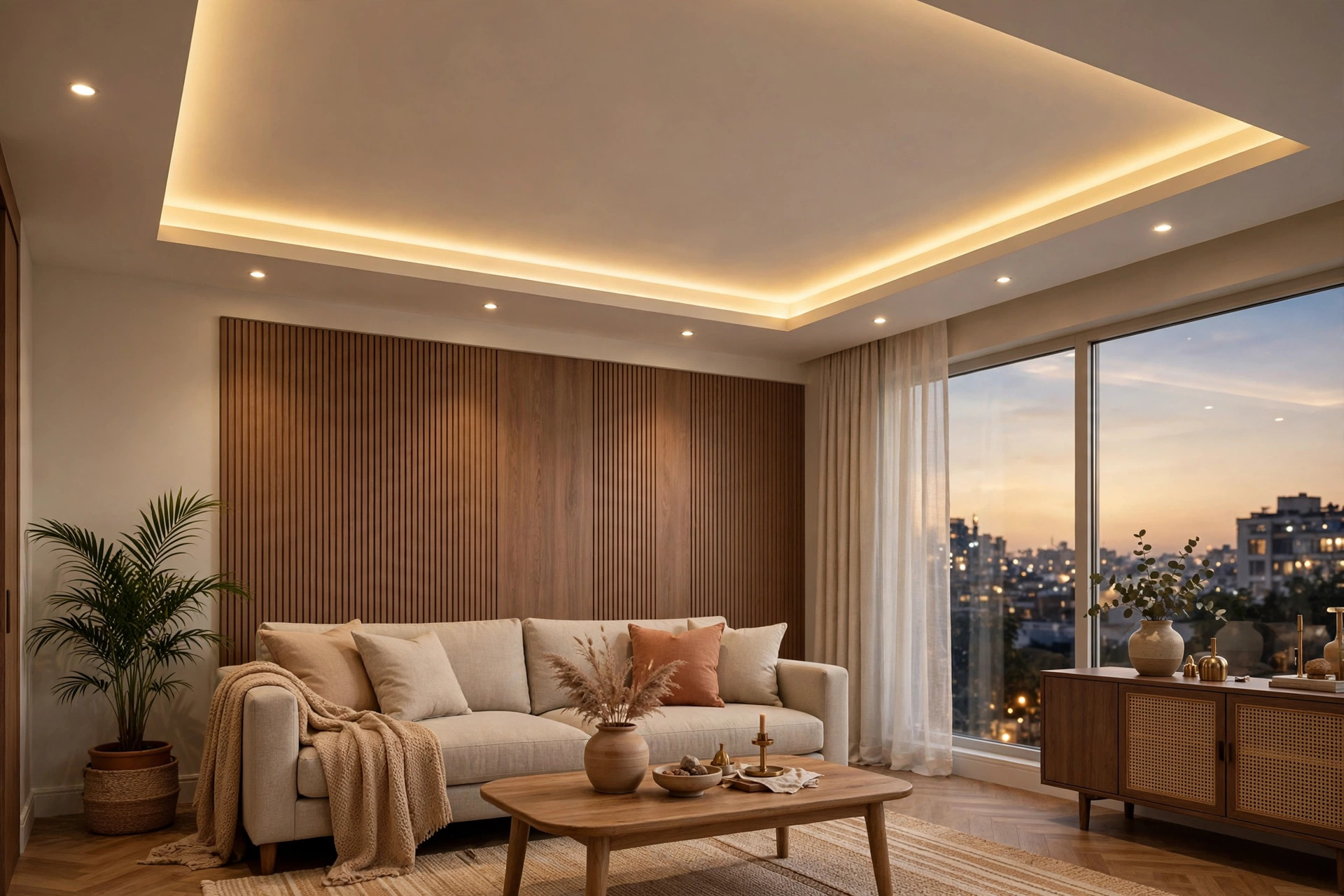
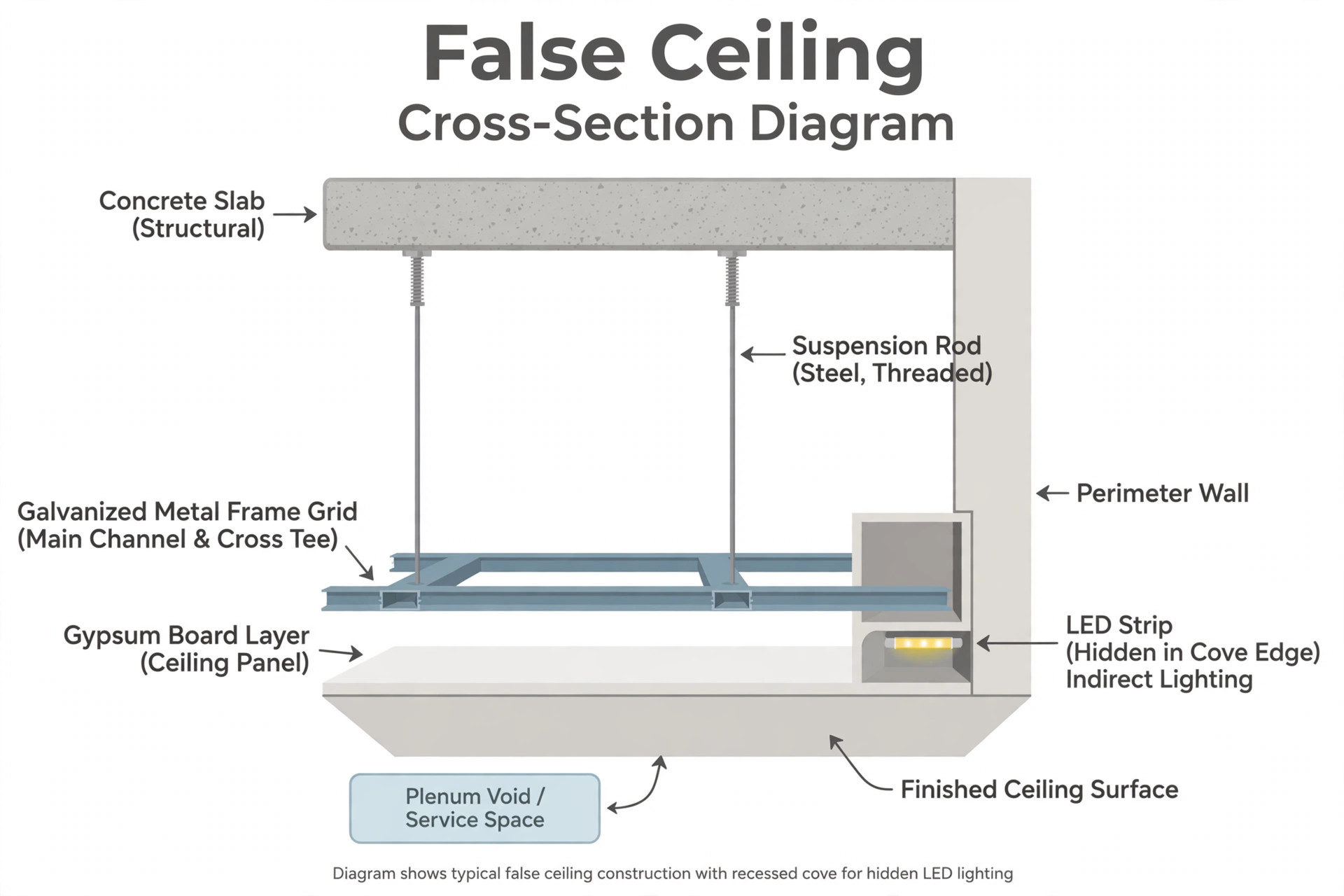
A false ceiling — also called a dropped or suspended ceiling — is a lightweight ceiling fixed to a metal frame that hangs a few inches below the original concrete slab. The gap between the two ceilings is useful space: it hides electrical wires, AC ducts and plumbing lines, and gives you a clean surface to mount lights.
Common materials in India are gypsum boards, plaster of Paris (POP), PVC panels, wood or wood-look panels, and metal grid tiles. Each suits different rooms and budgets, which we compare below.
Why Homeowners Choose One
- Better lighting: recessed spots, cove lights and pendants sit neatly in the ceiling instead of surface-mounted tubes.
- Hidden services: wires, AC piping and ducts disappear above the boards.
- Cleaner look: an uneven or stained slab gets a smooth, paint-ready finish.
- Comfort: the air gap gives a small amount of thermal and sound insulation.
- Design: trays, coffers, curves and wood accents add character to plain rooms.
First Question: Do You Actually Need One in Every Room?
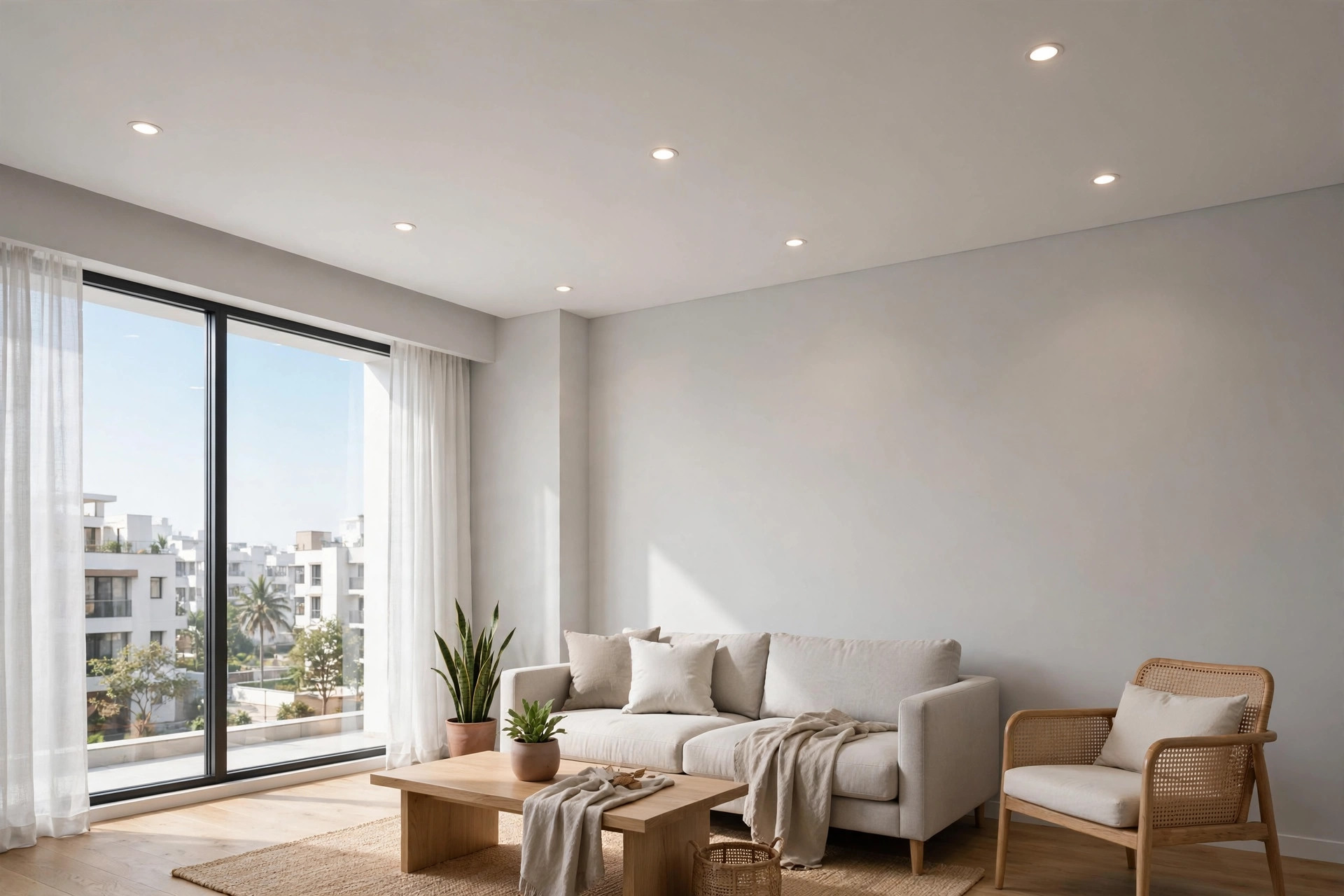
No. A false ceiling is worth it where you want better lighting, hidden wiring or a design feature — typically the living room, bedrooms and dining area. In store rooms, utility areas and very low rooms, a well-painted original ceiling is often the smarter choice. It costs nothing, needs no maintenance and keeps full height.
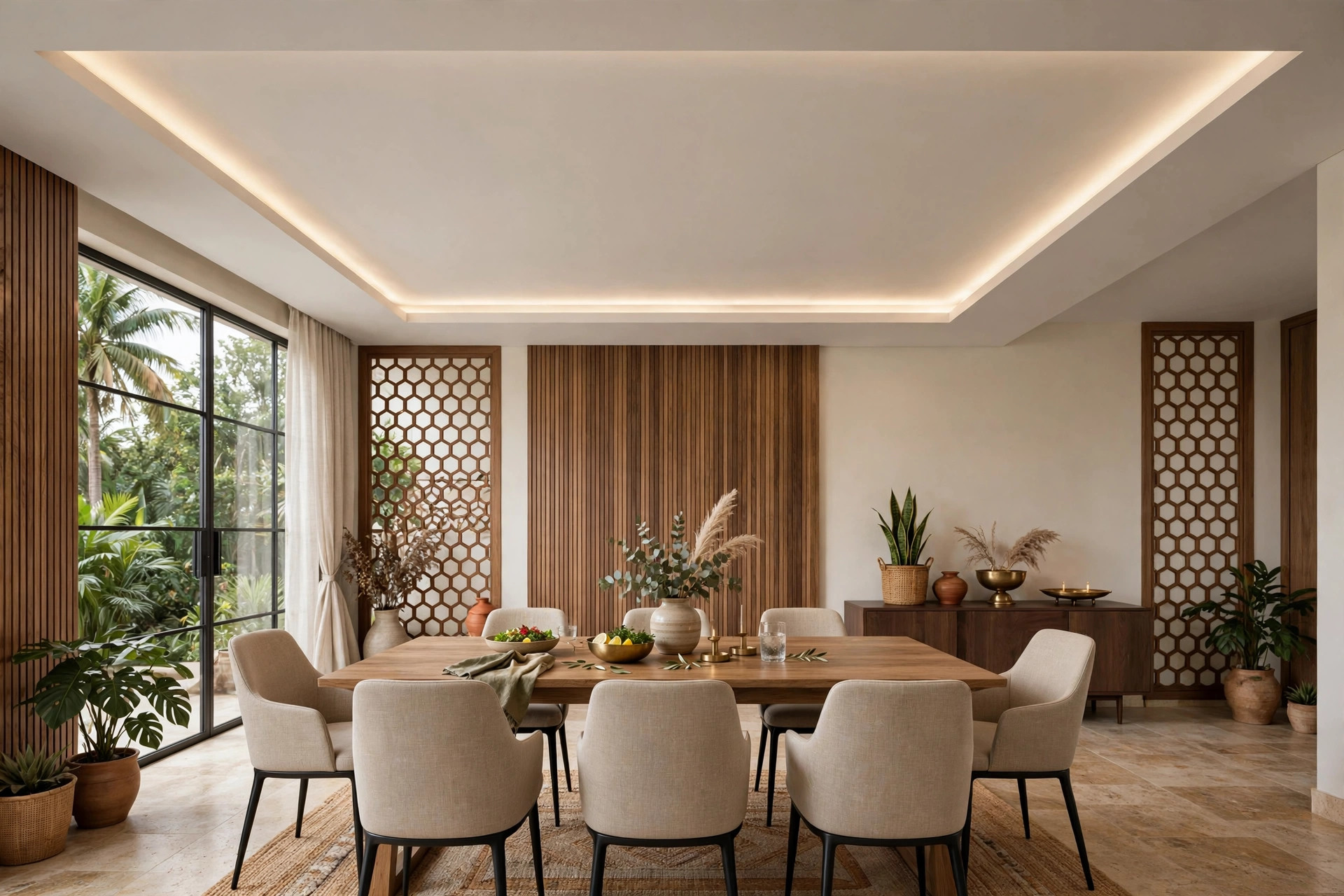
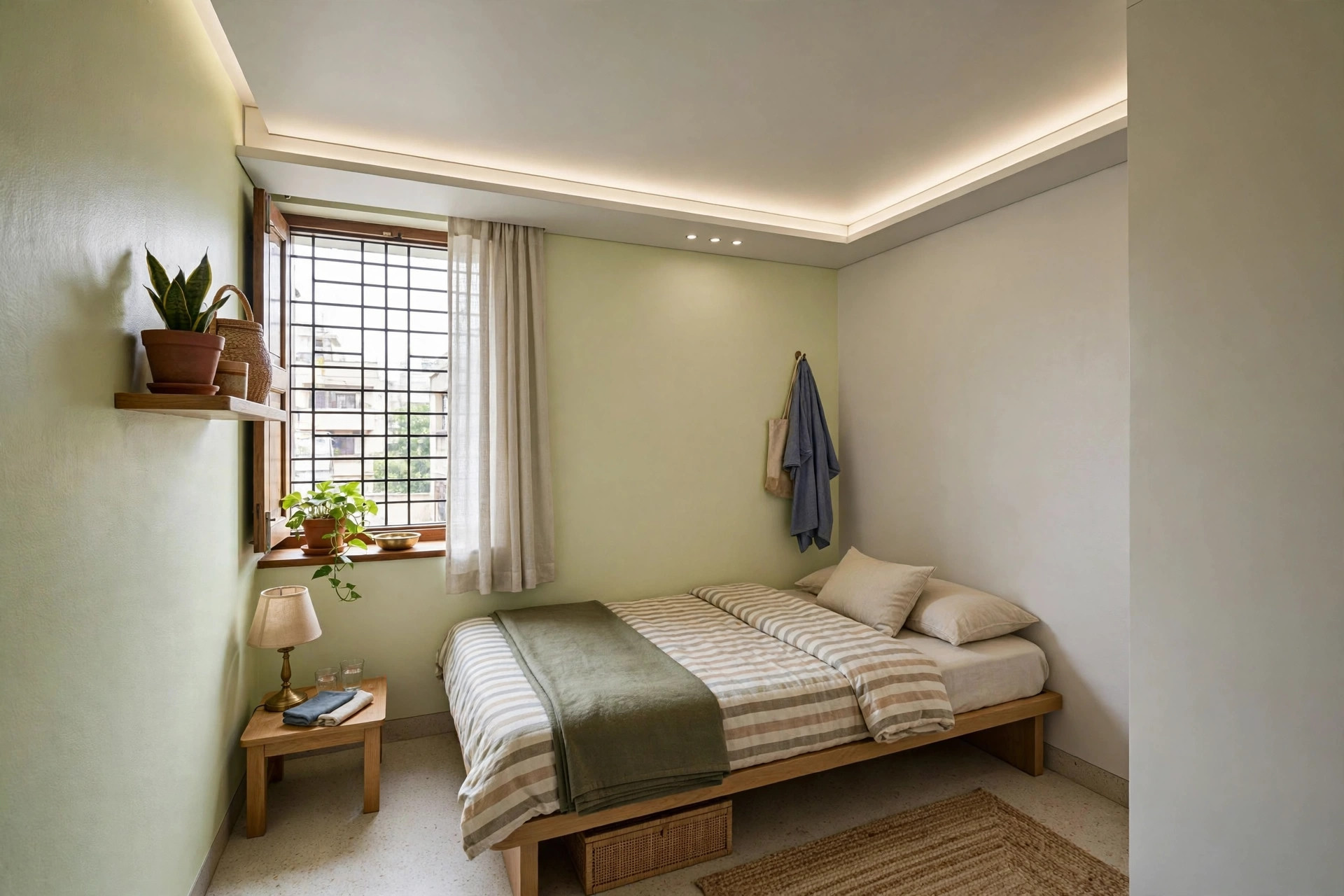
A useful middle option is the peripheral (border) ceiling: only the edges of the room are dropped to carry cove lighting, while the centre stays at full height. You get the lighting effect with minimum height loss.
The Measurement That Matters Most: Ceiling Height
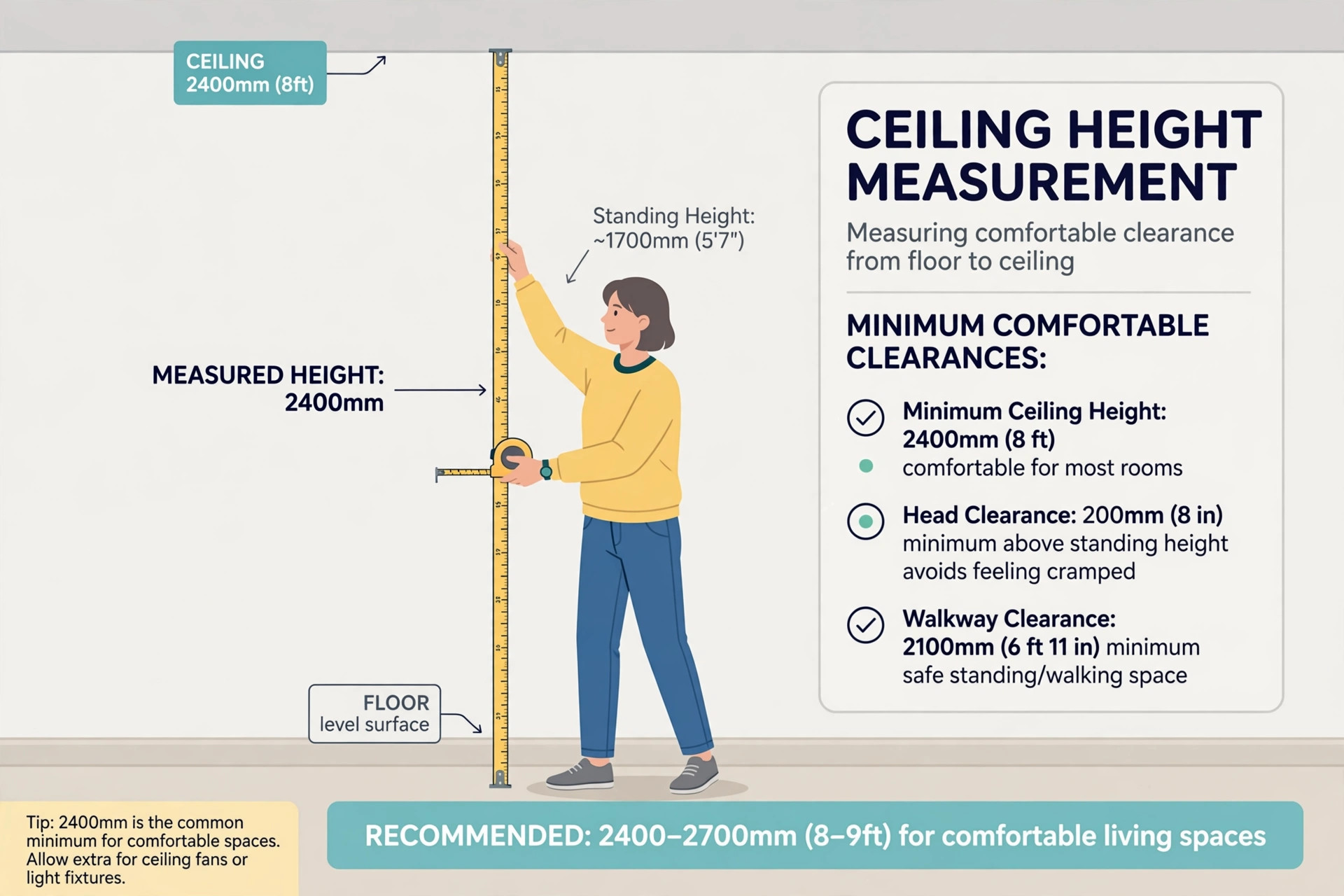
Before choosing any design, measure the floor-to-slab height of the room. Most Indian apartments have slabs at about 9 to 10 feet. A false ceiling typically drops 4 to 6 inches for a simple design and more for layered ones. In a room that is already low, a deep multi-layer ceiling can make the space feel cramped — this is the single most common regret homeowners report.
Simple rules that work:
- Below ~9 feet: stick to a flat single-layer or peripheral ceiling with light colours.
- 9–10 feet: most designs work, including trays and shallow double layers.
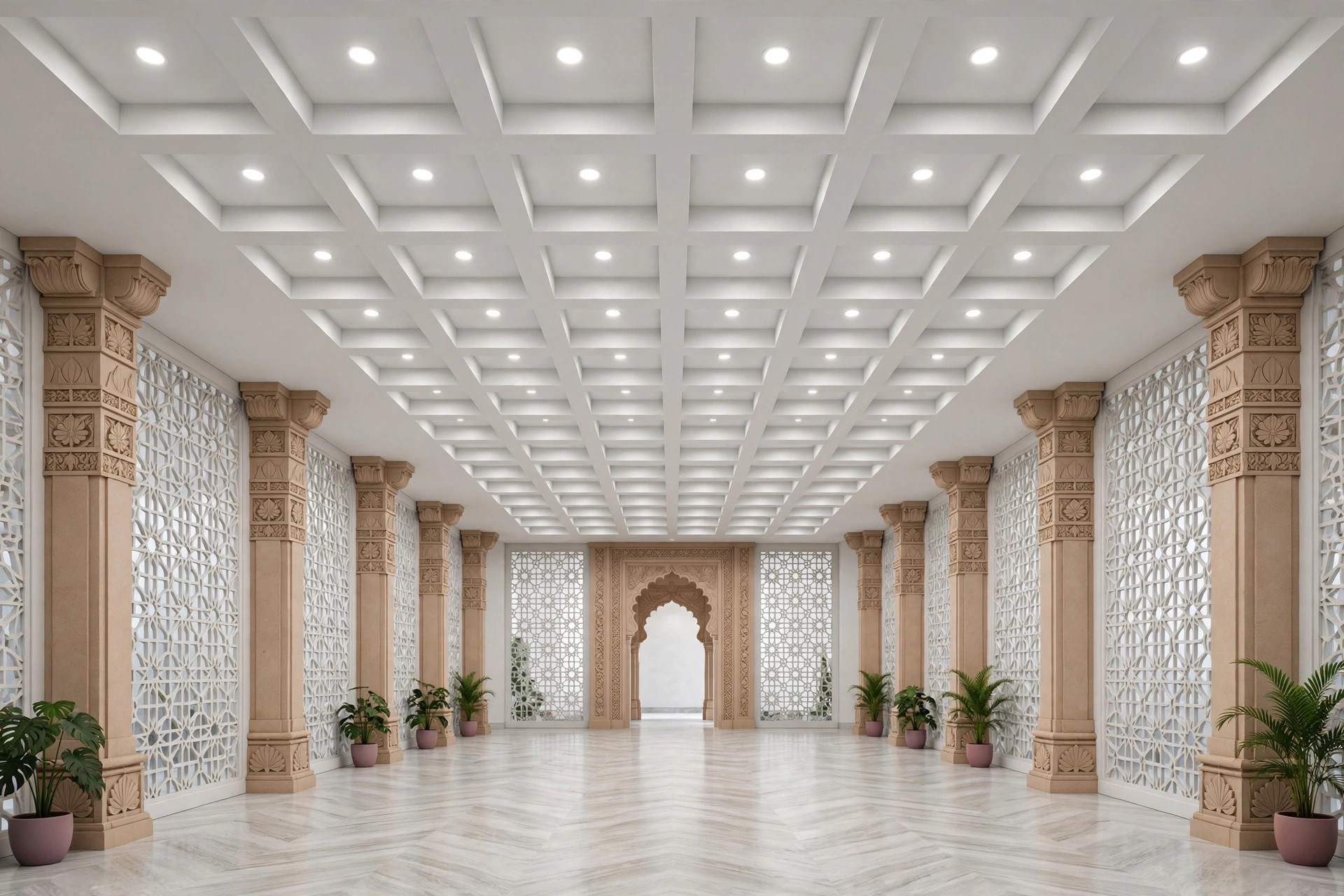
- Above 10 feet: coffered, plus-minus and dramatic layered designs are safe.
Always confirm the final clear height with your contractor in writing before the frame goes up.
Materials Compared: Gypsum, POP, PVC, Wood and More
| Material | Best for | Watch out for |
|---|---|---|
| Gypsum board | Living rooms, bedrooms; smooth factory finish, neat joints | Gets damaged by water leaks; needs a proper metal frame |
| POP | Curves, custom shapes, traditional designs; budget-friendly | Can develop hairline cracks over time; quality depends on the artisan |
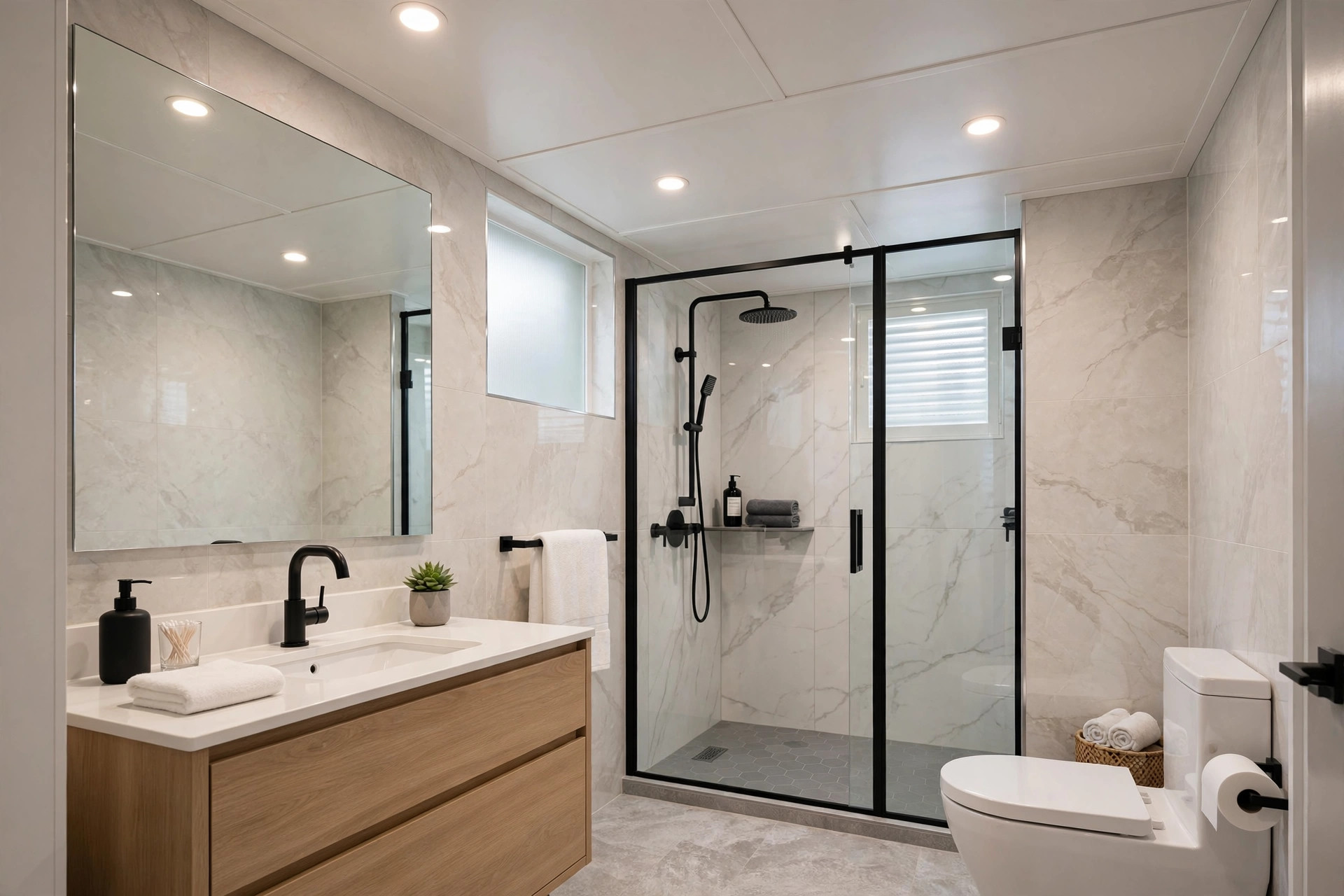
| PVC panels | Bathrooms, kitchens, balconies; moisture-resistant, easy to wipe clean | Plasticky look in premium living spaces; fewer design options |
| Wood / wood-look | Accent panels, warmth, premium feel | Highest cost; needs termite protection and moisture care |
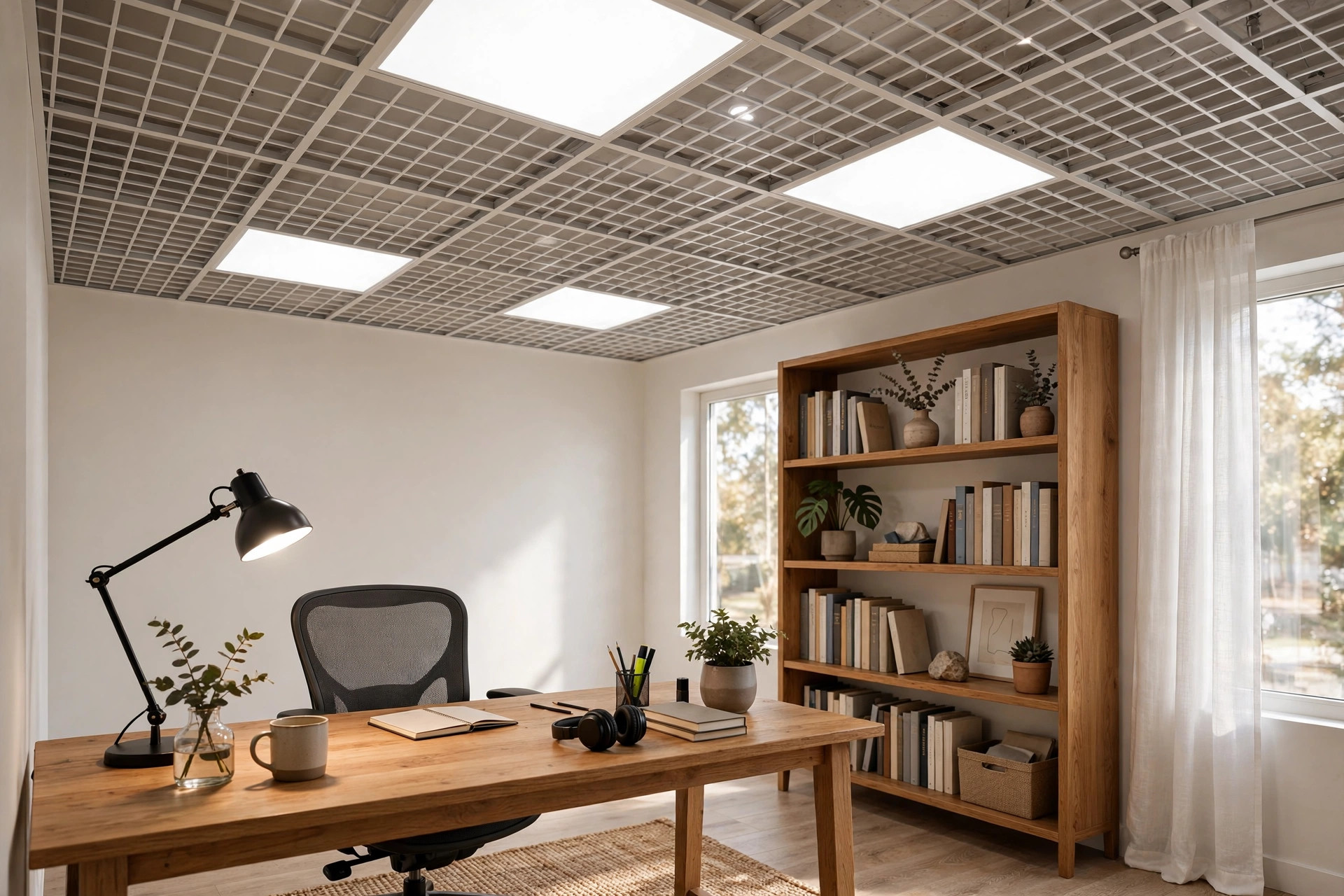
| Metal grid tiles (2×2) | Offices, basements; easy panel removal for service access | Commercial look; rarely chosen for home living areas |
| Mineral fibre | Sound control in offices and studios | Not a typical home choice |
For a deeper look at planning a gypsum ceiling planned for a bedroom, see our room-specific guide.
Design Styles at a Glance
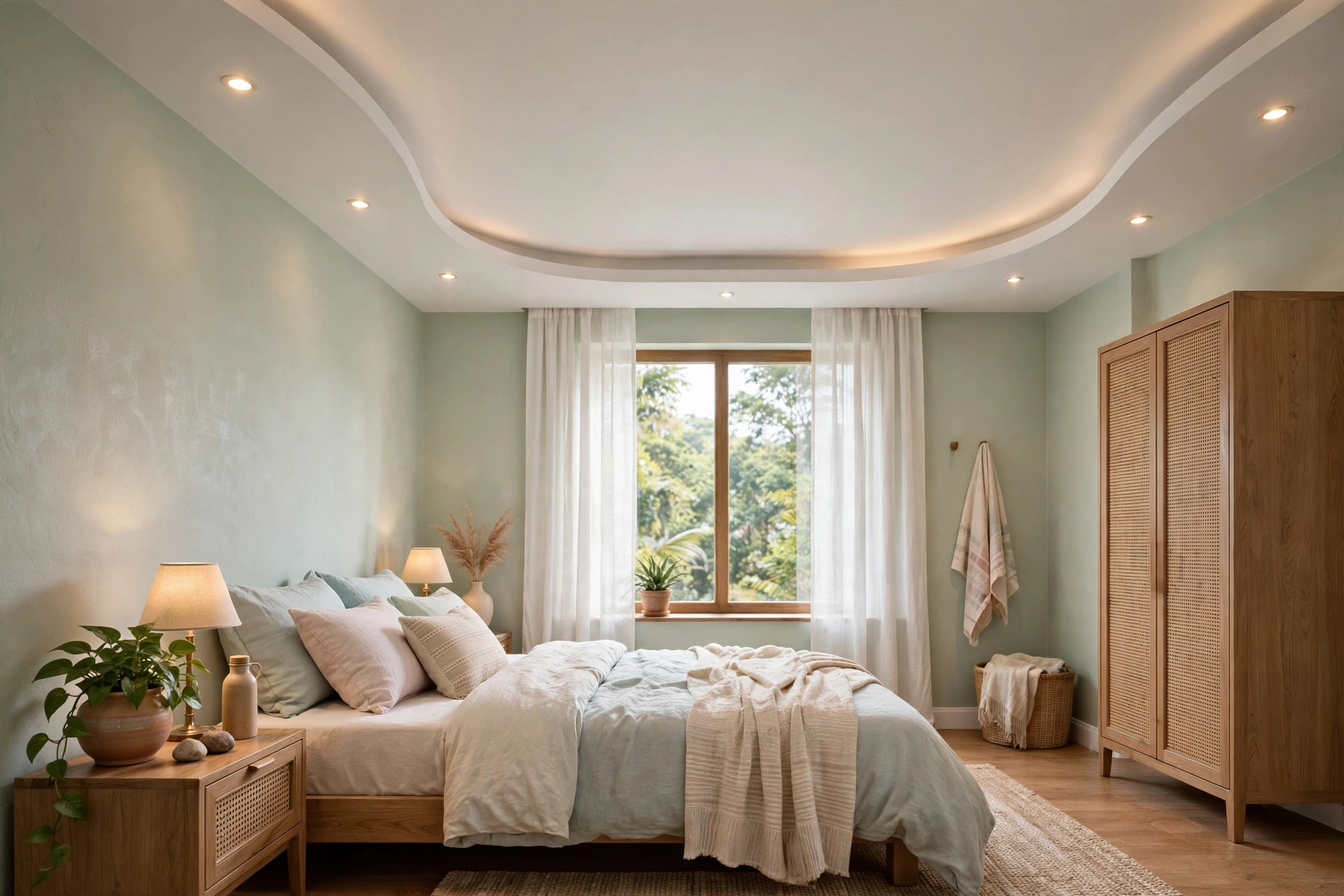
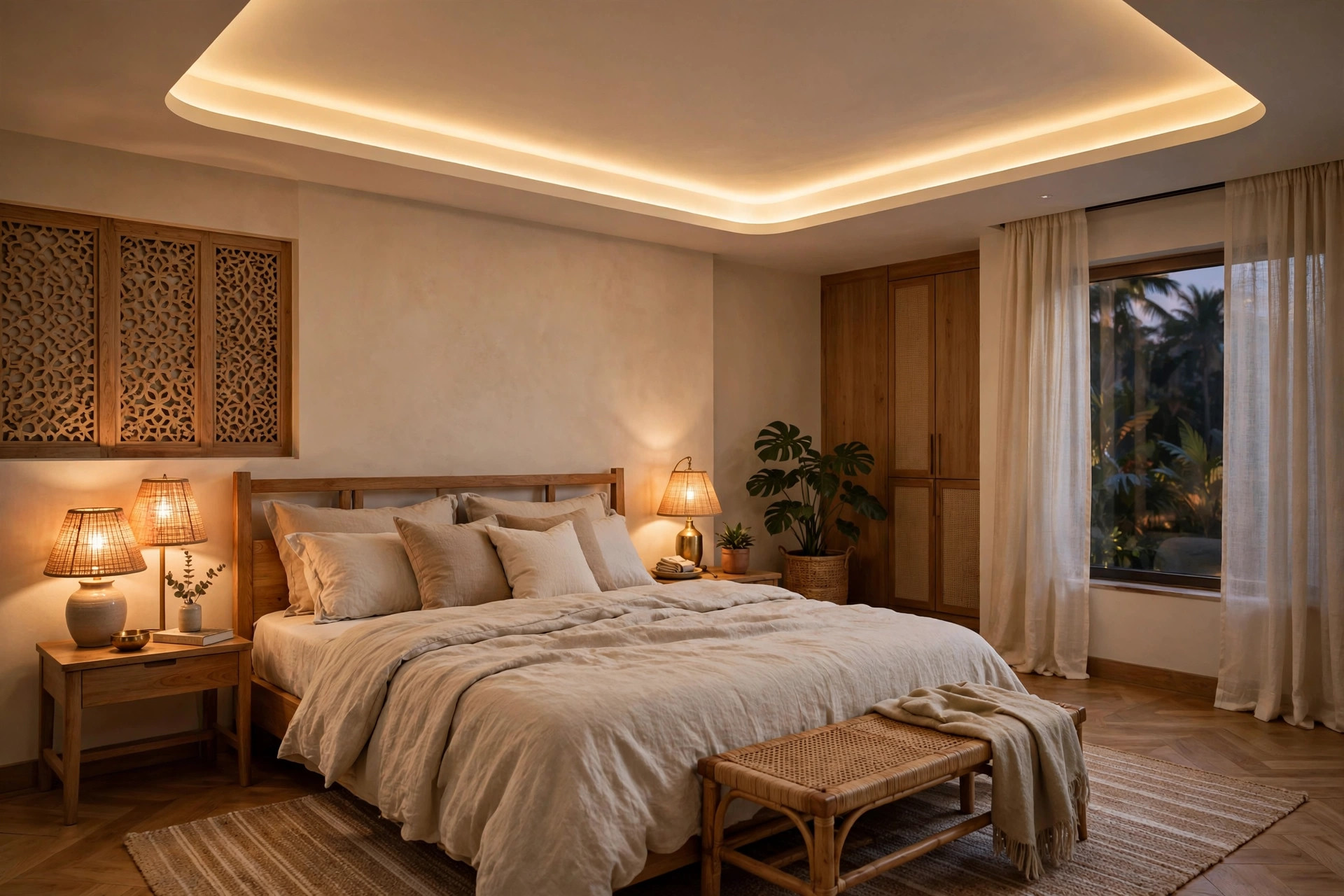
Tray ceiling
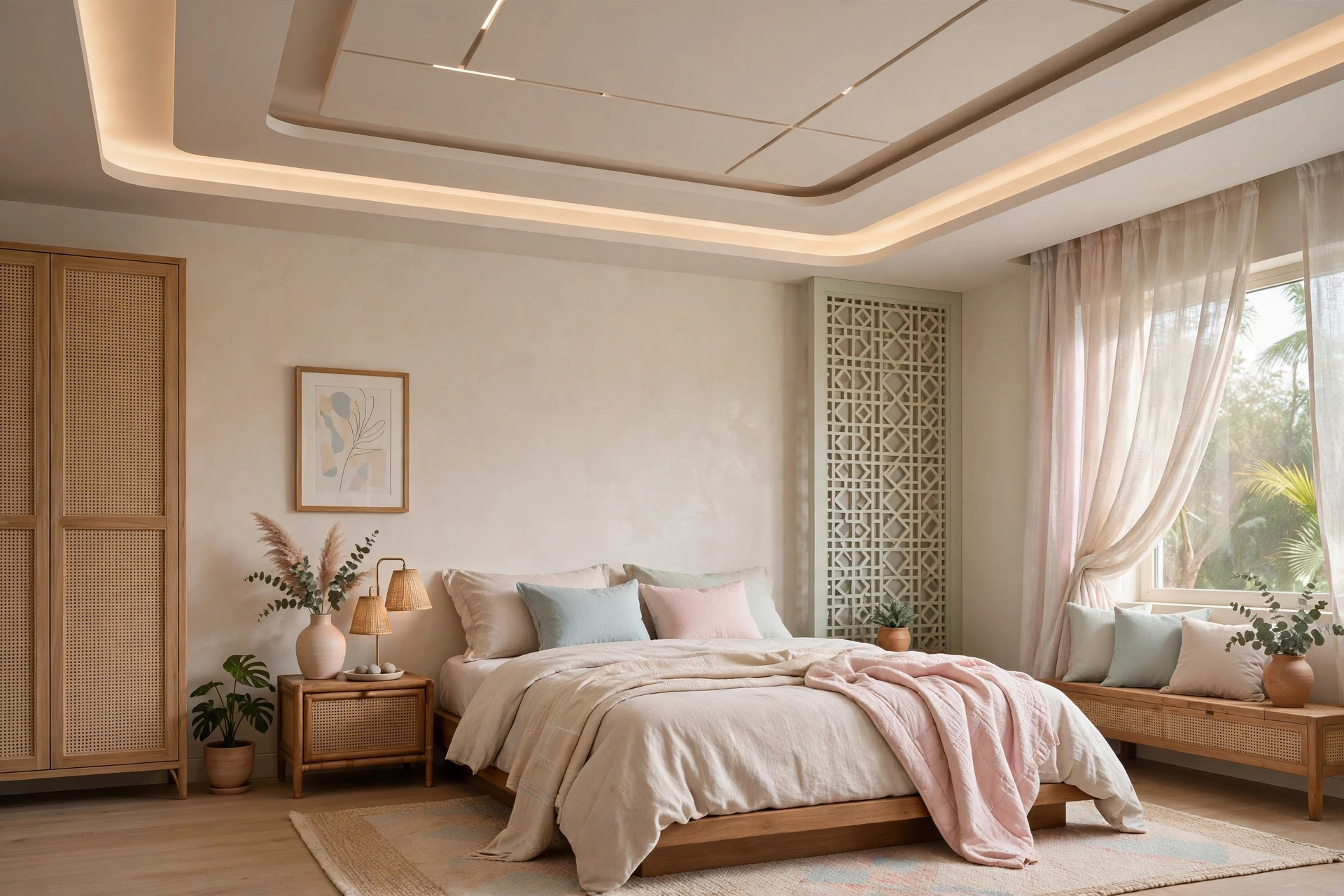
The centre sits higher than the dropped border — the safest all-rounder, suits almost every room. See it in a bedroom false ceiling designs setting.
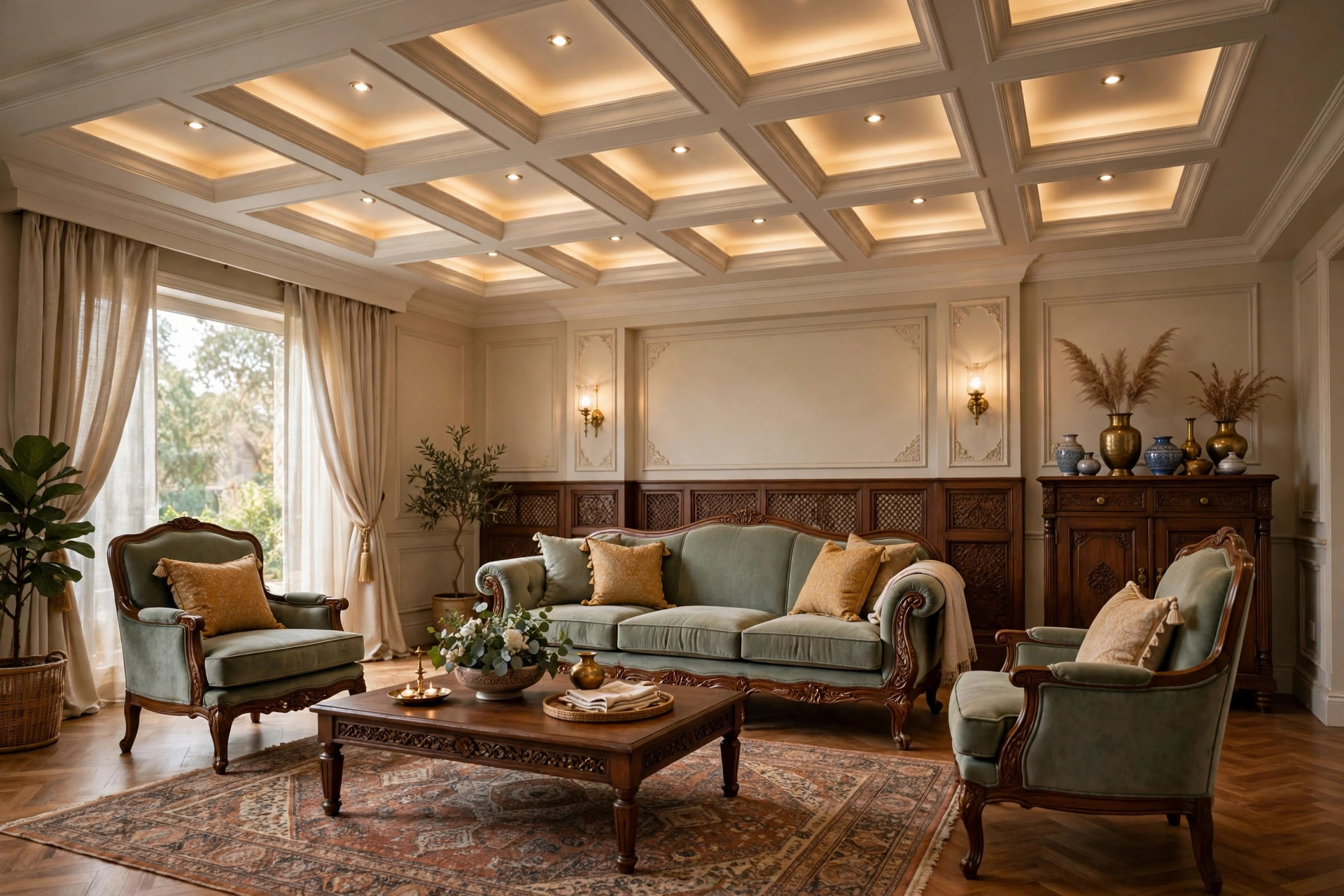
Coffered ceiling
Recessed square or rectangular panels add depth and a classic feel. Best in rooms with generous height; the many recesses collect dust and cost more.
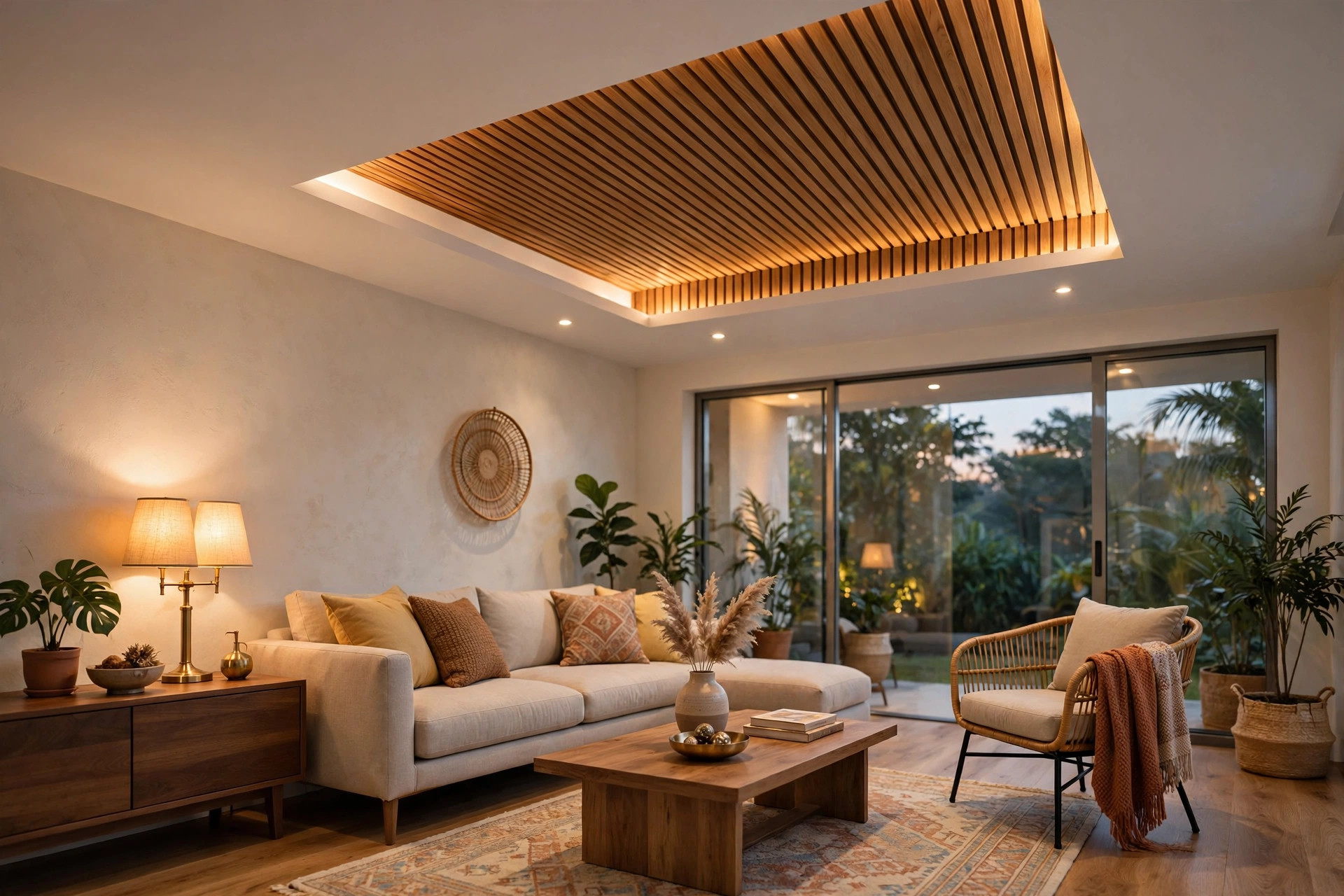
Wood-accent ceiling
Wooden slats or a wood-look panel set into a plain ceiling adds warmth without a full timber job. Use it as an accent, not the whole ceiling, to control cost.
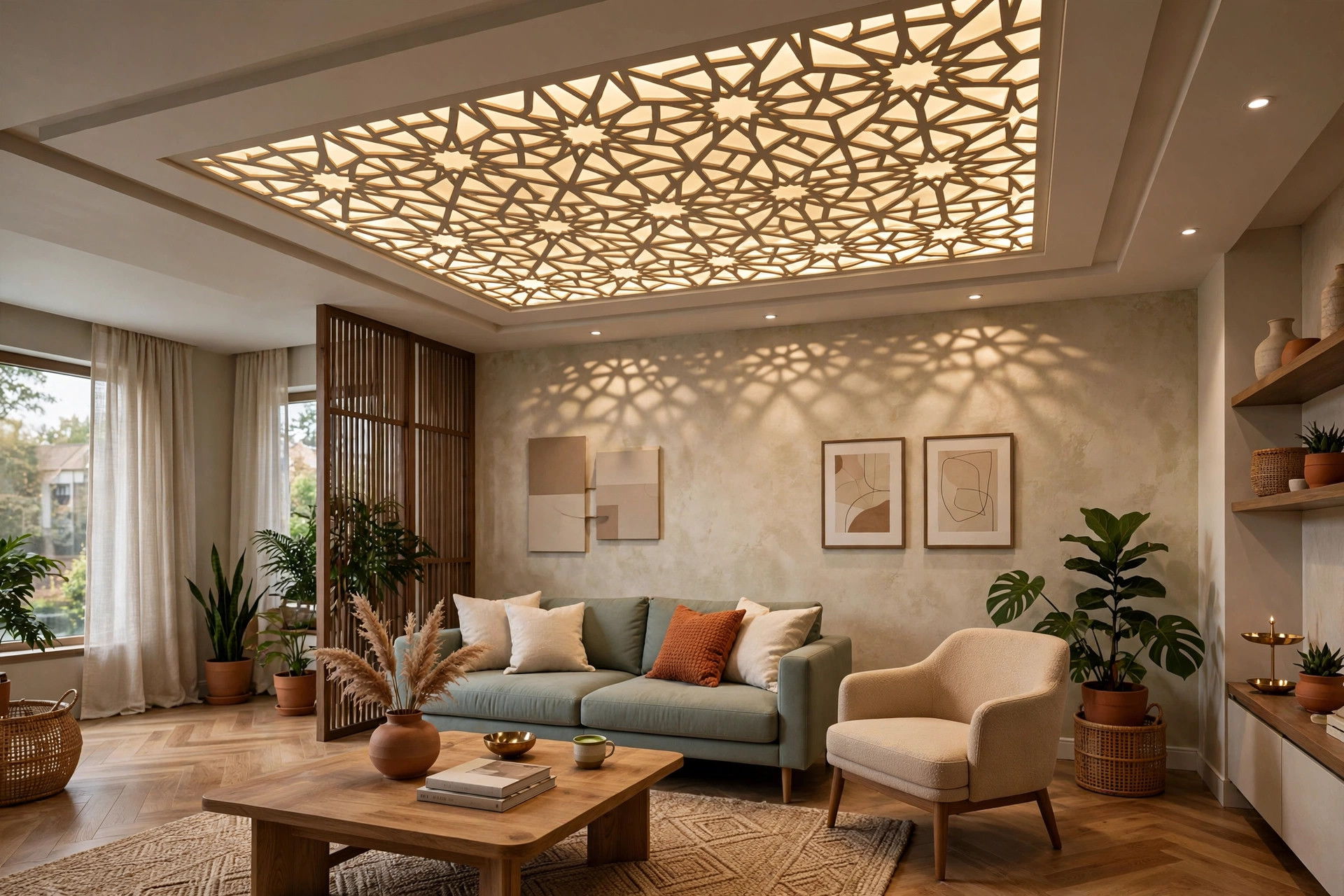
Geometric and backlit panels
CNC-cut or geometric panels with backlighting suit contemporary homes. Keep the pattern restrained — an over-busy ceiling dates quickly.
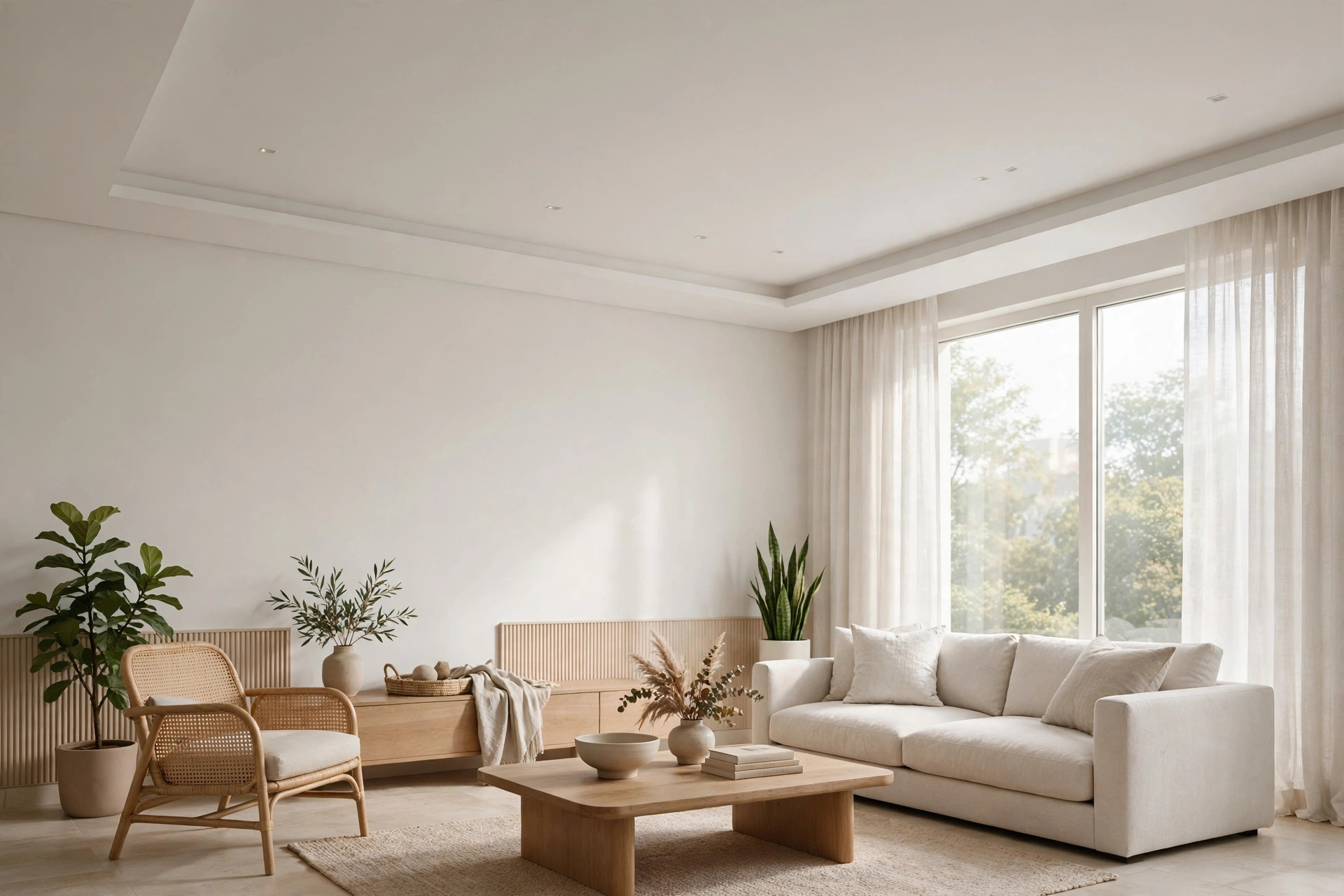
Plain flat ceiling
A single flat layer with a few recessed spots. Timeless, cheapest to build and easiest to maintain — often the right answer.
Room-Wise Pointers (Quick Reference)
- Living room / hall: layered ceilings with cove + spotlights; this is where a statement ceiling earns its keep.
- Bedroom: softer designs with warm light; calm matters more than drama. See bedroom false ceiling designs for 12 ideas.
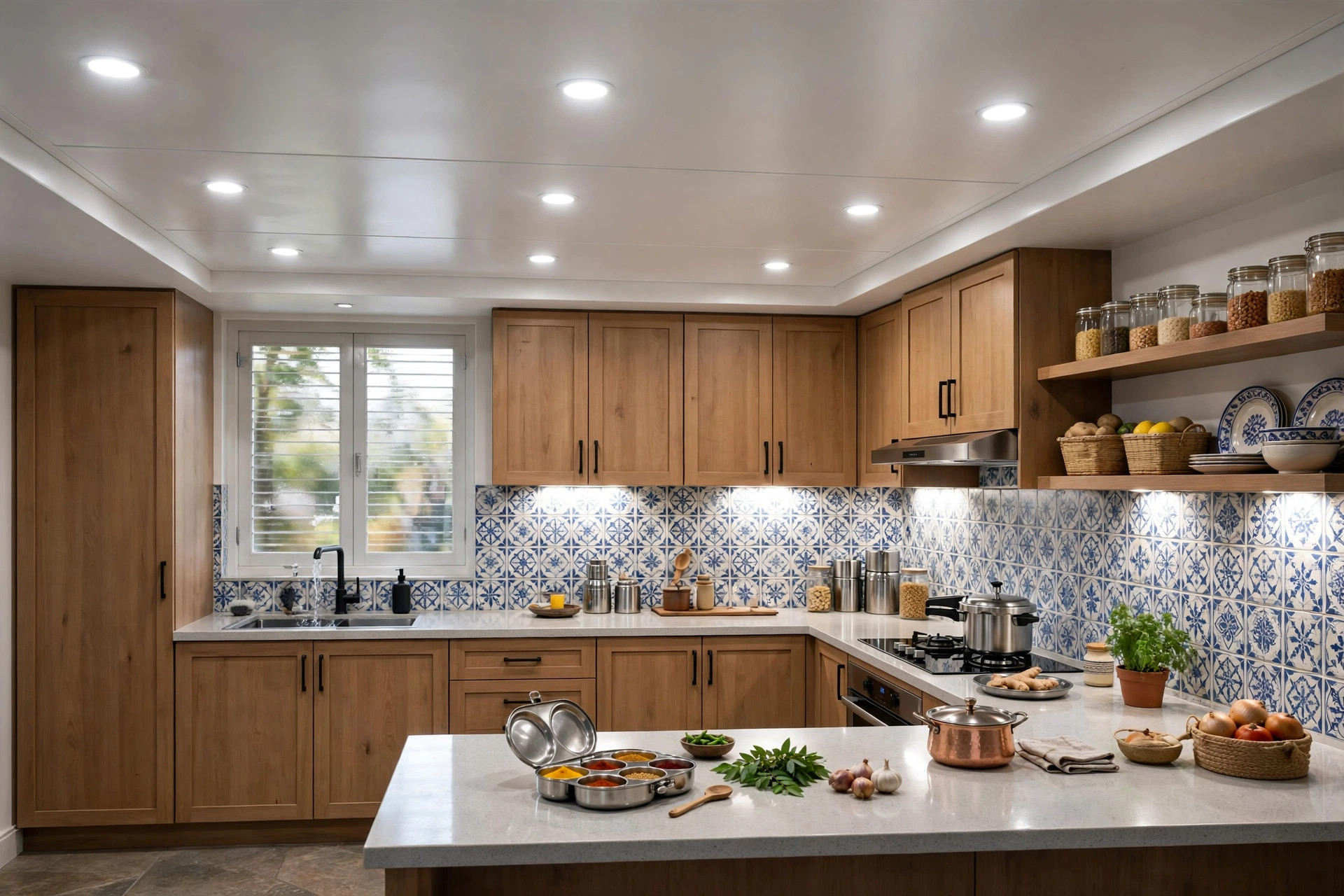
- Kitchen: moisture-resistant boards, bright task lighting, simple forms; plan exhaust and service access.
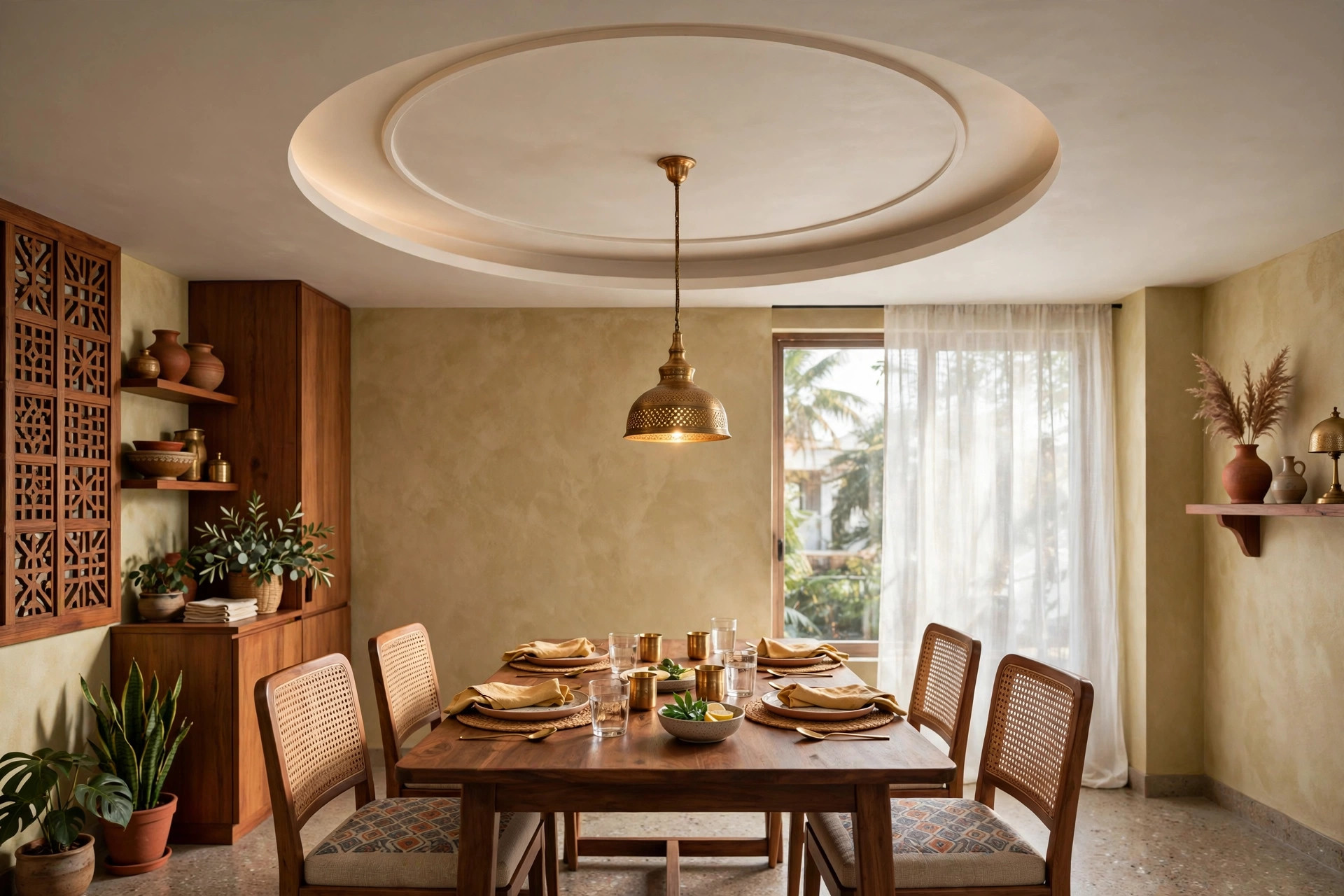
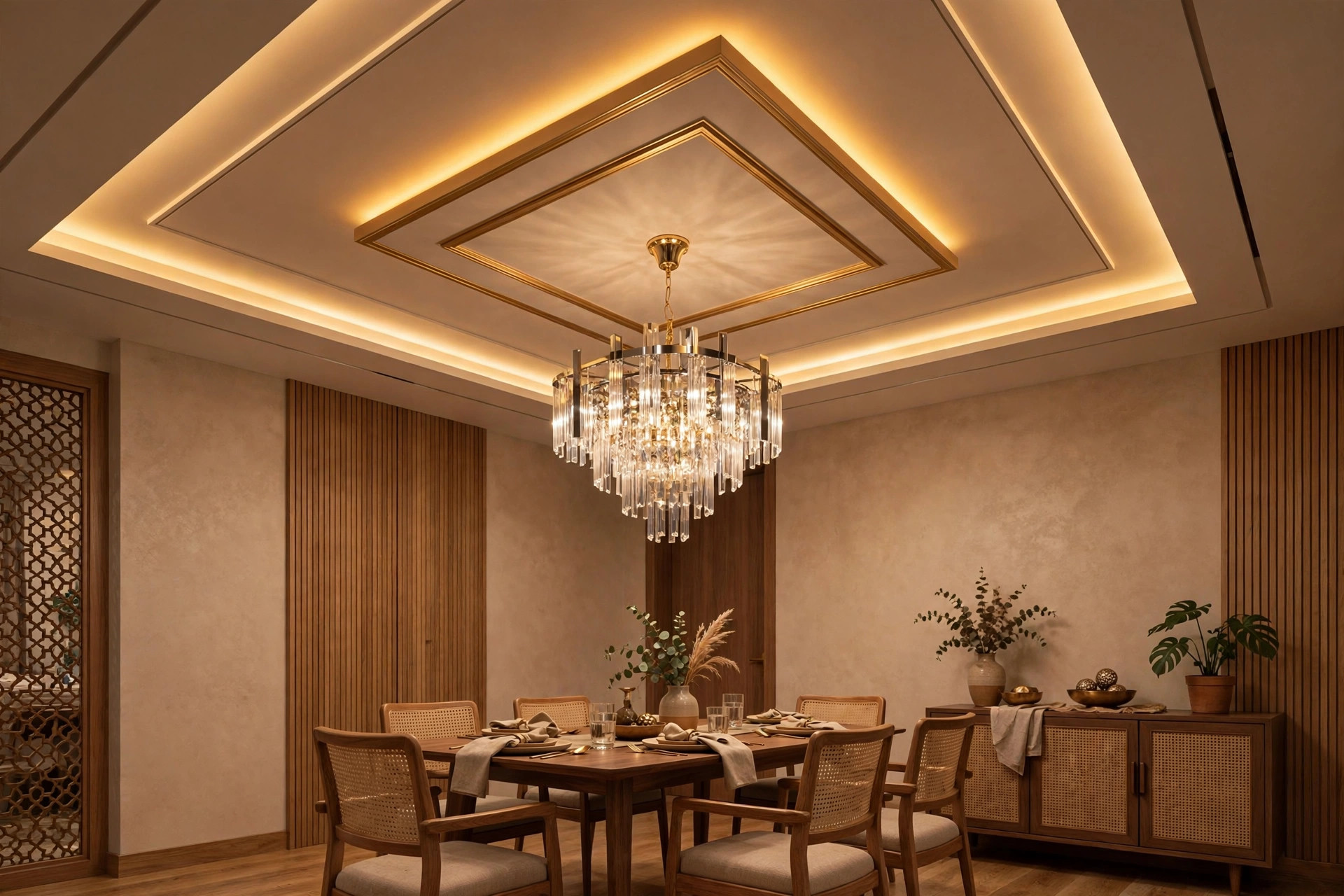
- Dining: a dropped section or circular panel above the table with a pendant defines the space.
- Bathroom: PVC panels with recessed lights for a clean, hotel-like finish.
- Small rooms: slim profiles, light colours, minimal drops.
Lighting, Fans and AC: Plan Before the Frame Goes Up
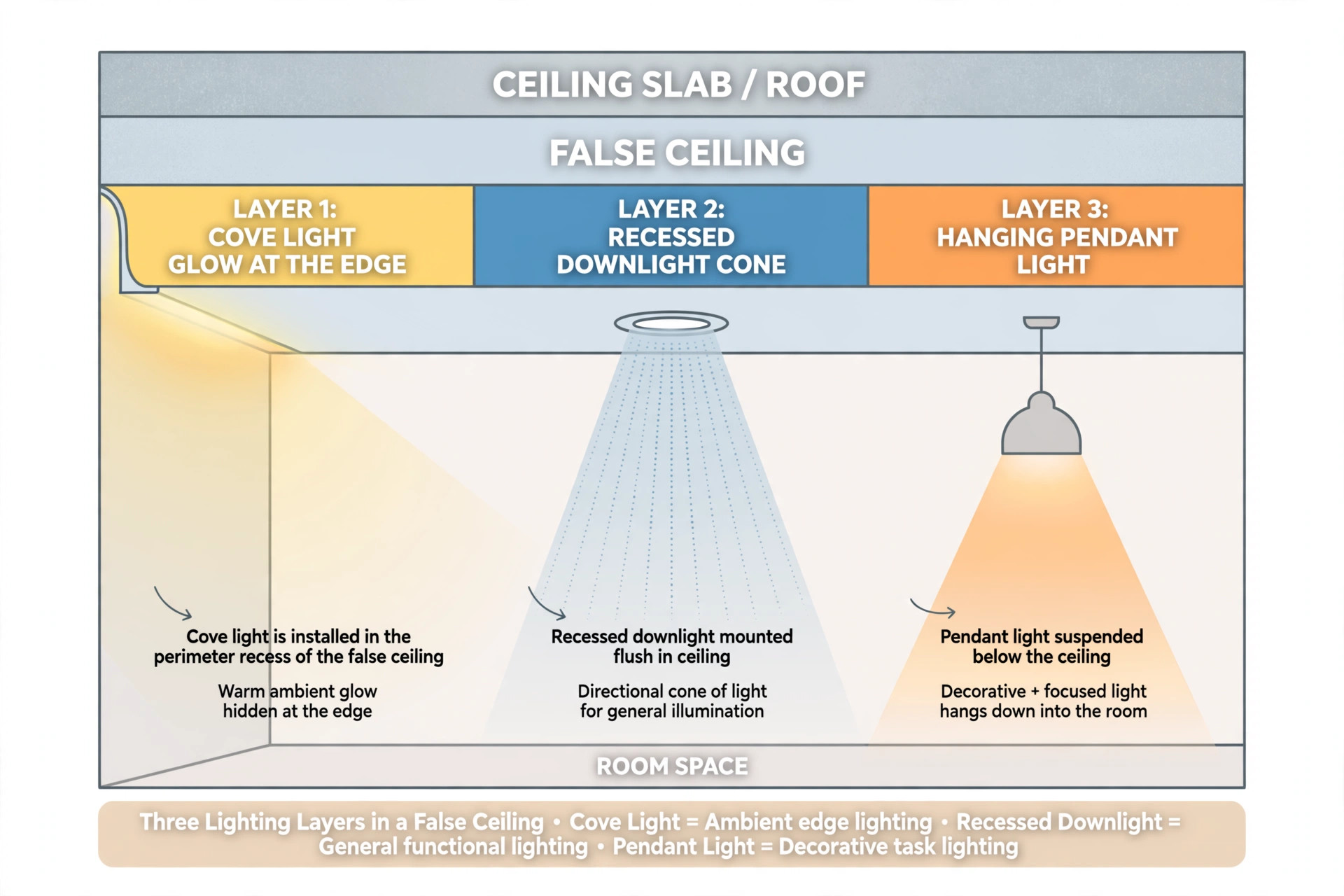
Lighting design matters more than the ceiling pattern. Plan three layers:
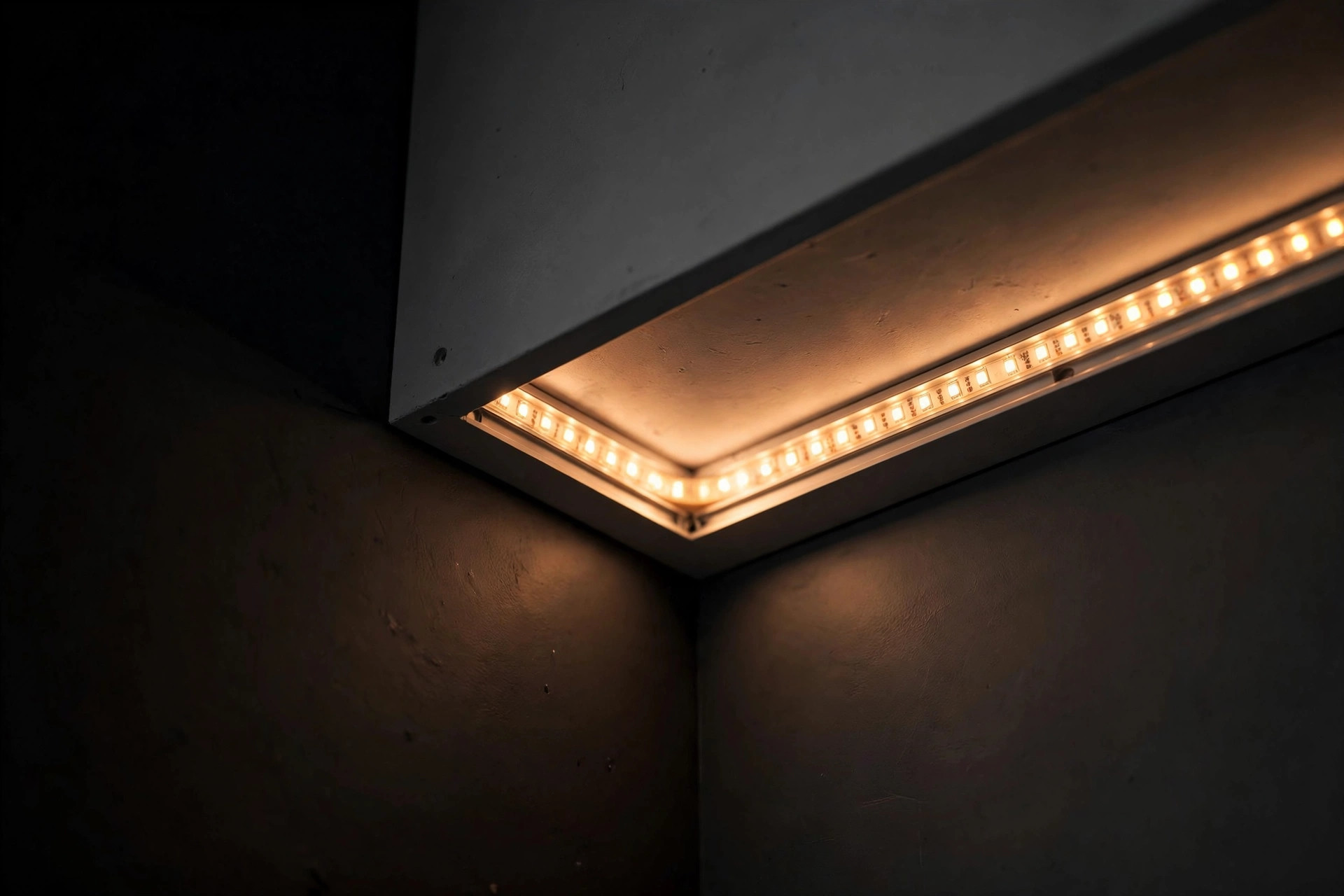
- Ambient: cove LED strips for a soft overall glow.
- Task: recessed downlights over reading, cooking or work zones.
- Accent: a pendant, chandelier or wall washer as a focal point.
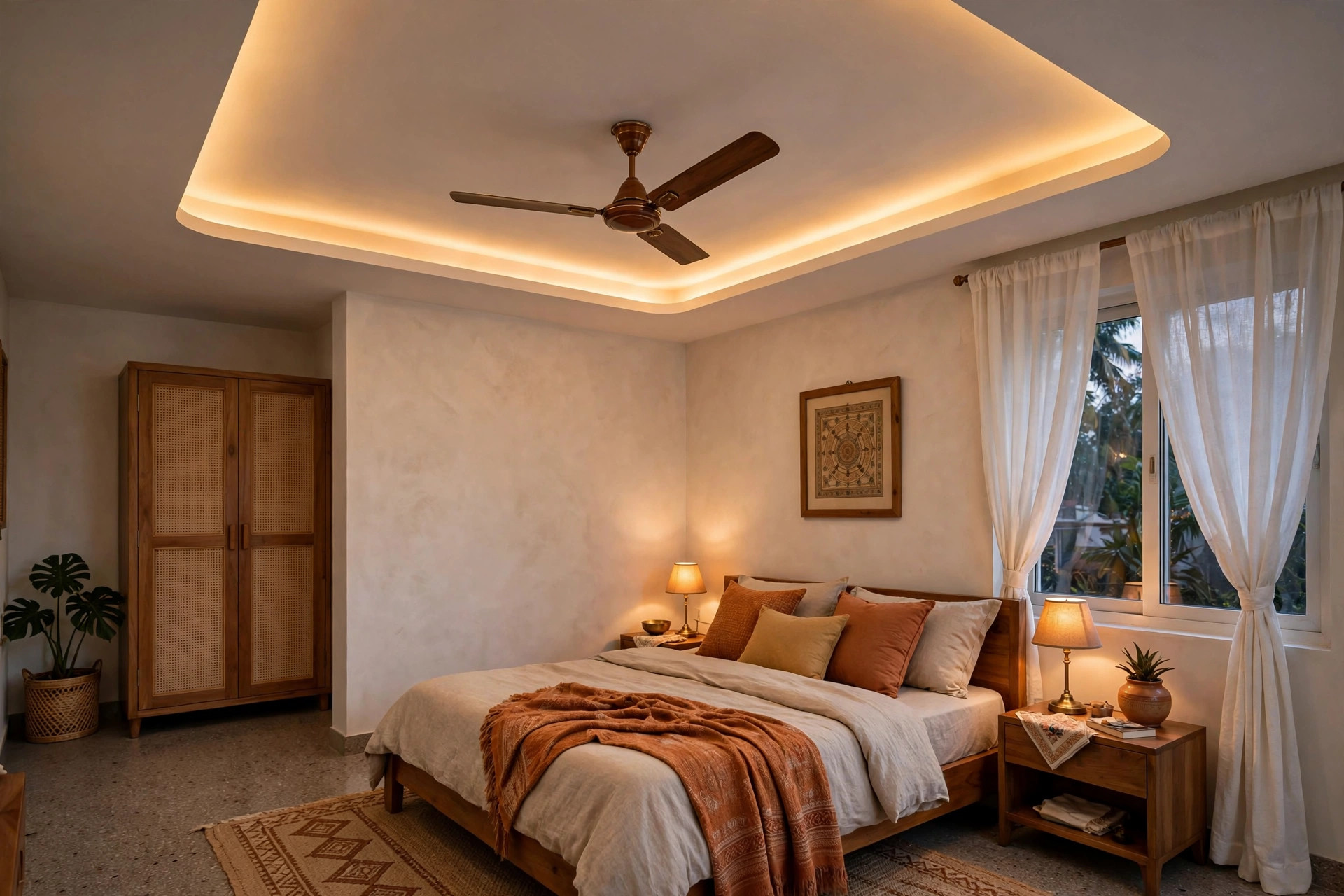
Ceiling fans: a false ceiling board cannot hold a fan. The fan must hang from the structural slab above through its own rod and anchor — never from the gypsum or POP board. Tell your electrician and ceiling contractor to coordinate this before the boards go up. Our bedroom lighting layouts show how fans sit inside tray designs.
Chandeliers and heavy pendants need the same treatment: independent support from the structure, confirmed by a qualified electrician.
AC units: mark cassette or split-AC positions before framing so ducts, drains and service panels are planned in — not cut in afterwards.
What It Costs: False Ceiling Price per Sq Ft in India
Rates vary by city, design complexity and what the quote includes. As a reference, Indian interior publications report roughly these installed ranges (retrieved September 2026):
- POP: about ₹90–₹150 per sq ft (DesignCafe, 2026 cost guide)
- Gypsum: about ₹110–₹180 per sq ft (DesignCafe, 2026 cost guide)
- PVC: about ₹120–₹200 per sq ft (DesignCafe, 2026 cost guide)
- Wood: about ₹350 and above per sq ft (DesignCafe, 2026 cost guide)
These are indicative ranges, not quotes. Always ask what a per-sq-ft rate includes: boards, metal frame, labour, jointing, putty, paint, lighting fixtures, electrical wiring, and taxes are frequently quoted separately. Get at least two itemised quotes and compare like with like. A detailed cost breakdown by component is covered in our upcoming cost guides.
When NOT to Install a False Ceiling
- Ceiling height is very low and you cannot spare 4–6 inches.
- The room has an active water-leakage problem — fix the leak first; gypsum and POP both suffer.
- You are in a rented flat and the landlord has not approved it (it is not easily reversible).
- You only want it because “everyone does it” — a painted slab with good lights can look excellent.
Choosing a Contractor: 5 Questions to Ask
- What exactly does your per-sq-ft rate include — frame, boards, finishing, paint, lights, wiring, taxes?
- What metal frame system and board thickness will you use?
- How will the ceiling fan / chandelier be supported?
- Where will the service access panels be for wiring and AC?
- What is the finishing timeline, and what touch-up support do you give after handover?
Maintenance: What to Expect
A well-built gypsum or POP ceiling needs little: occasional dusting, and repainting every few years like any wall. POP may develop hairline cracks over time — these are usually cosmetic and can be filled and repainted. Check cove LED strips once a year; drivers fail more often than the strips. Keep the contact of your contractor for touch-ups.
Quick Decision Summary
- Measure your ceiling height first — it decides everything.
- Choose material by room: gypsum/POP for living and bedrooms, PVC for wet areas, wood as an accent.
- Design lighting in three layers before the frame goes up.
- Never hang fans or heavy lights from the board — anchor to the slab.
- Compare itemised quotes; indicative ranges are ₹90–₹200 per sq ft for common materials.
- Explore room-specific ideas: bedroom false ceiling designs.
Frequently Asked Questions
How much does a simple false ceiling cost in India?
Indian interior publications report roughly ₹90–₹200 per sq ft installed for common materials (POP, gypsum, PVC), with wood starting around ₹350 per sq ft (figures retrieved September 2026). Final cost depends on city, design complexity and what the quote includes — always get an itemised quote.
How much height will I lose?
A simple design typically drops 4–6 inches below the slab; layered designs drop more. In rooms below about 9 feet, prefer a flat or peripheral ceiling to protect the sense of height.
POP vs gypsum — which is better?
Gypsum gives a smoother factory finish with neat joints and is popular for modern homes; POP is more versatile for curves and custom shapes and is often cheaper, but can develop hairline cracks. For bedrooms specifically, see our gypsum bedroom guide.
Can I install a false ceiling in a rented flat?
Technically yes, but it is not easily reversible and usually needs the landlord’s written approval. Most tenants skip it.
How long does a false ceiling last?
A well-built gypsum or POP ceiling in a dry room can last well over a decade with basic maintenance. Water leakage is the main enemy — fix leaks before installing.
Do I need a false ceiling for cove lighting?
Cove lighting needs a ledge or recess to hide the LED strip, which is exactly what a false ceiling (even a slim peripheral one) provides. Without any ceiling treatment, surface-mounted profiles are the alternative.
All images in this guide are original concept renders and illustrations created for falseceiling.in — they show design ideas, not completed projects.