
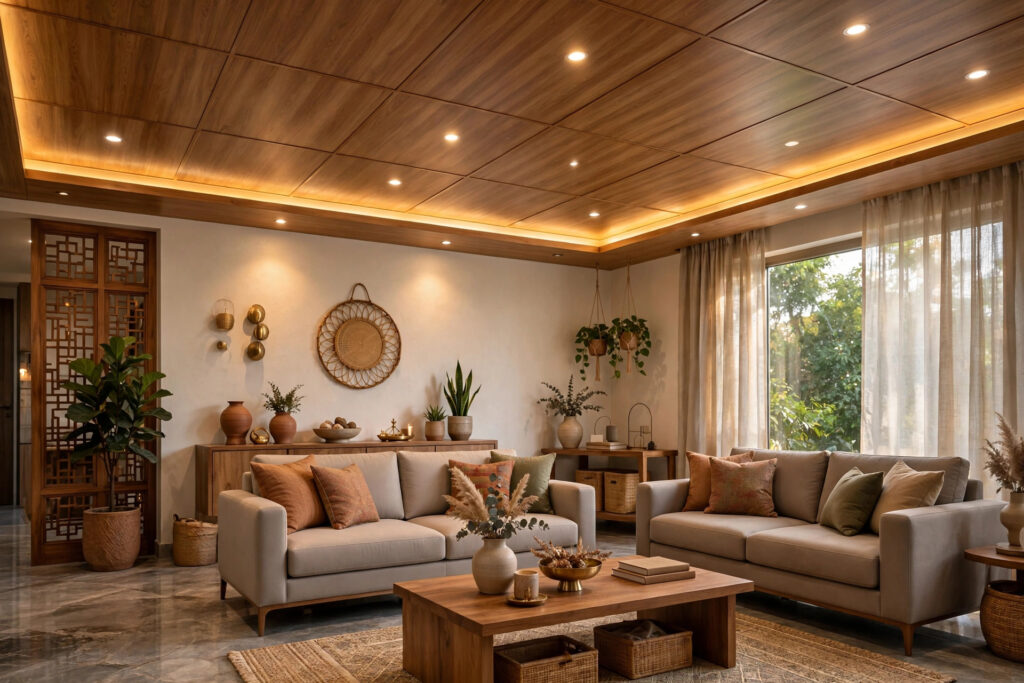

PVC is the material people reach for when the brief is simple: keep the cost down, finish fast, and never think about the ceiling again. In a hall — the room guests see first — PVC false ceilings sit in an odd position. They are one of the most affordable and most practical options on paper, yet many designers quietly steer living rooms toward gypsum or POP instead. The honest picture: PVC works well in a hall when you choose the right panels, keep the design simple, and know exactly what you are trading away. This guide walks through the real installed costs in India in 2026, the designs that actually suit a hall, the pros and cons from 2026 cost guides, and how to plan the installation so the ceiling looks deliberate rather than budget.
What a PVC false ceiling is — and why halls are the debated room
A PVC false ceiling is a secondary ceiling made of lightweight polyvinyl chloride panels fixed below the main slab on a metal framework. The panels lock together in long boards, usually 5 to 10 mm thick, in plain white, printed, wood-finish, marble-finish or designer laminated surfaces. Installation is the fastest of all ceiling materials — typically one to two days per room — and the material is completely waterproof, termite-proof and easy to wipe clean with a damp cloth.
That is why PVC is the default choice in kitchens, bathrooms and balconies, where moisture rules the decision. In halls, the argument is different. A hall ceiling carries the room’s visual weight: it frames the chandelier or fan, holds the layered lighting, and is the first surface a guest notices. Panel-based PVC has visible joints and a less seamless finish than a jointed-and-painted POP or gypsum ceiling, and one 2026 cost guide puts it plainly: PVC is “not the preferred choice for luxury or high-end interior designs” (NoBroker, PVC ceiling cost guide, India, last modified July 30, 2026). It is an honest material for the right brief — and the wrong one for a showpiece ceiling.
The rest of this guide assumes you have already decided the hall needs a false ceiling; for room-by-room planning across the house, the hall & living room designs guide covers the full picture.
PVC hall ceiling cost in India, 2026
Cost figures below are from NoBroker’s “PVC False Ceiling Cost per sq ft in India: Latest Prices 2026” guide (India, last modified July 30, 2026), which is the most current room-wise source found. Their intro band for installed PVC work is ₹80–₹250 per sq ft, and their room-wise table gives, for a living room of 140–200 sq ft: ₹18,200–₹45,000 total (material + installation, standard designs). A second NoBroker 2026 cost comparison gives a tighter alternate band for PVC of ₹60–₹120 per sq ft; treat the full range as roughly ₹60–₹250 depending on panel grade, with city and contractor variance on top. As always, get two or three written quotes before committing.
Panel prices (panels only — framework, installation and lighting extra)
| Panel grade | Finish | Thickness | Price per sq ft | Best suited for |
|---|---|---|---|---|
| Basic / Standard | Plain white | 5–6 mm | ₹30–₹60 | Utility areas, balconies, budget projects |
| Mid-range | Printed / matte textured | 6–7 mm | ₹60–₹120 | Bedrooms, kitchens, standard living spaces |
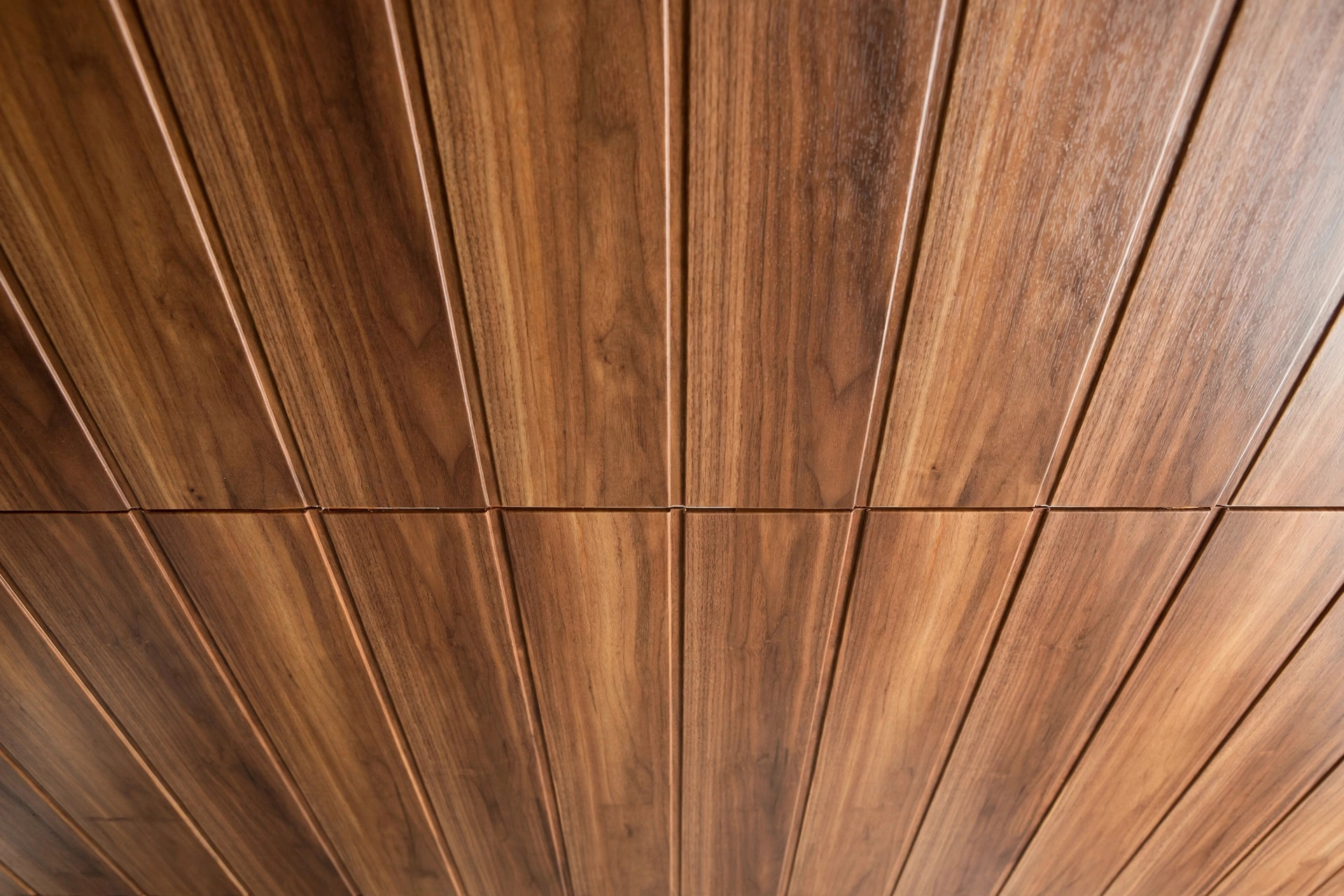
| Wood finish | Wood-grain laminate | 7–8 mm | ₹80–₹140 | Warm wood look without timber |
| Marble finish | Glossy marble texture | 7–8 mm | ₹90–₹150 | Feature ceilings, premium interiors |
| Designer | Laminated / decorative | 8–10 mm | ₹120–₹250+ | Custom ceilings, luxury homes |
Source: NoBroker PVC ceiling cost guide, India, July 2026. Note their explicit warning: these prices cover panels only; framework, edge trims, fasteners, lighting provisions, labour, transport and taxes push the installed price higher.
PVC vs the other hall materials, side by side
NoBroker’s 2026 comparison table (India, installed) puts the hall-material choice in one frame:
| Material | Price per sq ft | Lifespan | Moisture resistance | Best for |
|---|---|---|---|---|
| PVC | ₹70–₹150 | 15–20 years | Yes | Kitchens, bathrooms, utility rooms, budget homes |
| Gypsum | ₹75–₹150 | 15–20 years | No | Living rooms and bedrooms |
| POP | ₹65–₹120 | 20–25 years | No | Decorative ceiling designs |
| Wooden / Laminate | ₹150–₹300+ | 20–30 years | No | Premium interiors |
| Metal | ₹180–₹350 | 20–30 years | Yes | Commercial, kitchens, utility |
Source: NoBroker PVC ceiling cost guide, India, July 2026. Read the row for PVC against the gypsum and POP rows carefully: in a dry hall, gypsum and POP cost roughly the same installed, last as long or longer, and give you the seamless painted finish that halls photograph well. PVC’s advantage in a hall is not the look — it is speed, maintenance and the ability to use one material across the whole flat if other rooms need moisture resistance. For the gypsum and POP versions of this exact room, see gypsum hall ceilings and POP hall ceilings.
Honest pros and cons for the hall
Assembled from NoBroker’s 2026 pros/cons and the ideasandliving 2026 living-room guide — both agree on the shape of the trade-off.
Pros
- Moisture and water resistant — the only hall material that shrugs off a leaking AC drain or a humid coastal climate.
- Lightweight and fast — one to two days per room, minimal mess, easy for occupied flats.
- Low maintenance — wipe with a damp cloth; no repainting cycles like gypsum.
- Termite, mould and corrosion resistant — nothing in the panel for pests to eat.
- Wide finish range — colours, textures and wood or marble finishes let you fake premium looks at budget prices.
- Panels are replaceable — a damaged board can be swapped without redoing the ceiling.
Cons
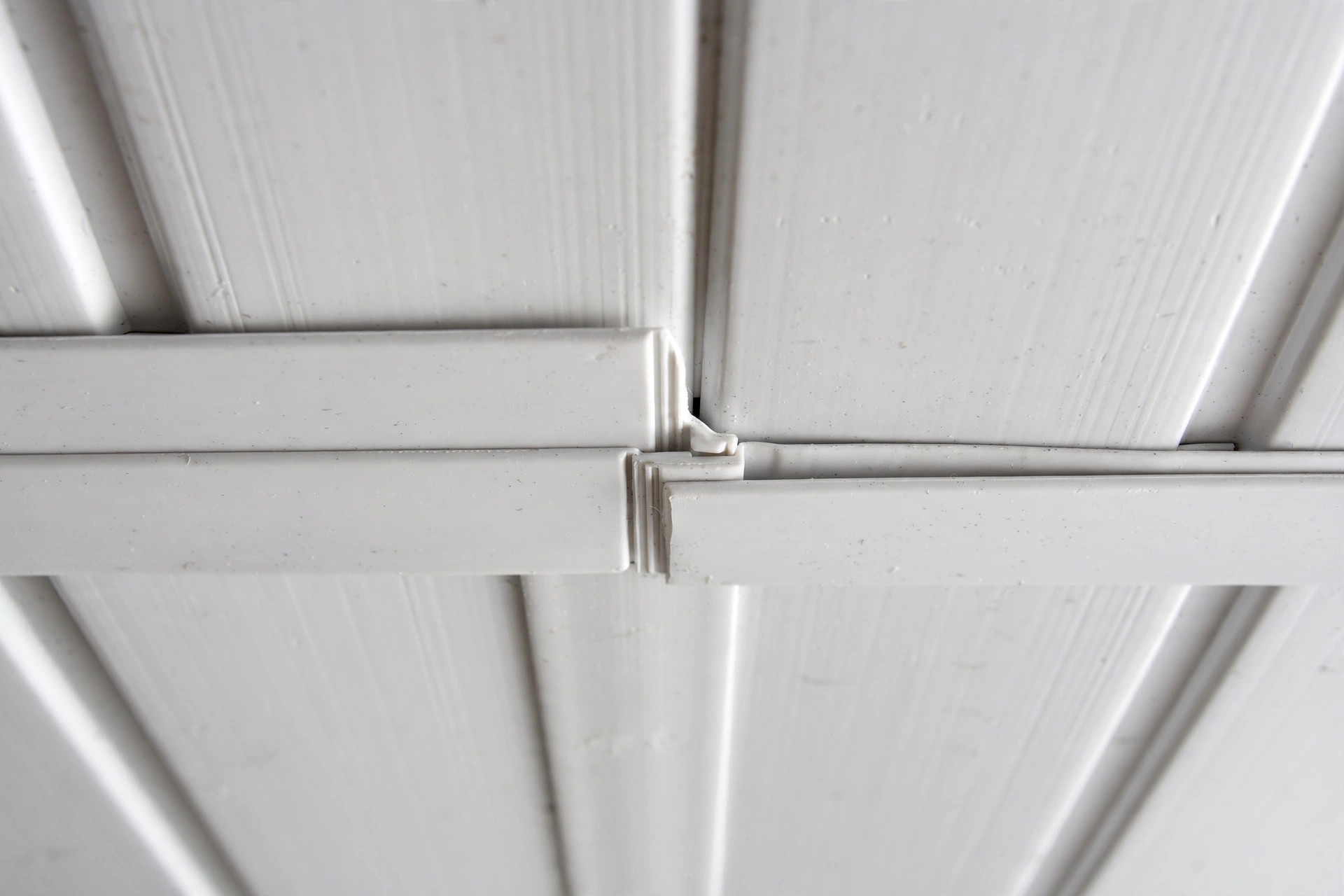
- Less premium appearance — panel joints are visible; it never looks like a seamless plastered ceiling.
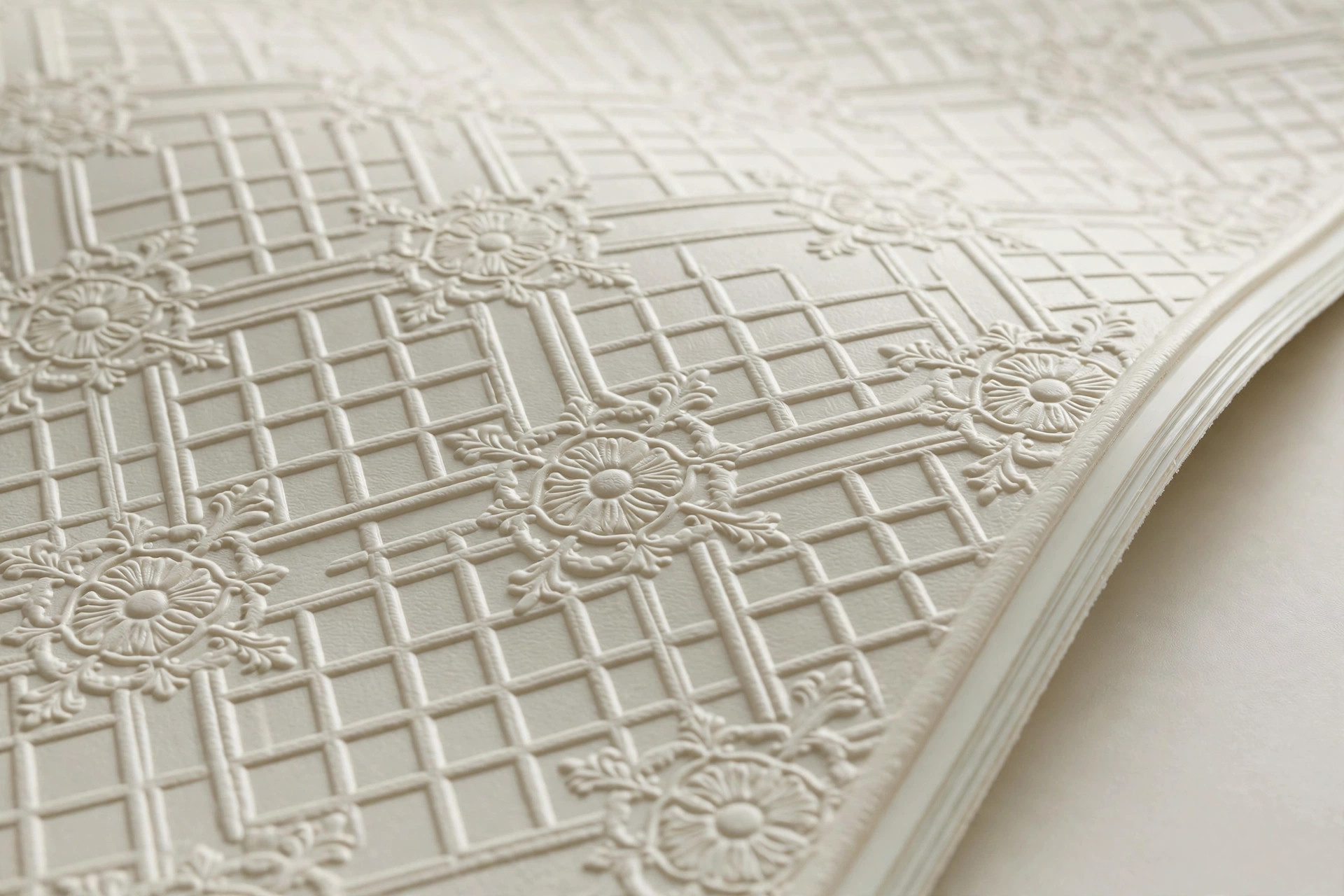
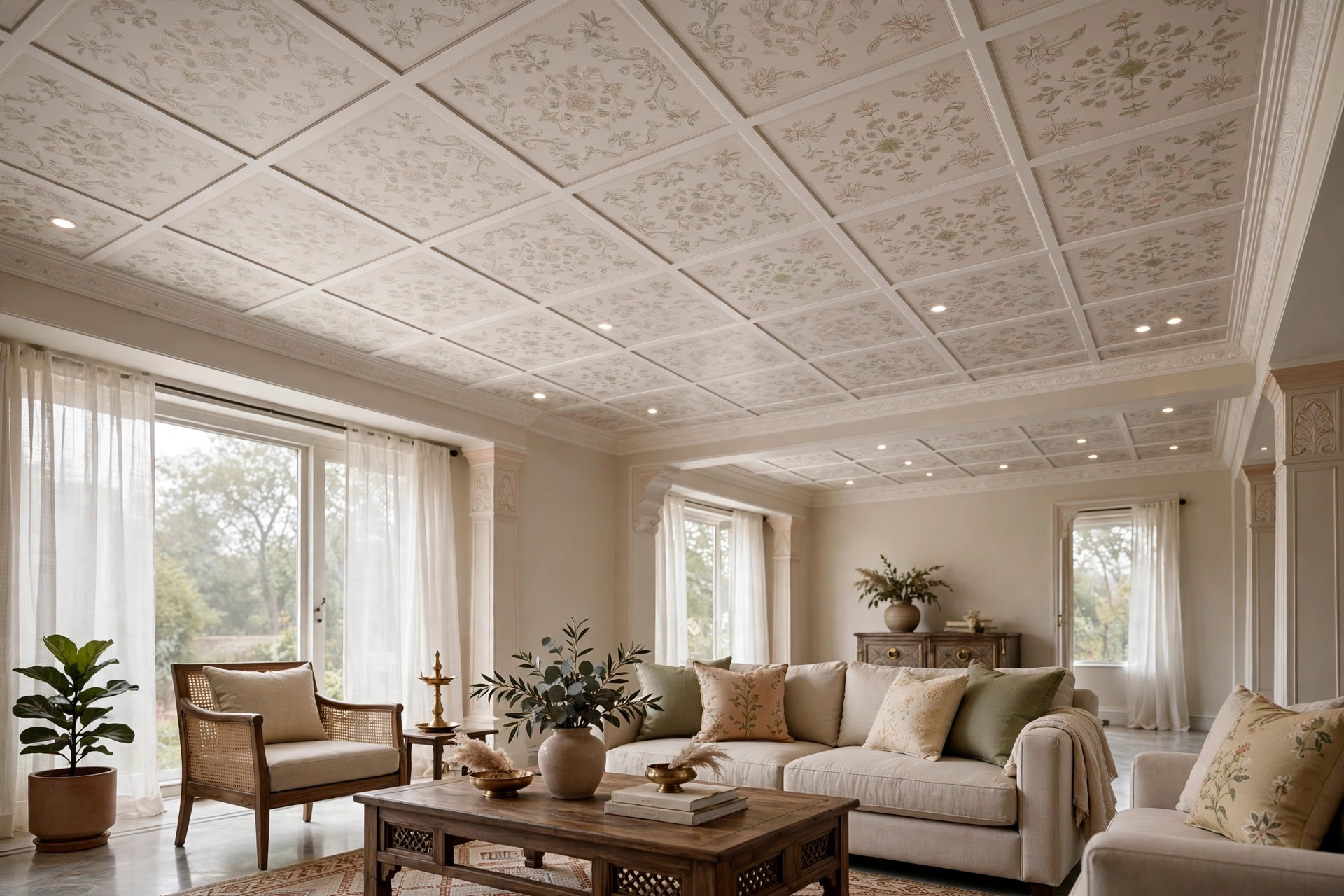
- Limited design flexibility — intricate patterns, curves and multi-level sculpture are POP’s territory, not PVC’s.
- Heat warping — prolonged high temperatures (a south-facing top-floor hall, halogen fixtures) can warp or fade panels; LEDs run cooler and are the safer pairing.
- Lower perceived value — several 2026 guides note PVC reads as “budget” in living rooms where depth and finish matter.
- Single-panel repair is fiddly — NoBroker notes it can be hard to replace one panel without disturbing its neighbours.
PVC hall designs that actually work
PVC’s limits are design limits, not material failures. These layouts play to what panels do well.
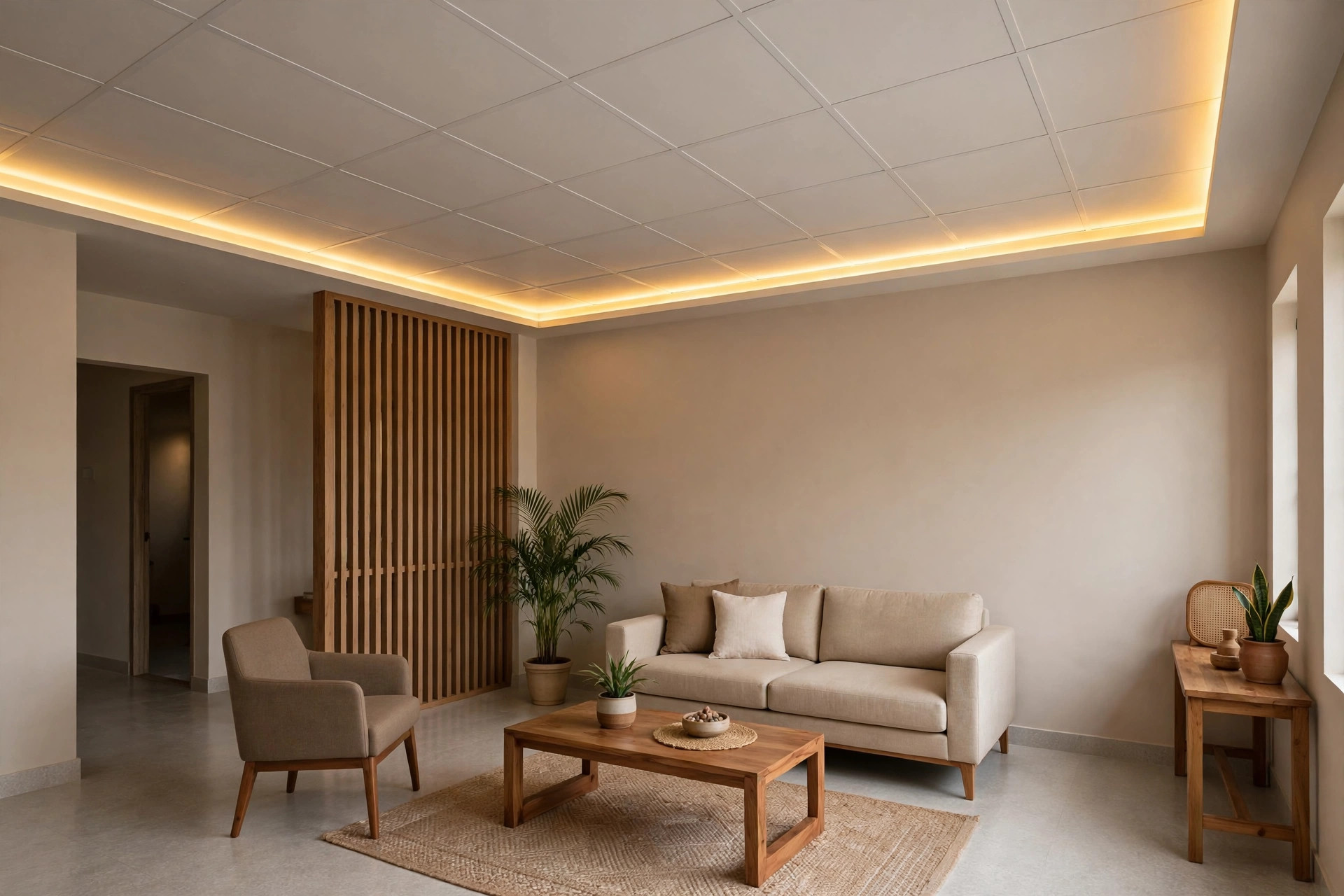
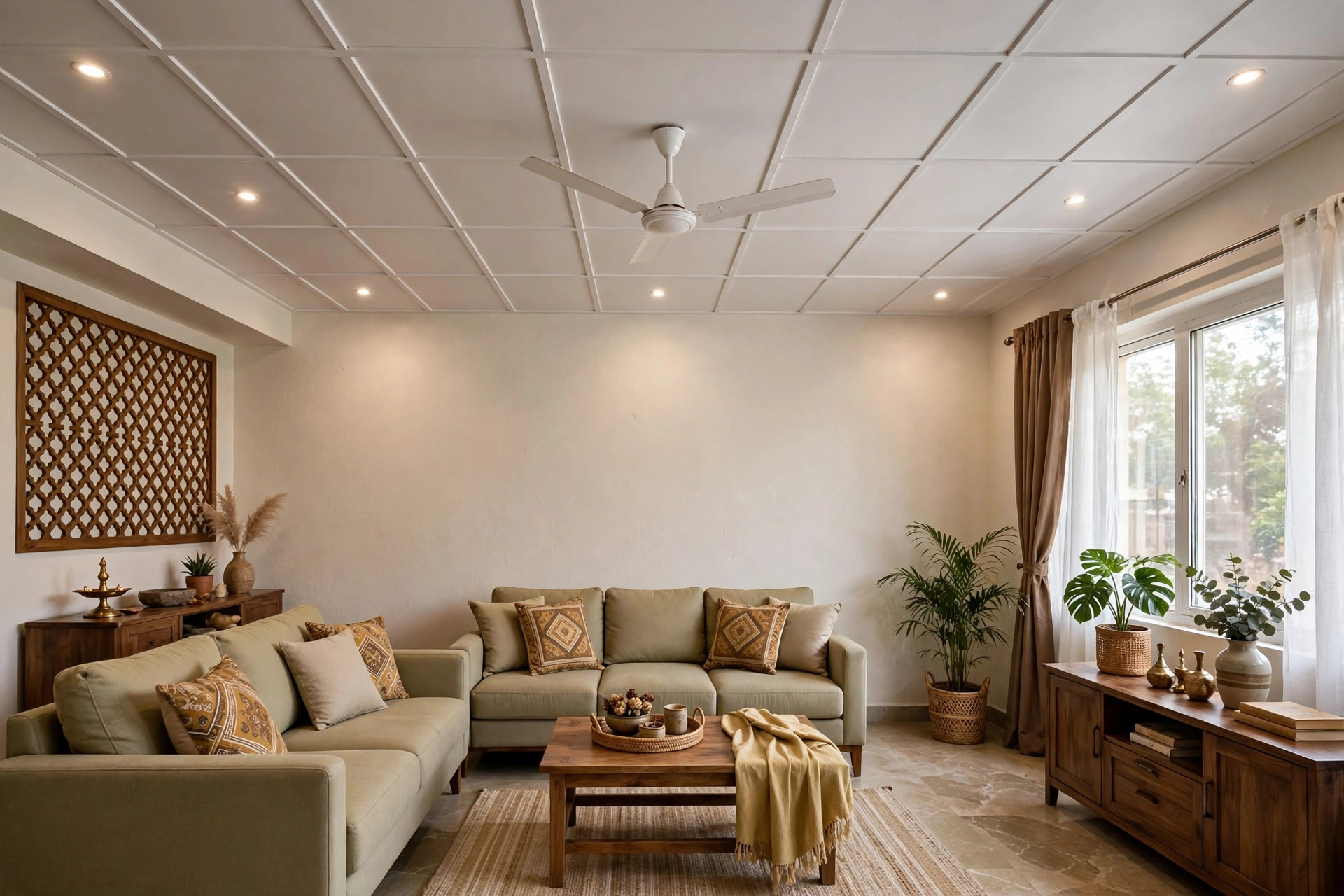
1. Plain white single-level with a cove border
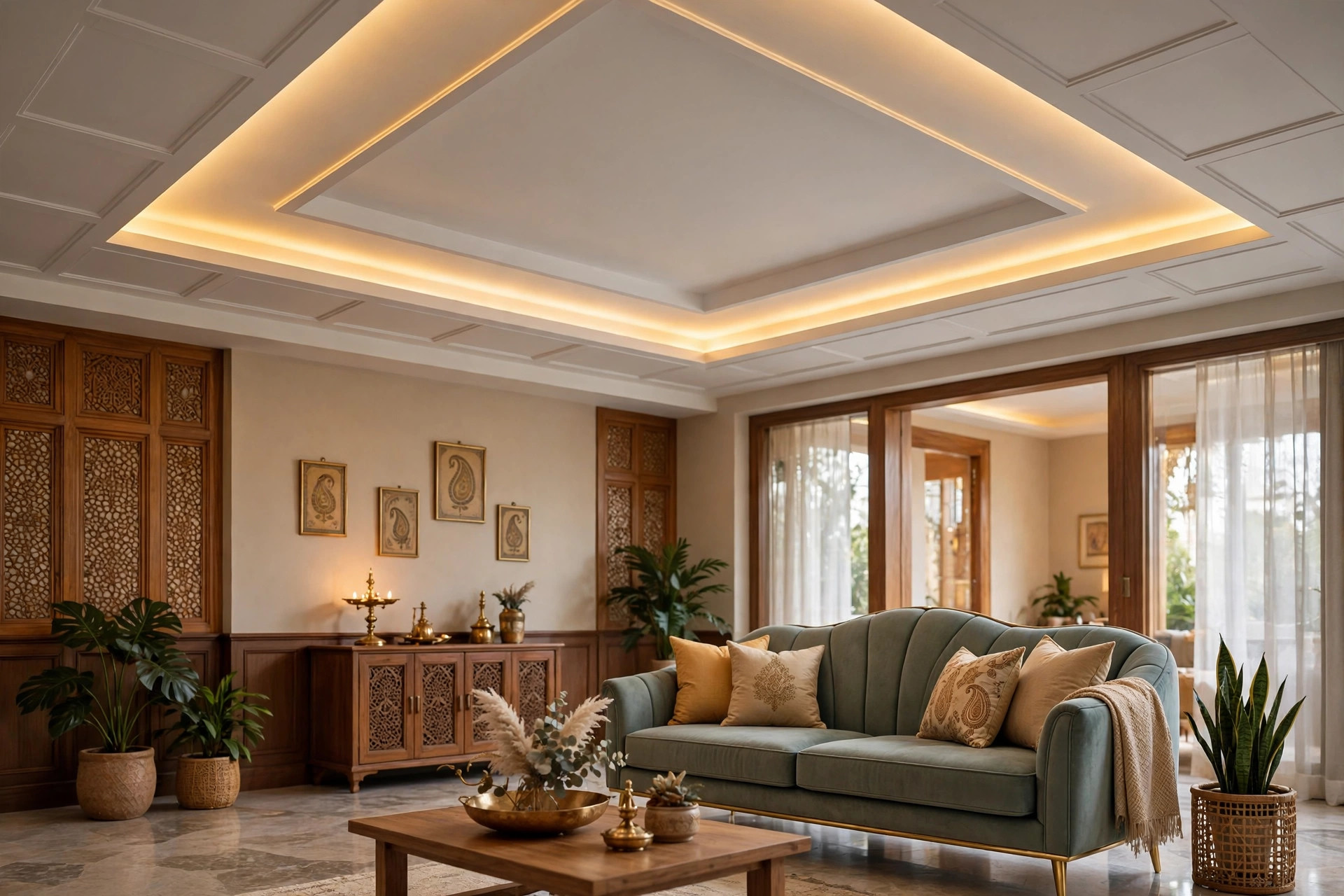
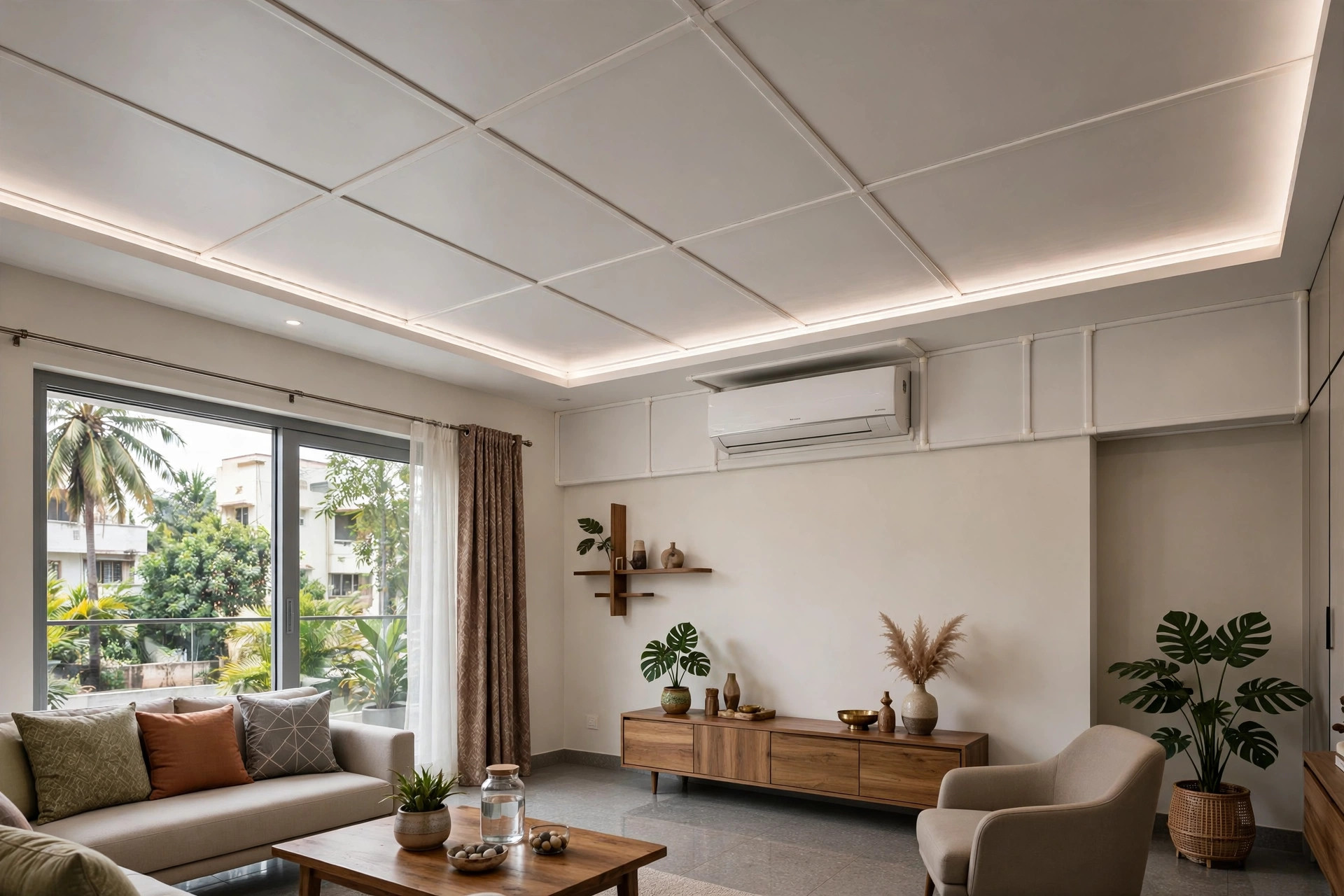
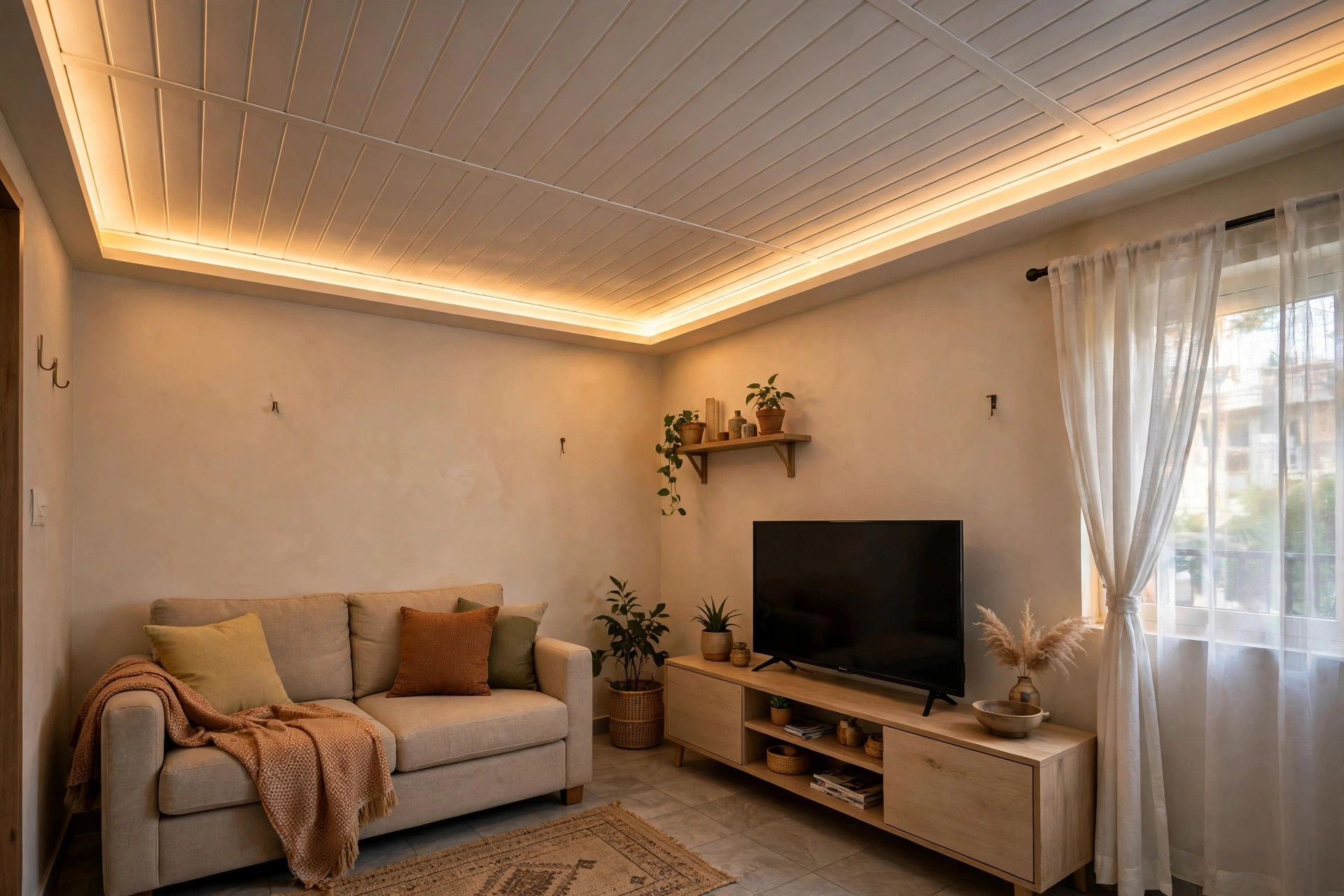
The workhorse. Flat PVC panels across the ceiling, one perimeter cove for an LED strip. It reads clean, costs the least, and the cove is what makes the ceiling feel designed rather than installed. Best for halls under about 200 sq ft.
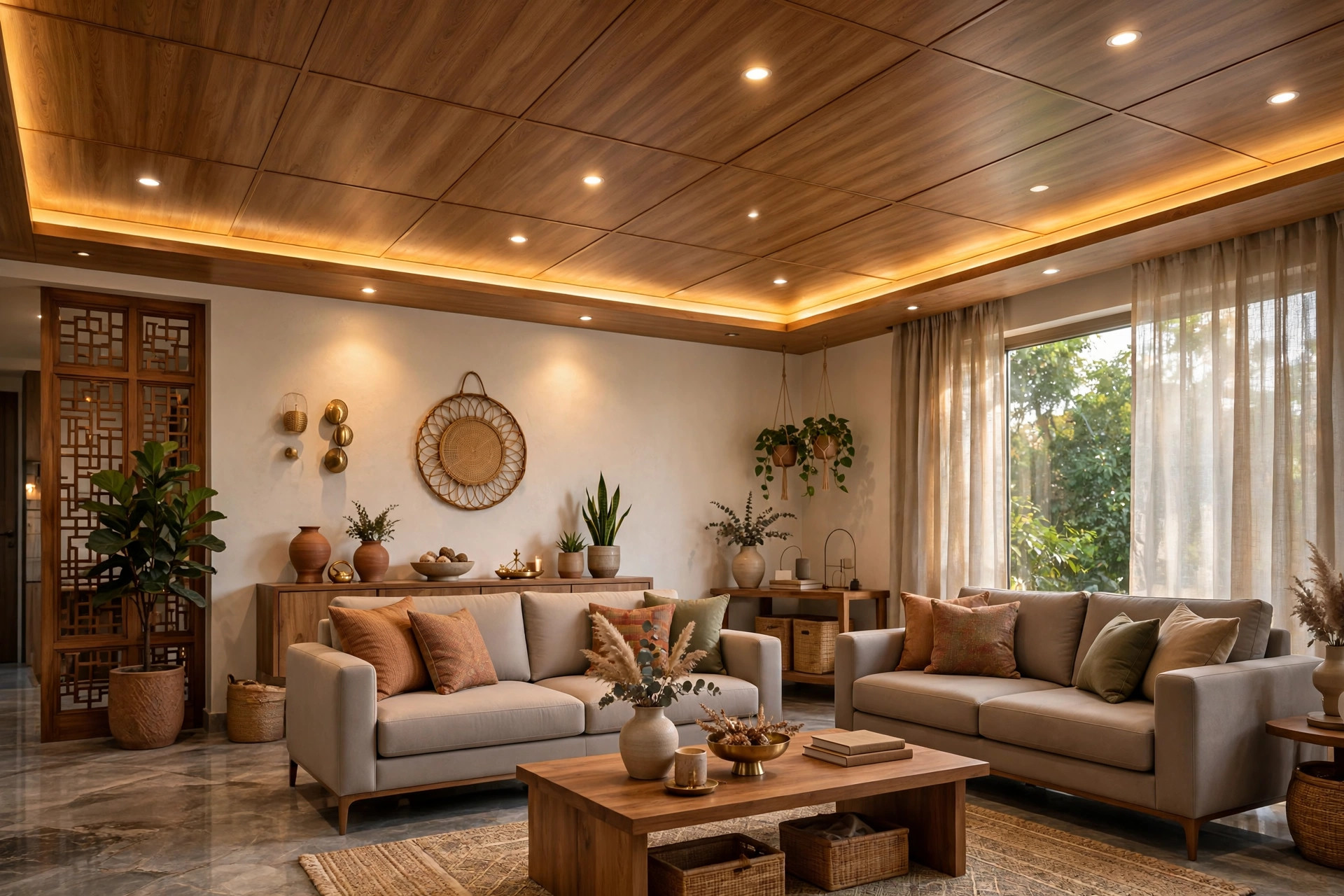
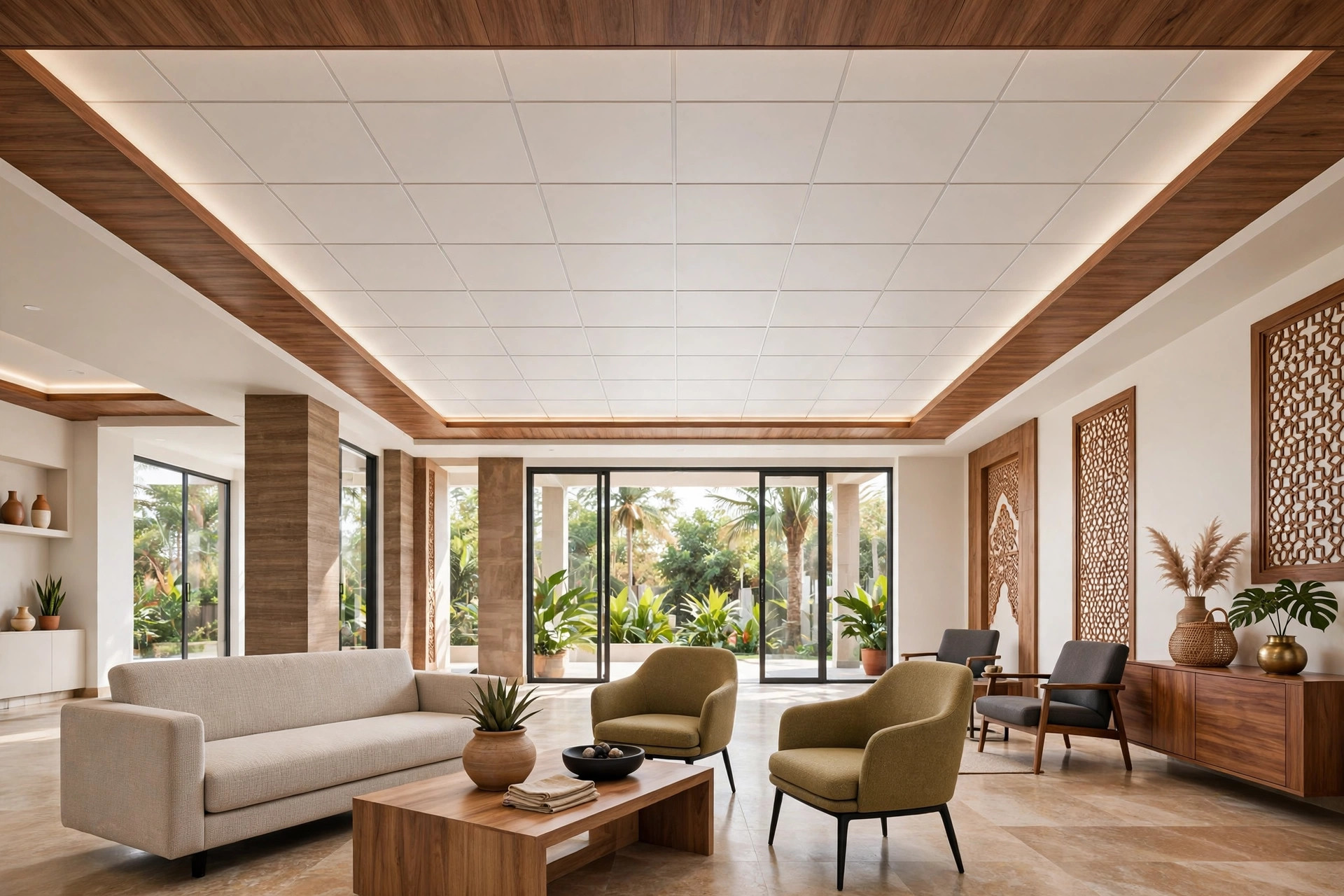
2. Wood-finish feature ceiling
Wood-grain laminated panels (₹80–₹140 per sq ft, panels only) across the full ceiling or above the seating zone. You get the warmth people associate with timber ceilings at a fraction of the cost and with zero termite risk — the closest PVC gets to premium.
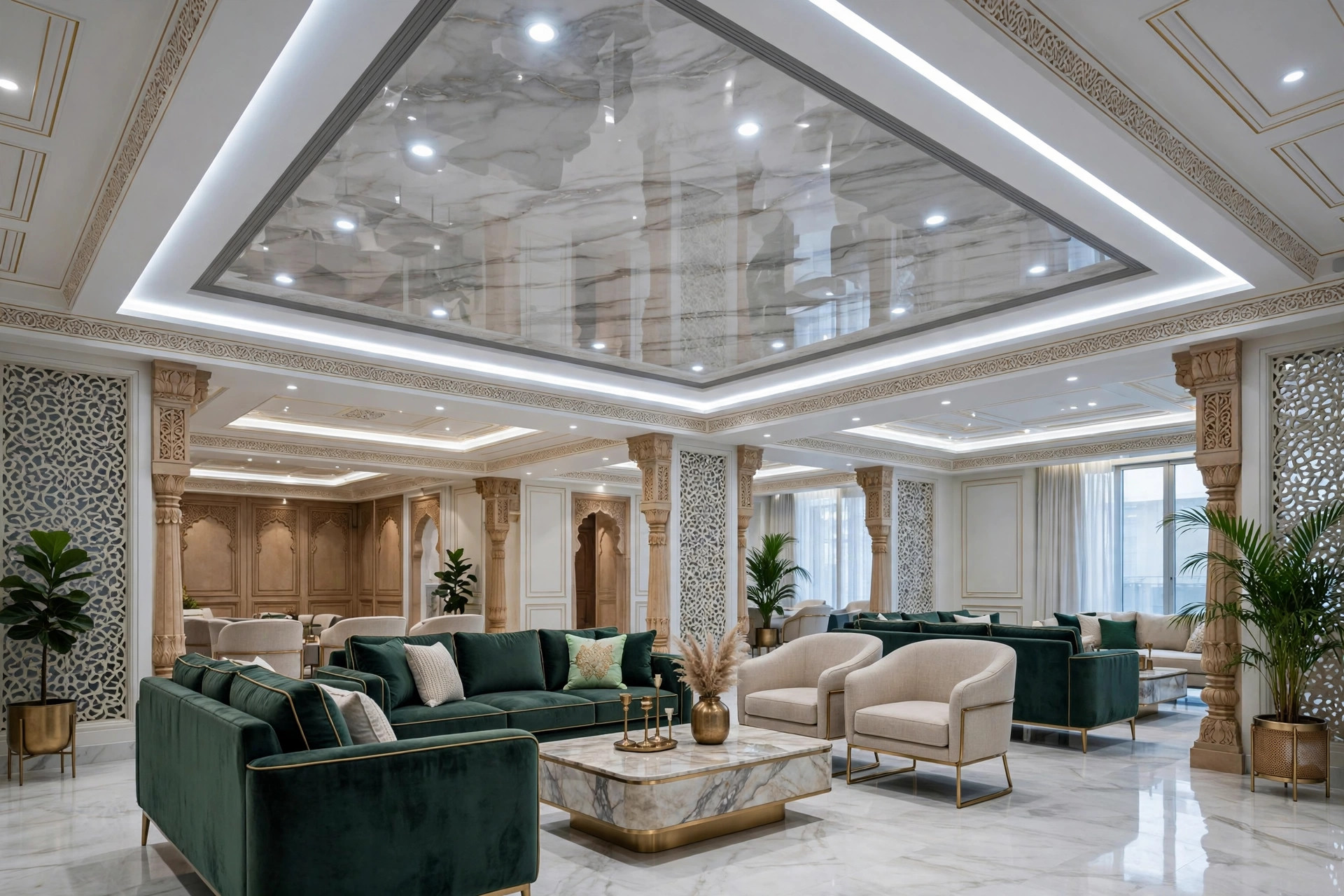
3. Marble-finish accent panel
Glossy marble-textured panels (₹90–₹150 per sq ft, panels only) as a central feature with plain panels or a painted border around them. Works best with cool-white lighting, which suits the marble look.
4. Two-tone panel layouts
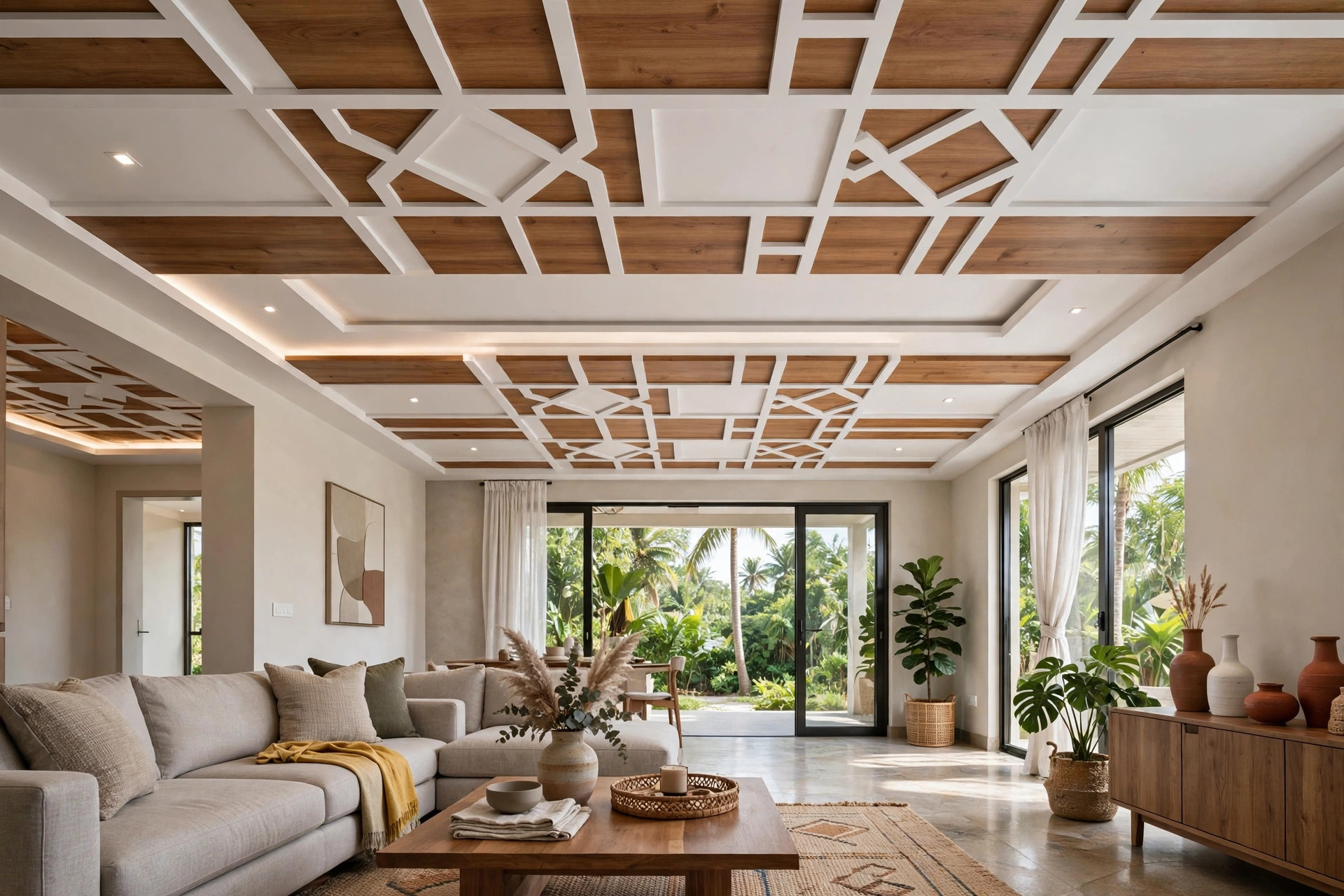
Alternate white and wood-finish or grey panels in bands or a border frame. Geometry comes from the panel joints themselves — no extra framework, which is why this stays cheap.
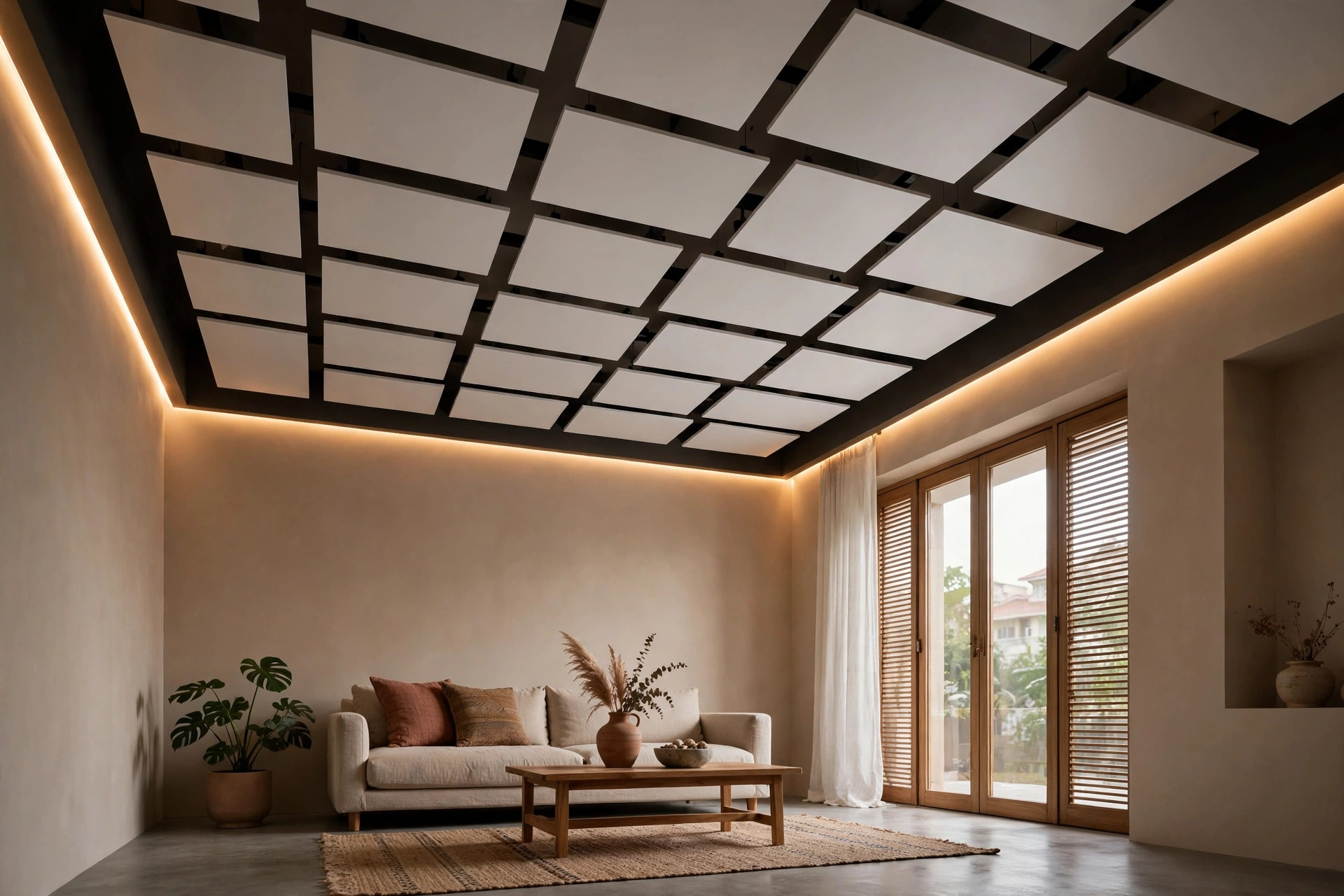
5. Slim-border “floating” look
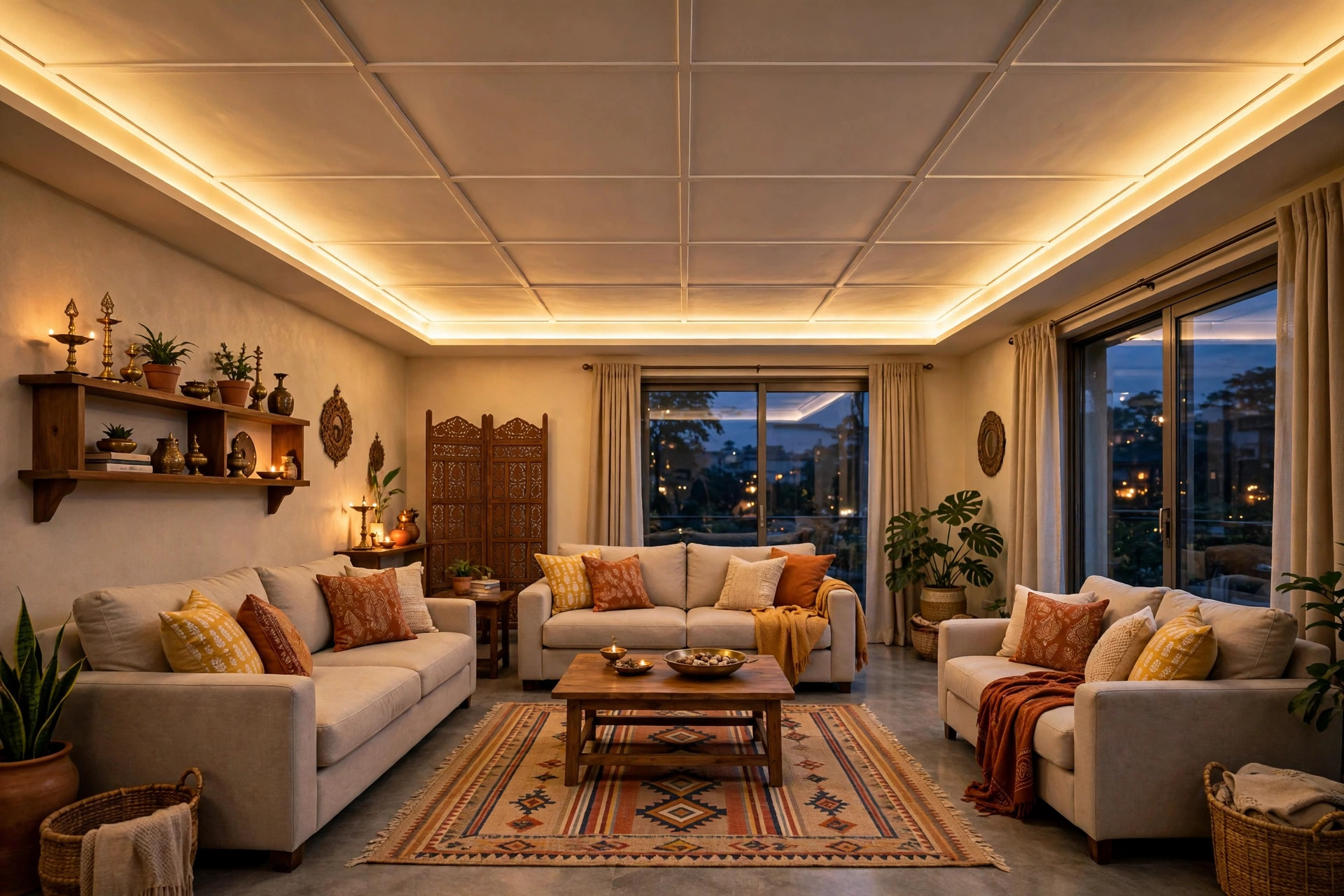
A PVC panel field dropped a few inches with a shadow gap at the wall junction and concealed LED strip in the gap. The ceiling appears to float — the single most effective trick for making PVC look intentional.
6. Glossy statement ceiling
High-gloss designer panels in a deep colour (NoBroker’s own gallery shows a reflective blue PVC ceiling in a villa lounge). Bold, reflective, and the one PVC design that treats the ceiling as the room’s feature. Needs careful lighting — gloss shows every ripple in the framework, so the installer matters more than the panel.

7. PVC for the hall in a moisture-prone flat
Coastal cities, ground-floor flats, top-floor halls under a terrace: where every other material eventually stains or swells, PVC’s waterproof nature becomes the primary design reason, not a compromise. Here the honest recommendation flips — PVC is the right material, full stop.
Planning the installation: what to lock before work starts
- Lighting and fan positions first. Recessed lights, LED strips, cove lighting and the ceiling fan all need cutouts and wiring planned before panels are fixed. Changes after installation mean opening finished panels.
- Ceiling height. PVC drops are shallow — usually 3 to 6 inches for a flat layout — so low halls keep their headroom. Anything below about 9 feet still deserves a flat or border-only layout.
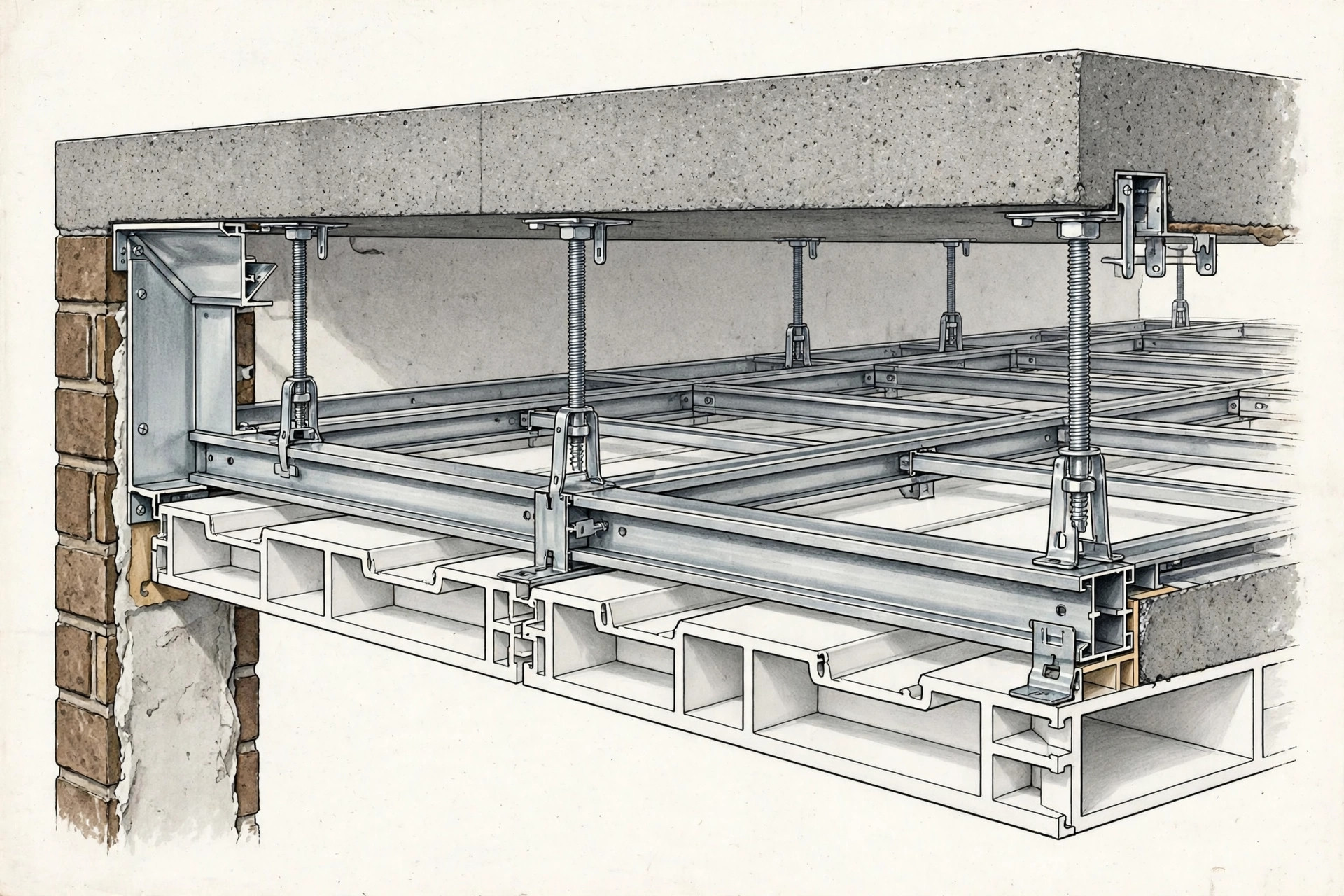
- Fan mounting. The fan must anchor to the structural slab through the framework, not hang from a panel. Tell the contractor this explicitly; it is a safety item, not a preference.
- AC and ventilation. Mark split-AC indoor unit positions and any ducting before the framework goes up, so vents and wiring stay accessible.
- Framework quality. Glossy and dark panels reveal every wave in a cheap framework. Spend the saved money on a straight, well-levelled GI framework.
- Quotations in writing. Ask for panel grade, thickness, framework type, and whether lighting/electrical is included — NoBroker notes quotes often split material and labour, so compare like with like.

Maintenance: the quiet reason people choose PVC
There is almost nothing to do. Dust with a dry cloth, wipe marks with a damp cloth, and check the LED strip channels once a year — dust in the cove dims the glow more than any panel ageing does.
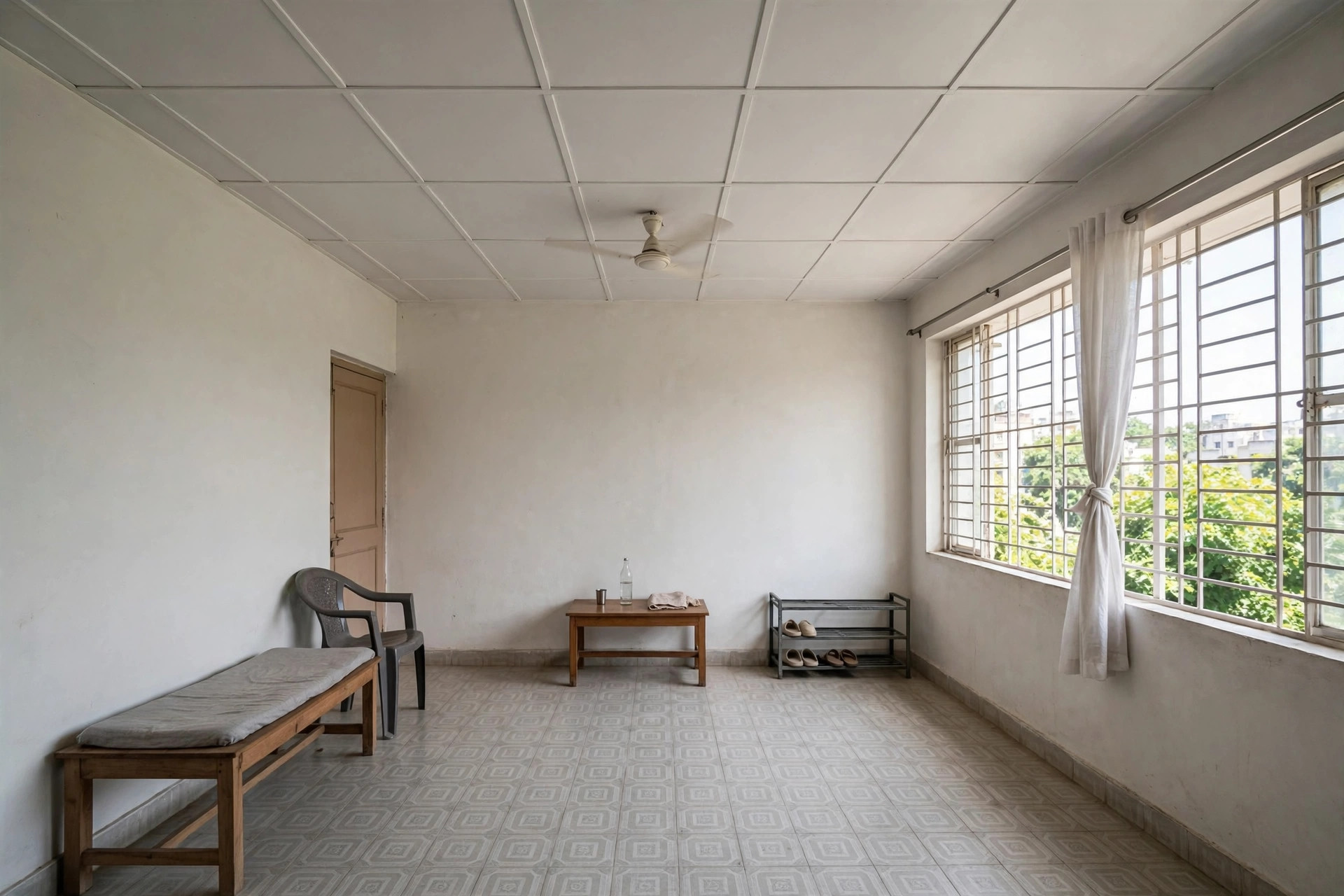
No repainting cycle, no crack-filling, no termite treatment. In the guides’ lifespan tables PVC is rated 15–20 years (NoBroker) to 8–12 years (ideasandliving, who read it as the cheaper end of the market) — the spread mostly reflects panel grade and heat exposure, so buy mid-range panels and keep halogen fixtures away from it.
When PVC is the right call — and when it is not
Choose PVC for the hall when: the budget is tight, the flat needs one material everywhere (including wet rooms), the climate is humid, the flat is rented or will be sold soon, or you want the fastest possible installation with the least maintenance.
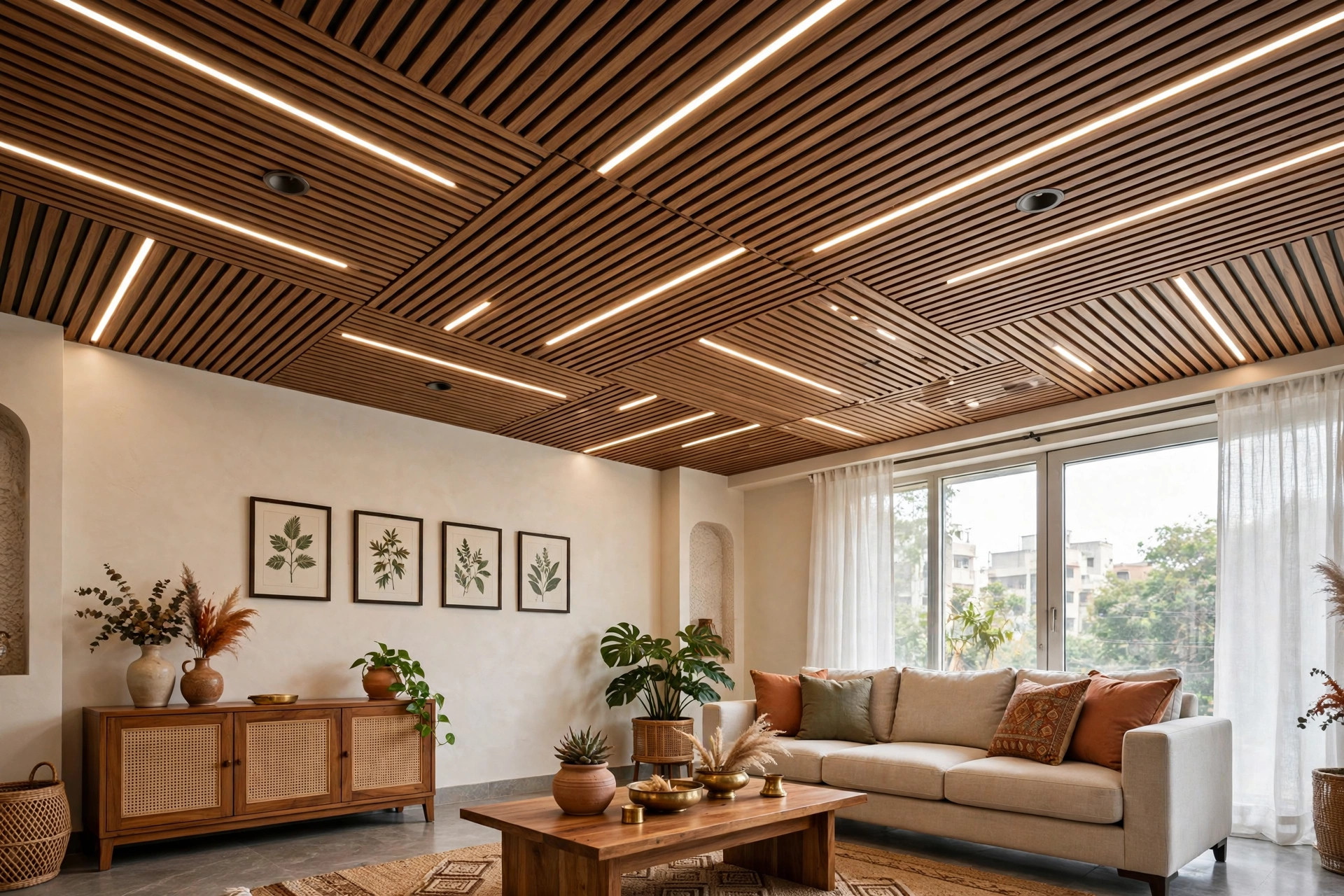
Choose something else when: the hall ceiling is meant to be the room’s showpiece — intricate curves, carved detail, seamless painted finishes. POP gives you sculptural freedom and gypsum gives you the seamless modern look at a similar installed price. The simple hall designs guide shows what budget-friendly POP and gypsum layouts look like at comparable money.
FAQs
Is PVC false ceiling good for a hall?
It is good for halls where budget, speed, moisture resistance or easy maintenance are the priorities. It is not the best choice for a luxury showpiece ceiling — the panel joints and limited design flexibility mean POP or gypsum look more premium in living rooms, per multiple 2026 guides.
What is the cost of a PVC false ceiling for a hall in India in 2026?
NoBroker’s 2026 guide (India, last modified July 30, 2026) puts installed PVC at roughly ₹80–₹250 per sq ft, with a living room of 140–200 sq ft totalling ₹18,200–₹45,000 for standard designs. Panels alone cost ₹30–₹60 (basic) to ₹120–₹250+ (designer/laminated) per sq ft; framework, installation and lighting are extra. City and contractor variance applies.
Can PVC ceilings have cove lighting and fans?
Yes — recessed lights, LED strips, cove lighting and ceiling fans are all supported when planned during installation. The fan must anchor through the framework to the structural slab, not hang from a panel.
How long does a PVC hall ceiling last?
NoBroker’s 2026 comparison rates PVC at 15–20 years; ideasandliving’s 2026 guide gives 8–12 years for the cheaper end of the market. Panel grade, heat exposure and installation quality decide where yours lands.
Does a PVC ceiling need painting?
No. The colour and finish are in the panel itself, which is why there is no repainting cycle — a wipe with a damp cloth is the maintenance routine.
The bottom line
PVC is the most practical false ceiling material you can put in a hall — waterproof, termite-proof, fast to install, easy to maintain — and one of the cheapest, at roughly ₹80–₹250 per sq ft installed in India in 2026 (NoBroker, July 2026). What it cannot do is look like a seamless plastered ceiling or carry intricate design. Buy it for what it is, keep the design simple, spend the savings on a straight framework and good lighting, and it will serve a hall quietly for years. If the ceiling needs to be the room’s centrepiece, gypsum and POP are waiting at similar money — compare them in the hall designs hub before you decide.
All images in this article are original concept renders created for illustration, not photographs of completed projects.