
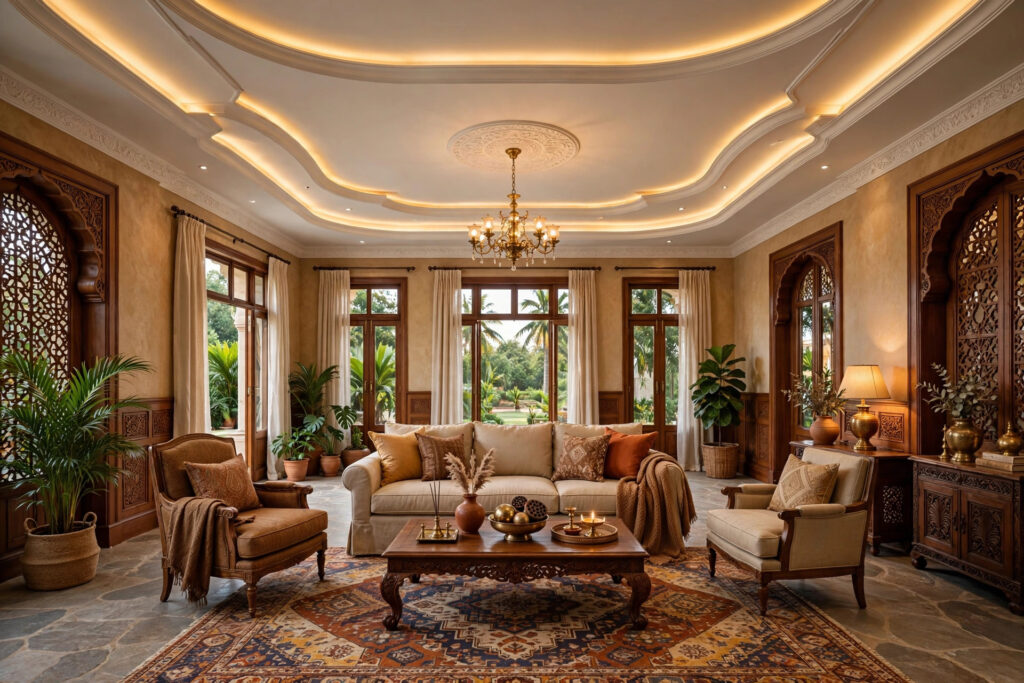

The hall is the room guests judge first, and POP is the material Indian contractors reach for when the design needs sculpting. Unlike factory boards, POP is mixed and moulded on-site — curves, medallions, jaali work, layered trays, anything your karigar can shape by hand. That freedom is also its risk: POP quality lives or dies by craftsmanship. This guide covers POP false ceiling designs for halls in depth — 10 designs with honest 2026 cost bands, hall-size planning, the POP vs gypsum decision, and a contractor checklist that protects you from the material’s weak points.
Why POP suits halls (and where it doesn’t)
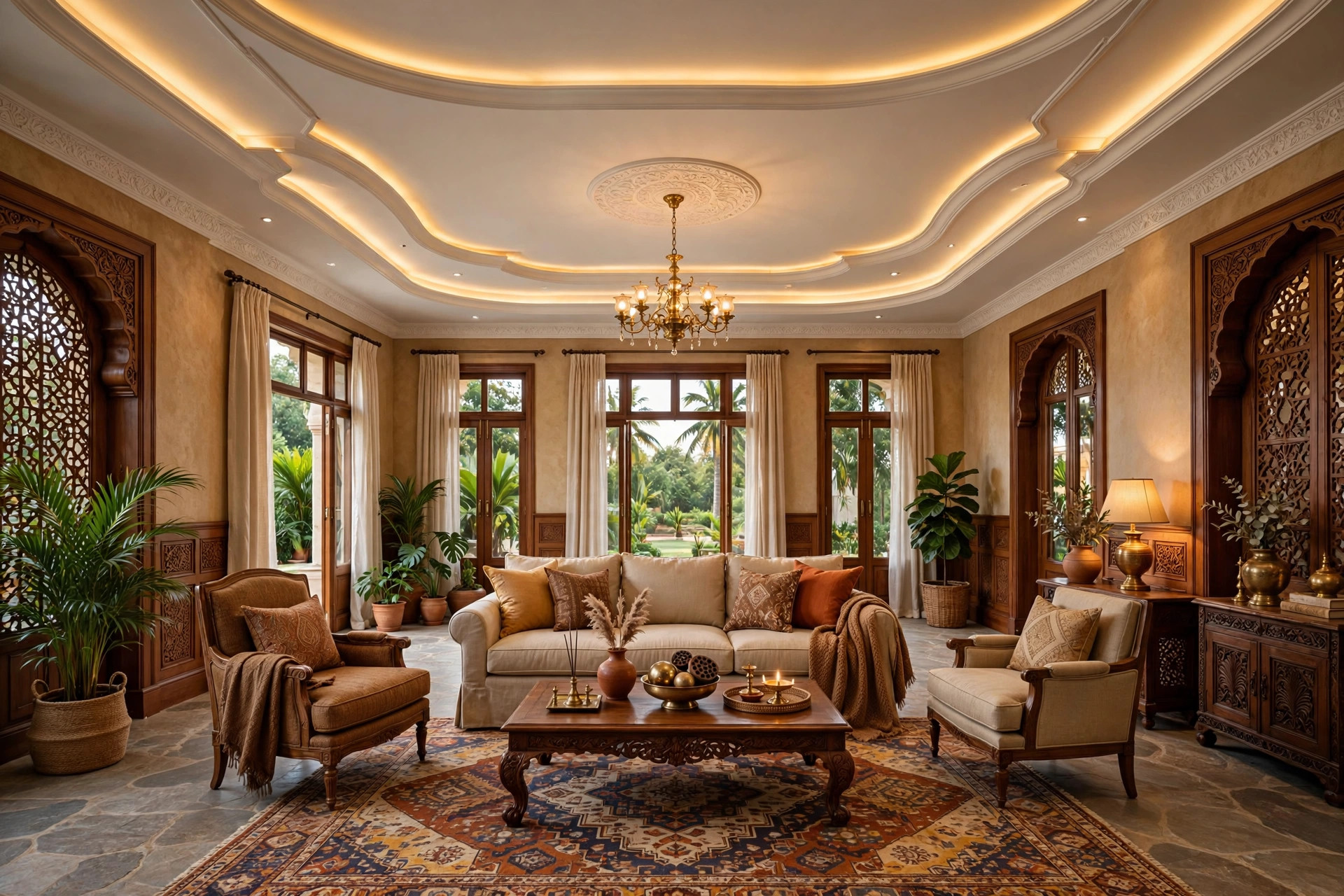
Halls carry the home’s most decorative ceilings — trays, coves, geometric zones, chandelier medallions. POP’s on-site moulding makes true curves and custom profiles cheaper than any board material can. NoBroker’s 2026 living-room guide names the single-cove POP with warm LED the most recommended hall design of the year. But POP is slower (7–10 days on site including drying), crack-prone with temperature shifts, and vulnerable to moisture. For straight-line modern trays and flats, gypsum installs in 2–4 days with a more uniform finish. Pick POP when the design needs sculpting; pick gypsum when it needs speed and clean lines.
10 POP hall designs with 2026 costs
Cost bands are from NoBroker’s 2026 living-room and simple-POP guides (India, installed — framework, POP, primer and paint; lighting fixtures usually extra). Room totals are for a standard 200 sq ft hall. Prices are indicative — your city, ceiling height and karigar shift them.
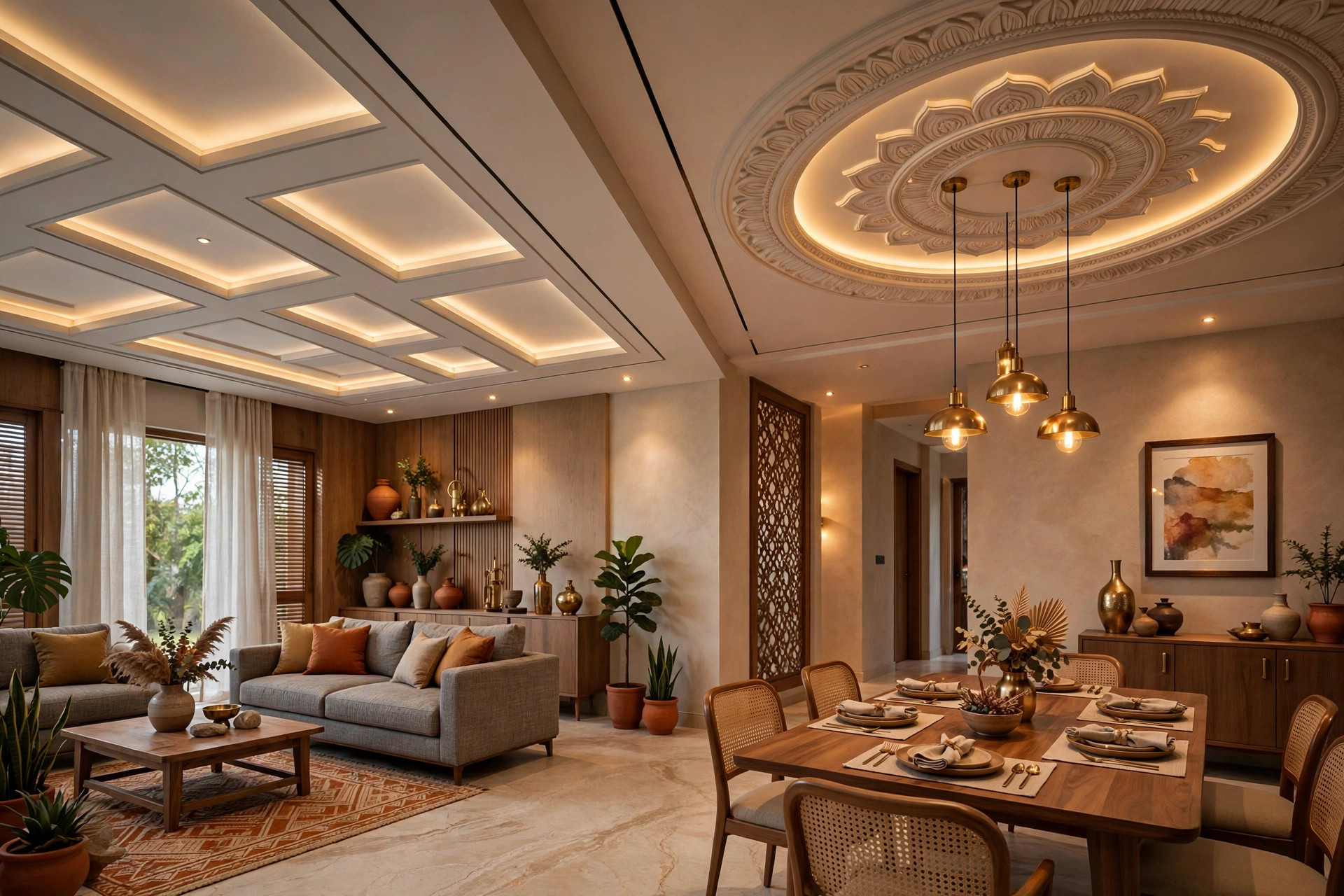
1. Single cove with warm LED strip
The most recommended hall design of 2026: a 6–8 inch perimeter drop hiding a warm LED strip, centre panel flat. Indirect warm light with no visible fixture makes a hall feel significantly more premium. Cost: ₹100–₹155 per sq ft, roughly ₹20,000–₹31,000 for 200 sq ft.
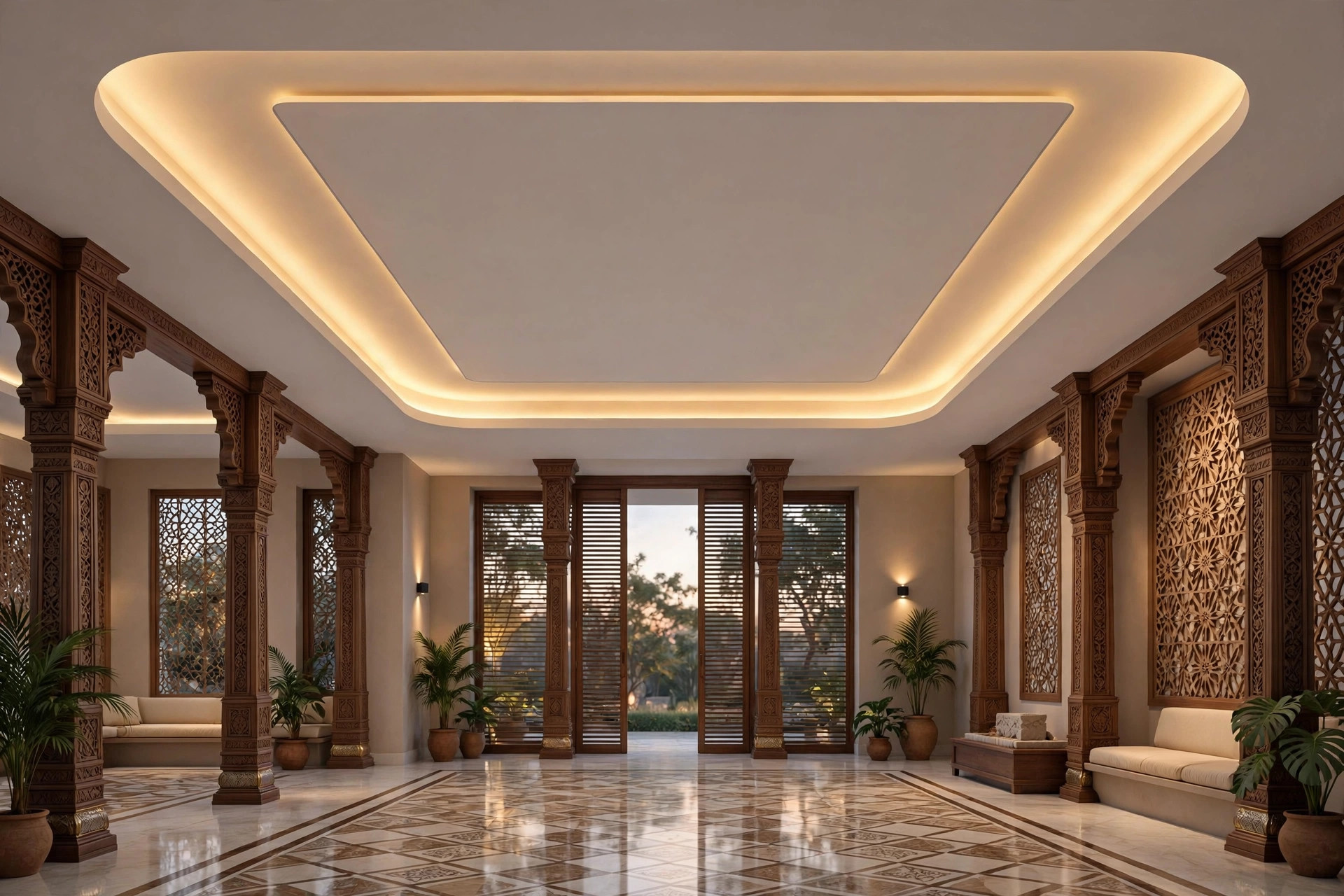
2. Plus-minus tray ceiling
Raised and recessed POP sections create the classic tray effect with stepped depth. POP moulds the steps cleanly on-site. Cost: ₹120–₹200 per sq ft, roughly ₹24,000–₹40,000. Needs about 10 ft of ceiling height.
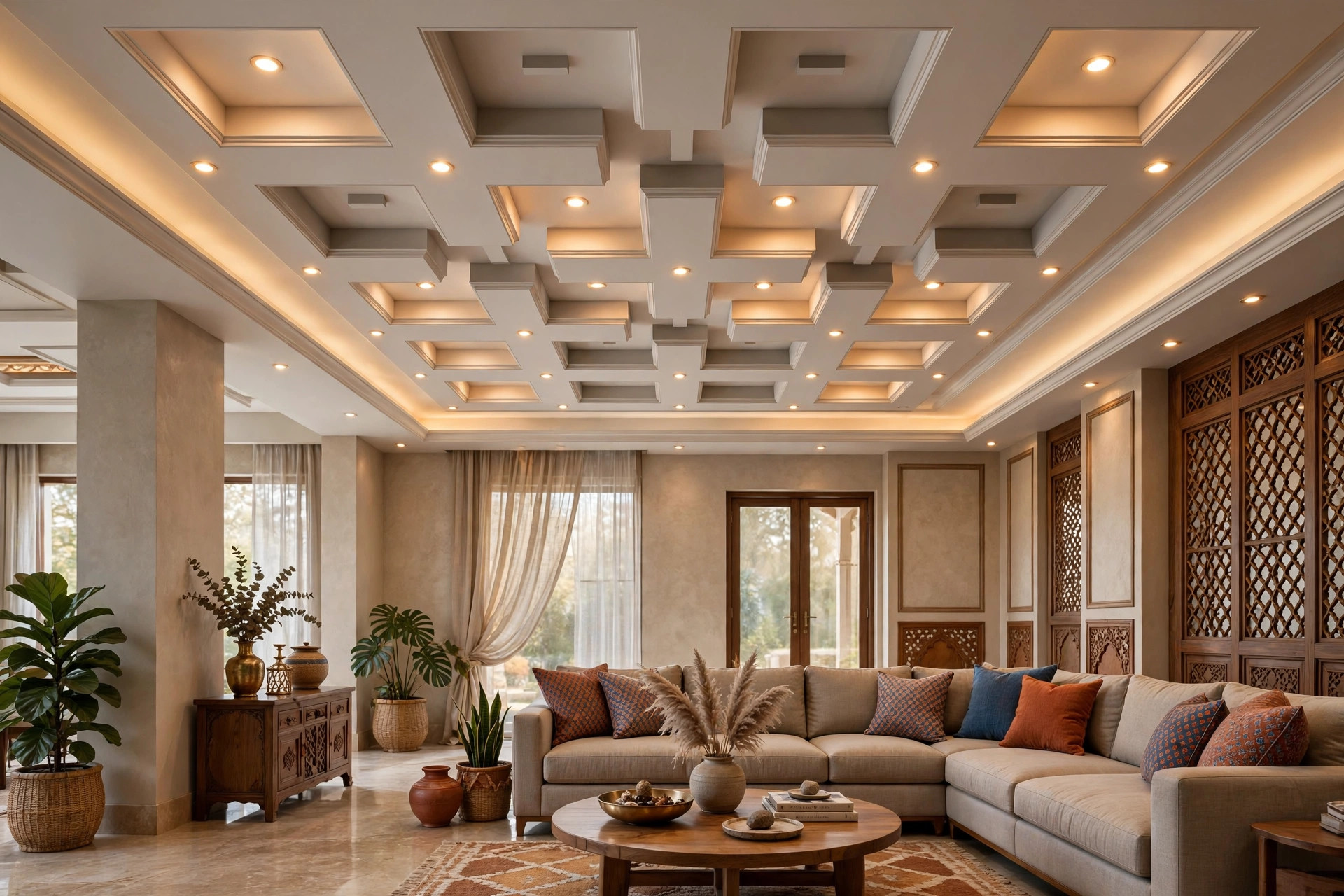
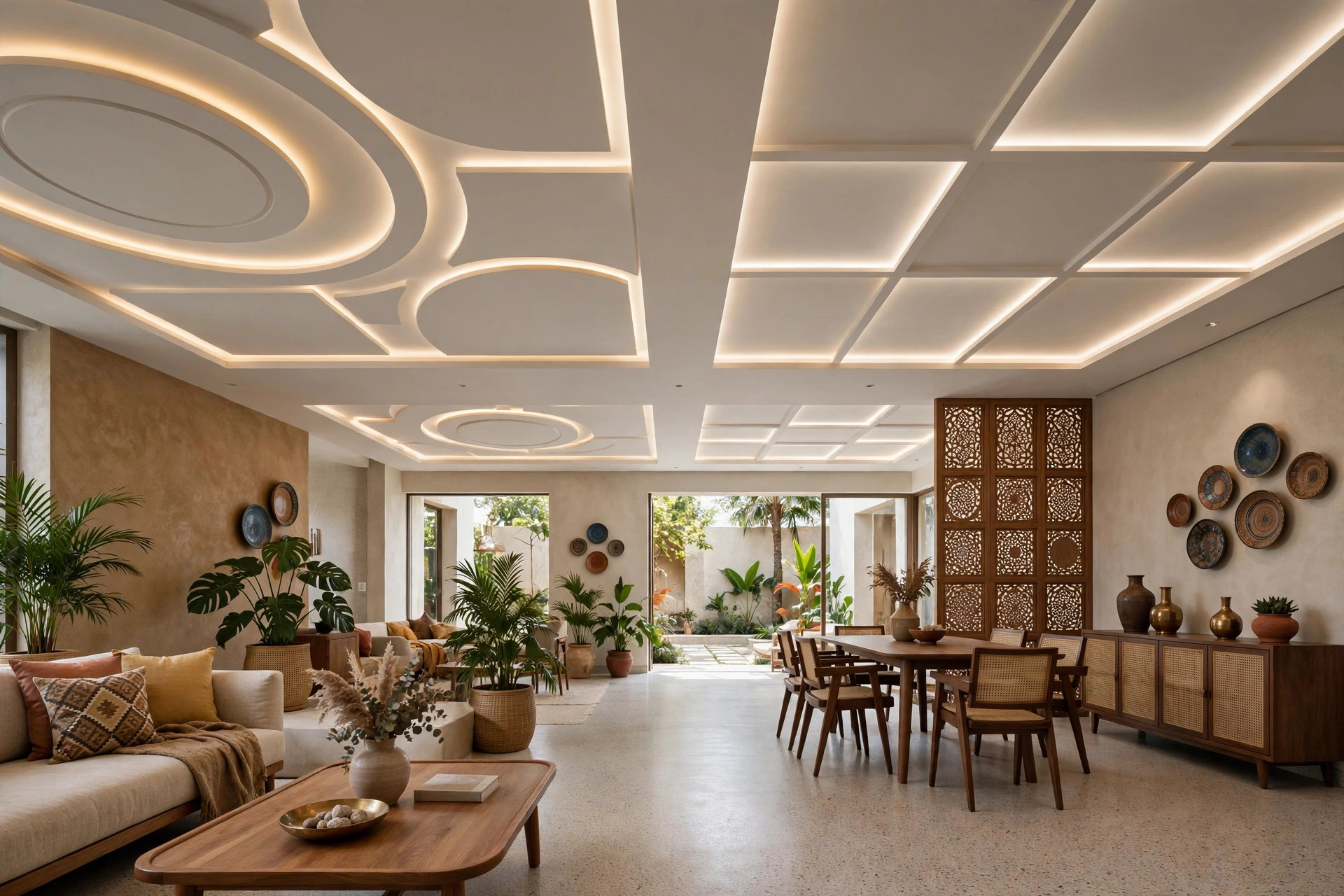
3. Geometric zoned panels
Circular, hexagonal or rectangular POP zones that divide open-plan halls into areas — a circle over the seating, a rectangle over the dining end. POP’s moulding makes true curves affordable. Cost: ₹150–₹250 per sq ft, roughly ₹30,000–₹50,000.
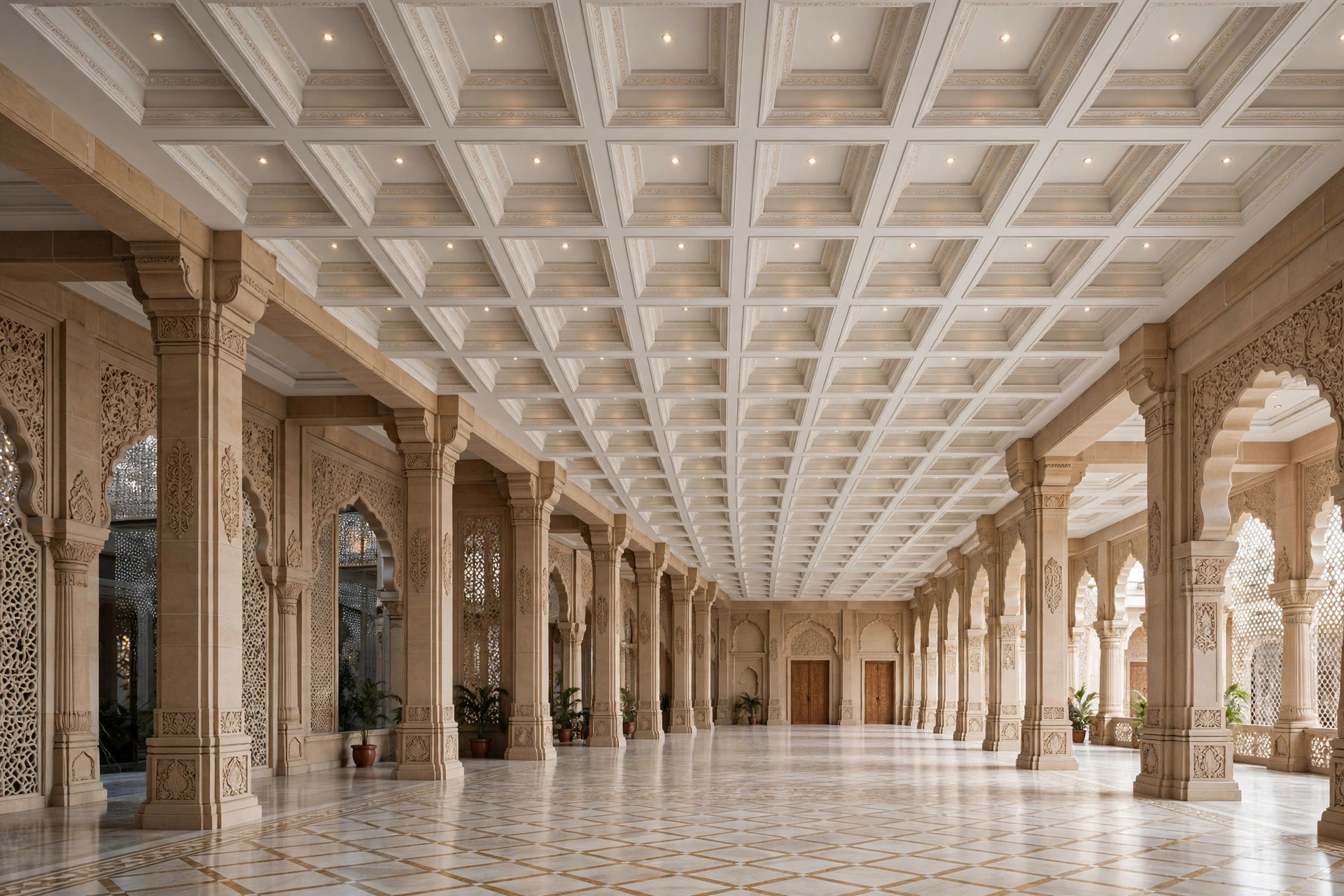
4. Coffered ceiling
A grid of recessed square or rectangular POP coffers, each able to hold a downlight. Strong architectural depth for large square halls with 10.5 ft or more. Cost: ₹140–₹200 per sq ft for standard coffers, roughly ₹28,000–₹40,000.
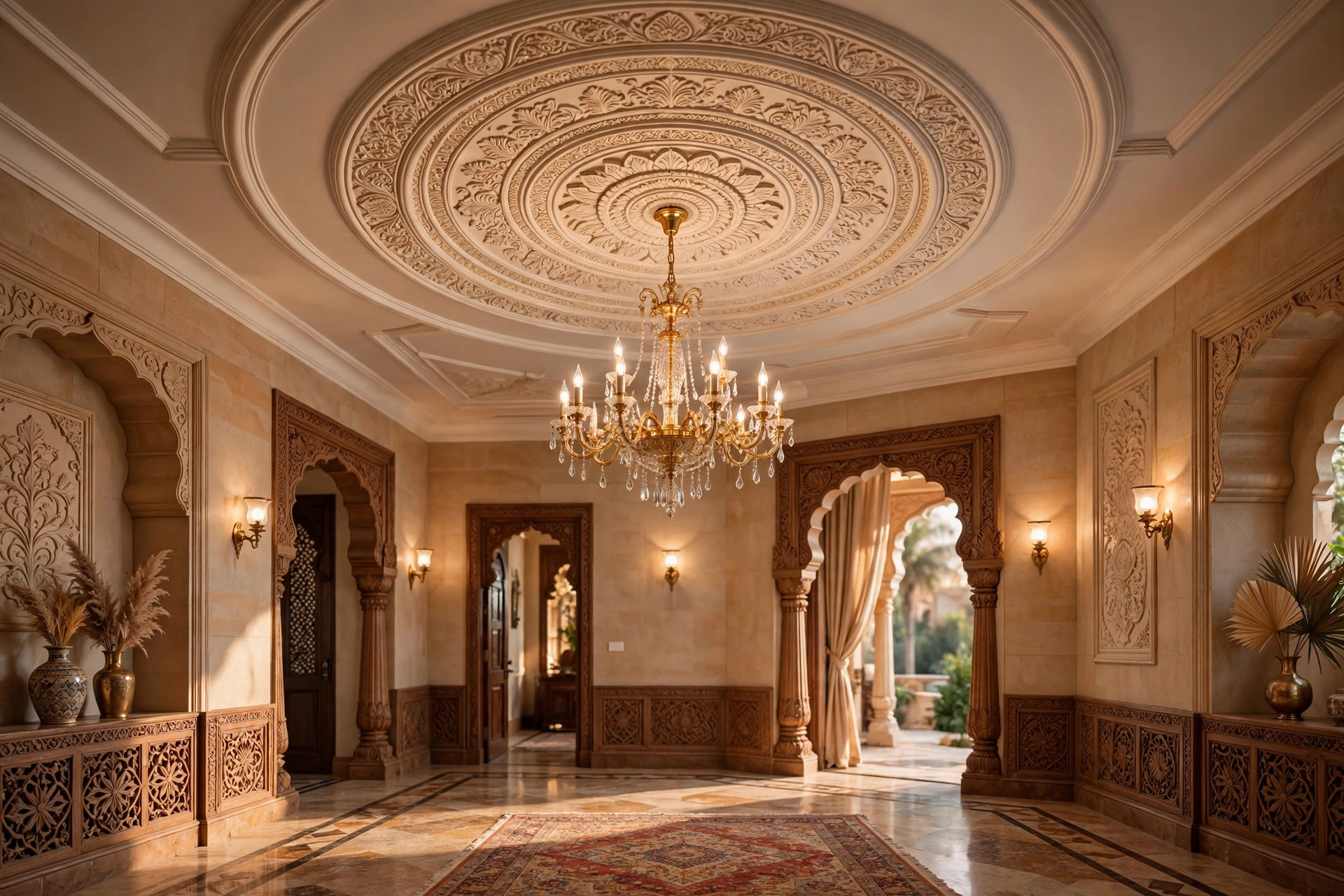
5. Circular medallion with chandelier
A circular POP medallion in the centre with a chandelier or pendant hanging from it — the classic Indian hall centrepiece. Cost: ₹90–₹140 per sq ft for the medallion zone. The chandelier must anchor to the structural slab through the POP, never to the POP frame itself — plan this before moulding begins.
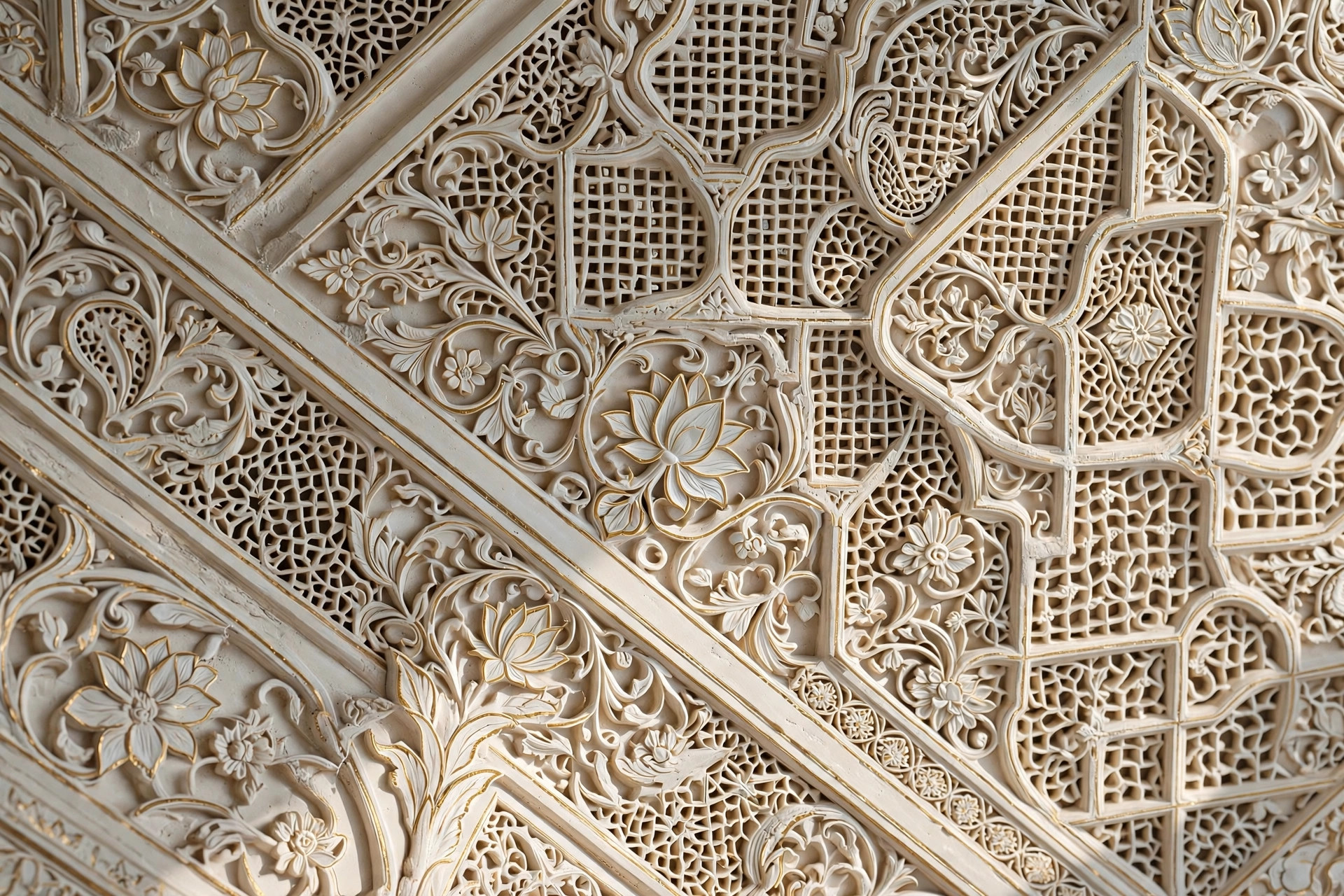
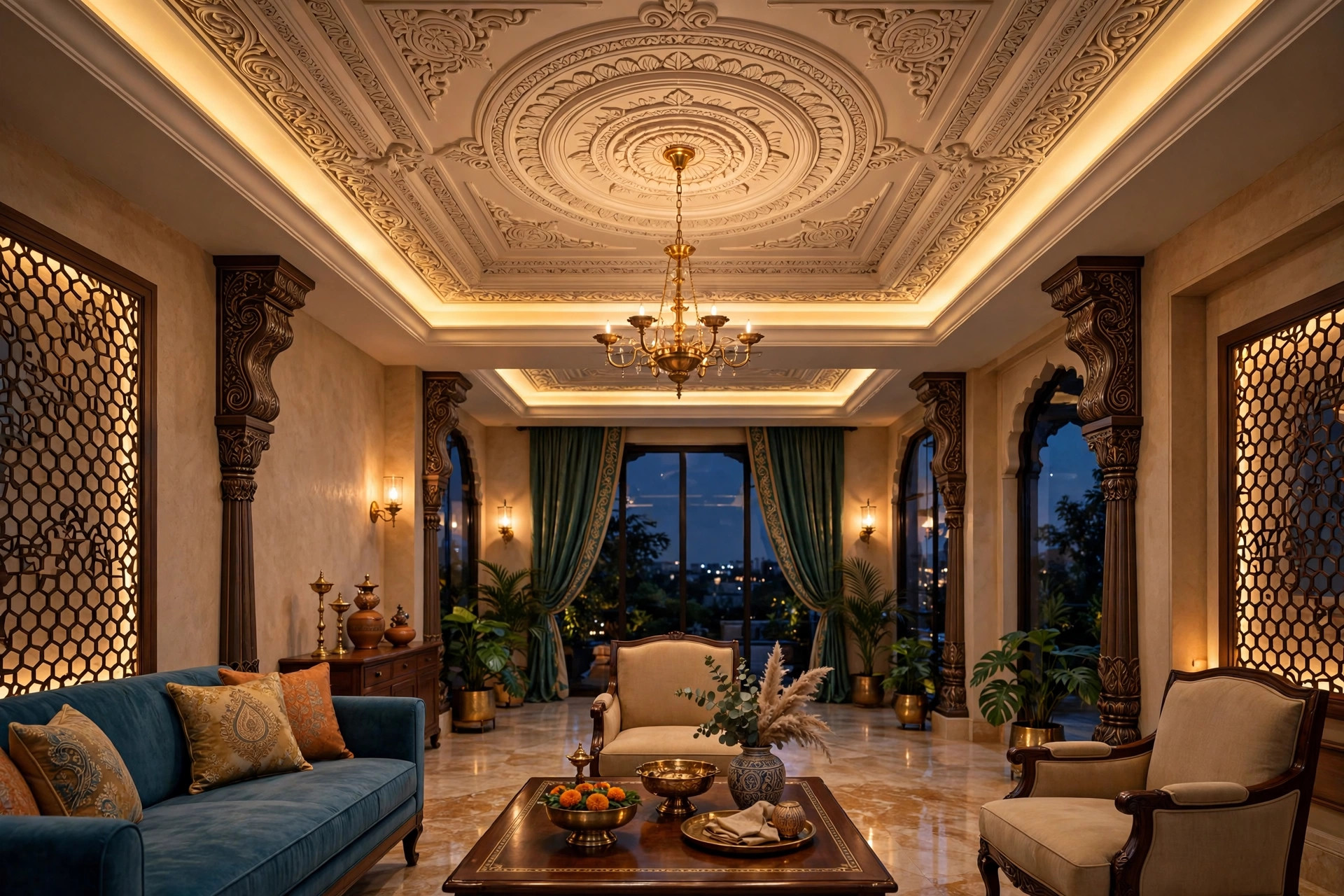
6. Floral and jaali accents
Detailed floral motifs or jaali-pattern POP work — traditional ornamentation that suits Indian halls with classic furniture. Muted gold accents on cream POP keep it balanced rather than gaudy. Cost sits in the designer band: ₹170–₹260 per sq ft.
7. Double-layer depth
Two full POP levels with a shadow gap between them — depth for rooms tall enough to carry it (10.5 ft+). Concealed strip lighting between the layers does the highlighting. Cost: ₹190–₹320 per sq ft in premium executions.
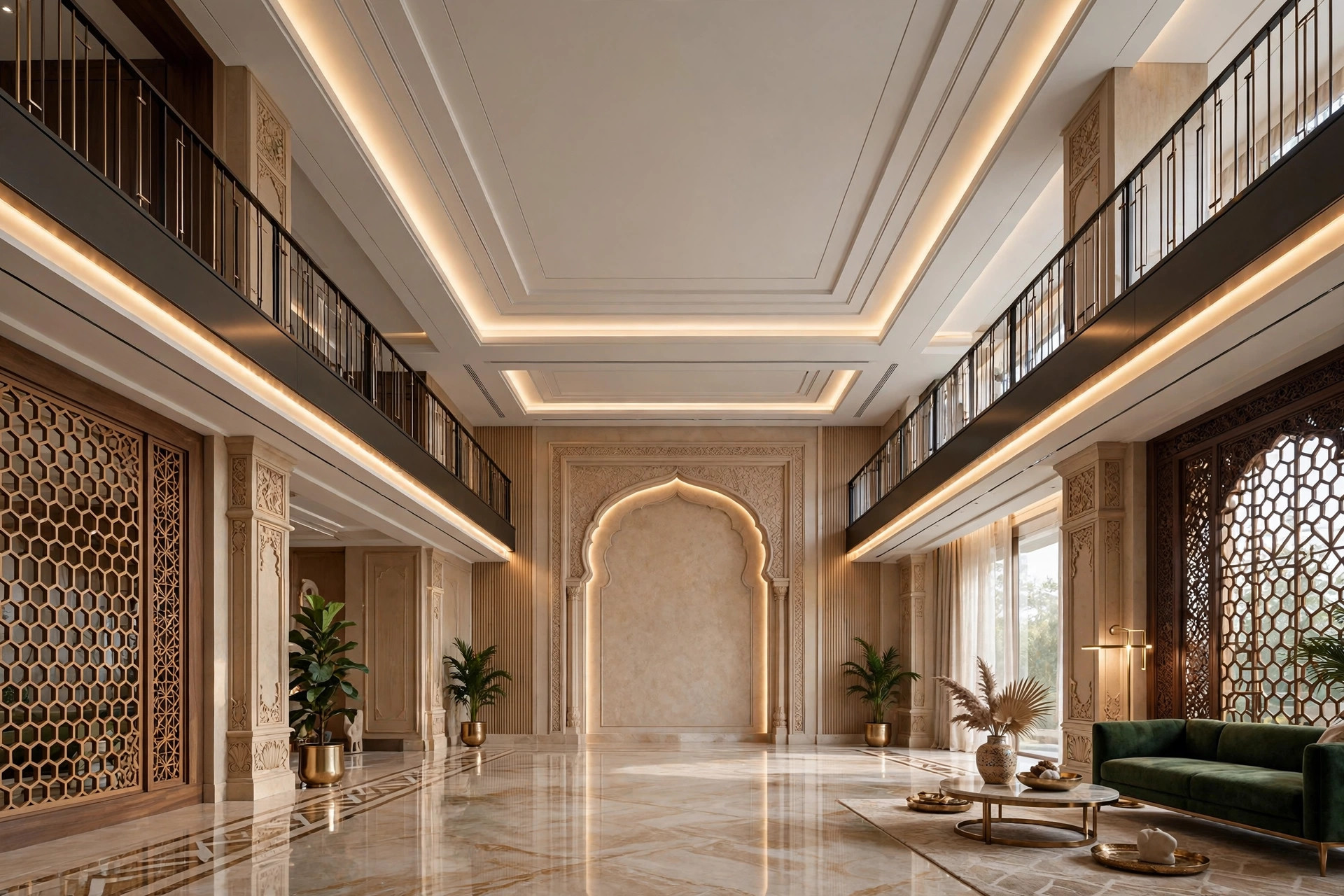
8. Wood-textured POP
POP moulded or finished with wood-grain texture, or paired with timber battens — the warmth of a wooden ceiling at a fraction of a real timber ceiling’s cost. Popular in living rooms with warm lighting. Cost: ₹200–₹330 per sq ft for the textured zones.
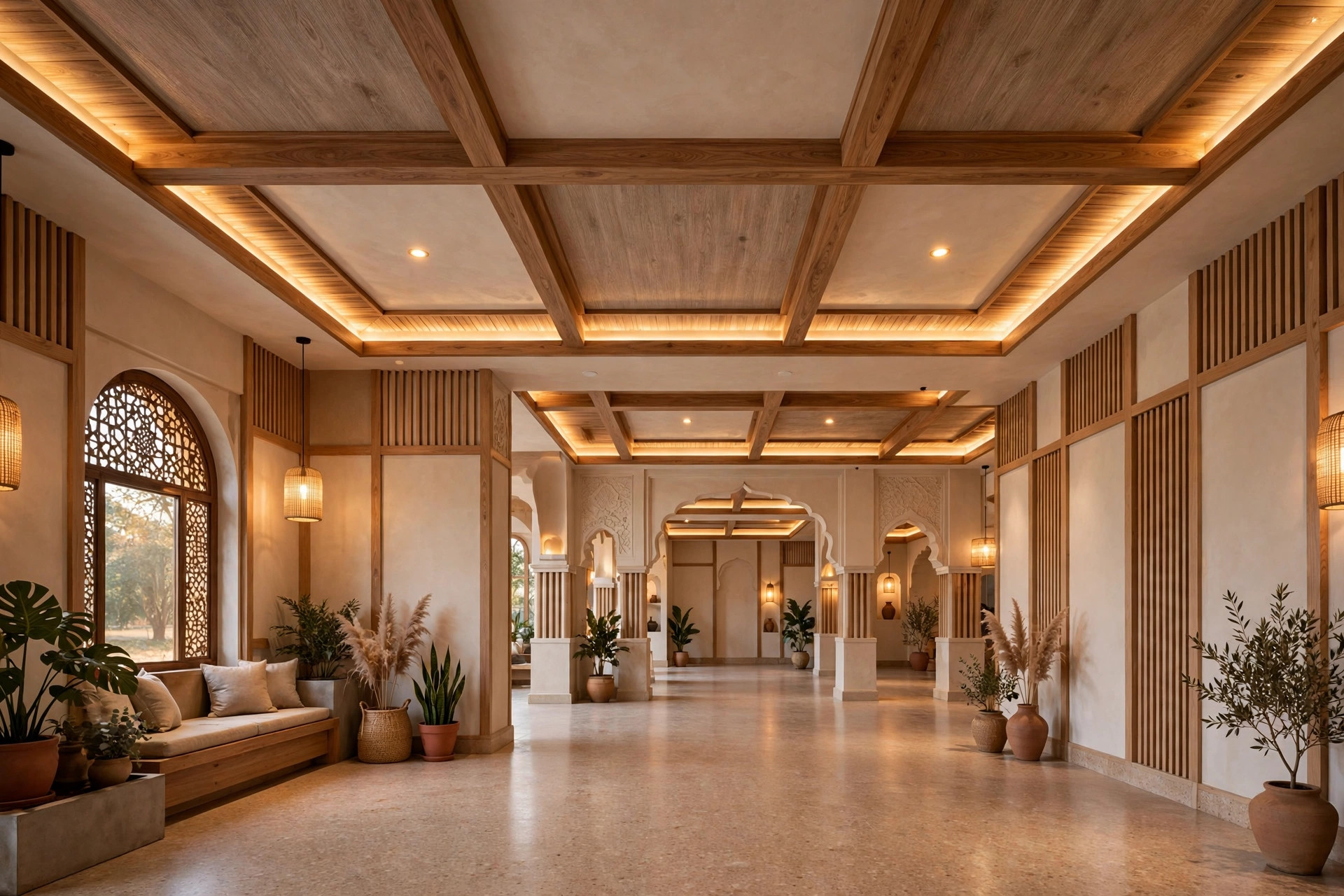
9. Border-only with exposed centre
A structured POP border along the perimeter with the central slab exposed and painted — the most space-efficient approach for halls at 8.5–9.5 ft. You get the designed look with almost no drop. Cost: ₹65–₹100 per sq ft, roughly ₹16,250–₹25,000 for a 250 sq ft hall.
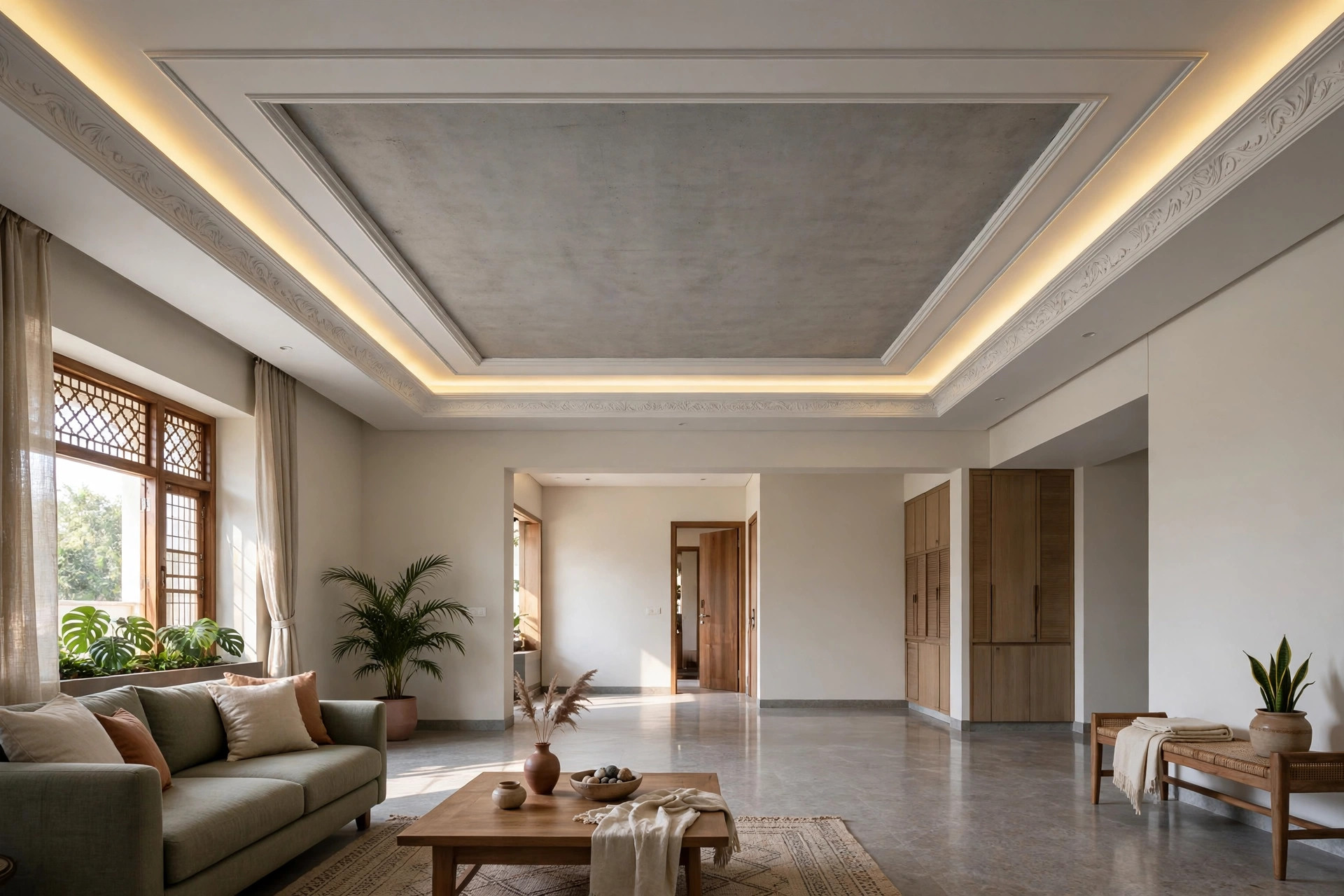
10. Backlit inserts
One backlit frosted-glass or fabric panel set into the POP — a single glowing rectangle over the seating area, not the whole ceiling. Restraint is the point. Cost: ₹200–₹380 per sq ft for the insert zone.
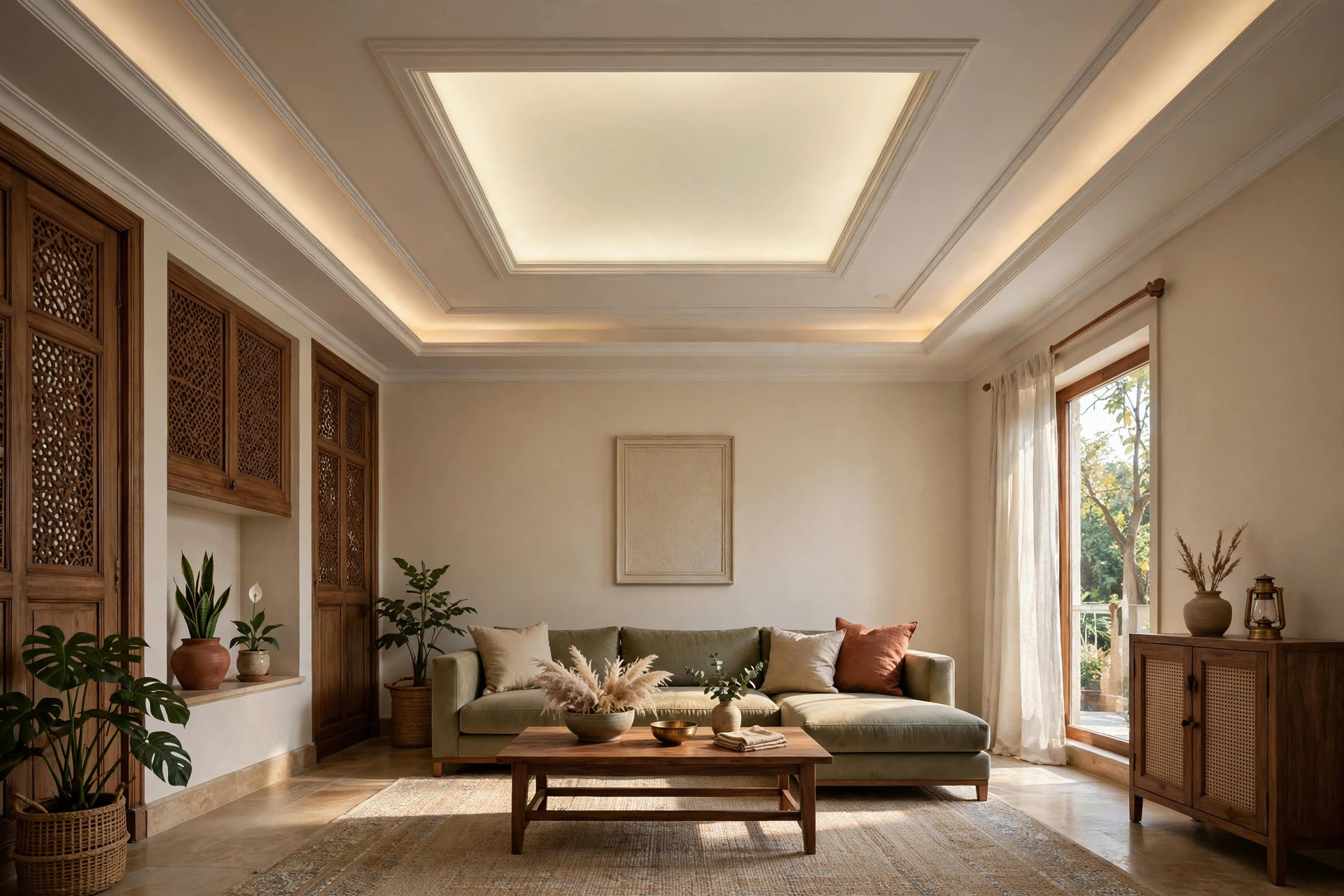
Planning by hall size
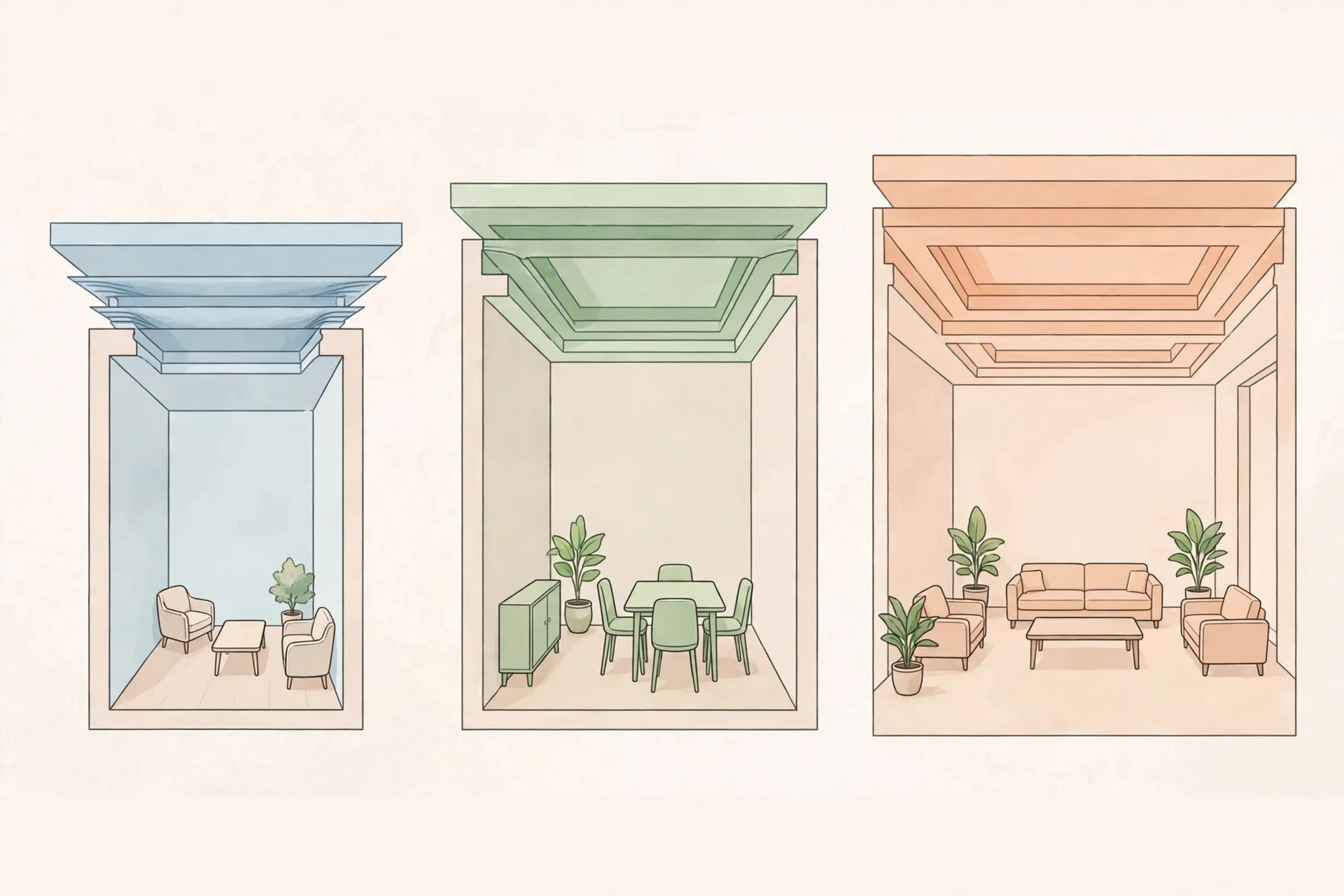
Hall dimensions decide what the ceiling can carry. Compact halls (10×12) suit slim strips, shallow depths and minimal recessed sections — soft lighting with white or pale grey keeps them bright. Mid-size halls (12×15) handle symmetrical double-layer ceilings with a central chandelier section and recessed lighting. Large halls (15×15 and above) support layered POP with geometric borders, cove lighting and statement chandelier layouts. A rough budget guide from NoBroker’s 2026 simple-POP data: a 12×15 hall (180 sq ft) runs roughly ₹14,000–₹27,000 for simple-to-mid POP designs; premium layered work climbs from there.
POP hall costs: the honest table
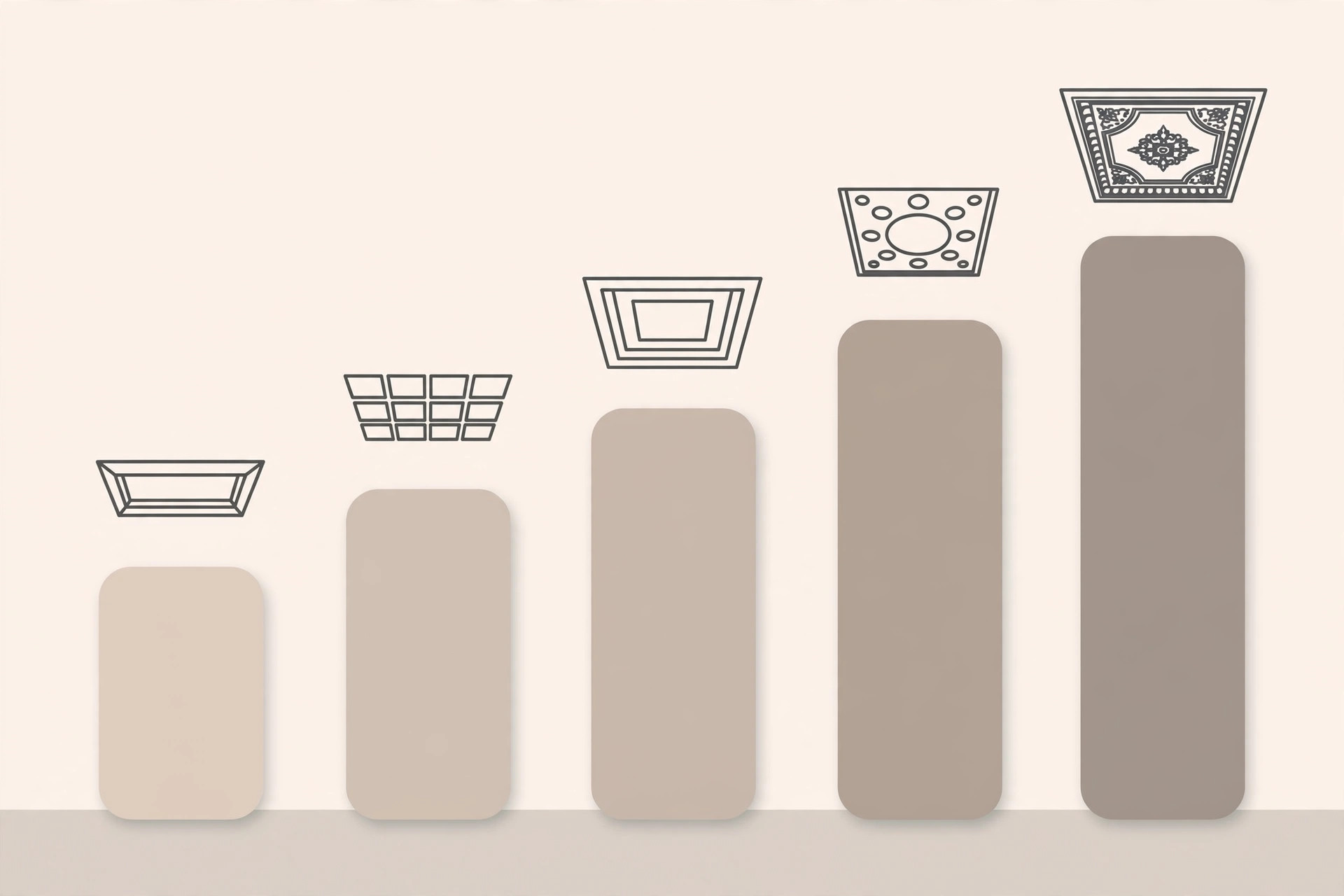
| Design | Per sq ft (installed) | 200 sq ft hall |
|---|---|---|
| Border / cornice | ₹55–₹90 | ₹11,000–₹18,000 |
| Flat single-level | ₹65–₹110 | ₹13,000–₹22,000 |
| Single cove with LED | ₹100–₹155 | ₹20,000–₹31,000 |
| Tray / plus-minus | ₹120–₹200 | ₹24,000–₹40,000 |
| Geometric / zoned | ₹150–₹250 | ₹30,000–₹50,000 |
| Multi-level / designer | ₹170–₹260 | ₹34,000–₹52,000 |
| POP + wood combination | ₹250–₹600+ | ₹50,000–₹1,20,000+ |
Bands from NoBroker’s 2026 living-room, simple-POP and modern-POP guides (India, installed — framework, POP, primer, paint; lighting fixtures usually extra). Two notes: always get an itemised written quote — “₹130 per sq ft all-inclusive” means nothing until you see what is included; and tier-2 cities typically run 20–40% cheaper than tier-1 metros for the same spec. Our cost guide for India breaks down material-vs-labour splits.
POP vs gypsum for a hall: the honest comparison
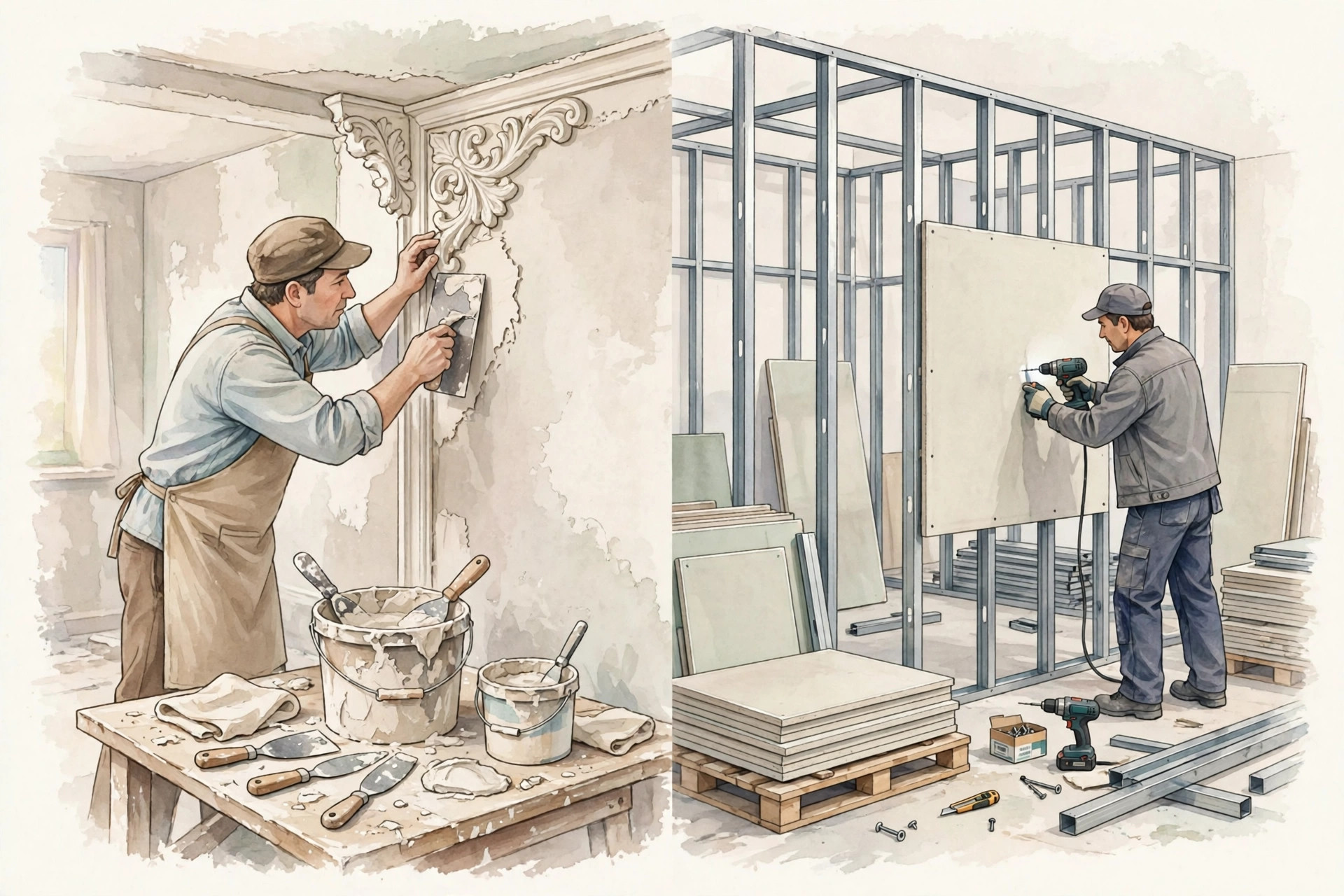
This is the decision most hall owners actually face. POP offers more design freedom — intricate curves, medallions and custom mouldings are easier on-site — and suits ornate, sculptural halls. Gypsum installs faster (2–4 days vs 7–10), gives a more uniform crack-resistant finish, and is the cleaner choice for straight lines, trays and coves. For the material-wide view, see our POP ceiling hub and the gypsum ceiling hub.
The karigar checklist (POP’s quality is the karigar)

POP is craftsmanship-dependent in a way boards are not. Before the framework goes up: check the karigar’s past work in person, not just photos. Get the design, lighting positions, fan cutouts and chandelier anchors frozen in writing — mid-job changes on wet plaster are expensive. Confirm the framework spec (galvanised sections, hanger spacing), joint treatment, and whose material the primer and paint are. Plan 7–10 days of site work including drying, and seal off the room — on-site mixing means dust through the house.
Fans, lights and the slab rule
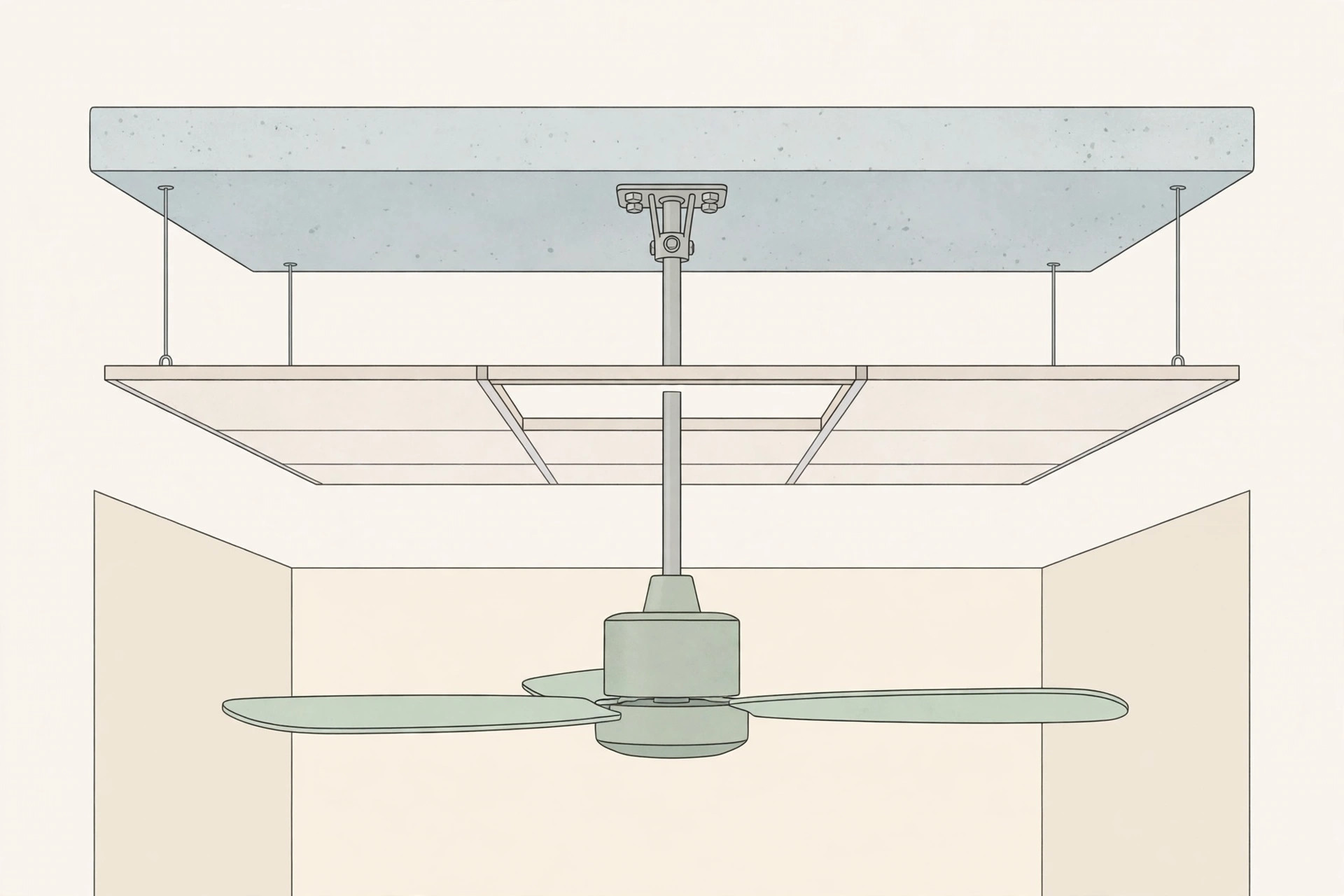
Indian halls often need ceiling fans, and POP integrates them through symmetrically designed recesses — but two rules are non-negotiable. The fan must anchor to the structural slab above, never to the POP frame, and it needs at least 8 inches of clearance above the blade from the false ceiling panel to function correctly (NoBroker’s 2026 living-room guide). Cutouts are finished during moulding, wiring planned before the framework. Retrofitting either afterwards looks patched and weak.
The cons, stated plainly
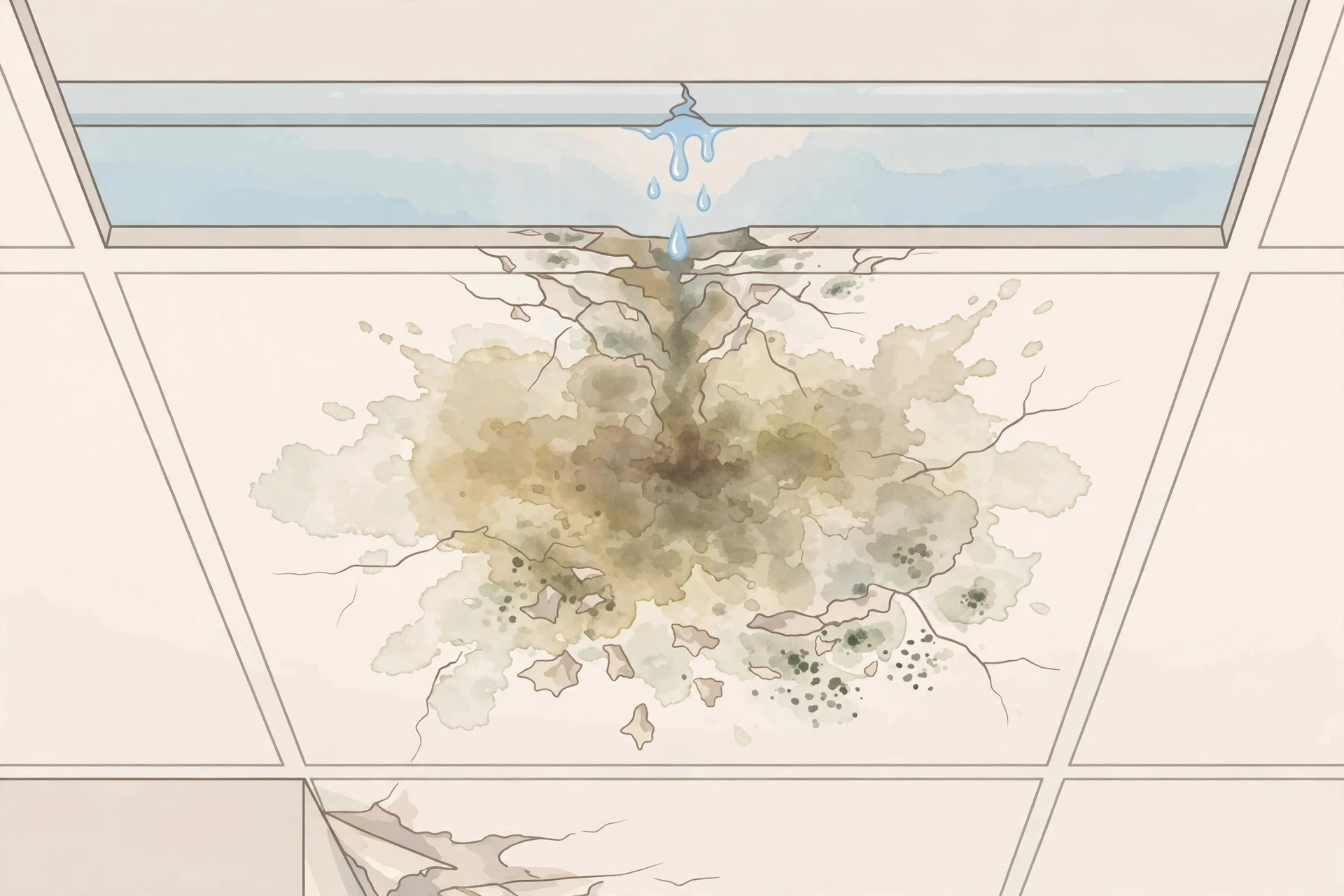
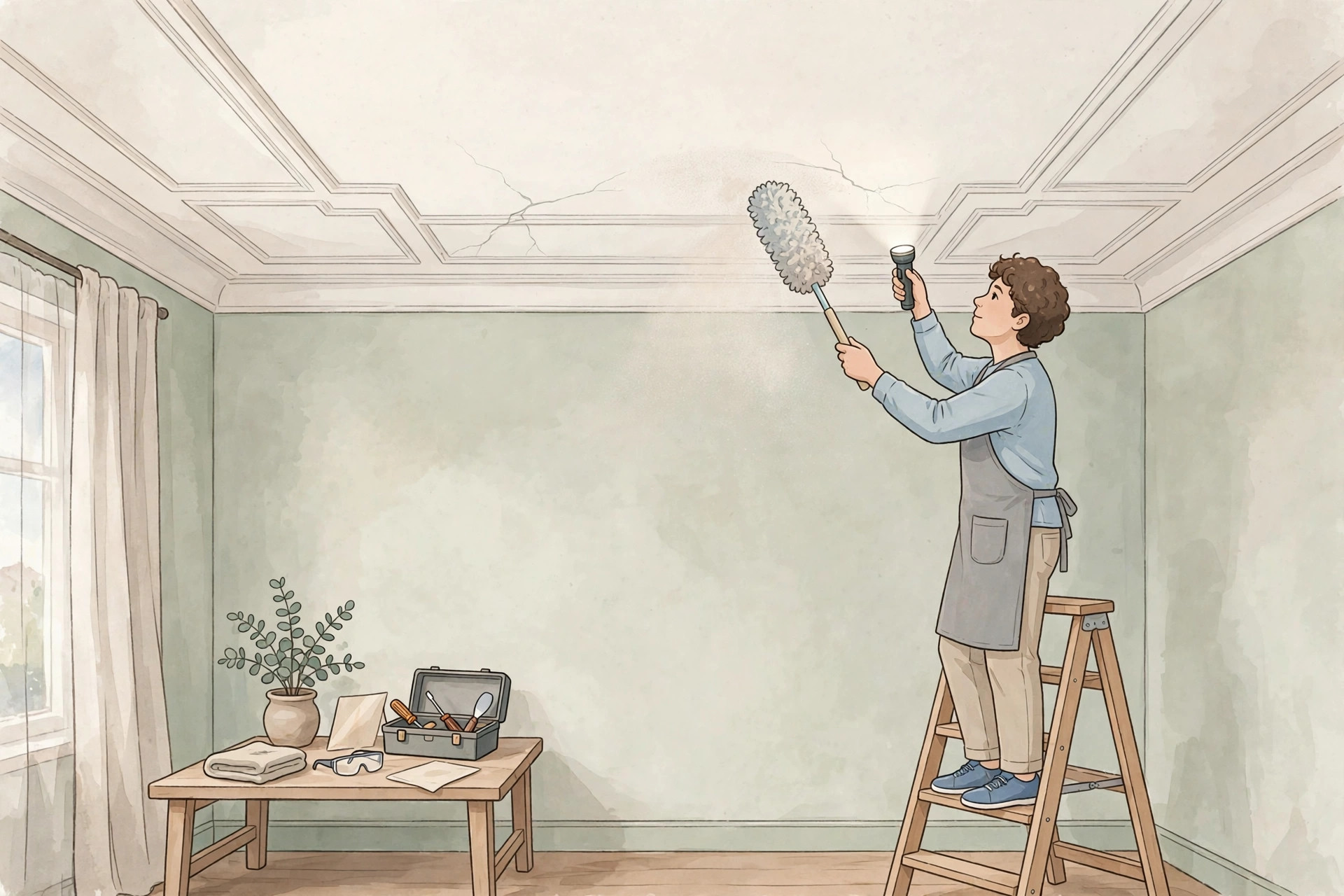
POP’s weaknesses should be stated before the quote, not after the cracks appear. It is slower: 7–10 days on site. It is crack-prone: temperature shifts and building settlement open hairline cracks — budget for a repaint cycle every 3–5 years. It hates moisture: any seepage stains and softens POP, so fix waterproofing first; POP is never the fix for a leak. And it is messy: on-site mixing and moulding means dust. None of this disqualifies POP — it just means going in with eyes open. For upkeep, dust with a soft dry duster, fill hairline cracks with POP putty and touch up paint.
FAQs
What is the best POP ceiling design for a hall in 2026?
The single-cove POP with warm LED strips is the most recommended for 2026 (NoBroker’s living-room guide) — it works for all hall sizes at ₹100–₹155 per sq ft. For decorative halls, plus-minus trays and geometric zones; for large halls, coffered or double-layer designs.
How much does a POP hall ceiling cost in India in 2026?
Realistic installed bands: ₹55–₹260 per sq ft for standard-to-designer POP work (NoBroker 2026, India), with POP+wood combinations reaching ₹250–₹600+. A 200 sq ft hall: roughly ₹13,000–₹22,000 for flat designs, ₹20,000–₹40,000 for cove or tray, ₹34,000–₹52,000 for multi-level or designer work. Lighting fixtures are usually extra.
Is POP or gypsum better for a hall?
For ornate halls with curves, medallions and custom mouldings: POP — more design freedom, but 7–10 days on site and more crack-prone. For modern halls with clean trays, coves and flats: gypsum — faster install, uniform finish, fewer cracks. Match the material to the design language.
How long does a POP hall ceiling last?
A correctly sealed and painted POP ceiling in a dry hall lasts 15–20 years structurally, with repainting every 3–5 years. Moisture, seepage or poor craftsmanship cut that sharply — the material is only as good as the site conditions and the karigar.
Can I have a ceiling fan with a POP hall ceiling?
Yes — plan the recess and cutout during moulding, keep 8 inches of clearance above the blade, and anchor the fan to the structural slab above, never to the POP frame. Discuss it with your installer before the framework goes up.
The short version
POP earns its place in halls that need sculpting: pick a design matched to your hall size and ceiling height, budget ₹55–₹260 per sq ft installed in 2026 (more for wood combinations), choose the karigar as carefully as the design, plan fans and chandeliers on the slab before moulding begins, and go in knowing the 7–10 day install and the repaint cycle. For the room-wide view, see our hall ceiling hub. All images in this article are original concept renders created for illustration, not photographs of completed projects.

Pingback: Wooden False Ceiling Design for Hall: Ideas, Cost & Planning