
Hall ceilings in 2026 have a clear direction, and it is not “more.” Across this year’s Indian design guides, the same verdict repeats: intentional simplicity, slimmer profiles, better lighting, natural textures. The heavy multi-level POP showpieces of the last decade are giving way to ceilings that do more with less — a single tray with warm cove light, a wood accent where it matters, lighting you control from your phone. This guide rounds up the 10 directions actually defining hall ceilings in 2026, drawn from GoodHomes’ May 2026 hall guide, DesignCafe’s 2026 ideas roundup, aquireacres’ 2026 budget guide and HomeLane’s 2026 hall designs — with real cost anchors and an honest read on which trends suit which hall.
What “2026” actually means for hall ceilings
The year’s theme, in DesignCafe’s words: intentional simplicity. Slim profiles and shallow drops instead of deep multi-level builds. Layered lighting — cove, spots, hidden strips — instead of bulky fixtures. Natural textures like wood and stone-inspired finishes. Neutral palettes with subtle contrast. Smart lighting for ambience and efficiency. aquireacres’ 2026 hall guide states the shift plainly: homeowners now understand that smart lighting systems create more sophisticated ceilings than elaborate decoration with excessive ornament.
None of this means halls got boring. It means the design budget moved from plaster shapes into light, texture and control. The ten directions below follow that logic — each is one idea, with what it costs and which hall it suits.
The 10 hall ceiling directions of 2026
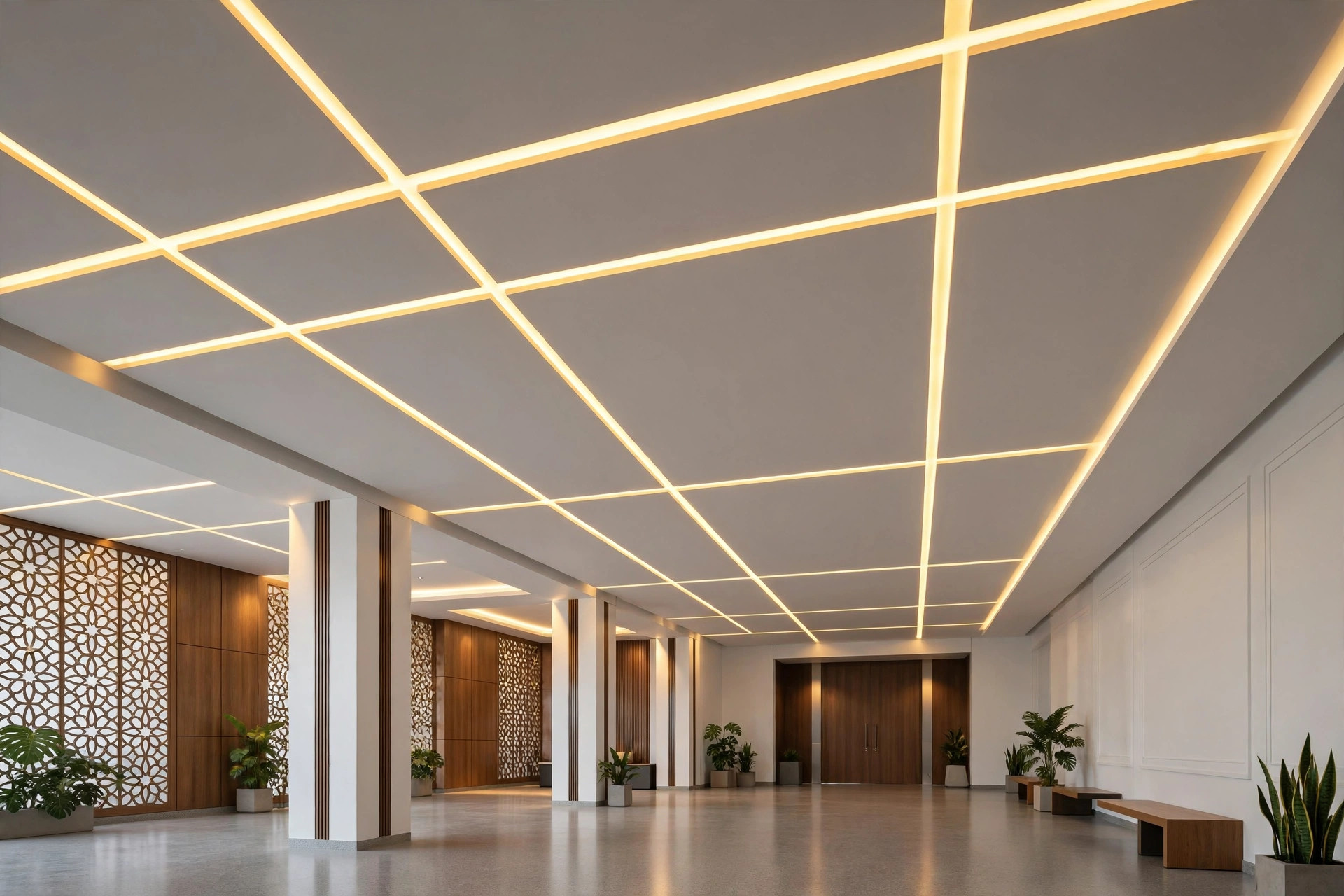
1. Slim coffered ceilings
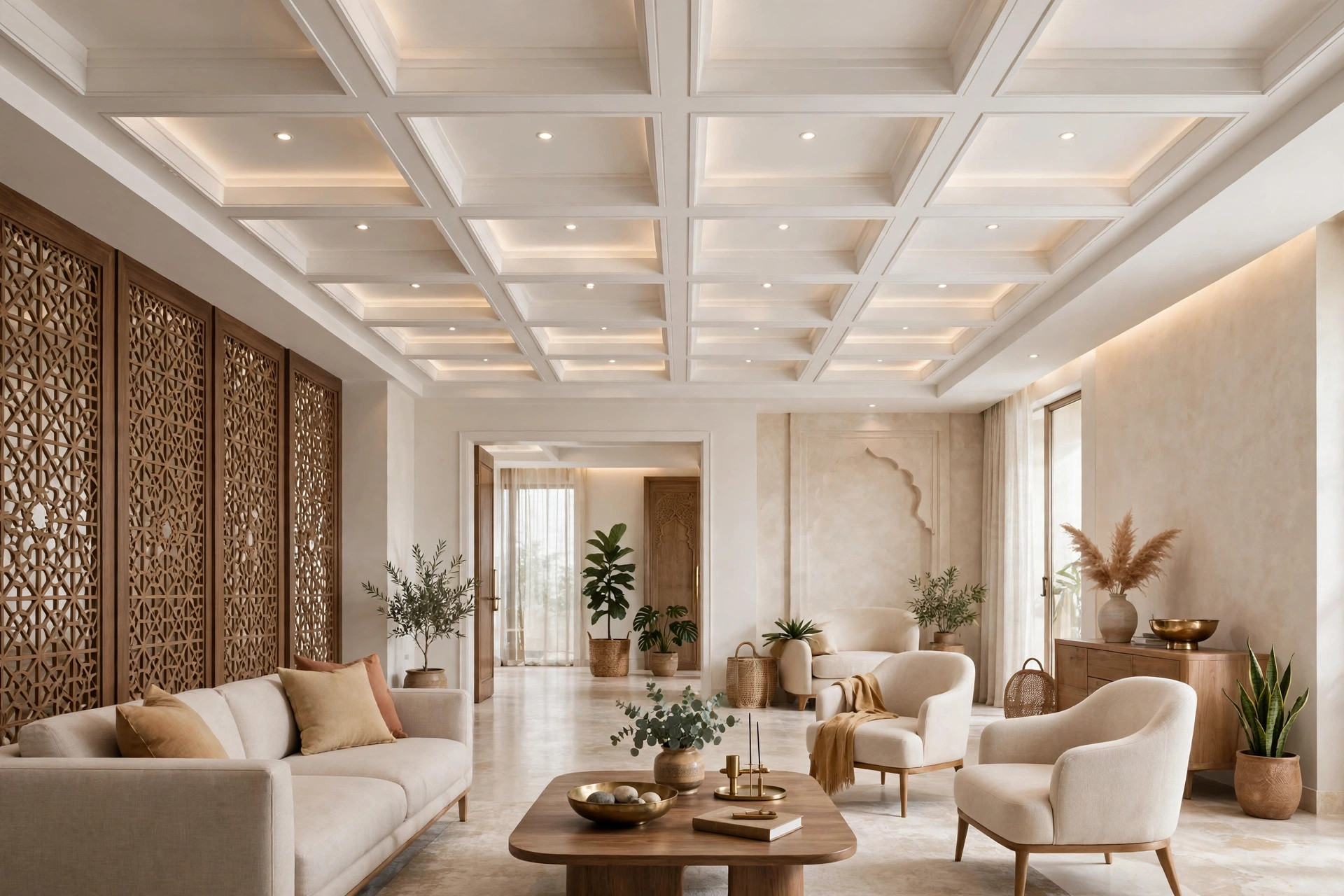
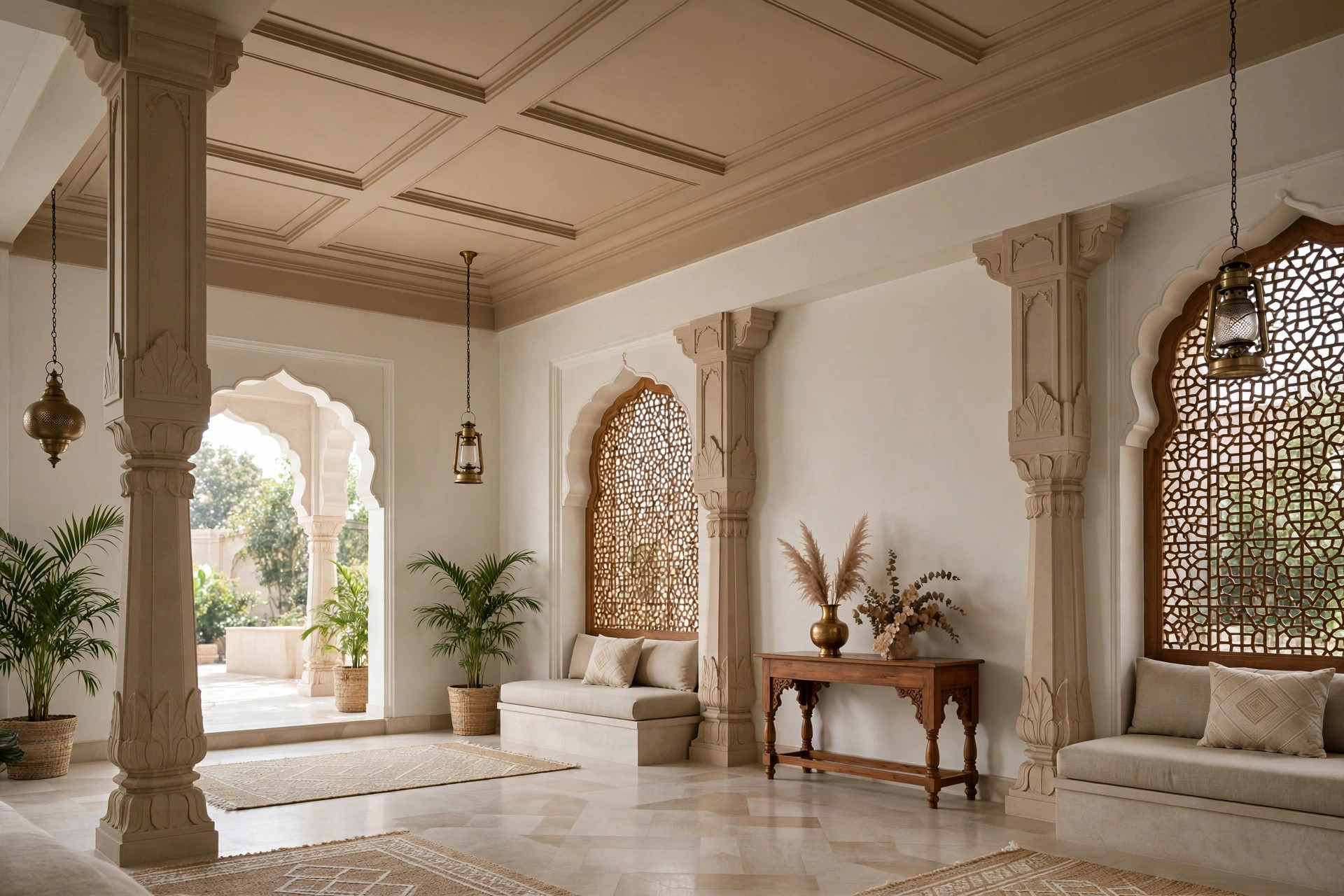
The classical grid of sunken panels is back, but redrawn: cleaner lines, slimmer profiles, and 2026’s preferred palettes — white, grey, warm wood tones (GoodHomes, May 2026). The coffer adds depth and a sense of occasion without the weight of old ornate versions. Best for halls with presence: 10 ft plus and enough floor area that the grid reads as architecture.
2. Tray ceilings with cove lighting
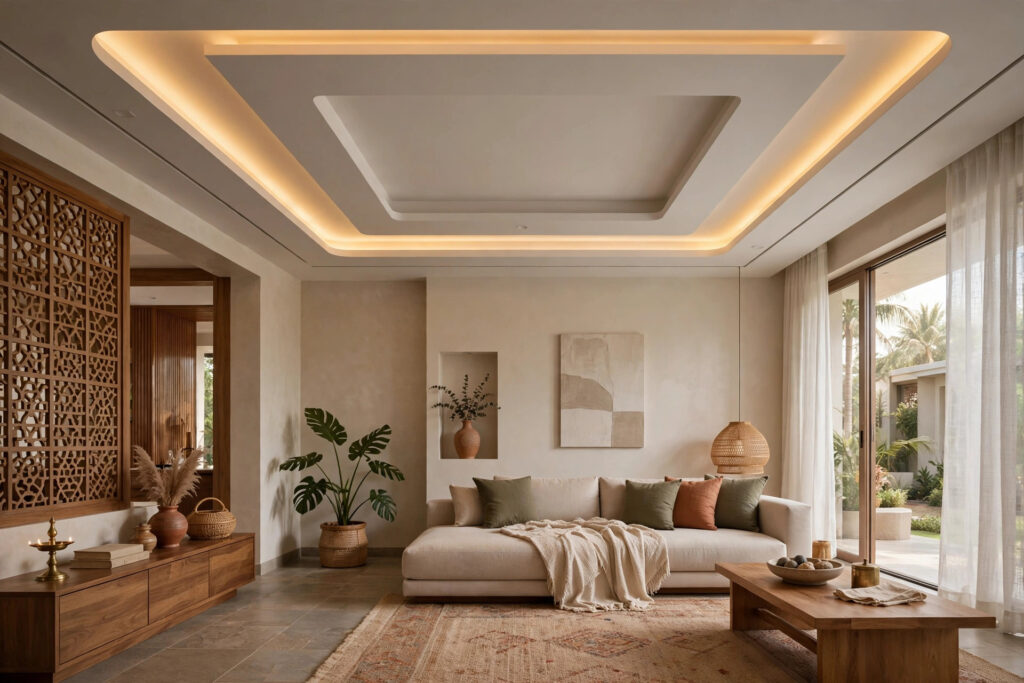
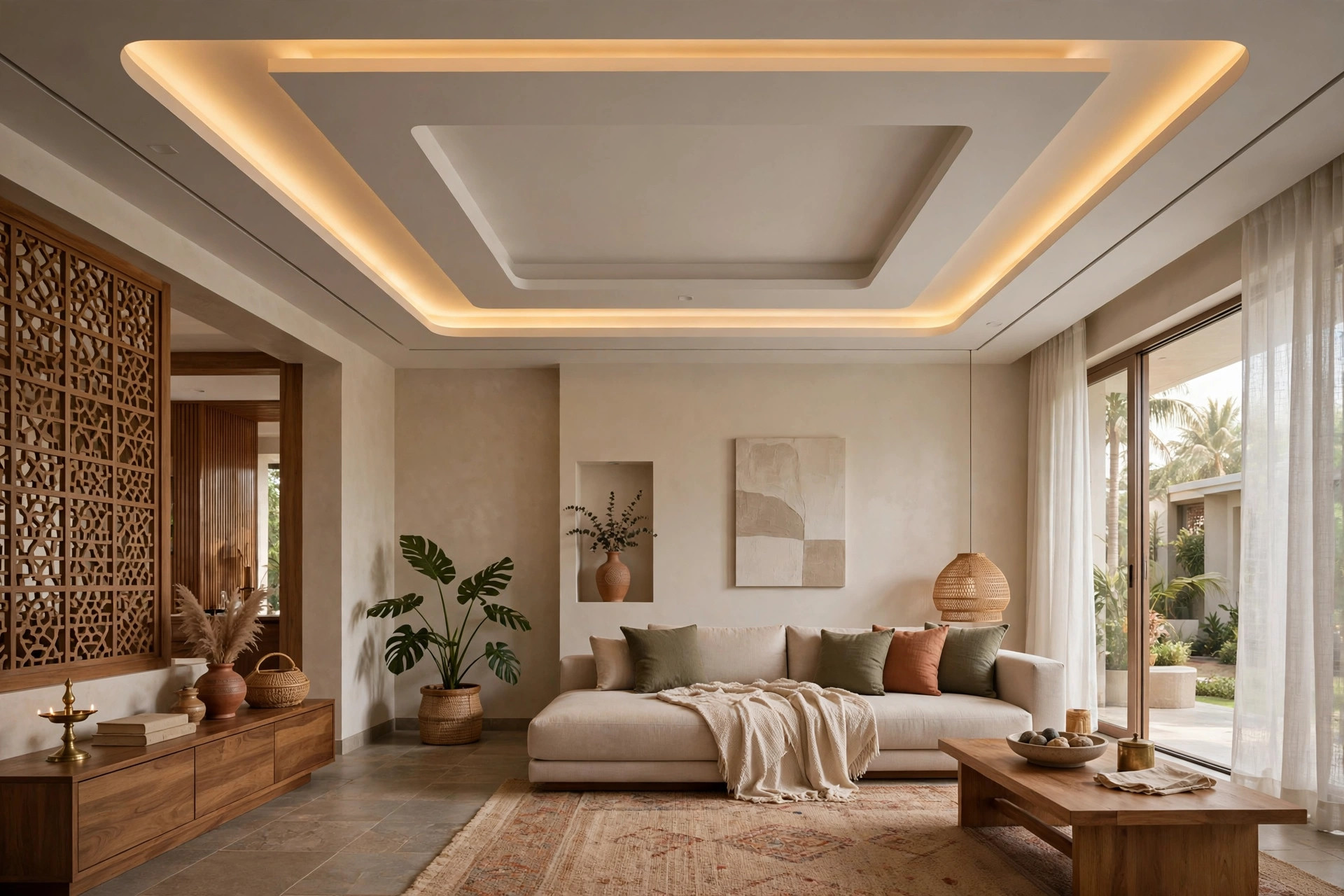
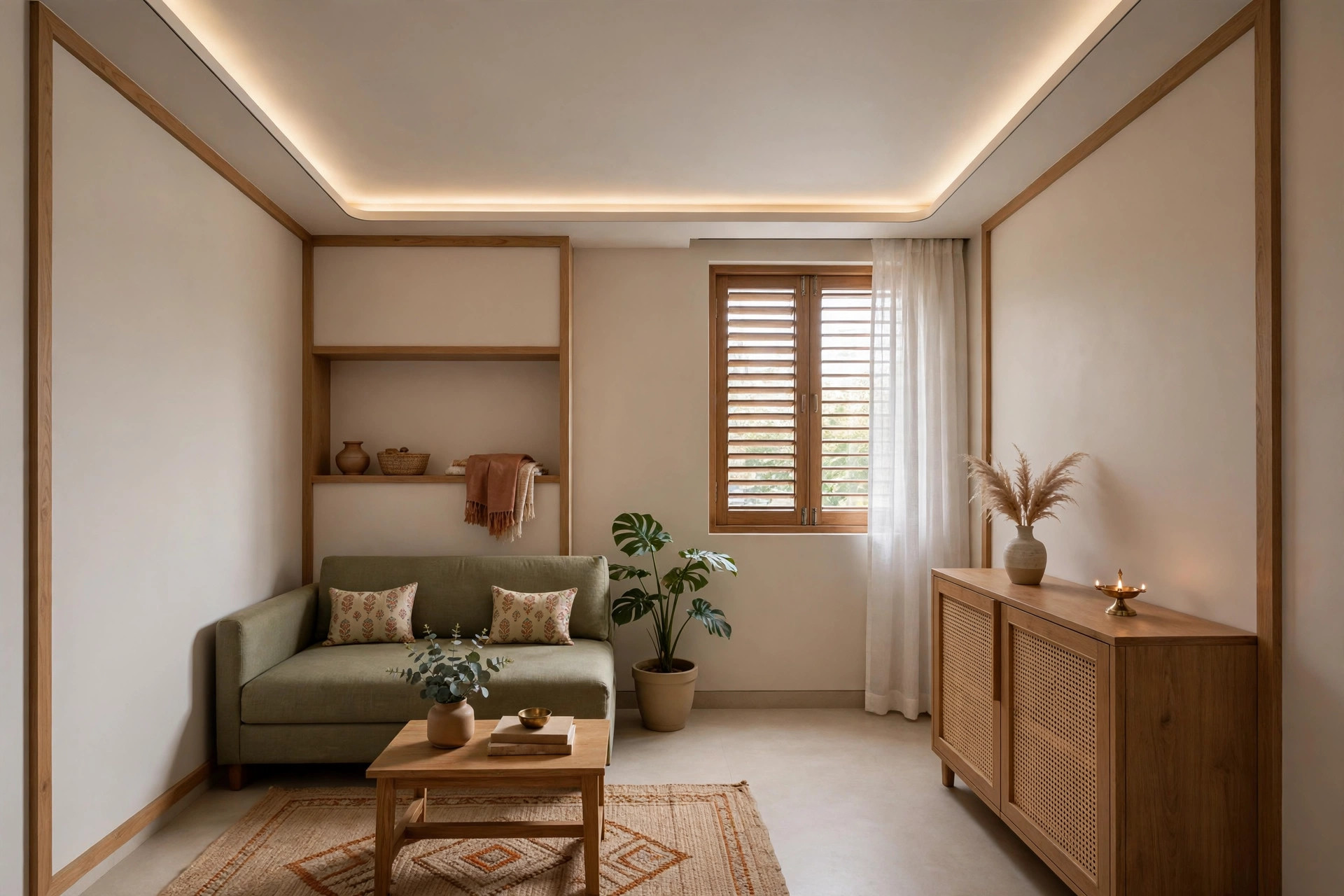
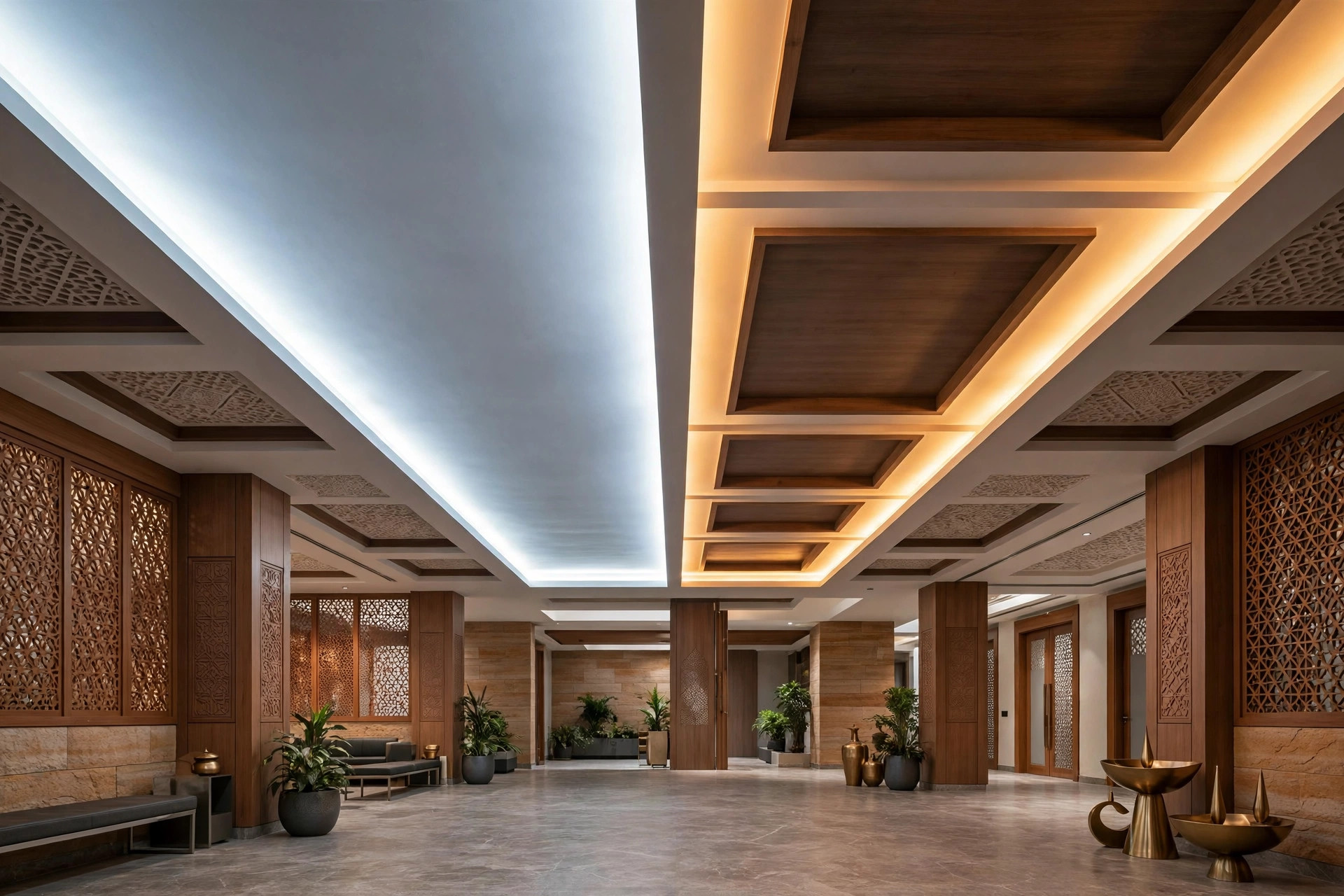
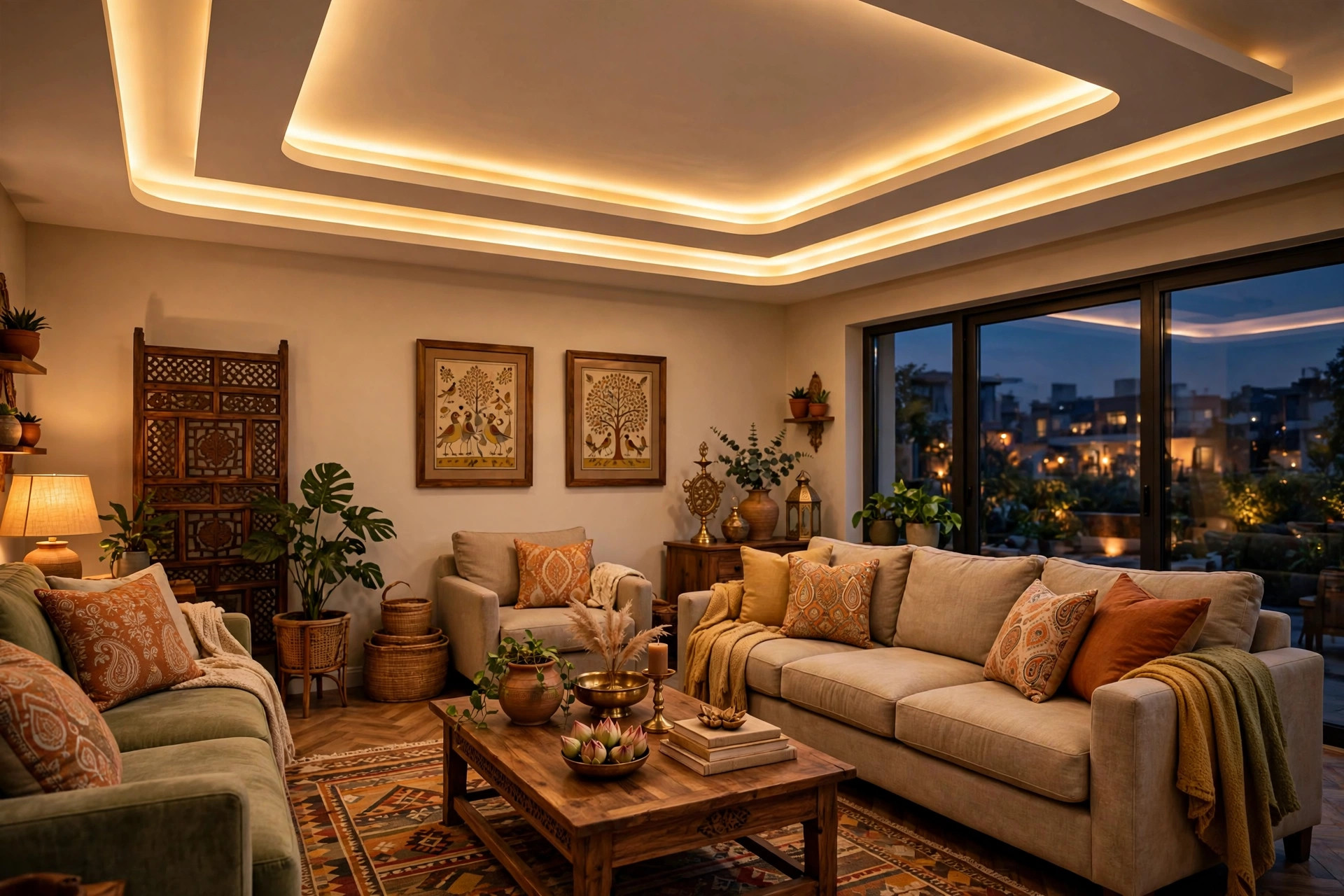
GoodHomes calls the tray one of the most versatile hall designs of 2026: a recessed centre that rises above the surrounding border, adding visual height — ideal for integrating cove lighting that washes the room in soft ambient glow. aquireacres prices cove POP work at roughly ₹110–₹160 per sq ft in 2026. The tray is the year’s safest statement: visible design, calm result.

3. Layered LED lighting as the design
The biggest 2026 move is not a shape but a lighting strategy: cove strips, recessed spots and hidden LED channels layered for depth and flexibility. Warm white and tunable LEDs — shifting from cool to warm through the day — are among the most requested features this year (GoodHomes, May 2026). Lighting is no longer just functional; it is mood-defining (DesignCafe, 2026).
4. Stretch ceilings
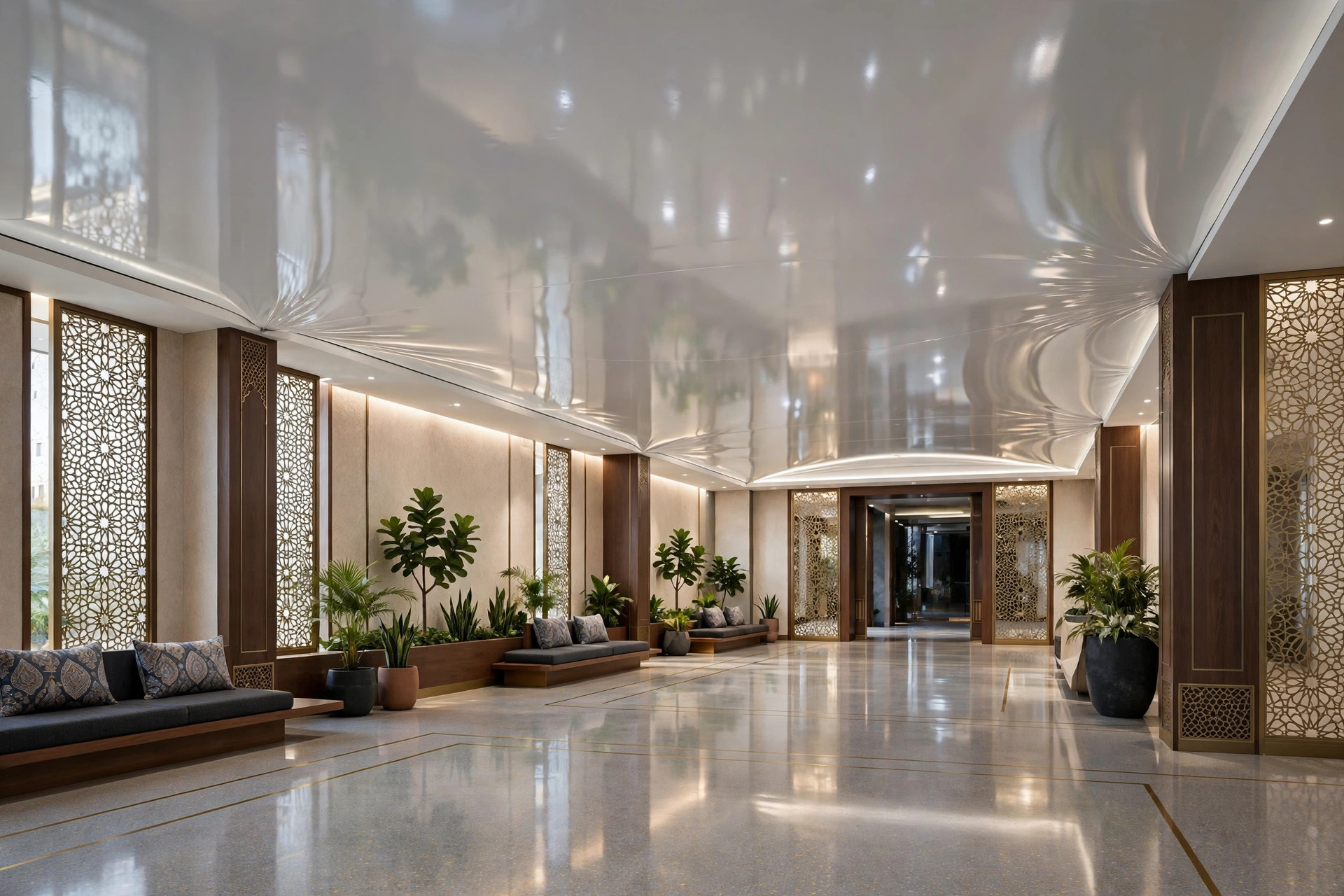
A thin PVC or fabric membrane pulled taut across a frame: seamless, moisture-resistant, and available in matte, gloss, satin and even printed finishes (GoodHomes, May 2026). For halls that need a sleek contemporary finish with zero joints and minimal depth loss, stretch is the quiet luxury option. The printed versions can carry artwork or skies across the whole ceiling.
5. Wooden accents and feature panels
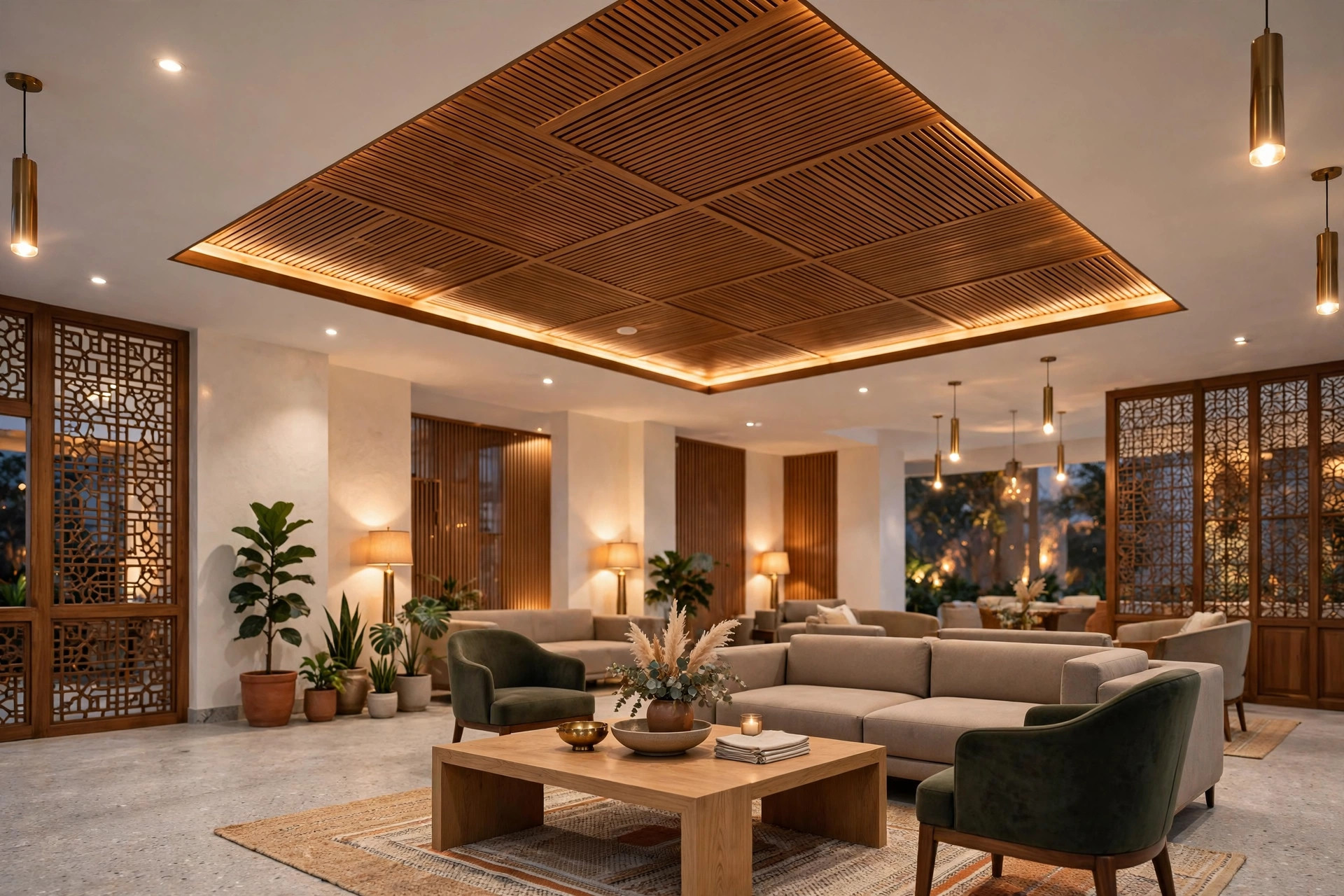
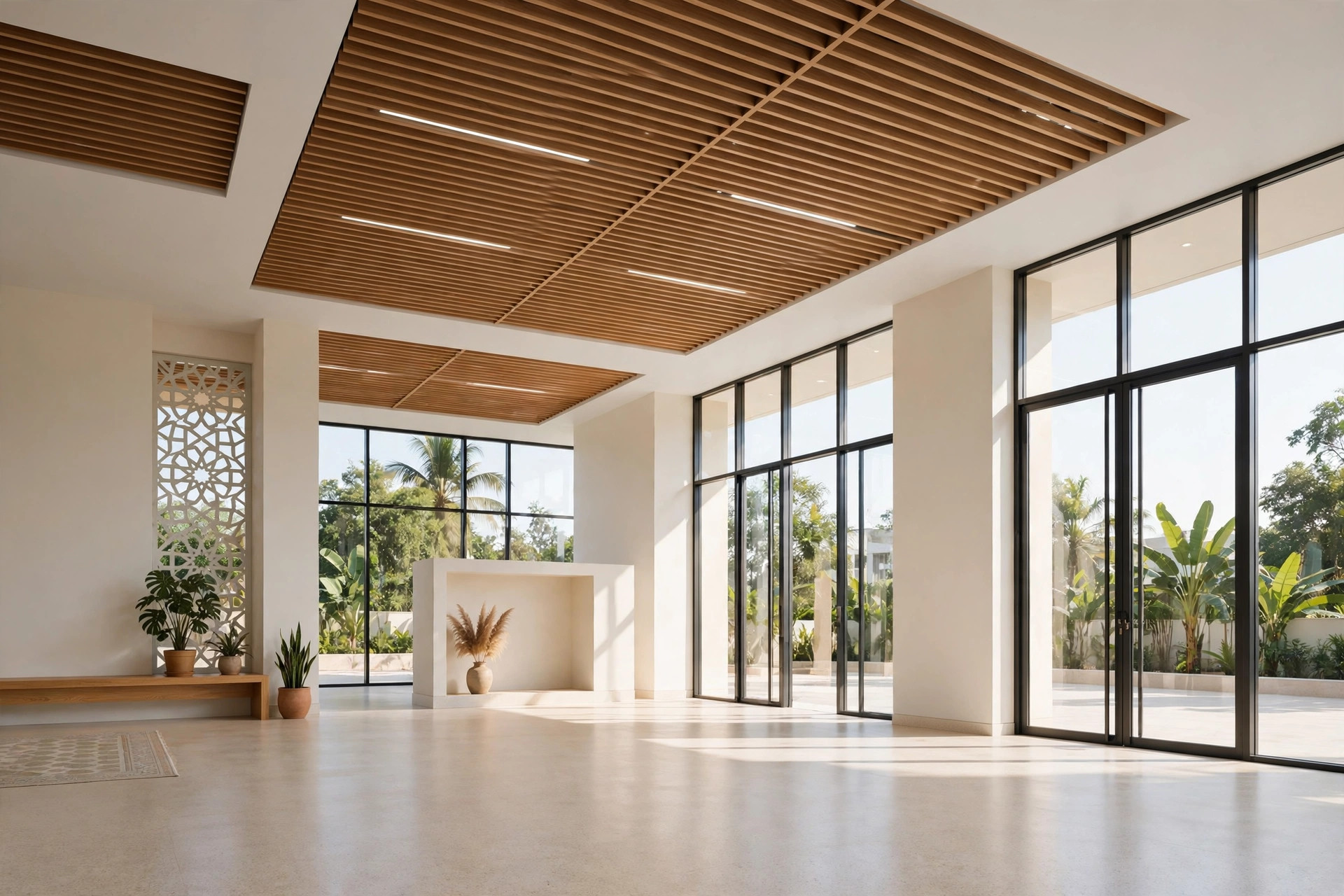
Natural wood and wood-finish panels are having a major 2026 moment (GoodHomes): full timber ceilings in dry climates, or engineered wood and wood-finish laminates as feature panels above the seating area. The warmth wood brings is the year’s counterweight to all that minimalism — and in humid climates, the accent-panel version is the sensible one. Deep dive: wooden hall ceilings (publishes 2026-10-19 14:00 IST).
6. Geometric and sculptural ceilings
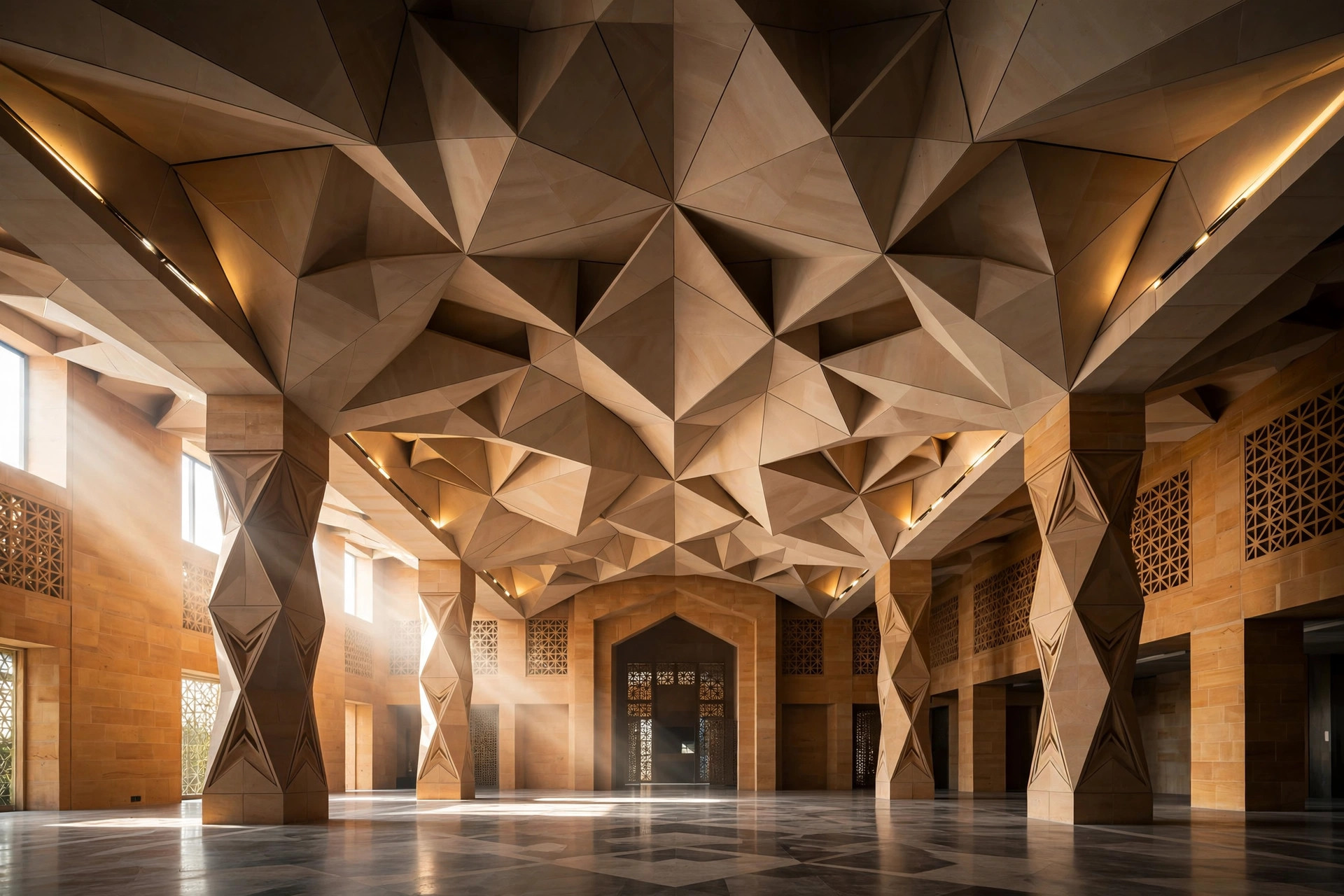
Angular panels, hexagonal grids, wave-like forms — for halls where the ceiling is meant to be the architectural feature. GoodHomes notes these work best in larger halls. This is the bold end of 2026: high visual impact, higher cost, and a design that dates faster than the quiet options — choose it because you love it, not because it is trending.
7. Combination ceilings
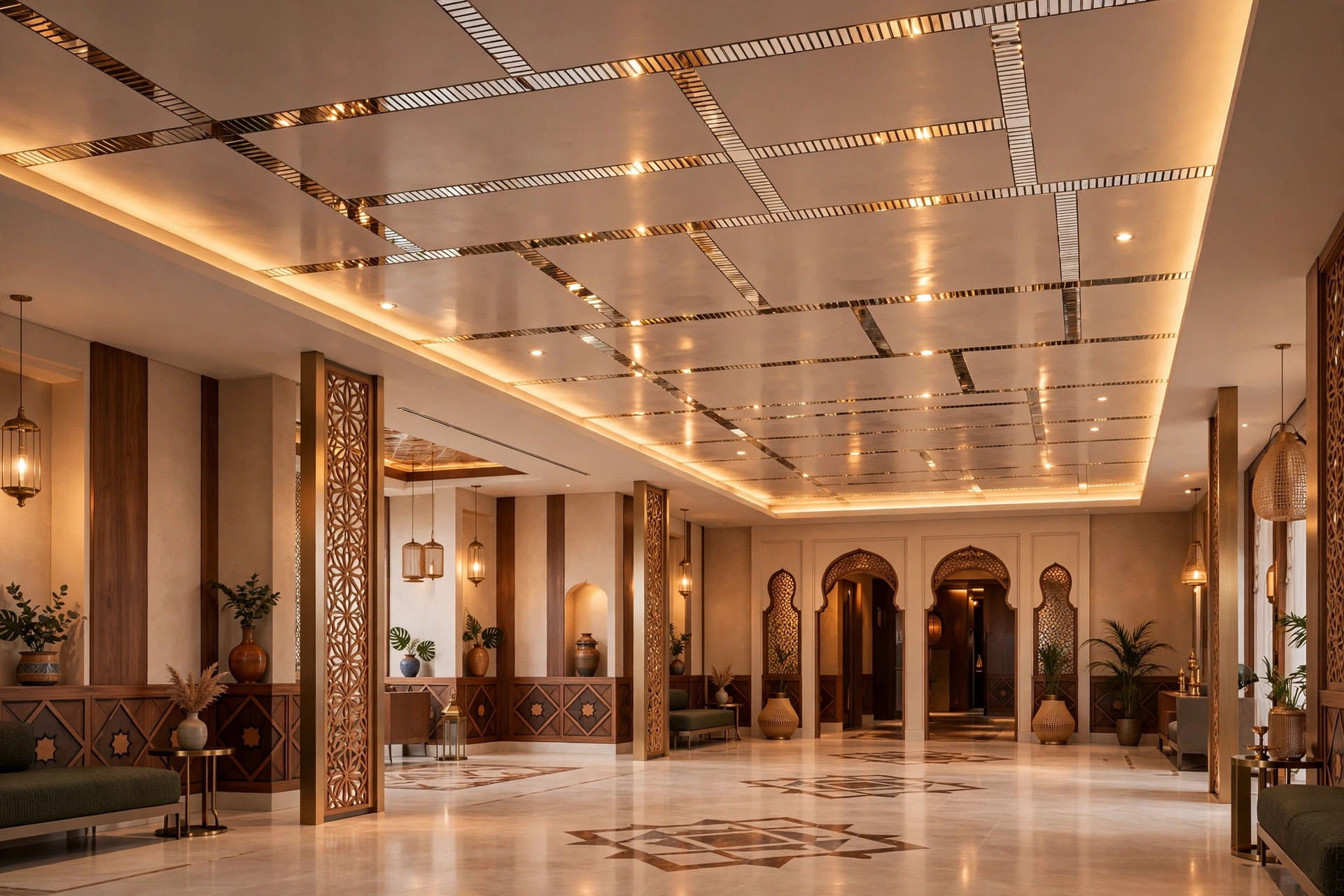
One of the strongest 2026 trends (GoodHomes): mixing gypsum, wood, metal and lighting elements in a single design. A gypsum field with a wood-slat zone and a metal trim line, for example. The layered look adds complexity without overwhelming — but it needs a designer or a very good contractor, because three materials meeting badly looks worse than one material done well.
8. Floating islands with halo lighting
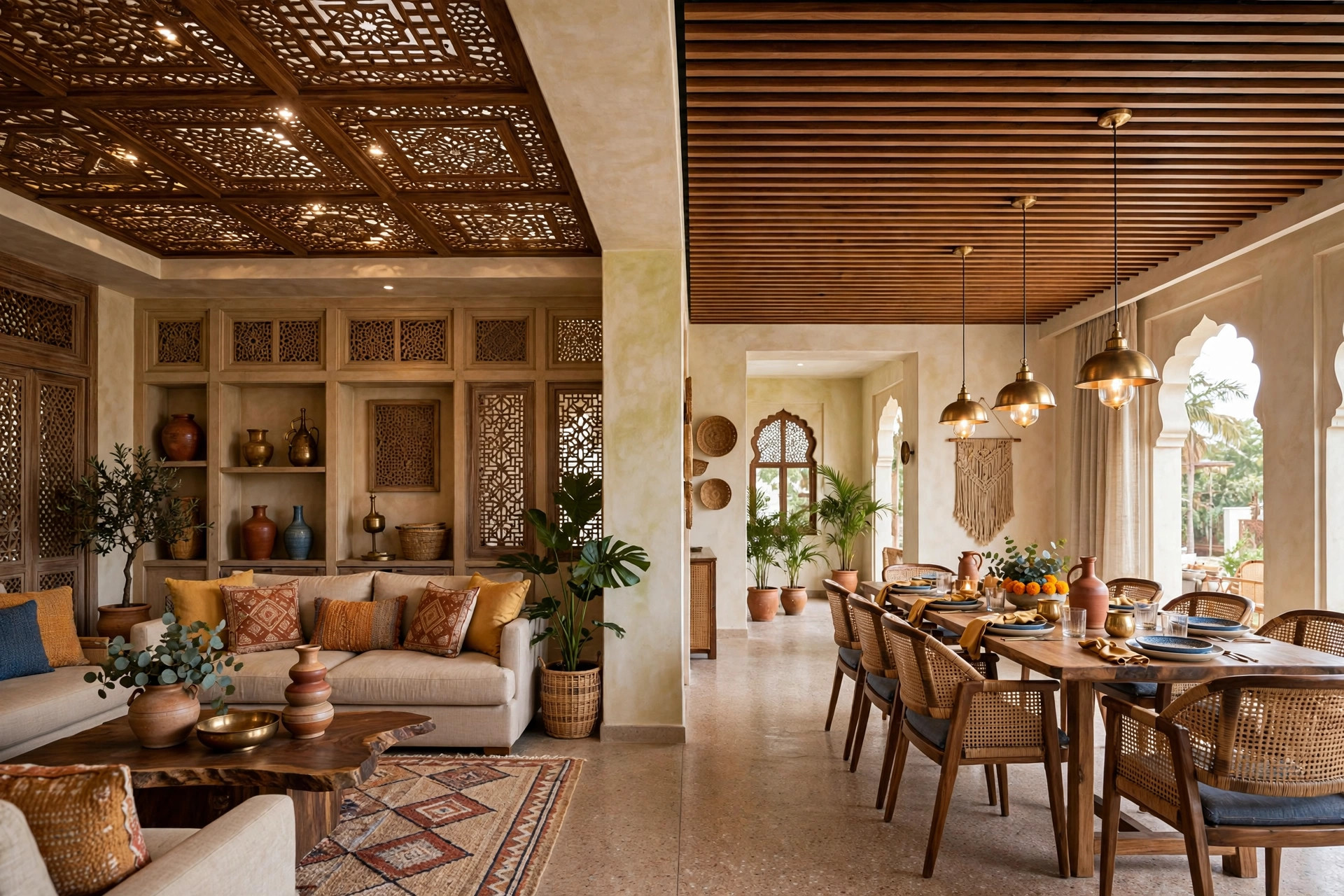
HomeLane’s 2026 hall designs highlight the central floating island: a POP island floating at the ceiling’s centre with LED halo lighting around its edges, framing the chandelier or fan. Round, square or elliptical to suit the room; roughly ₹110–₹130 per sq ft. The halo distributes light evenly and gives the hall a calm, futuristic centre — the 2026 answer to the old central medallion.
9. Minimal single-layer ceilings
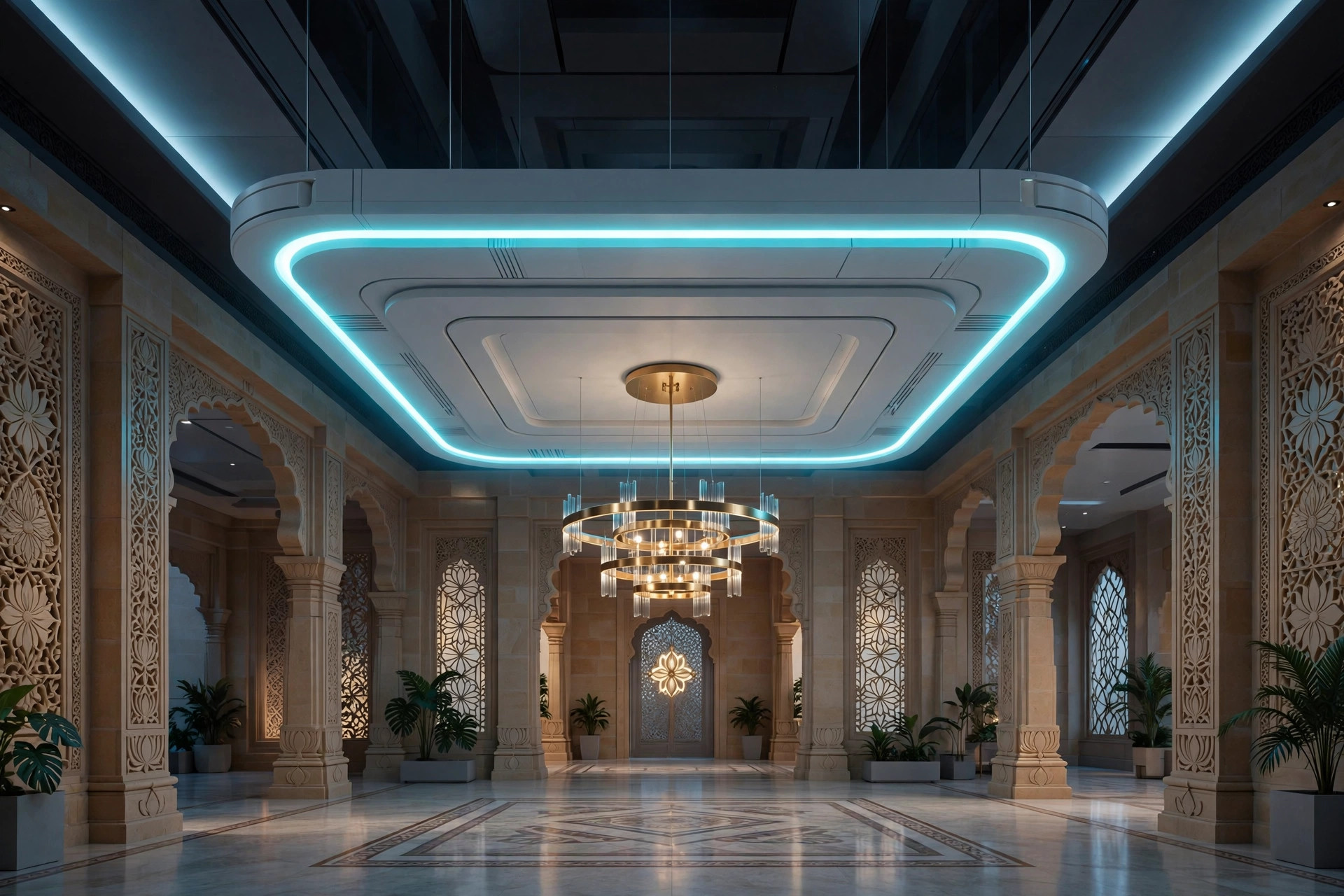
aquireacres’ 2026 budget guide makes the case for the quietest option: a flat POP surface with a clean perimeter border, no drops, no drama. At roughly ₹60–₹90 per sq ft, it is the cheapest way into a designed ceiling, and in compact halls it is often the best-looking one — space-conscious, light, and compatible with every interior style. The simple hall designs guide covers this territory in depth.
10. Smart lighting integration
Voice-controlled lights, dimmable LEDs, scene-based setups — becoming common in 2026 ceilings (DesignCafe). The ceiling becomes the room’s lighting infrastructure: bright cool scenes for daytime, warm dim scenes for evenings, all from a phone or voice command. Plan the wiring and driver locations during installation; retrofitting smart controls into a finished ceiling is the expensive way.
2026 materials at a glance
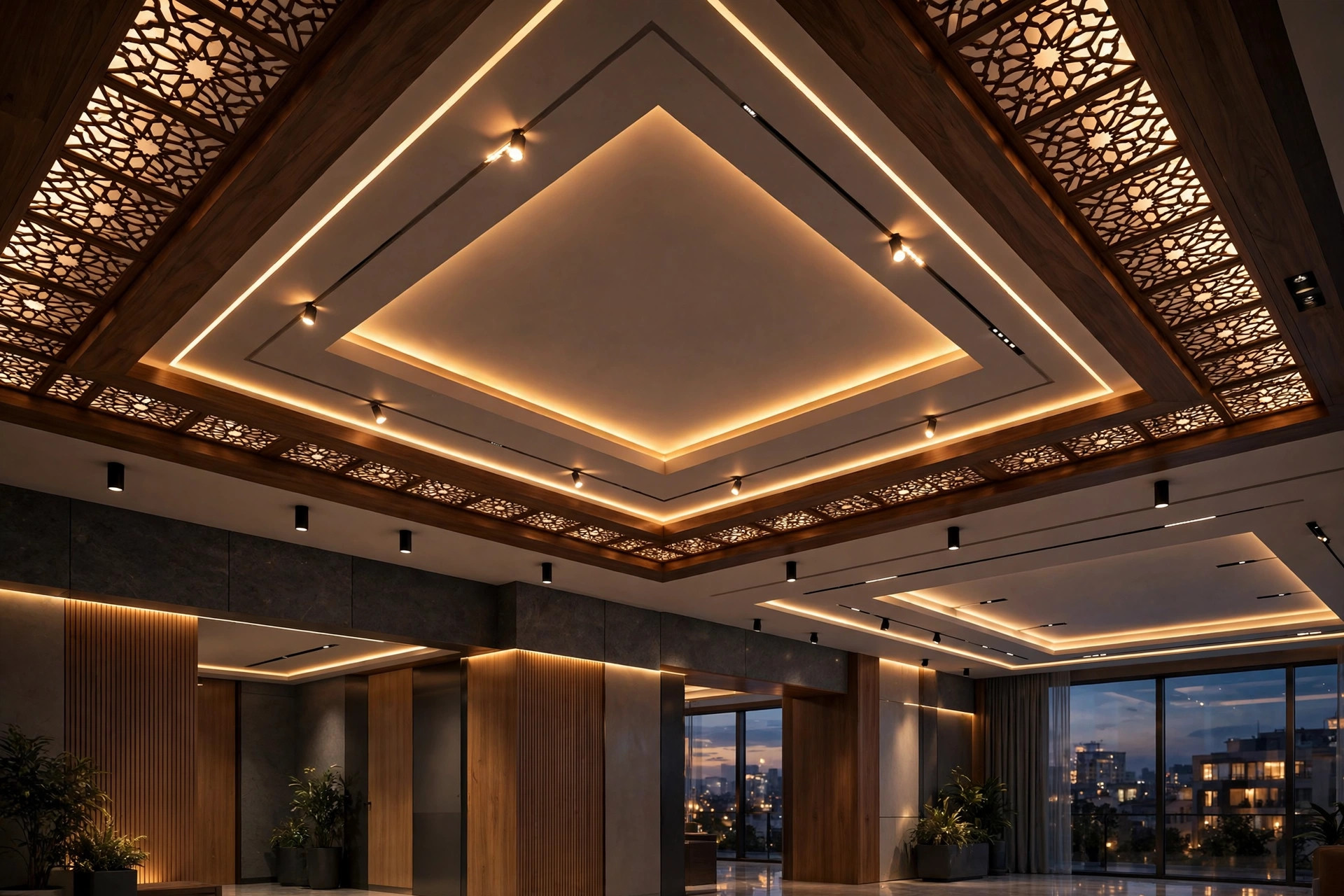
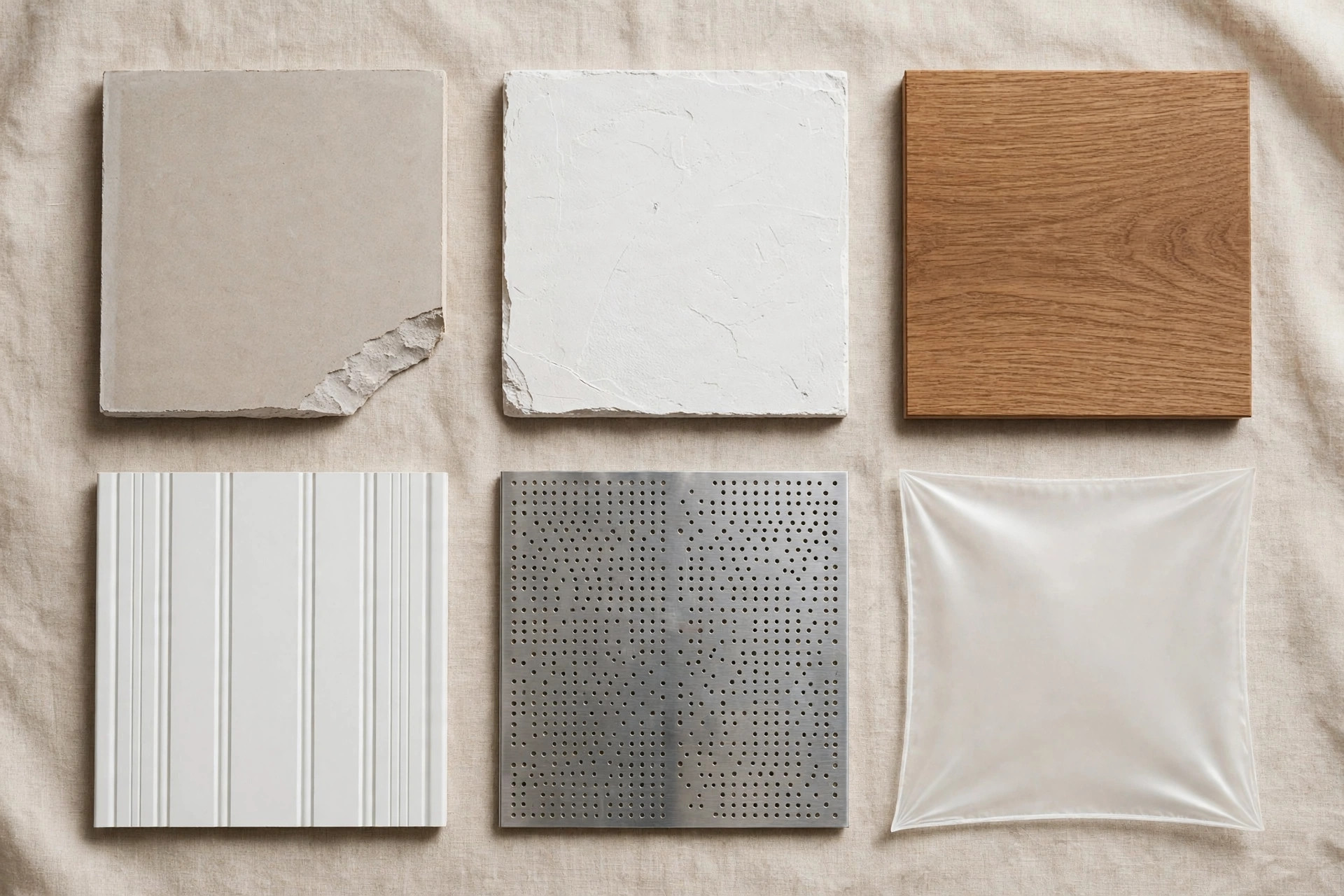
GoodHomes’ 2026 material breakdown for halls:
- Gypsum board — the most widely used: lightweight, fire-resistant, easy to shape, affordable. Ideal for most hall designs.
- POP — flexible and mouldable; the choice for intricate patterns and curves. Needs skilled labour. See POP hall ceilings.
- Wood and wood laminates — warm and natural; best as an accent in humid climates.
- PVC panels — affordable, moisture-resistant, easy to install; wide colour and finish range. See PVC hall ceilings (publishes 2026-10-19 09:00 IST).
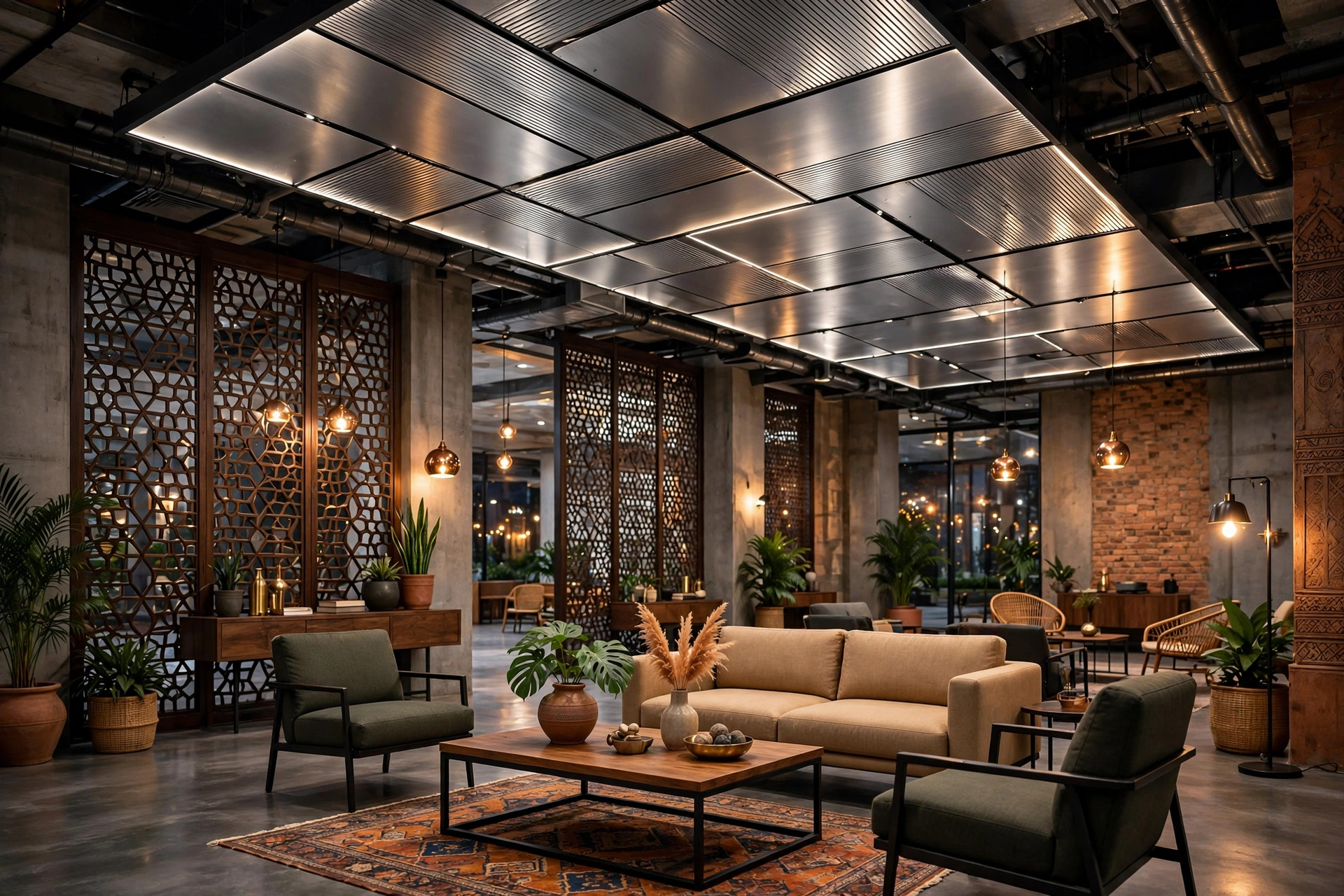
- Metal panels — aluminium and perforated metal; the industrial-contemporary option.
- Stretch membrane — seamless and sleek; best for clean minimalist interiors.
For material deep-dives in this exact room, the gypsum version is at gypsum hall ceilings.
What 2026 costs look like
Cost anchors from the 2026 guides (India, installed, city/contractor variance applies):
- Single-layer minimal POP: roughly ₹60–₹90 per sq ft (aquireacres, 2026)
- Cove POP designs: roughly ₹110–₹160 per sq ft (aquireacres, 2026)
- Floating island with halo: roughly ₹110–₹130 per sq ft (HomeLane, 2026)
- Gypsum hall ceilings: roughly ₹75–₹150 per sq ft (NoBroker 2026 bands)
- POP hall ceilings: roughly ₹65–₹120 per sq ft (NoBroker 2026 bands)
- Wooden ceilings: ₹200–₹900 per sq ft by design and timber tier (NoBroker 2026)
For a full room-budget walkthrough, the hall price guide works through complete hall budgets.
Planning checklist before you commit
From GoodHomes’ 2026 considerations, the non-negotiables:
- Room height. False ceilings drop the room 6–12 inches; halls below 9 ft need flat or border-only designs.
- Lighting plan first. Decide the full lighting layout before installation — changes afterwards are costly and disruptive.
- Ventilation and AC. Account for air-conditioning vents, exhaust points and airflow in the design.
- Maintenance access. Pipes or wiring above the ceiling need access panels built in.
- Budget by material and complexity. Gypsum is the affordable all-rounder; stretch and sculptural sit at the premium end.
- Match the interior language. The ceiling should complement the room’s style and the people living in it — the trend is a starting point, not a verdict.
Which trend suits which hall
| Your hall | Directions to shortlist | Directions to skip |
|---|---|---|
| Compact flat, under 9 ft | Minimal single-layer, slim border, stretch | Coffered, vaulted, heavy multi-level |
| Large villa hall, 11 ft+ | Coffered, geometric/sculptural, vaulted wood | Flat minimal (under-uses the volume) |
| Rental or budget-first | Minimal POP, PVC panels, slim border | Carved wood, complex combination |
| Humid / coastal city | PVC, stretch, gypsum with wood accents | Full solid-timber coverage |
| Entertaining-focused | Layered LED, floating island + halo, smart lighting | Flat single-colour with one tube light |
| Traditional interiors | Coffered, carved wood accents, warm cove | Industrial metal, stark minimal |
Trends to approach with caution
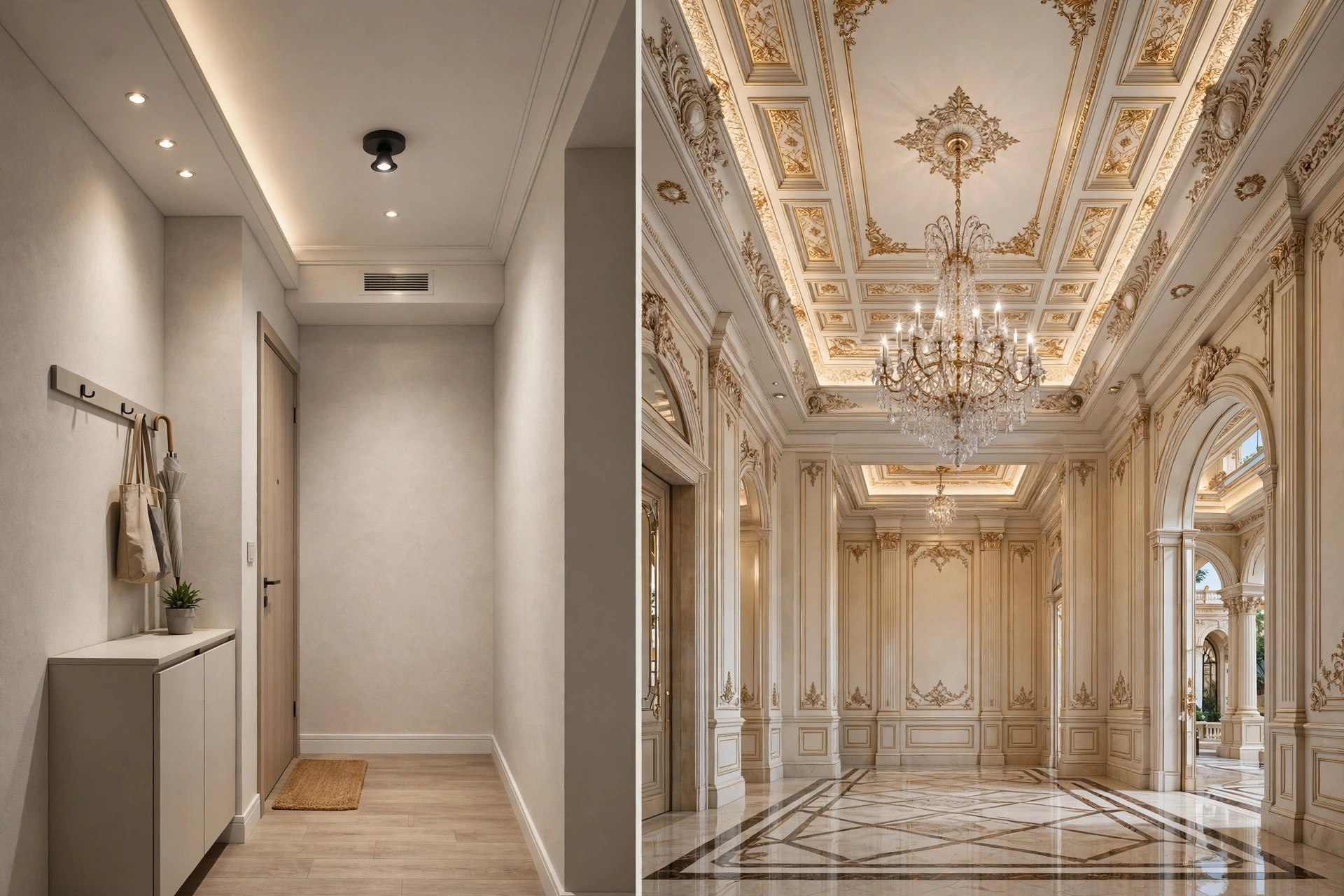
Not every 2026 trend deserves your hall. Printed stretch ceilings with loud artwork can date fast and are hard to change. Over-layered multi-material combinations look impressive in renders and chaotic in person unless a designer resolves the junctions. Ultra-slim shadow-gap detailing demands a near-perfect slab and framework — in older buildings, budget for the levelling work or skip it. And any trend that fights your hall’s proportions — deep coffers in a 9-ft room, a bold sculptural ceiling in a 120 sq ft flat — will look wrong no matter how current it is.
FAQs
What is the latest false ceiling design for a hall in 2026?
The defining 2026 directions (GoodHomes May 2026, DesignCafe 2026, aquireacres 2026): slim coffered ceilings, tray ceilings with cove lighting, layered LED lighting, stretch ceilings, wooden accents, geometric/sculptural designs, combination ceilings, floating islands with halo lighting, minimal single-layer ceilings, and smart lighting integration. The year’s theme is intentional simplicity — better light and texture over heavy decoration.
Which false ceiling is best for a hall?
Gypsum is the most widely used all-rounder (lightweight, fire-resistant, affordable). POP suits intricate patterns and curves. Wood brings warmth as an accent. PVC is the budget and moisture-resistant pick. Match the material to your hall’s height, climate, budget and style — the table above maps trends to hall types.
How much does a 2026 hall false ceiling cost in India?
2026 guide bands (India, installed): minimal POP ₹60–90, cove POP ₹110–160, floating island ₹110–130, gypsum ₹75–150, POP ₹65–120, wood ₹200–900 per sq ft. A standard 200 sq ft hall therefore runs roughly ₹12,000 at the budget end to ₹1,80,000 for premium timber work, before lighting fixtures.
Do false ceilings suit low halls?
Yes, with the right design: flat single-layer, slim border, or stretch ceilings drop only a few inches. GoodHomes’ 2026 guidance: rooms below 9 ft need careful flat or border-only designs; the ceiling drop is typically 6–12 inches.
Is smart lighting worth planning into the ceiling?
If you want scenes and dimming, yes — but plan wiring and driver locations during installation. Retrofitting smart controls into a finished ceiling costs far more than building them in.
The bottom line
The 2026 hall ceiling is quieter than its predecessors and better lit: slim profiles, one clear idea, layered warm LEDs, natural texture where it counts. Start from your hall — its height, size, climate and budget — shortlist two or three directions from the table above, price them with the 2026 bands, and lock the lighting plan before any framework goes up. Trends are a starting point; the right ceiling is the one that suits the room and the people in it. For the full room-by-room picture, the hall designs hub and the modern hall guide continue from here.
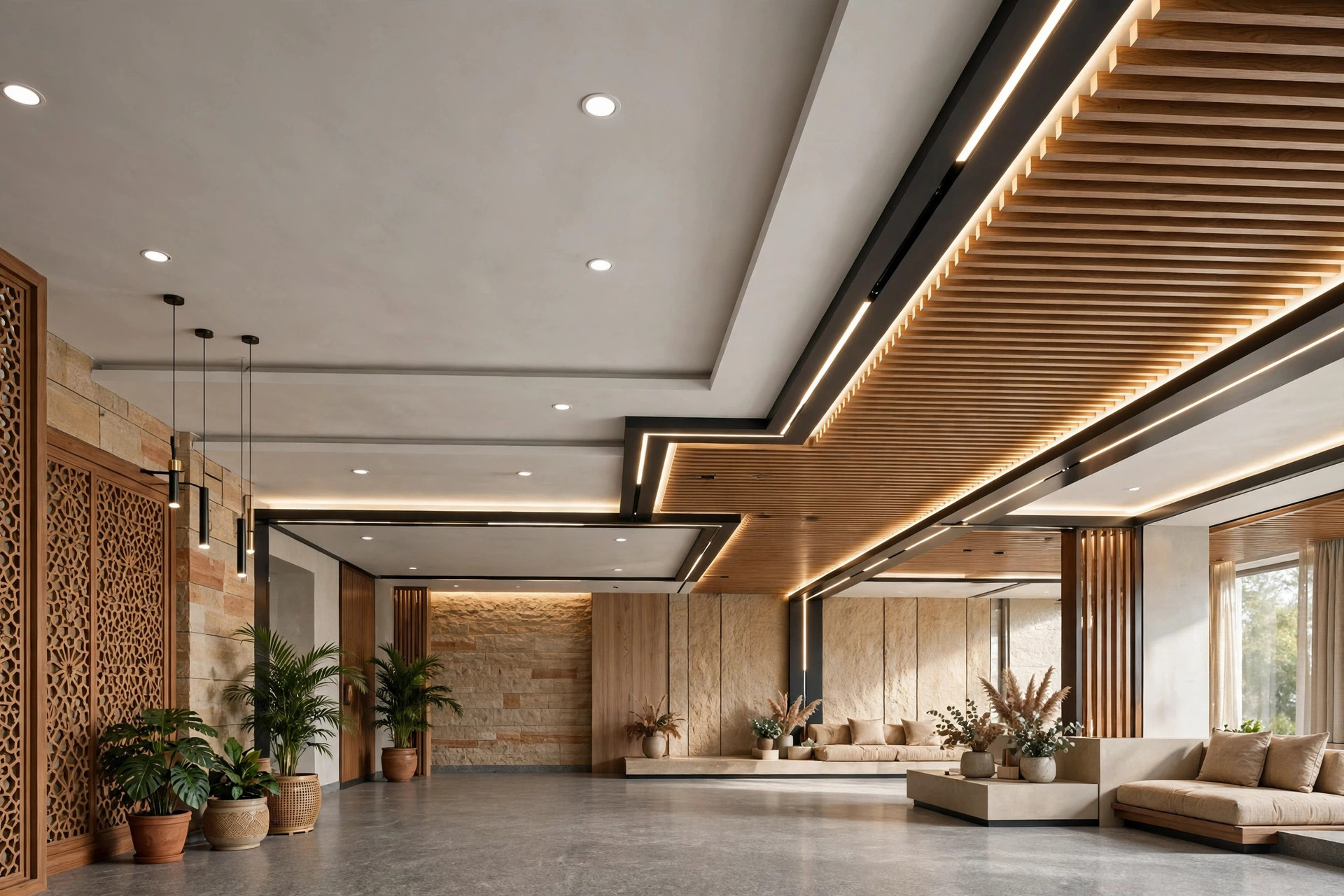
All images in this article are original concept renders created for illustration, not photographs of completed projects.