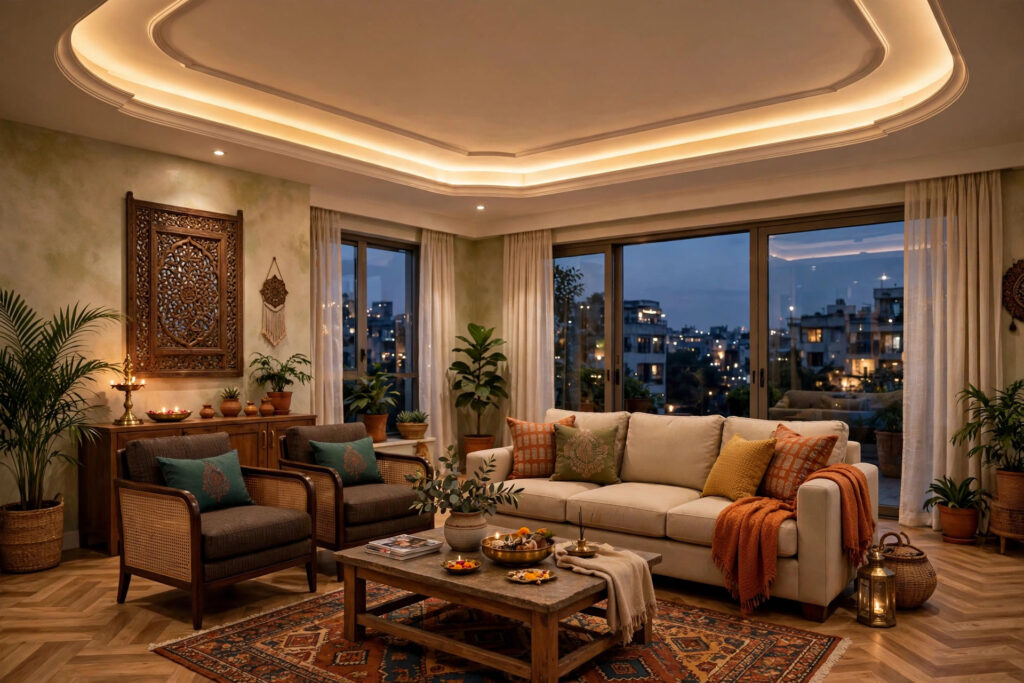

How much does a false ceiling for the hall actually cost? Ask three contractors and you may get three different numbers — because “false ceiling cost” is not one price. It is a material price, a design price, a lighting price and a labour price added together, and each one moves with your city, your ceiling height and how elaborate the design is.
This guide breaks down hall false ceiling prices for Indian homes: what a per-square-foot rate really includes, the cost bands for simple, cove, tray and premium designs, material-wise rates with their sources, worked examples for typical hall sizes, and how to compare quotes without getting burned. It sits under our false ceiling cost guide for India, which covers pricing across all rooms; this article goes deep on the hall, the room most people ceiling first.
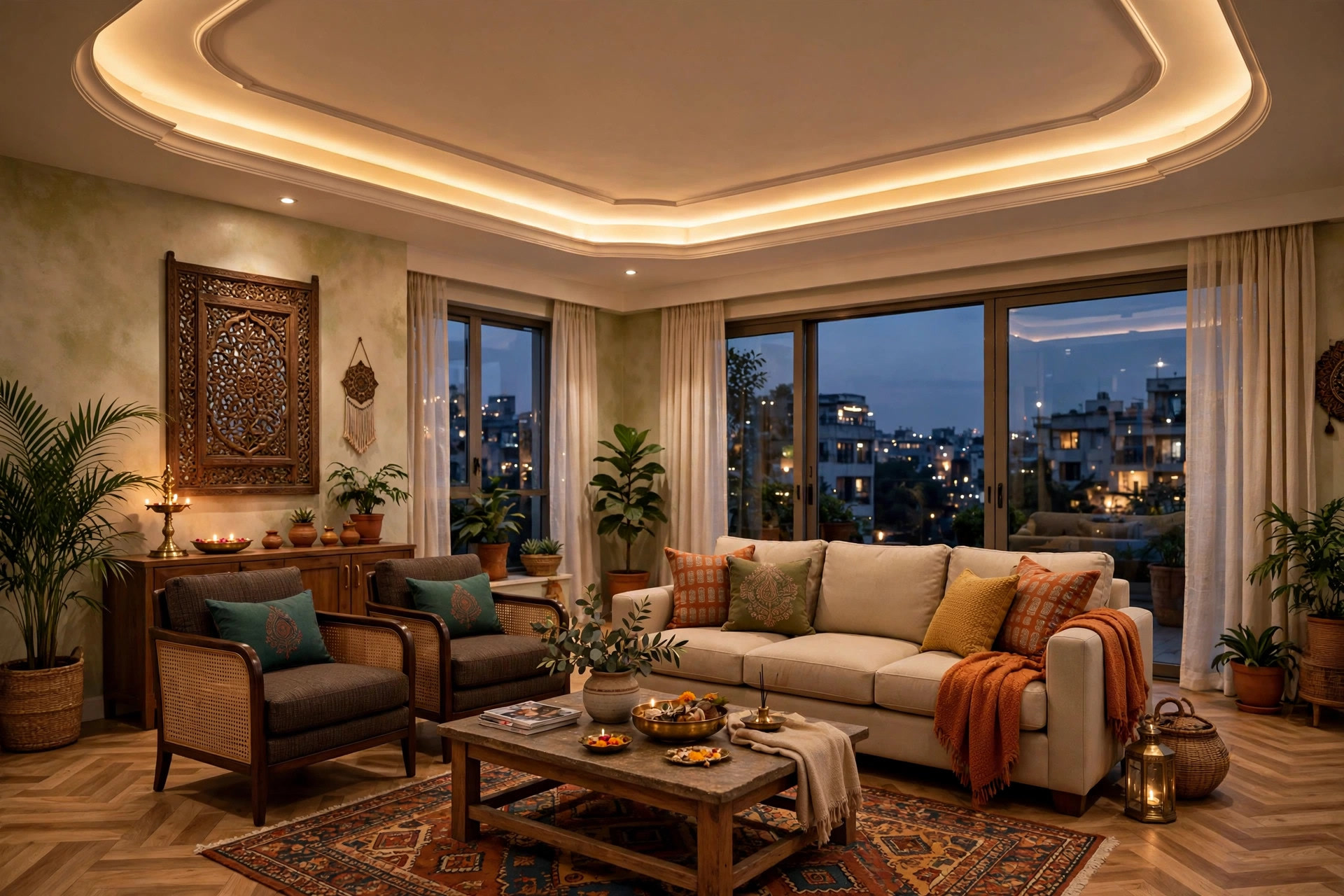
About the numbers in this guide: every ₹ figure below is an indicative 2026 India range taken from publicly listed Indian interior guides inspected on 2026-10-10 (sources named under each table). Rates are usually quoted as material + labour per square foot and vary by city, contractor, ceiling height and design complexity. Always get written quotes for your actual room — treat these as a planning map, not a price list. We claim no ShuklaInteriors pricing here; we don’t publish our own rates.
What a per-square-foot rate actually includes
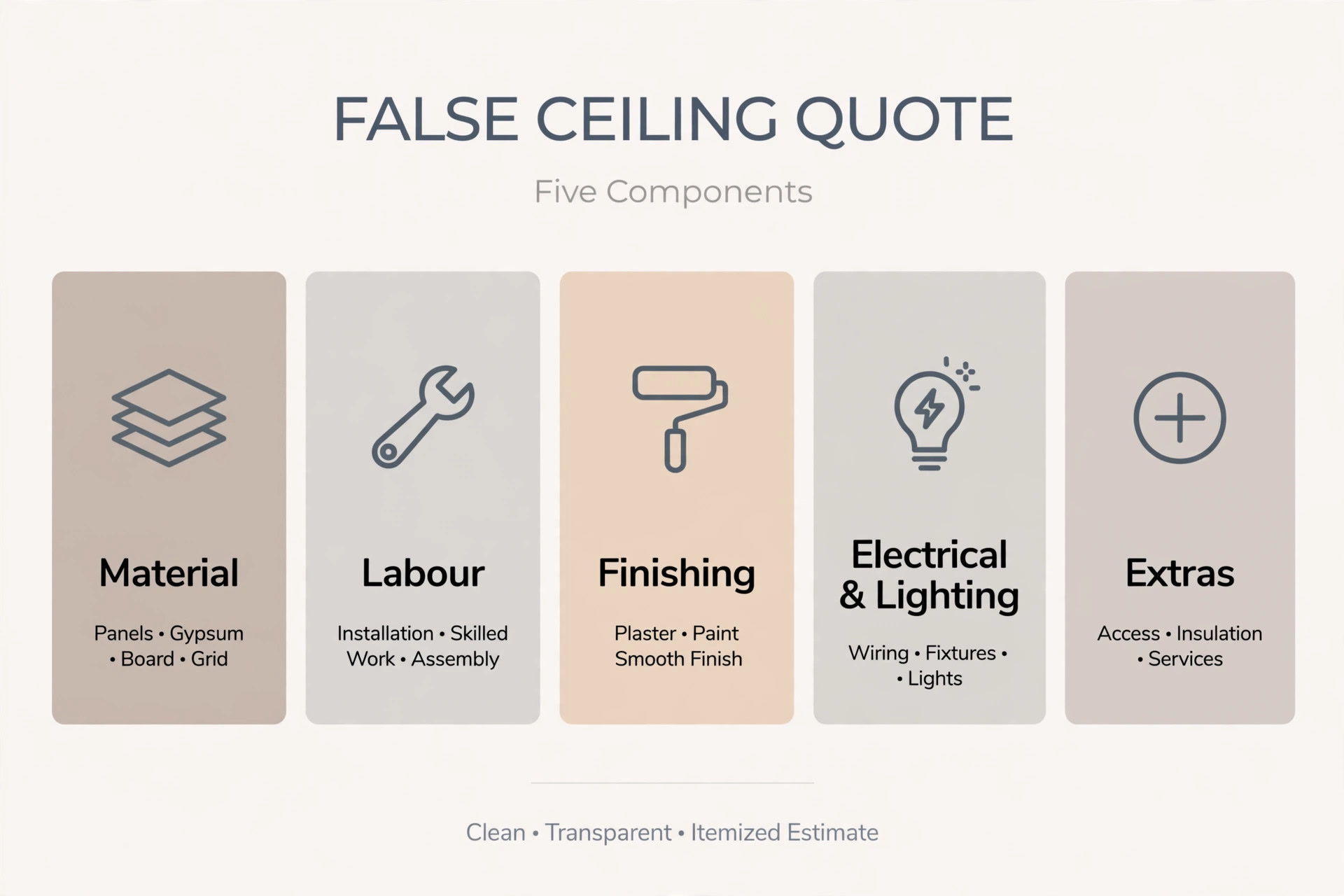
A per-square-foot quote is a bundle. Before comparing two numbers, make sure both quotes bundle the same things:
- Material: boards or panels (gypsum, POP, PVC, metal, wood) plus the metal or wooden framework that holds them.
- Labour: installation work, which rises steeply with design complexity — a flat ceiling installs far faster than a multi-layer tray.
- Finishing: jointing, putty, sanding and painting.
- Electrical and lighting: wiring for recessed lights, LED strips, fan provisions and switch points.
- Extras: edge trims, transport, material wastage, and GST.
Two quotes for the same room can differ wildly because one includes lighting and finishing while the other doesn’t. The cheapest headline rate is often the most expensive final bill.
Cost bands by design tier
For a hall or living room in India, 2026, publicly listed guides cluster around these design tiers (material + labour, per sq ft):
| Design tier | Indicative rate (₹/sq ft) | What you get |
|---|---|---|
| Simple flat | ₹65–120 | Single-level gypsum or POP ceiling, clean finish, basic recessed lights |
| Cove / single tray | ₹100–185 | Perimeter cove or one tray level with hidden LED strip, layered lighting |
| Double-layer / designer | ₹150–300 | Multi-level trays, geometric patterns, mixed materials, profile lighting |
| Premium | ₹200–500+ | Wood or veneer accents, stretch or glass features, smart lighting, statement designs |
Sources: NoBroker Interiors living-room POP guide (simple ₹65–95, cove ₹100–185, premium ₹200–350); aecord 2026 all-in guide (gypsum ₹80–150, POP ₹100–200, wood ₹250–500+); Housing.com POP hall guide (gypsum ₹70–150, POP ₹75–120, PVC ₹50–100, metal ₹80–140). All inspected 2026-10-10.
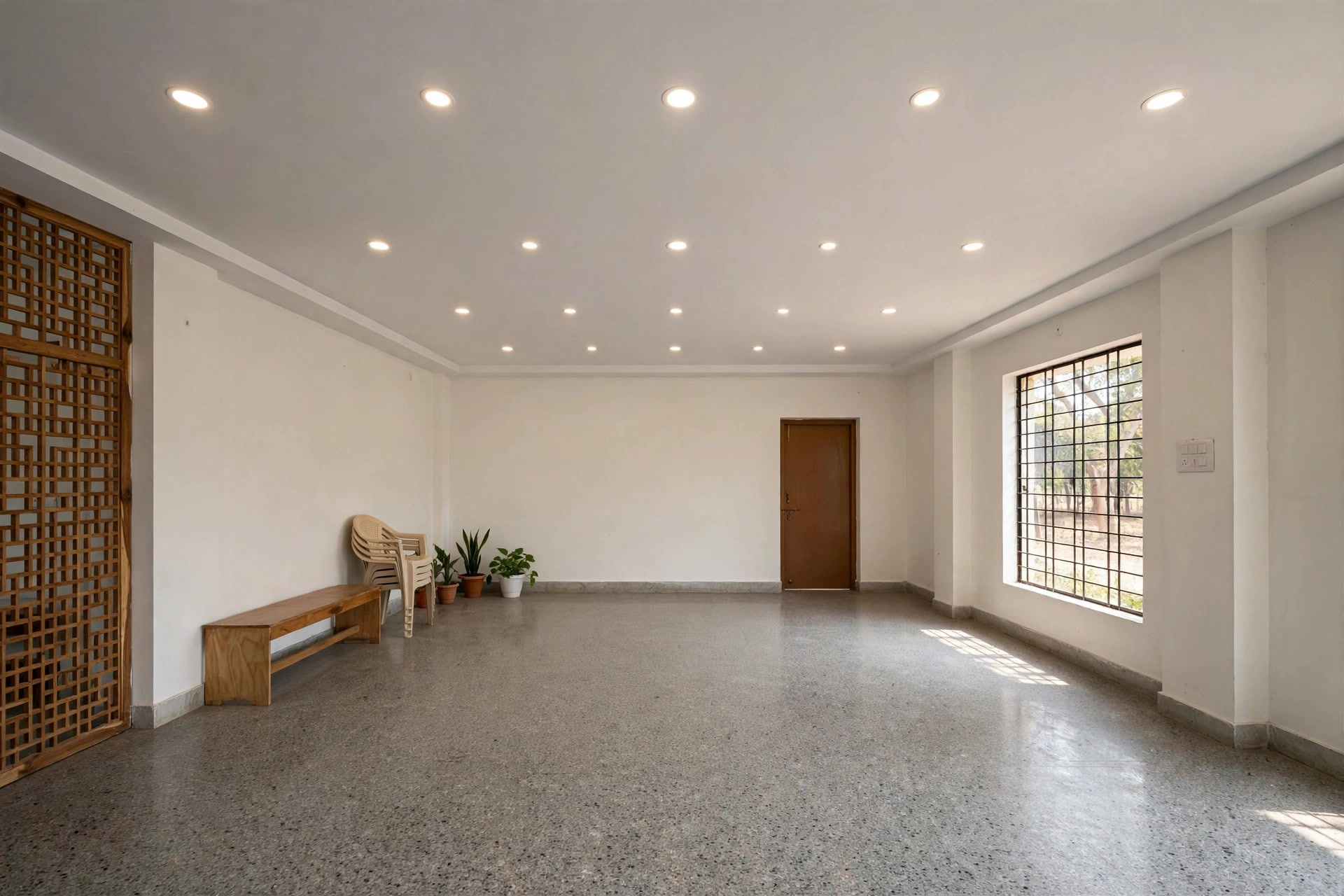
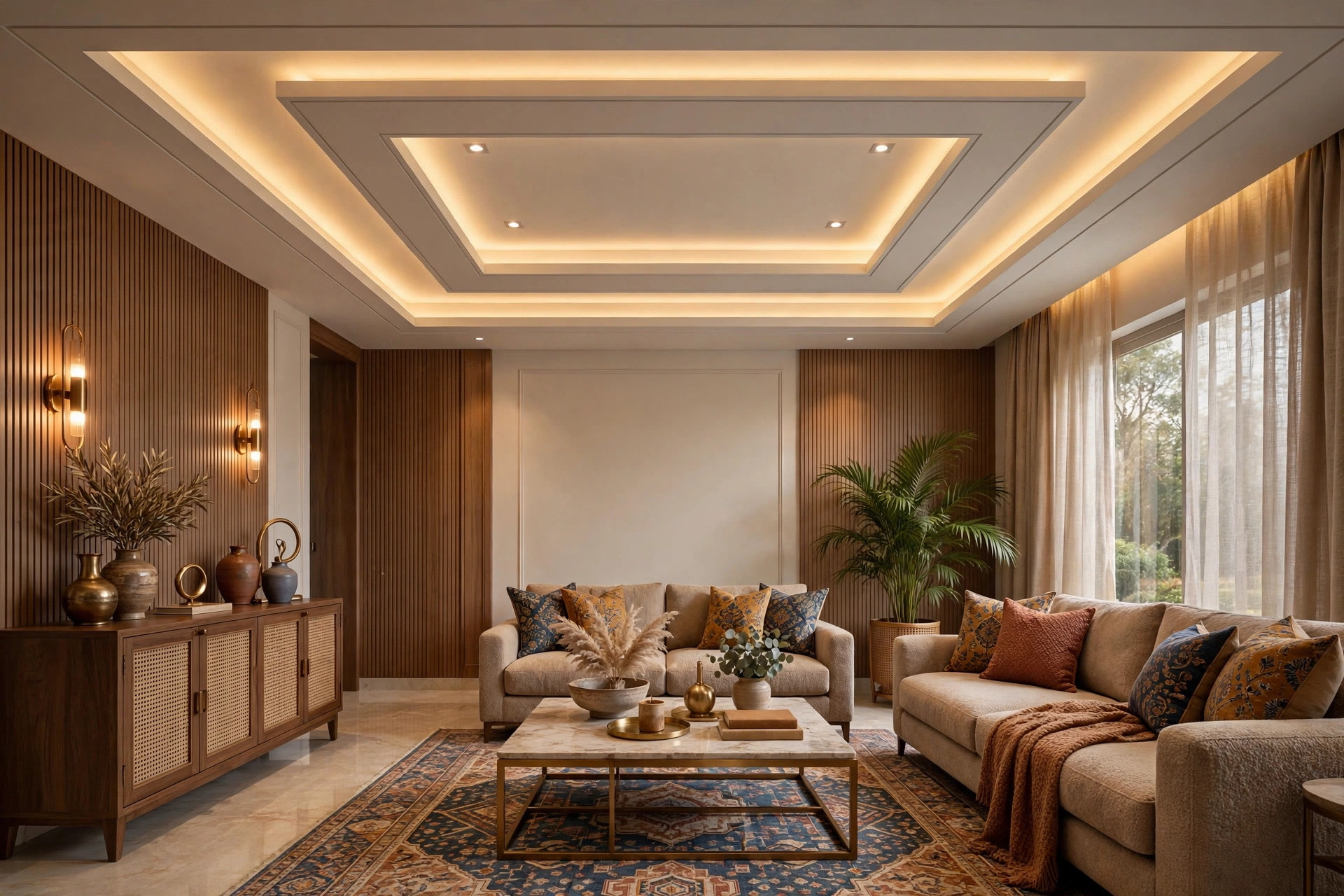
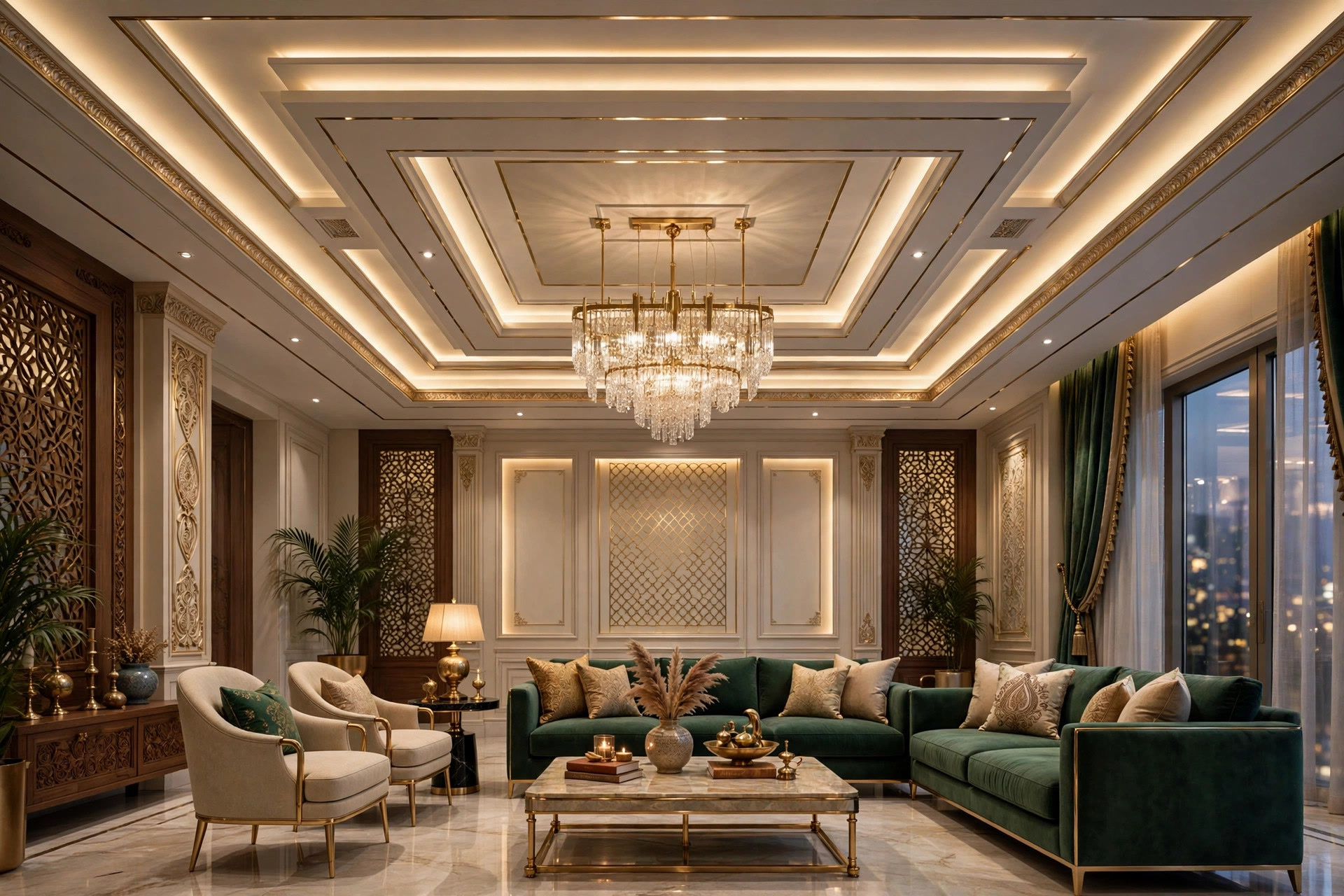
Double-layer trays: what the premium tier looks like
Step up to two tray levels, a geometric pattern, or mixed materials with profile lighting, and you enter the designer band — roughly ₹150–300 per sq ft all-in. The jump is mostly labour: every extra level means more framework, more jointing, more finishing time. It looks the part in large halls; in compact ones it can feel like too much ceiling for the room.
Material-wise rates for halls
The material sets the floor and ceiling of your budget. Indicative 2026 India rates, material + labour per sq ft:
| Material | Indicative rate (₹/sq ft) | Lifespan | Hall verdict |
|---|---|---|---|
| Gypsum board | ₹70–150 | 10–20 yrs | The default hall pick — best look-to-cost ratio, clean finish, quick install |
| POP | ₹75–200 | 8–20 yrs | Choose it for moulded detail and coves; slower install, can crack over time |
| PVC panels | ₹50–150 | 10–20 yrs | Budget pick; waterproof and wipeable but looks plainer in a showpiece room |
| Metal / aluminium | ₹80–300 | 25–30 yrs | Durable and modern; suits industrial or commercial-feel halls |
| Wood / veneer | ₹200–500+ | 20–30 yrs | Premium accent material; use it as an accent, rarely the whole ceiling |
Sources: Housing.com; aecord 2026; NoBroker PVC guide (PVC ₹70–150); ideasandliving.com (PVC ₹40–60, gypsum/POP ₹75–120, wood ₹200–400, glass ₹350–600). All inspected 2026-10-10.
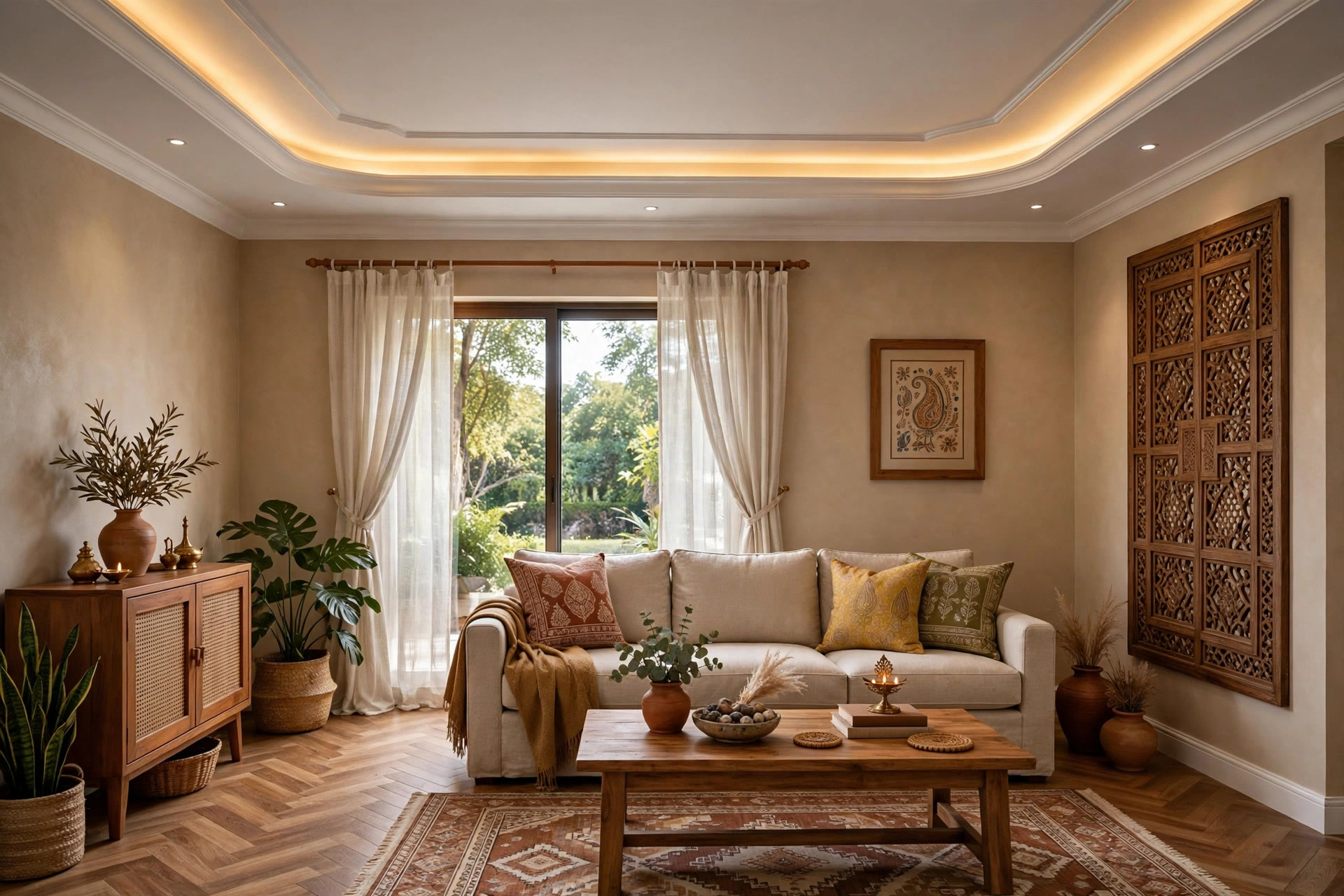
For most Indian halls, gypsum with a cove-light pocket is the sweet spot — it looks premium at a mid-range price, which is why it dominates new apartments.
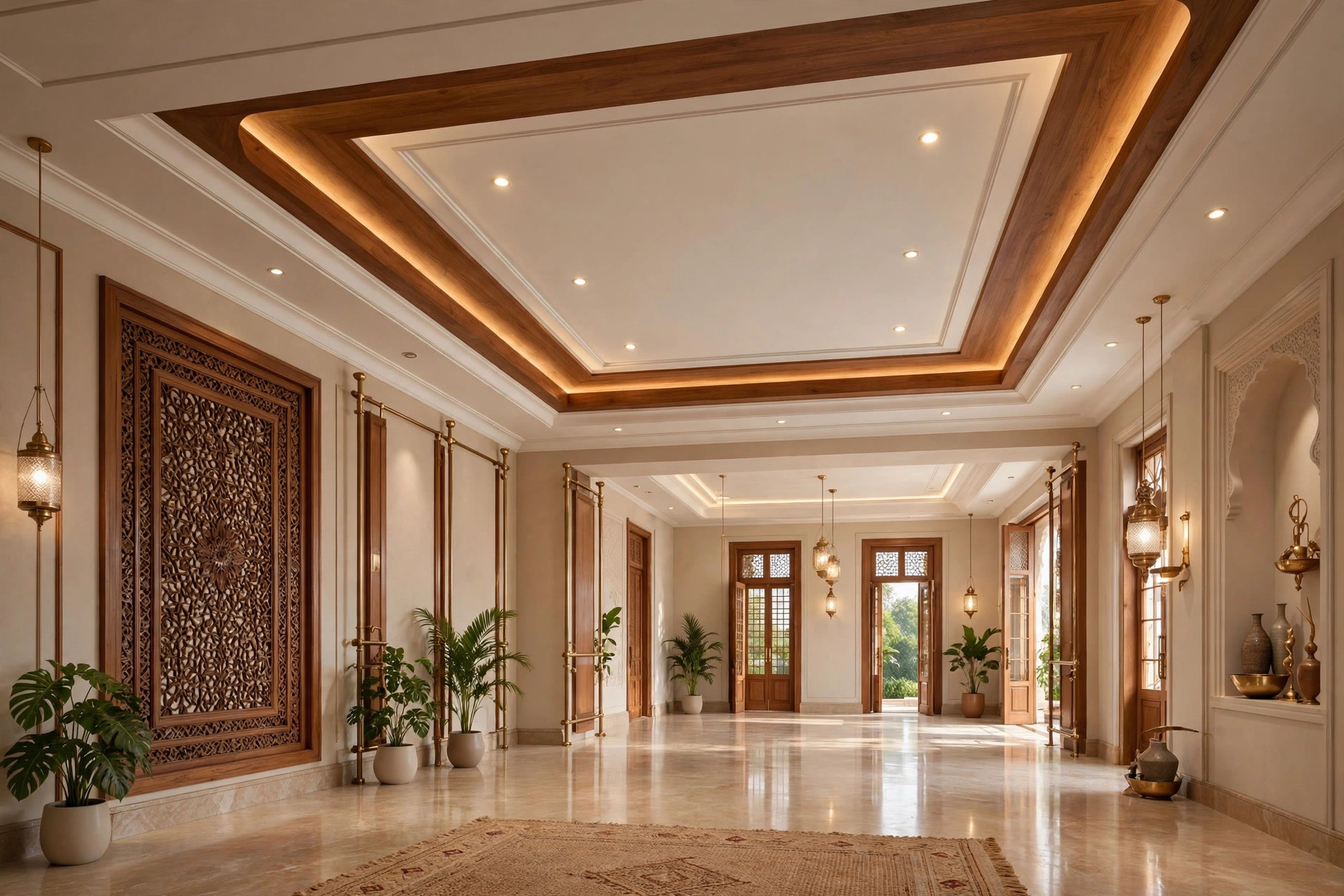
Wood accents: the premium material, used sparingly
Wood and veneer sit at ₹200–500+ per sq ft installed — the priciest common option. The smart way to use wood in a hall is as an accent: a timber border inside a gypsum tray, slats over the seating zone, a veneer panel behind the TV wall running onto the ceiling. A little wood reads as luxury; a whole wooden ceiling mostly reads as a bill.
PVC in a hall: the honest budget option
At roughly ₹50–150 per sq ft, PVC is the cheapest way to ceiling a hall — waterproof, wipeable, quick to install. The honest caveat: in a showpiece room, PVC looks plainer than gypsum under bright light. It suits rental flats, budget renovations, and halls where practicality beats prestige. Spend the savings on good lighting, which lifts any ceiling.
When premium is worth it
Above ₹200 per sq ft you are buying statement: stretch membranes, glass features, intricate multi-layer geometry, smart lighting scenes. It makes sense in exactly two situations — a large hall that can carry the drama, or a home where the living room is genuinely the showpiece. Everywhere else, the mid-range cove gives you 90% of the look at half the price.
Worked examples: what halls actually cost
Multiply the rate by your ceiling area. A few typical scenarios (using mid-range gypsum-with-cove rates around ₹120–150/sq ft as the worked example — your quote may differ):
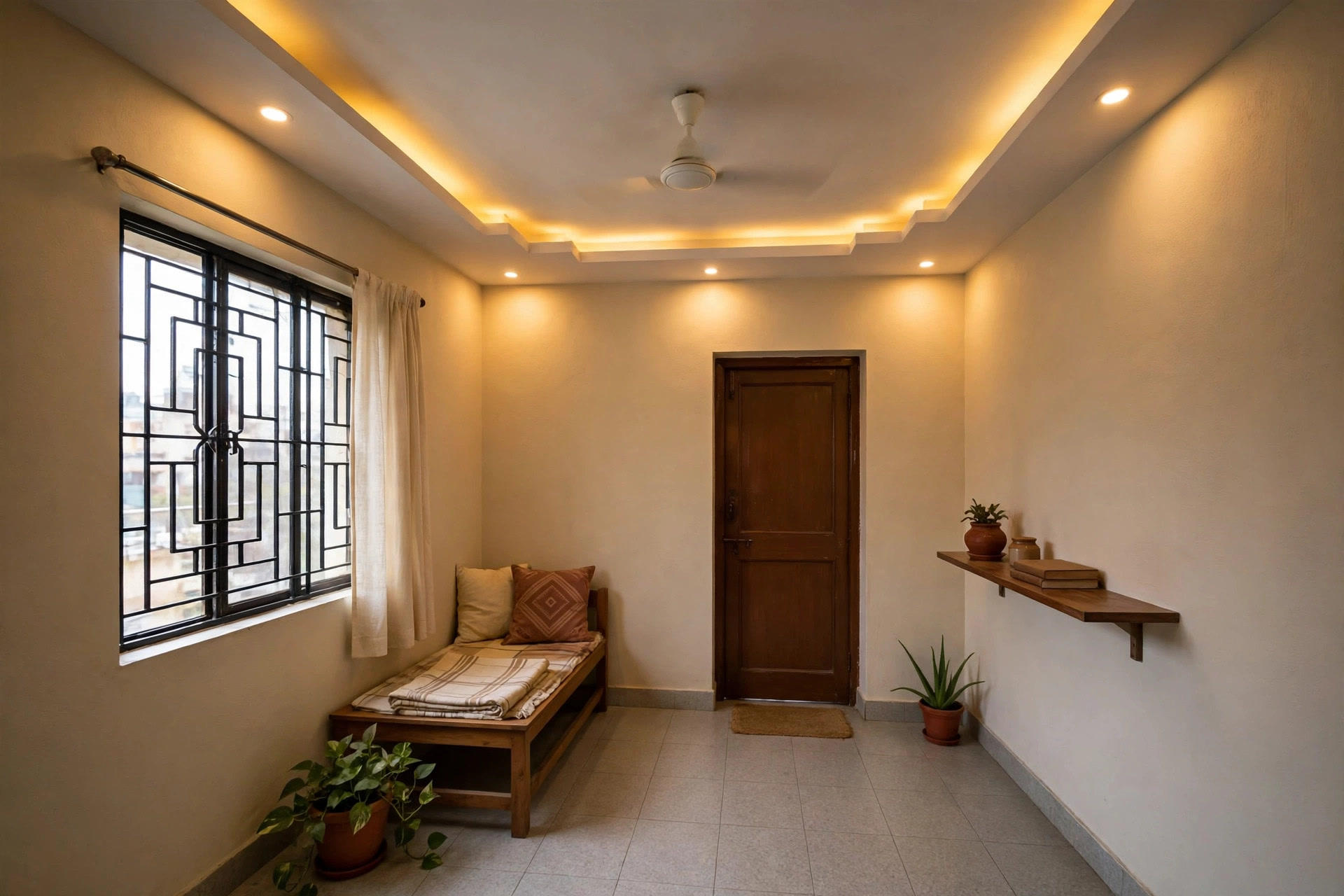
A compact 10×12 ft hall (120 sq ft). Simple flat ceiling: roughly ₹8,000–14,000. With a cove and LED strip: roughly ₹14,000–22,000. Add lighting fittings and wiring on top.
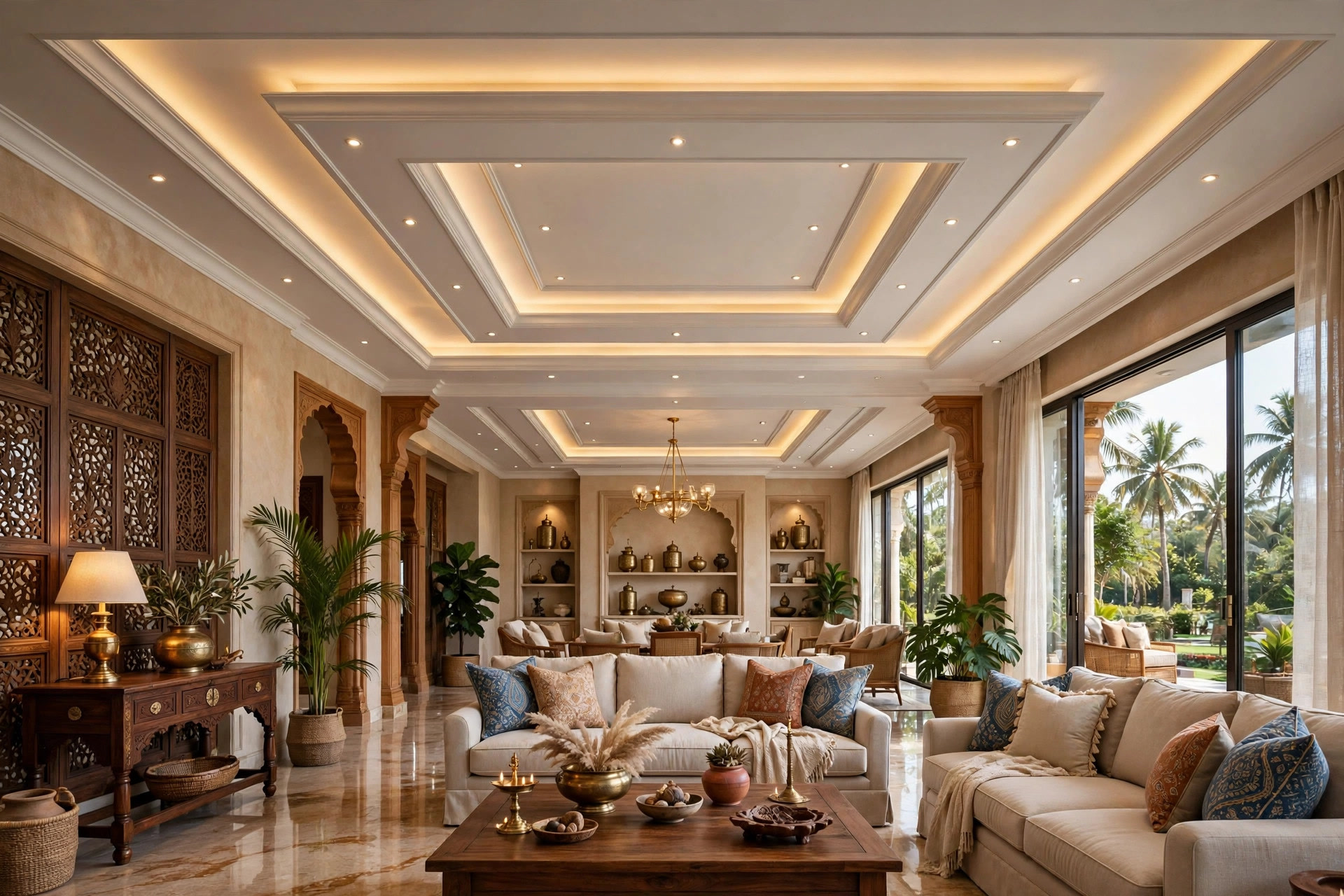
A large 14×18 ft hall (252 sq ft). Simple flat: roughly ₹16,000–30,000. With a cove and layered lighting: roughly ₹30,000–47,000. A double-layer designer ceiling: ₹38,000–75,000 or more.
A 2BHK’s living areas (roughly 800 sq ft of ceiling). One widely cited worked example puts a simple gypsum ceiling with cove lighting at about ₹96,000 for the ceiling plus ₹15,000–25,000 for lighting — roughly ₹1.1–1.2 lakh all in (medium.com price guide, inspected 2026-10-10). Treat this as an order-of-magnitude check for full-home budgeting, not a quote.
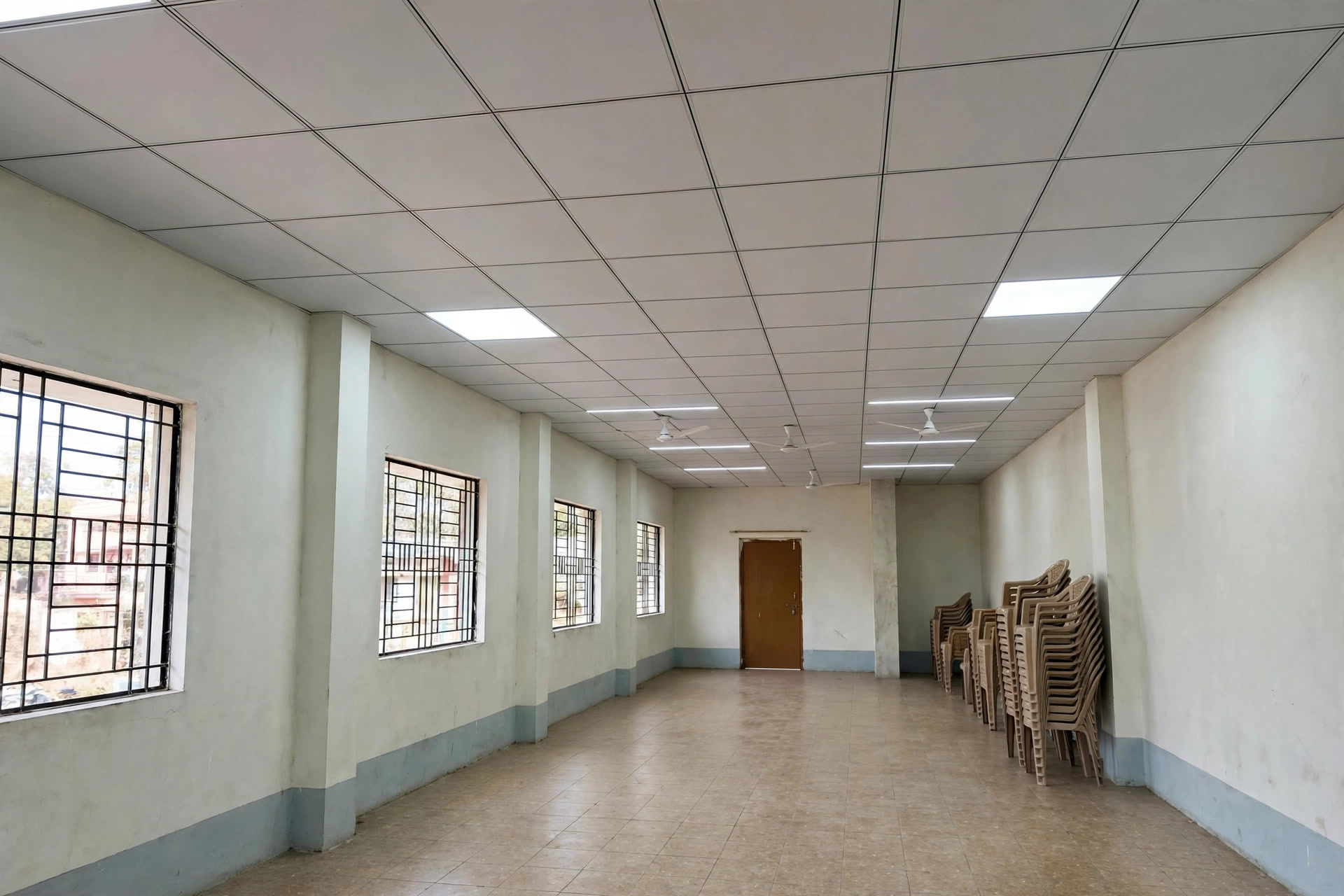
Long halls: zone the ceiling, zone the budget
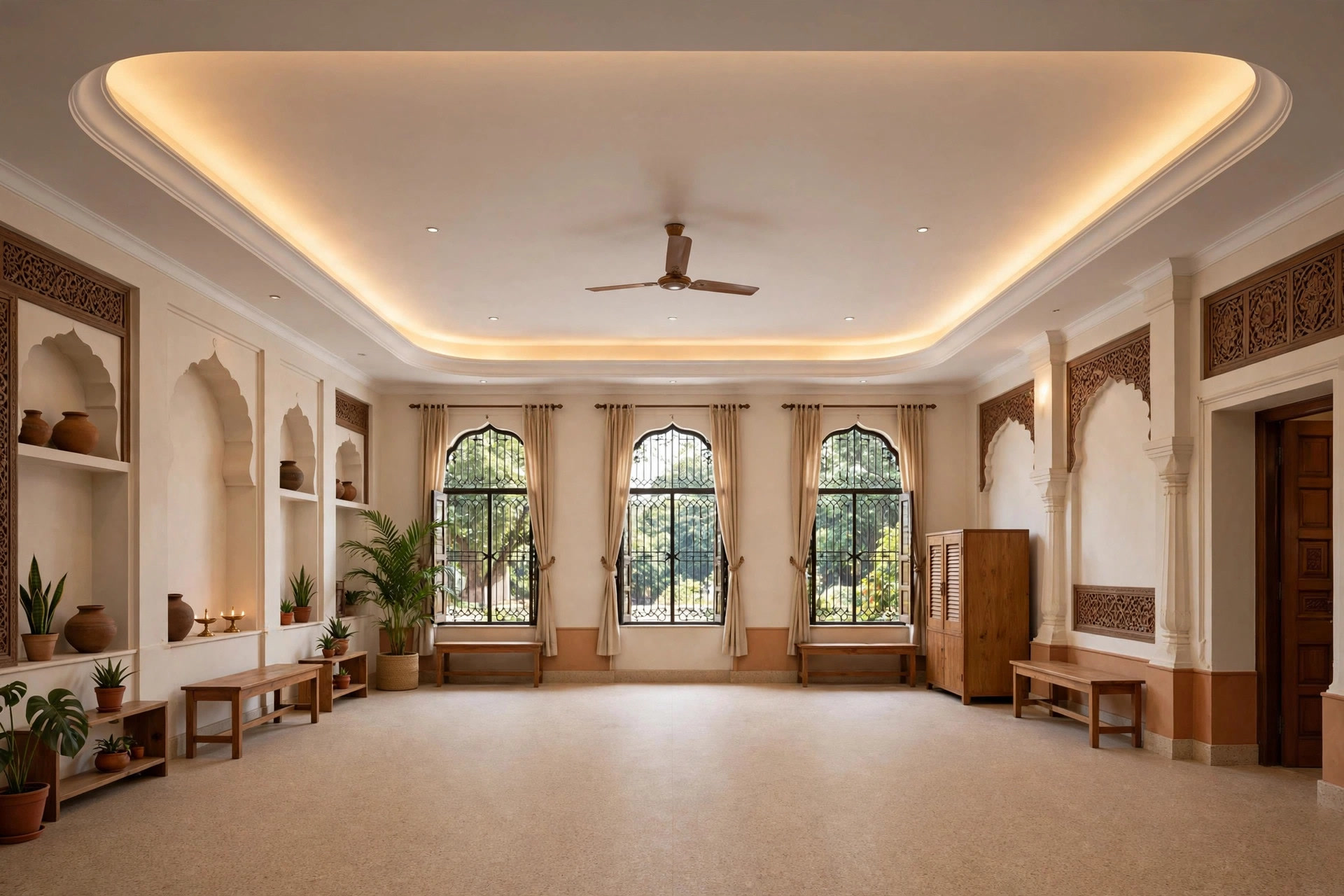
In a long rectangular hall, one uniform ceiling wastes money and looks flat. Zone it instead: a cove over the seating area, a simpler flat stretch over the walkway, a feature panel over the dining end. Zoning concentrates the expensive detailing where eyes actually rest and keeps the total bill lower than a full-room designer ceiling.

What moves the price up or down
- Design complexity. The single biggest lever. A flat ceiling and a three-layer tray can differ by 2–3x per square foot for the same material.
- Ceiling height. Higher slabs need more framework and scaffolding time; very low slabs limit design options instead.
- Lighting. Recessed spots, LED strips, profile lights and their wiring add ₹15,000–25,000+ to a typical hall — budget it separately, not as an afterthought.
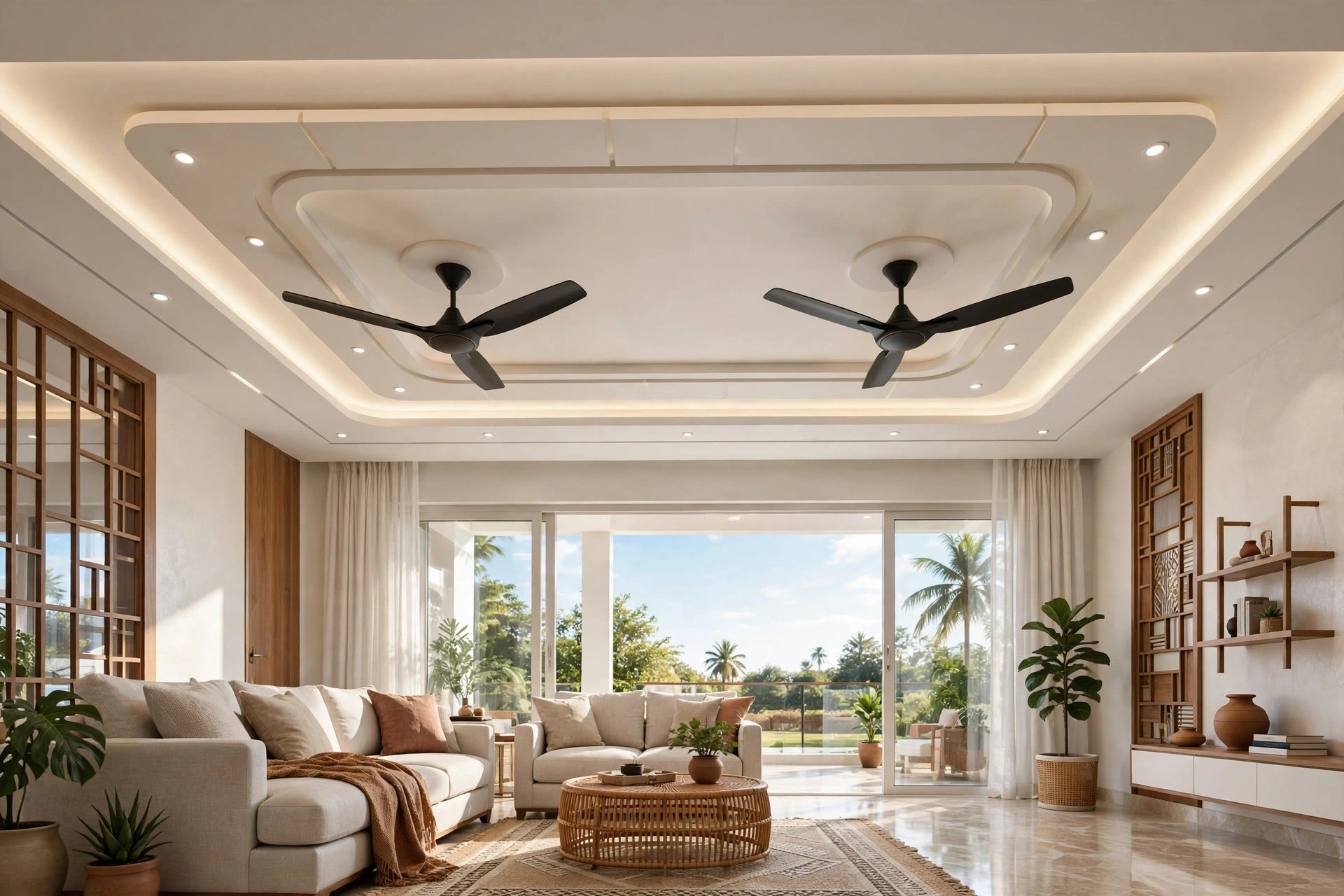
- Fans. Halls often need one or two fans. Each fan point needs proper anchoring to the slab and a planned recess or medallion in the ceiling layout — discuss it before the layout is finalised, not after.
- Finish. Standard emulsion vs premium textures, wood polish, or special paints move the finishing line item.
- City and contractor. Metro labour rates run higher; established contractors quote higher but usually finish cleaner.
- Access and site conditions. Staircase-only access, occupied homes, and tight timelines all add cost.
Lighting: budget it as its own project
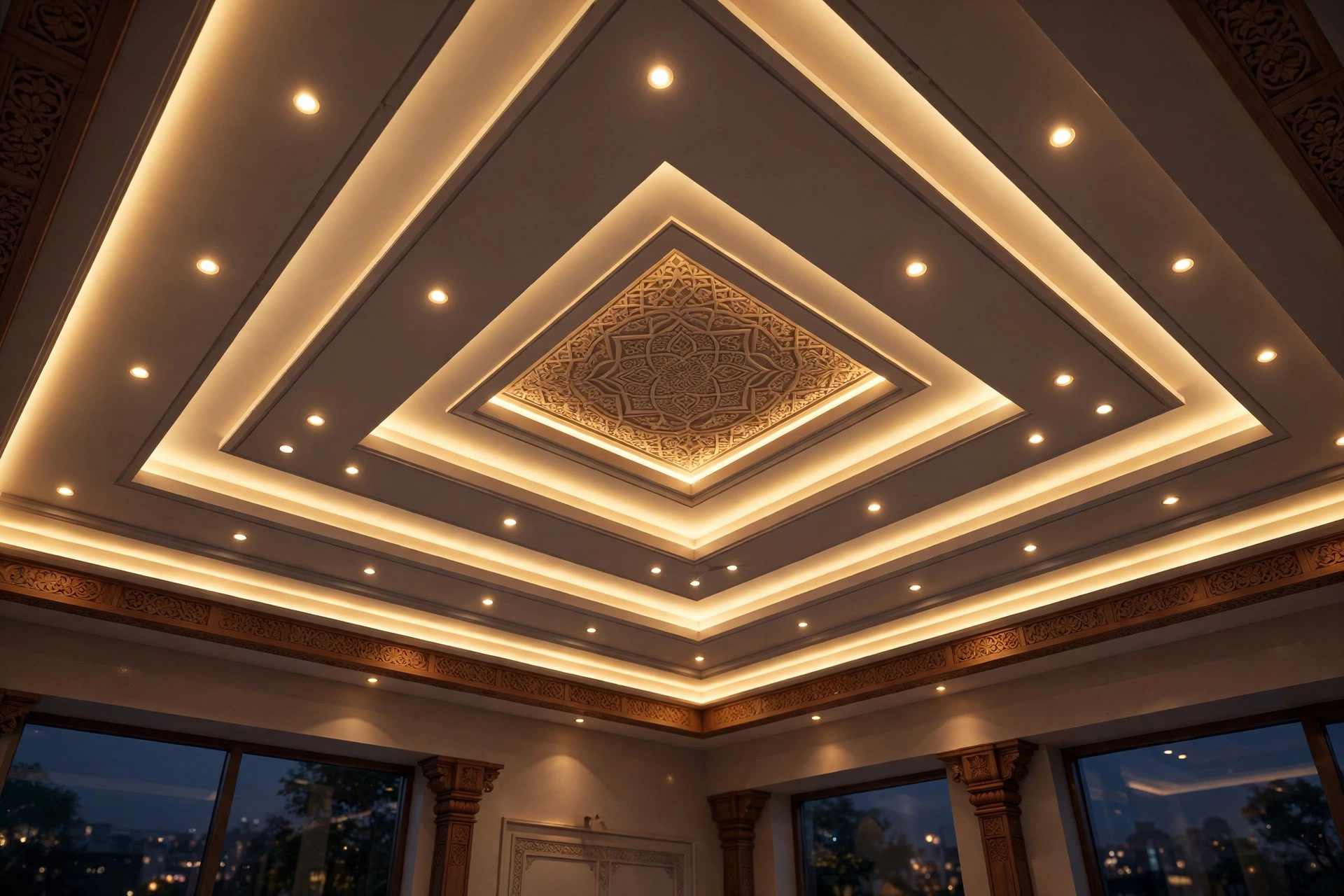
Lighting routinely surprises first-time ceiling buyers, because the strips, spots, drivers and wiring are quoted separately from the ceiling itself. For a typical hall, expect the lighting package — LED cove strips, 6–10 recessed spots, wiring and switch points — to add a five-figure sum on top of the ceiling rate. Decide the lighting design when you decide the ceiling design; the two are one project, not two.
Why the same ceiling costs different in different cities
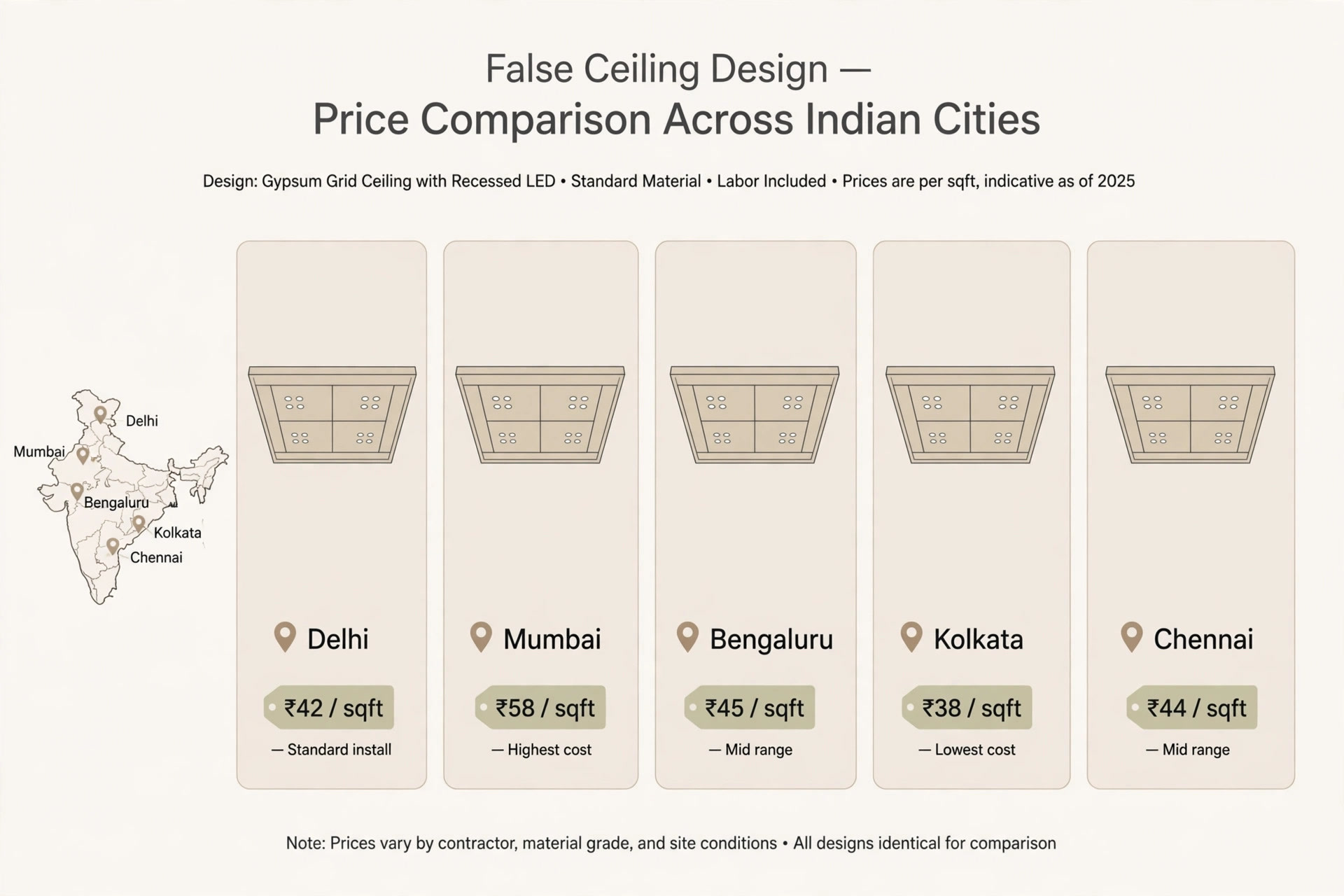
Labour rates, material transport, and contractor competition all vary by city — metro quotes typically run higher than tier-2 city quotes for identical work. This is why national per-square-foot ranges are wide, and why a neighbour’s bill is only a rough guide. Always benchmark against two or three local quotes, not against a number you read for another city.
Gypsum vs POP: the cost trade-off
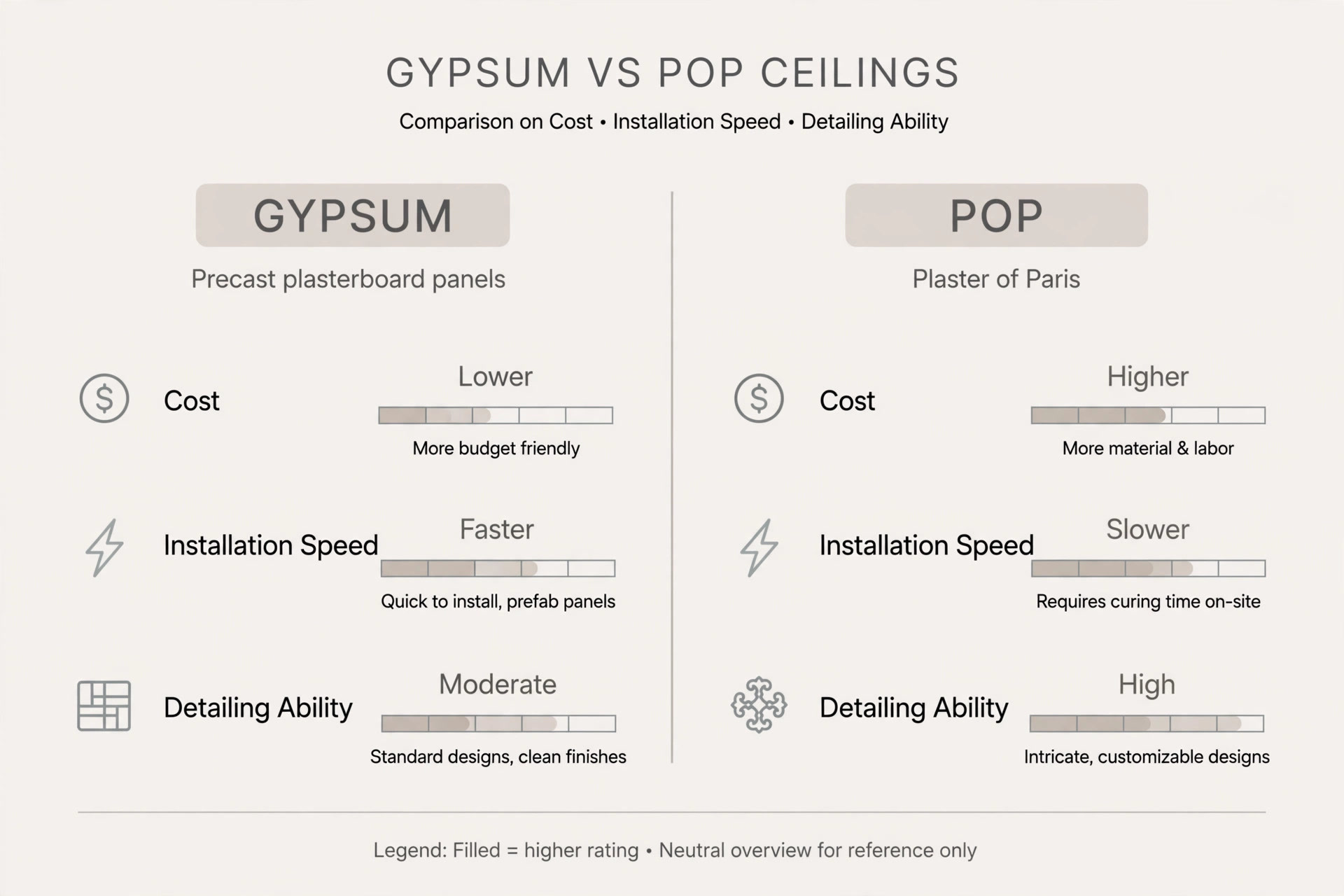
Gypsum usually wins on installed cost for flat and cove designs: factory-made boards, faster installation (days, not weeks), less on-site mess, fewer cracks later. POP earns its place where the design needs moulding — curves, cornices, medallions, ornamental borders — and that craftsmanship is what you are paying for. For a simple hall ceiling, gypsum is typically cheaper all-in; for a decorative hall ceiling, POP’s labour premium is the price of the detailing.
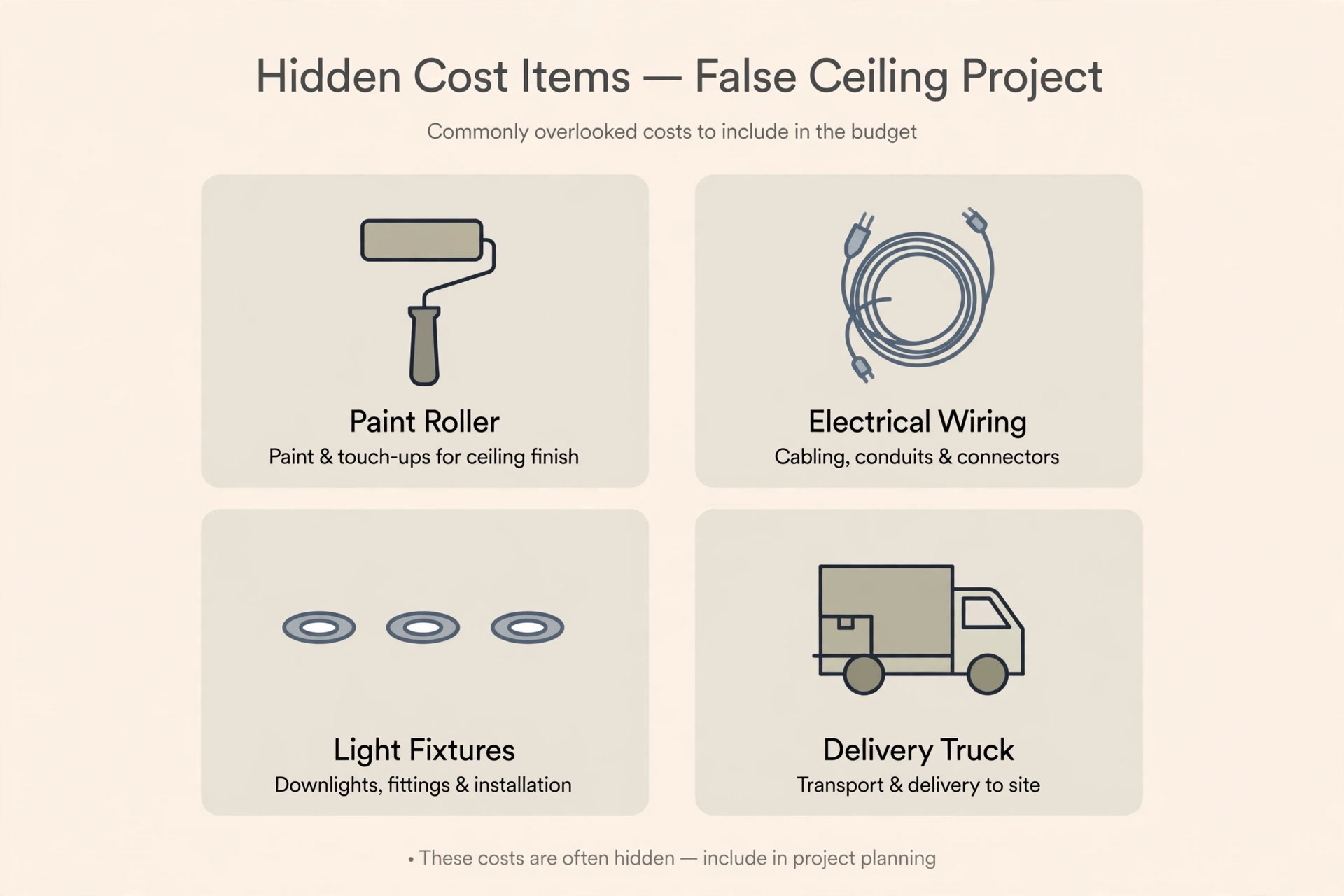
Where the hidden costs hide
- Painting. Some quotes exclude final painting — confirm whether putty, primer and two coats are in.
- Electrical. Wiring, switch points and the electrician’s visit are often billed separately.
- Fixtures. The LED strips and spotlights themselves are usually extra, and premium fittings add up fast.
- Repairs to the slab. If the existing ceiling needs crack repair or waterproofing first, that is a separate line.
- GST and transport. Small line items that still move the total.
How to compare quotes without getting burned
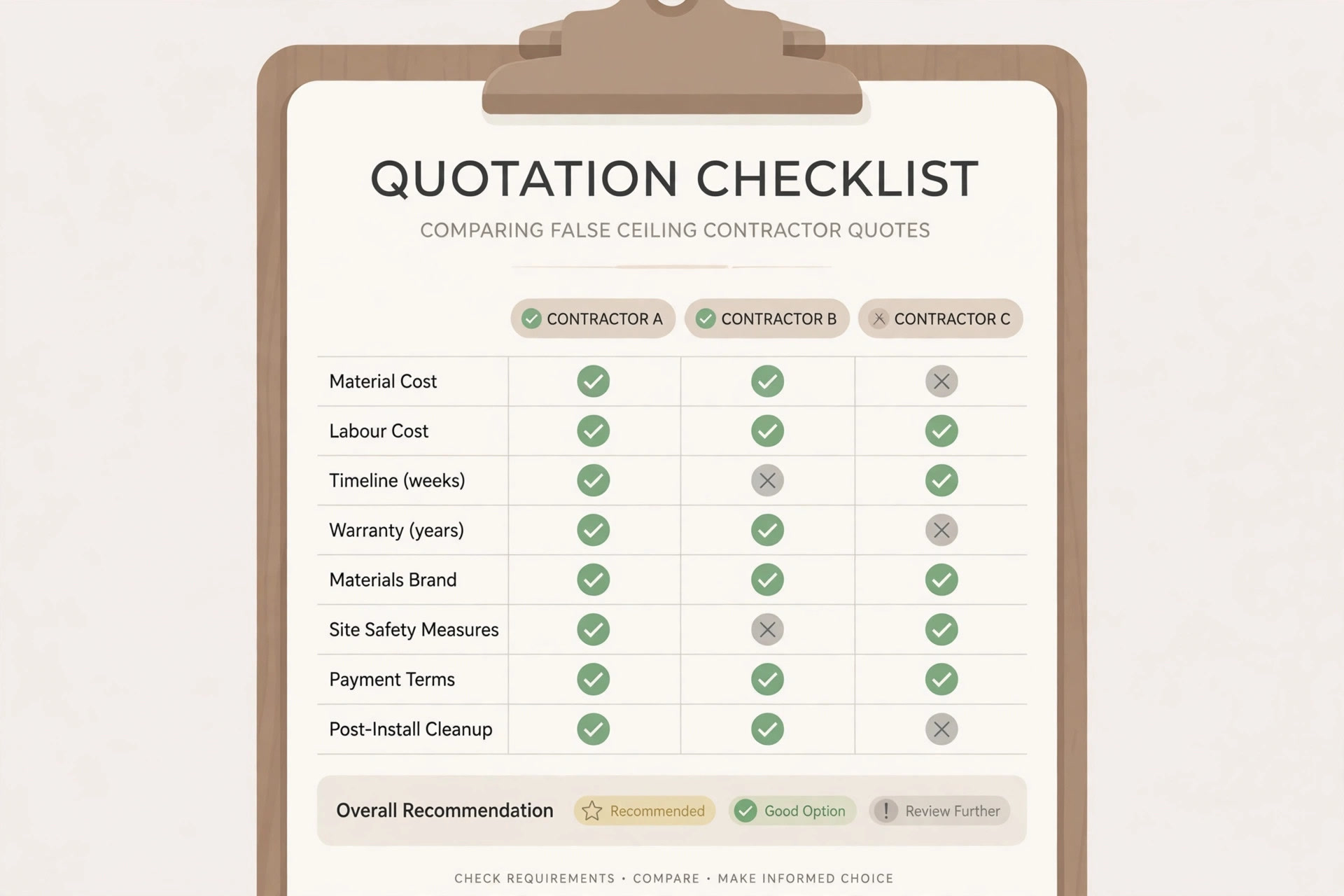
- Get three quotes with the scope in writing — material brand and grade, ceiling area measured, design drawing or description, lighting points, finishing, and timeline.
- Compare line by line, not headline by headline. A ₹90/sq ft quote that excludes painting and wiring is worse than a ₹120/sq ft quote that includes them.
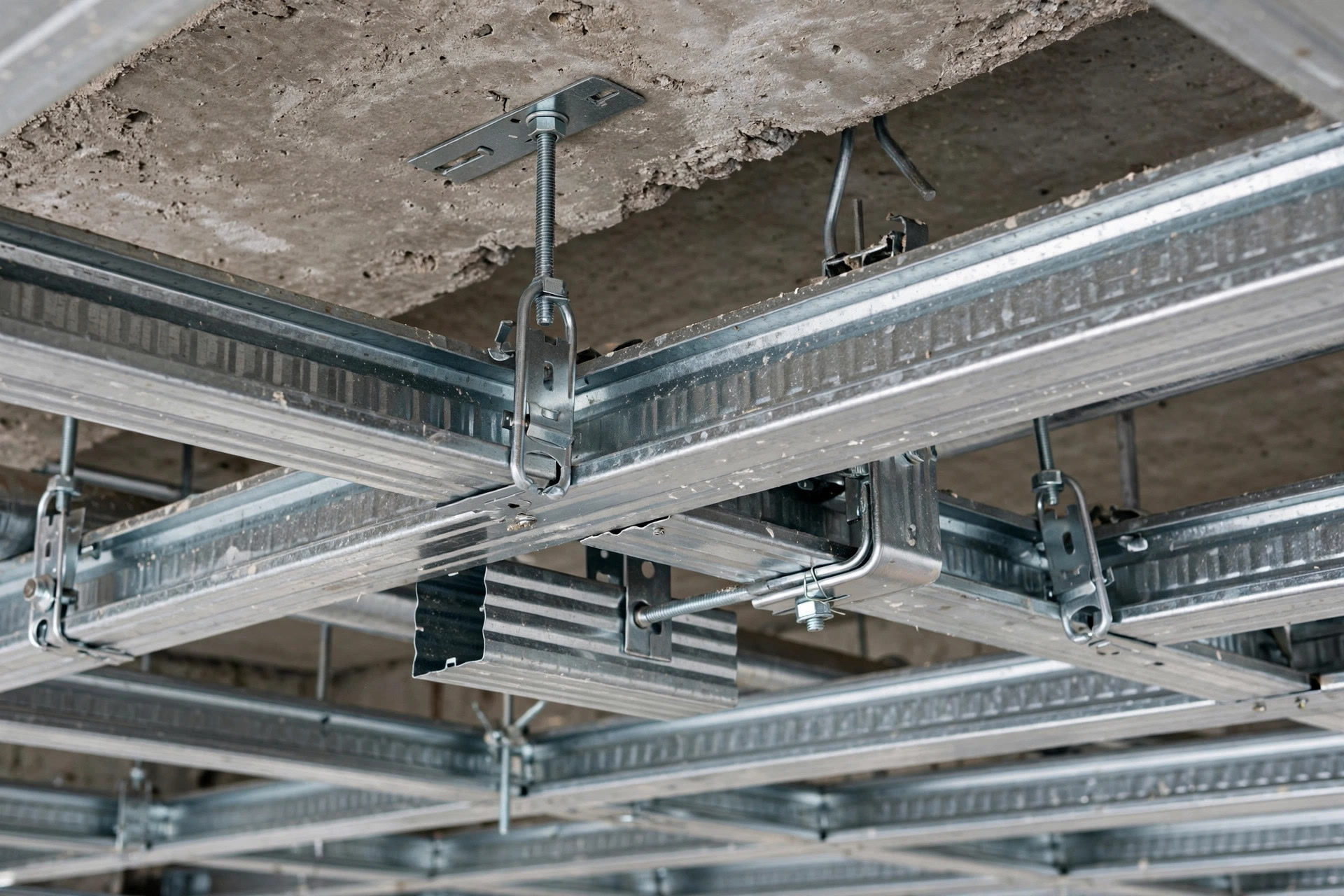
- Ask about the framework. The hidden metal frame decides whether your ceiling stays flat for 15 years. Cheap quotes sometimes cheapen exactly this.
- Ask how they handle fans and lights. Fan anchoring to the slab, wire routing, cove LED placement — the answers reveal competence faster than the price does.
- Check past work. Visit or video-call a finished site, especially one a year or two old. Cracks and sagging show up with time, not on day one.
- Never pay everything upfront. A staged payment schedule tied to milestones protects both sides.
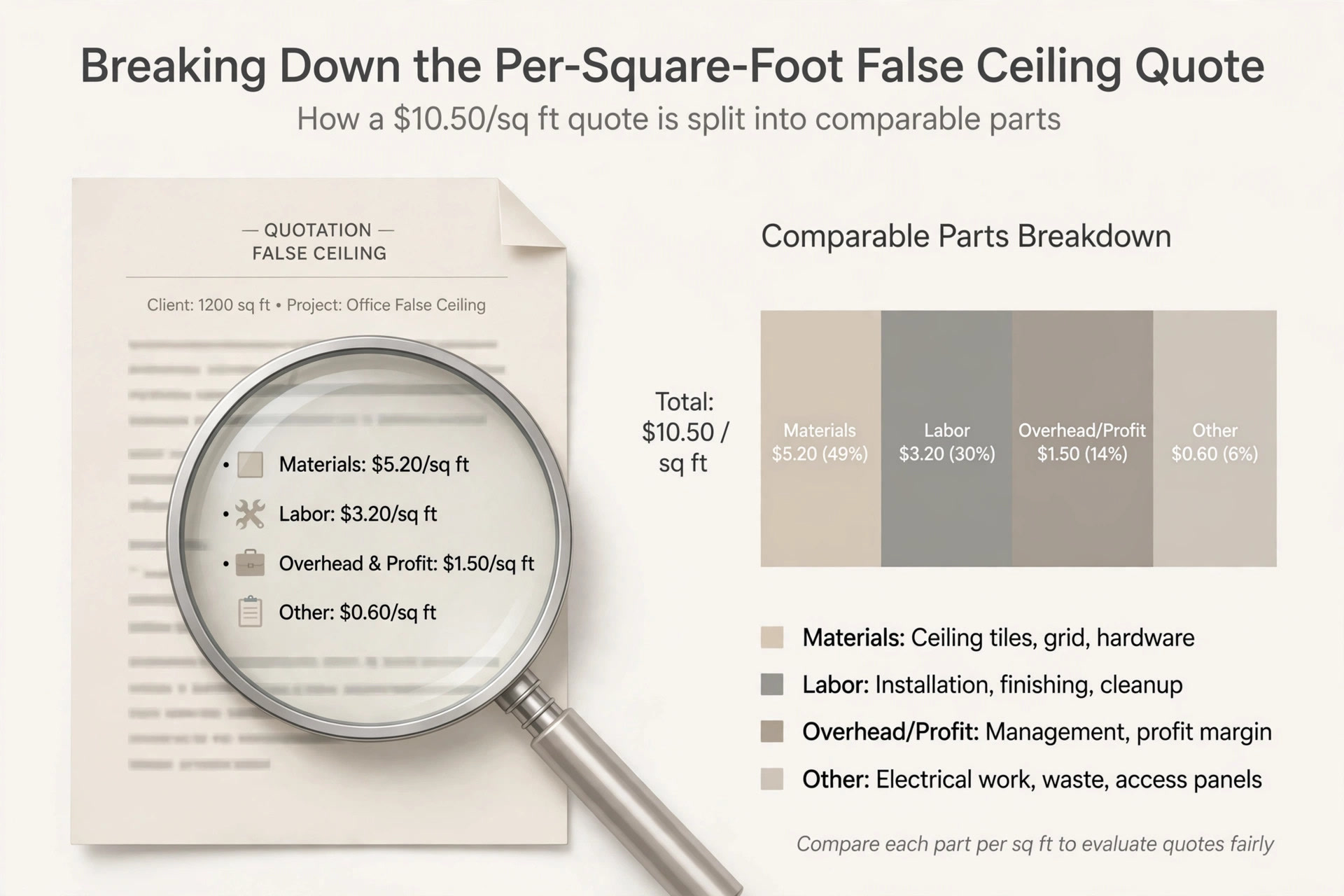
One more habit that saves money: read the quote the way the contractor wrote it. A per-square-foot figure is only meaningful next to what it covers — circle what’s included and what’s extra, and make the contractor confirm in writing. The diagram below shows how to split any quote into comparable parts.
How long installation takes
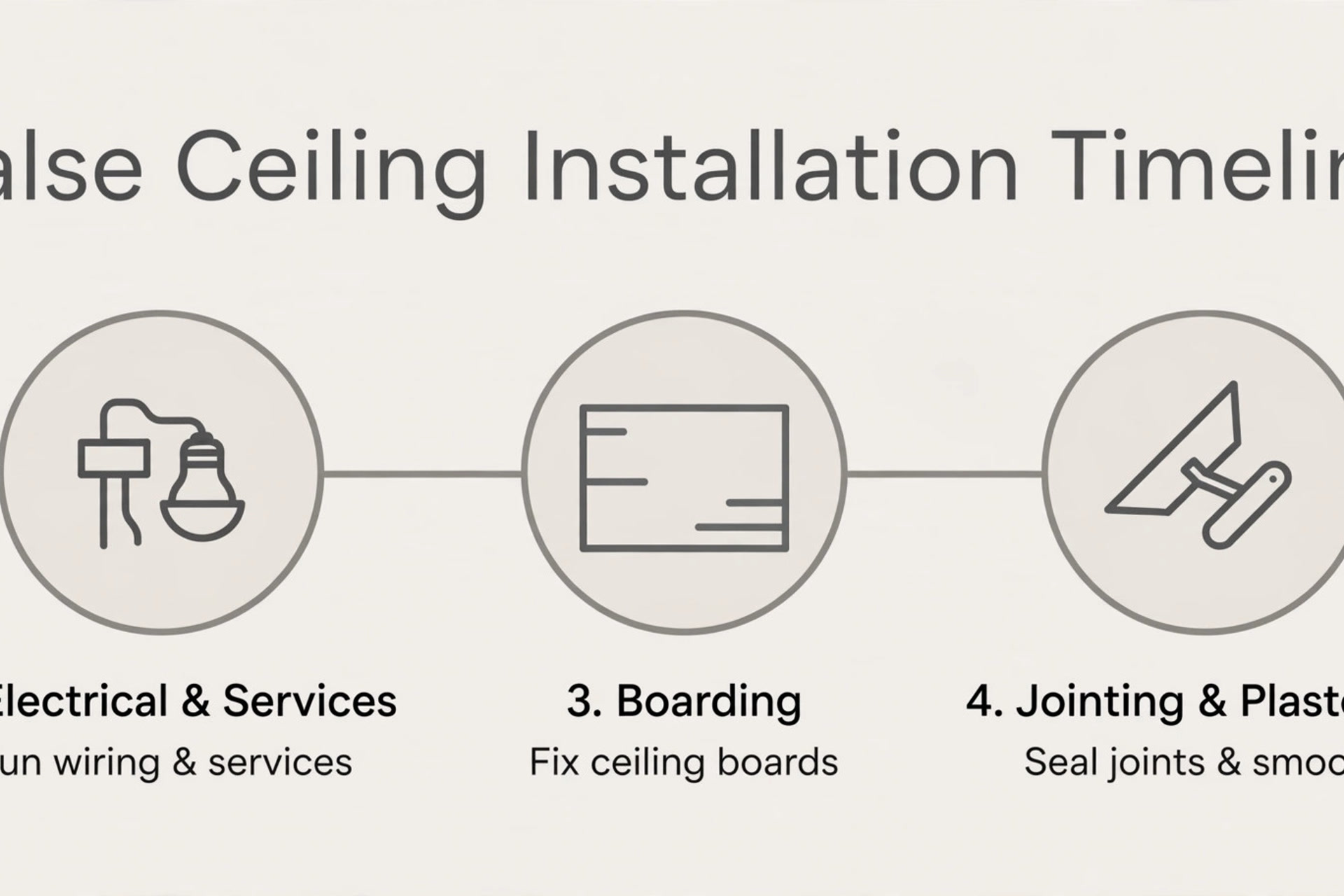
Time is part of the price — a longer install means more labour days and more disruption. Rough timelines for a typical hall:
- Simple flat gypsum ceiling: 2–4 days.
- Cove or single tray: 4–7 days.
- Multi-layer designer ceiling: 1–2 weeks.
- POP with heavy moulding: 7–10 days or more, since wet plaster needs setting and drying time.
Add painting and electrical finishing on top. If a contractor promises a complex multi-layer hall ceiling in two days, something in the quote is not what it seems.
Where not to cut corners
If the budget is tight, simplify the design — not the structure. A simple flat gypsum ceiling on a proper frame outlasts a fancy multi-layer ceiling on a flimsy one. The framework, the fasteners, the moisture-resistant boards in the right places, and a qualified electrician for the wiring are the non-negotiables. Decoration is where you save; engineering is where you don’t.
Saving money without regretting it
- Choose a simple design. Flat or single-cove ceilings cost far less than multi-layer trays and still look designed.
- Stick to standard materials. Gypsum and standard POP are priced competitively everywhere; exotic materials multiply both material and labour cost.
- Finalise the layout first. Redoing work after installation is the most expensive line item of all — it just doesn’t appear on the quote.
- Do the whole home together. Contractors price per visit too; ceiling the hall, bedrooms and kitchen in one project usually beats three separate ones.
- Time it with other work. If painting or electrical work is happening anyway, the ceiling rides on the same labour mobilisation.
Frequently asked questions
How much does a false ceiling cost for a hall in India?
Indicative 2026 ranges from publicly listed Indian guides: a simple flat hall ceiling around ₹65–120 per sq ft, a cove or single-tray design ₹100–185 per sq ft, and premium multi-layer or wood-accent designs ₹200–500+ per sq ft (material + labour). Actual quotes vary by city, contractor and scope — get written quotes for your room.
What is included in a per-square-foot false ceiling rate?
Usually the boards or panels, the supporting framework, installation labour, jointing and finishing. Painting, electrical wiring, light fittings, transport and GST are often separate — confirm each line before comparing quotes.
Is gypsum or POP cheaper for a hall?
For flat and cove designs, gypsum is typically cheaper all-in because it installs faster with less labour. POP costs more where the design needs moulded detailing — curves, cornices and medallions — because that is skilled hand work.
How much extra does cove lighting add?
The LED strips, their drivers, and the extra wiring and cove construction typically add a five-figure sum to a hall project — commonly ₹15,000–25,000+ for a typical hall, depending on the perimeter length and fitting quality. Budget it as its own line item.
Can I get a good hall ceiling on a tight budget?
Yes: a simple flat gypsum ceiling with a few well-placed recessed spots looks clean and modern at the lowest cost tier. Put the money into the framework and finishing rather than into decorative layers.
Should the quote include the ceiling fans?
The fans themselves are usually yours to buy, but the ceiling work must include proper fan anchoring to the structural slab and planned positions in the layout. Confirm this is in the scope — retrofitting a fan point into a finished ceiling is expensive.
For design inspiration to pair with your budget, see our L-shaped hall ceiling ideas, drawing-room ceiling designs and elegant living-room ceilings — and the lighting guide before you finalise the lighting budget.
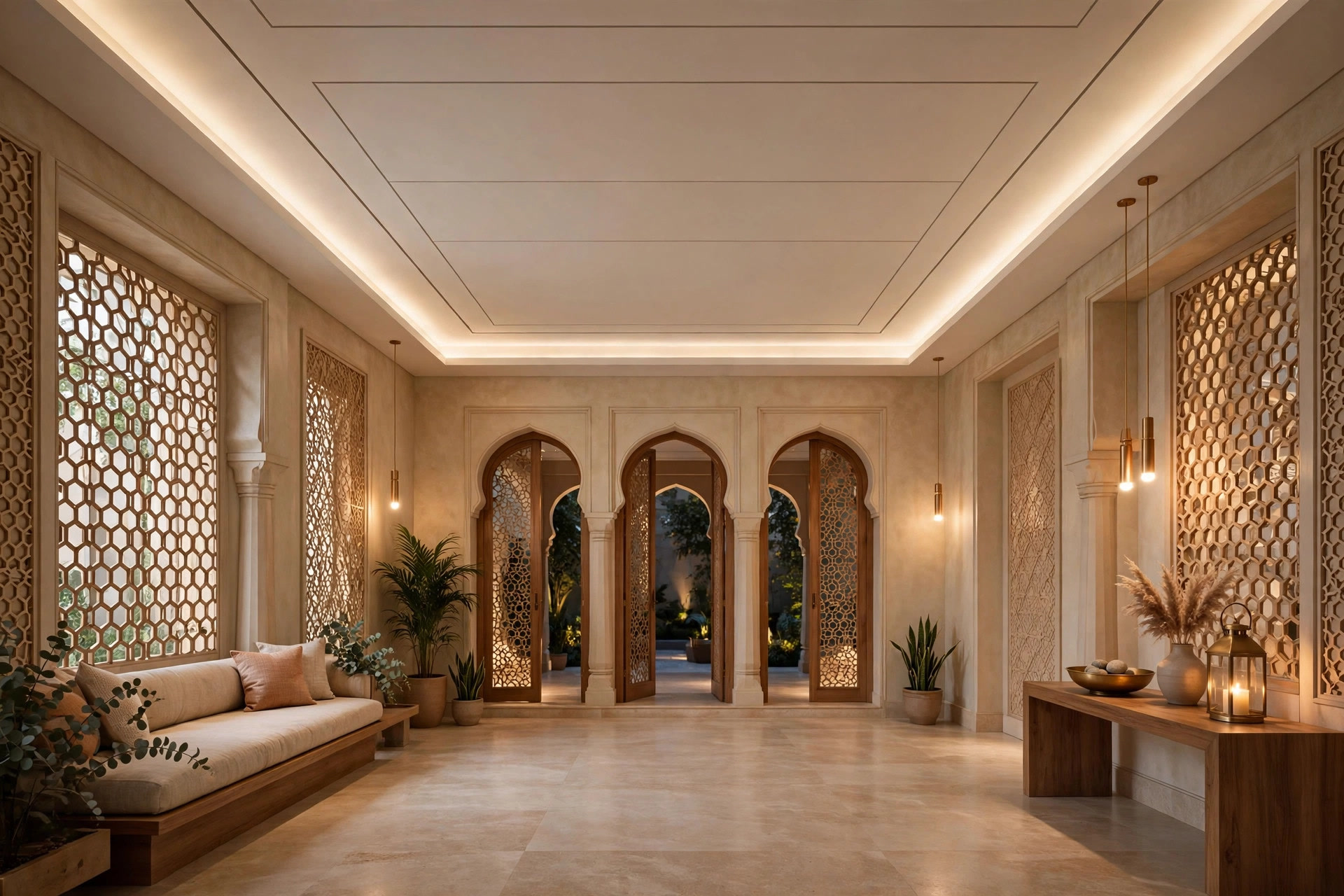
A note on the images: every image in this article is an original concept render created for this guide — not a photograph of a finished project. Prices discussed are indicative 2026 India ranges from publicly listed guides (sources named above), not quotations.