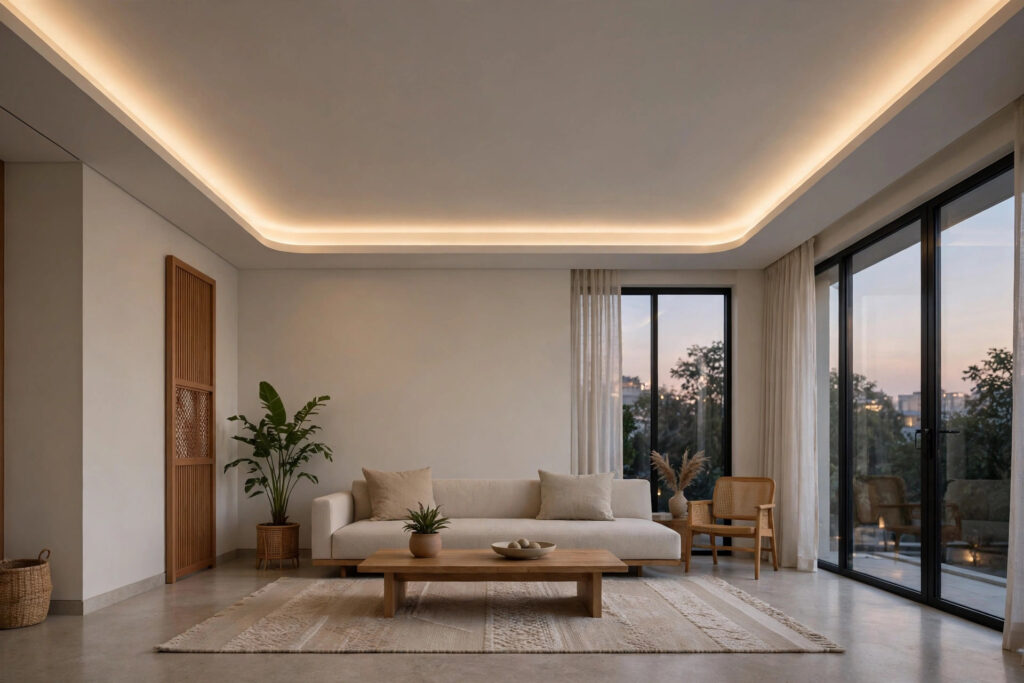

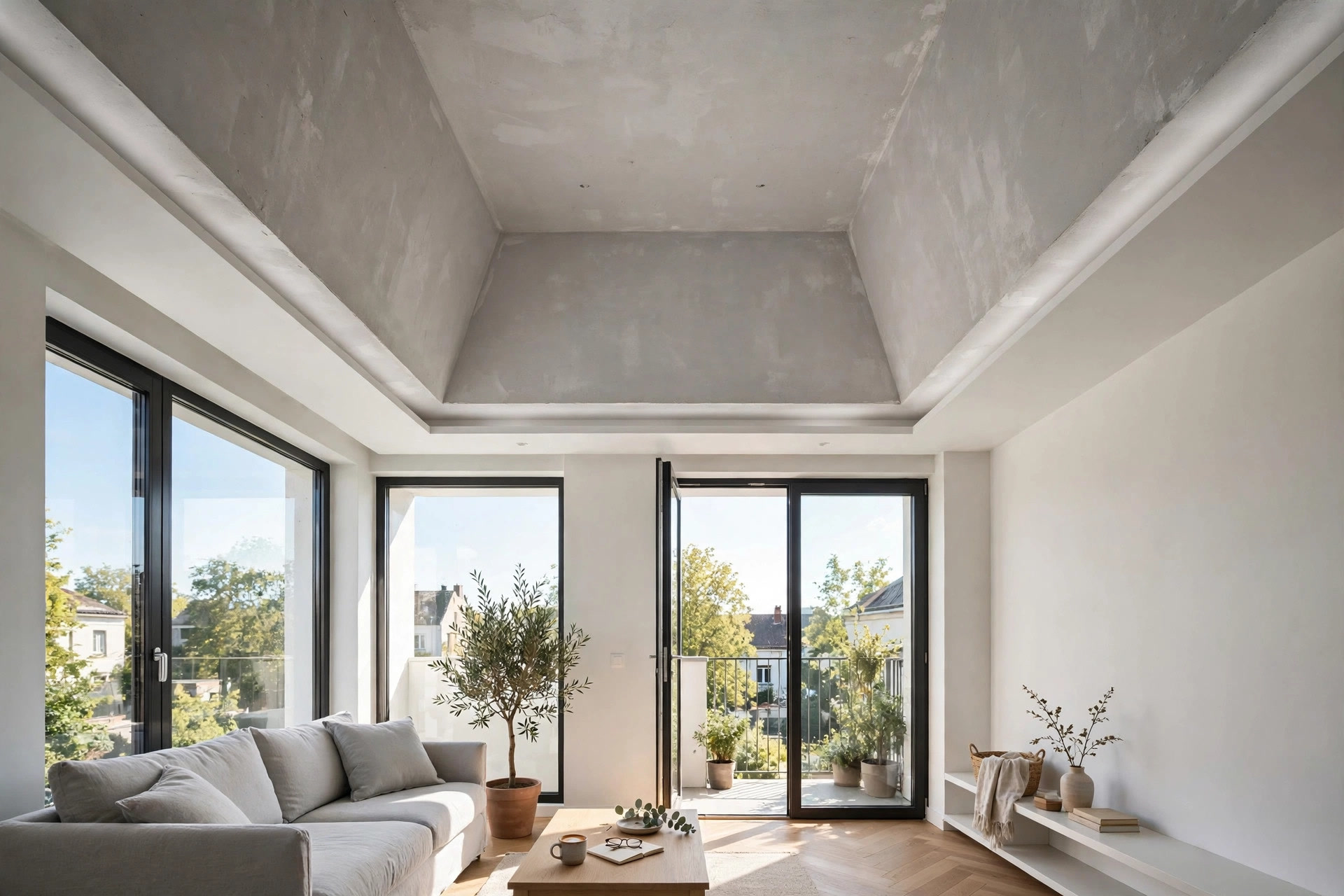
When people say they want an elegant false ceiling for their living room, they usually do not mean the fanciest ceiling they have seen. They mean a ceiling that makes the room feel calm, considered, and finished — the kind you notice once and then stop noticing. This article is about that quieter kind of premium: clean geometry, soft layered light, and a restrained material palette. Not ornate mouldings or heavy chandeliers; those have their own place, but this is not it.
Each idea below is a complete, buildable design direction, with notes on where it works, what it costs in India (2026 market ranges, sourced below), and the details that separate a refined result from an ordinary one. If you are starting from scratch, you may also want to look at our broader collection of hall false ceiling designs before you decide.
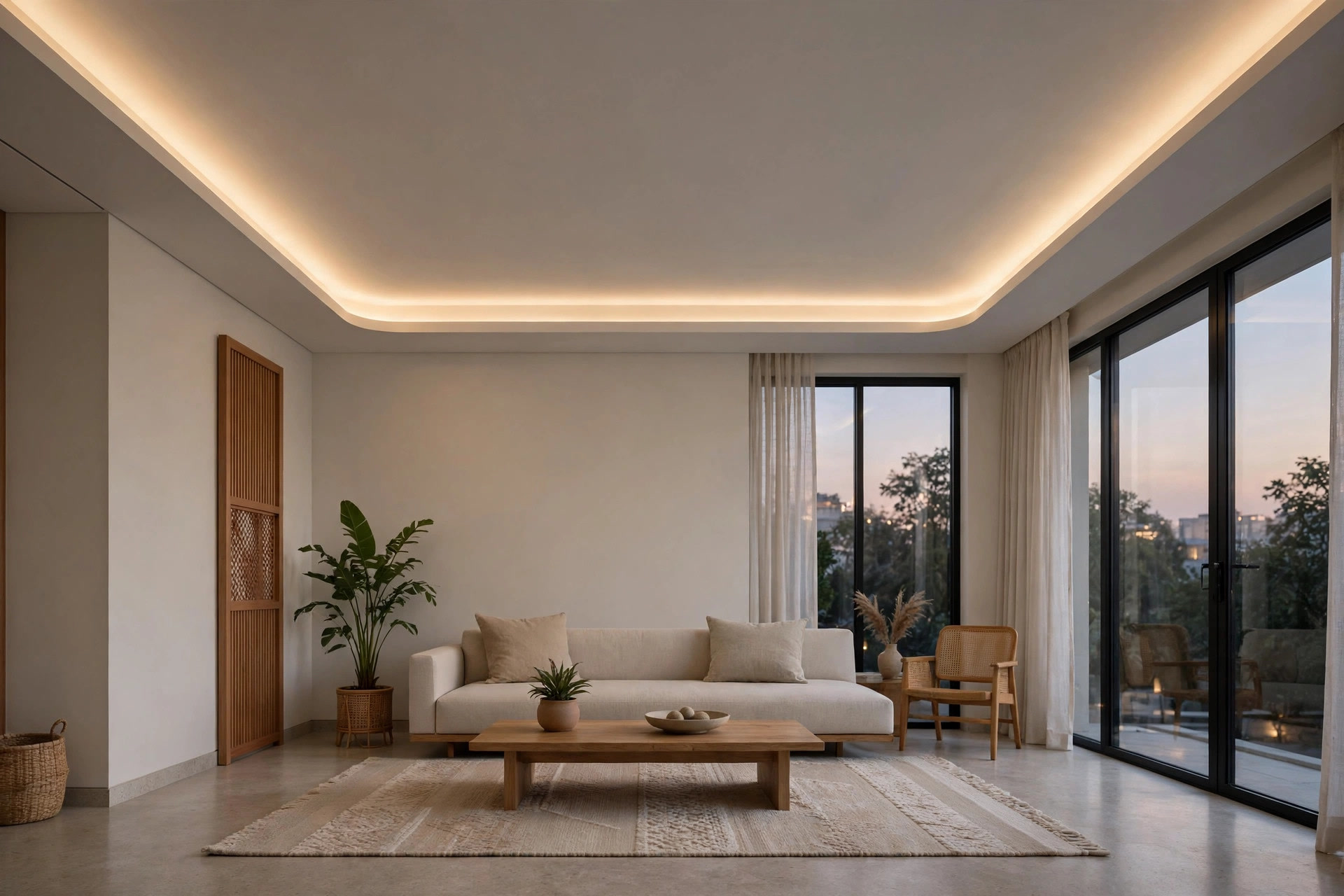
All images in this article are original concept renders created for illustration — they show design possibilities, not completed projects.
What actually makes a living-room ceiling feel elegant
Elegance in a ceiling comes from editing, not adding. Four qualities matter most:
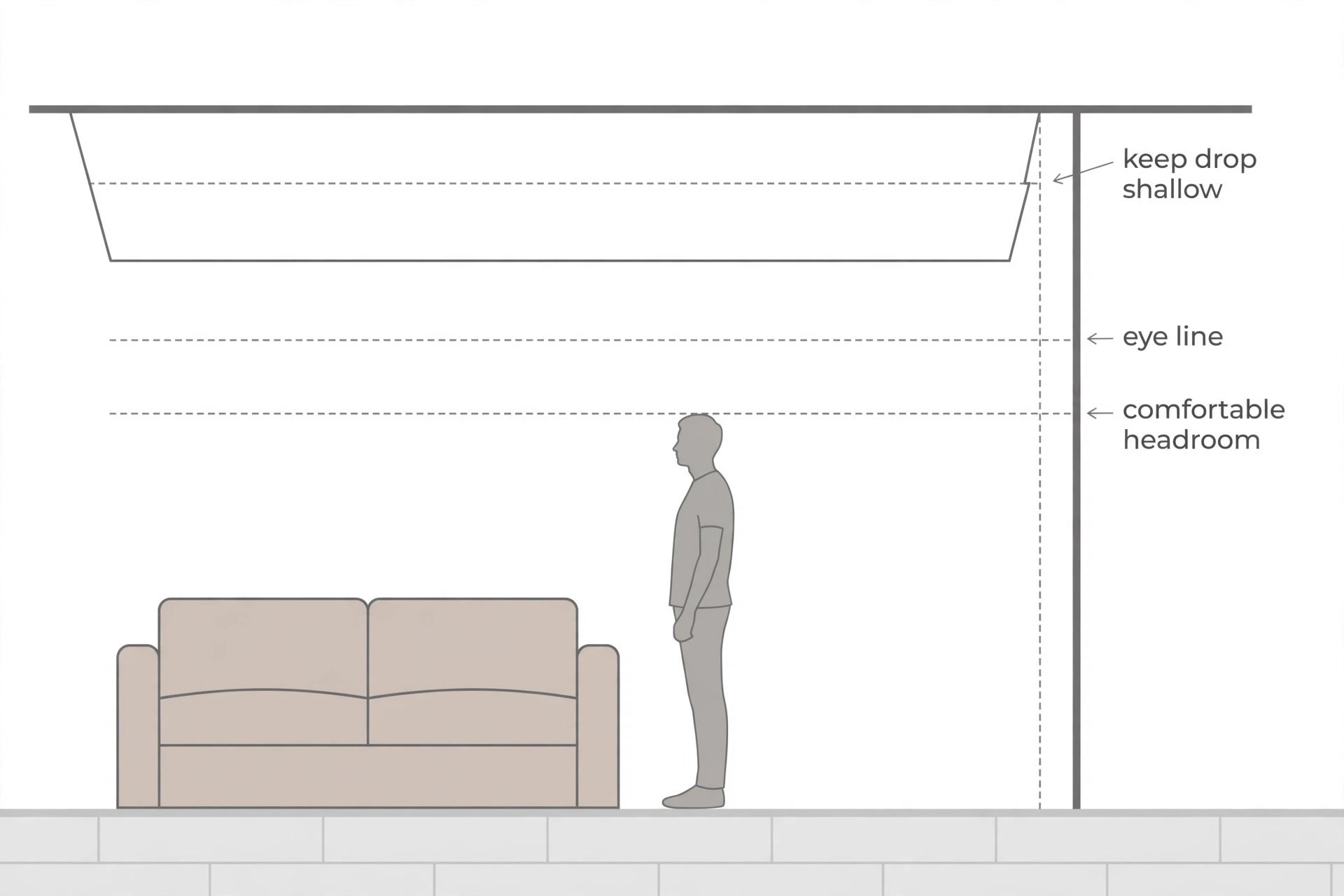
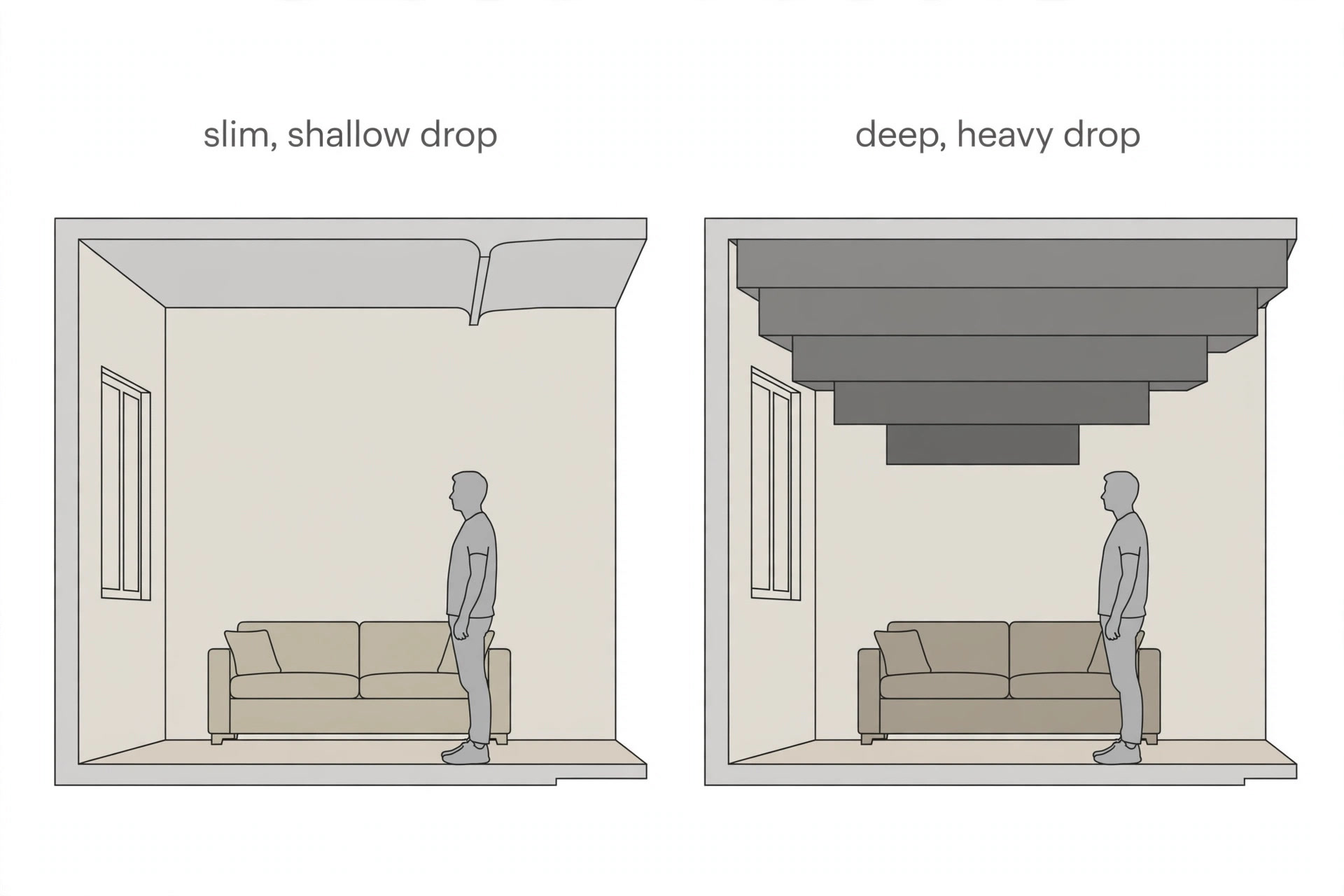
- Proportion. The depth of the ceiling should suit the room’s height. A slim, shallow drop almost always reads more refined than a deep, multi-layered one.
- Light before pattern. The room’s mood at 8 pm comes from how light leaves the ceiling, not from the shape of the ceiling itself. Concealed, indirect light beats visible fixtures.
- Quiet materials. Matte white or off-white paint, one warm wood tone at most, and perhaps a single slim metal line. Two or three surfaces, no more.
- Sightlines. The ceiling should lead the eye toward something pleasant — the seating, the TV wall, a view — rather than pulling attention to itself.
Keep these four tests in mind and almost any ceiling you choose will land in the elegant range.
10 elegant false ceiling designs for the living room
1. The slim perimeter cove tray
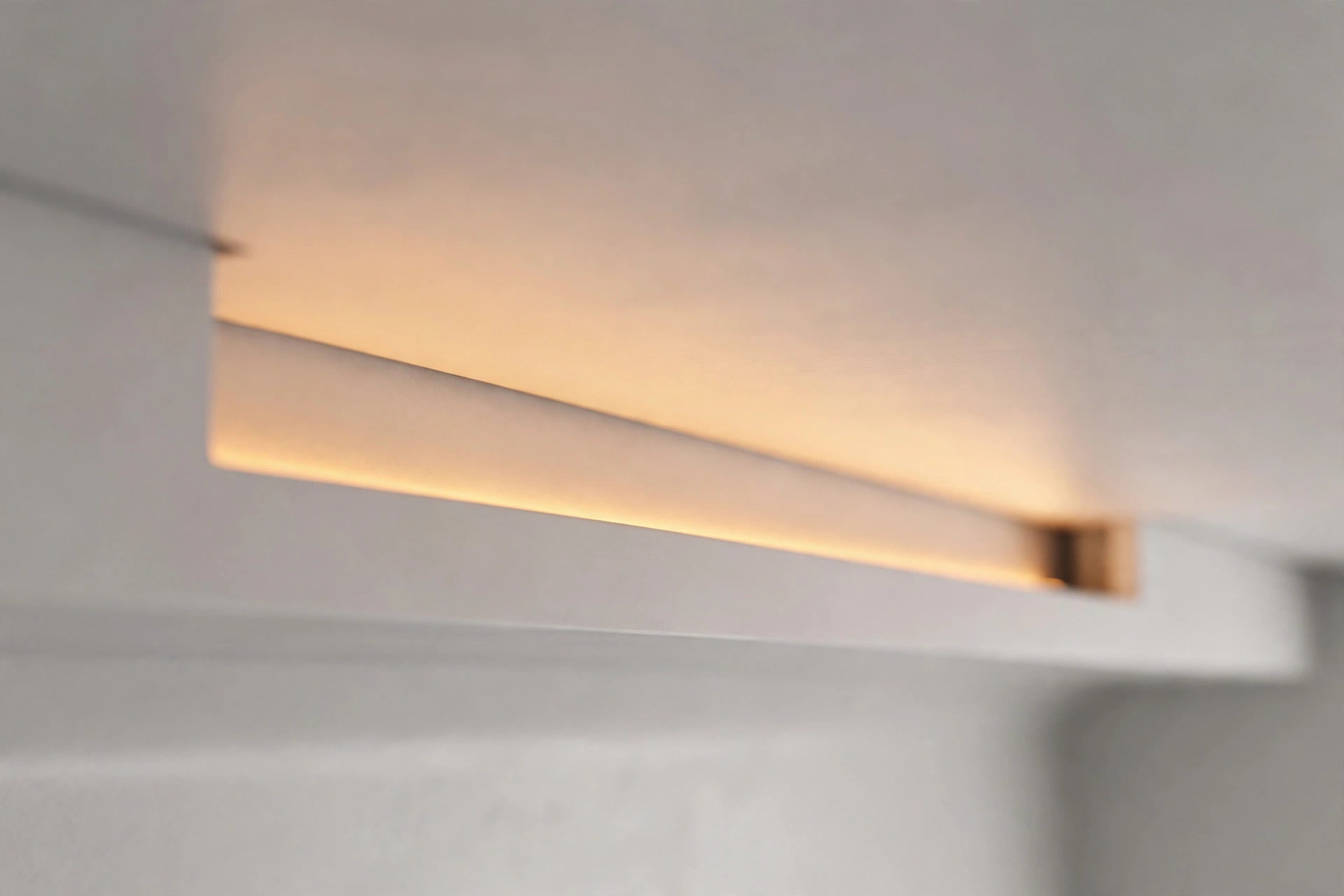
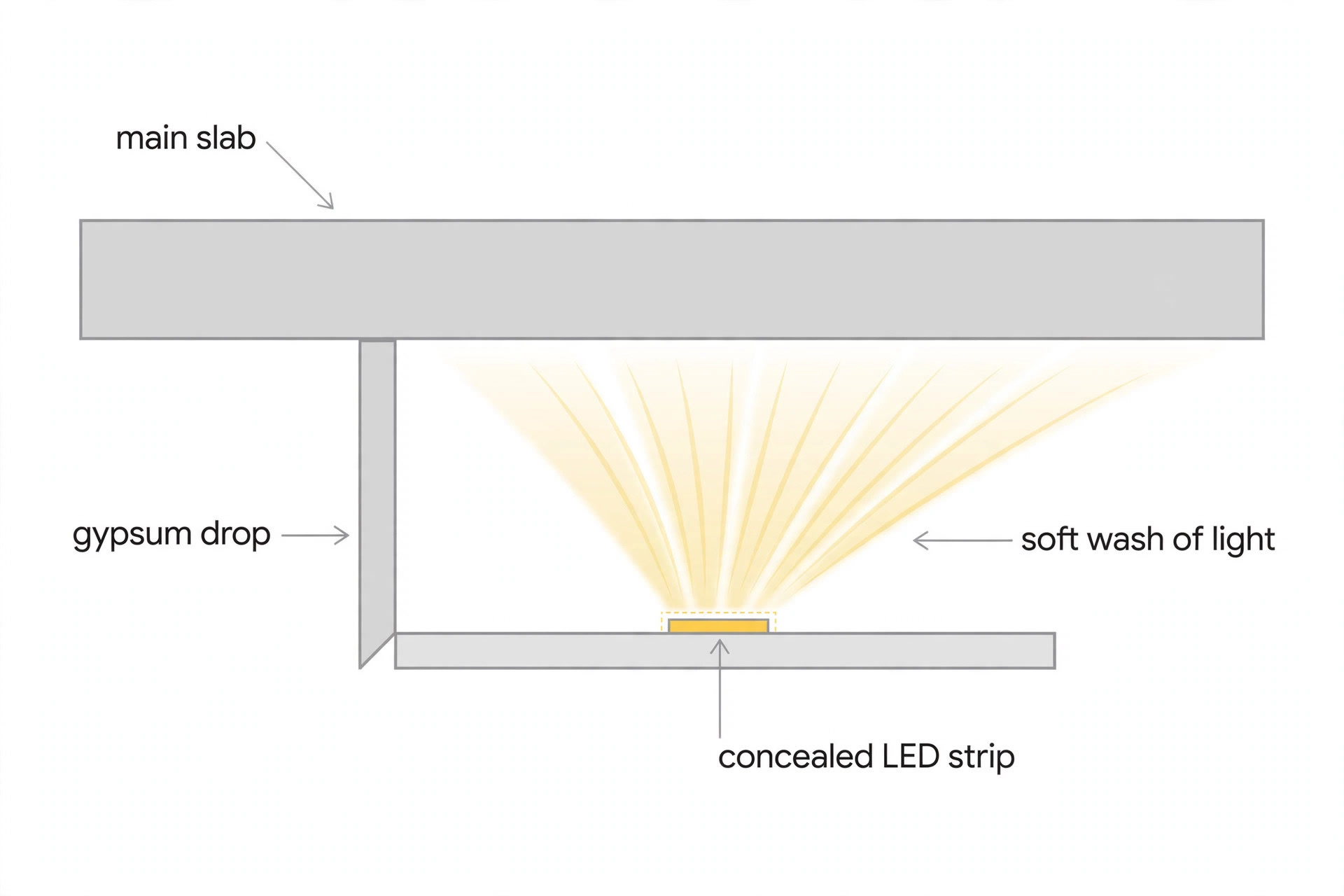
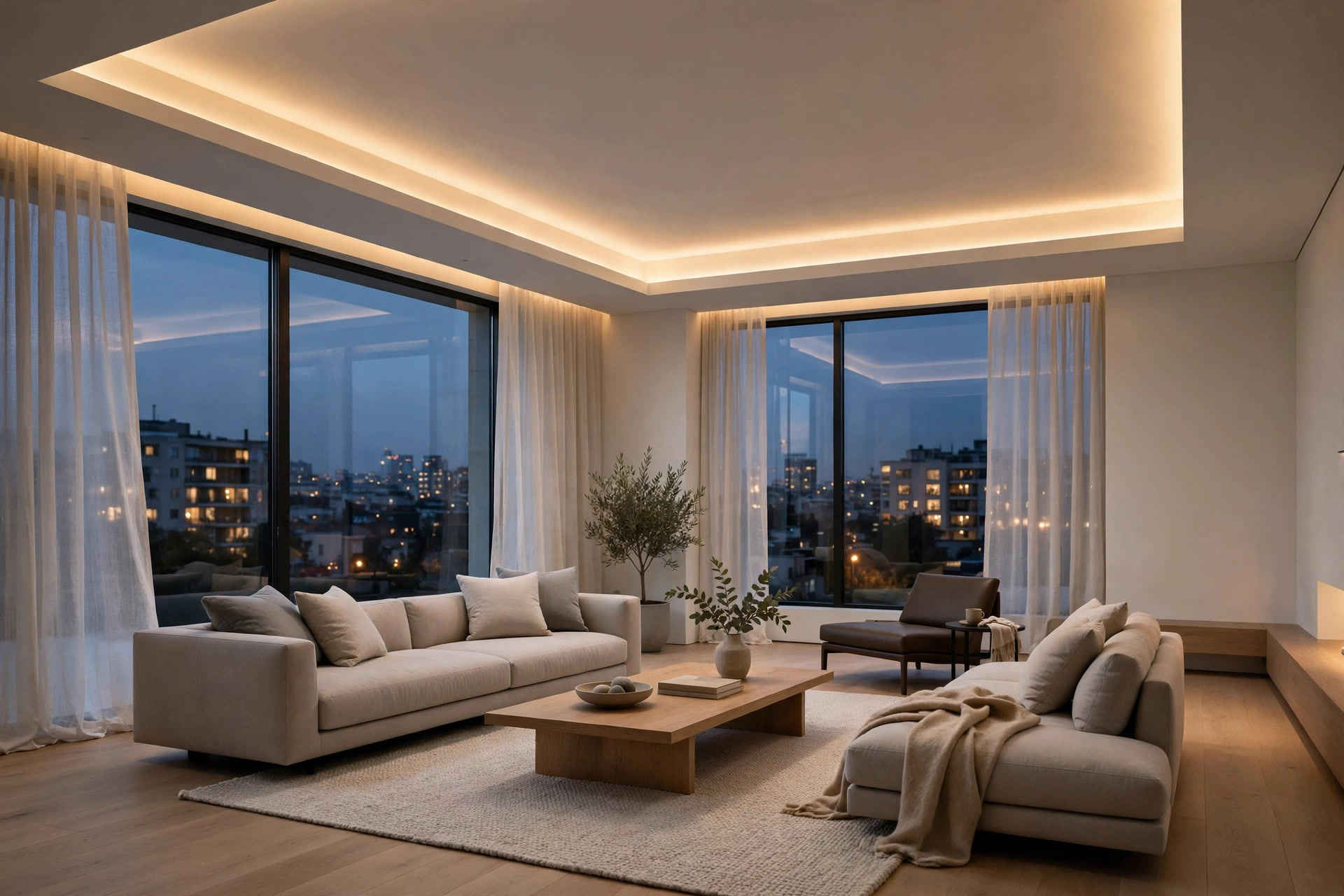
A flat central panel with a narrow lowered border around the room’s edge, holding a concealed LED strip that throws a soft wash of light across the ceiling. NoBroker’s 2026 interiors guide calls the cove ceiling the single most popular modern gypsum ceiling design in Indian homes today. It adds depth without bulk, the light flatters faces and furniture, and it works in rooms of almost any size.
What makes it elegant rather than ordinary: keep the trough slim and the light warm. Warm white LEDs in the 2700K–3000K range give living rooms a comfortable, relaxed feel, per the same guide. Cool white in a cove is the fastest way to make a living room feel like an office.
2. The floating border for compact rooms
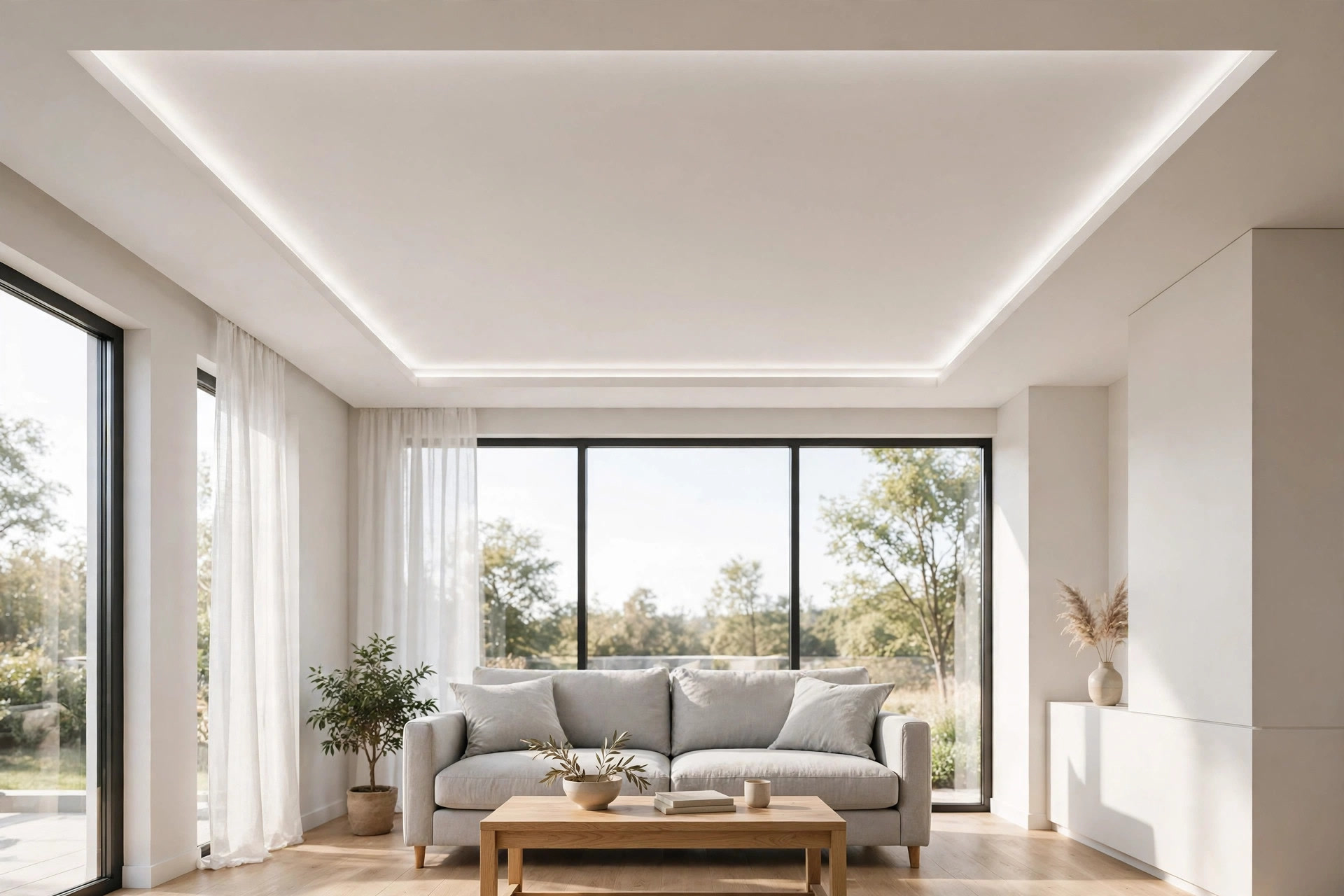
In a smaller living room, a full ceiling can press down on you. The floating border — gypsum panels only around the perimeter, with the centre left high — gives you cove lighting, concealed wiring, and a designed look without sacrificing headroom. HomeLane’s 2026 design guide prices this at roughly ₹100–120 per sq ft and notes it is ideal for compact spaces because it “visually expands the room while keeping the centre section high and clutter-free”.
3. The floating island panel above the seating
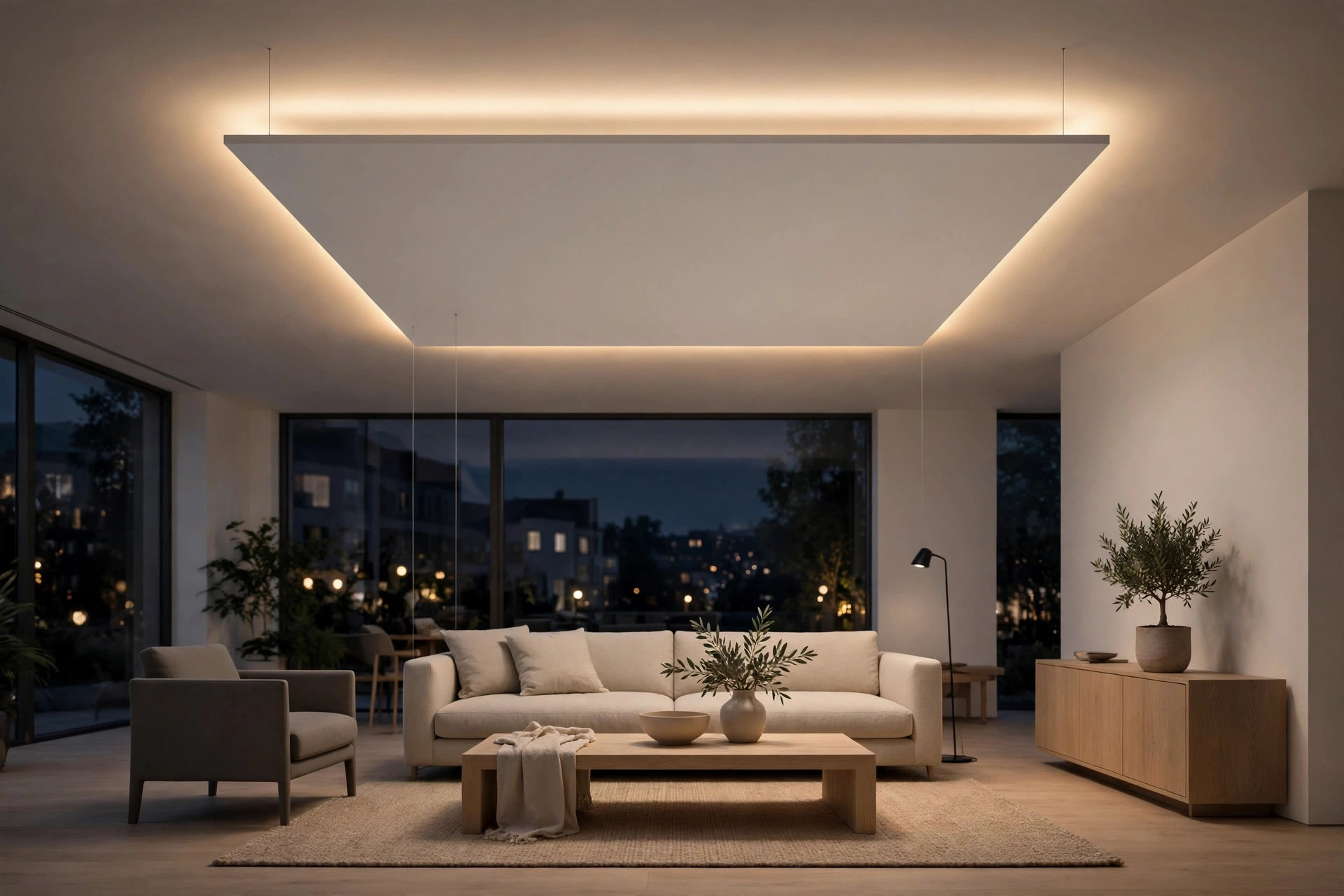
A single gypsum panel suspended below the main ceiling, with a visible gap on all four sides hiding LED strips, creates a halo of light around it. It turns the seating zone into the room’s centre of gravity and makes the ceiling read higher. HomeLane prices the approach at roughly ₹110–130 per sq ft and notes it distributes light evenly, avoiding harsh shadows.
Keep the island rectangular and its edges sharp. The effect is architectural, not decorative — resist the urge to add a border inside the border.
4. A soft tray aligned to the seating plan
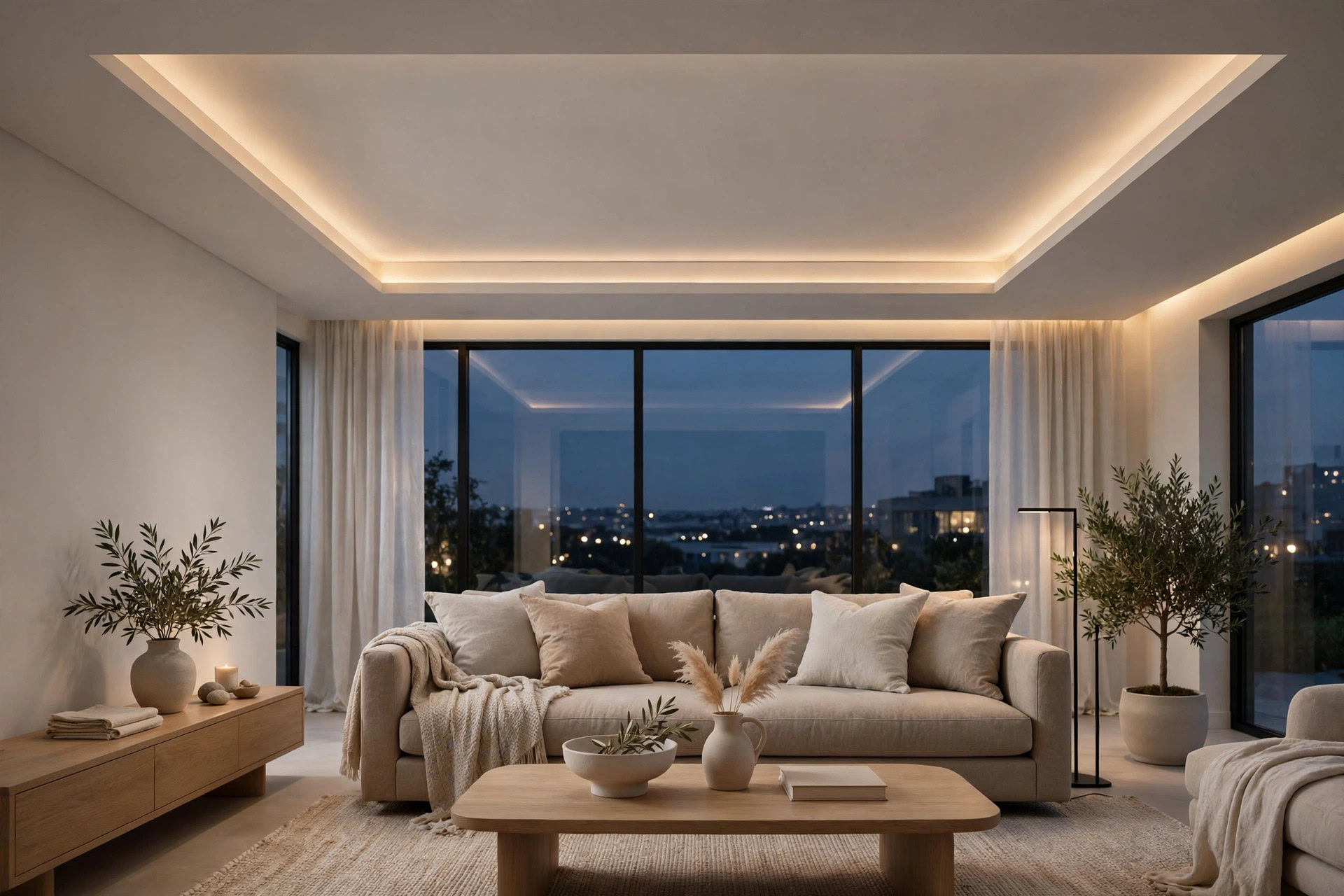
A tray ceiling — a raised central panel with a lowered perimeter, or the reverse — adds architectural depth in one calm move. The elegant version keeps the step shallow and the recess clean, letting warm light along the step do all the talking. NoBroker’s 2026 pricing puts gypsum tray ceilings at roughly ₹118–195 per sq ft.
The important detail is alignment: the tray’s inner rectangle should echo the seating arrangement below. A tray that aligns with how the room is actually used looks intentional; one that doesn’t looks picked from a catalogue.
5. Gypsum with a restrained band of light wood
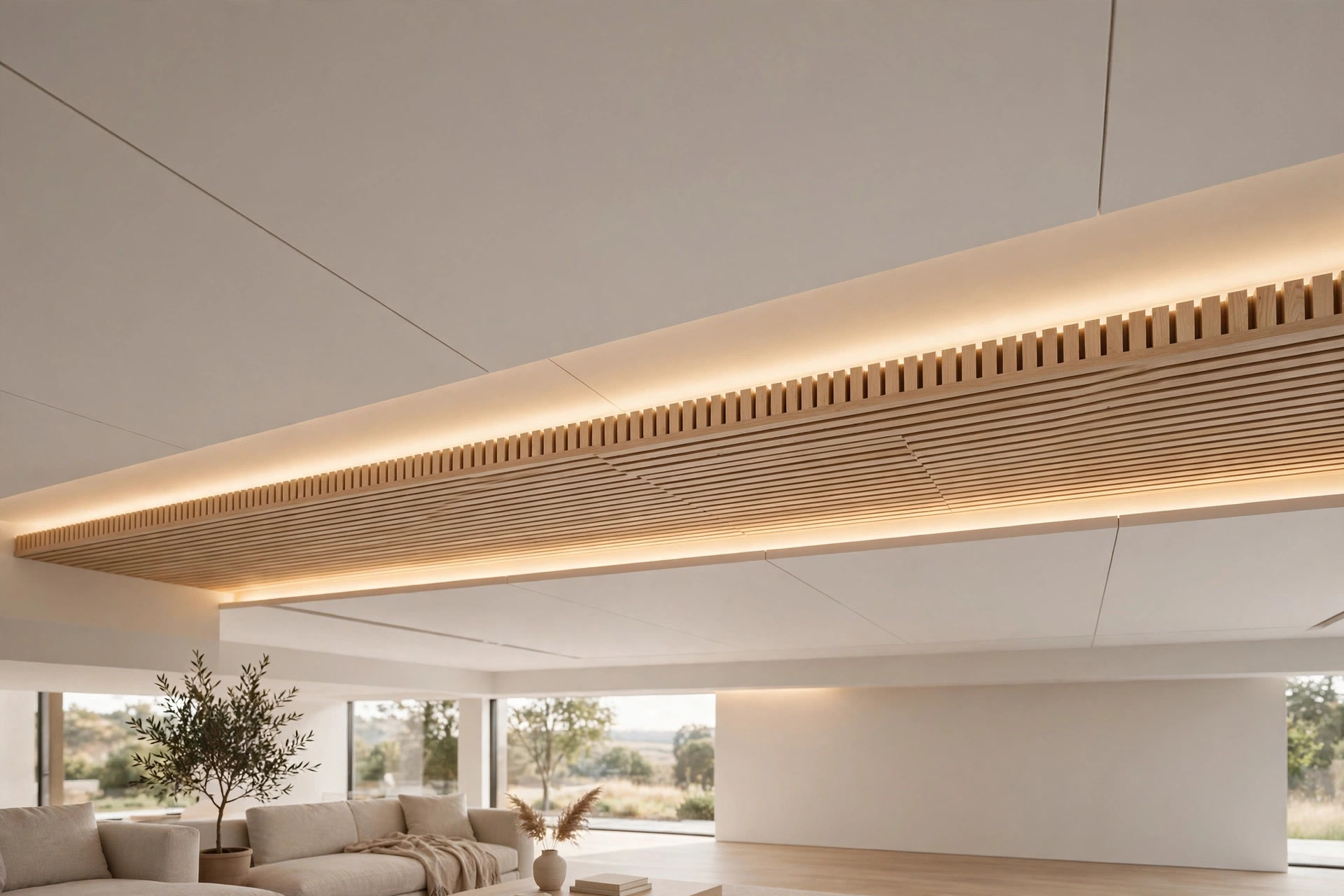
Clean white gypsum plus a controlled band of warm wood — slats, battens, or a single veneer panel — is the standout material combination of 2026, according to NoBroker’s guide. The wood adds texture and warmth without a full timber installation, and cove lighting between the gypsum and wood produces a layered glow. HomeLane prices the hybrid at roughly ₹150–180 per sq ft.
Restraint is everything here. One wood zone — above the seating, or along the TV wall — is enough. A light, natural tone keeps it contemporary; dark polish pushes it toward heavy.
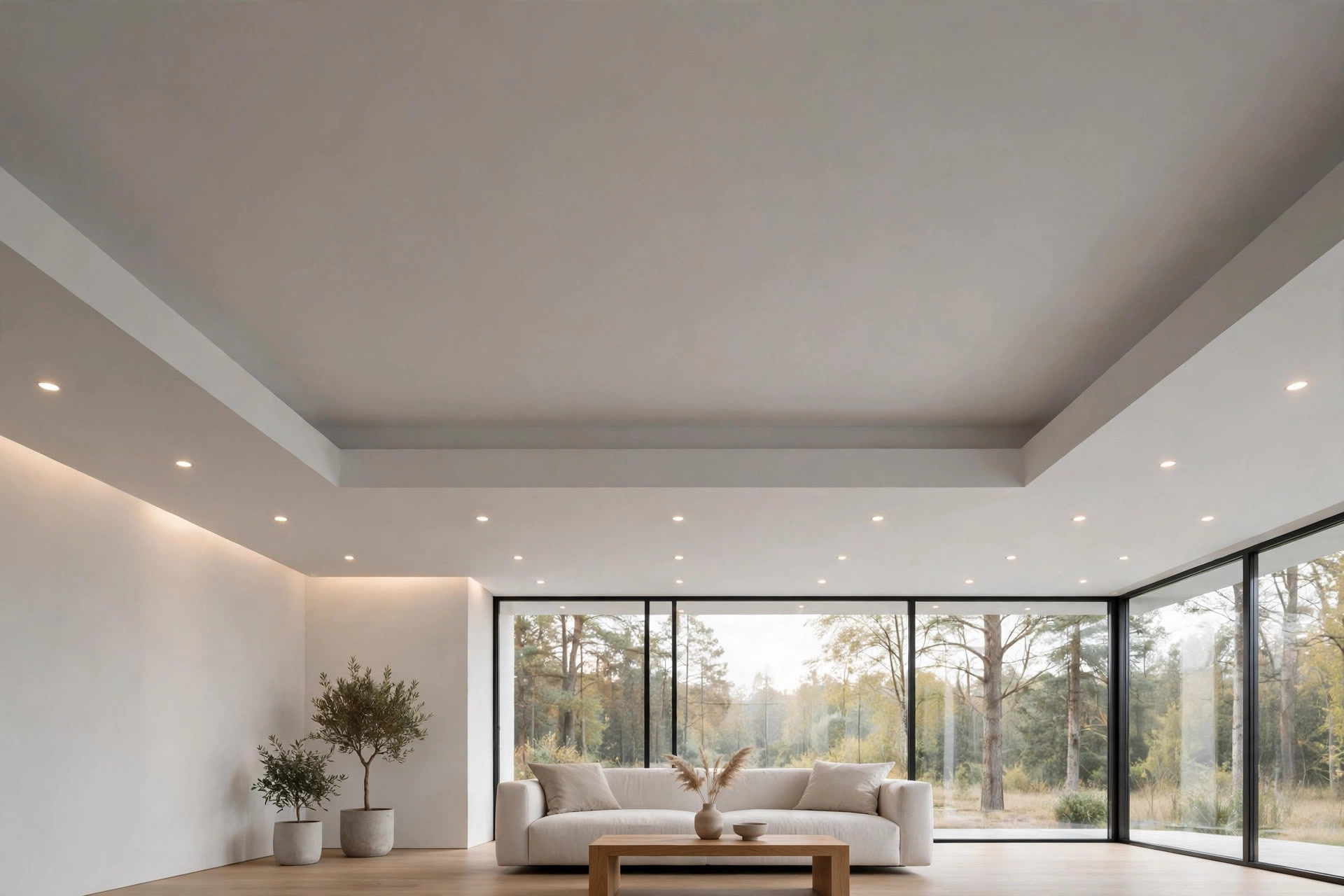
6. Matte-white layered planes with recessed downlights
Two subtle ceiling levels in pure matte white, with evenly spaced recessed downlights, is the most disciplined look on this list — and in the right room, the most premium. No cove, no wood, no pendant. The elegance comes from perfect shadow lines between the levels and perfectly even light.
This approach demands good execution: downlights spaced roughly 4–6 feet apart and kept away from walls prevent unwanted shadows, per NoBroker’s lighting guidance.
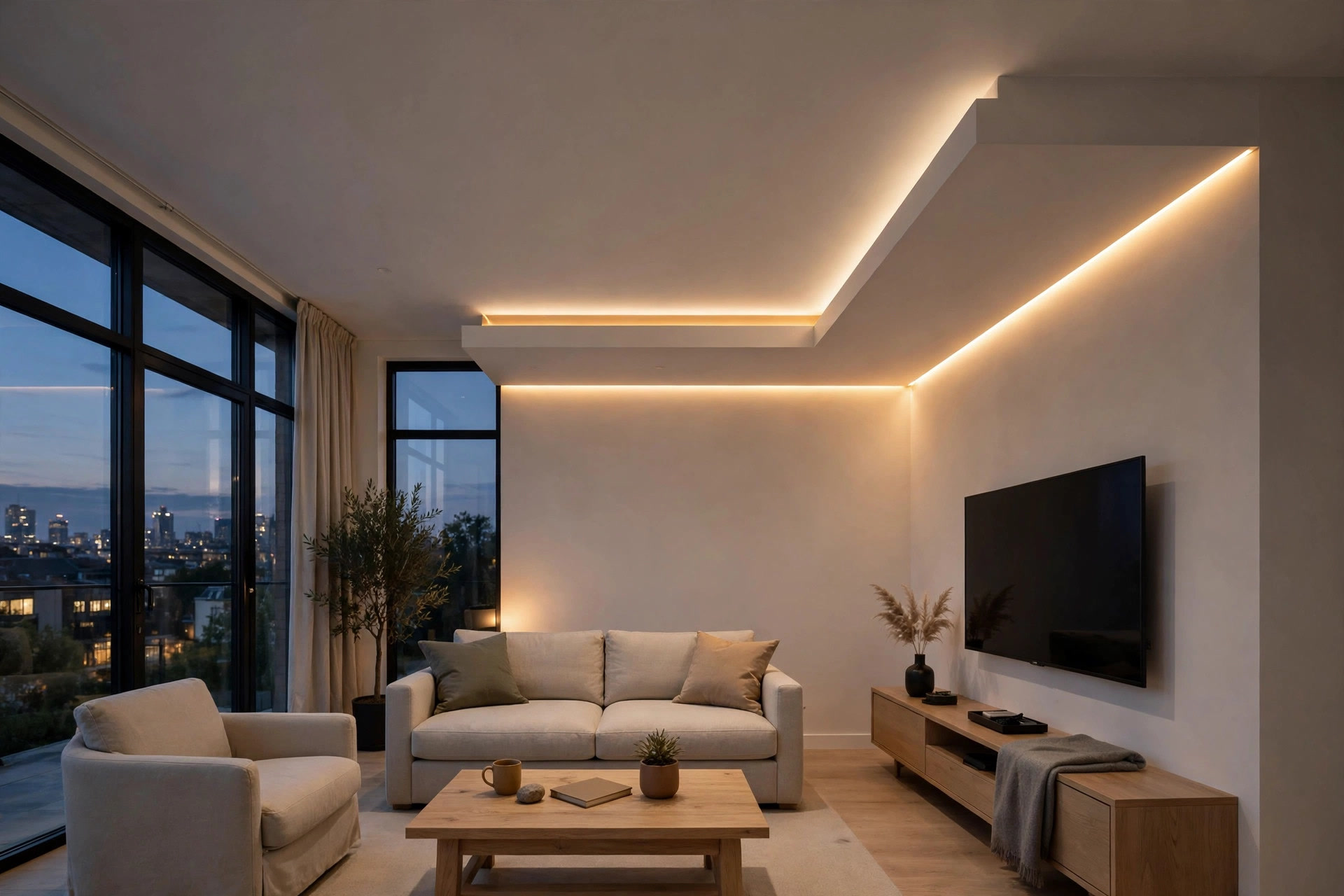
7. A ceiling that frames the TV wall
Most living rooms have a clear anchor: the TV wall. Letting the ceiling acknowledge it — a shallow L-shaped drop or a slim recessed band above the media unit — ties the room’s two biggest surfaces together, and in open plans it quietly marks where the living zone ends and the dining zone begins.
Keep the gesture flat and low-contrast: same paint, same light temperature, just a change in plane. The TV wall is already the room’s busiest surface; the ceiling should support it, not compete with it.
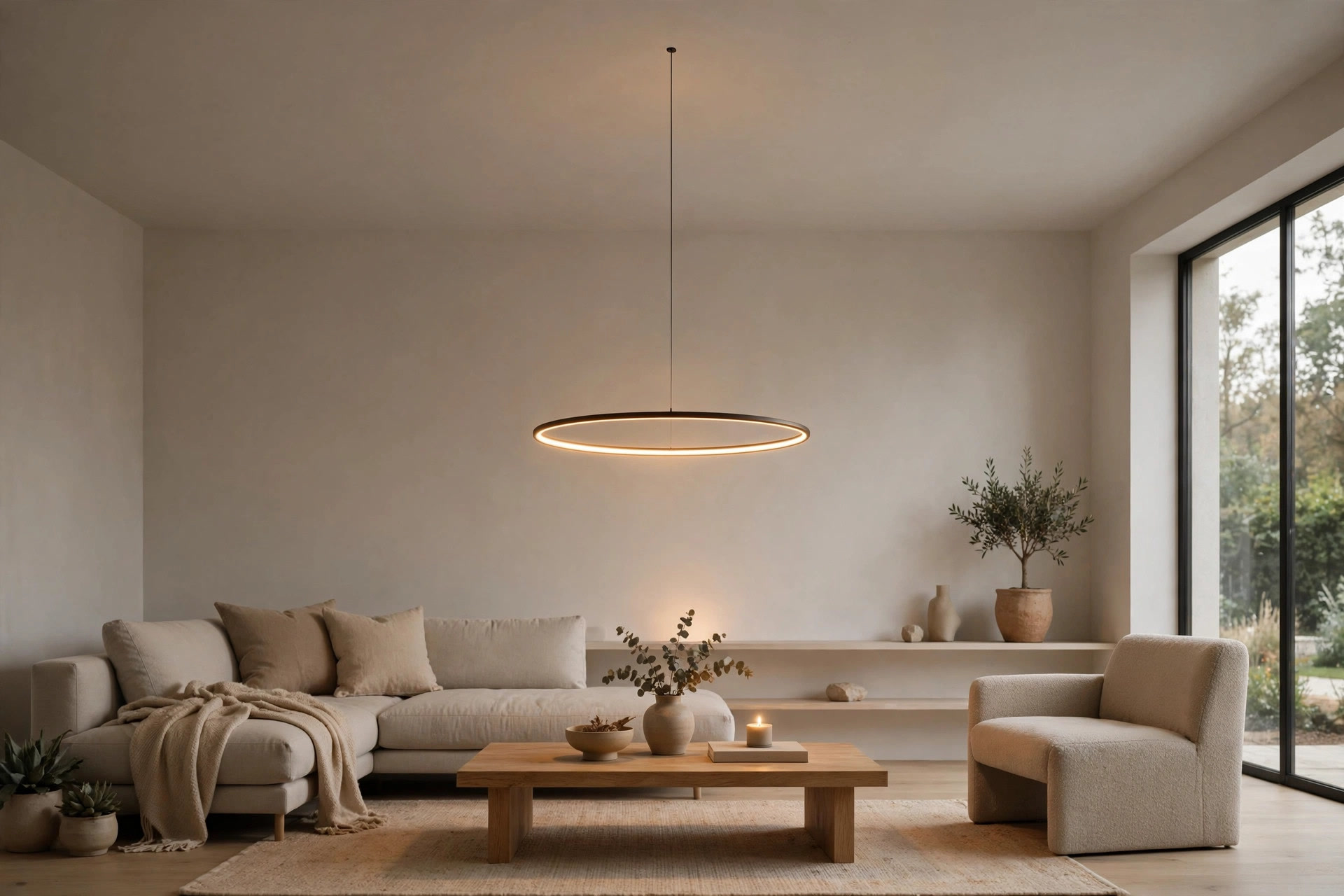
8. One quiet pendant instead of a chandelier
A single slim pendant — a thin ring of light, one small globe, or a short linear drop — above the coffee table gives the room a focal point without the weight of a chandelier, and a second, lower light source for evenings.
One is the operative word: the pendant’s finish should echo something already in the room — a slim metal line matching your door handles is enough of a statement.
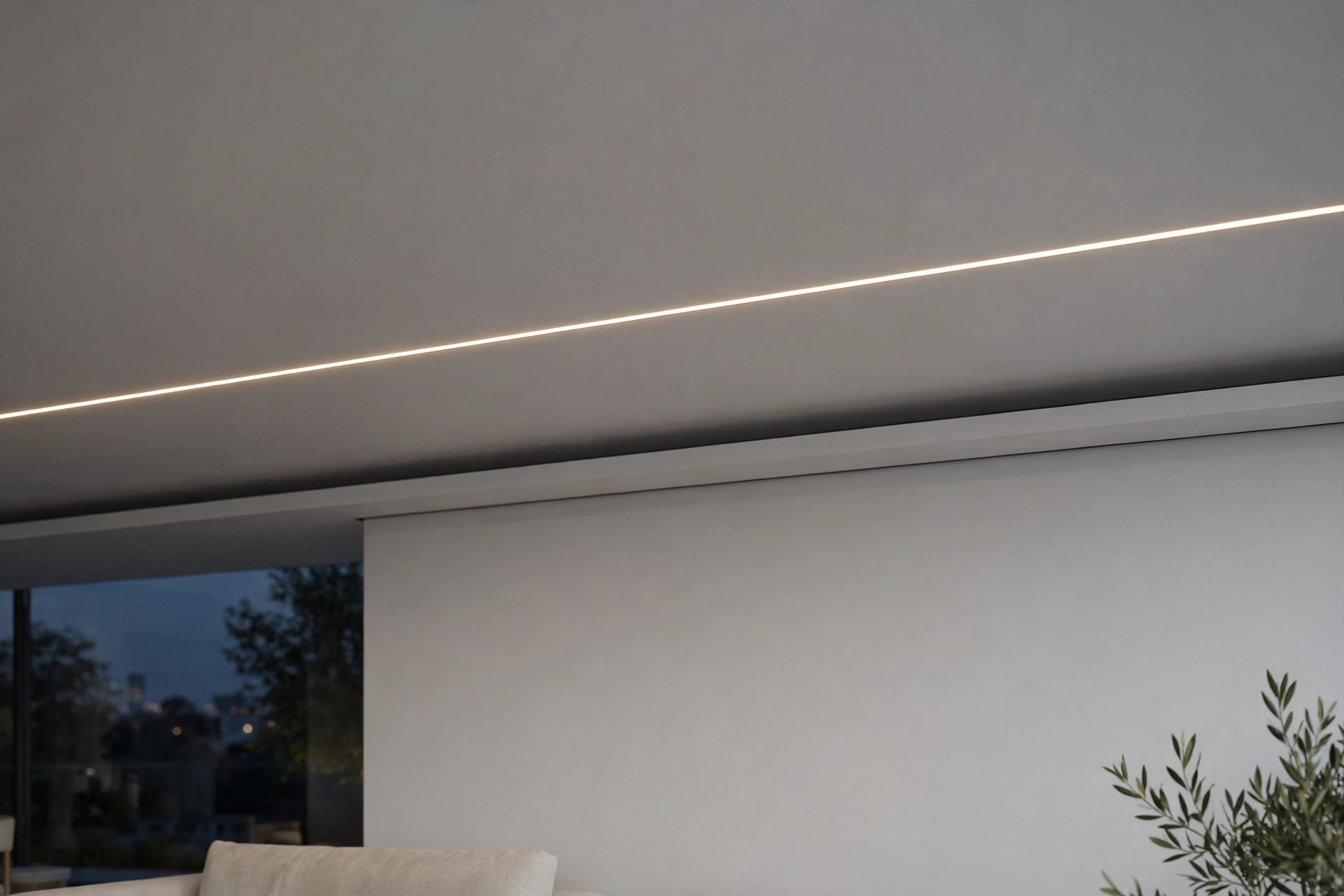
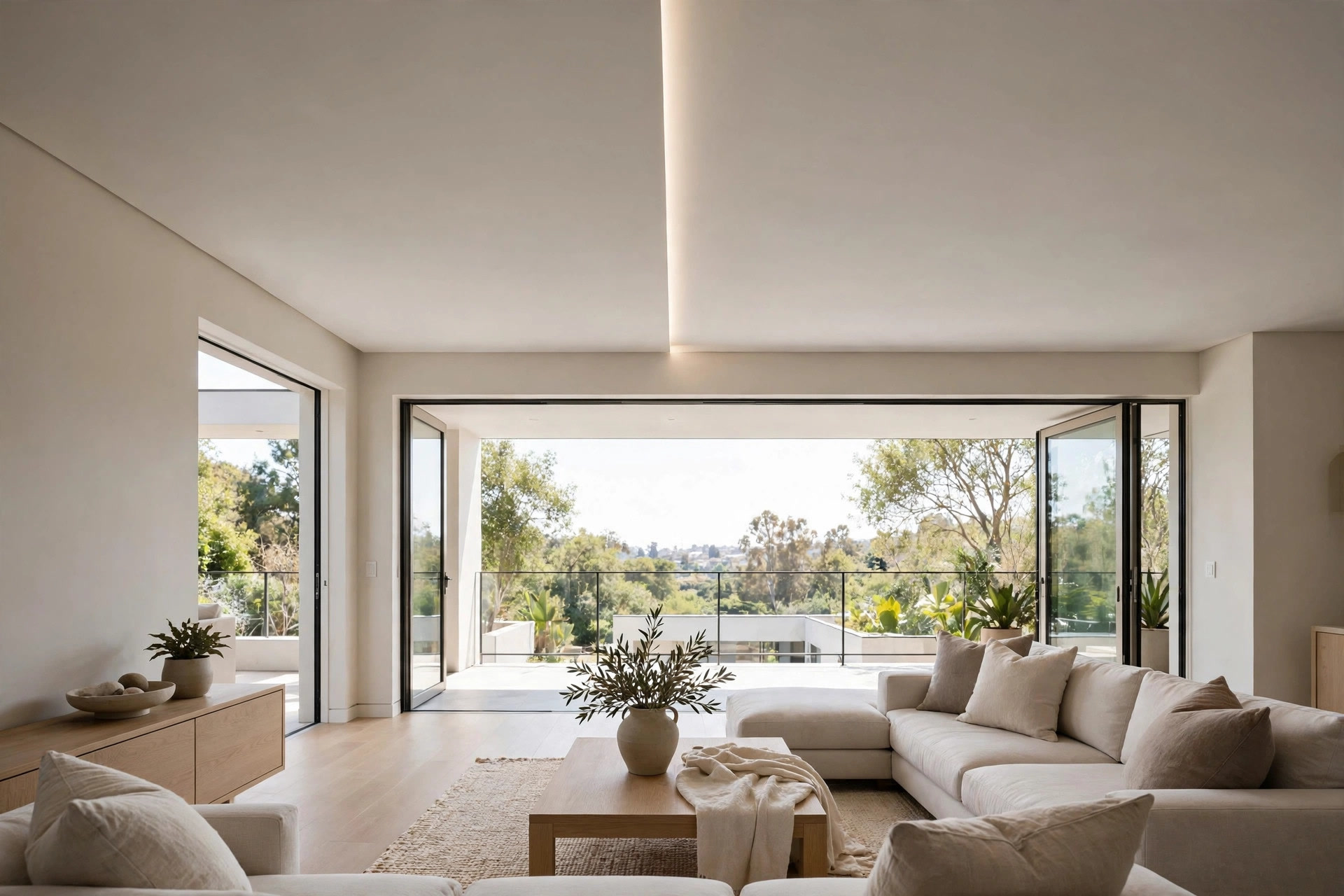
9. A single linear profile of light
A thin recessed LED groove running in one straight line across an otherwise flat ceiling is the 2026 expression of the cove idea: all the elegance, none of the trough. HomeLane lists linear LED grooves among the leading 2026 trends. Run it where it means something: along the room’s long axis toward a window or balcony, or above the line where sofa meets TV wall.
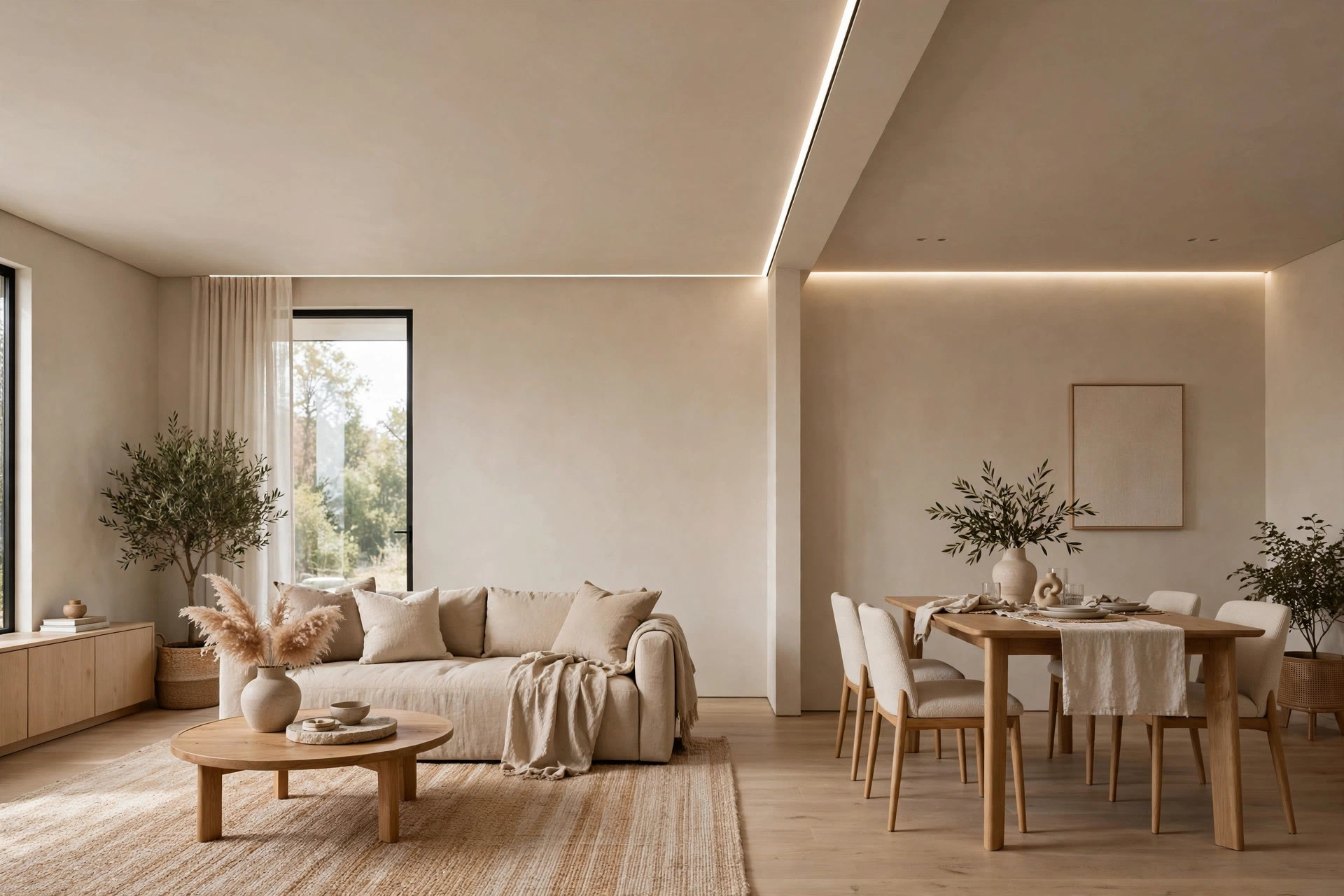
10. A quiet level change in open plans
When the living and dining areas share one room, the ceiling can do what walls used to do: a subtle drop or a change in ceiling treatment between the lounge and the dining table gives each zone its own identity without a single partition. Keep the transition clean — one straight step, one slim LED line along it. Overdo the levels and you chop the room into visual pieces.
Design it around how the room is used
An elegant ceiling is never a standalone object; it is the top layer of the room’s plan. Before choosing a design, map three things: the seating arrangement, the TV or feature wall, and the room’s sightlines — the paths your eye follows when you walk in and when you sit down. A ceiling line that continues toward a balcony or window makes the room feel deeper; a drop that stops mid-room for no reason makes it feel smaller.
Two practical checks: measure ceiling height after flooring is laid, since finished floor levels change the numbers; and plan lighting zones for the room’s real activities — reading light where someone reads, softer light where the TV is, ambient light for conversation.
Light it in layers — that is where elegance lives
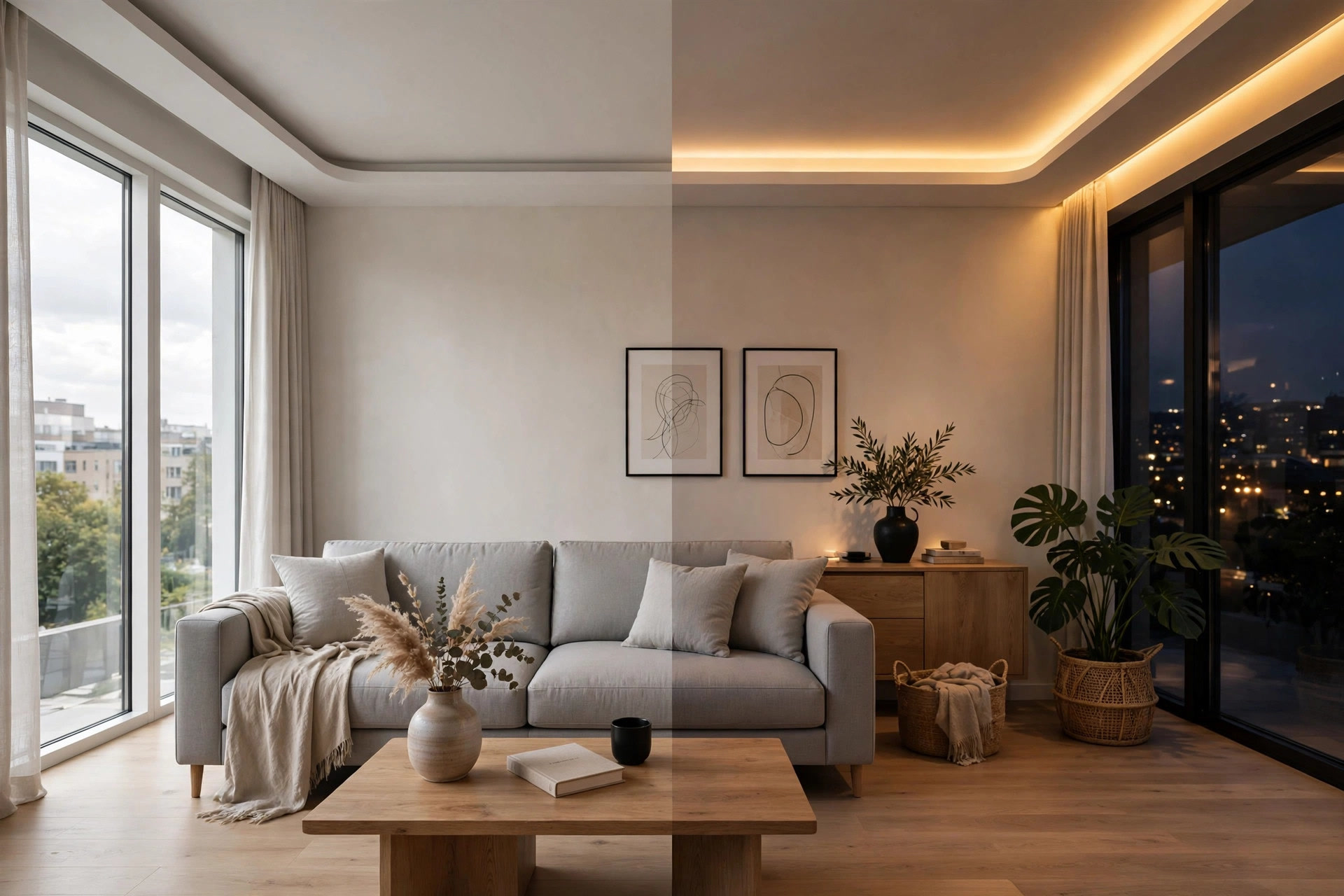
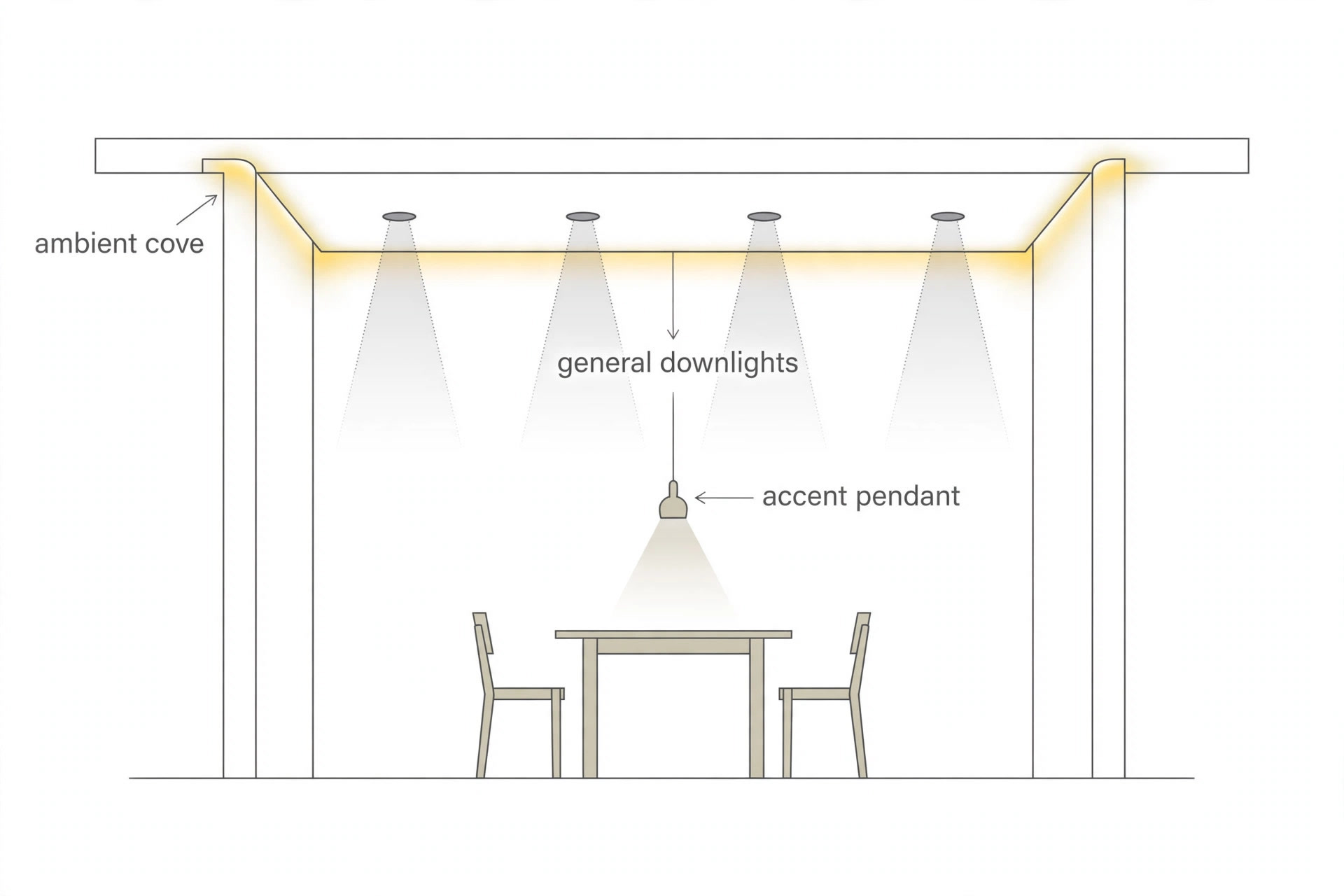
More than any pattern or material, lighting decides whether a living room feels elegant after dark. NoBroker’s 2026 living-room guide recommends three layers:
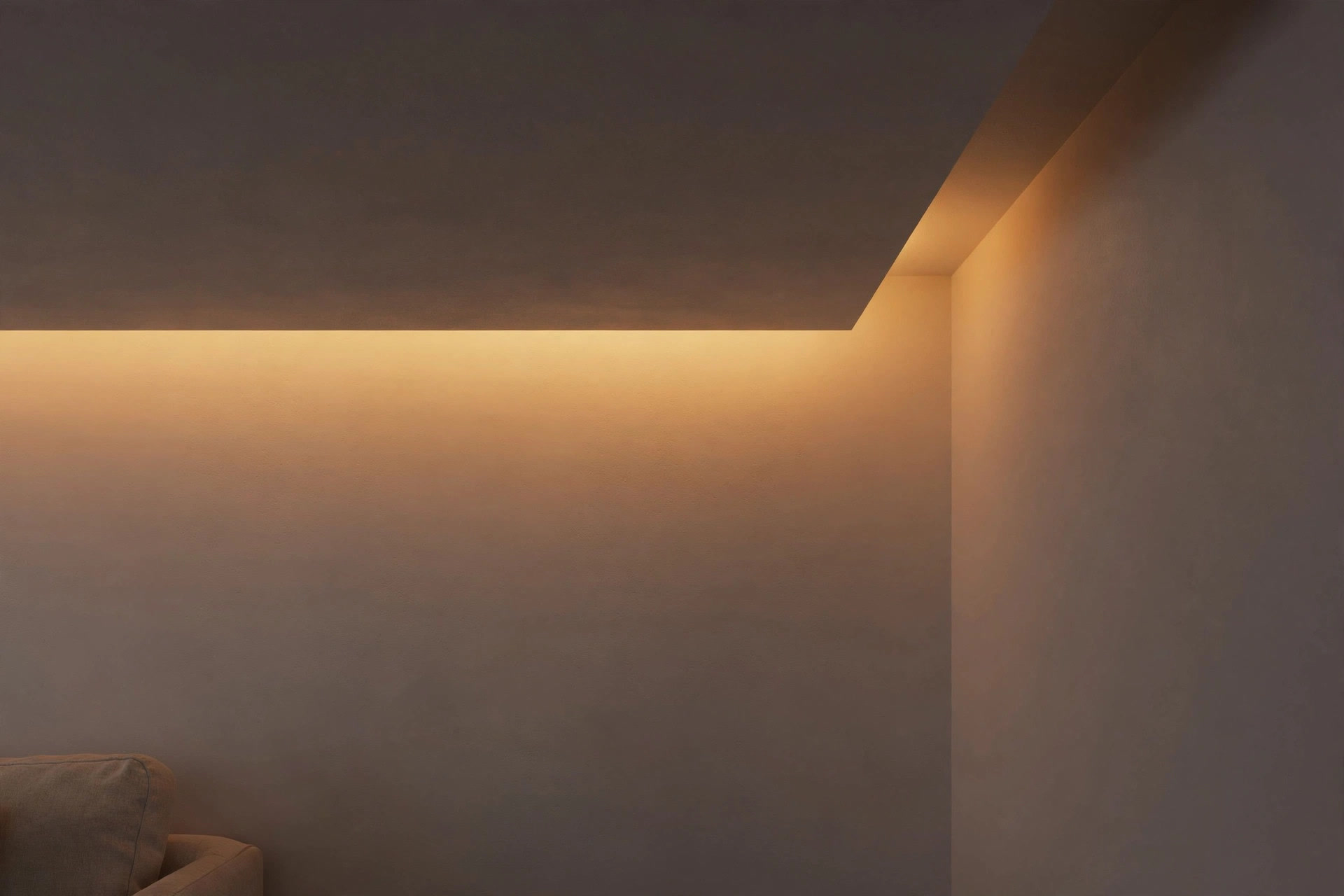
- Ambient: concealed LED strips in coves or grooves, warm white at 2700K–3000K, for the soft overall glow.
- General: recessed COB downlights, evenly spaced (roughly 4–6 feet apart, kept away from walls), for everyday brightness.
- Accent: one spotlight, pendant, or slim track where you want emphasis — a reading chair, an artwork, the TV wall.
Notice how the same ceiling behaves differently by day and by night. In daylight, a restrained ceiling is almost invisible — clean planes, maybe a slim line of trim. In the evening, the concealed layers take over and the ceiling becomes the room’s main design feature. If you are planning the details, our false ceiling lighting guide goes deeper into fixtures and placement.
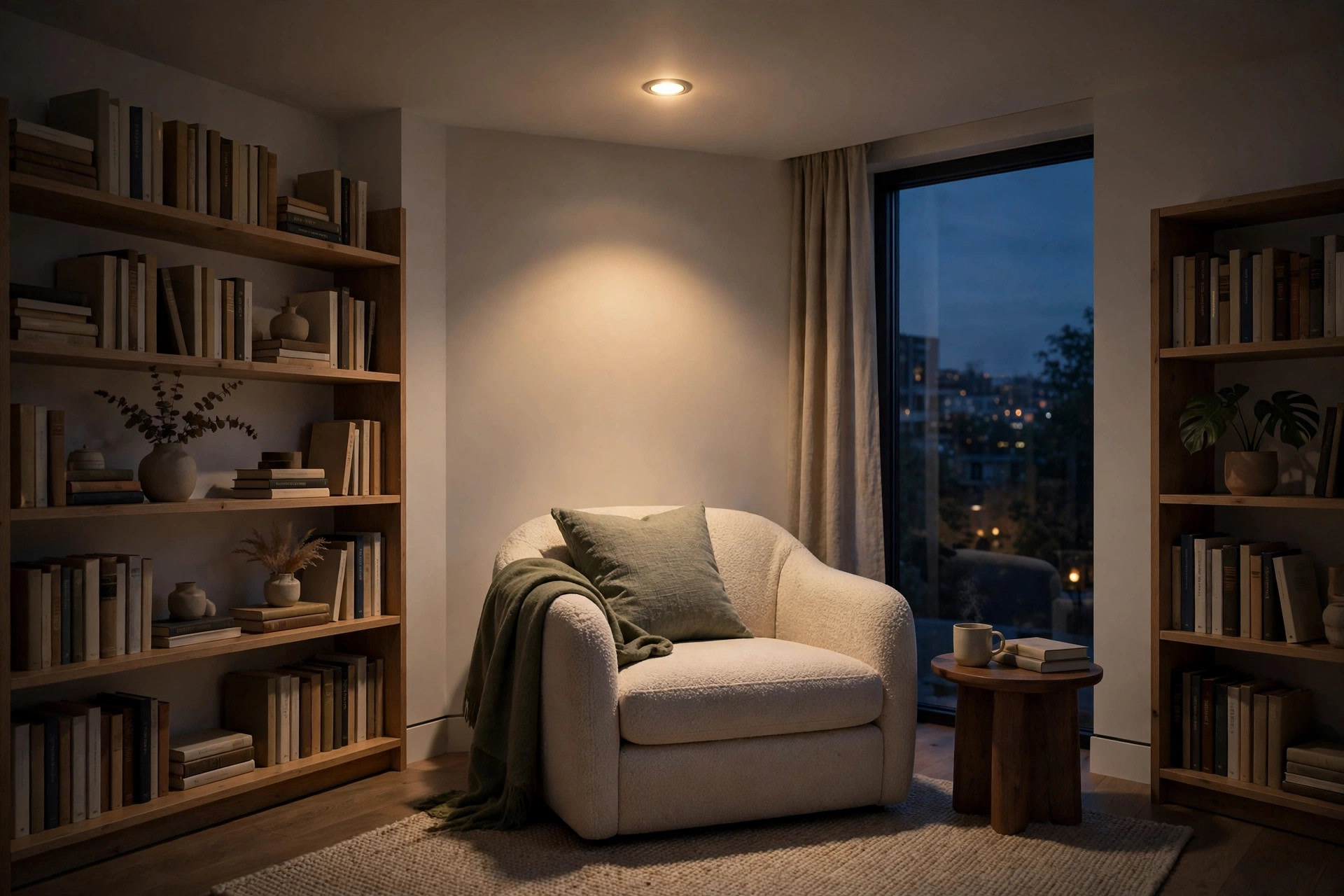
One more small example: a single recessed spotlight above a reading chair gives a corner of the room a purpose after dark, with no extra furniture and no visual noise.
Proportion and ceiling height: match the design to the room
Match the design to the room’s height — a useful mapping from NoBroker’s 2026 POP ceiling guide:
| Slab height | What suits it |
|---|---|
| Below 9 ft | Border-only ceiling, shallow cove, or slim cornice — keep the centre high |
| 9 to 9.5 ft | Single-layer ceiling with a slim cove |
| 9.5 to 10 ft | Tray ceiling or floating island panel |
| 10 to 11 ft | Layered or plus-minus designs |
| Above 11 ft | Deeper layered designs, geometric or wood combinations |
And minimums matter: a flat simple design needs about 8.5 ft of slab height; a cove or tray realistically needs 9.5–10 ft. When in doubt, choose the shallower option — a ceiling that is slightly too plain still looks calm, while one that is slightly too deep looks like it is pressing down on the room. If you are still deciding between materials and layouts, our guide to choosing a false ceiling walks through the trade-offs.
Material discipline: three surfaces are enough
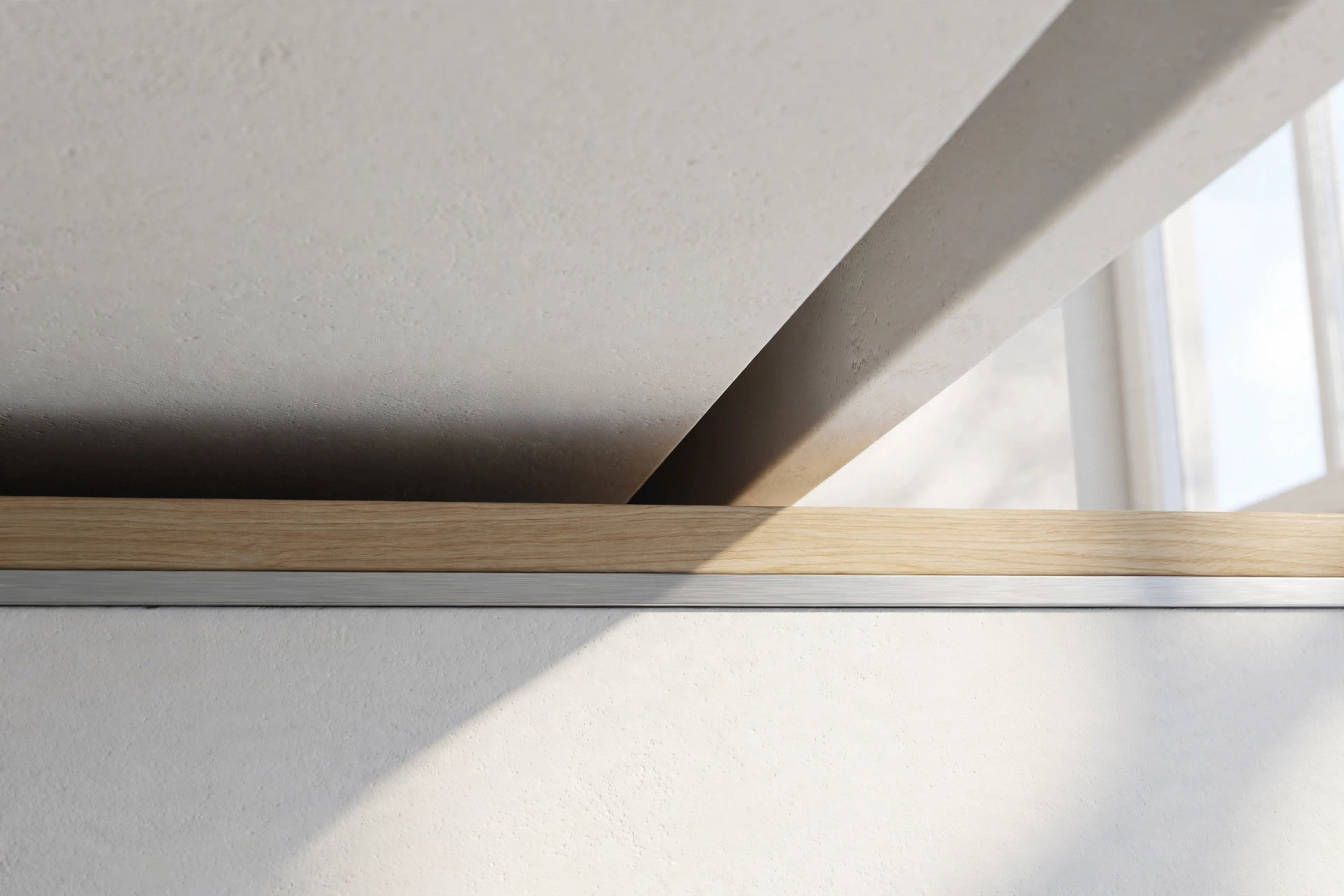
The elegant palette for a living-room ceiling is small: matte white or off-white paint as the base, one warm wood tone, and optionally one slim metal line. Limehouse’s design guide lists the same current directions — neutral tones like white, beige and light grey; wood texture for warmth; and matte, non-reflective finishes.
On the material itself, gypsum board is the natural choice for this style: factory-finished boards on a metal framework give the crisp edges and flat planes these designs depend on, install faster than wet-plaster POP work (a 200 sq ft ceiling takes a skilled two-person team roughly 3–5 days, versus 7–10 for comparable POP), and resist the hairline cracks POP can develop — all per NoBroker’s 2026 gypsum guide. POP still has its place for curves and custom profiles, but for clean straight lines, gypsum wins. See our gypsum false ceiling and modern false ceiling styles guides, and ceiling shapes and patterns if you want geometry beyond the restrained set here.
What elegant living-room ceilings cost in India (2026)
Costs vary by city, contractor, and finish level, so treat these as reported 2026 market ranges from NoBroker’s 2026 interiors guides — not quotes. Always confirm with local contractors:
| Design | Reported 2026 range (₹/sq ft) |
|---|---|
| Simple flat gypsum ceiling (framework, boards, jointing, paint) | ₹75–110 |
| Gypsum cove ceiling with LED strip | ₹103–170 |
| Gypsum tray / stepped ceiling | ₹118–195 |
| Floating island panel | ₹160–280 |
| Gypsum + wood hybrid | ₹180–300 |
| Border-only gypsum (perimeter frame) | ₹75–130 |
For POP-based versions, the same publisher reports roughly ₹65–95 for a simple flat POP ceiling, ₹100–155 for a single cove with LED, and ₹200–350 for POP with wood accents. Limehouse groups the market into tiers: simple designs ₹80–150, mid-range ₹150–250, and luxury ₹300–500+ per sq ft.
The honest takeaway: the elegant look is mostly a design achievement, not a spending one. A slim cove at mid-range pricing, done with discipline, will look more premium than a deep multi-layer ceiling at luxury pricing done without it. For a fuller breakdown, see our false ceiling cost guide for India.
Mistakes that break the effect
- Over-designing a small room. Heavy layers and busy patterns make compact living rooms feel cluttered. Keep it to one gesture.
- Dark colours on a low ceiling. Dark paint pulls the ceiling visually lower; light matte tones keep it lifted.
- Poor lighting placement. Downlights too close to walls throw harsh shadows; cool-white strips in a cove kill the warmth the design is built on.
- Ignoring the room’s own logic. A ceiling pattern centred on nothing, or a tray that fights the furniture layout, reads as decoration pasted on top of a room rather than part of it.
A note on fans, pendants, and anything that hangs
Anything suspended from the ceiling — fans, pendants, heavier fixtures — must be planned during installation, not after. Limehouse’s guide states this plainly: fan installation with a false ceiling is possible, but stability and safety have to be designed in from the start. Get your installer to confirm the suspension and wiring provisions for every hanging fixture before the boards go up, and have a qualified electrician handle the electrical work. Our guide to false ceilings with ceiling fans covers the planning side in more detail.
Keeping it looking new
Restrained ceilings are easy to live with. Dust surfaces periodically with a soft cloth or microfiber duster, and wipe LED strips and channels every few months so dust doesn’t dull the light. Repair small cracks early, keep water away from POP surfaces, and repaint when the finish looks dull. For the full routine, see our installation and maintenance guide.
FAQs
Does an elegant ceiling need a high ceiling?
No. Elegance is about proportion, not height. Below 9 ft, a border-only ceiling or a slim cornice with a high painted centre keeps the room open while still giving you concealed lighting.
Can I get this look on a budget?
Yes — this is arguably the cheapest premium look there is. A slim cove ceiling with a warm LED strip sits in the mid-range band (roughly ₹100–170 per sq ft in reported 2026 ranges), and a border-only version comes in lower still. The premium feel comes from restraint and light quality, not expensive materials.
What colour temperature should the cove lighting be?
Warm white, 2700K–3000K, is the standard recommendation for living rooms. It flatters skin tones and soft furnishings; cooler temperatures make the same room feel clinical.
Gypsum or POP for an elegant living-room ceiling?
For clean straight lines and flat planes, gypsum board is the easier choice — factory-finished, stable, and faster to install. POP suits curves and custom profiles better.
Can I have a ceiling fan with a cove ceiling?
Yes, but it must be planned during installation so the fan has proper suspension and clearance. Discuss fan positions with your installer before the framework goes up — our guide to false ceilings with fans explains what to plan for.
The short version
An elegant living-room ceiling is a quiet one: a slim cove or a shallow tray, warm concealed light, matte surfaces, and at most one warm material beside the white. Match the depth to your ceiling height, align the geometry with how the room is used, layer the light, and stop there. For the full picture, start with our false ceiling design guide.