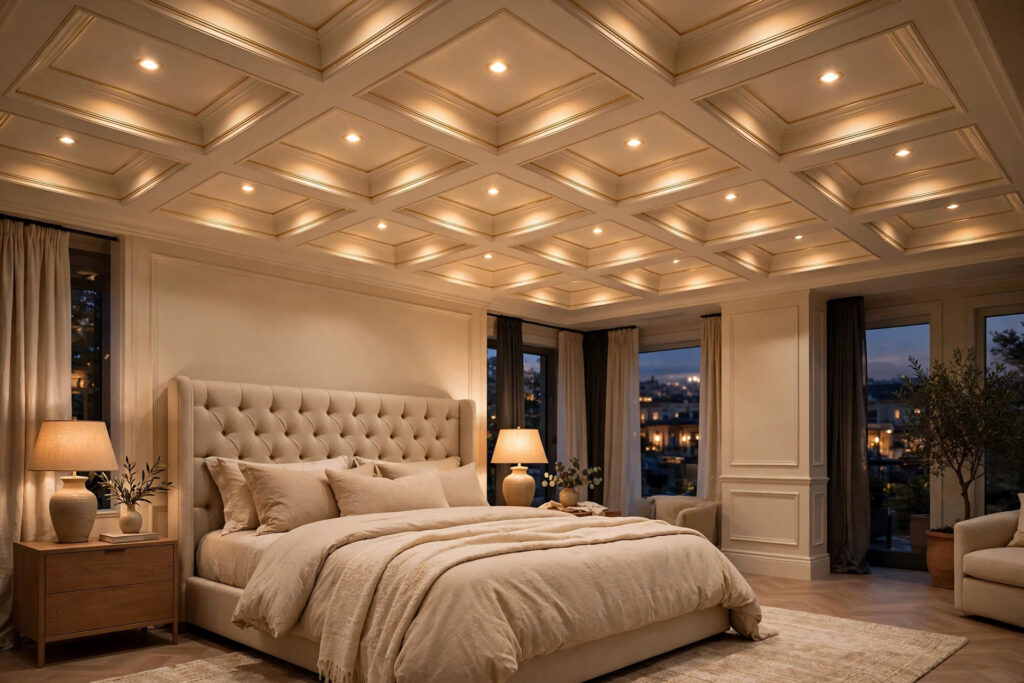

A royal bedroom ceiling is not about excess. It is about the right profile, a rich but restrained material, and warm light that makes the whole room feel calm and expensive. Get those three things right, and even a simple bedroom can carry a palace-like mood without looking busy or old-fashioned.
This guide is a deep dive into one specific lane: premium, traditional-royal ceiling styling for bedrooms. If you want the full picture of every bedroom ceiling option — modern, minimal, budget-friendly and more — start with our complete bedroom false ceiling guide, which this article builds on.
Note on the images: All images in this article are original concept renders created for illustration — they show design possibilities, not completed projects.
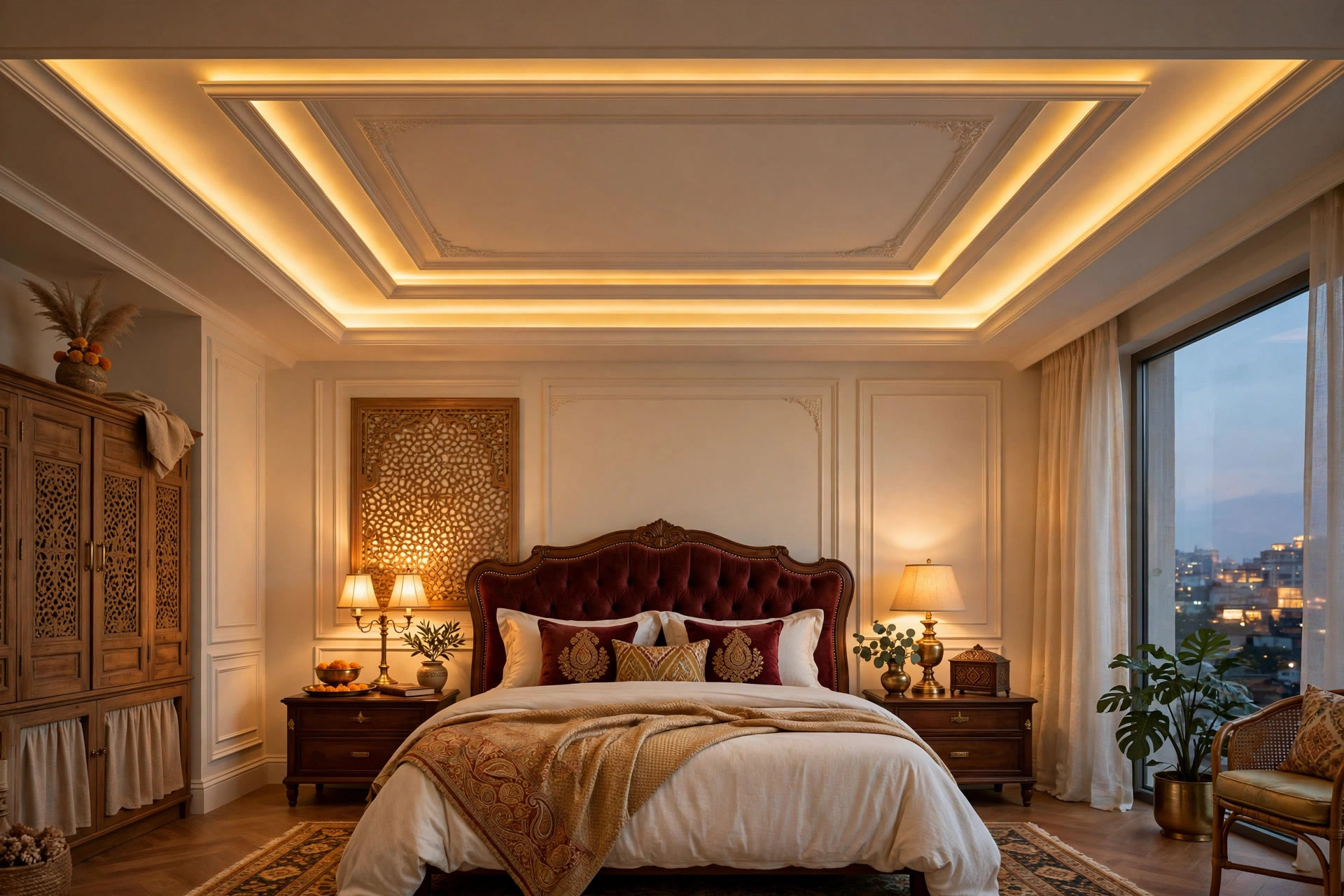
What actually makes a bedroom ceiling look “royal”
Across the design guides that rank for this topic, the same ingredients keep appearing: a classical profile (coffered, tray, or layered borders), a light regal palette (ivory, cream, beige) paired with metallic accents, and lighting that is warm and layered rather than flat and bright. These three decisions do most of the work.
The fourth ingredient is restraint. The best royal ceilings leave breathing room — a decorated border with a plain centre, or one rich focal point instead of five competing ones. That discipline is what separates a palace-inspired bedroom from a cluttered one.
Classic royal ceiling profiles
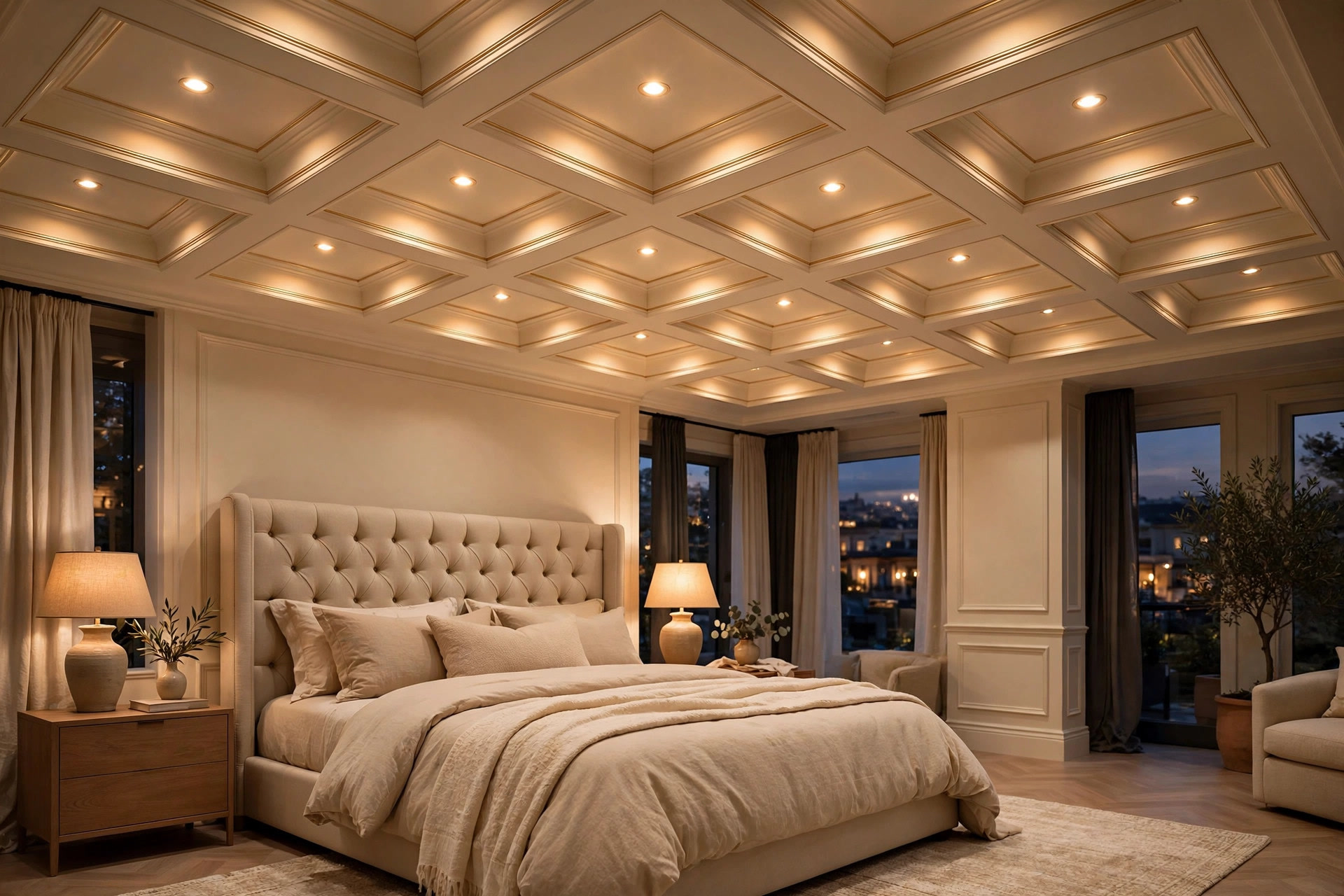
Coffered ceilings: the palace grid
A coffered ceiling is a grid of recessed panels divided by beams or moldings. The form goes back to Roman buildings and Renaissance palaces, and it still reads as the most architectural of all ceiling treatments. In a bedroom it gives the ceiling weight and rhythm — the room feels designed rather than decorated.
Honest trade-offs: coffers are more elaborate to build than a plain tray, so they suit generous ceiling heights and budgets. They also have more surfaces, which means more dusting and more care at repaint time. If you love the look but have a modest room, consider a shallow coffered border around a plain centre instead of a full-room grid.
Tray ceilings: the forgiving favourite
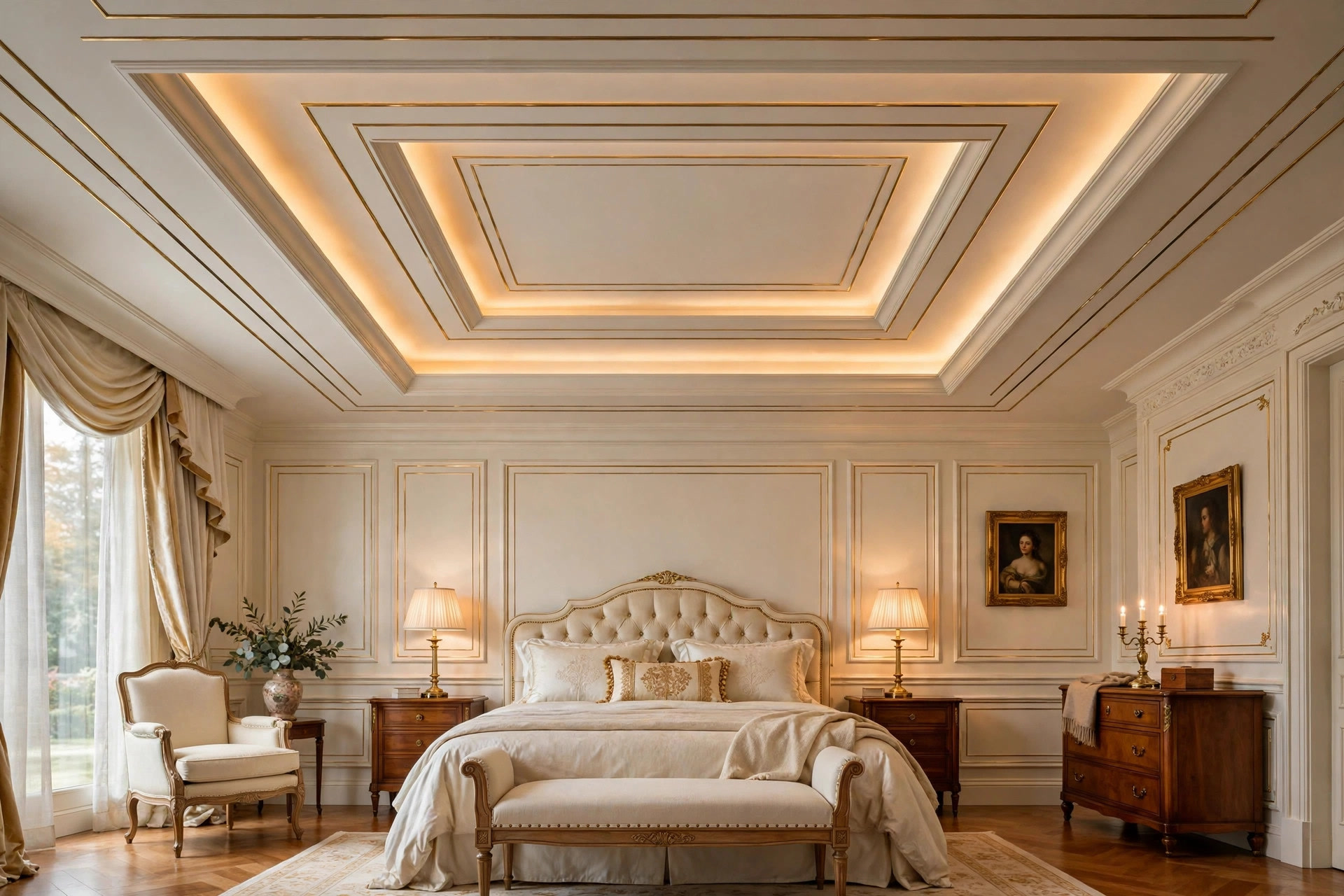
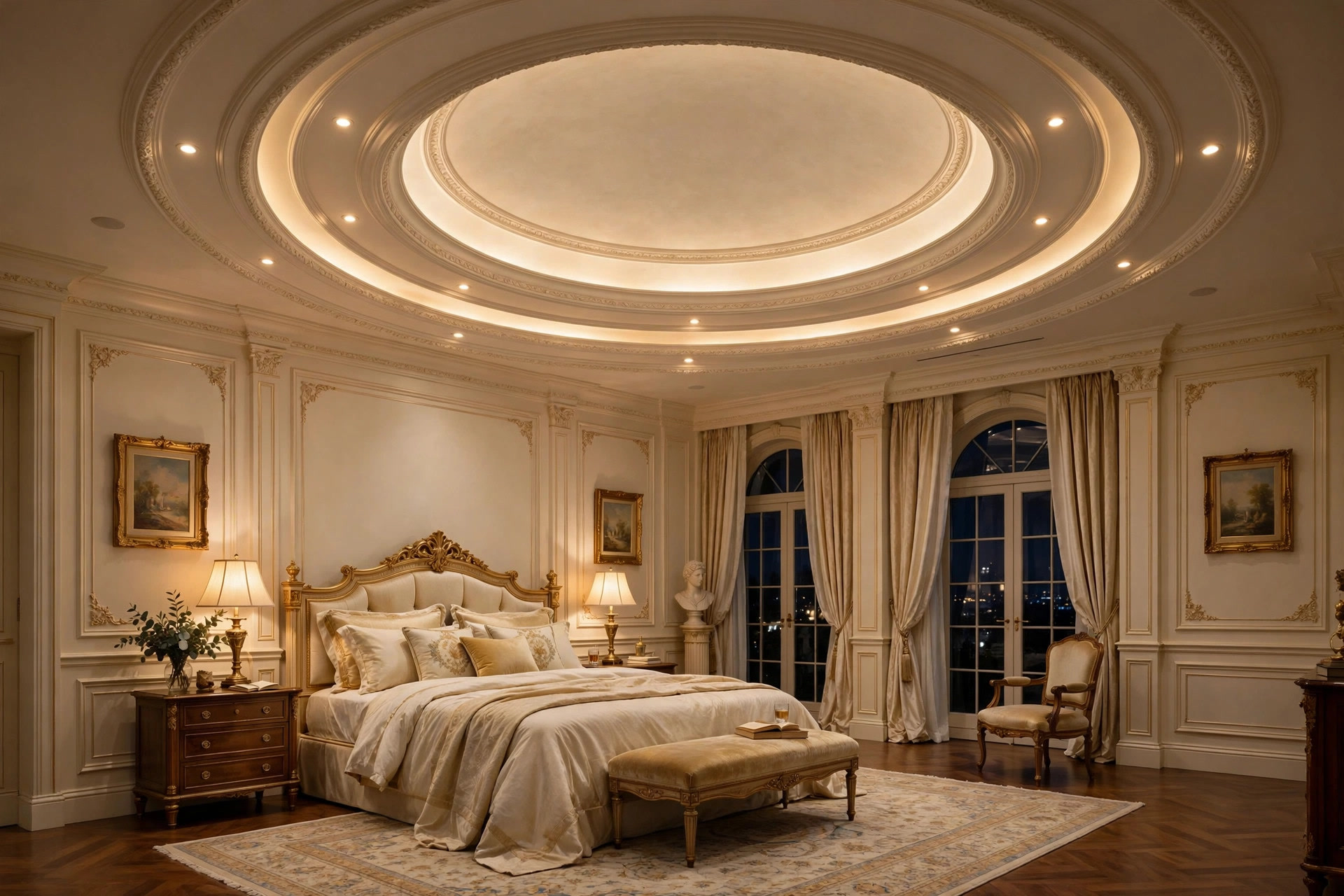
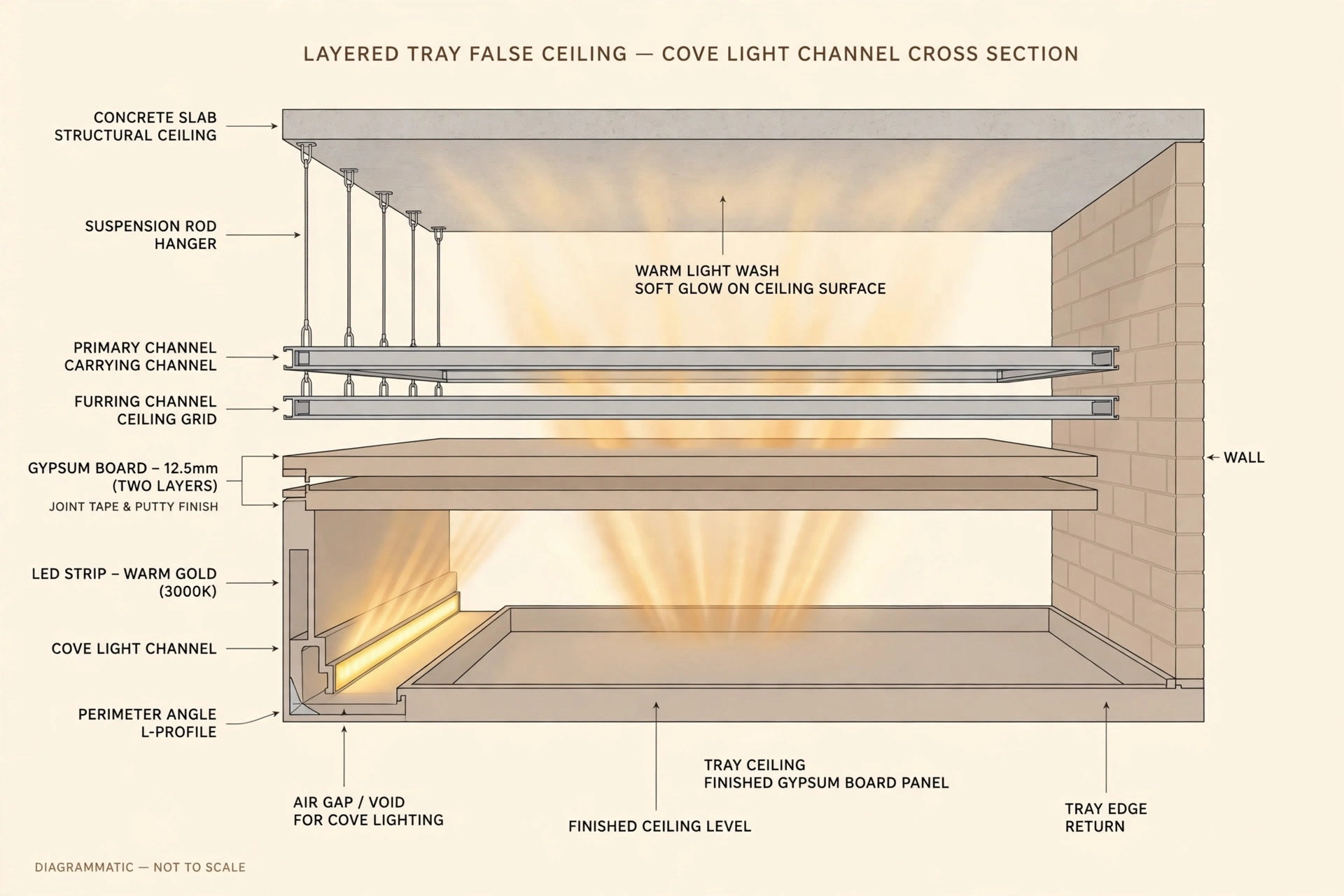
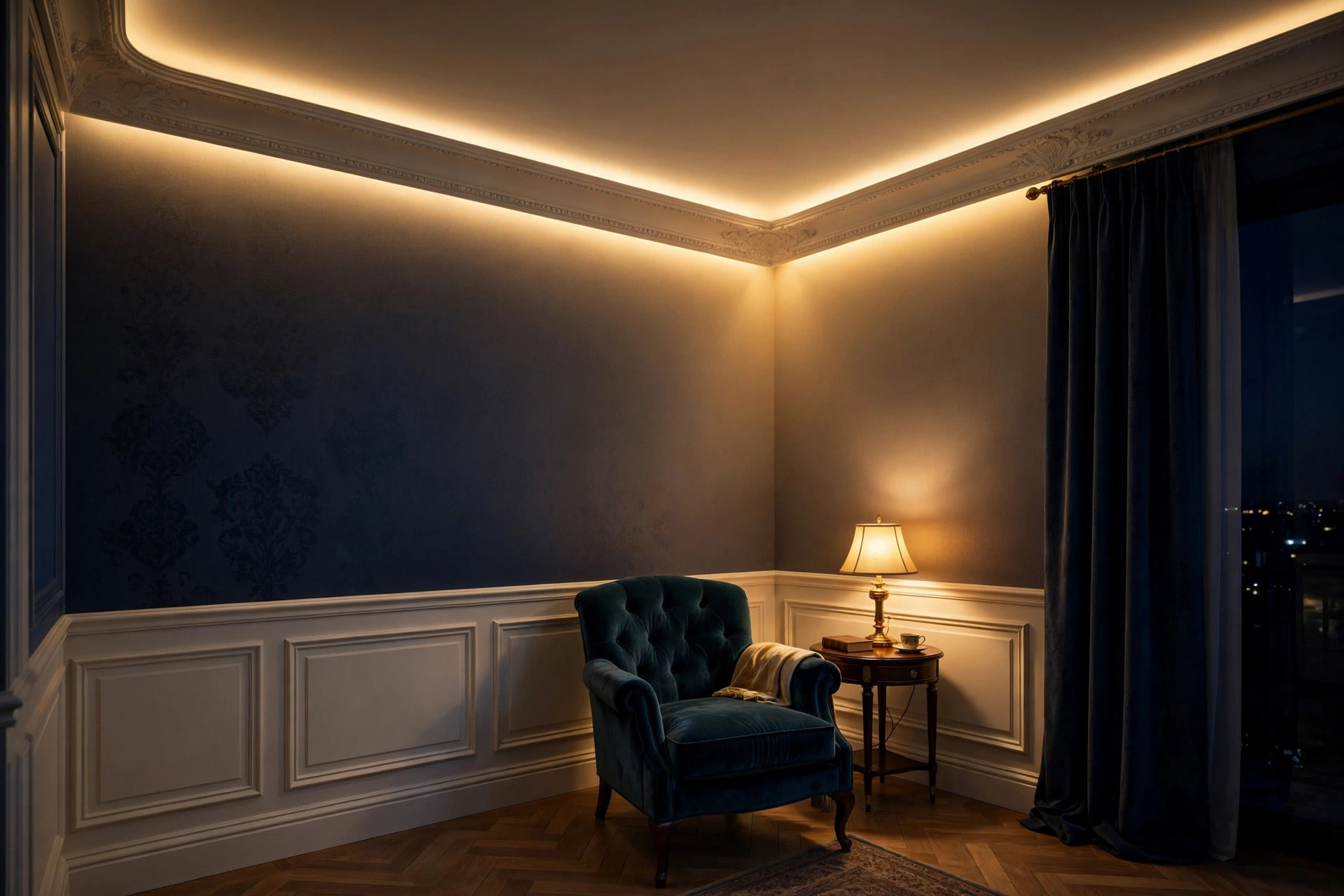
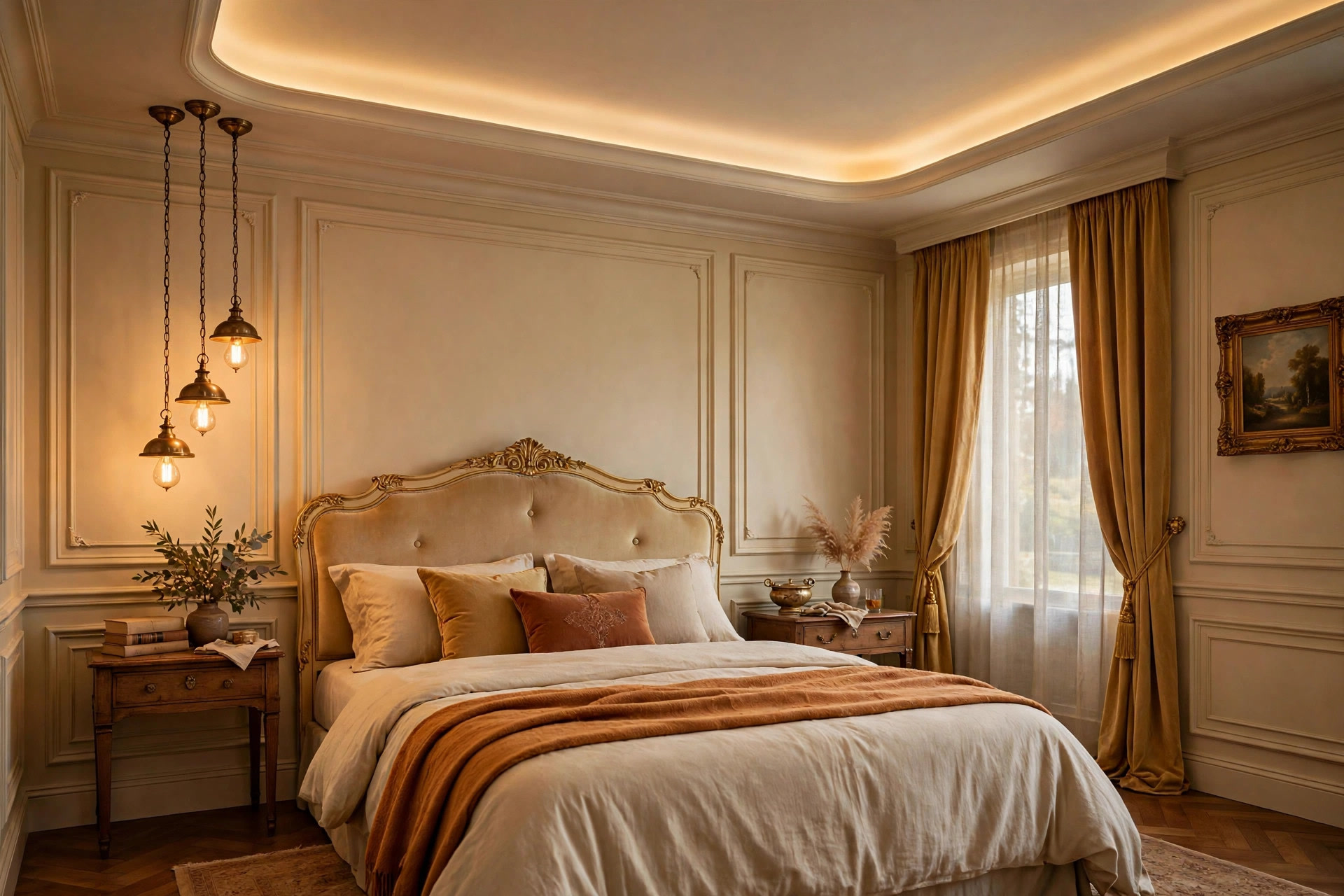
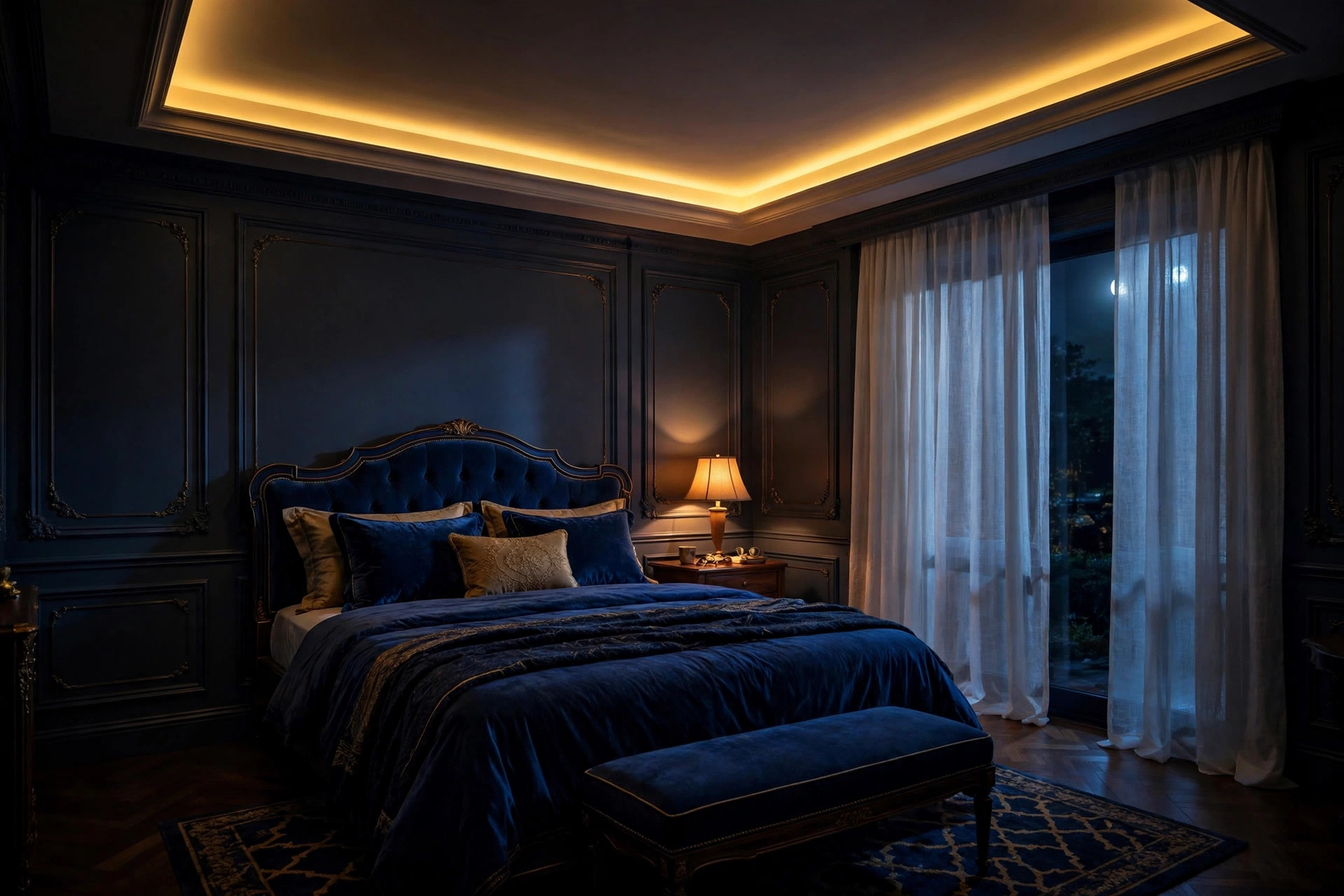
A tray ceiling has a central section set higher than the surrounding border, like an upside-down tray. It adds height and shape to a room without the complexity of multiple recesses, and it is a natural home for cove lighting: a concealed LED strip tucked into the step washes the raised centre with a soft glow that outlines the whole design.
Double trays — two concentric steps — double that effect and are a favourite in premium Indian bedrooms. Keep the steps shallow and the palette light (ivory with thin brass or gold inlay) so the layering reads as elegant rather than heavy.
Layered borders and crown moldings
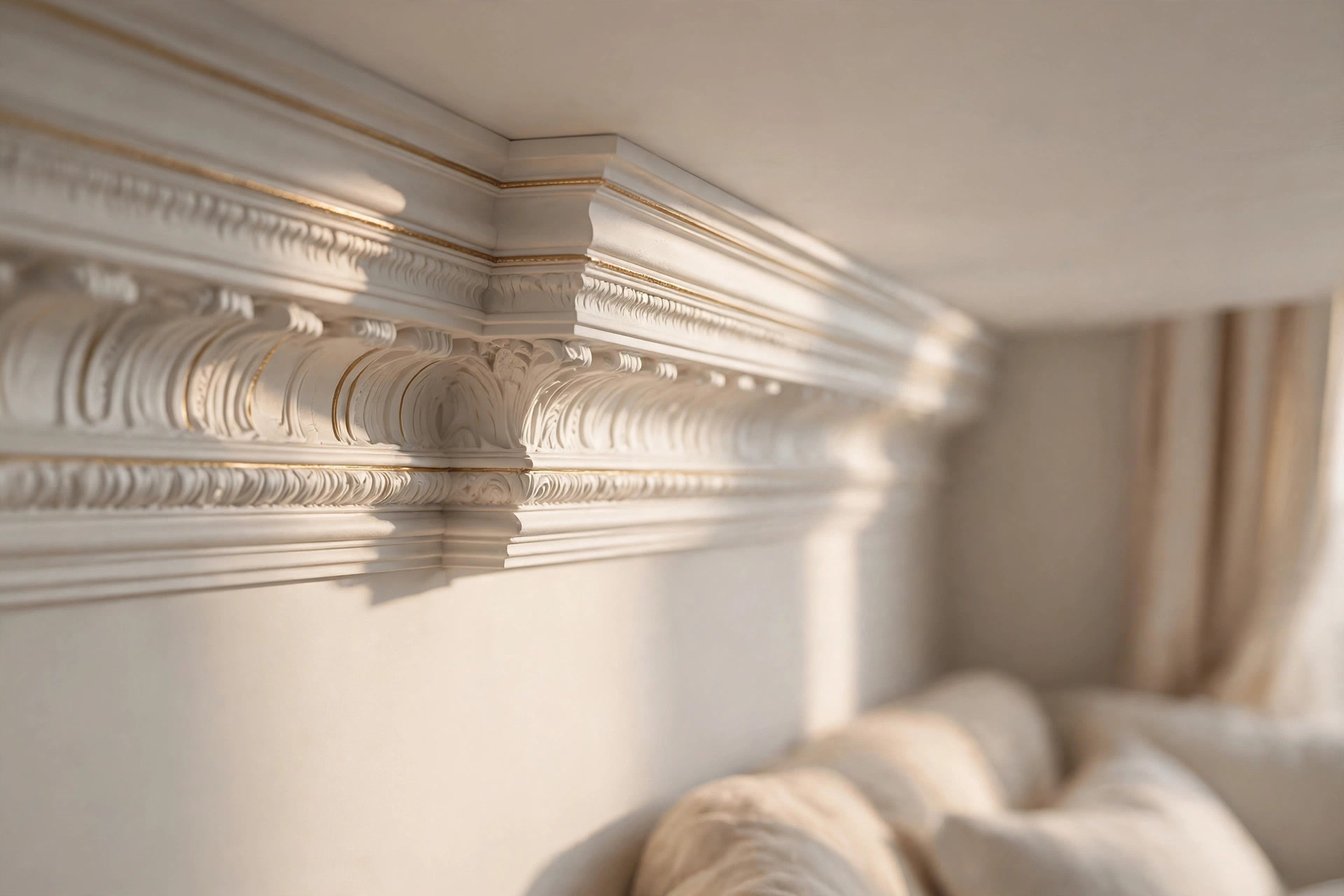
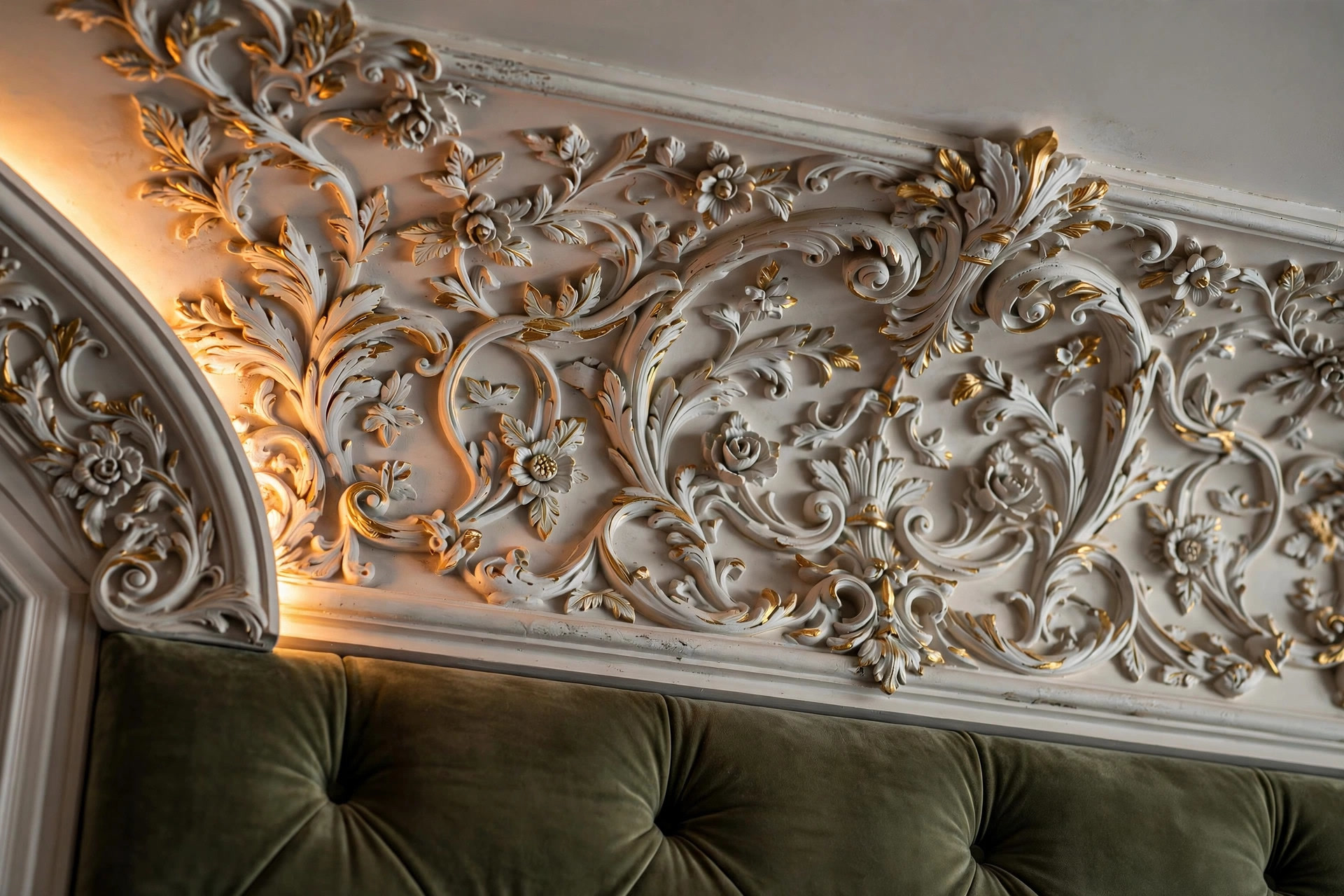
If a full profiled ceiling feels like too much, decorate only the perimeter. Crown moldings — the layered cornices where wall meets ceiling — are one of the oldest palace features, and today you can get the same timeless look with ready-made POP or PVC molding strips that are easy to buy, customise, and fit within a budget. A carved gold-leaf border adds another layer of richness without touching the centre of the ceiling.
This border-only approach keeps the middle of the ceiling clean, which is also the easiest royal ceiling to maintain — fewer recesses mean fewer dust traps.
Domes and vaults: the grand gestures
A shallow central dome or medallion ceiling recalls the royal halls of old — dome forms were the signature of palace ceilings long before modern designs existed. In a contemporary bedroom, a soft concentric dome over the bed becomes the room’s focal point without any furniture doing the work.
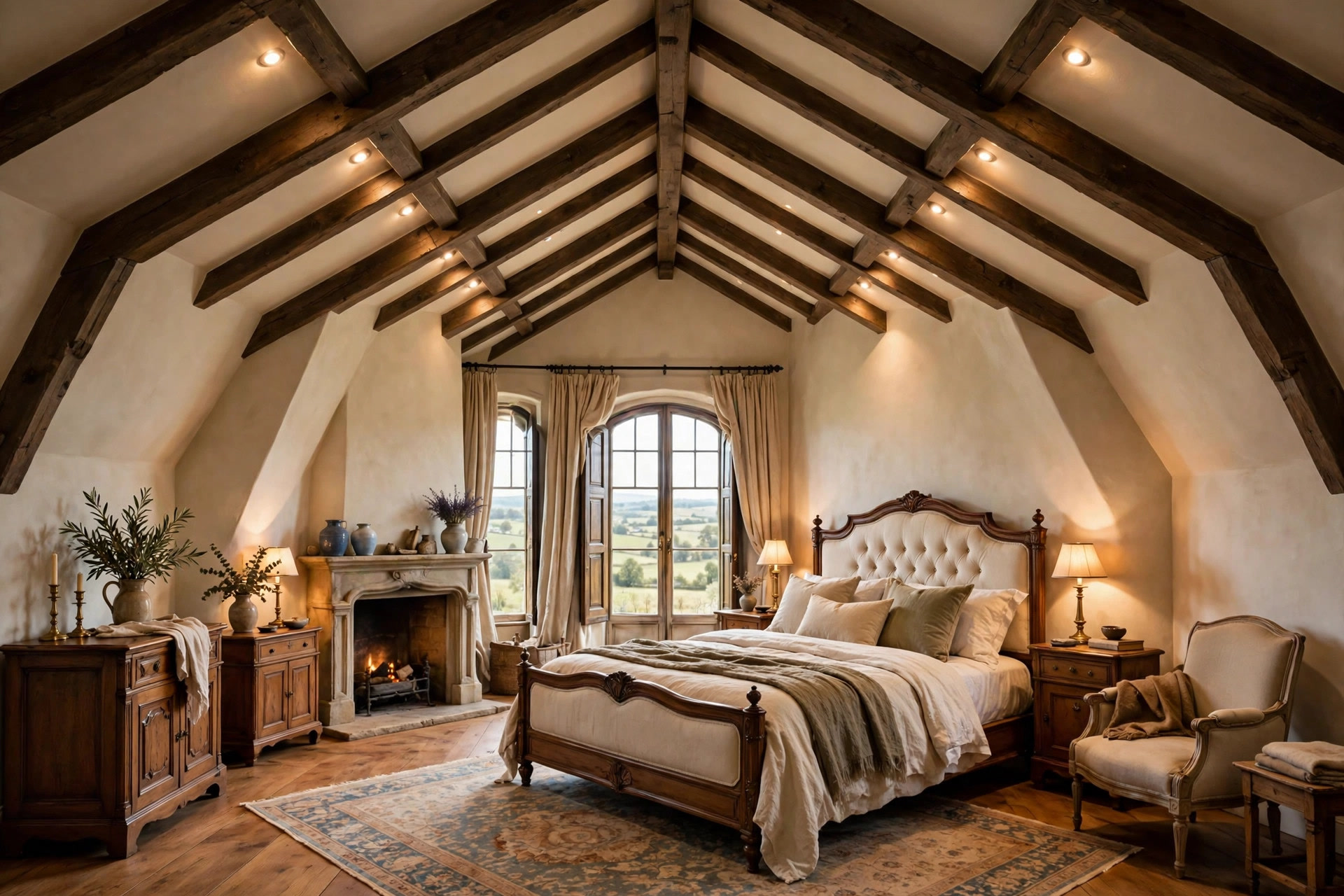
Vaulted ceilings with exposed wooden beams give a countryside-palace feel and make a room look taller and larger. They are a bolder choice, best suited to rooms with real height; in a low room, the slopes can feel pressing rather than grand.
Rich materials and finishes
Gypsum and POP: the sculptor’s materials
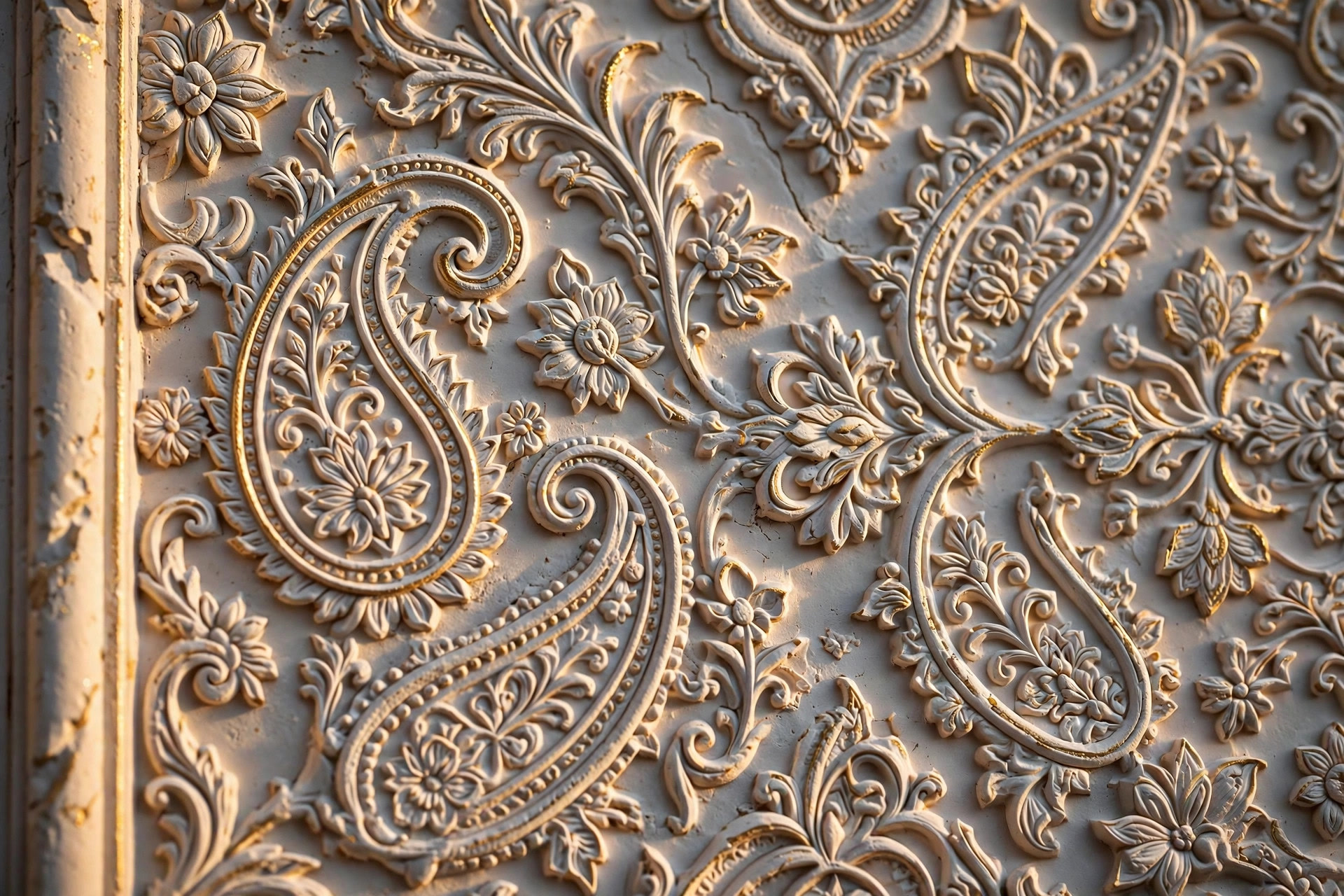
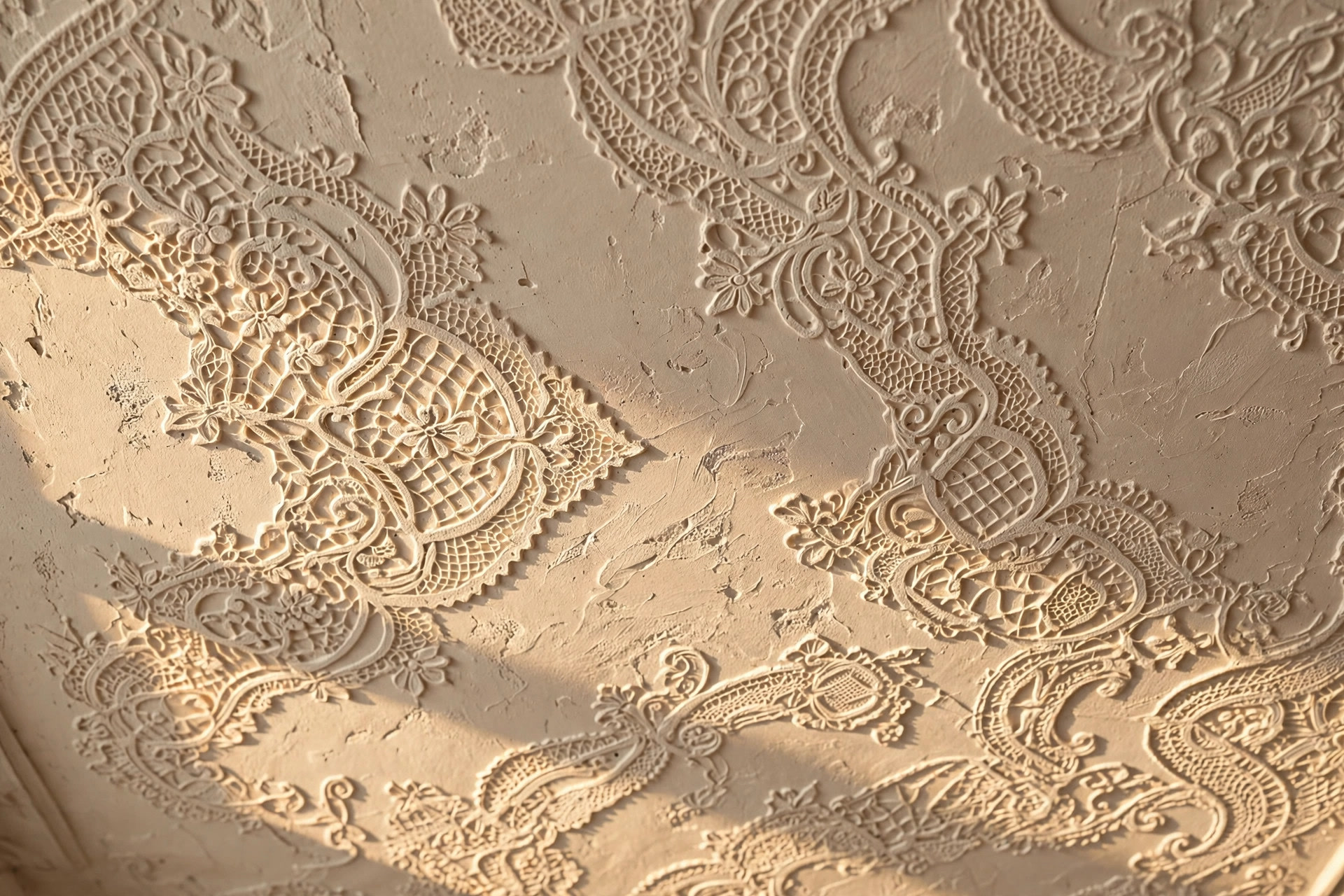
Gypsum and plaster of Paris remain the standout materials for royal bedroom ceilings because they can be shaped — curves, arches, domes, moldings, carved floral and paisley reliefs. Gypsum boards give a smooth, seamless base; POP lets a skilled artisan hand-build ornamental details like lace textures, rafters, and cornices that match almost any surface.
For more on how each material behaves in a bedroom, see our gypsum ceiling design guide and our POP ceiling design guide.
Wood: warmth and weight
Wood brings a royal courtyard feeling that no other material quite matches. A wood-panelled or coffered wooden ceiling adds grandness and warmth, and pairs beautifully with warm lighting. Solid wood needs real care (it is heavy and must be finished well), but wood-look alternatives and MDF panels can give much of the richness with easier handling.
See our wooden false ceiling guide for the full breakdown of options.

CNC jali: Mughal patterns, modern method
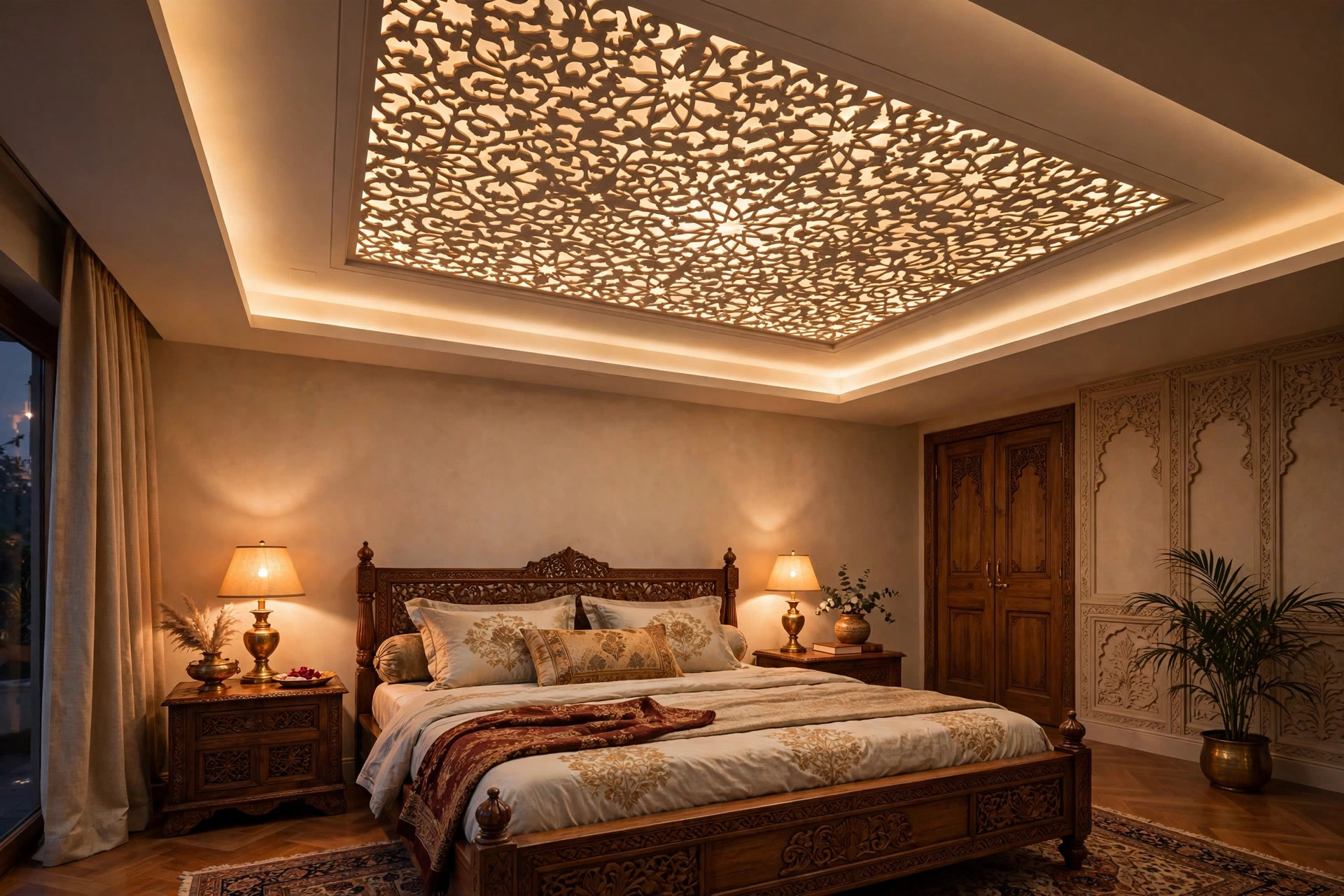
CNC-cut jali panels are a distinctly Indian route to the royal look. The lattice patterns draw on mashrabiya — the carved screens popular during the Mughal era — and are cut by computer into MDF, acrylic, or glass, then set into the ceiling as a glowing mid-panel or border inlay. A backlit floral jali in a wooden mid-panel is one of the most characterful things you can put over a bed.
Fabric and tufted inserts
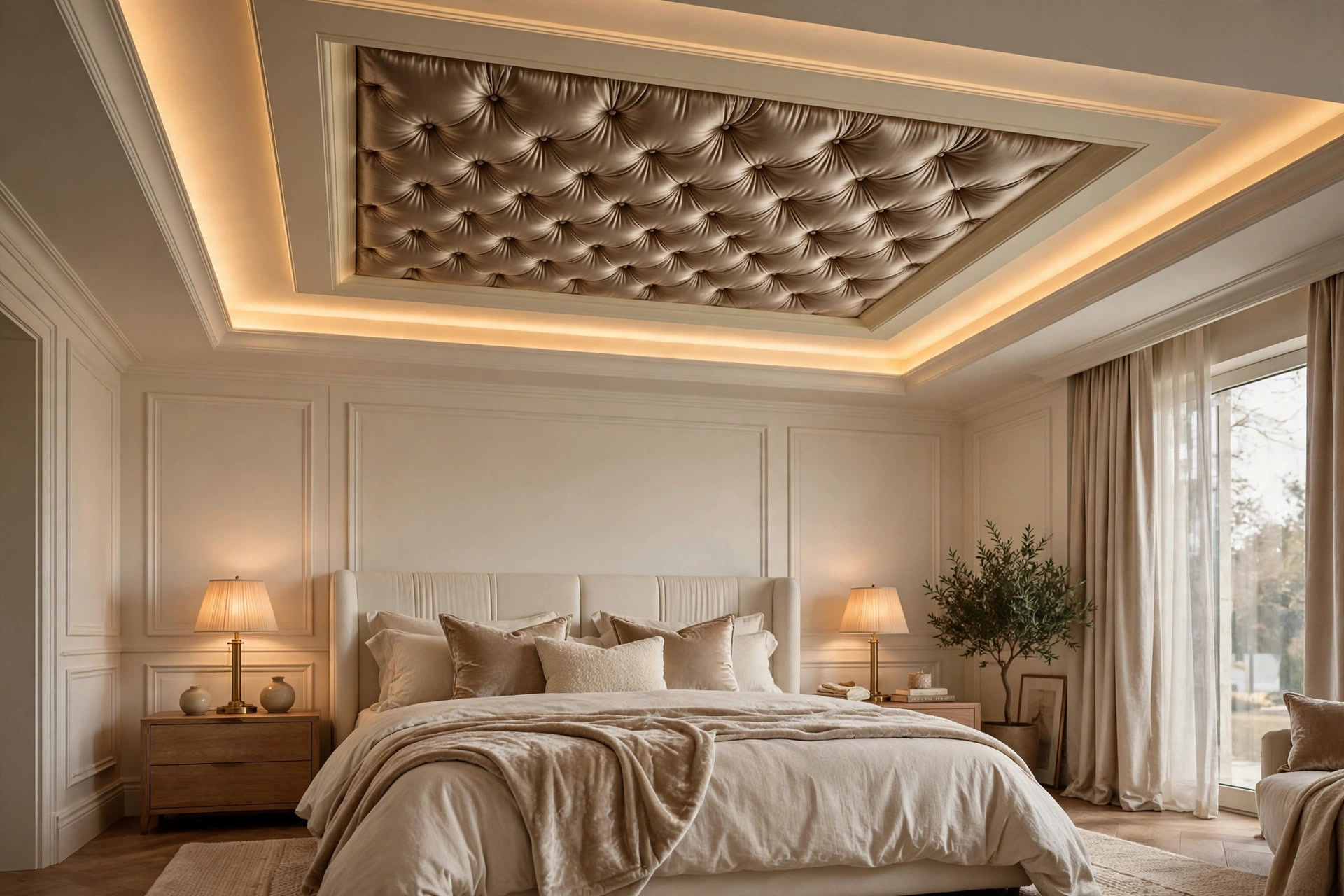
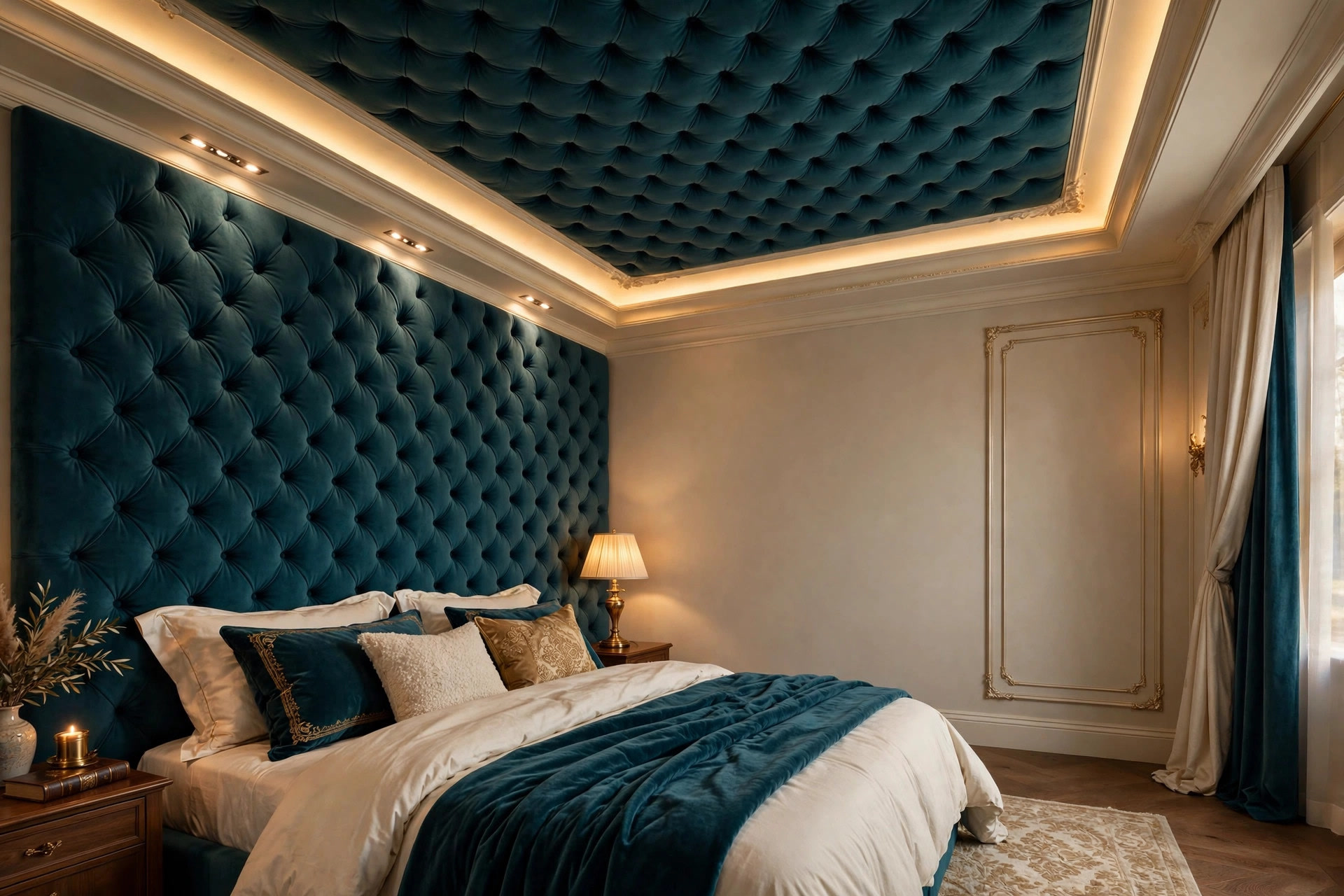
Upholstery on the ceiling sounds extravagant, and it is — but it works. A tufted fabric inset in the centre of a tray ceiling adds softness and absorbs sound, and extending the headboard fabric up into the ceiling creates one continuous, cocoon-like surface behind and above the bed. Keep the fabric in deep jewel tones (teal, wine, champagne) against a cream border for the full effect.
Metallic and mirror accents
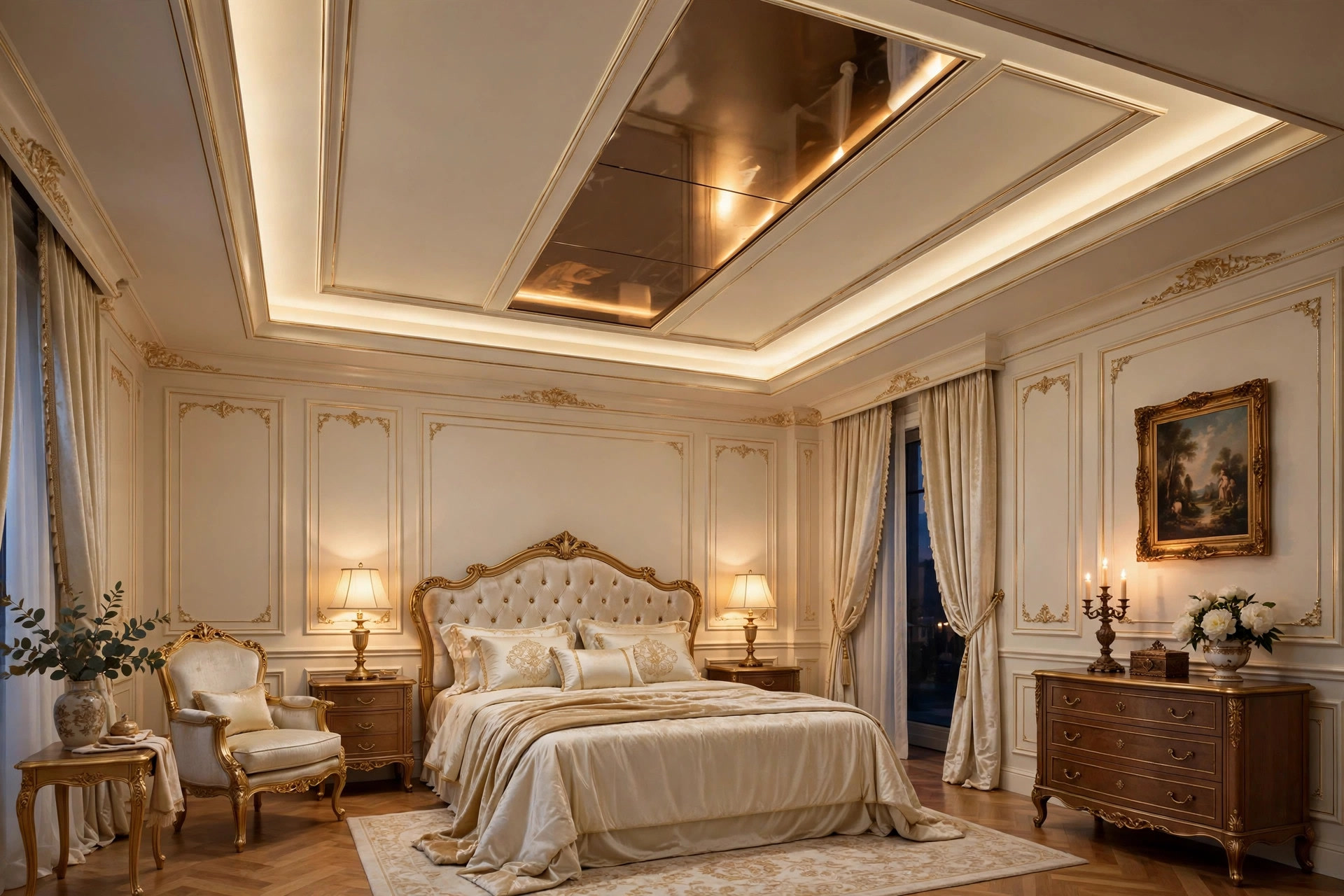
Gold leaf, brass inlay strips, and bronze-tinted mirror panels are the jewellery of a royal ceiling. A thin gold pinstripe along a molding edge, a brass inlay tracing a tray rectangle, or a single bronze mirror panel in the centre — used sparingly, these catch the warm light and make the whole ceiling glow. Used everywhere, they cheapen it. One or two accents per ceiling is the rule.
Lighting: the part that sells the royal look
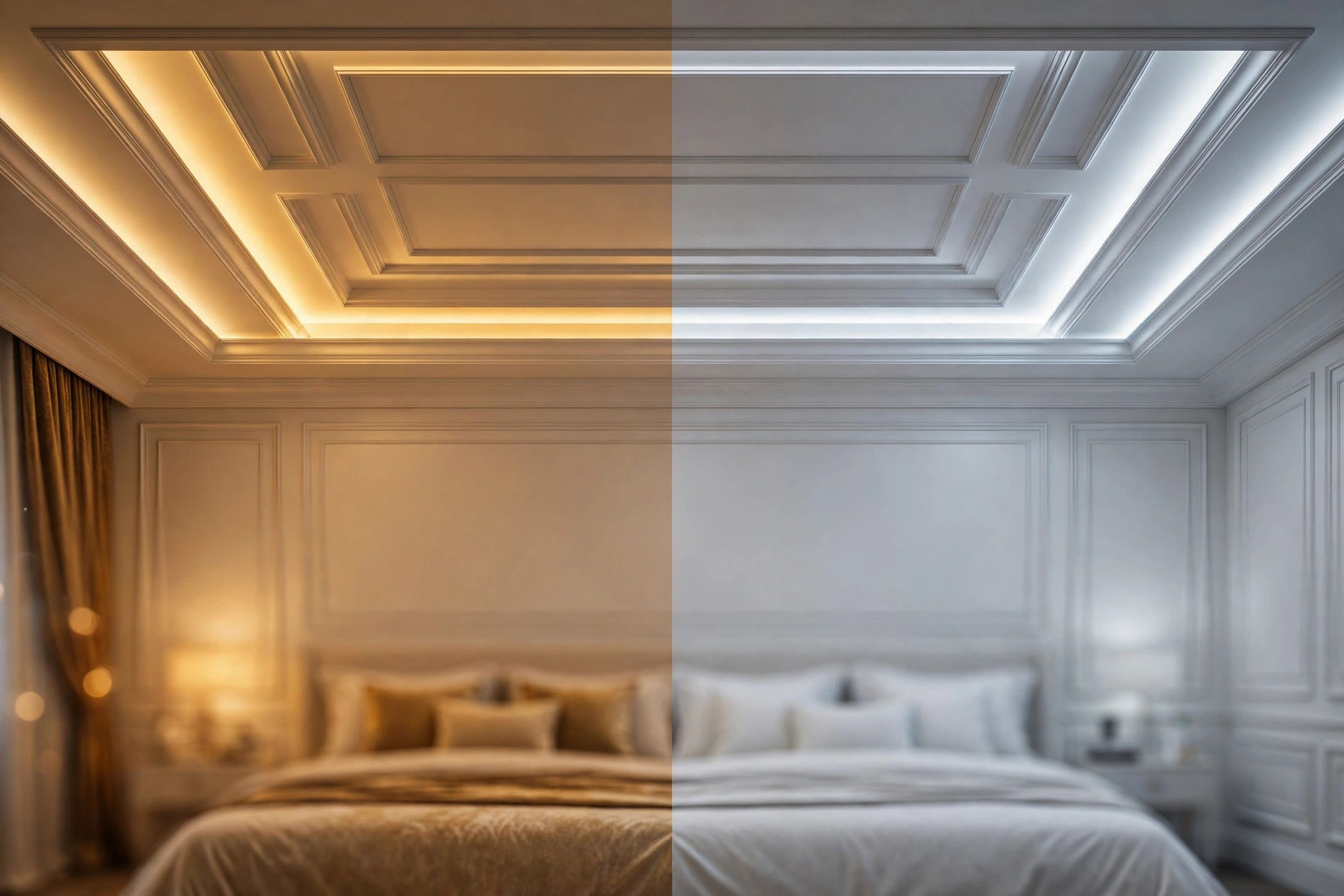
You can build the most beautiful carved ceiling in the world and ruin it with cold, flat lighting. Warmth is non-negotiable for the royal look: choose warm-toned light throughout the ceiling (the kind that reads as candlelight or late-evening sun, not office white), and layer it.
The three layers that work
- Hidden cove light along tray edges or behind a perimeter channel — the soft glow that outlines the ceiling’s shape and makes it look like it floats. This is the single most “royalising” thing you can add.
- Recessed spots aimed at the bed and art — small, warm points of light that add sparkle without glare.
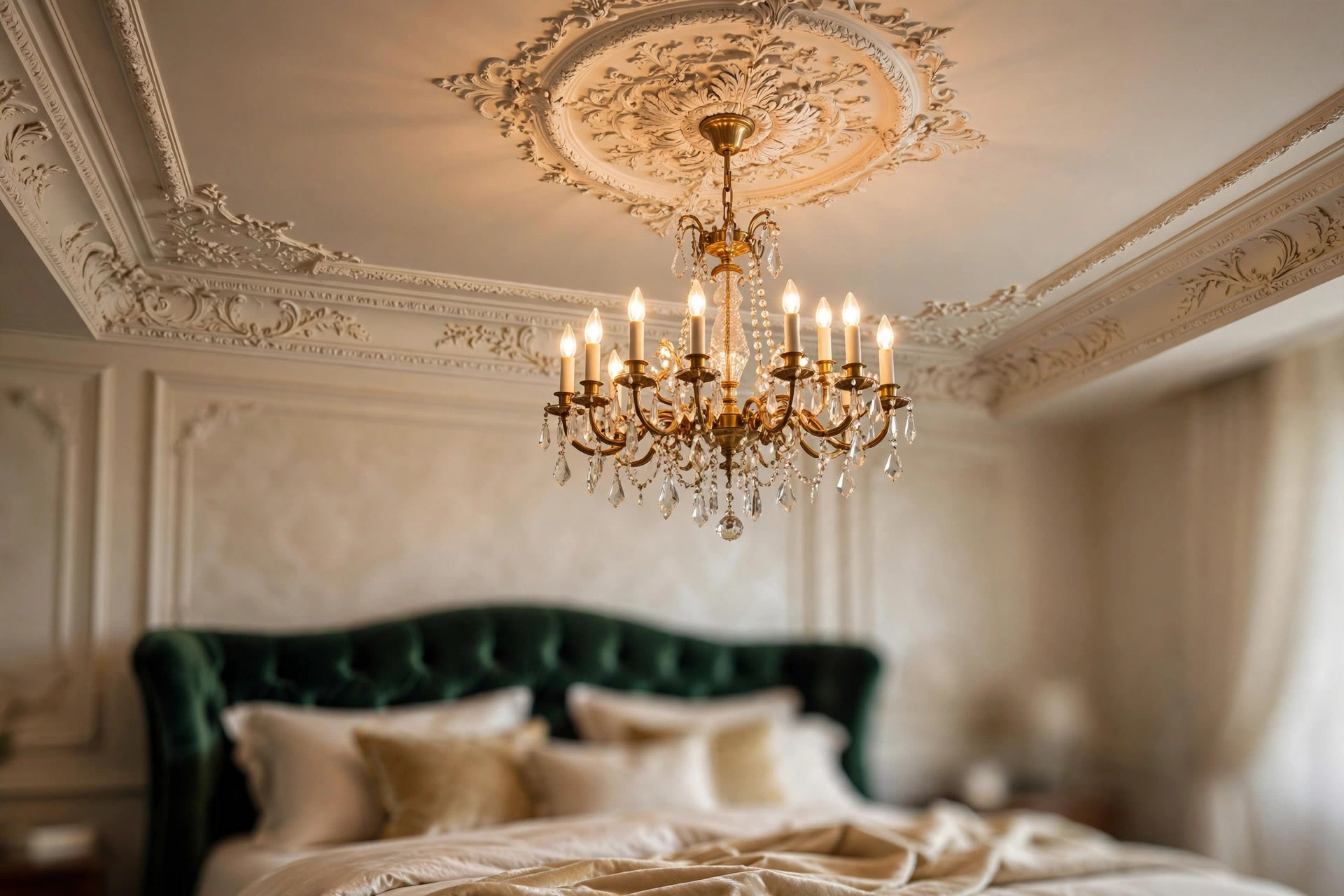
- One statement piece — a chandelier on an ornate medallion, or a cluster of brass pendants. This is the jewellery; the cove light is the outfit.
Chandeliers and pendants as the centrepiece
A chandelier instantly raises the room’s register — it is the fastest way to give a bedroom a rich, royal feel. Hang it from a decorative ceiling medallion (a carved plaster rose), and size it to the room: it should feel generous, not looming. For a softer, more contemporary take, a cluster of small brass pendants at staggered heights over the bedside tables gives the same warmth with less formality.
For the full playbook on planning these layers, see our false ceiling lighting guide.
Designing around the ceiling fan
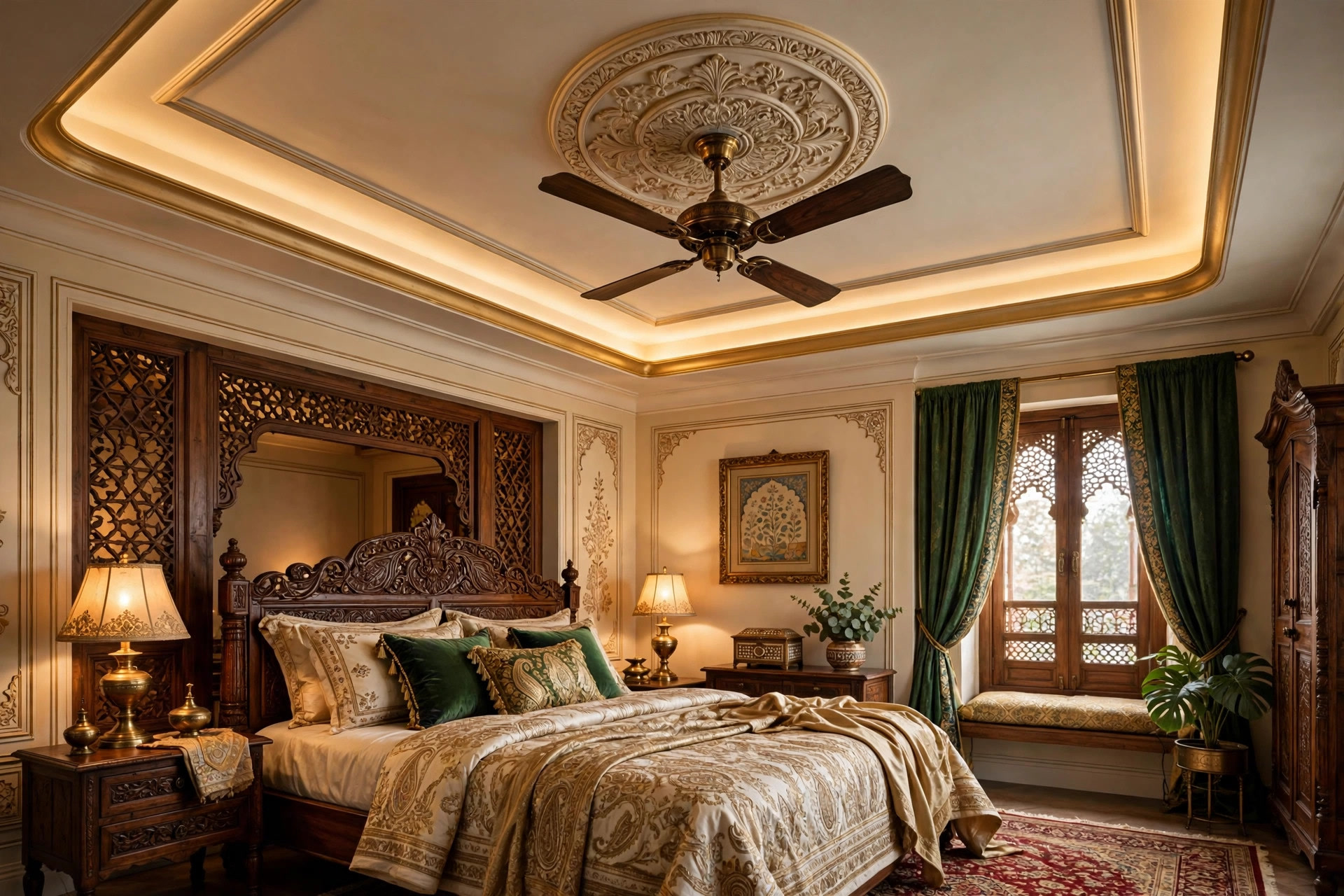
Most Indian bedrooms need a fan, and a royal ceiling should never fight it. The standard approach is to mount the fan from the original structural ceiling above, with the false ceiling built around it — often with a decorative medallion ring at the fan’s base so the fixture looks intentional rather than poking through.
Style the fan to match: an antique-brass or dark-wood fan suits a royal ceiling far better than a plain white one. Keep the cove lighting and chandelier clear of the fan’s sweep, and ask your installer to plan the fan’s position before the false ceiling frame goes up, not after. Our ceiling fan design guide covers this coordination in detail.
Safety note: fan and chandelier suspension is structural work. Always have it done (or at least checked) by a qualified installer or electrician — never hang heavy fixtures from the false ceiling boards themselves.
Royal in a small bedroom
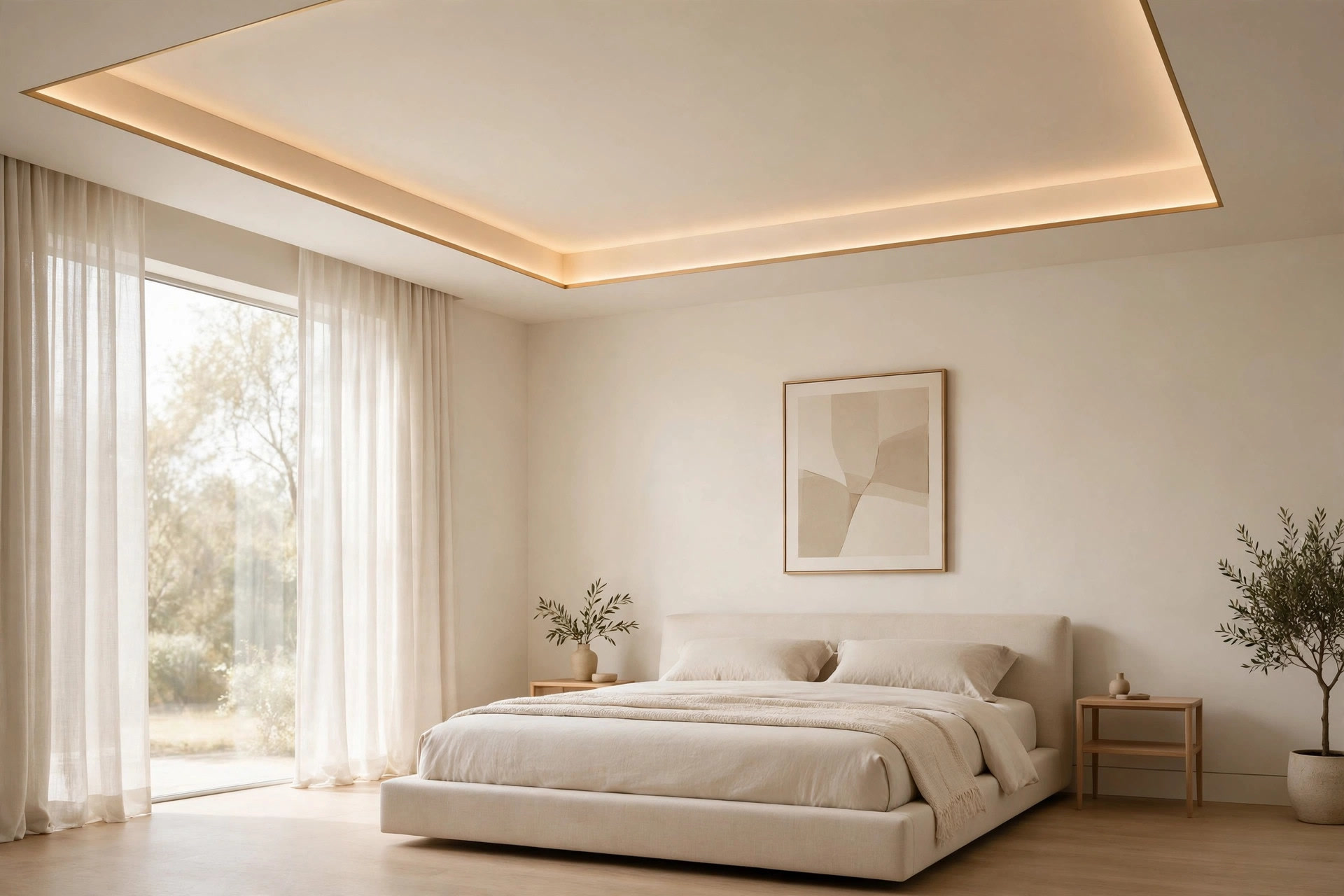
A royal look does not need a big room — it needs restraint. In a compact bedroom, pick one gesture: a single shallow tray with a thin gold edge, a decorated border with a plain centre, or a simple cove-lit perimeter. Keep the palette light (ivory and cream reflect light and feel spacious) and let one element — the cove glow, say — do the royalising. Avoid deep coffers and heavy wood in small rooms; they shrink the space visually.
Maintenance: the honest part
Royal ceilings ask more of you than plain ones. Be honest with yourself before committing:
- Dust: coffers, cove channels, and carved reliefs collect dust. Budget for a proper wipe-down a few times a year — a microfibre duster on an extension pole, not a wet cloth on plaster.
- Repainting: gold accents and carved details are harder to repaint neatly than flat ceilings. Choose quality paint and a painter who has done ornamental work before.
- Wood: real wood panels need periodic polishing and protection from moisture. In humid rooms, sealed or engineered options are more forgiving.
- Fabric: tufted inserts look incredible but need occasional professional cleaning; ask your upholsterer about removable, cleanable panels.
- Lights: keep cove channels accessible — LED strips eventually need replacing, and you do not want to break plaster to reach them. Ask for an access plan during installation.
See our installation and maintenance guide for the practical side of living with a false ceiling.
What to discuss with your designer or contractor
Before work starts, agree on these points in writing: the exact profile and its drop from the structural ceiling (deep profiles eat headroom), where every light and the fan will sit, how heavy fixtures will be anchored (to the slab, not the boards), and how cove channels will stay accessible for future maintenance. A good contractor will also flag anything your room cannot take — low ceilings and deep coffers do not mix. Our guide to choosing a false ceiling walks through these decisions, and the cost guide for India helps you budget before you fall in love with a design. For a broader look at ceiling styles beyond the royal lane, see modern false ceiling styles and our shapes and patterns guide.
Frequently asked questions
Which material is best for a royal bedroom ceiling?
Gypsum and POP are the most practical choices because they can be sculpted into the curves, moldings, and carved details that define the royal look. Wood adds unmatched warmth for those who can maintain it, and CNC jali panels are the best route to Mughal-inspired lattice patterns.
Tray or coffered — which suits a royal bedroom better?
Both, for different rooms. Coffers give the most architectural, palace-like result but need good ceiling height and a bigger budget. Trays are simpler, cheaper to build, and easier to maintain — and with warm cove lighting they can feel just as luxurious.
Can I have a royal ceiling and a ceiling fan?
Yes. The fan mounts to the original ceiling slab with the false ceiling built around it, usually finished with a decorative medallion. Choose a fan in brass or dark wood to match the theme, and finalise its position before the ceiling frame is built.
Warm or cool light for a royal bedroom?
Warm, always. Warm-toned cove lighting, spots, and lamps create the golden, candlelit ambience the royal look depends on. Cool white light on an ornate ceiling tends to look flat and commercial by comparison.
Will a royal ceiling work in a small bedroom?
Yes, if you keep it to one gesture — a single shallow tray, a decorated border, or a cove-lit perimeter — in a light palette. The royal feel comes from the light and the detailing, not from the amount of plaster.
The takeaway
A royal bedroom ceiling is a composition: a classical profile, one or two rich materials, warm layered light, and the discipline to stop before it gets busy. Plan the fan and the wiring early, be honest about the maintenance, and let the ceiling do its quiet work — the best royal ceilings are felt more than noticed. For the fundamentals that underpin everything here, our false ceiling design hub is a good place to continue.