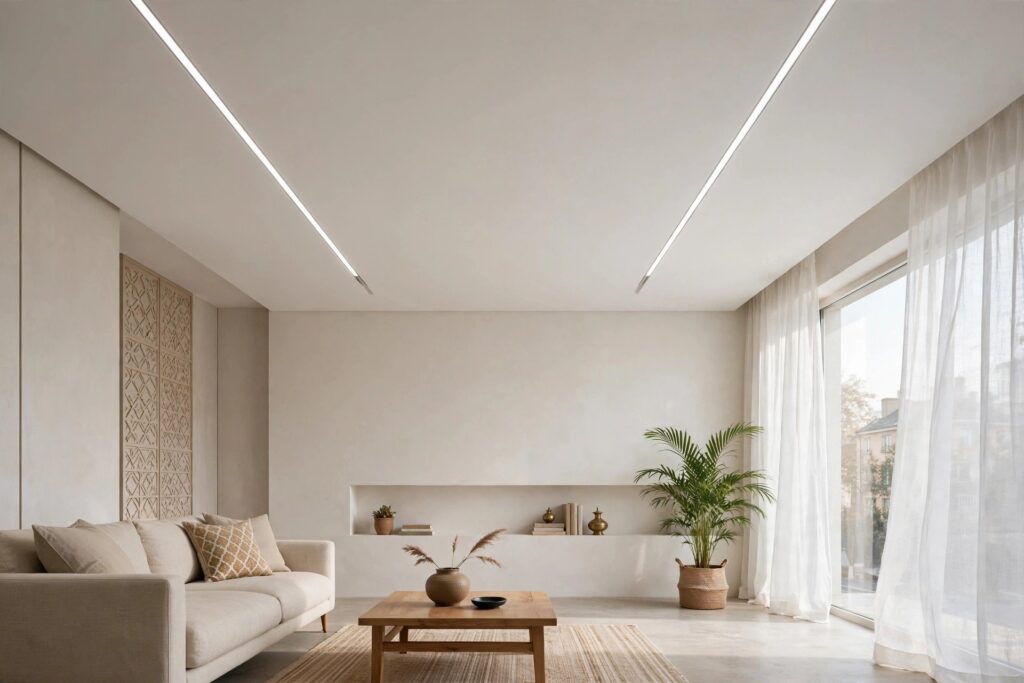

When people say a false ceiling looks “modern” or “luxury”, they are usually talking about style — not the outline of the ceiling. Two homes can have the same stepped border, and one reads as clean and contemporary while the other reads as grand and expensive. The difference comes from the finish, the lighting, the colour, and how restrained or rich the detailing is.
This guide is about that layer: style vocabulary. It covers modern minimalist styles, premium and luxury finishes, how different surfaces change the mood of a room, and how to blend traditional Indian detailing with a contemporary look. It also covers the style mistakes that make even expensive ceilings look wrong. If you are looking for the actual forms — trays, coffers, curves, jali patterns, borders — those live in our shapes and patterns guide, and our complete false ceiling guide covers the basics room by room. This article is the companion piece: once you know the shape, this helps you decide the style.
Modern styles: calm, clean and restrained
Modern style in ceilings is defined by subtraction. Fewer layers, cleaner junctions, and lighting that is planned rather than decorative. The strongest direction this year is toward quieter compositions — fewer levels, subtle shadow lines, and warm dimmable light instead of busy patterns or multicoloured effects. The four styles below are the workhorses of modern Indian homes.
Seamless flat ceiling
A flat gypsum ceiling, jointed smoothly and painted in one tone, is the most versatile modern choice there is. It is a plain canvas: recessed downlights, slim light channels and discreet AC grilles sit in it without competing for attention. It works best in contemporary apartments where visual calm matters more than elaborate pattern work. There is nothing to go out of date, and repairs or repaints are simple because there is no detailing to match.
Cove-lit peripheral ceiling
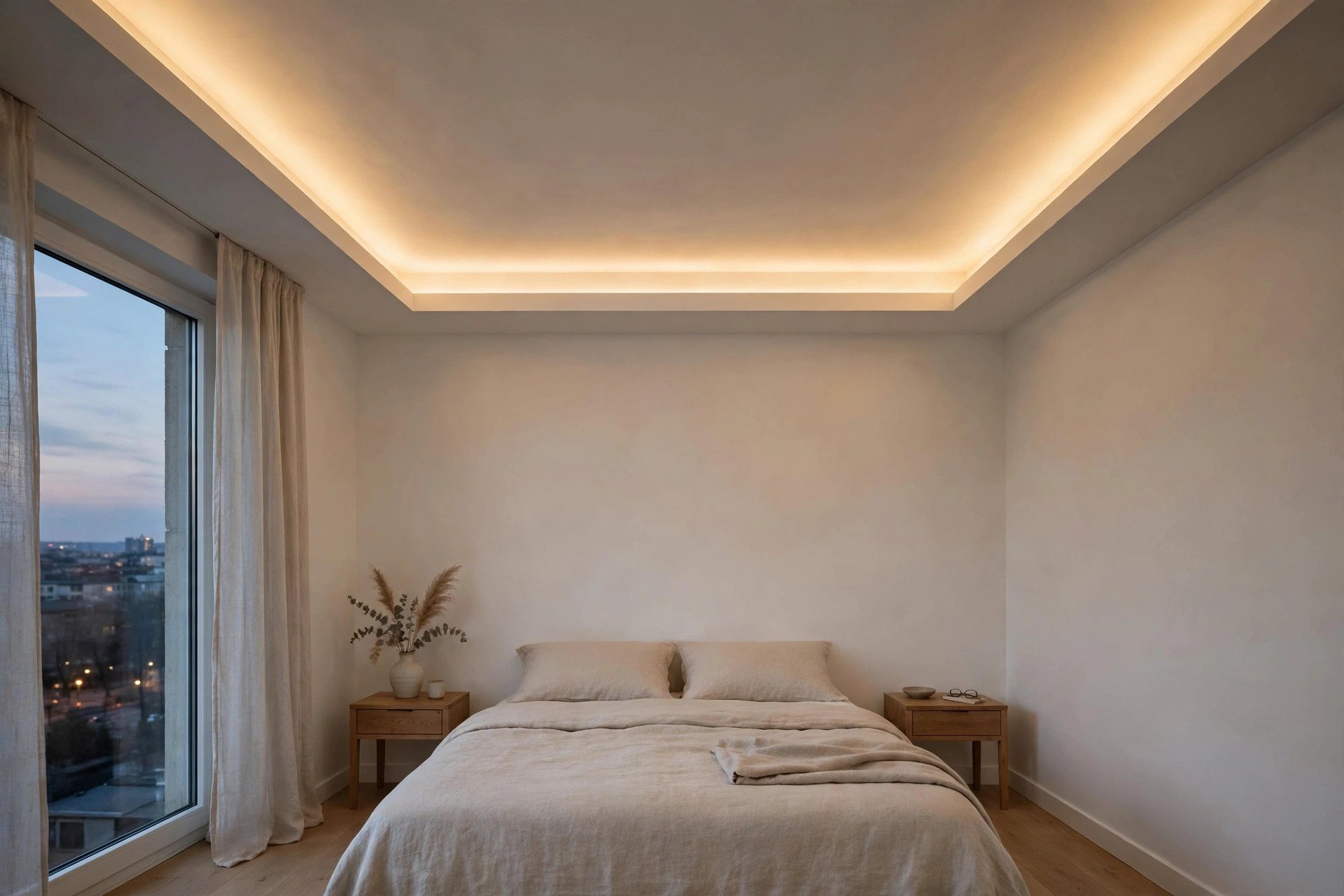
A narrow dropped border runs around the room, with an LED strip hidden inside it so the light washes softly across the ceiling. The centre stays at its original height, which helps the room feel open. This is the classic solution for city bedrooms and living rooms with ceilings below about nine feet — you get the warmth of indirect lighting without stealing headroom. Pair it with a plain painted centre in off-white or a soft neutral.
Floating panel ceiling
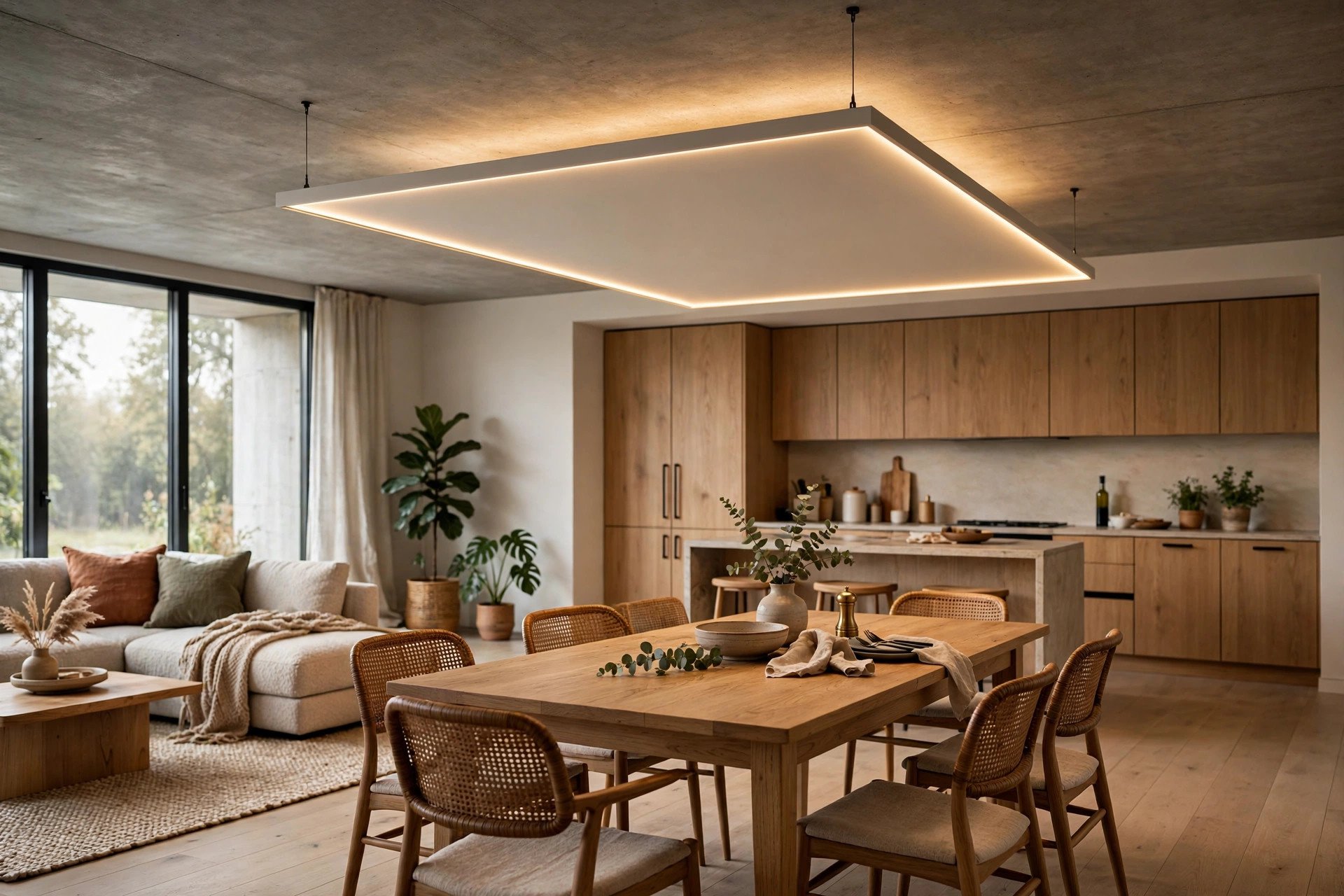
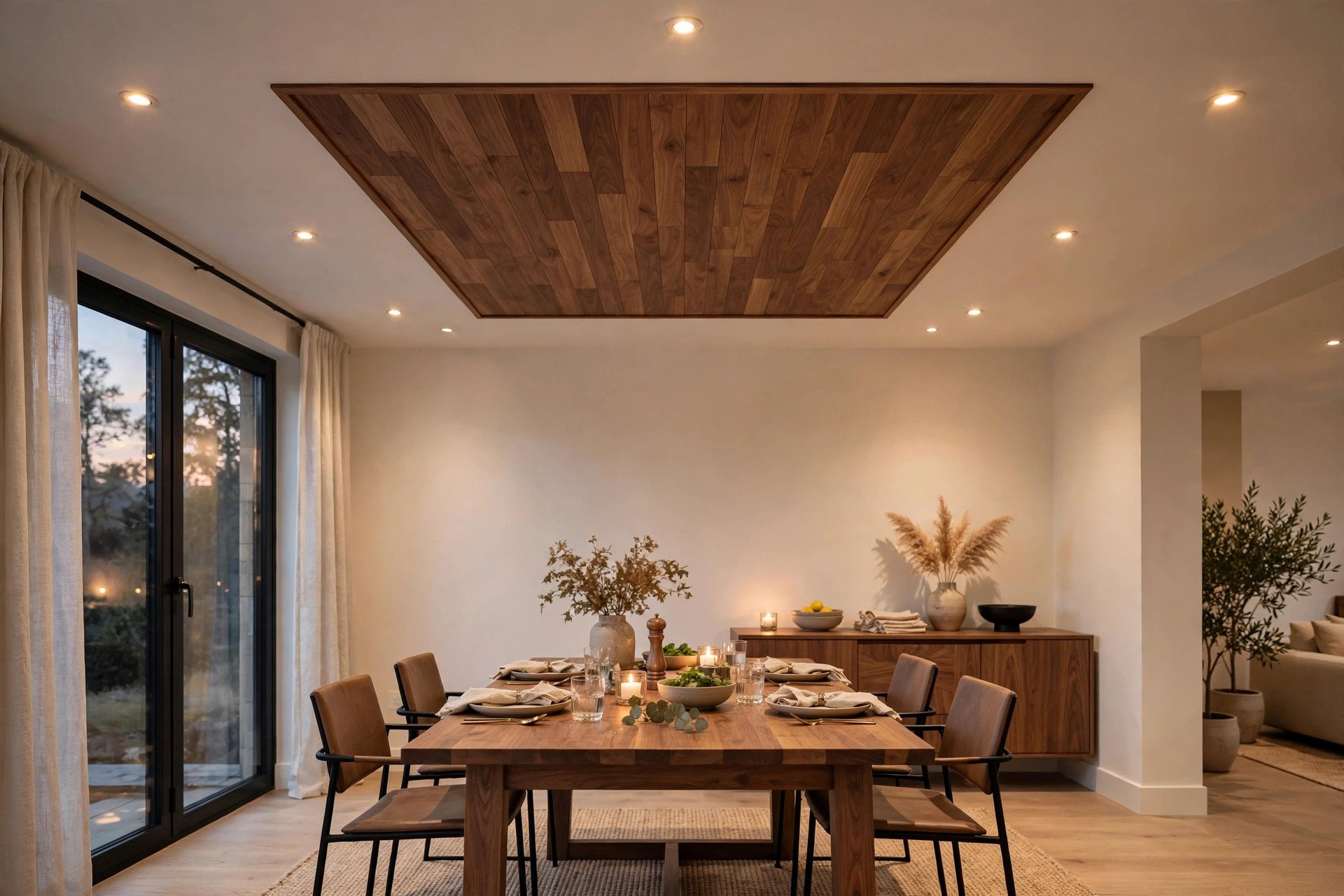
A single suspended panel hangs below the slab with concealed lighting around its edges, so the panel looks like it is floating. It visually anchors whatever sits below it — a bed, a dining table, a seating arrangement. In a large room it gives you a focal point without closing the ceiling down. In a small room, keep the panel proportionate to the furniture; an oversized island makes the ceiling feel heavy. This is also the best modern choice for open-plan spaces where you want to mark one zone without walls.
Slim linear light channels
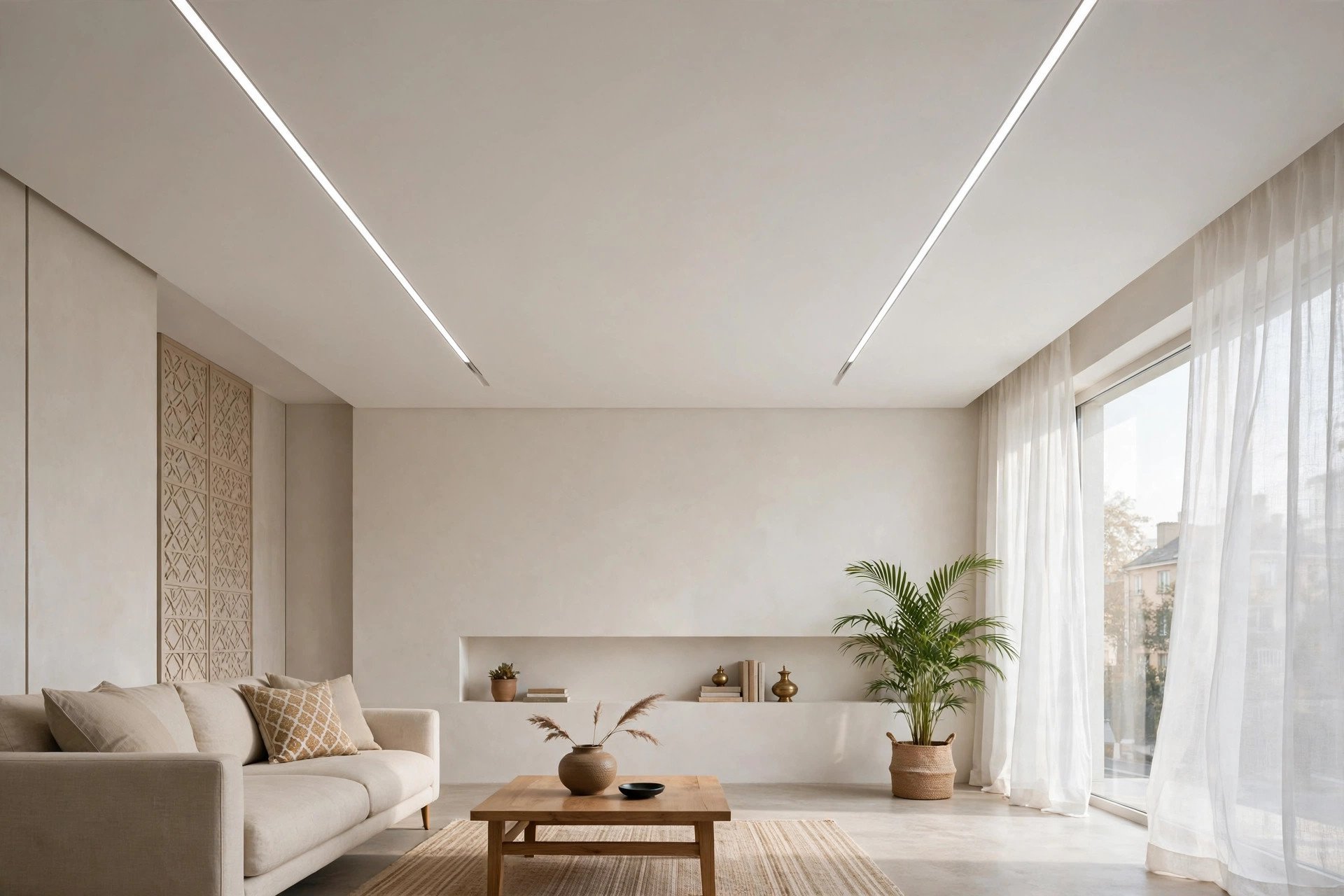
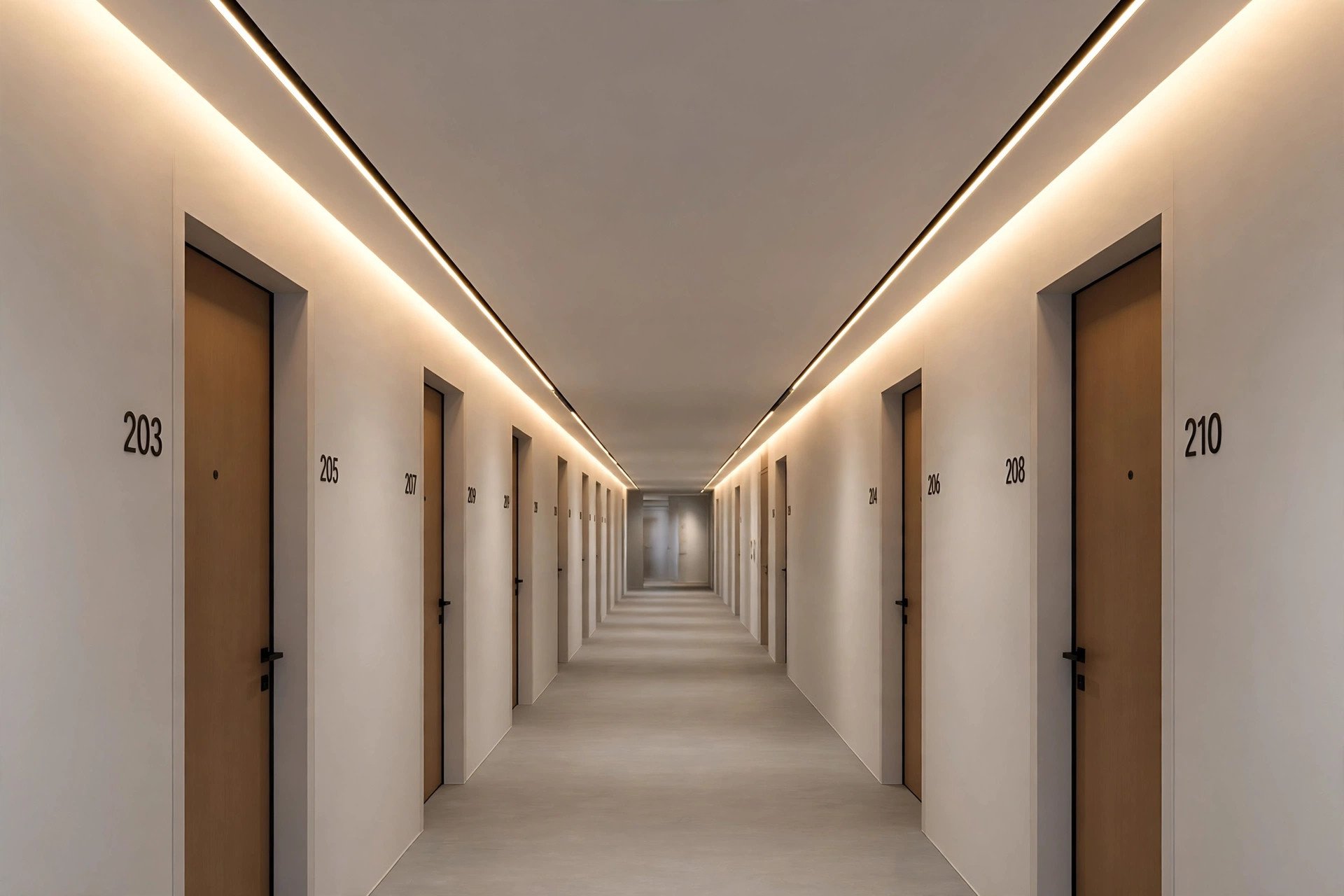
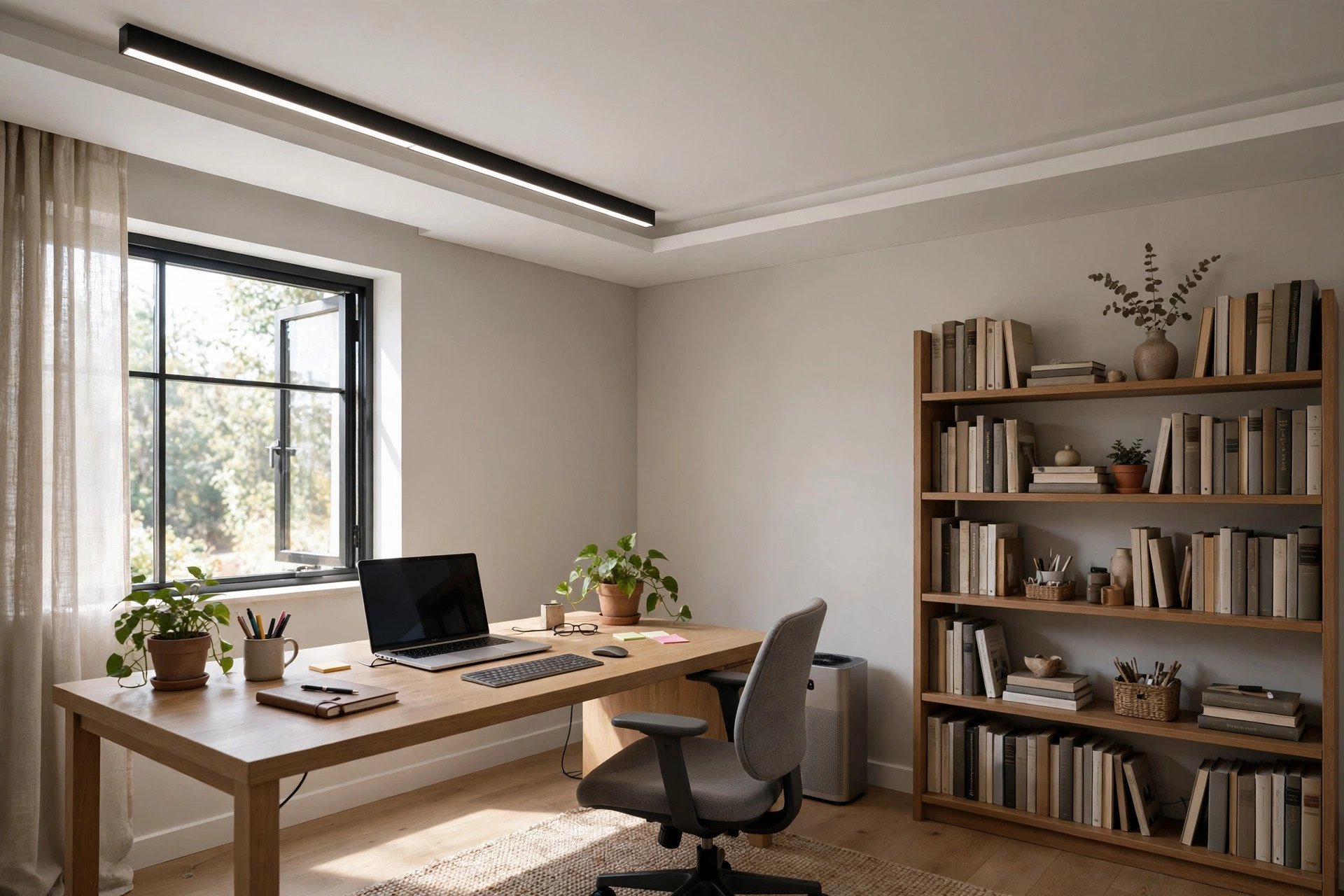
Thin recessed channels with LED strips cut directly into the ceiling create clean lines of light — no borders, no coves, just geometry drawn in light. They suit passages, hallways, and modern living rooms where you want the lighting to be the design. Keep the runs short and purposeful; a ceiling criss-crossed with channels looks like an electrical diagram. Two parallel lines along a hall axis, or one channel following the room’s perimeter, is usually enough.
Luxury styles: rich, layered and considered
Luxury in ceilings is not about spending more — it is about material honesty and deliberate detail. The difference between a genuinely premium ceiling and an expensive-looking one is whether the materials would still look good in ten years. The styles below are the ones that age well in Indian homes.
Wood veneer and slatted wood
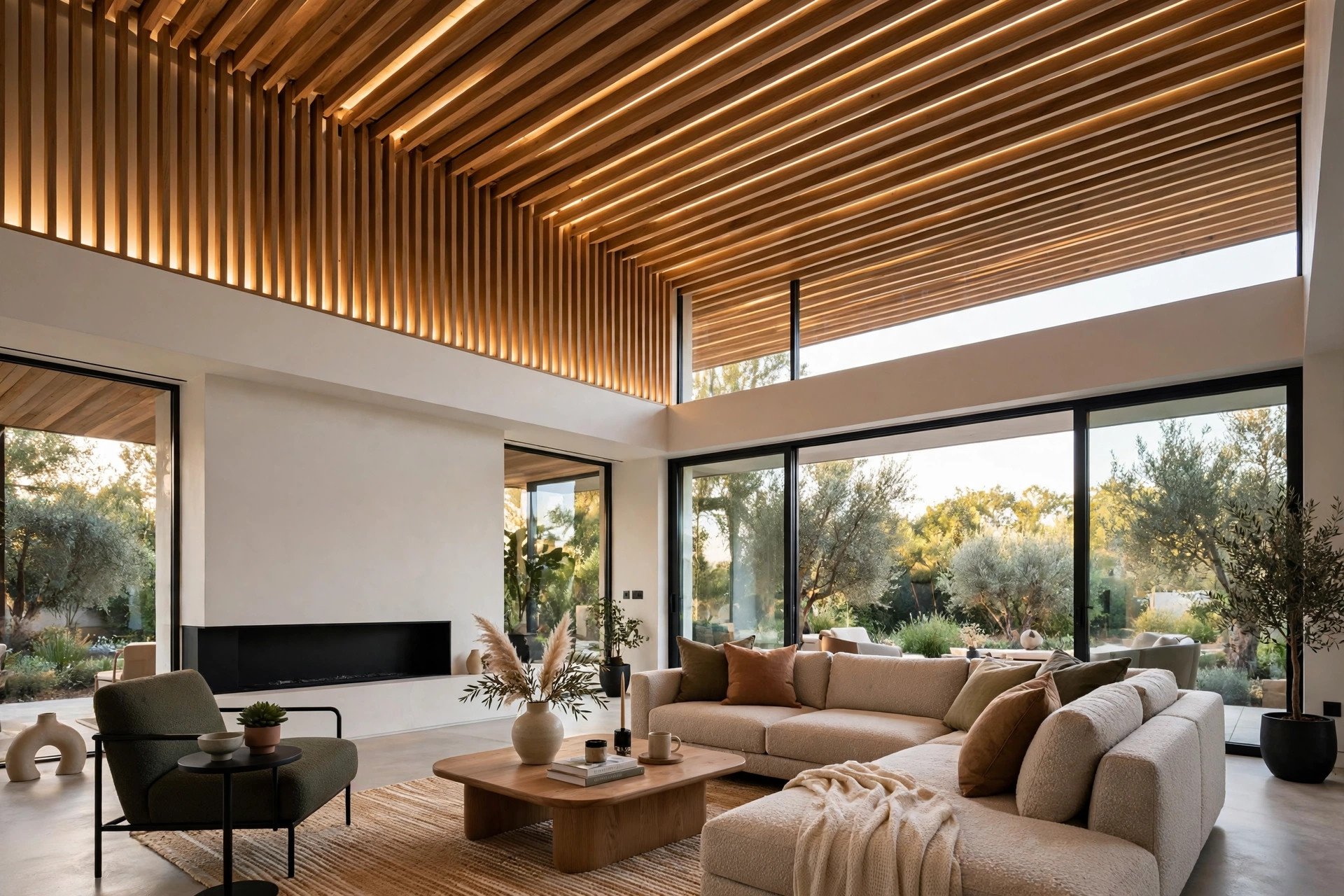
Wood brings warmth no painted board can match. Real wood veneer on gypsum panels, or slatted wood ceilings in teak-toned finishes, work beautifully in dining rooms and living rooms — especially in double-height spaces where the wood has room to read. The practical notes: wood needs a dry room, and it is best used as an accent (a band, a zone, a back wall continuing onto the ceiling) rather than the entire ceiling, both for cost and for visual weight.
Backlit panels: stretch and glass
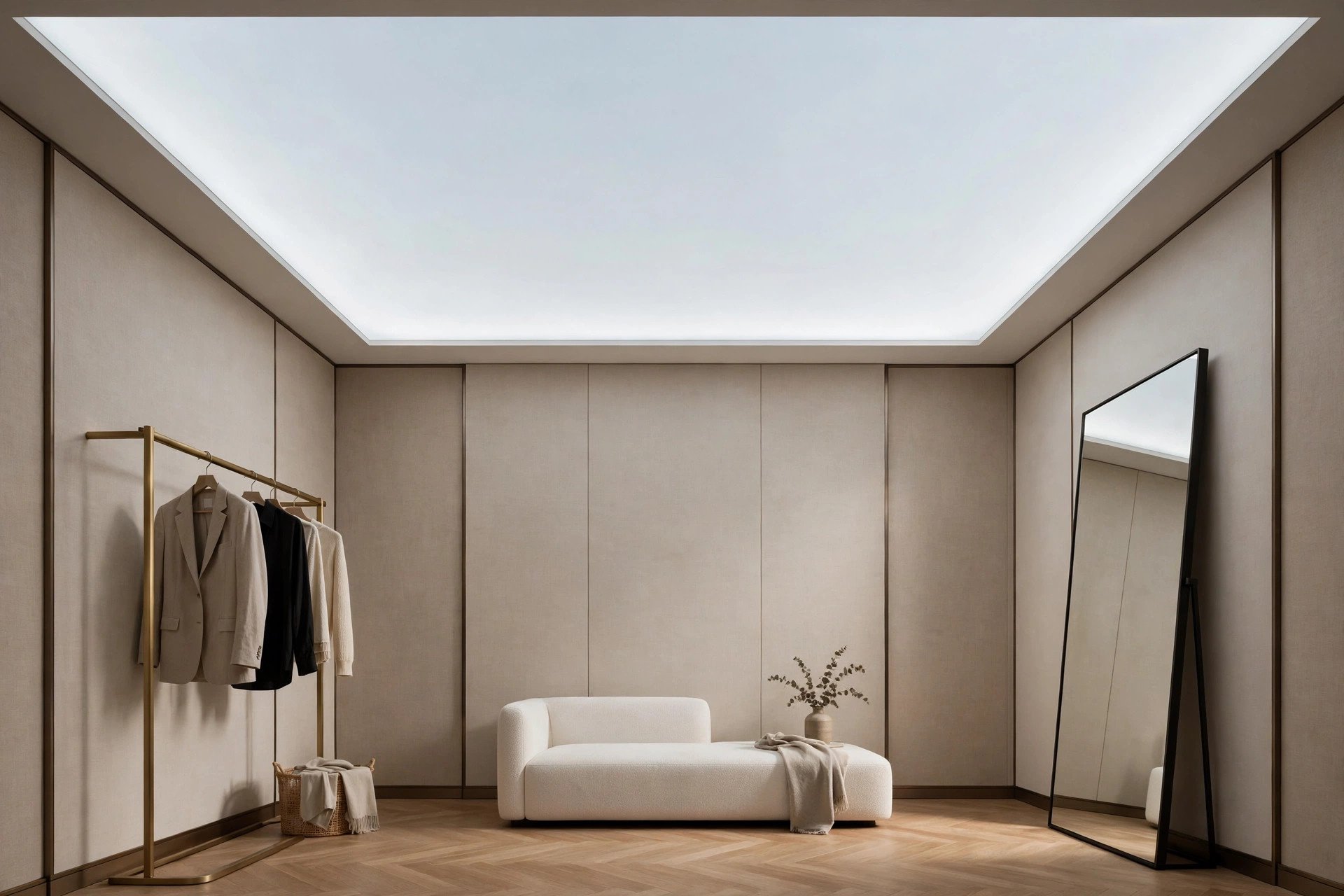
Translucent panels with LEDs behind them create a glowing ceiling surface — the effect is dramatic at night and clean by day. Stretch fabric membranes and backlit printed glass are the two common routes; both are specialist products, installed by their own suppliers rather than your general contractor. They suit home theatres, dining rooms, and master bedrooms. Plan for maintenance access to the LEDs — a sealed panel with a dead LED driver is a problem you do not want.
Metallic and mirror inlays
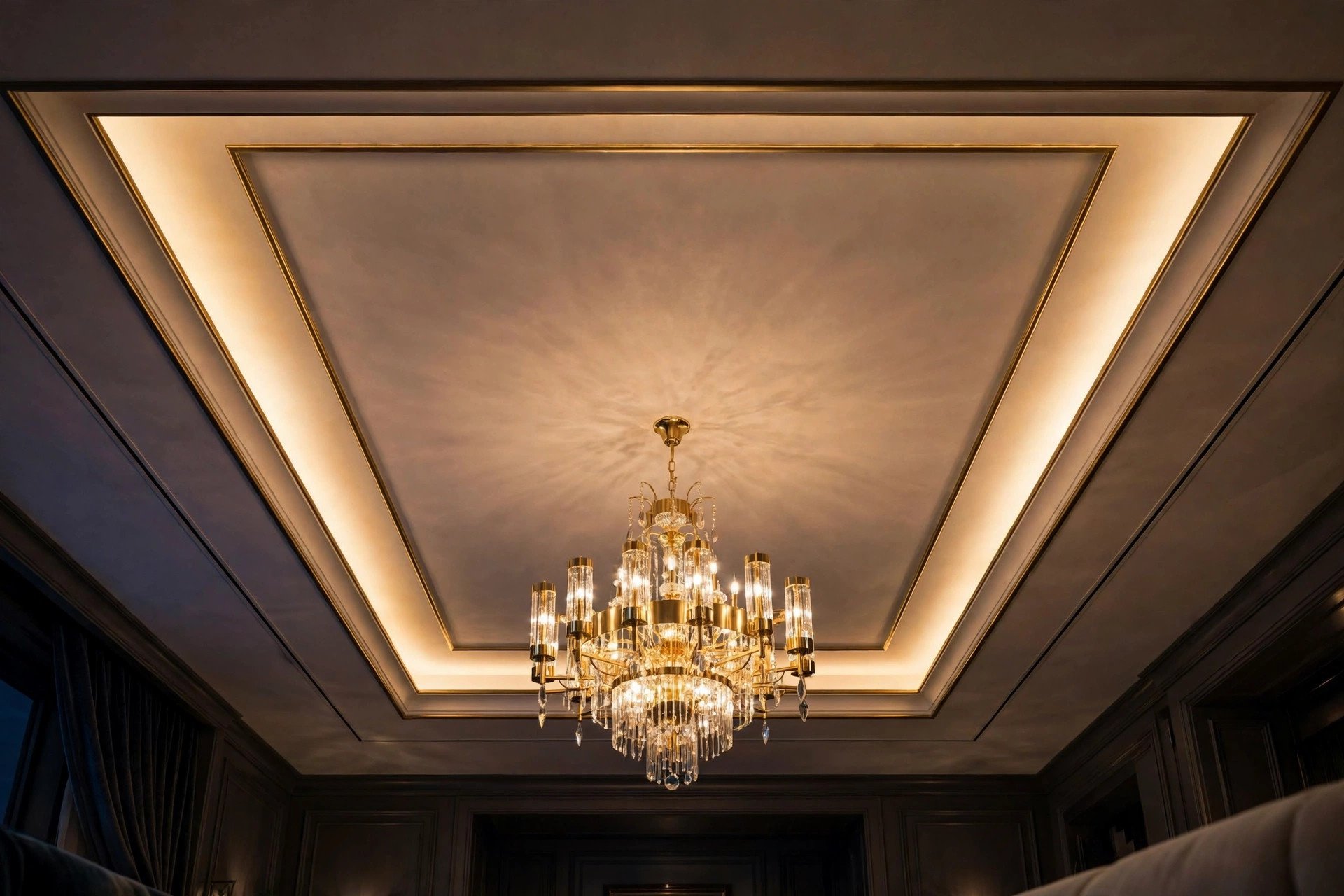
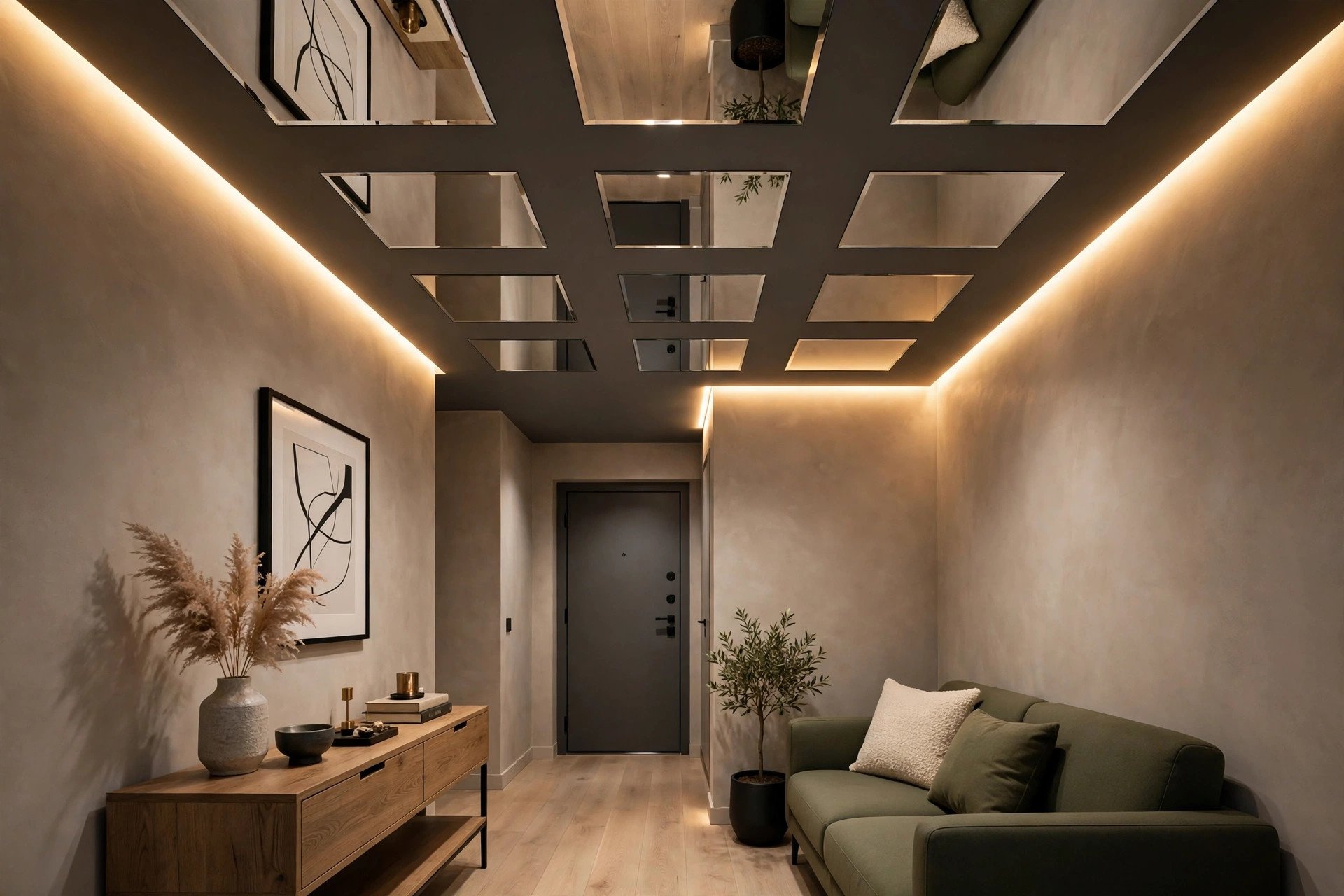
Thin brass, gold-toned, or champagne metallic trims set into the ceiling borders are the quiet way to signal luxury — a metre of brass inlay does more than an entire glittered ceiling. Mirror inlay strips visually double the height of small halls. The rule: metal is an accent, measured in metres not square feet. Too much of it, and the ceiling reads as jewellery rather than architecture.
Matte black and dark accents
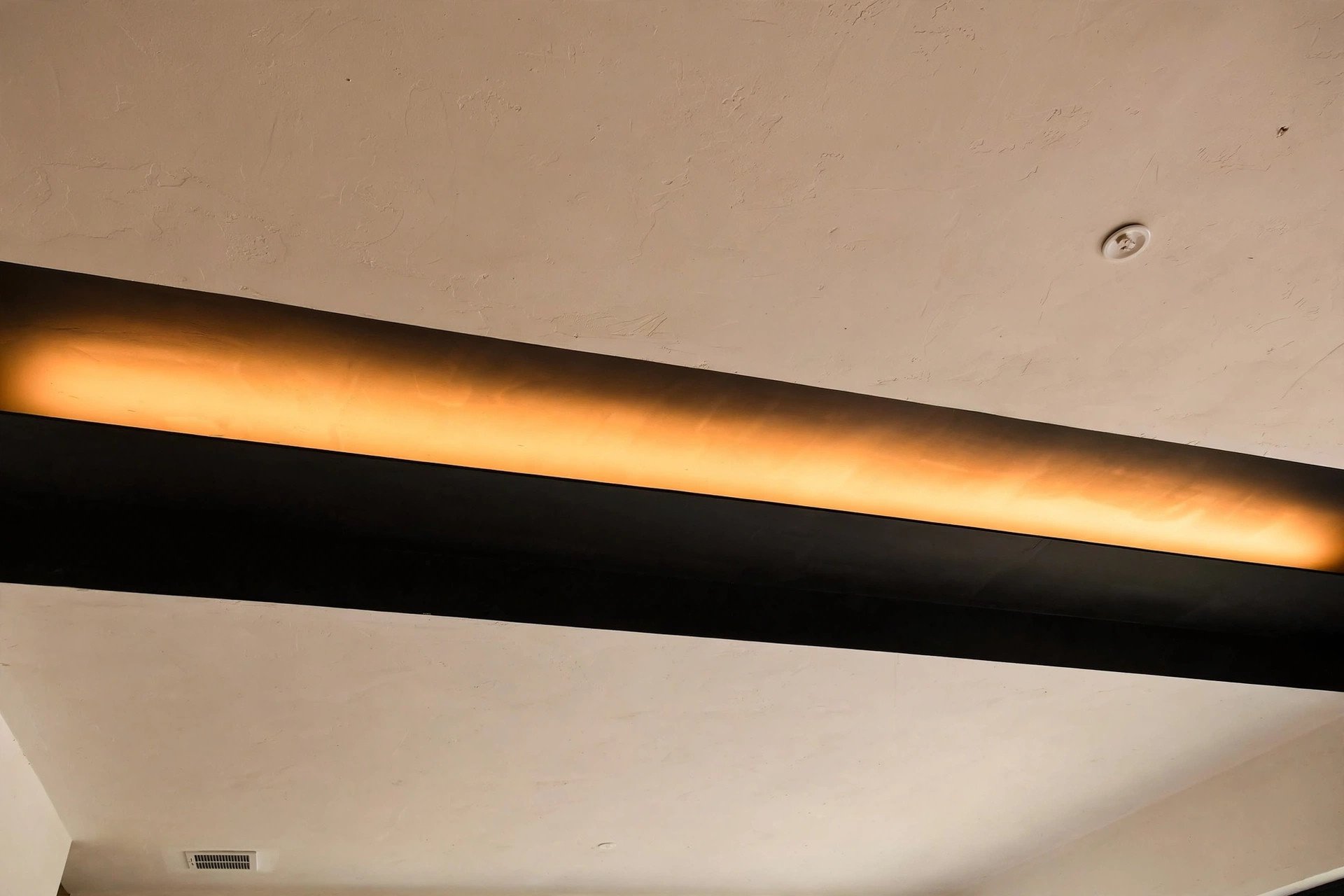
A matte black band, a charcoal ceiling over a home office, or a dark dropped zone above the TV wall — dark ceilings are the boldest modern move, and they work when they are intentional. Dark surfaces make rooms feel smaller and demand good lighting, so they belong in tall rooms, home offices, and home theatres. One dark zone per home is the limit for most people; the rest stays light.
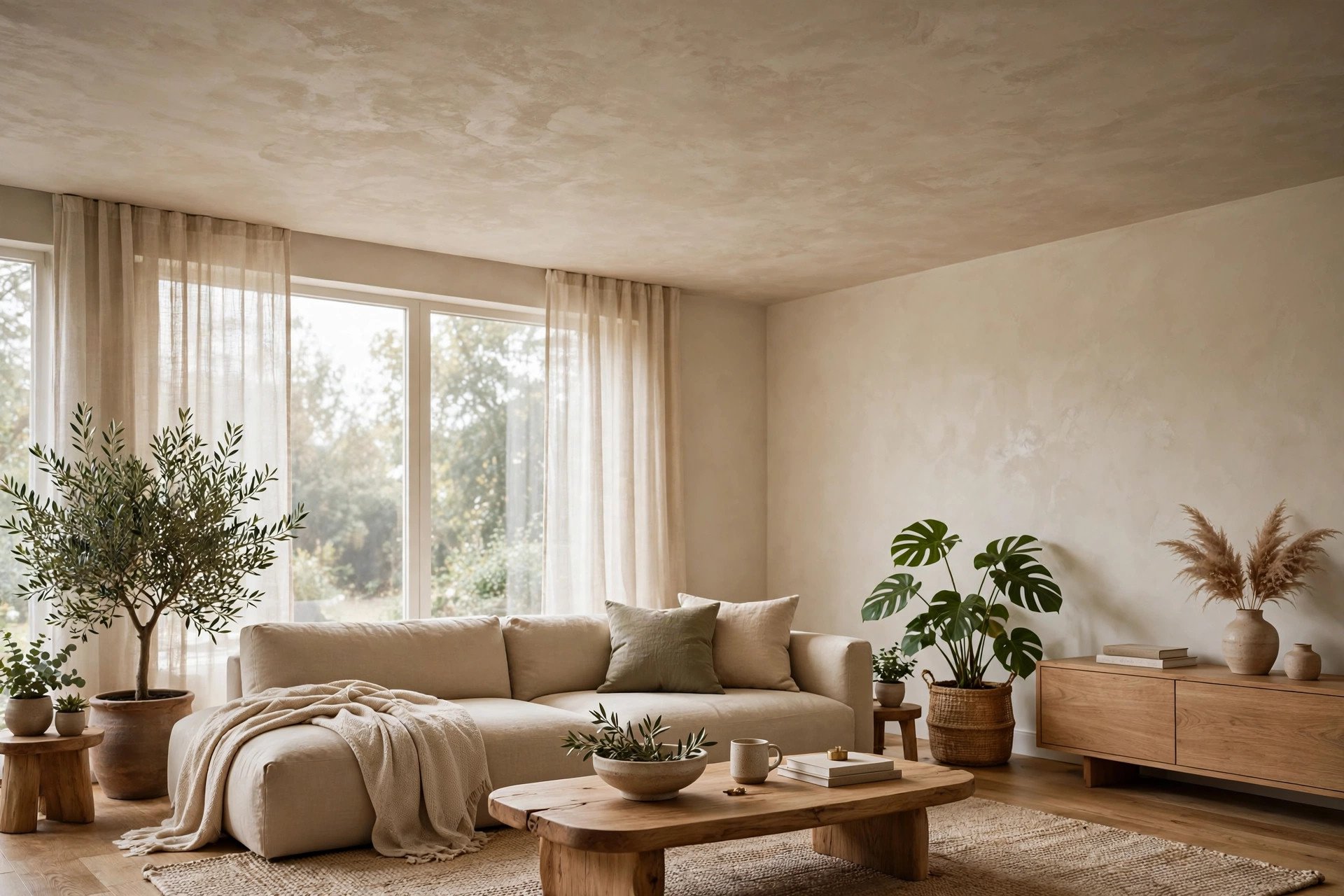
Monochrome and greige palettes
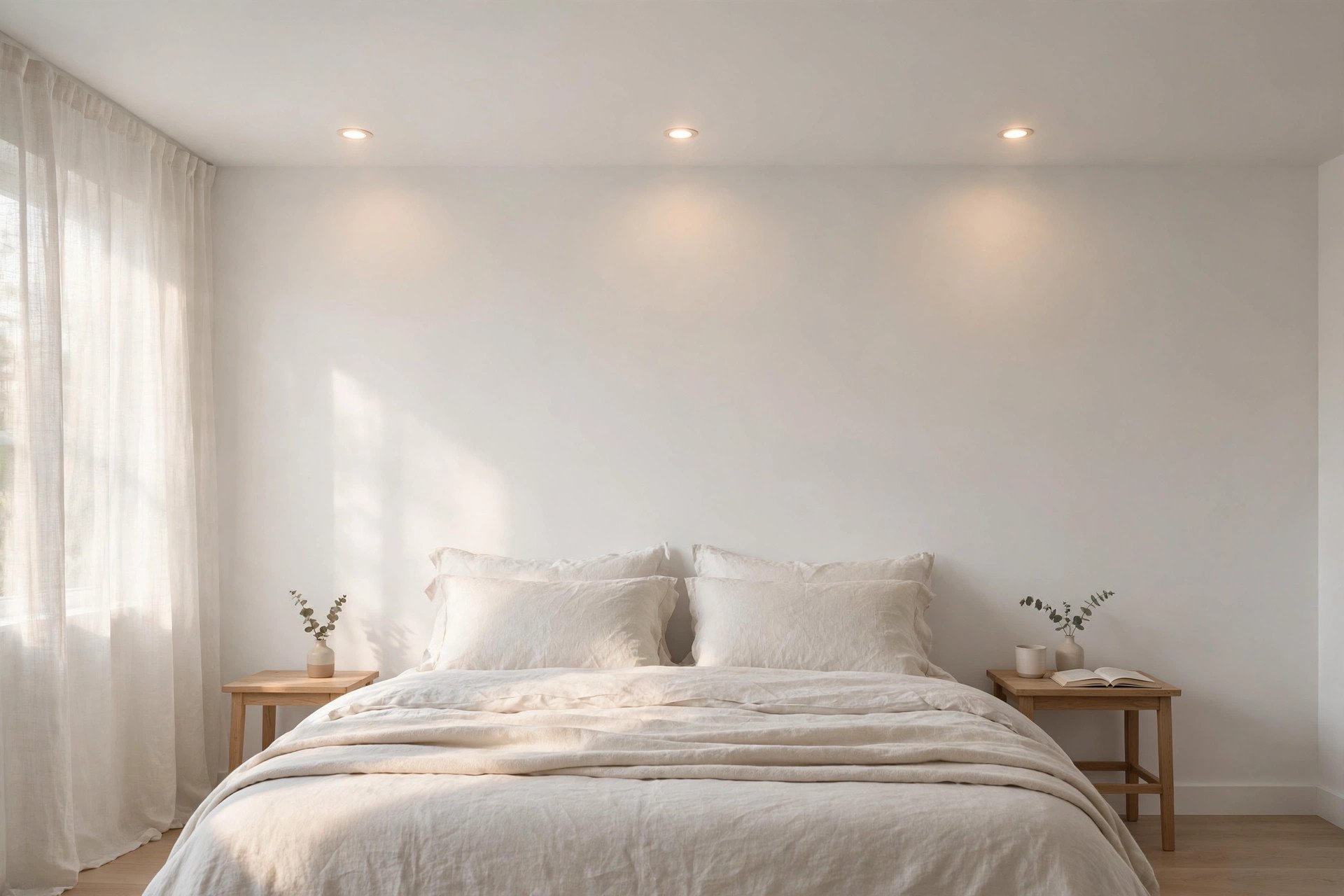
The most reliably modern finish is no finish trick at all: white on white, or the warm greige tones now popular in Indian apartments. A monochrome ceiling in off-white with matching walls makes small flats feel larger; greige (grey-beige) adds warmth without colour. These palettes are also the most forgiving for resale — the next owner does not have to undo your taste.
Blending tradition with contemporary: the Indian fusion ceiling
Pure minimalism can feel rootless in an Indian home, and pure traditional can feel dated. The fusion ceiling borrows from both: a modern flat or tray base with one traditional element executed with restraint — a brass jali border, a classical moulding in a modern profile, or traditional proportions kept but finished in contemporary materials.
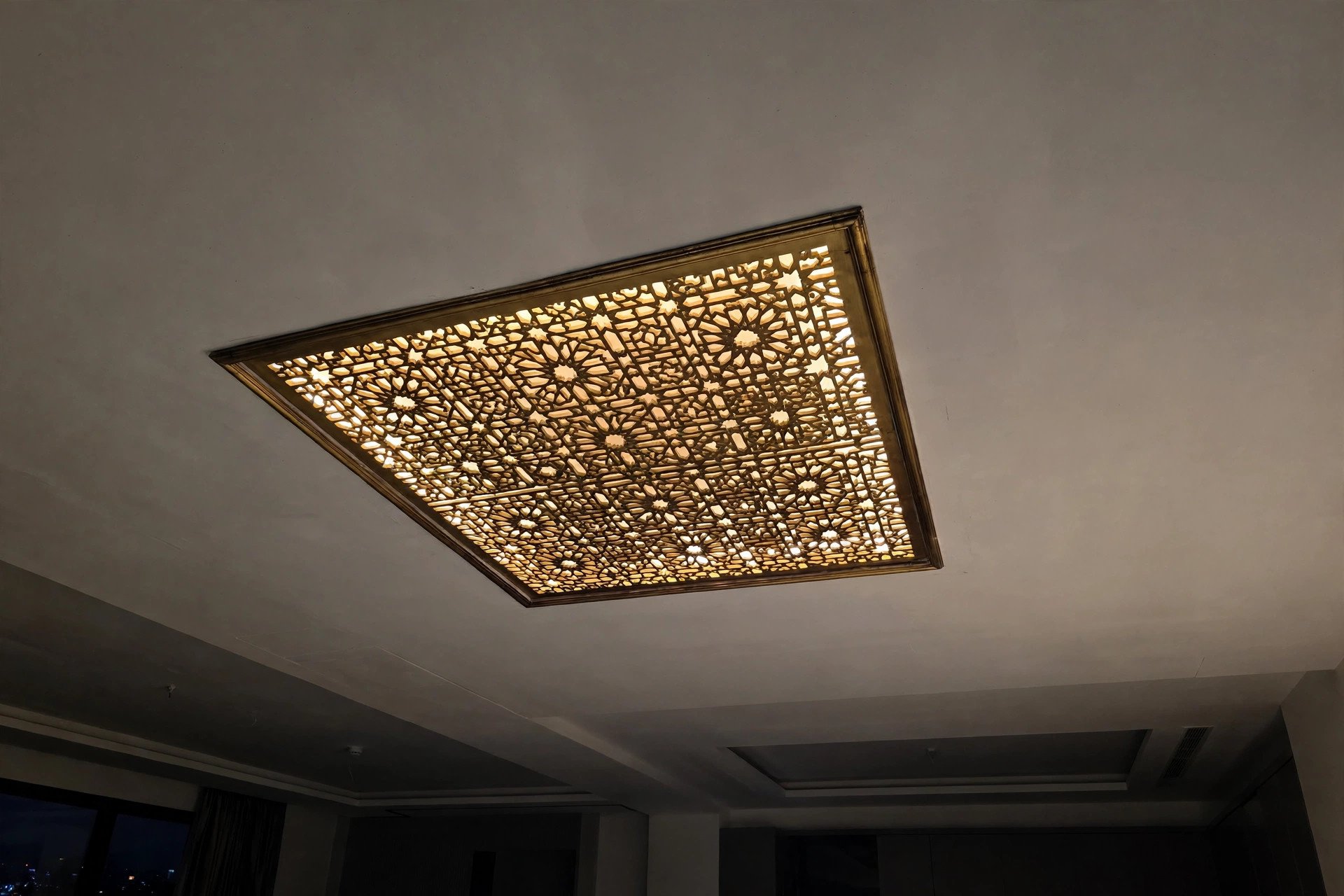
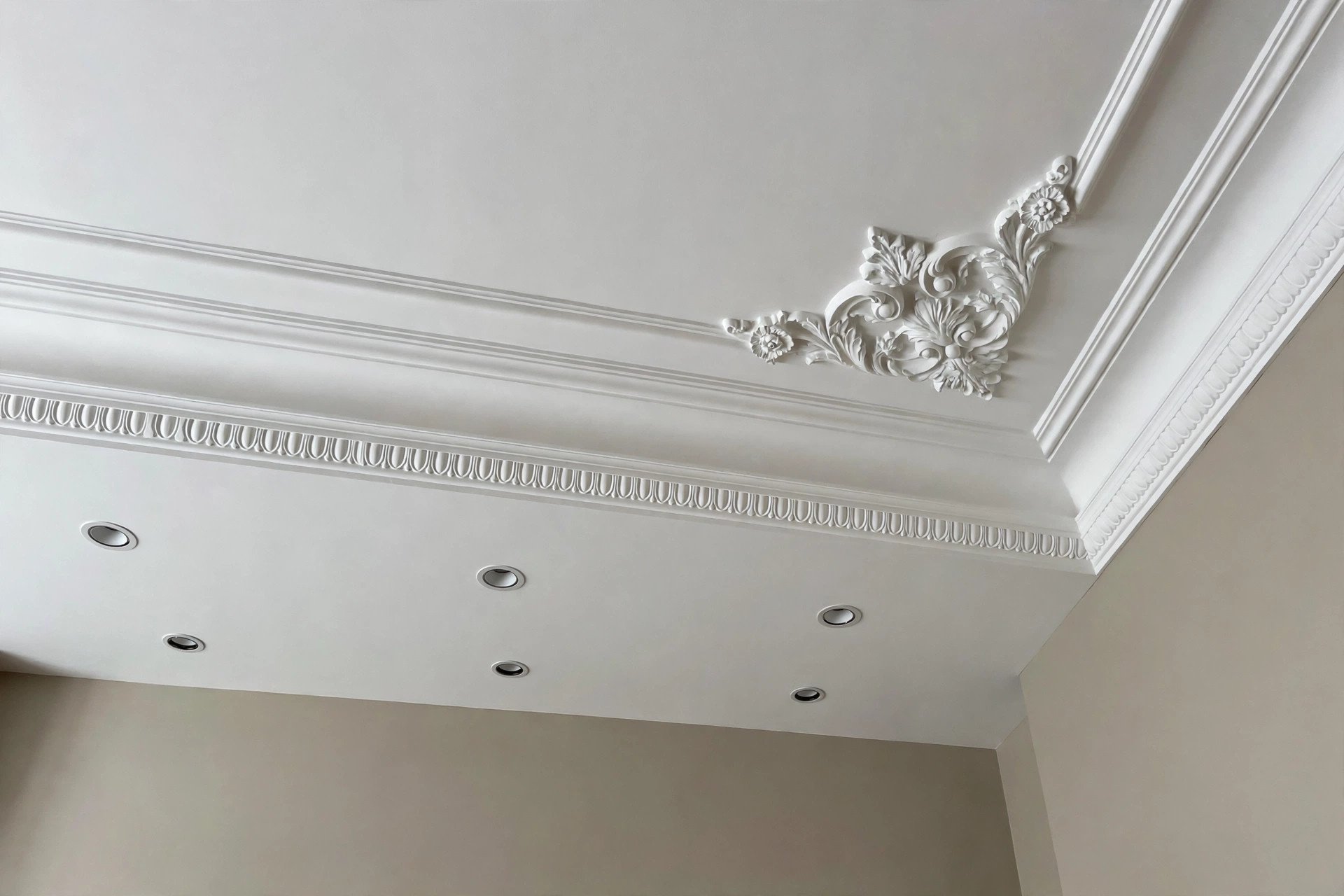
The principle behind fusion that works: one traditional voice, one modern voice, in conversation — never a crowd. A jali border plus a classical medallion plus a traditional border pattern is three voices talking over each other.
Material-driven styles
Some styles are really materials showing off. Knowing which material creates which look stops you paying luxury money for a budget material dressed up — and stops you dismissing a budget material that does the job honestly.
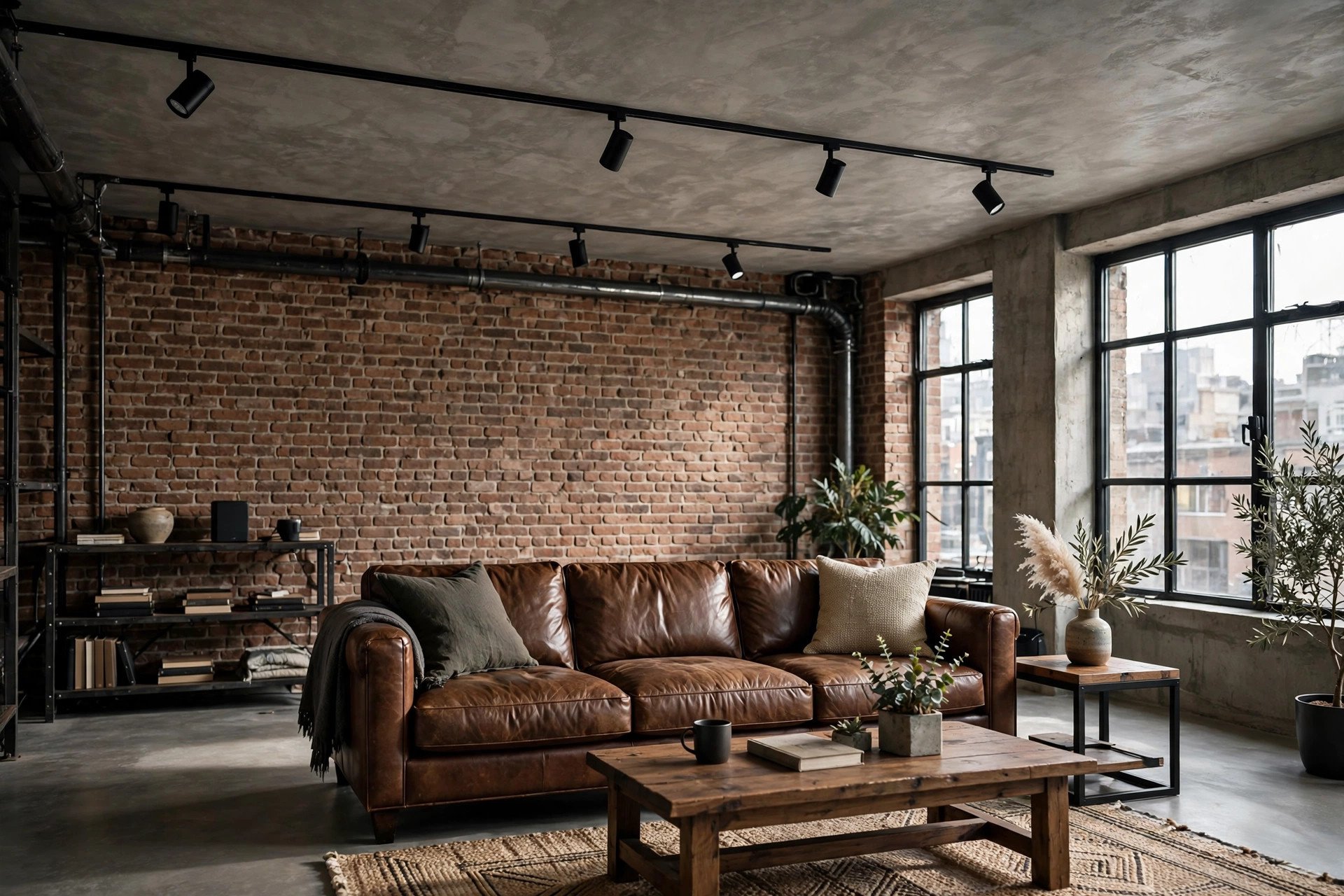
Concrete-look industrial
Raw-concrete-effect finishes on gypsum or microcement give lofts and study rooms an industrial edge. It reads as deliberately unfinished, which is a style, not a shortcut — the finish work to make concrete look raw is itself skilled. Keep it to one room; a whole home in concrete grey is a mood, not a default.
Fabric and acoustic texture
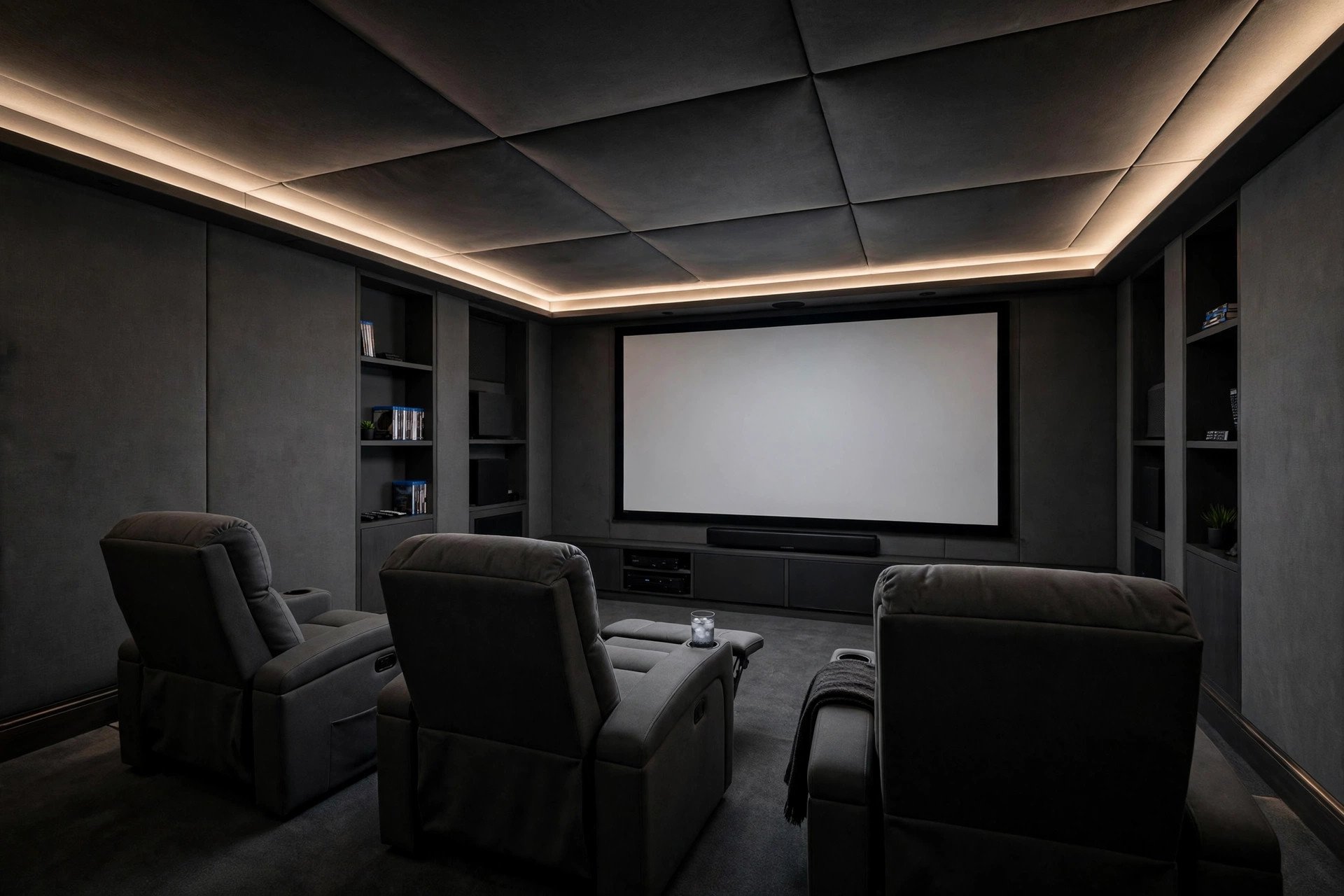
Fabric-wrapped panels on ceilings do two jobs: they absorb sound and they add softness. Home theatres and media rooms are the natural home for this style — dark fabric, hidden lighting, a cinematic feel. The honest trade-off: fabric needs dry rooms and periodic dusting; it is a specialist finish, not a low-maintenance one.
High-gloss lacquered
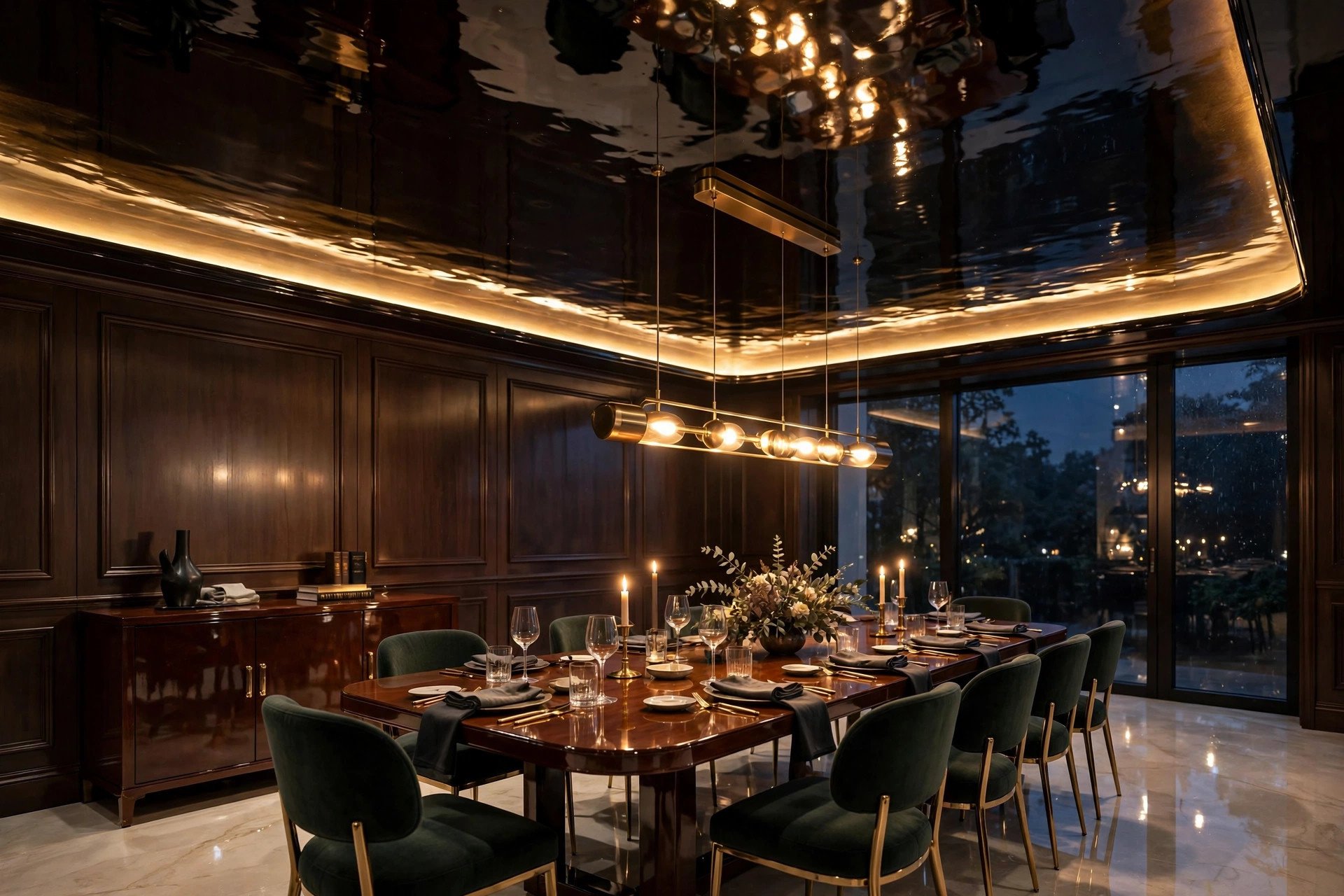
Glossy ceilings — lacquered panels or polished laminate on boards — reflect light and visually raise the room. They suit dining rooms and living rooms where drama is wanted. The honest trade-off: gloss shows every fingerprint, dust particle, and finishing flaw. It needs good installation and regular wiping, and it ages less gracefully than matte.
Chandelier as the ceiling’s centrepiece
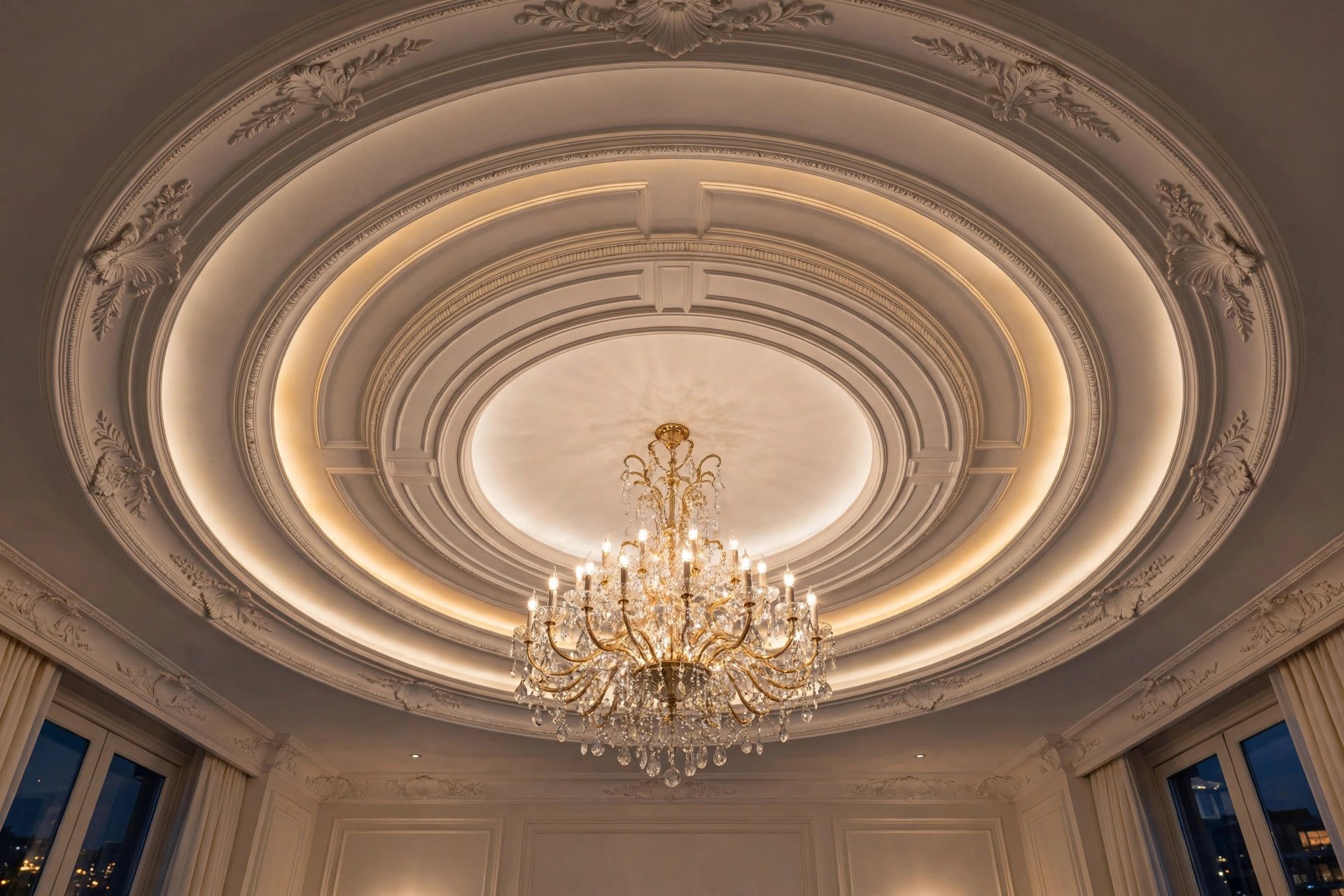
In luxury homes, the ceiling is designed around one fixture: a chandelier framed by a cutout, a medallion, or a dropped tray that stages it. The ceiling styling is secondary — its job is to present the light. Plan the fixture’s weight, height, and wiring before the ceiling is built; a chandelier added after the fact is a compromise. Our lighting guide covers fixture planning in detail.
Fibre-optic star ceilings
Tiny fibre-optic points set into a dark ceiling create a starry-night effect — the classic kids’-bedroom luxury and home-theatre move. The points are low-heat and safe, but the system is specialist: a light engine hidden above the ceiling feeds the fibres. Budget for the specialist, not just the fibres.

Styles by room: quick guidance
- Living room: monochrome or greige base with one luxury accent (metallic trim or wood band). The ceiling should support the room, not compete with it.
- Bedroom: cove-lit peripheral or seamless flat — calm and low-maintenance. Star ceilings for drama if the room is dark-friendly.
- Dining room: high-gloss or backlit panel over the table — the dining ceiling can carry drama.
- Home office: slim linear channels or a matte dark accent — focus-friendly. See the cost guide for budget planning.
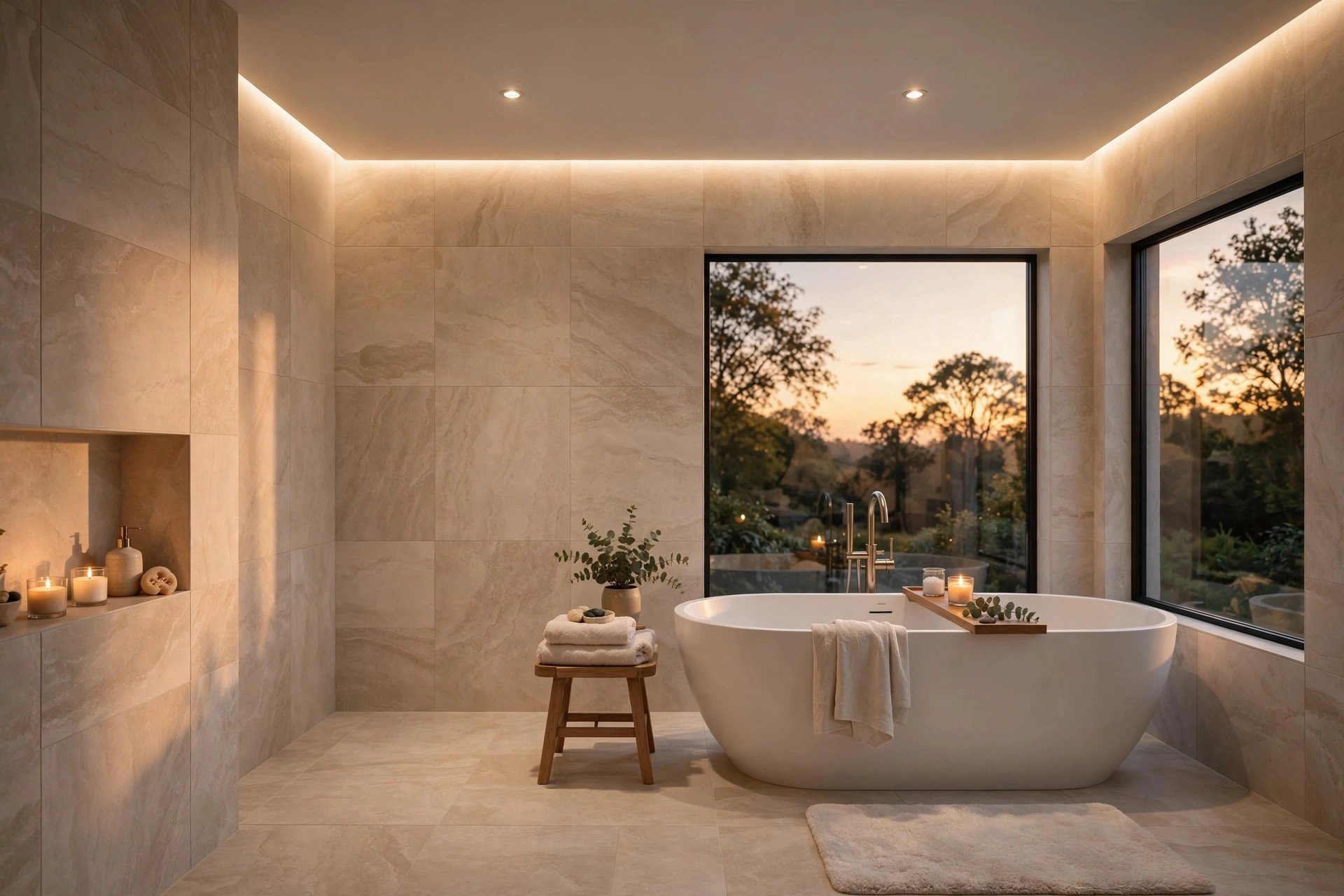
- Bathroom: backlit stretch or matte — spa-like, moisture-tolerant. Avoid wood and fabric here.
Style mistakes that make expensive ceilings look wrong
These are the mistakes that no budget fixes: they are failures of restraint and planning, not money.
- Mixing too many luxury signals. A glossy ceiling plus metallic trim plus a chandelier plus backlit panels is four luxury statements fighting. Pick one hero.
- Luxury materials in the wrong room. Wood in a bathroom, fabric in a kitchen, mirror in a bedroom that faces the sun at 3 pm — context kills good materials.
- RGB lighting everywhere. Colour-changing LED strips are for parties and kids’ rooms, not living rooms. Warm white is the luxury default.
- Style without scale. A grand coffered ceiling in a 9-foot room, a tiny medallion in a double-height hall — the room’s dimensions are the first style decision.
- Copying the showroom photo exactly. Showrooms use perfect lighting, tall ceilings, and no furniture. Your ceiling has to work with your sofa, your fan, and your tube light.
- Ignoring the fan. The ceiling fan is the biggest object in most Indian ceilings. A style that does not plan for it is not a style. See our fan layout guide for how to make fans look intentional.
Layering done right vs overdone: a comparison
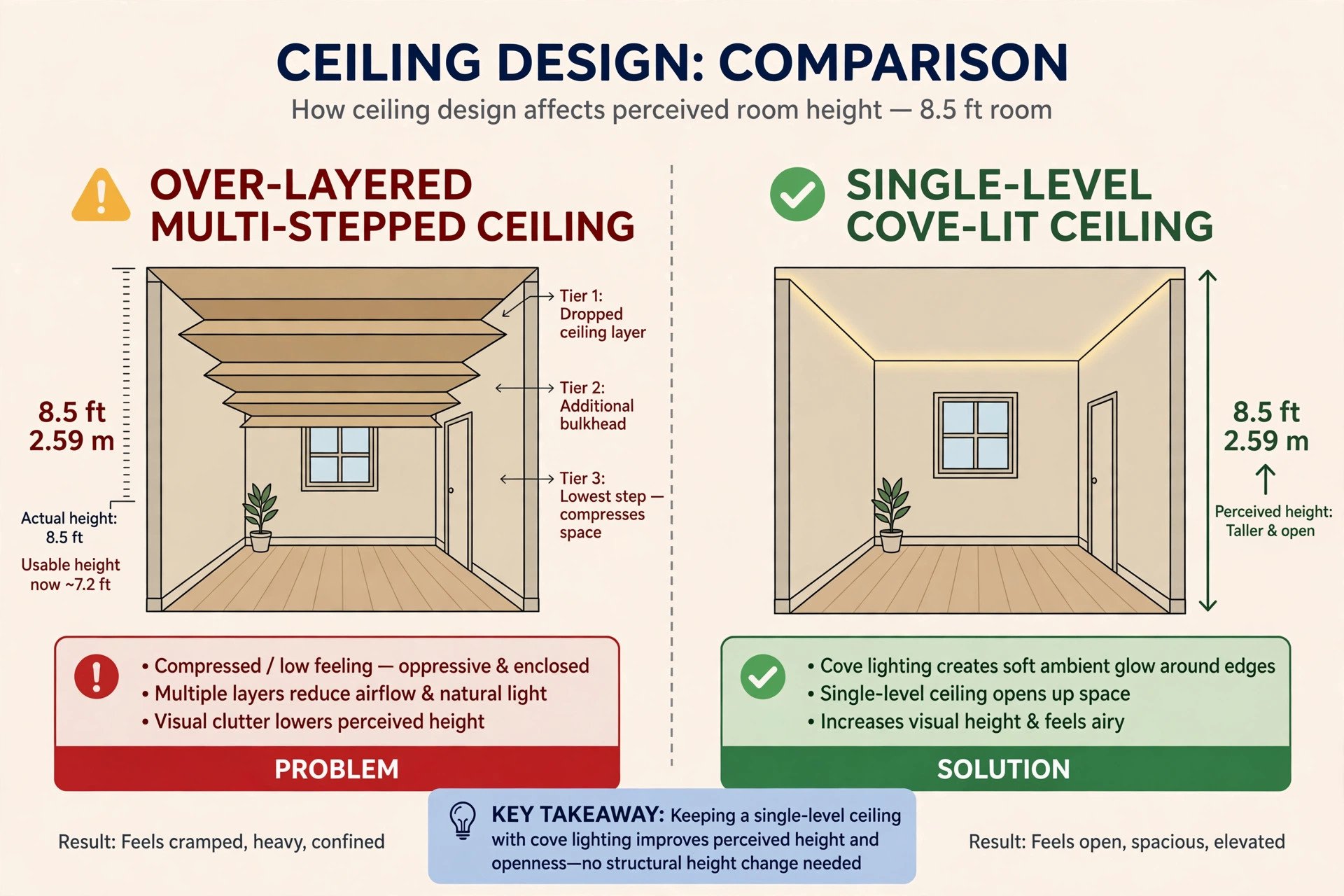
The restrained ceiling almost always wins: fewer elements, each doing its job, and the discipline to stop. Overlayering is how budgets double and rooms shrink visually.
FAQs
What is the most modern false ceiling style in India right now?
Seamless flat ceilings with slim linear light channels, monochrome greige palettes, and restrained metallic accents — the quiet luxury end of modern, not the glossy maximalist end.
How do I make a small room’s ceiling look premium without spending much?
Keep the ceiling flat and monochrome, add one metallic trim line or a cove-lit peripheral border, and match the lighting temperature to the room. Restraint reads as premium far more than ornament does.
Can traditional Indian motifs work in a modern home?
Yes — with restraint. One traditional element (a brass jali border, a classical moulding profile) on an otherwise modern base reads as fusion; several traditional elements together read as costume.
Is a high-gloss ceiling a good idea?
Only in the right room and with honest maintenance expectations. Gloss shows every flaw and needs regular wiping; it suits dining rooms and living rooms where drama is wanted, not bedrooms or high-traffic passages.
Which ceiling style suits a low-height room?
Seamless flat, monochrome, or a cove-lit peripheral border — all keep the centre at full height. Avoid deep trays, coffers, and multi-layer drops below about nine feet.
A note on the images in this guide: every visual here is an original concept render or illustration created for this article. They are design visualisations to help you plan, not photographs of completed projects.