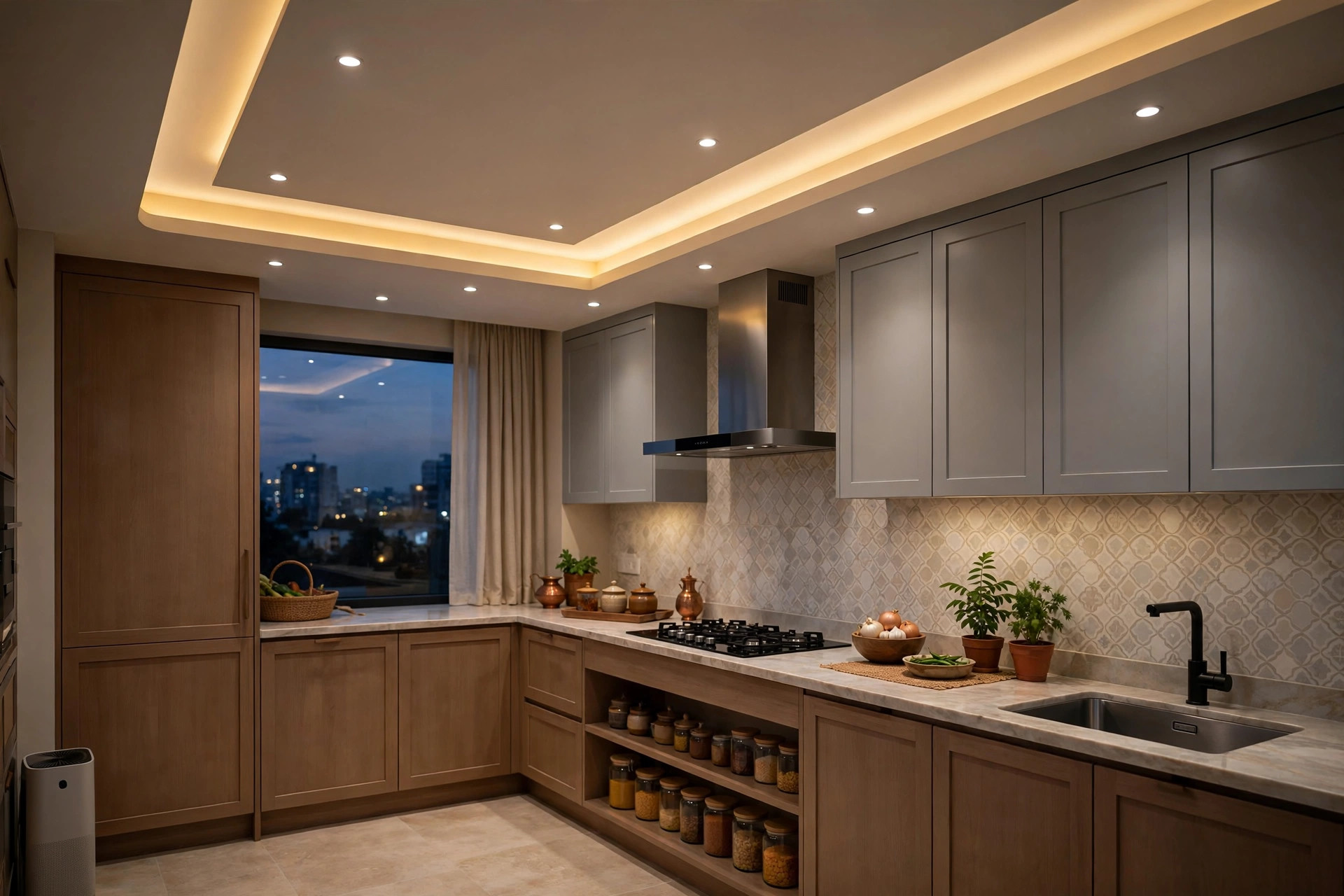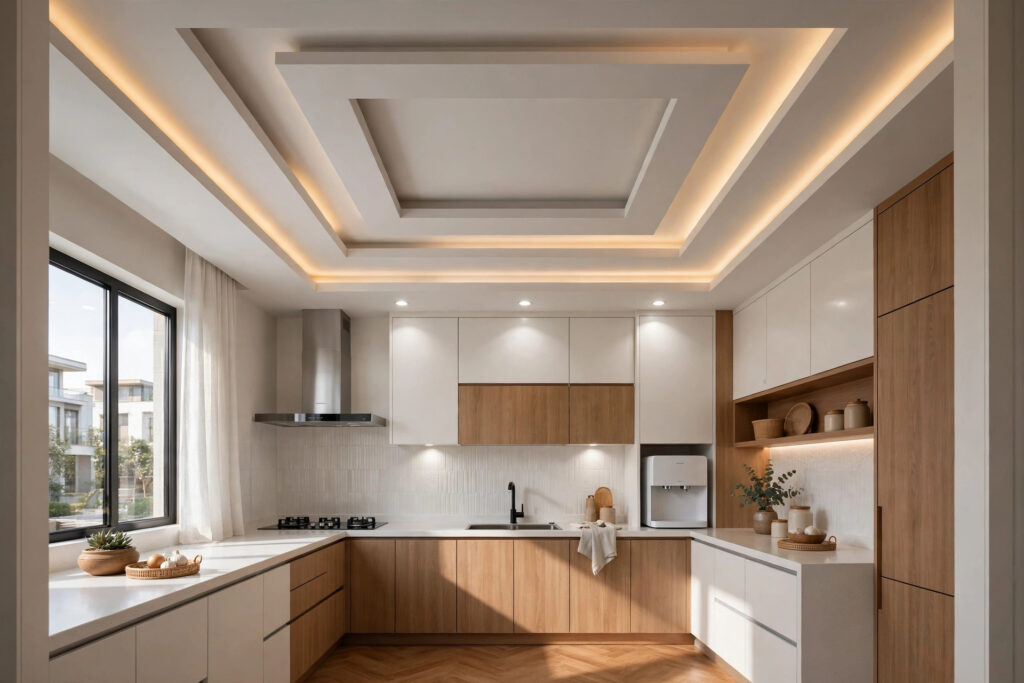

Kitchen ceilings in 2026 look different from the ones in 2020 — and the difference is not decoration, it’s thinking. The year’s Indian kitchen ceilings are simpler on the surface and smarter underneath: flatter profiles, warmer hidden light, materials chosen for steam and oil rather than looks alone, and lighting that can change with the time of day. This guide rounds up the kitchen false ceiling designs actually trending in 2026, what each one costs, and which trends deserve a place in your kitchen — and which don’t.
What “2026 trends” actually means
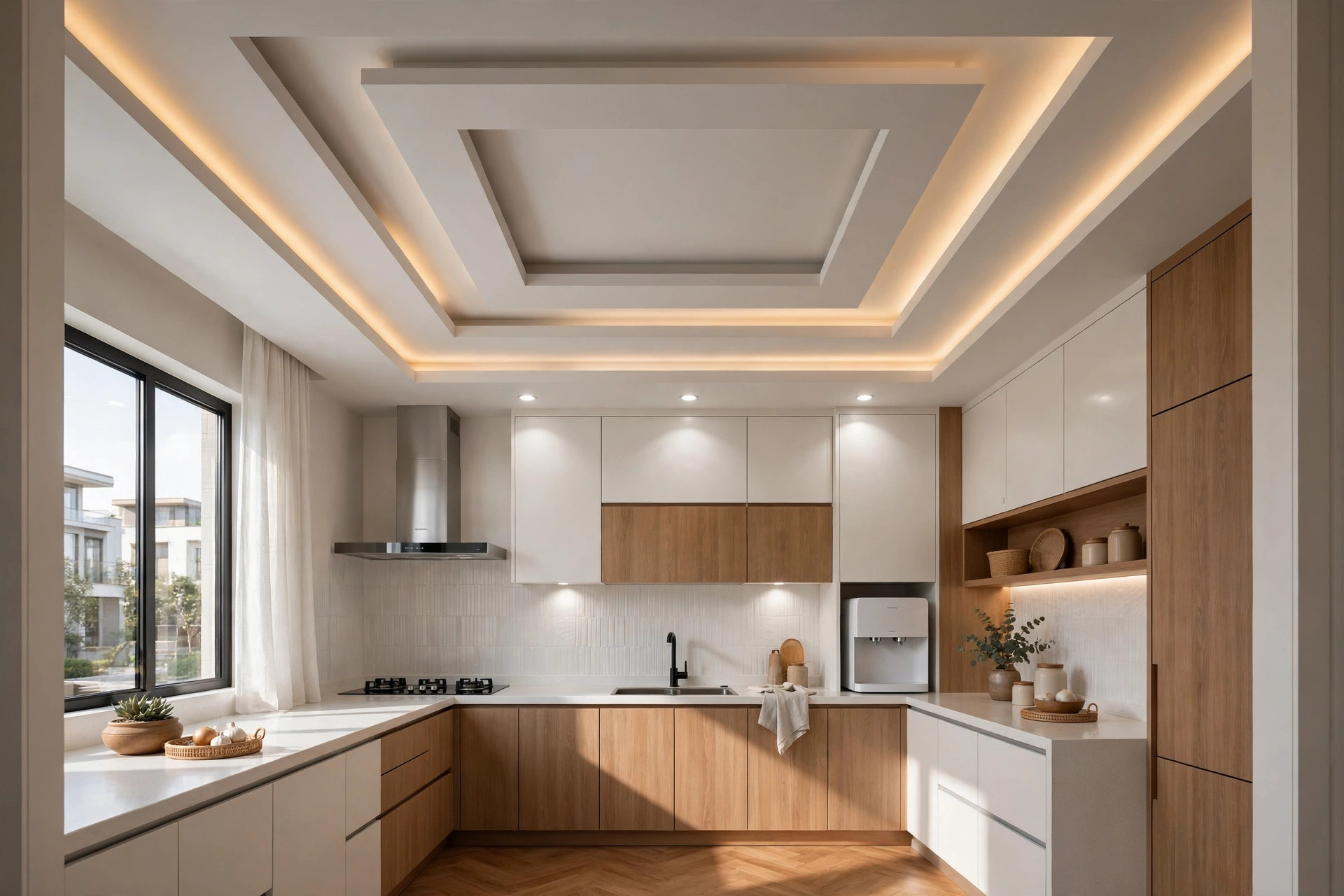
Every year’s trend lists recycle a few evergreen ideas with new names. The honest 2026 shifts, visible across Indian design guides published this year: minimal layered profiles with hidden lighting instead of heavy multi-level designs; fluted and geometric panel textures; wooden accents (real or wood-look) warming up white kitchens; aluminium and metal panels moving into kitchens for their wipe-clean durability; and smart, dimmable LED systems becoming standard rather than luxury. The through-line is restraint plus technology — calmer ceilings, cleverer light.
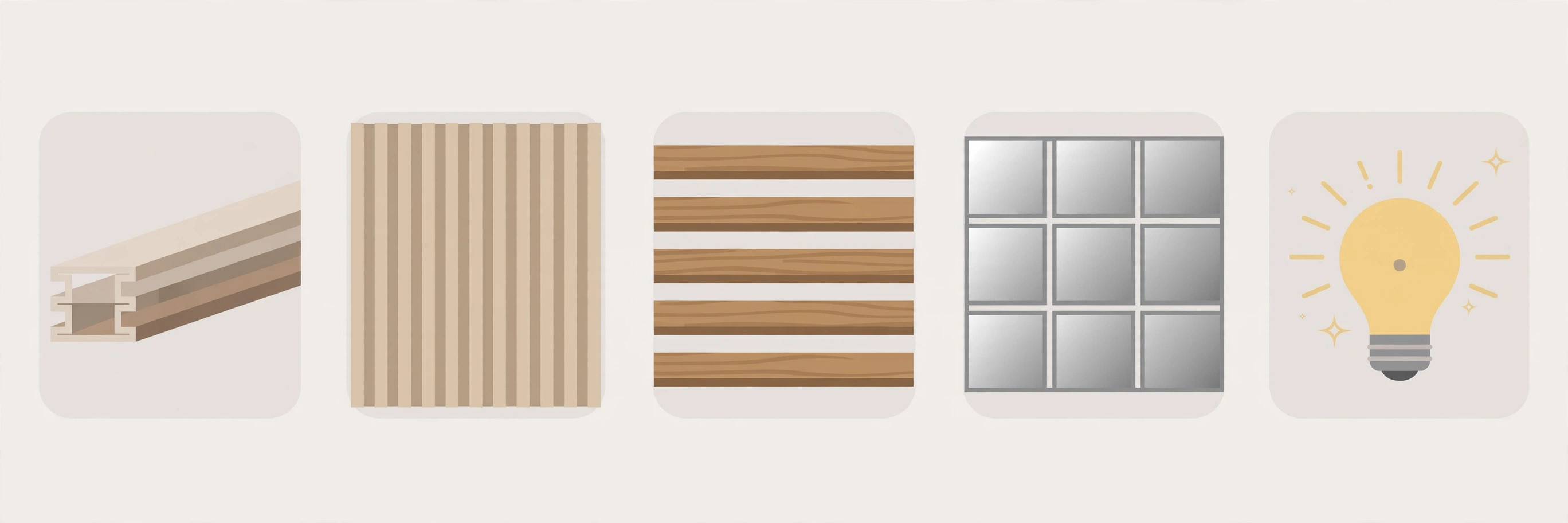
The 2026 kitchen ceiling trends
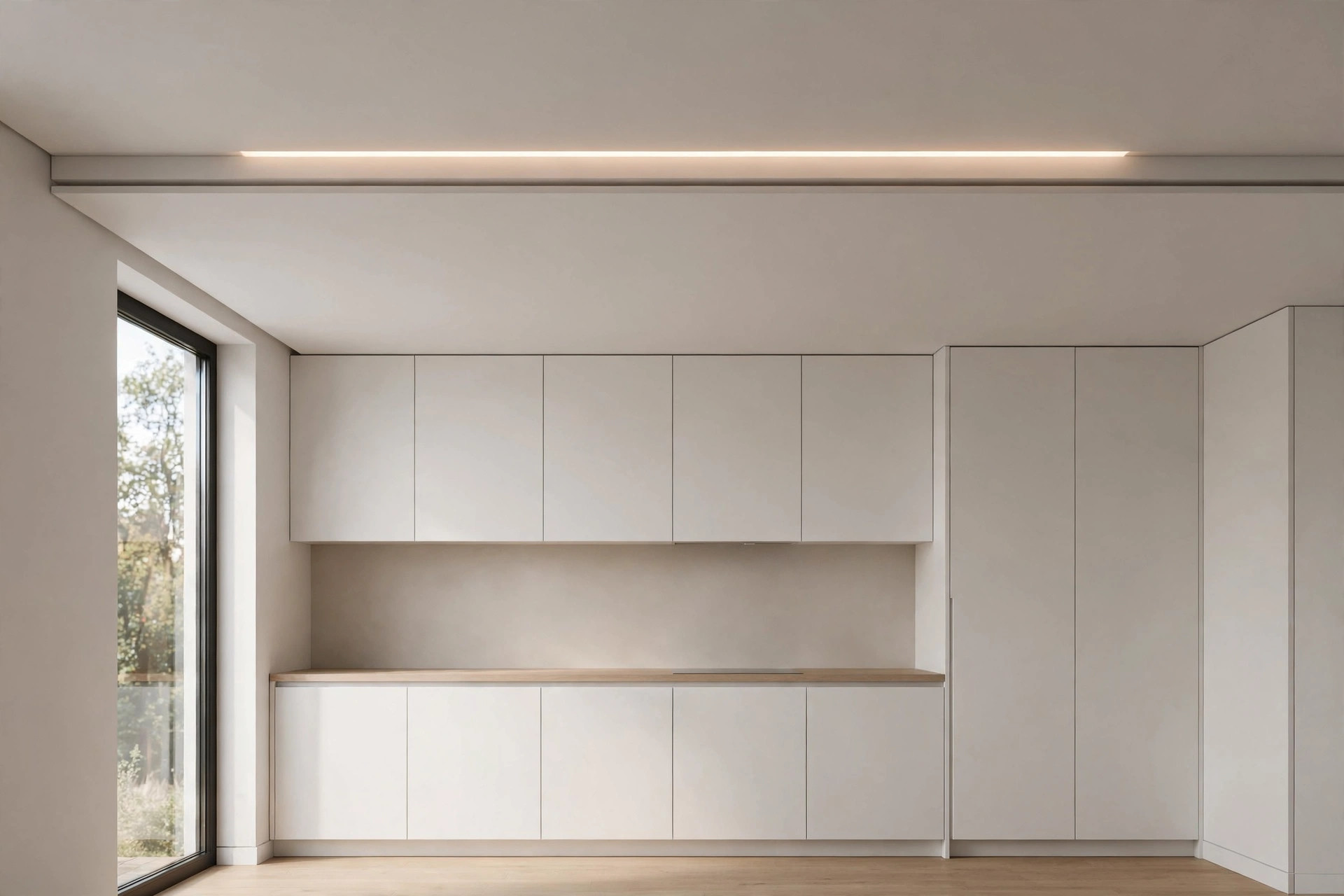
1. Minimal layered profiles with hidden light
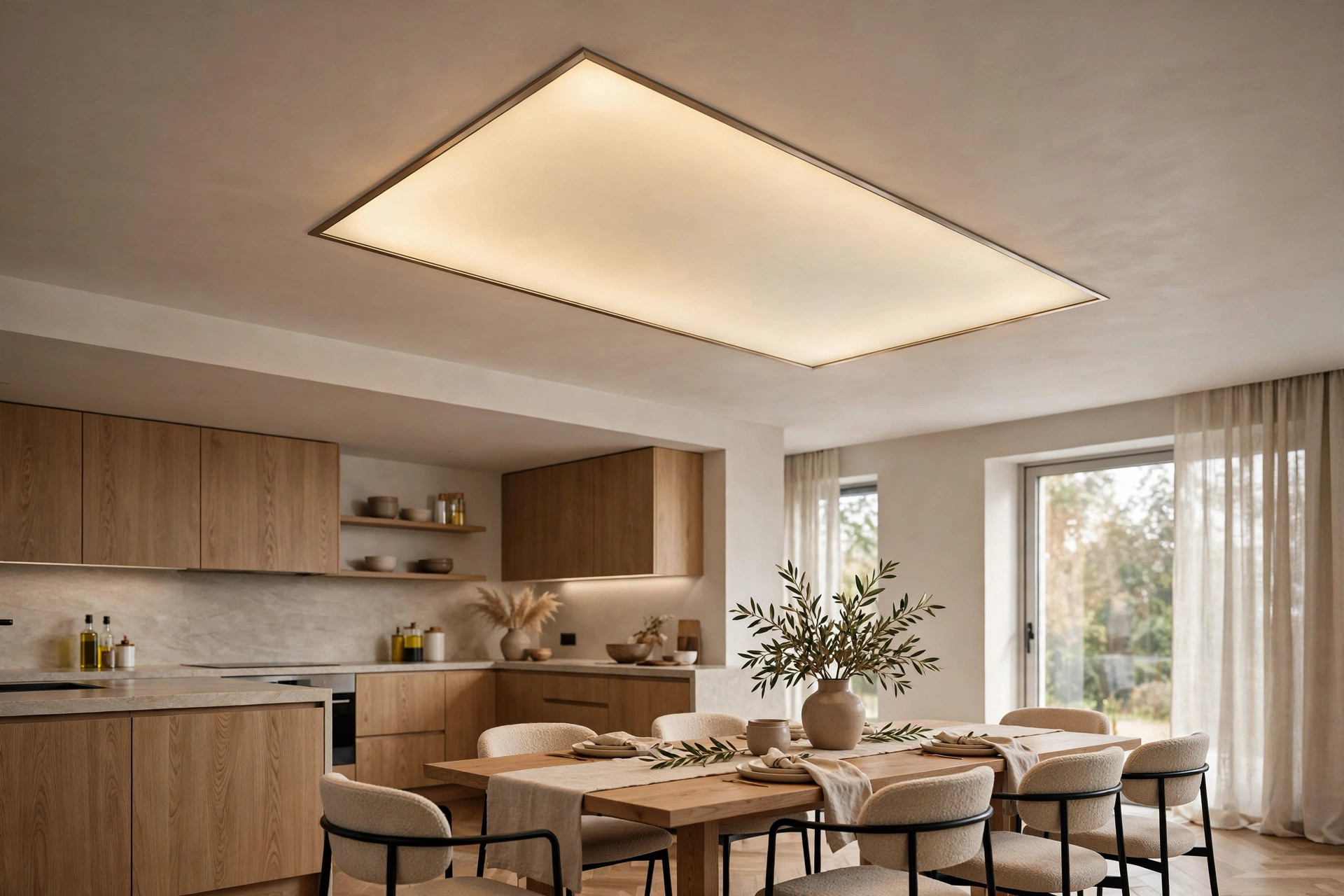
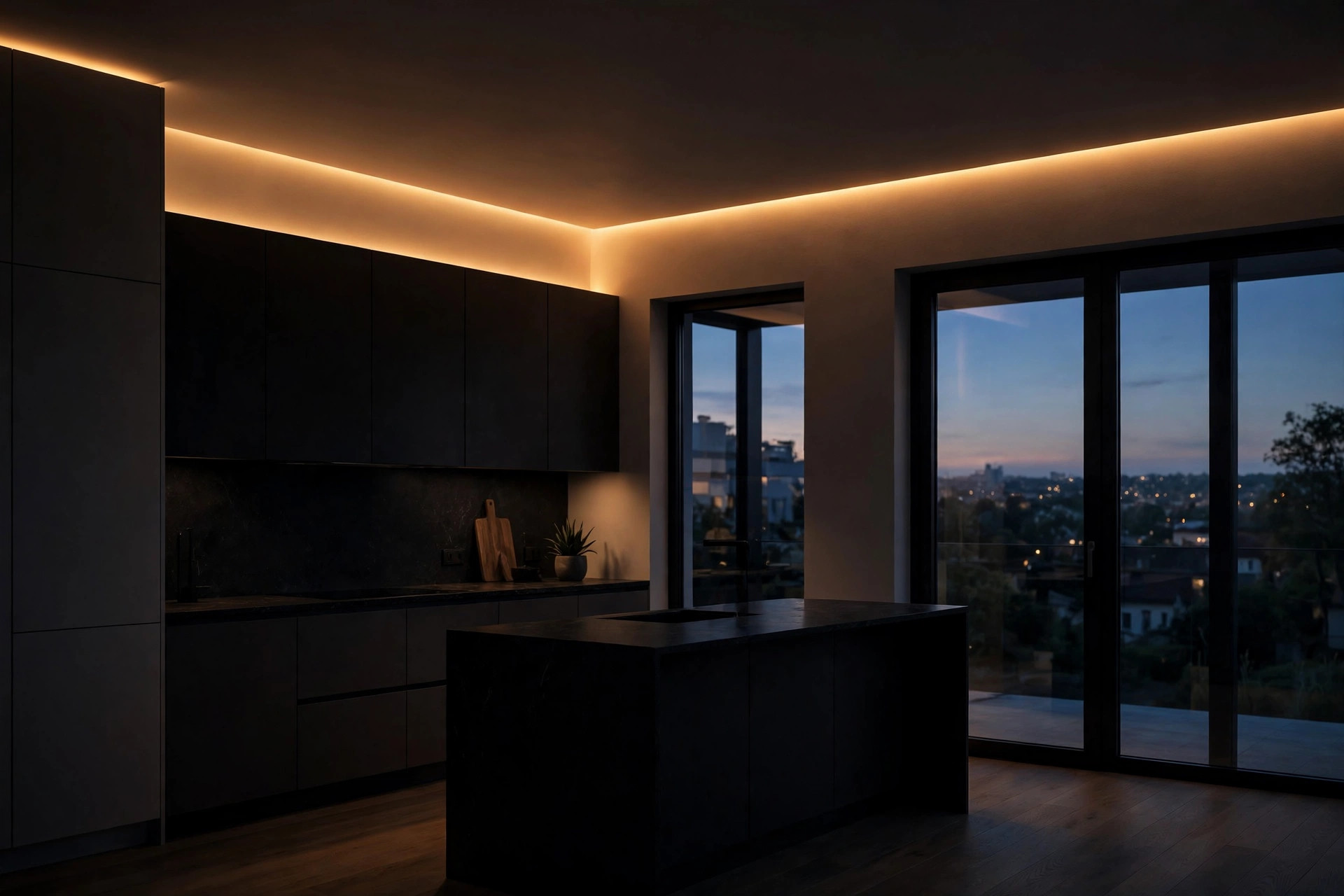
The defining 2026 move: one or two slim layers with concealed LED strips instead of deep stepped trays. A 10 to 20-inch border with downlighters, or a single recessed channel with a linear LED, gives a kitchen depth without the dust-catching ledges of old multi-level designs. It suits every kitchen size and every budget tier above basic.
2. Fluted and geometric panels
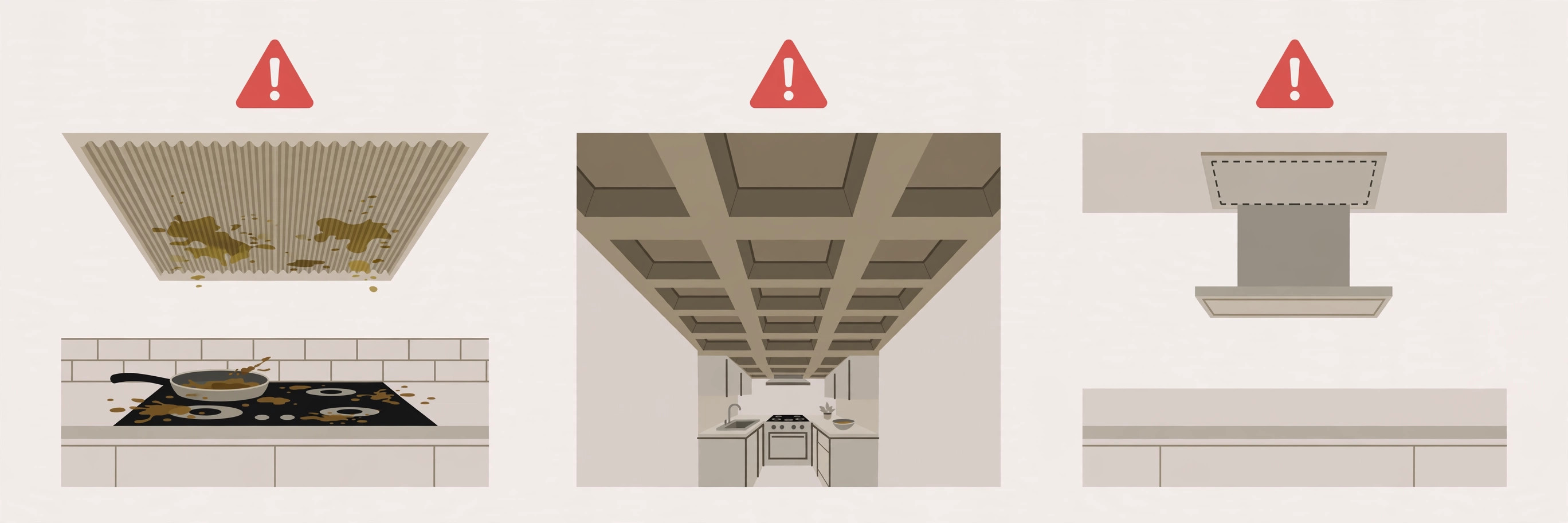
Fluted (grooved) panels and geometric cut-outs are 2026’s texture story. In kitchens they work best as one accent — a fluted panel over the dining side, or geometric grooves on a single ceiling band — because texture near the hob collects grease. Keep fluting away from the cooking zone and it stays beautiful; put it above the hob and it becomes a cleaning project.
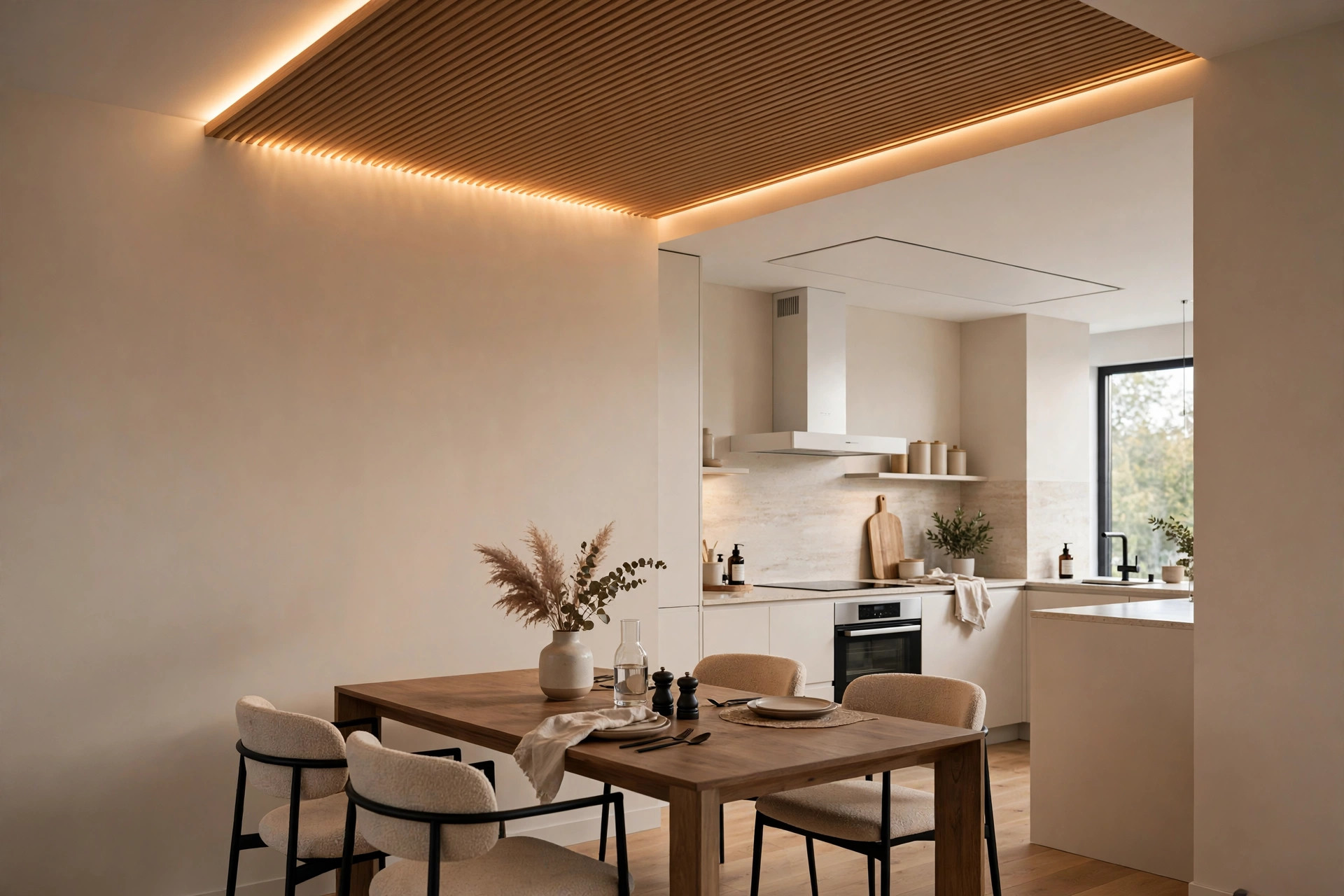
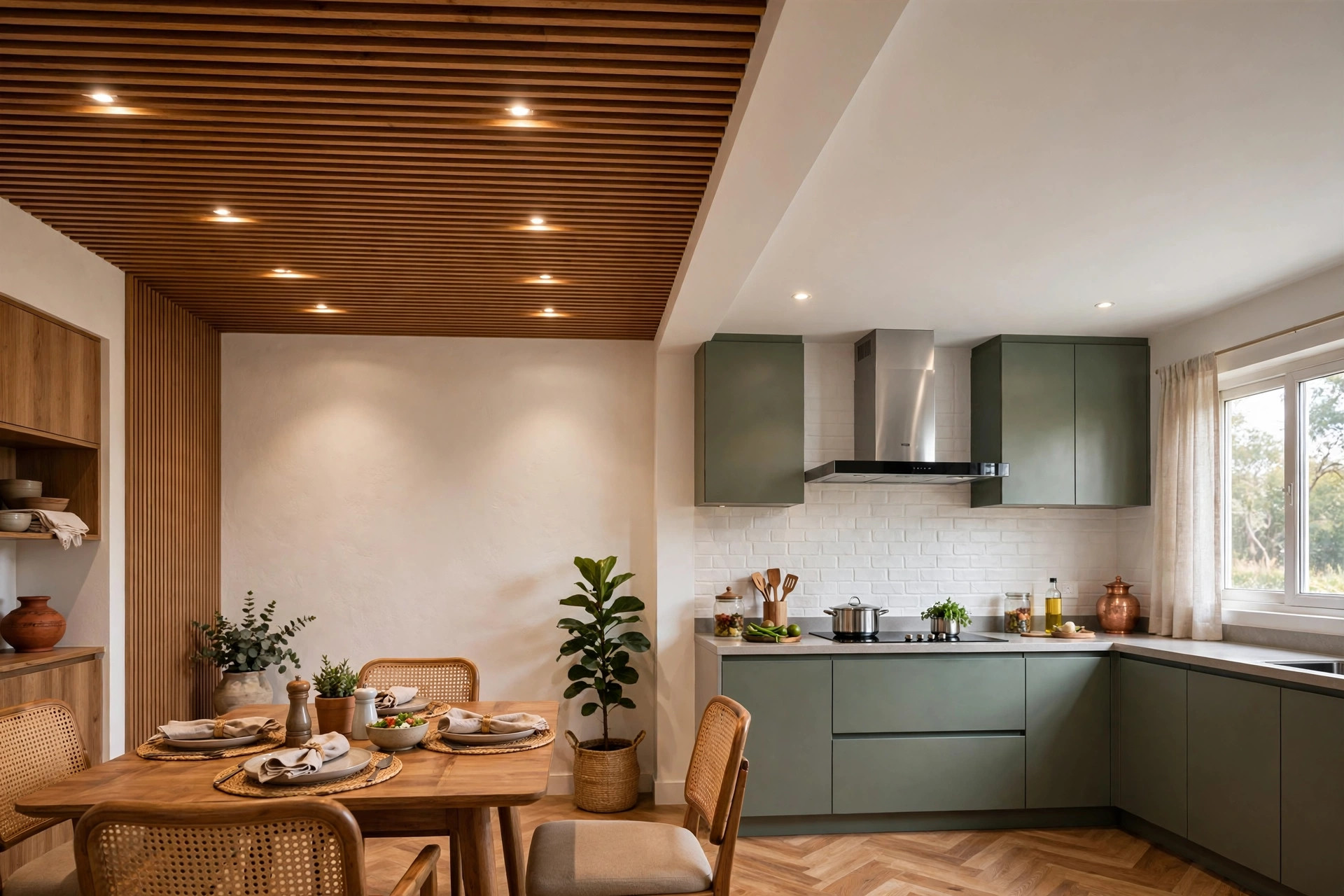
3. Wooden slat accents
Warm wooden slats or rafters over the dining side of the kitchen — the year’s biophilic streak reaching the ceiling. Wood brings the kitchen’s white-and-steel palette to life, and 2026 guides show it paired with recessed spots and hidden coves. Use wood-look laminate or WPC near kitchens rather than raw timber; steam is unkind to real wood. Keep wood off the hob zone entirely.
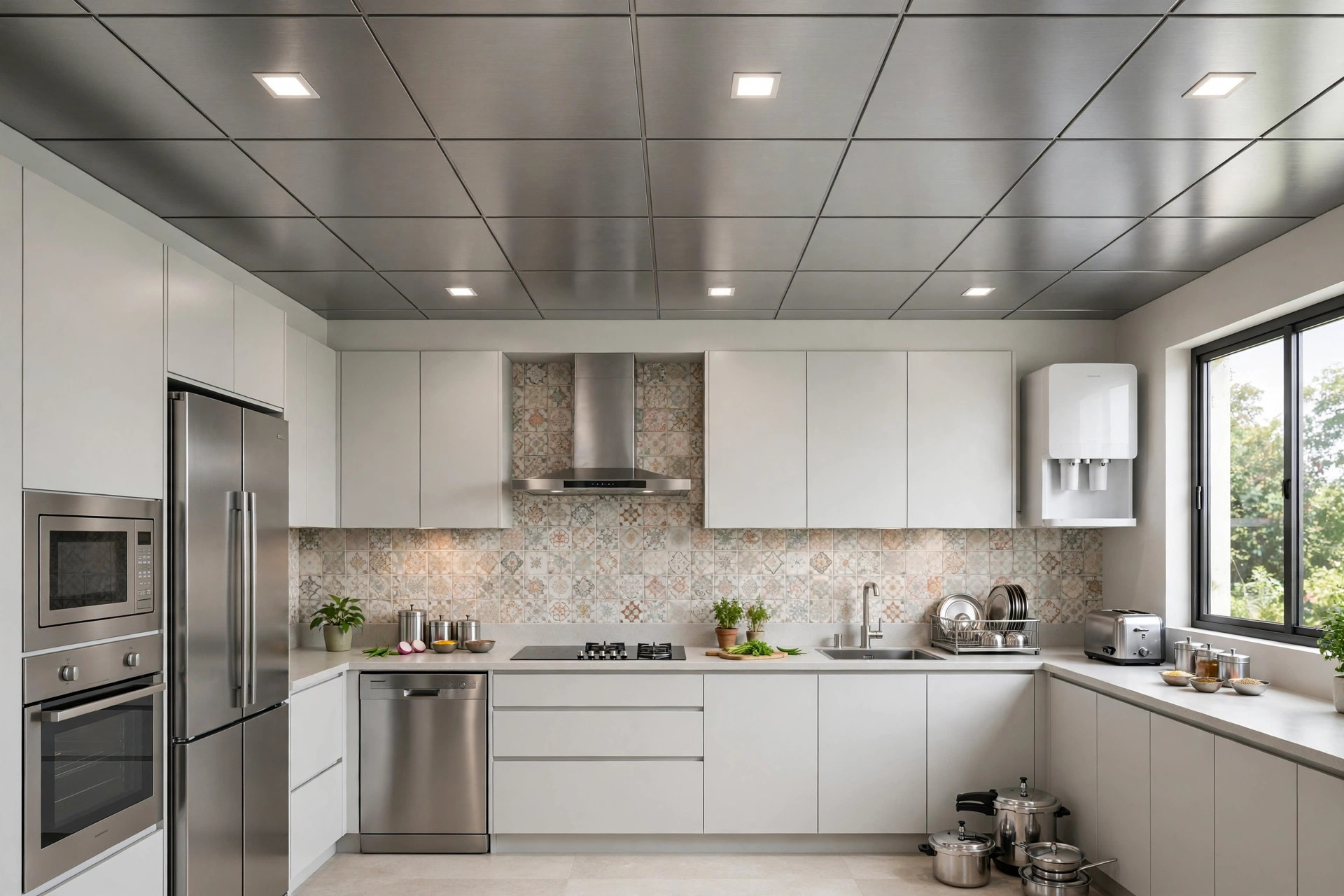
4. Aluminium and metal panels
The practical trend with real momentum: aluminium grid or baffle panels in kitchens. Metal handles steam, wipes clean, won’t sag, and lasts decades. 2026 cost guides consistently place metal ceilings among the recommended kitchen picks, and brushed or matte finishes have moved them beyond the commercial look. If your kitchen runs heavy daily cooking, this is the trend worth more than its looks.
5. Smart, dimmable lighting layers
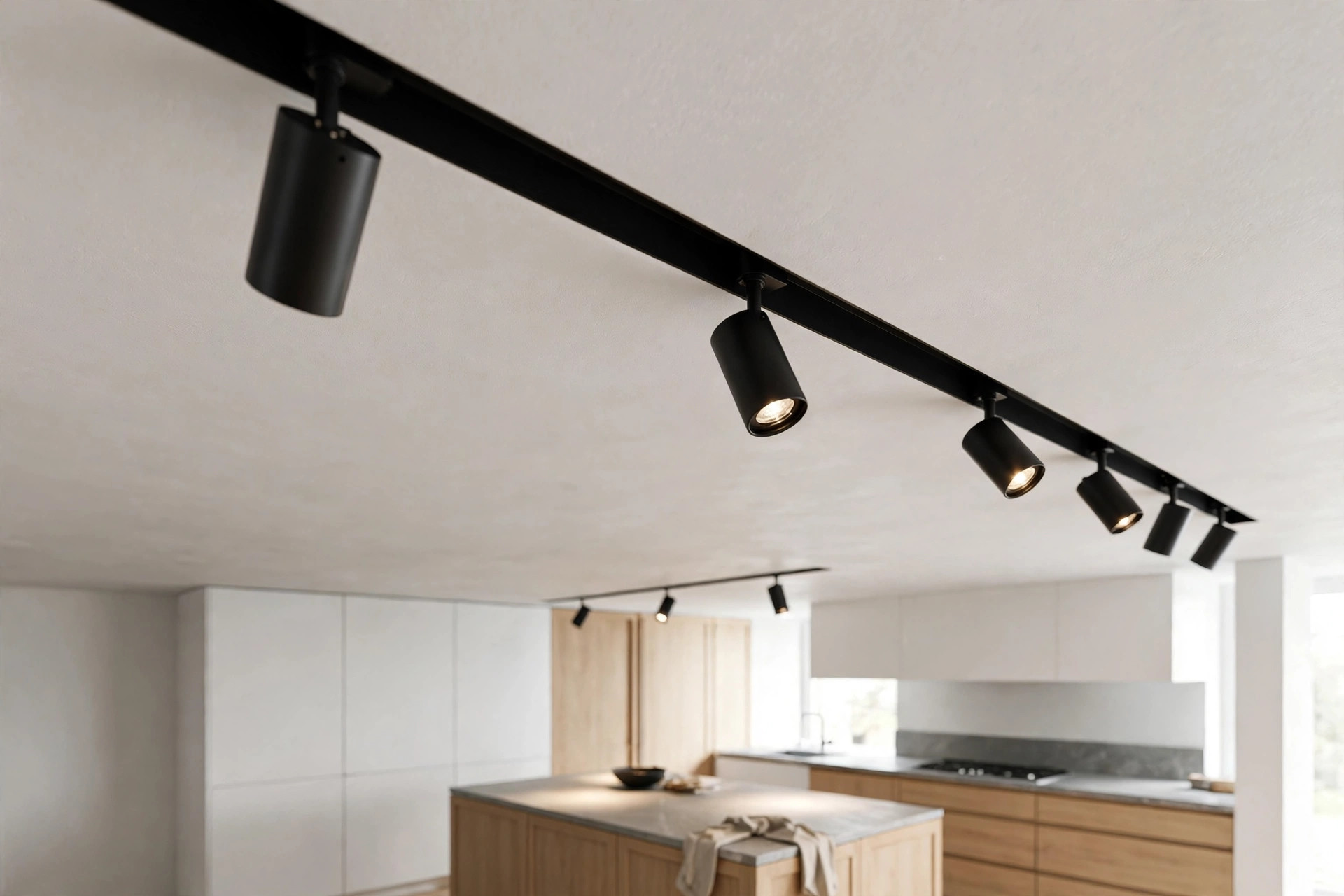
2026’s lighting story is control: dimmable LEDs, scene-based settings, app or voice control moving from luxury to standard. In kitchens this is genuinely useful — bright neutral-white for cooking, warm dim for evening dining — not just gadgetry. Budget roughly ₹5,000–₹15,000 per room for smart lighting integration over basic LEDs (2026 India estimates). Plan the system before the frame goes up; retrofitting smarts into a finished ceiling is messy.
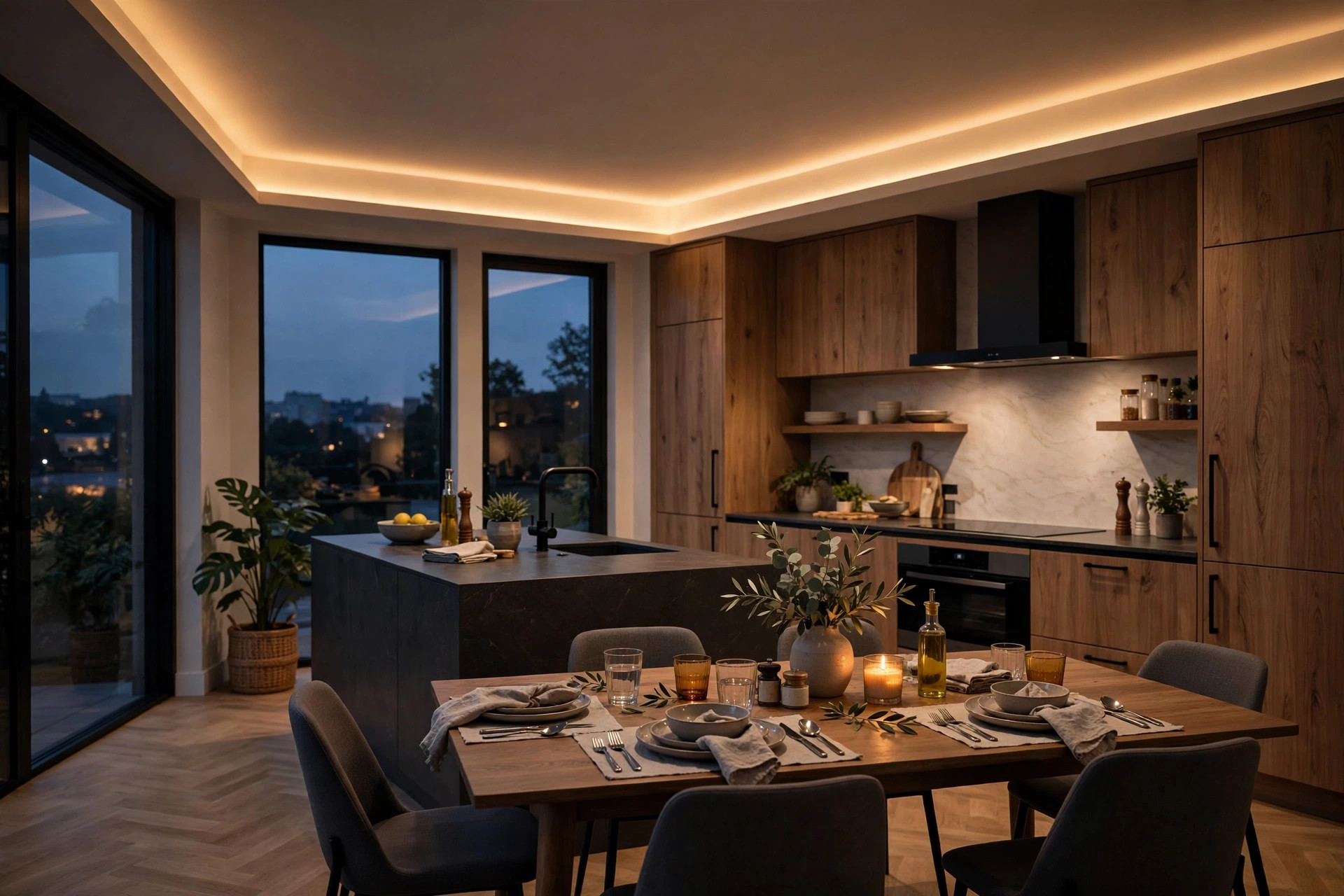
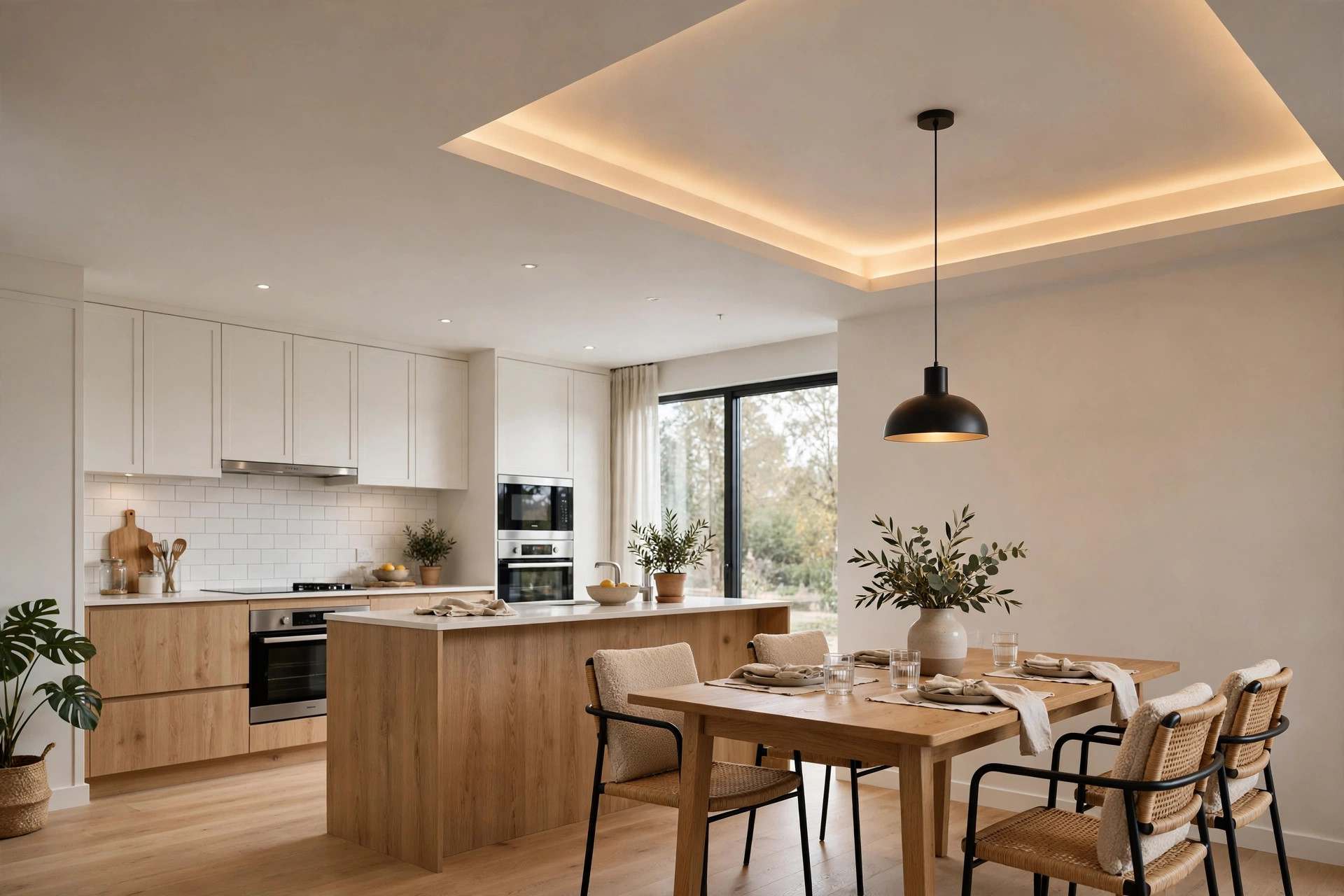
6. Tray and layered designs for the dining zone
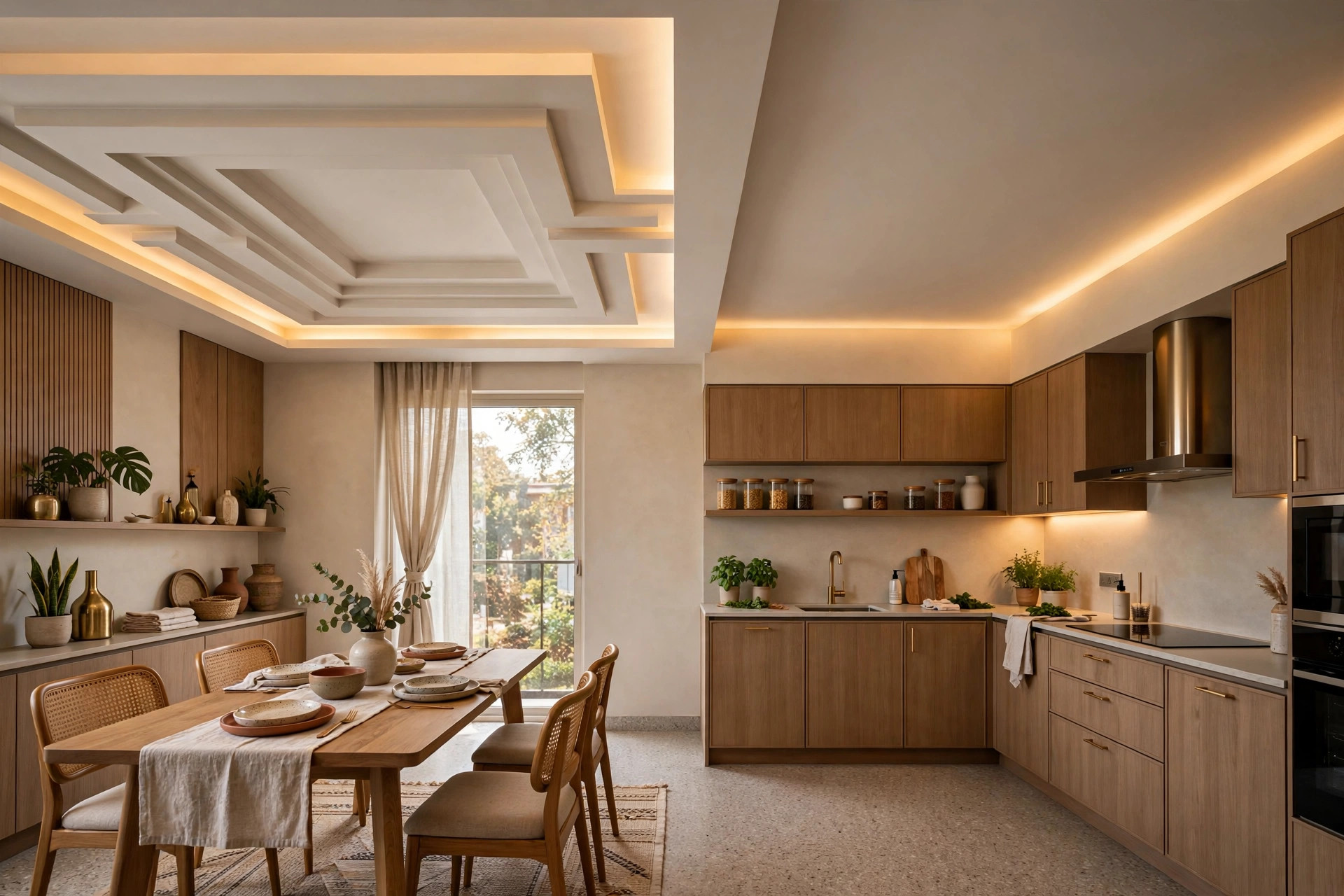
Where the kitchen opens to dining, a tray or layered ceiling over the dining table marks the zone — 2026’s open-plan answer to “where does the kitchen end”. A shallow tray with a warm cove and one pendant does the whole job. Keep the cooking side flat and tough; spend the design budget on the dining side where eyes actually rest.
7. Soft curves and organic edges
The year’s biophilic influence reaches ceiling edges: gently curved coves and soft transitions instead of sharp tray corners. One curved gesture — a curved cove along the dining wall, an arched border — softens a kitchen without the labour cost of full 3D sculptural ceilings (which run 20–40% more than flat designs). Curves cost a little more than straight lines; use one, not ten.
8. Flat gypsum with recessed spots — the quiet trend
Not every 2026 trend shouts. Design guides keep recommending the flat gypsum ceiling with well-placed recessed spots for kitchens — and the recommendation is getting stronger, not weaker. Hygiene and maintenance beat decoration in a working kitchen: one flat level, nothing to dust, spots exactly where the work happens. If your kitchen cooks three meals a day, this “boring” option outperforms every statement ceiling.
9. Bold geometric 3D elements
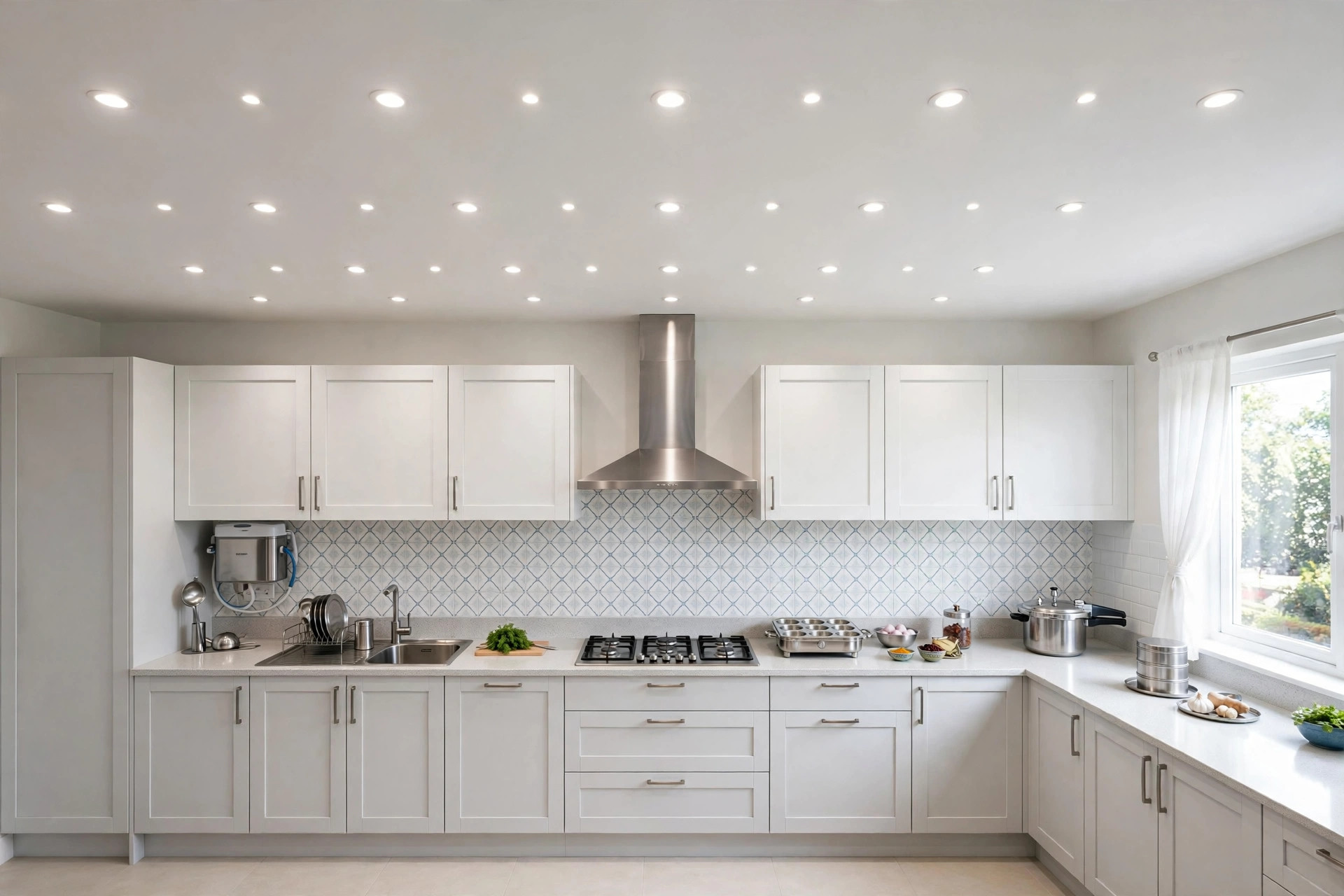
For large kitchens that can carry drama: geometric 3D ceiling elements — layered hexagons, overlapping planes, backlit cut-outs. This is the statement end of 2026, and it belongs in big open kitchens with 10-foot-plus slabs. In a standard 100 sq ft kitchen it overwhelms; scale the ambition to the room.
10. Eco-friendly material accents
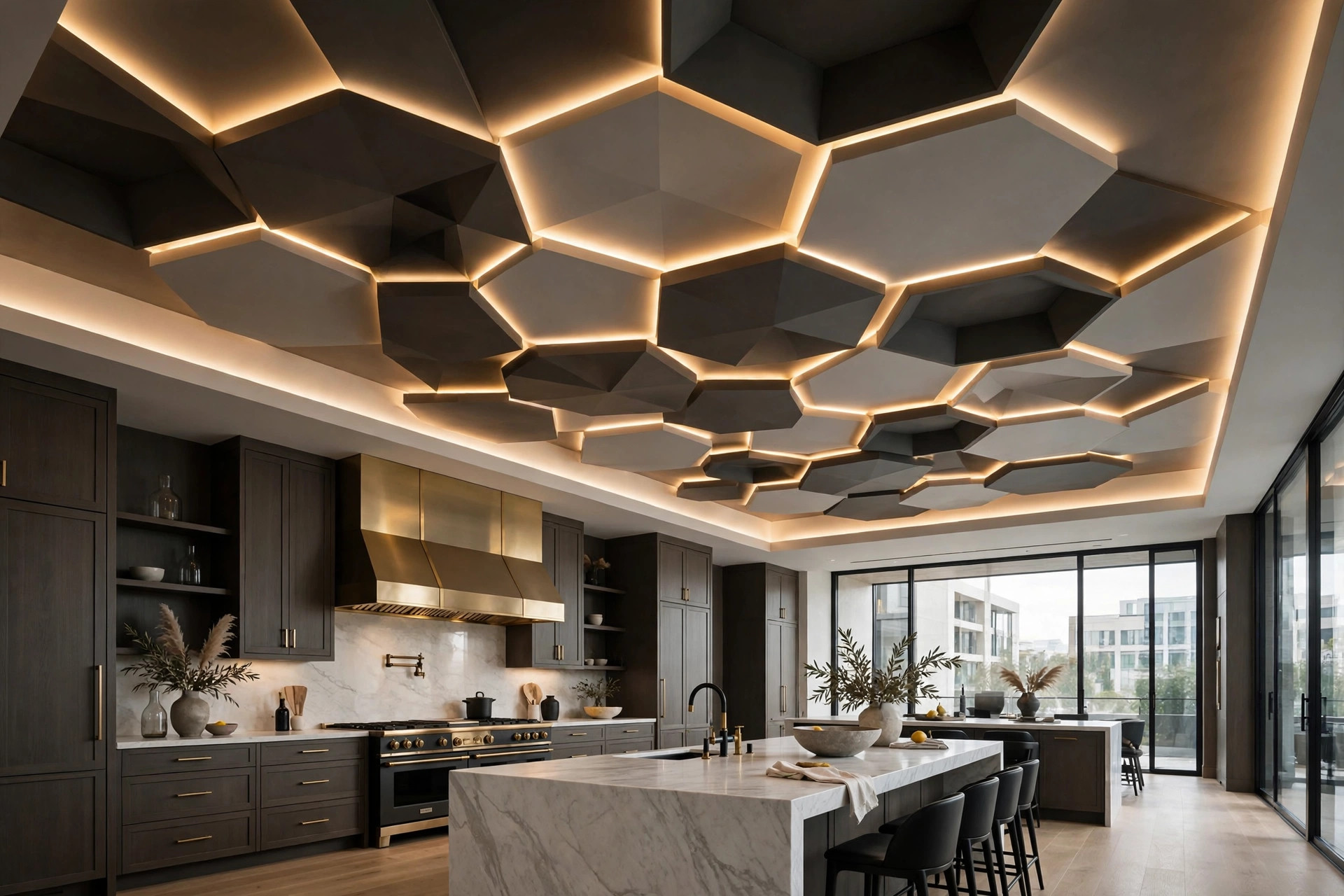
Bamboo panels, wood-wool boards, and recycled-content panels are 2026’s sustainability story. In kitchens they work as accents on the dining side rather than full ceilings — natural materials and heavy steam are uneasy partners. If eco credentials matter to you, spend them where the cooking fumes don’t reach.
11. Industrial-chic beams
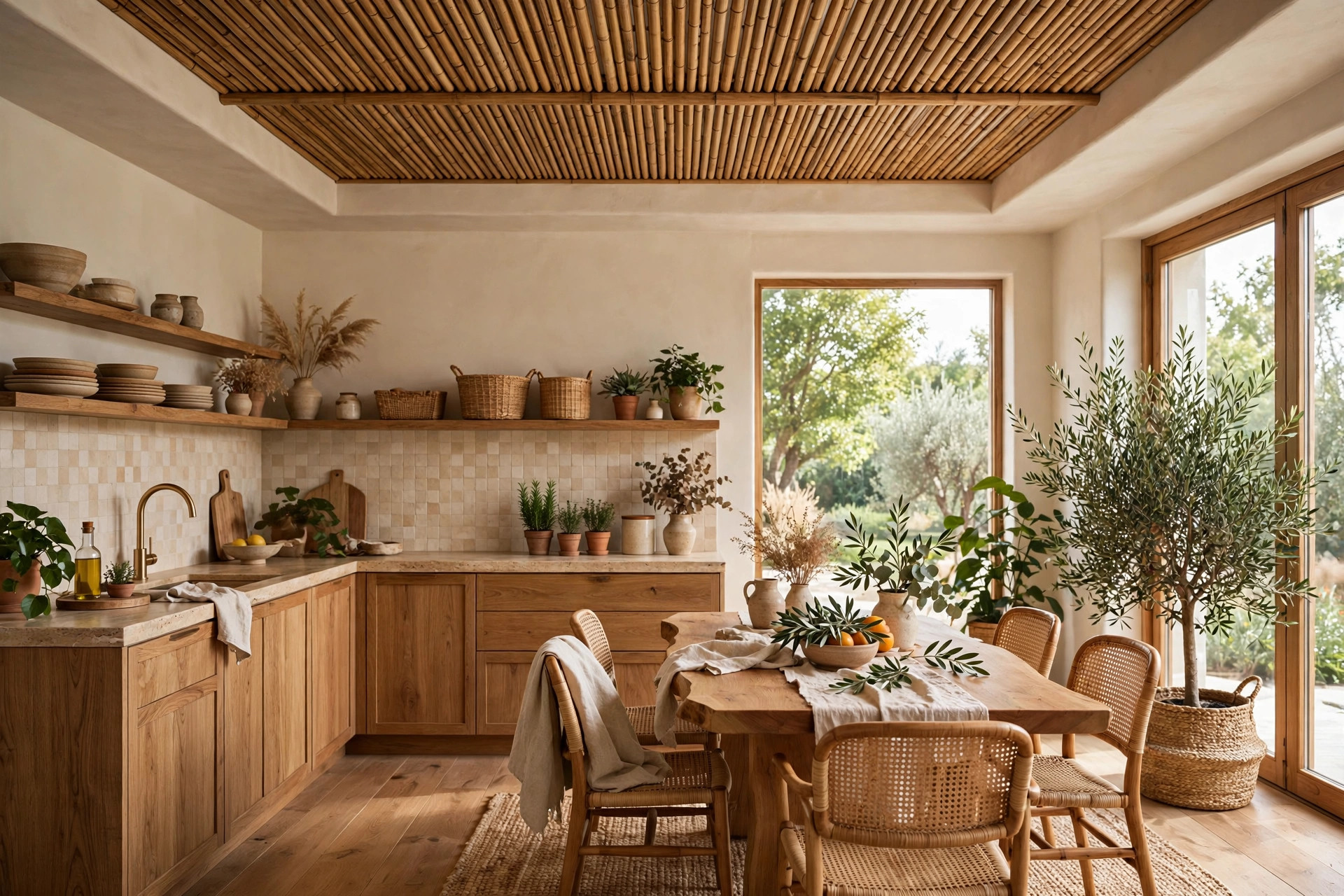
Exposed beams — timber or dark metal — giving the kitchen a loft feel. Beams zone an open-plan kitchen without walls and carry track lights beautifully. They suit large kitchens and farmhouse or industrial themes; in a small galley kitchen they press down. Faux beams (hollow, clad) give the look without the weight.
12. Glass and metal accents
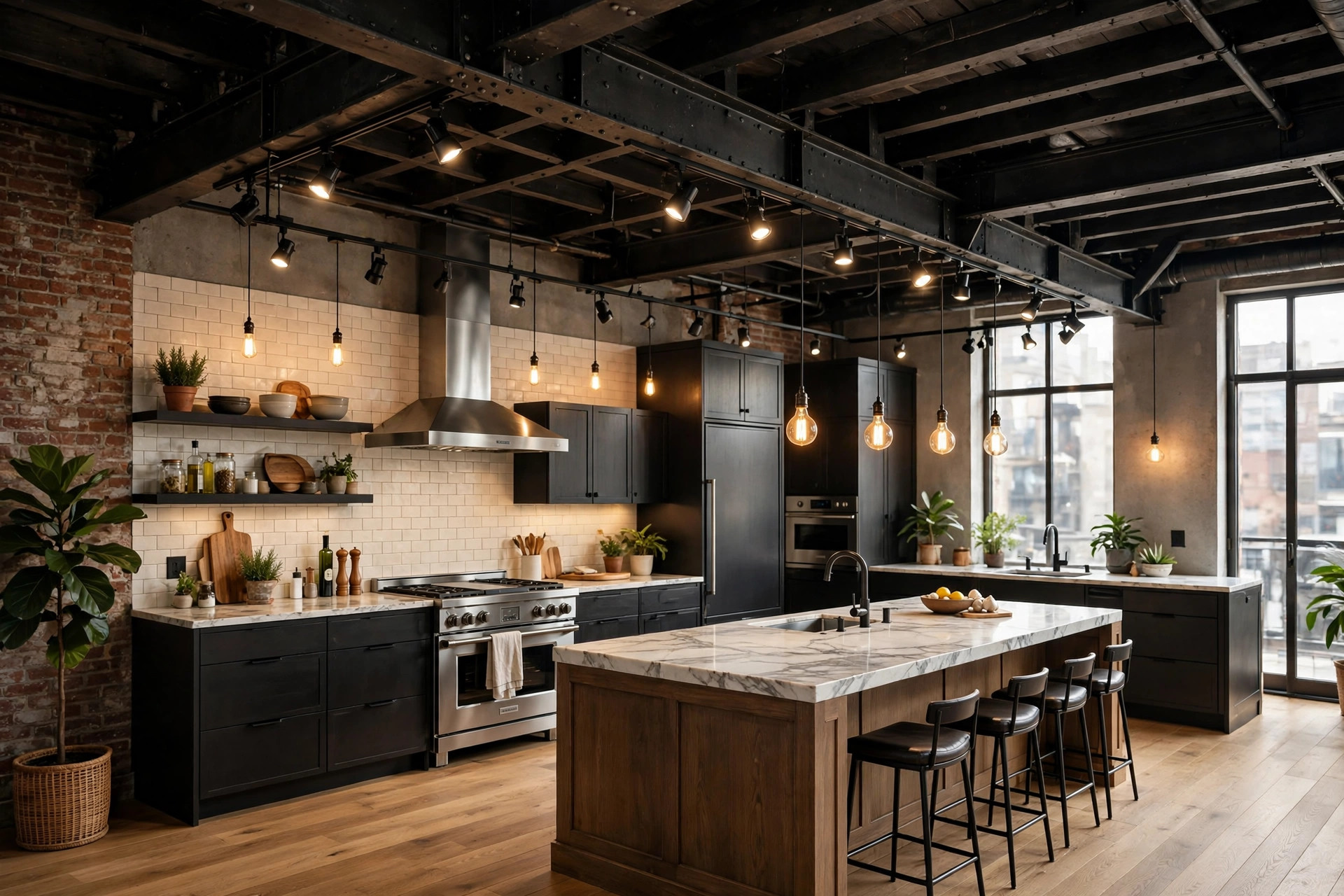
Backlit glass panels or metal inlays as ceiling jewellery — one panel, one glow. 2026 shows glass used sparingly in kitchens: a backlit strip over the dining zone, a metal inlay border. Glass near the hob is a cleaning burden; keep the jewellery where the cooking doesn’t reach.
The hygiene lens: which trends survive Indian cooking
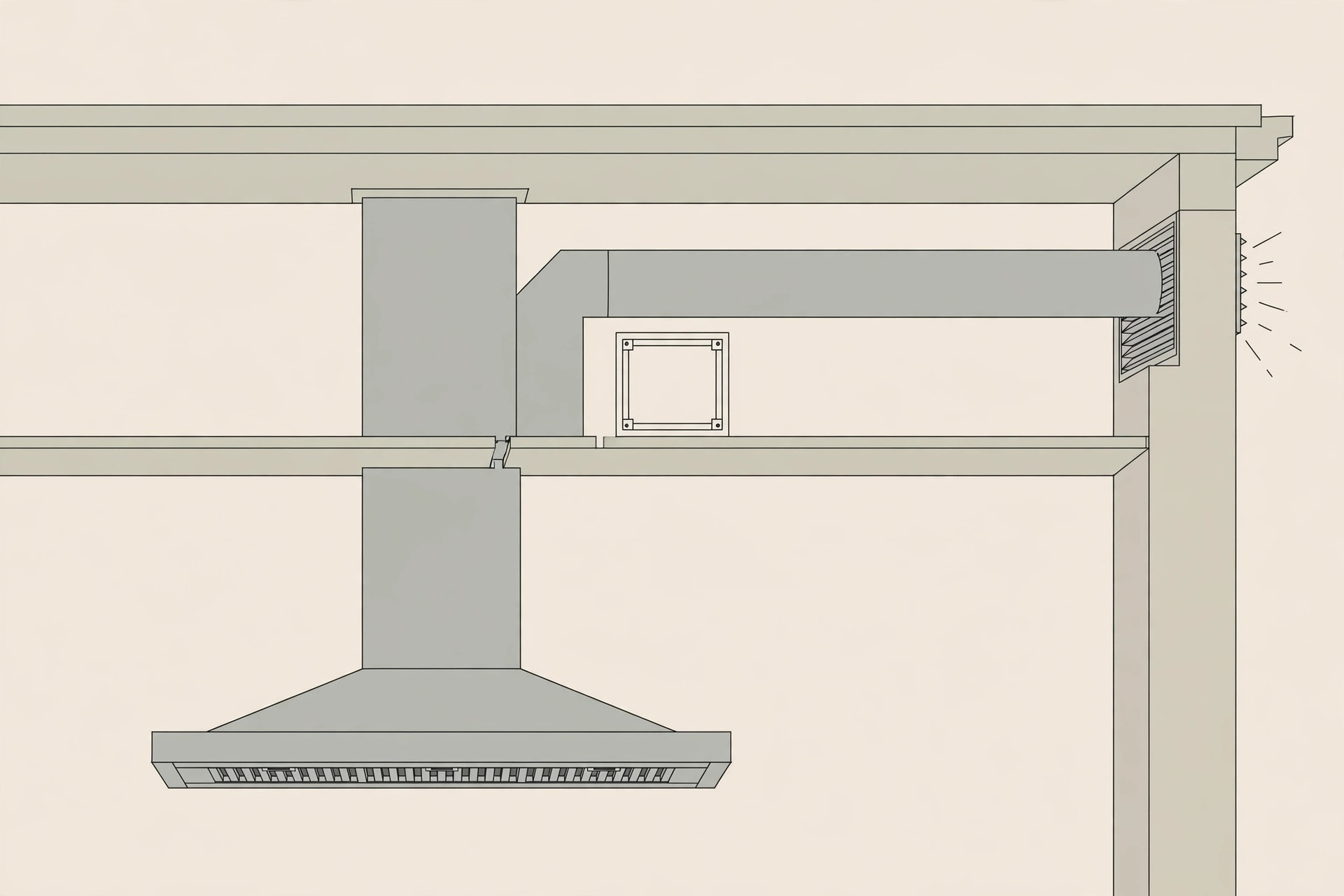
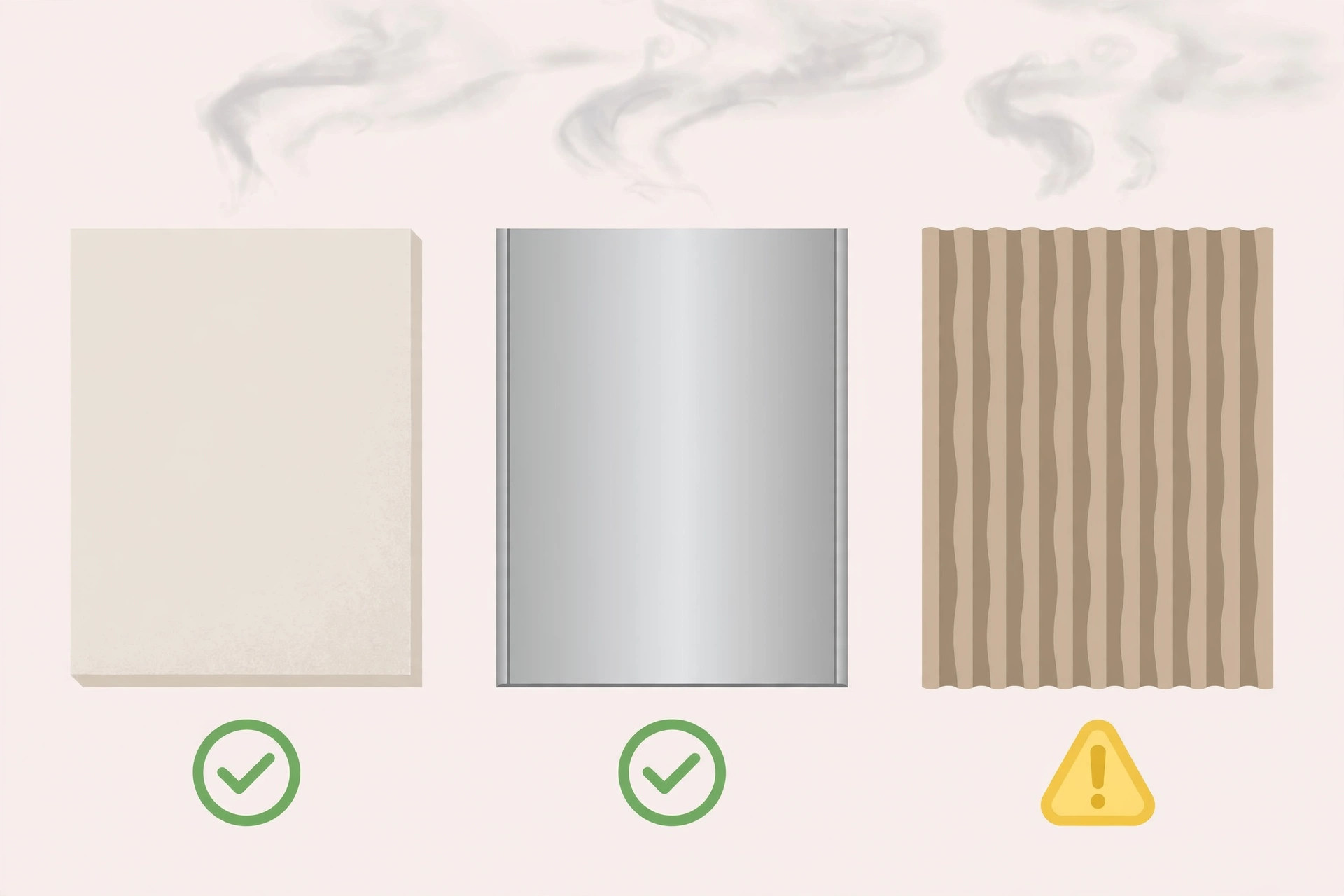
Trends mean nothing if the ceiling can’t survive the kitchen. Run every 2026 idea through three questions: does steam reach it, does oil settle on it, and can I clean it? Flat gypsum with spots, aluminium panels, and PVC pass all three. Fluted panels, wood, fabric, and deep multi-level designs fail at least one — which doesn’t disqualify them, but it confines them to the dining side, away from the hob. The chimney duct still needs its planned route and access panel regardless of trend — no 2026 ceiling changes that.
Lighting: the trend that matters most
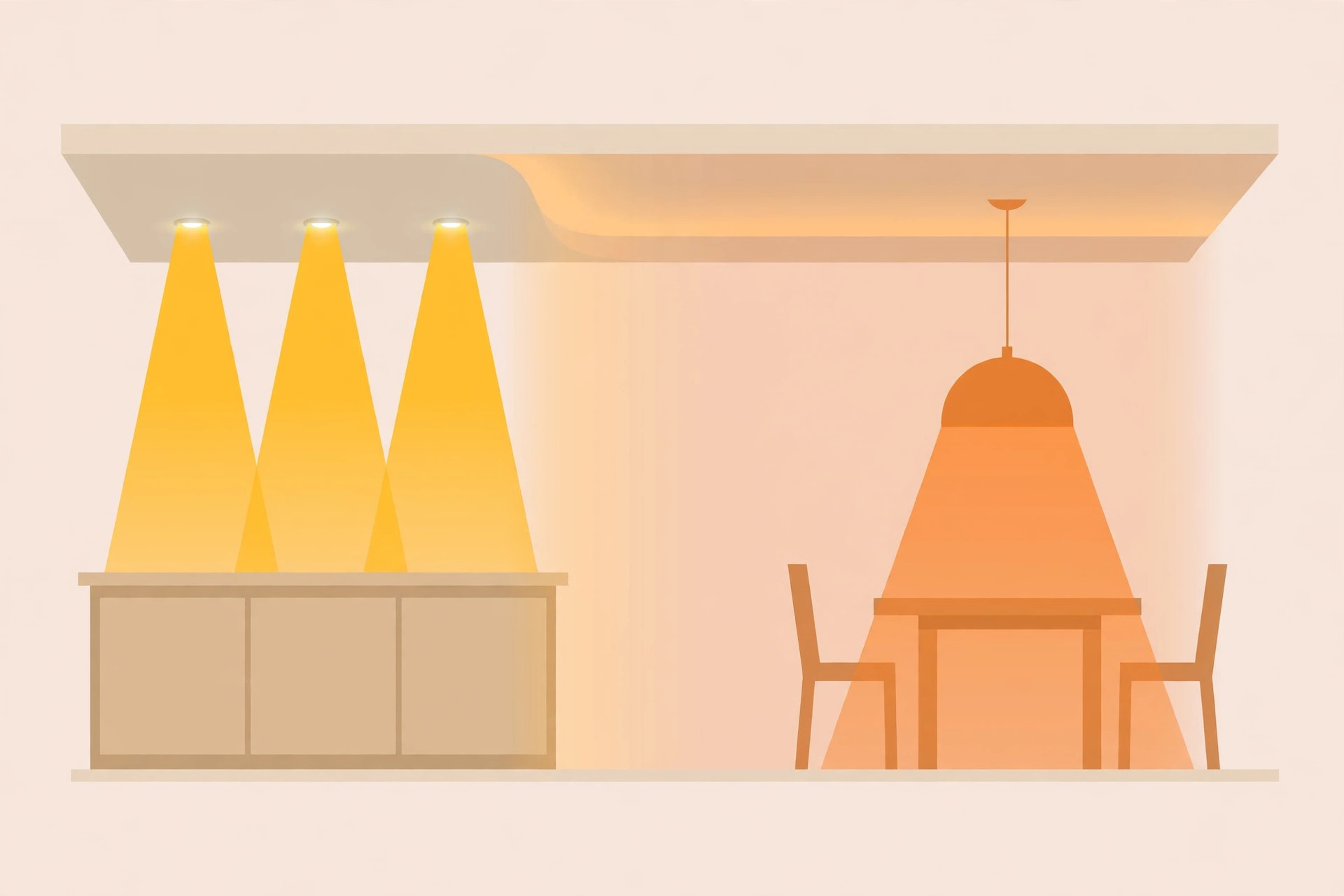
If you adopt one 2026 idea, make it the lighting: layered, dimmable, planned before the frame. Kitchens need three light types — bright task light over counters and hob (neutral white, around 4000K), general ambient light for the room, and warm dimmable light for the dining side. Smart controls let one ceiling serve all three. Recessed spots must sit where the work happens, not where the design looks symmetrical — plan from the counter layout outward.
Small kitchens and 2026
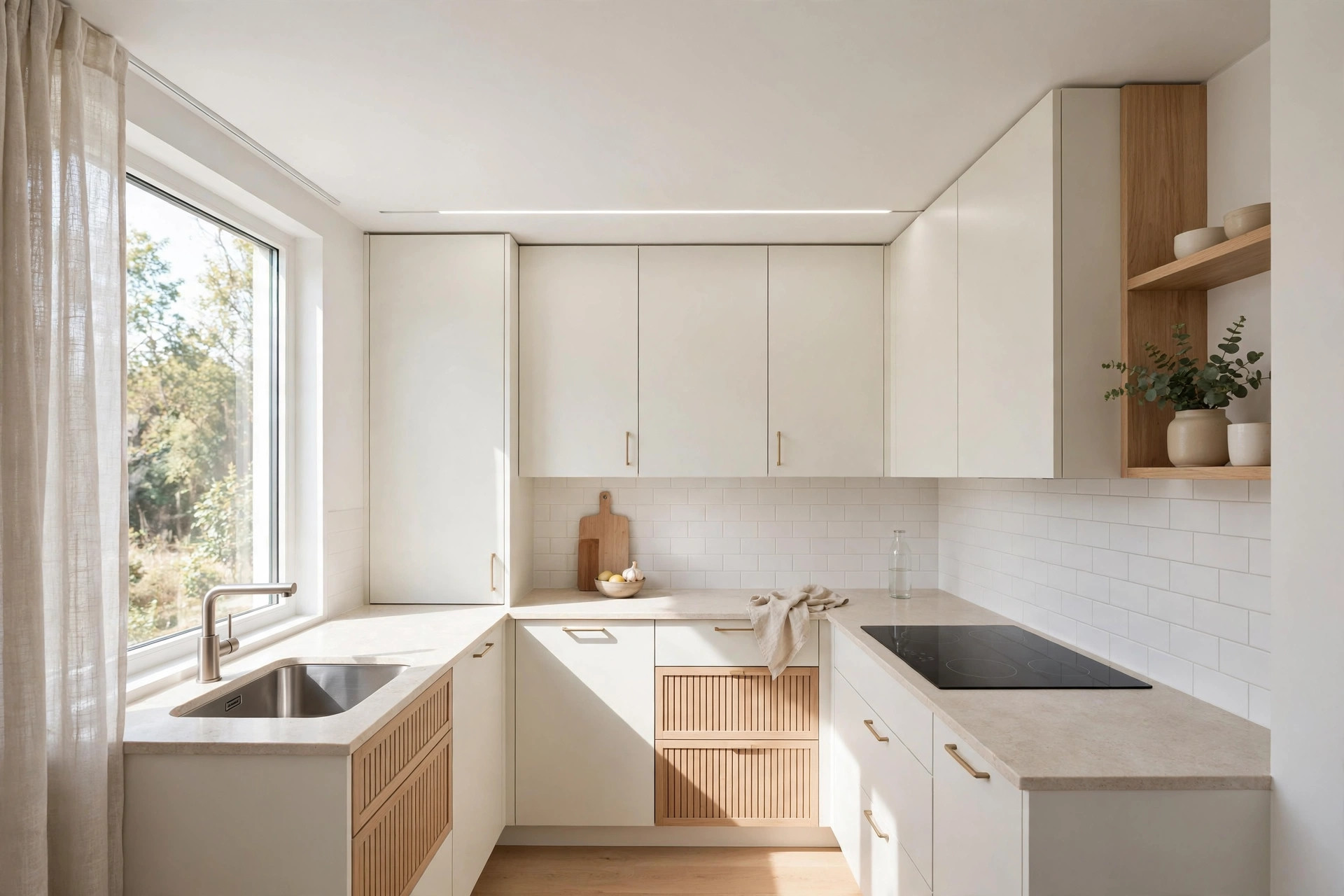
Small kitchens get the quiet trends, not the loud ones: flat or slim-border ceilings, light colours, one recessed strip over the counter, edge lighting to keep headroom. A 3D geometric ceiling in a 60 sq ft kitchen is a trend misapplied. Our simple kitchen ceiling guide covers the small-kitchen playbook in full.
What 2026 kitchen ceilings cost
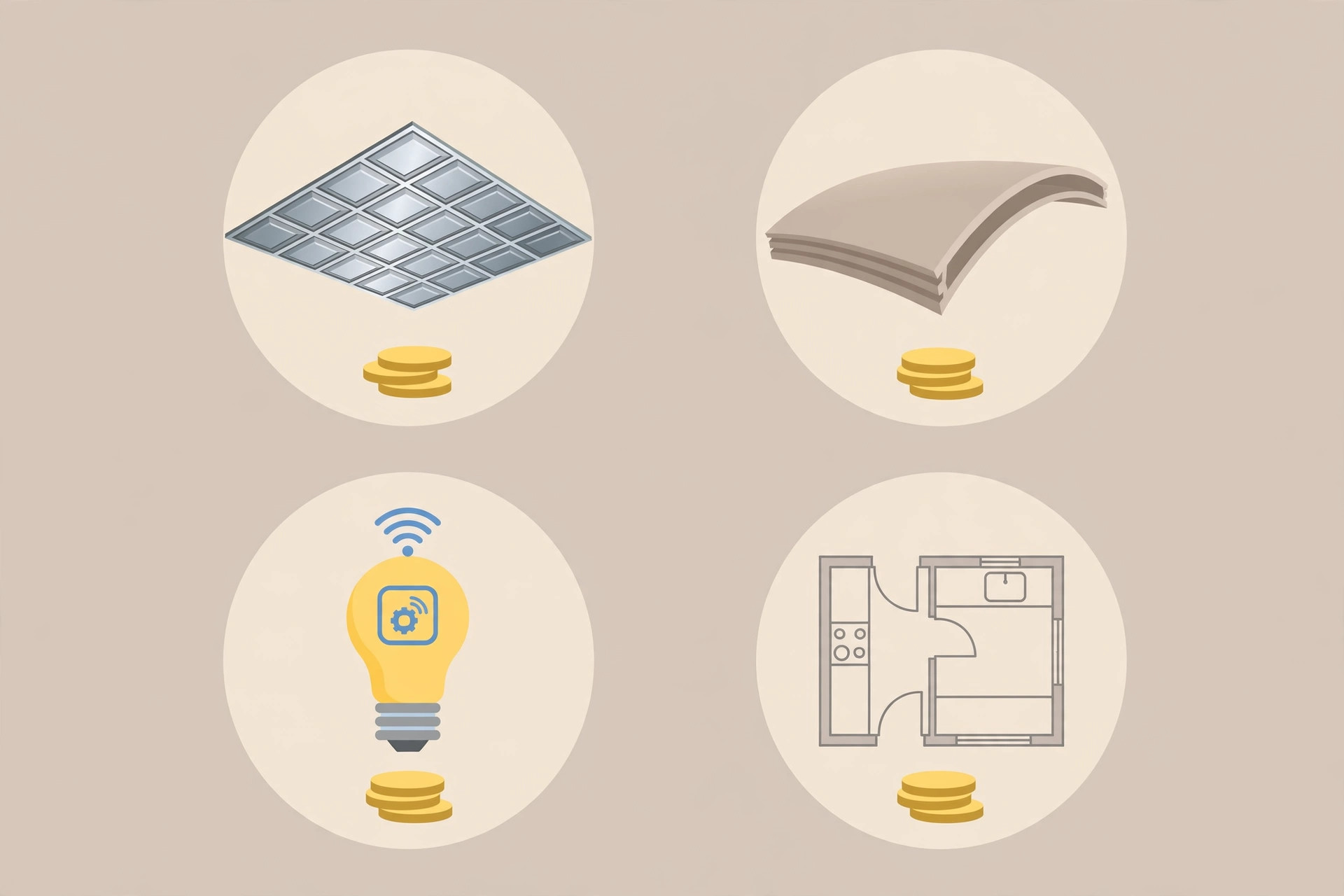
Trendiness adds labour more than material. As a 2026 India reference, kitchen ceilings run roughly ₹120–₹200 per sq ft installed for aluminium or moisture-resistant gypsum (AECORD cost guide, updated May 2026, India, installed). Smart lighting adds roughly ₹5,000–₹15,000 per room over basic LEDs. Curved and 3D elements cost 20–40% more than flat designs in the same material.
The honest cost levers: the material (aluminium and metal cost more than gypsum), the design complexity (each layer, curve, and fluted panel is labour), the lighting system (basic spots vs dimmable smart scenes), and room size. Get the quote itemised — material, framework, labour, and lighting provisions separately — and compare installed totals.
For the full India cost picture across materials, see our false ceiling cost guide.
Mistakes with trendy kitchen ceilings
Texture above the hob. Fluting, fabric, and deep grooves near cooking become grease traps.
Statement ceiling in a tiny kitchen. Scale the ambition to the room.
Smart lighting planned after the frame. Retrofitting is messy; plan the system first.
Forgetting the chimney duct. No trend removes the need for a planned duct route and access panel.
Cool white everywhere. 4000K suits task zones; the dining side wants warm dimmable light.
Frequently asked questions
Which false ceiling design is trending for kitchens in 2026?
Minimal layered profiles with hidden LED lighting, fluted and geometric panel accents, wooden slat accents on the dining side, aluminium panels for heavy-cooking kitchens, and smart dimmable lighting. The through-line: calmer ceilings, cleverer light, materials chosen for steam and oil.
Is a wooden ceiling okay in a kitchen?
As an accent on the dining side, yes — preferably wood-look laminate or WPC rather than raw timber, since steam is unkind to real wood. Keep wood completely away from the hob zone, where grease and heat will ruin it.
How much does a 2026-style kitchen ceiling cost in India?
Roughly ₹120–₹200 per sq ft installed for aluminium or moisture-resistant gypsum (India, 2026), with smart lighting adding about ₹5,000–₹15,000 per room. Statement 3D and curved designs cost 20–40% more than flat ones. Always get an itemised quote.
Should a small kitchen follow these trends?
Selectively: flat or slim-border profiles, light colours, one recessed strip, edge lighting. Skip 3D geometry, beams, and heavy layering in small kitchens — the quiet trends outperform the loud ones there.
Quick recap
The 2026 kitchen ceiling is restraint with better light: minimal layered profiles, fluted or wooden accents placed away from the hob, aluminium where cooking is heavy, and dimmable smart lighting tying it together. Run every trend through the hygiene lens — steam, oil, cleaning — before committing, plan the lighting and chimney duct before the frame, and scale the ambition to your kitchen’s size. For the room’s full picture, see our kitchen false ceiling guide. All images in this article are original concept renders created to illustrate the ideas, not photographs of completed projects.