
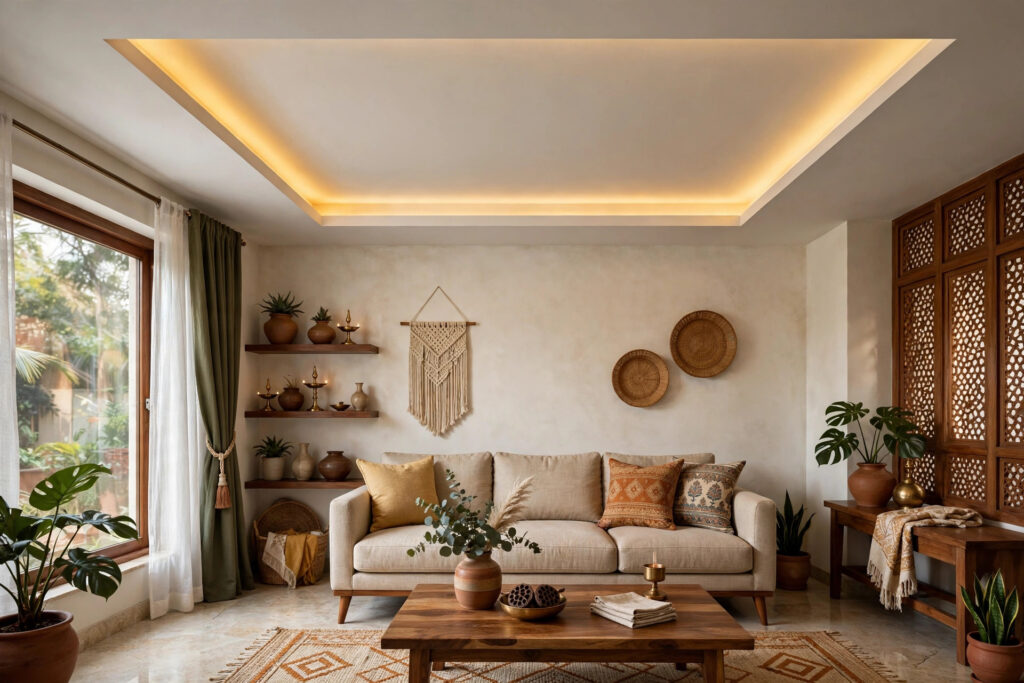

Tray, coffered, round, jali, geometric — the words get thrown around in ceiling showrooms, but few homeowners know what each shape actually is, how it is made, or what it costs. This guide is a design vocabulary for false ceiling shapes and patterns in Indian homes: each shape explained in plain language, with where it suits, what it needs, and honest cost bands.
It covers shapes, not styles. A “modern” ceiling and a “traditional” ceiling can share the same tray shape — style is the finish, shape is the geometry. (Style-based guidance is a separate guide.) It also folds in the tray, layered and coffered family in full — those shapes live here now, not in a separate article.
The tray family: tray, layered and coffered
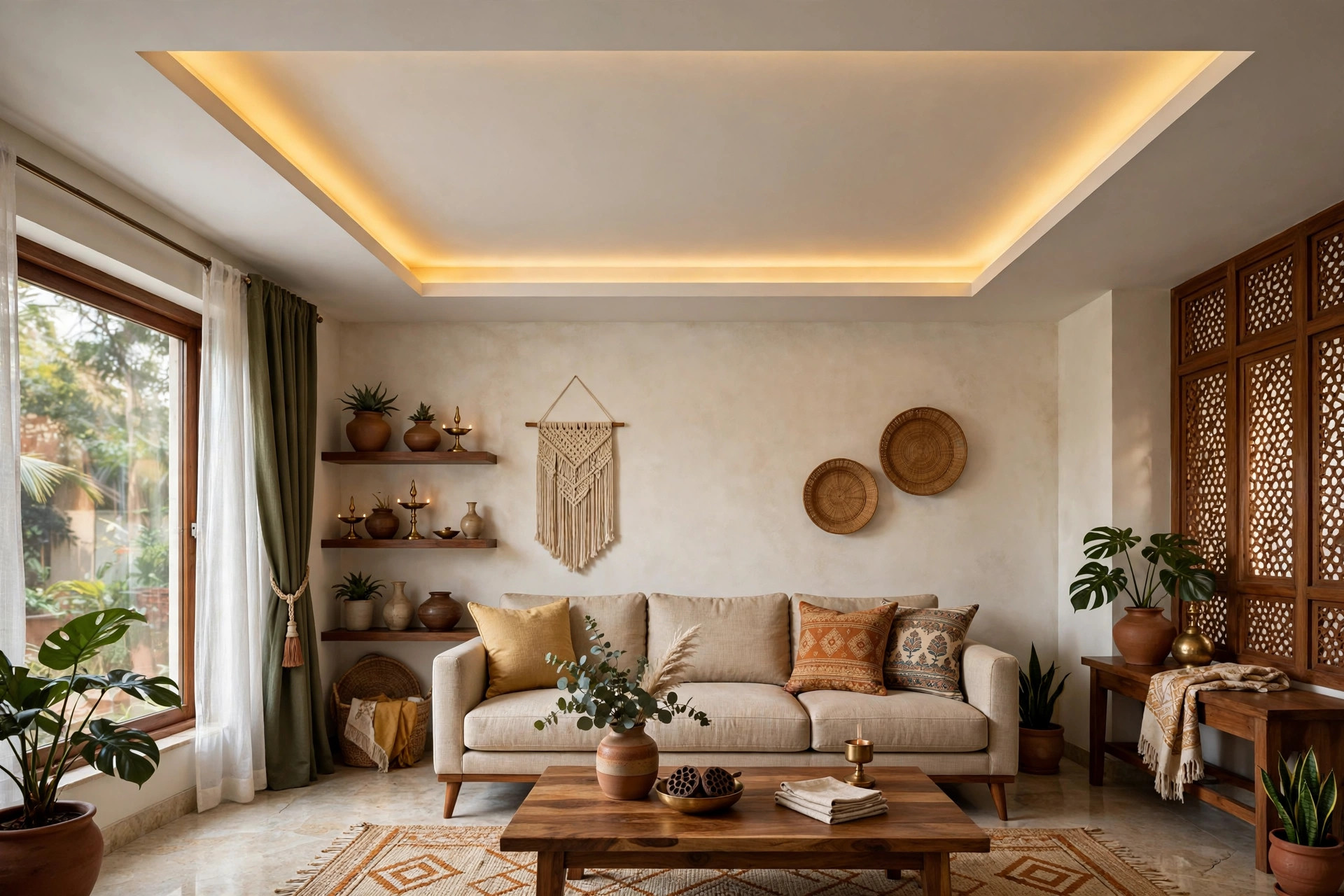
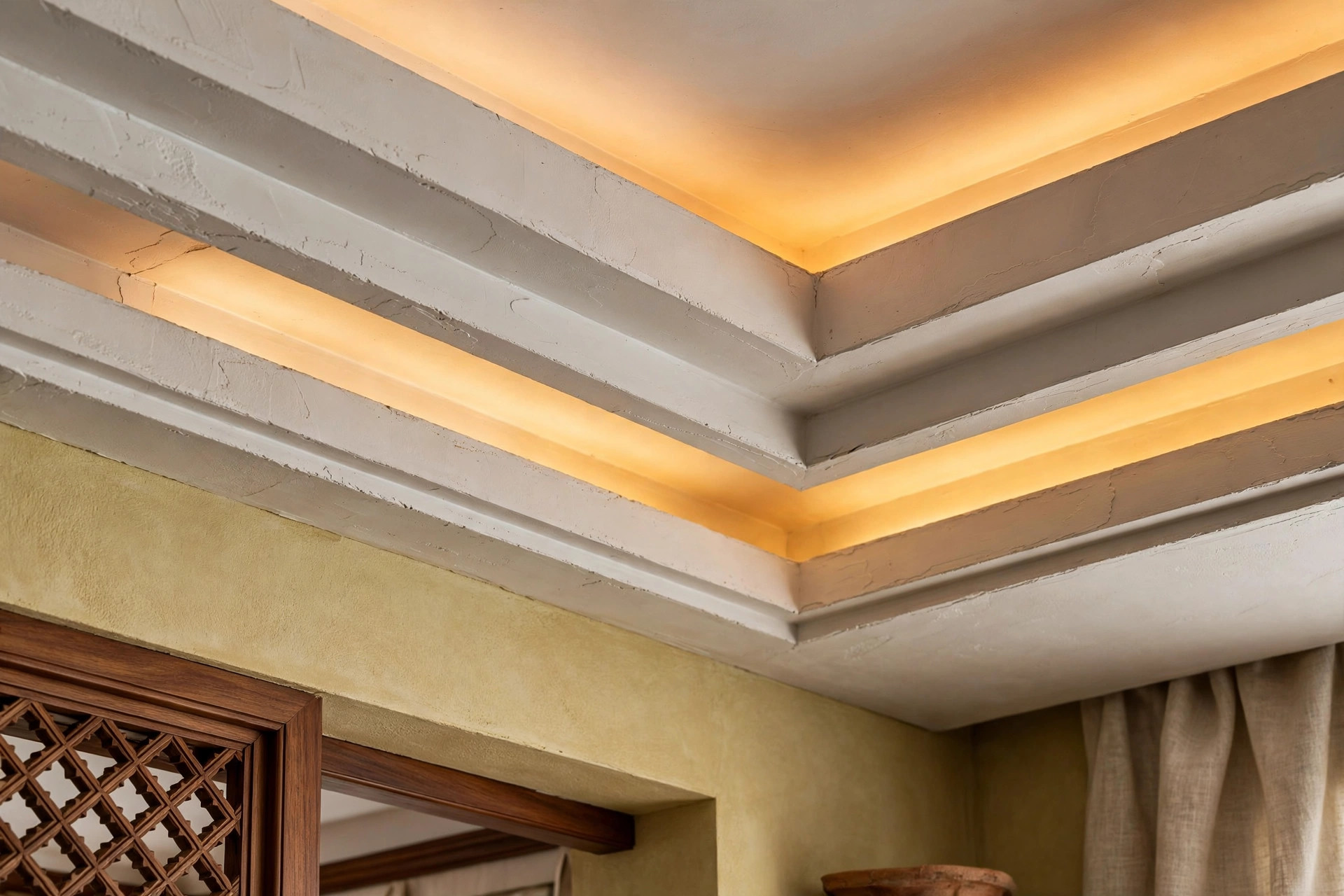
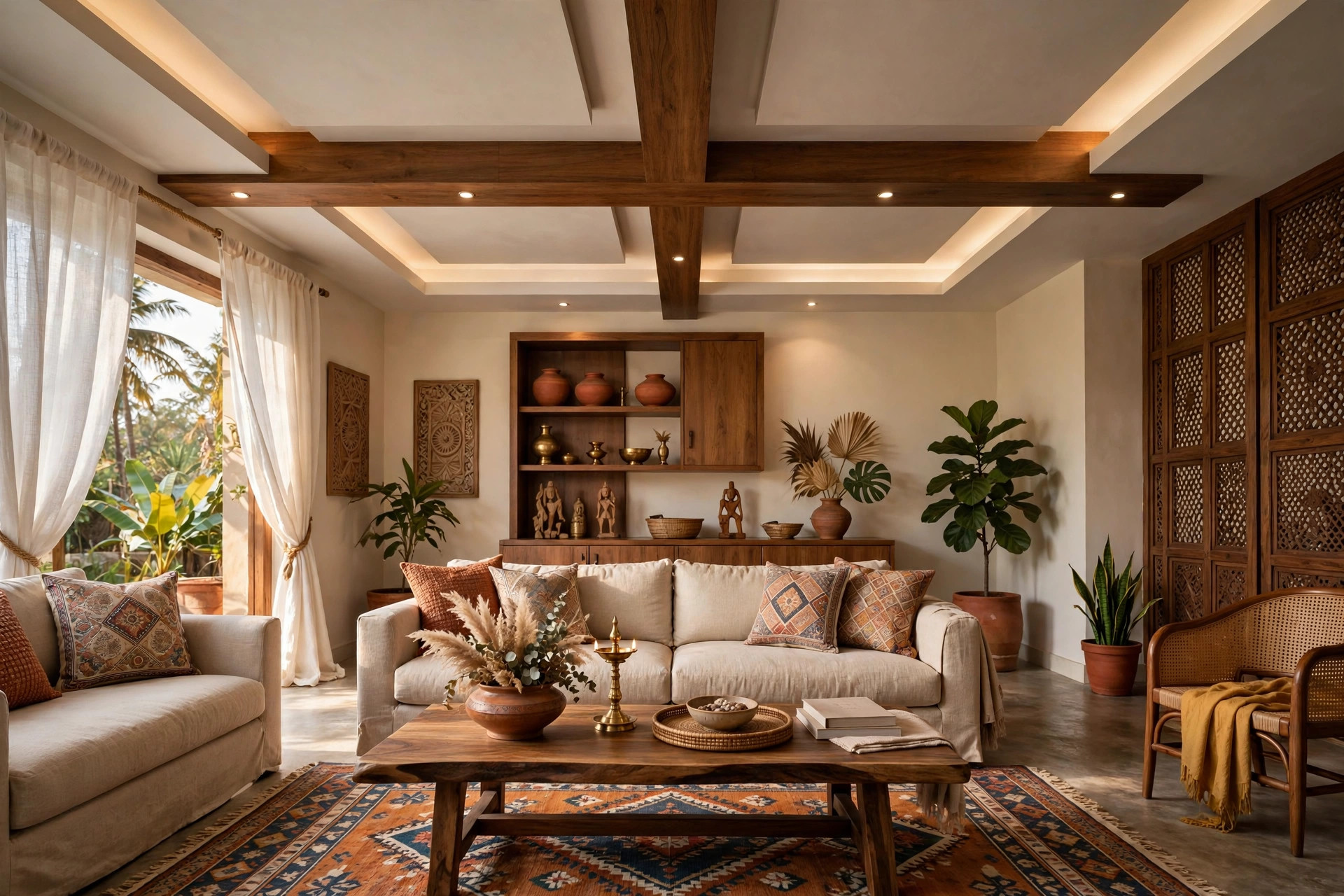
These three are the premium end of shaped ceilings, and they are often confused. The distinction, as a design encyclopedia puts it: a tray ceiling has one central section raised above a lower perimeter — an upside-down tray — typically a single recessed area following the room’s outline. A coffered ceiling is a grid of many recessed panels formed by deep intersecting beams, square or rectangular, with roots in classical Roman architecture. Layered (or step) ceilings stack two or more levels for a graduated, sculptural effect.
The practical differences: trays are simpler and cheaper, and they take cove lighting beautifully along the step. Coffered ceilings need more height, more labour, and more budget — they suit grand halls and villas, not compact flats. Layered ceilings sit between, and they are excellent at hiding wiring and services in the level changes.
Tray ceilings
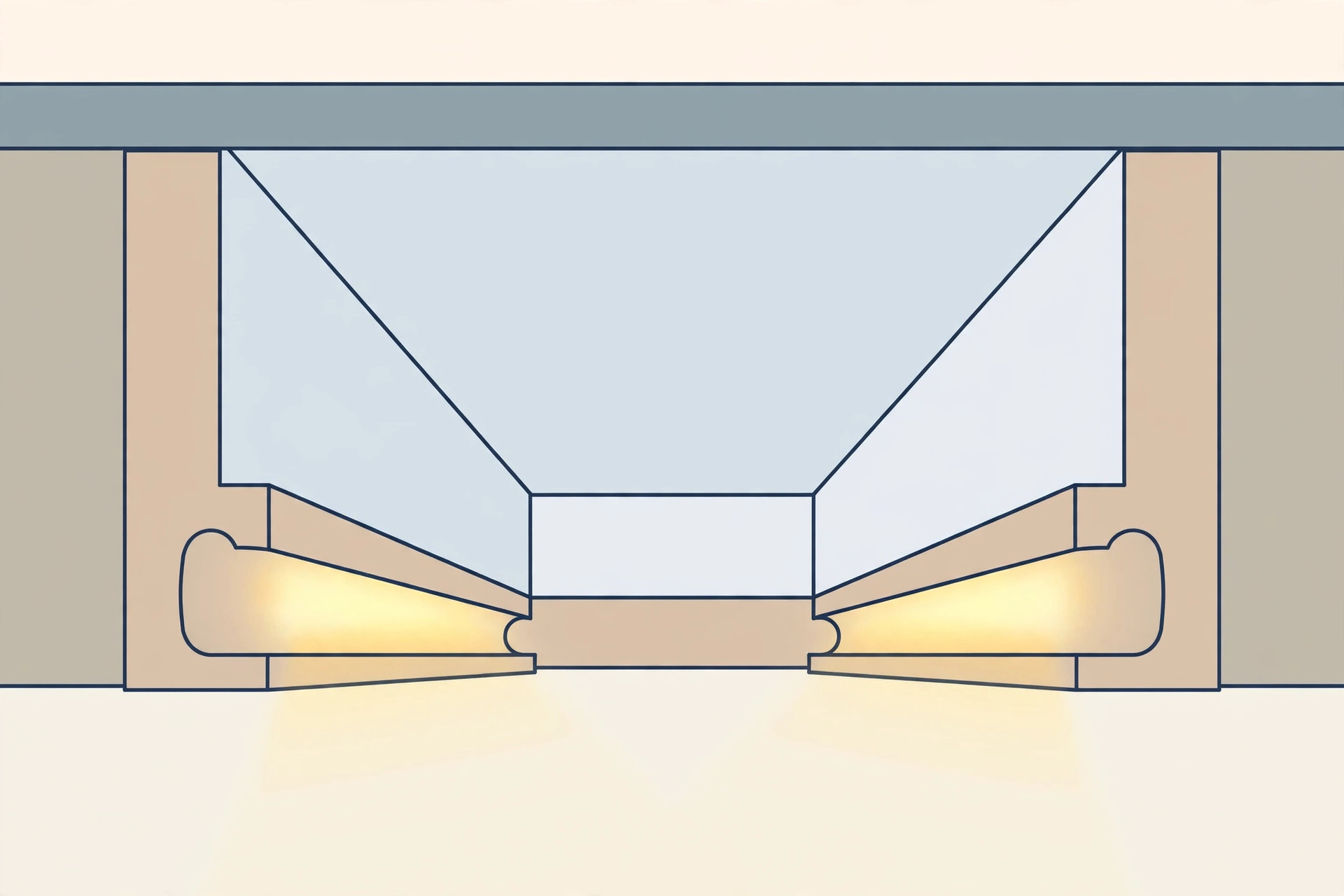
The workhorse shaped ceiling. A rectangular (or square) tray with a cove inside suits living rooms, bedrooms and dining rooms alike, and it is the shape most Indian contractors build most often — which means competitive quotes and reliable execution. Keep the tray shallow in rooms under 10 ft; deeper trays in tall halls. India cost band for POP tray work: roughly ₹100–₹120 per sq ft (2025–26 planning figures, excluding GST).
Layered / step ceilings
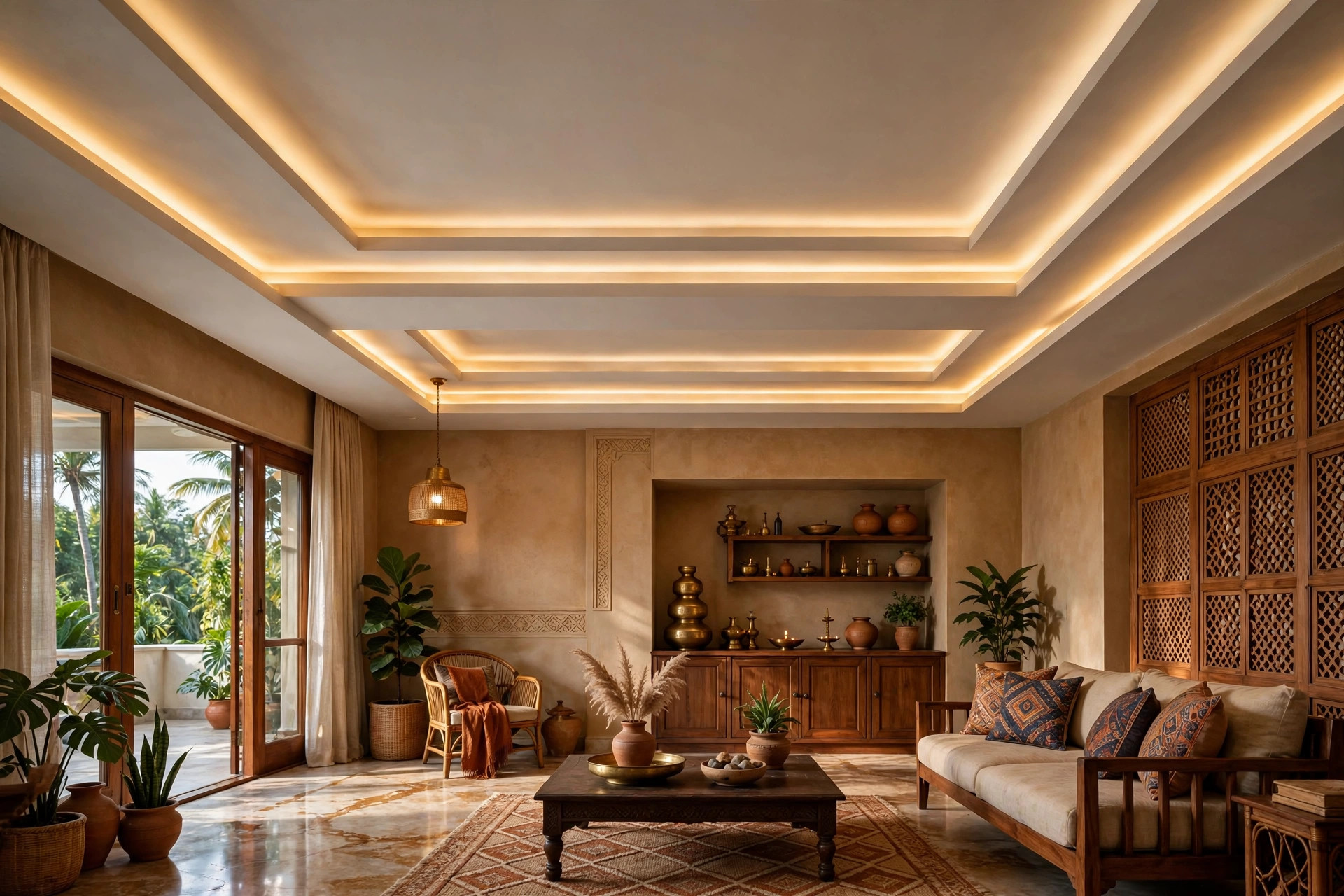
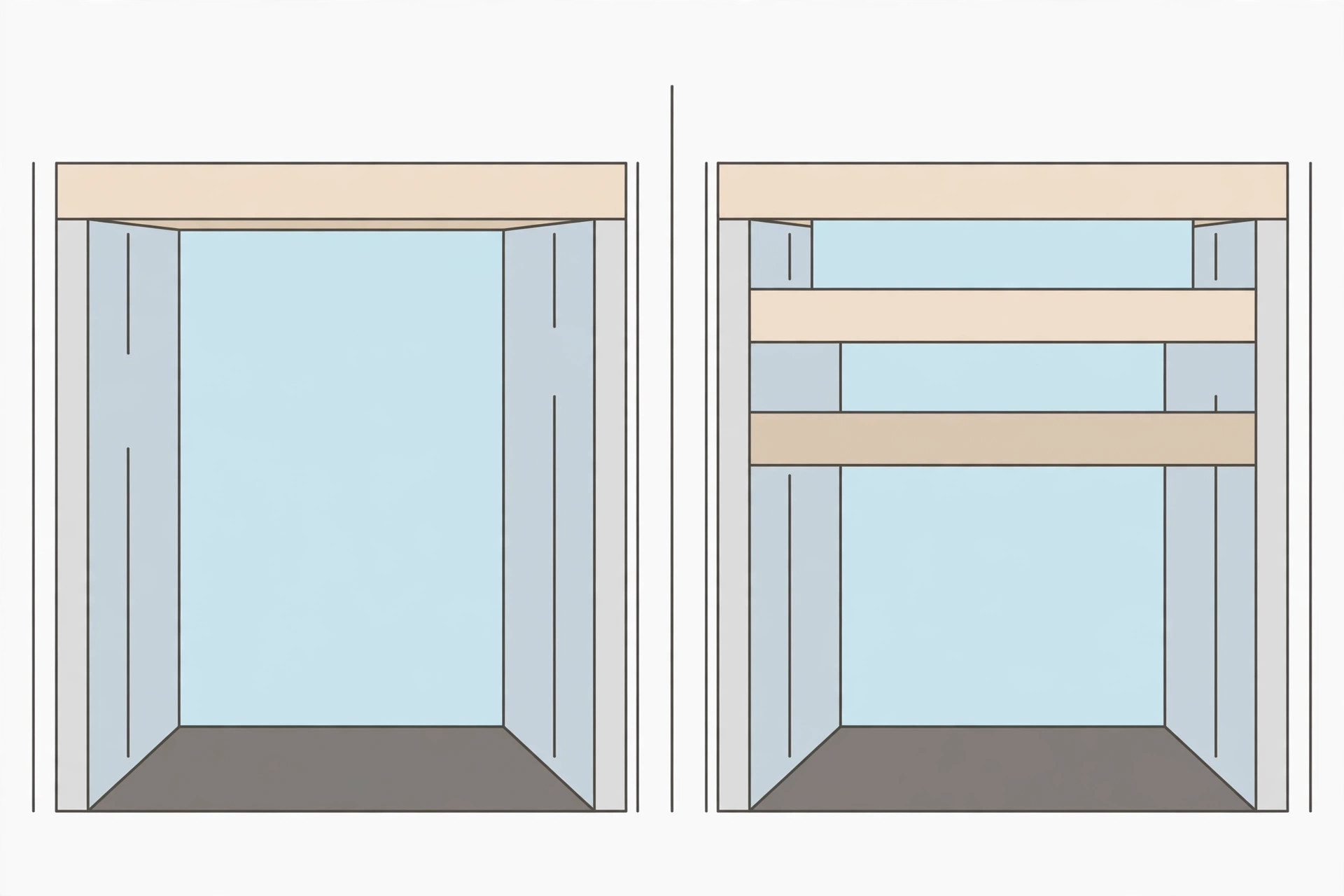
Two or more stacked levels, often in a plus-minus or stepped pattern. They create shadow play that a single tray cannot, and the channels between levels are natural homes for LED strips. Best in medium and large halls where the layering has room to read. Cost band: roughly ₹100–₹125 per sq ft for the POP work.
Coffered ceilings
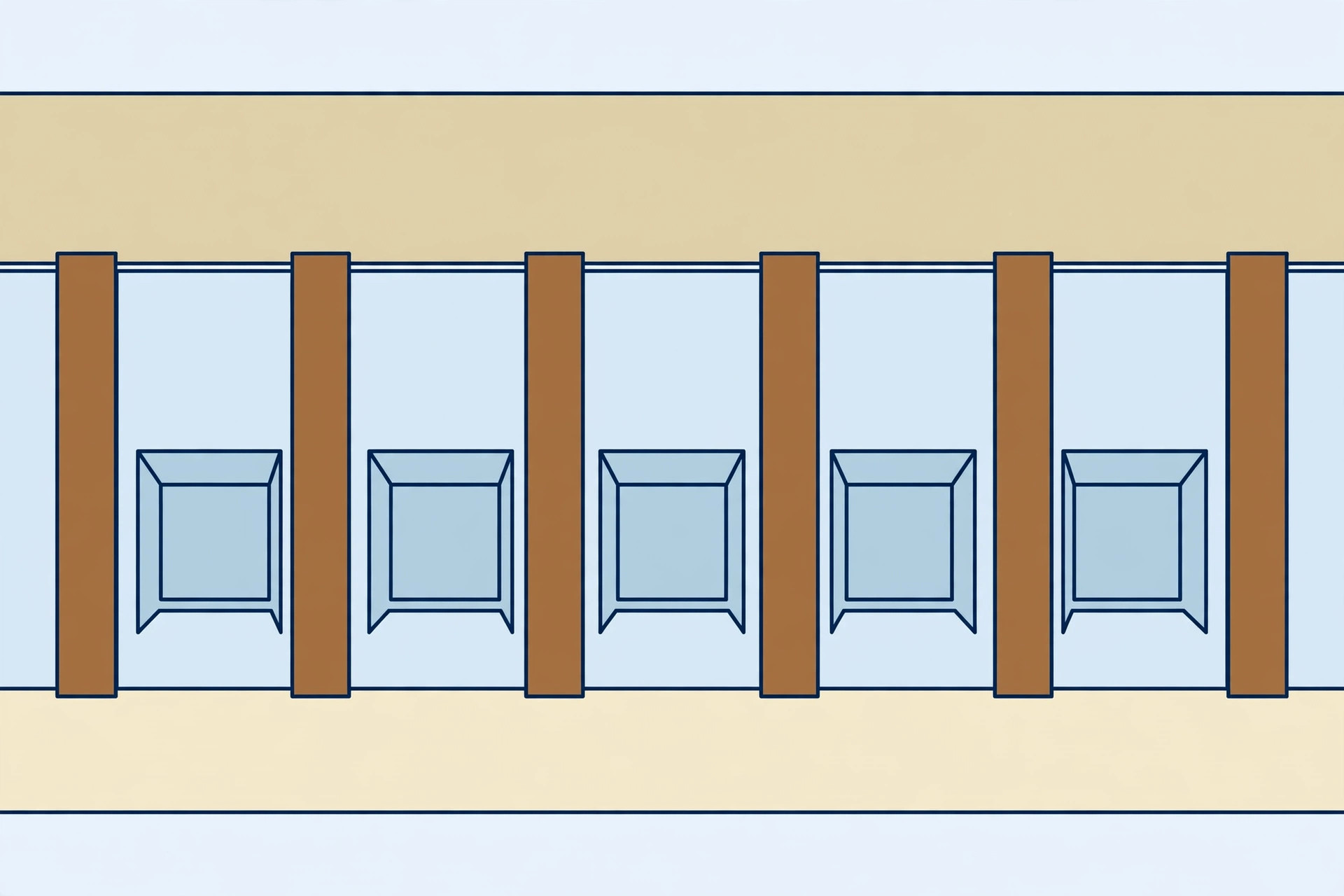
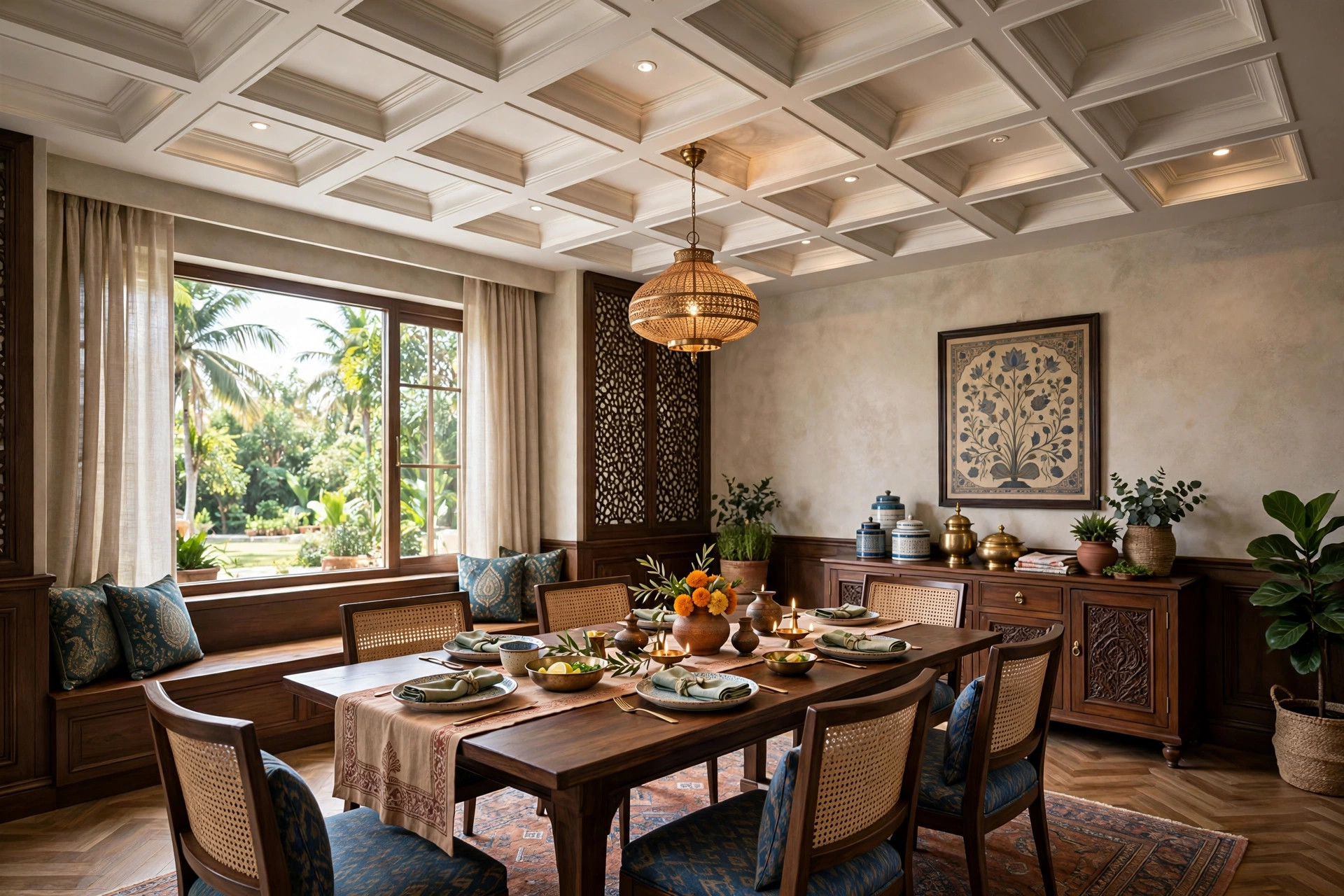
The formal one: a grid of sunken square or rectangular panels framed by beams, often with a recessed light in each coffer. It reads architectural and expensive because it is both — more framing, more finishing, more time. Reserve it for large halls and villas with generous ceiling height; in a compact flat it overwhelms. Cost band: roughly ₹110–₹130 per sq ft, the top of the shaped-ceiling range.
Round and curved shapes
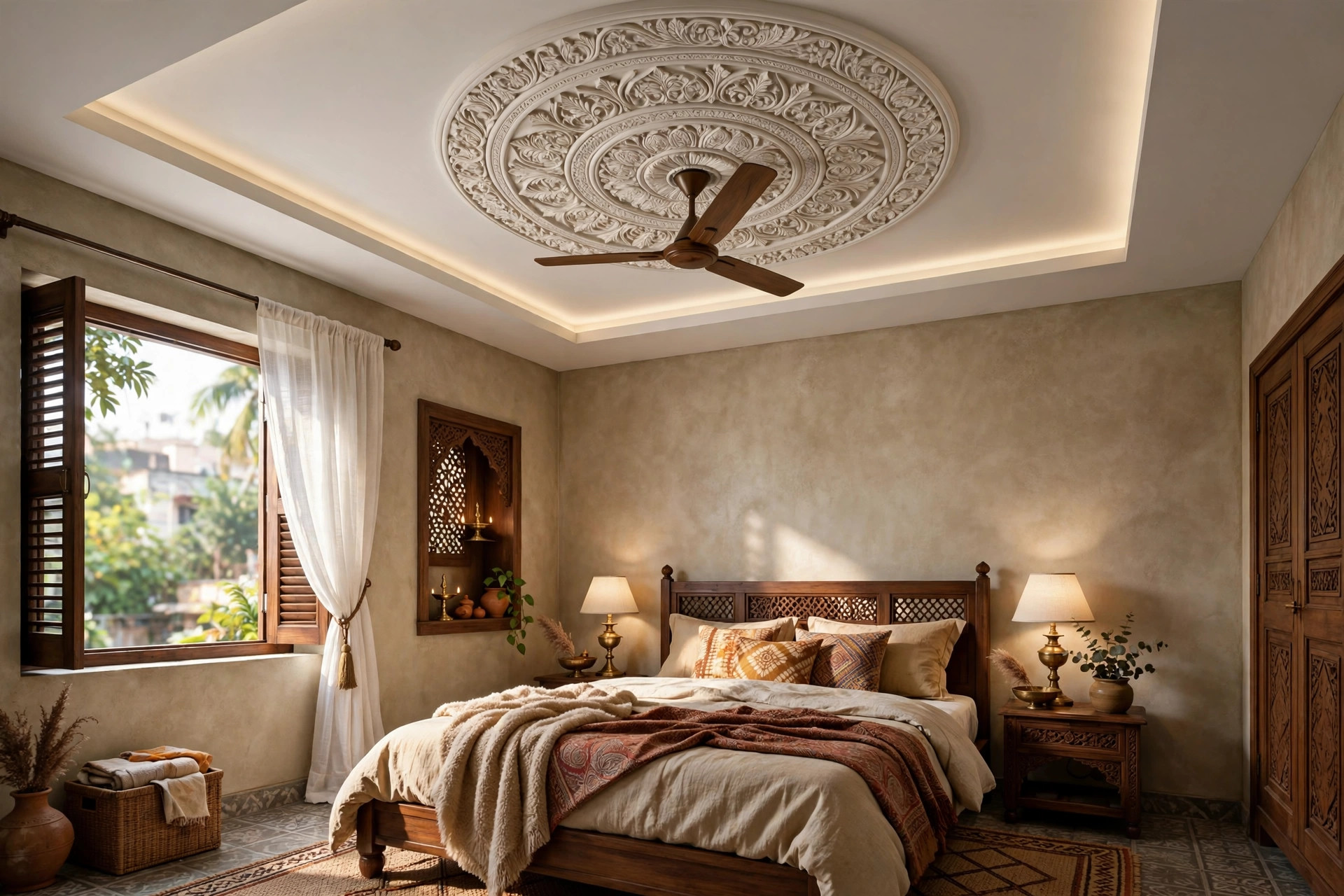
Round ceilings and medallions
The round false ceiling — a circular drop, often with a cove ring — is one of the most searched ceiling shapes in India, and it is having a visible moment in 2026 gallery content. Gypsum board is the natural material for it: it is lightweight and easy to shape into curves. A full round ceiling suits living rooms and bedrooms; in low-height rooms, a round medallion (a circular frame rather than a full drop) gives the motif without the bulk — a well-designed round can even create an illusion of height.
Lighting a round ceiling: a cove ring around the circle’s edge, or a chandelier hung at the centre. Centre the room’s furniture on the circle, or the geometry fights the layout.
Oval ceilings
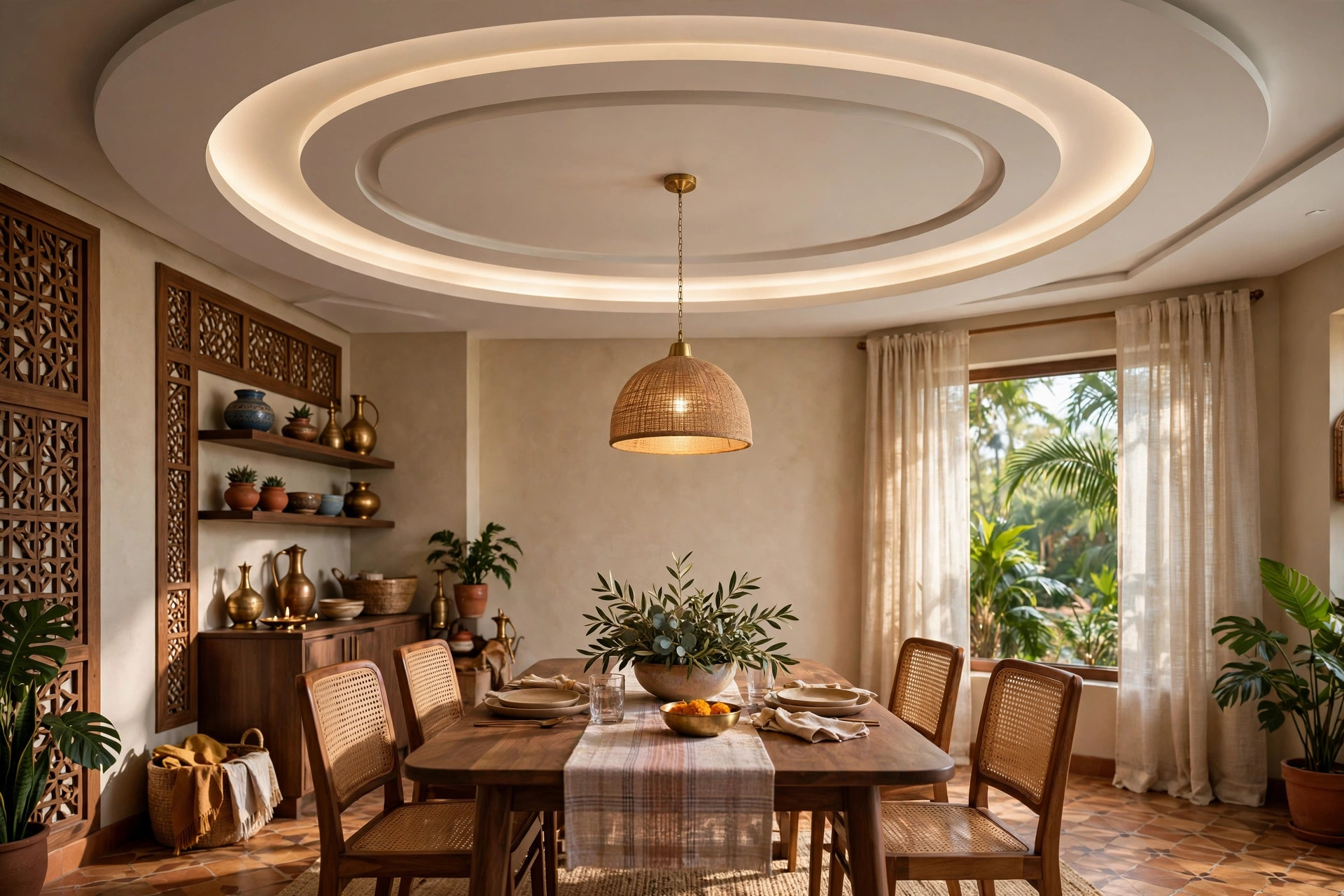
The oval is the round ceiling’s dining-room sibling: an elliptical drop centred over the dining table, usually with a pendant at its heart. It frames the table the way a rug frames it from below. Same material logic as round — gypsum curves.
Domes
A small dome at the ceiling’s centre is a traditional Indian motif — most at home in pooja rooms and classical living rooms. It is artisan work (POP), not board work, so it belongs in the skilled-craftsman budget, not the per-sq-ft band.

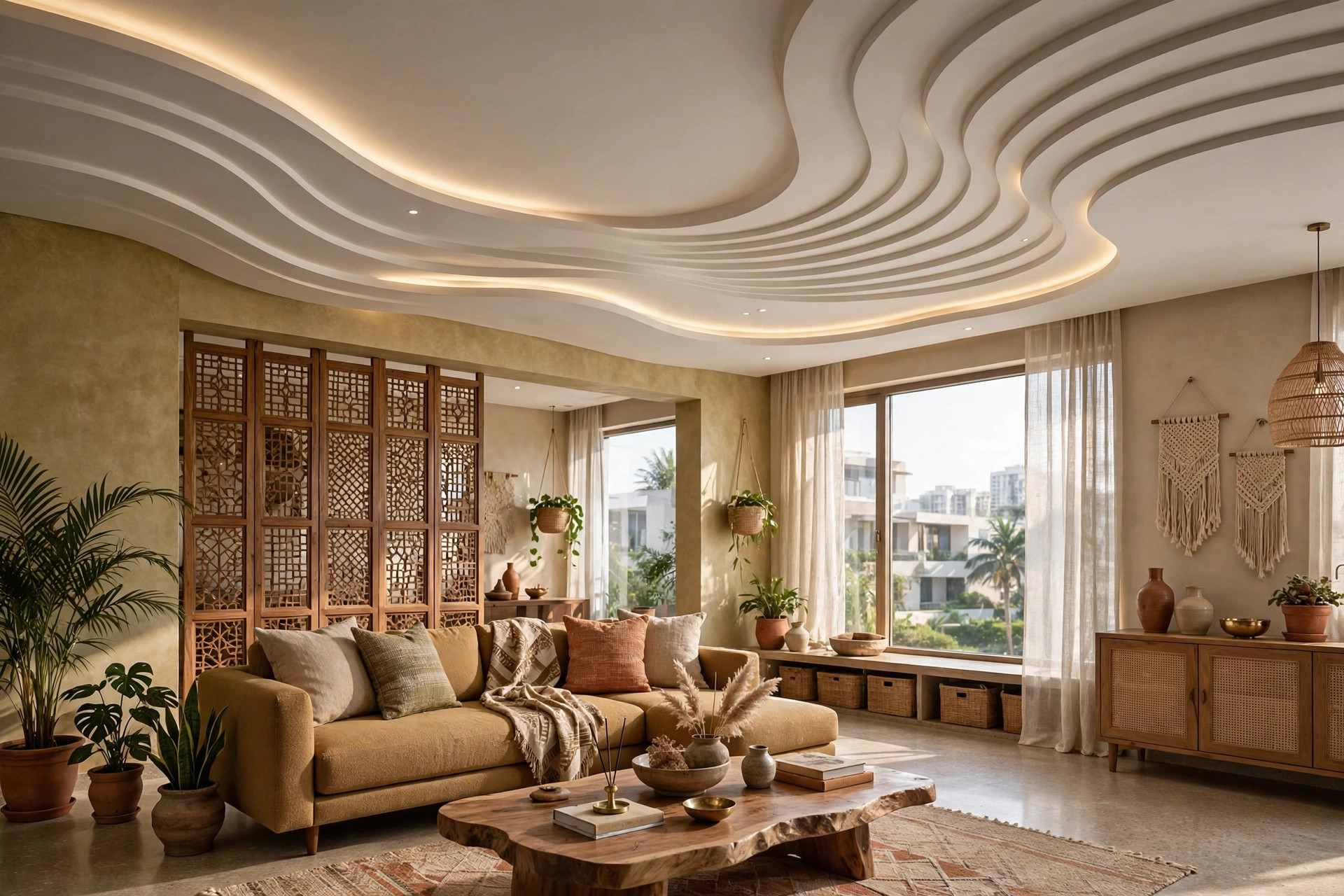
Curved and wave ceilings
Flowing curves and wave profiles add movement that rectilinear shapes cannot — the “flow” end of the vocabulary. They are modern, sculptural, and unforgiving: curves need skilled framing and finishing, and they cost accordingly. Best in large contemporary living rooms where the curve has space to breathe.
Arches
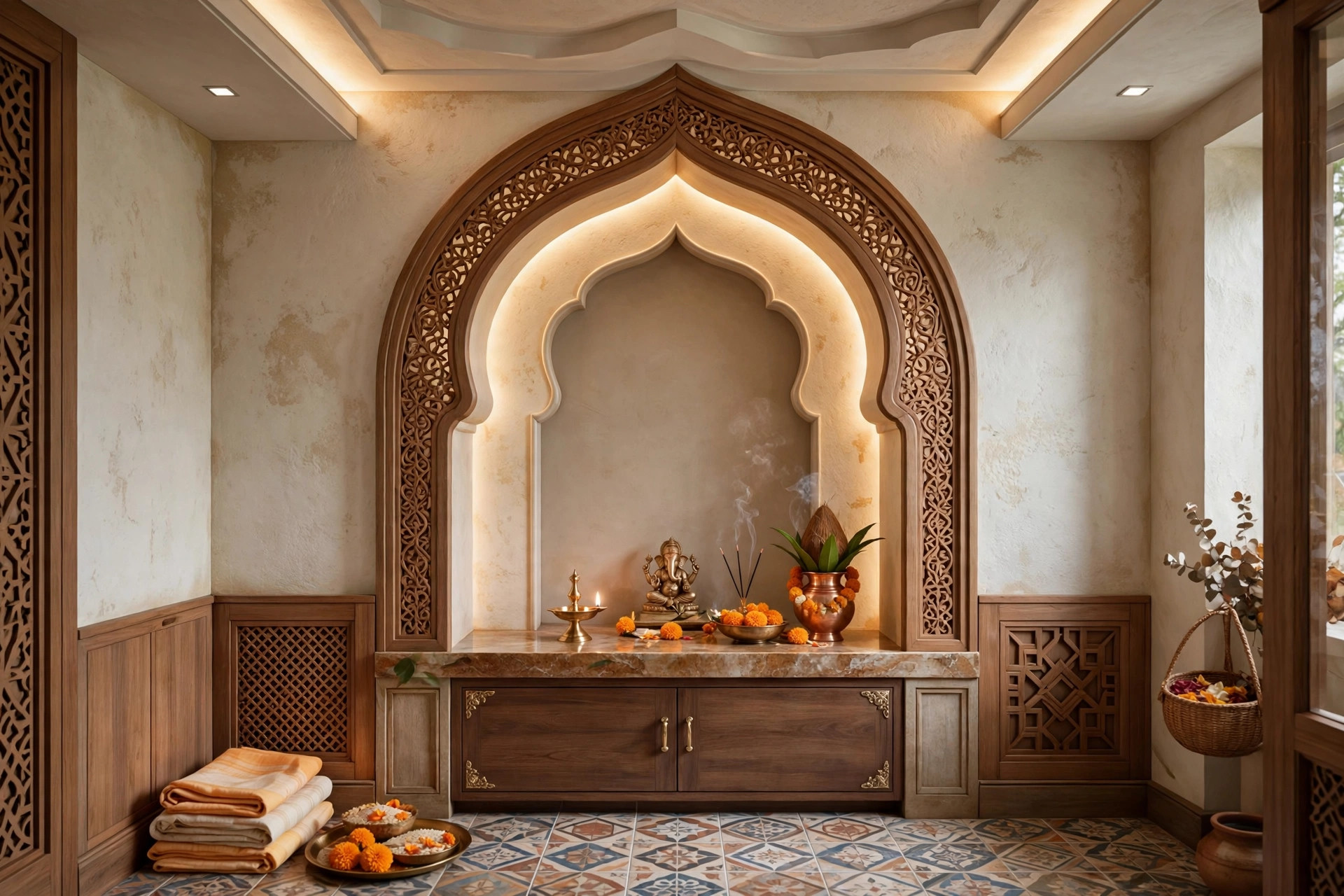
The arched (mehrab) niche ceiling is a traditional Indian form — a small arched recess, often in pooja rooms and entryways. Like domes, it is craft work; like all traditional motifs, it needs the room’s overall style to support it, or it reads as costume.
Geometric and linear patterns
Geometric patterns: squares, hexagons, diamonds
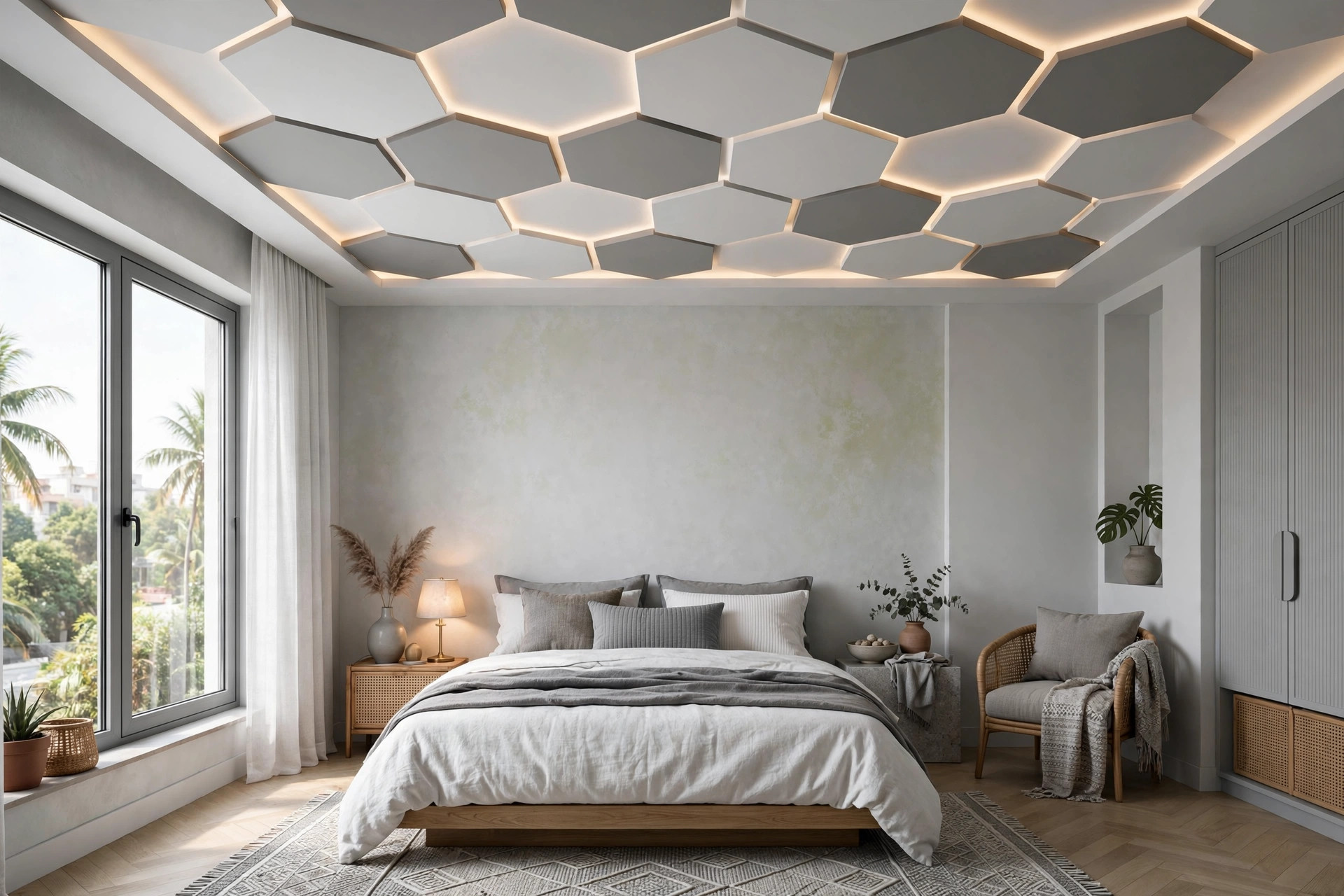
Geometric ceilings — hexagonal grids, diamond lattices, bold squares — are the contemporary end of the vocabulary. They are usually built as POP or gypsum relief, or as CNC-cut panels, and they suit modern living rooms and bedrooms. The cost band for geometric POP work sits around ₹100–₹120 per sq ft. Keep the geometry aligned with the room’s axes; a rotated hexagon grid in a rectangular room looks like a mistake.
Nested rectangles and square frames
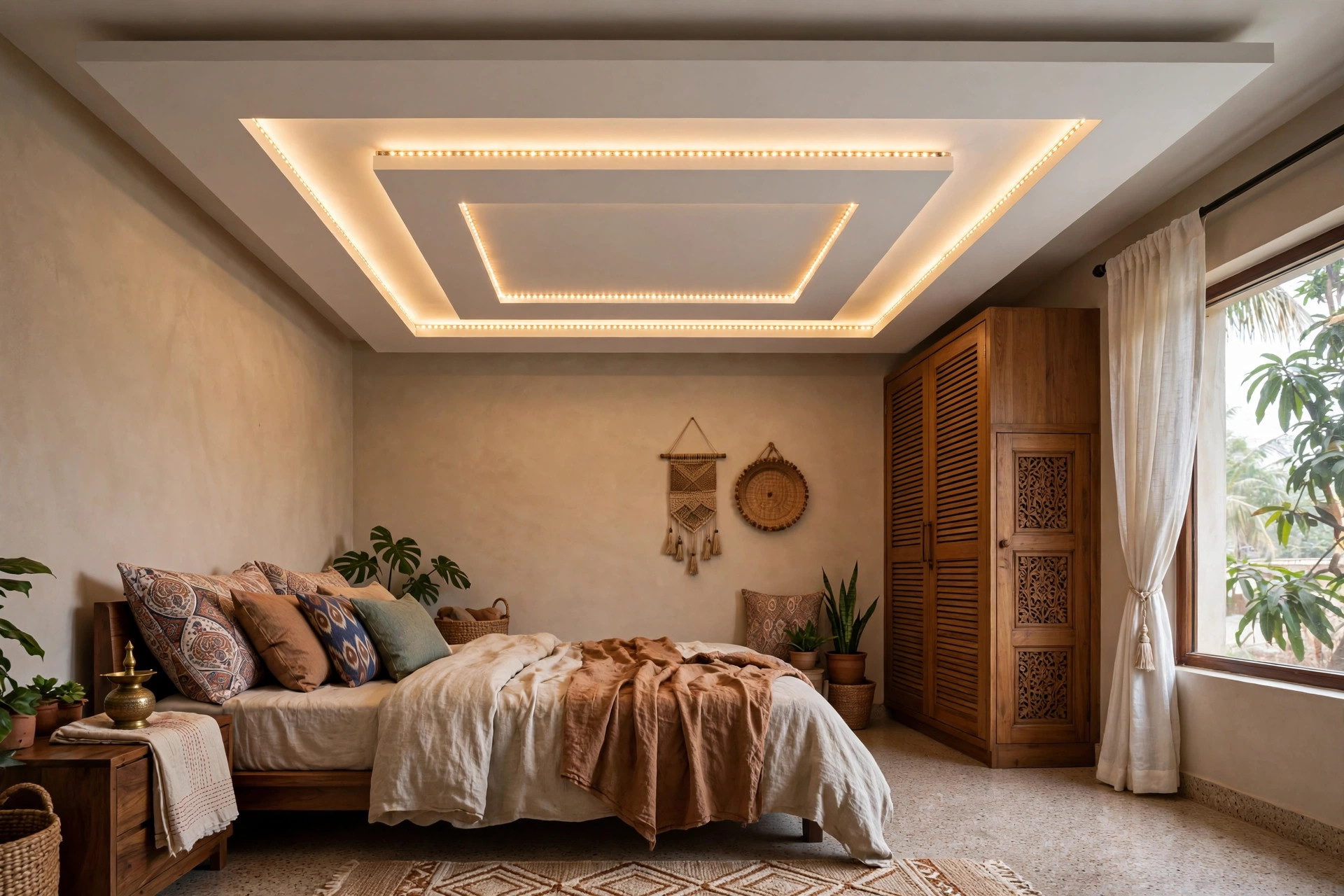
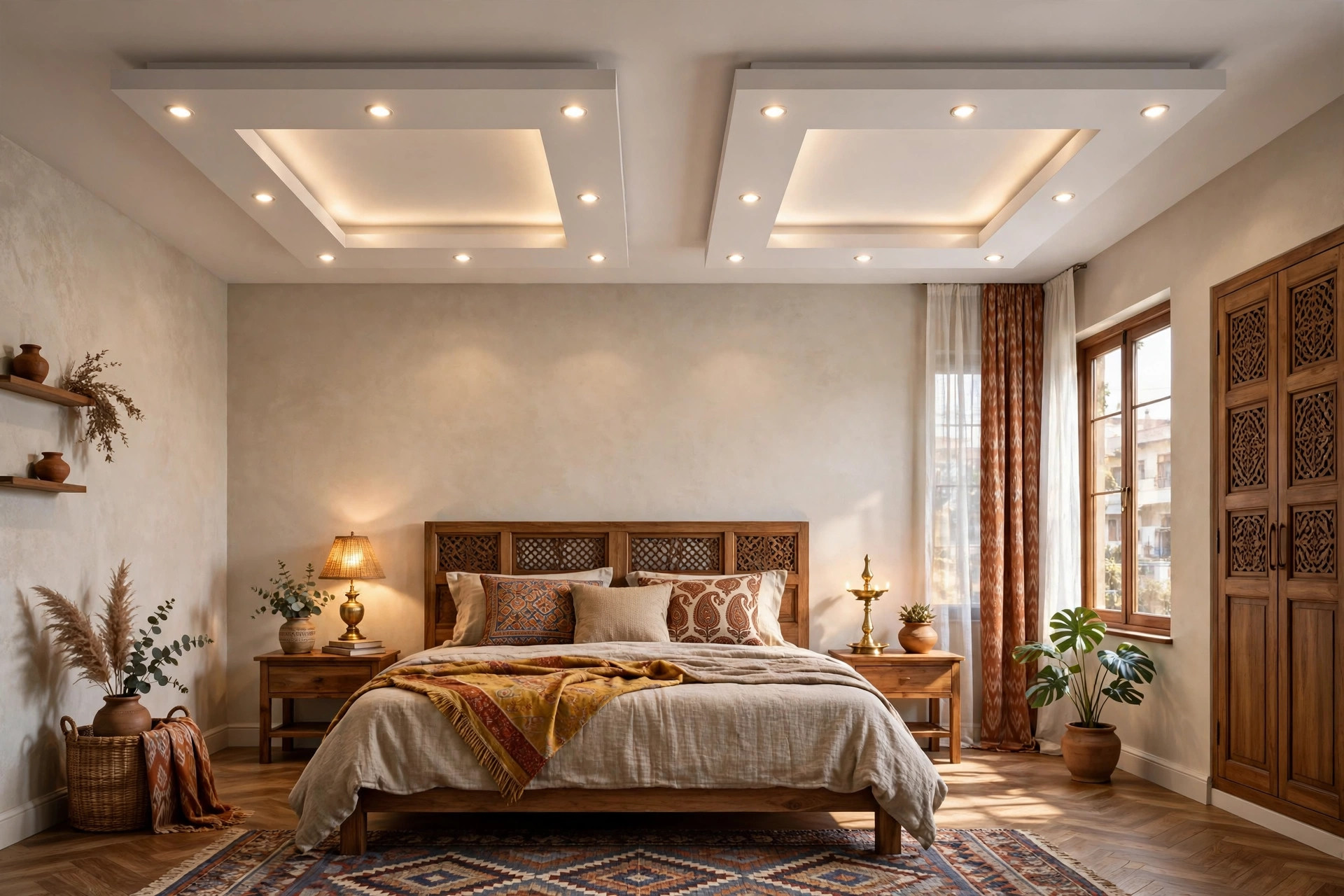
Concentric rectangular or square frames with LED strips in the reveals — the quiet, reliable modern ceiling. Less dramatic than a tray, easier to build, and it suits bedrooms particularly well. Two frames are enough; three starts to look busy.
L-shaped ceilings
An L-shaped drop that follows an L-shaped seating layout or an open-plan living-dining boundary. It is a zoning tool: the ceiling draws the line the walls do not. Plan it with the furniture layout, not after it.
Plus-intersection beams
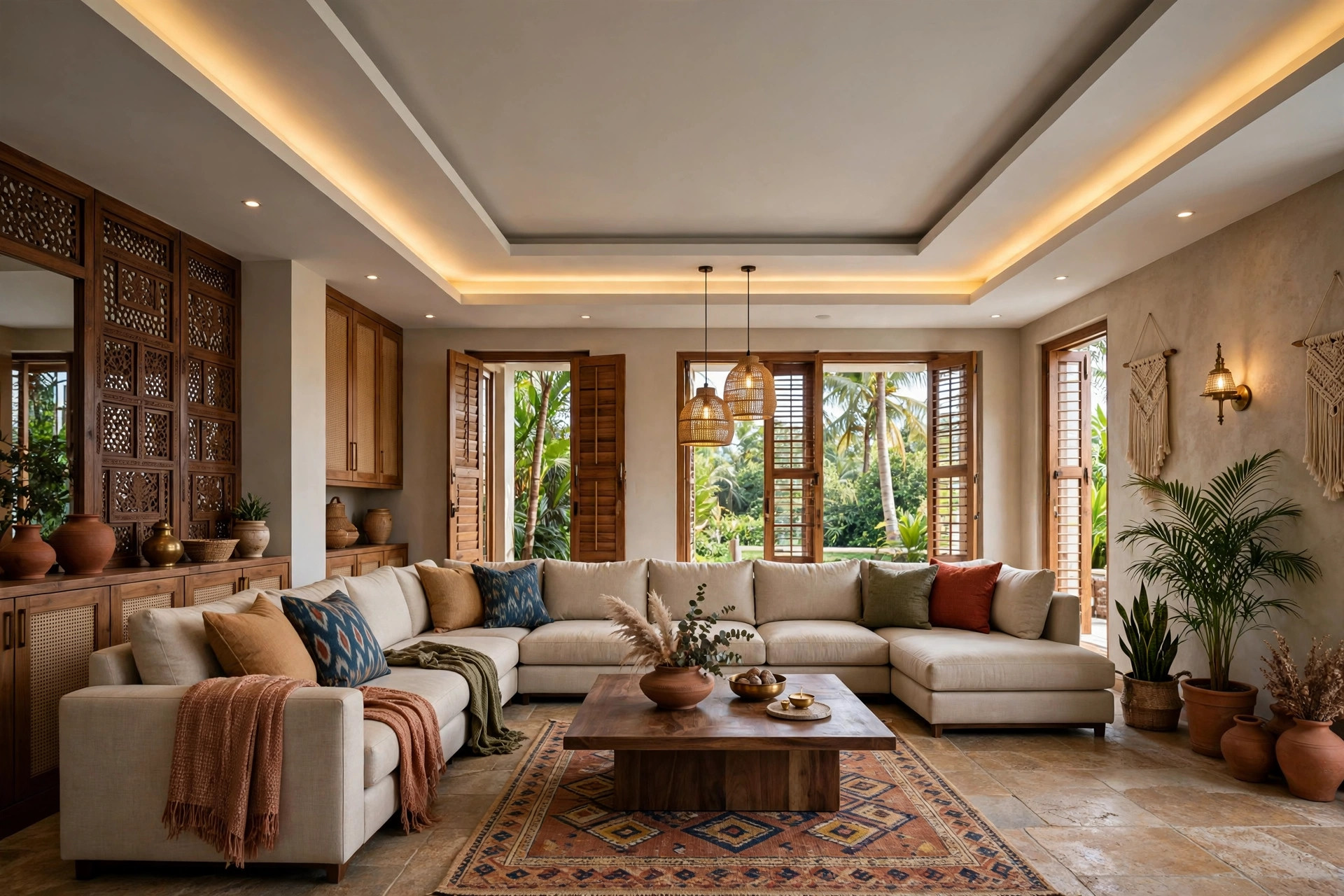
A plus (+) of intersecting beams or bands over the seating area — a light-touch geometric move that adds structure without a full grid. Works where a coffered ceiling would be too much.
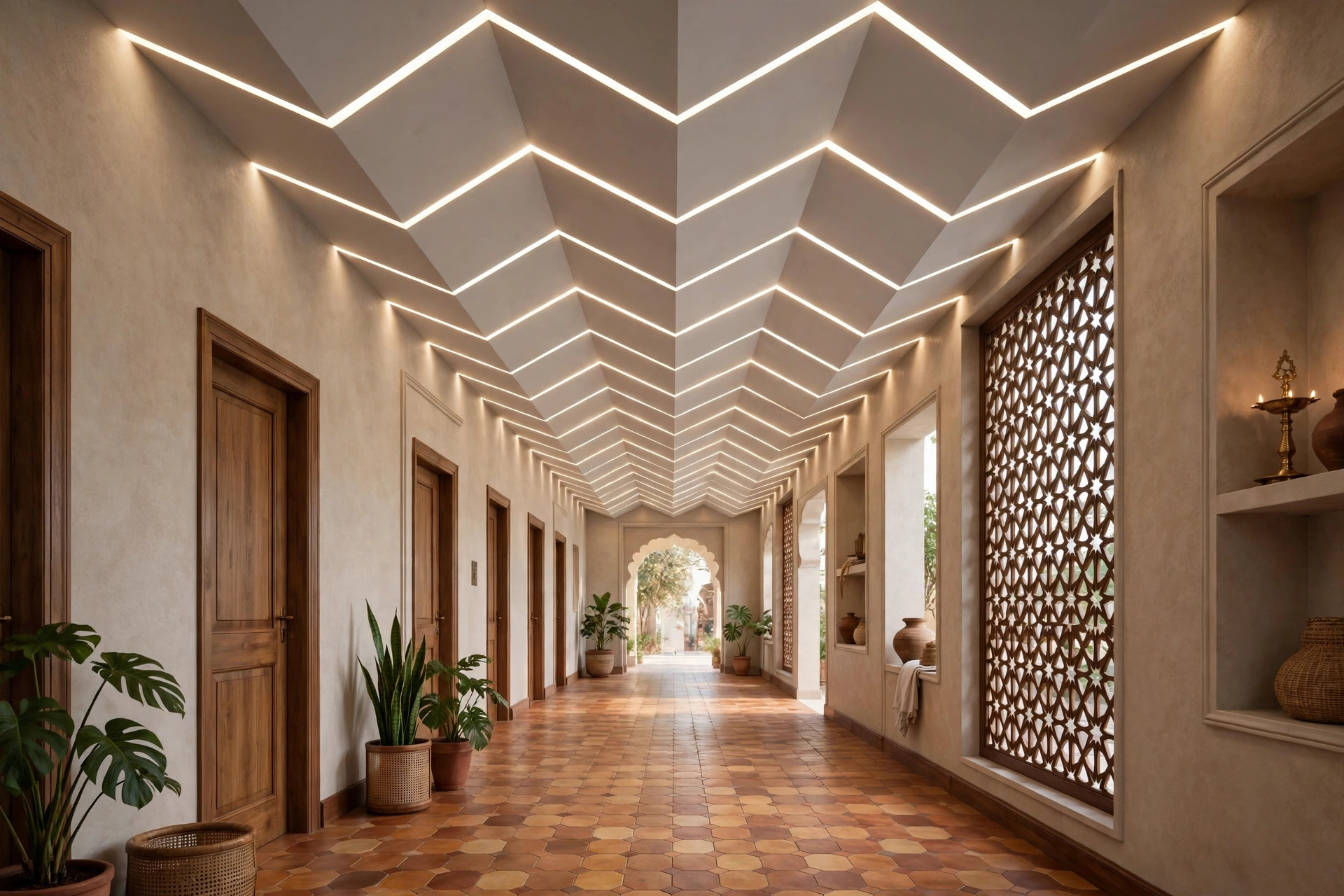
Zigzag and diagonal patterns
Zigzag and diagonal linear patterns bring energy to long corridors — the one room where a busy ceiling works, because nobody lingers to stare at it. Pair with linear lights that follow the pattern.
Jali, floral and traditional patterns
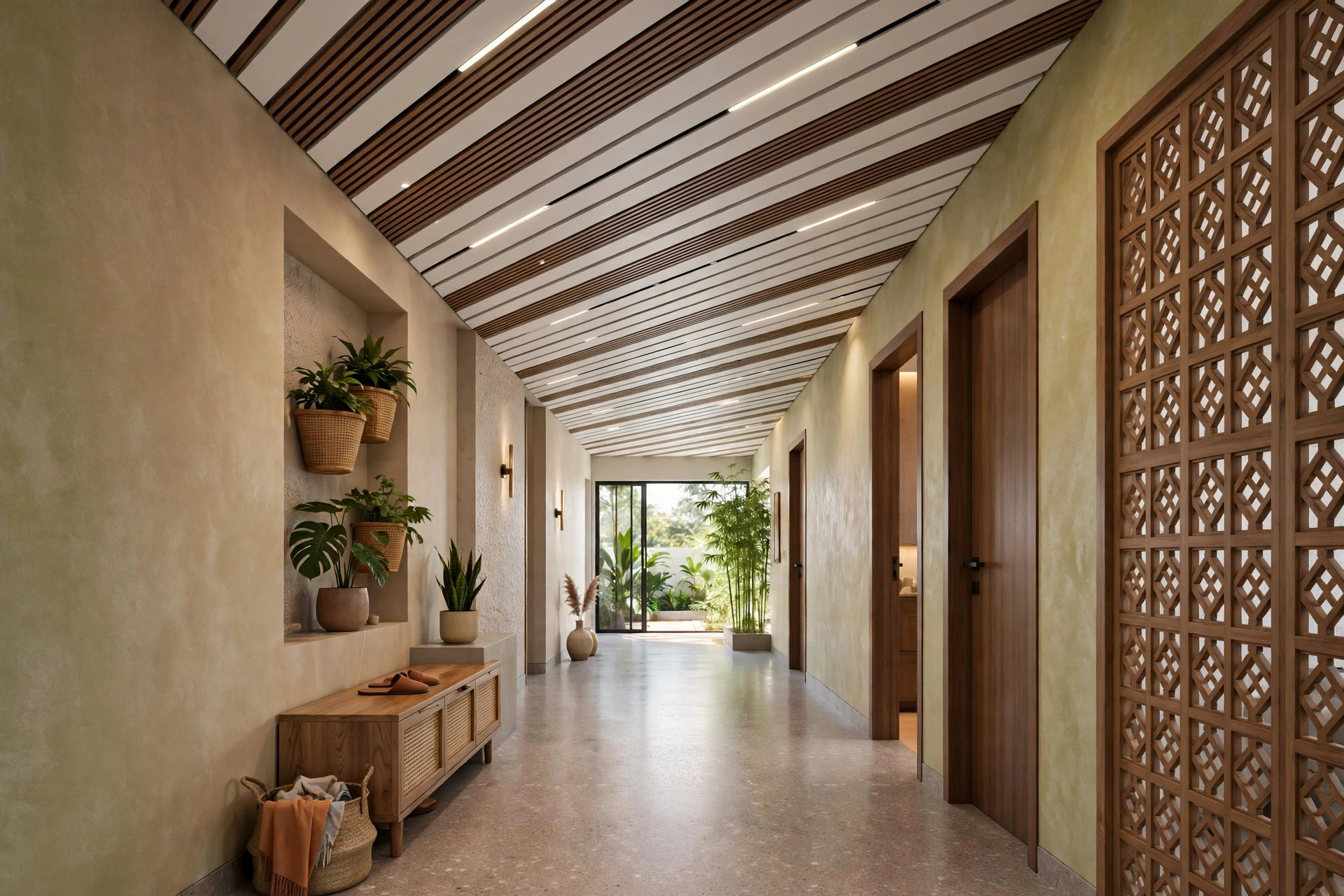
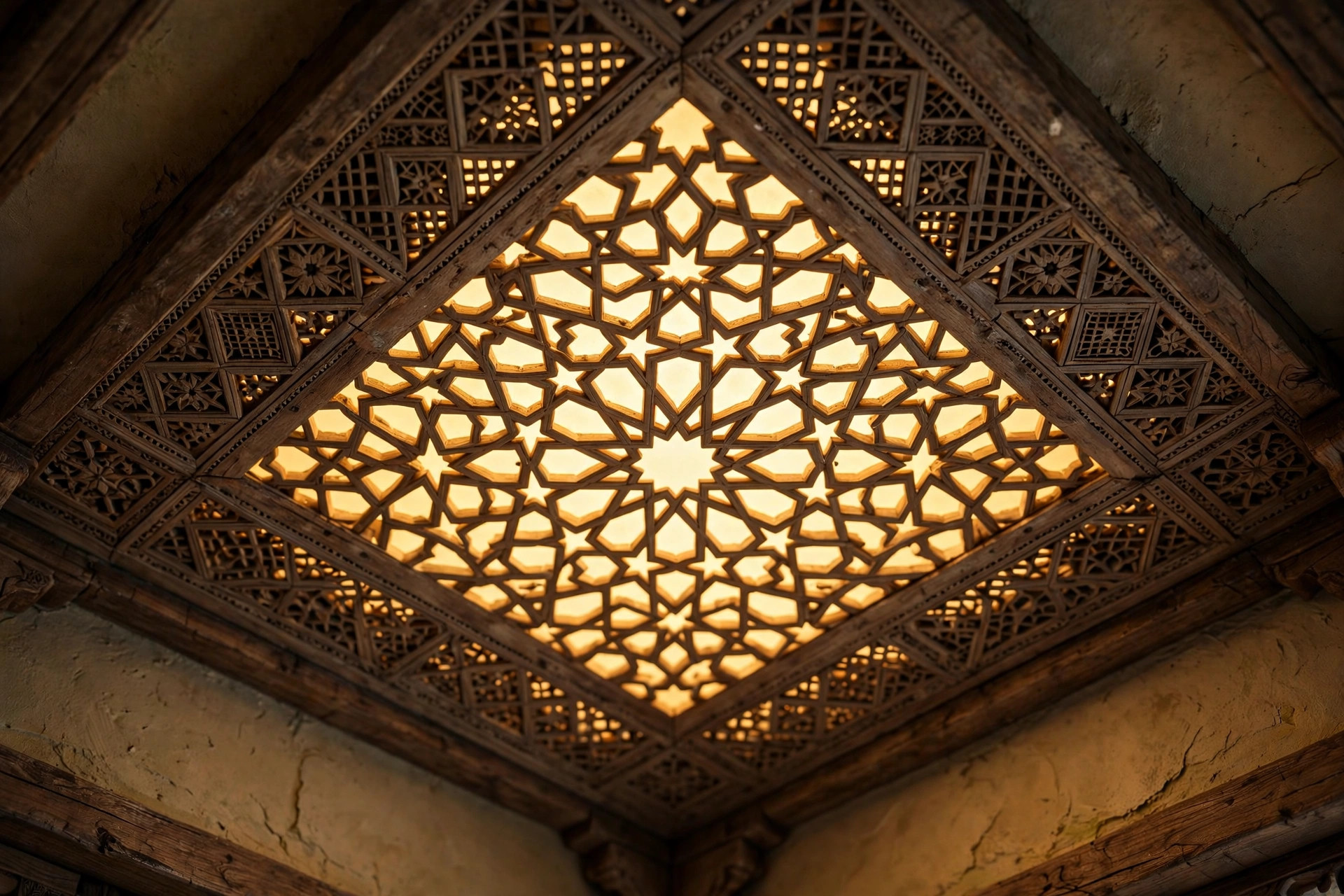
Jali cutwork
Jali — intricate lattice cutwork — is the traditional Indian ceiling pattern, now mostly executed as CNC-cut panels rather than hand carving. Backlit jali borders, central jali medallions, and full jali feature panels are the three standard moves. The cutwork filters light and throws patterned shadows, which is the entire point. Installed CNC-cut panel ceilings run roughly ₹250–₹600 per sq ft — the pattern density and the LED wiring move the price more than the panel material. Full material detail, including which sheet to choose for your climate, is in the alternative materials guide on this site.
Floral medallions
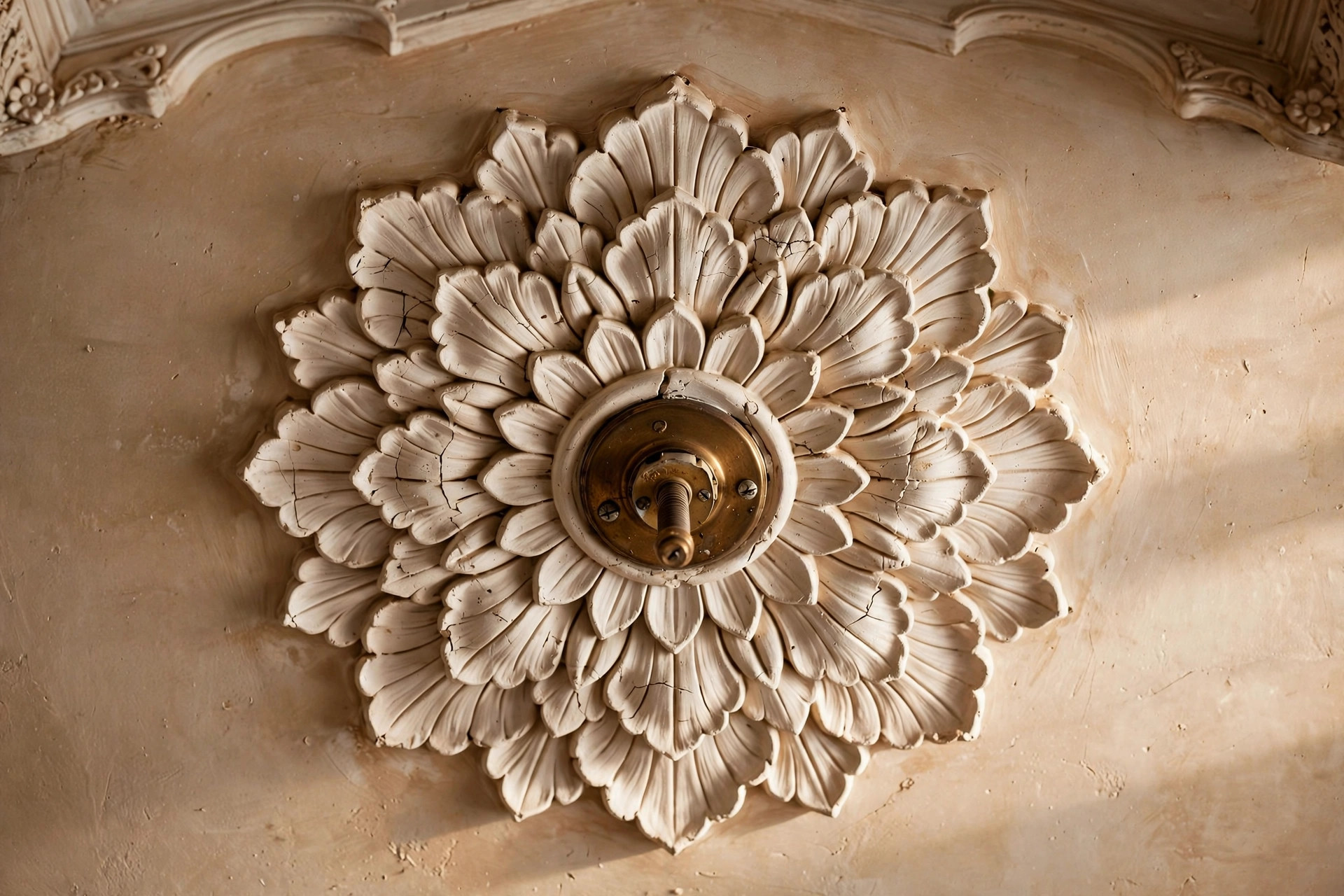
The floral or flower-petal plaster medallion at the ceiling’s centre — around a chandelier or fan mount — is the classic Indian ceiling ornament. POP craft, usually painted or gilded, sized to the fixture it frames. A medallion larger than its light fixture looks stranded; match them.
Borders and pelmets: the perimeter shapes
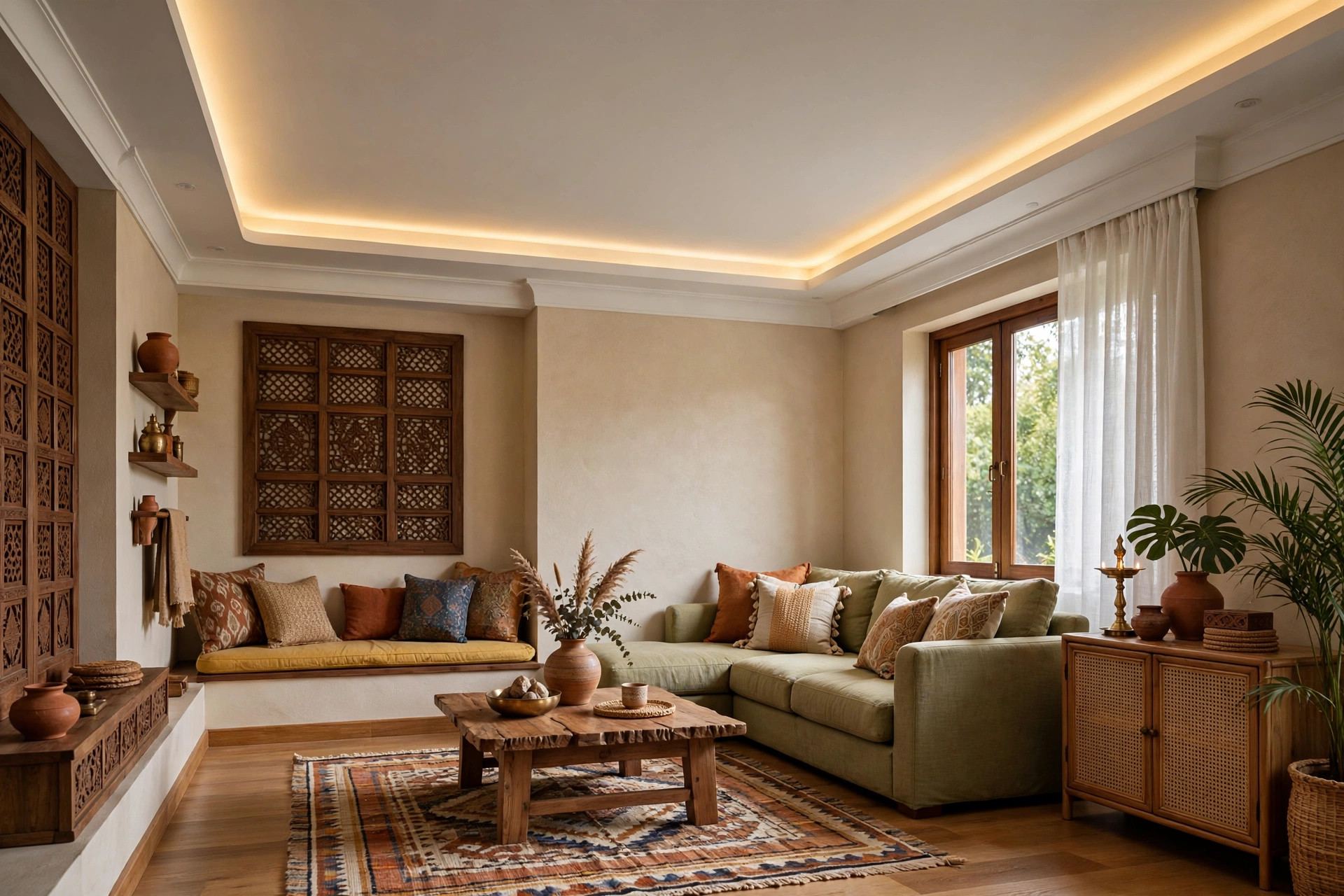
Not every shaped ceiling covers the whole room. A border runs a patterned or stepped band around the ceiling’s perimeter, leaving the centre plain — the right move for rooms under 9.5 ft, where a full shaped ceiling would press down. A pelmet is the dropped edge itself, often carrying the cove light. Borders give you the shaped-ceiling look at a fraction of the cost and dusting commitment of full coverage, and they never fight the ceiling fan — which is why the fan layout guide recommends them.
Choosing a shape: five practical rules
- Match the shape to the ceiling height. Low rooms: borders, medallions, shallow trays. Tall rooms: deep trays, layered, coffered. Height is the first filter.
- Match the shape to the furniture. Round and oval ceilings centre on tables and seating; L-shapes follow layouts. A shape that ignores the furniture plan looks random.
- One hero per room. A tray plus a jali panel plus a geometric border is three heroes fighting. Pick one shaped idea per room and let the rest of the ceiling stay quiet.
- Budget by complexity, not just area. Curves, coffers and dense jali cost in labour and time, not just material — the per-sq-ft bands above assume standard execution.
- Plan lights and fans with the shape. Cove channels, spot positions and fan mounts are decided with the shape, not after it. The lighting guide and fan layout guide cover the details.
FAQs
What is the difference between a tray and a coffered ceiling?
A tray ceiling has one raised central section — an upside-down tray — usually with cove lighting along its step. A coffered ceiling is a grid of many recessed panels framed by beams. Trays are simpler and cheaper; coffered ceilings are more formal, need more height, and cost more.
Which material is best for round or curved ceiling designs?
Gypsum board — it is lightweight and easy to shape into curves. POP is the choice for sculpted traditional forms like domes and medallions, which are artisan work.
Can I have a shaped ceiling in a room with low height?
Yes, in restrained forms: a perimeter border, a flat medallion, or a shallow tray. Avoid deep coffers, multi-layer drops and full patterned coverage in rooms under about 9.5 ft.
How much does a tray ceiling cost in India?
Planning bands for 2025–26 put POP tray work around ₹100–₹120 per sq ft, layered/step around ₹100–₹125, and coffered around ₹110–₹130 — all excluding GST, with labour typically included and metros 10–15% higher. Get written quotes; complexity moves the number.
Do shaped ceilings work with ceiling fans?
Yes, if planned together — fans sit in the flat zones or at the centre of medallions and trays. Never cut a fan through patterned jali or dense geometric relief. The details are in the fan layout guide.
All 22 images in this article are original concept renders and illustrations created for falseceiling.in — they show design ideas, not completed client projects. Cost bands are 2025–26 planning figures from the sources cited, not quotations; get written quotes from local contractors before budgeting.


Pingback: Modern & Luxury False Ceiling Styles for Indian Homes