
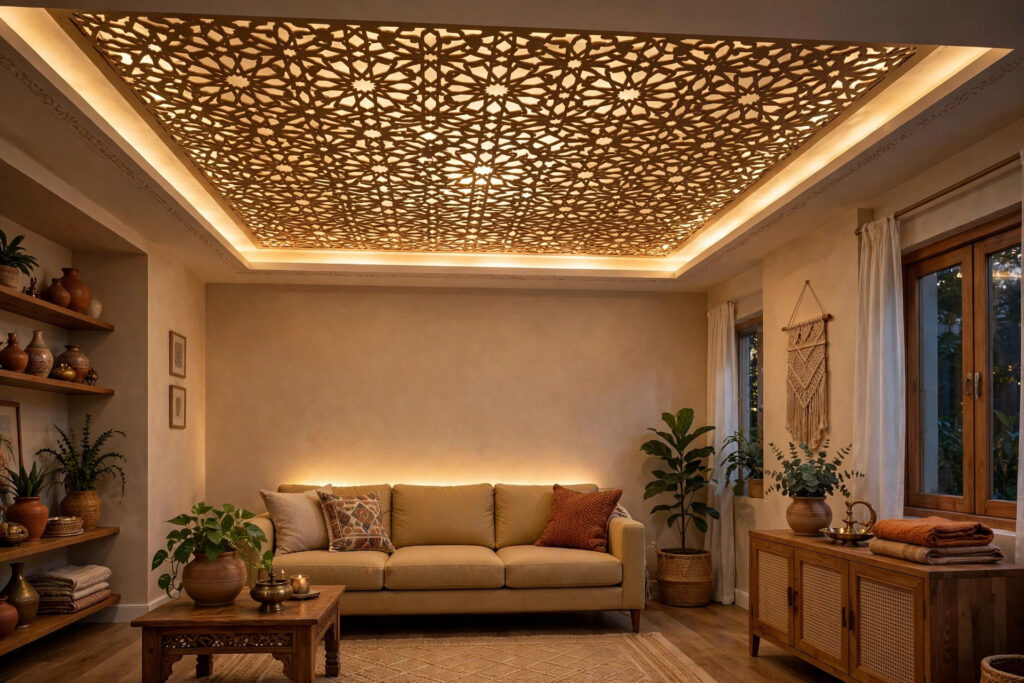

Walk into most Indian homes and the false ceiling will be gypsum or POP. But those are not the only options. Medium-density fibreboard (MDF) cut into jali patterns, stretch fabric membranes, bamboo slats, and fibre cement boards each solve a problem the mainstream materials do not — decoration, speed, sustainability, or wet-area survival. The catch is that each of them also fails somewhere the mainstream materials do not.
This guide covers the alternative ceiling materials you will actually encounter in India: what they are, what they cost (with the scope stated honestly), where they work, and where to avoid them. It is written for homeowners choosing a ceiling, not for contractors buying in bulk.
What “alternative” means here
Alternative is a relative word. The mainstream materials in Indian homes — gypsum, POP, PVC, wood, metal, glass, thermocol, and mineral fibre — each have a dedicated guide on this site. Everything here is what remains: materials that are real and buyable in India, but niche. Some are niche because they are decorative (MDF jali), some because they are new (stretch fabric), some because they suit specific rooms (cement board), and some because they are simply uncommon (cork, bamboo).
If you are still deciding between the mainstream options, start with the overview of false ceiling designs and then compare with the material guides for gypsum false ceiling designs and metal false ceiling designs. The materials below make the most sense once you know what the mainstream ones cannot give you.
MDF: the jali and panel material
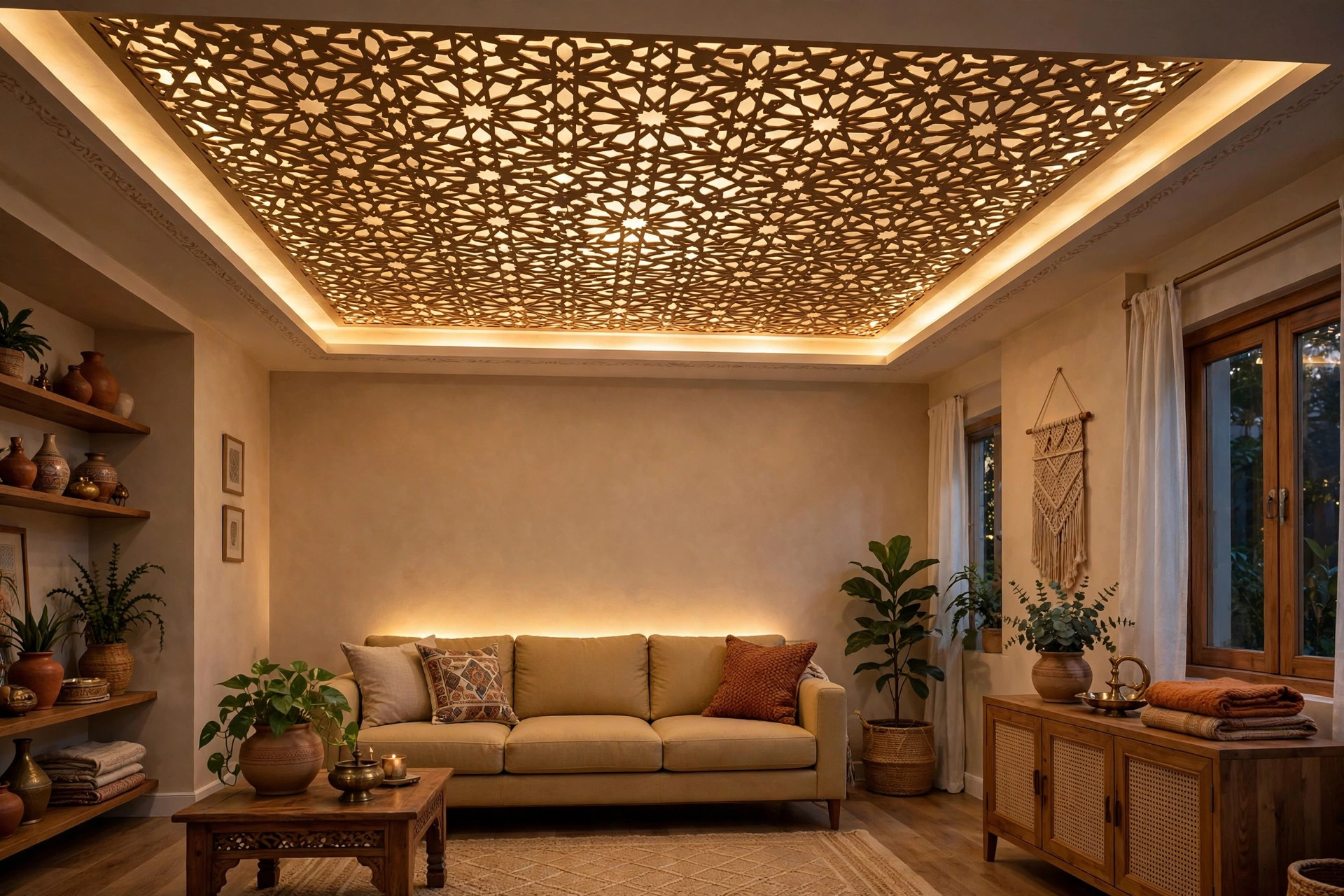
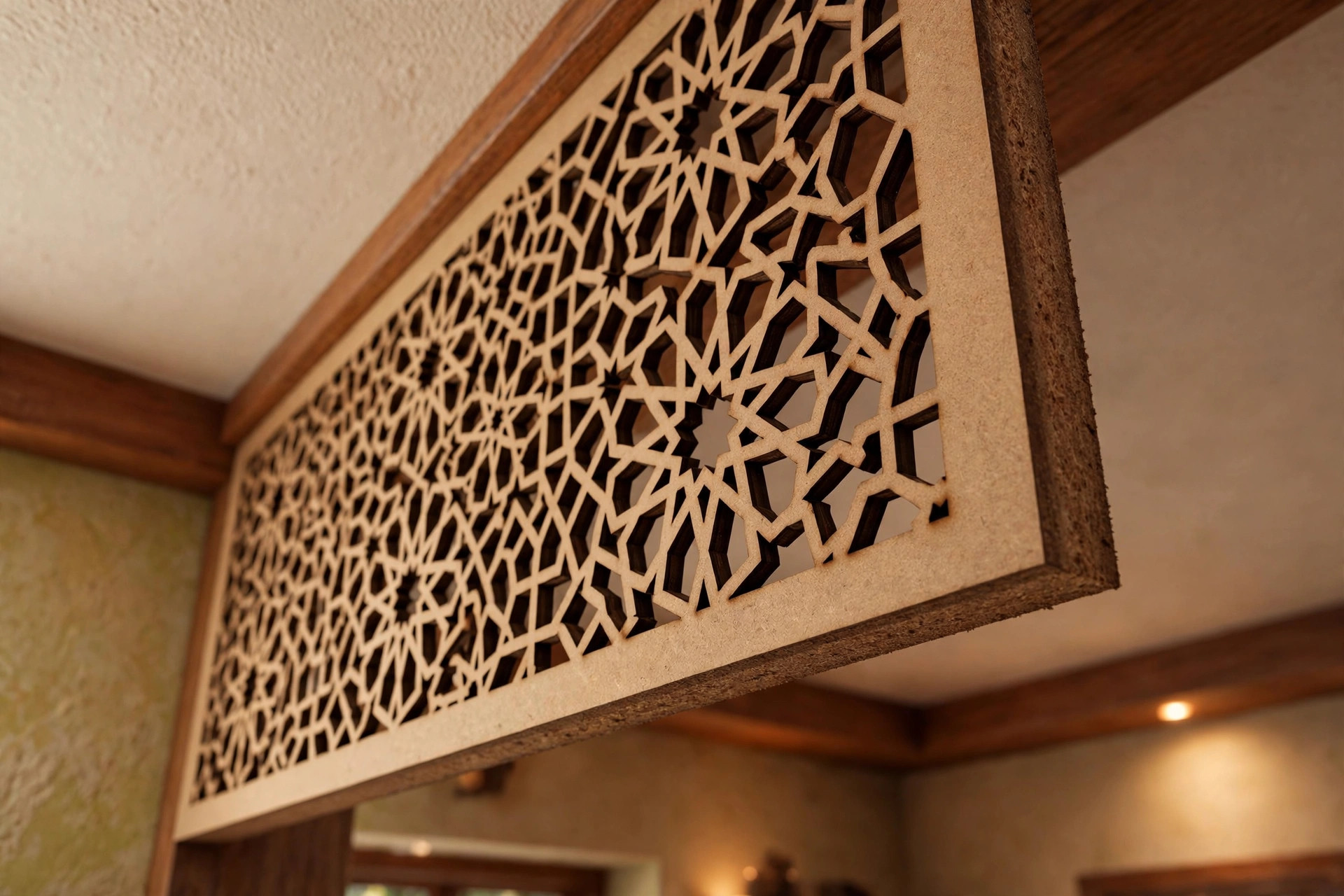
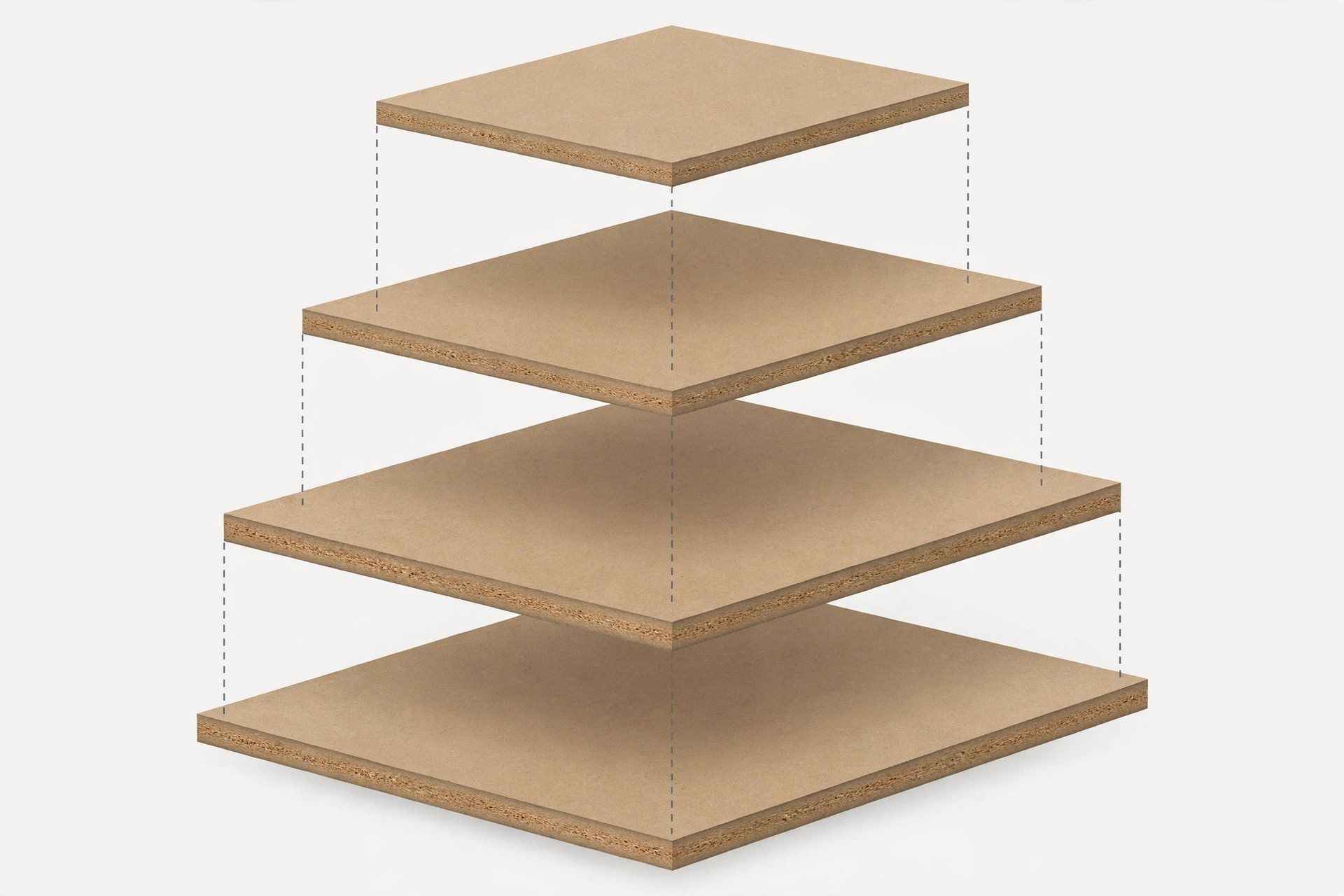
MDF (medium-density fibreboard) is an engineered wood board made by pressing wood fibres into dense, smooth sheets. In Indian false ceilings it is almost never used as a full ceiling. It is used as panels — CNC- or laser-cut jali inserts, borders, medallions, and feature panels, usually backlit with LED strips so the cut pattern glows.
This distinction matters because most of the confusion about MDF ceilings comes from mixing up two prices: the price of a cut panel, and the price of a finished installed ceiling. Marketplace listings seen in early October 2026 quoted MDF jali panels at roughly ₹90–₹170 per sq ft — but those are supply-only panel prices, taxes extra (Lucknow, Hyderabad and Pune sellers). A finished CNC-cut ceiling, installed with framing, backing and lighting, is a different product: DesignCafe’s 2026 guide puts installed CNC ceilings at ₹250–₹600 per sq ft, with MDF specifically at ₹250–₹400 of that range for dry inland homes with painted finishes.
How MDF ceilings are actually built in Indian homes
The practical approach, and the one most designers recommend, is hybrid: a plain gypsum base ceiling with MDF used as a border, a single feature panel, or a medallion. DesignCafe’s guide suggests this explicitly — gypsum forms the base, CNC-cut MDF adds pattern and backlighting as a focal point without pushing the whole ceiling into the ₹250–600 band. It also keeps the dust problem small: cutwork collects dust, and a full patterned ceiling in a dusty Indian city is a monthly cleaning commitment. Their maintenance advice is a dry microfibre duster on the cutwork every month.
Lighting must be planned before the panel is cut, not after — the LED strips sit 2–3 inches behind the cutwork for even diffusion, and the cut pattern has to follow the LED lines.
MDF vs its cousins: HDHMR, WPC and plywood
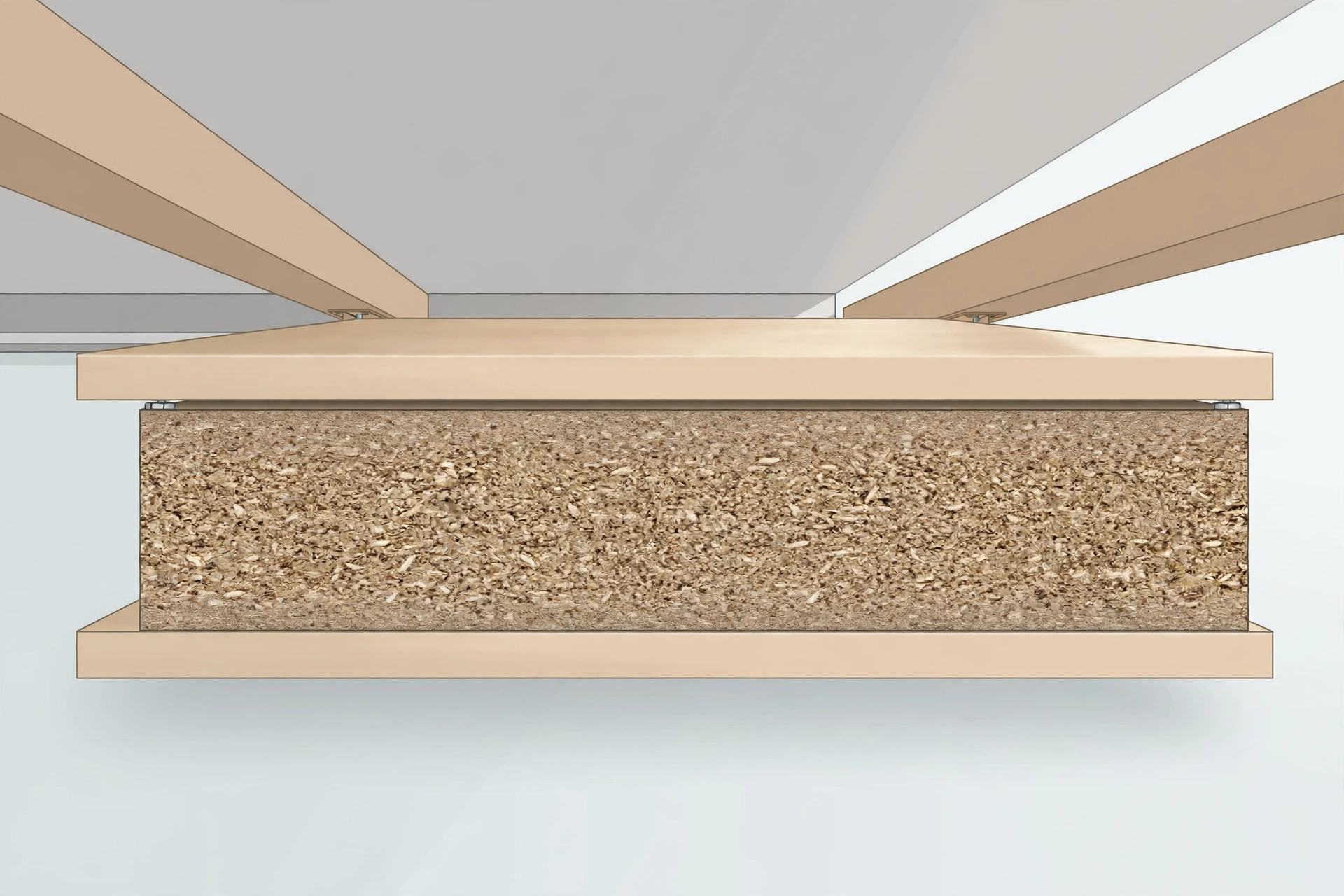
MDF is one of a family of sheet materials, and the family members differ mainly in moisture tolerance — the single most important factor in Indian homes. The cost bands below are from DesignCafe’s 2026 materials table (installed CNC work, per sq ft):
- MDF (₹250–₹400): dry inland homes, painted finishes. Swells in humid or coastal homes.
- HDHMR (₹300–₹450): high-density, high-moisture-resistance board — better than MDF where humidity is a concern.
- WPC (₹350–₹550): wood-plastic composite — the recommended pick for coastal and humid homes instead of MDF.
- Plywood (₹300–₹500): for veneer-finish wooden looks; full wooden ceilings are a separate topic covered by their own dedicated guide.
- PVC (₹200–₹350): budget projects and easy cleaning; covered in the PVC ceiling guide.
The rule is simple and worth repeating: choose the material for your climate, not your mood board. MDF in a coastal home, or in a pooja room where heat and lamp smoke stain it, is a regret waiting to happen.
Where MDF works — and where it fails
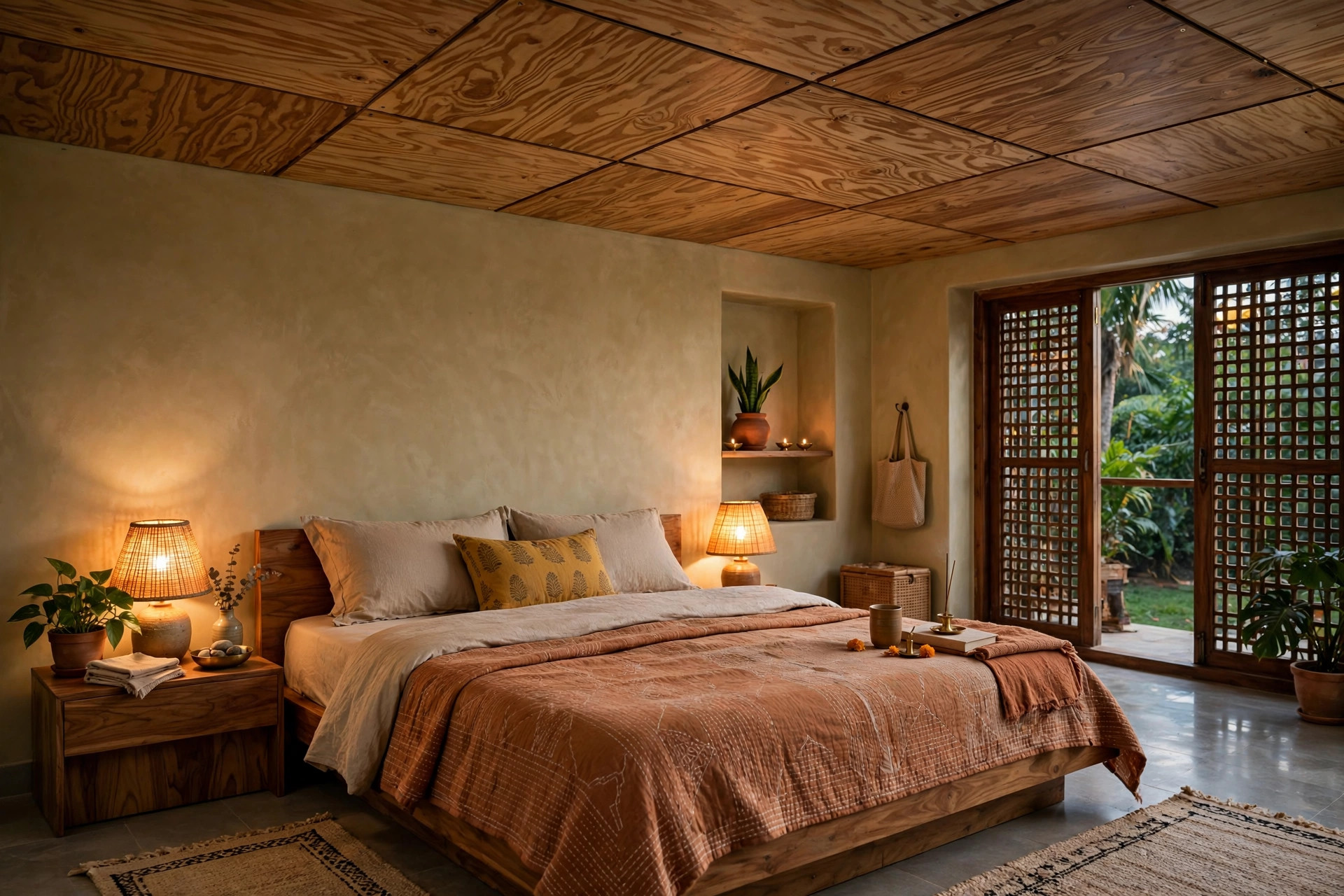
- Works: living-room feature panels, dining medallions, foyer borders, bedroom panels above the headboard, home-office accent walls that continue onto the ceiling.
- Fails: bathrooms and kitchens (moisture), coastal homes (swelling — use WPC), pooja rooms (heat and smoke staining), full-ceiling coverage in rooms under 9.5 ft (crowded, and dense cutwork is undustable), and anywhere a ceiling fan must pass through a patterned panel (it wobbles against the cutwork).
With the right material and no water ingress, DesignCafe’s guide puts CNC ceiling life at ten to fifteen years — with WPC and metal outlasting MDF. That “no water ingress” condition does most of the work in that sentence: fix roof and slab leaks first, because water permanently damages MDF.
Stretch fabric ceilings: the seamless membrane
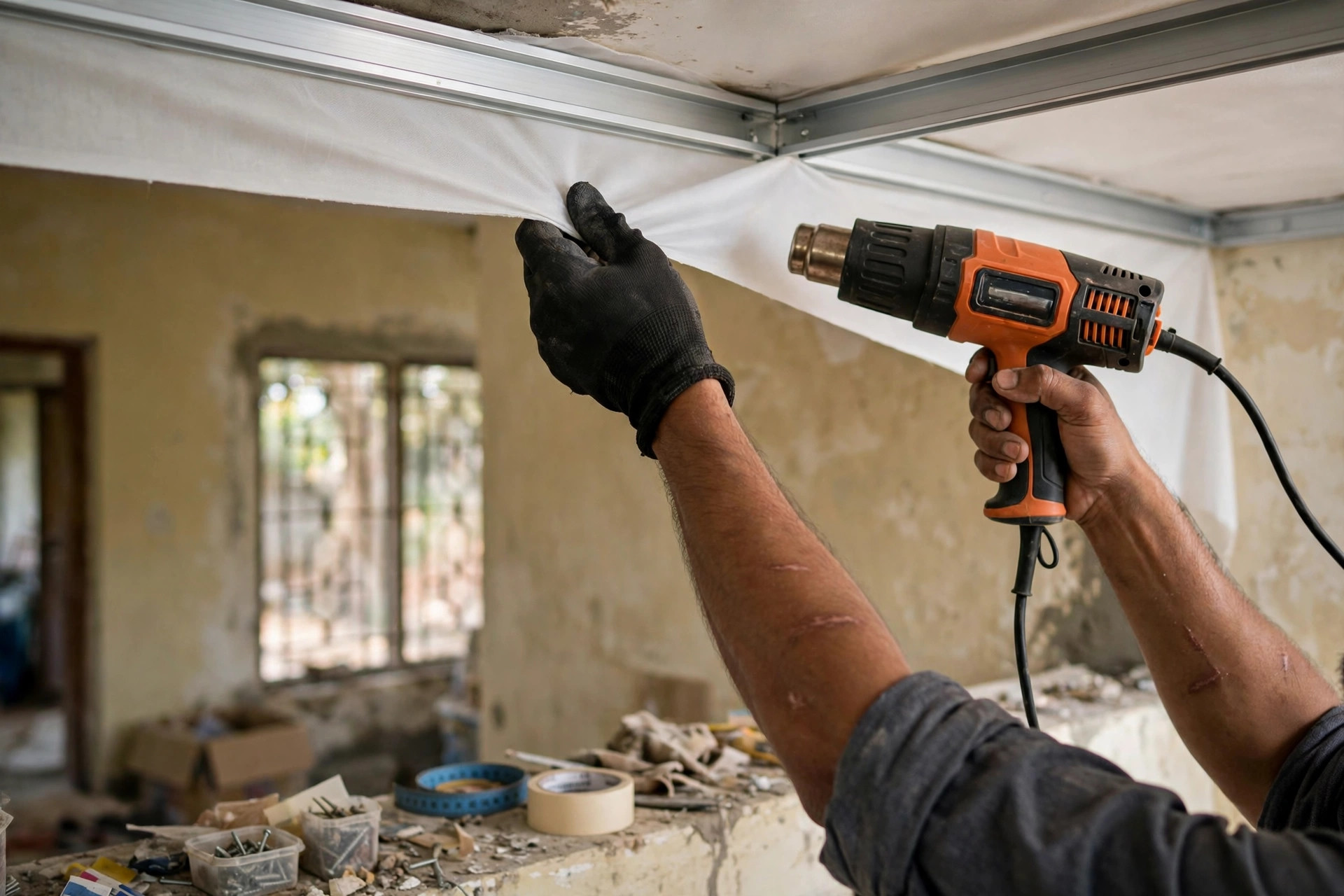
A stretch ceiling is a PVC or fabric membrane stretched over an aluminium track fixed around the room’s perimeter, pulled tight with heat. The result is a perfectly smooth, joint-free surface — no seams, no cracks, no paint. In India the technology is marketed mainly by specialist brands (NEWMAT is the frequently cited one) and is most visible in luxury retail, offices, and showrooms in Mumbai, Bengaluru and Delhi.
For homes, the honest position is: this is a specialist product, not a mainstream one. Its genuine advantages are speed and finish — a standard room can be finished in a day or less with virtually no dust, versus a week-plus of wet work for POP. The membrane is flexible, so it does not develop the hairline cracks POP gets as buildings move, and it is described as waterproof and antifungal. Where it struggles for Indian homes is cost (premium over gypsum), puncture vulnerability (one sharp knock and you need a professional repair), and the simple fact that few local contractors install it — you are tied to the specialist’s service network.

Where stretch ceilings fit in Indian homes
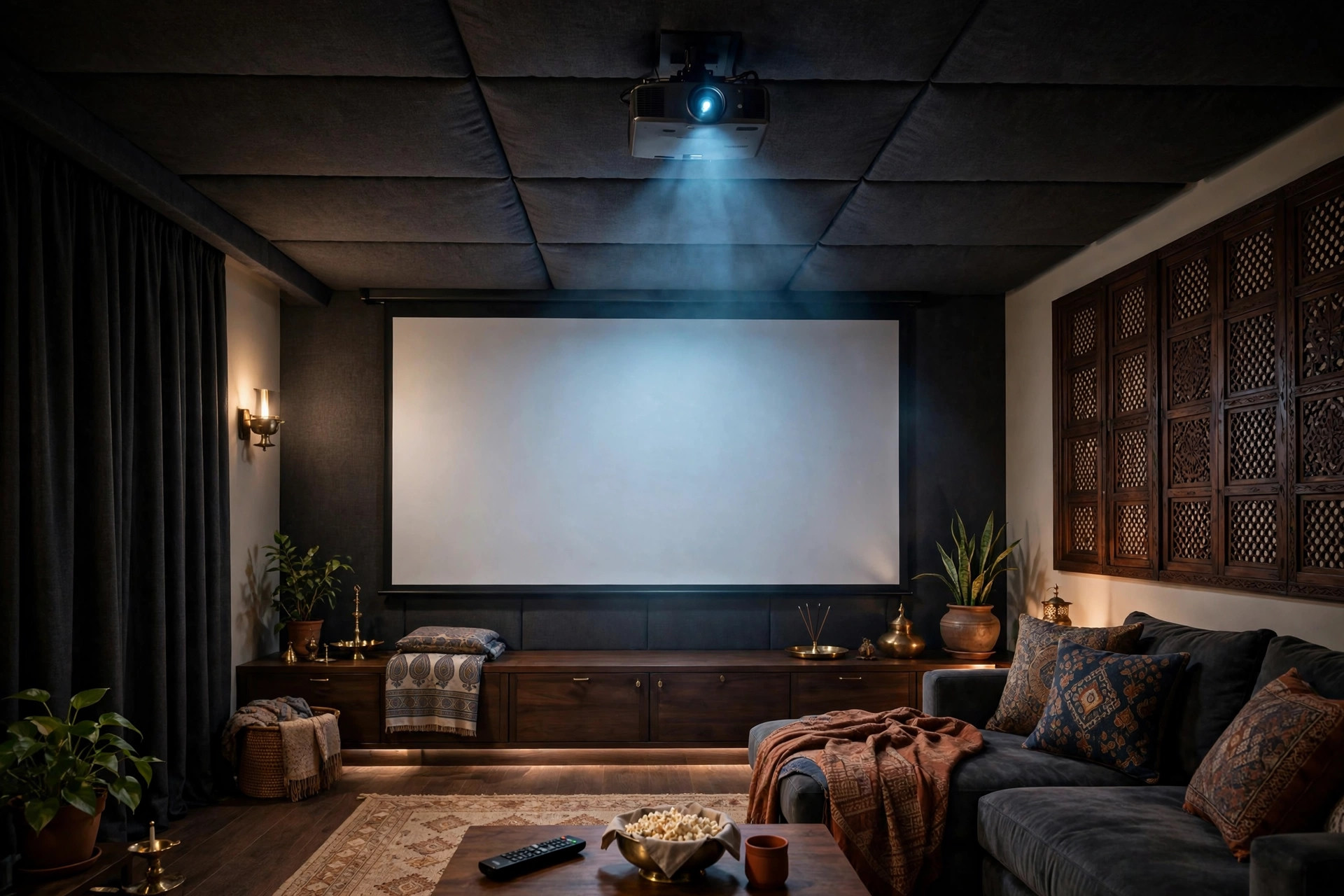
- Home theatres and media rooms: dark matte membranes with acoustic backing are a natural fit — which is also where fabric-wrapped acoustic panels (below) come in.
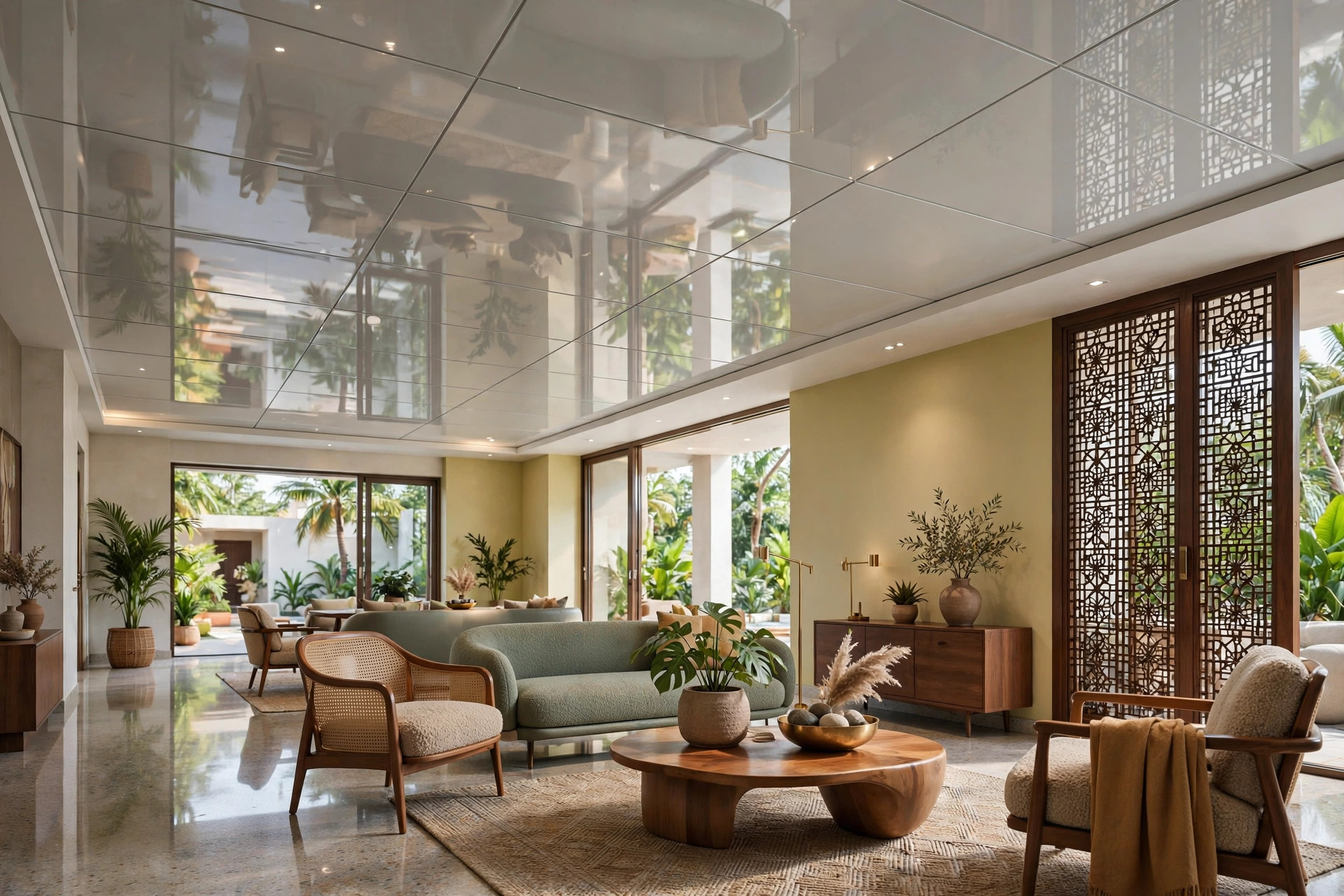
- Backlit feature ceilings: translucent membranes with LEDs behind create a glowing ceiling; high-gloss membranes visually double the room height in low-ceiling flats.
- Quick renovations: occupied flats where a week of POP wet work is not an option.
- Event and retail spaces: where the ceiling is branding, not just background.
A related but simpler product is the fabric-wrapped acoustic panel: rigid panels covered in cotton, linen or jute, fixed to the ceiling or walls. They absorb some sound, add warmth and texture, and are customisable in colour. Eco-interior writers position organic-cotton and linen panels as the sustainable, cosy option — but note the trade-off plainly: fabric ceilings are not durable for long-term heavy use the way a hard ceiling is, and they need the room to stay dry.

Bamboo, rattan and cane: the natural ceilings
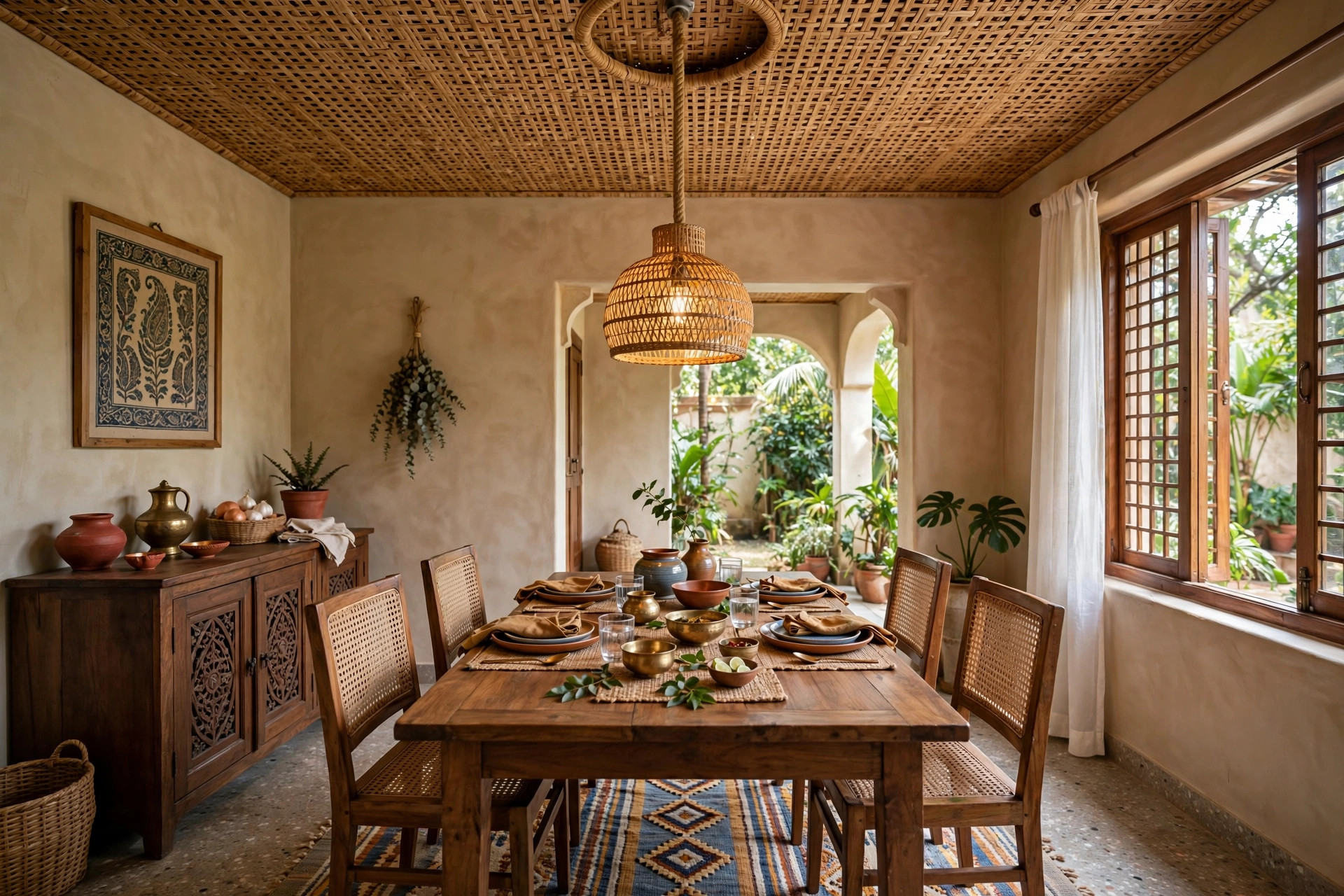
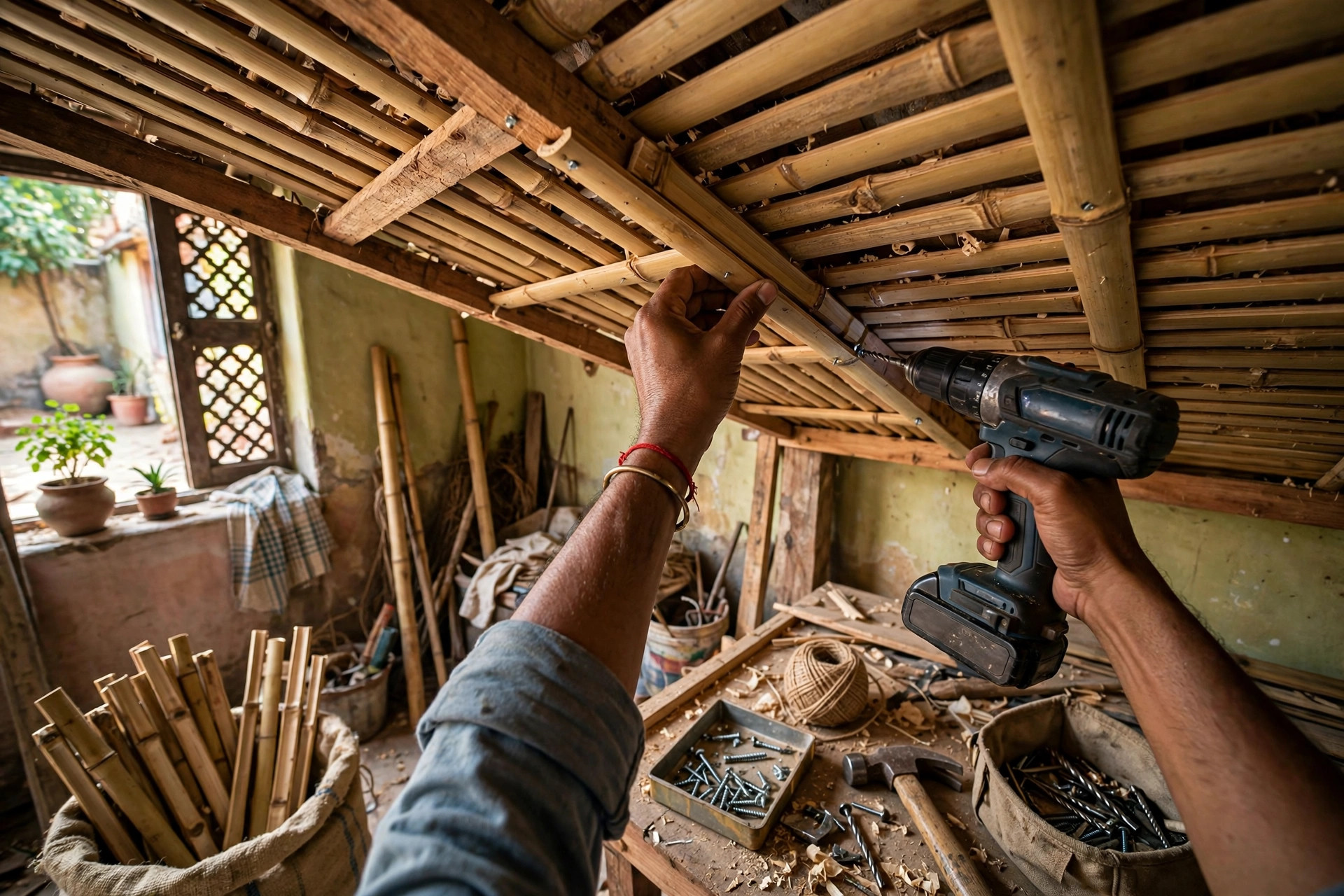
Bamboo slat ceilings and woven rattan or cane panels are the most Indian of the alternatives — they suit pooja rooms, verandas, farmhouses, and eco-styled living rooms. Bamboo is positioned by eco-interior writers as a deforestation-reducing choice, and visually it is unmatched for warmth: a bamboo slat ceiling with warm light is a look no painted board can imitate.
The honest trade-offs: bamboo and cane are natural materials in a country with termites, humidity and dust. They need treatment against insects, they do not like prolonged damp, and woven panels need periodic dusting. They also have no fire performance to speak of unless treated — keep them away from pooja-room diyas and kitchen heat, or treat and place carefully. Buy treated, seasoned material from a known supplier; raw bamboo from a timber yard is a different product.


Fibre cement board: the practical workhorse
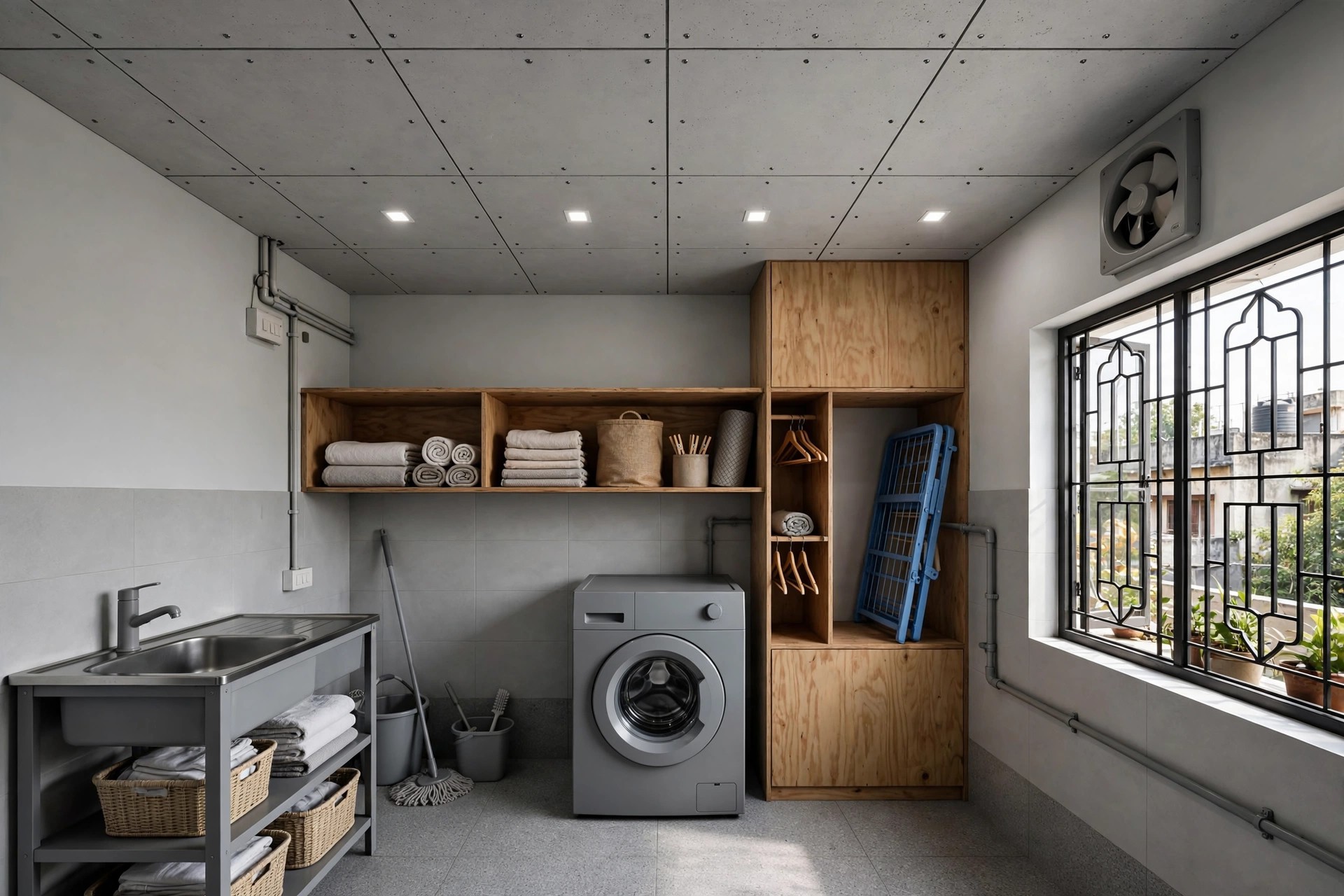
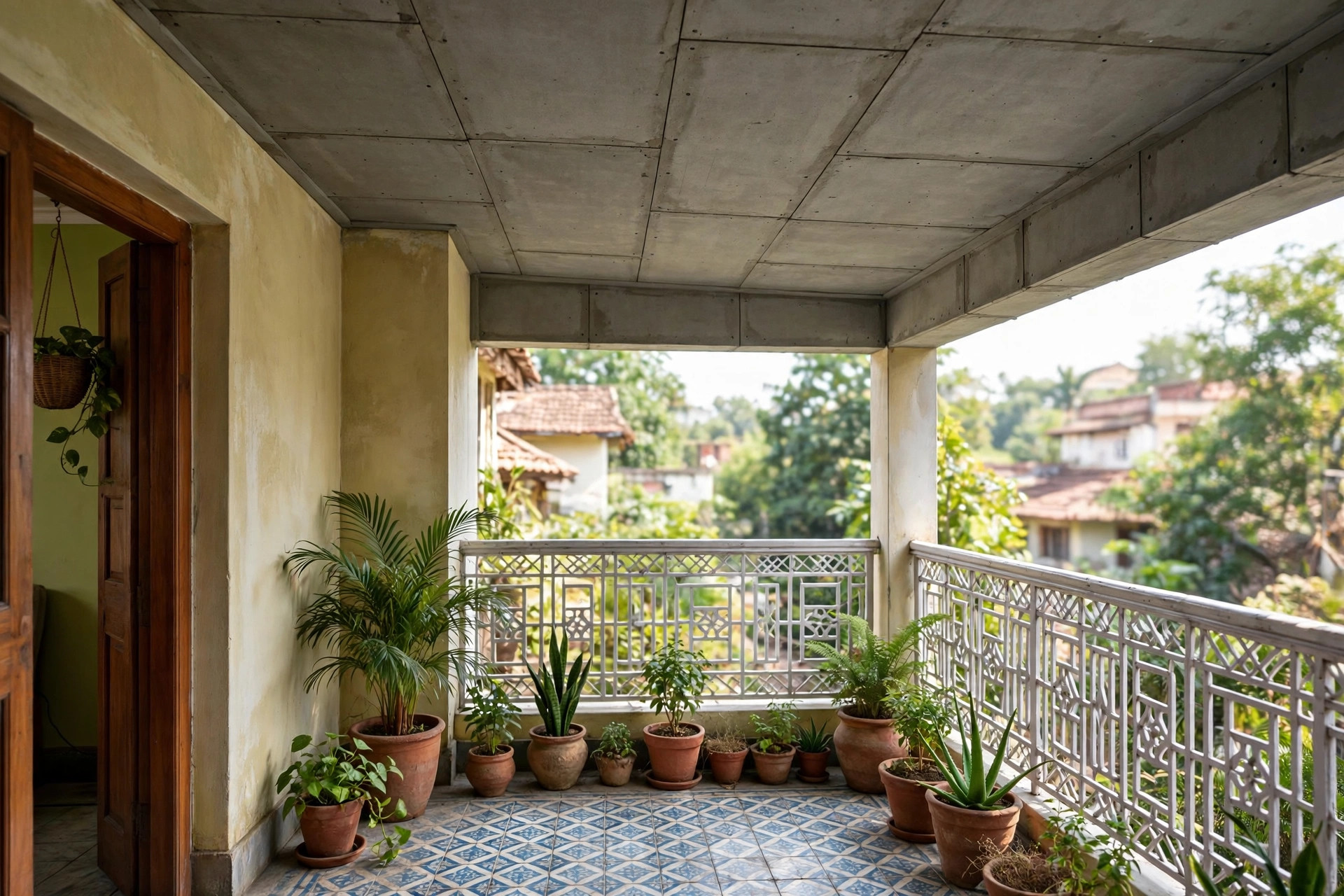
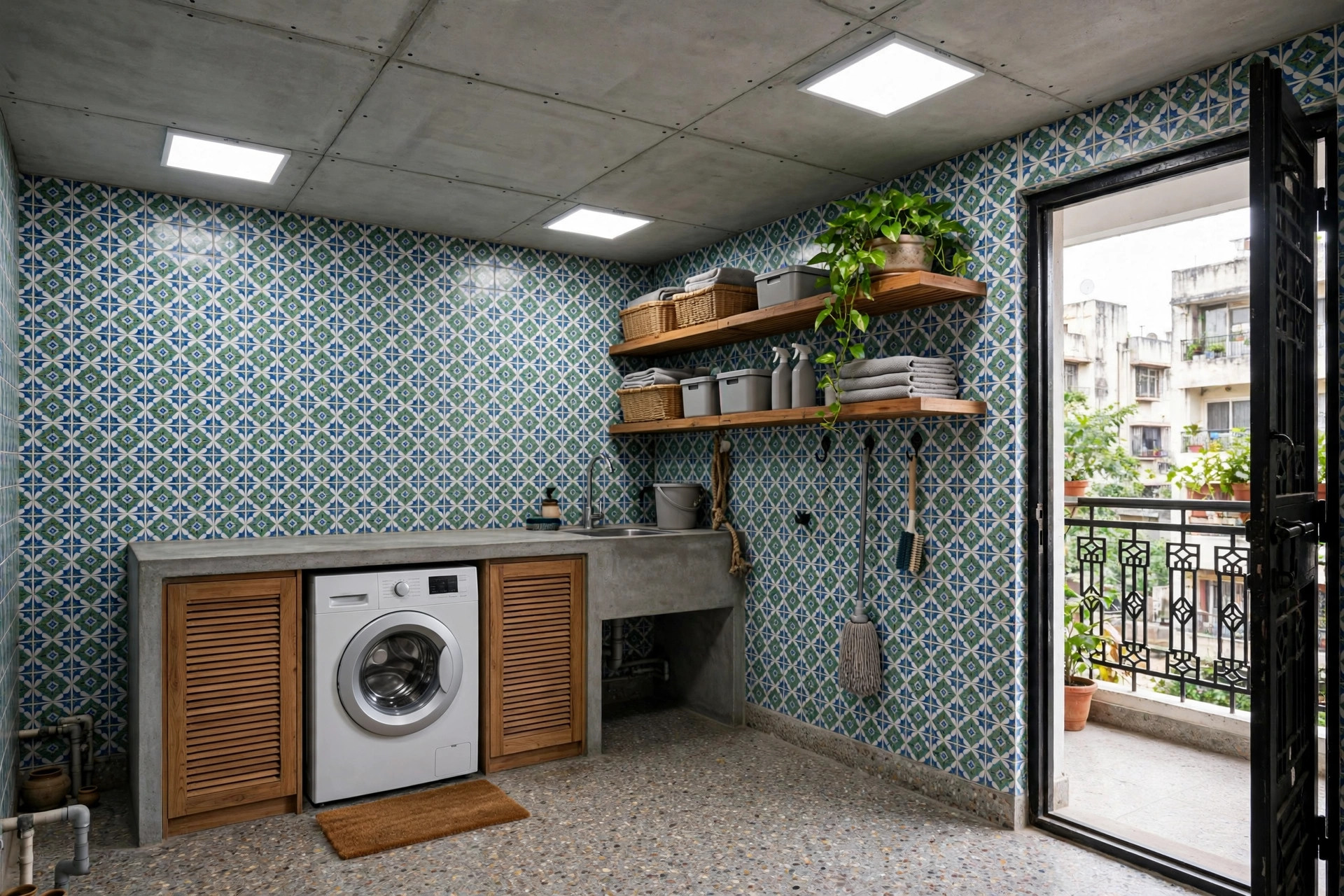
Fibre cement board is the least glamorous material on this page and arguably the most useful. It is a flat board made of Portland cement, treated cellulose fibre and silica, steam-cured (the industry term is HPSC) — which gives it what wood-based boards lack: genuine resistance to moisture, termites and fire. The manufacturer Everest Industries, quoted in Architect & Interiors India, positions it as superior to plywood, particle board and MDF on exactly those three counts, with zero asbestos in the mix.
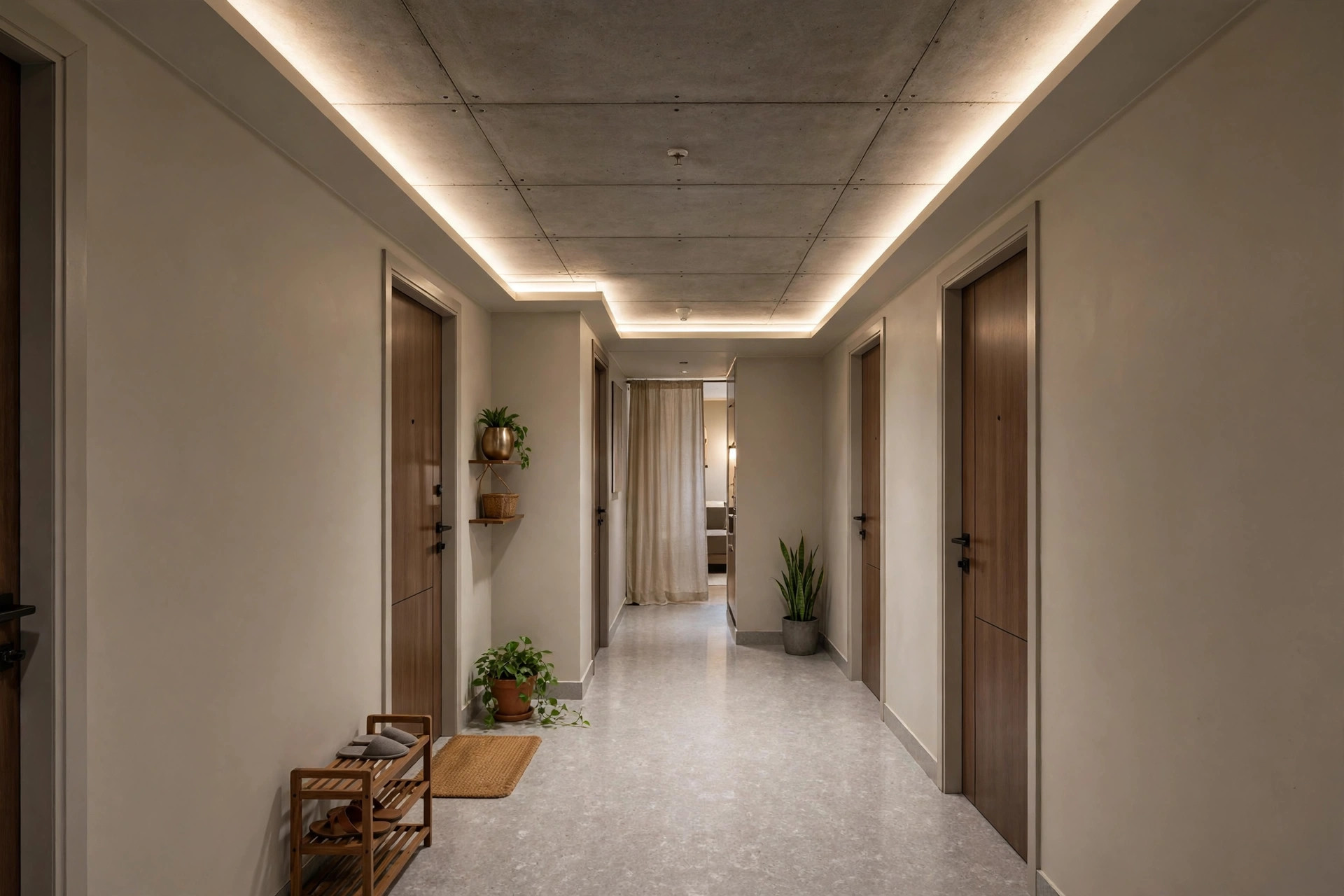
In ceilings it is the board you use where gypsum or MDF would die: covered balconies, utility and laundry areas, corridors, kitchens-adjacent spaces, and anywhere the slab above has a history of seepage. It takes paint and texture, and at typical 6–8 mm ceiling thicknesses it is rigid and stable. The finish is utilitarian rather than decorative — this is a survival material, not a showpiece — which is why it rarely appears in gallery searches. For wet areas specifically, also compare the kitchen and bathroom ceiling guides on this site.
Other alternatives worth knowing
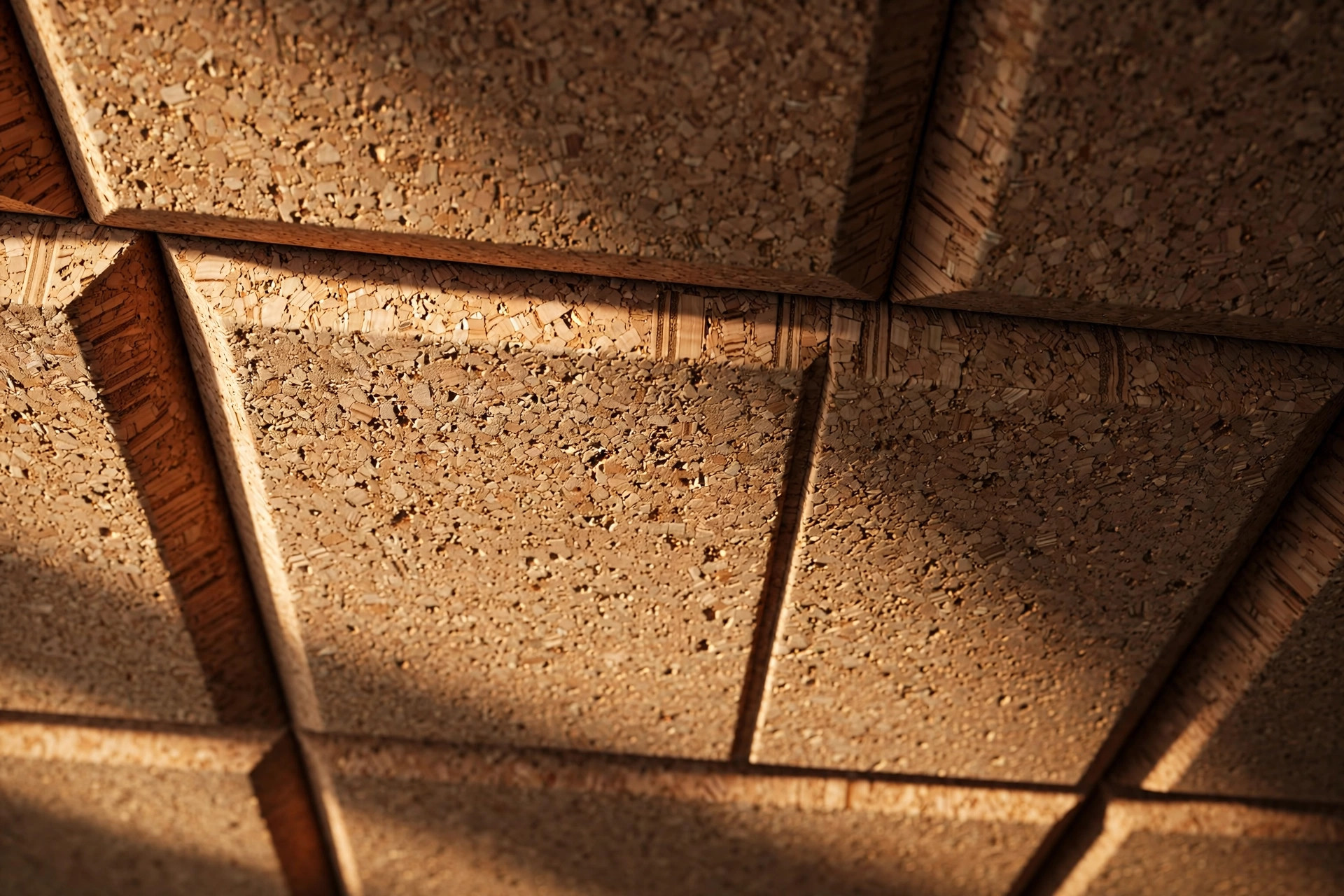
Cork tiles
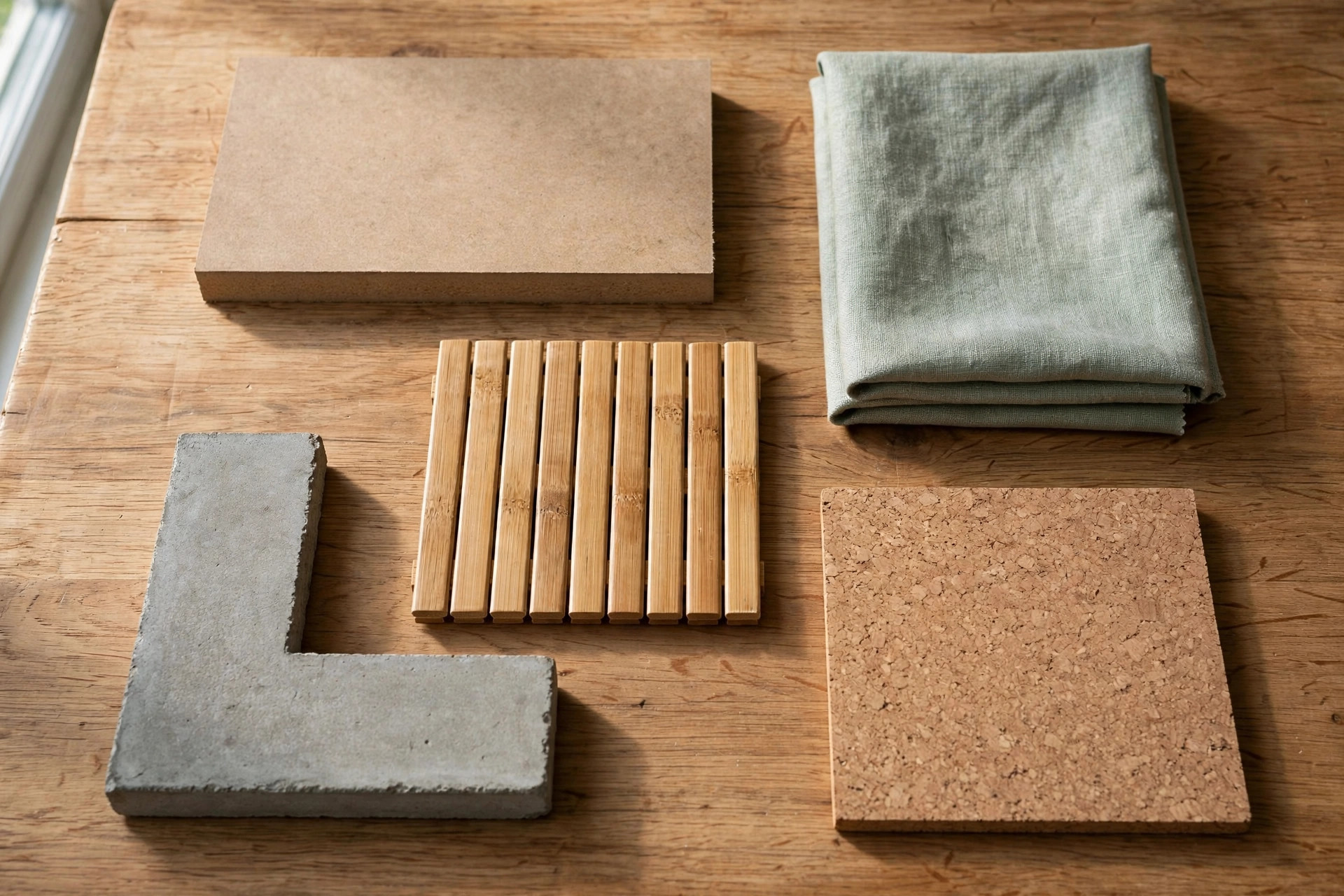
Natural cork tiles bring a soft, warm, slightly acoustic surface. They suit study rooms and bedrooms where a quiet, tactile ceiling is wanted. They are niche in India — limited suppliers, and they need a dry room.
Decorative laminate panels
High-pressure laminate sheets on a board substrate give a wipeable, glossy or wood-grain finish. Common in small retail shops and clinics in India, where cleanability beats luxury. For homes, they read commercial unless used as a small accent.
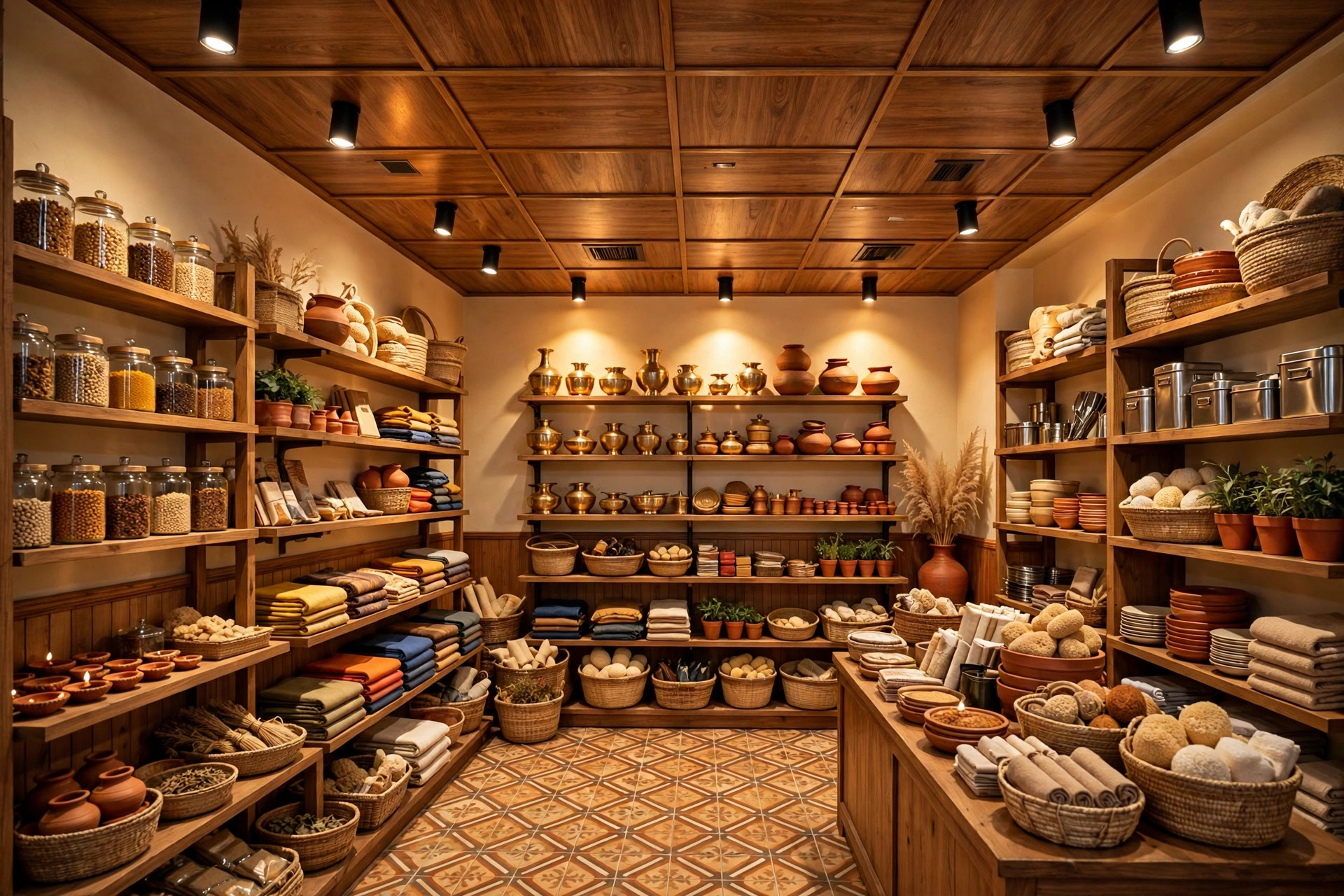
GRP / composite panels
Glass-fibre-reinforced panels can be moulded into curves and glossy shapes that flat boards cannot make. They appear in premium contemporary homes and showrooms. Cost is high and the supplier base is thin — get installed-project references before committing.
Honeycomb-core panels
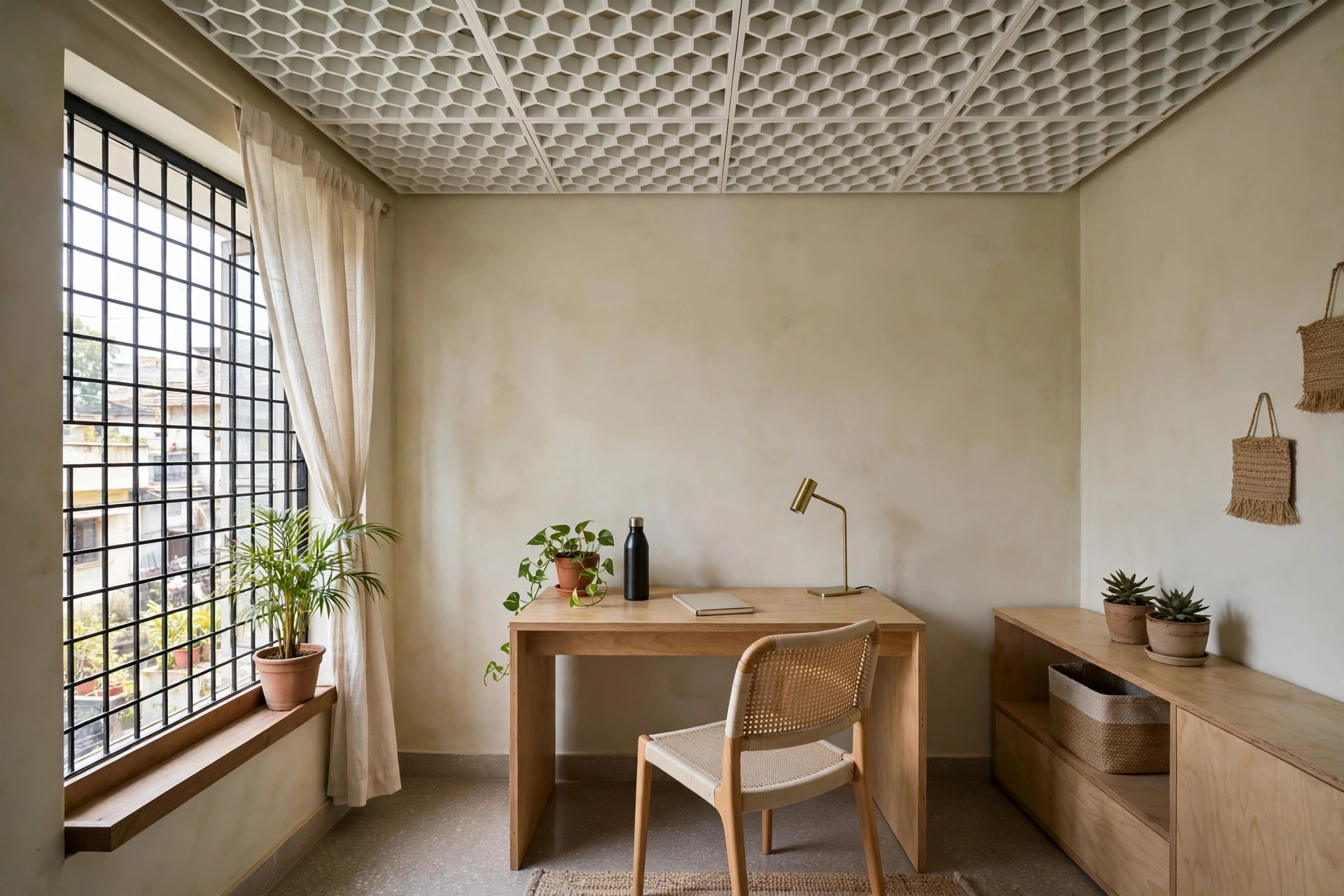
Lightweight sandwich panels (thin faces over a honeycomb core) are used in office cabins and partitions, occasionally ceilings. Light, stiff, and easy to handle — but a commercial product, not a home default.
Cost bands, stated honestly
Alternative-material pricing in India mixes three different numbers. Keep them separate or you will anchor on the wrong one:
- Panel-only marketplace prices: MDF jali panels listed around ₹90–₹170 per sq ft on IndiaMART in early October 2026 (Lucknow, Hyderabad, Pune sellers) — supply only, taxes extra, no framing, no installation, no lighting.
- Installed decorative ceilings: CNC-cut panel ceilings (MDF/WPC/acrylic) around ₹250–₹600 per sq ft installed including framing and basic installation, per DesignCafe’s 2026 guide. Pattern density and LED wiring move the number more than the material.
- Specialist systems: stretch ceilings and GRP composites are quoted per project by the installing brand — no honest public per-sq-ft band exists; get two written quotes.
For the full budget picture across all materials, see the false ceiling cost guide for India and the lighting guide before you finalise any backlit design.
How to choose: a short decision list
- You want decoration on a budget: gypsum base + one MDF jali feature panel, backlit. Dry room only.
- You want a seamless modern finish fast: stretch membrane — if a specialist serves your city and the budget allows.
- You want warmth and natural texture: bamboo or rattan — treated material, dry rooms, away from open flames.
- You need survival in damp areas: fibre cement board. Un glamorous, unbeatable where it matters.
- You want quiet: fabric-wrapped acoustic panels in the media room; for serious sound control compare the grid and mineral fibre ceiling guide.
- Coastal or humid home: skip MDF entirely; WPC or cement board instead.
FAQs
Can I use an MDF false ceiling in the bathroom?
No — not a good idea. MDF swells with moisture, and bathrooms are the worst room for it. Use PVC, metal, or fibre cement board in wet areas instead.
Can a ceiling fan be fitted through a jali or CNC-cut panel?
Avoid it. The fan wobbles against the cutwork and the panel is not structural. Plan the fan position on the plain part of the ceiling, and let the panel be decoration only.
Is a stretch ceiling better than POP for a home?
It is faster, seamless and crack-free, but it costs more, needs a specialist installer, and a puncture means a professional repair. POP is slower and cracks more, but any local contractor can build and repair it. For most Indian homes POP or gypsum remains the practical default.
Does bamboo need maintenance as a ceiling?
Yes. Use treated, seasoned bamboo, keep it dry, and expect periodic dusting. It is a beautiful material, not a fit-and-forget one.
What is the cheapest alternative material?
By installed cost, fibre cement board is usually the cheapest of this set (it is a plain painted board). Decorative options — CNC jali, stretch membranes — cost several times more. But “cheapest” is the wrong question: the right question is which material survives your room.
All 22 images in this article are original concept renders and illustrations created for falseceiling.in — they show design ideas, not completed client projects. Costs are planning bands from the sources cited, not quotations; get written quotes from local contractors before budgeting.


Pingback: False Ceiling Shapes & Patterns: Tray, Curves & Jali