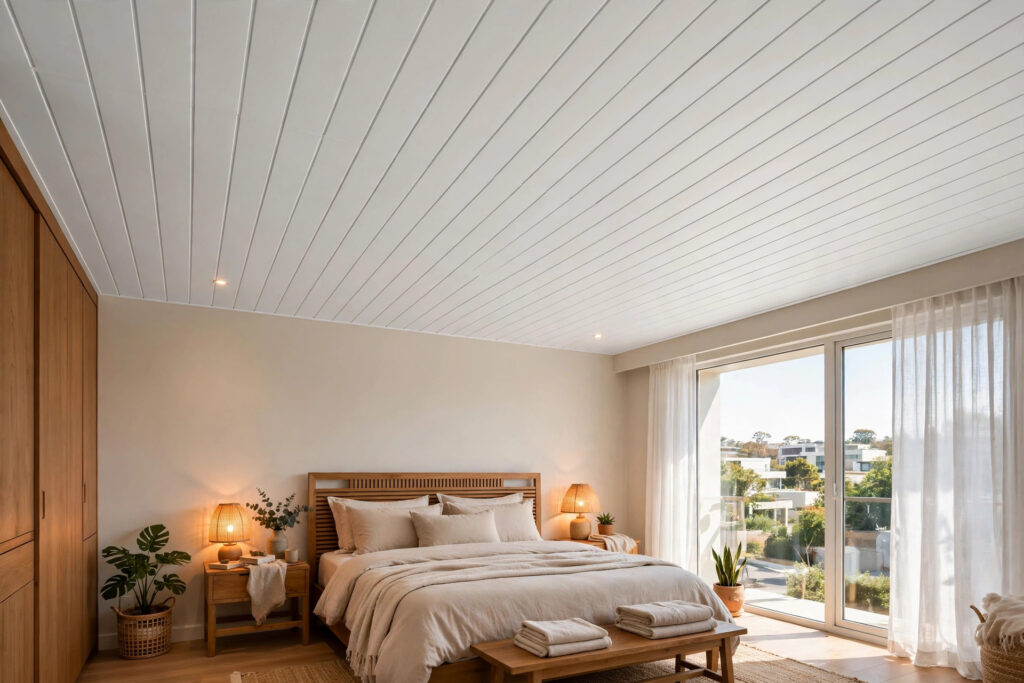

PVC in a bedroom is a practical decision, not a fashionable one. Nobody chooses a PVC ceiling because it looks richer than gypsum or warmer than wood — they choose it because the room has a moisture problem, the budget is tight, termites are a worry, or they want the job finished in two days. This guide covers bedroom PVC false ceiling designs honestly: what PVC panels actually are, the bedroom layouts that work, the real pros and cons, 2026 cost bands for India with sources, and the situations where gypsum or POP would serve you better.
What a PVC bedroom ceiling actually is
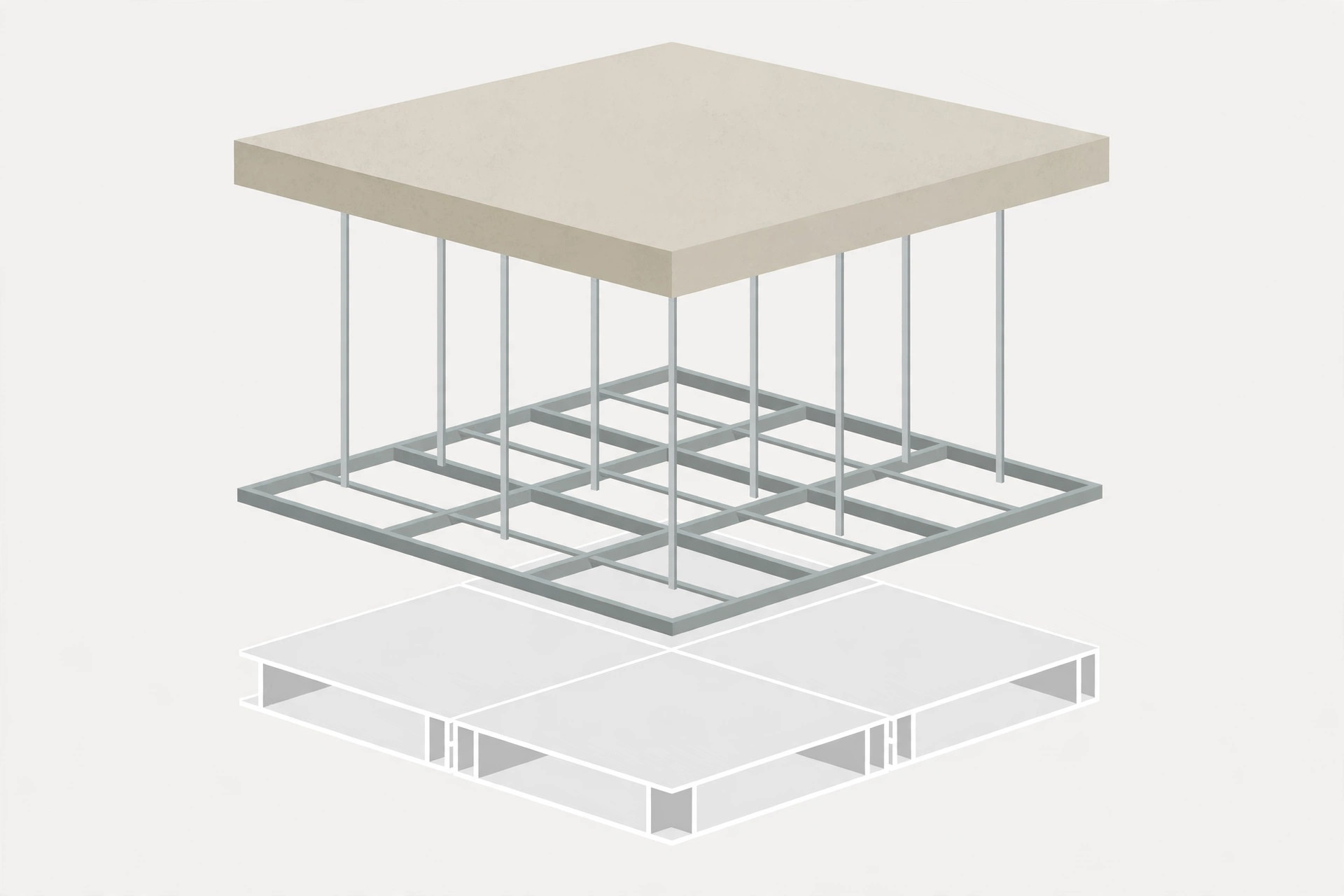
A PVC false ceiling is made of hollow plastic panels — usually 6 to 10 inches wide — that click or slide into each other and sit on a light metal or wooden frame hung below the real ceiling. The panels arrive pre-finished: white, coloured, wood-printed, or patterned. There is no plastering, no putty, no paint. The day the panels go up is the day the ceiling is finished.
That pre-finished quality is both the appeal and the limit. You get a clean surface fast, but you also get exactly what the factory made — no curves, no carved coves, no seamless painted sweep like POP or gypsum can give. Panels meet panels, and the joints are part of the look.
Where PVC wins in a bedroom
Moisture and damp. PVC does not absorb water. In a top-floor bedroom with monsoon seepage stains, or a ground-floor room that stays humid, PVC panels will not swell, sag, or grow the black spots that ruin gypsum and POP. NoBroker’s 2026 PVC guide lists moisture, termite, mould, and mildew resistance among the material’s main bedroom advantages — and for damp-prone rooms, that is the whole argument.
Termites. Plastic is not food. In houses with a termite history, a PVC ceiling removes one more thing the insects can eat, unlike wooden battens or plywood-backed designs.
Maintenance. A PVC ceiling wipes clean with a damp cloth. Dust, the odd cobweb, a splash mark — all come off the sealed plastic surface. There is no repainting cycle the way painted gypsum needs every few years.
Speed. A bedroom PVC ceiling typically goes up in one to two days. No wet trades, no drying time, no dust storm of sanding. If you are doing up a bedroom while living in the house, that matters.
Cost against premium options. PVC sits well below wood, laminate, and veneer finishes. NoBroker’s 2026 cost guide puts basic PVC panel ceilings at roughly ₹80–150 per sq ft installed, against ₹700–800 for laminate and ₹900–1,200 for veneer (Livspace’s 2026 bedroom cost page quotes laminate PVC at ₹160–185 per sq ft plus GST — rates vary by city, panel quality, and who is quoting, so treat every number as a band, not a fixed price).
Where PVC loses — the honest part
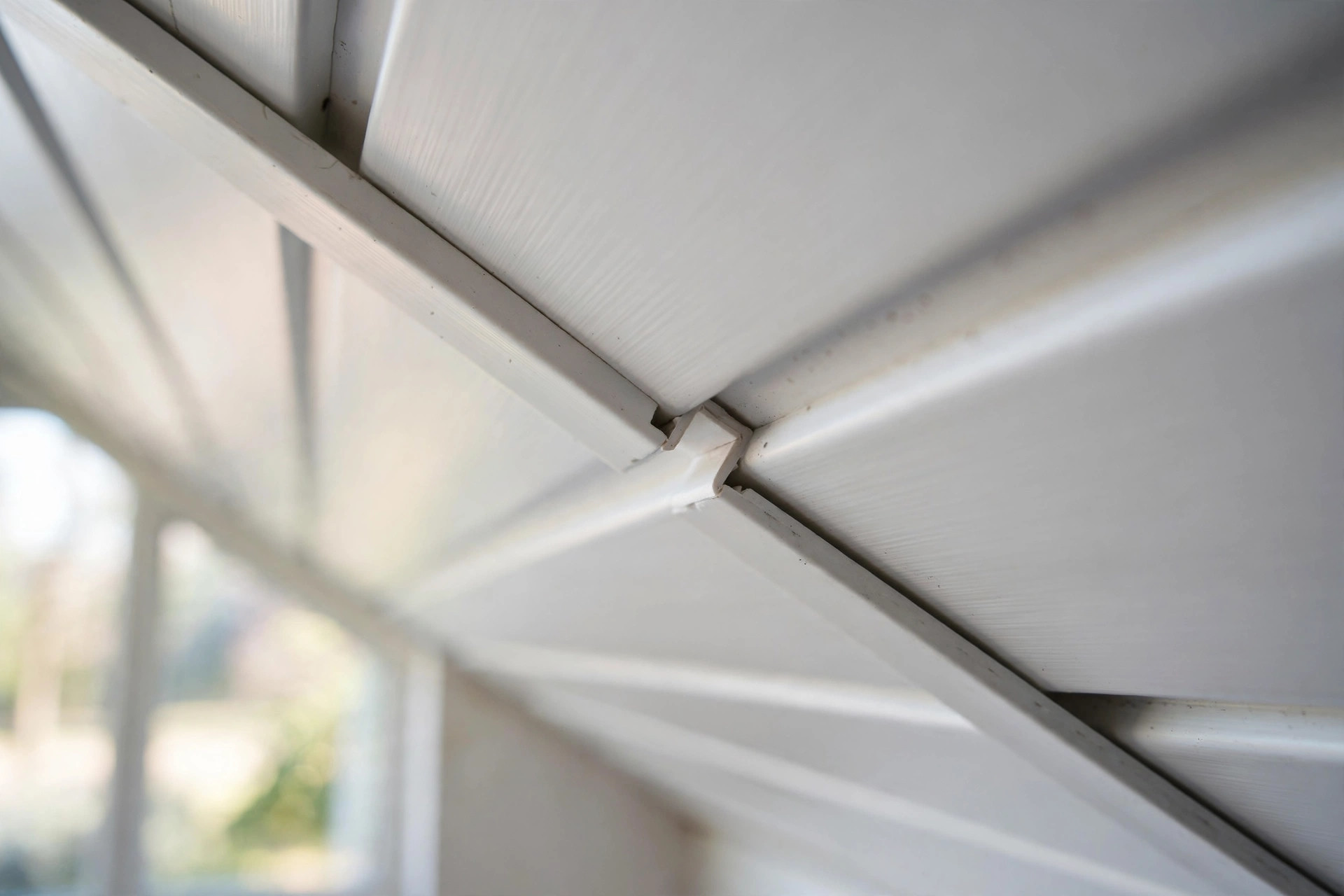
The joints show. Panel edges create visible lines across the ceiling. Good installers keep them straight and even, which reads as a deliberate panelled look; bad ones leave a wavy grid. If you want a perfectly seamless ceiling, PVC is the wrong material.
It can look plasticky. Glossy PVC reflects light in a way that reads artificial, especially in white. Matte and textured finishes handle this better — ask to see a full panel in daylight, not just a catalogue photo, before you commit.
Heat sensitivity. PVC softens with heat. Recessed halogen or high-wattage fixtures are a bad idea above it; stick to LED lighting, which runs cool. NoBroker’s guide flags exactly this: not suitable for heat-emitting lights.
Fire behaviour. This is the serious one. PVC does not support flame the way wood does, but when it does burn it releases harmful fumes. Keep PVC ceilings away from kitchens with open flames — and as a general rule, know where your home’s fire exits are regardless of ceiling material. For the bedroom itself this is a minor risk, but it is worth knowing rather than discovering later.
Finish depth. A PVC ceiling is a flat plane of panels. It cannot do the layered coves, sweeping curves, and deep coffers that make gypsum and POP ceilings dramatic. Backlit edges and tray-style borders can add some depth (more below), but the material has a ceiling — so to speak — on drama.
PVC vs gypsum vs POP for the bedroom
All three are legitimate bedroom choices. Here is how they compare on the points that actually decide the matter:
| PVC panels | Gypsum boards | POP | |
|---|---|---|---|
| Installed cost (2026 bands, India) | ₹80–185 per sq ft depending on source and finish (NoBroker and Livspace 2026 guides) | ₹90–115 per sq ft (Livspace 2026) | ₹95–105 per sq ft (Livspace 2026) |
| Moisture resistance | Excellent — does not absorb water | Moderate — needs treated boards in damp rooms | Poor in damp rooms — stains and crumbles |
| Termites | Immune | Boards fine; wooden frame members at risk | Plaster fine; frame at risk |
| Finish | Panelled, visible joints | Seamless, paint-ready, premium | Seamless, best for curves and carving |
| Design flexibility | Moderate — flat patterns and prints | High — coves, curves, multi-level | Highest — any shape the craftsman can make |
| Installation time (one bedroom) | 1–2 days | 2–4 days | 7–10 days |
| Maintenance | Wipe clean; replace single panels | Repaint every few years; patchable | Repaint; repairs need a skilled hand |
| Typical lifespan | 8–12 years (NoBroker 2026) | 10–15 years (NoBroker 2026) | 15–20 years with care |
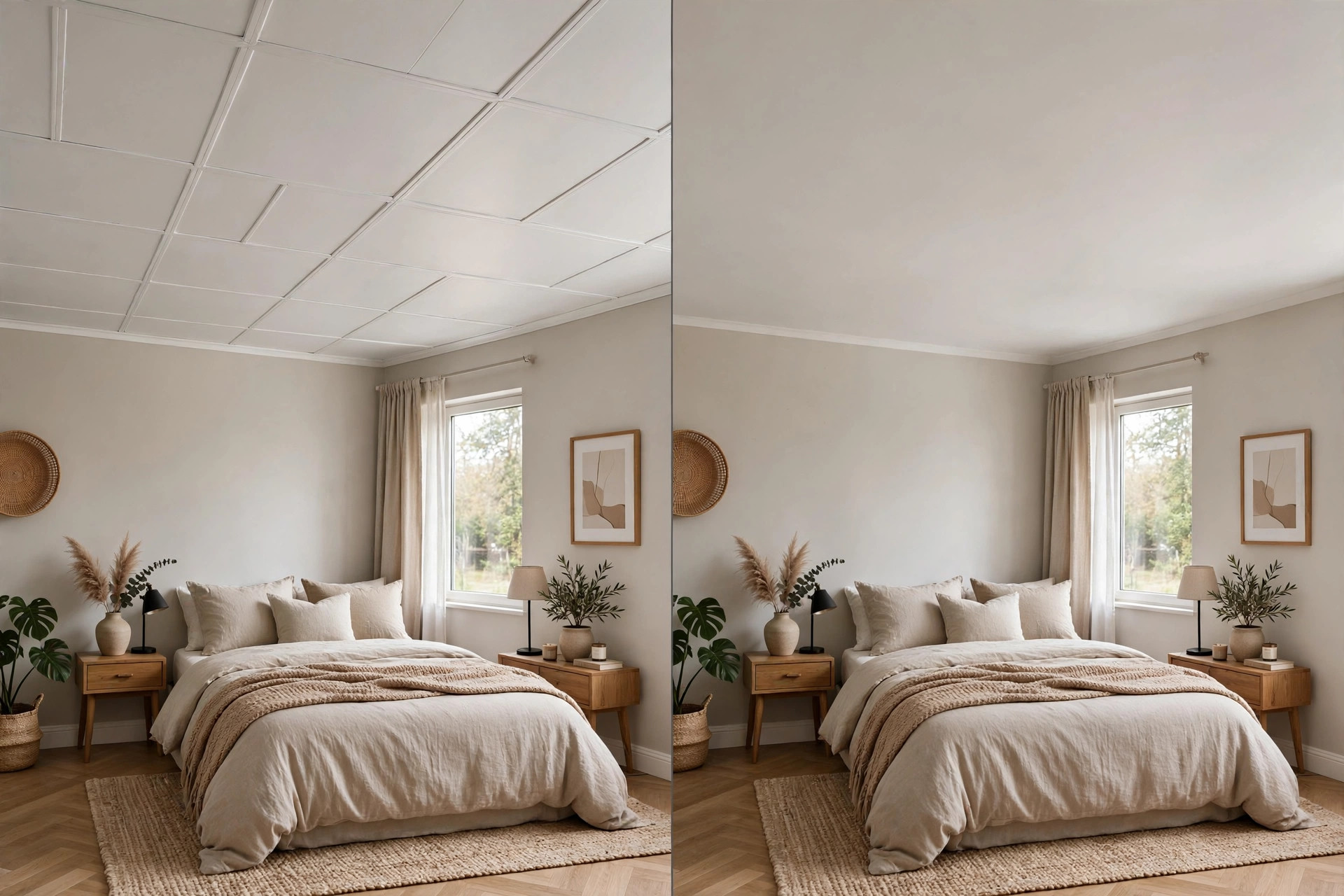
The pattern is clear: gypsum and POP win on looks and design freedom; PVC wins on moisture, pests, speed, and upkeep. NoBroker’s 2026 city guides put it bluntly — gypsum for living spaces and bedrooms, PVC wherever water or humidity is a factor. For a dry, normal bedroom, gypsum is usually the better-looking choice at a similar price; for a damp or termite-prone one, PVC earns its place. Our PVC false ceiling guide covers the material across all rooms, and the gypsum guide covers the bedroom favourite in depth.
Bedroom PVC design ideas that actually work
1. Flat white panels, done well
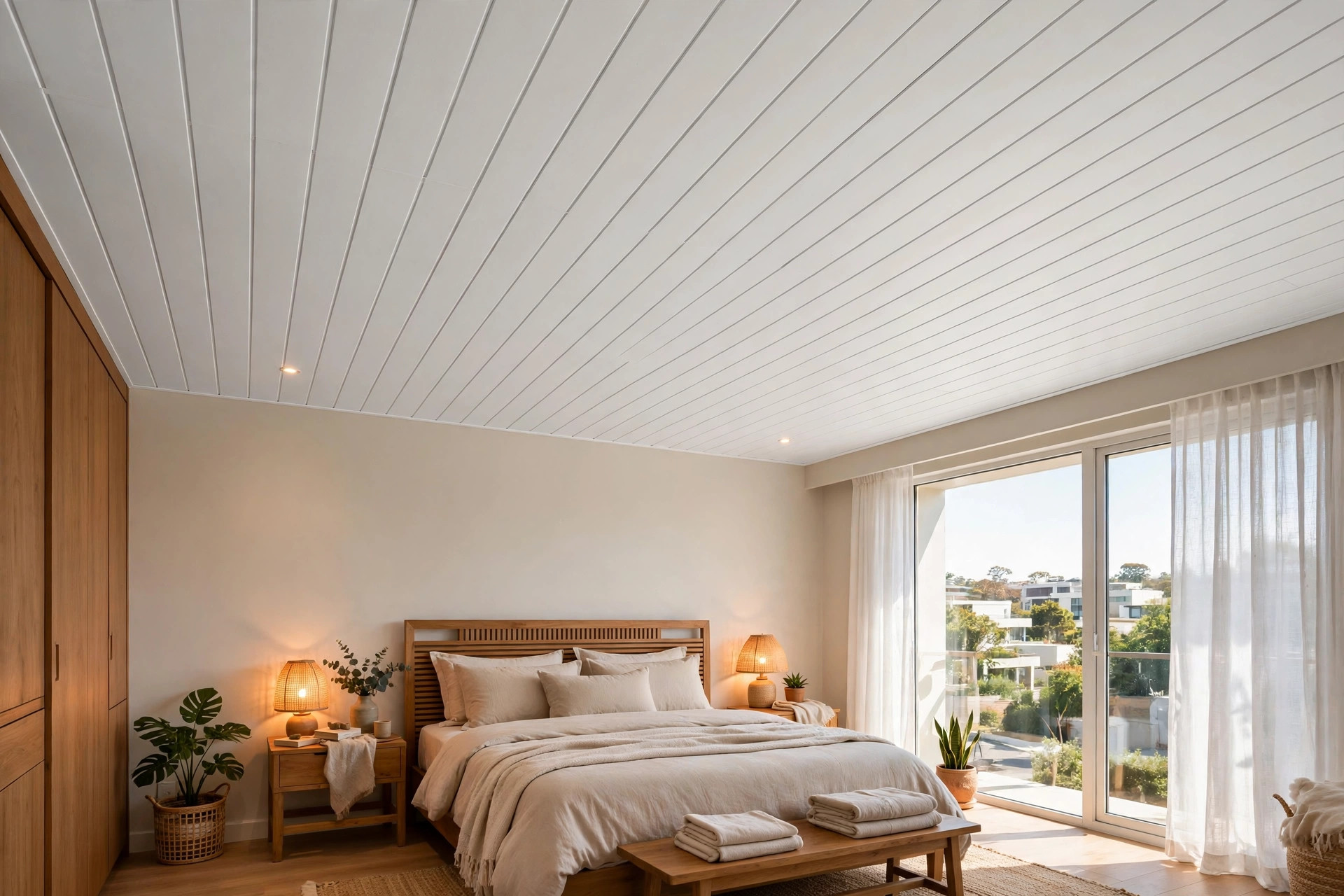
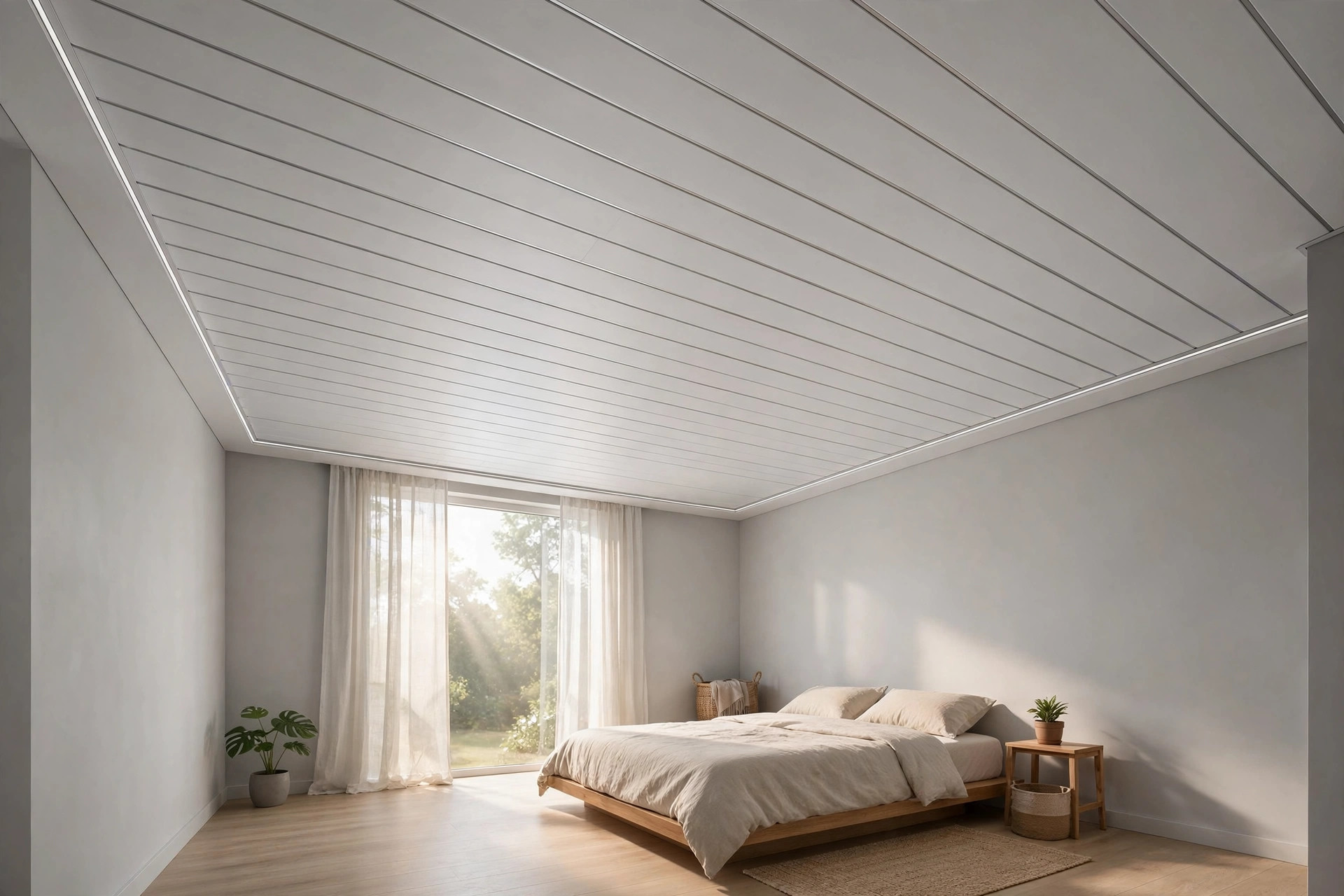
The default — and there is nothing wrong with it. Straight, even, matte-white panels with slim aluminium edge trims read clean and modern. Keep the panel direction parallel to the longest wall to stretch the room visually.
2. Wood-finish panels
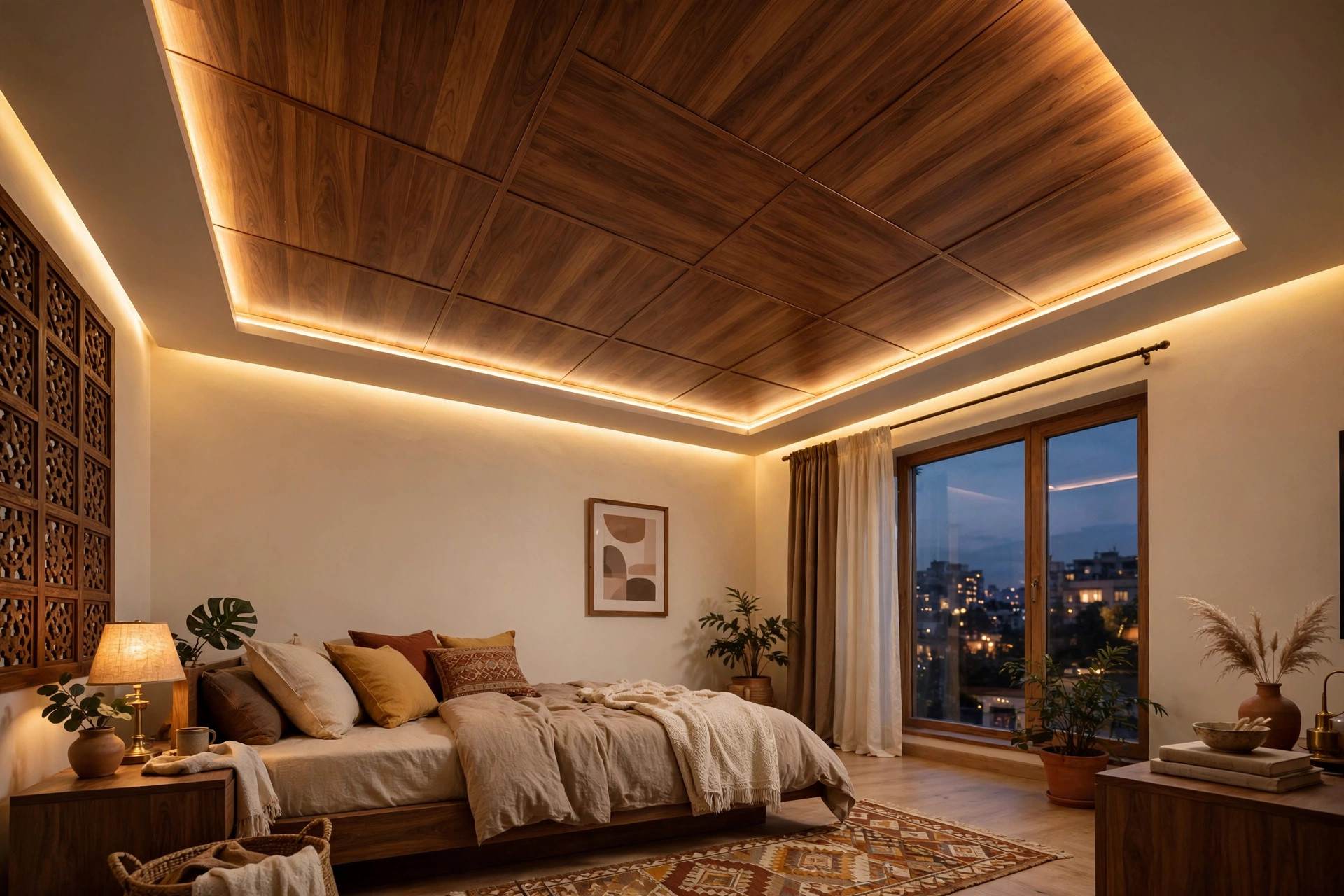
Wood-printed PVC is the most popular bedroom upgrade: the warmth of planks with none of wood’s moisture or termite worries. Quality varies enormously between prints — cheap ones look like a photograph of wood, good ones pass at a glance. See full panels in person. For the real thing, compare with our wooden bedroom ceiling guide.
3. Backlit edges and cove-style borders
PVC’s flatness is its weakness, and lighting is the fix. A concealed LED strip along the panel border, or a backlit translucent panel section, gives the ceiling depth after dark. Use warm white (around 3000K) for bedrooms — cool white over a bed feels clinical. Our lighting guide covers the options.
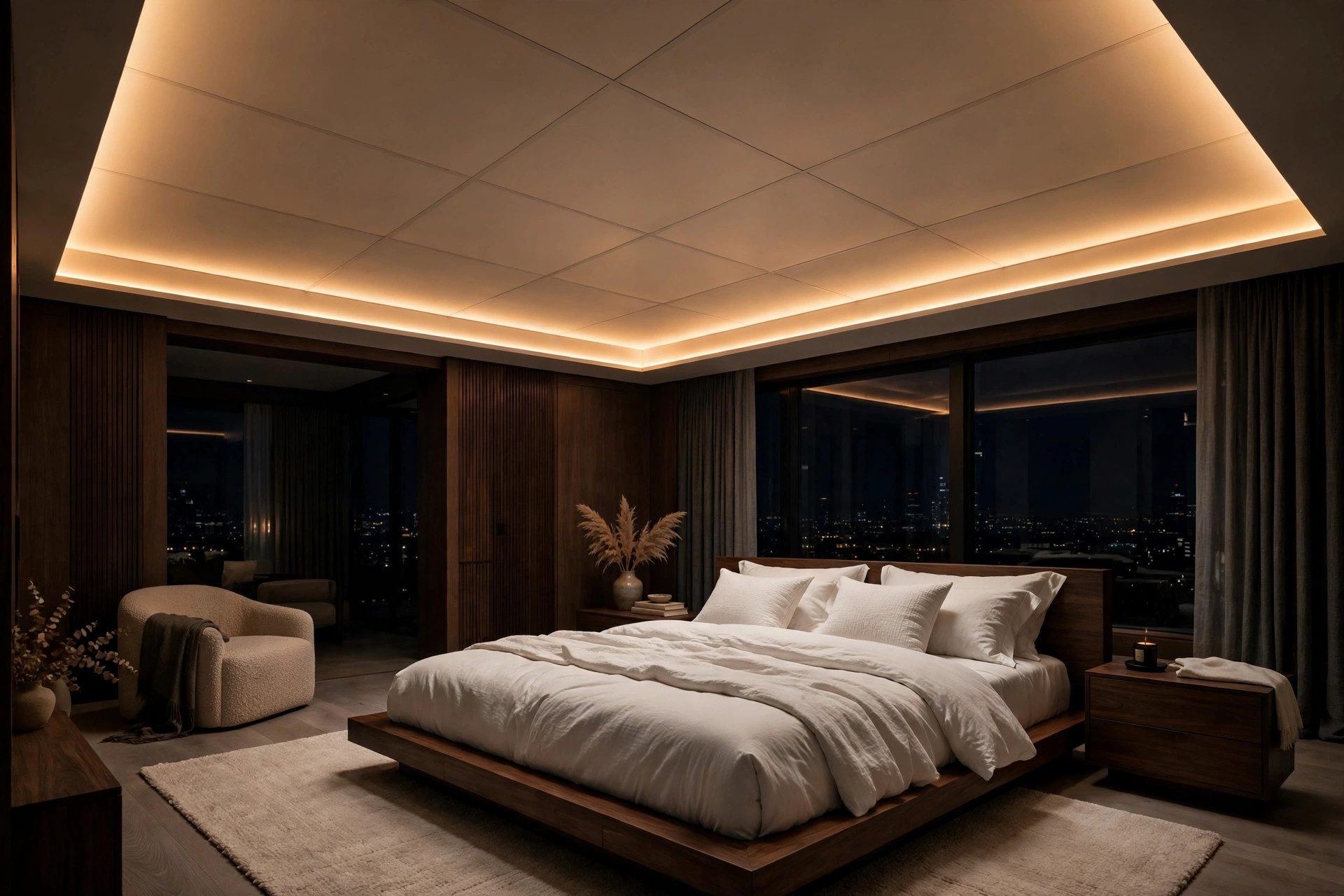
4. Circular panel around the fan
A circular PVC medallion or ring at the ceiling centre, with the fan mounted through it, turns the fan point into a design feature. It also gives the installer a natural place to put the reinforced fan mount (more on that below).
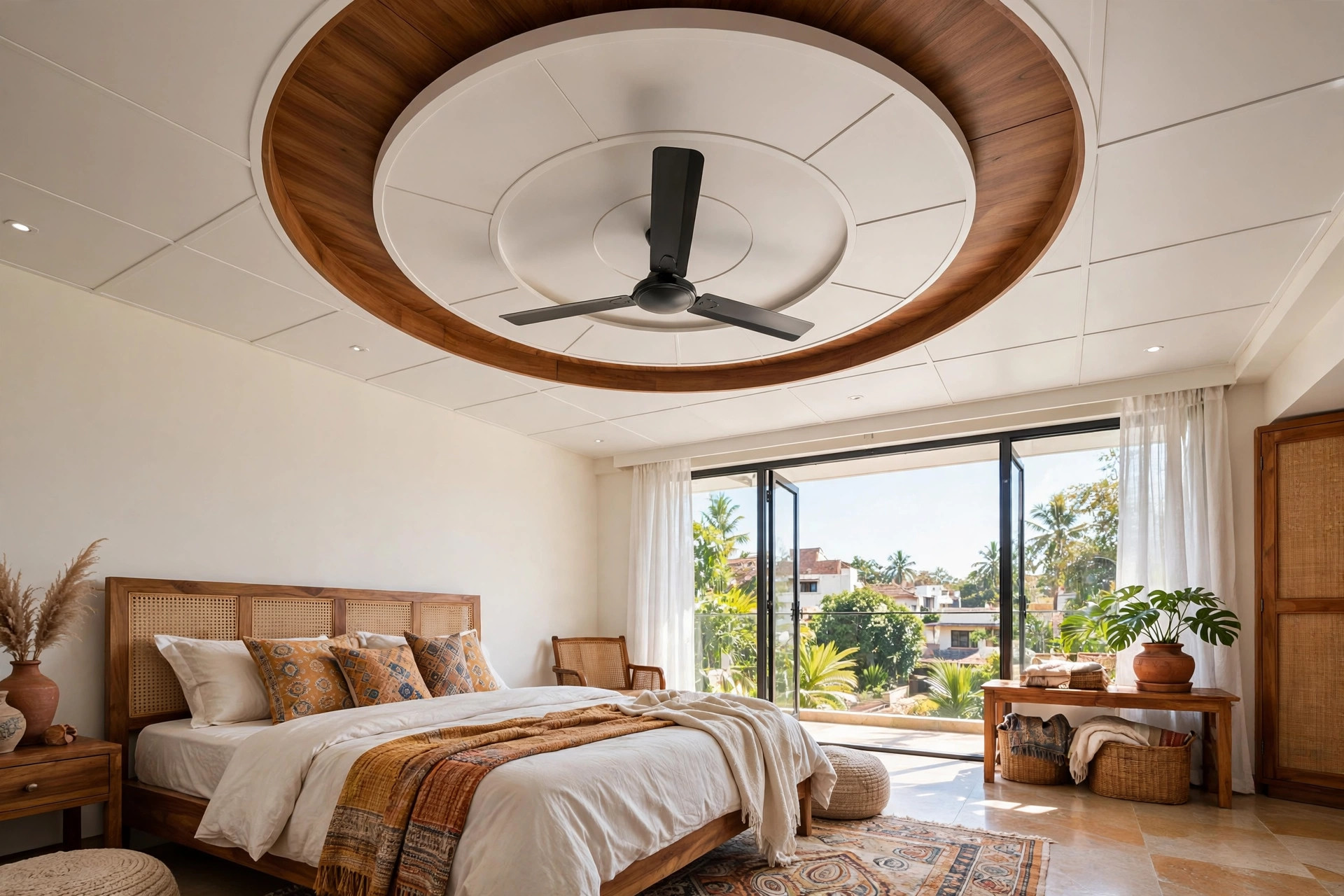
5. Printed and textured panels
Geometric prints, subtle textures, stone or fabric looks — PVC prints let a bedroom ceiling carry pattern without paint or wallpaper. Restraint helps: one printed zone (over the bed, or a border band) beats a whole ceiling of busy pattern. For kids’ rooms, printed themes (stars, galaxies, motifs) are a PVC strength — easy to change later by swapping panels.
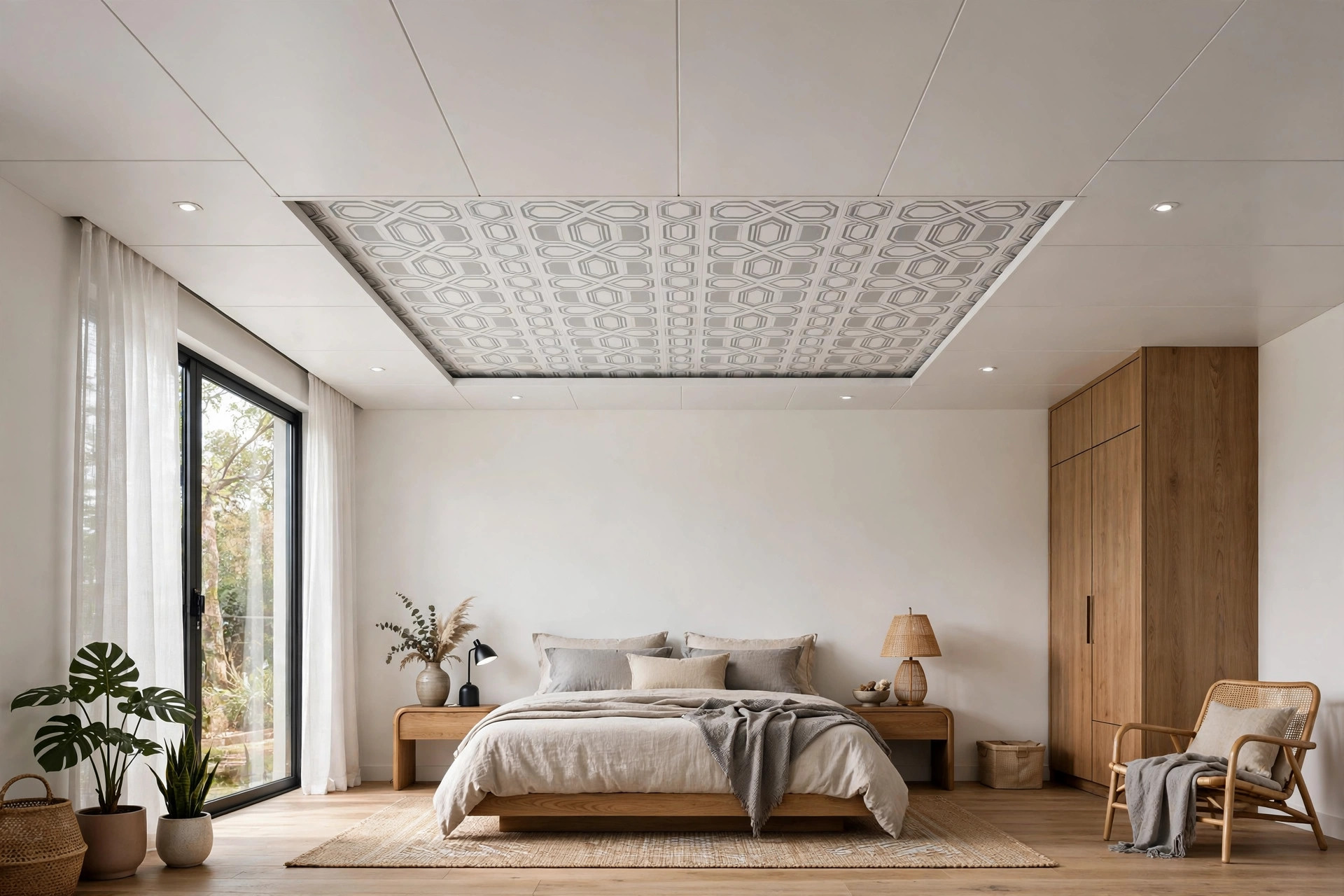

6. Tray-look borders
A stepped border of panels around a flat centre mimics a tray ceiling’s layered look. It will never fool anyone up close the way real POP trays do, but from bed level the shadow lines add genuine depth.
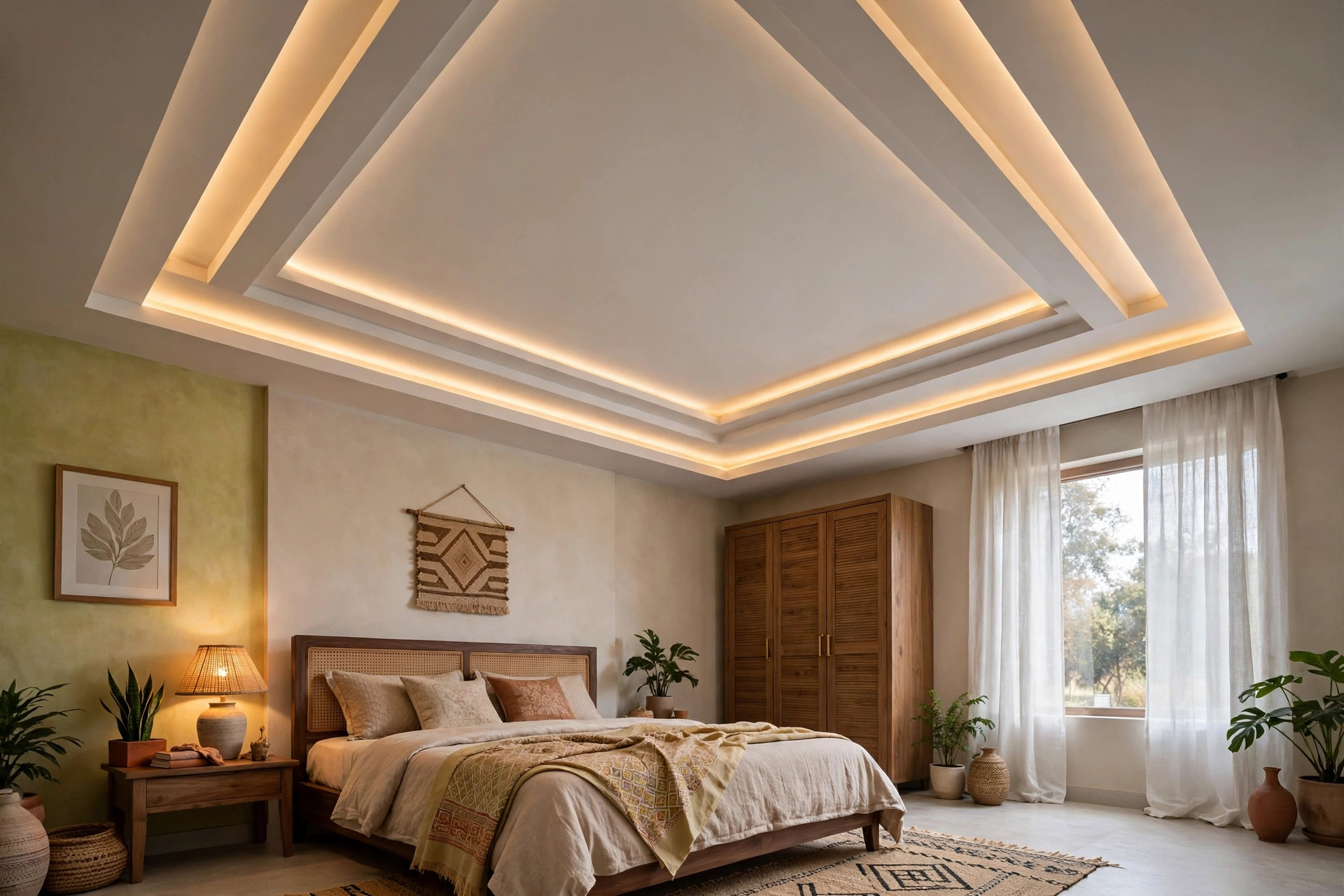
7. Textured finishes
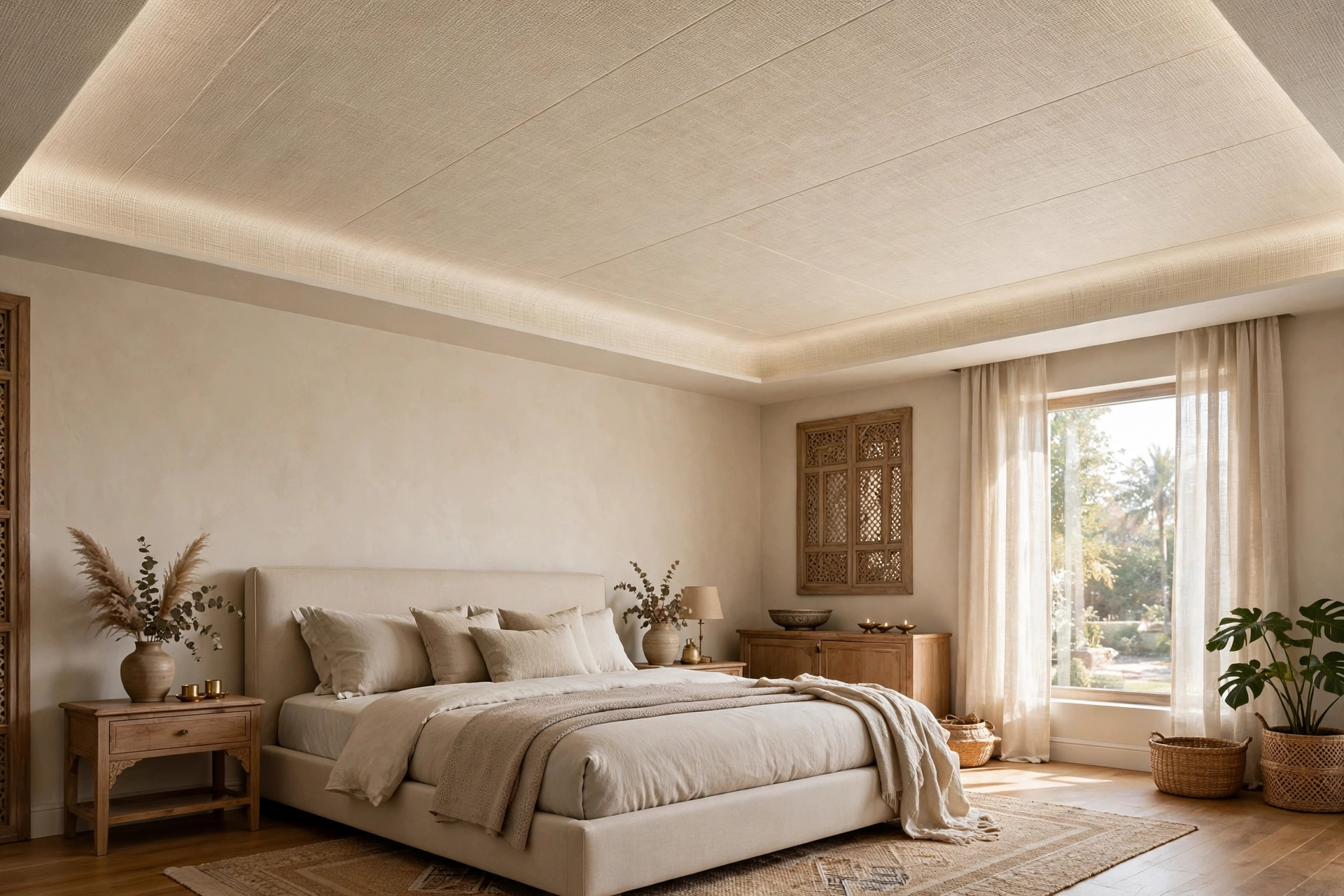
Brushed, linen-weave, and leather-grain textures break up PVC’s flat sheen and hide minor joint irregularities. Texture reads as quality — it is one of the cheapest upgrades in the PVC world.
Cost planning: 2026 bands for India
PVC ceiling costs in India move with panel quality, finish, lighting, city labour rates, and ceiling height. Two well-known 2026 sources give these bands (installed, per sq ft):
- Basic flat panels: roughly ₹80–150 (NoBroker 2026 interiors guide).
- Printed or textured panels: roughly ₹120–220.
- With LED/cove lighting: roughly ₹180–300.
- Modular or premium custom designs: ₹200–500+.
- Laminate-finish PVC: ₹160–185 plus GST (Livspace 2026 bedroom cost page).
For a typical 120 sq ft bedroom, NoBroker’s room-wise estimates put a standard PVC ceiling at roughly ₹13,000–31,500 all-in (panels plus installation). Lighting, complex layouts, and premium finishes push you up the band; plain panels in a straightforward room keep you near the bottom.

What drives your quote: panel brand and thickness, finish (plain vs printed vs backlit), linear feet of border/cove work, number of light cutouts, ceiling height (scaffolding adds cost), and your city’s labour rates. Always get the quote broken into material and labour, per sq ft, with GST stated — and compare at least two contractors. For the full cost picture across materials, see our false ceiling cost guide for India.
Installation: what actually happens
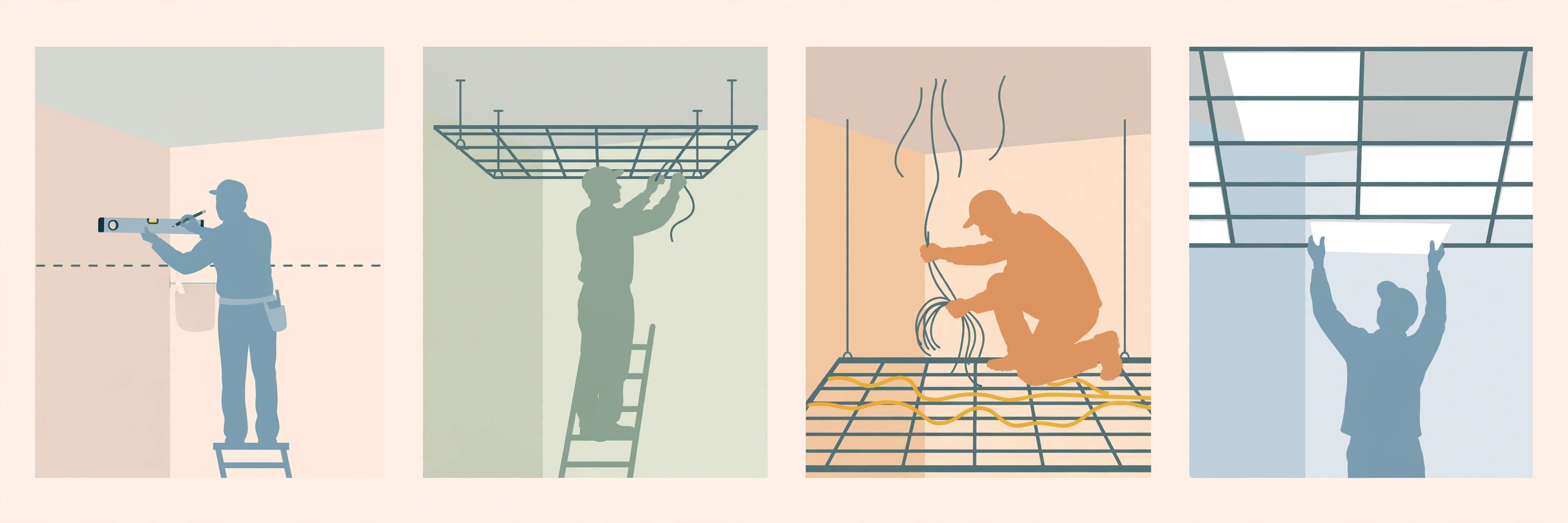
A PVC bedroom ceiling goes up fast, but “fast” still has steps. Knowing them helps you supervise:
- Marking and levelling. The installer marks the drop height on the walls — usually 4 to 6 inches below the slab for a bedroom, more if you want a cove. A water level or laser keeps it true.
- The frame. Galvanised metal channels or treated wooden battens are hung from the slab with rods or wires, forming a grid. This frame carries everything — its levelling decides whether your ceiling looks straight.
- Electrical first. Wiring for lights and the fan point goes in before panels. Points for recessed LEDs are marked and cut.
- Panels. PVC panels slide into edge trims and click into each other across the frame, one row at a time. The last row is trimmed to fit.
- Trims and cleanup. Edge profiles cover the wall junction, light fixtures go in, and the room is swept. No painting, no drying.
Fans and PVC: the mounting question
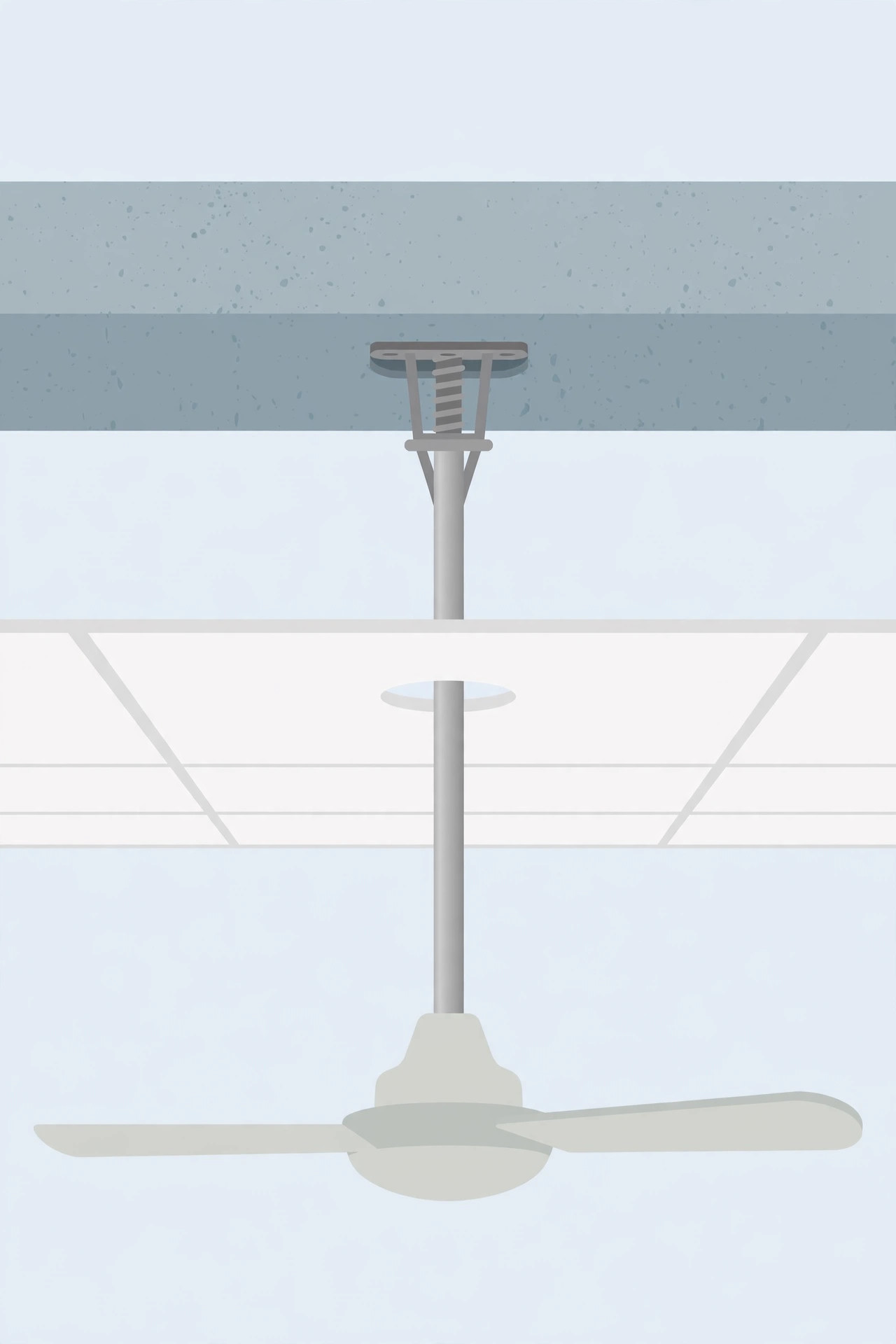
A ceiling fan must never hang from PVC panels or the light panel frame alone — the mount needs a reinforced point tied back to the concrete slab above, typically a metal rod or clamp fixed to the slab with the fan’s weight carried structurally. This is electrician-and-contractor territory, not a DIY decision: have the fan mounting planned before the panels go up, not after. The circular-panel design above exists partly to give this reinforced point a clean finish. If your contractor waves this off, get a different contractor.
Maintenance: the easy part
Dust the panels with a dry microfibre cloth every few months; wipe marks with a damp cloth and mild soap. Avoid abrasive scrubbers on printed panels — they dull the print. The genuine long-term advantage: a damaged panel unclips and a new one slides in, with no plastering or repainting. Keep two or three spare panels from the same batch (shades vary between batches) and future repairs are trivial.


Moisture behaviour: PVC’s home ground
This deserves its own section because it is the number-one reason bedrooms get PVC ceilings. In humid rooms — top floors under a heat-baked terrace, ground floors in high-water-table areas, coastal cities in monsoon — gypsum boards absorb moisture at joints and screws, POP develops damp patches, and paint bubbles. PVC panels simply do not absorb water, so none of that happens. If your bedroom has a seepage history that civil work has not fully fixed, PVC is the ceiling that forgives the building.

Contractor checklist: questions to ask
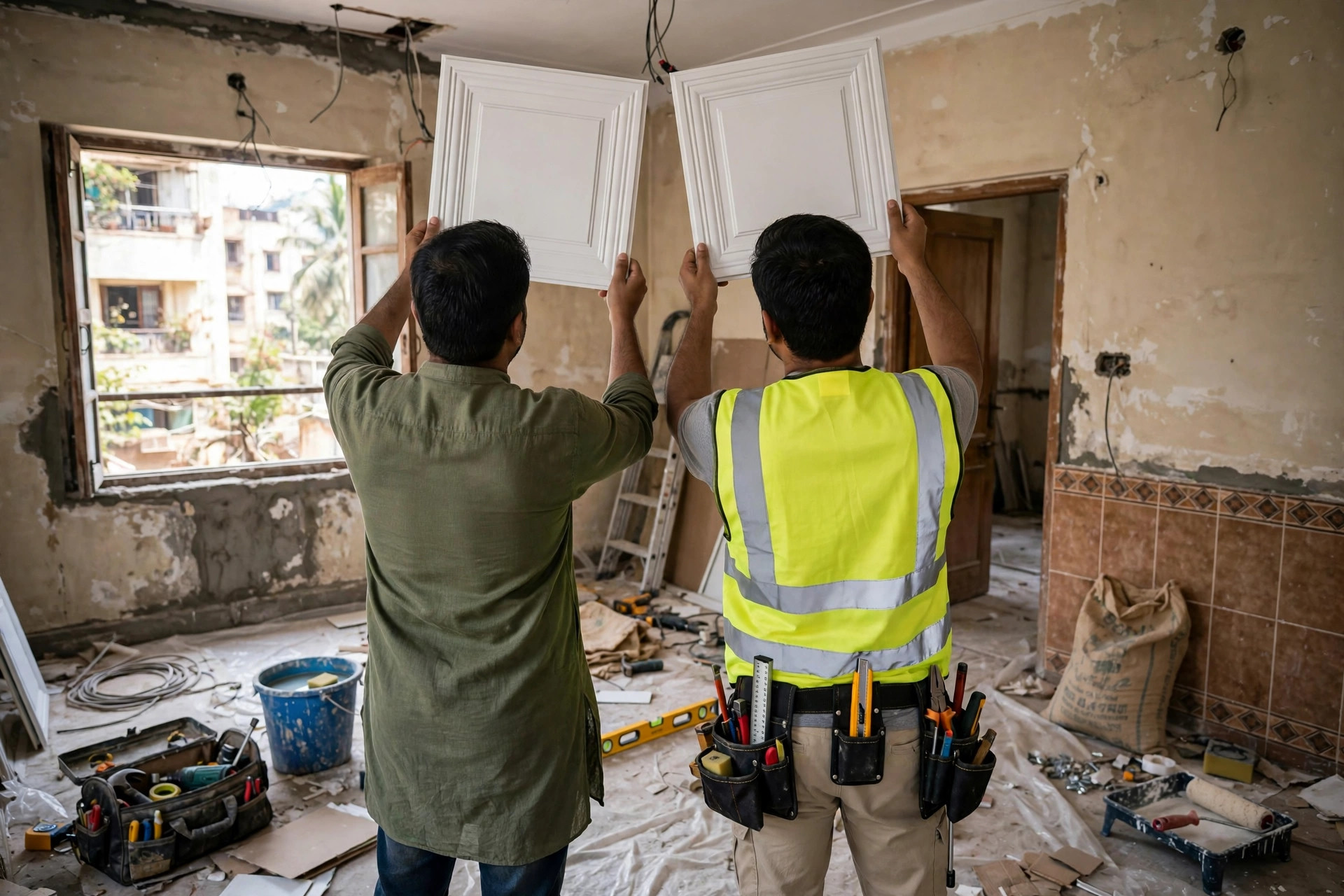
- Which panel brand and thickness are you quoting? (Thicker panels sag less.)
- Is the frame galvanised metal or wood — and is the wood treated against termites?
- How is the fan point reinforced, and who certifies it?
- Is the quote per sq ft for material plus labour, and is GST included or extra?
- How many light cutouts are included, and what does each extra one cost?
- Will you leave spare panels from the same batch?
- What is the workmanship warranty, in writing?
Should you choose PVC for your bedroom?
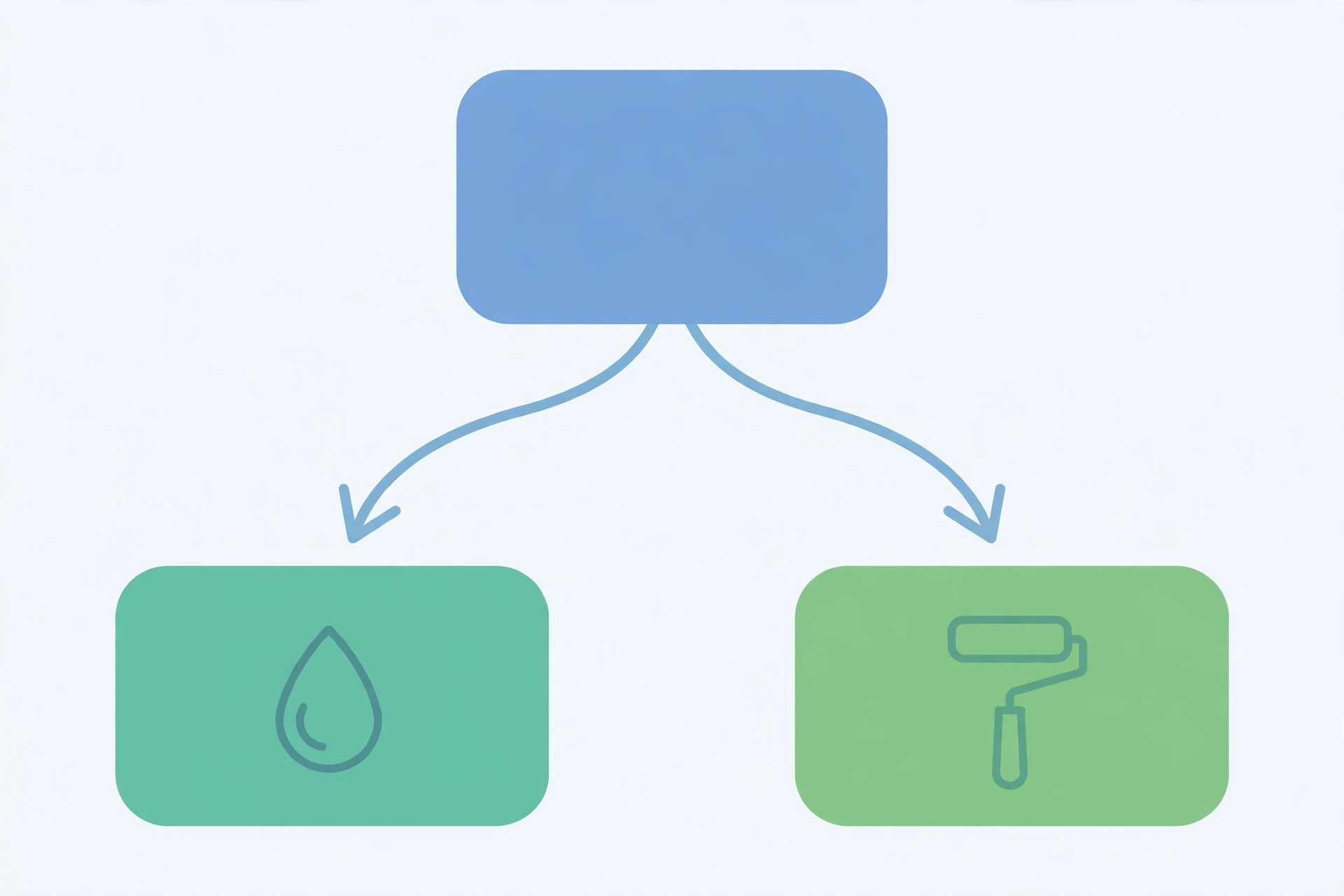
Choose PVC if the bedroom is damp or humid, the house has termite history, you want minimum maintenance, the budget rules out premium finishes, or you need the room usable again in two days.
Choose gypsum instead if the bedroom is dry, you want a seamless painted finish or layered cove designs, and you are willing to repaint every few years. At 2026 prices the two cost roughly the same installed — so in a dry room, the decision is about looks and maintenance, not money.
Choose POP if you want curves, carvings, or ornamental detail that neither panels nor boards can do, and you have the patience for a week-plus installation.
For the broader bedroom picture — layouts, lighting plans, and material combinations — start with our bedroom false ceiling hub.
FAQs
Is PVC false ceiling good for bedrooms?
Yes, with the right expectations. PVC suits bedrooms that need moisture resistance, termite immunity, low maintenance, or fast installation. It does not suit bedrooms where you want a seamless premium finish or elaborate layered designs — gypsum or POP do those better.
How much does a PVC false ceiling cost for a bedroom in India?
2026 guides put installed PVC at roughly ₹80–185 per sq ft depending on finish and source (NoBroker 2026 interiors guide; Livspace 2026 bedroom cost page). A 120 sq ft bedroom typically lands around ₹13,000–31,500 all-in. Get itemised per-sq-ft quotes with GST stated.
Does a PVC ceiling look cheap?
Cheap glossy panels can. Matte, textured, or wood-finish panels installed with straight joints look considerably better. The single biggest quality lever is seeing full panels in daylight before approving — catalogue photos flatter everything.
Can you mount a ceiling fan on a PVC false ceiling?
Yes, but the fan must hang from a reinforced mount tied to the concrete slab above — never from the panels themselves. Plan the mount with your contractor and electrician before the panels go up.
How long does a PVC bedroom ceiling last?
NoBroker’s 2026 guide gives 8–12 years as typical. Panels themselves can last longer; what ages is the look — gloss dulls, whites yellow slightly in sunny rooms — and individual panels are replaceable.
All images in this article are original concept renders created for illustration, not photographs of completed projects.