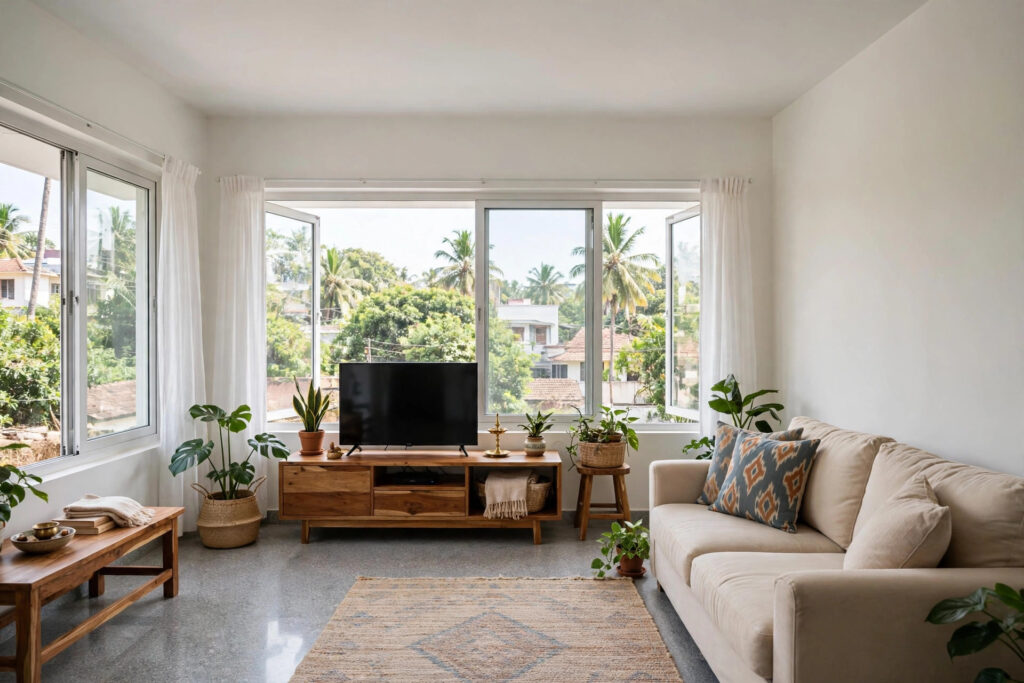

Do you actually need a false ceiling? For many Indian homes, the honest answer is no. If your slab is reasonably level, your wiring and pipes are simple, and your ceiling height is on the lower side, a well-finished bare ceiling can look clean and modern — and it will cost you far less than a full gypsum or POP ceiling. This guide covers when skipping the false ceiling works, the alternatives that genuinely look good, what you give up compared to a real false ceiling, and the situations where a ceiling is honestly worth the money. By the end, you should be able to make the decision — not just pick a design.
All images in this article are original concept renders created for illustration — they show design possibilities, not completed projects.
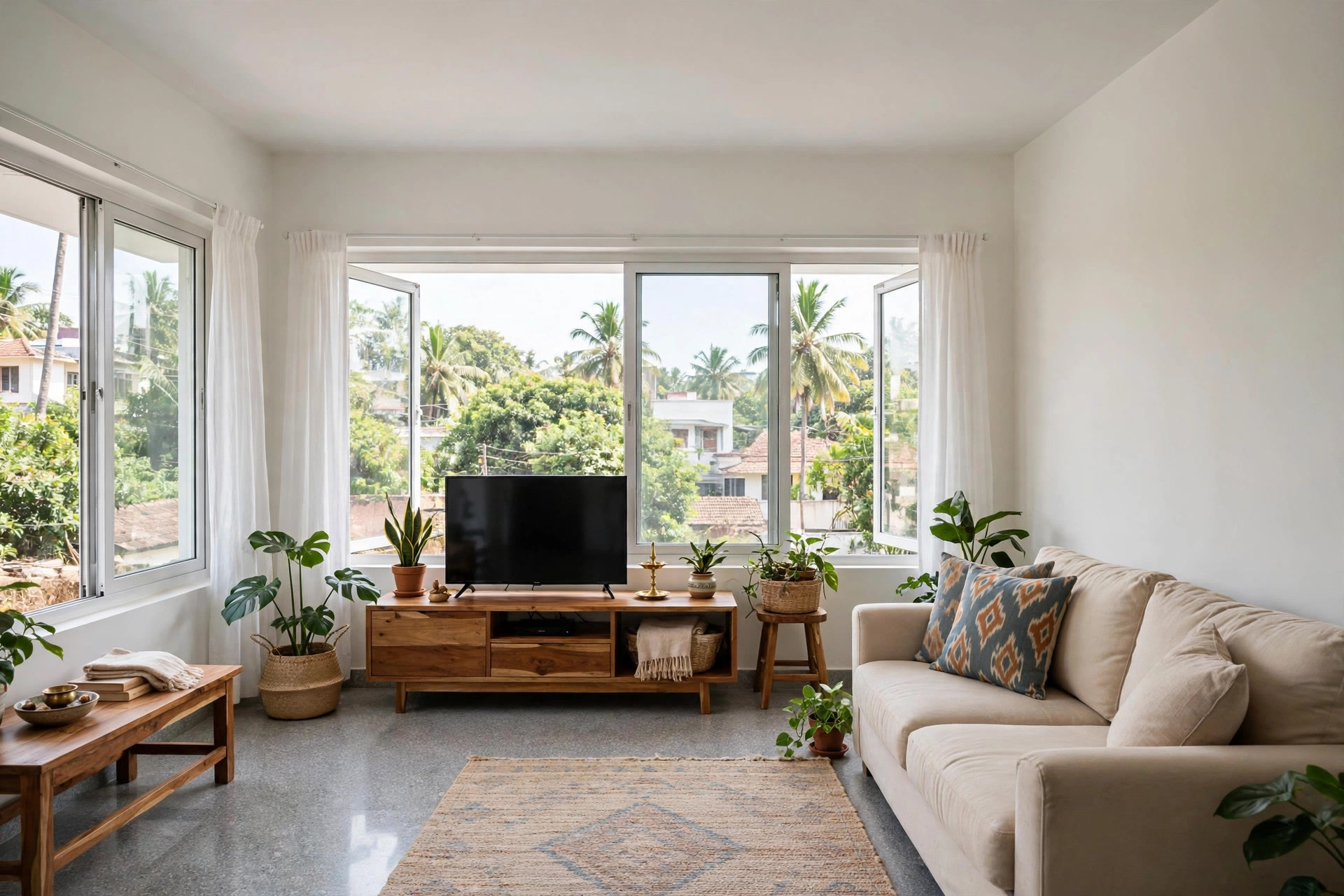
When skipping the false ceiling is the right call
A false ceiling is a tool, not a requirement. It makes sense when you have something to hide or a specific effect to create. If none of that applies, skipping it is the sensible move. You are probably fine without one when:
- Your slab height is 9 feet or below. A false ceiling typically drops 6 to 12 inches, and in a low room that loss is felt immediately — the room starts to feel boxed in. Keeping the full height makes the same room feel taller and more open.
- Your budget is tight. A bare finished ceiling costs far less in material and labour than a full false ceiling. The money you save can go into better lighting, furniture, or paint — things you notice every day.
- Your services are simple. If there are no AC ducts crossing the room, no messy bundle of pipes, and the wiring can be routed neatly, there is nothing that needs hiding.
- You like the look. Painted slabs, exposed concrete, and wooden beams are legitimate design choices, not compromises. Plenty of modern and industrial-style homes use them deliberately.
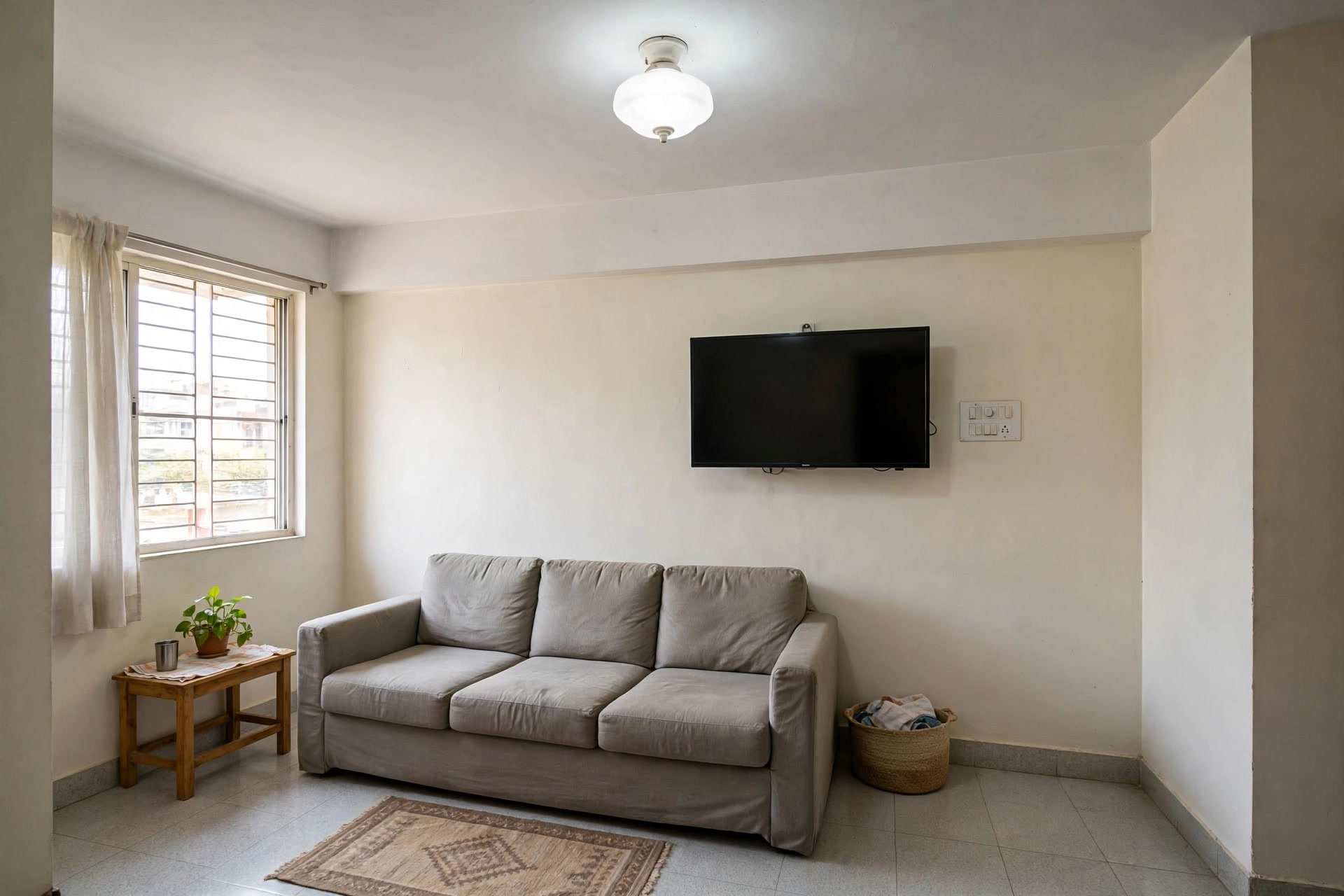
The alternatives that actually work in Indian homes
Below are the options worth considering, roughly ordered from the simplest to the most involved. Each one comes with an honest note about where it falls short.
1. A well-finished plaster and paint job
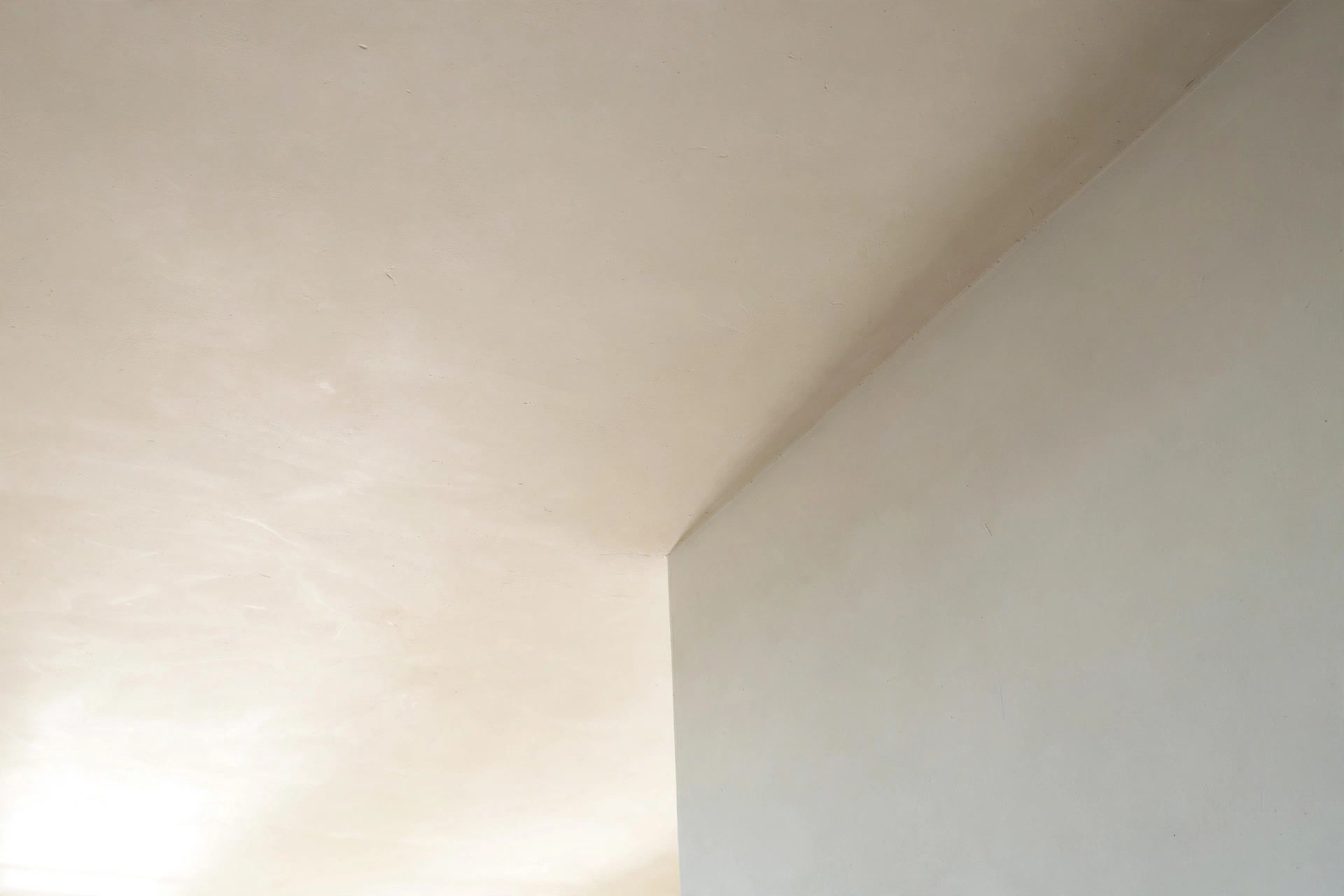
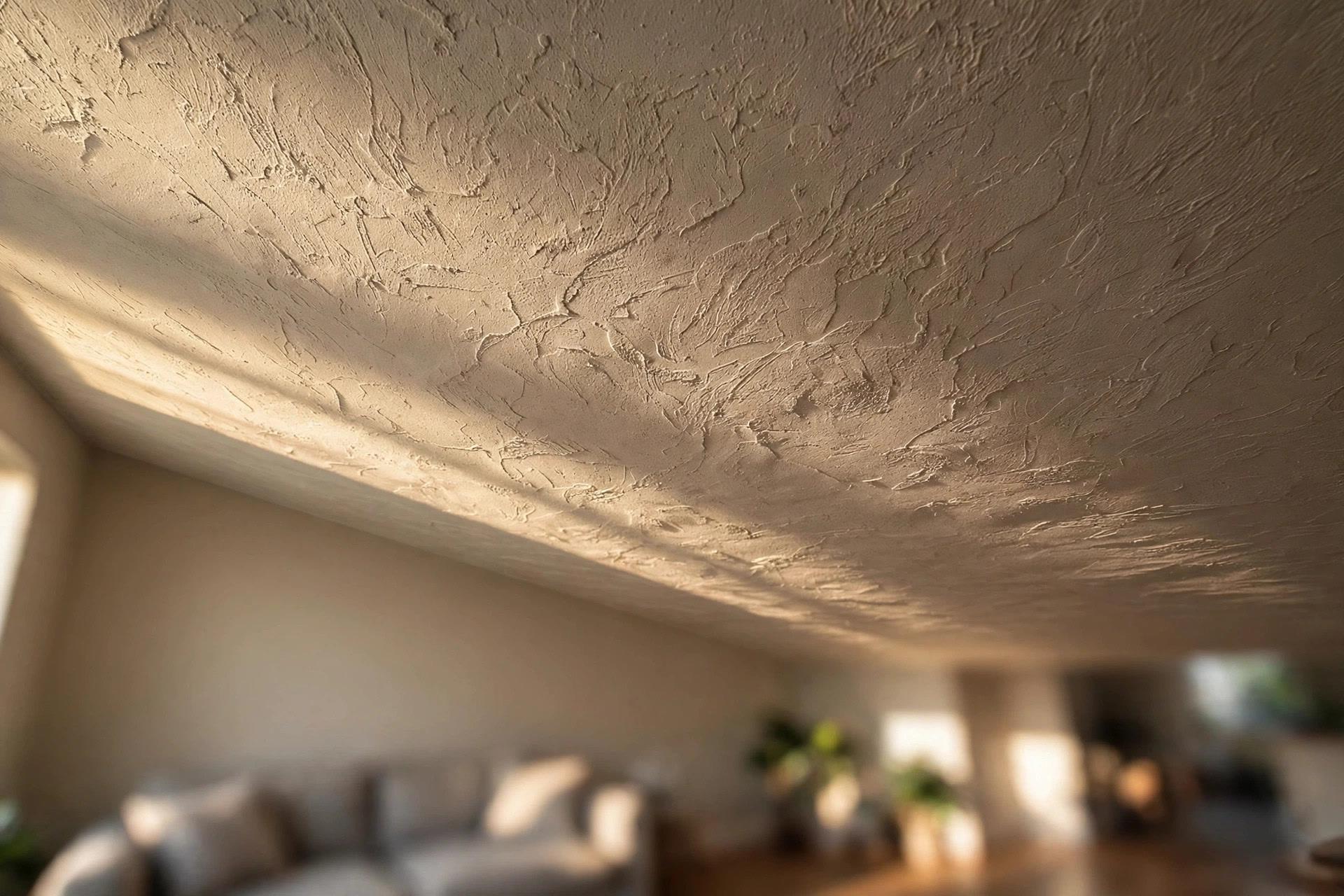
This is the default answer and it is underrated. A smooth plaster finish with two coats of good-quality paint looks clean and intentional — the problem is only when the plastering is rough and the paint is an afterthought. Light colours keep the room feeling open; a slightly warm white works in most Indian homes. If the slab has minor undulations, a textured paint finish can hide them while adding some character.
2. Exposed concrete, sealed and painted
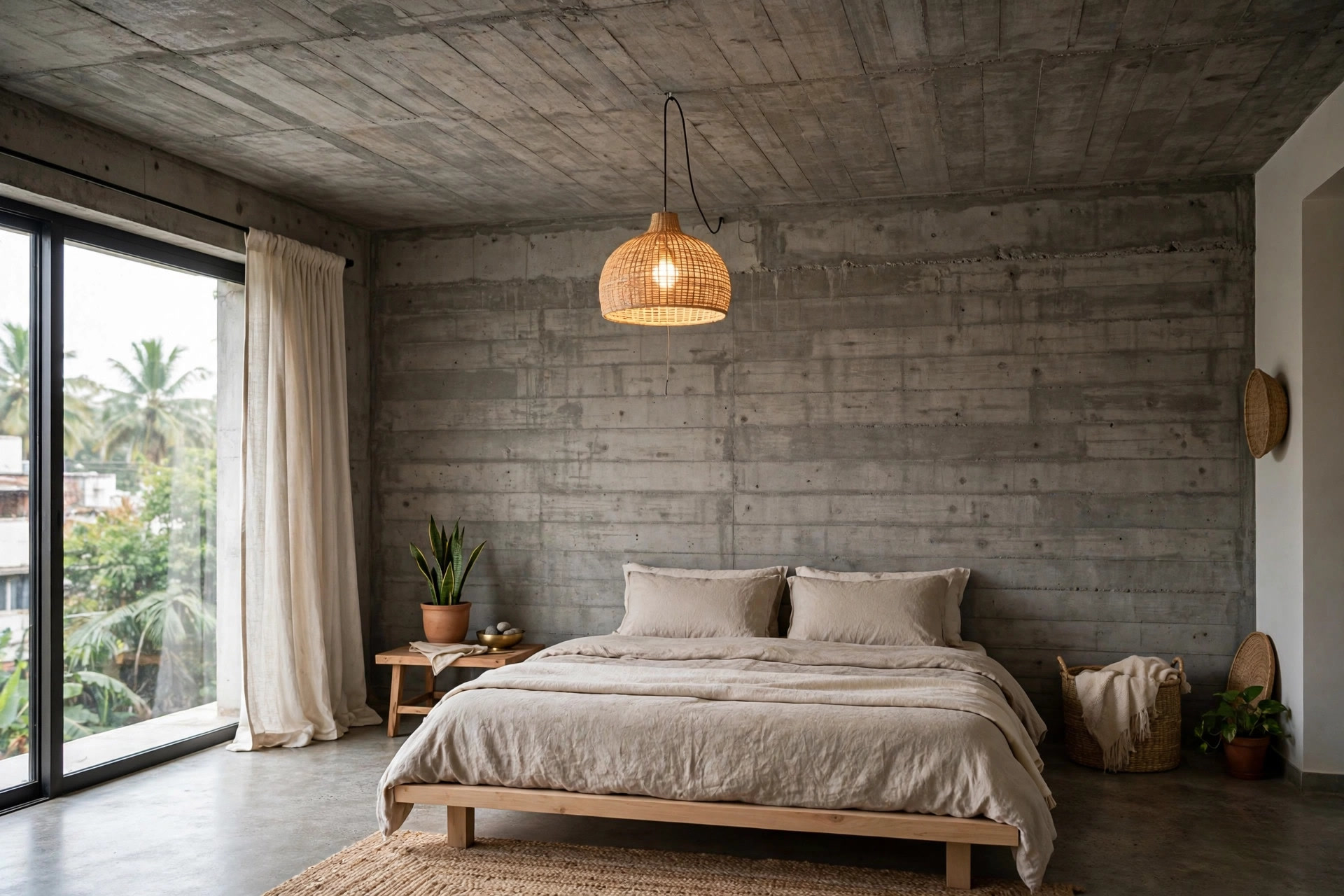
Leaving the concrete slab visible — either raw with a clear sealer or painted — gives an industrial, loft-like feel. The one rule: seal and prime it properly before painting, or dust and patchiness will show. Done well, an exposed concrete ceiling lasts as long as the building itself, which is longer than most false ceilings. The honest trade-off is thermal: a bare slab absorbs heat during the day and releases it in the evening, so on a top floor in a hot city this can make the room warmer. In that situation, a false ceiling with insulation is the better call.
3. Wooden beams as the feature
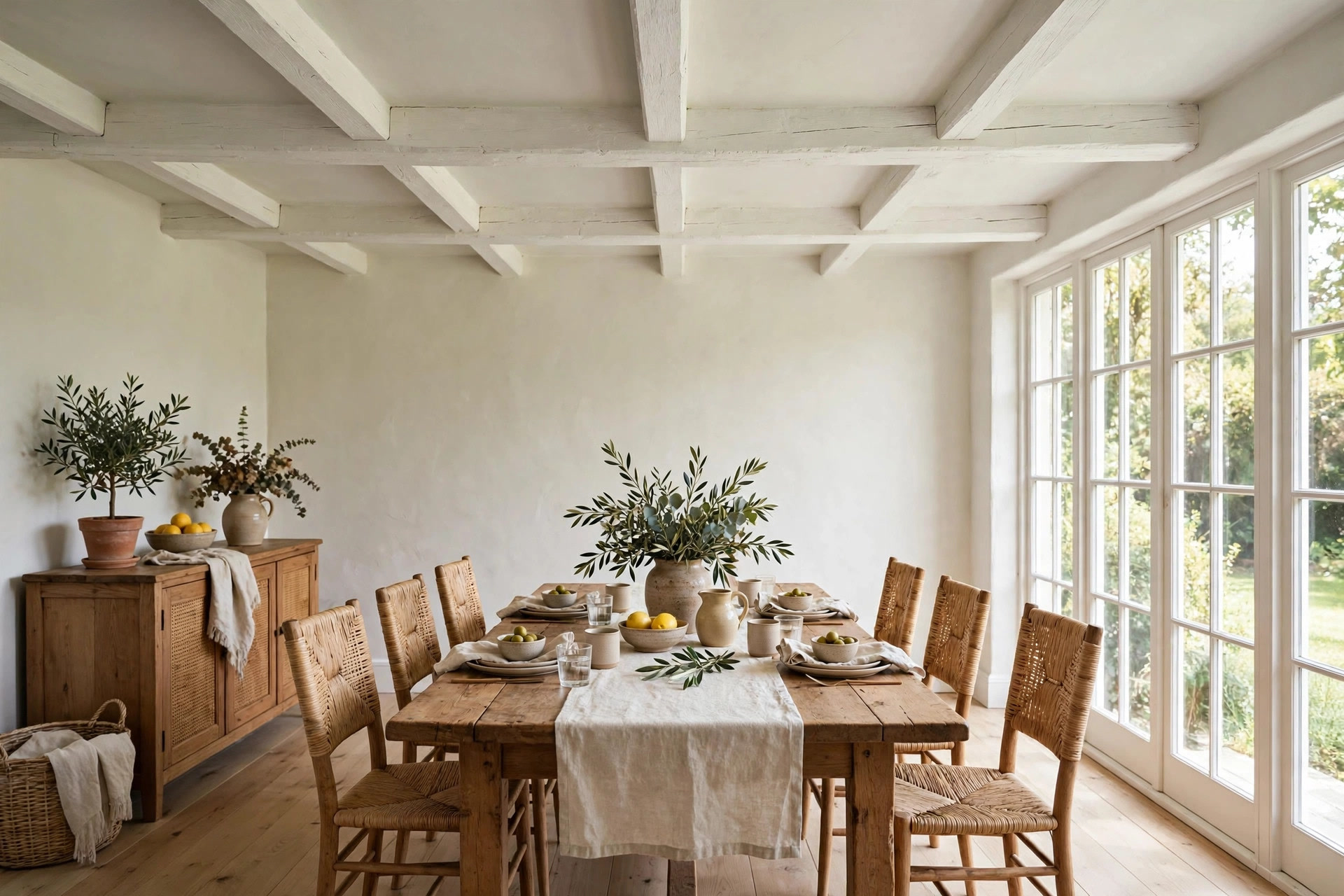
Wooden beams — real or good-quality faux — are probably the most popular “no false ceiling” idea, and for good reason. A few beams across a plain painted ceiling add warmth and draw the eye upward, giving the room structure without lowering it. Dark woods feel cosy; lighter woods feel airy. Keep the beams proportionate to the ceiling height — chunky beams in a low room will feel heavy. In humid areas, wood needs protection against moisture and insects, so factor in maintenance.

4. Cornice or trim along the edges
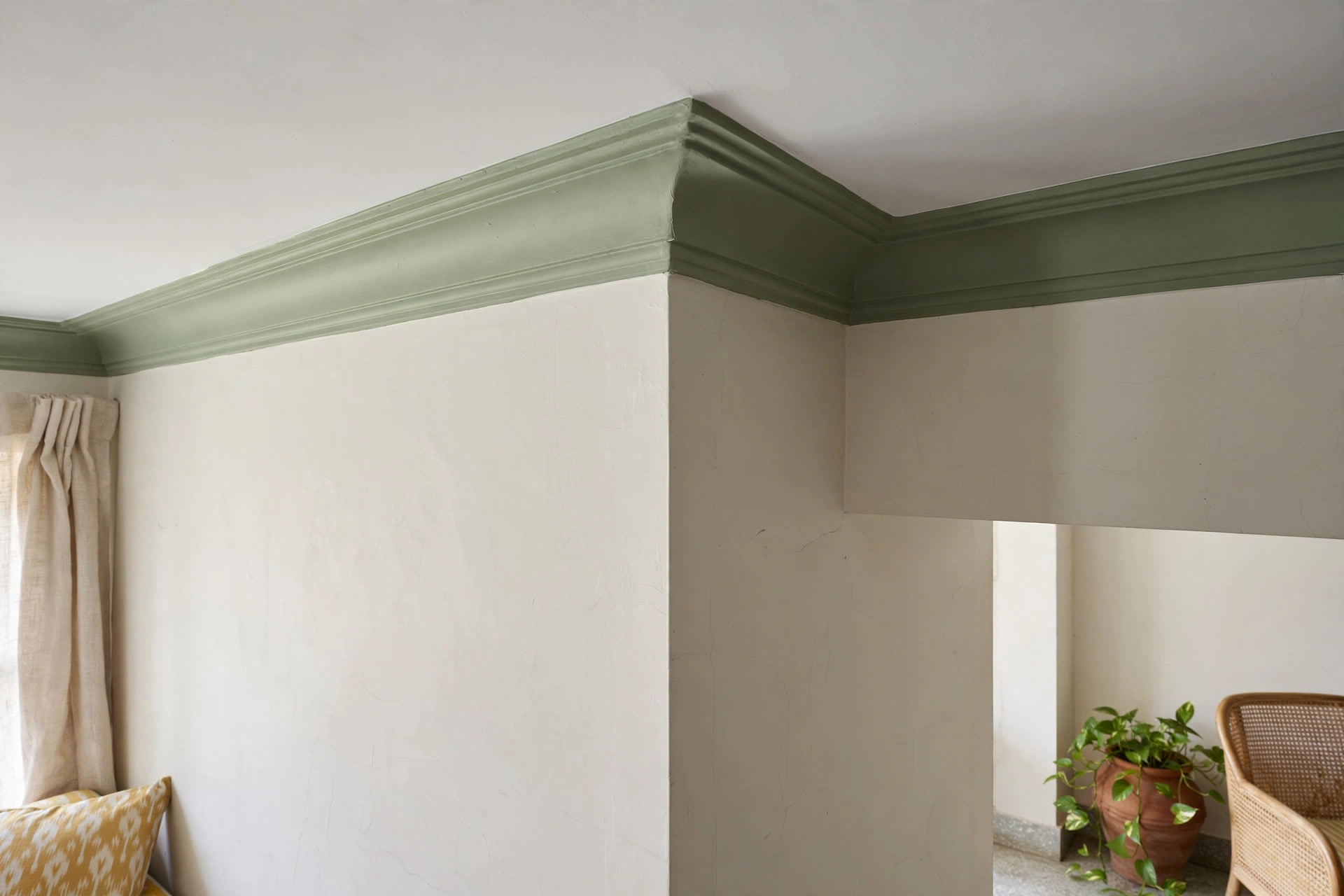
A simple cornice or decorative trim where the wall meets the ceiling gives a plain slab a finished, deliberate edge — it reads as a design decision rather than an unfinished ceiling. Painting the trim in a contrasting colour makes it stand out; keeping it the same colour as the ceiling keeps things subtle. This is a small job and a small cost compared to a full ceiling.
5. Wallpaper or a stencilled pattern overhead
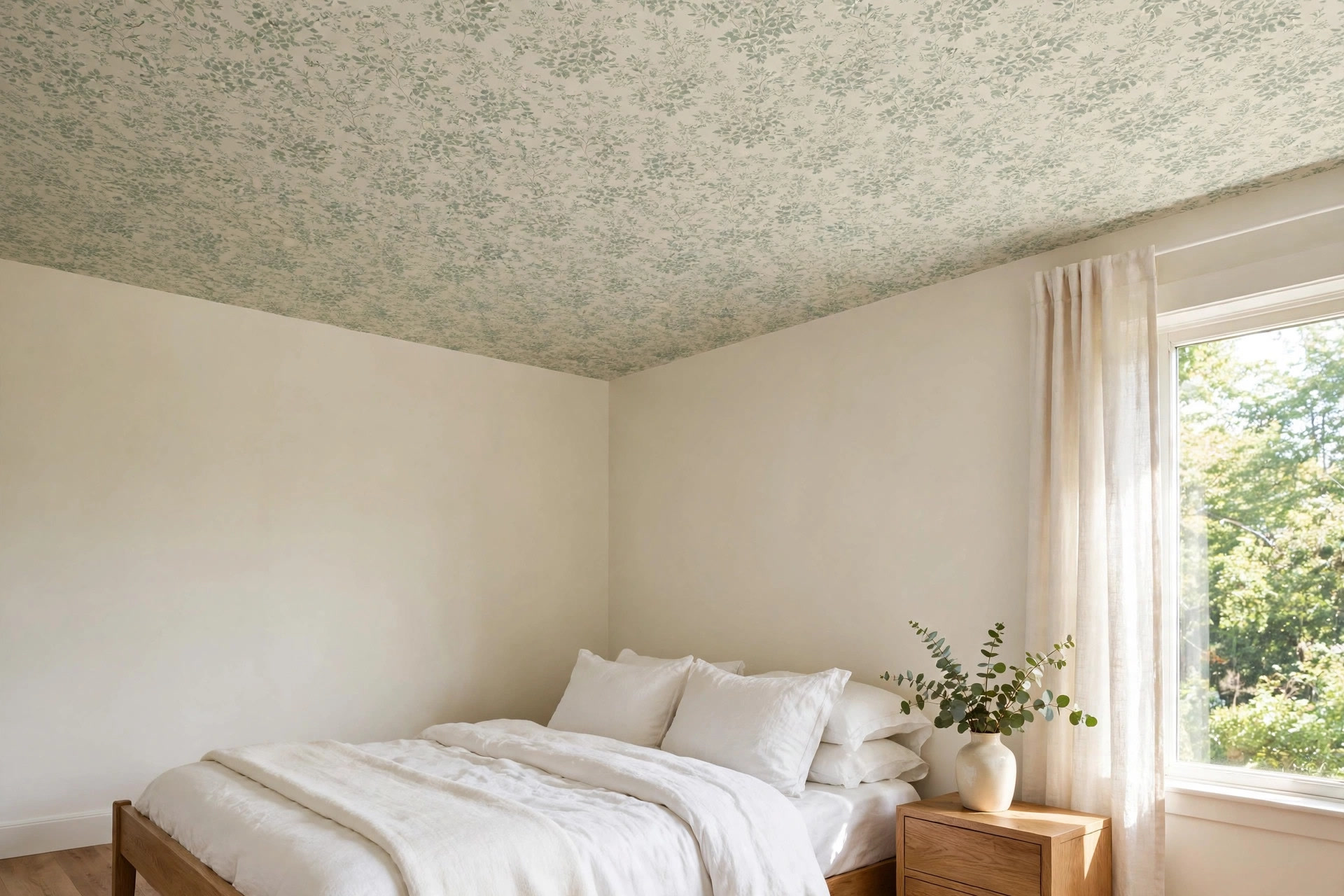
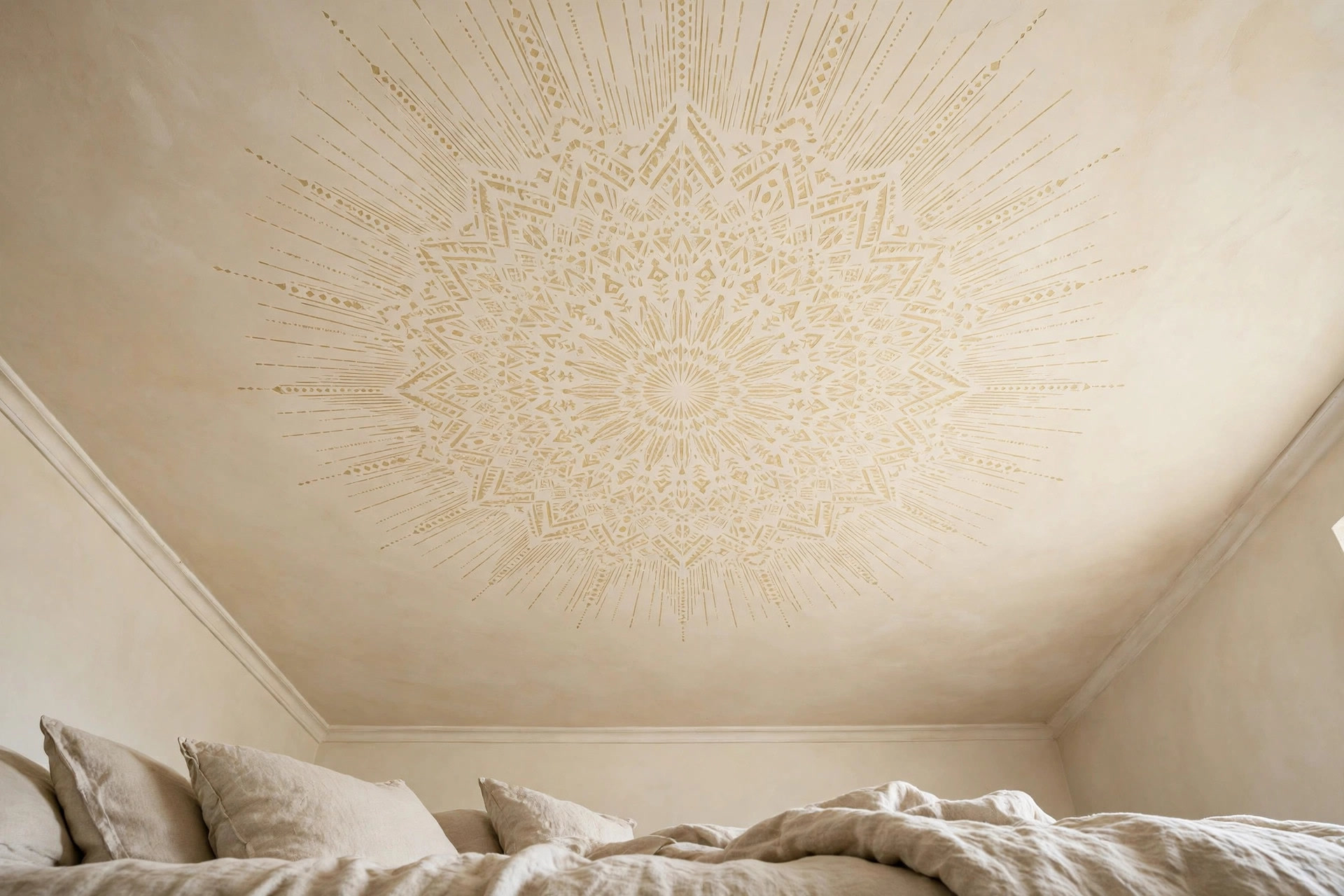
Wallpaper works on ceilings, not just walls — a subtle pattern overhead can make a bedroom feel designed rather than bare, as long as it suits the rest of the décor. A cheaper cousin is a hand-stencilled pattern: a geometric border or a central medallion painted with a stencil and two paint colours. It takes patience, not money. If you are comparing this with a POP false ceiling purely for the decorative effect, paint and stencil get you surprisingly close at a fraction of the effort.
6. Decorative tiles fixed directly to the slab
Embossed metal tiles or mirror tiles can be fixed straight onto the existing ceiling, adding texture without the depth or cost of a false ceiling. Metal tiles are durable and add a reflective quality that lifts the light in a room. Mirror tiles can make a low room feel taller, but be honest with yourself about the upkeep — they smudge and need regular cleaning, and they only suit certain styles. Reflective surfaces can also create glare in bright rooms.
7. Acoustic panels where noise matters
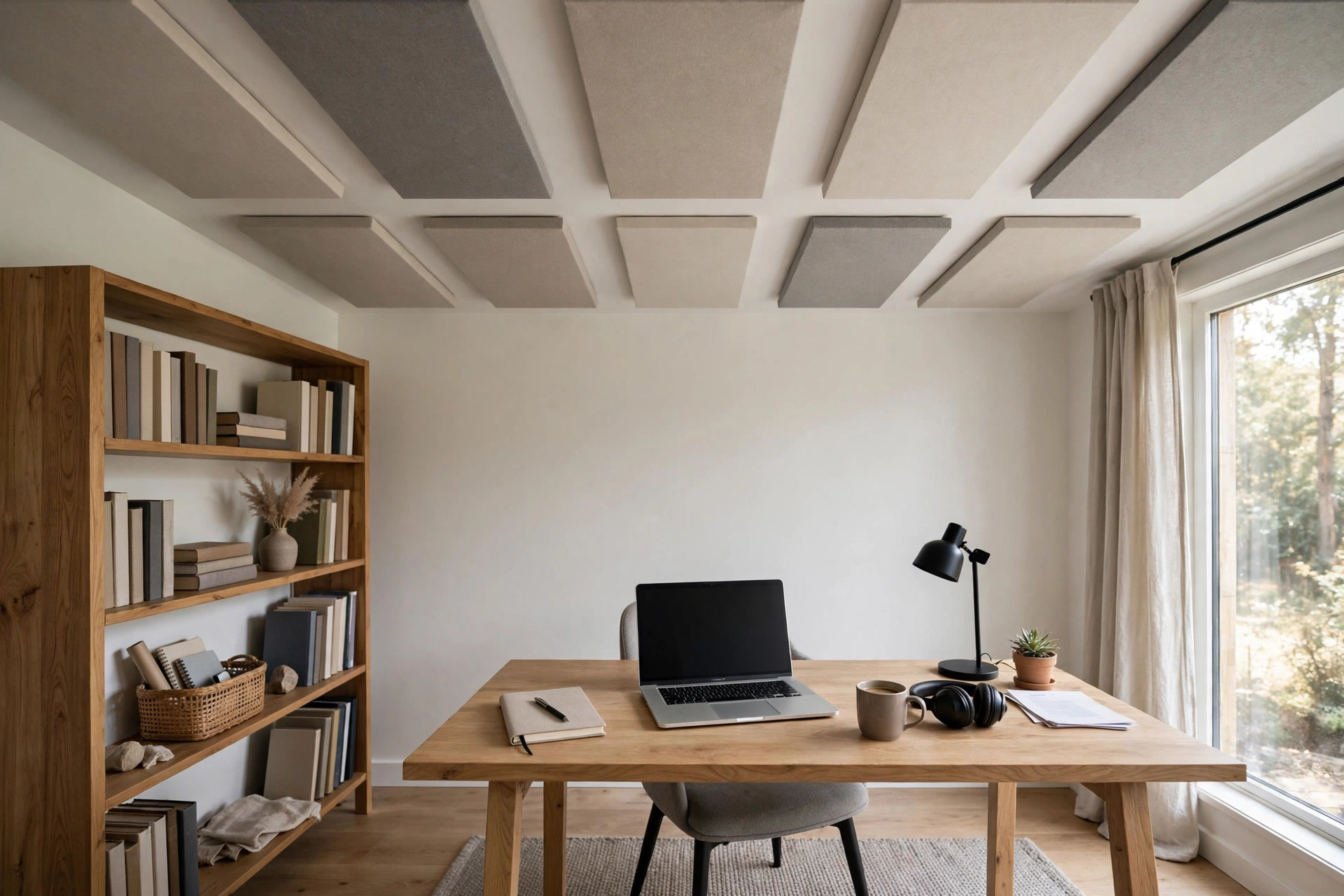
If the reason you wanted a false ceiling was sound — a home office under a noisy floor, a bedroom facing a busy road — fabric or wood acoustic panels mounted directly on the ceiling absorb echo without a full suspended structure. They are lightweight, come in different designs, and can look like a deliberate design feature rather than an add-on. They will not match the sound control of a proper insulated false ceiling, but for everyday echo and moderate noise they help noticeably.
8. Lighting that doesn’t need a ceiling cavity
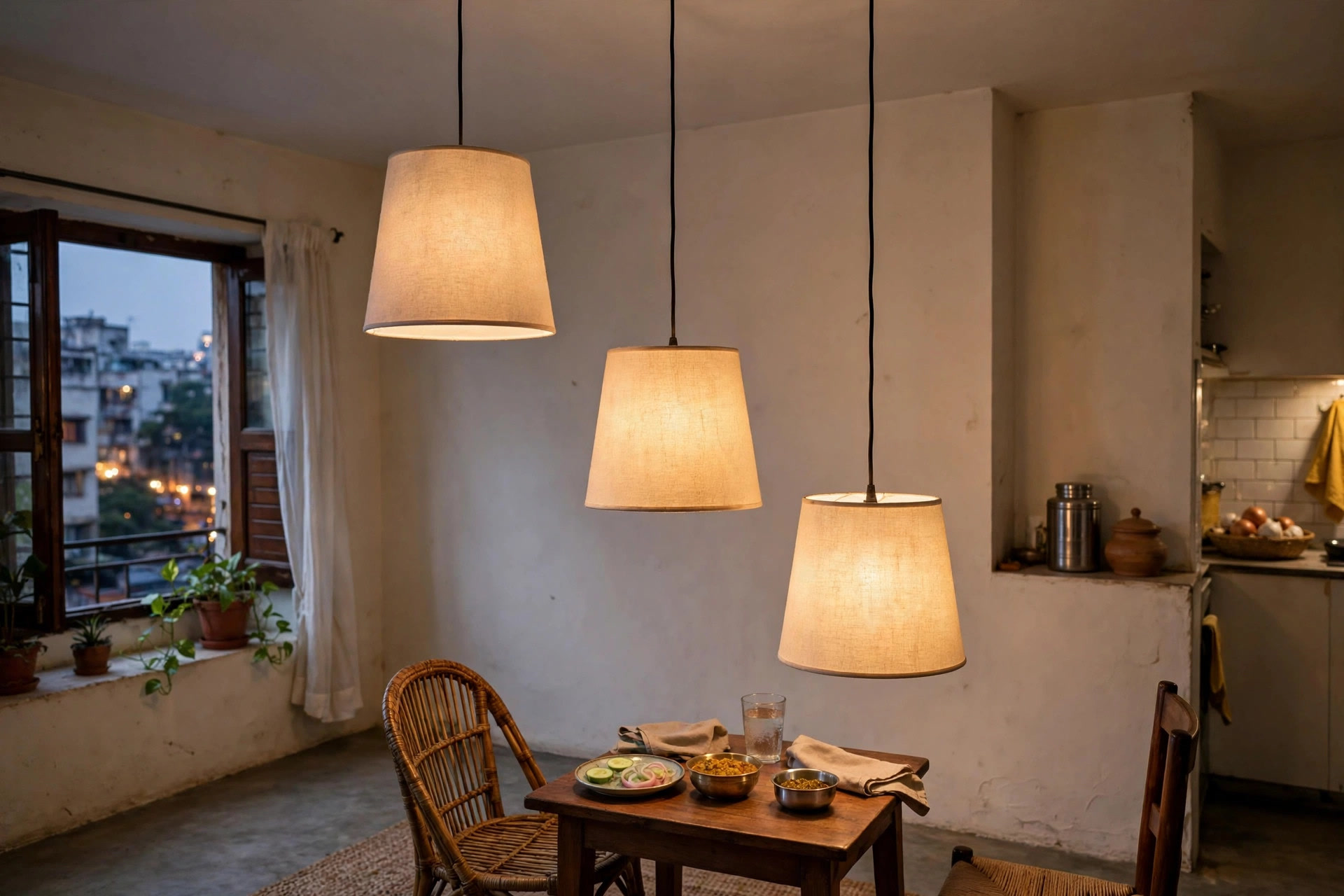
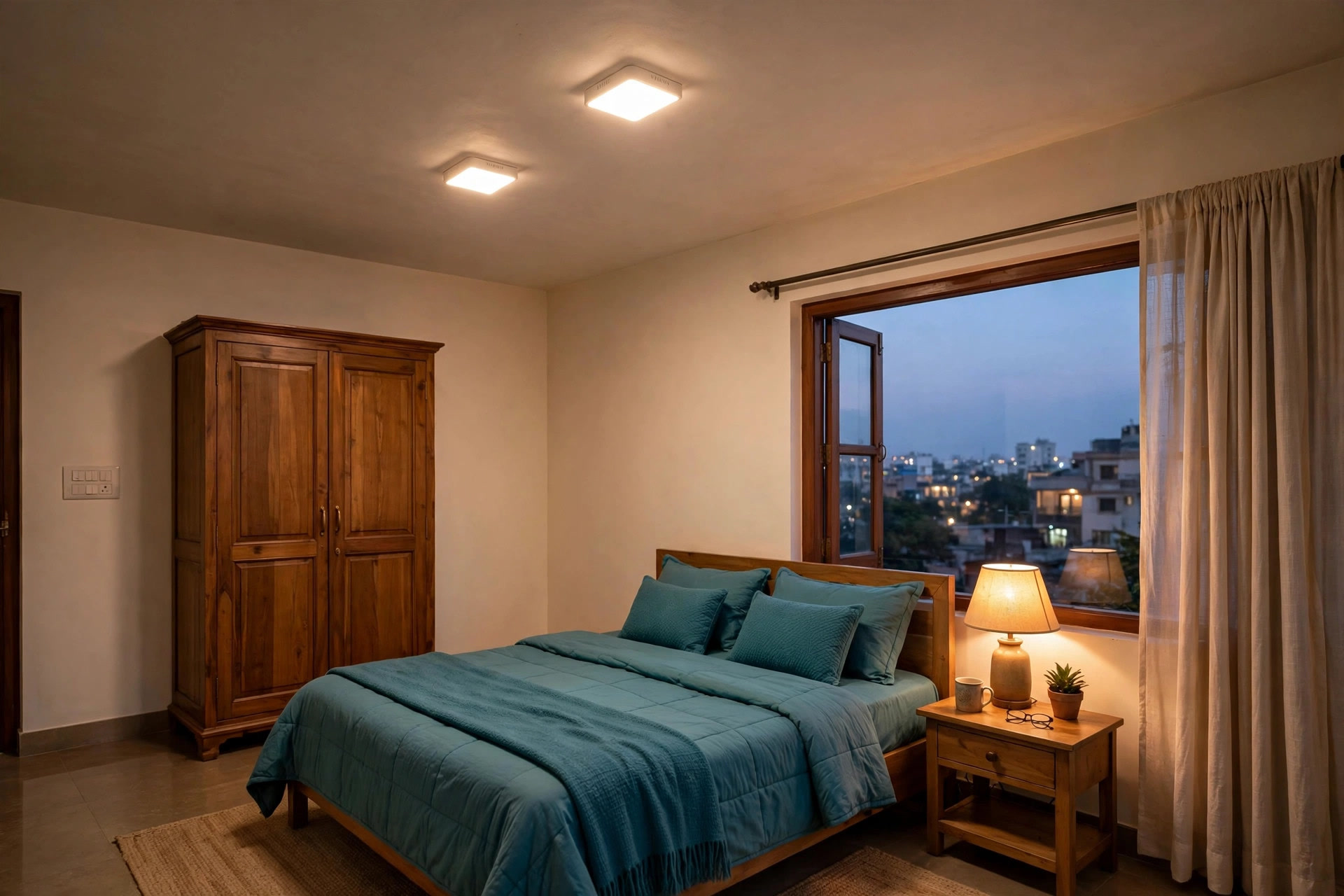
This is the worry most people have: “without a false ceiling, how do I get good lighting?” The answer is that recessed lights are only one option. Surface-mounted track lights, pendant lights at different heights, slim LED panels fixed directly to the slab, and wall sconces all work on a bare ceiling — and some look better for it. A good approach is layering: a central ceiling light for general brightness, plus wall sconces or a floor lamp for warmth in the evening. If you want the full picture of what layered lighting looks like with a ceiling, our false ceiling lighting guide covers the other side of the comparison.

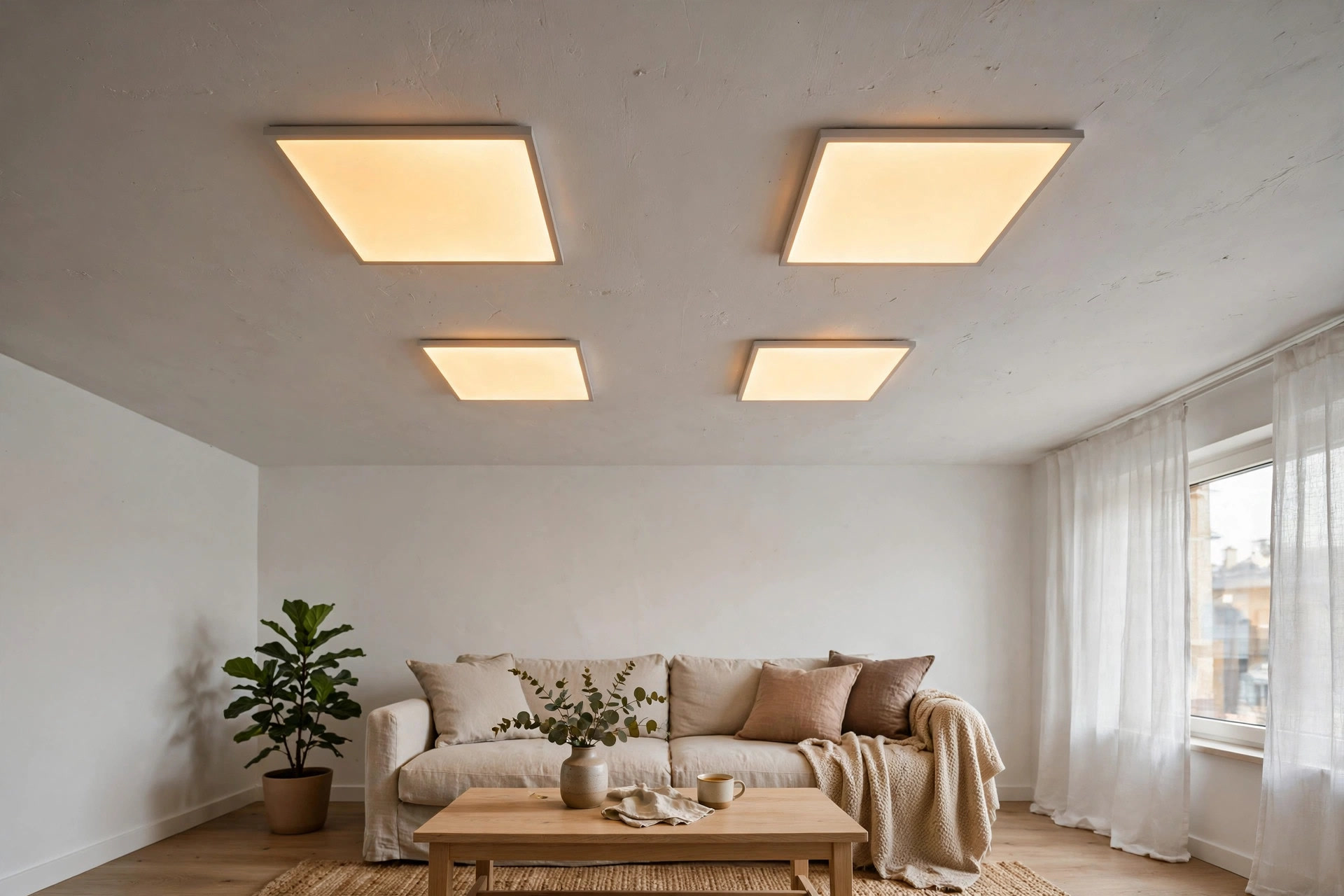
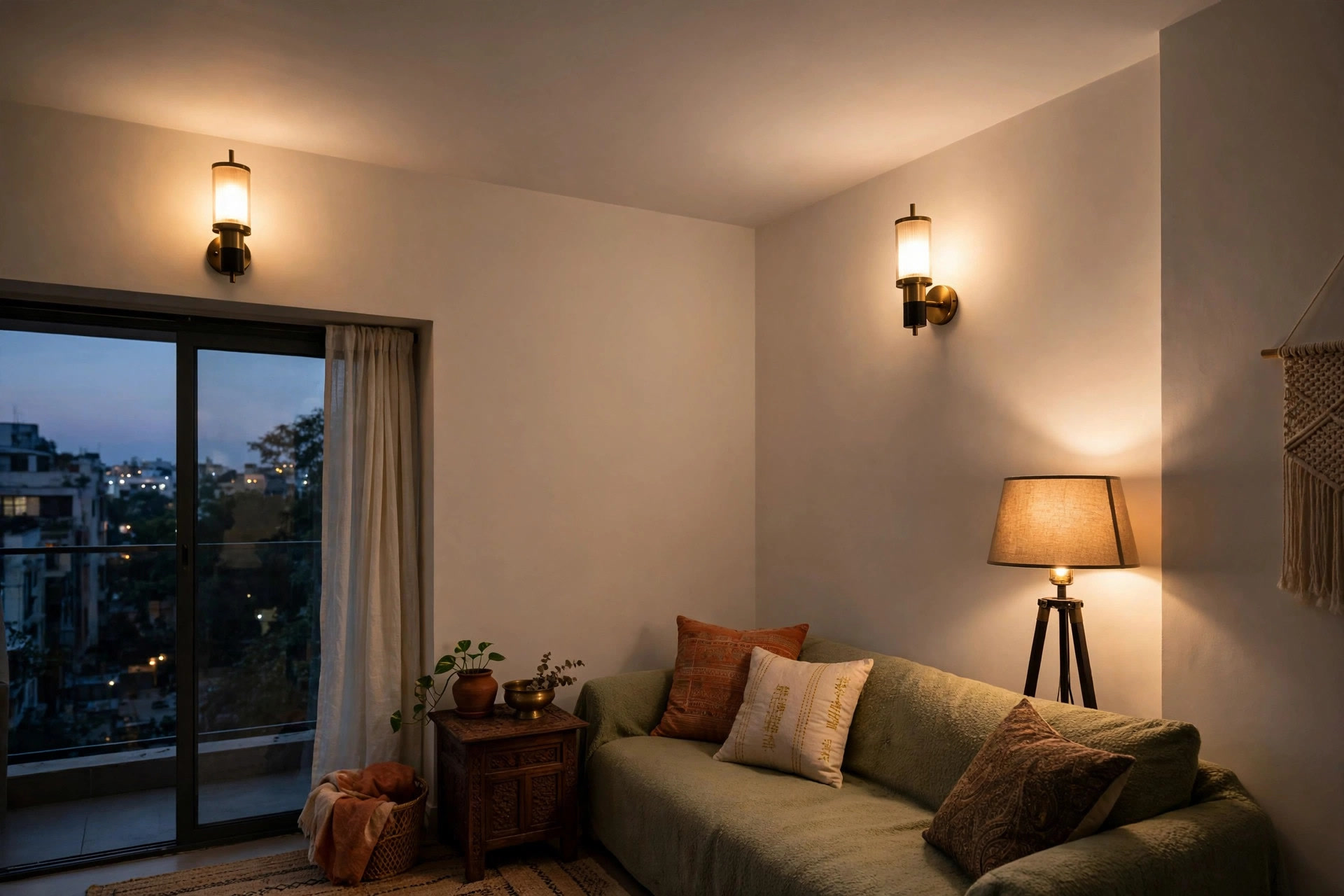
One practical note: any new ceiling wiring — for tracks, extra points, or repositioned lights — should be planned and done by a licensed electrician. Surface wiring can be run neatly in casing along walls and ceiling edges, but this is not a DIY job.
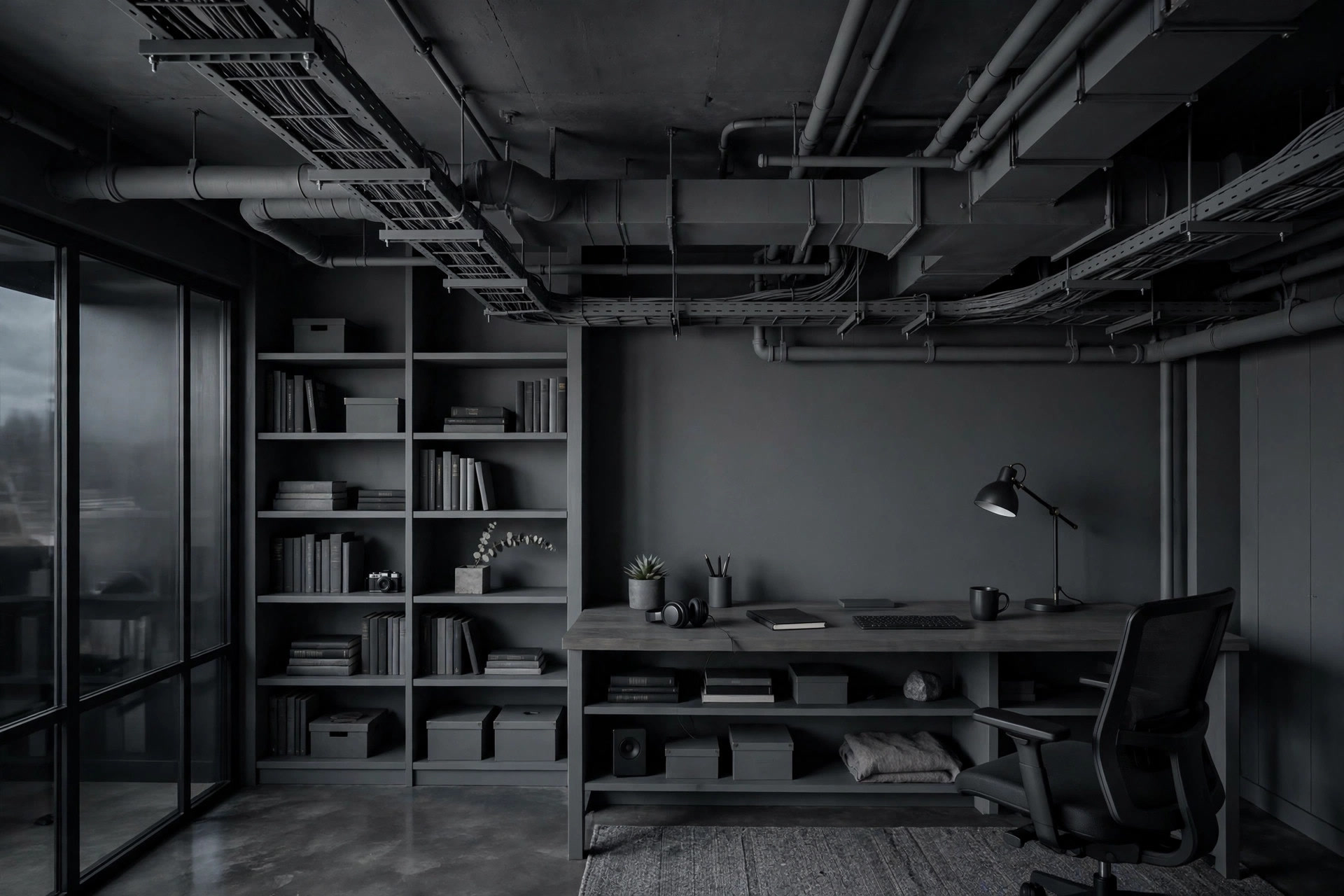
9. Exposed services, painted one colour
In an industrial-style home, you can leave pipes, ducts, and conduits visible and paint everything — slab included — one uniform colour, usually white, grey, or black. It looks intentional when it is neat and chaotic when it is not, so this only works if the services are routed tidily. It also keeps everything accessible for future repairs, which is a genuine advantage over a sealed false ceiling. Be realistic: visible wiring and pipes need occasional safety checks, and this look suits lofts and studios far better than a conventional family apartment.
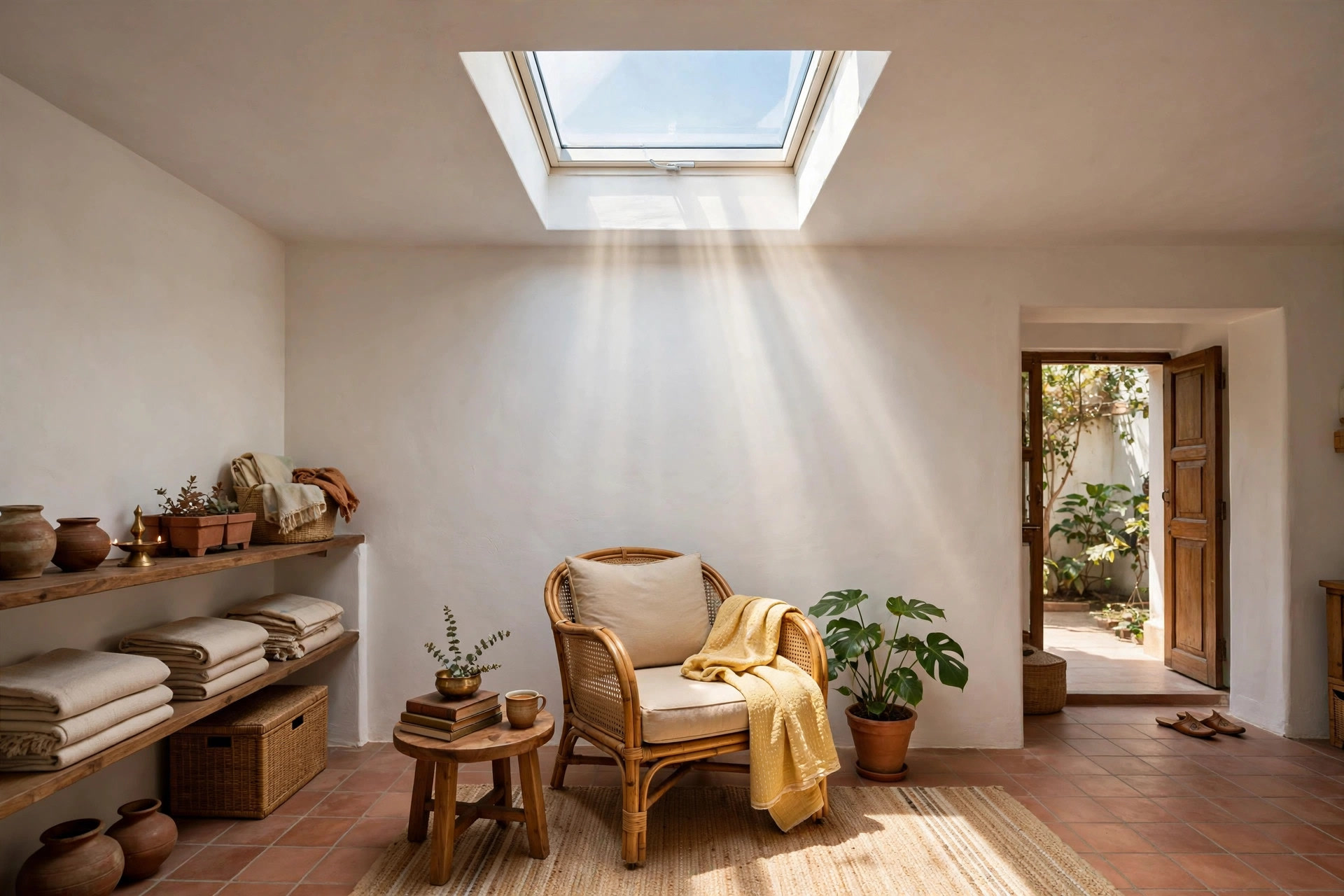
10. Skylights and murals — the niche options
Two ideas for specific situations. A skylight set into the slab brings in daylight and can make a dark room feel dramatically more open — but it is a structural change, only possible where the building allows it, and it needs proper waterproofing. A ceiling mural (a night sky in a child’s room, a soft landscape) turns the ceiling into the room’s artwork. Both are specialist jobs; neither is a general substitute for a ceiling.

False ceiling vs no false ceiling: an honest comparison
Here is what you actually trade off. Neither column wins outright — it depends on your room.
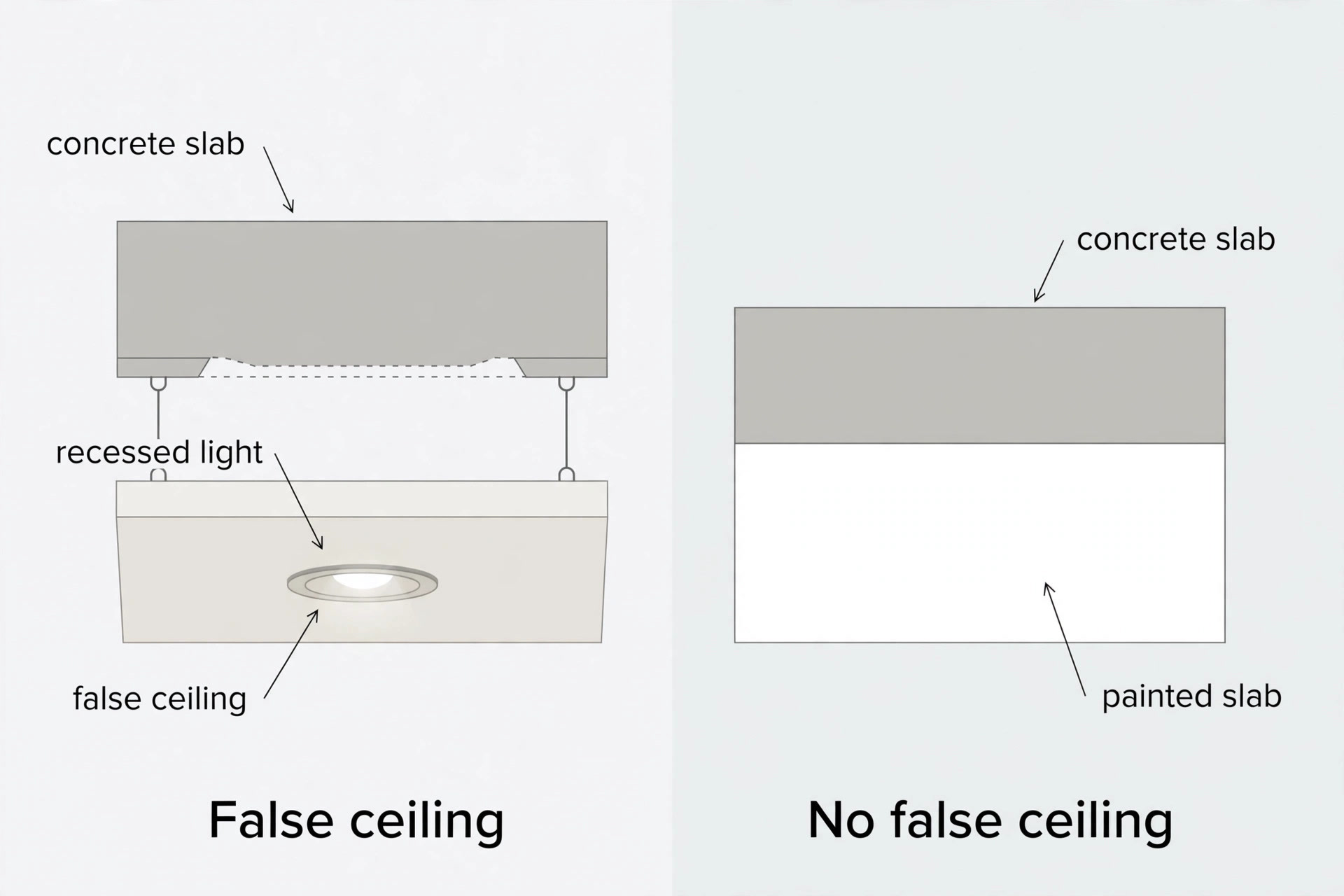
| Factor | False ceiling | No false ceiling |
|---|---|---|
| Ceiling height | Loses roughly 6–12 inches | Full slab height kept |
| Cost | Higher — material, framing, labour, painting | Much lower — plaster, paint, and chosen finishes only |
| Wiring, pipes, AC ducts | Hidden neatly inside | Must be routed neatly or left visible |
| Lighting | Recessed spots, cove lighting, hidden strips | Track, pendants, surface panels, wall sconces |
| Acoustics | Better, especially with insulation | Limited; acoustic panels help partially |
| Heat | Acts as a thermal barrier — useful on top floors | Bare slab radiates stored heat in the evening |
| Maintenance | Cracks at joints over time; repairs need a professional | Repainting is simple; dust is visible but easy to wipe |
| Future access | Services hidden — harder to reach | Everything accessible |
| Look | Clean, finished, modern or traditional | Minimal, industrial, or rustic depending on finish |
On cost specifically: a false ceiling is one of the bigger-ticket interior items per room. If you are weighing the numbers, our breakdown of false ceiling cost in India will help you see what you would actually be saving.
When a false ceiling is genuinely needed
Skipping the ceiling is not always the smart move. Get one — or at least a partial one — when any of these apply:
- There is a mess to hide. AC ducts crossing the room, a tangle of pipes, or wiring that cannot be rerouted neatly. This is the single best reason for a false ceiling.
- The slab is in bad shape. Cracks, stains, or a badly undulating surface that paint alone cannot fix. A ceiling is cheaper than rebuilding the slab finish.
- The room is on the top floor and runs hot. In hot regions, a bare slab absorbs heat all day and releases it into the room in the evening. A false ceiling with insulation genuinely helps here.
- You need real sound control. A bedroom facing a main road or a home theatre needs more than stick-on panels — a sealed, insulated ceiling performs far better.
- It is the kitchen. Kitchens collect grease, and an exposed ceiling above a cooking area gets grimy fast. A wipeable false ceiling is the practical choice here.
- You want cove or recessed lighting as the main design feature. If the look you want is soft, hidden light washing the walls, that needs a cavity. Surface fixtures give a different — not worse, but different — effect.
If you land on the “get one” side, read how to choose a false ceiling before spending anything — material choice matters more than design. A gypsum false ceiling is the standard pick for most rooms; also see how installation and maintenance work so you know what you are signing up for. And if you like the idea of texture without a conventional ceiling, alternative false ceiling materials covers options like wood and metal that sit between the two approaches.
A quick decision checklist
Walk through these in order. If you answer “yes” to anything in the second list, price a false ceiling before deciding.
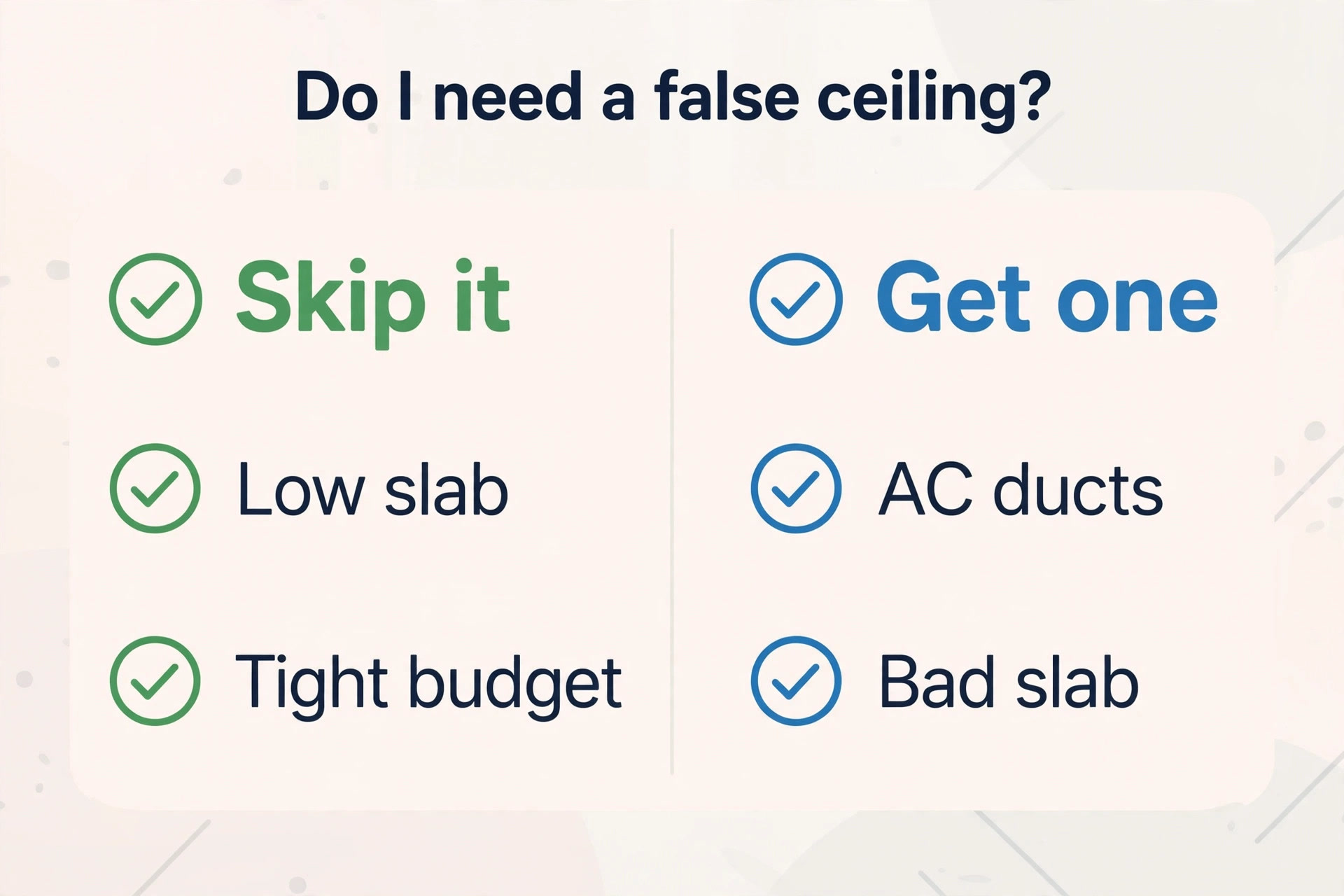
Skip the false ceiling if: your slab is 9 feet or lower · your budget is tight · wiring and pipes are simple · you like minimal or industrial looks · the slab surface is in decent shape.
Get a false ceiling if: you need to hide AC ducts, pipes, or messy wiring · the slab is cracked, stained, or very uneven · the room is a top-floor bedroom that stays hot · you need serious sound control · it is the kitchen · recessed or cove lighting is the look you want.
Room notes: a living room or hall without a ceiling looks perfectly intentional with paint, beams, or good lighting — see hall false ceiling designs for what the “with ceiling” version looks like, then decide if you need it. Bedrooms are the most forgiving room to skip the ceiling in, provided the room is not tiny — in a very small bedroom the bare look can feel stark, so add warmth with colour, wood, or fabric. Our bedroom false ceiling designs show the alternative. And if you do go for a ceiling but want it to look current rather than heavy, modern false ceiling styles are worth a look.
FAQs
Can I install a ceiling fan without a false ceiling?
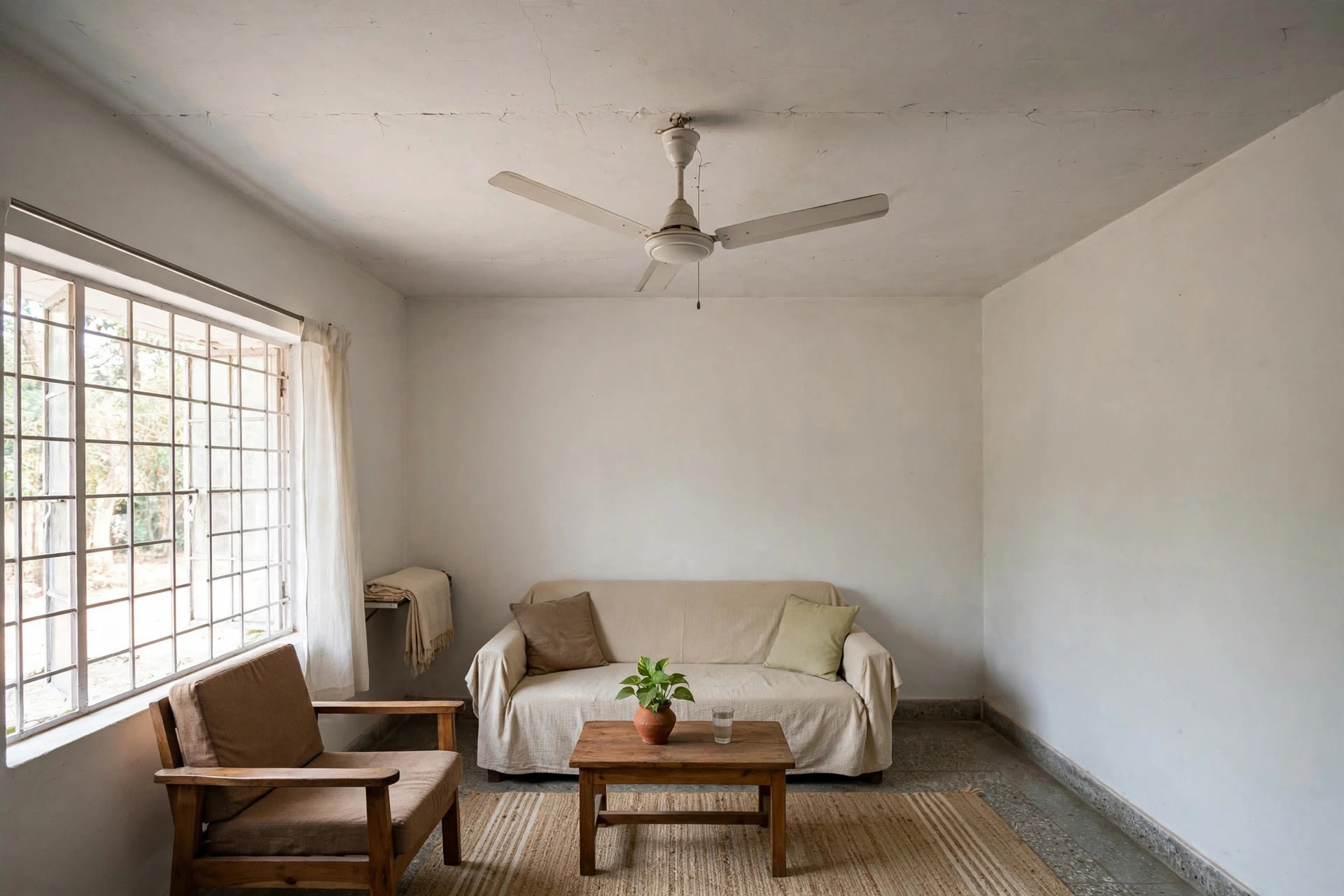
Yes. Fans fix directly to the slab — that is how most Indian homes have always done it. In rooms with lower ceilings, a low-profile or flush-mount fan keeps enough clearance.
Will my room look unfinished without a false ceiling?
Only if the slab is left rough. A smooth plaster finish, clean paint lines at the wall junction, and one deliberate feature — beams, trim, good lighting — is what separates “unfinished” from “minimal”. The bare ceiling itself is not the problem; poor finishing is.
How do I hide wires without a false ceiling?
Run them in surface casing neatly along wall-ceiling junctions, or plan the routing before painting so conduits sit in straight, tidy lines. Painting casing the same colour as the ceiling makes it far less noticeable. Get a licensed electrician to do this — safe routing matters more than hiding.
Is an exposed or painted ceiling okay in a bedroom?
In a reasonably sized bedroom, yes — it can look calm and modern, especially with warm lighting. In a very small bedroom the raw look can feel cold or stark, so compensate with a warmer paint colour, wooden beams, or soft furnishings.
What about the kitchen?
The kitchen is the one room where a false ceiling usually earns its keep: it hides the exhaust duct and wiring, and a wipeable surface handles grease far better than a painted slab. Skipping it here is possible but expect more cleaning.
Does skipping the false ceiling really save money?
Yes — a false ceiling involves framing, boards, jointing, and painting across the whole ceiling, while the alternative is essentially a good plaster and paint job plus whatever finish you choose. The saving is significant enough to fund better lighting or furniture instead. For a full picture of what the ceiling route costs, start with our false ceiling design guide and the cost breakdown.