
A bathroom ceiling lives in steam. Hot showers, splashing water, and months of monsoon humidity work on it daily — which is why a bathroom ceiling should be chosen for moisture behaviour first and looks second. The good news is that the materials which survive bathrooms also happen to suit modern design: flat panels, clean lines, hidden light.
This guide covers modern false ceiling ideas for Indian bathrooms — the materials that genuinely handle humidity, lighting that works in a wet room, ventilation planning, and designs from minimalist to statement. It sits under our general bathroom ceiling guide, which covers bathroom ceilings of every style; this article goes deep on modern styling done right.
The moisture rules come first
Every decision below follows three rules. One: pick a material that tolerates humidity — PVC and aluminium panels are waterproof; moisture-resistant gypsum boards handle ventilated bathrooms; plain POP and standard gypsum are poor choices in a steamy room unless waterproofing is properly handled. Two: ventilate — an exhaust fan or a ventilated window does more for ceiling life than any material choice. Three: seal every joint and edge, because moisture finds the gaps first.
Materials that handle bathroom humidity
PVC panels. The most forgiving bathroom ceiling material. PVC is waterproof, resists mould and termites, wipes clean with a damp cloth, and needs almost no maintenance. Choose a glossy finish to reflect light and make the room feel larger, or matte for a calmer look. The honest trade-off: PVC looks plainer than gypsum up close, and printed designer panels cost more than plain ones.
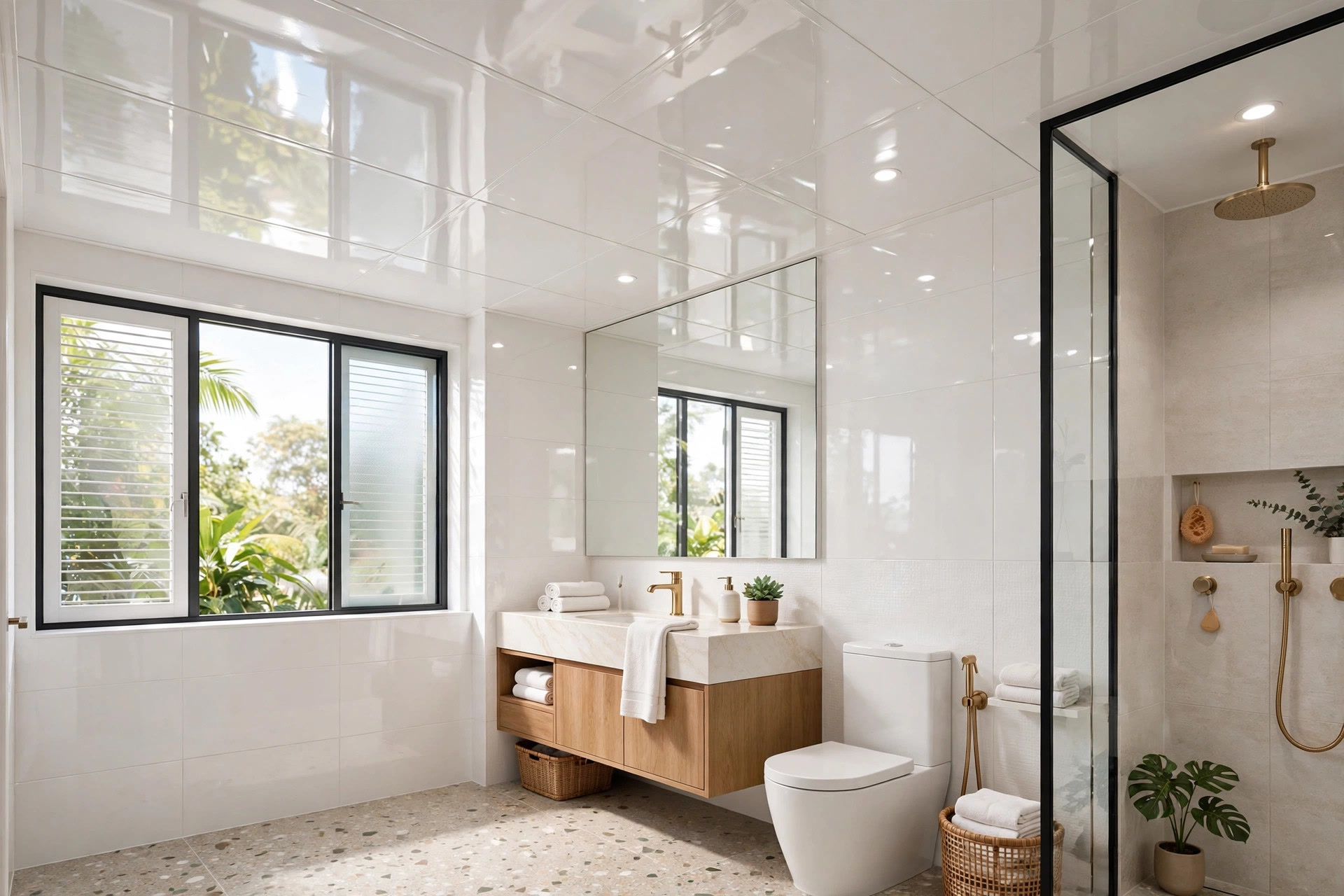
Moisture-resistant gypsum. For the clean, seamless modern look, moisture-resistant gypsum boards work in bathrooms that ventilate well. They take paint beautifully and disappear into the room, which is why designers prefer them. Standard gypsum boards are not waterproof — if the box says nothing about moisture resistance, assume it cannot handle a bathroom.
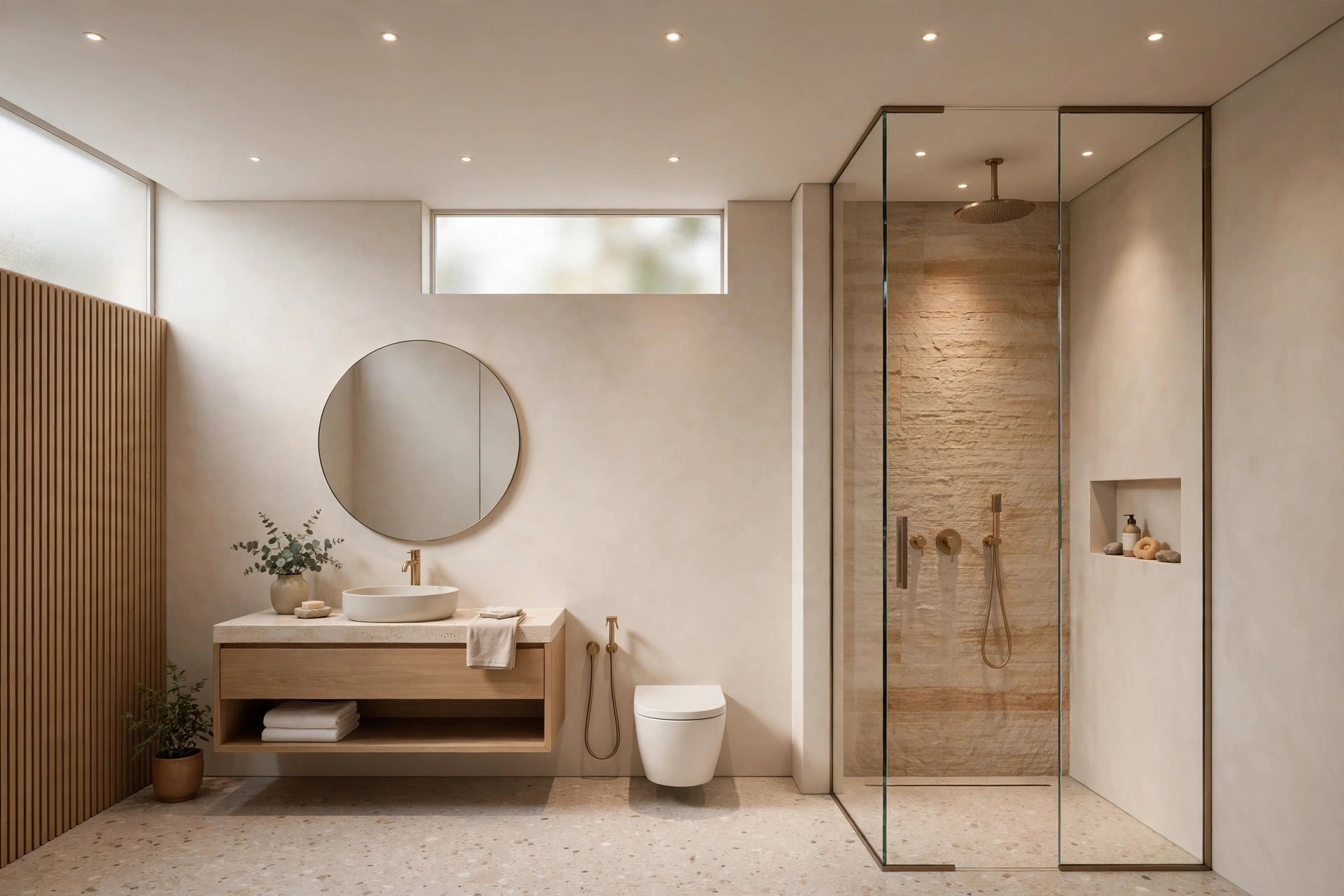
Aluminium and metal panels. The commercial-grade answer. Metal panels are waterproof, easy to wipe, and last for decades. They read modern and slightly industrial, and they suit bathrooms with heavy daily use — exactly why you see them in hotels and offices.
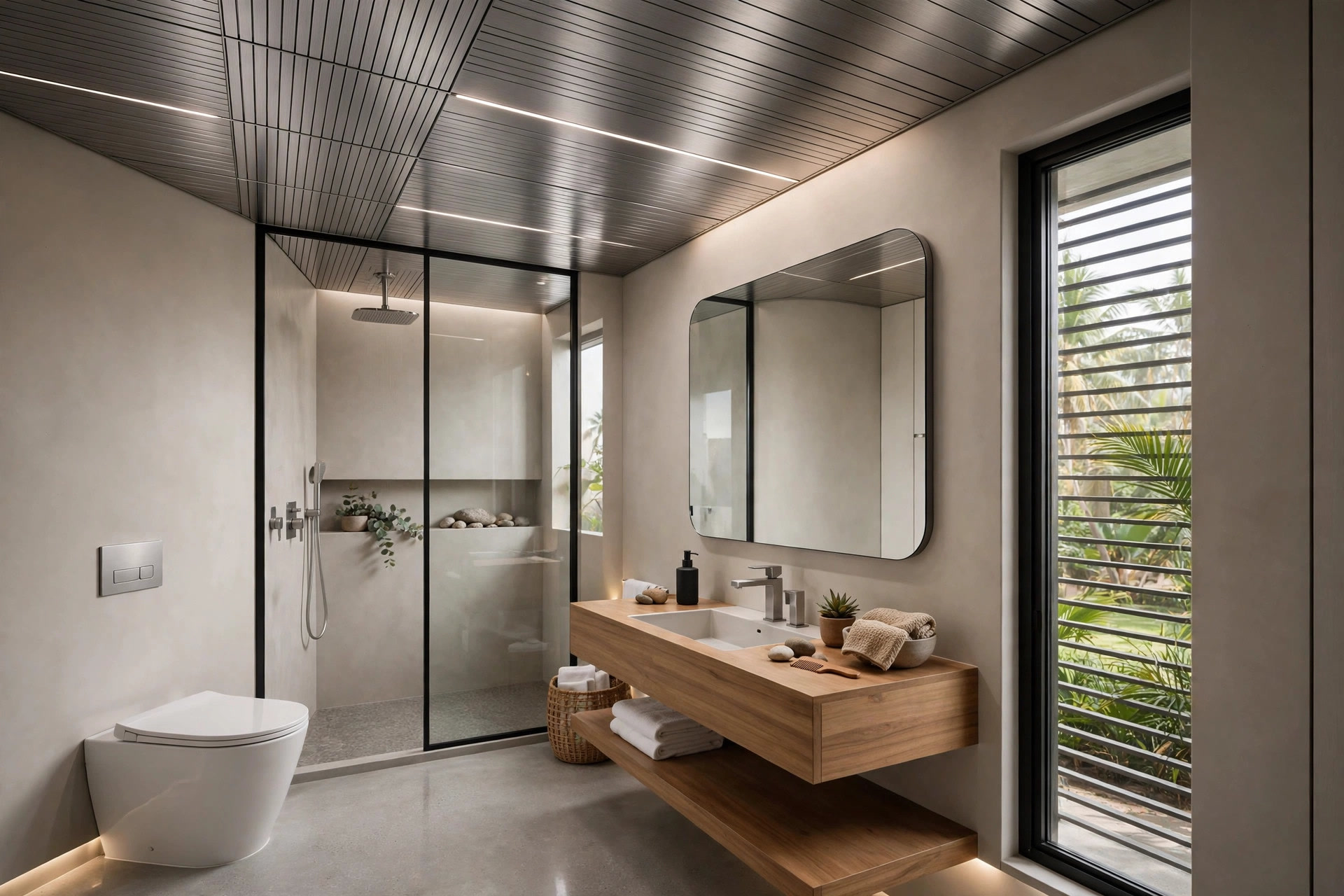
POP — use with caution. POP suits moulded detail, but it absorbs moisture unless it is properly sealed with waterproof primer and paint and the bathroom ventilates well. Without that protection, expect cracks and peeling over time. If you love a POP detail in a bathroom, keep it small and seal it thoroughly.
Modern bathroom ceiling ideas
Small bathrooms: keep it flat and bright
In a typical 4×7 or 5×8 Indian bathroom, the best modern ceiling is the quietest one — flat, white or pale, with two recessed lights. A flat ceiling keeps the full height, reflects the most light, and leaves nothing for steam to attack. Save the design moves for the tiles and fixtures; the ceiling’s job here is to disappear.
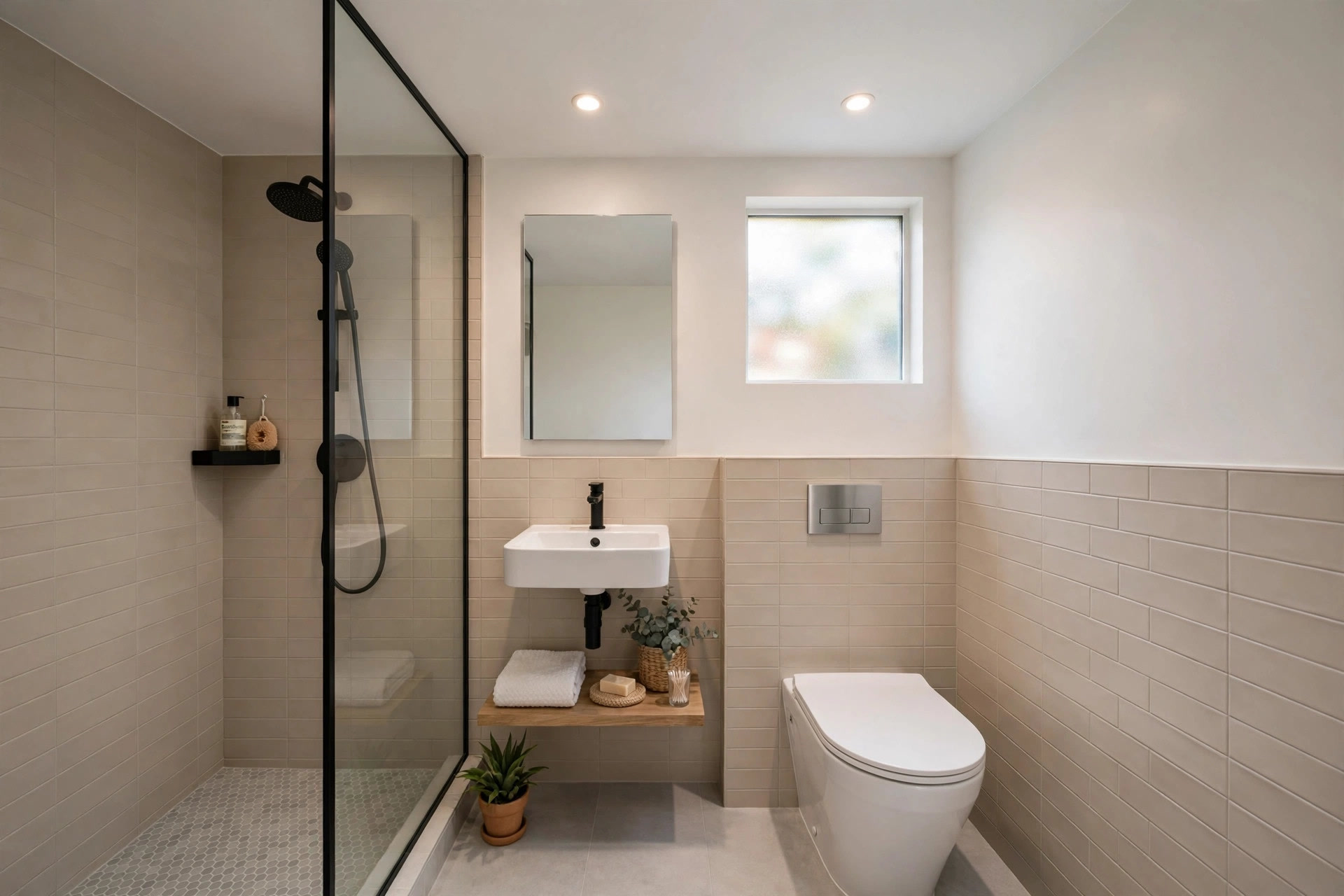
A flat ceiling with a cove light
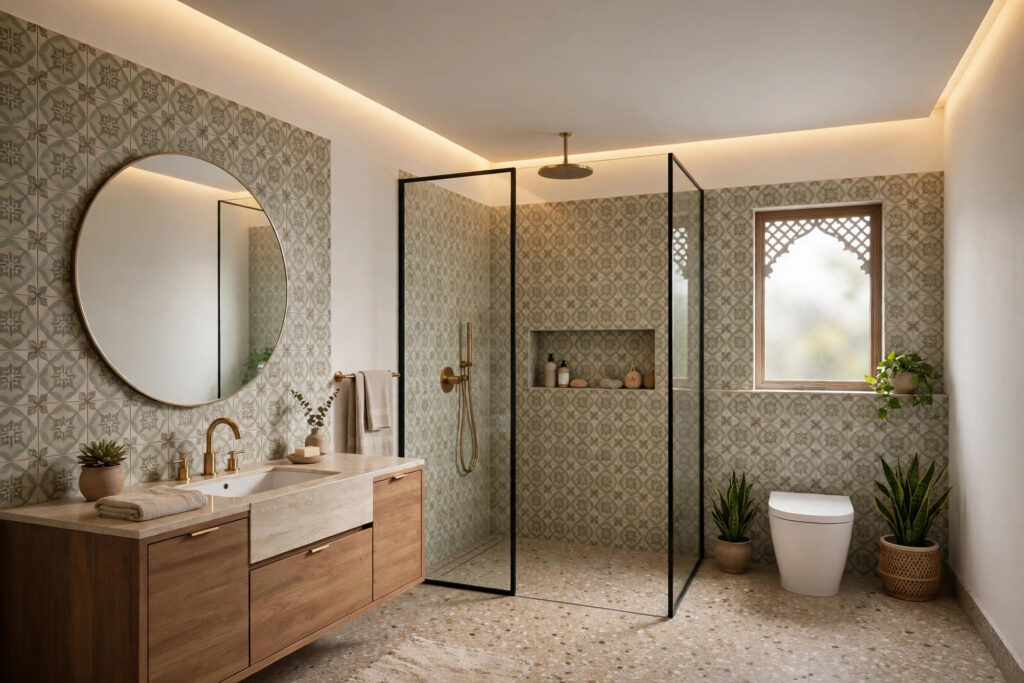
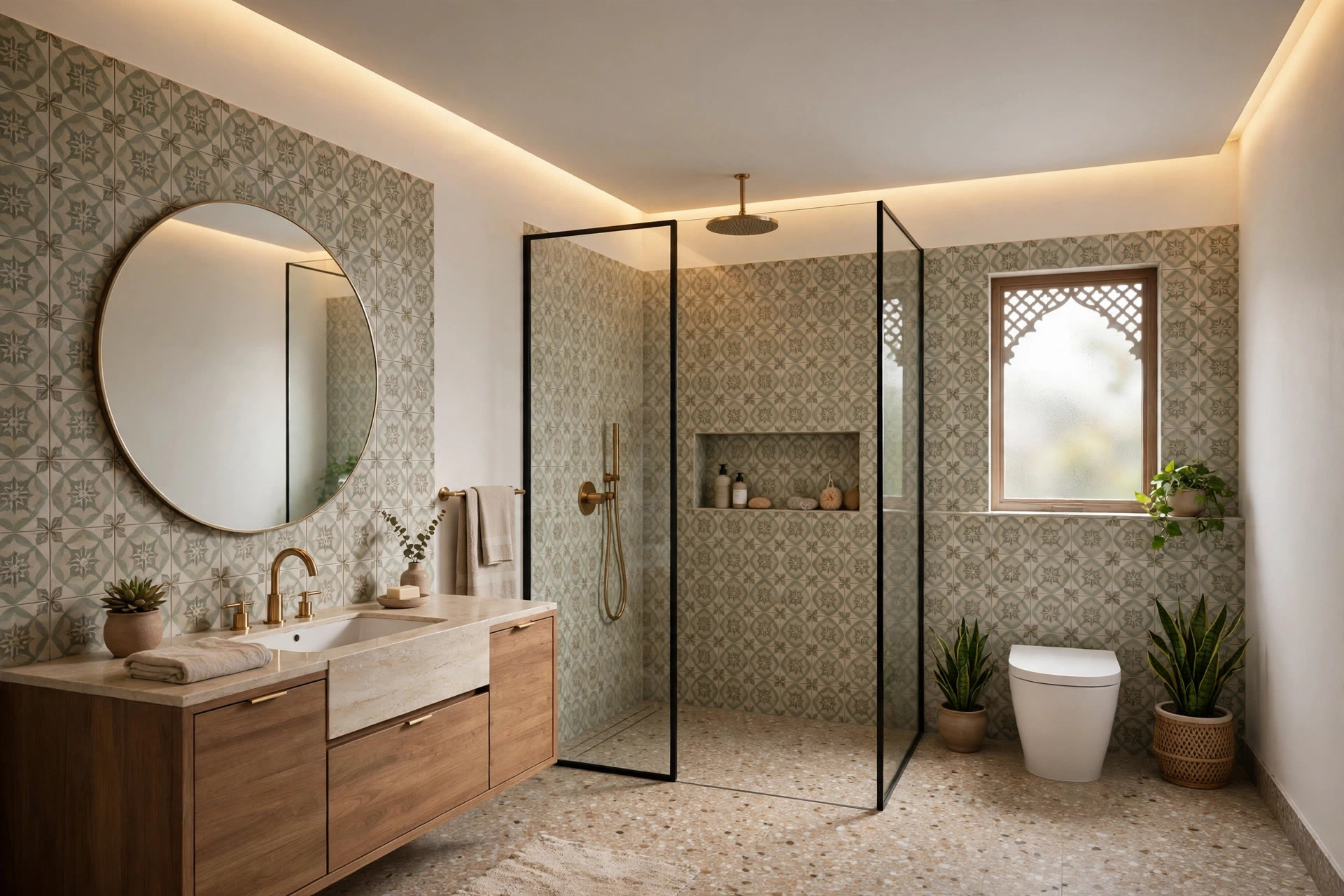
The most reliable modern bathroom ceiling: flat, simple, and lit from a hidden strip around the perimeter. The cove washes the ceiling with soft light that flatters tiles and fixtures, and with no visible fittings the room reads calm and clean. This is the look you see in most good hotel bathrooms, and it works at any budget.
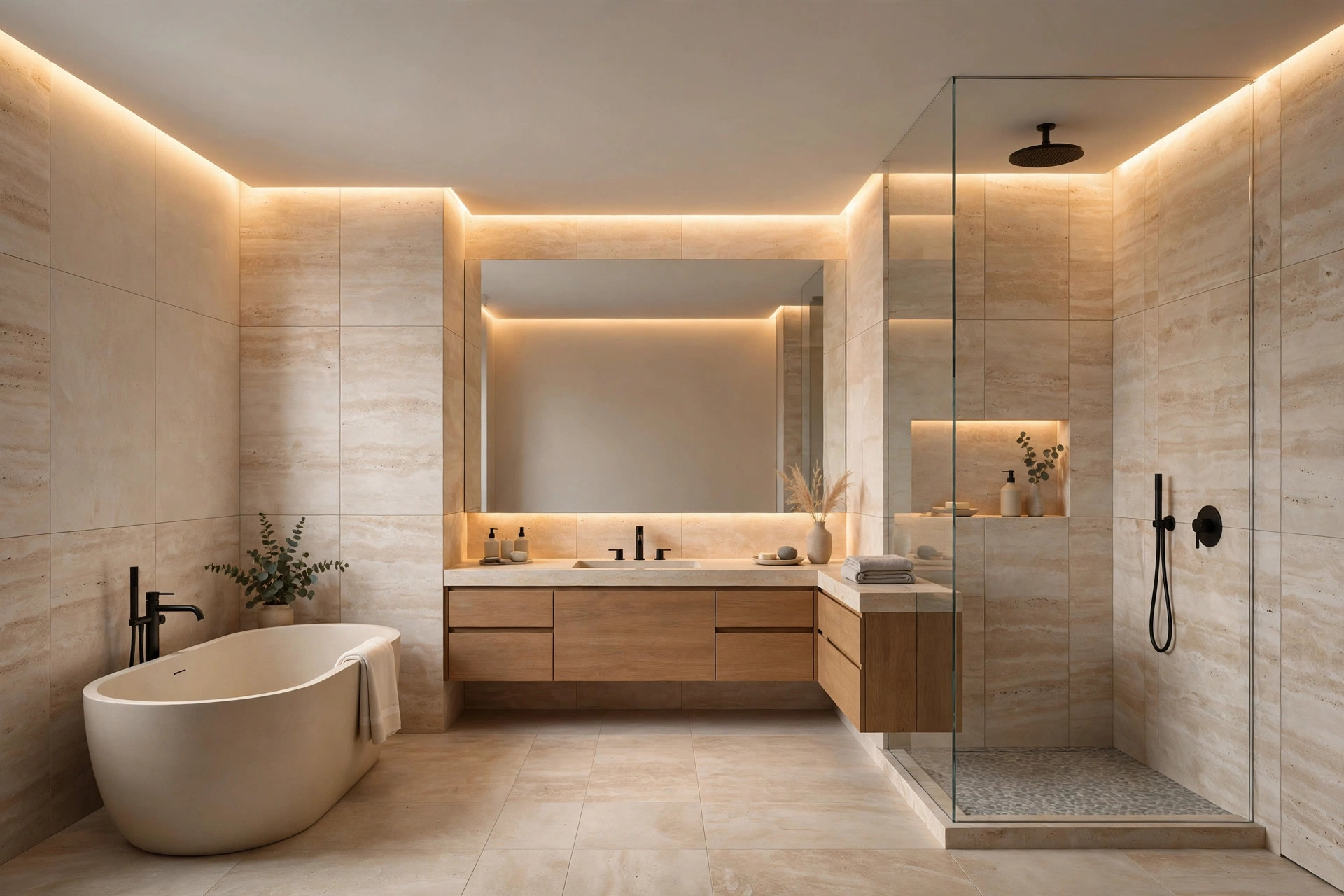
Recessed downlights in a flat ceiling
Two or three recessed downlights give even, shadow-free light over the basin and the shower approach. Use sealed, bathroom-appropriate fittings and have a qualified electrician handle the wiring — a bathroom is the one room where electrical work must be done properly, not improvised.
A slim profile light along the edge
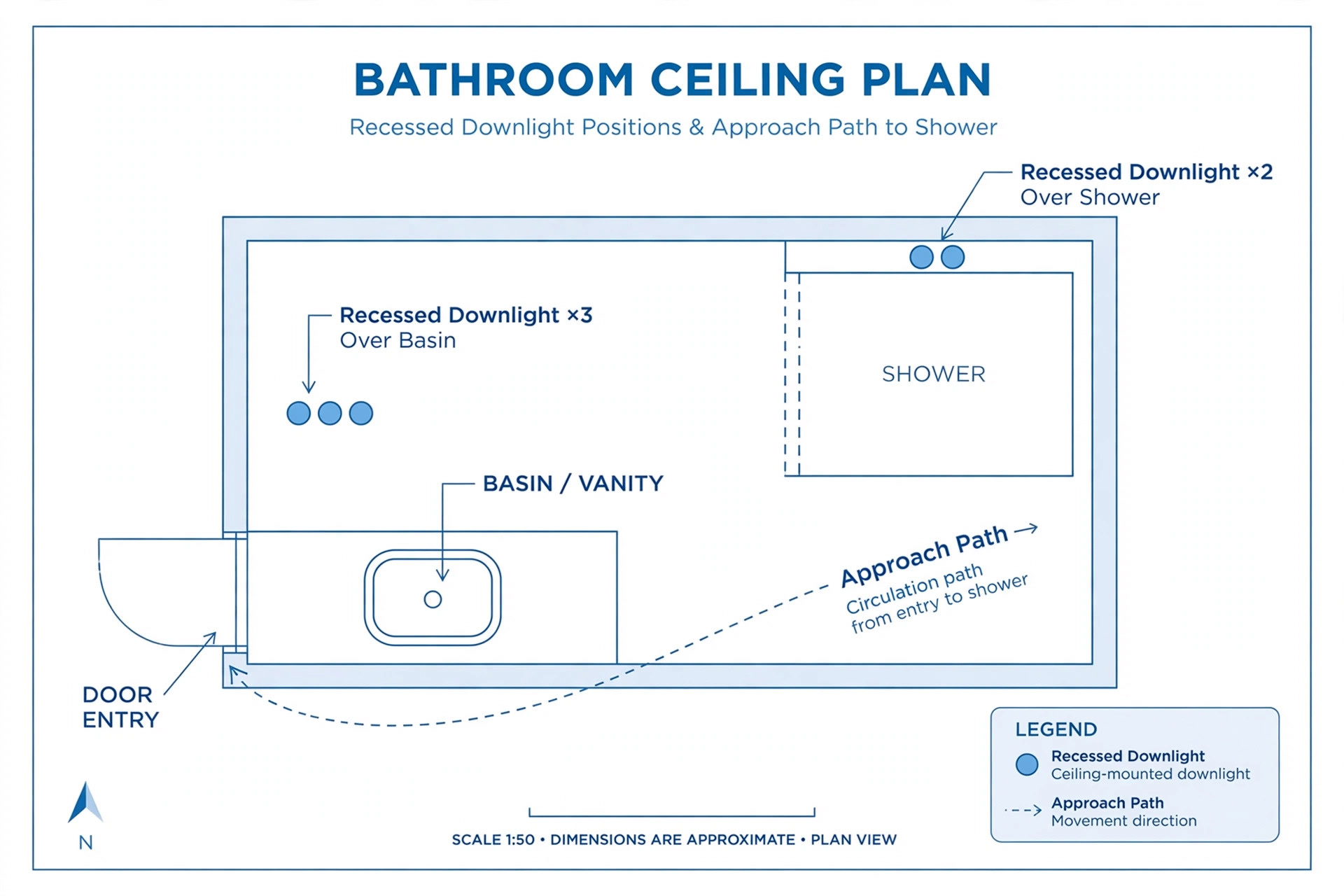
Instead of a full cove, run a slim LED profile along one or two edges of the ceiling. It reads as a clean line of light, defines the ceiling plane, and uses less material than a full perimeter drop. It pairs well with backlit mirrors, which are doing most of the visual work in many modern bathrooms anyway.
Wood-look PVC for warmth
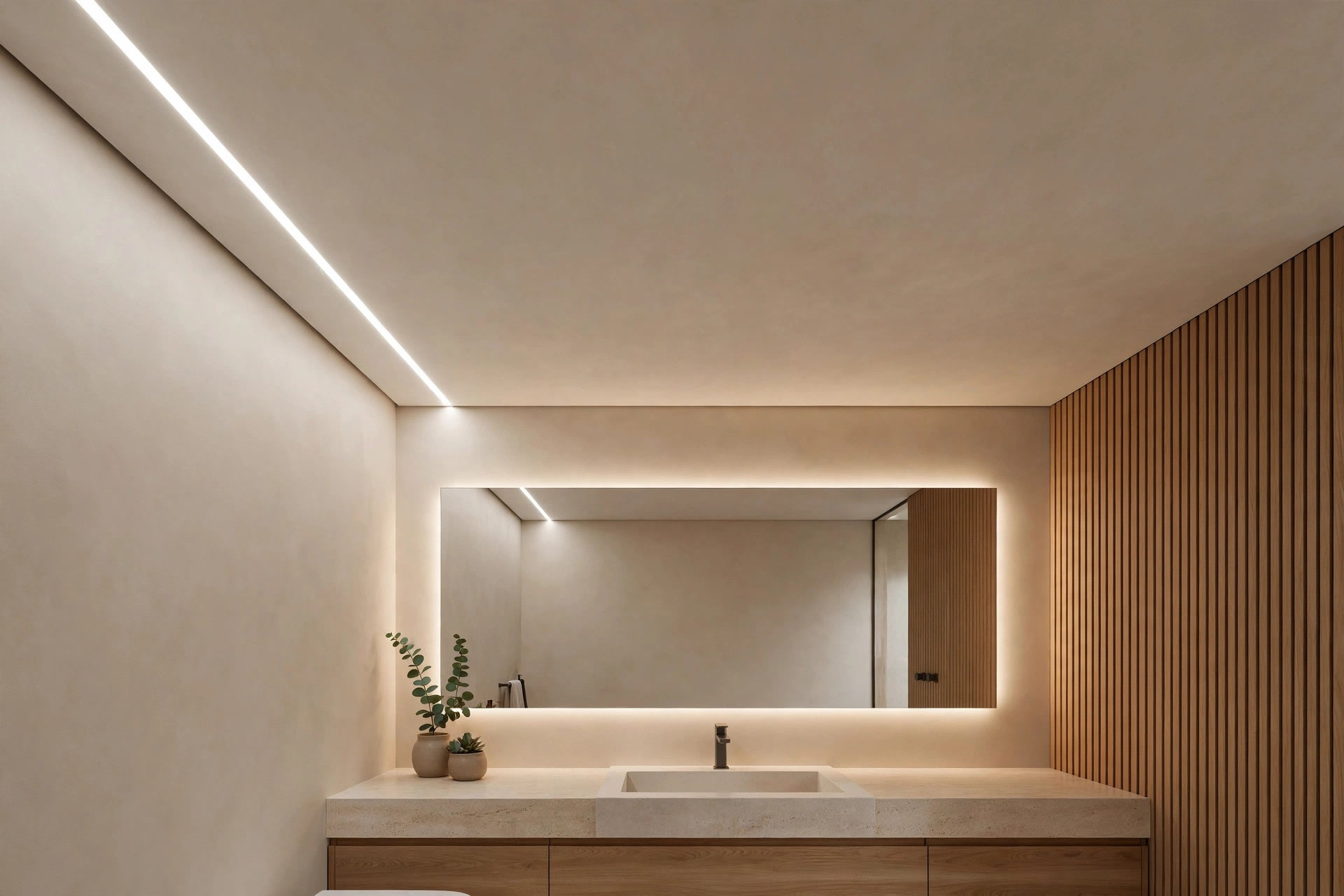
If an all-white bathroom feels clinical, wood-look PVC panels add warmth without wood’s moisture problems. They read as timber, behave as plastic. Use them on the ceiling alone — pairing wood-look ceiling panels with wood-look floor tiles usually looks like too much of the same trick.
Wooden beams for a rustic-modern mix
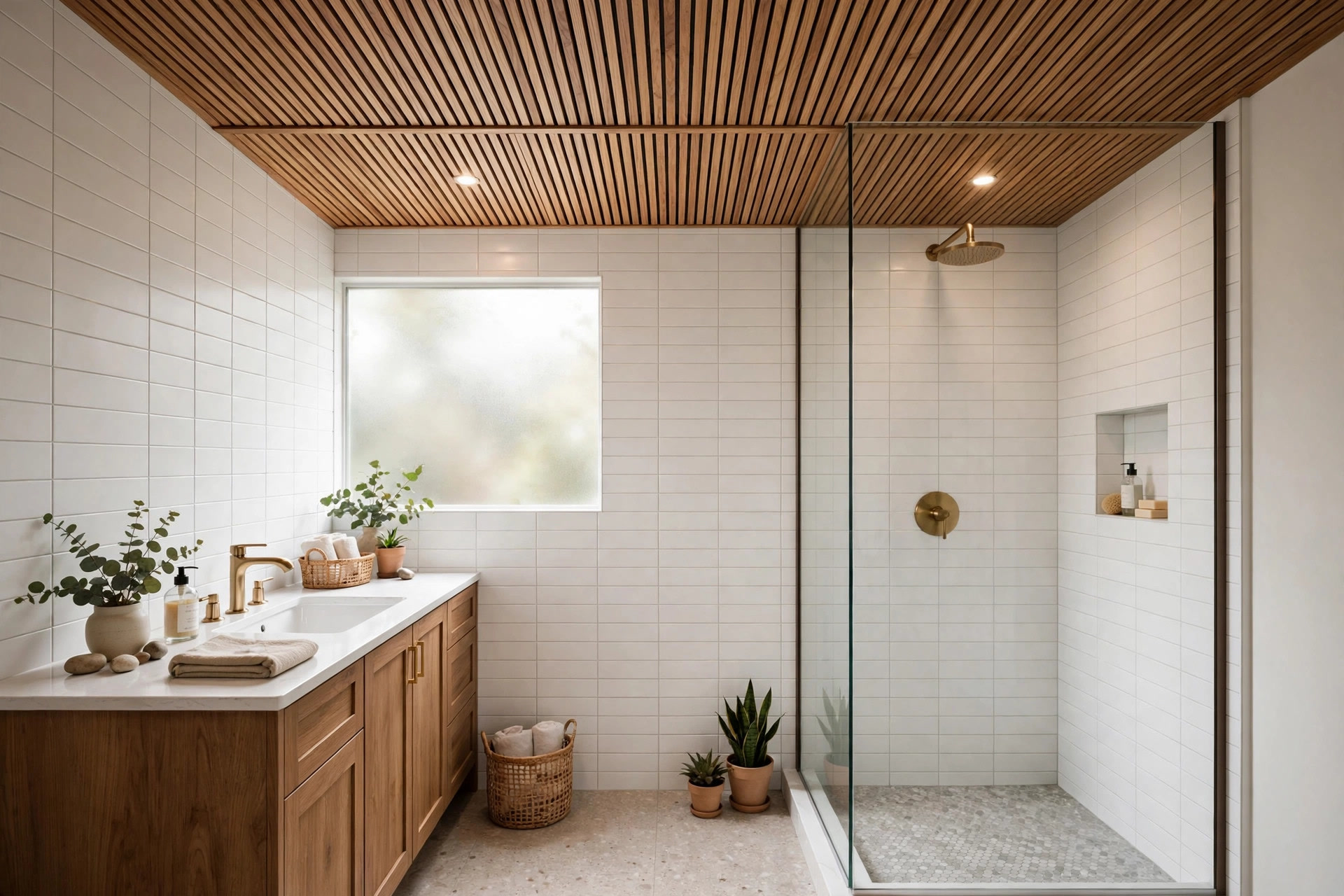
A couple of slim timber or timber-look beams on a flat ceiling add character and warmth, especially in bathrooms with stone or earthy tiles. Keep them slim and sealed, and remember they need the same moisture protection as any wood in a wet room.
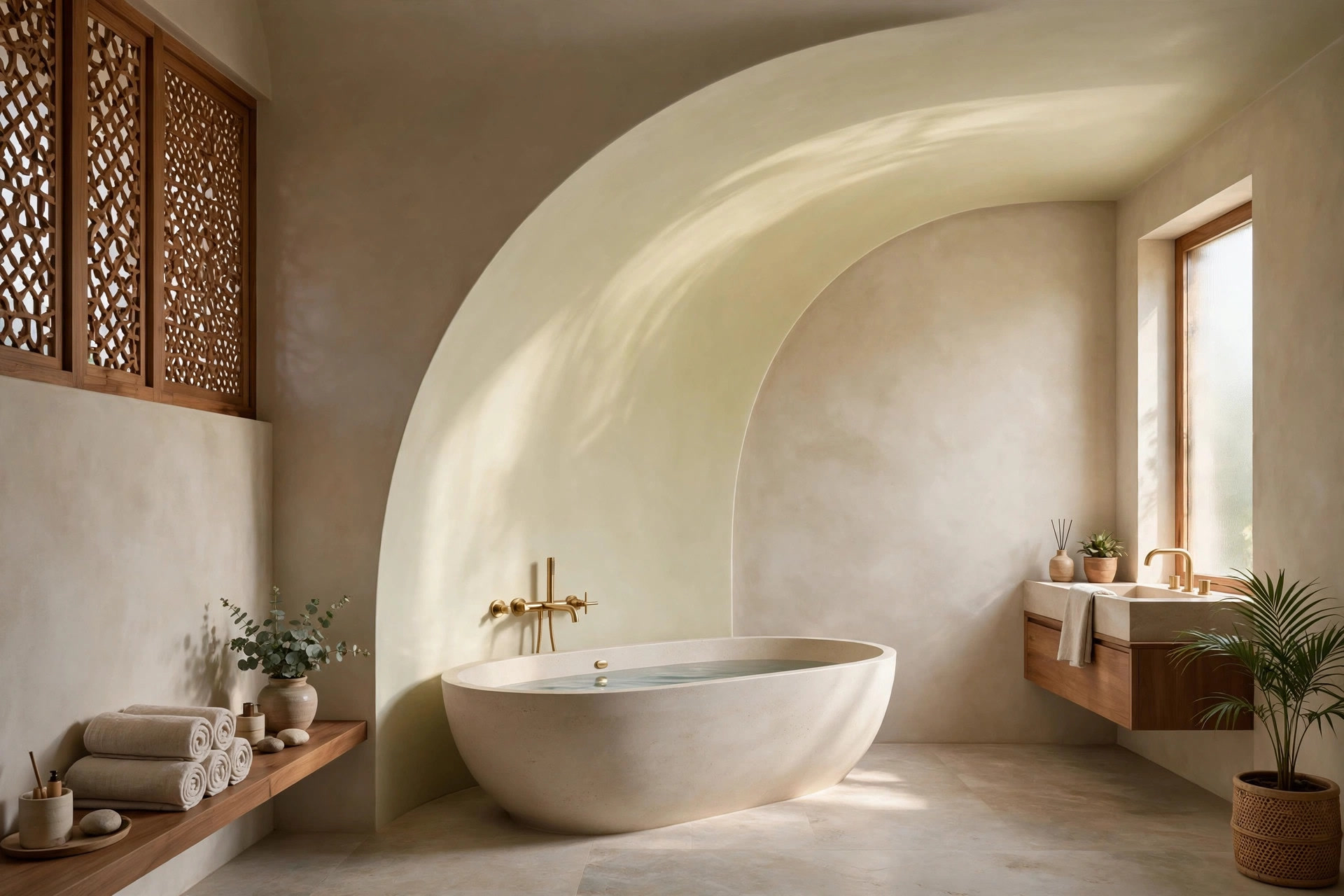
A curved ceiling for softness
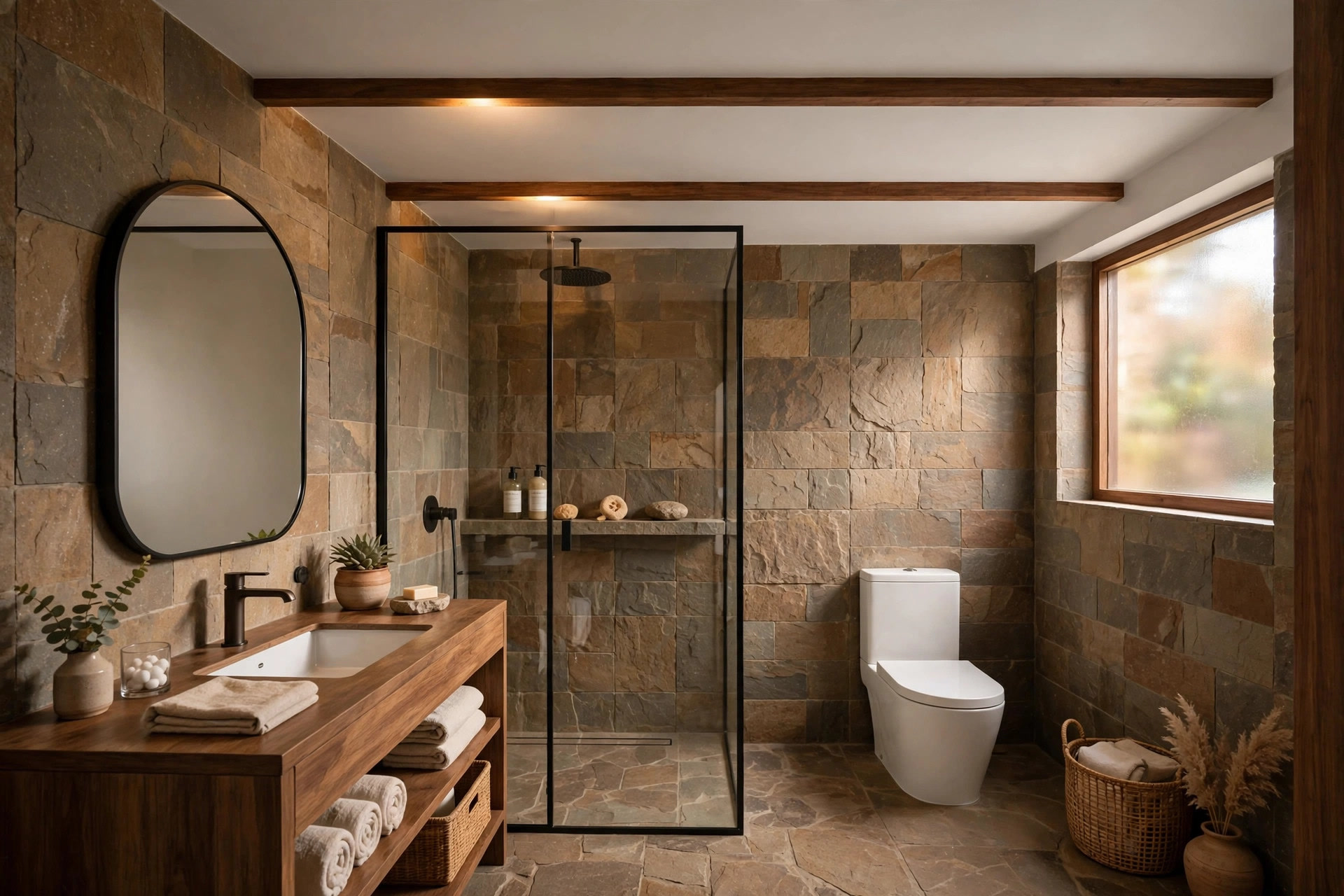
Bathrooms are full of hard rectangles — a gently curved ceiling section softens the whole room and catches light beautifully. This is a POP or stretch-material move, so it needs the same moisture sealing discussed above, but as a single sculptural gesture it is hard to beat.
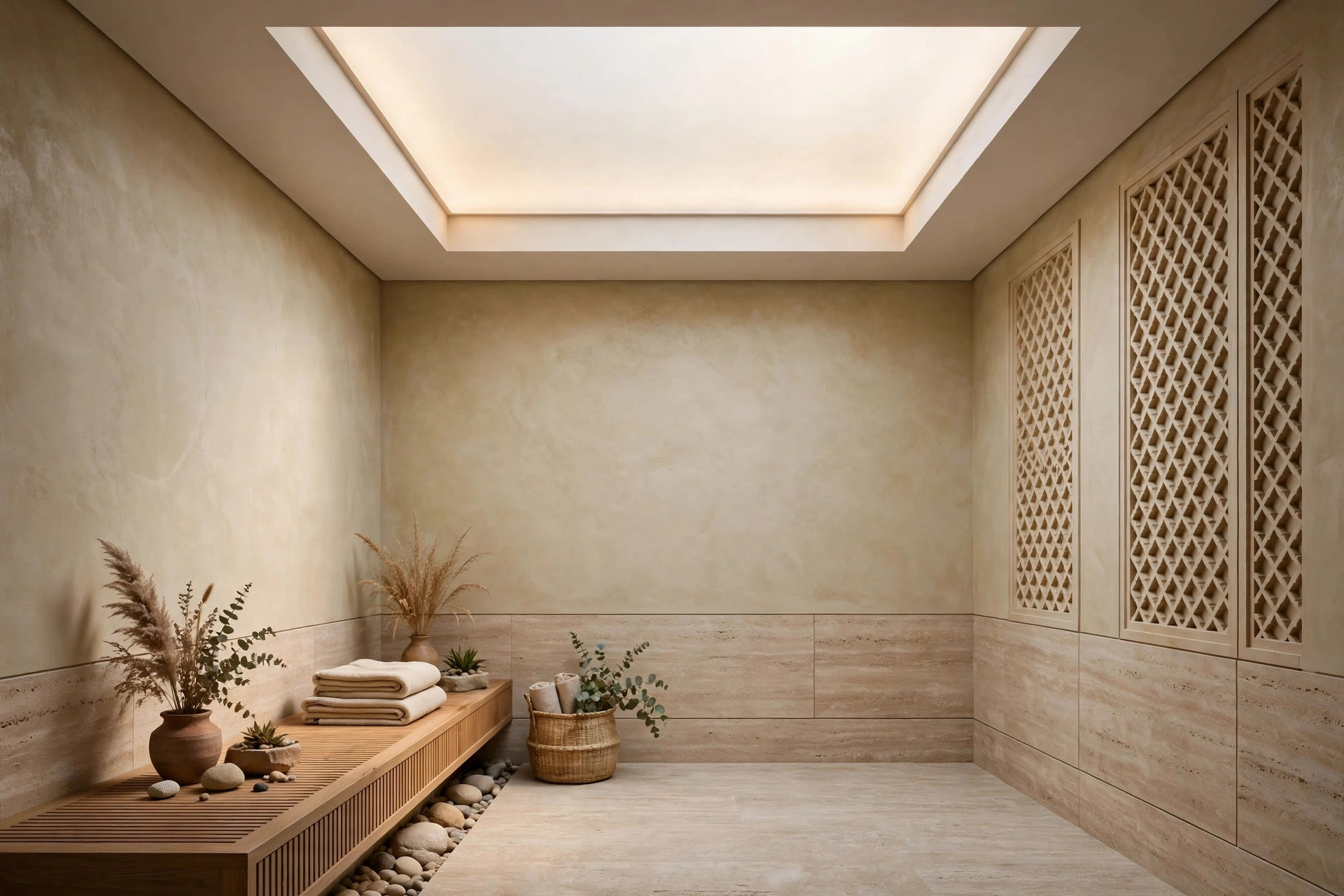
A backlit panel for a spa feel
One backlit frosted panel gives even, diffused light with no visible fixture — the closest a ceiling gets to a skylight. In a windowless bathroom it changes the feel of the room completely, from closed to calm. Keep the panel modest in size; one glowing panel reads as design, a whole glowing ceiling reads as a showroom.
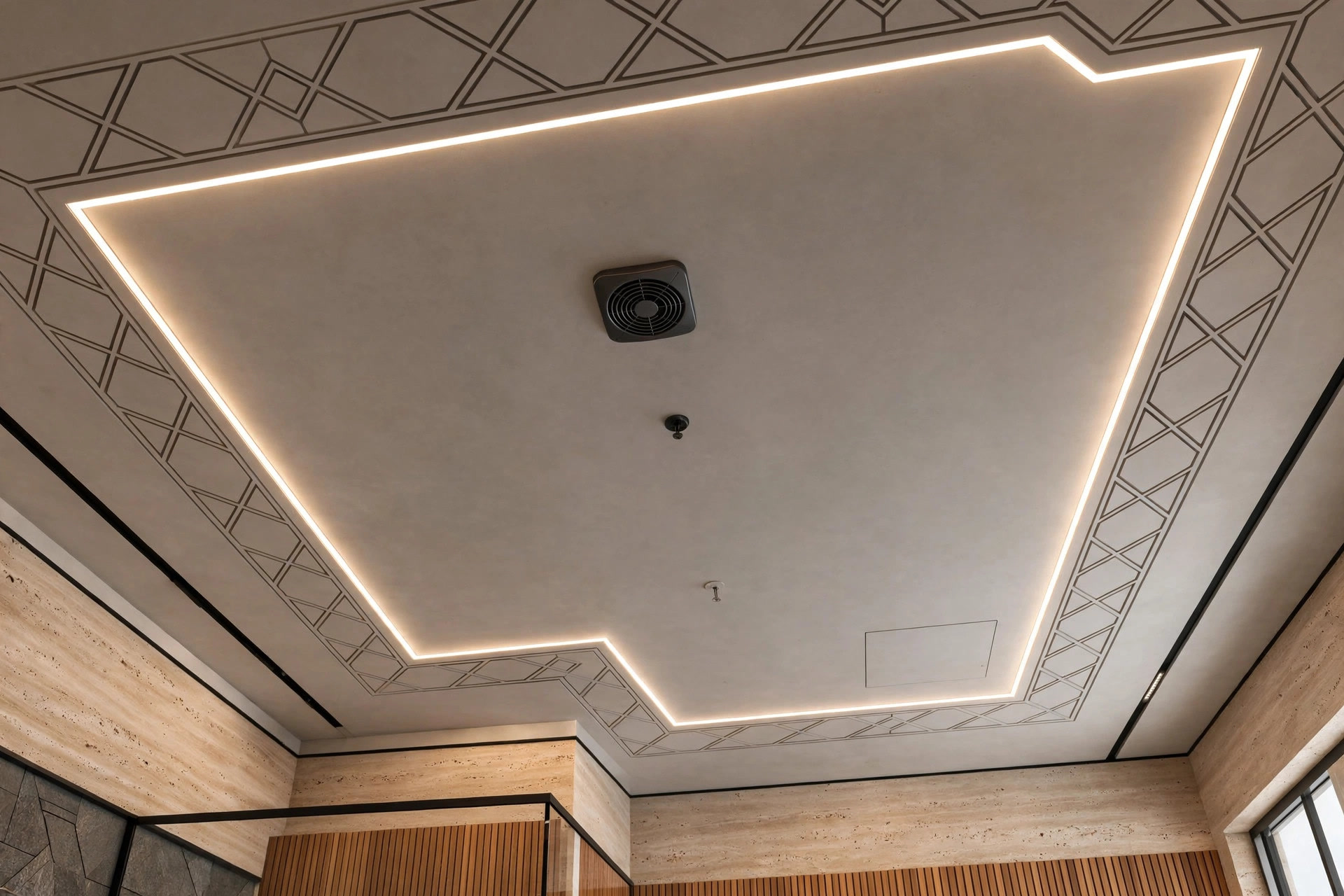
A slim geometric border
A thin recessed border — one line, not a pattern book — gives a plain ceiling a finished edge and a channel for a slim LED strip. It suits modern bathrooms because it reads as architecture rather than decoration.
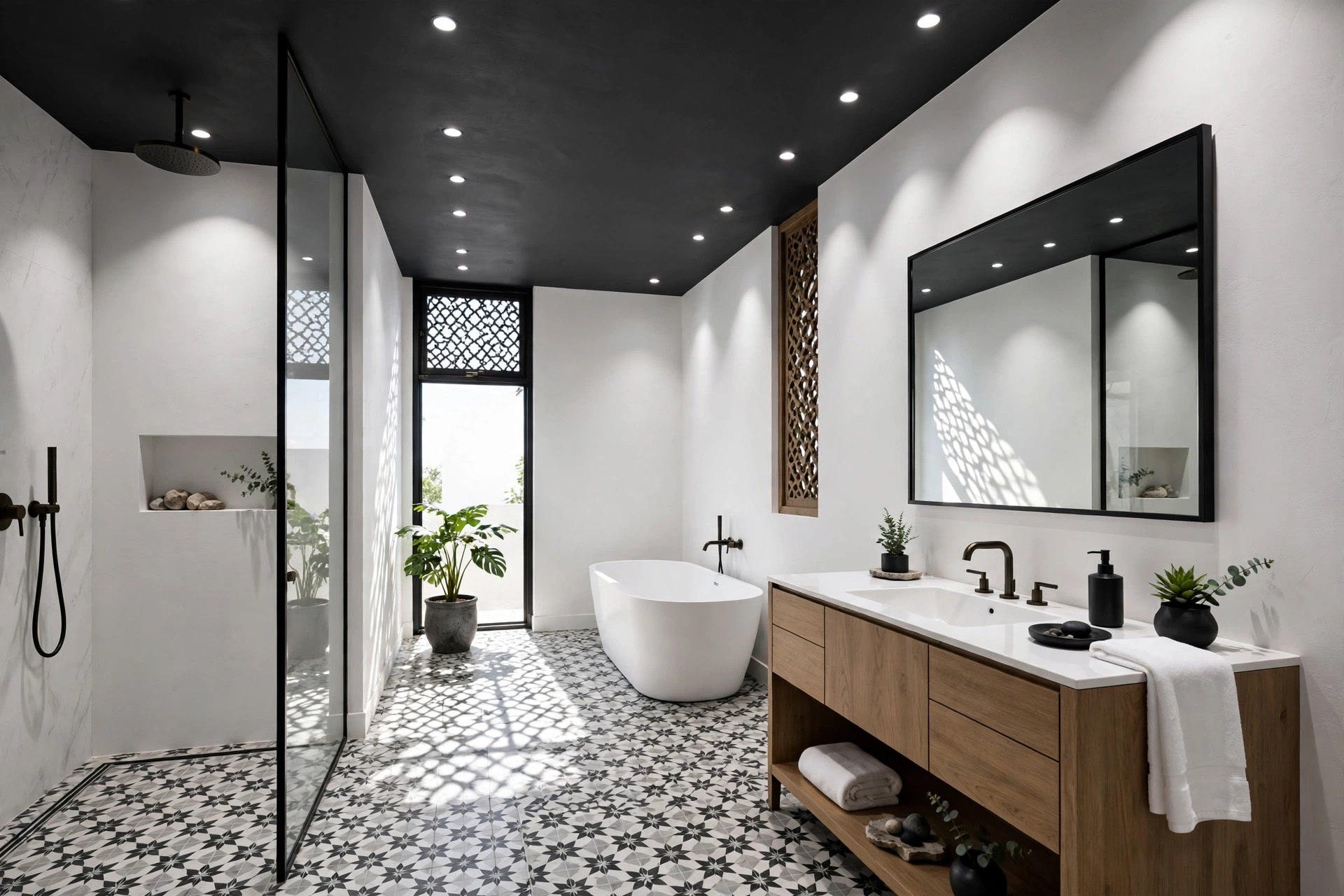
A monochrome ceiling for drama
Modern does not have to mean white. A matte charcoal or deep-grey ceiling with bright walls and good lighting looks deliberate and dramatic — but only in a bathroom with enough light and ventilation to carry it. In a small dark bathroom, dark ceilings close the room in fast.
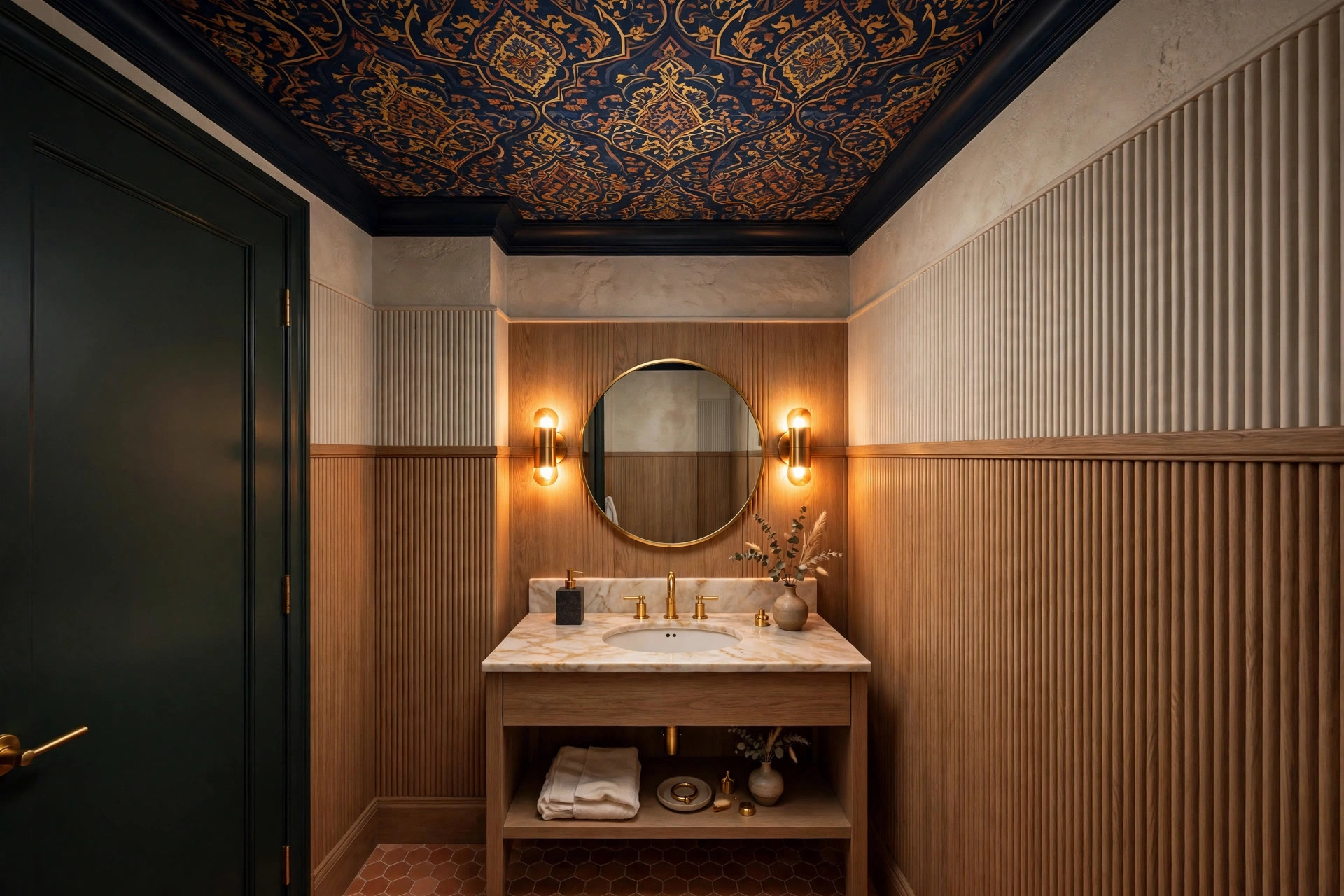
A statement ceiling for the powder room
The powder room is the one bathroom where you can be bold — guests see it, nobody showers in it. A patterned panel, a coloured cove, or a small dramatic fixture all work here, because the moisture load is a fraction of a full bathroom’s.
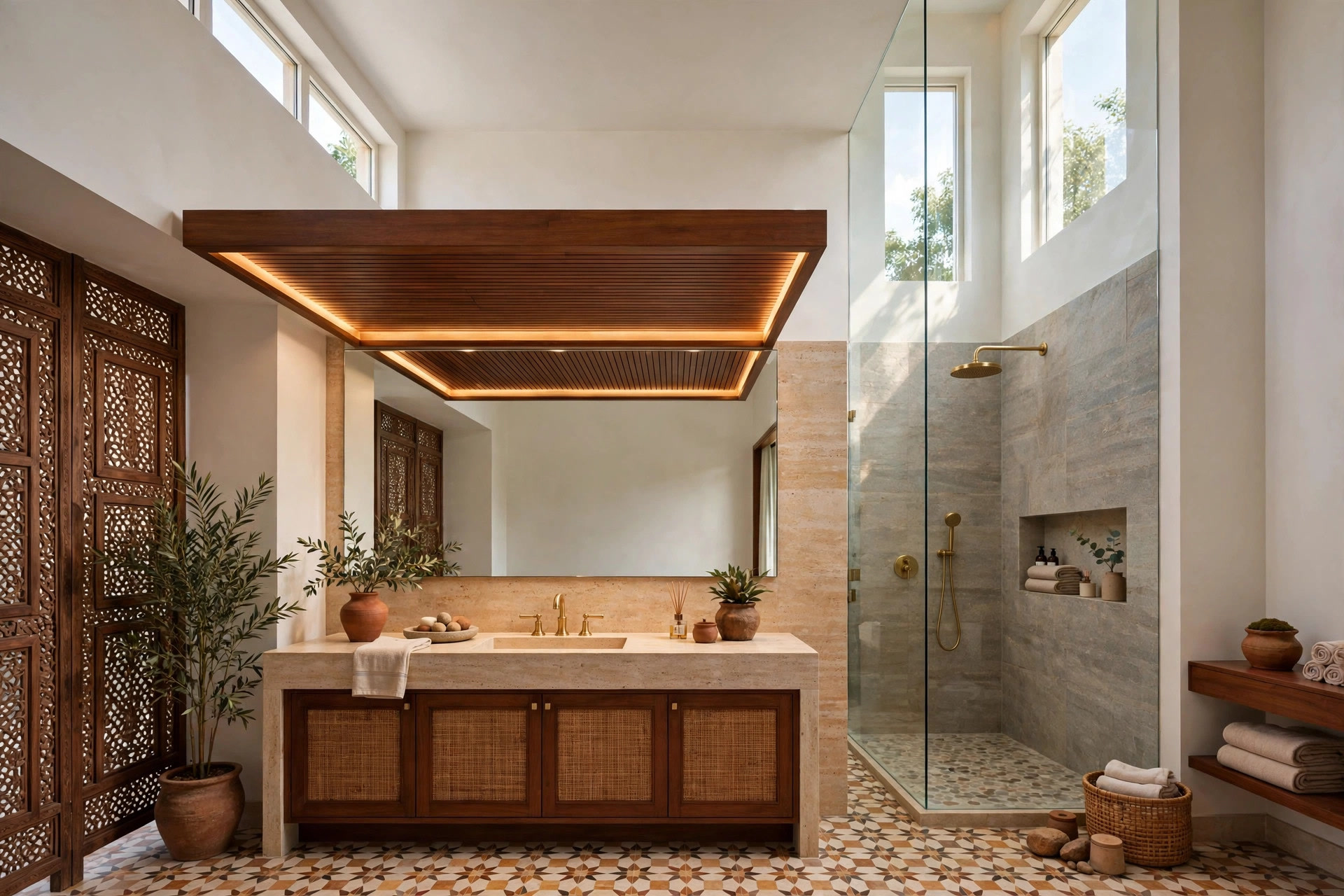
High bathrooms: use the height
Some bathrooms — especially in older homes or duplexes — have generous ceiling height. Use it: a double-height shower zone with a dropped feature panel over the basin area creates a sense of luxury no tile can match. Keep the feature panel moisture-safe and well-lit, and let the extra height do the talking.
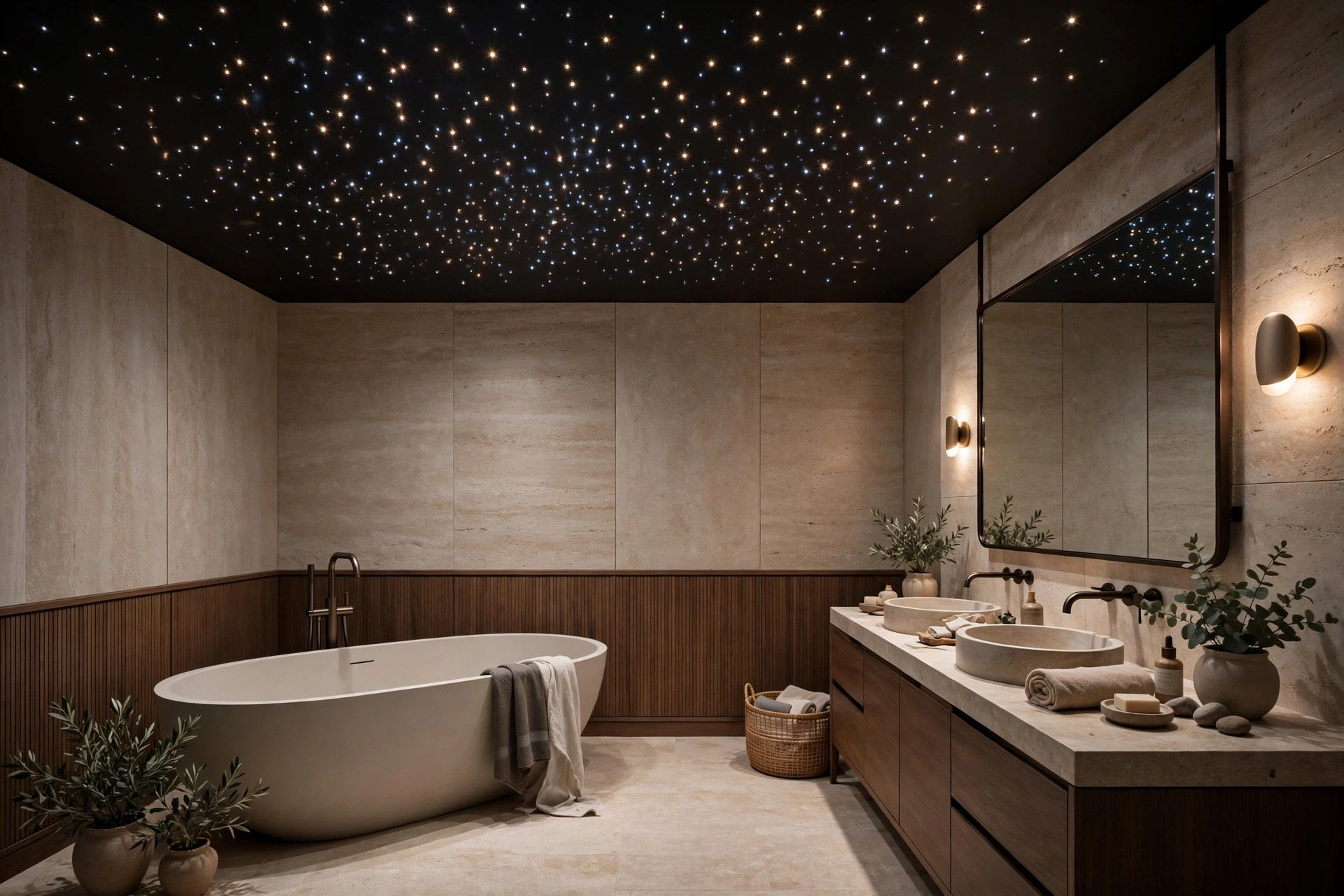
A starlight ceiling for windowless bathrooms
Fibre-optic starlight points set into a dark or deep-blue ceiling panel turn a windowless bathroom into something memorable — tiny points of light like a night sky, with no heat and no maintenance beyond the illuminator unit. It is a niche choice, but for a master bathroom it is the kind of detail guests remember.
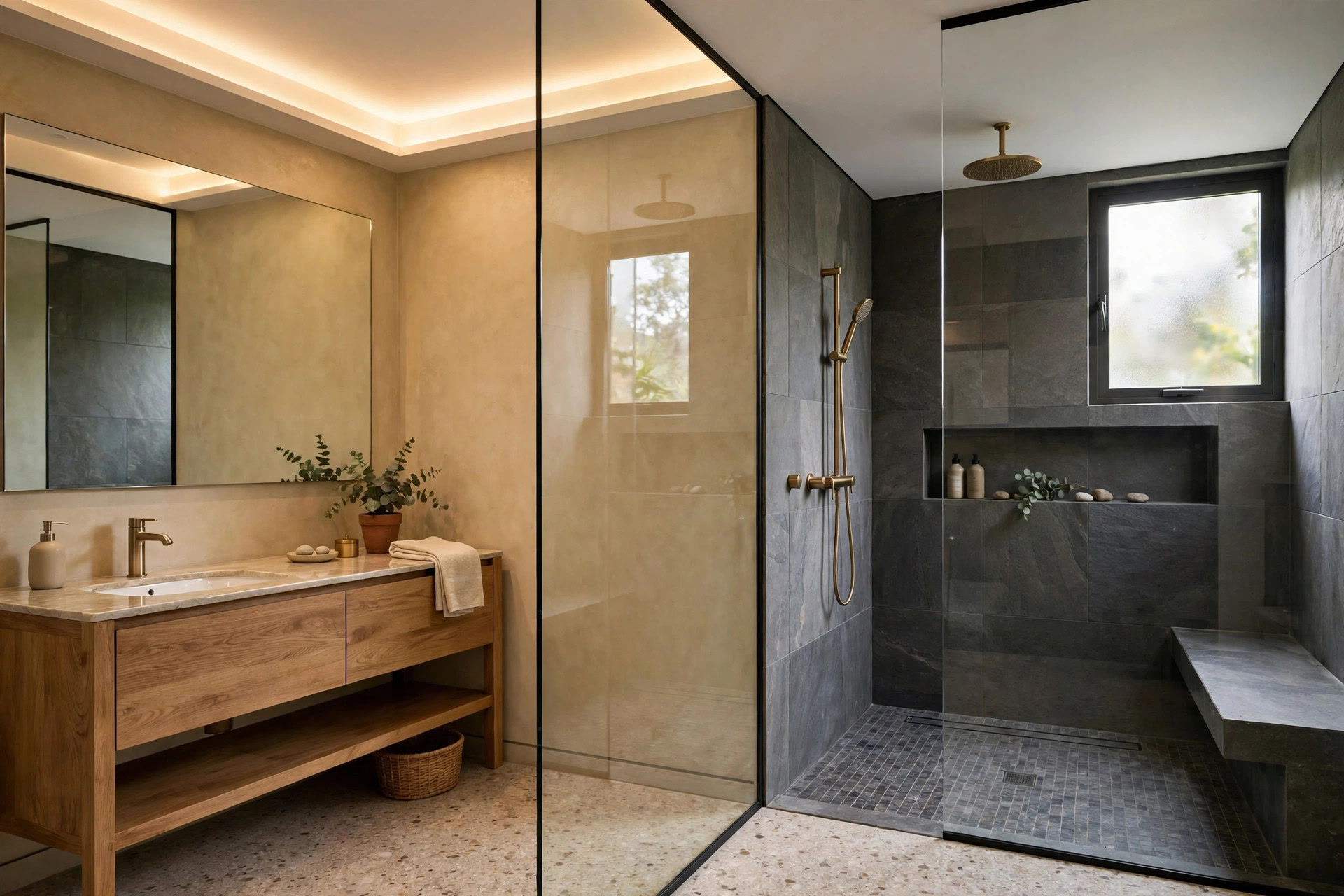
Planning around the wet and dry zones
In bathrooms with a glass partition, plan the ceiling with the partition in mind. Keep the wet zone’s ceiling simple and fully sealed — this is where steam concentrates — and put the decorative move (cove, profile light, backlit panel) over the dry zone where it will last and where you actually look at it.
Ventilation and the exhaust fan
No ceiling material survives a bathroom that never dries out. An exhaust fan that actually runs — ducted to the outside, not just into the ceiling void — is the single most important ceiling accessory in a bathroom. Plan its position in the ceiling layout, and make sure the ceiling has a removable access point near any fan or concealed cistern that might need servicing. Cutting open a finished ceiling for a repair is the kind of job that should never be necessary.
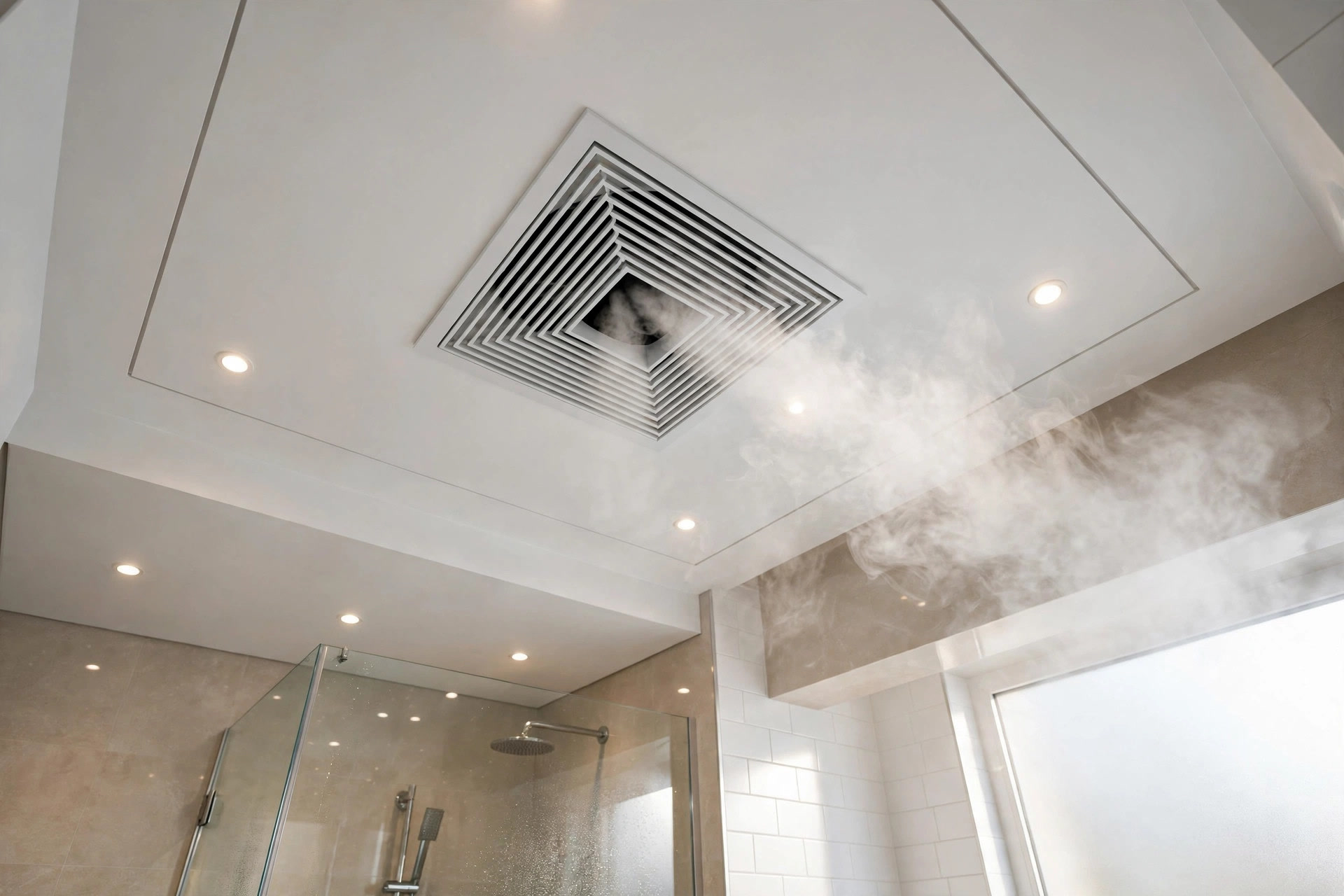
Leave an access panel
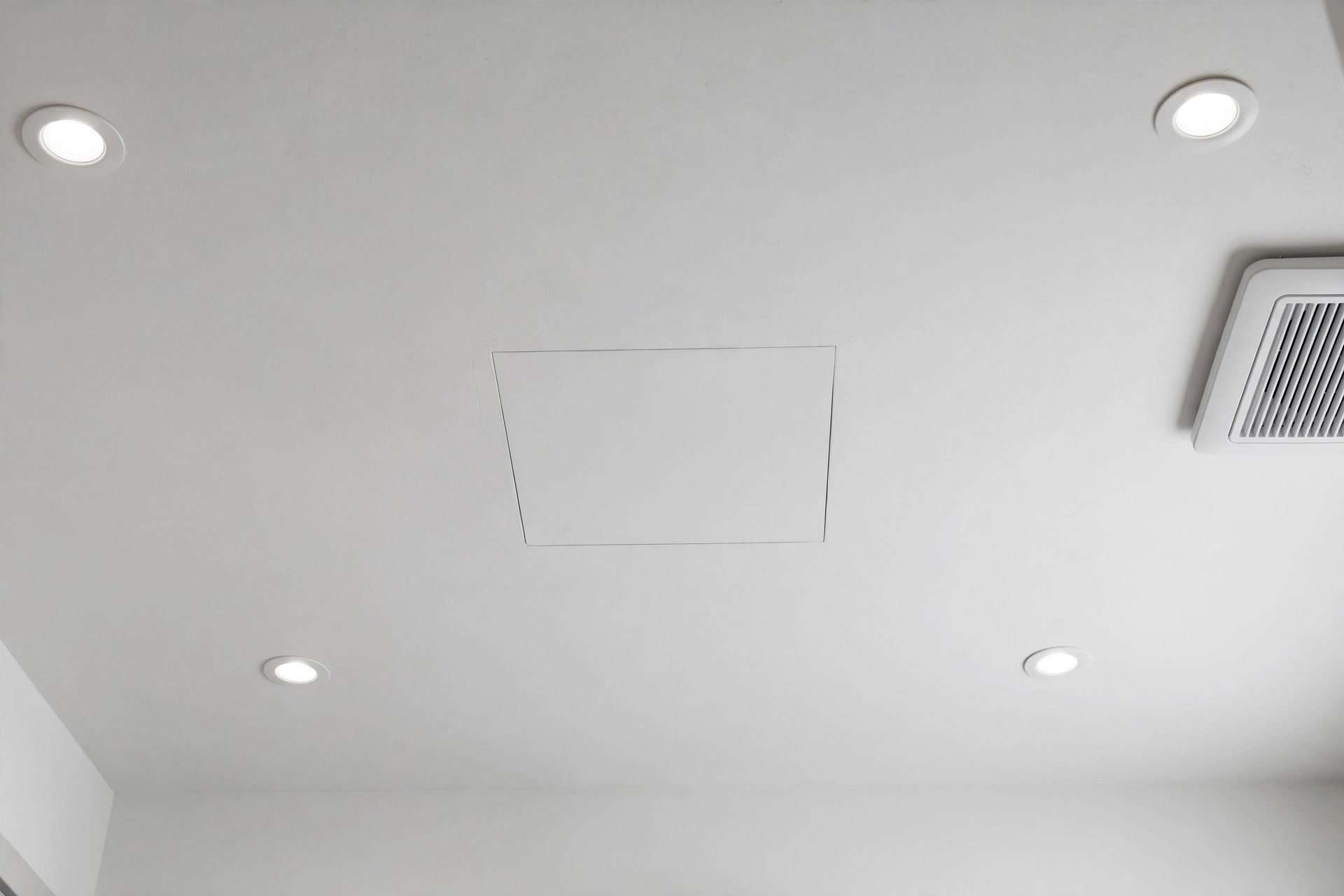
Wherever the ceiling hides something that might need attention — the exhaust fan, a concealed cistern’s connections, a junction box — build in a neat removable access panel that matches the ceiling finish. It should be planned in the layout, not cut in afterwards. A panel you never open costs almost nothing; a ceiling you have to cut open costs plenty.
Maintenance that keeps it modern
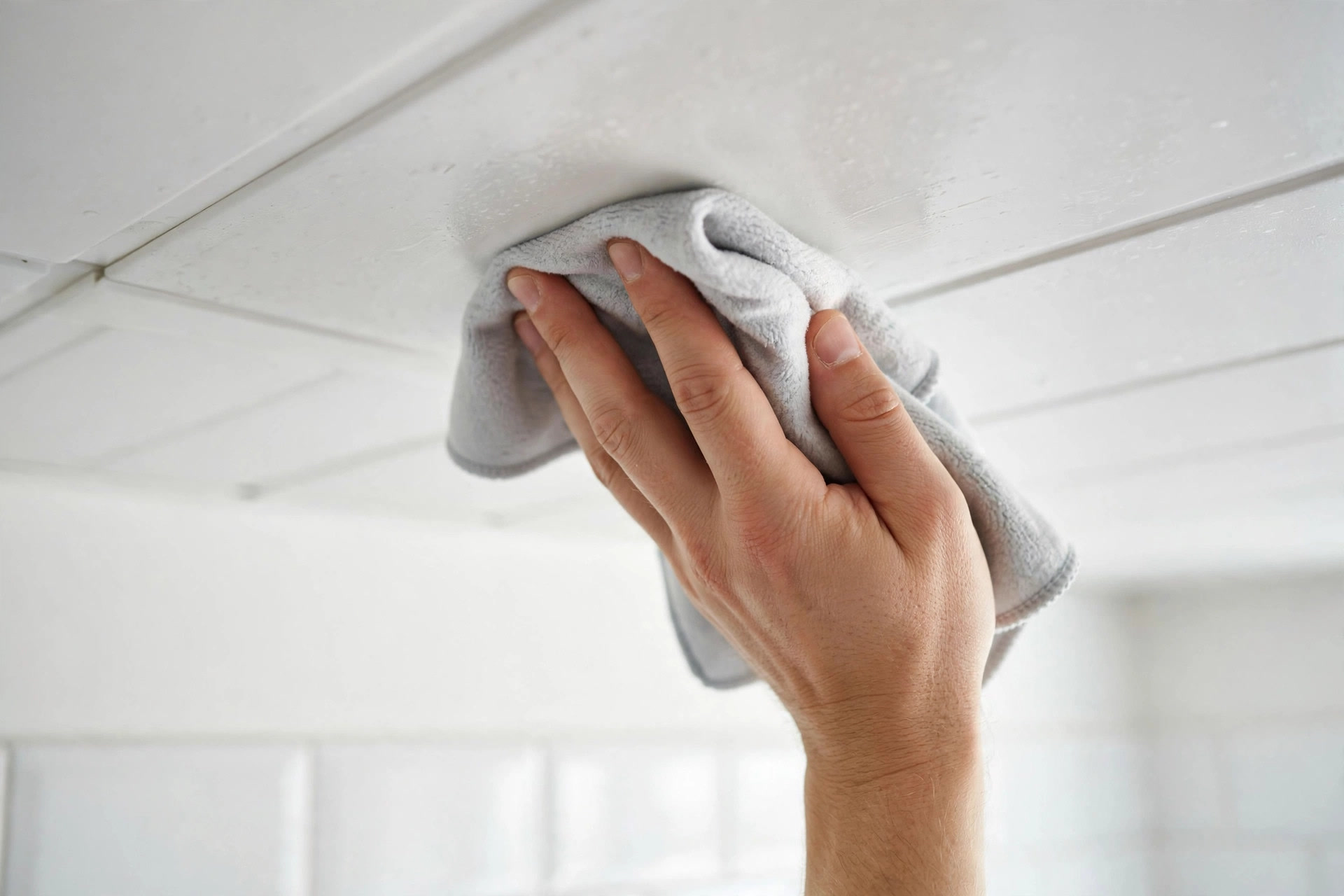
- Wipe, don’t soak. PVC and metal panels need only a damp cloth. For gypsum ceilings, dust with a soft dry cloth — repeated wet wiping damages paint.
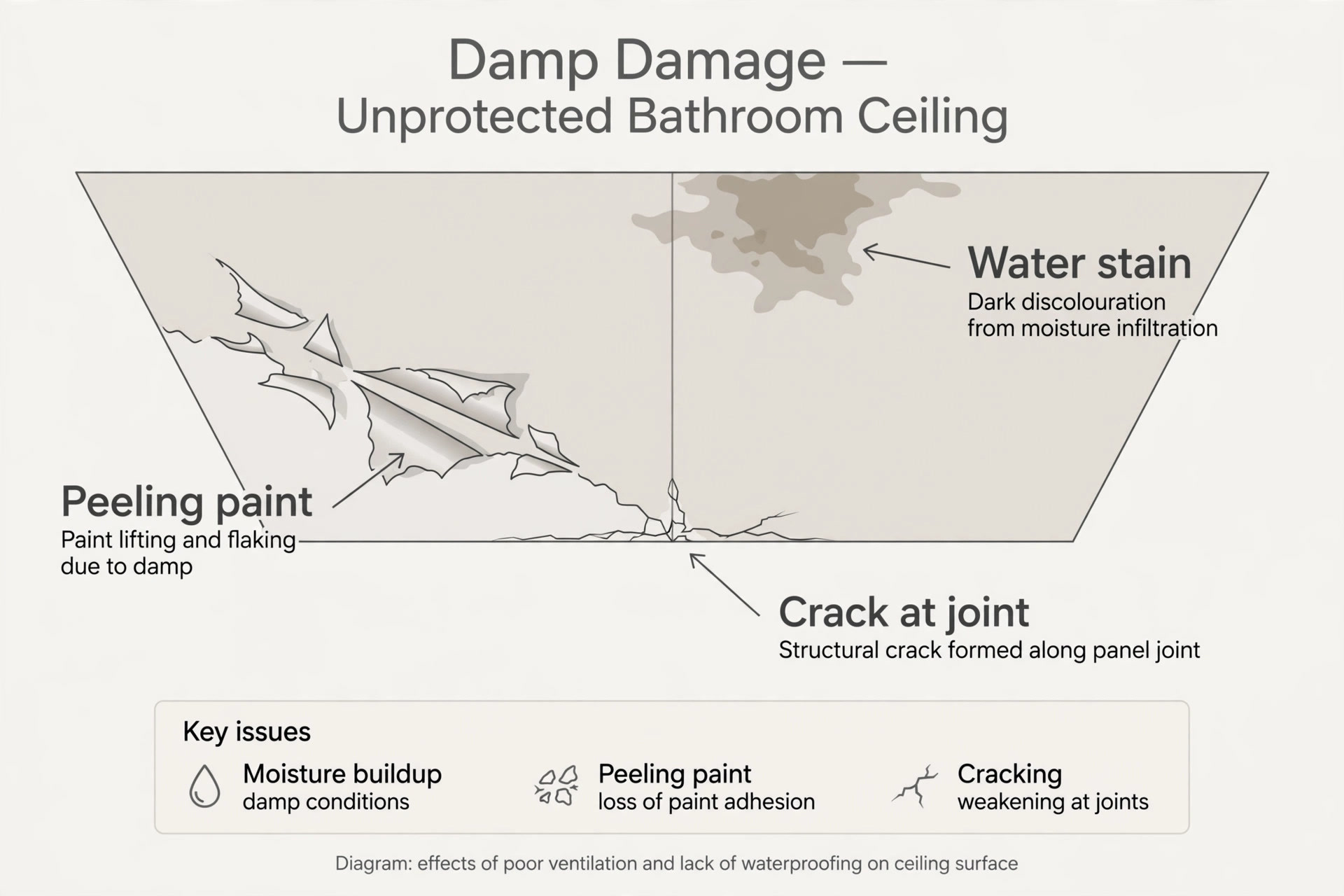
- Watch the edges. The first sign of moisture trouble is usually at joints, edges and around the exhaust fan — discolouration or softening paint. Catch it early.
- Keep the access panel accessible. Do not tile over or paint shut the panel above the fan or concealed services. It is there for a reason.
- Repaint on schedule. Painted bathroom ceilings need a fresh moisture-resistant coat every few years in hard-used bathrooms — treat it as routine, not failure.
Mistakes that ruin bathroom ceilings
- Plain POP or standard gypsum in a steamy bathroom. Without waterproofing and ventilation, expect cracks, peeling and stains.
- No exhaust fan — or a fan vented into the ceiling void. Pumping steam above the ceiling is worse than no fan at all.
- Sealing everything with no access panel. Fans and concealed services need a way in for repairs.
- Dark, heavy designs in small windowless bathrooms. They absorb what little light exists and make the room feel smaller.
- Ordinary electrical fittings. Bathroom lighting and wiring should be done by a qualified electrician with fittings suited to damp areas.
- Ignoring the wet/dry split. Decorative ceiling work over the shower zone ages fastest; put the design where it lasts.
- Too many lights. A bathroom needs even, flattering light — a crowded ceiling of fittings reads as clutter, not luxury.
- Skipping the sealant. Moisture enters at joints and edges first; sealing is not optional.
What about cost and planning?
We give no prices here — per-square-foot rates vary by city, material, design complexity and labour, and a number without that context misleads more than it helps. As a rough orientation from publicly listed Indian guides, bathroom false ceilings are commonly quoted around ₹80–180 per square foot depending on material and design (retrieved 2026-10-10). For detailed pricing, our false ceiling cost guide for India covers how rates are built up, and the main bathroom ceiling guide covers bathroom ceilings of every style.
Get two or three quotes with the scope in writing — material (including whether gypsum is moisture-resistant grade), ceiling area, exhaust fan provision, lighting points, and finishing. Ask each contractor how they seal joints in the wet zone; the answer tells you more about their competence than the quote does.
Frequently asked questions
Which false ceiling material is best for a bathroom?
PVC panels are the most forgiving — waterproof, low-maintenance and affordable. Moisture-resistant gypsum gives the cleanest modern look but needs good ventilation. Aluminium panels are the durable premium option. Plain POP and standard gypsum should not go into a steamy bathroom without proper waterproofing.
Is a gypsum ceiling waterproof?
Standard gypsum is not waterproof, but moisture-resistant gypsum boards are made for humid rooms like bathrooms. If the product is not explicitly moisture-resistant, assume it cannot handle a bathroom.
Can POP be used in a bathroom?
It can, but only with waterproof primer and paint, good ventilation, and preferably as a small decorative detail rather than the whole ceiling. Without moisture protection, cracks and peeling appear over time.
Does a false ceiling reduce bathroom height?
Yes, usually by three to six inches to fit lighting and wiring. In a standard bathroom that is rarely a problem, but measure before you commit — low bathrooms should keep the drop minimal and the design flat.
Which bathroom ceiling needs the least maintenance?
PVC panels — a periodic wipe with a damp cloth is usually all they need. Painted gypsum needs repainting every few years in hard-used bathrooms, and any ceiling needs its joints watched for early moisture signs.
Do I need an exhaust fan if I install a false ceiling?
Yes — arguably the ceiling makes it more important, not less. Steam trapped above or around the ceiling shortens its life. The fan should vent to the outside, and the ceiling should include an access panel near it for servicing.
A note on the images: every image in this article is an original concept render created for this guide — not a photograph of a finished project. They are meant to show how each idea could look in a real modern bathroom.