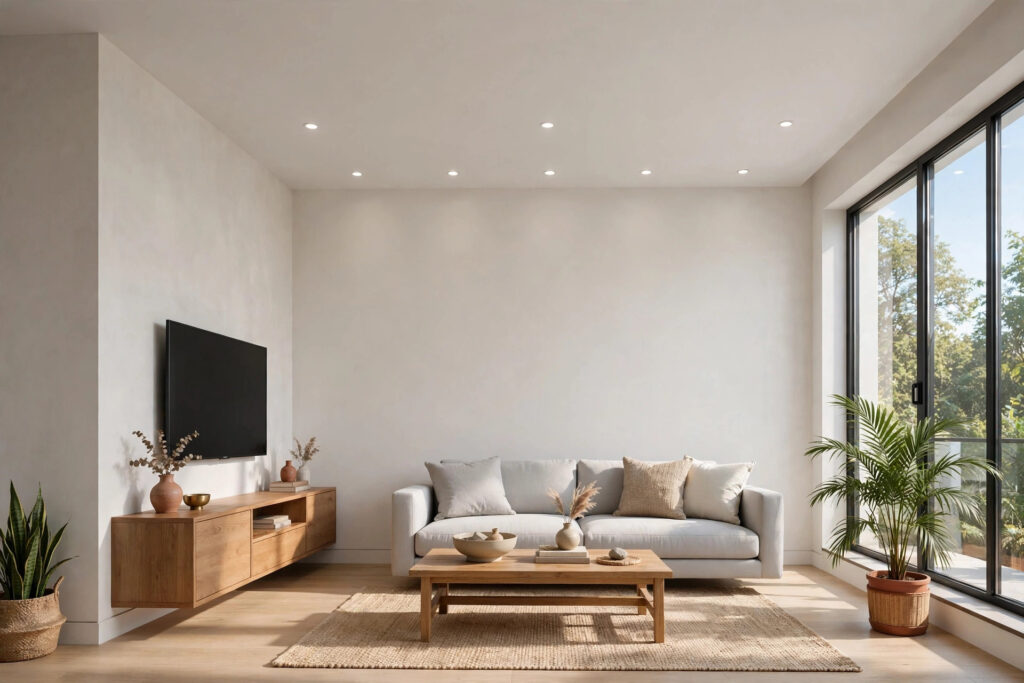

A simple gypsum false ceiling is the most sensible ceiling most Indian homes will ever need: one flat layer or a single border, standard boards, a shallow drop, and a few well-placed lights. It hides wiring, gives a clean finish, and costs far less than layered designer ceilings. This guide collects budget-friendly gypsum ceiling ideas that stay simple on purpose, explains where the savings actually come from, and shows how to keep a simple ceiling from looking plain.
What “simple” means in a gypsum ceiling
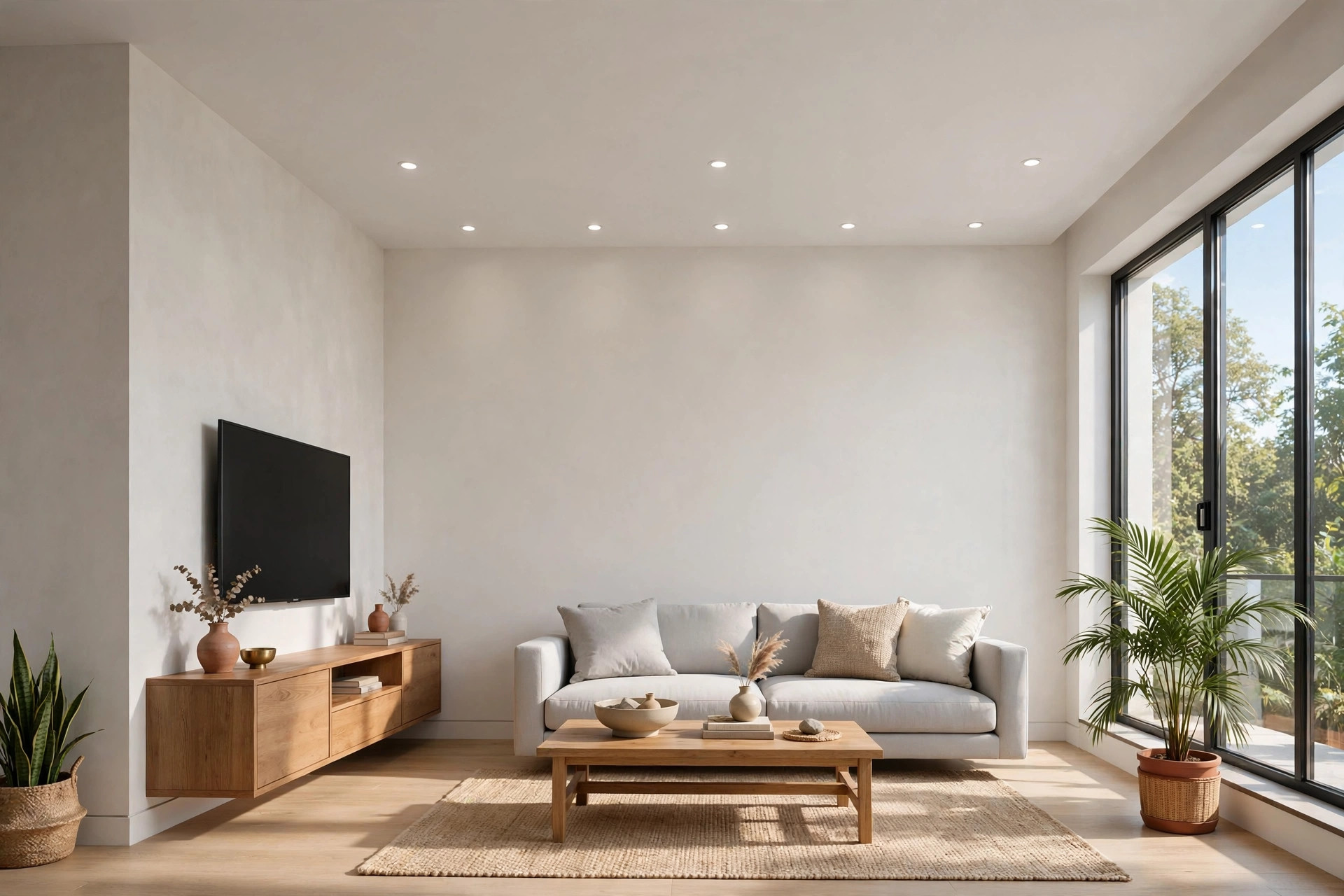
Simple is not a style name; it is a set of decisions. A simple gypsum ceiling usually has one level instead of two or three, no curves or domes, standard 12.5 mm boards rather than speciality panels, and a drop of just 4 to 6 inches from the slab. The lighting plan is modest: recessed spots, one cove strip, or a single pendant, not all three at once.
Gypsum suits this approach well. Boards arrive factory-made with a smooth face, so even a flat single layer looks finished once the joints are taped and painted. Our complete gypsum false ceiling guide covers the material in depth; this article stays on the simple end of what it can do.
Where the savings actually come from
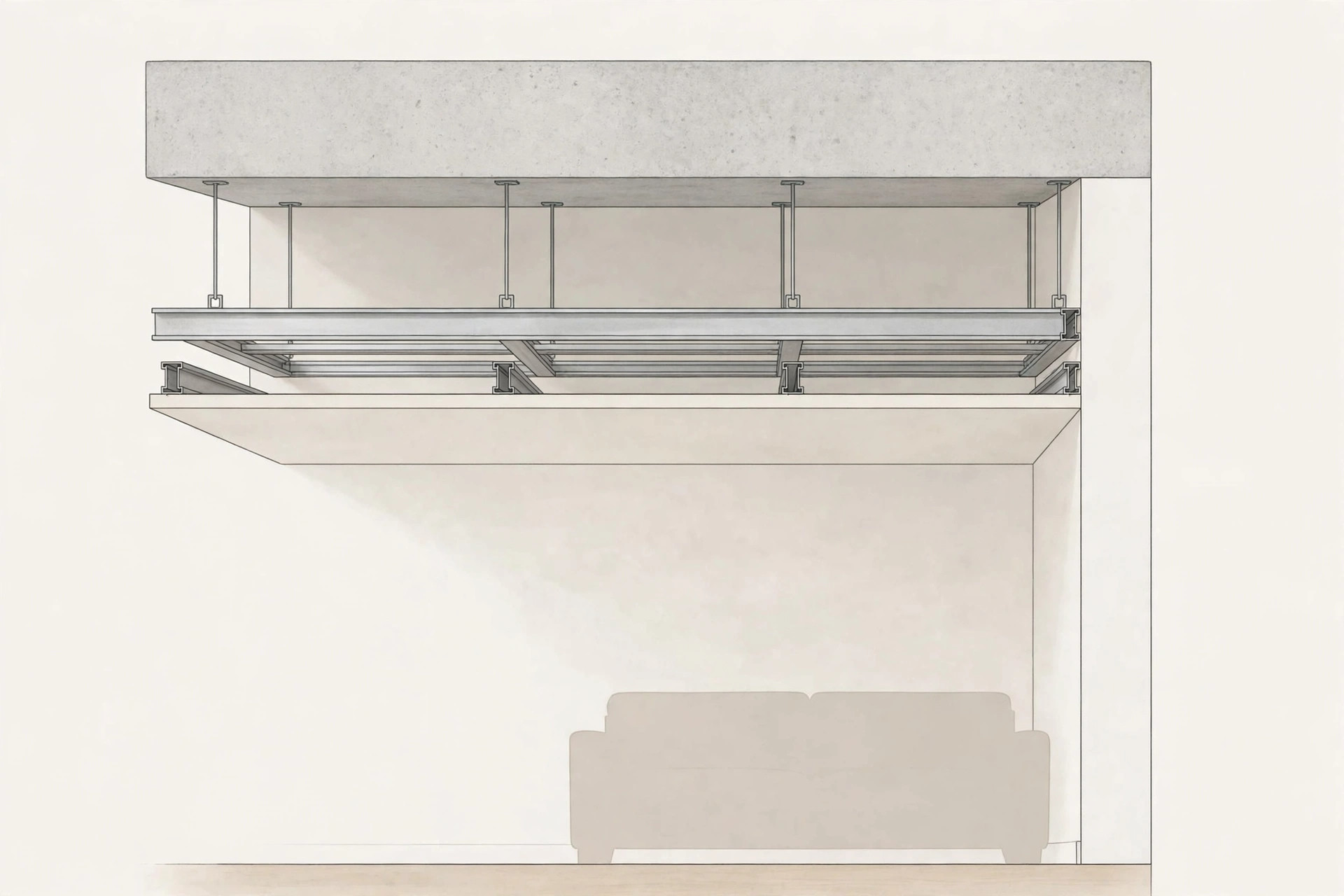
A simple design costs less for concrete reasons, not because the contractor is being generous:
- Less framework. One level needs one grid of channels. Every extra level adds metal, suspension wires, and labour hours.
- Less cutting waste. Straight runs and rectangles use boards efficiently. Curves and circles throw away offcuts.
- Faster installation. A flat bedroom ceiling typically takes two to three days; multi-level designer work can take a week.
- Standard materials. Regular gypsum boards and basic LED spots are commodity items with competitive prices.
- Simpler painting. One colour on one plane is quick. Multiple levels mean masking, cutting in, and extra coats.
The honest caveat: a simple ceiling still needs proper framing, jointing, and paint. Cutting those corners is how ceilings develop cracks and sagging within a year. Save on design complexity, not on workmanship.
Simple gypsum ceiling ideas that work
1. Flat ceiling with recessed spots
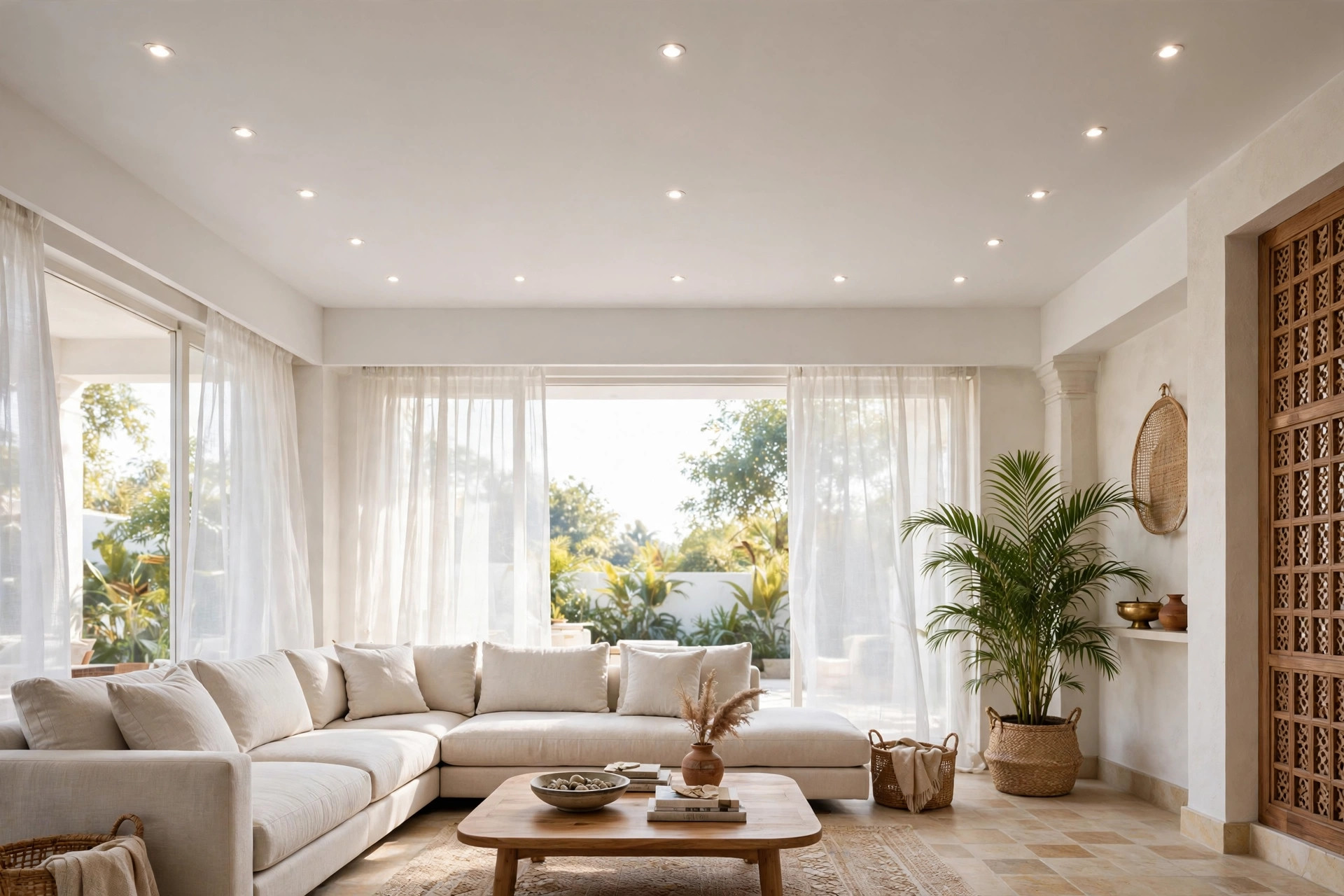
The baseline. A flat gypsum layer across the whole room with 4 to 6 recessed spotlights gives even light and a clean finish. It suits living rooms, bedrooms, and rental flats alike because it asks nothing of the room’s height beyond a shallow drop.
2. Flat ceiling painted the same shade as the walls
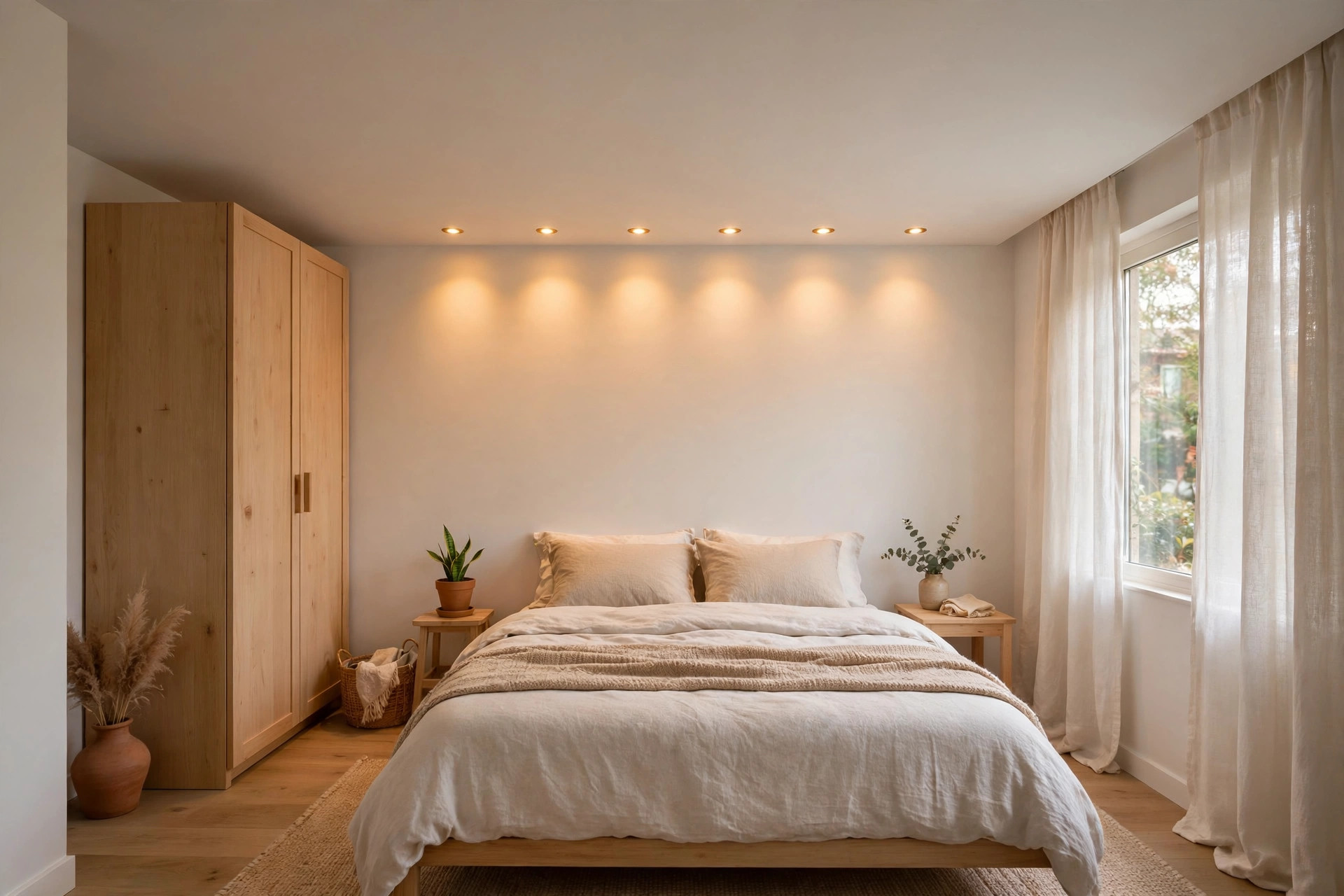
In small rooms, painting the ceiling the exact wall colour removes the visual line where wall meets ceiling, and the room reads taller. Warm off-whites work best; pure white can feel stark in a small bedroom.
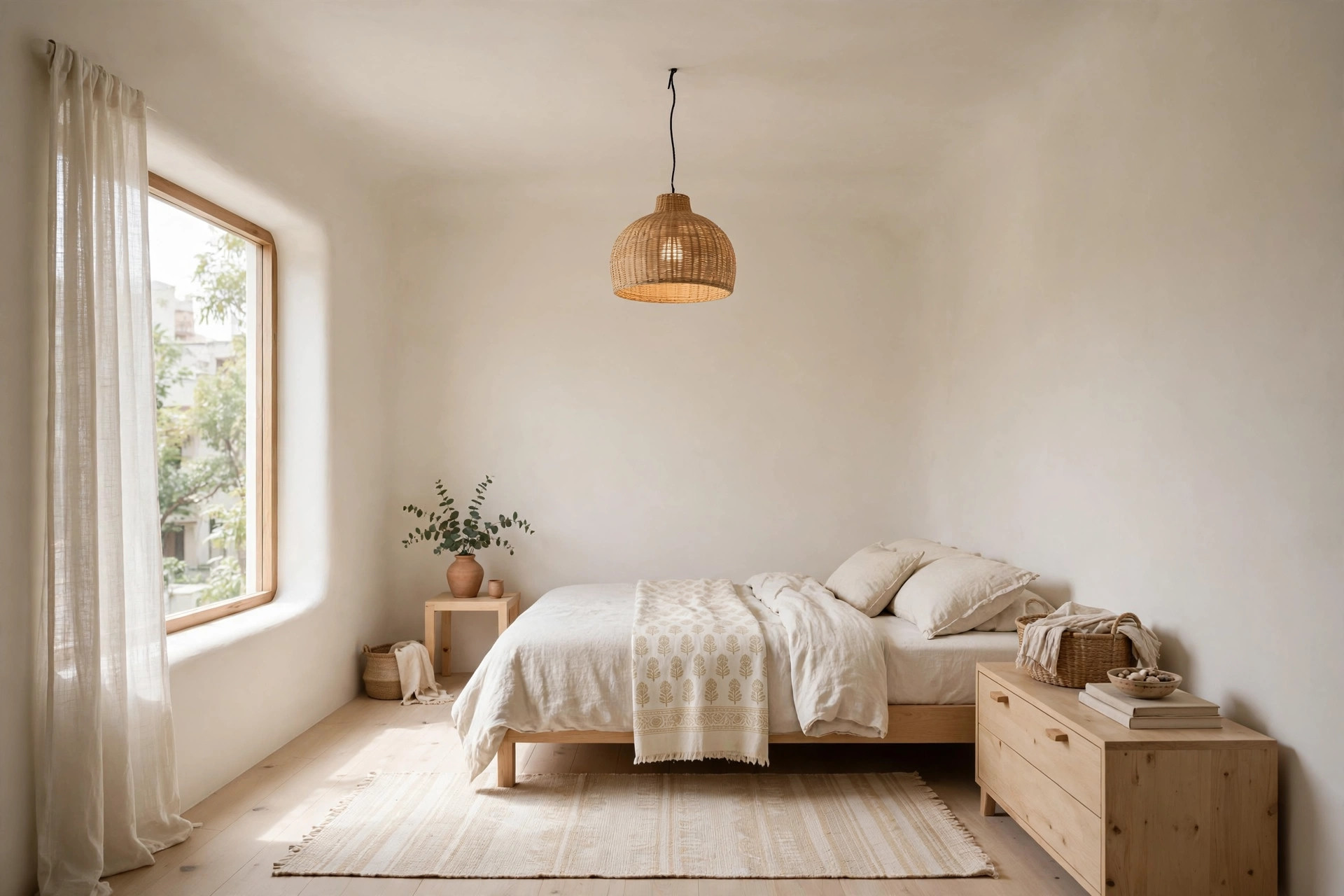
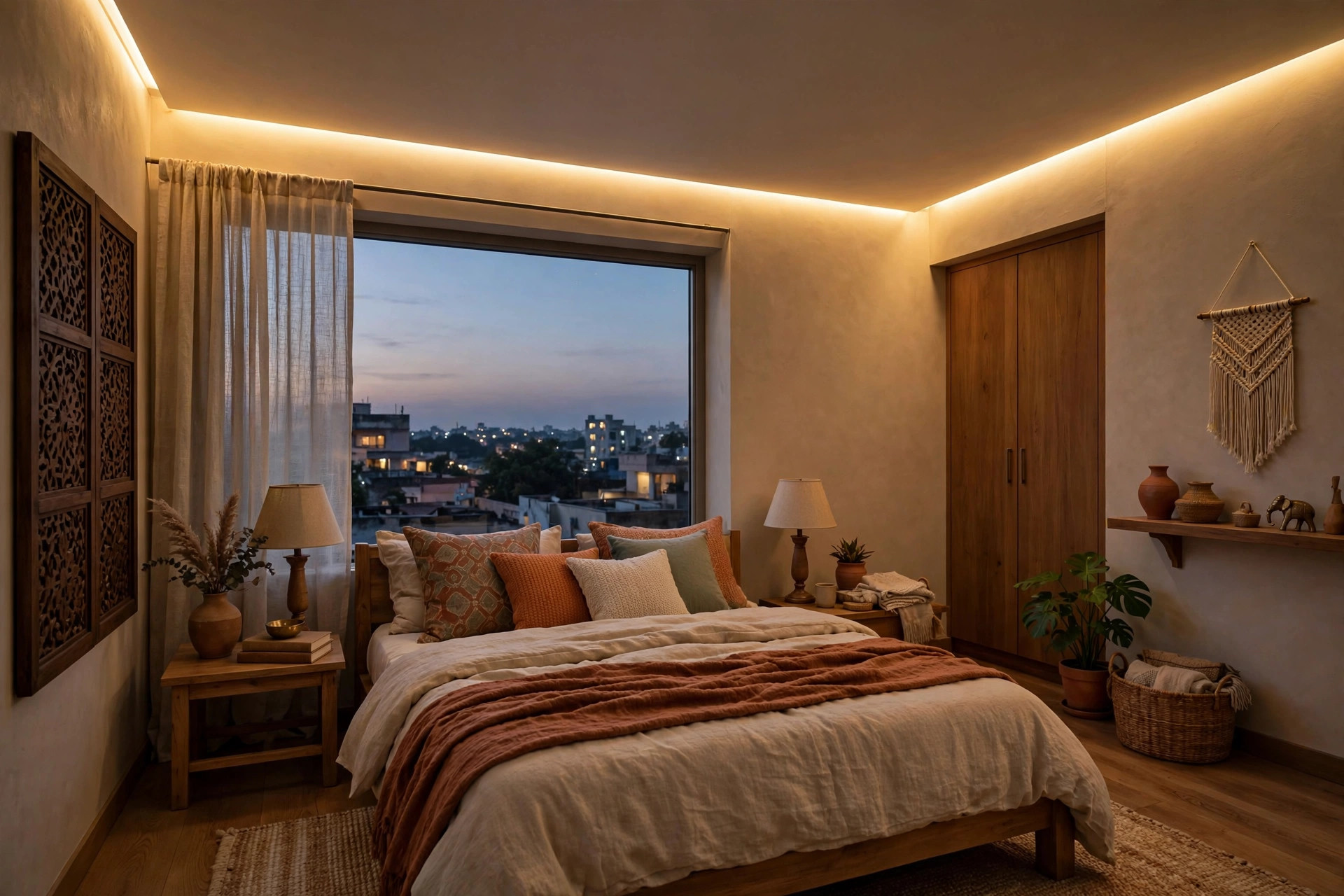
3. Perimeter border with a cove light
A border 12 to 18 inches wide runs along the ceiling edges with a hidden LED strip inside, while the centre stays at full slab height. You get the prized cove glow at a fraction of a full-ceiling cost, and low rooms keep their headroom.
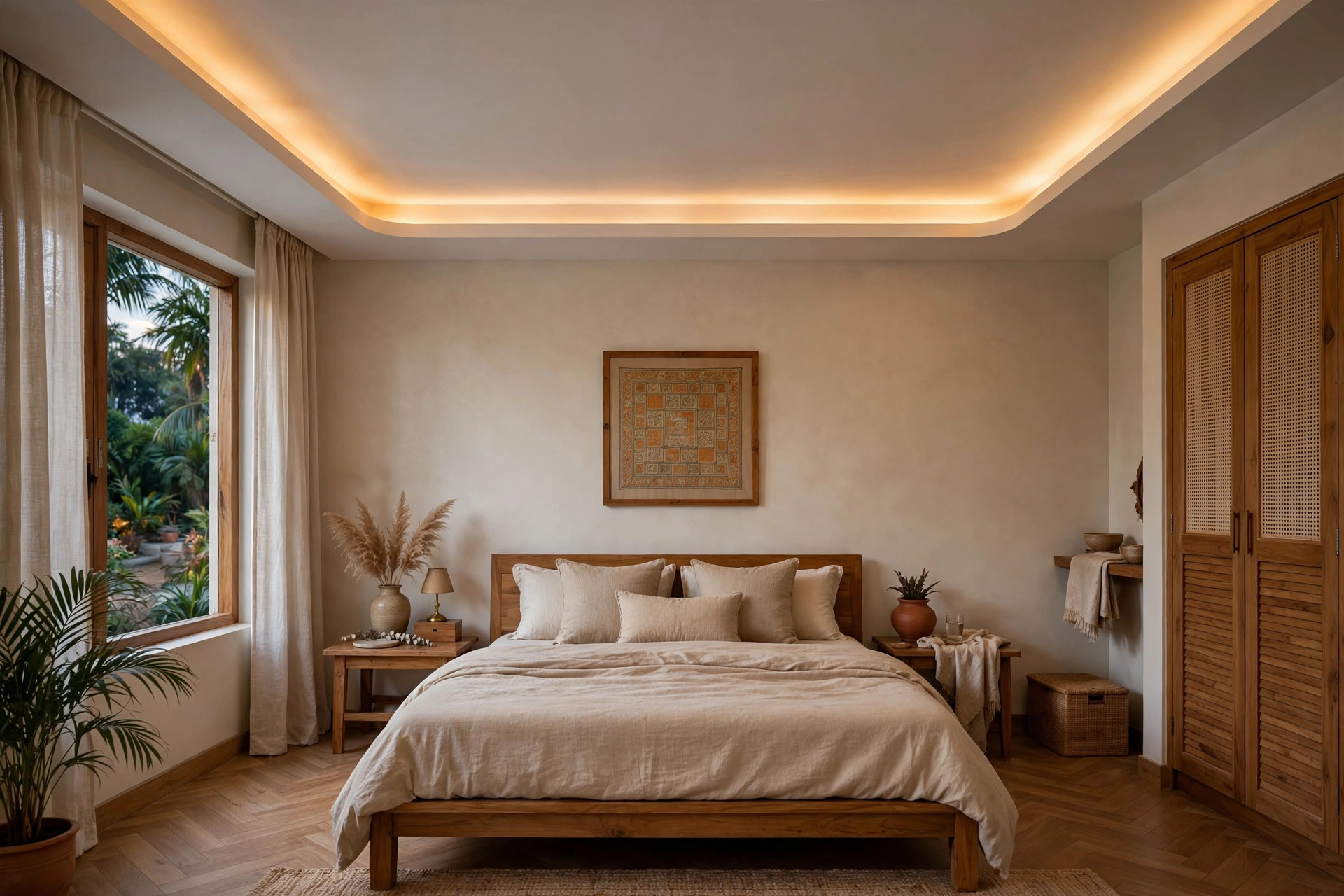
4. Recessed border with the fan on the slab
A recessed rectangular border frames the room, and the ceiling fan mounts at the centre on the original slab, where anchoring is solid. This is the practical answer for bedrooms that need a fan: no debate about whether the false ceiling can carry it, because it doesn’t have to. See our gypsum bedroom guide for more on fan planning.
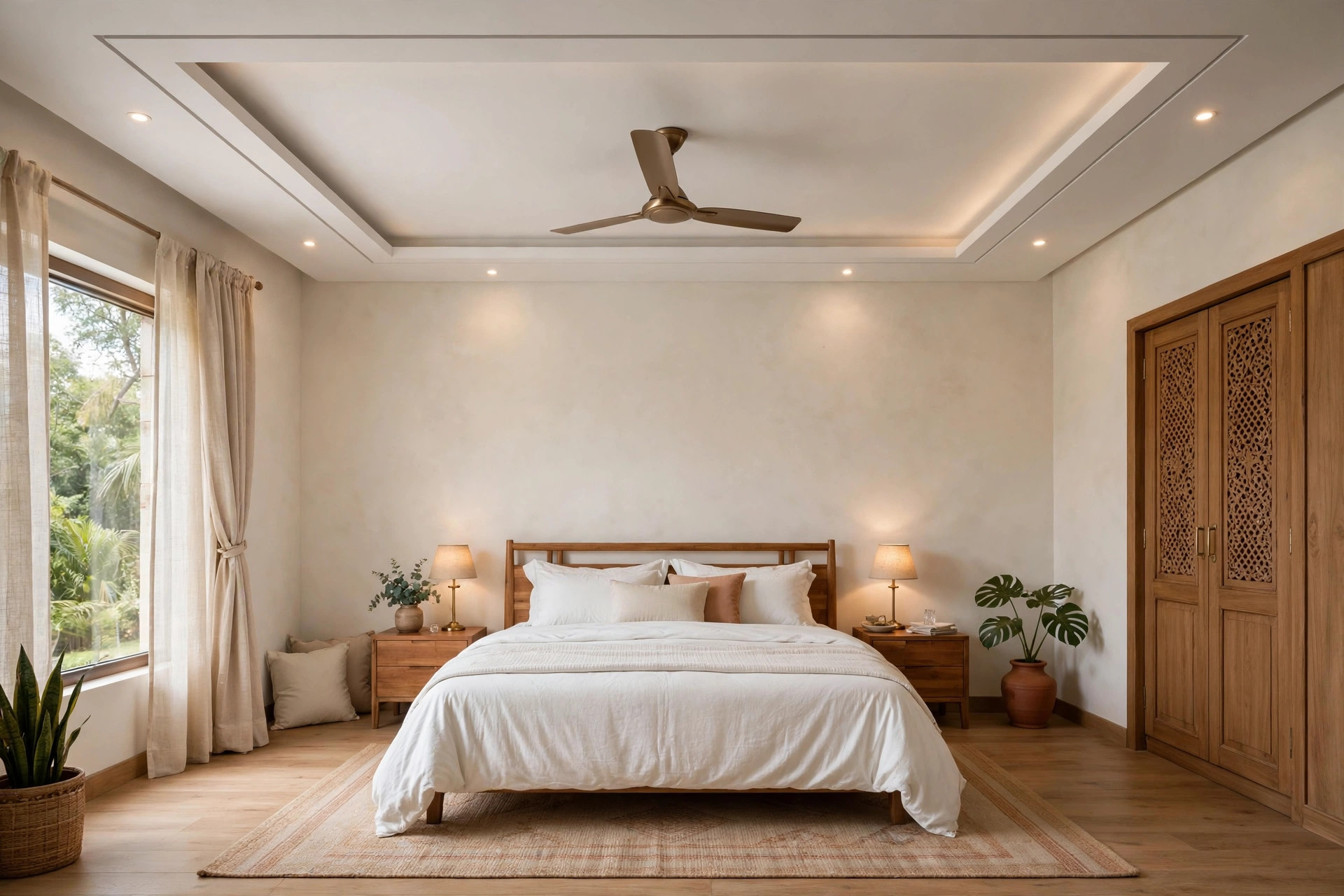
5. A single tray step
One recessed tray over the seating or sleeping area adds depth that a flat ceiling can’t. Keep it to a single step with a soft light inside; the second step is where costs start climbing.
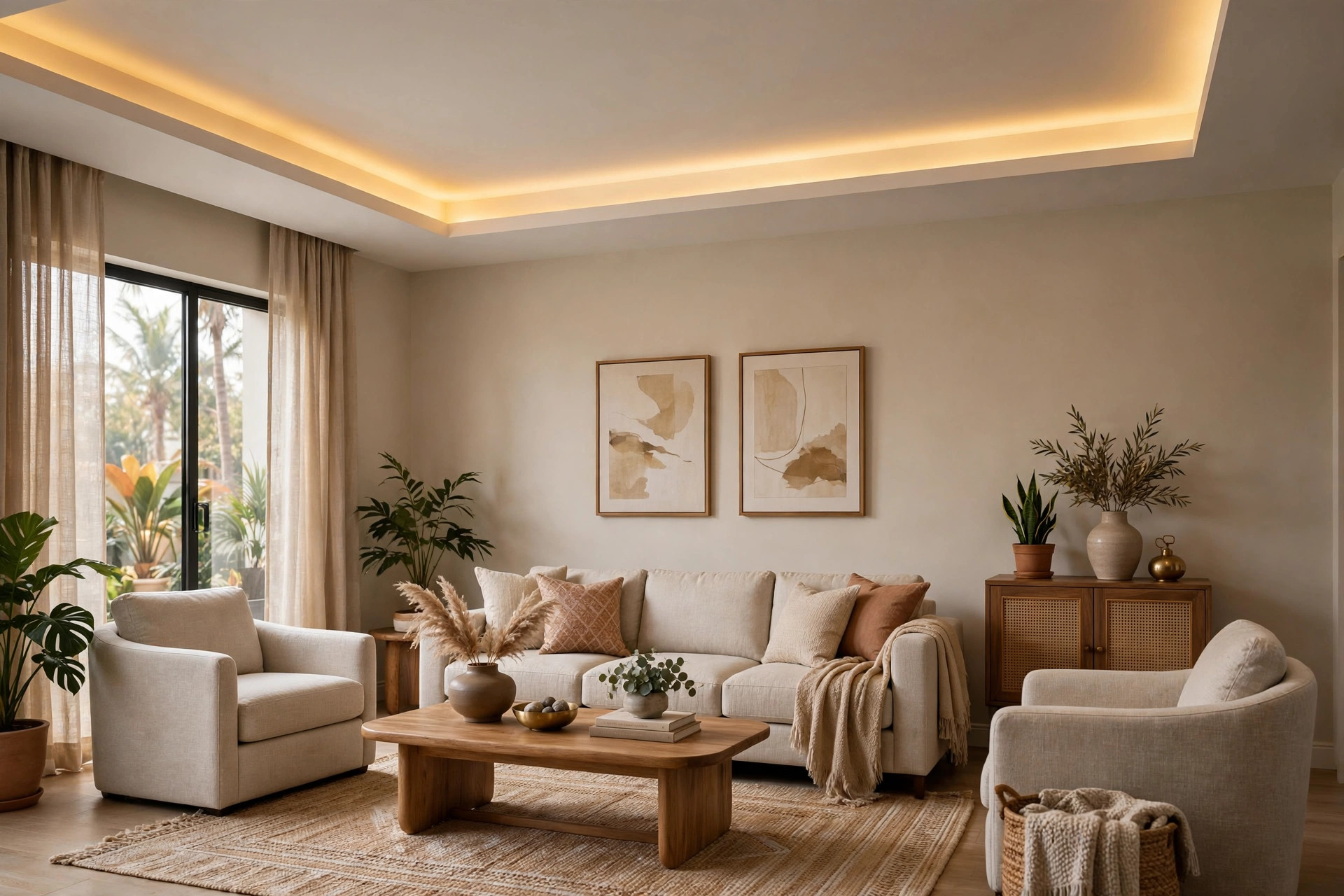
6. Slim groove lines
Thin recessed grooves routed into a flat ceiling make a geometric pattern from nothing but lines. It reads as design, costs almost nothing extra, and works beautifully in halls.
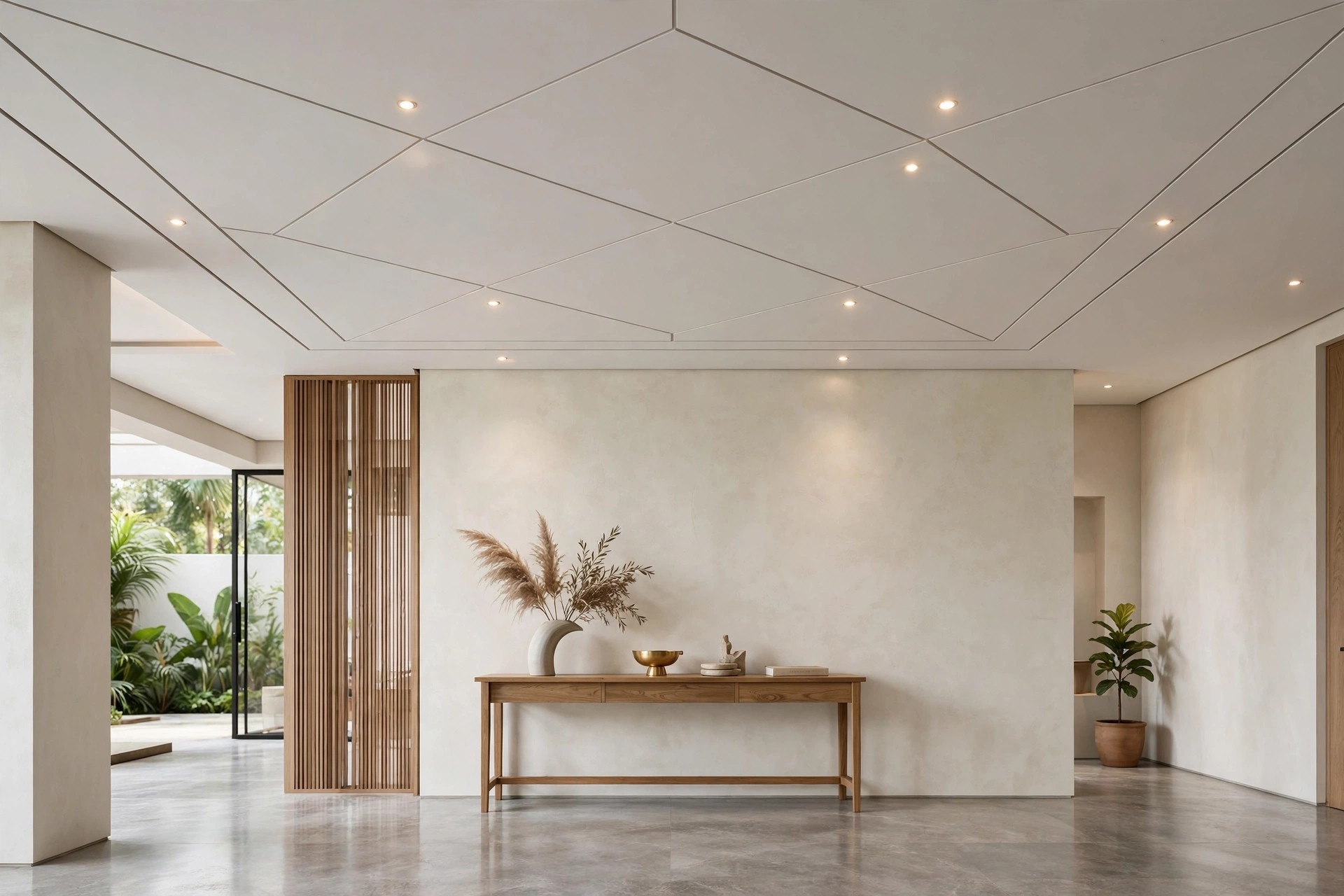
7. Two-tone paint on one level
Paint the border one shade and the inner panel another, and the eye reads two levels where there is only one. This is the oldest budget trick in the book and it still works.
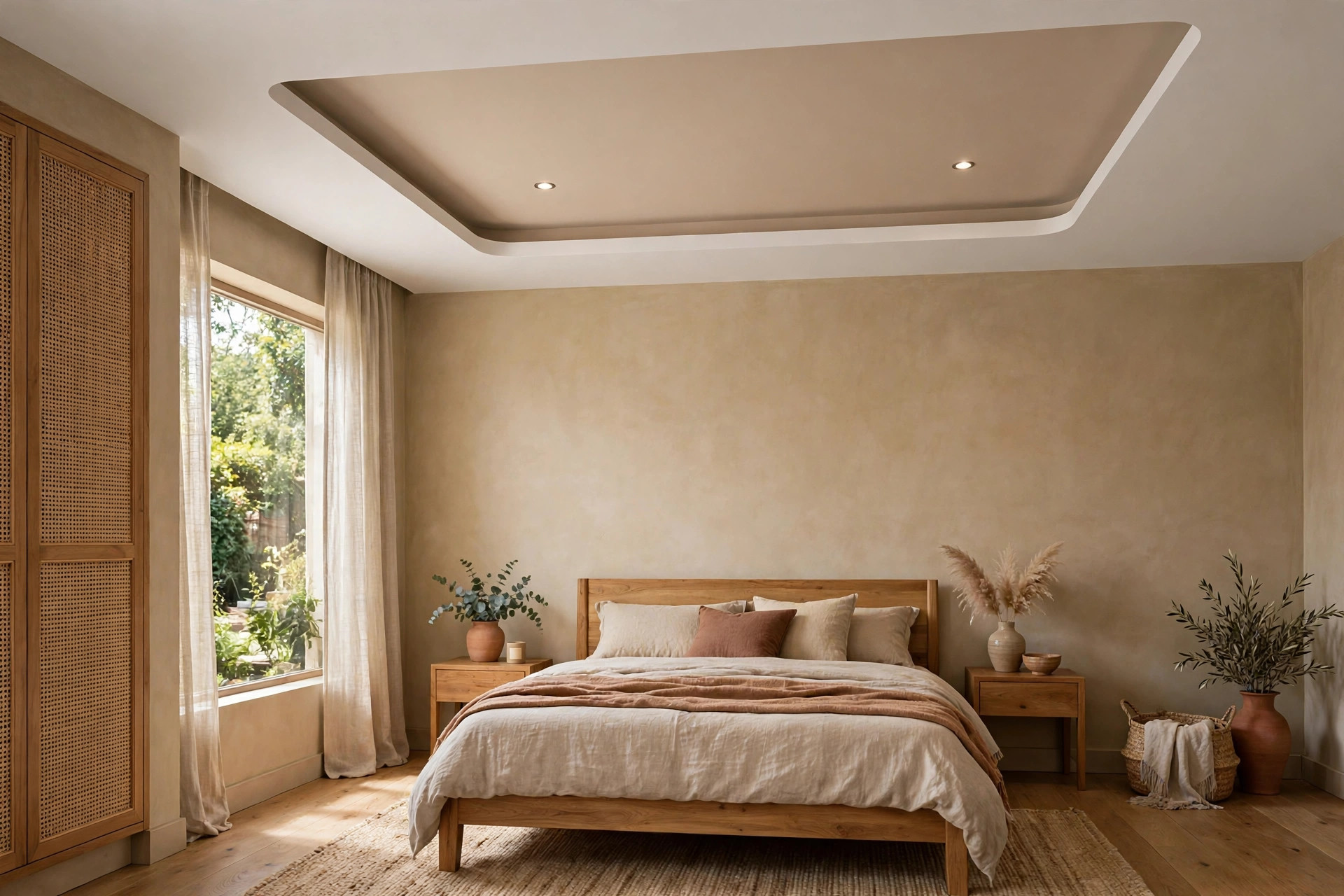
8. Subtle texture instead of shape
A faint texture on the boards catches light and shadow across the day. It adds interest without a single extra channel of framework.
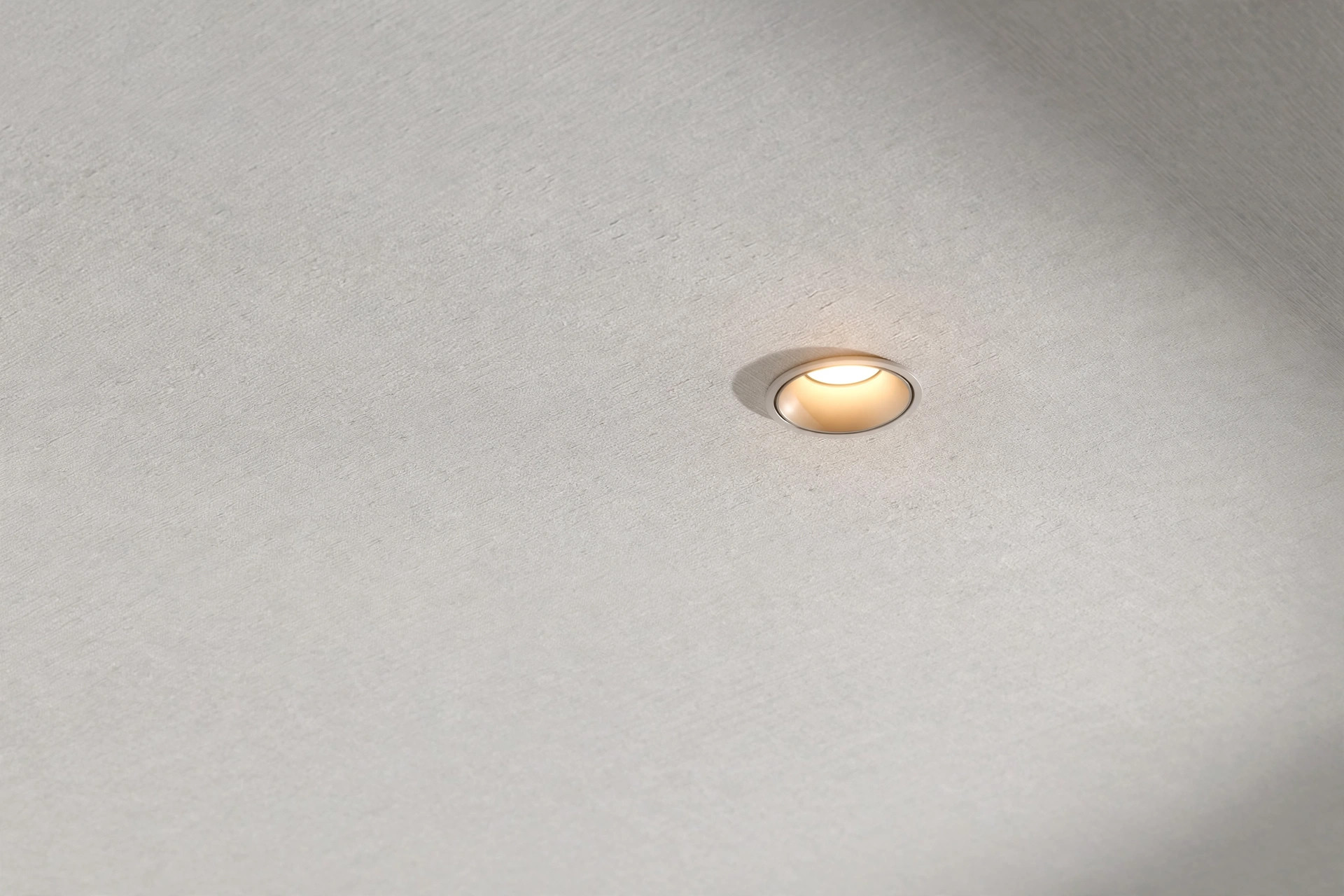
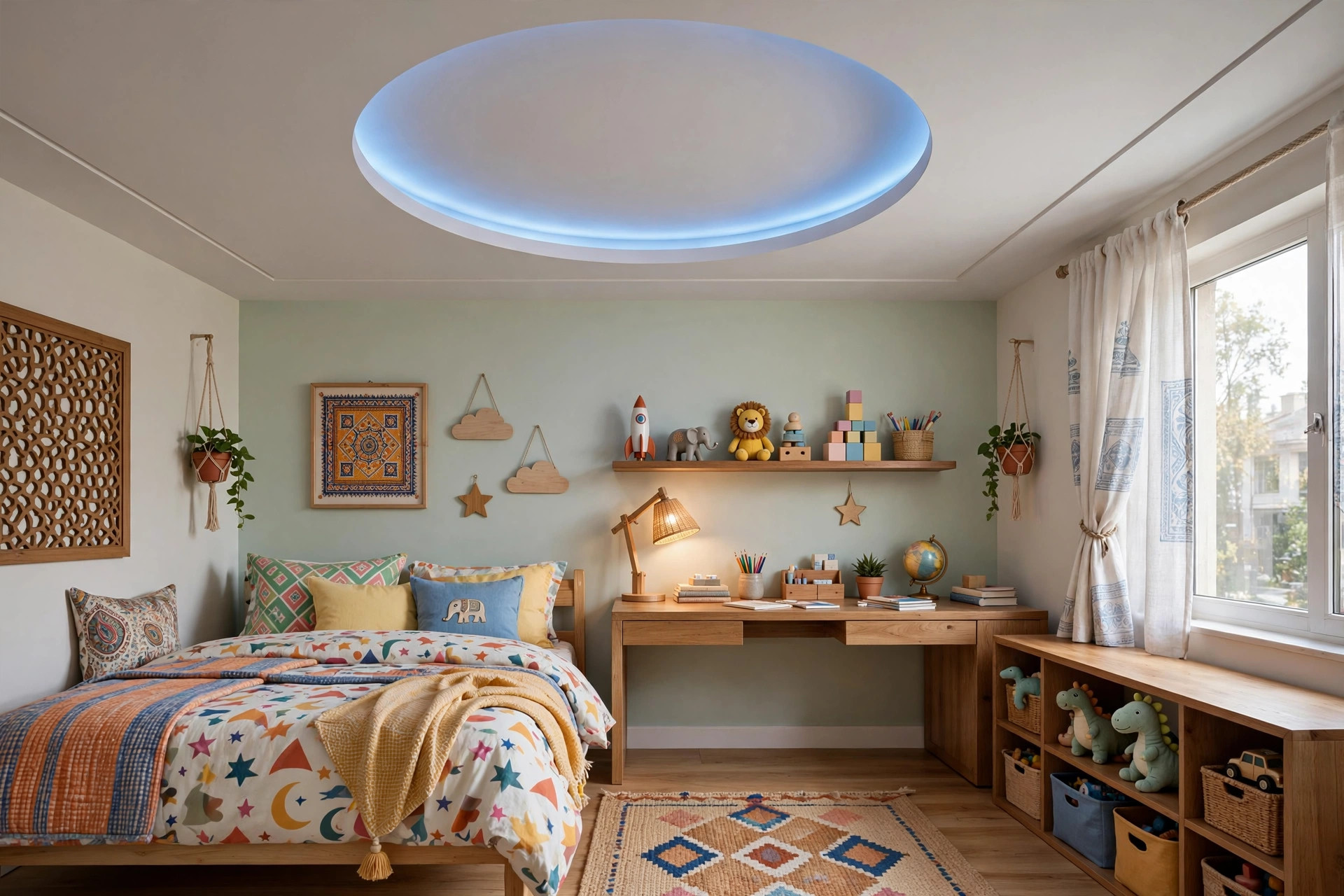
9. One circle for a kids room
A single recessed circle with a coloured LED strip is enough to make a kids room feel designed. One shape, one light, done.
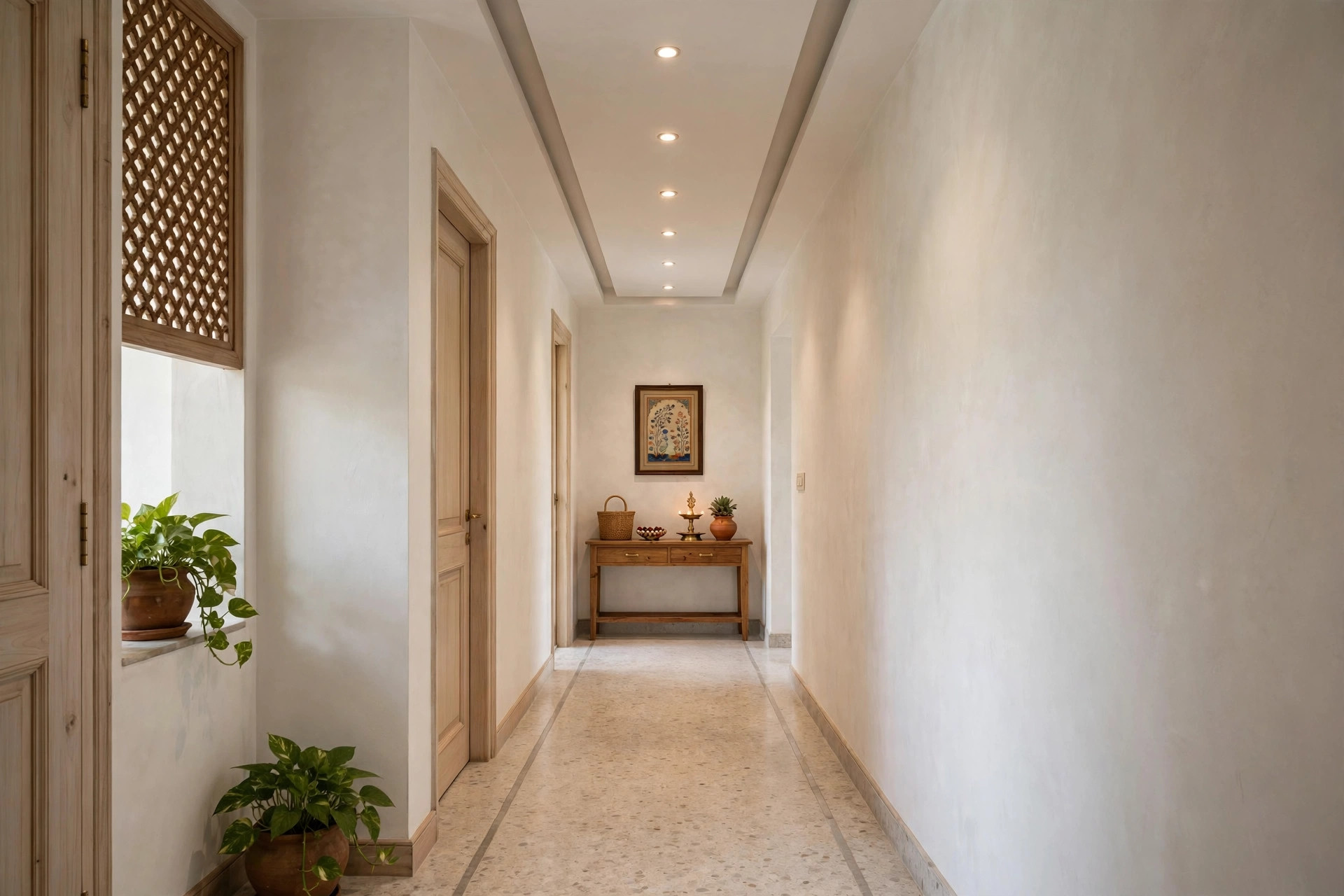
10. A slim strip for corridors
Corridors don’t need full ceilings. A slim recessed strip down the centre with small downlights guides the eye and lights the path.
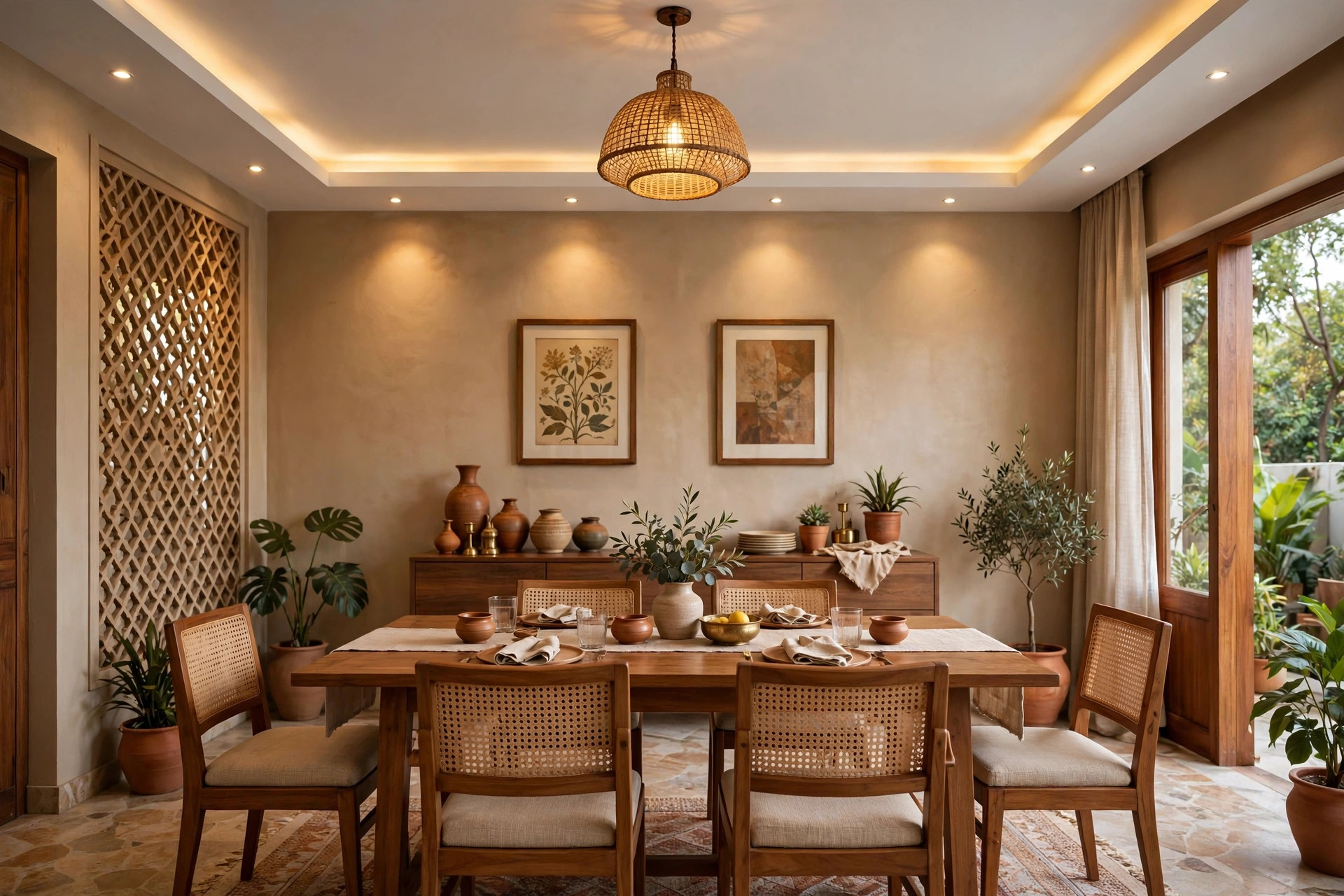
11. Border over the dining table
Instead of ceilinging the whole dining area, run a simple border over the table with spots aimed at it. The zone feels defined; the rest of the room stays at full height.
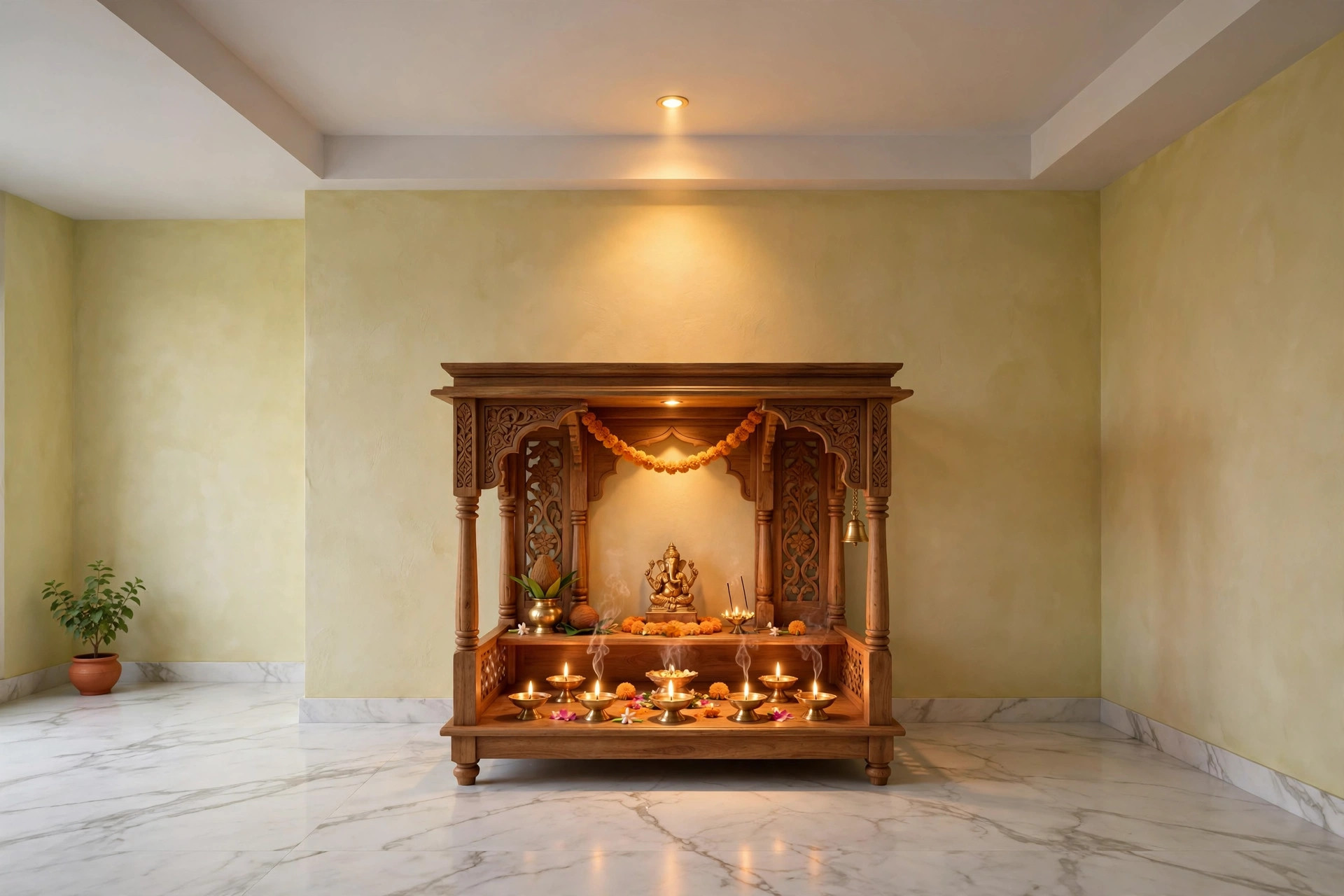
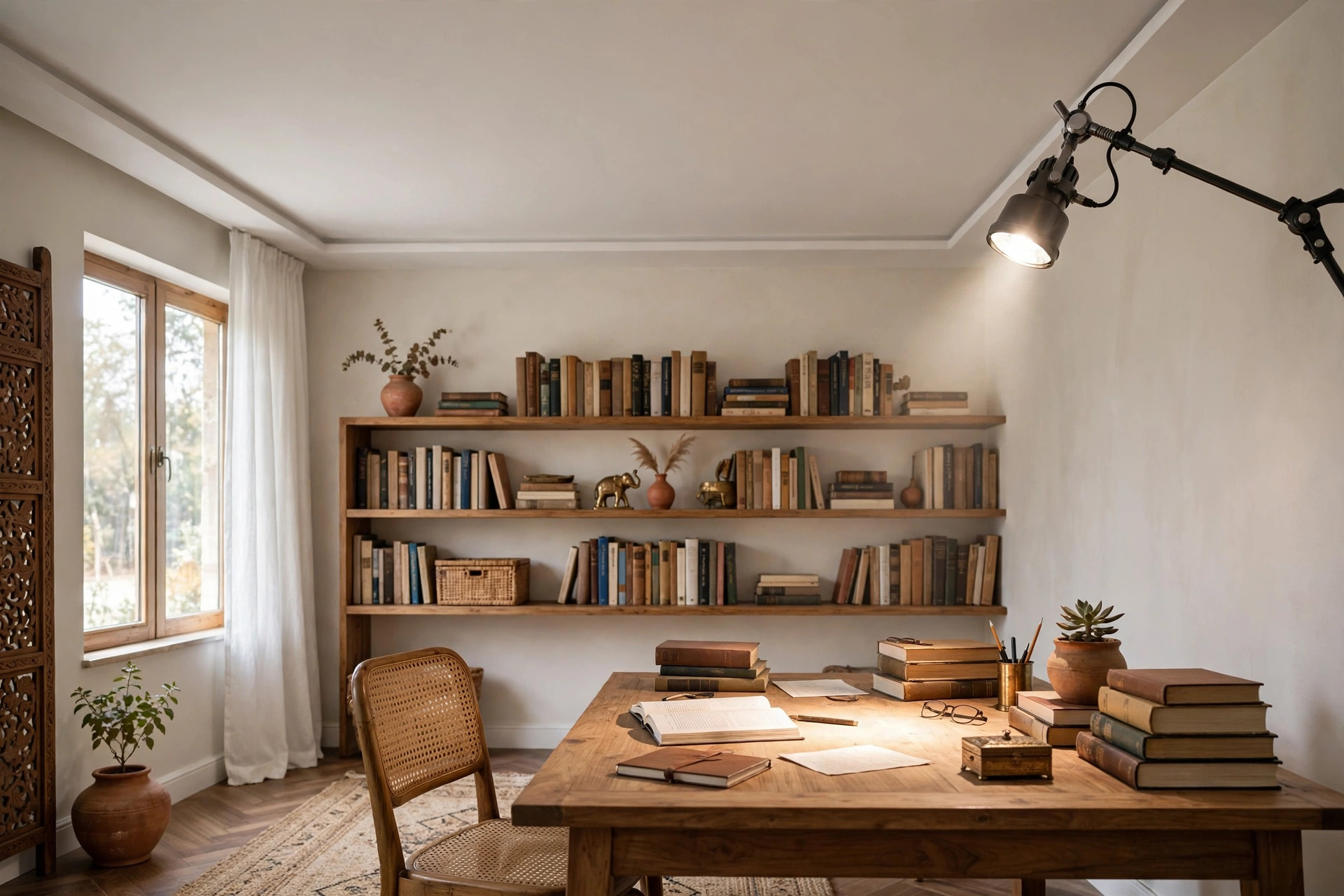
12. Quiet ceilings for pooja and study rooms
Small special rooms need the least ceiling of all. A flat layer with one warm spotlight over the mandir, or one adjustable task light over a study desk, is genuinely enough.
Simple ideas for halls and rentals
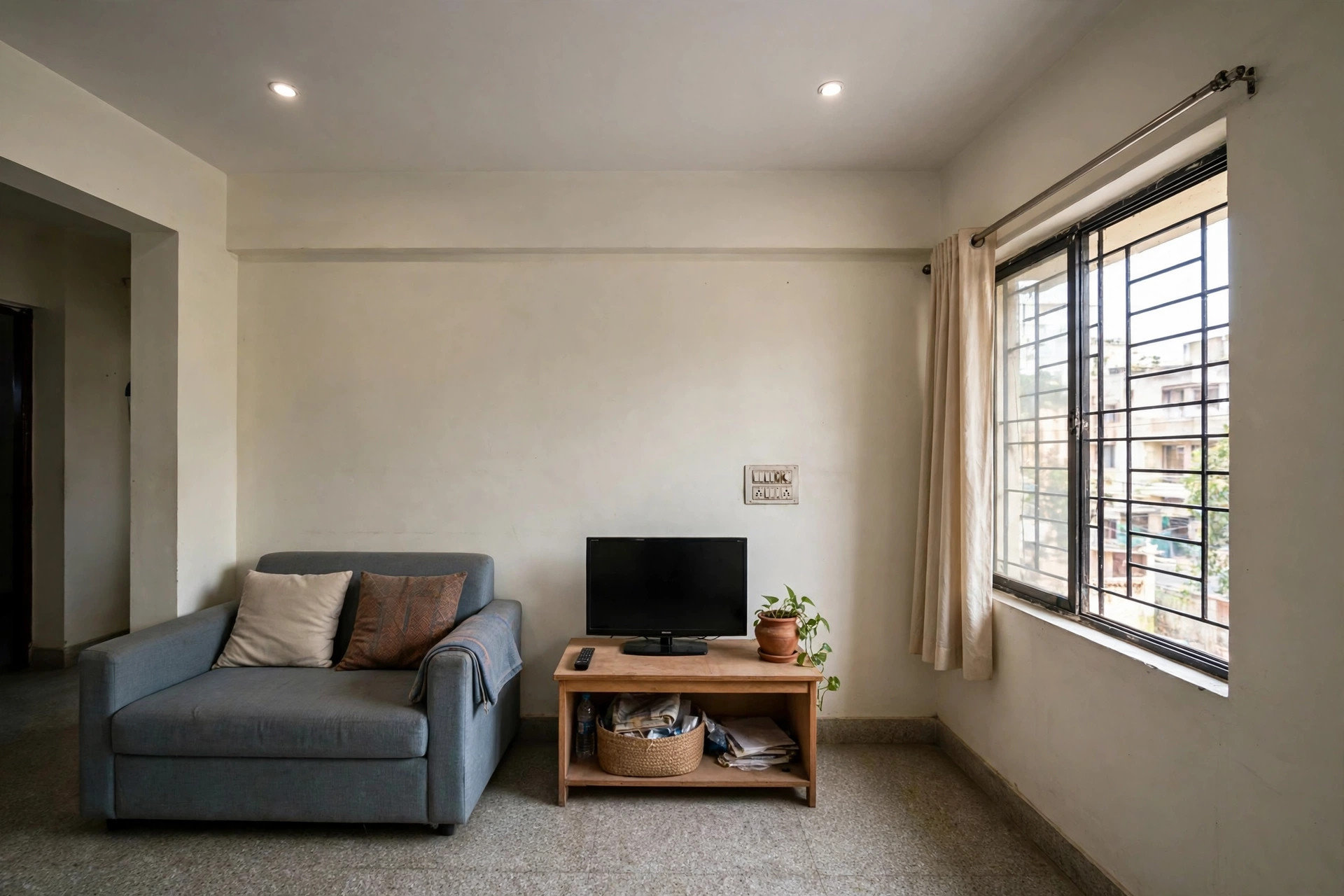
Halls take even spacing well: a flat ceiling with spots in a neat grid looks intentional and suits rented homes where you can’t over-personalise. The rental formula is flat, white, and a couple of lights — clean, cheap, and easy to repaint between tenants.
Lighting a simple ceiling well
Simple ceilings live or die by their lighting plan. Three rules cover most rooms: put task light where work happens (over counters, desks, reading chairs), use one cove strip for evening ambience rather than a dozen spots, and keep the colour temperature consistent — mixing cool white spots with warm cove light looks accidental. Sketch the layout before the frame goes up; moving a light point after the boards are fixed costs real money.

Practical details worth getting right
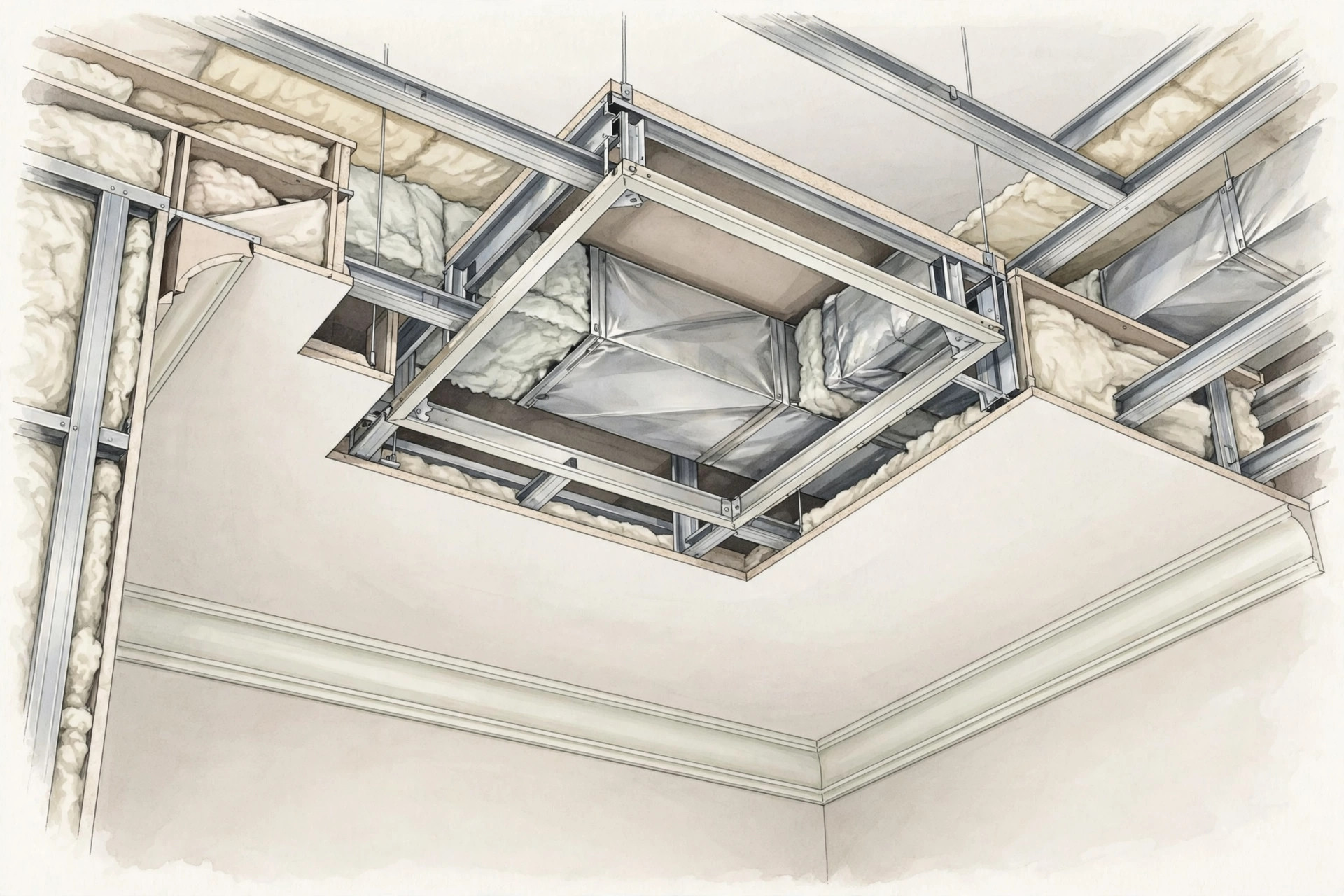
Access panels. If the ceiling hides a duct, a valve, or a junction box, insist on a discreet removable panel above it. Opening a finished ceiling for servicing is far more expensive than the panel.
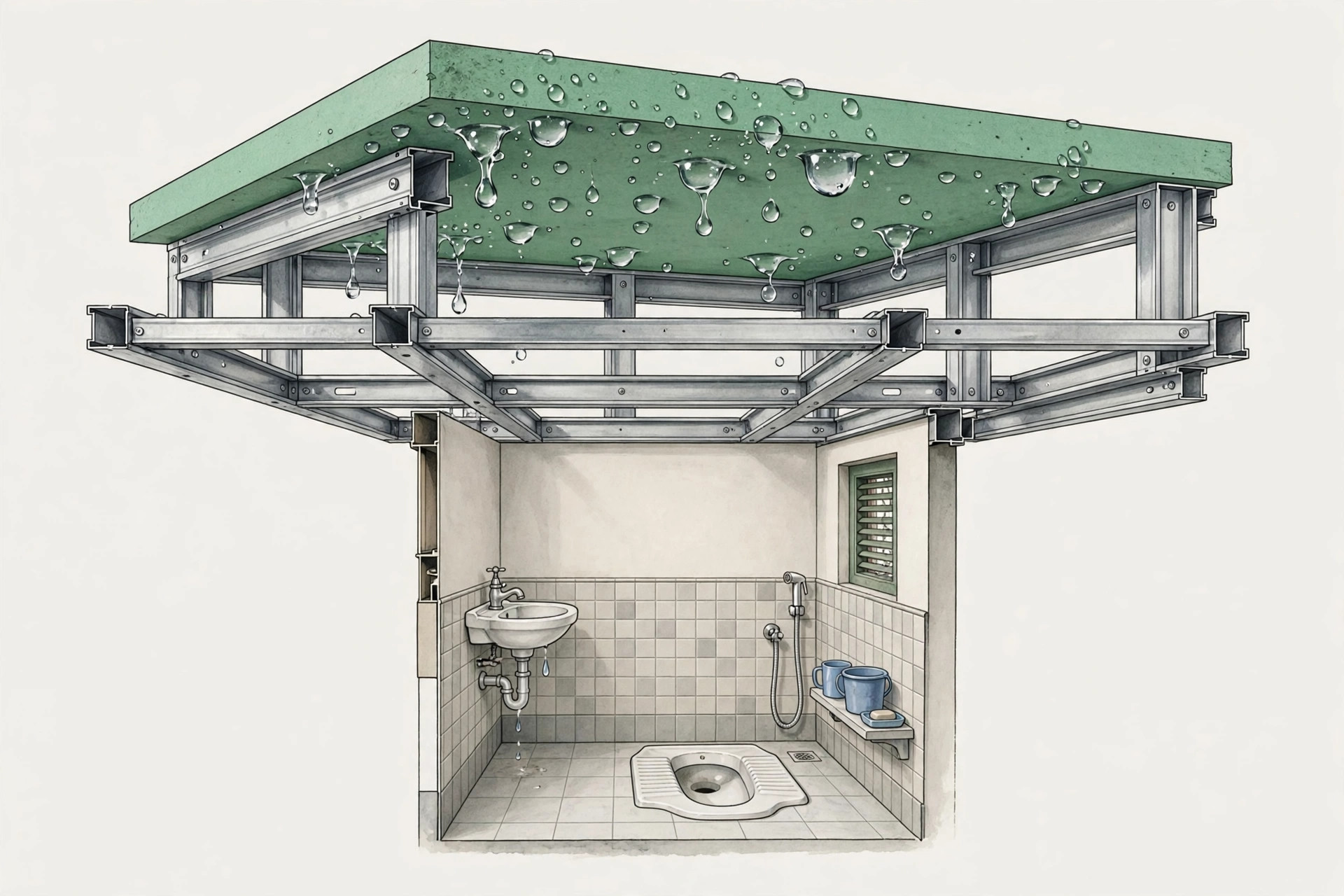
Damp rooms. Standard gypsum boards dislike sustained moisture. For bathrooms or kitchens with heavy steam, ask for green moisture-resistant boards, or choose a different material for those rooms. Our bedroom ceiling guide notes where gypsum is the right and wrong pick.
Mistakes that make “simple” look cheap
- Too many tiny levels. Three shallow steps look fussy, not rich. One confident move beats three timid ones.
- Spots in a random scatter. Unplanned light points look like afterthoughts. Grid them or align them to furniture.
- Skipping the primer. Gypsum joints flash through paint without proper priming. The saving is false economy.
- Ignoring the fan. Decide the fan position first, then design around it — not the reverse.
- Copying a showroom photo at half the height. Deep trays need 10 feet or more. In an 8.5-foot room, stay flat or border-only.
What simple gypsum designs cost
Simple is also the cheapest way to get a finished ceiling. Indicative installed rates for India from NoBroker’s 2026 gypsum guides (inspected October 2026; material, framework, labour, and basic wiring):
| Simple design | Indicative ₹/sq ft | 120 sq ft room |
|---|---|---|
| Flat single layer | ₹75 – ₹110 | ₹9,000 – ₹13,200 |
| Perimeter border | ₹75 – ₹130 | ₹9,000 – ₹15,600 |
| Border with cove LED | ₹103 – ₹170 | ₹12,400 – ₹20,400 |
| Single tray | ₹118 – ₹195 | ₹14,200 – ₹23,400 |
These are budgeting anchors, not quotes — your city, ceiling height, and lighting plan move the final number. When comparing contractors, ask for the rate with the board brand and thickness named, the measured area, and a written list of what is included and excluded. Fixtures and paint are the most common exclusions. Our cost guide for India explains the full budgeting picture.
Simple designs for low ceilings
Rooms under 9 feet need special restraint. Keep the drop to 3–4 inches, skip trays entirely, and let paint do the design work: a two-tone flat ceiling or slim grooves read as design without stealing height. Border-only designs are the other good answer — the centre of the room keeps its full slab height, which matters more than any pattern when the ceiling is low. If the slab is at 8 feet or below, consider skipping the false ceiling and spending the budget on excellent lighting on a painted slab instead.
Keeping it looking new
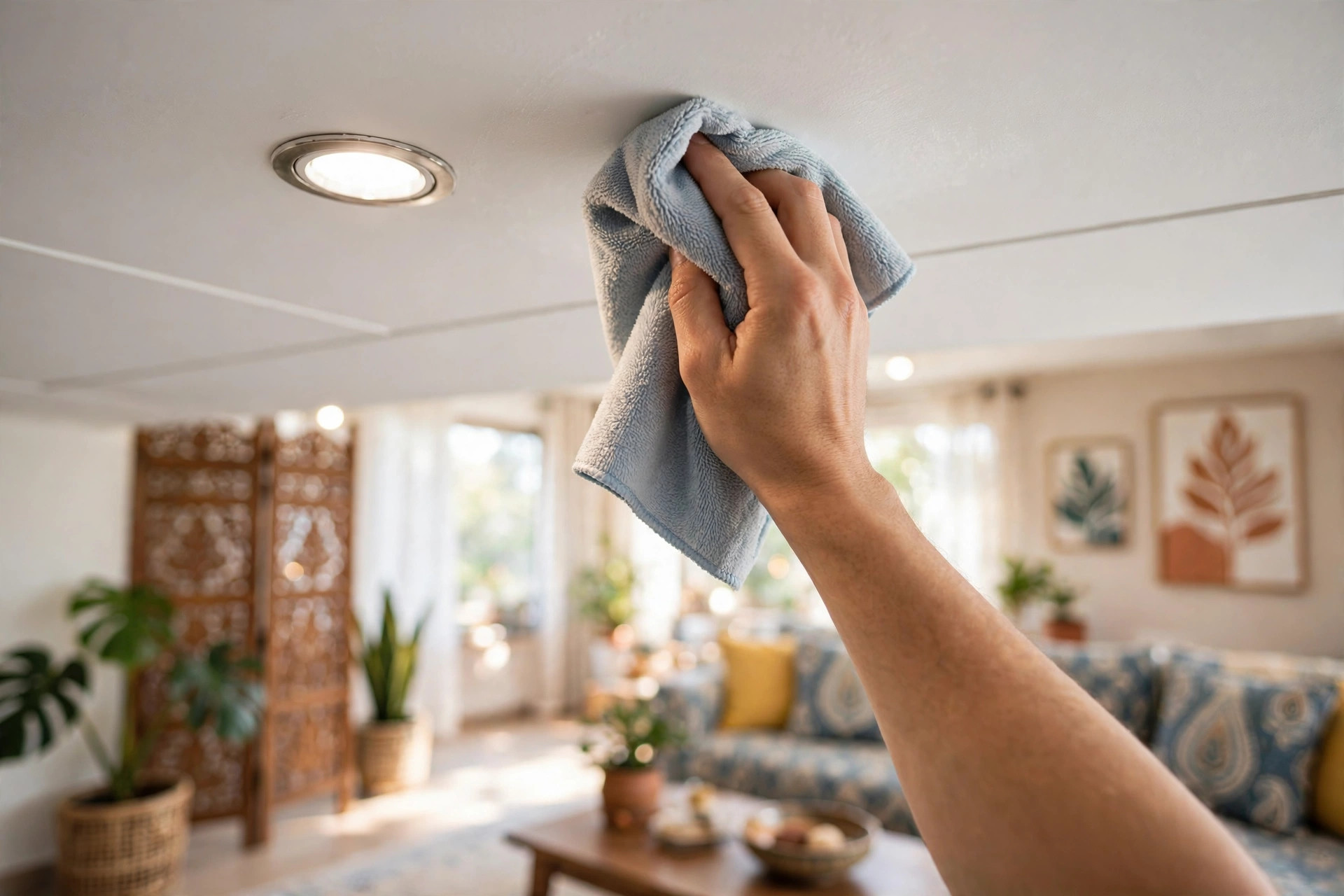
Simple ceilings are easy to maintain: a soft dry cloth every few months takes off dust, and a fresh coat of paint every five to seven years makes the whole room feel new. Touch up joint lines at the first hairline crack rather than waiting for it to widen.
FAQs
What is the cheapest gypsum false ceiling design?
A flat single-layer ceiling with a few recessed lights is the cheapest finished option: minimal framework, minimal labour, standard boards. Border-only designs can cost even less in total because they cover less area, though the per-square-foot rate is similar.
Is a simple gypsum ceiling good for small rooms?
Yes — it is often the best choice. A shallow flat layer or a slim border preserves headroom, and light colours keep the room feeling open. Deep multi-level designs are what make small rooms feel cramped.
Can I have a ceiling fan with a simple gypsum ceiling?
Yes. Mount the fan on the original slab at the centre and design the gypsum as a border or flat layer around it. Never hang a fan from the gypsum frame alone; the anchoring must go into the structural slab, planned with your contractor.
How long does a simple gypsum ceiling last?
A well-installed gypsum ceiling typically lasts 15 to 20 years indoors, with repainting every five to seven years. Longevity depends far more on installation quality and keeping the ceiling dry than on how simple or fancy the design is.
Gypsum or POP for a simple design?
For flat and single-border designs, gypsum is usually quicker and gives a more consistent finish. POP earns its keep with curves, cornices, and decorative mouldings — shapes where a simple design doesn’t go anyway.
Simple is a discipline, not a compromise. Pick one clear idea per room, light it deliberately, and spend the money you saved on good installation. For the full picture, start with our false ceiling design guide. All images in this article are original concept renders created to illustrate the ideas, not photographs of completed projects.