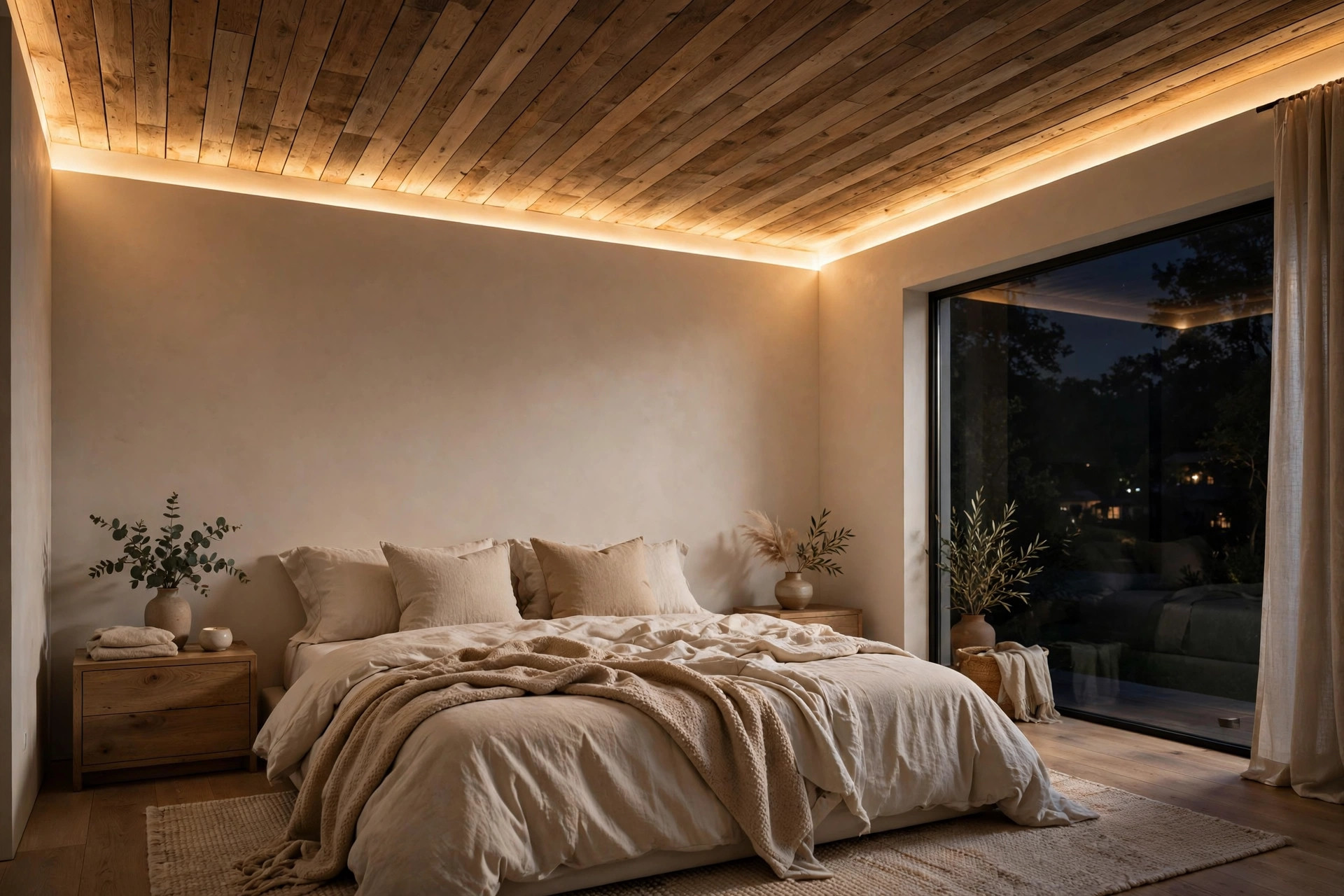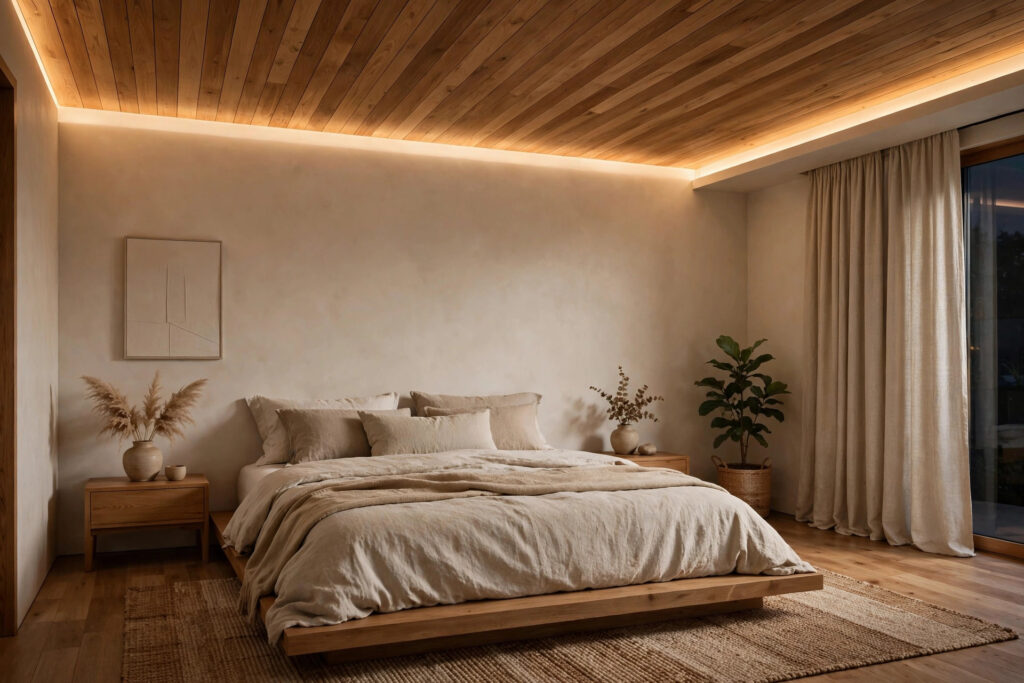

Wood has a quality no other ceiling material can copy: it makes a bedroom feel warm before you even switch on the light. A wooden false ceiling in a bedroom does two things at once — it softens the room visually and gives it a finished, layered look that plain white ceilings never achieve. But wood is also the most demanding ceiling material. It costs more, it needs the right room conditions, and it punishes bad maintenance. This guide covers wooden false ceiling designs for Indian bedrooms honestly: the layouts that work, the real pros and cons, the costs, and the care wood demands.
Why wood suits bedrooms — and when it doesn’t
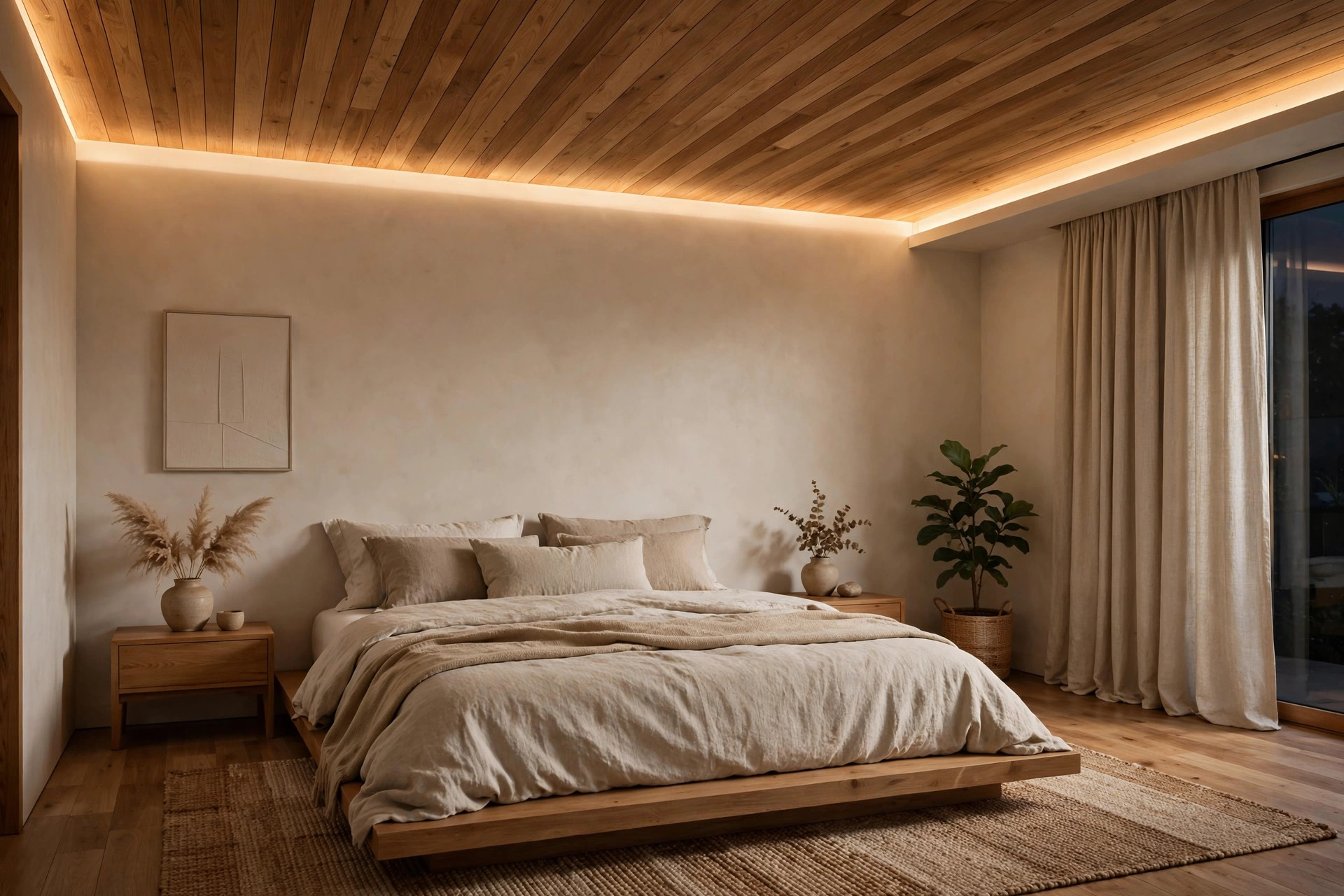
Bedrooms are dry, low-traffic, and private. That makes them the friendliest room in the house for a wooden ceiling — no steam like the kitchen, no splashes like the bathroom. The warmth of wood pairs naturally with what bedrooms already contain: fabric, upholstery, warm lighting. Design guides describing Indian bedrooms keep coming back to the same pairing — wood plus neutral walls plus soft bedding reads calm and settled.
Wood is wrong for a bedroom when the room fights it: chronic dampness (top-floor rooms with seepage, walls that sweat in monsoon), termite history in the house with no treatment plan, or a room that stays hot and humid without air conditioning. Wood moves with moisture — it swells, shrinks, and in bad cases warps. A bedroom with reliable AC or good ventilation is wood’s natural home; a damp, unventilated one is not. Be honest about your room before you fall for the pictures.
Wooden ceiling layouts for bedrooms
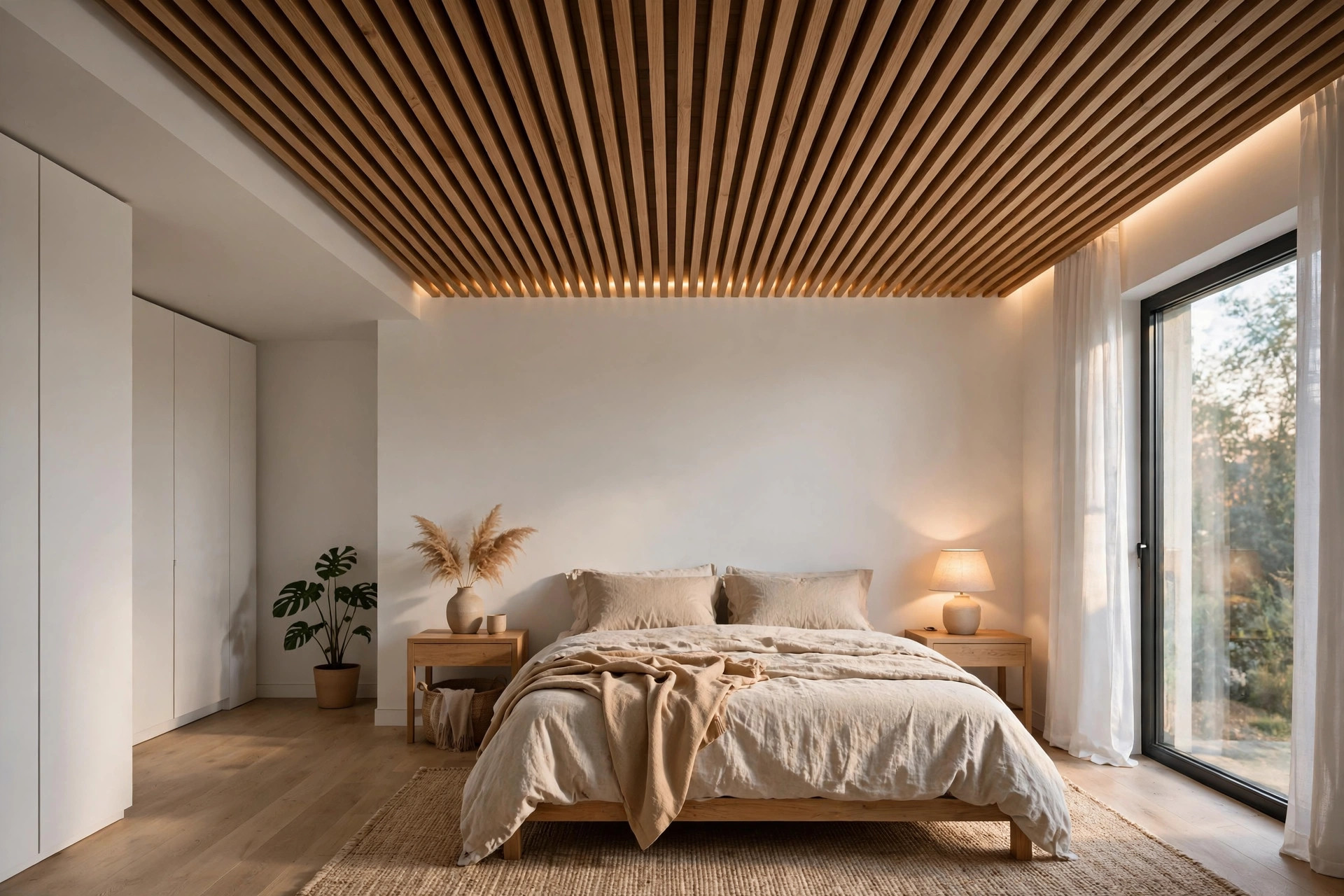
1. Parallel plank ceiling
The classic: wooden planks or battens running in one direction across the ceiling. Parallel lines stretch the room visually in the direction they run — run them along the longer wall to make a narrow bedroom feel wider. Keep plank widths between 3 and 6 inches; wider planks look calmer, narrower ones busier. A slim shadow gap between planks adds depth and hides small alignment errors.
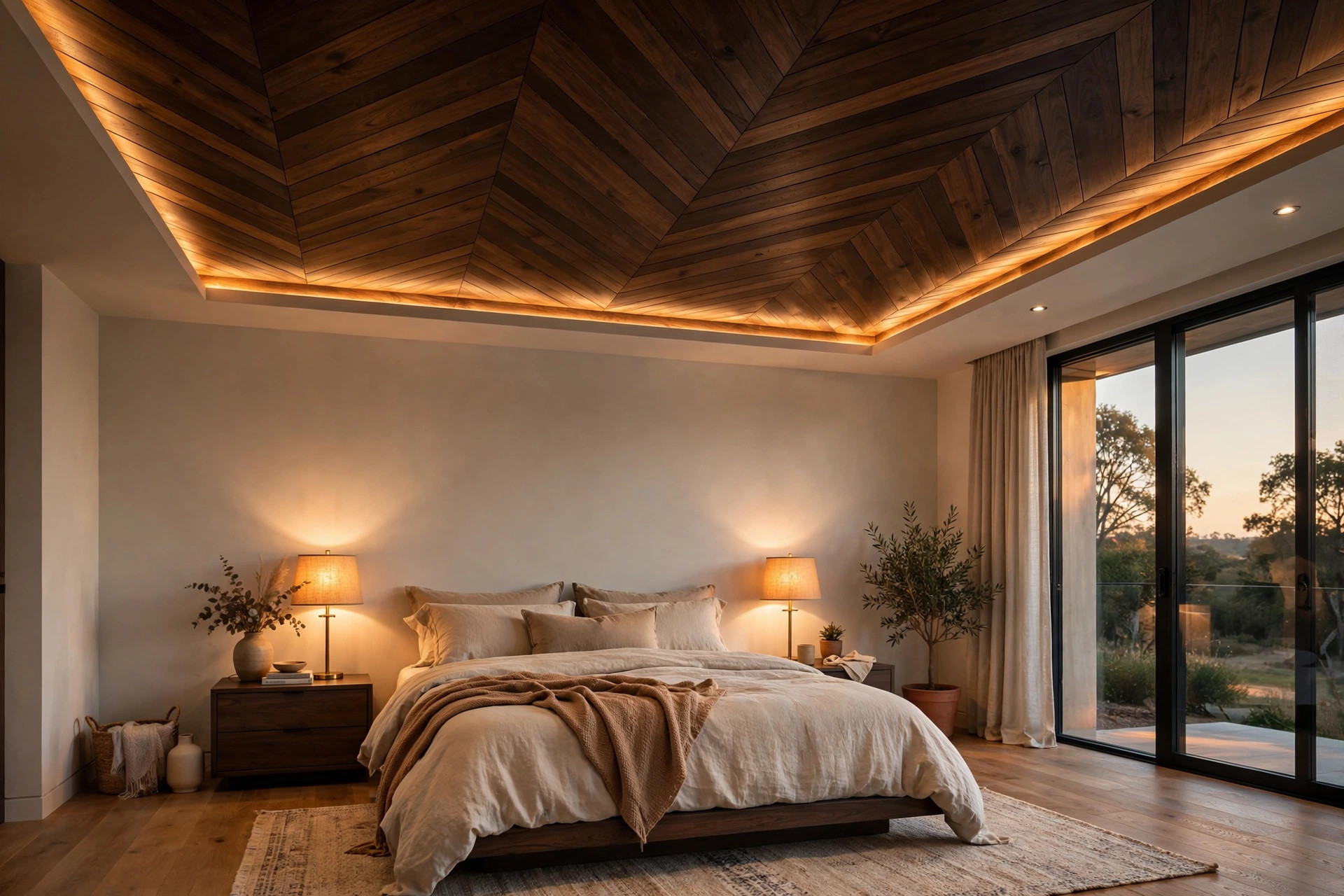
2. Chevron panel ceiling
Planks laid in a chevron (V) pattern create movement and draw the eye — a single-layered chevron panel in dark brown tones makes the bed wall the room’s feature without any wall decoration. Chevron suits larger master bedrooms; in a small room the pattern can feel busy. This is a premium finish — the cutting and alignment take real craftsmanship, and the labour shows in the quote.
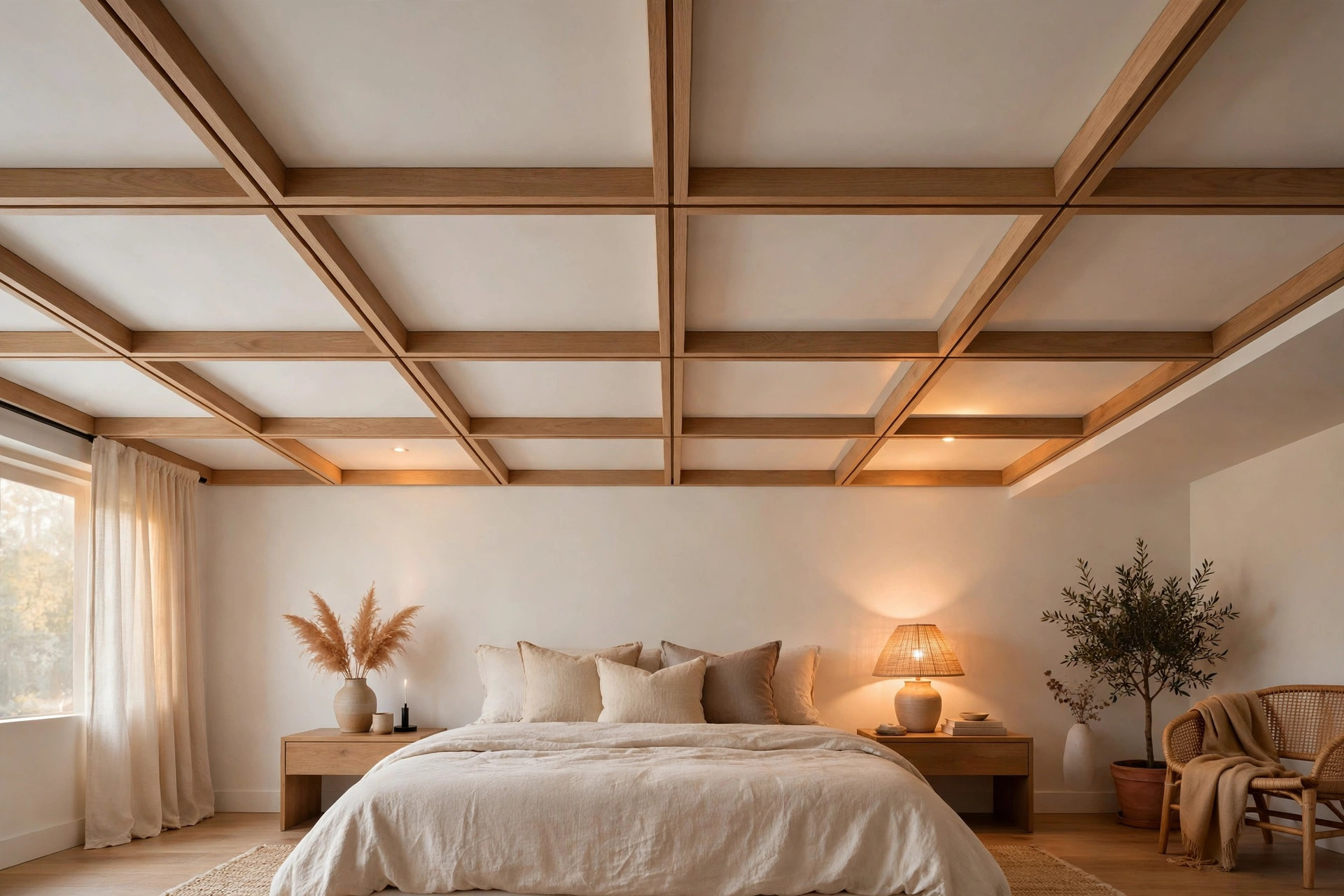
3. Criss-cross grid of beams
Wooden beams laid in a criss-cross pattern form a grid — a coffered look without the plaster. The grid adds architecture to a plain bedroom and breaks a large ceiling into pleasing bays. Keep the beams slim (2–3 inches wide) in bedrooms; chunky beams belong to farmhouses and double-height halls. Paint the grid one tone darker than the ceiling field for quiet contrast.
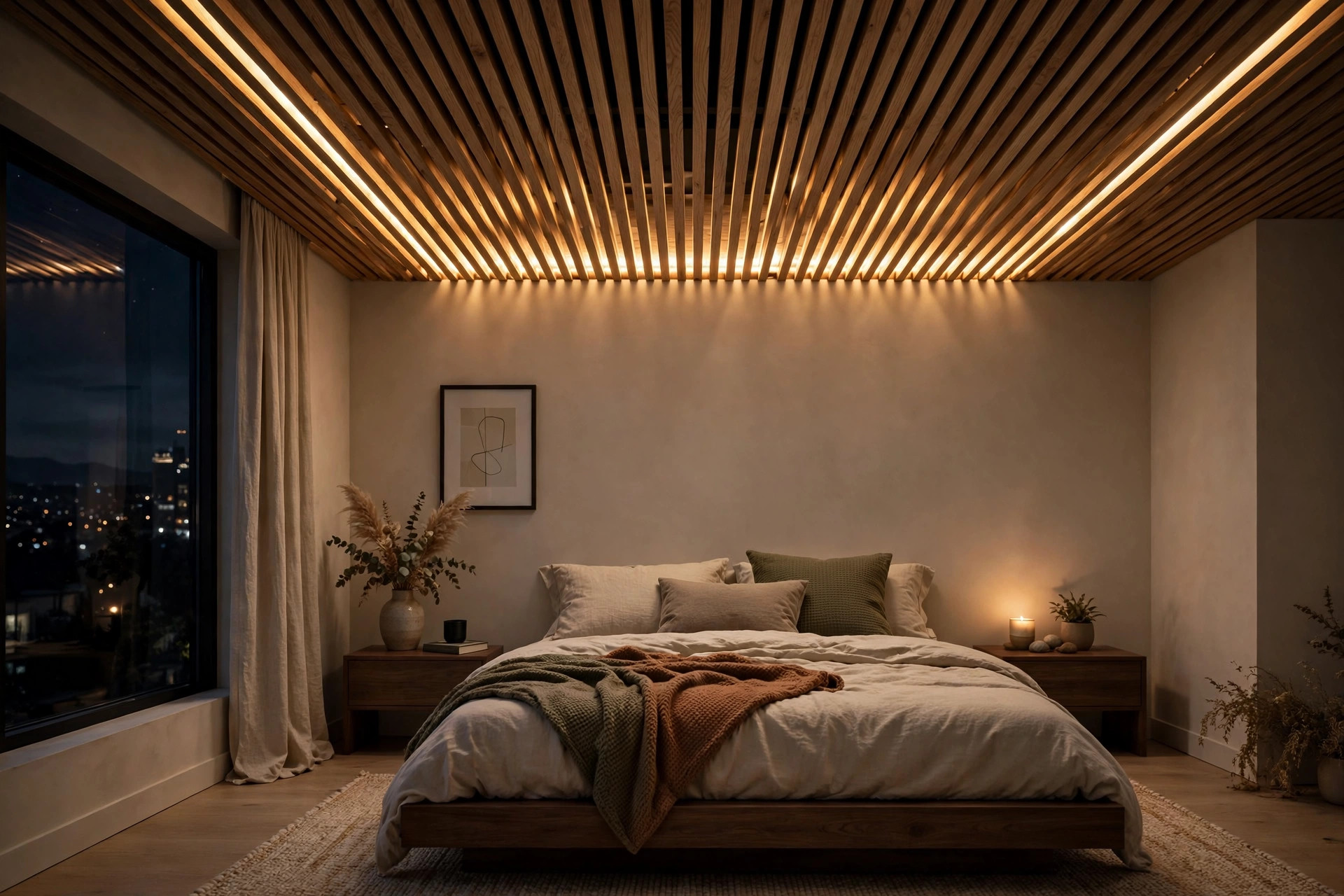
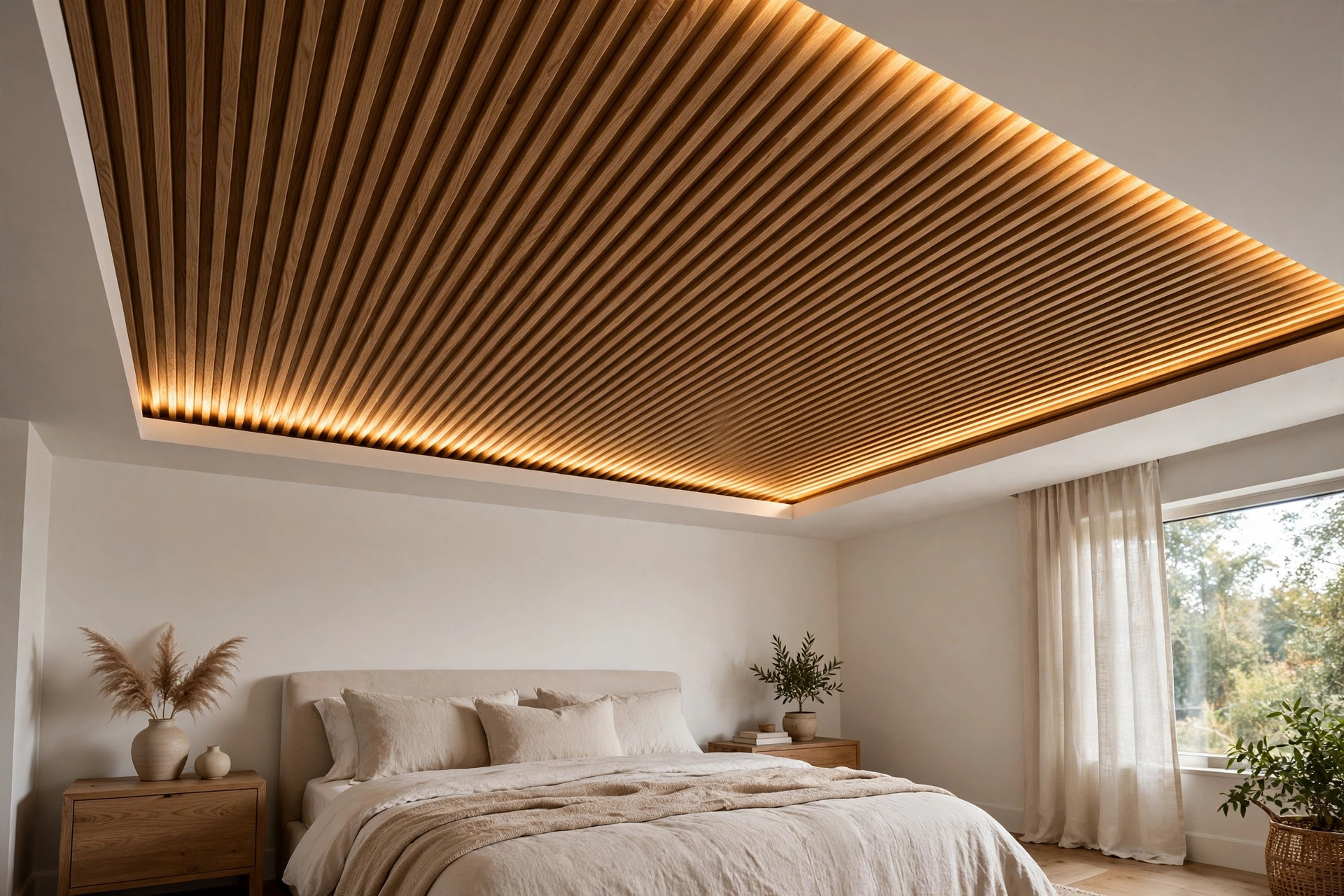
4. Wooden slats with hidden light
Narrow wooden slats with an LED strip hidden in the gap behind them — the slats glow from within at night. This is the most “2026” of the wooden bedroom options: linear, warm, and dramatic after dark. Slats work best as an accent zone (over the bed, or one ceiling band) rather than the whole ceiling, where they can overwhelm.
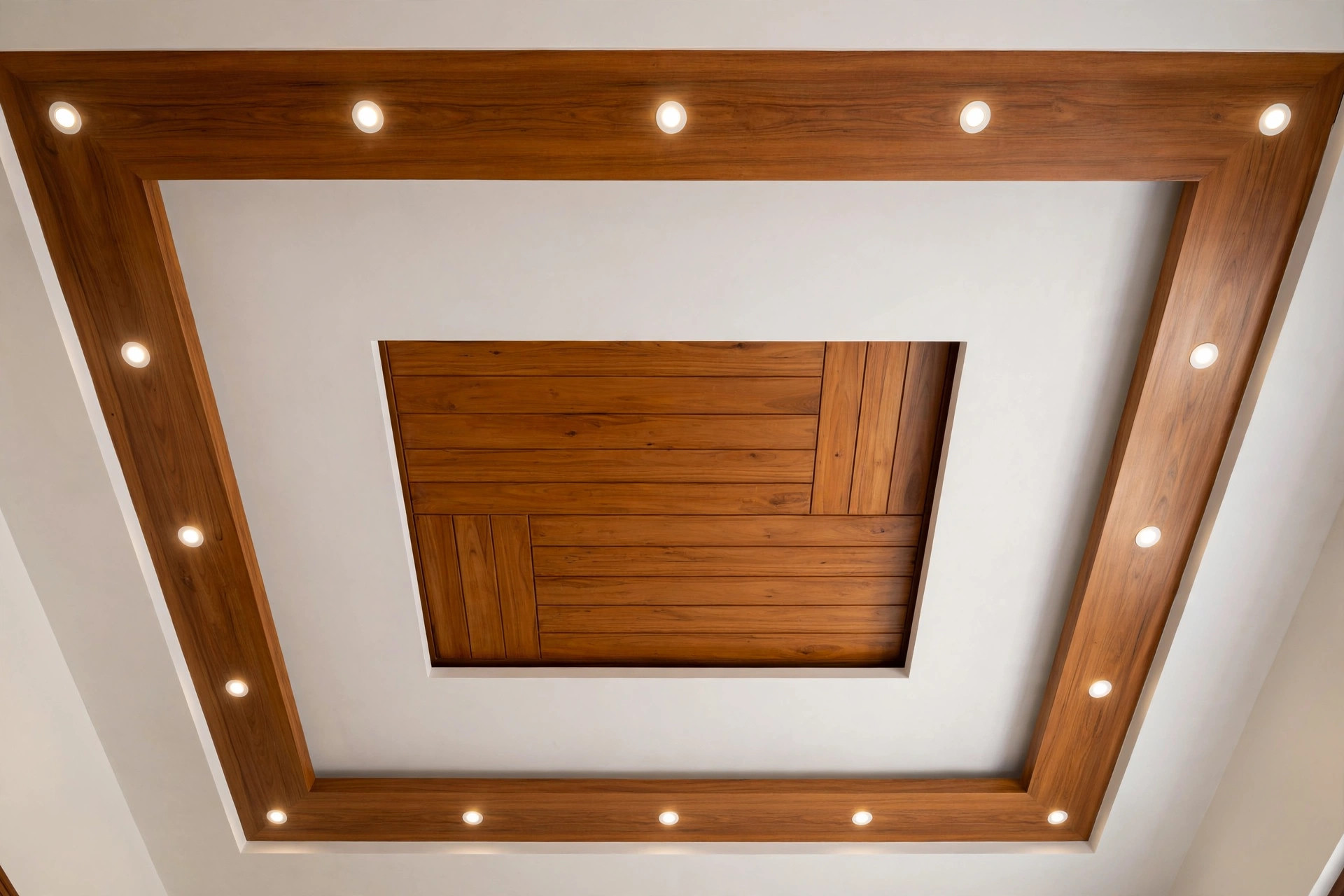
5. Wood + gypsum combination
The practical favourite: a gypsum ceiling field with a wooden border, a wooden centre panel, or wood-lined cove. You get wood’s warmth where the eye lands and gypsum’s smooth, cheap, easy-to-maintain surface everywhere else. Combination ceilings also cost far less than full wood — wood only where it counts. For the full gypsum picture, see our gypsum false ceiling guide.
6. Reclaimed and rustic wood
Rough-sawn planks, visible grain, varied tones — rustic wood ceilings suit bedrooms with an earthy, bohemian, or farmhouse theme. Source reclaimed wood only from a dealer you trust; old wood can carry borers or rot that no polish will fix. Have it kiln-dried and treated before it goes up, and budget for the treatment — it’s part of the material cost, not an extra.
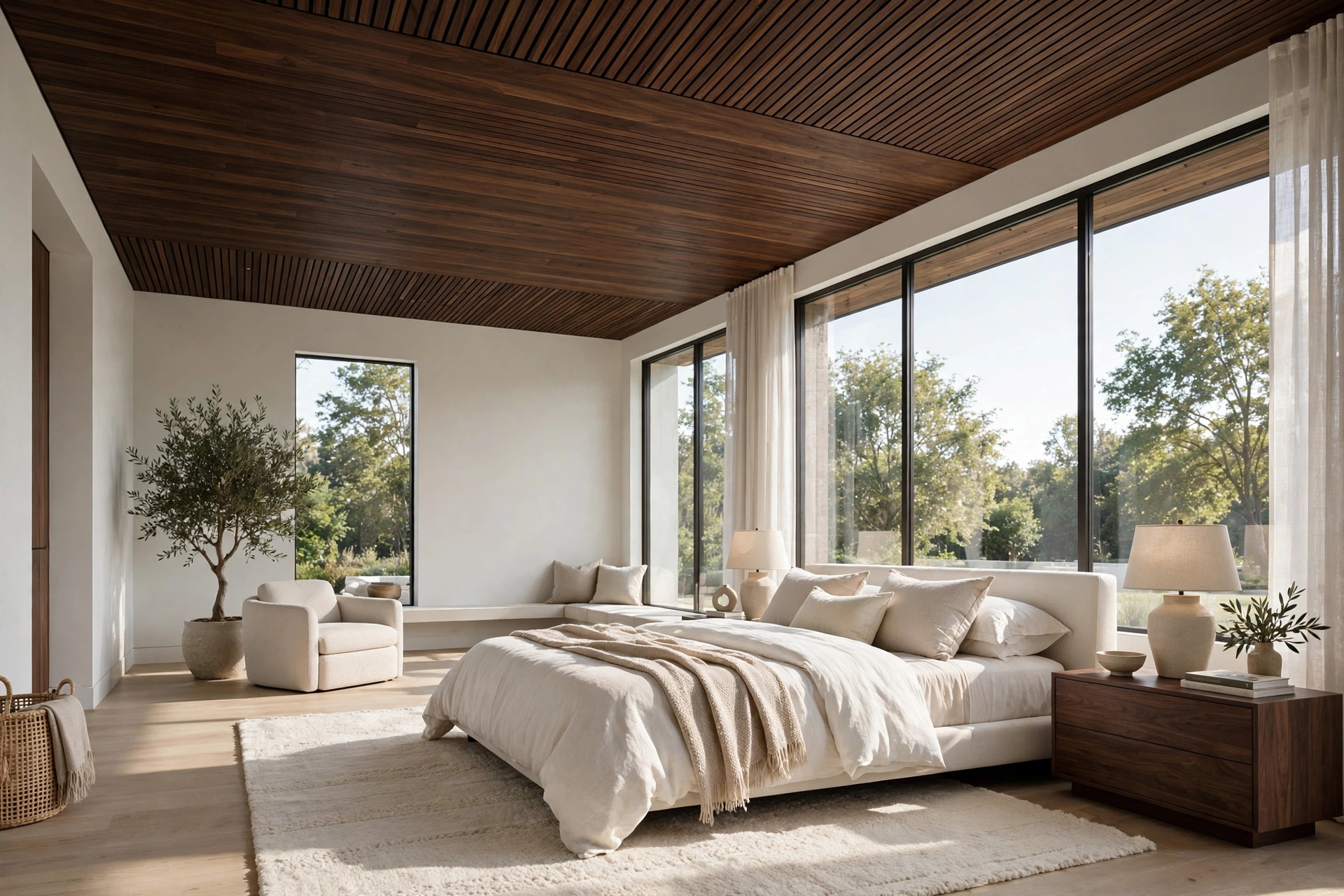
7. Dark walnut for drama
Dark-stained wood (walnut tones) on the ceiling creates a cocooning effect — the room feels smaller, warmer, more enclosed. It suits large master bedrooms with plenty of light and pale walls to balance it. In a small or dim bedroom, dark wood on the ceiling presses down; choose light oak or maple tones instead.
8. Light oak for small bedrooms
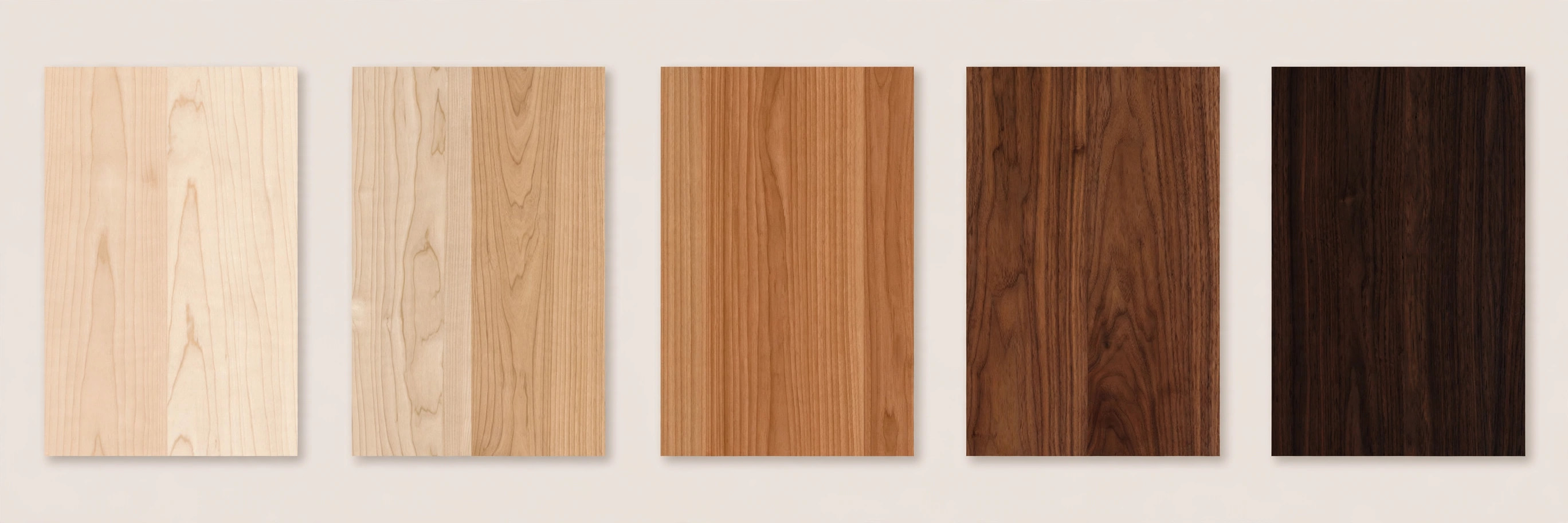
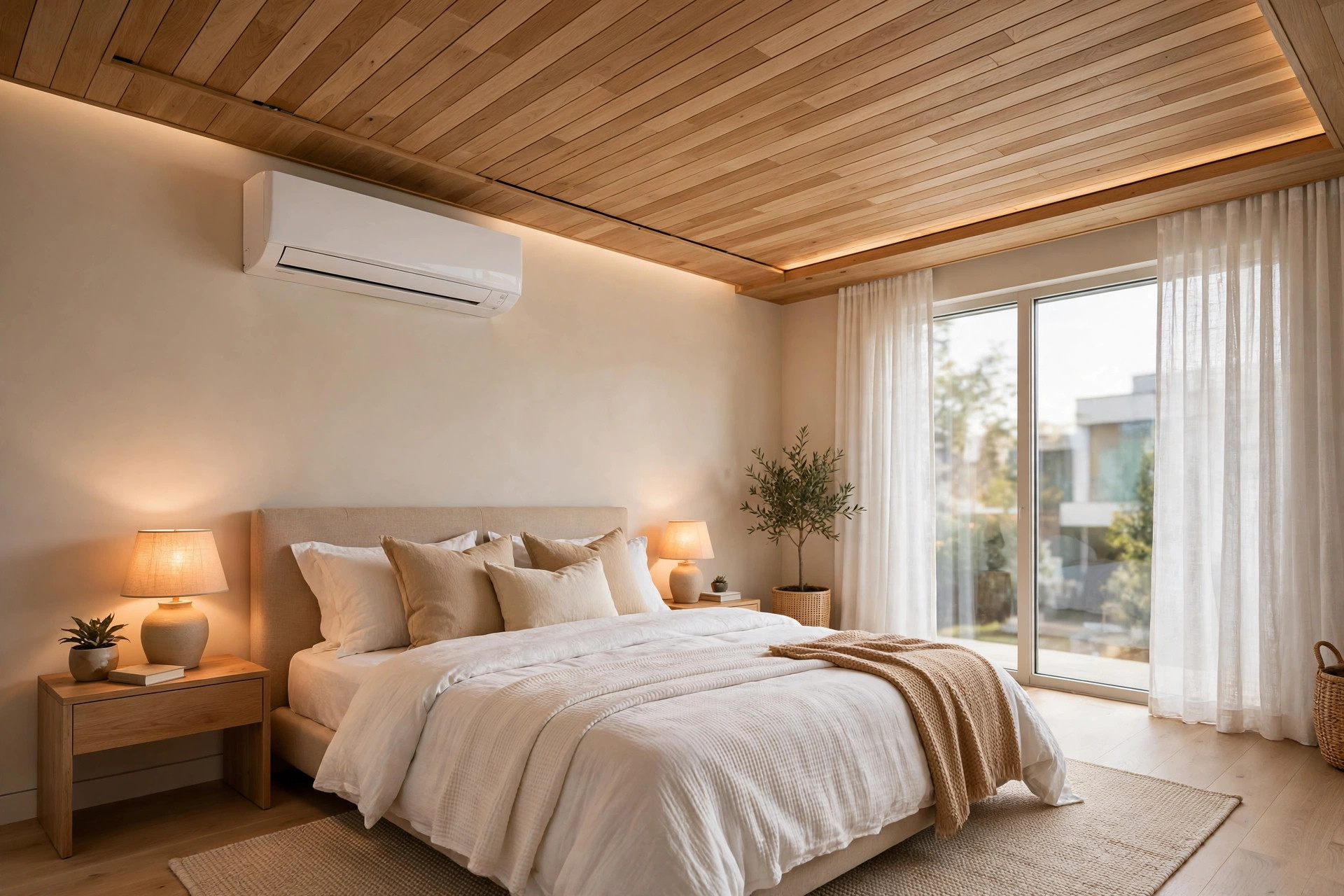
Light wood tones — oak, maple, ash — keep a small bedroom feeling open while still adding warmth. A light oak plank ceiling with white walls and one warm cove strip is one of the safest wooden bedroom designs: it works in 120 sq ft rooms, suits any furniture, and photographs well at resale time.
9. Wooden tray with backlit centre
A shallow wooden tray recessed into a gypsum ceiling, its inner edge lined with warm LED. The tray frames the bed zone like a picture frame and the backlight makes the wood glow. Keep the tray 3 to 4 inches deep — wood trays deeper than that start looking like boxes.
10. Fluted wood panels
Fluted (grooved) wooden panels on one ceiling section add texture and rhythm. Fluting catches light and shadow, so a fluted panel with a grazing LED strip looks far more expensive than it is. Use it as one accent panel — a full fluted ceiling in a bedroom is visually loud.
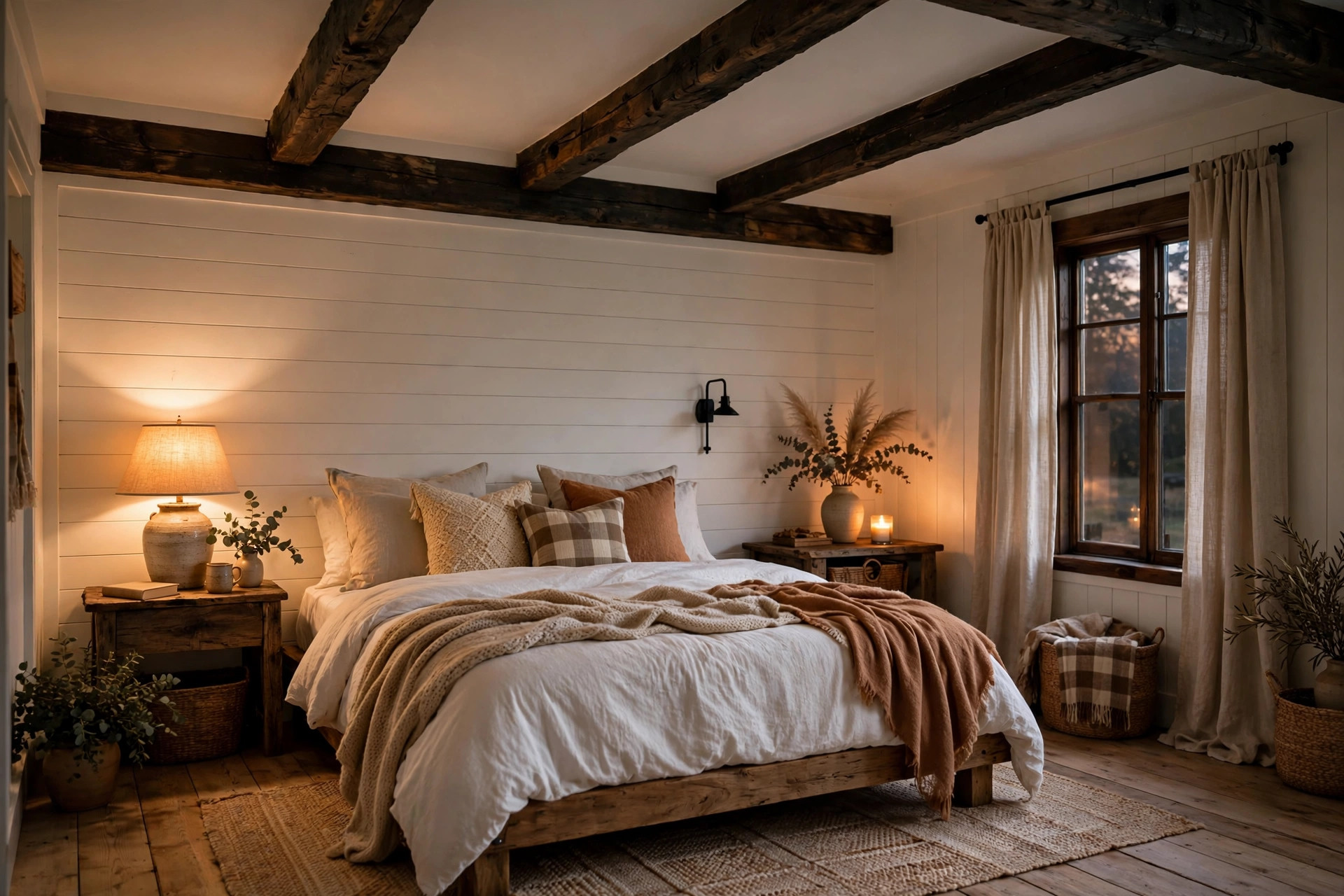
11. Exposed wooden beams
Real or faux beams across the ceiling give a bedroom farmhouse or colonial character. Faux beams (hollow, wood-clad) are lighter and cheaper than solid timber and nobody can tell from below. Beams divide a long bedroom into zones — sleeping, dressing, sitting — without walls.
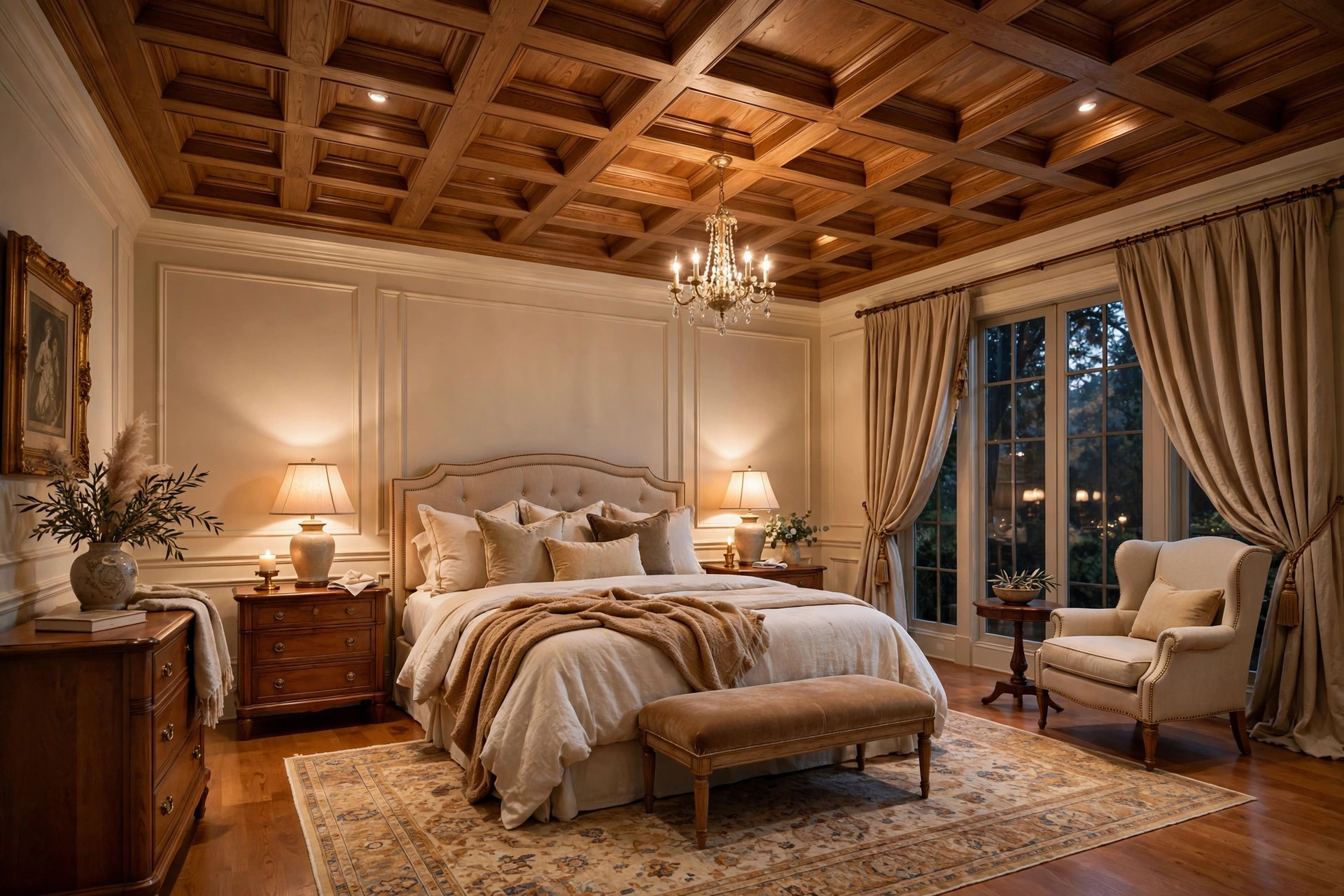
12. Coffered wood ceiling
A grid of recessed wooden coffers — the most formal wooden bedroom ceiling, and the most expensive. Coffers suit high-ceiling master bedrooms (10 ft plus) with classic furniture. Each coffer is a small construction project, so get the design drawn and the quote itemised before committing.
Real wood vs wood-look: the honest comparison
Most “wooden ceilings” in Indian bedrooms are not solid wood. They are wood-look materials — laminates on plywood, WPC (wood-plastic composite) panels, or veneer — and for bedrooms that is usually the smarter choice.
| Option | What it is | Bedroom verdict |
|---|---|---|
| Solid wood planks | Real timber, seasoned and treated | Beautiful, expensive, needs stable climate and termite treatment |
| Veneer on plywood | Thin real-wood skin on ply | Real wood look at lower cost; needs polish upkeep |
| Laminate on plywood | Printed wood-grain laminate | Cheapest wood look; consistent finish; less “alive” than veneer |
| WPC panels | Wood-plastic composite | Moisture- and termite-resistant; good for uncertain room conditions |
| Wood-finish metal baffles | Aluminium with wood-look coating | Commercial-grade durability; can look flat in a bedroom |
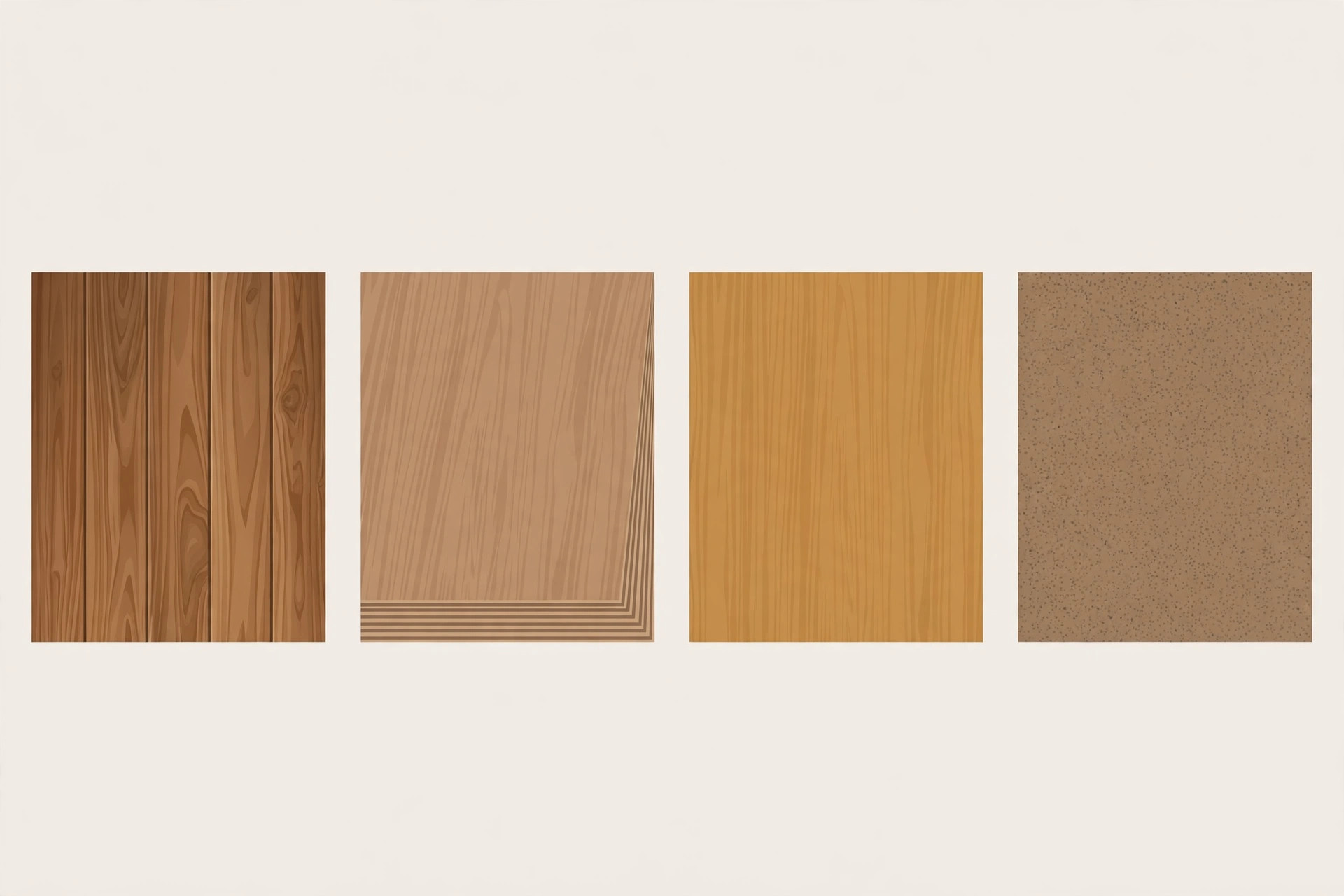
The rule of thumb: if your bedroom is air-conditioned, dry, and termite-treated, real wood or veneer rewards you. If the room is humid, ground-floor, or has any termite history, WPC or laminate gives you the look without the anxiety. Wood-finish panels are also genuinely moisture-resistant and termite-proof by construction — worth considering where real wood is risky.
Termites, warping, and moisture: wood’s three enemies
Termites. Any wood or plywood in a ceiling must be termite-treated — borer treatment at the factory plus anti-termite treatment of the battens and frame on site. Ask your contractor what treatment is included and get it in writing. Veneer and laminate need re-polishing every few years, which is also when you inspect for borer dust.
Warping. Wood moves with humidity. In temperature-controlled rooms it stays put; in rooms that swing between humid monsoon and dry summer, planks can cup or gaps can open. Seasoned, kiln-dried timber moves less. If your bedroom has no AC and big humidity swings, prefer engineered options (WPC, laminate on marine ply) over solid planks.
Moisture. A leaking slab above will ruin a wooden ceiling faster than any other material — stains, swelling, and eventually rot. Fix waterproofing first, ceiling second. After every monsoon, look for damp patches on the ceiling; fix the cause before repainting or re-polishing.
Planning rules for a wooden bedroom ceiling
Protect the height
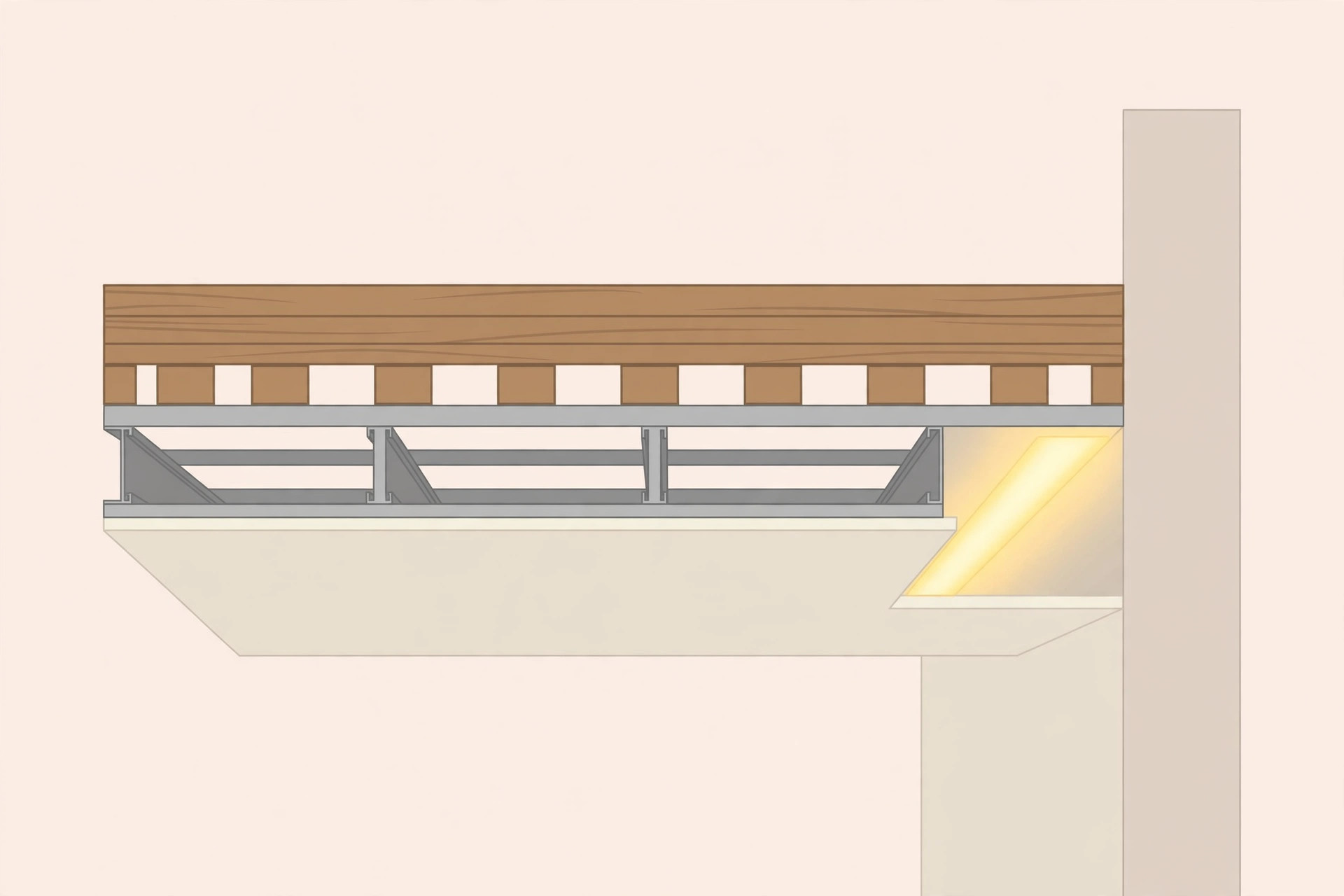
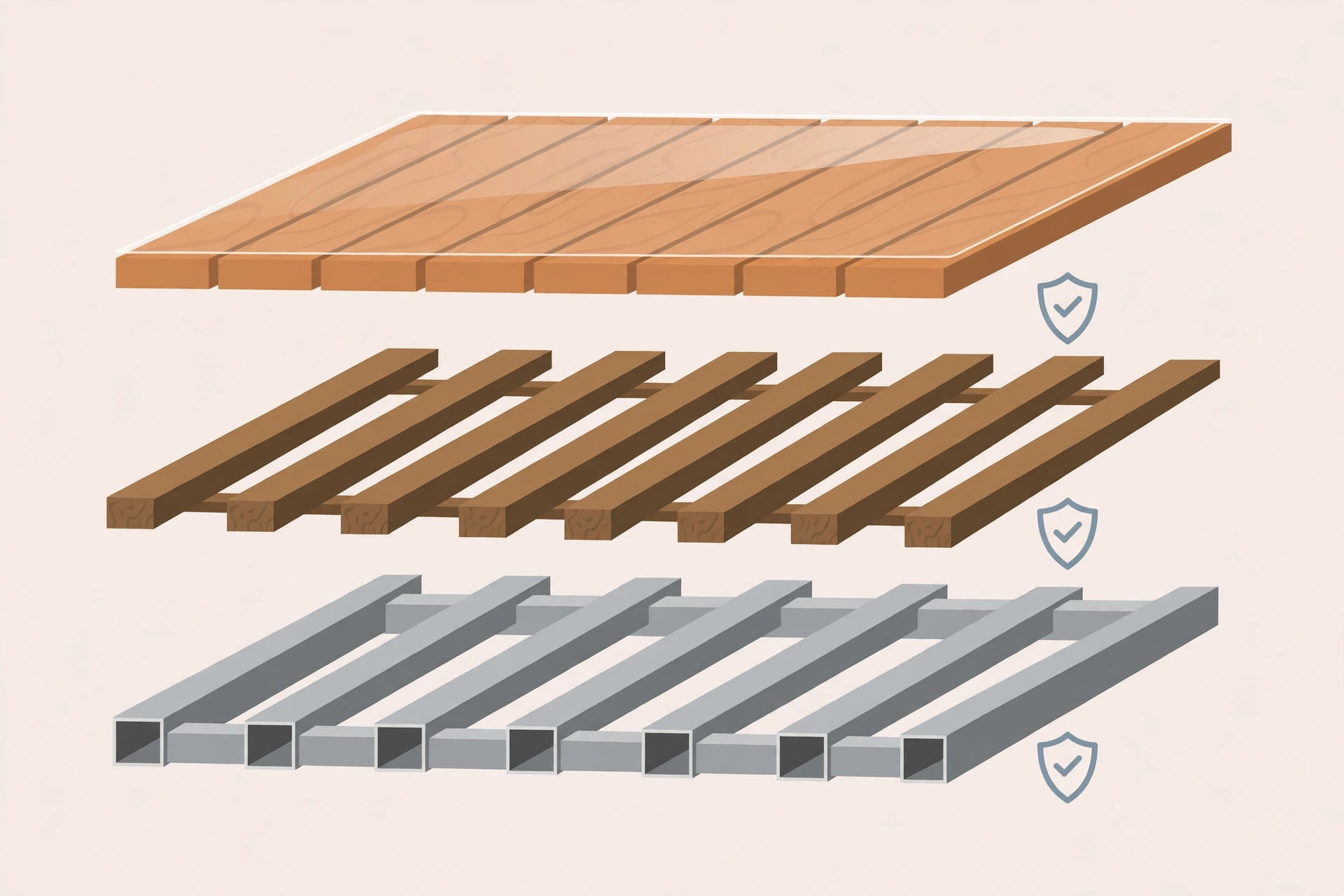
Wooden systems need battens plus planks — typically a 3 to 5-inch drop. Measure the slab and keep at least 8 feet of clear height. Under 9-foot slabs, use wood as an accent (border, panel, slat band) on a gypsum field rather than a full wooden ceiling.
Plan the lighting with the wood
Wood and light are partners: warm 3000K LEDs make wood glow; cool white makes it look grey and dead. Hide LED strips in coves or behind slats so the wood is lit, not the fixture. Plan every light position before the battens go up — cutting into a finished wooden ceiling is expensive and visible.
Fan? Decide early
If the bedroom will have a ceiling fan, its position needs a slab-anchored cut-out planned before the wooden ceiling is built — a fan must hang from the slab through the ceiling, never from the wooden battens or planks alone. Get the anchor point marked by your contractor and electrician together. Our fan layout guide covers the planning in detail.
Finish it right
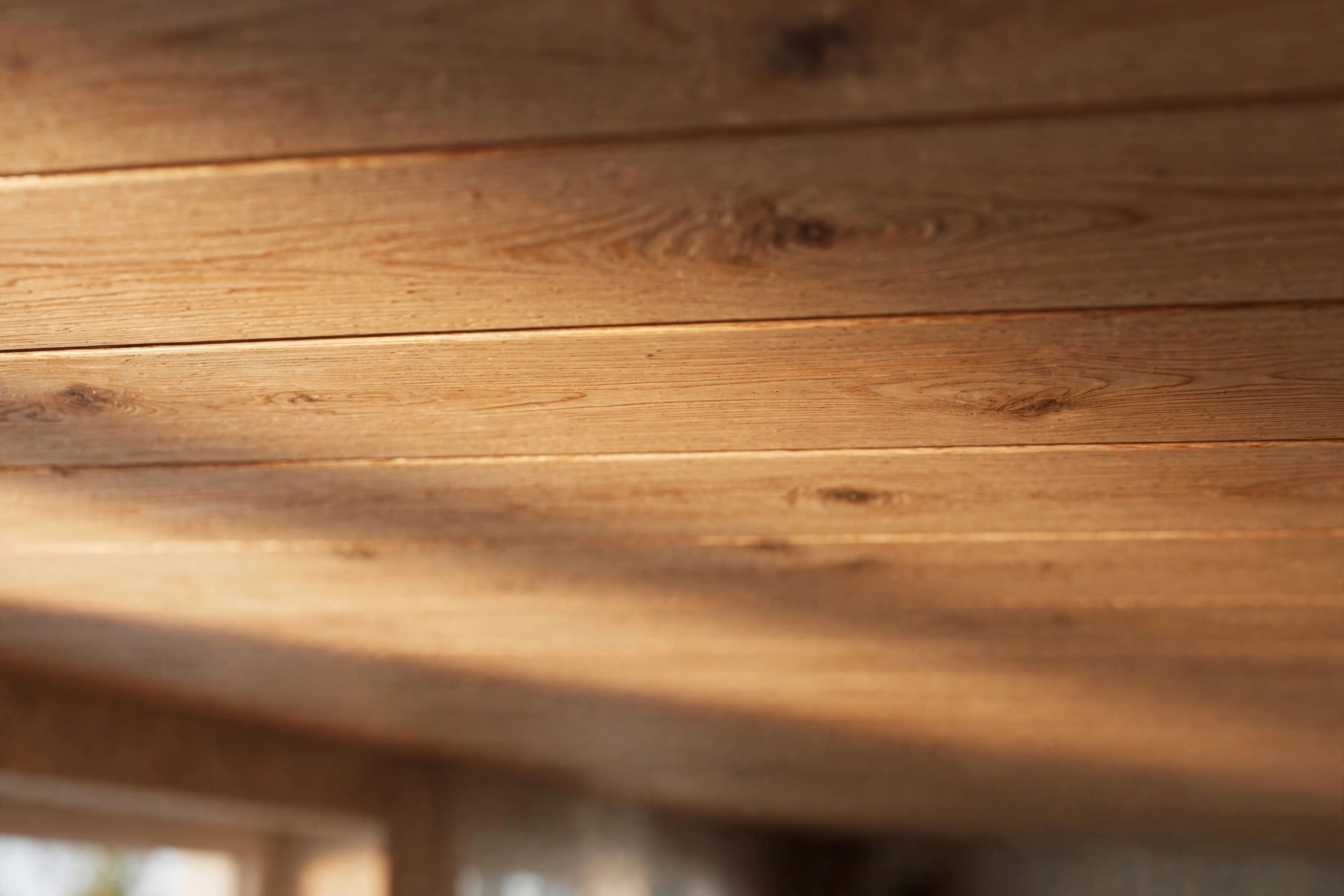
Wood in a bedroom needs a finish that suits a sleeping space: matte or satin polish, not high gloss (gloss reflects the bedside lamp into your eyes). Water-based PU finishes smell less during application — worth asking for since the room is where you sleep.
What a wooden bedroom ceiling costs
Wood is a premium ceiling material. As a 2026 India reference: wood/veneer ceilings run roughly ₹250–₹500+ per sq ft installed (AECORD cost guide, updated May 2026, India), with laminates around ₹700–₹800 per sq ft and veneers ₹900–₹1,200 per sq ft at the premium end (3DSpaces 2026 trends). Rates move with city, wood species, finish, and how much of the ceiling is actually wood.
The honest cost levers: the material choice itself (solid wood vs veneer vs laminate vs WPC), the coverage (full ceiling vs accent panel vs border), the pattern complexity (chevron and coffers cost far more in labour than parallel planks), and the finish (polish type and coats). Get the quote itemised — timber/panels, battens and frame, treatment, labour, polish, and lighting provisions separately.

For the full India cost picture across all materials, see our false ceiling cost guide.
Maintenance: the part people skip
A wooden bedroom ceiling asks for a little attention every year: dust the planks and cove channels every few months (dust dulls the finish and dims hidden LEDs), re-polish veneer and laminate every 2 to 3 years to preserve colour and sheen, and inspect for borer dust or new gaps annually — catching a borer patch early is a small repair; catching it late is a rebuild. Wipe with a dry or barely-damp cloth; never soak wood. Keep one spare tin of the exact polish shade — matching it later is harder than you think.

Mistakes that ruin wooden bedroom ceilings
Full dark wood in a small dim bedroom. It presses the room down. Light tones for small rooms, dark for large bright ones.
Skipping termite treatment to save money. The cheapest line item to cut and the most expensive to regret.
Wood in a damp room. Fix seepage first, or choose WPC/laminate.
Gloss polish in a bedroom. It bounces lamplight into your eyes at night.
No lighting plan before the battens. Retrofitting lights into finished wood is costly and ugly.
Frequently asked questions
Is a wooden false ceiling good for a bedroom?
Yes, if the room is dry and reasonably climate-stable. Bedrooms are wood’s friendliest room — no steam, no splashes. Get termite treatment done properly and choose the wood type (or wood-look alternative) to match your room’s humidity.
Which wood is best for a bedroom ceiling?
There is no single best species — teak, oak, walnut and pine all work when seasoned and treated. For most Indian bedrooms, the smarter question is real wood vs wood-look: veneer or laminate on plywood gives the look with less climate anxiety, and WPC suits humid rooms.
How much does a wooden bedroom ceiling cost in India?
Roughly ₹250–₹500+ per sq ft installed for wood/veneer ceilings (India, 2026), with premium laminates and veneers higher. A wood-accent panel on a gypsum ceiling costs far less than a full wooden ceiling — coverage is the biggest lever. Always get an itemised quote.
Does a wooden ceiling need a lot of maintenance?
Moderate: dusting every few months, re-polish every 2–3 years, annual borer inspection. Less than people fear, more than gypsum needs. The maintenance is predictable — put it on a calendar and it stays small.
Quick recap
A wooden bedroom ceiling is warmth you can feel: choose parallel planks for calm, chevron or coffers for drama, and wood-plus-gypsum combos for sanity and budget. Match the material to your room’s climate — real wood or veneer for dry stable rooms, laminate or WPC where humidity or termites are a question. Treat for termites, plan lighting and the fan before the battens go up, and maintain the polish on schedule. For the complete bedroom picture, start with our bedroom false ceiling guide. All images in this article are original concept renders created to illustrate the ideas, not photographs of completed projects.