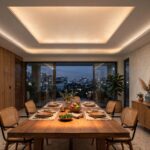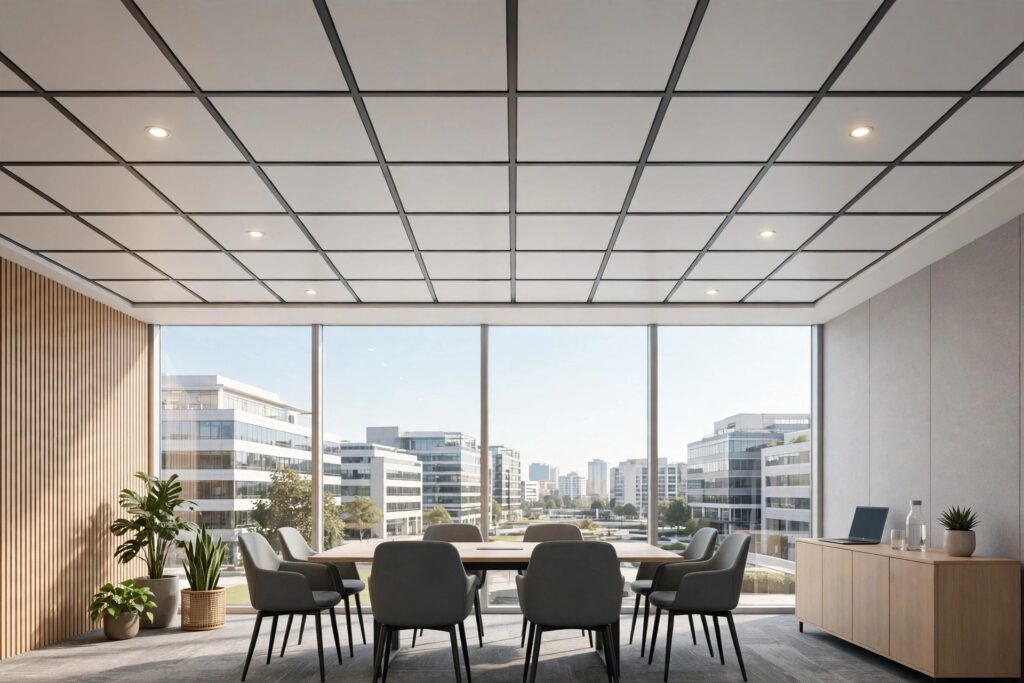

A metal false ceiling is no longer just for airports and shopping malls. Aluminium and steel panels are now common in Indian kitchens, bathrooms, corridors, offices and shops — anywhere you need a ceiling that handles steam, stays clean, and lasts for decades. If you are weighing up metal false ceiling designs for your own space, this guide walks through the main design types, what each costs in India in 2026, the honest pros and cons, and how to maintain one.
What is a metal false ceiling?
A metal false ceiling is a suspended ceiling made from factory-formed metal panels — most often aluminium, sometimes galvanised iron (GI) steel or stainless steel — hung from the structural slab on a grid or carrier system. The panels are typically 0.5–0.7 mm thick and finished with powder coating in white, grey, metallic or wood-grain colours. Because the panels are prefabricated and modular, a damaged tile can be lifted out and replaced without redoing the whole ceiling — a big practical difference from plaster-based ceilings.
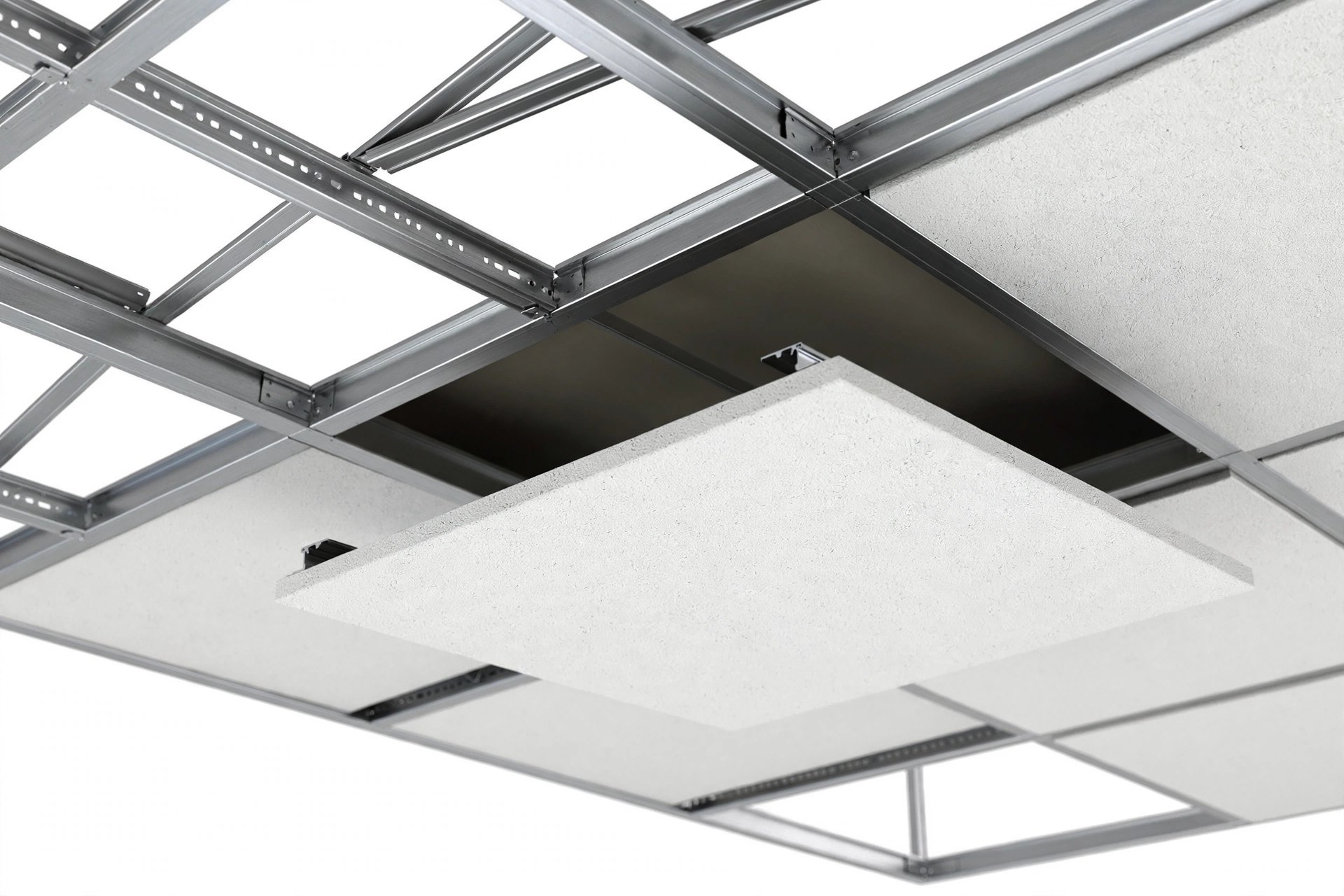
Metal ceilings come in two broad system families: tile systems (square or rectangular panels dropped into a grid, or clipped into a concealed carrier) and linear systems (long strips, baffles or planks running in one direction). Both hide wiring, AC ducts and pipes above them, and both allow easy access to those services later.
Metal false ceiling design types
1. Clip-in tiles (concealed grid)
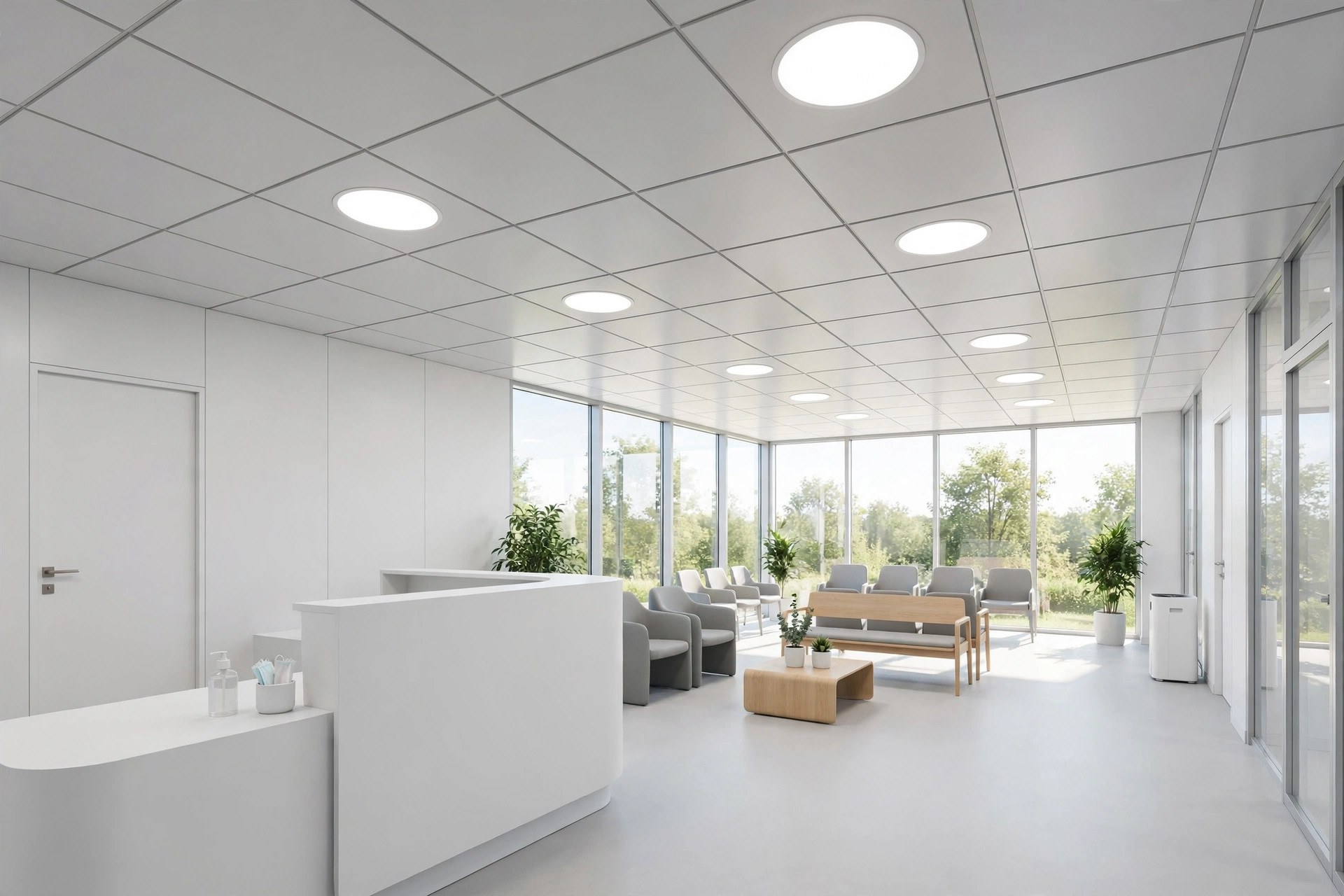
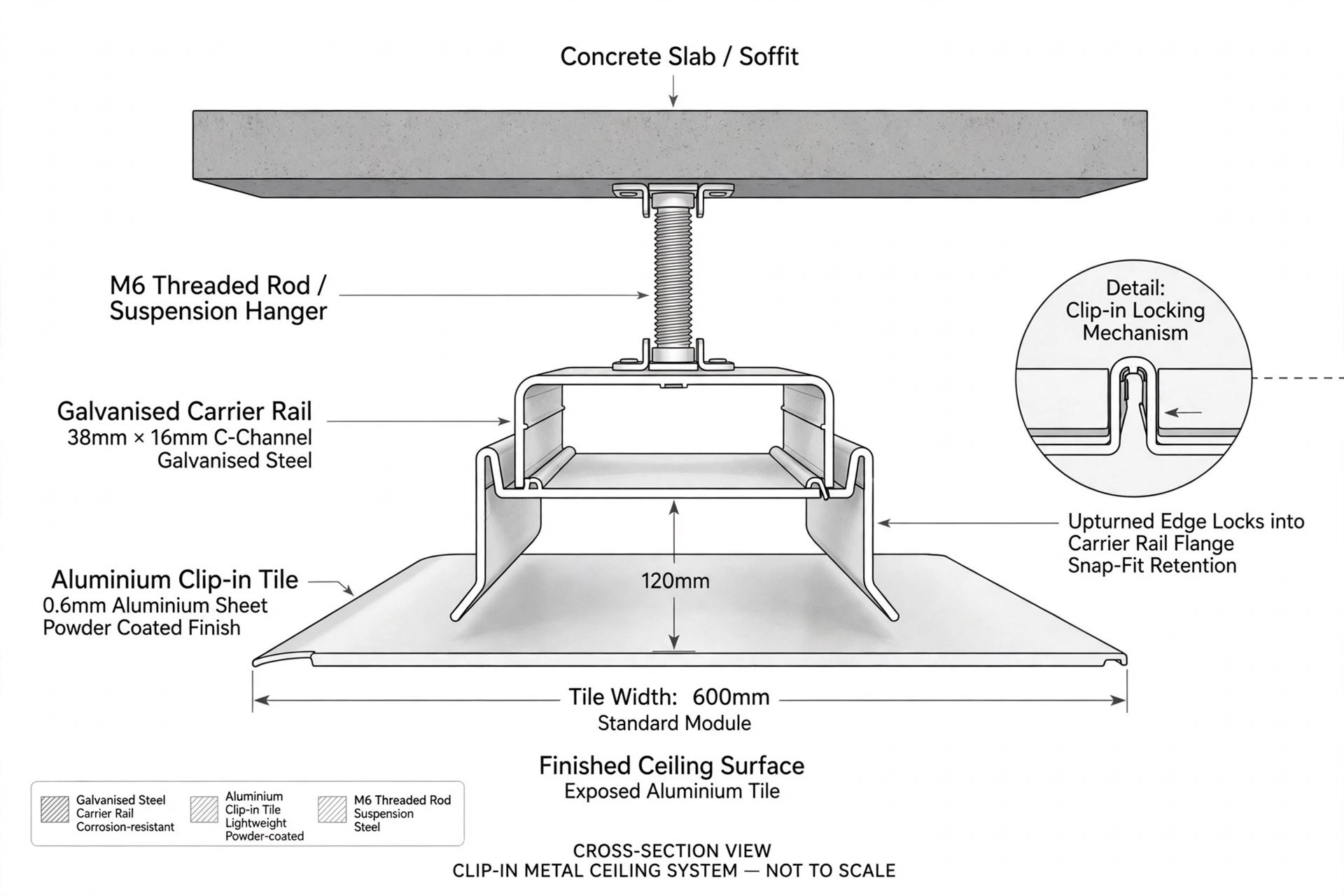
Clip-in tiles are the cleanest-looking metal ceiling. Each aluminium panel locks into a concealed carrier above, so you see an almost seamless surface with hairline joints — no visible grid lines. They suit modern living rooms, foyers and clinics where a hygienic, wipe-clean surface matters. Because panels are removable, maintenance access is excellent.
2. Lay-in tiles (exposed T-grid)
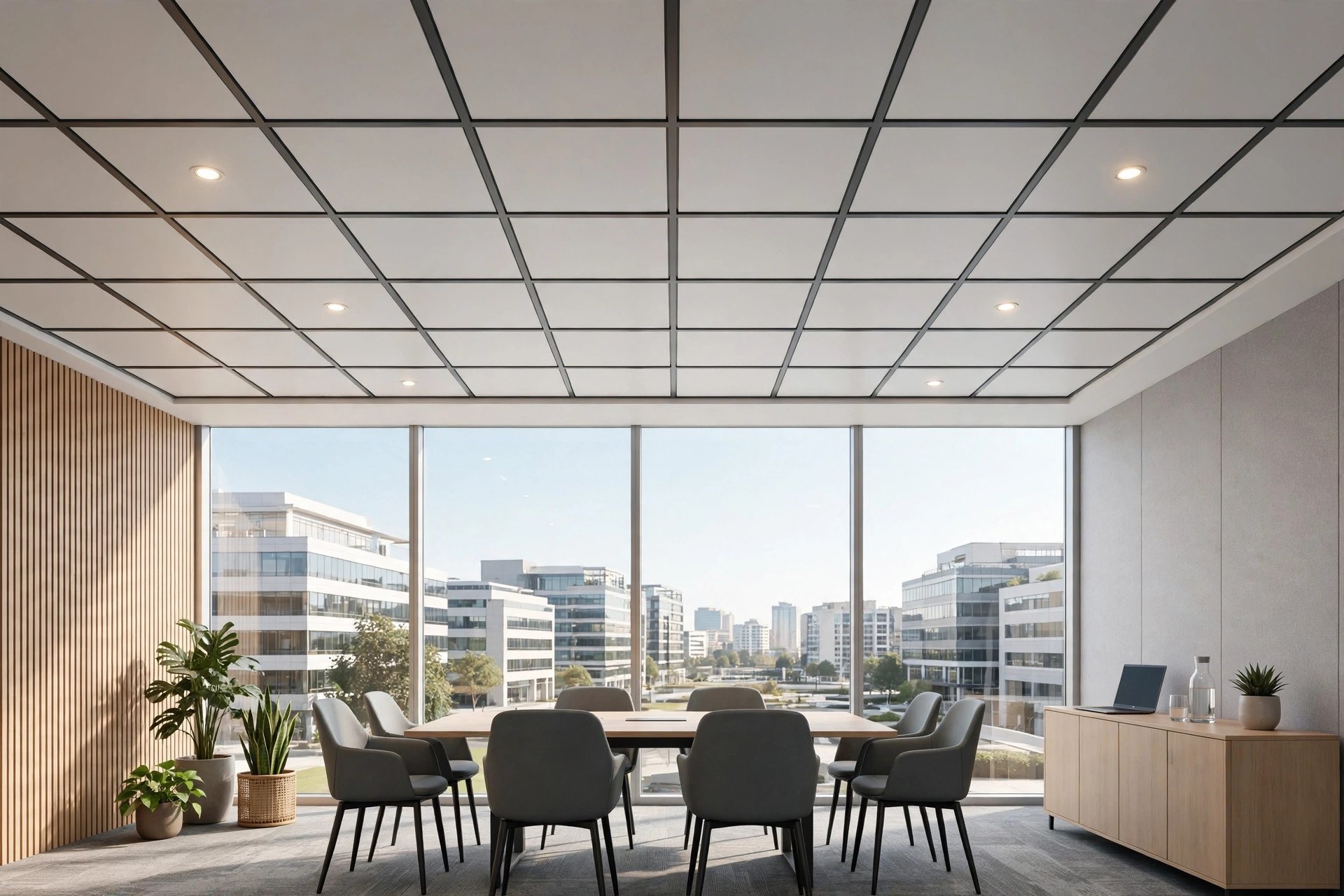
The classic office ceiling: 600×600 mm (or 595×595 mm) panels rest in a visible aluminium T-grid. It is the most economical metal system, the fastest to install, and the easiest to service — any tile lifts out in seconds. The grid lines give a tidy, organised look that works well in offices, classrooms and commercial kitchens.
3. Linear panels and baffles
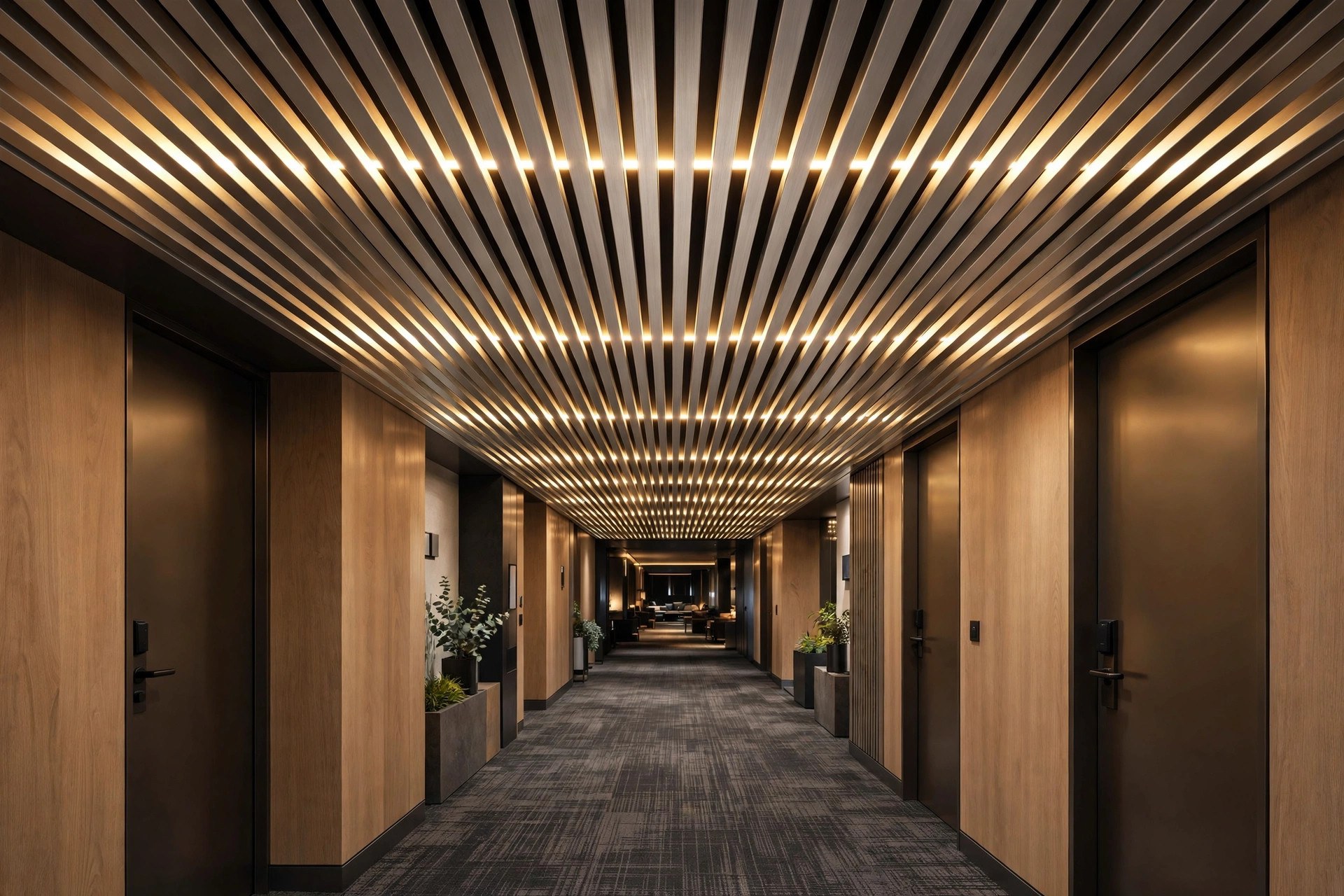
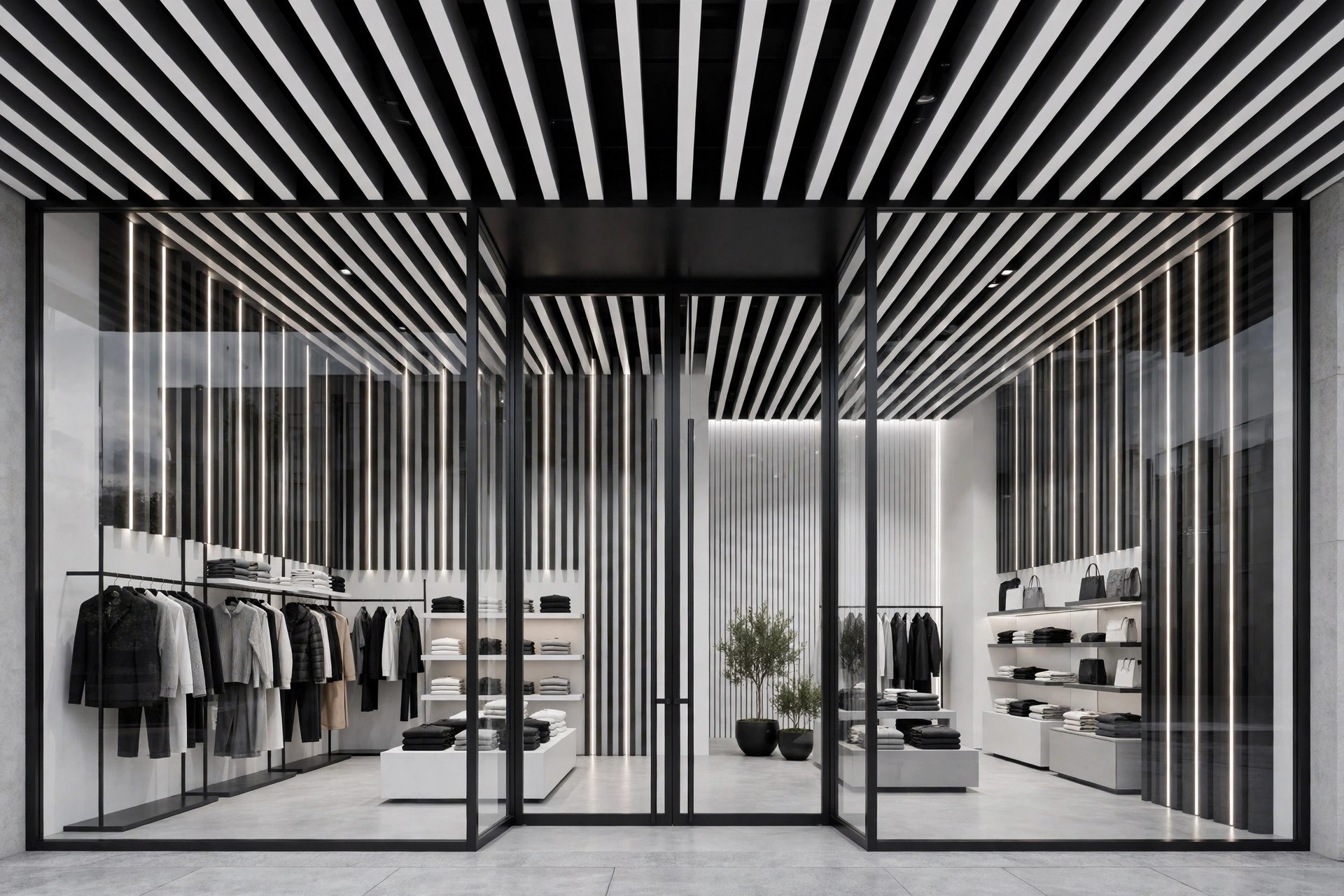
Linear ceilings use long aluminium strips or vertical baffle fins, usually running in one direction. Baffles — vertical fins hanging from a carrier — are popular in corridors, hotel lobbies, airports and retail stores because they draw the eye along the space and hide services in the gaps between fins. Strip lights tucked between baffles create a striking effect at night. Lengths of up to 5 metres are commonly available from Indian manufacturers.
4. Perforated and acoustic panels
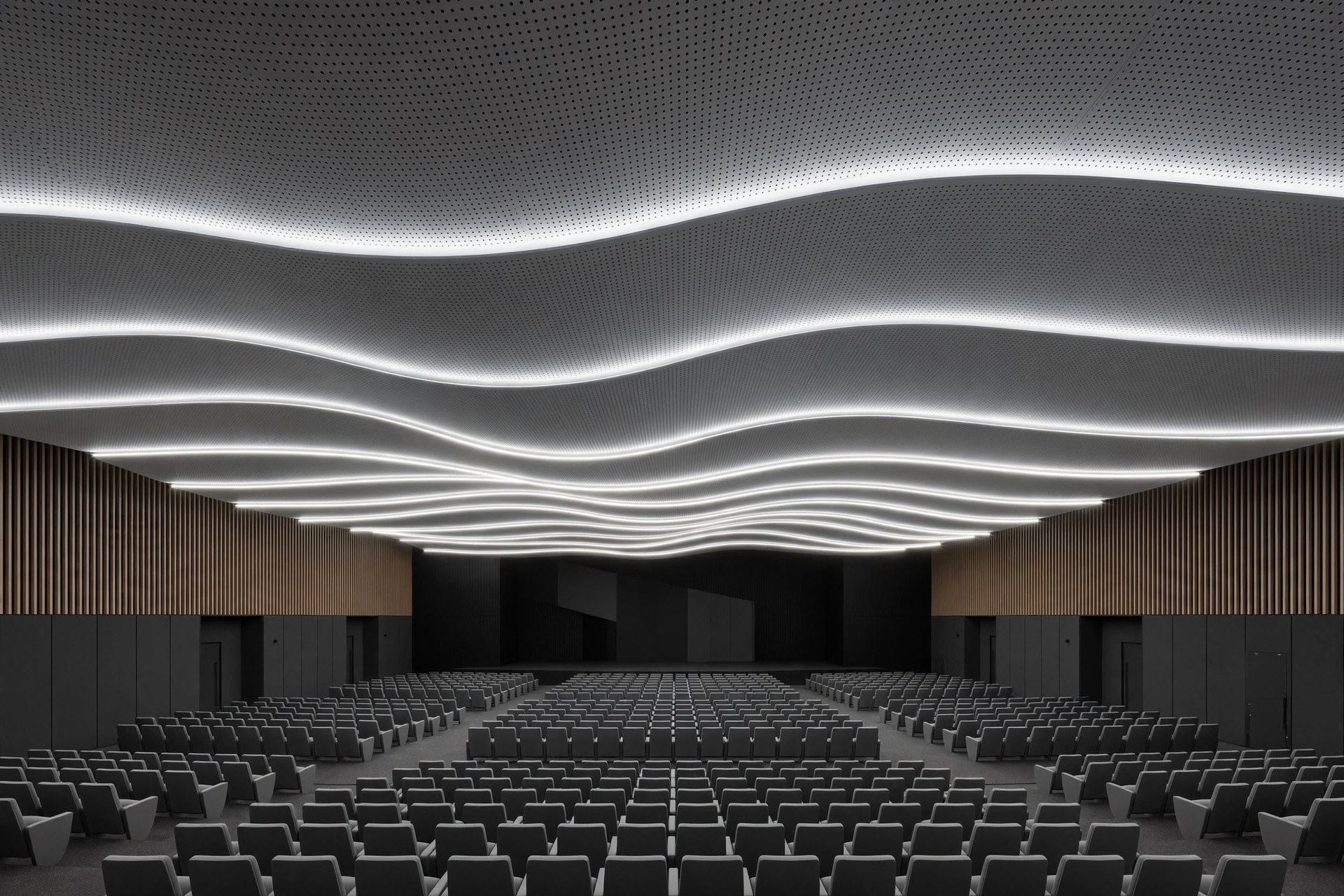
Perforated metal panels have tiny holes that, combined with an acoustic backing, absorb sound instead of bouncing it around. They are a standard choice for auditoriums, conference rooms and open offices where echo is a problem. Some seller specifications list sound absorption around NRC 0.50 for such tiles — treat that as a product-specific figure and ask for test certificates if acoustics matter to your project.
5. Expanded mesh and open-cell ceilings
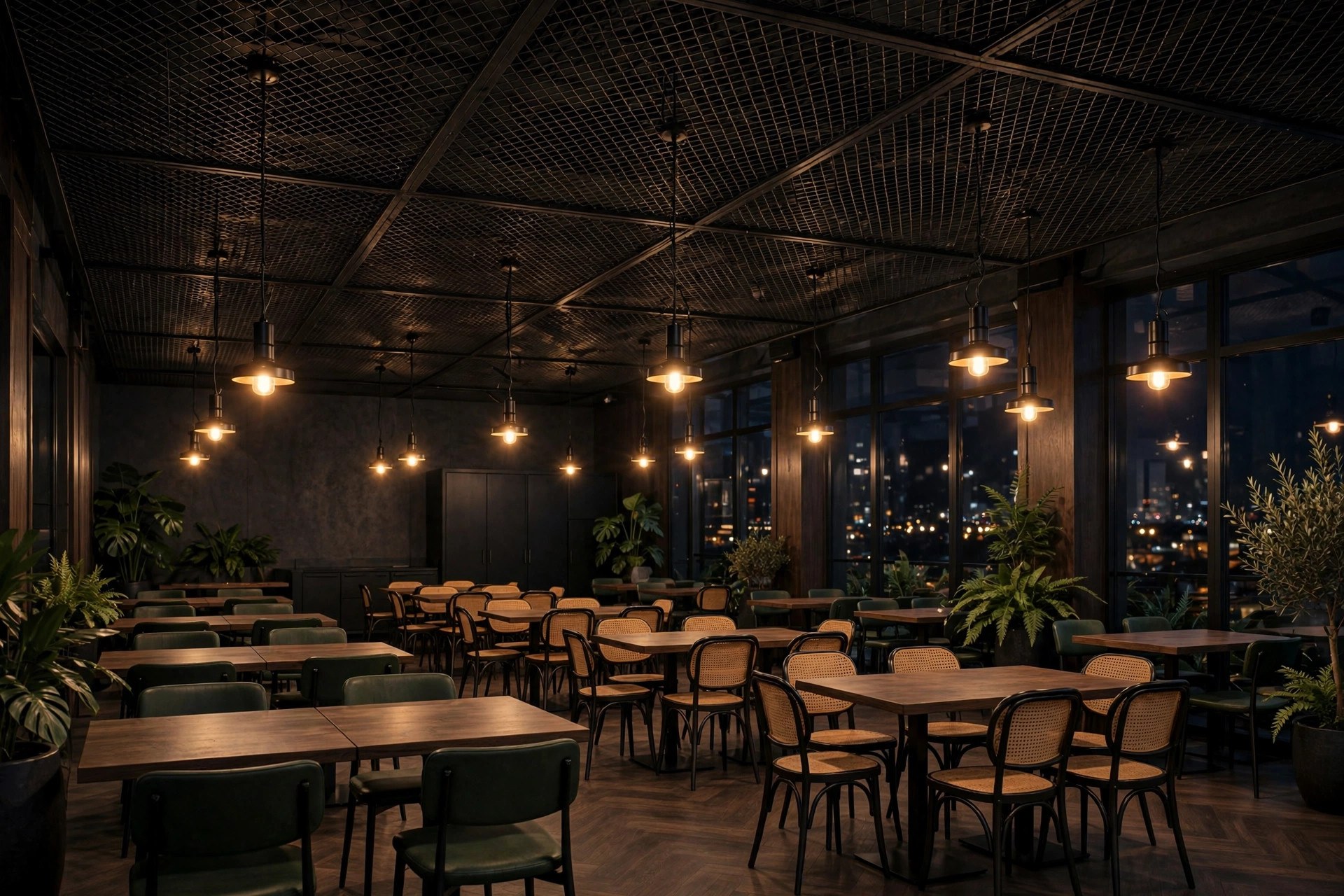
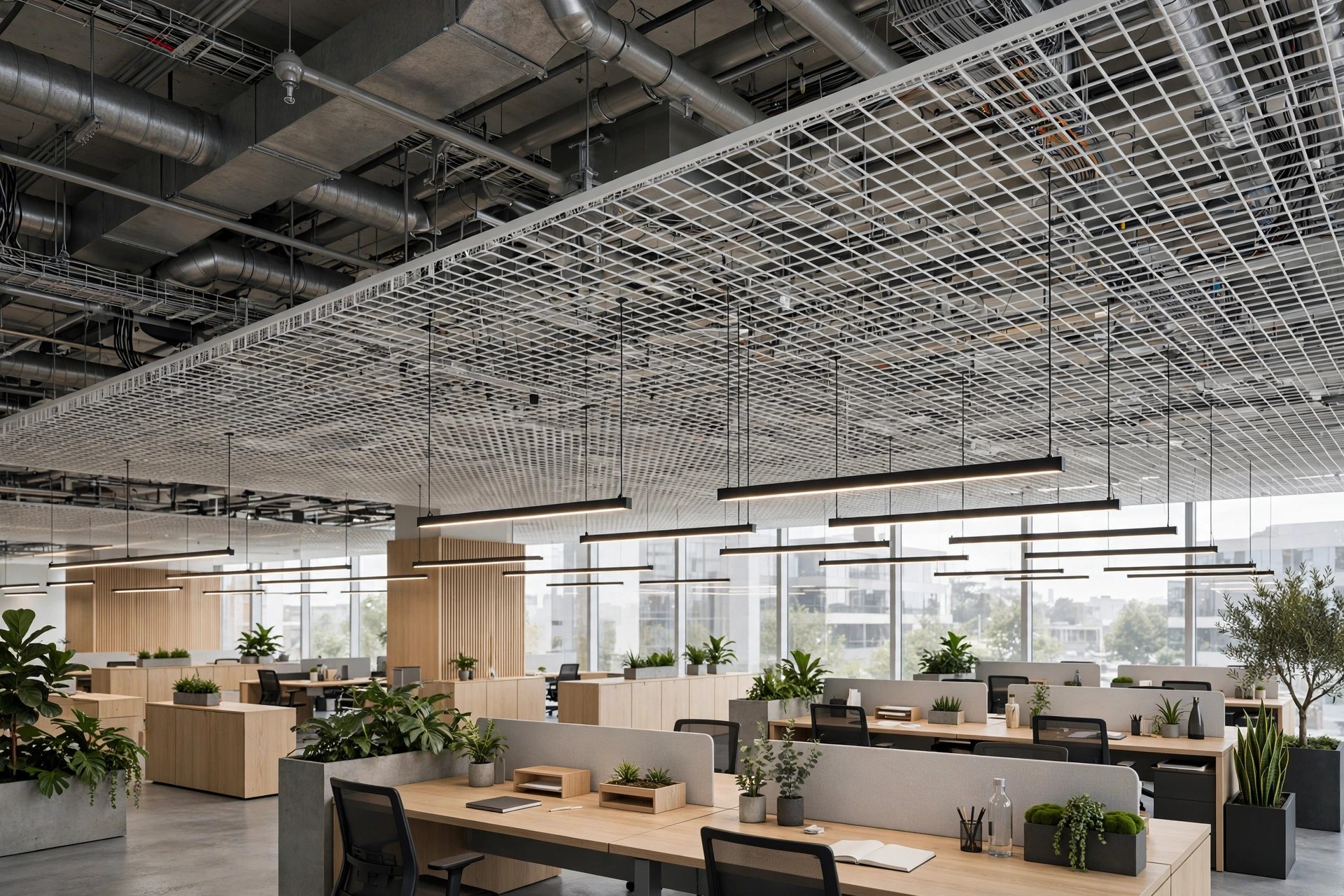
Mesh and open-cell ceilings use an open grid of metal that you can partly see through — the services above stay visible but softened. They suit restaurants, cafés, gyms and creative offices going for an industrial look, and they help large volumes feel airier. Dust settles on the mesh, so plan for periodic cleaning.
6. Decorative finishes: wood-look, brass and copper
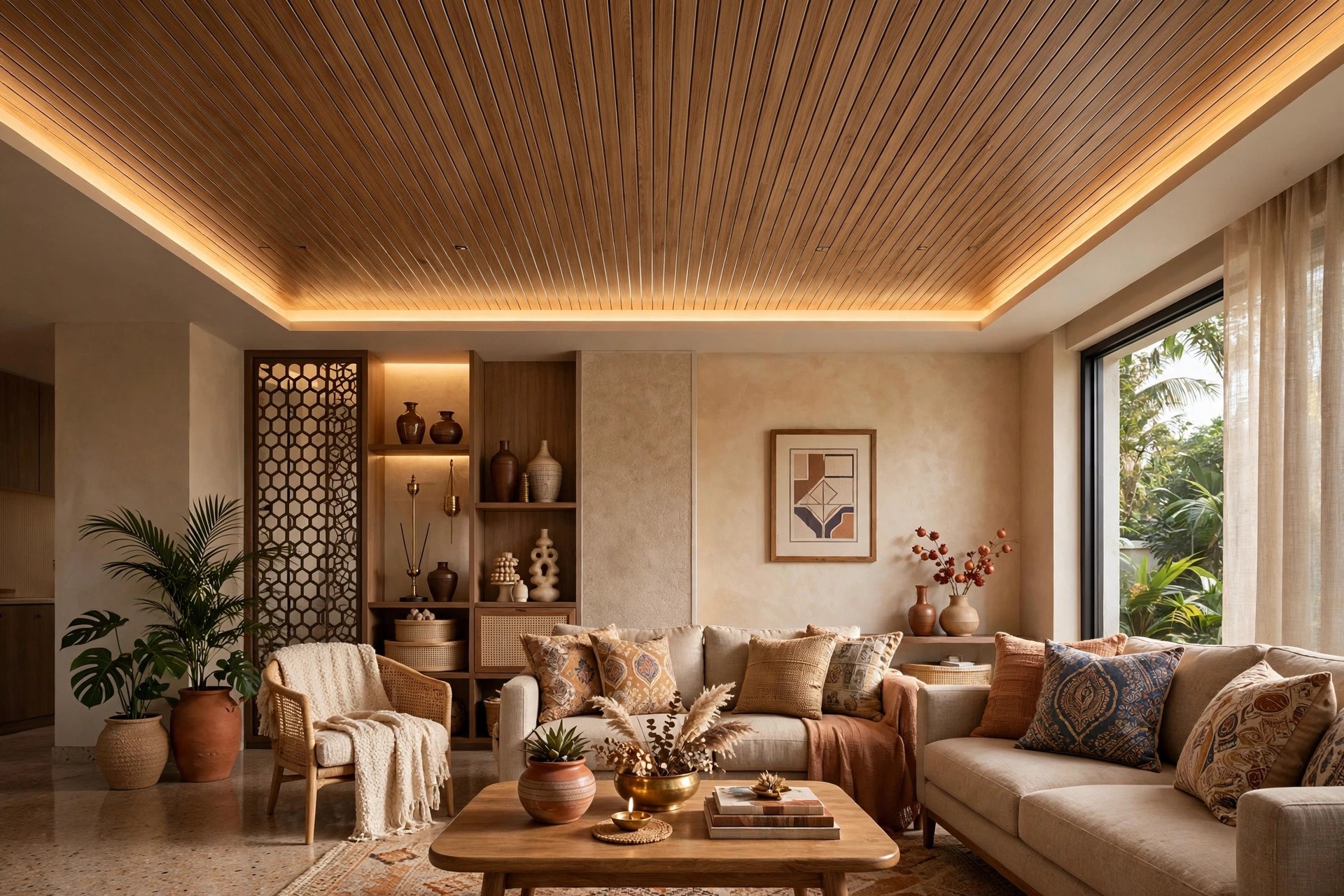
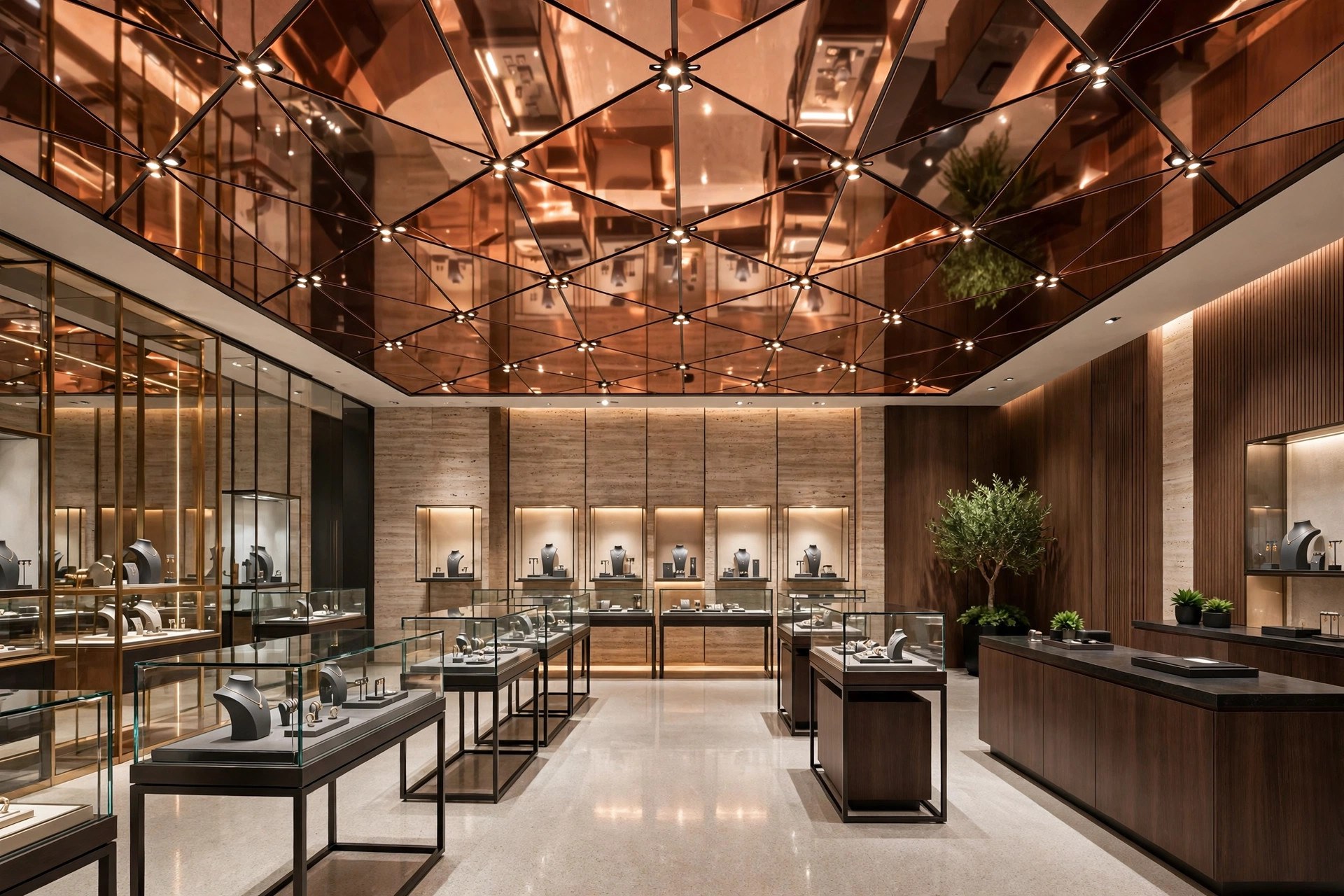
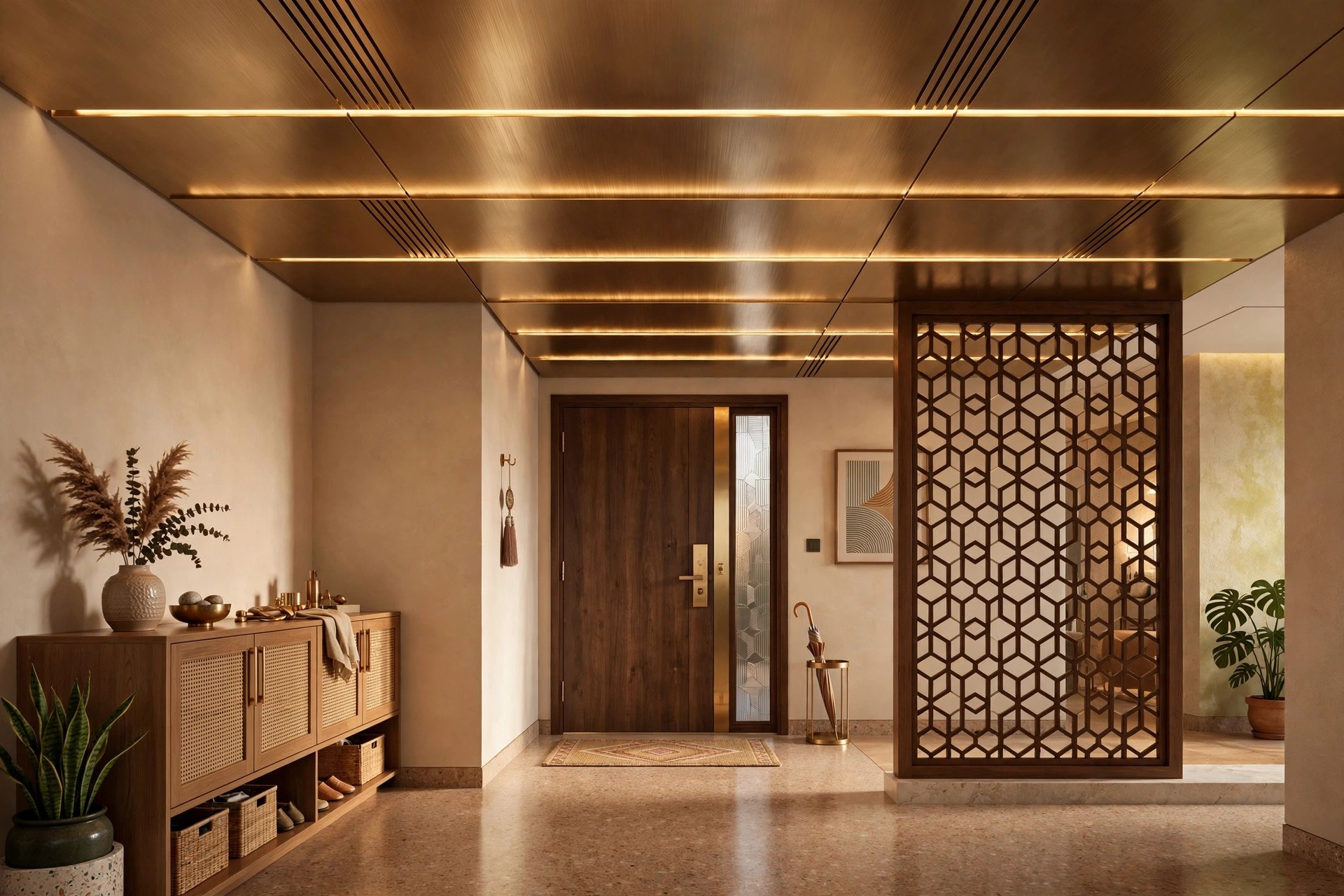
Powder coating has moved far beyond white. Wood-grain coated aluminium gives a warm wooden look without termite or moisture worries — a practical alternative worth comparing with our wooden false ceiling design ideas. Metallic finishes in brass, champagne or copper tones add richness to foyers, jewellery stores and boutique hotels. These designer finishes cost more than plain white panels, but they let a metal ceiling carry the whole interior theme.
7. Backlit and layered metal ceilings
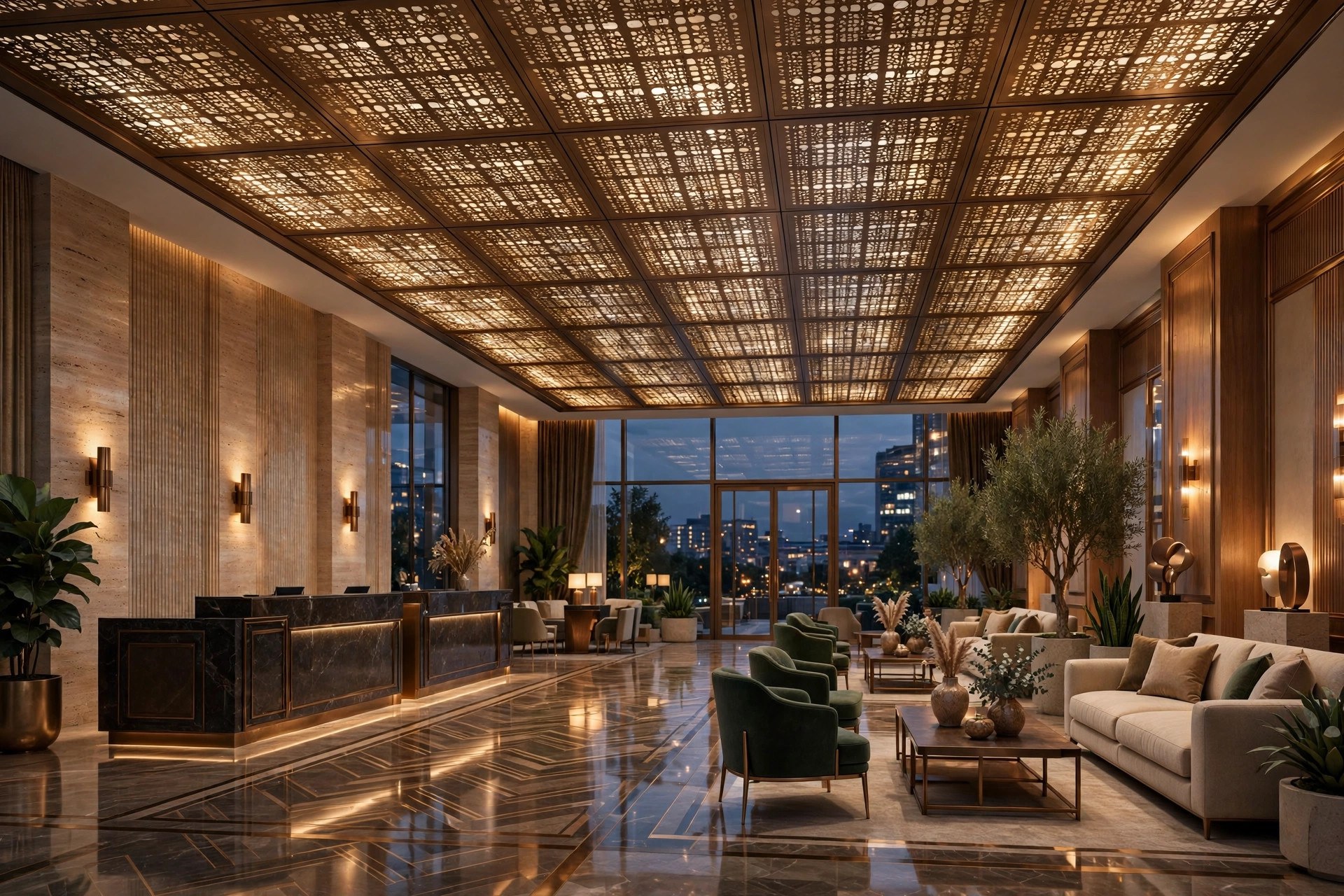
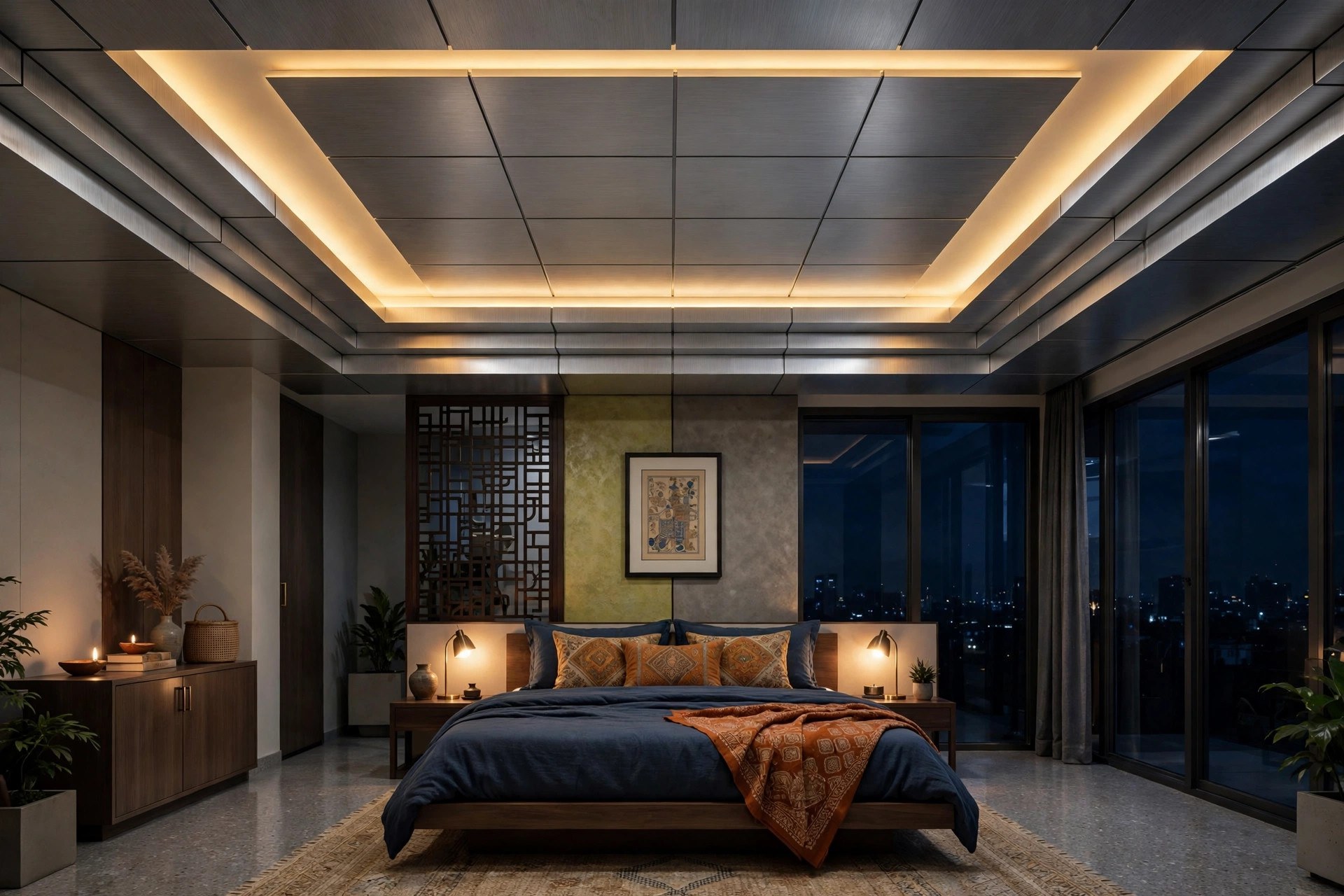
Backlighting perforated or translucent-backed metal panels, or layering metal trays with LED coves, turns the ceiling into a light feature. A layered design — a central metal tray dropped slightly below a cove-lit border — works well in master bedrooms and lounges without looking commercial.
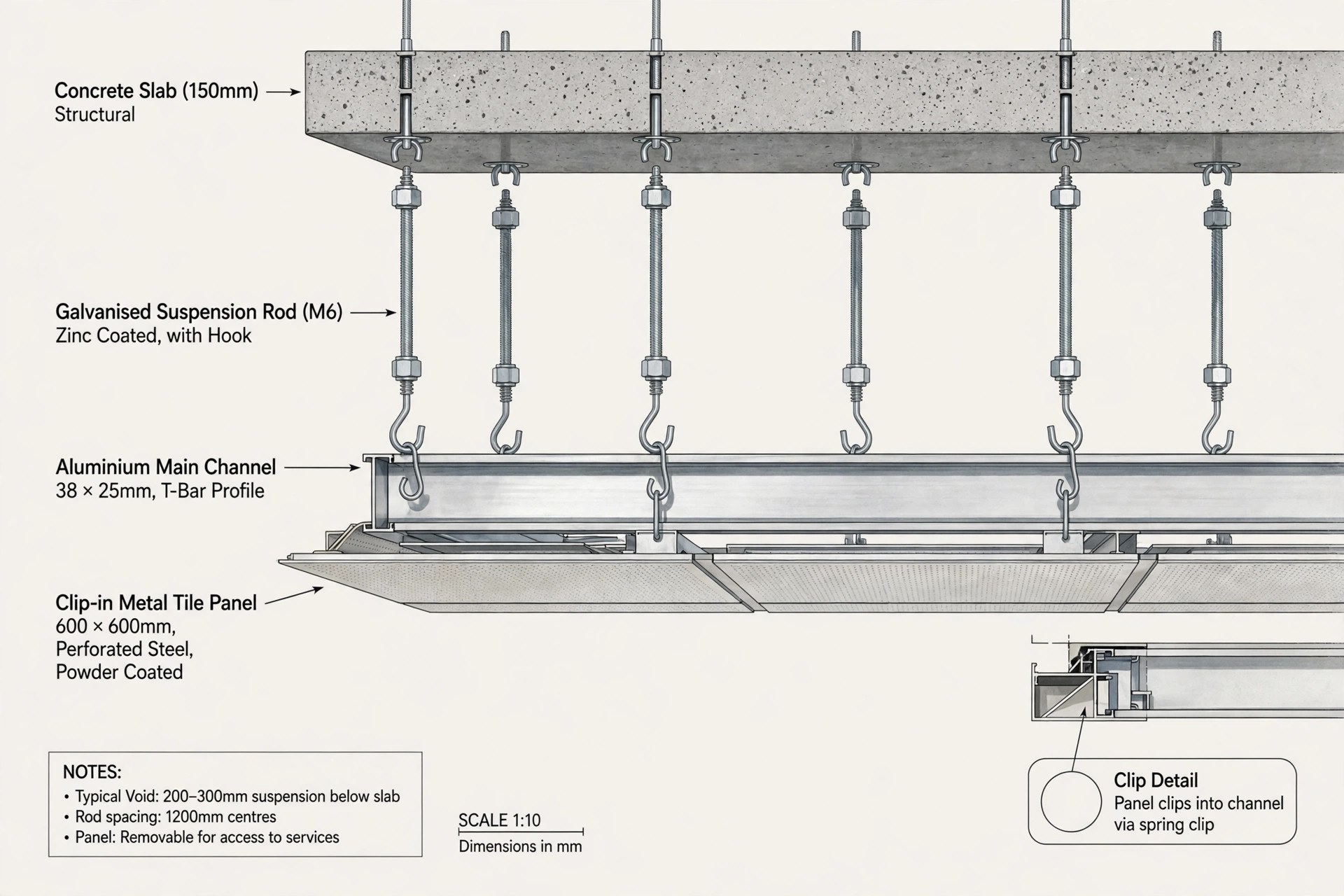
How a metal ceiling is put together
Understanding the parts helps you talk to contractors and compare quotes. A typical system has: anchor fasteners in the concrete slab, galvanised suspension rods (commonly 6 mm diameter on manufacturer specs), main channels or carriers hung from the rods, and the metal panels clipped or laid into them. Perimeter wall angles finish the junction with the wall. Long corridors need expansion joints so the metal can expand and contract with temperature without buckling — ask for these on runs over a few metres.
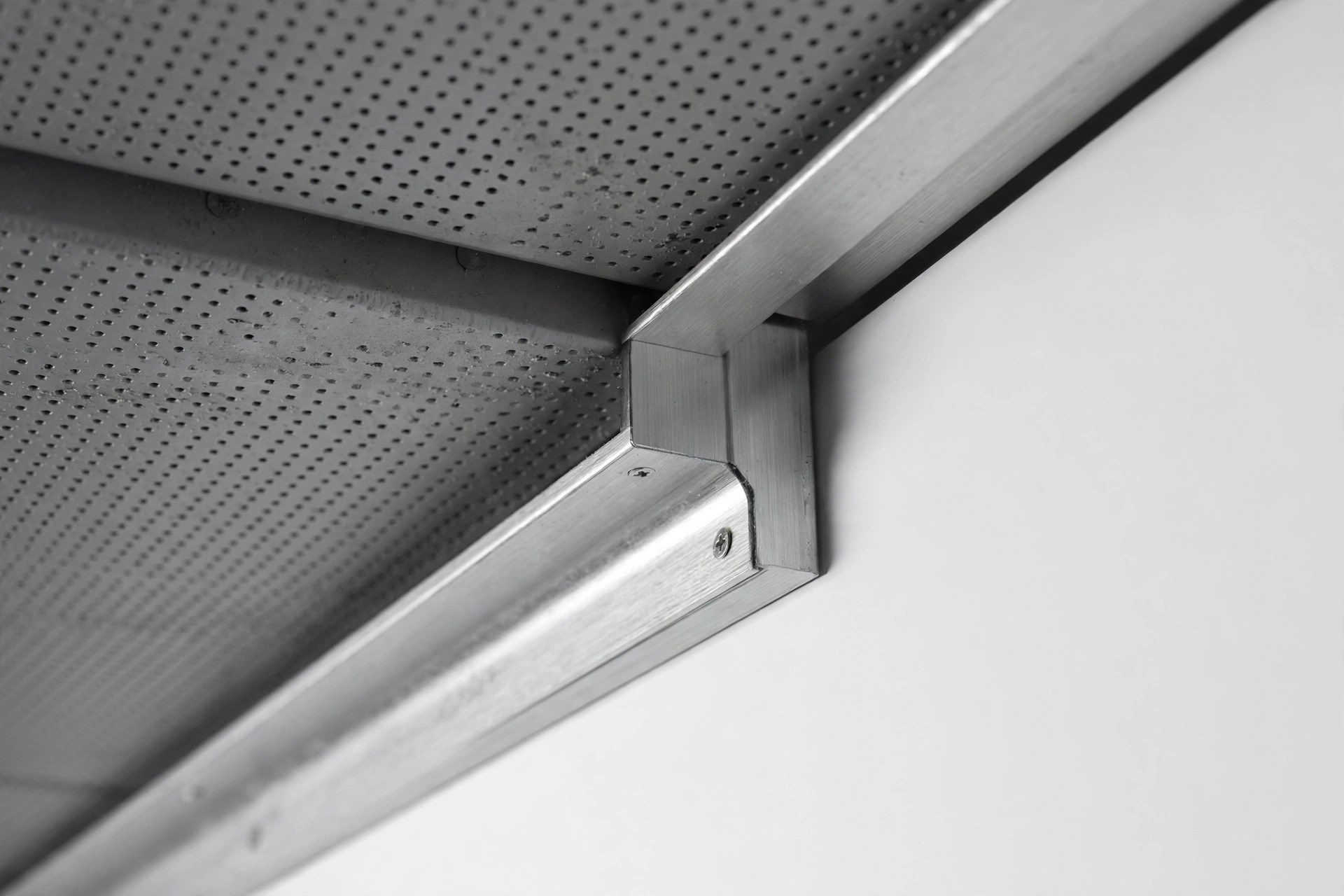
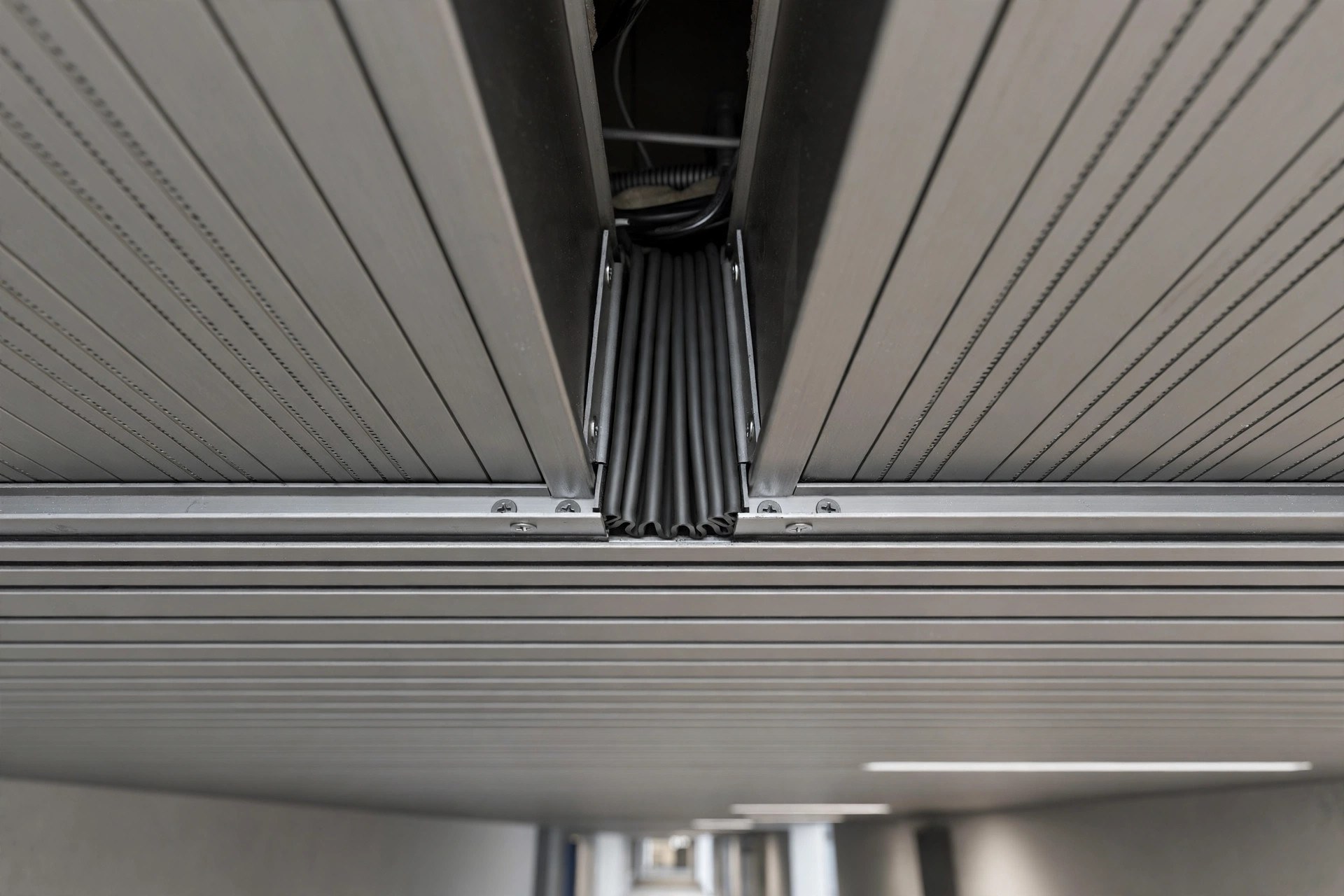
Metal ceiling systems are engineered products, so professional installation matters: the grid must be level, panels aligned, and the suspension anchored properly into the slab. This is not a DIY weekend project — cutting and fitting metal panels neatly takes practice and the right tools.
Cost of metal false ceiling in India (2026)
Expect roughly ₹150–300 per sq ft installed for standard aluminium systems in 2026, split into about ₹90–180 for materials and ₹60–120 for labour, according to a 2026 Indian cost guide. That sits between gypsum (₹80–150) and wooden ceilings (₹250–500+). City rates vary: Mumbai around ₹180–320, Delhi-NCR ₹160–300, Bengaluru ₹150–280, Pune ₹140–260 and Hyderabad ₹130–240 per sq ft installed.
| System | Typical installed cost (₹/sq ft) | Best for |
|---|---|---|
| Plain lay-in tiles (exposed grid) | ₹150–200 | Offices, kitchens, budget wet areas |
| Clip-in tiles (concealed grid) | ₹200–300 | Living rooms, clinics, clean modern homes |
| Linear panels / baffles | ₹200–350 | Corridors, lobbies, retail, showrooms |
| Perforated acoustic panels | ₹250–400 | Auditoriums, conference rooms, studios |
| Designer / premium finishes | ₹350–500+ | Hotels, luxury retail, statement homes |
Two things move the price most: panel thickness and finish (0.5 mm plain white is cheapest; thicker, perforated or metallic-finish panels cost more) and design complexity (curves, multiple levels and backlighting add labour). Turnkey contractors quoting with material and installation included land around ₹250–350 per sq ft for standard modular systems and ₹350–500 for premium designer work, based on a PAN-India installer price list. Always compare like with like: some quotes are material-supply only and exclude taxes, transport and installation — for instance, seller list prices observed on 1 October 2026 ranged from ₹81/sq ft for plain 0.7 mm lay-in tiles to ₹390/sq ft for micro-perforated clip-in tiles, all excluding taxes. Get three itemised quotes and check what each includes before you decide.
Pros of metal false ceilings
- Moisture and steam resistant. Aluminium does not sag or swell in humidity, which is why it is the default recommendation for kitchens and bathrooms. It also resists insects and pests.
- Easy to clean. A wipe-down with a damp cloth handles grease in kitchens and dust elsewhere — no repainting cycles like gypsum.
- Long life. Lifespans of 25–30 years are commonly quoted, with annual maintenance costs as low as ₹1,000–3,000 — mostly occasional cleaning.
- Fire safety. Metal does not catch fire, an advantage over wooden or fabric-based ceilings.
- Modular access. Individual tiles or panels lift out, so reaching AC ducts, wiring or plumbing above the ceiling is quick and non-destructive.
- Reflective brightness. Light-coloured metal panels bounce light around the room, which can reduce the number of fixtures you need.
Cons of metal false ceilings
- Higher upfront cost. Metal typically costs more than gypsum or POP for the same area — the trade-off is a longer, lower-maintenance life.
- Less design freedom than gypsum. You cannot sculpt curves, domes or intricate mouldings the way you can with gypsum false ceiling designs; metal works in panels, strips and grids.
- Noise. Thin metal can drum during heavy rain or hail, and large plain panels can echo in halls — perforated acoustic panels exist precisely for this reason.
- Dents and scratches show. Softer finishes dent on impact, and a glossy reflective surface makes imperfections more visible. Choose matte or textured finishes for high-traffic areas.
- Thermal conductivity. Metal conducts heat, so an uninsulated metal ceiling under a hot terrace can warm the room — insulation above the panels helps.
Where metal ceilings work best in Indian homes
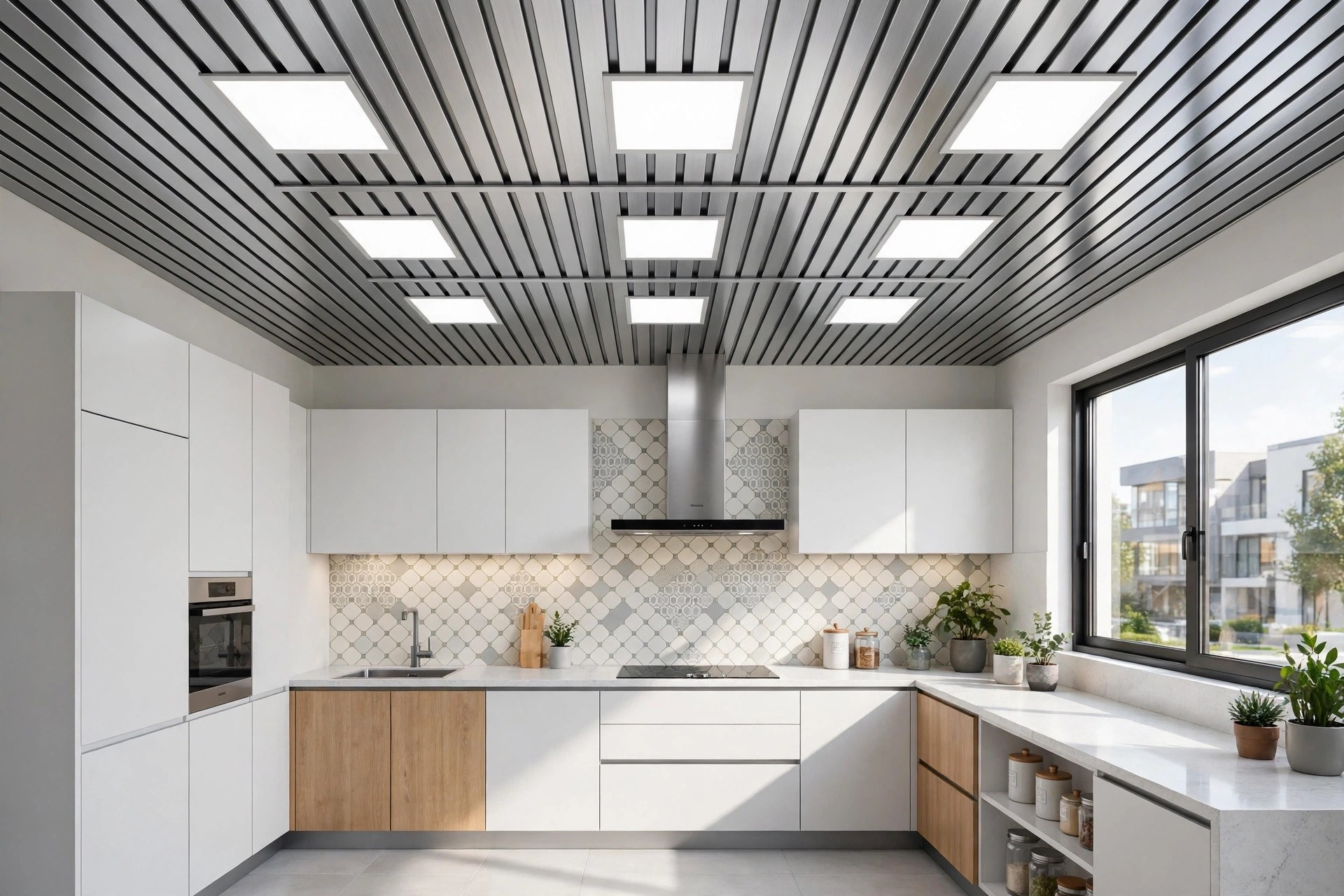
Kitchens. Steam, heat and grease are exactly what aluminium handles best. Strip or tile ceilings with recessed LED panels give a clean, bright cooking space, and individual panels can be removed for deep cleaning. Budget around ₹120–200 per sq ft.
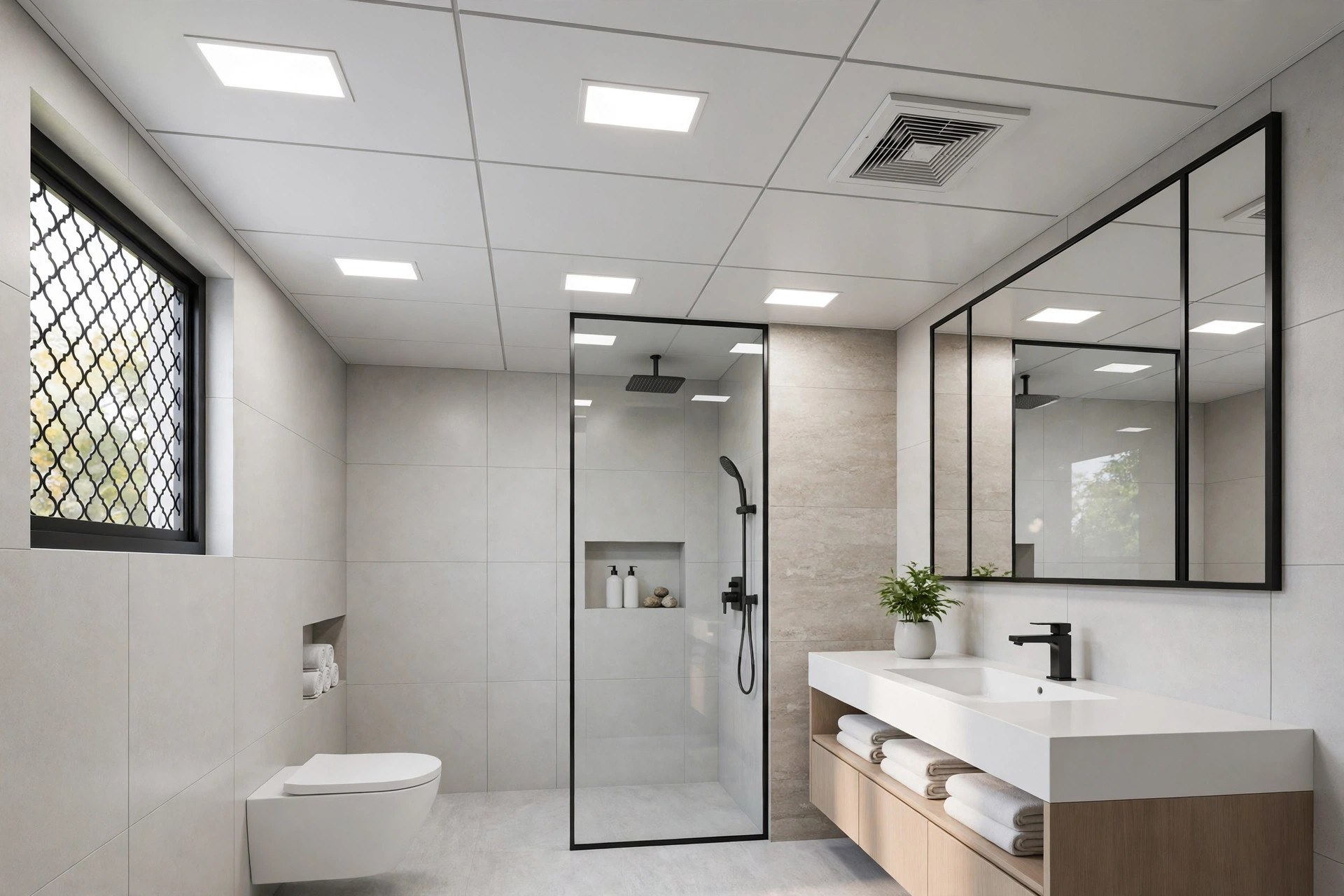
Bathrooms. The classic wet-area pick. Aluminium panels shrug off shower steam that would stain or sag gypsum, and they pair well with exhaust fans and downlights. Budget around ₹130–220 per sq ft.
Corridors and passages. Linear panels or baffles make long passages feel designed rather than leftover. Running the strips lengthwise emphasises the corridor; running them across can make a narrow passage feel wider.
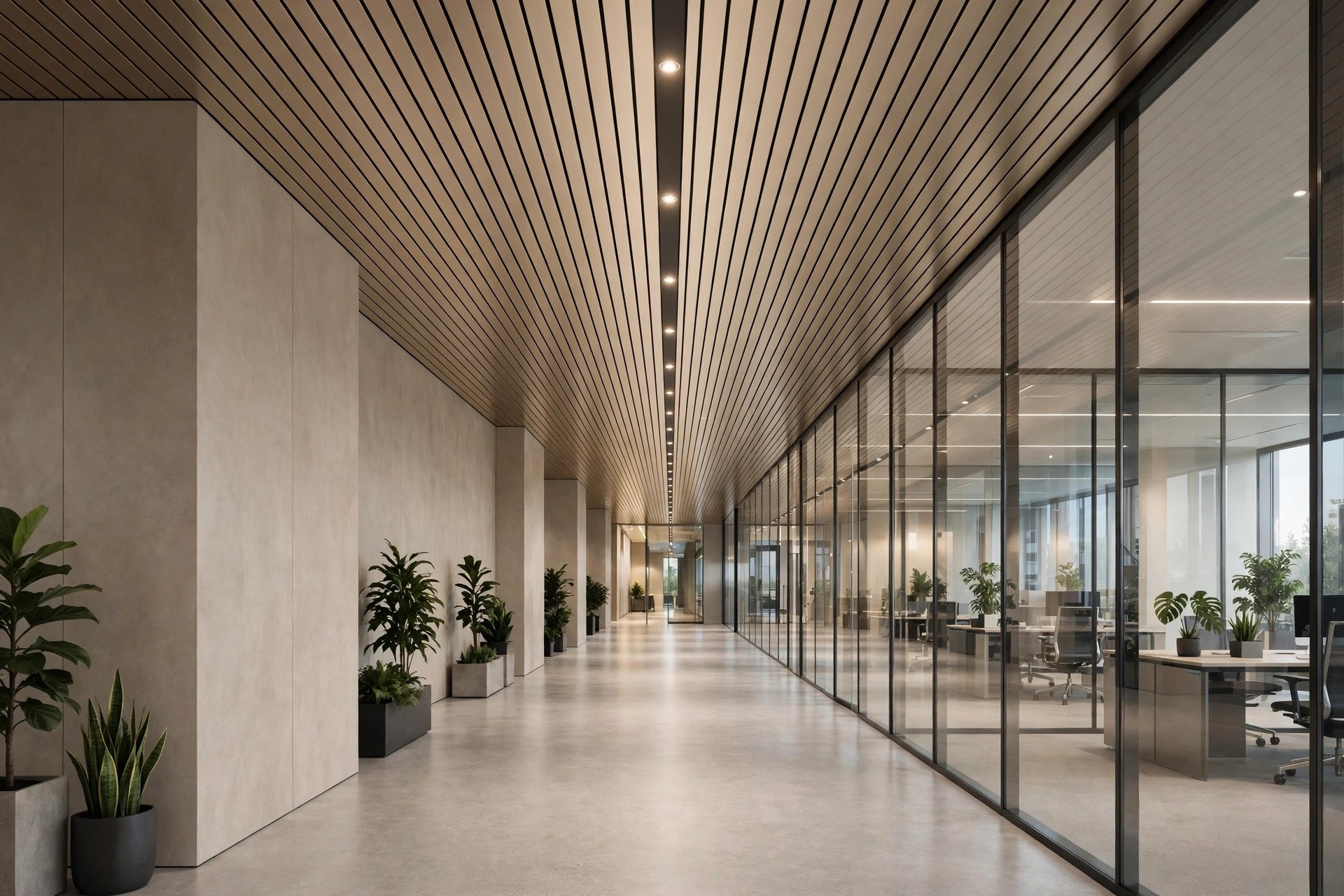
Offices, shops and clinics. This is metal’s home turf: open-cell or lay-in systems for offices, baffles or designer finishes for retail, seamless clip-in panels for clinics. Fast installation and easy service access keep businesses running.
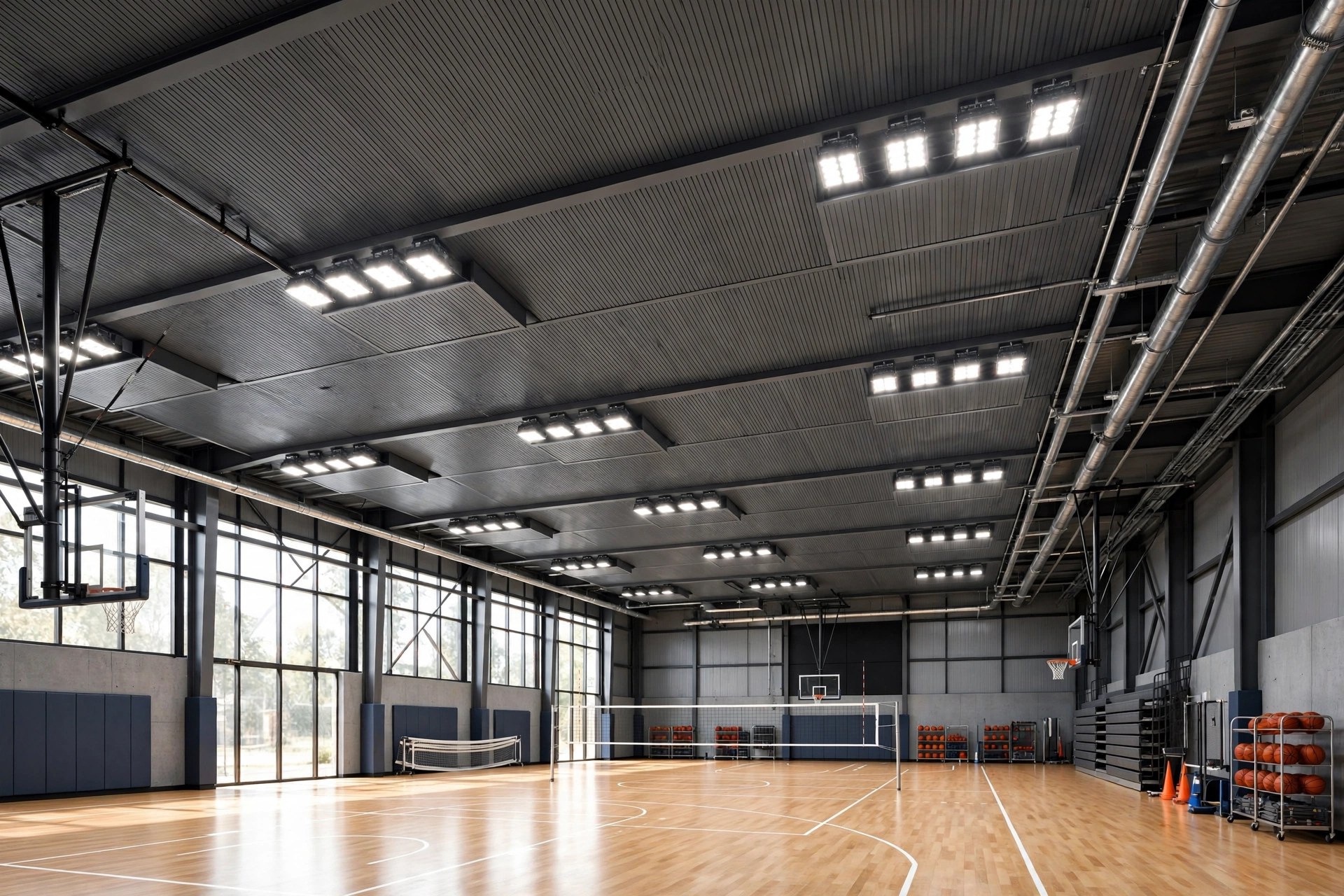
Gyms and utility areas. Powder-coated aluminium stands up to impact, moisture and frequent cleaning better than most alternatives.
For living rooms and bedrooms where sculpted shapes and cove details matter more than moisture resistance, compare with the complete false ceiling design guide before deciding — gypsum often gives a better look-to-cost ratio there.
Lighting a metal ceiling
Metal systems are designed with lighting in mind — manufacturers build in provisions for lights, AC and services. Recessed round spotlights, square LED panels and linear strip lights all work; panels are factory-cut or site-cut to fit the fixture. Two practical tips: use a licensed electrician and keep wiring in conduits above the ceiling, and match the fixture’s colour temperature to the room (warm white 3000K for homes, neutral 4000K for workspaces). Backlit perforated panels and cove-lit borders add drama but need planning for the light source and its maintenance access.
Maintenance: keeping it good for decades
- Cleaning: dust with a soft cloth or vacuum brush; wipe kitchen grease with a mild detergent solution and dry the panel. Avoid abrasive pads on powder-coated finishes.
- Access: for lay-in tiles, lift any tile to reach services; for clip-in systems, use the manufacturer’s removal tool or suction lifter. Hinged access panels can be specified where frequent access is needed.
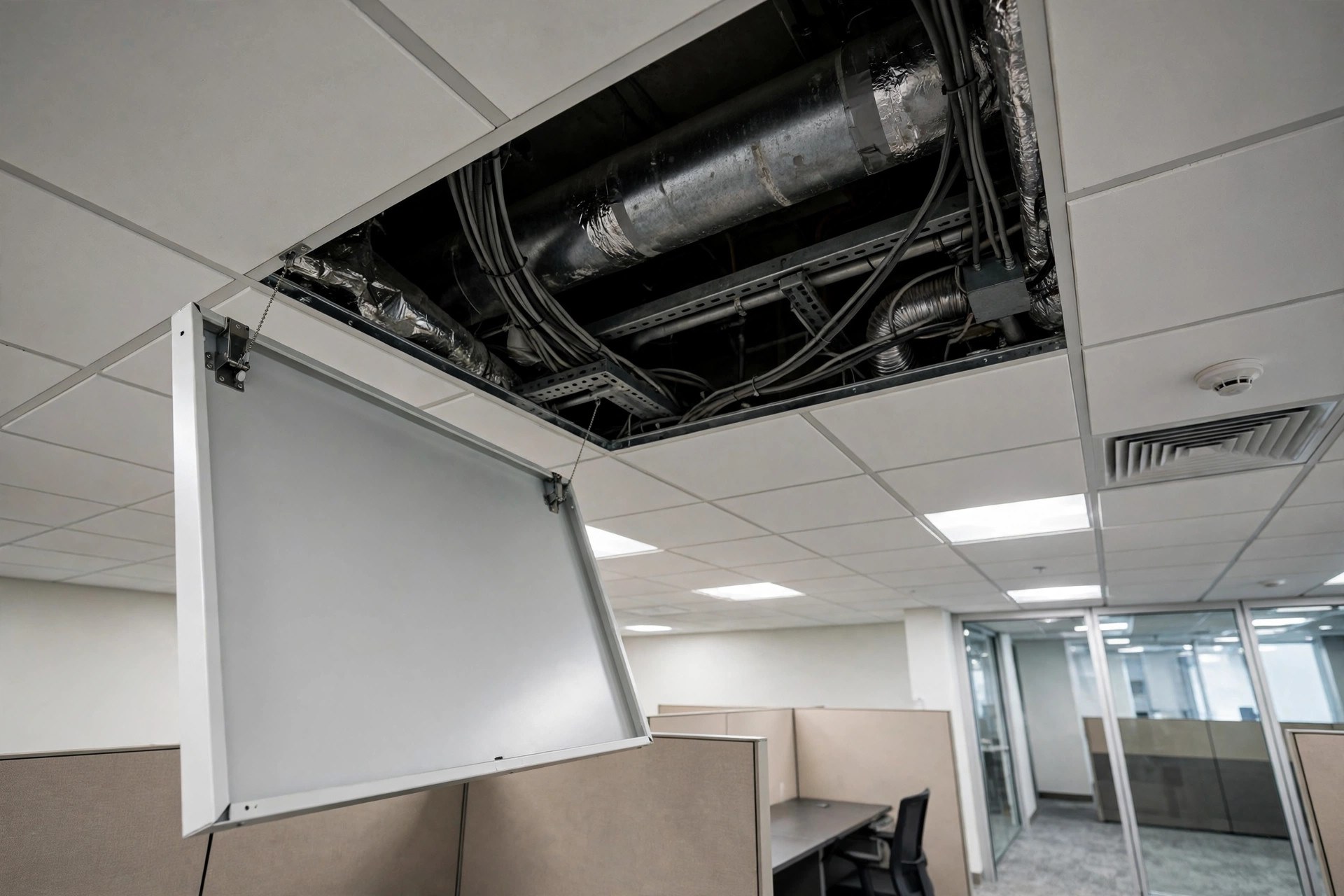
- Inspection: once a year, check for loose panels, corroded fasteners and damaged coating — especially in coastal cities where salty air is harder on metal. Touch up chips in the powder coating before they spread.
- Replacement: a stained or dented panel is swapped individually, not repainted — keep a few spare panels from the original batch so the colour matches.
FAQs
Does a metal false ceiling rust in coastal cities like Mumbai or Chennai?
Aluminium itself resists corrosion well, and quality powder coating adds a strong protective layer — which is why aluminium is the safer choice near the coast. Galvanised steel systems depend entirely on their coating staying intact. In coastal areas, choose aluminium with a good powder-coat finish, and inspect fasteners and panel edges once a year for any corrosion starting at chips or cuts.
Can I install LED panels or spotlights in a metal false ceiling?
Yes — metal ceiling systems are made with lighting in mind, and manufacturers design their grids and carriers with provisions for lights, AC vents and sprinklers. Panels are cut to fit standard round downlights and square LED panels. Have a licensed electrician do the wiring in conduits above the ceiling, and plan where each light goes before the panels are fixed.
How long does a metal false ceiling last?
Industry guides commonly quote 25–30 years for aluminium systems, with annual maintenance costs as low as ₹1,000–3,000 — mostly occasional cleaning. The panels outlast the coating if it is damaged, so the real maintenance job is protecting the finish, not replacing the ceiling.
Can I hang a ceiling fan or heavy chandelier from a metal false ceiling?
Do not hang heavy fixtures from the ceiling tiles or the grid alone. Fans and heavy lights should hang from the structural slab above through their own independent rods or supports, with the metal ceiling simply cut around them. Ask your installer for the system’s rated load, and get a qualified professional to design the suspension — this is a safety matter, not a place to improvise.
Is a metal ceiling noisy when it rains?
It can be. Thin metal panels drum during heavy rain or hail, particularly on top floors. If your rooms sit directly under the terrace, consider insulation above the panels, and prefer perforated acoustic panels in halls where echo is a concern.
Which is better for a bathroom — metal or gypsum?
Metal, in most cases. Aluminium handles shower steam without sagging, staining or growing mould, and it wipes clean. Gypsum needs moisture-resistant boards, careful sealing and repainting to survive a bathroom — workable, but more maintenance over the years.
All images in this article are original concept renders created for illustration, not photographs of completed projects.