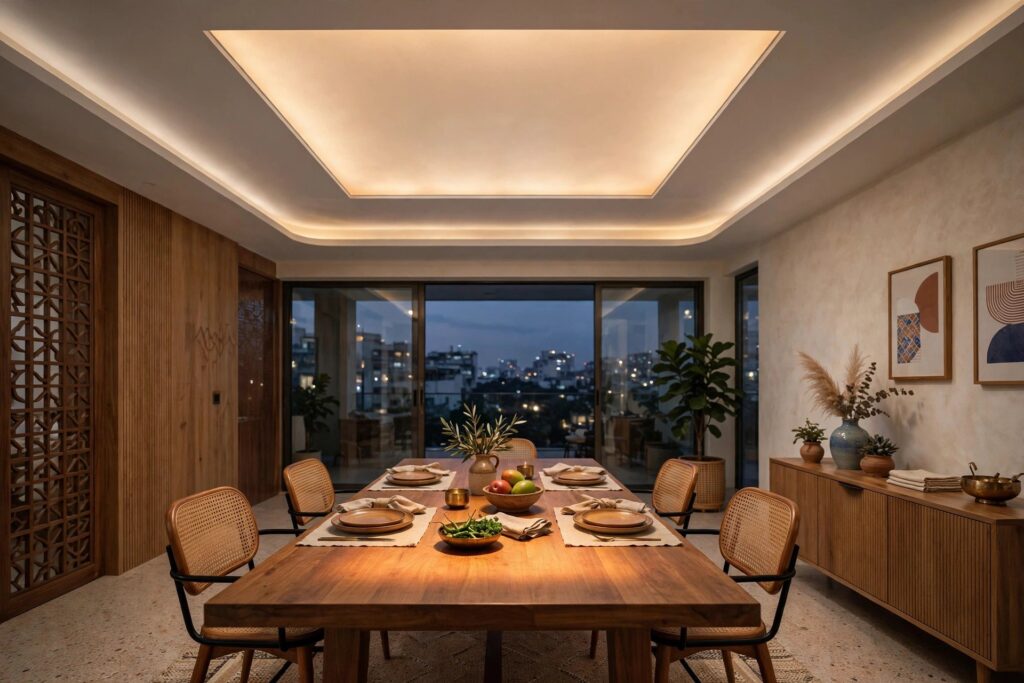

A glass false ceiling is exactly what it sounds like: glass panels — usually toughened or laminated — fixed into a frame above your head, often with lights behind them. The result is hard to miss. Light glows through the panel, the room feels taller, and an ordinary dining area or lobby suddenly looks like a hotel.
But glass is also the most expensive false ceiling material in India, it is heavy, and it shows every speck of dust. So the honest question is not “does it look good” — it does — but “is it worth it for your space, and how do you get it done safely?” This guide walks through the design options (backlit, printed, lacquered, stained-glass insets, skylight-style and more), what glass false ceilings cost in India, the real pros and cons, how cleaning works in Indian dust, and the safety basics you must insist on.
What is a glass false ceiling?
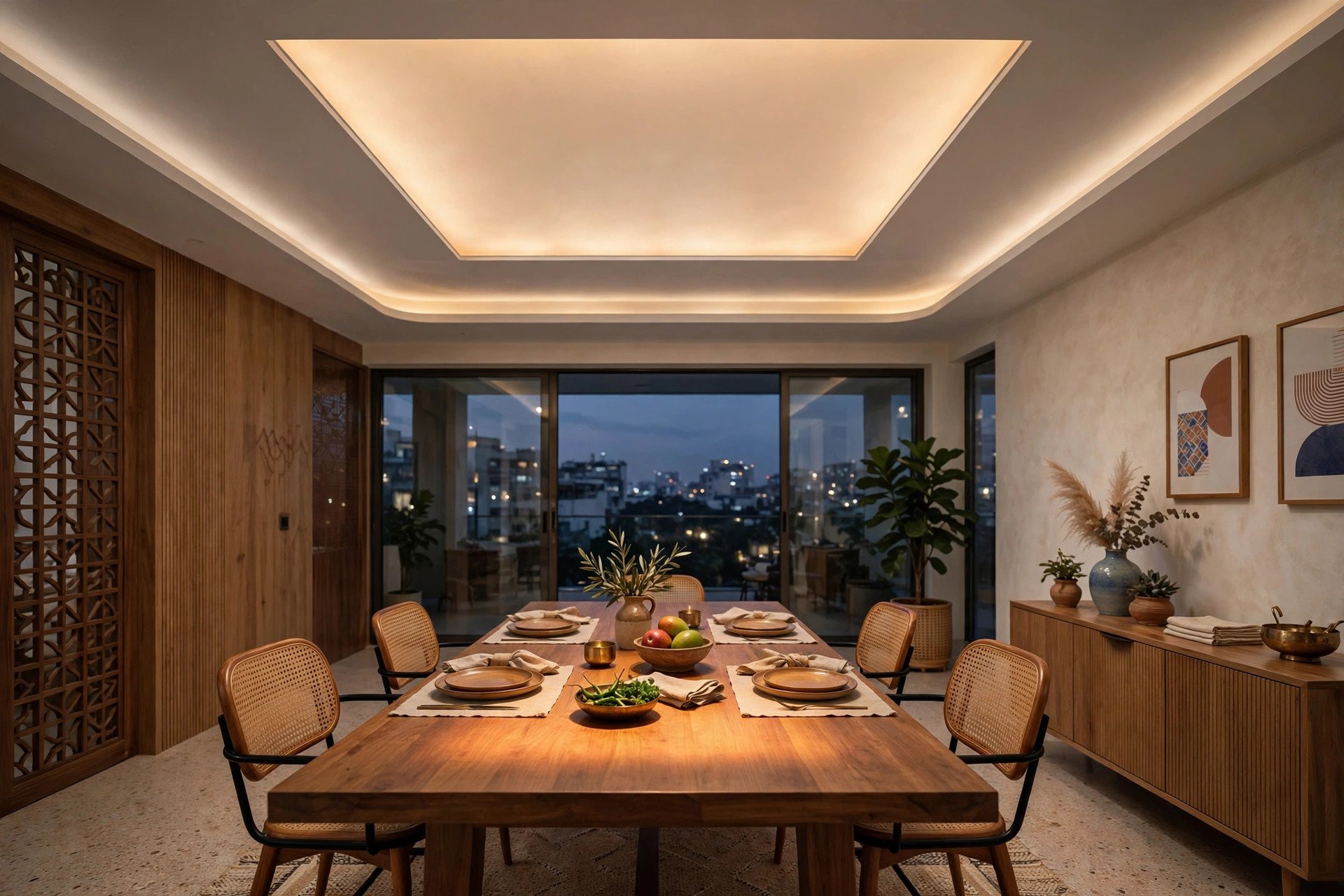
A glass false ceiling replaces some or all of the usual gypsum or POP surface with glass panels mounted in a metal or aluminium frame. The panels are not ordinary window glass — reputable installers use tempered (toughened) or laminated glass, and the design is frequently paired with backlighting so the whole panel glows. Finishes include frosted, tinted, etched, lacquered (back-painted), printed and stained glass.
Unlike gypsum, which covers the entire ceiling, glass is usually used as a feature: one glowing panel over the dining table, a strip in the lobby, a decorative inset in a prayer room. Full glass ceilings exist, but they are rare in homes because of cost and weight. If you are still choosing between materials for the whole house, our complete false ceiling design guide compares every option side by side.
Glass false ceiling design ideas
1. Backlit frosted glass — the classic
Frosted glass with LED strips behind it is the design most Indian homeowners picture when they search for false ceiling glass design. The frosted surface spreads light evenly, so there are no harsh bright spots, and the ceiling looks like it is floating. It works beautifully over dining tables and in foyers, where you want a soft, even glow rather than sharp downlights.
2. Printed and digital glass
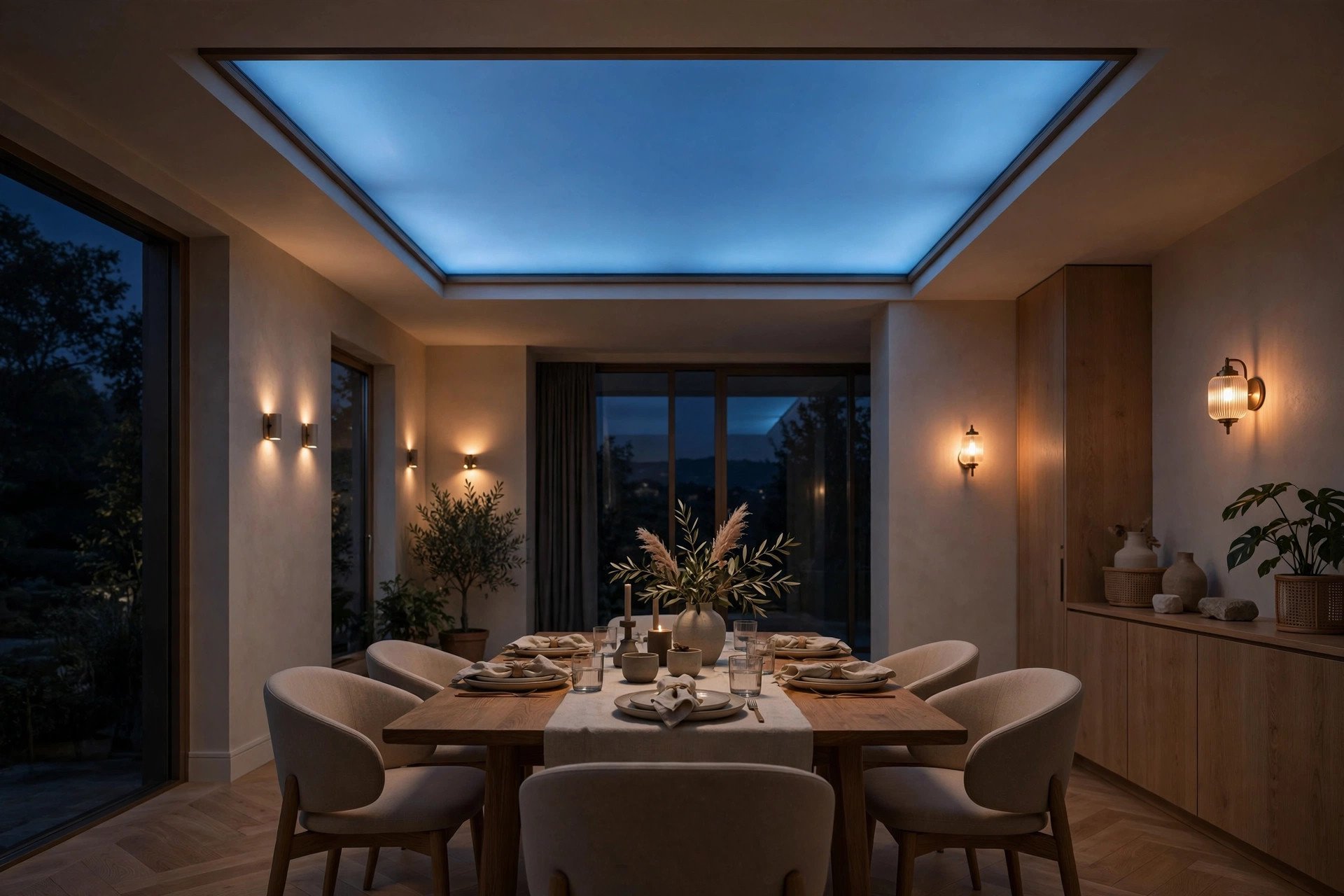
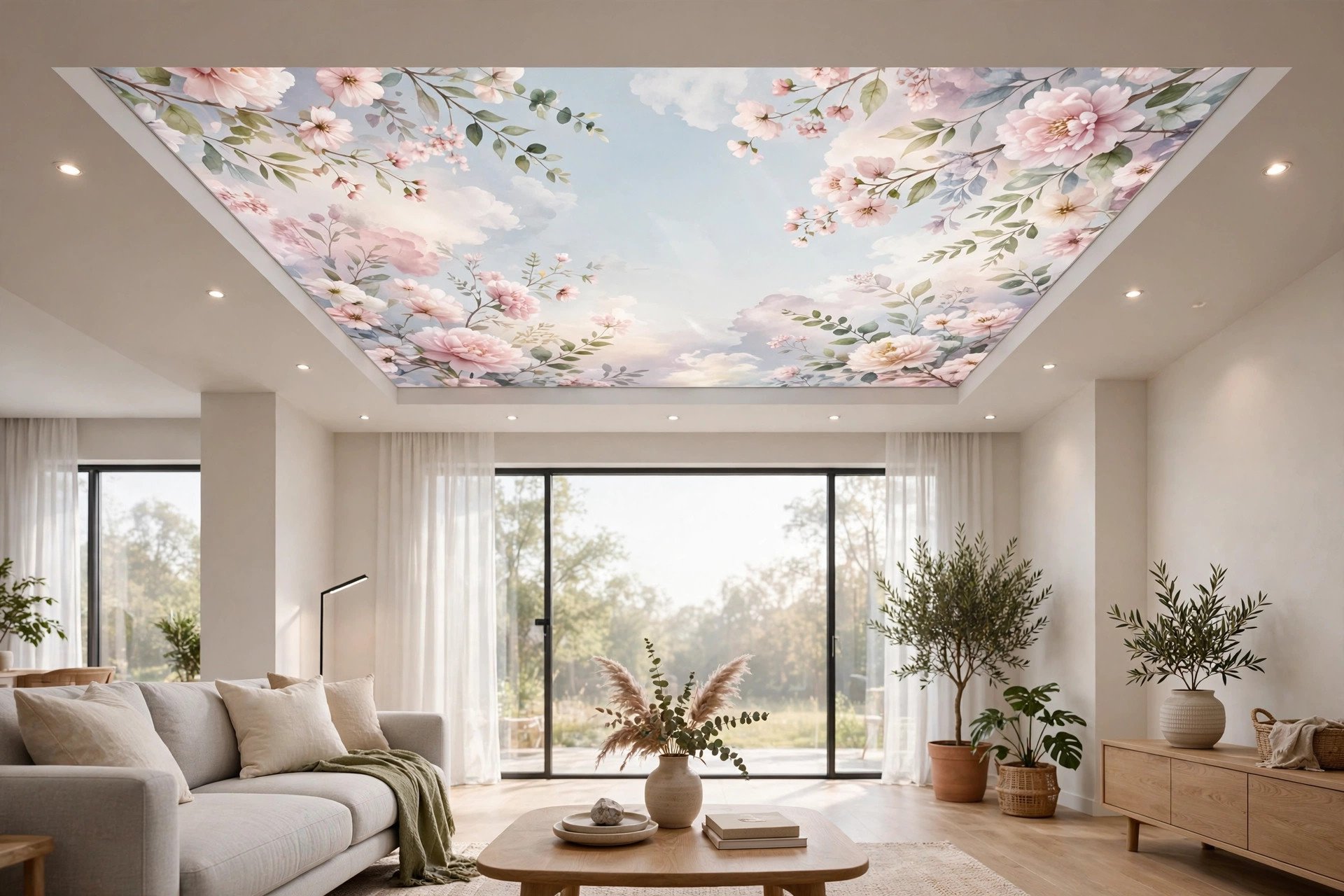
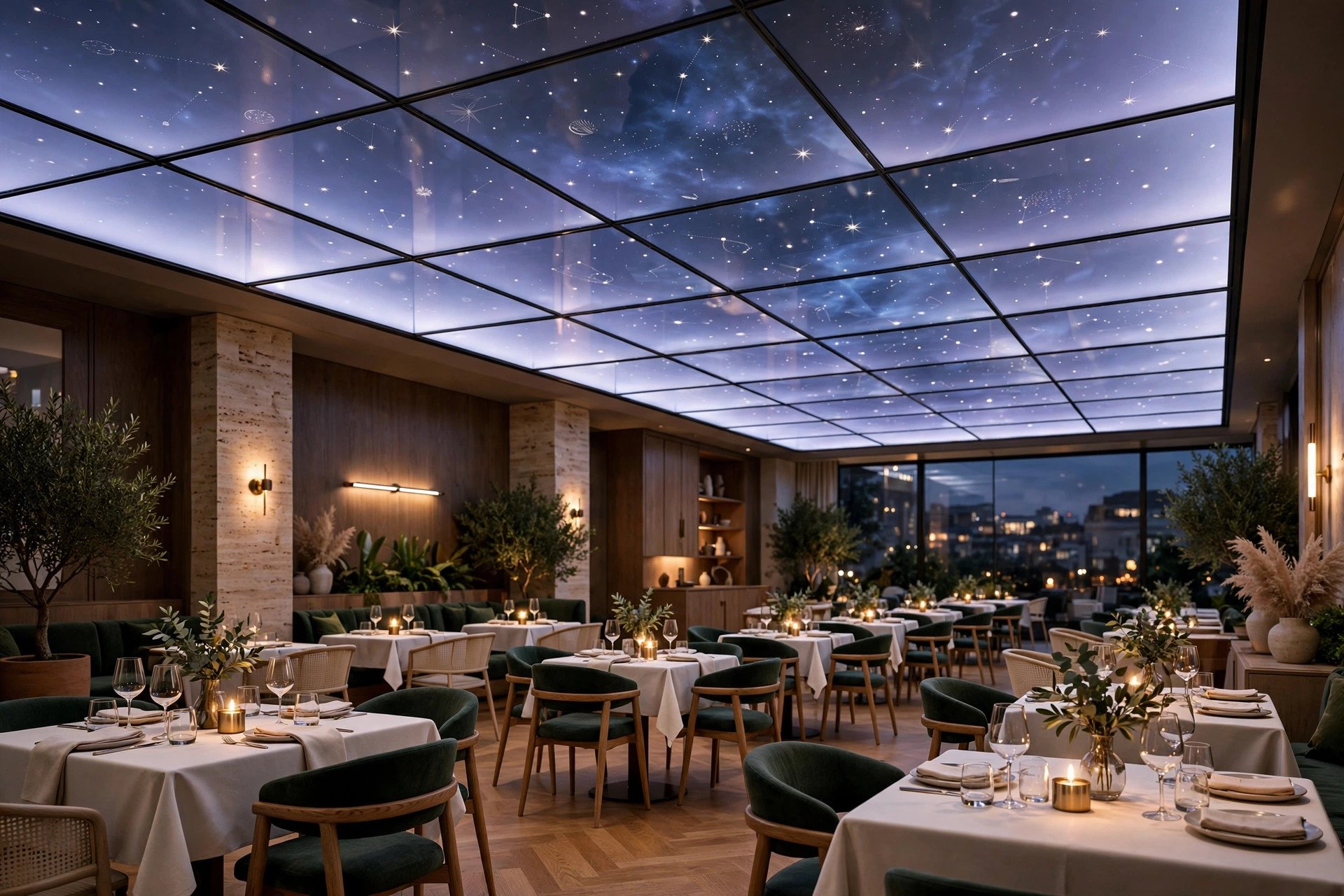
Modern printing can put almost any image between laminated glass layers — a cloudy sky, a floral pattern, an abstract design. Because the print sits inside the glass sandwich, it never fades from cleaning and cannot peel. Sky prints are popular in living rooms and restaurants because they make the ceiling feel open, almost like a skylight you can switch on.
3. Lacquered (back-painted) glass
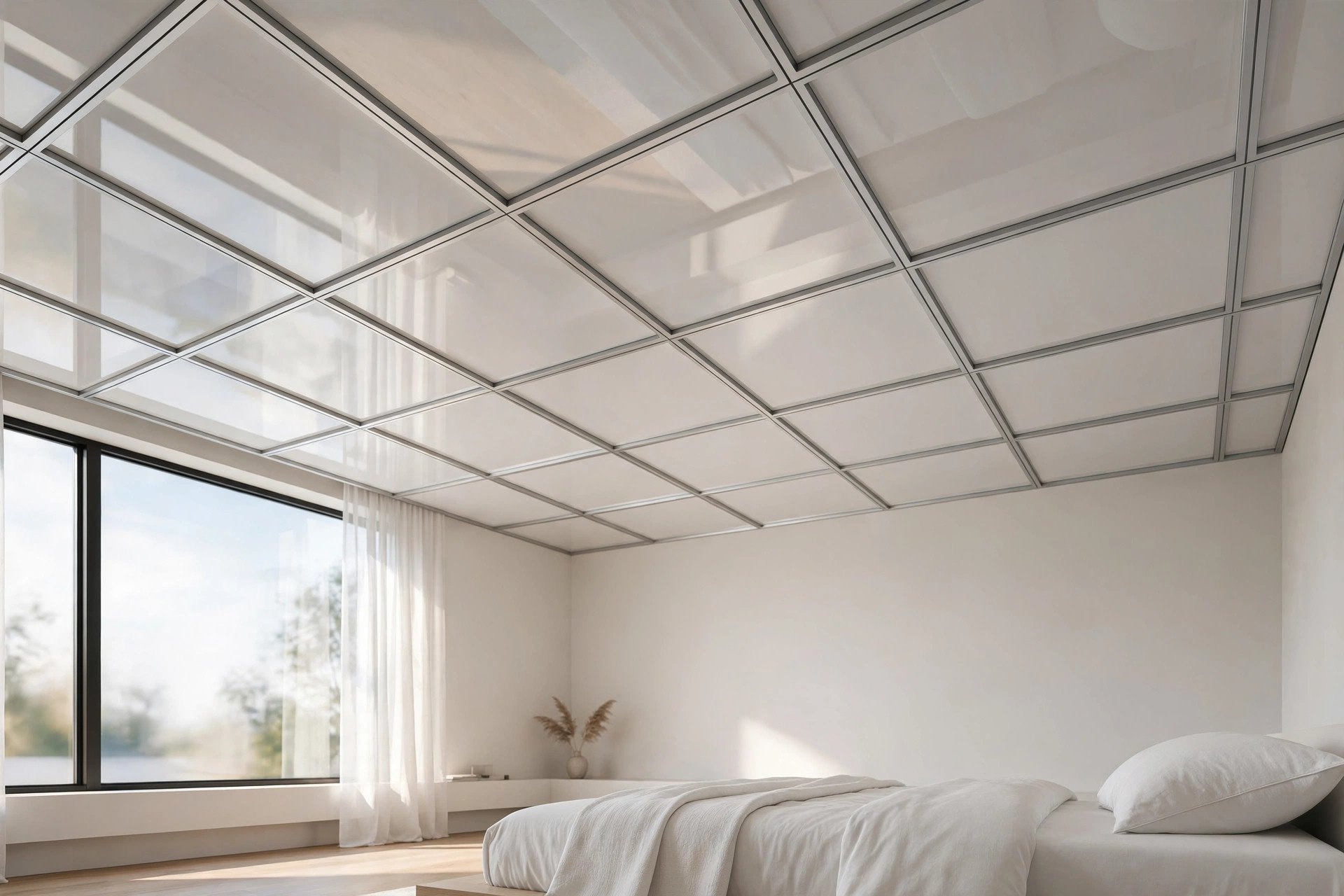
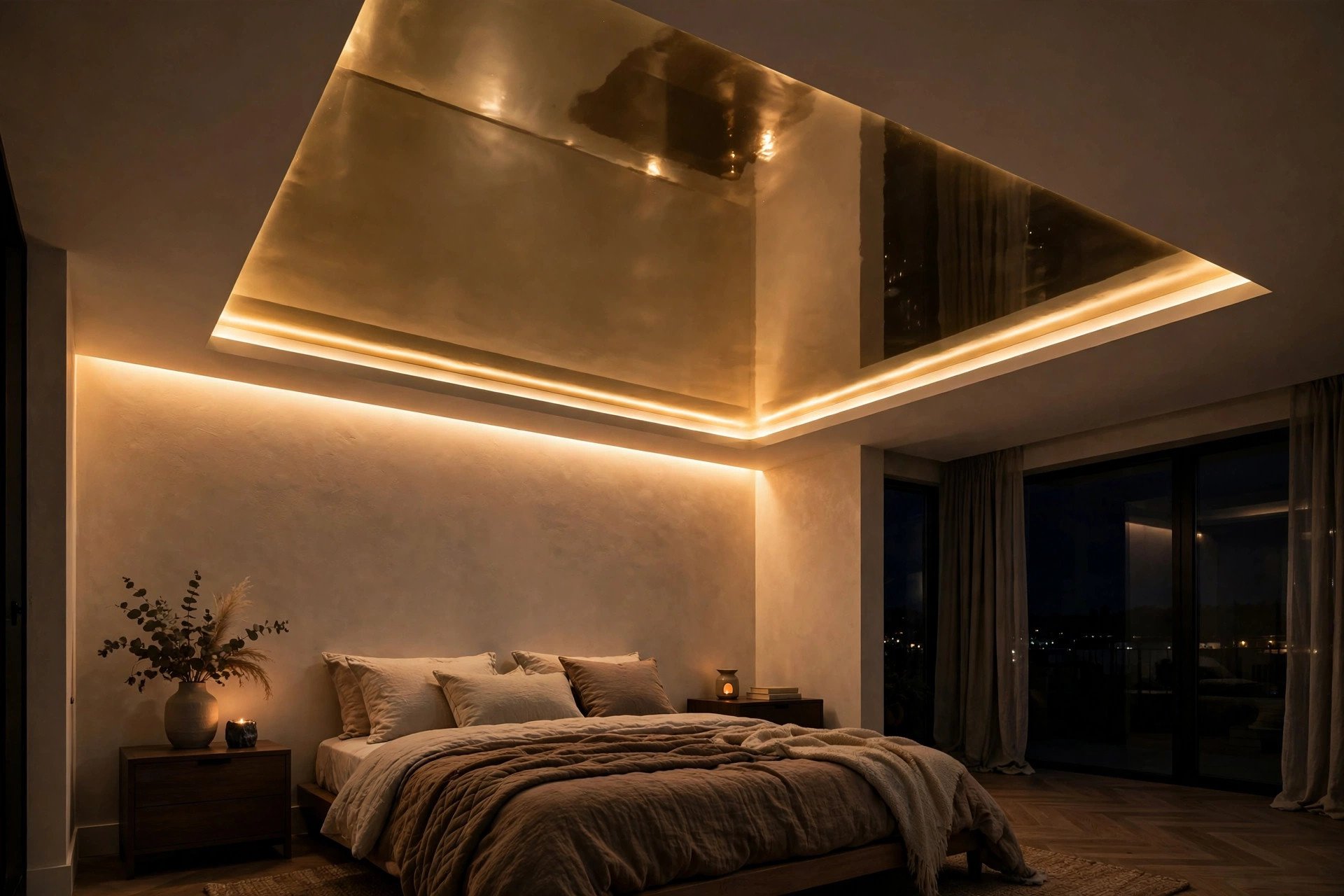
Lacquered glass is plain glass painted on the back side, giving a deep, glossy, seamless colour — white, champagne, grey and black are common. It looks richer than paint and more reflective than laminate. In bedrooms and living rooms it is often paired with an LED cove around the edge, so a thin line of light outlines the coloured panel.
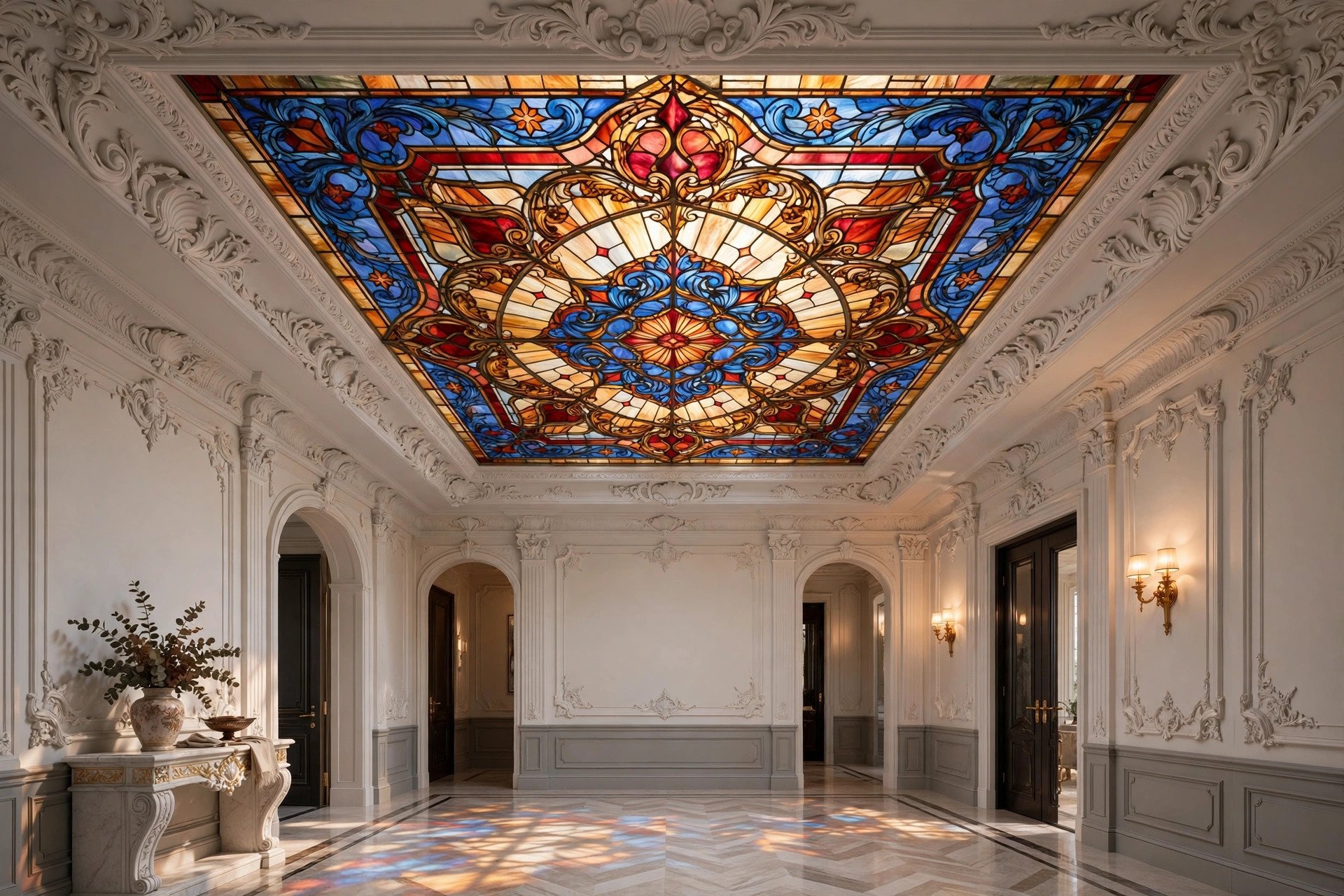
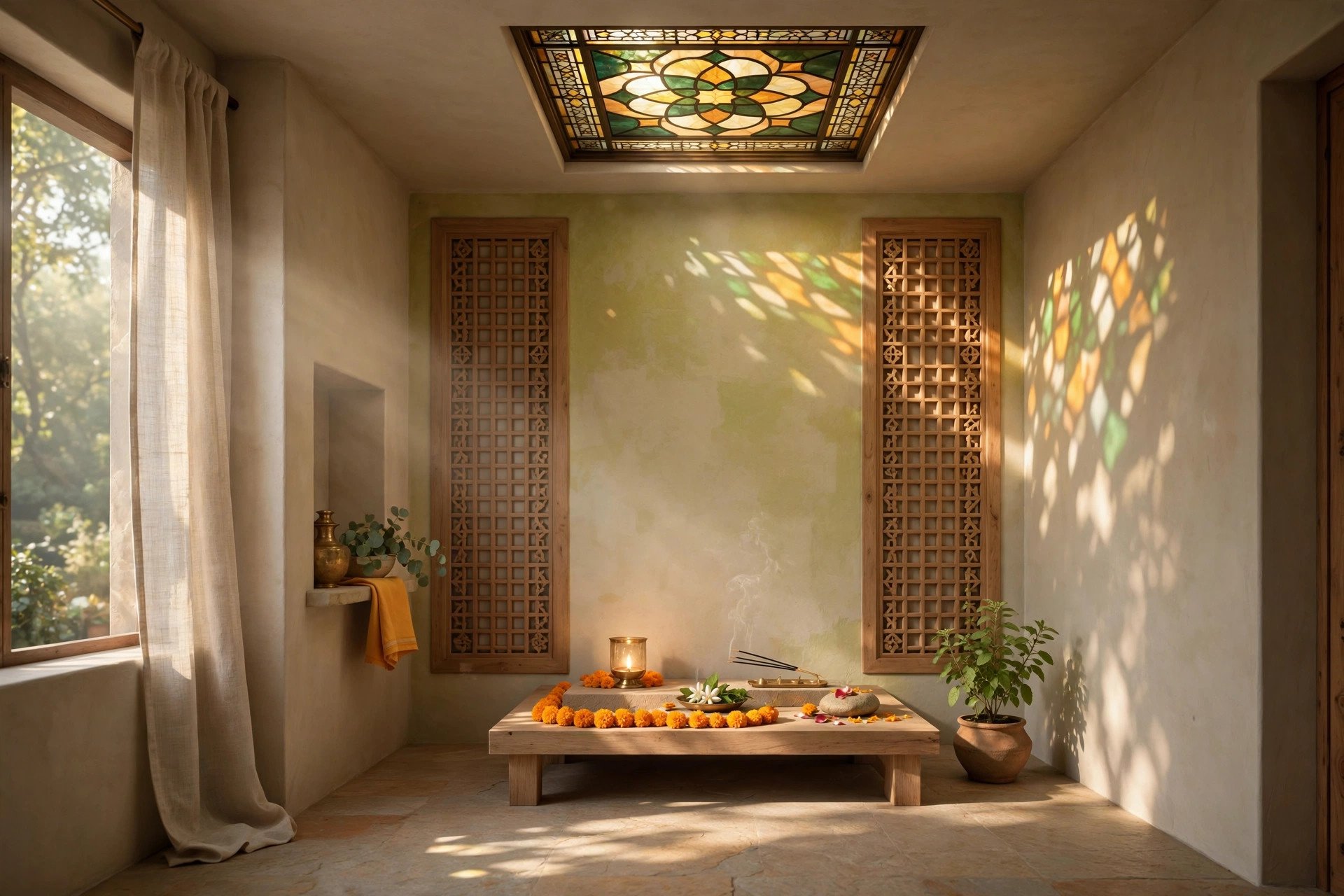
4. Stained-glass insets
Stained glass — small pieces of coloured glass joined in a pattern — is an old idea that keeps returning in Indian homes, especially in prayer rooms and foyers. Set as an inset inside a gypsum border, a stained panel throws gentle coloured light into the room during the day and glows when backlit at night. Keep the panel modest in size; stained glass is handmade work and priced accordingly.
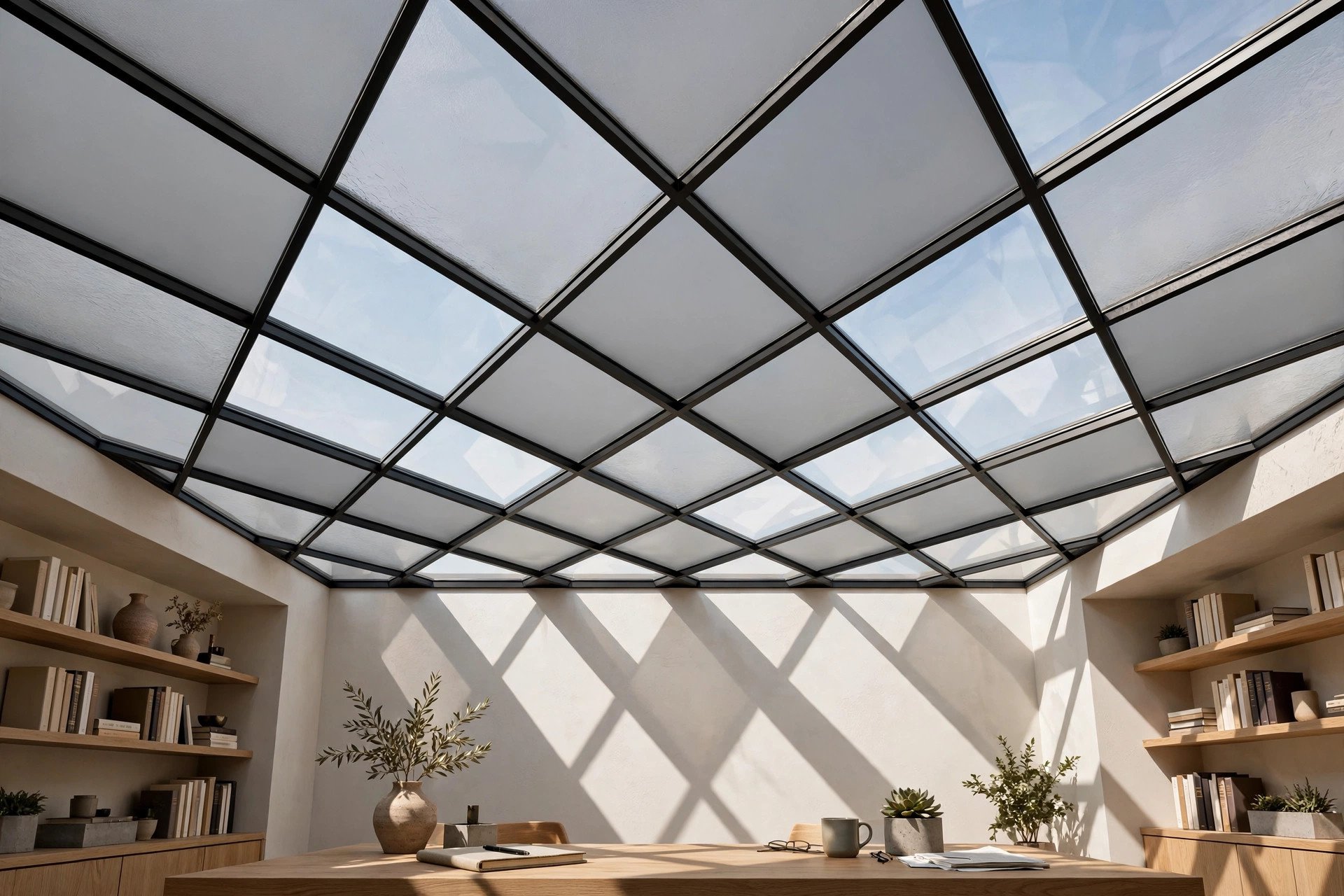
5. Skylight-style glass ceilings
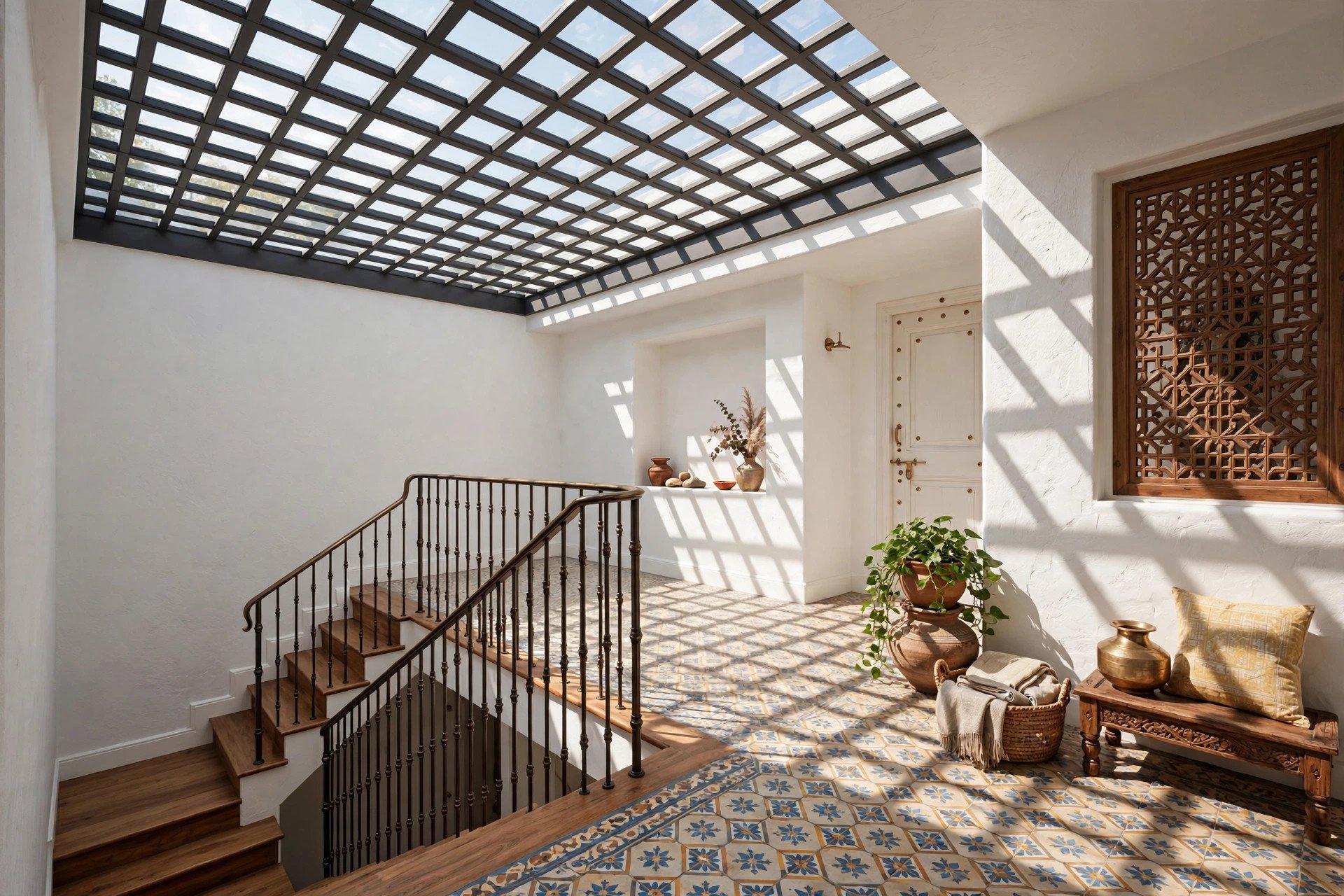
Where the roof allows it — typically the top floor or a staircase landing — a glass panel can work like a skylight, bringing real daylight deep into the house. These use toughened glass on the outer side and laminated glass inside, and they must be professionally installed and weather-sealed. The effect on a dark staircase or corridor is dramatic: one of the few ceiling designs that saves on daytime lighting.
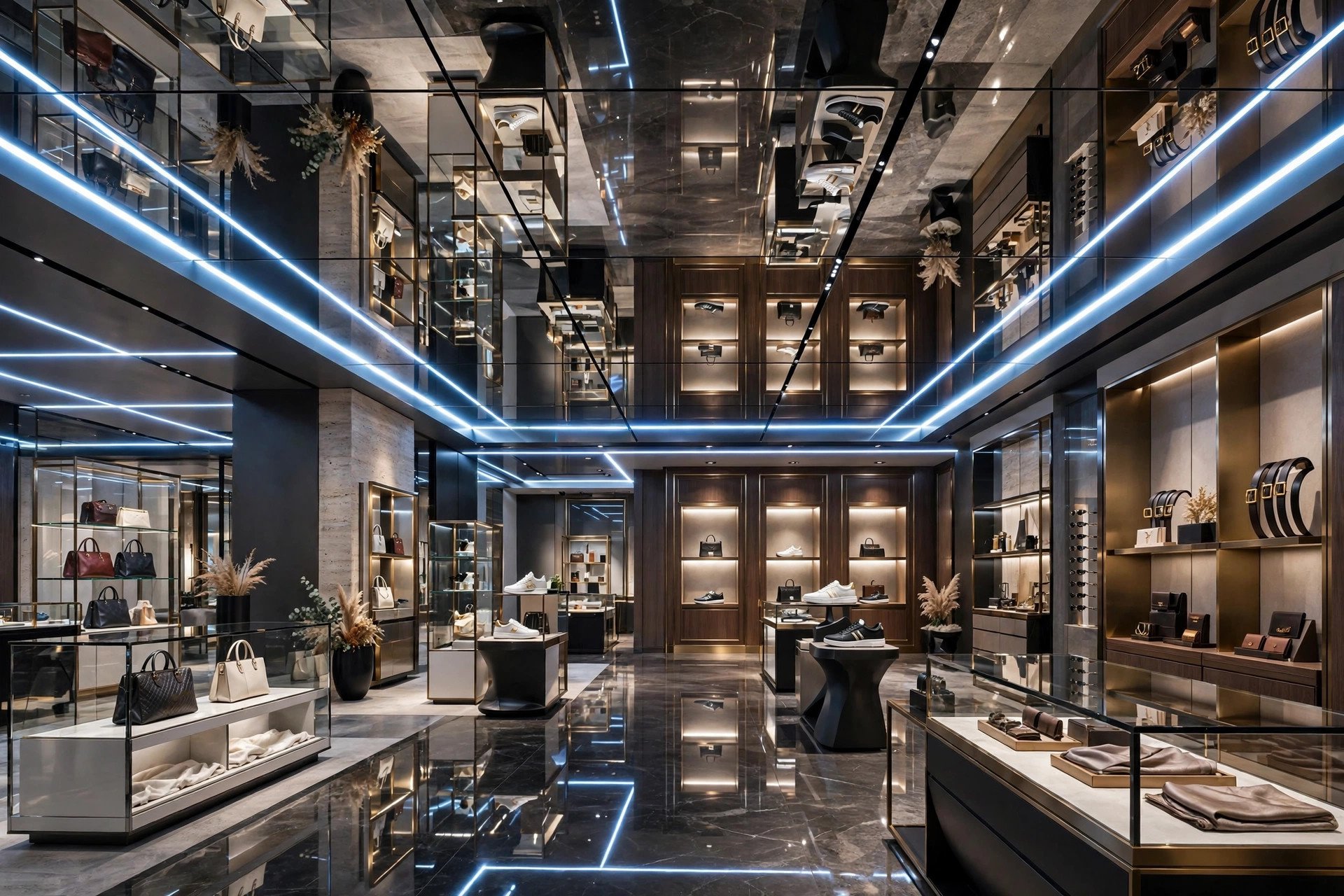
6. Tinted and mirrored glass
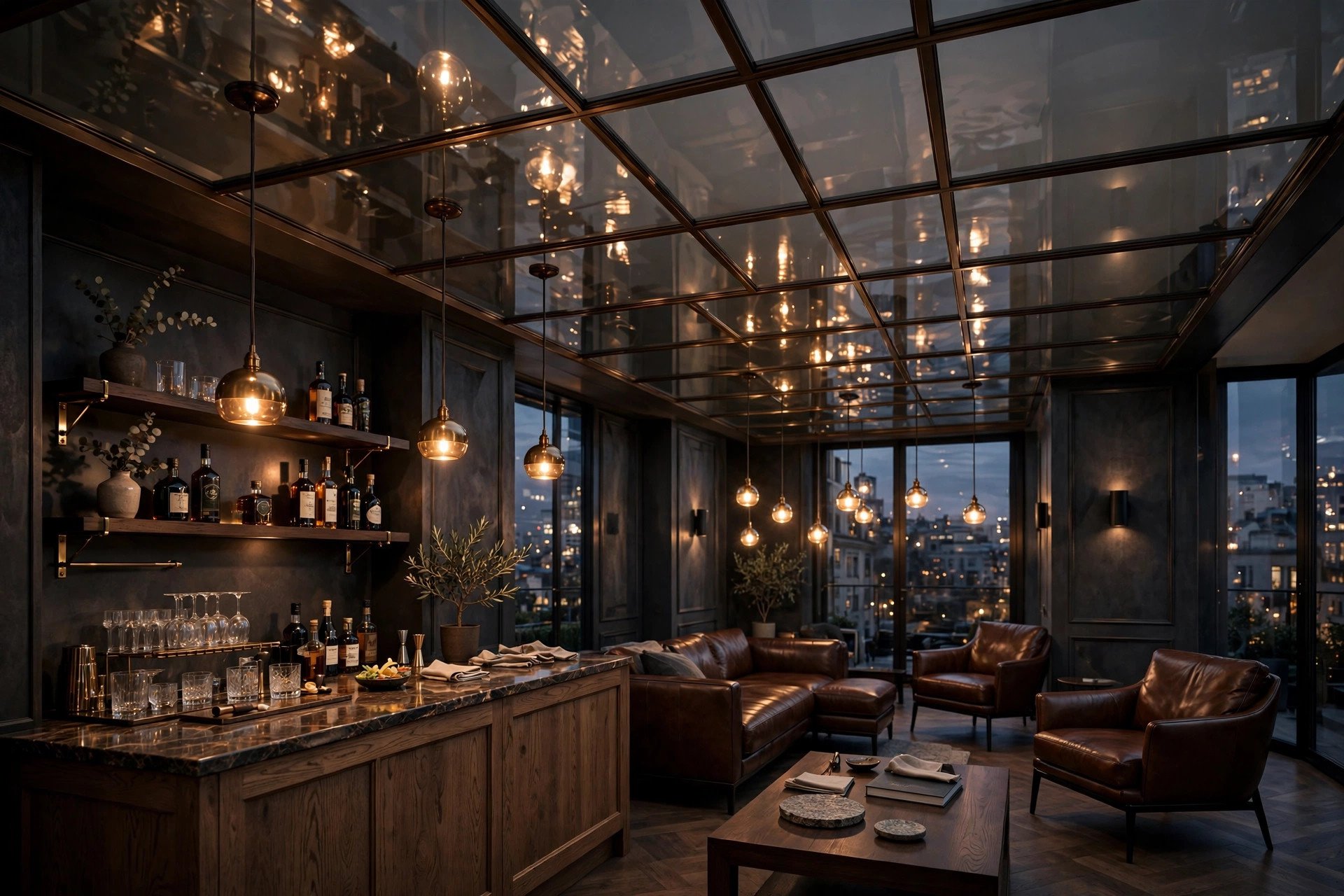
Bronze, grey or blue tints give glass a moody, premium look, while mirrored panels make a small room feel twice its size — a trick borrowed from luxury retail. Tinted glass suits home bars, lounges and showrooms; mirrored ceilings suit compact commercial spaces. One caution: mirrors and dark tints show dust and smudges faster than any other finish.
7. Geometric and patterned glass
Frosted patterns, etched lines and geometric grids break a large glass area into a design rather than a blank sheet. Thin black or brass frames between frosted and clear panels create an art-deco feel that works well in studies and living rooms. Etching is done on the glass surface itself, so it never wears off like a sticker or film would.
8. Glass combined with gypsum or wood
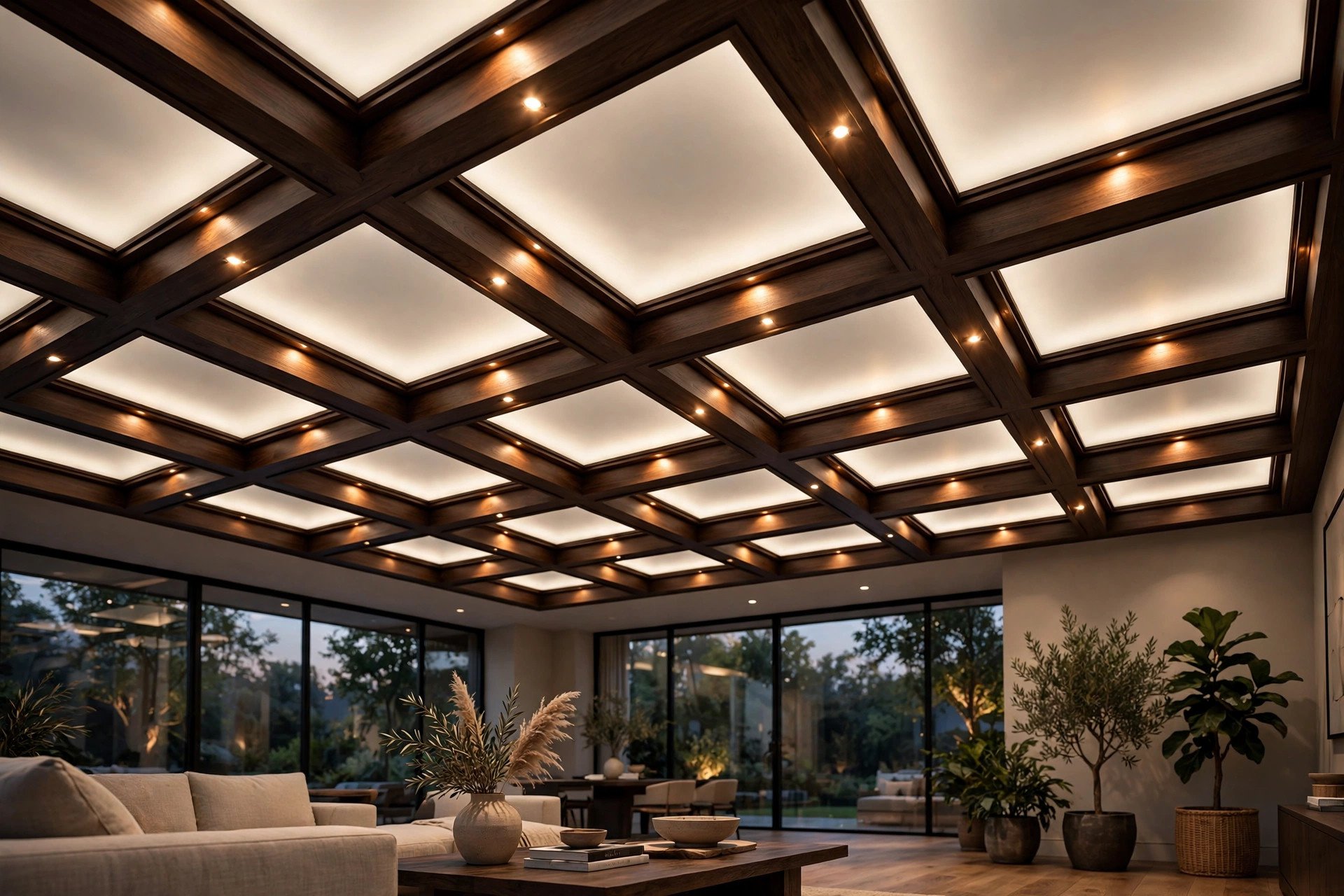
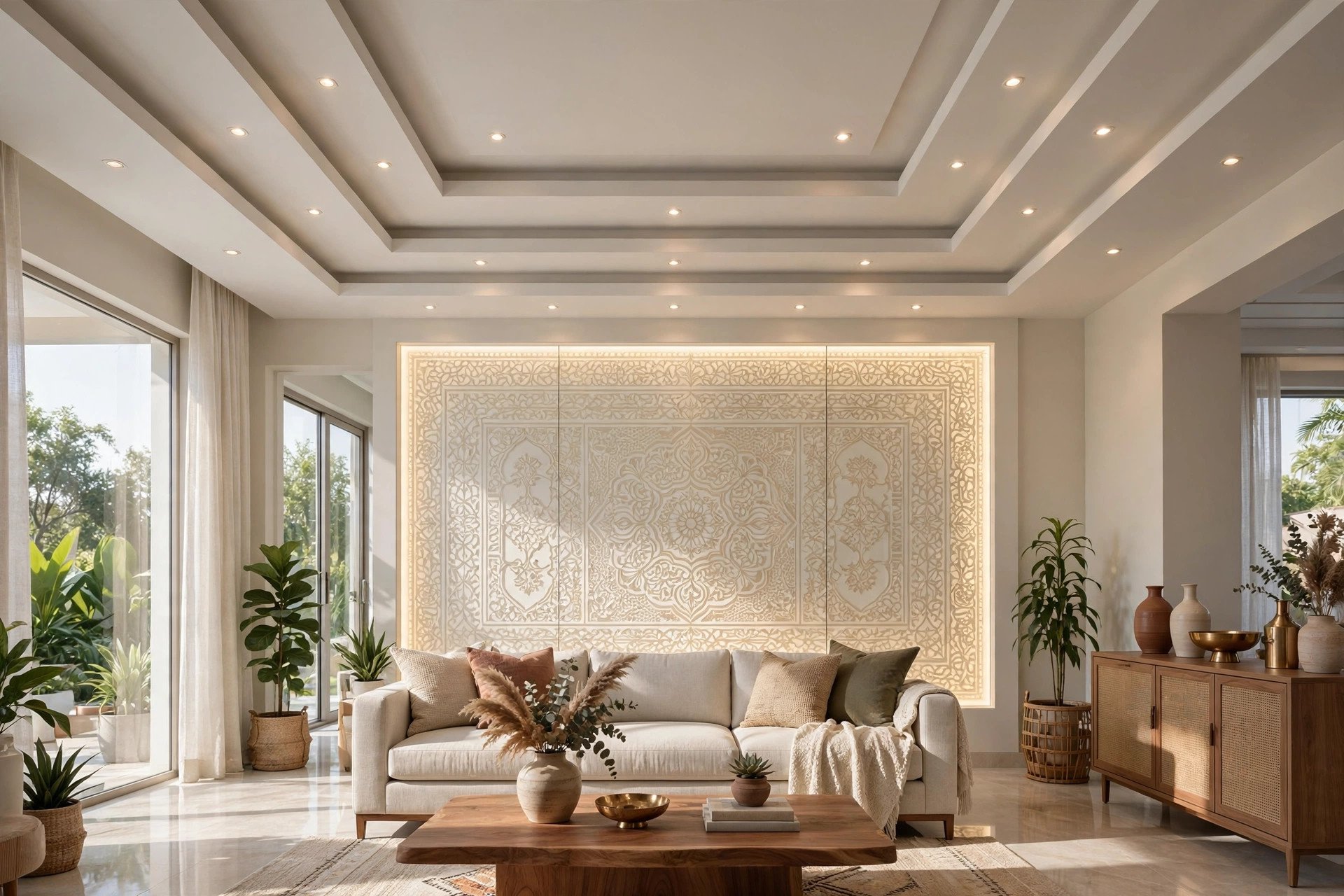
The most practical approach for most homes is a combination: a gypsum or POP ceiling with one or two glass insets, or glass panels held in a wooden coffered frame. You get the glow and the “wow” of glass without paying for a full glass ceiling, and the surrounding gypsum hides wiring and gives you places for regular spotlights. For room-by-room layout ideas, see our hall false ceiling designs.
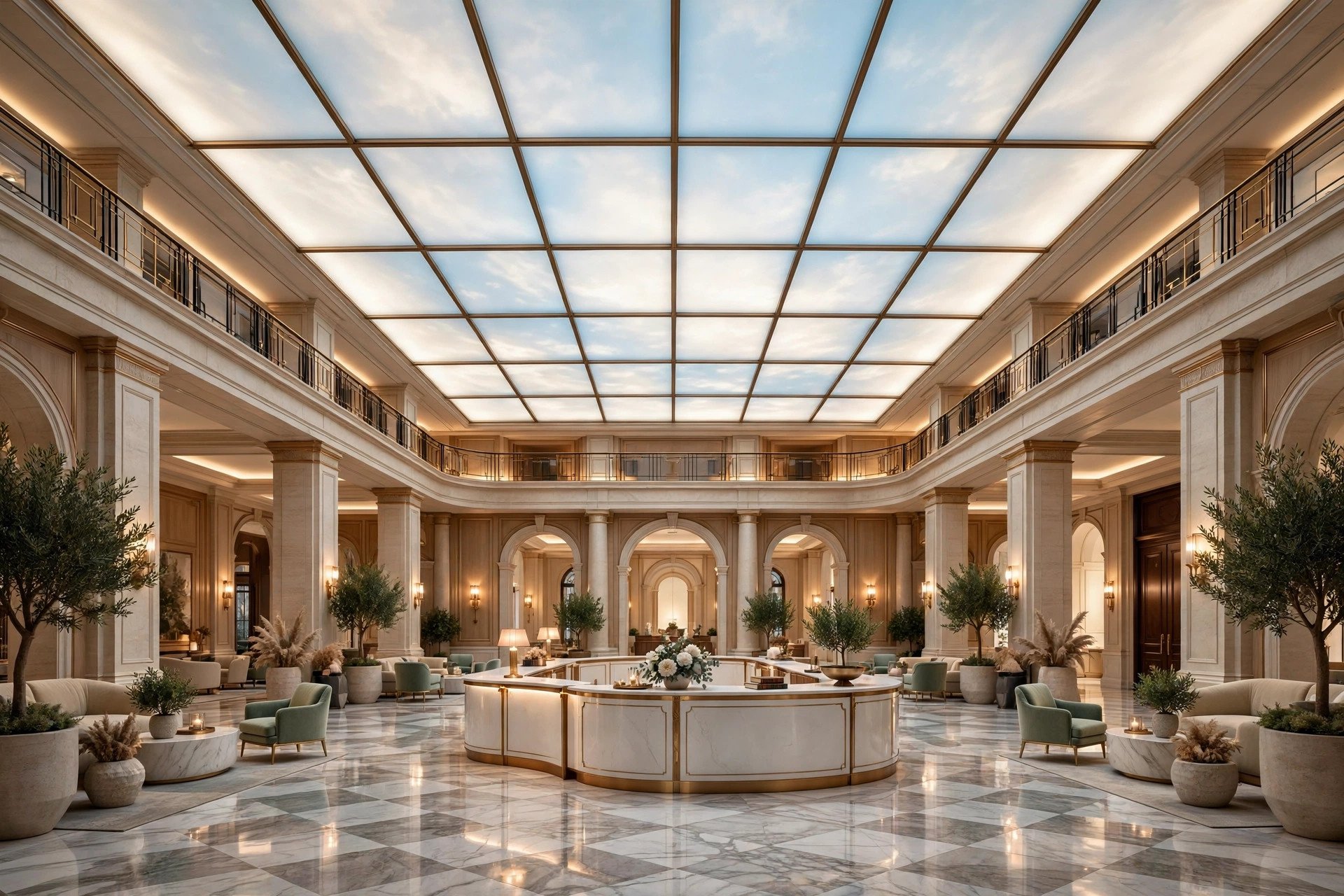
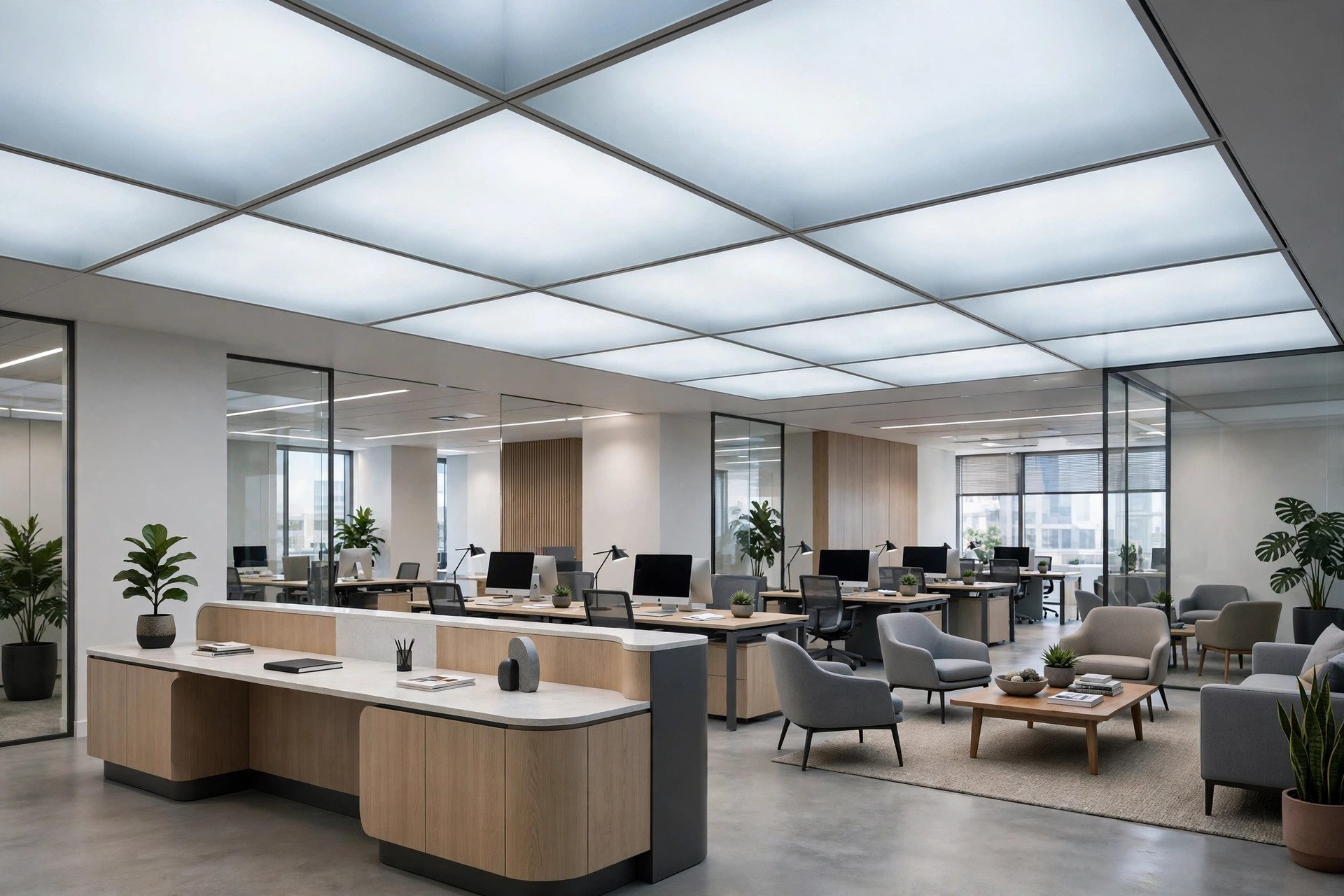
9. Lobbies, offices and commercial spaces
Glass ceilings are most at home in commercial interiors — hotel lobbies, offices, clinics and stores — where the budget is bigger and the “first impression” value of a glowing ceiling pays for itself. In offices, backlit frosted panels double as large, glare-free light sources. In lobbies, a big printed or frosted panel becomes the building’s signature.
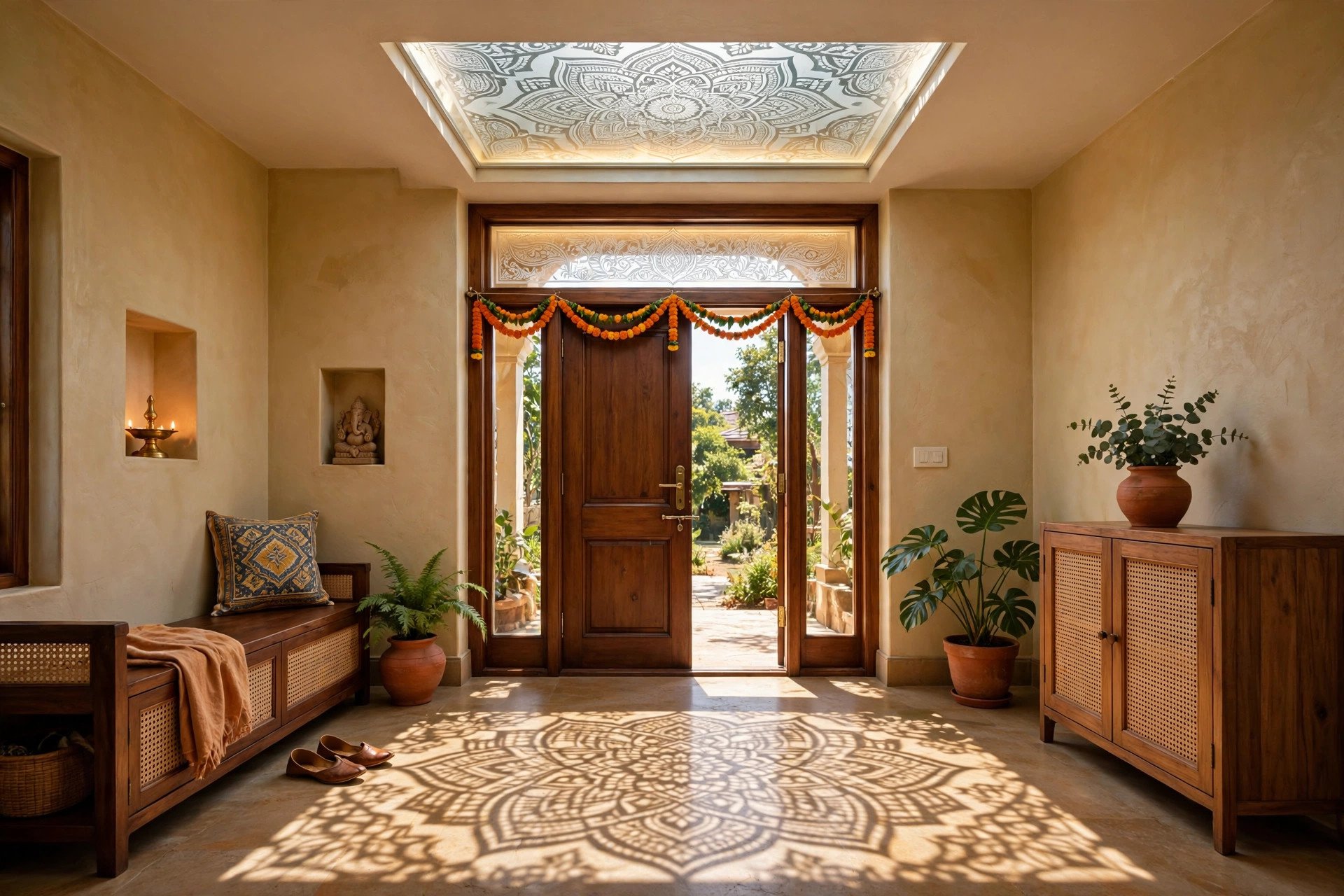
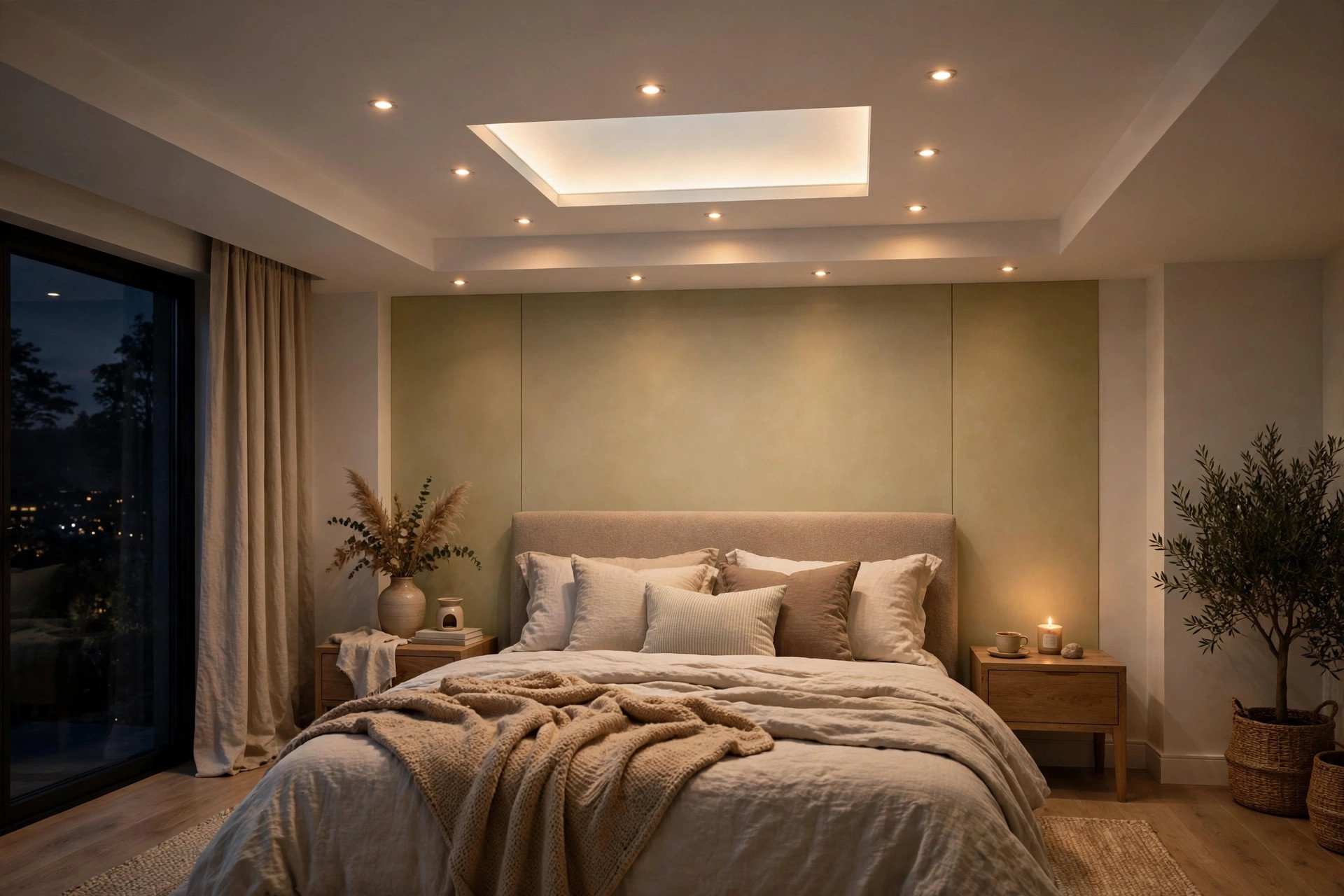
10. Small accents: foyer, bedroom, entryway
You do not need a big budget to use glass. A single backlit panel in the foyer, one frosted accent above the bed, or an etched panel at the entry gives you the effect at a fraction of a full-ceiling cost. Small panels are also easier to clean and cheaper to replace if one ever gets damaged.
Glass false ceiling cost in India
Glass is the costliest mainstream false ceiling material. Three Indian interior guides put the range at roughly ₹200 to ₹600 per sq ft — Simply Interiors lists ₹250–₹550, Ideas & Living’s 2026 guide lists ₹350–₹600, and Kolte Patil’s materials guide lists ₹200–₹500. The wide band is honest: printed, stained and backlit panels cost far more than a plain frosted sheet, and metro labour adds 20–30%.
To make it concrete: a single 4×4 ft backlit frosted panel (16 sq ft) lands around ₹5,600–₹9,600 at those rates; a 10×10 ft area done fully in glass would be ₹35,000–₹60,000 before the LED lighting, framing upgrades and design work. Always get the quote in writing with material (toughened/laminated?), framing, lighting and labour split out — “per sq ft” figures in online guides blur material and installed cost.
What about acrylic sheet false ceiling design as the cheaper lookalike? Supplier listings in India show acrylic ceilings at roughly ₹110 per sq ft with installation (Akluj listing) to ₹160 per sq ft for material in bulk (Pune listing), with design-grade acrylic sheets higher. That is meaningfully below glass guide rates — but acrylic is plastic, not glass, and the difference shows up close. More on that below.
Glass vs acrylic — an honest comparison
Many “glass ceilings” in budget quotes are actually acrylic sheets. Here is how they genuinely differ:
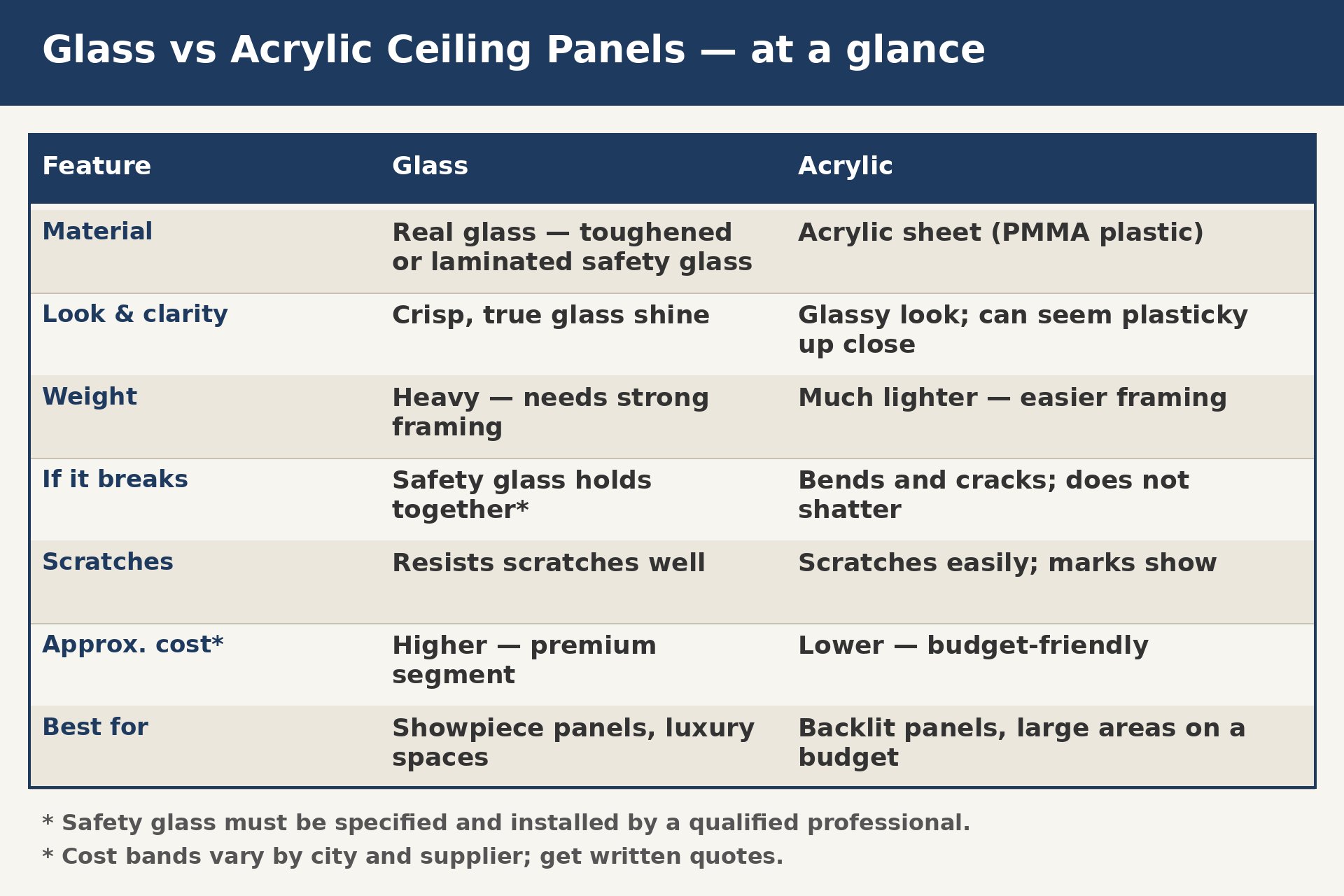
The short version: choose real glass for a showpiece you will look at every day — the clarity and scratch resistance are visibly better. Choose acrylic for large backlit areas on a budget, or where weight is a concern. Either way, ask the contractor to write down which material is actually being supplied; “glass finish” in a quote sometimes means acrylic.
Pros and cons of a glass false ceiling
Pros
- Stunning with backlighting. No other ceiling material glows the way backlit glass does.
- Makes rooms feel bigger and brighter. Reflective and translucent panels create an illusion of space and spread light evenly.
- Highly customisable. Frosted, tinted, etched, lacquered, printed or stained — the design options are wider than with any board material.
- Easy to wipe clean and waterproof. Glass does not absorb moisture, stains or cooking grease the way POP and gypsum can.
- Fire-resistant and long-lasting. Glass does not burn, and panels do not sag or yellow the way some plastics do.
Cons
- Expensive. At roughly ₹250–₹600 per sq ft in Indian guides, it costs 3–5× a gypsum ceiling.
- Heavy. Glass needs a strong, properly anchored frame — the structure must be designed for the weight, not improvised.
- Shows dust and fingerprints. In Indian homes, this is the daily reality: glossy and dark glass needs frequent wiping.
- Breakage risk. Only toughened or laminated safety glass belongs overhead, and even then installation must be professional.
- Complex installation, limited repair. A cracked panel usually means replacing the whole panel, and matching a printed or stained design later can be difficult.
- Not DIY. Every guide that covers this is unanimous: glass ceilings must be professionally installed.
Safety: the non-negotiable part
Glass above your head is a safety item first and a design item second. Three rules cover most of the risk:
- Only safety glass overhead — toughened or laminated. Laminated glass is made with a plastic interlayer that holds the pieces together if the panel ever cracks, which is why manufacturers list glass ceilings among its intended uses. Ordinary annealed glass has no place in a ceiling.
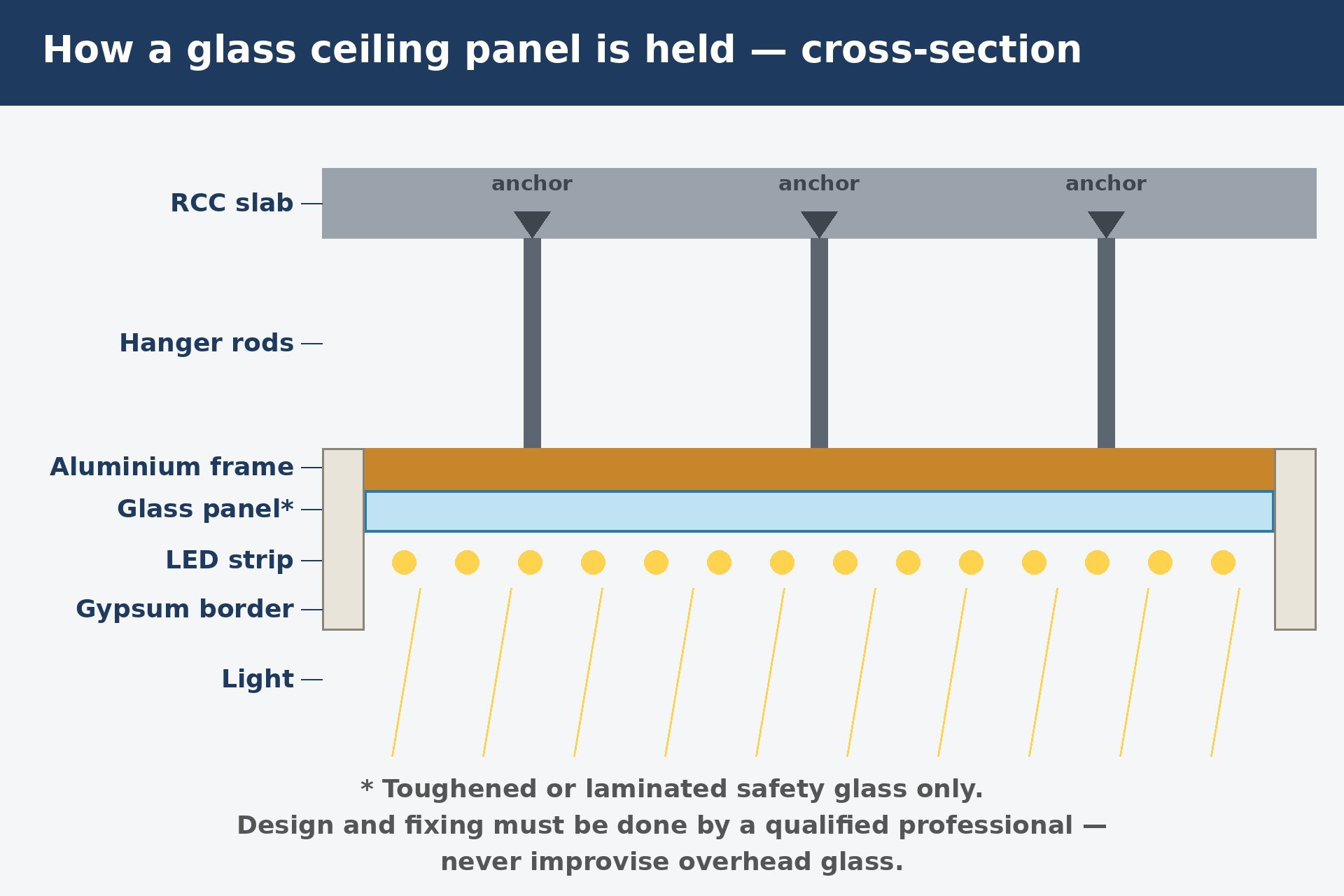
- A qualified professional must design the fixing. Anchors into the RCC slab, hanger rods, and a frame rated for the panel weight are structural decisions. Never let a contractor improvise the suspension or hang glass from a frame meant for gypsum boards.
- Plan for electricity properly. Backlit panels mean LED drivers and wiring above the glass — a licensed electrician should handle the connections, and drivers should stay accessible for replacement.
One 2026 cost guide puts glass ceiling installation at 4–6 days for a standard job — slower than gypsum because every panel is custom-cut and the framing is heavier. If a contractor promises a full glass ceiling in a day or two, ask what is being skipped.
Where a glass ceiling works — and where it doesn’t
Works well: dining rooms (the classic backlit panel over the table), entrance lobbies, retail stores and showrooms, restaurants, offices, prayer rooms (stained-glass insets) and staircase landings (skylight-style). These are spaces where the “wow” justifies the cost and the ceiling is high enough for a proper frame.
Think twice: bedrooms (keep it to one accent panel — a full glowing ceiling can feel restless at night), kitchens (glass handles grease better than gypsum, but heat and daily grime mean constant cleaning), and children’s rooms (weight and breakage risk argue for lighter materials).
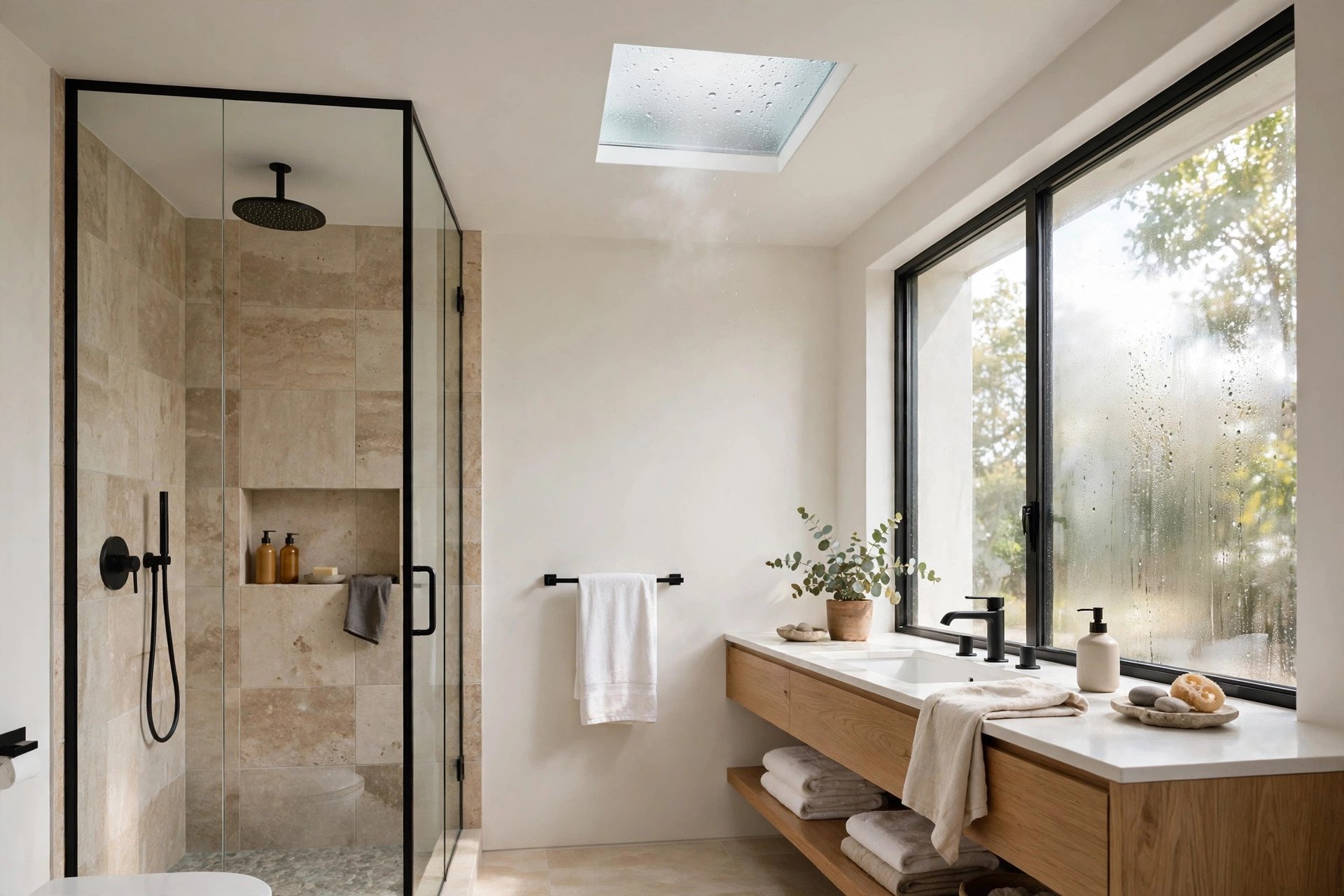
Avoid or use with caution: bathrooms — glass is waterproof, but steam condenses on it and constant moisture around the frame’s fixings needs proper sealing and ventilation; low ceilings under 9 feet — a glass panel plus its frame eats 6–10 inches of height, which a low room cannot spare; and any space where you cannot get a qualified installer. For moisture-heavy spots like balconies, our balcony false ceiling guide covers which materials actually survive the weather.
Cleaning and maintenance in Indian dust
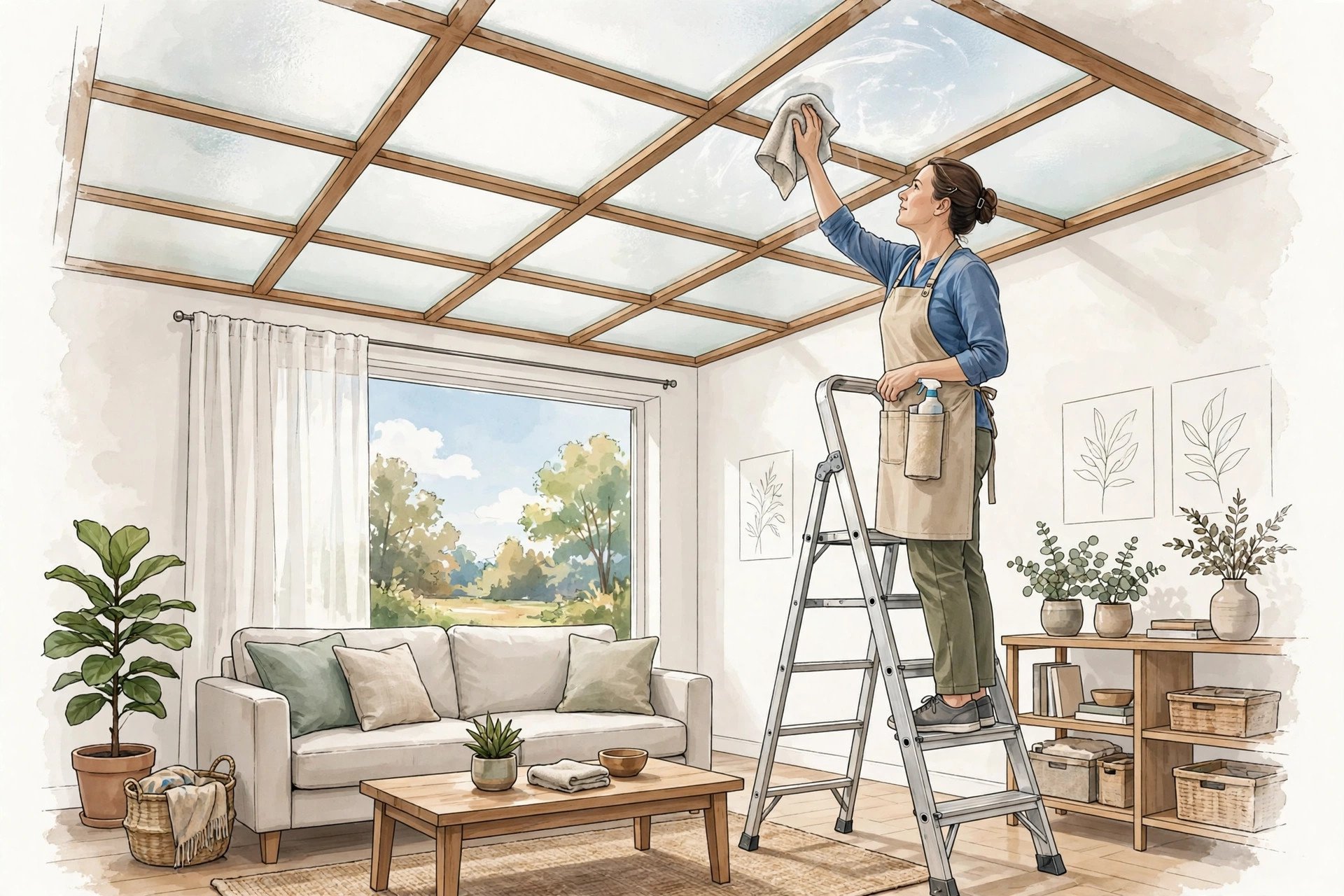
Here is the honest routine: a glass ceiling in an Indian home needs wiping every 1–2 weeks — dust settles on the upward face of panels and fingerprints show on glossy finishes. The good news is that cleaning is simple:
- Use a soft microfibre cloth or a flat mop with an extendable handle; never abrasive scrubbers, which scratch even toughened glass over time.
- A mild glass cleaner or diluted vinegar-water works; avoid harsh chemicals on lacquered (back-painted) panels — clean only the exposed face.
- For backlit panels, dust the LED side during the wipe-down; a dusty diffuser can dim the glow noticeably.
- Check the frame sealant and fixings once a year. If a panel ever cracks, keep people away from directly below it and call the installer — do not try to remove overhead glass yourself.
FAQs
Is a glass false ceiling safe?
It can be, but only with the right specification: toughened or laminated safety glass, a properly anchored frame, and professional installation. Laminated glass holds together if it cracks, which is why manufacturers recommend it for overhead use. Ordinary glass should never go in a ceiling, and the structural design should always be done by a qualified professional — never improvised.
How do I clean a glass false ceiling?
Wipe it every 1–2 weeks with a soft microfibre cloth and mild glass cleaner, using an extendable handle or a sturdy ladder. Avoid abrasive scrubbers and harsh chemicals, especially on lacquered panels. Dust the LED diffuser too, since dust visibly dims backlit panels.
Glass vs acrylic — which is better for a false ceiling?
Real glass looks sharper, resists scratches and lasts longer, but costs several times more and is heavy. Acrylic is lighter and much cheaper — Indian supplier listings show roughly ₹110–₹160 per sq ft — but it scratches easily and can look plasticky up close. Pick glass for a showpiece panel and acrylic for large backlit areas on a budget, and make sure the quote names the actual material.
How much does a glass false ceiling cost in India?
Indian interior guides quote roughly ₹250–₹600 per sq ft, with the exact figure depending on the glass type (plain frosted at the lower end; printed, stained or backlit at the higher end), city labour rates and design complexity. A single 4×4 ft backlit panel typically lands around ₹5,600–₹9,600 before lighting extras. Get a written quote that splits material, framing, lighting and labour.
Can I install a glass panel in the bathroom?
Glass itself is waterproof, so it survives bathrooms better than gypsum or POP. But steam condenses on it, the frame fixings need proper sealing against constant moisture, and the room needs good ventilation. A small frosted panel can work; a full glass bathroom ceiling is high-maintenance. Consider it only with a professional who has done wet-area glass before.
How long does a glass false ceiling last?
Glass does not sag, yellow or absorb moisture, so the panels themselves last decades — one 2026 guide suggests 25–30 years. What ages is everything around the glass: LED drivers (replaceable), sealants and frame finishes. Budget for re-lamping the backlight every few years, not for replacing the glass.
All images in this article are original concept renders created for illustration, not photographs of completed projects.