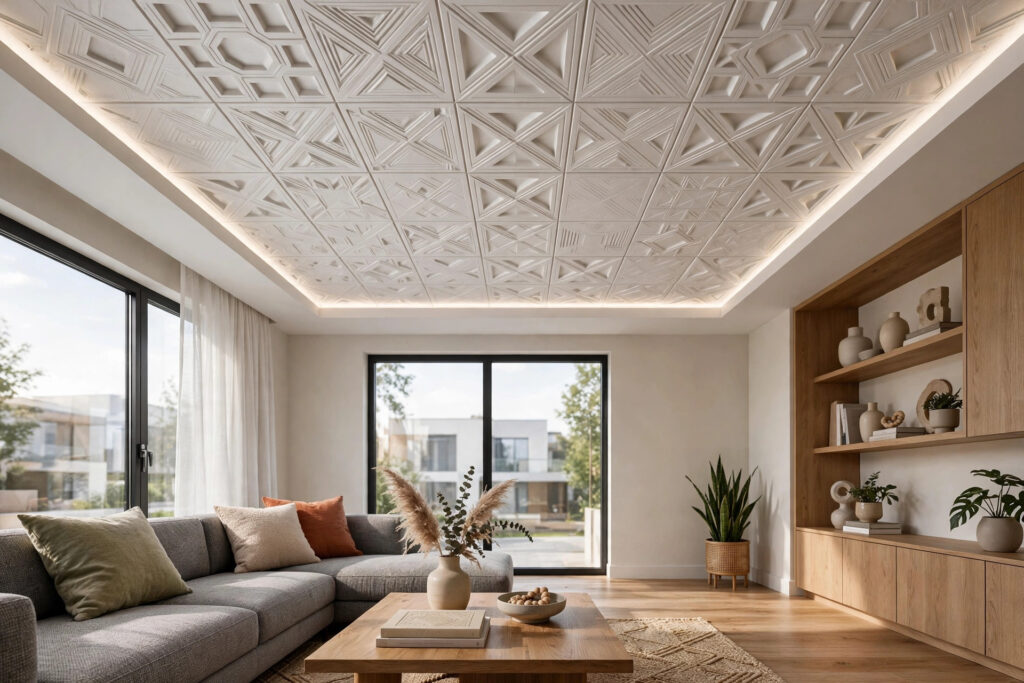

If you want a false ceiling on a tight budget, thermocol will almost certainly come up as an option. It is one of the cheapest ceiling materials available in India, it is light enough to fix with adhesive, and it genuinely helps keep rooms cooler in summer. But it is also fragile, a dust magnet, and — most importantly — combustible. This guide gives you the full picture: the thermocol false ceiling designs that actually look good, what they cost in India, honest pros and cons, and the fire-safety cautions no seller will volunteer.
What is a thermocol (EPS) false ceiling?
Thermocol is the common Indian name for expanded polystyrene (EPS) — a rigid, feather-light foam made from styrene, a petroleum by-product. During manufacturing, polystyrene is fused with carbon dioxide into styrofoam, which is then set into the familiar white boards, sheets and tiles. Millions of tiny closed air cells are trapped inside the material, and still air is a poor conductor of heat — which is why the same material is used in ice boxes and roof insulation.
A thermocol false ceiling is simply a ceiling layer made from these EPS boards or decorative tiles, fixed directly under your structural slab — usually with adhesive — instead of hanging from a metal frame like gypsum or PVC false ceiling designs. Common tile sizes are 600×600 mm, and thicknesses in Indian listings range from thin 6 mm tiles to 40–50 mm slabs.

Thermocol false ceiling designs worth considering
Thermocol is easy to cut, carve and shape, so the design range is wider than most people expect. Here are the variants you will actually find in the Indian market, from the cheapest to the most decorative.
1. Plain white grid tiles — the budget classic
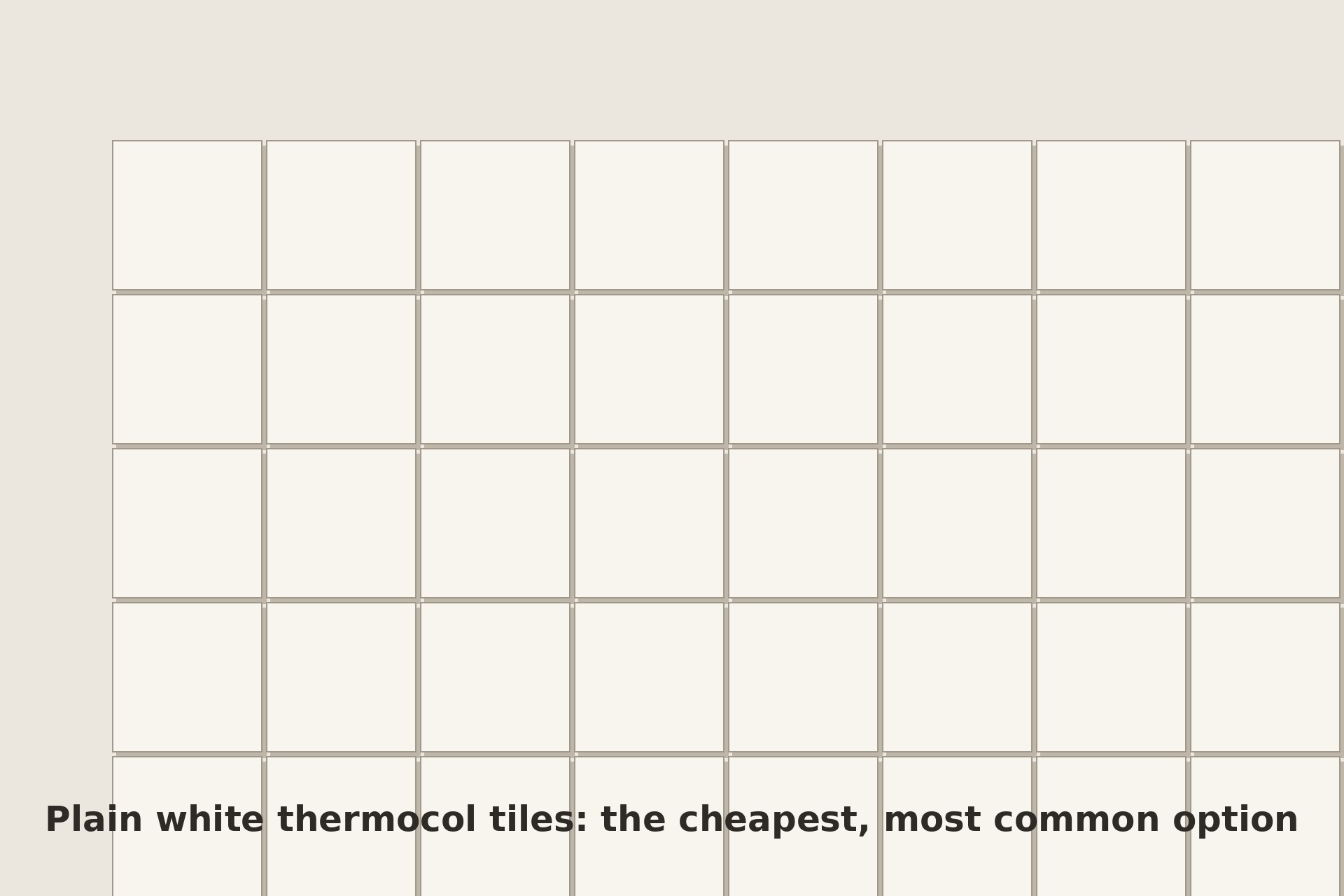
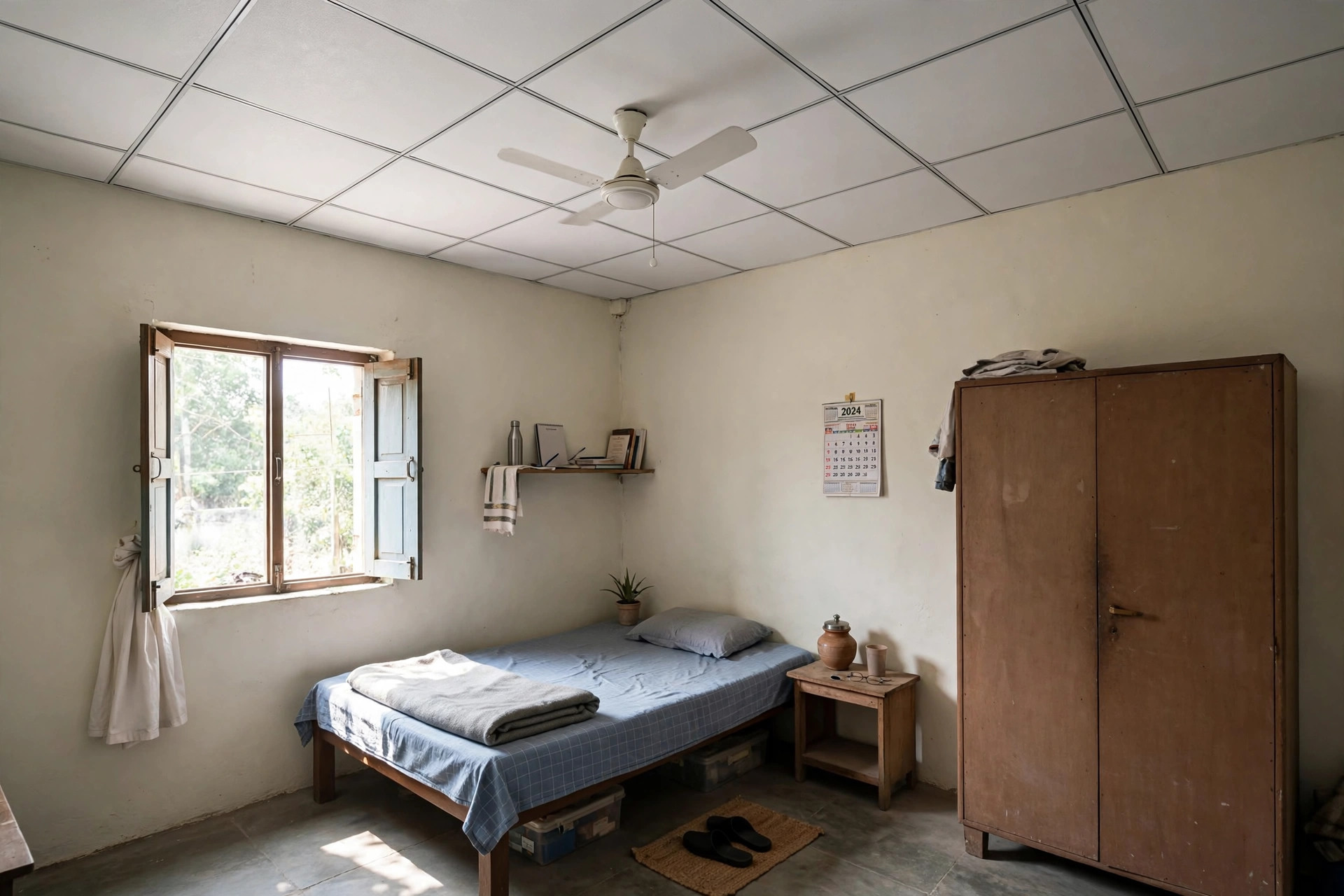
The simplest option: plain white EPS tiles in a 600×600 mm grid, stuck straight onto the slab. It looks clean, hides wiring and pipework, and costs the least — the default for budget bedrooms, rented flats and small offices.
2. Geometric patterned tiles
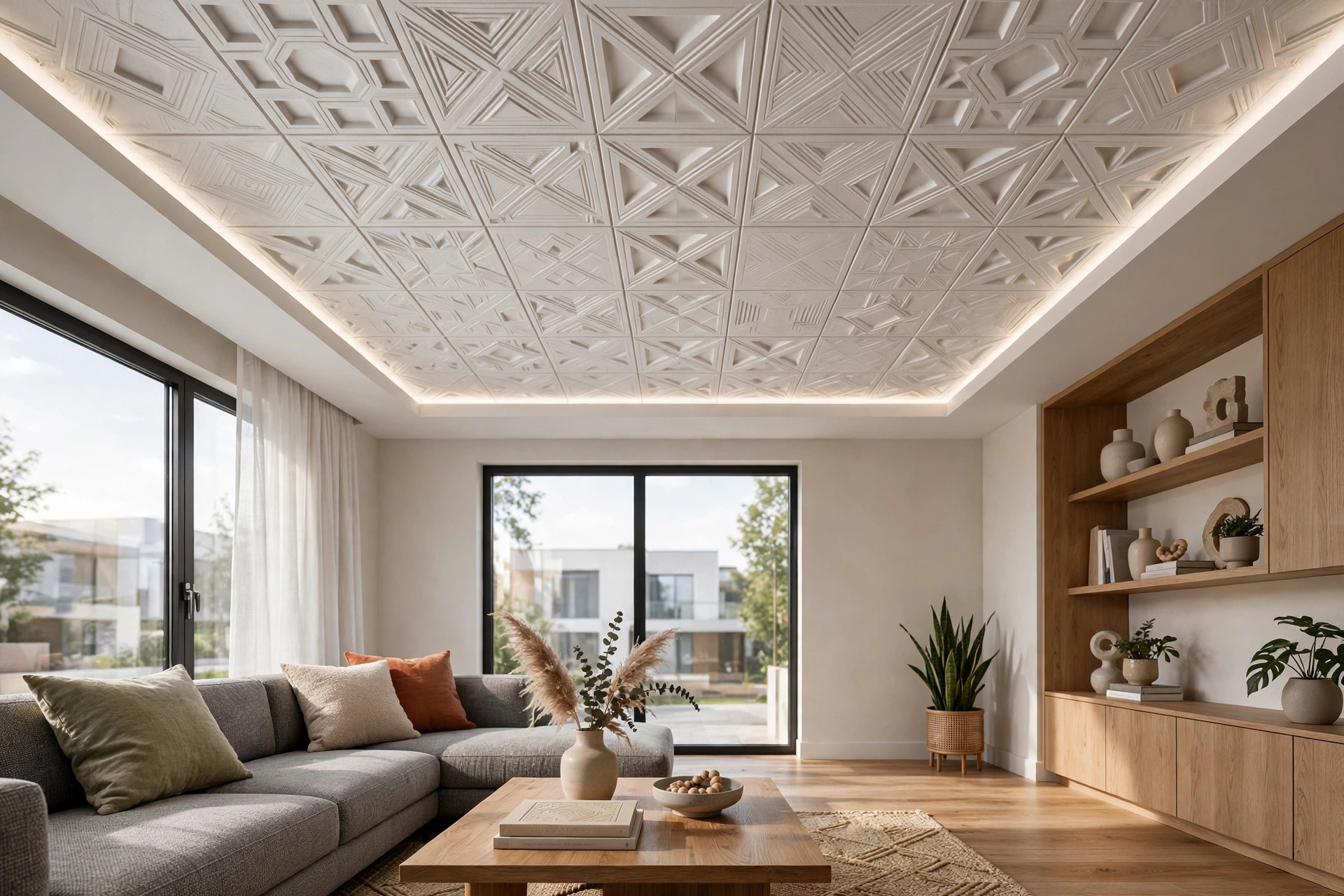
Factory-moulded tiles with raised geometric patterns — diamonds, chevrons, nested squares — add texture and shadow play without extra work. They are the easiest upgrade from plain tiles and suit living rooms where the ceiling is in full view.
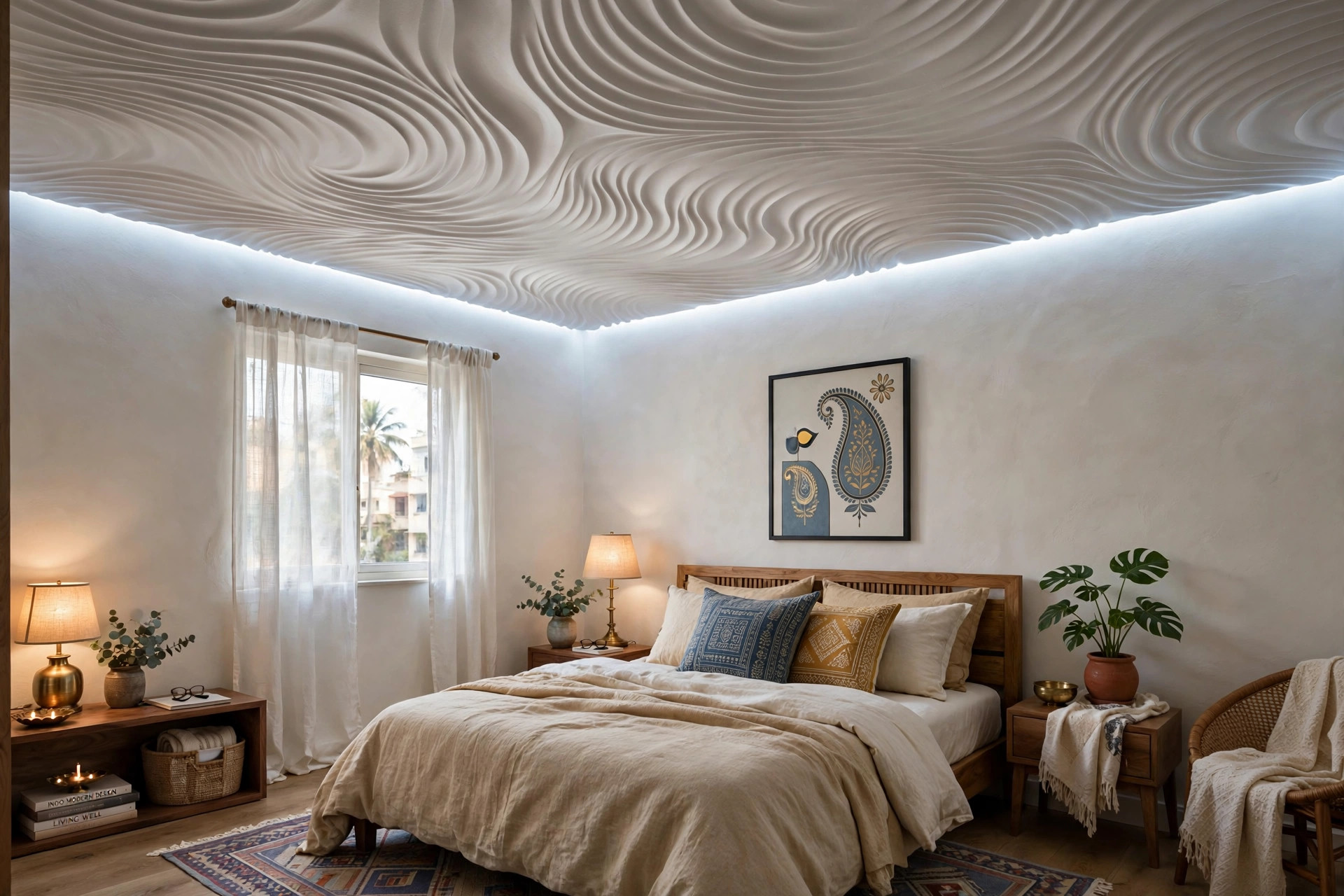
3. 3D sculptural EPS panels
Thicker EPS panels with wave, dune or petal-like relief create a genuinely three-dimensional ceiling for bedrooms and lounges. Keep the relief shallow in low-height rooms, or the ceiling will feel like it is pressing down on the room.
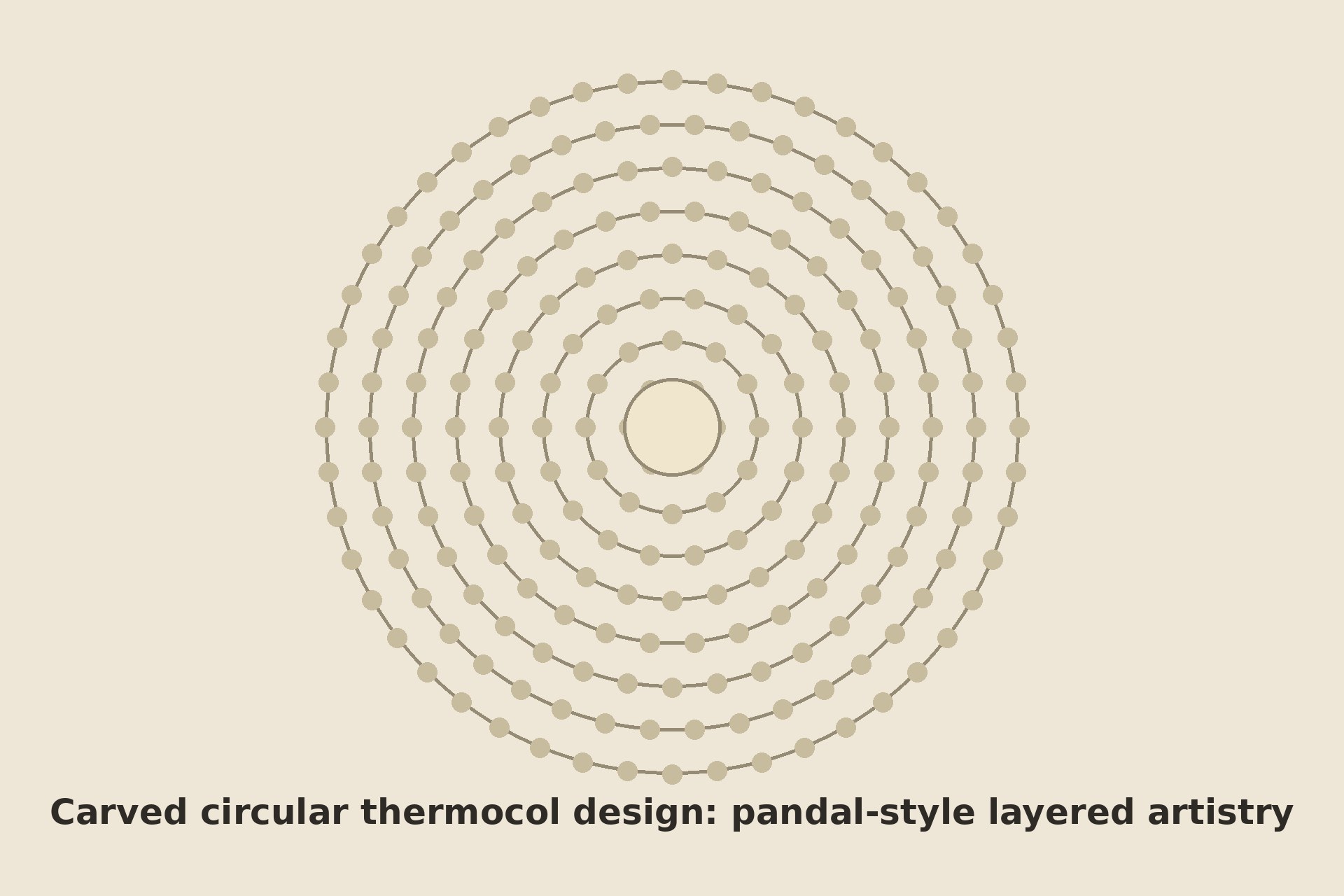
4. Carved circular designs
Layered circular carvings — the kind you see in Durga Puja and Ganesh pandals — translate beautifully to home ceilings. Concentric rings with backlighting create depth and a festive richness. These are usually custom-cut, so expect the higher end of the thermocol price range.
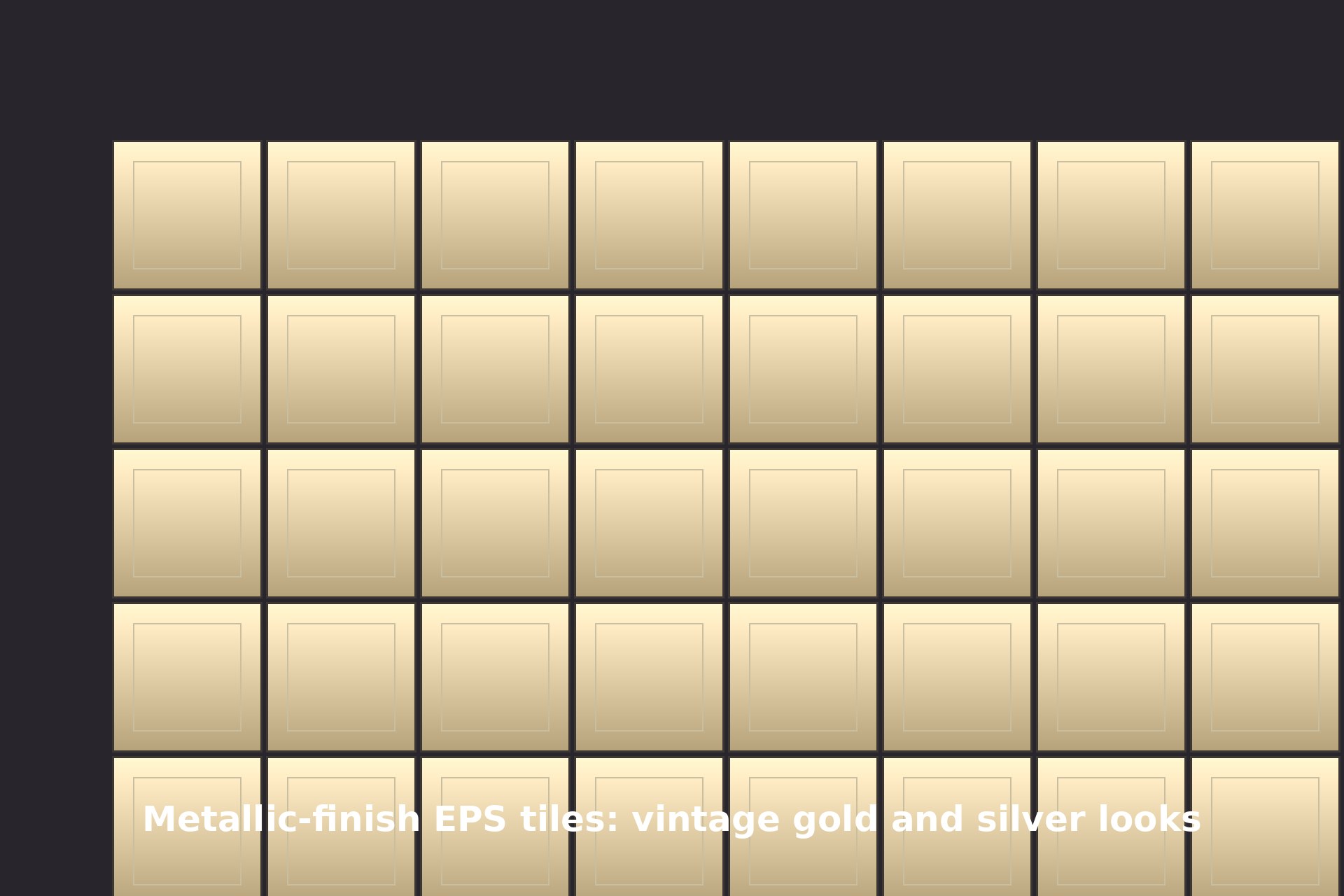
5. Metallic-finish tiles
EPS tiles with a metallic gold or silver coating give a vintage look at a fraction of the cost of real metal ceilings, and they reflect light well in small rooms. The coating can look cheap up close, so reserve these for ceilings viewed from a distance.
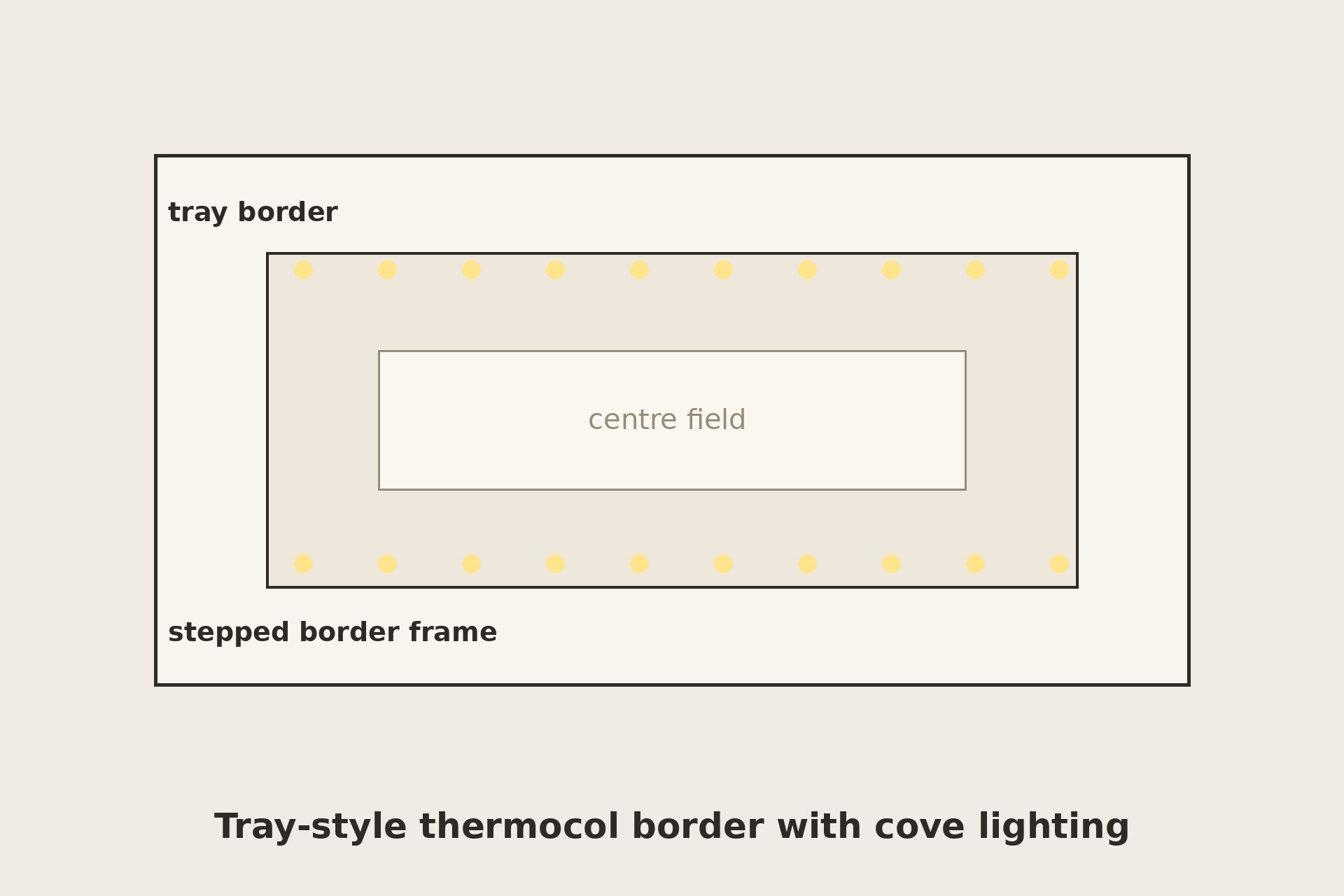
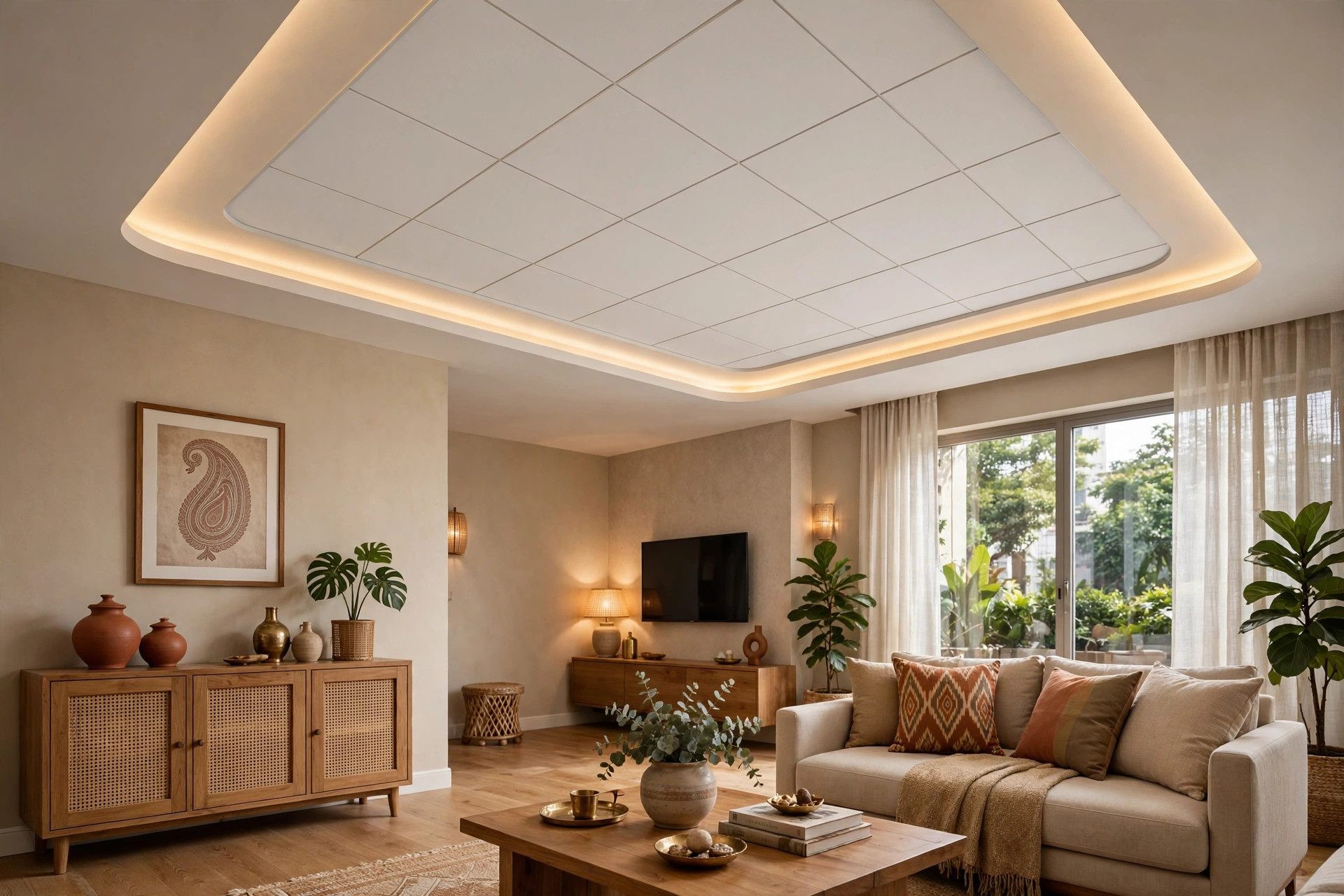
6. Tray borders with cove lighting
A stepped thermocol border frame around the room’s perimeter, with LED strips hidden in the recess, is the most popular “premium look on a budget” trick. Use cool-white LEDs — warm lights placed too close can fade or warp thermocol over time.
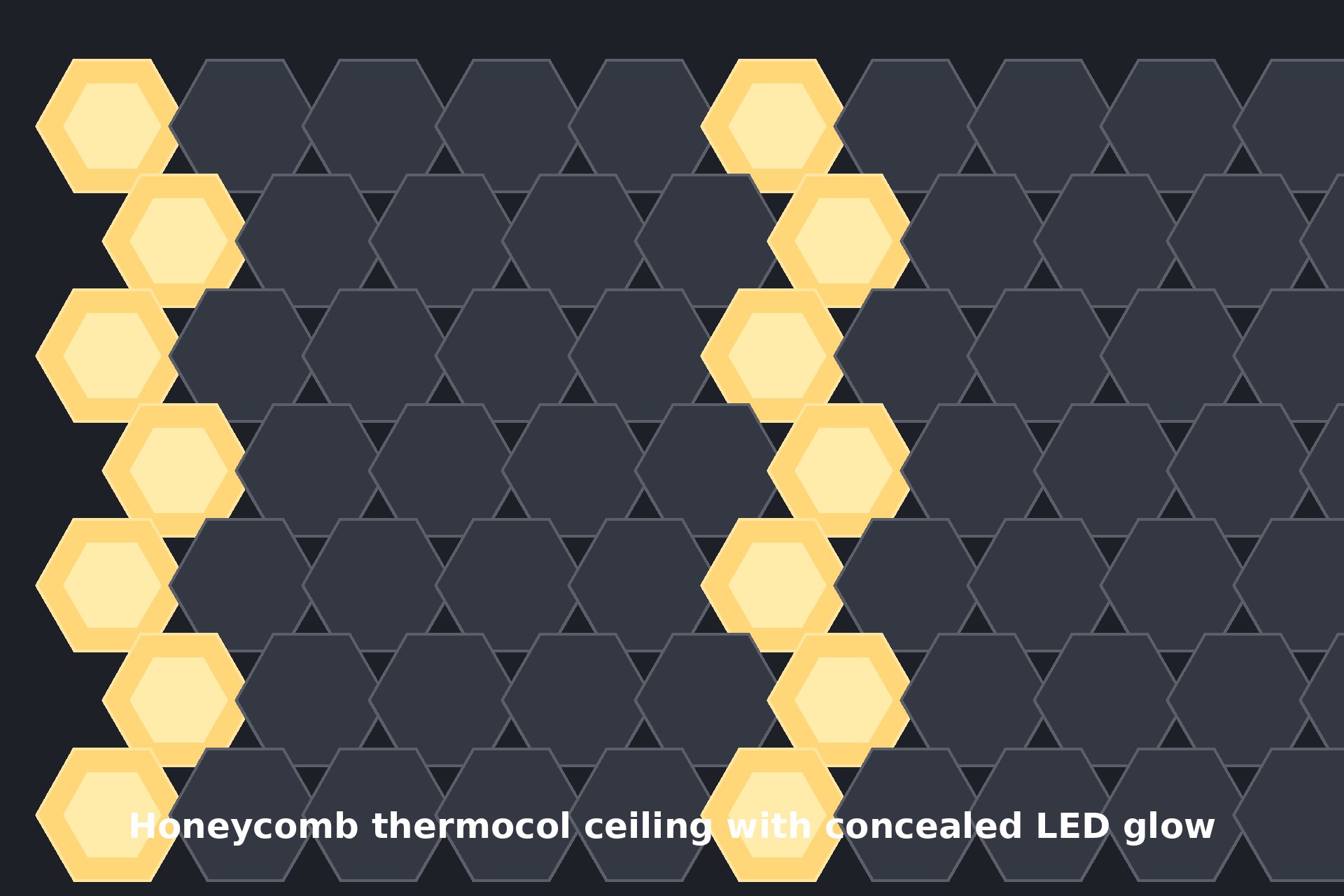
7. Honeycomb designs with concealed LEDs
Hexagonal EPS modules with glowing inserts make a striking feature ceiling for dens, gaming rooms and kids’ rooms. Plan the module spacing on paper before a single tile goes up — this is fiddly work.
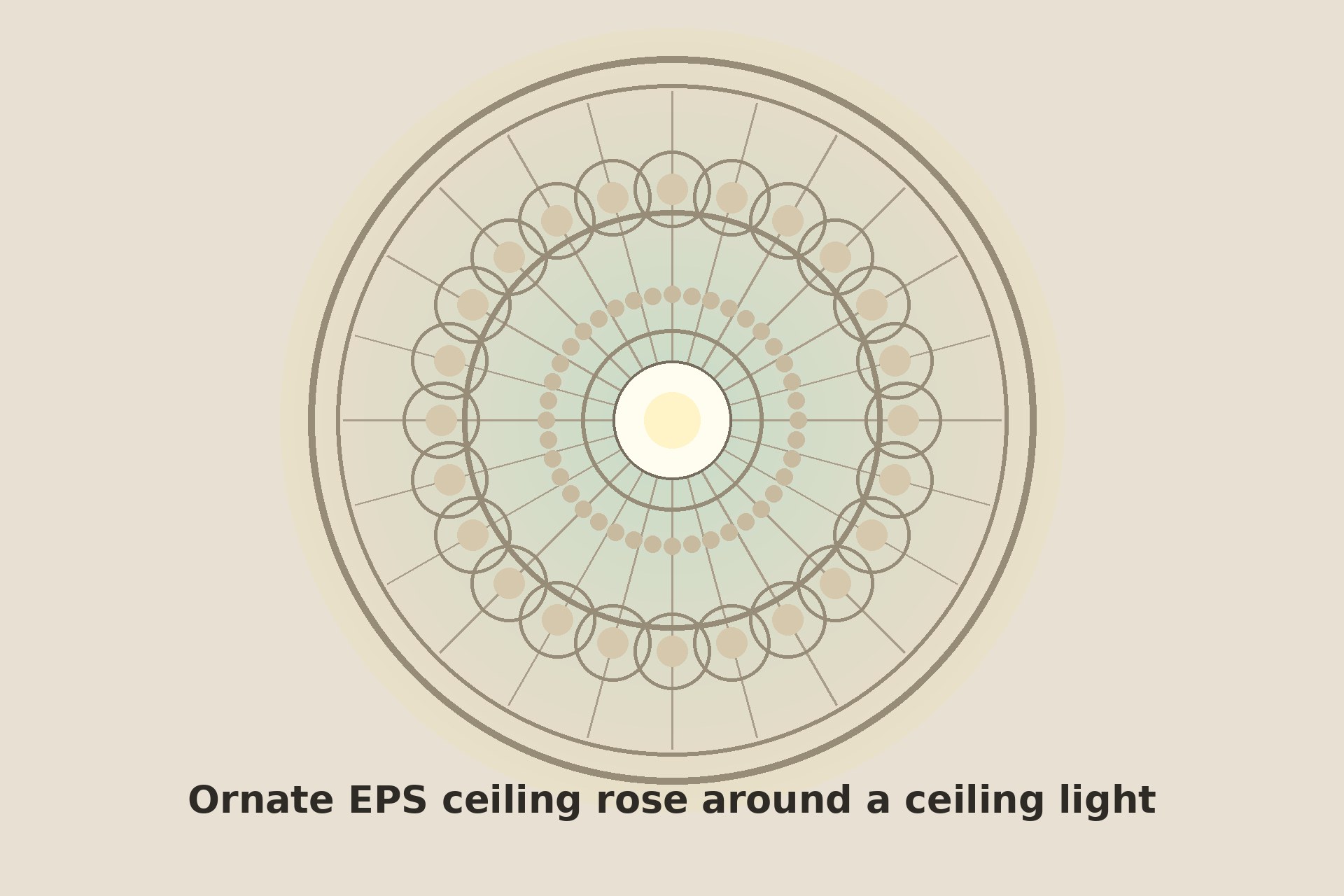
8. Ceiling roses and border trims
You don’t have to cover the whole ceiling. An ornate EPS ceiling rose around the central light, plus stepped or cove-profile border trims where the ceiling meets the walls, can lift an otherwise plain slab ceiling for very little money. Trims also hide the raw cut edges of tile fields neatly.

9. Thermocol + POP textured finish
If raw thermocol looks too synthetic for your taste, a thin POP skim over the EPS base, sanded and painted, gives a textured finish that reads like a conventional plaster ceiling — while keeping thermocol’s low cost and insulation. This is skilled work; a bad skim will crack and peel.

10. EPS + gypsum combination ceilings
A practical hybrid: a gypsum border frame (sturdier, crisper edges) with thermocol tile infill in the centre field. You get gypsum’s finish where it shows most and thermocol’s insulation and low cost across the large flat areas.
Thermocol false ceiling cost in India
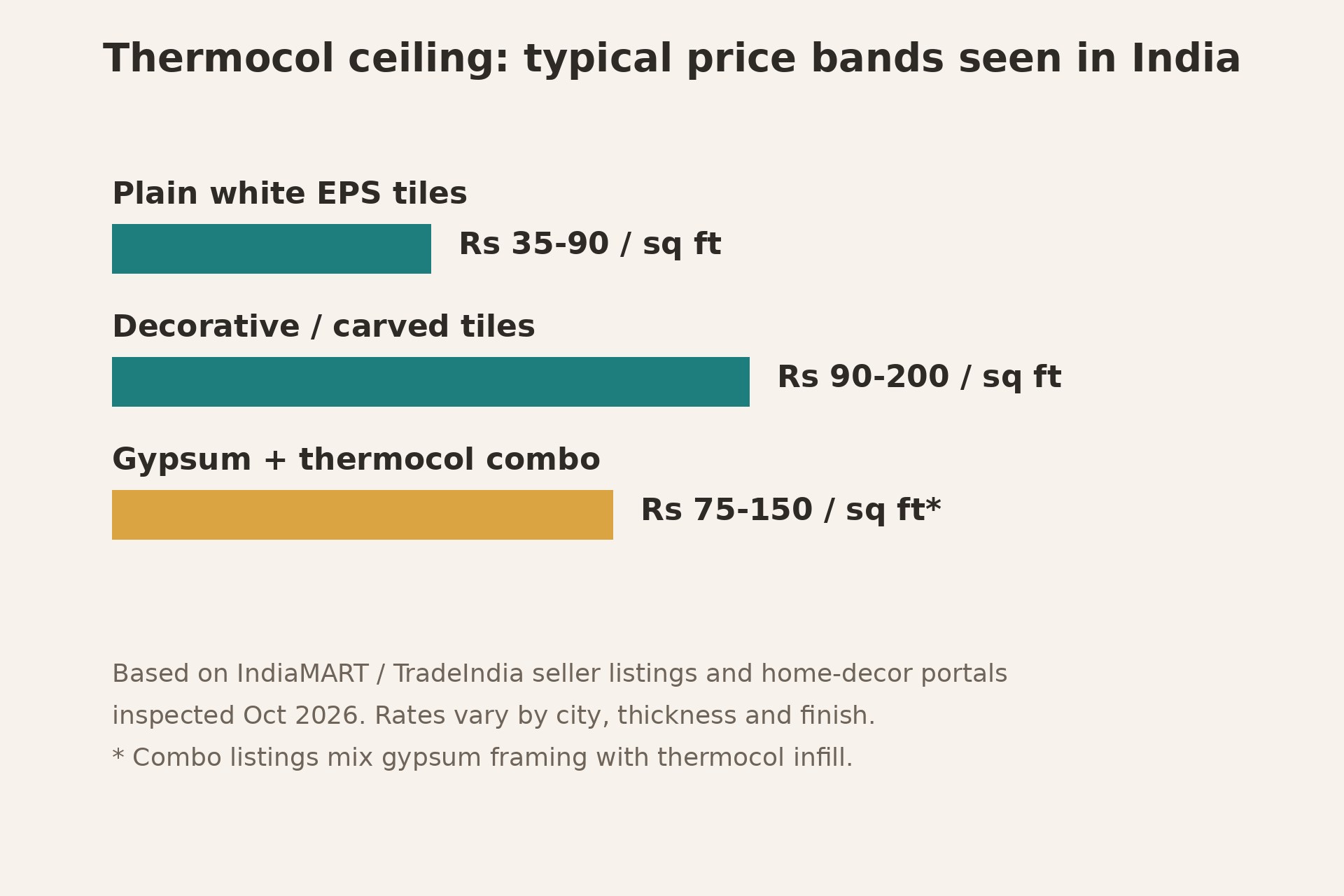
Thermocol is usually the cheapest false ceiling material you can buy. Based on home-decor portals and marketplace listings inspected in October 2026, these are the typical price bands:
- Plain white EPS tiles/sheets: roughly Rs 35–90 per sq ft, depending on thickness and city.
- Decorative, carved or patterned tiles: roughly Rs 90–200 per sq ft; colour-coated designer tiles sit at the top of this band.
- Gypsum + thermocol combination work: roughly Rs 75–150 per sq ft in contractor listings.
- Loose EPS tiles (bulk purchase): around Rs 45 per piece for 600×600 mm tiles in wholesale listings — but sellers typically deal in bulk orders only.
These are material-plus-basic-fixing bands seen in listings, not fixed rates. Your final cost moves with the city, the tile thickness, the design complexity, lighting fixtures and electrical work, and the total area — larger areas usually get better per-sq-ft rates. Always get 2–3 written quotes from local contractors before deciding, and confirm what is included: material, adhesive, edge trims, painting (if any), lights and wiring are often quoted separately.
Pros of thermocol false ceilings
Cheapest proper false ceiling material
Nothing else gives you a finished-looking ceiling at Rs 35–90 per sq ft. For rental flats, budget renovations and large areas like halls, the savings over gypsum or wood are substantial.
Genuine thermal insulation
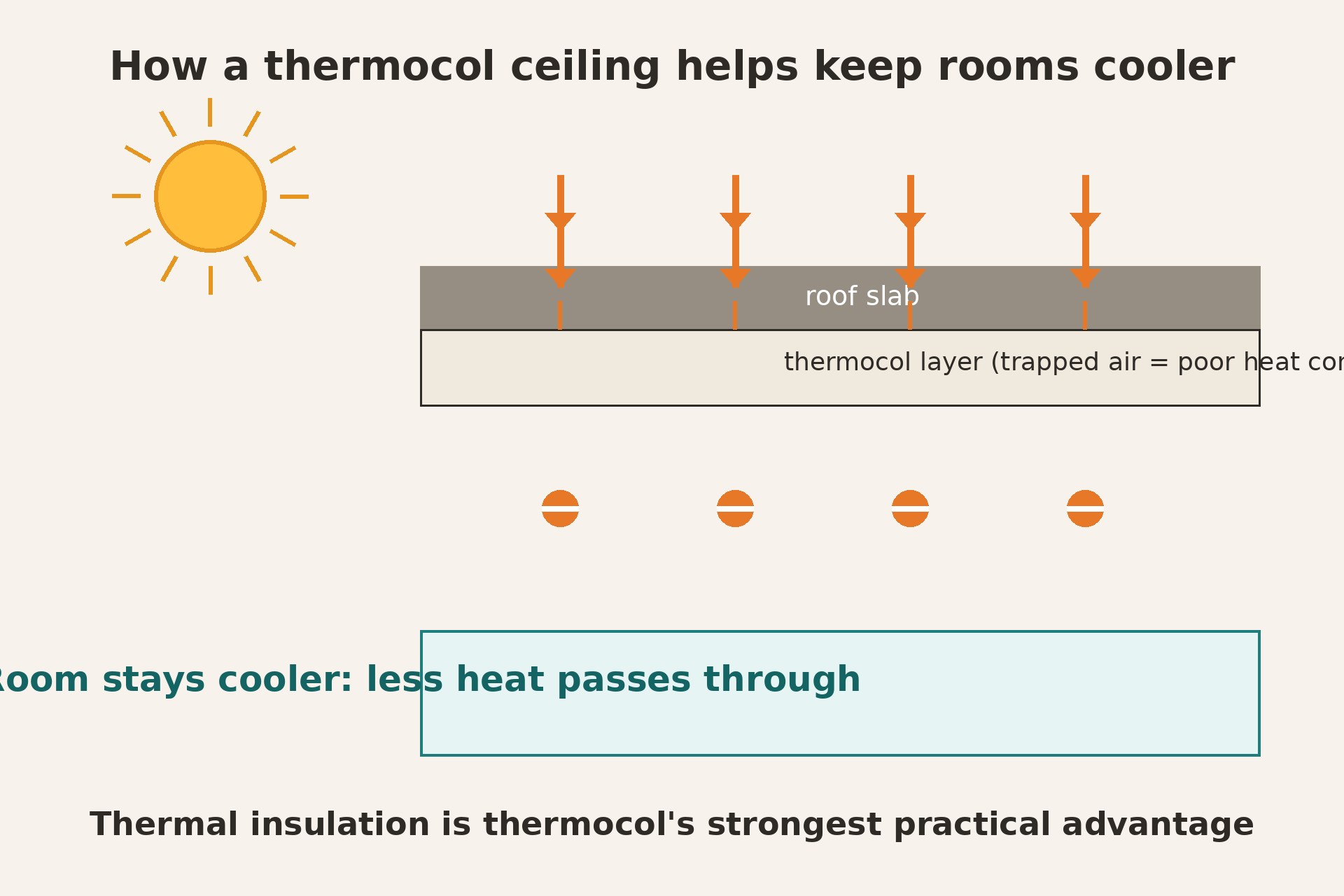
This is thermocol’s strongest practical advantage, not just a marketing line. The trapped air cells make EPS a poor conductor of heat, so less roof heat reaches the room in summer. It works best on top-floor rooms directly under a sun-beaten slab — exactly where Indian homes need it most.
Feather-light and easy to install
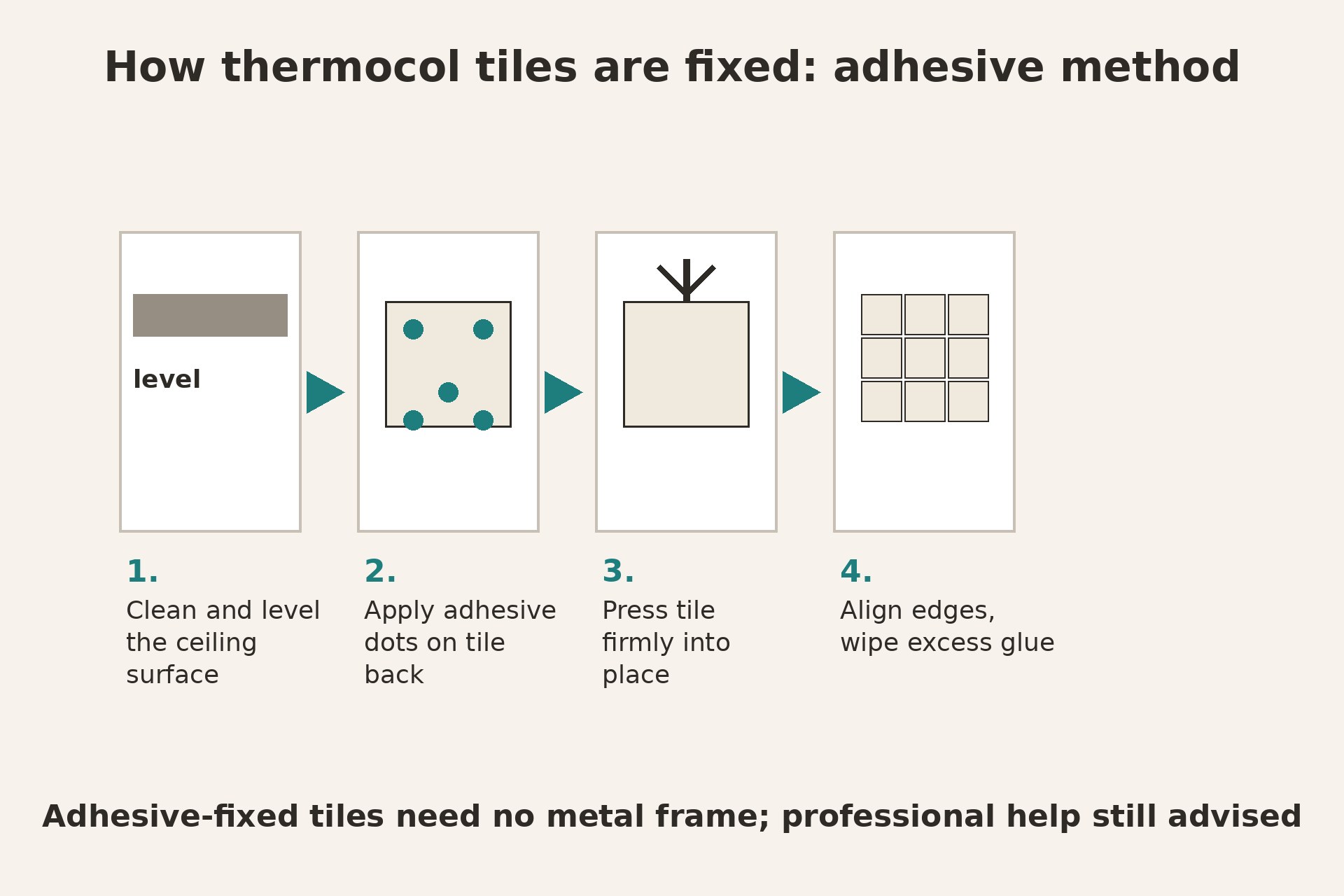
EPS tiles weigh almost nothing, so they are usually pasted directly onto the slab with strong adhesive or mounting tape — no heavy metal framework, no drilling into the slab. Many designs are genuinely DIY-able for a handy homeowner, though neat alignment still takes patience.
Design flexibility
Thermocol cuts with a simple blade and takes paint well, so custom shapes, carved panels and painted finishes are all possible at low cost. Few materials let you experiment this cheaply — if you tire of a design, replacing it doesn’t hurt much.
Modest sound dampening
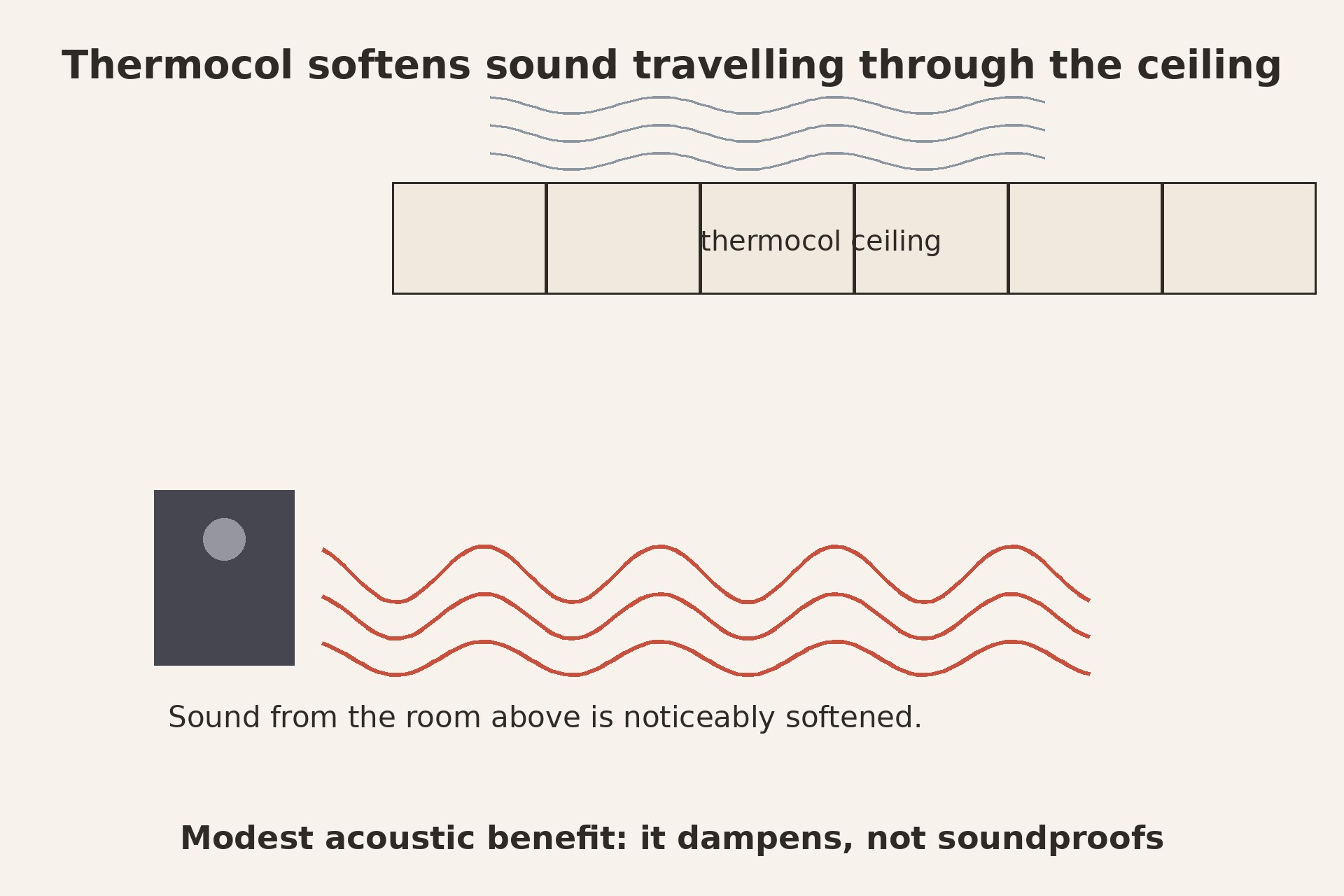
EPS absorbs some sound vibration, so a thermocol ceiling takes a slight edge off noise travelling between floors. It is a noticeable softening, not soundproofing — don’t expect it to silence a noisy neighbour.
Individual tiles are replaceable
Damage one tile and you can usually pop it out and stick in a spare without redoing the whole ceiling. Pro tip: buy 1–2 extra tiles from the same batch at installation time, because colour and pattern can vary between batches.

Cons and limitations — read before you buy
Fragile and dent-prone
Thermocol dents and crumbles on impact. A ladder bumped into it during AC servicing, a cricket ball indoors, or even aggressive dusting can gouge or crack tiles. It will never be as sturdy as gypsum, PVC or wood.
A dust magnet that is hard to clean
The slightly rough EPS surface holds dust, and carved or 3D designs with nooks and crannies make it worse. Cleaning needs a soft dry cloth or feather duster — no water soaking, no scrubbing, no vacuum brush pressed hard. In dusty Indian cities, factor in regular gentle cleaning.

Hides slab problems
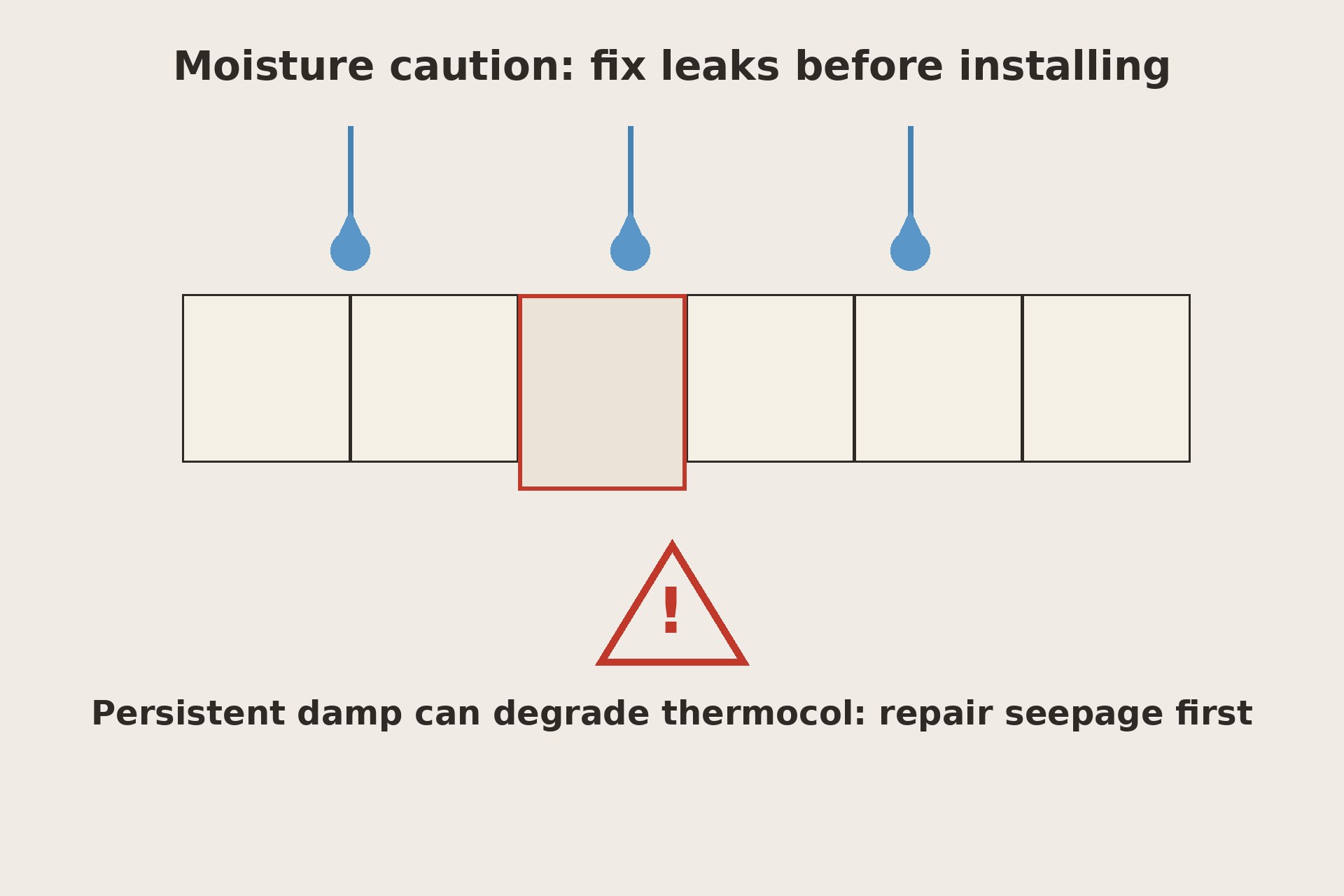
Like any false ceiling, thermocol conceals the structural slab — which means cracks, damp patches and seepage can grow unnoticed behind it. Inspect the slab before installation and fix every leak first; persistent damp can degrade thermocol over time.
For genuinely wet areas, thermocol is the wrong choice anyway — read our guide to bathroom false ceilings for moisture-safe materials instead.
Shorter life than gypsum or PVC
Thermocol does not age as gracefully as plaster, wood or plastic. Prolonged sun exposure through skylights, UV and moisture make it brittle and prone to breakage over the years. Treat it as a 5–10 year aesthetic solution in most homes, not a fit-and-forget-for-decades one. (Exact lifespan varies too much by conditions for any honest single number.)
Non-biodegradable
EPS is a plastic foam. It does not biodegrade, and disposal is an environmental negative. If eco-friendliness matters to you, this is a genuine mark against thermocol.
Can warp near heat
Thermocol softens and warps under direct high heat — which is why it is a poor choice for kitchens above cooking ranges, or anywhere near heat sources. Use cool-running LED lighting and keep fixtures from pressing directly against the tiles.
Fire safety: the honest truth about thermocol ceilings
This is the section most sellers skip, so read it carefully. Thermocol (expanded polystyrene) is a combustible plastic foam. It is not in the same safety league as gypsum or metal ceilings, and no honest guide should suggest otherwise.
What is established: when burnt, thermocol produces poisonous fumes that are harmful to people and the environment. Independent fire testing on polystyrene has shown it melts in fire like candle wax, burns readily once ignited, and gives off dense black smoke. Some marketplace sellers advertise “fire retardant” tiles or quote fire ratings, but we could not verify any such claim against an inspected manufacturer datasheet — treat those labels with scepticism unless the seller shows you the actual test certificate for that exact product.
Practical, hedged guidance — not a safety certification:
- Keep open flames away. No diyas, candles or incense burners directly under or near a thermocol ceiling, and never in a pooja corner with a thermocol ceiling above it.
- Avoid heat sources. Don’t install thermocol ceilings in or directly above kitchens with open-flame cooking, near geysers, or anywhere that gets very hot.
- Use cool LEDs, wired properly. Prefer cool-white LED fixtures, keep drivers and wiring tidy and accessible, and get the electrical work done by a qualified electrician — faulty wiring plus a combustible ceiling is the combination to avoid.
- Check local rules. If this is for a commercial space, office or rented property, check your local fire-safety regulations and your building’s requirements before choosing thermocol. Some building types and insurers restrict combustible ceiling materials.
- When in doubt, ask a professional. A qualified interior contractor or fire-safety consultant can advise on whether thermocol is acceptable for your specific room and use.
Bottom line: thermocol’s fire sensitivity is the single biggest trade-off you accept for its low price. If fire safety is a priority for the room — kitchens, pooja rooms, commercial spaces — choose gypsum or another fire-resistant material instead.

Thermocol vs gypsum vs PVC: which should you pick?
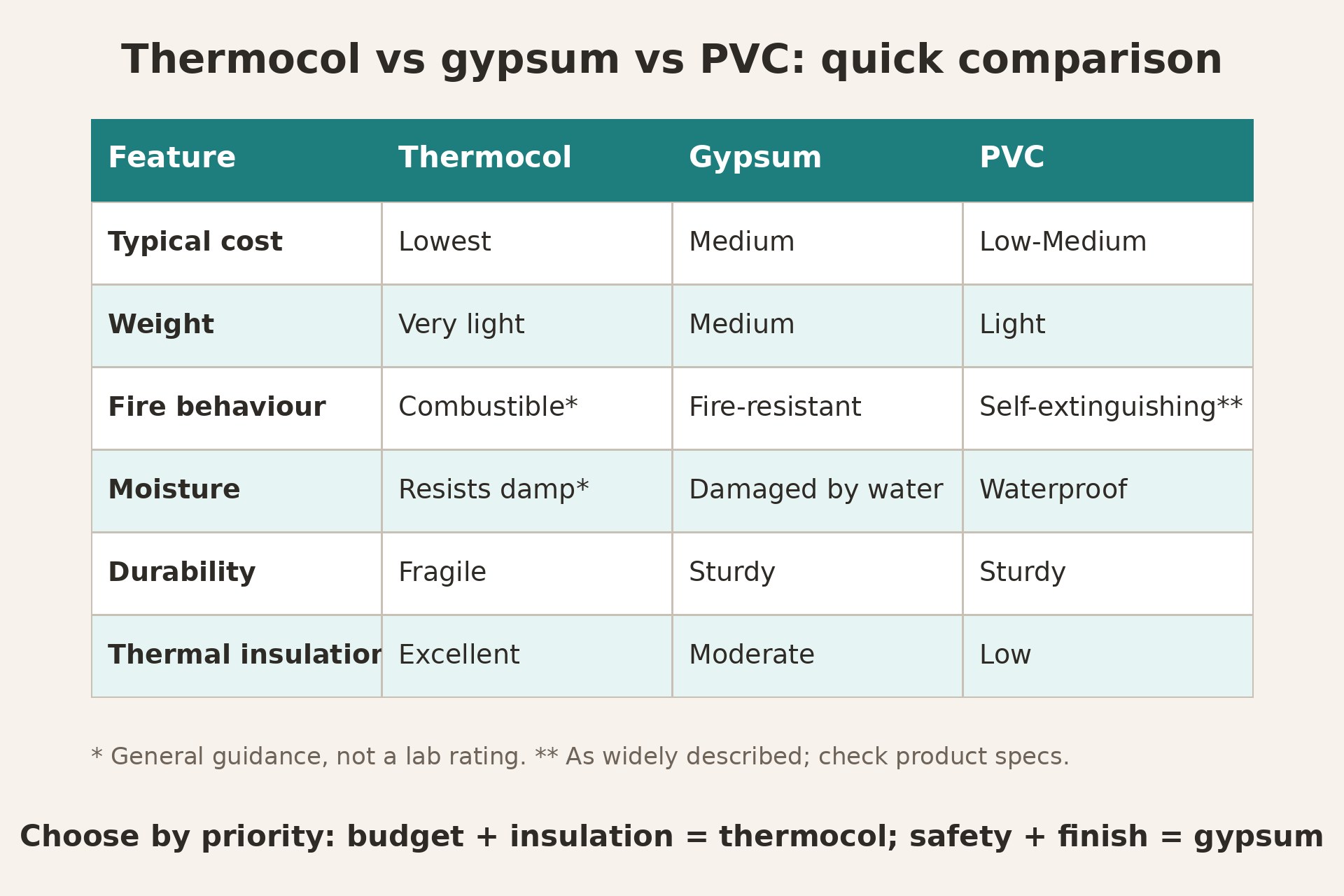
Here’s how the three budget-friendly ceiling materials compare on the factors that matter:
| Feature | Thermocol (EPS) | Gypsum | PVC |
|---|---|---|---|
| Typical cost | Lowest | Medium | Low–medium |
| Weight | Very light | Medium | Light |
| Fire behaviour | Combustible — needs caution | Fire-resistant | Better than thermocol; check product specs |
| Moisture handling | Resists light damp; degrades with persistent seepage | Damaged by water | Waterproof |
| Thermal insulation | Excellent | Moderate | Low |
| Finish quality | Decent; can look plasticky | Excellent, paint-grade | Good, wipeable |
The decision rule is simple: pick thermocol when budget and heat insulation matter most (top-floor bedrooms, rental flats, large halls). Pick gypsum when finish quality and fire safety matter most. Pick PVC when moisture is the main enemy — see our PVC false ceiling designs guide for wet-area options.
Installation and maintenance essentials
Installation
Most thermocol tile ceilings are fixed with construction adhesive applied in dots or beads on the tile back, then pressed onto a clean, level, dry slab. Start from the centre of the room and work outward so cut tiles land at the edges where trims hide them. Check each tile with a spirit level as you go — adhesive grabs fast and repositioning tears the tile face.
For carved panels, 3D reliefs and tray borders, hire an experienced installer; alignment mistakes are very visible on a ceiling. And run all wiring before the tiles go up — retrofitting wires behind stuck tiles means breaking them.
What not to hang from it
Thermocol tiles are adhesive-mounted and extremely light — they are not a structural fixing point. Do not hang fans, heavy light fixtures, planters or anything else from thermocol tiles. Anything with weight must be anchored into the structural slab above with proper fasteners, with the tile neatly cut around the anchor. When in doubt, ask your electrician or contractor.
Maintenance
- Dust gently every few weeks with a soft dry cloth, feather duster or a vacuum on low suction held slightly away from the surface.
- Never soak thermocol with water or scrub it — you will tear the surface.
- For painted or POP-skimmed thermocol, you can wipe lightly with a barely-damp cloth.
- Inspect once a year: look for sagging tiles (adhesive failure), discolouration (heat or damp) and any musty smell that suggests trapped moisture.
- Replace damaged tiles individually, using spares from the original batch.
FAQs
Is thermocol false ceiling safe?
It is safe in the everyday sense — it won’t fall on you (tiles are very light and adhesive-fixed) and it doesn’t emit fumes at normal room temperatures. The real safety caveat is fire: thermocol is combustible, produces toxic fumes when burnt, and must be kept away from open flames and high heat. For most living rooms and bedrooms with proper LED lighting and no open flames, it is a reasonable budget choice; for kitchens, pooja rooms and commercial spaces, prefer fire-resistant materials.
How long does a thermocol false ceiling last?
There is no single honest number — it depends on sun exposure, moisture, dust and handling. In a dry, shaded interior room it can look good for many years; with UV exposure, damp or rough handling it turns brittle and breaks much sooner. Expect a shorter service life than gypsum or PVC, and budget for eventual replacement rather than treating it as permanent.
Can thermocol false ceiling be painted?
Yes — thermocol takes paint well, which is one of its advantages. Use water-based acrylic paints; avoid solvent-heavy paints that can attack the foam. A POP skim coat before painting gives the most durable, least plasticky finish.
Can I install a thermocol ceiling in the kitchen?
Not advisable. Cooking heat, steam, grease and open flames are all bad for thermocol — it can warp, stain permanently and, near open flame, becomes a fire risk. Choose a moisture- and heat-tolerant material for kitchens instead.
Can I fix a ceiling fan to a thermocol ceiling?
No — never fix a fan (or any heavy fixture) to the thermocol tiles themselves. Fans must be anchored directly into the structural slab above with proper fasteners, independent of the decorative ceiling.
Is thermocol ceiling good for a top-floor room?
This is arguably its best use case. A top-floor room under a sun-heated slab benefits the most from thermocol’s thermal insulation, and the cost saving over gypsum is largest on big ceiling areas. Just ensure the roof has no seepage before installation.
Final verdict: who should choose a thermocol false ceiling?
A thermocol false ceiling design makes sense if your priorities are, in order: lowest cost, cooler rooms, and quick installation — and you accept fragility, regular gentle dusting, a shorter life and real fire-safety cautions in return. It is ideal for budget bedrooms, rental properties, top-floor rooms and large halls where gypsum would blow the budget.
Skip it if you need durability, a premium paint-grade finish, a kitchen or pooja-room ceiling, or maximum fire safety. In those cases the extra cost of gypsum or PVC pays for itself. Browse our main false ceiling design guide to compare all the material and design options side by side before you commit.
All images in this article are original concept renders created for illustration, not photographs of completed projects.