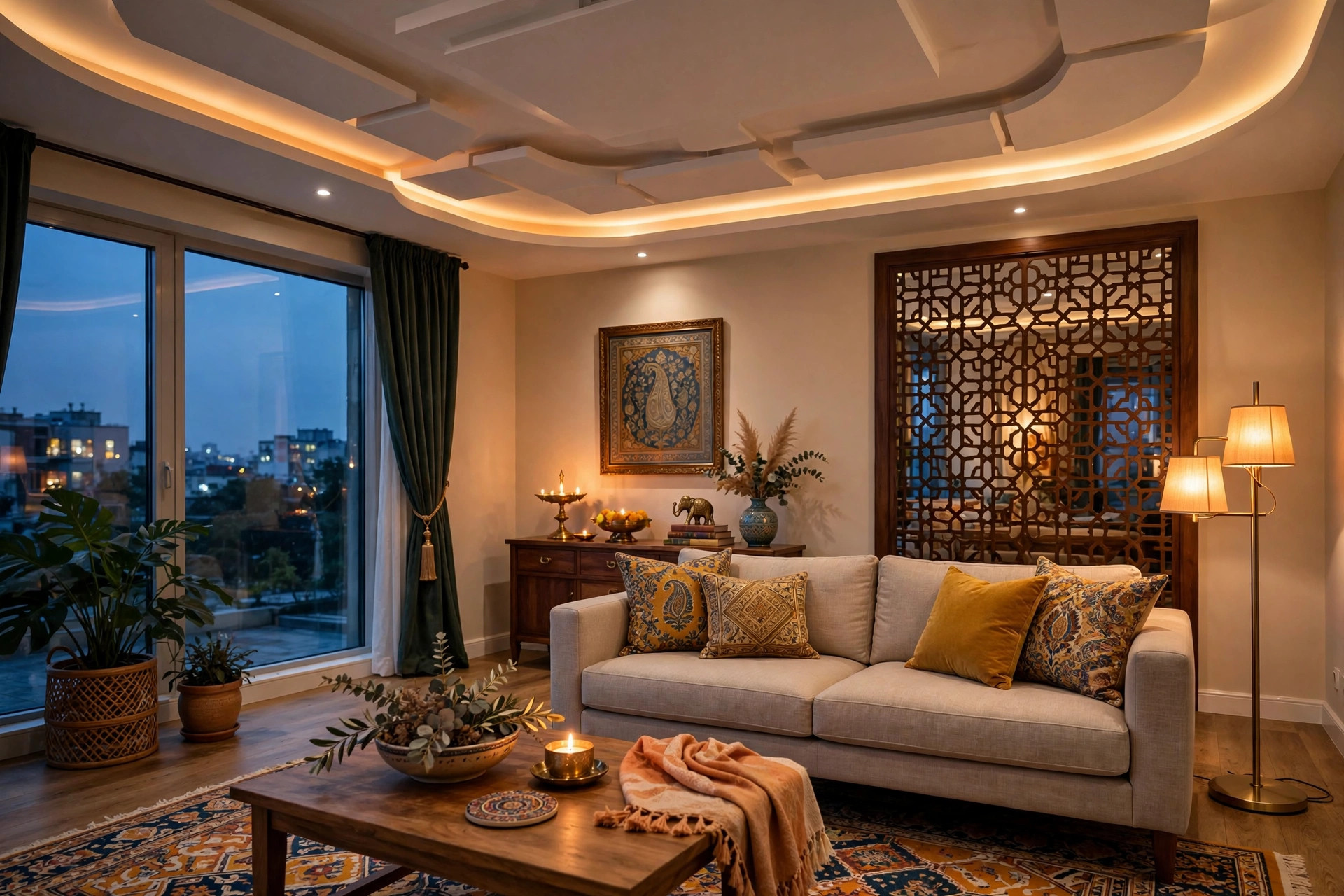

POP remains India’s most creatively flexible ceiling material in 2026 — not because it is the cheapest or the fastest, but because it is the one your karigar can sculpt on-site into curves, grooves, medallions and layered profiles that pre-fab boards cannot match. The honest 2026 installed cost for POP false ceilings in India runs roughly ₹80–₹380 per sq ft depending on design complexity (NoBroker’s 2026 modern-POP guide, India; Aecord’s cost breakdown) — so a standard 200 sq ft hall with a modern POP ceiling costs roughly ₹16,000–₹76,000 including framework, POP, primer and paint. This guide covers the 8 latest POP design trends for 2026, room-wise ideas, honest cost bands, and the cons worth knowing before you commit.
The 8 latest POP false ceiling trends for 2026
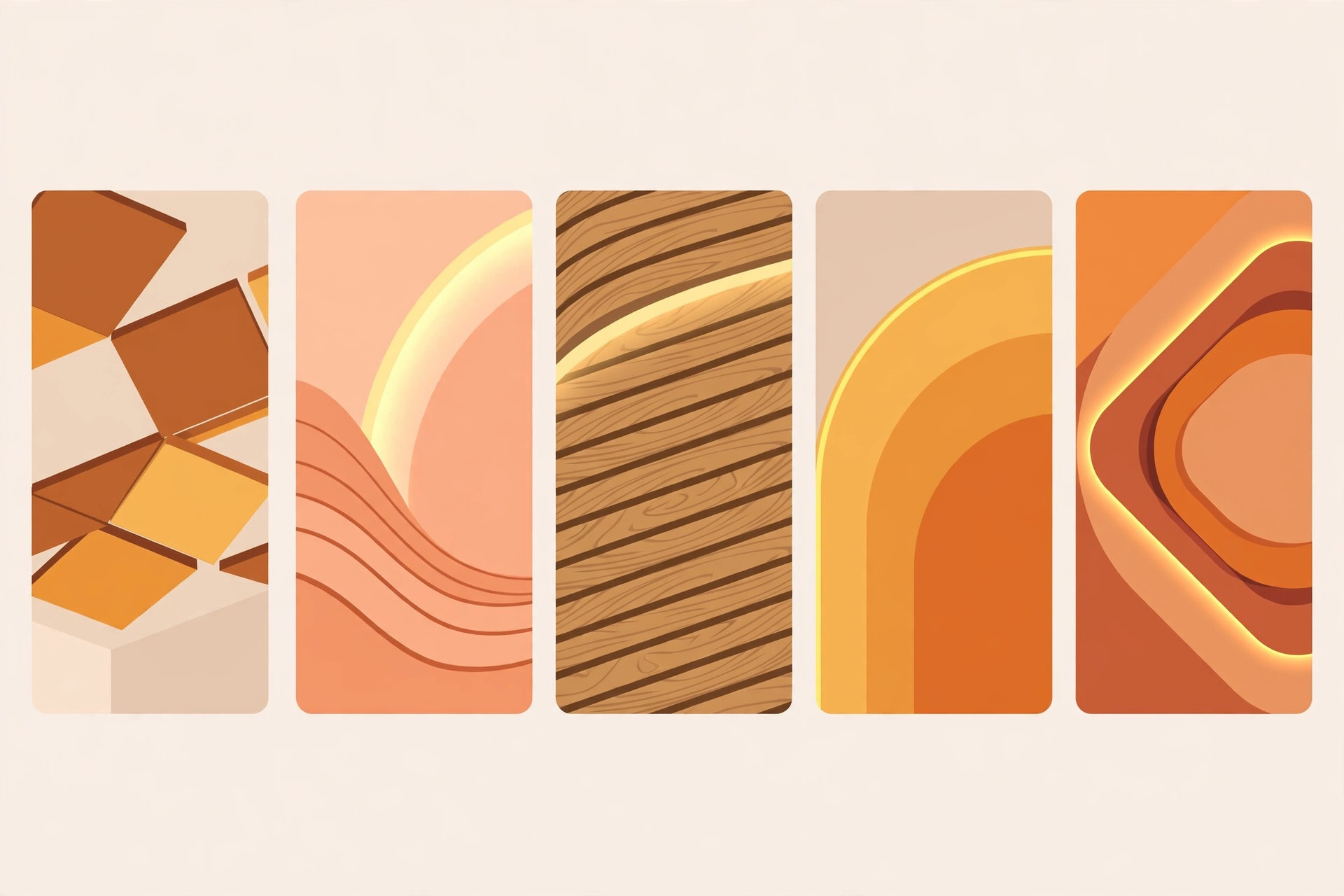
These are the directions showing up repeatedly across NoBroker’s 2026 POP guide, Coohom’s modern-ceiling roundup and the trend coverage on Livspace/HomeLane blogs — consolidated here with a critical eye, not a copy-paste list.
1. Geometric zones
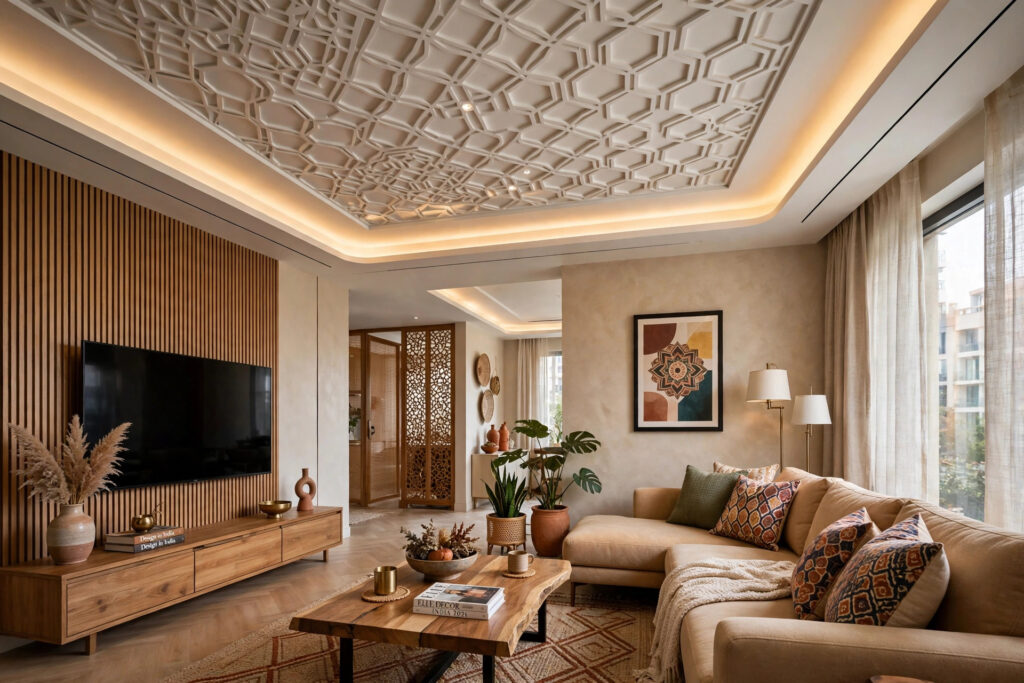
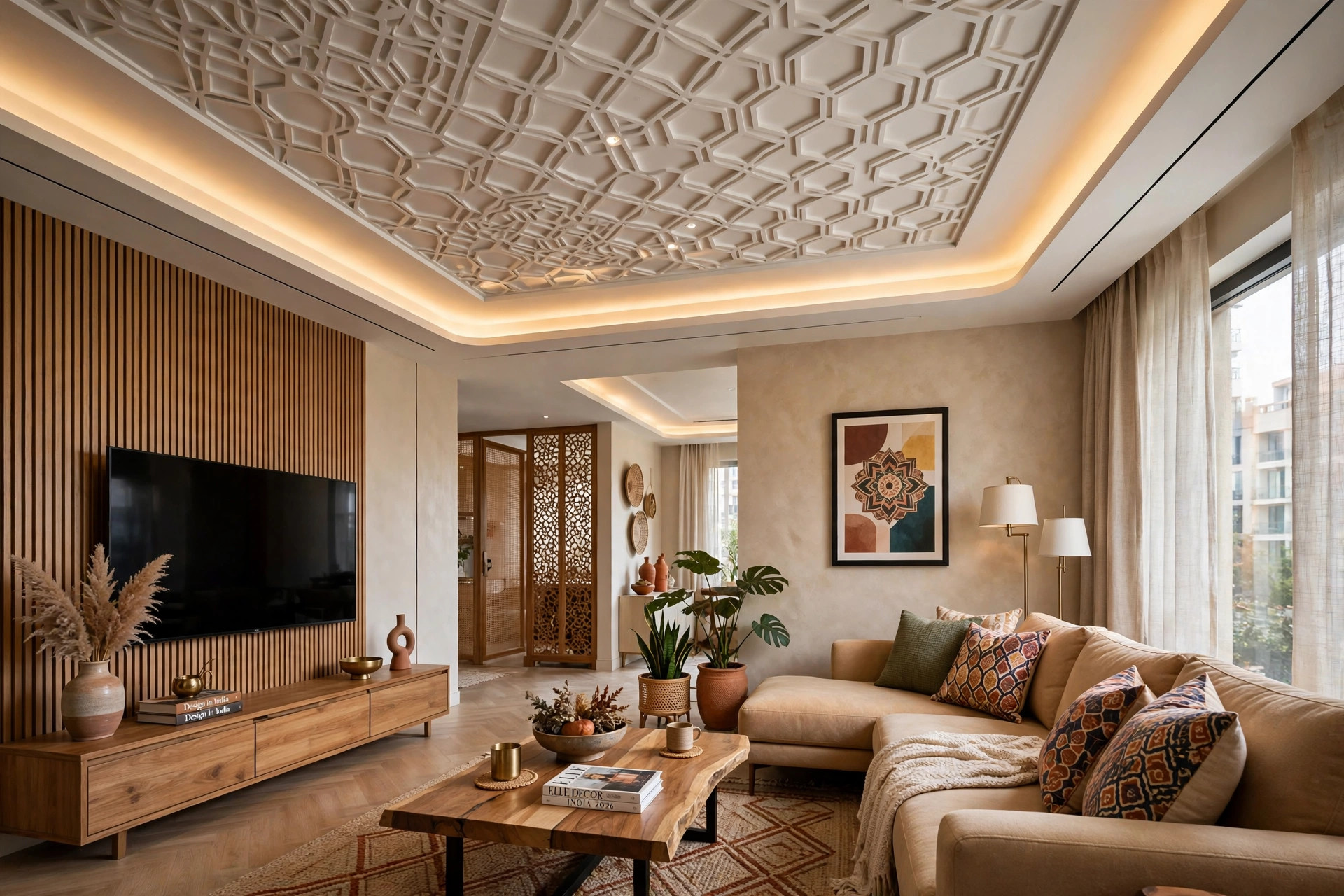
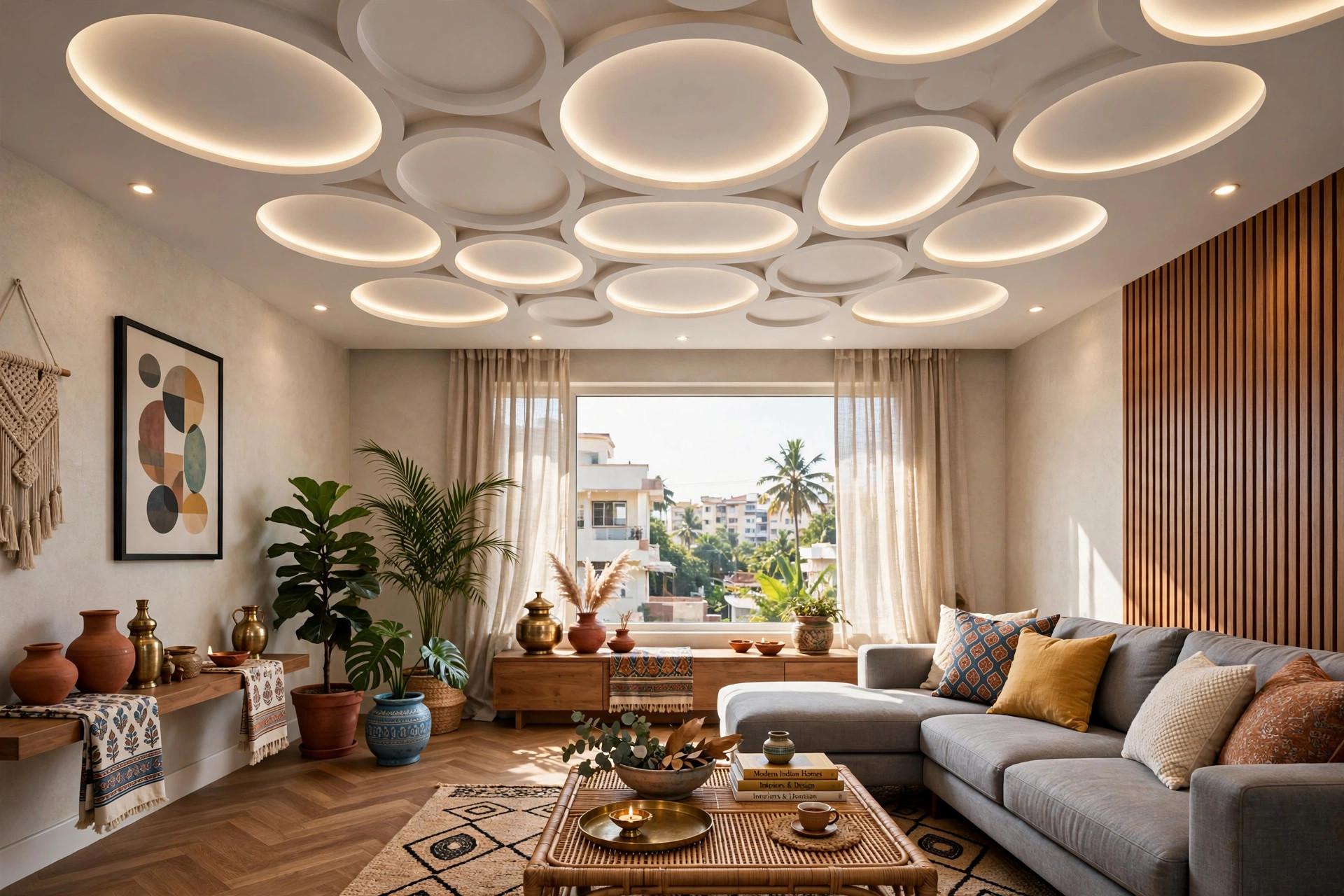
Circular, oval and hexagonal POP panels that divide open-plan living-dining spaces into zones — a circle over the seating area, an oval over the dining table. POP’s on-site moulding makes true curves cheap; gypsum needs flexible boards for the same effect. Cost: ₹150–₹280 per sq ft.
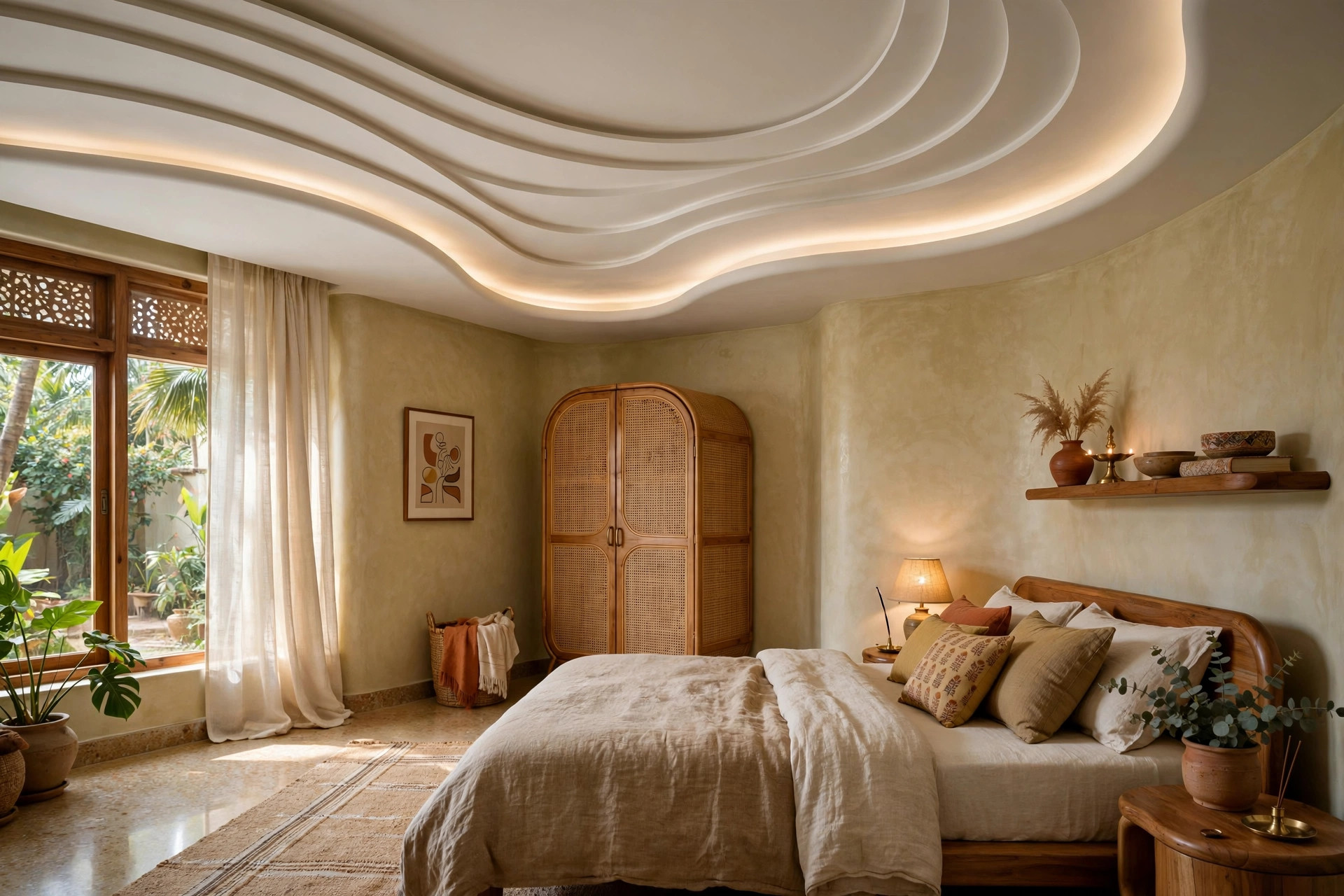
2. Soft curves and waves
Gentle arched profiles instead of hard tray edges — the organic turn of 2026. Waves suit bedrooms and lounges where the mood should be calm rather than architectural. Cost: ₹140–₹260 per sq ft.
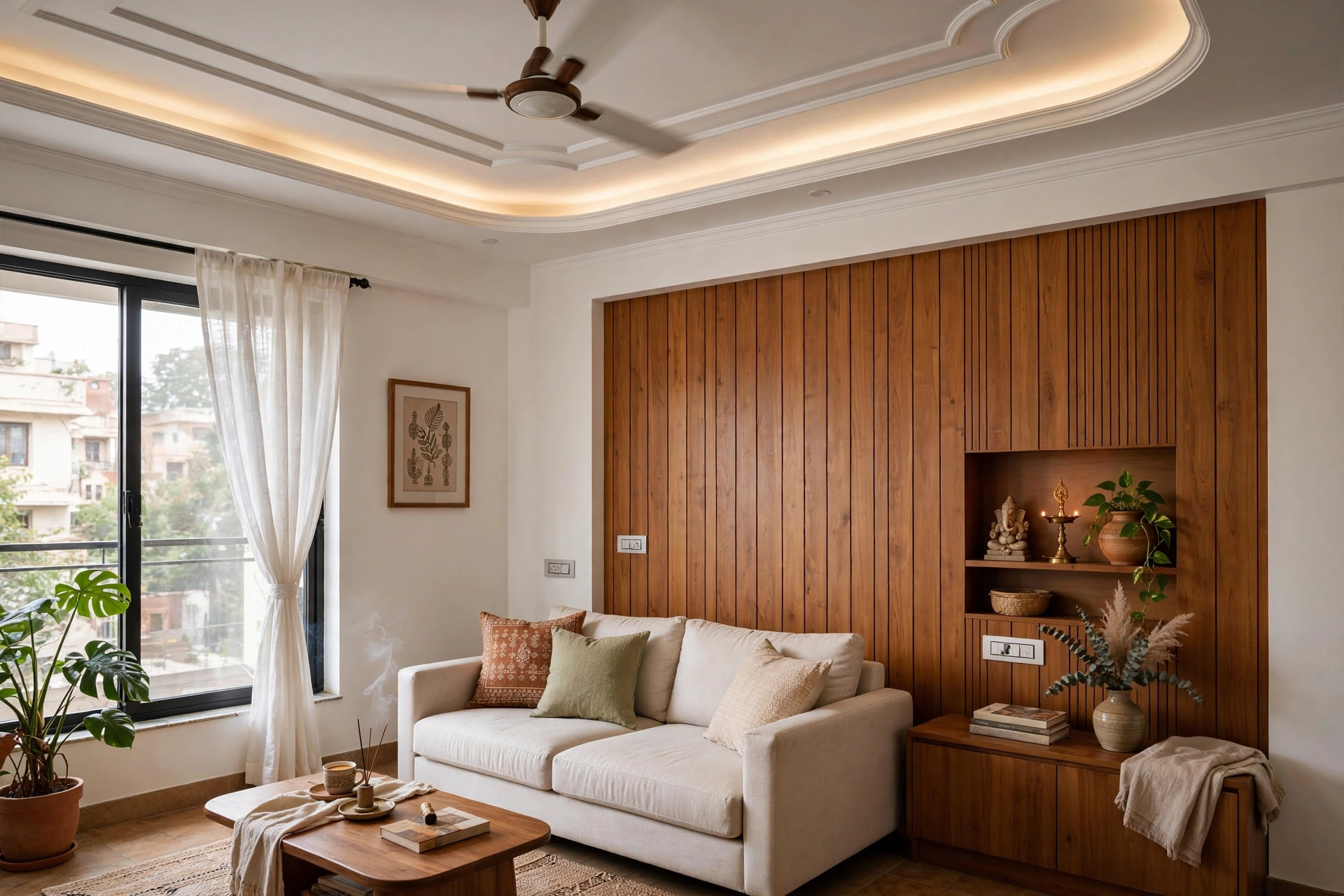
3. Wood-textured POP
POP moulded or finished with wood-grain texture panels and timber battens — the warmth of a wooden ceiling at a fraction of a real timber ceiling’s cost. Popular in living rooms paired with warm lighting. Cost: ₹180–₹330 per sq ft.
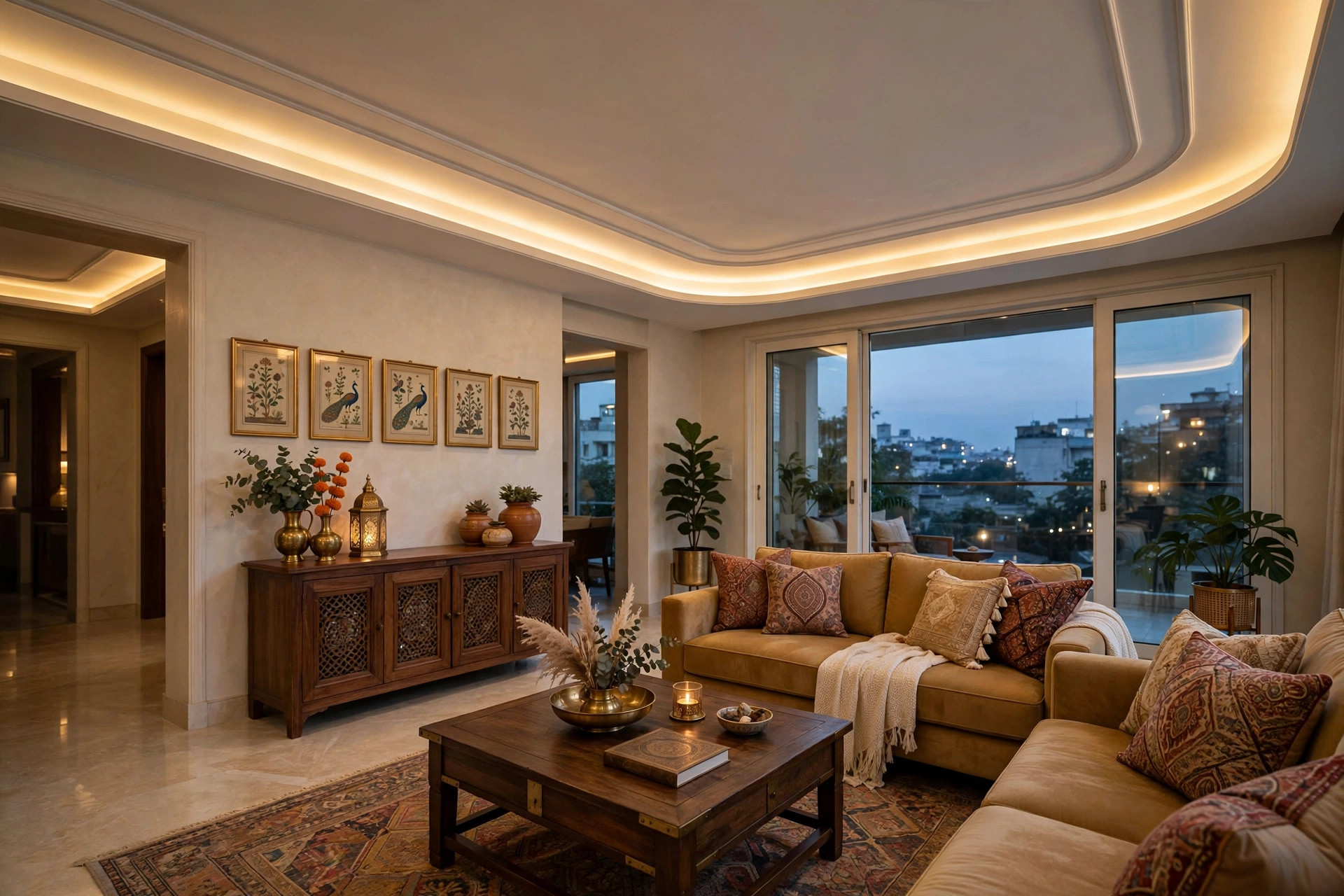
4. Cove plus warm LED
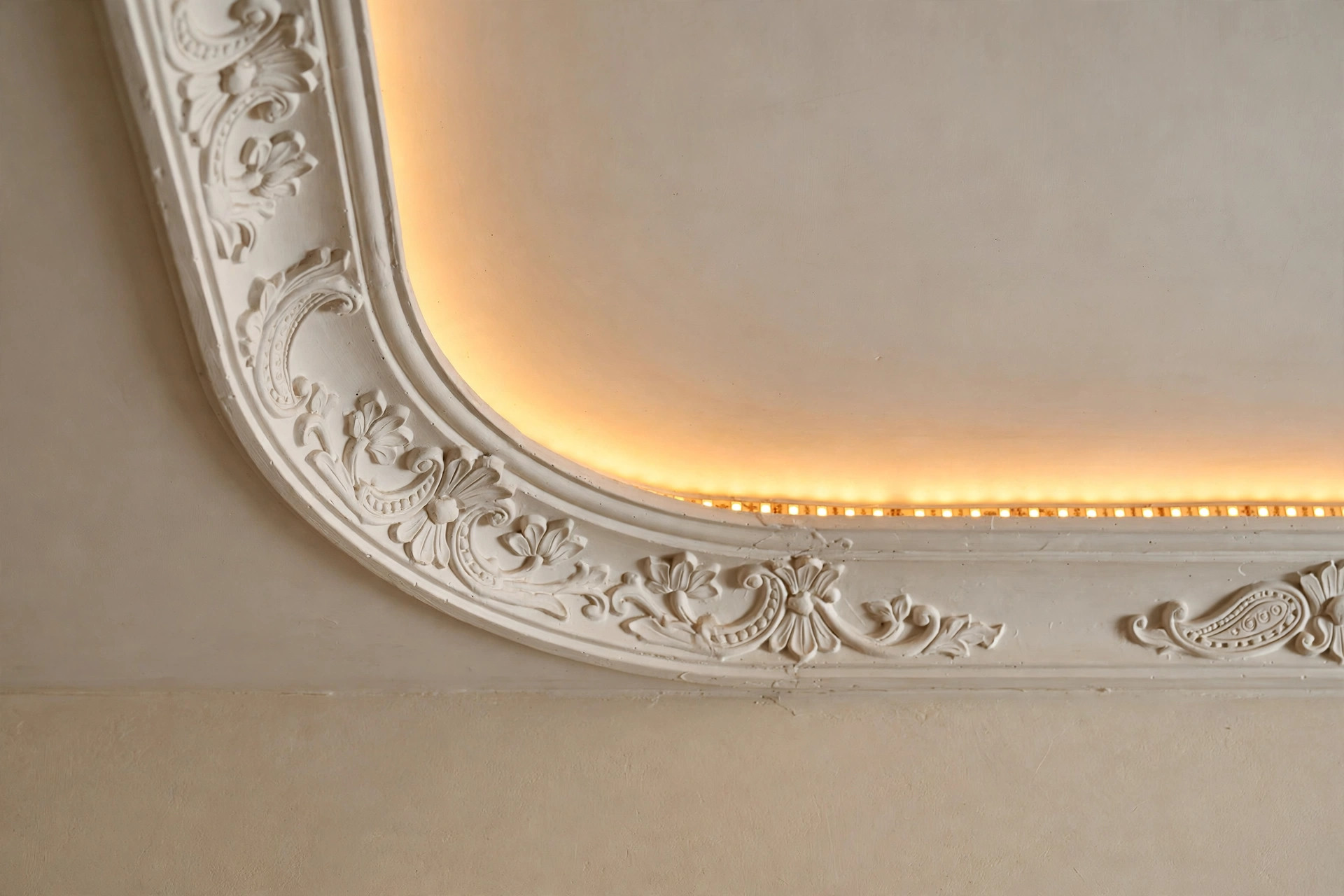
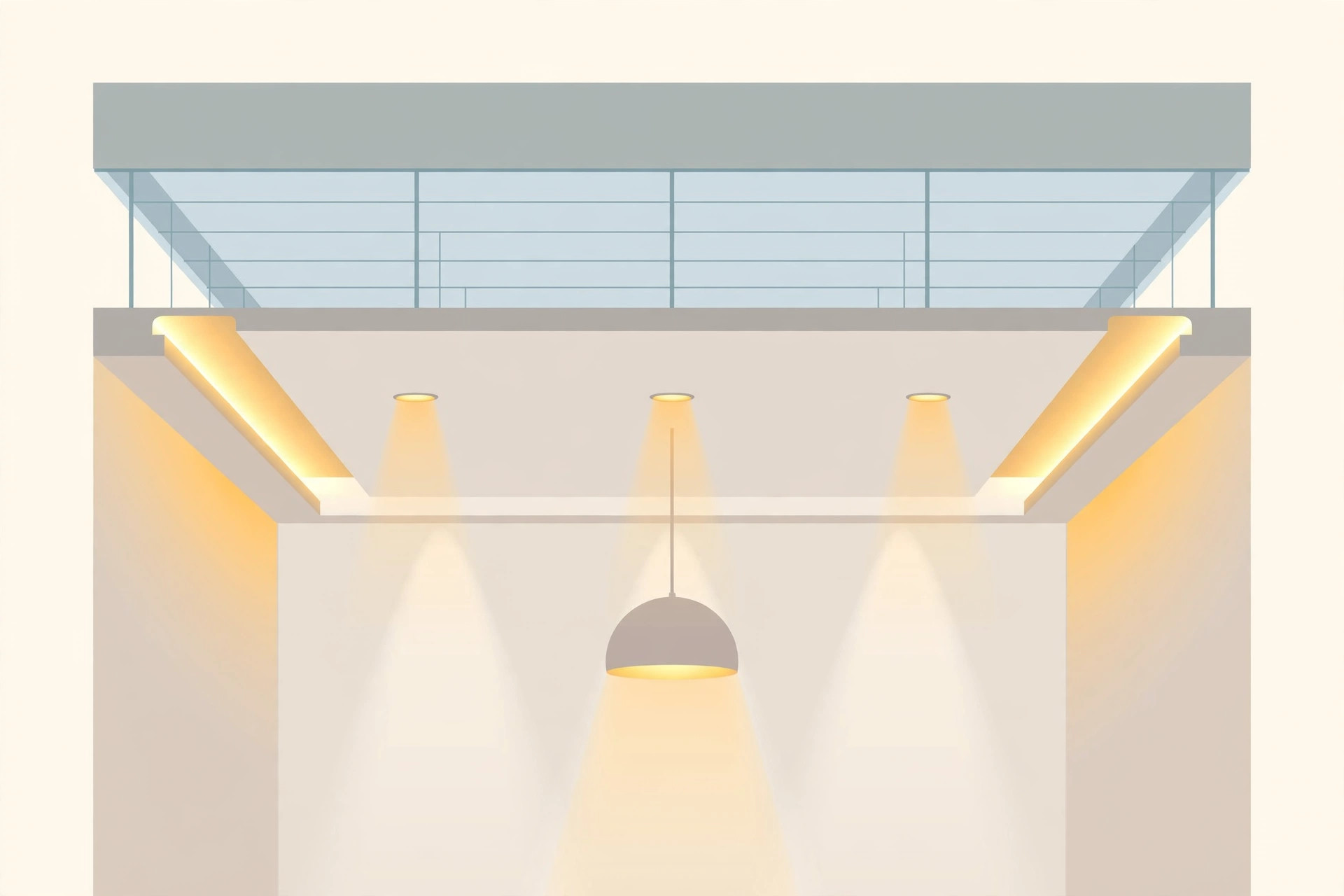
The most repeated trend of 2026, honestly: a perimeter cove hiding a 2700–3000K LED strip. It flatters every room, needs no chandelier, and the light quality does the heavy lifting. Cost: ₹120–₹200 per sq ft.
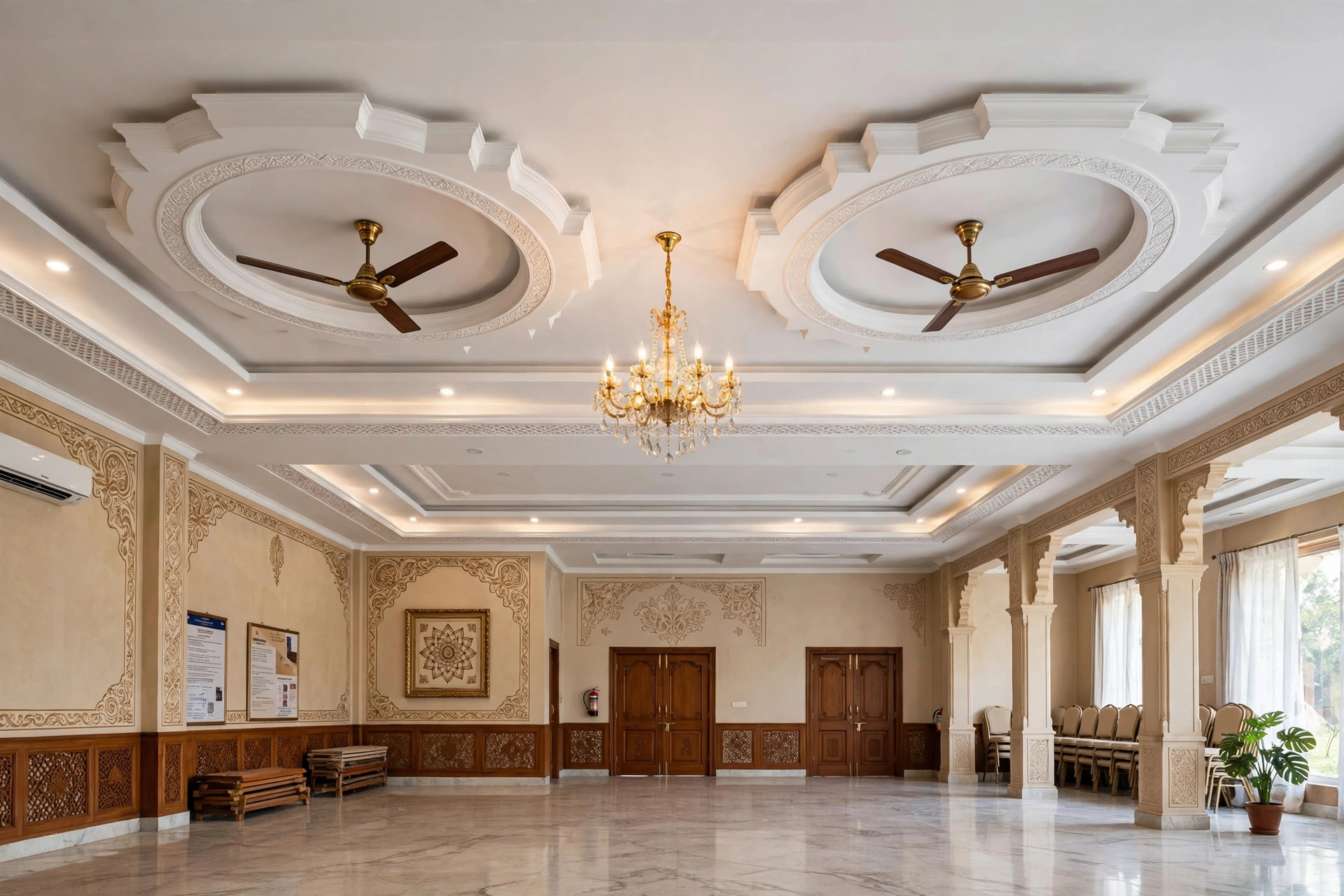
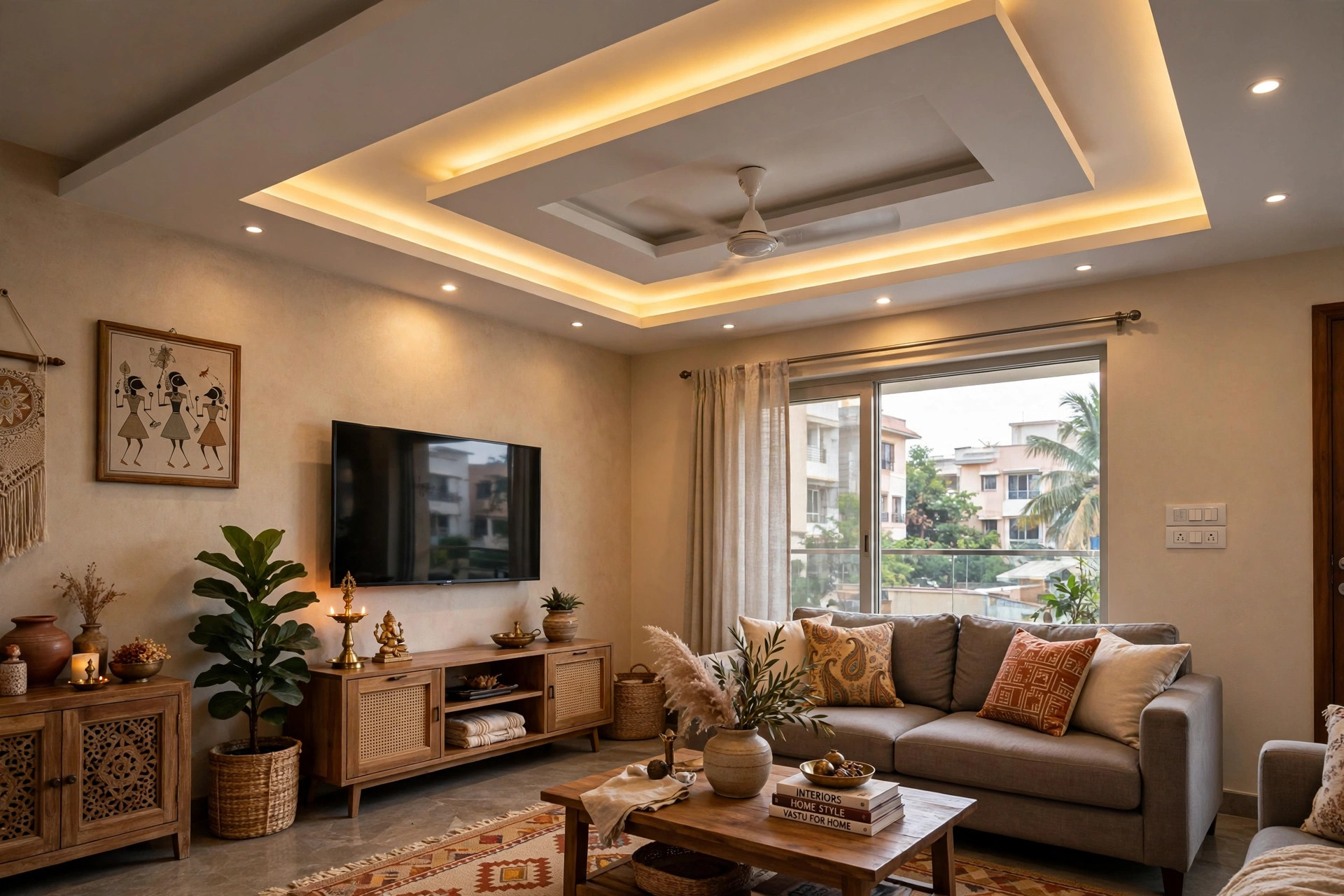
5. Two-fan tray layouts
Indian halls often need two ceiling fans, and the 2026 answer is a tray ceiling designed around them from the start: levels stepped to keep both fans clear of the drop, cutouts finished during moulding, wiring planned before the framework. Cost: ₹130–₹220 per sq ft.
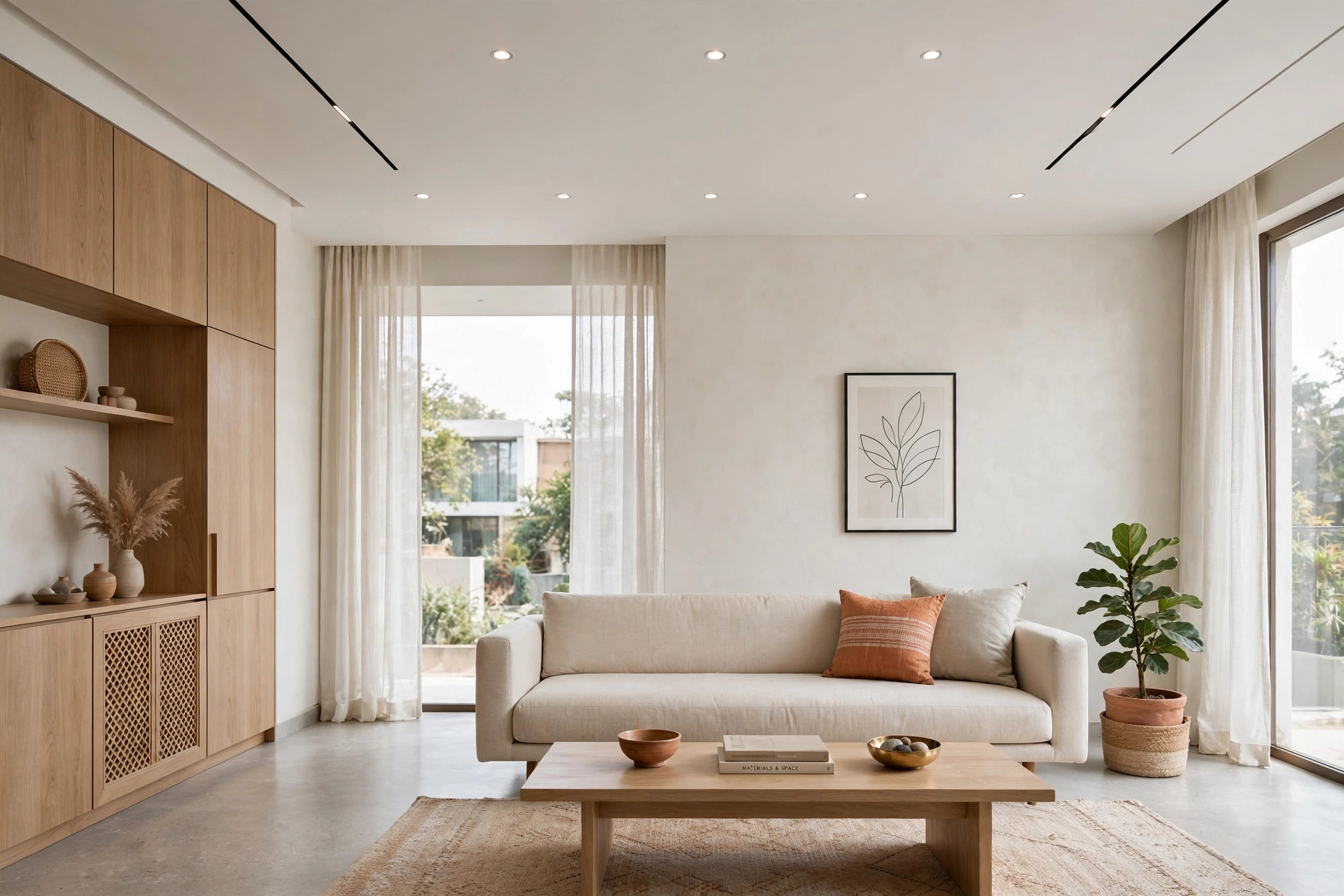
6. Minimalist flat POP
The quiet end of the spectrum: one flat POP panel, slim recessed downlights, no cove, no tray. For halls under 9.5 ft or for owners who find layered ceilings fussy. Cost: ₹80–₹120 per sq ft.
7. Double-layer depth
Two full POP levels with a shadow gap between them — depth for rooms tall enough to carry it (10.5 ft+). Cost: ₹190–₹320 per sq ft.
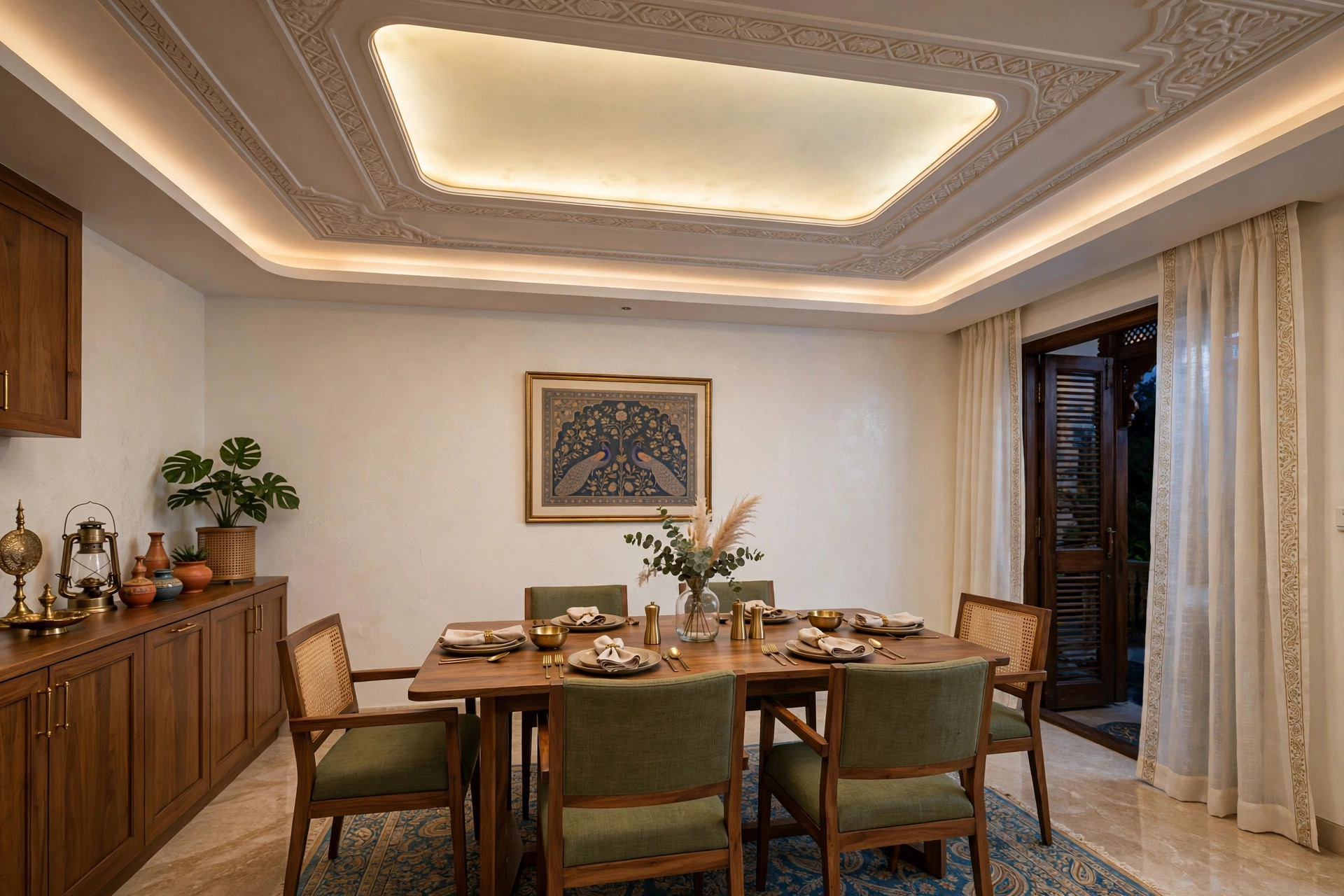
8. Backlit inserts
One backlit frosted-glass or fabric panel set into the POP — a single glowing rectangle over the dining table or the seating area, not the whole ceiling. Restraint is the point. Cost: ₹200–₹380 per sq ft for the insert zone.
Room-wise: which POP trend suits which room

| Room | Best 2026 POP direction | Why |
|---|---|---|
| Hall / living room | Geometric zones, cove + LED, two-fan trays | Visible room, zoning helps open plans |
| Bedroom | Soft curves, flat minimalist, calm two-tone | Seen lying down — calm ages better |
| Dining | Backlit insert, timber-and-POP | One focal glow suits dining |
| Kitchen (dry) | Flat POP, wipeable paint | Grease and steam punish texture |
| Bathroom | Not POP — use PVC | Moisture will destroy POP; see our PVC ceiling guide |
The honest cost table: 2026 POP installed bands
From NoBroker’s 2026 modern-POP guide and Aecord’s cost breakdown (India, installed — framework, POP, primer, paint; lighting fixtures extra):
| Design | Per sq ft | 200 sq ft hall |
|---|---|---|
| Flat / border | ₹80–₹120 | ₹16,000–₹24,000 |
| Cove + LED | ₹120–₹200 | ₹24,000–₹40,000 |
| Tray / geometric | ₹150–₹280 | ₹30,000–₹56,000 |
| Double-layer / designer | ₹190–₹380 | ₹38,000–₹76,000 |
Two notes: “per sq ft” usually means ceiling area covered — confirm with your contractor; and tier-2 cities typically run 20–40% cheaper than tier-1 metros for the same spec. Our false ceiling cost guide for India breaks down material-vs-labour splits.
The cons worth knowing first
POP’s weaknesses are real and should be stated before the quote, not after the cracks appear:
- Slower install: 7–10 days on site including drying and finishing, versus 2–4 for gypsum. Your room is a work site for over a week.
- Crack-prone: temperature shifts and building settlement open hairline cracks at joints — budget for a repaint cycle every 3–5 years.
- Moisture vulnerability: any seepage stains and softens POP. Fix waterproofing first; POP is never the fix for a leak.
- Craftsmanship-dependent: a bad karigar ruins POP in ways no material choice can save. Check past work, not just the quote.
- Messy site: on-site mixing and moulding means dust through the house — plan to seal off the room.
POP vs gypsum in 2026: when to pick which
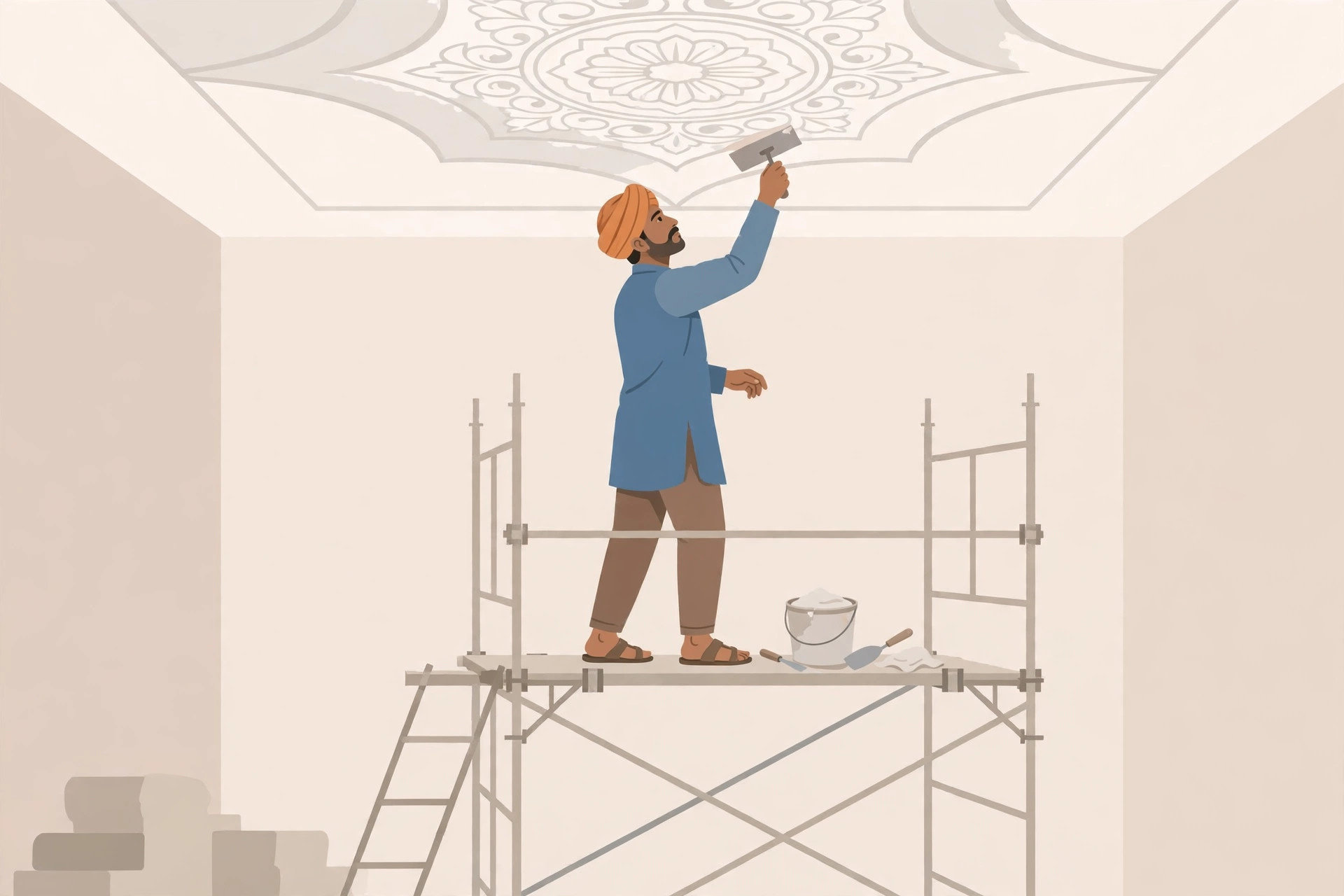
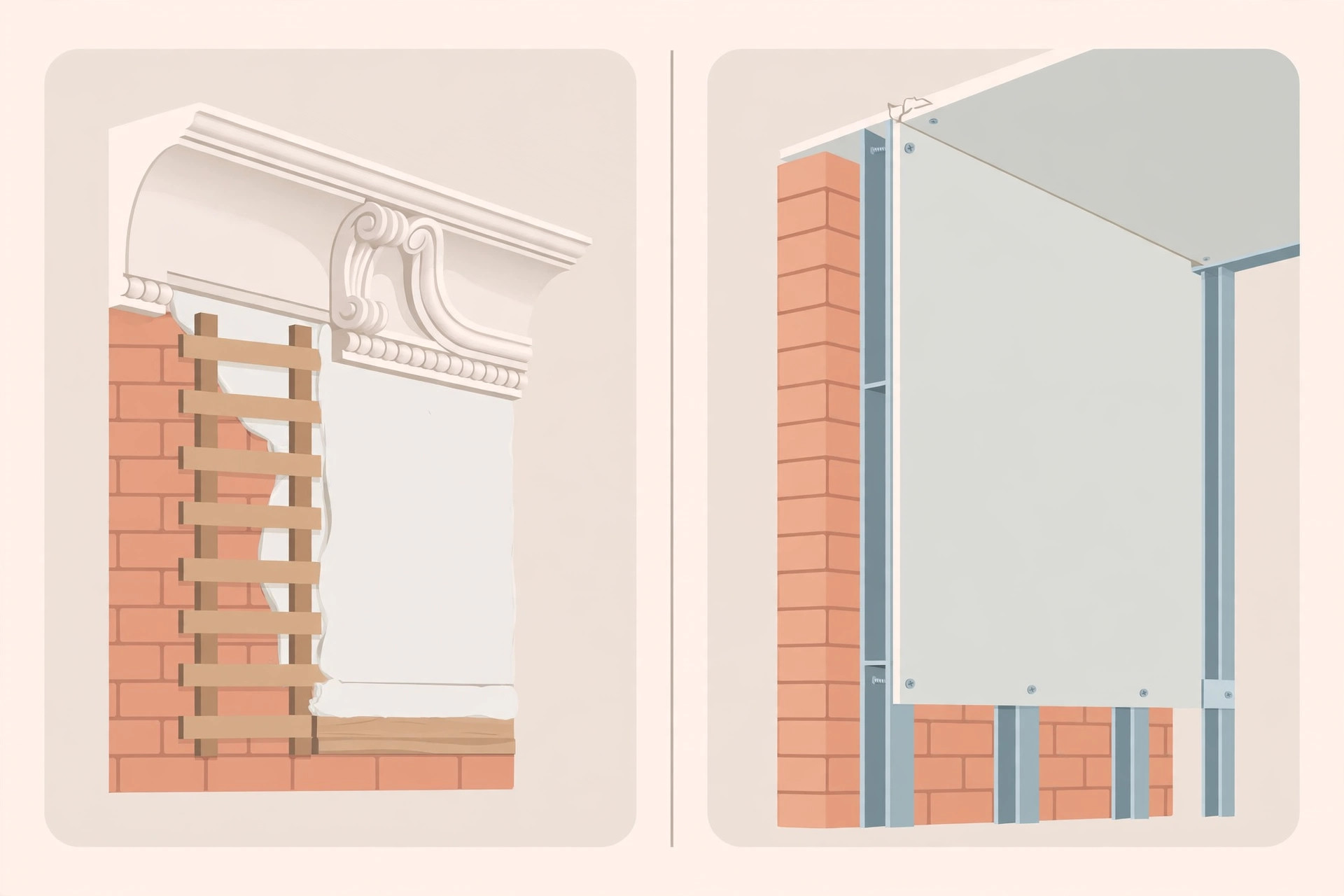
POP wins on artistry: curves, medallions, custom mouldings, any design that needs sculpting on-site. Gypsum wins on speed and finish consistency: 2–4 day installs, factory-smooth boards, fewer cracks. Price-wise they overlap heavily in the mid-range (both roughly ₹80–₹200 per sq ft for standard designs); POP pulls ahead in cost only for highly decorative work, gypsum for plain flats. If your design is in our gypsum hall guide‘s territory — trays, coves, flats — gypsum is the practical pick; if it needs sculpting, POP earns its week on site.
Room ideas: bedrooms, dining and beyond
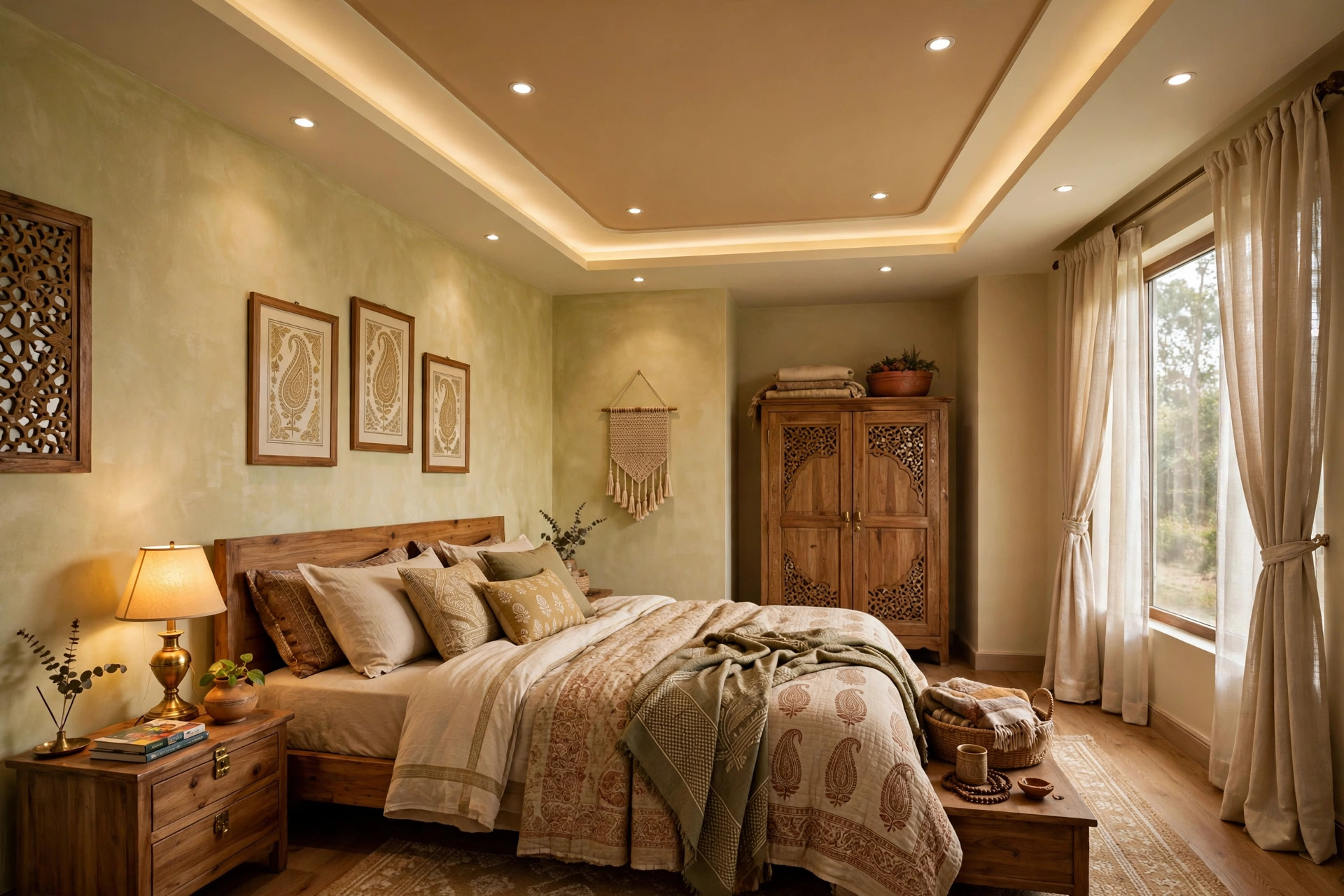
Bedroom POP in 2026
Calm wins: two-tone flat or soft-curve POP with dimmable warm lights. Bedrooms are seen mostly while lying down — intricate geometry overhead gets tiring. See our POP bedroom ceiling guide for the full room treatment.
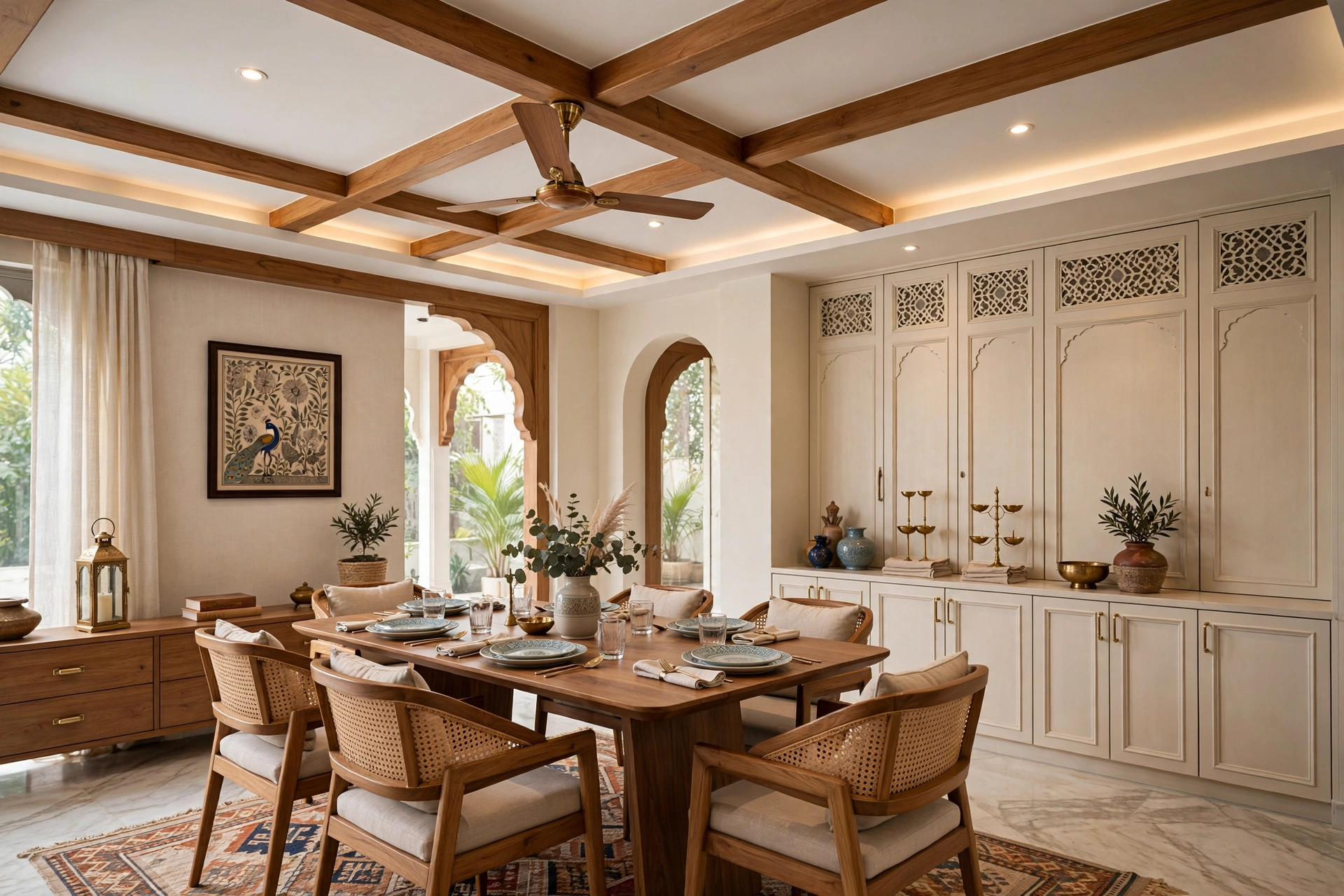
Dining: timber-and-POP zoning
In open-plan homes the dining area often lacks definition. A timber-batten POP panel or a backlit insert over the dining table zones the space without a wall. Cost sits in the ₹200–₹330 per sq ft band for the zoned area.
Maintenance: keeping POP good for a decade
Fix roof/plumbing leaks the week they appear — water is POP’s killer. Dust with a soft dry duster (never wet-wipe textured POP). Hairline cracks: fill with POP putty and touch up paint; structural cracks: call the contractor back. A repaint every 3–5 years keeps it fresh.

FAQs
What is the latest POP false ceiling design trend in 2026?
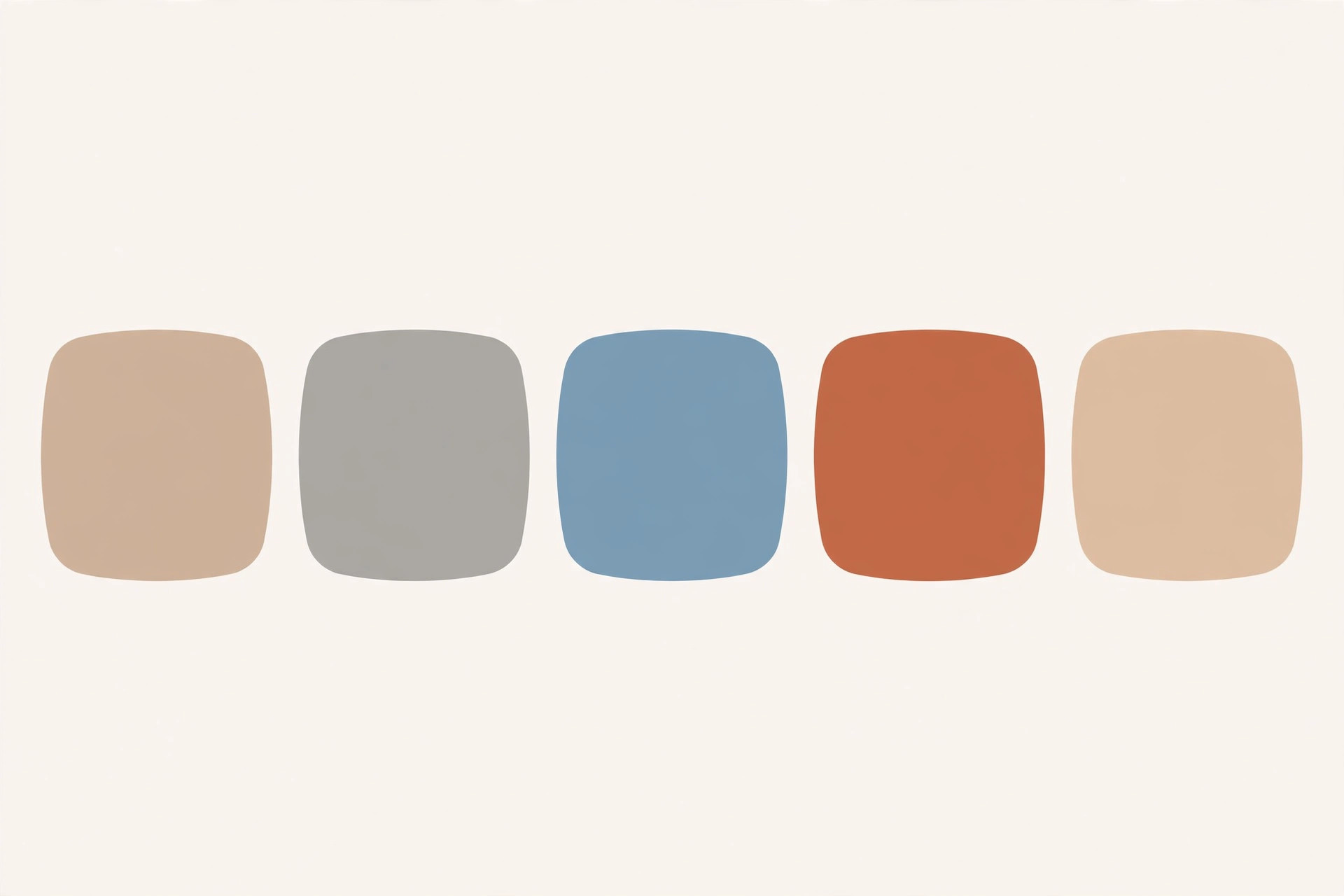
The dominant 2026 directions are geometric zoned panels, cove ceilings with warm LED strips, wood-textured POP, and soft curved profiles — moving away from all-white ornate ceilings towards warmer, lit, restrained designs. Costs run ₹80–₹380 per sq ft installed in India depending on complexity.
Is POP or gypsum better in 2026?
Neither universally: POP for sculptural, curved, custom designs (7–10 day install, more crack-prone); gypsum for clean trays, coves and flats (2–4 days, uniform finish). Mid-range costs overlap at roughly ₹80–₹200 per sq ft installed. Match material to design language.
How long does a POP false ceiling last?
A well-installed POP ceiling in a dry room lasts 10–15 years structurally, with repainting every 3–5 years. Moisture, seepage or poor craftsmanship cut that sharply — the material is only as good as the site conditions and the karigar.
Can POP ceilings be used in kitchens and bathrooms?
Dry kitchens yes, with wipeable paint. Bathrooms and wet areas no — use moisture-proof PVC panels instead. Steam and splashes destroy POP within a couple of years.
The short version
POP in 2026 is about restraint with craft: geometric zones, warm coves, wood textures and soft curves — budget ₹80–₹380 per sq ft installed, pick the karigar as carefully as the design, fix any dampness before the framework goes up, and maintain with dusting and timely repainting. All images in this article are original concept renders created for illustration, not photographs of completed projects.