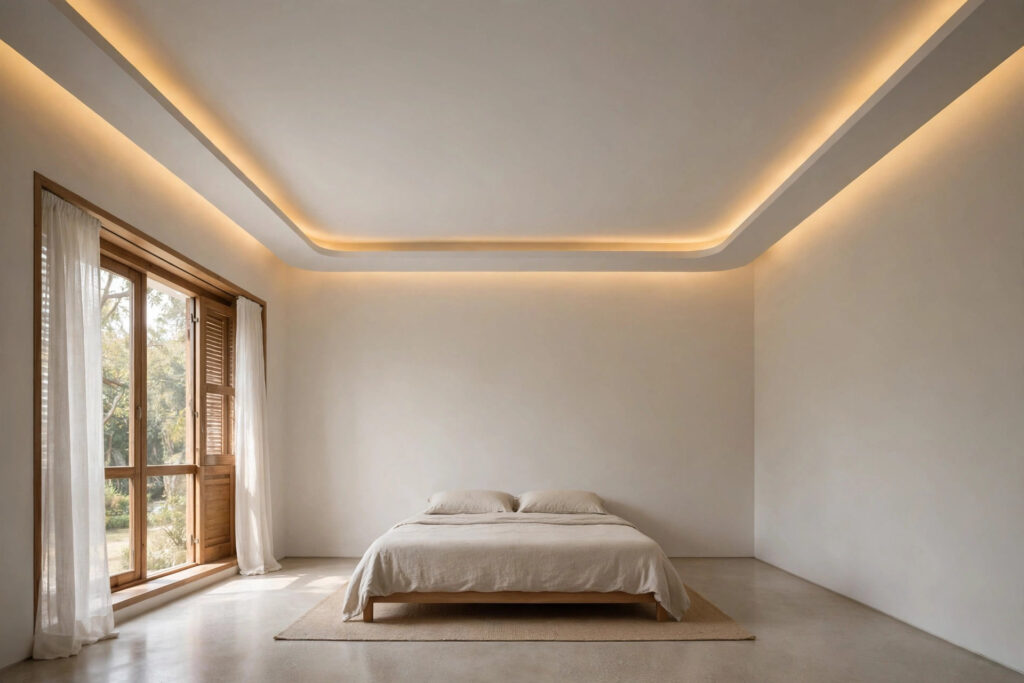

A POP false ceiling in a bedroom is a plaster ceiling made on site, by hand. Plaster of Paris powder is mixed with water, spread over a frame, and shaped while it is still wet. That is the whole reason people pick it: curves, cornices, medallions, and shapes that factory-made boards cannot make. It is also the reason POP ceilings can be uneven, slow, and prone to fine cracks if the work is rushed.
This guide stays on the bedroom × POP combination only. It covers what the material does well, where it lets you down, the designs that suit a room you sleep in, what it costs in India, and how to plan the work so you are not fixing problems for years. For the general bedroom overview, see our guide to bedroom ceiling design; for POP ceilings outside bedrooms, there is a separate POP ceiling design guide.
What POP actually is
Plaster of Paris is a powder. Mixed with water, it becomes a paste that sets in minutes, and plasterers spread it over a metal or chicken-mesh frame fixed below your slab. The ceiling you end up with is shaped on your site, by one or two workers, with trowels.
That on-site shaping is POP’s entire character. A worker can run a curved cove along the wall, build up a stepped border, or form a rose pattern around the light fitting, all in the same sitting. Nothing arrives pre-made. The flip side is that the finish you get depends entirely on the skill of the people doing it. Two rooms with the same design can look different if the hands are different.
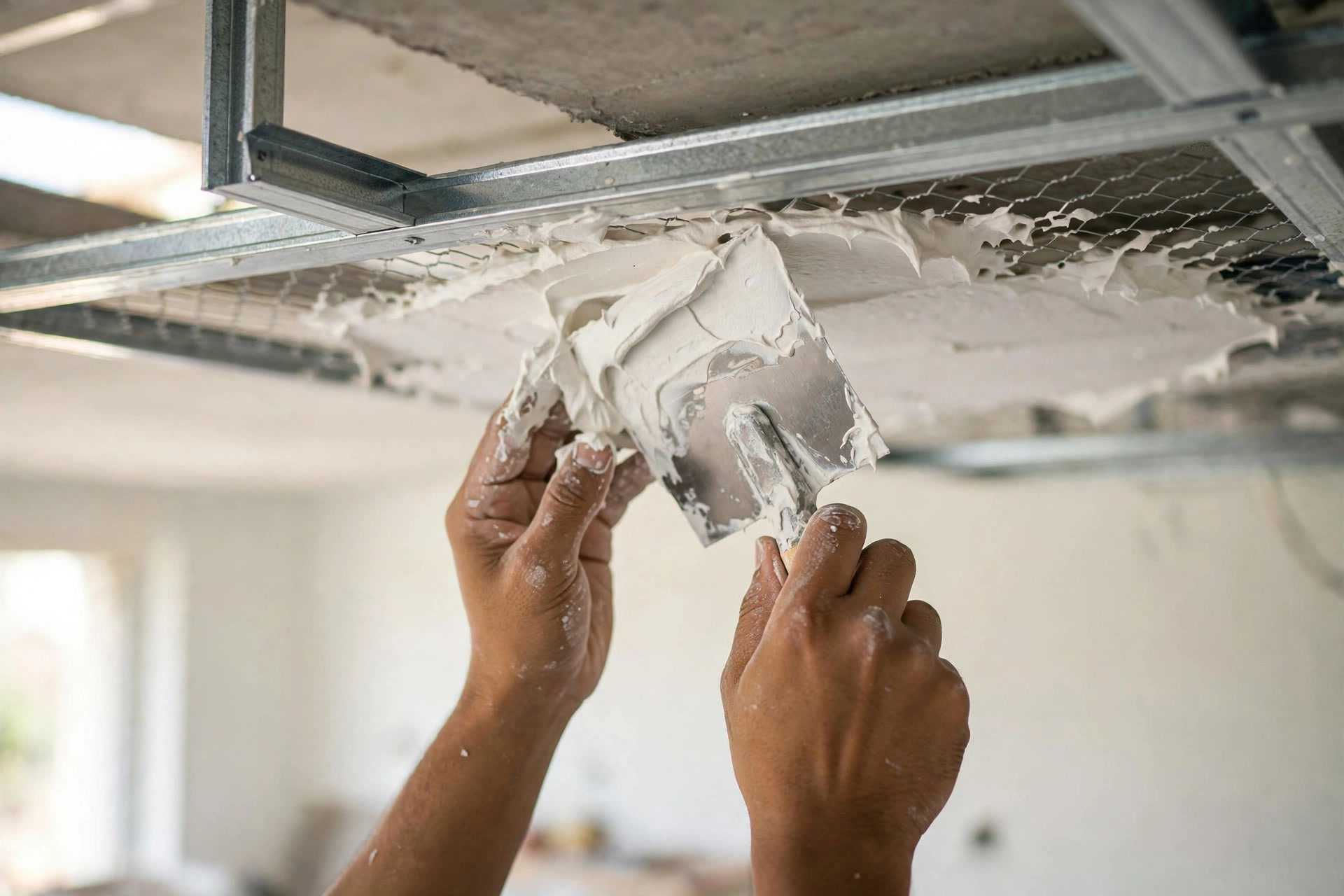
Painting happens last, after the plaster has had time to dry. Most guides describe the job for one bedroom as a few working days of plastering and framing, then a few more days once the surface is ready for paint. The plaster needs to dry fully before paint goes on, or the finish can blister and stain.
How POP differs from gypsum in a bedroom
Gypsum ceilings are made of factory boards screwed to a metal frame, with the joints filled and sanded. POP is wet plaster shaped by hand. Once painted, both can look like a smooth white ceiling, but they get there differently.
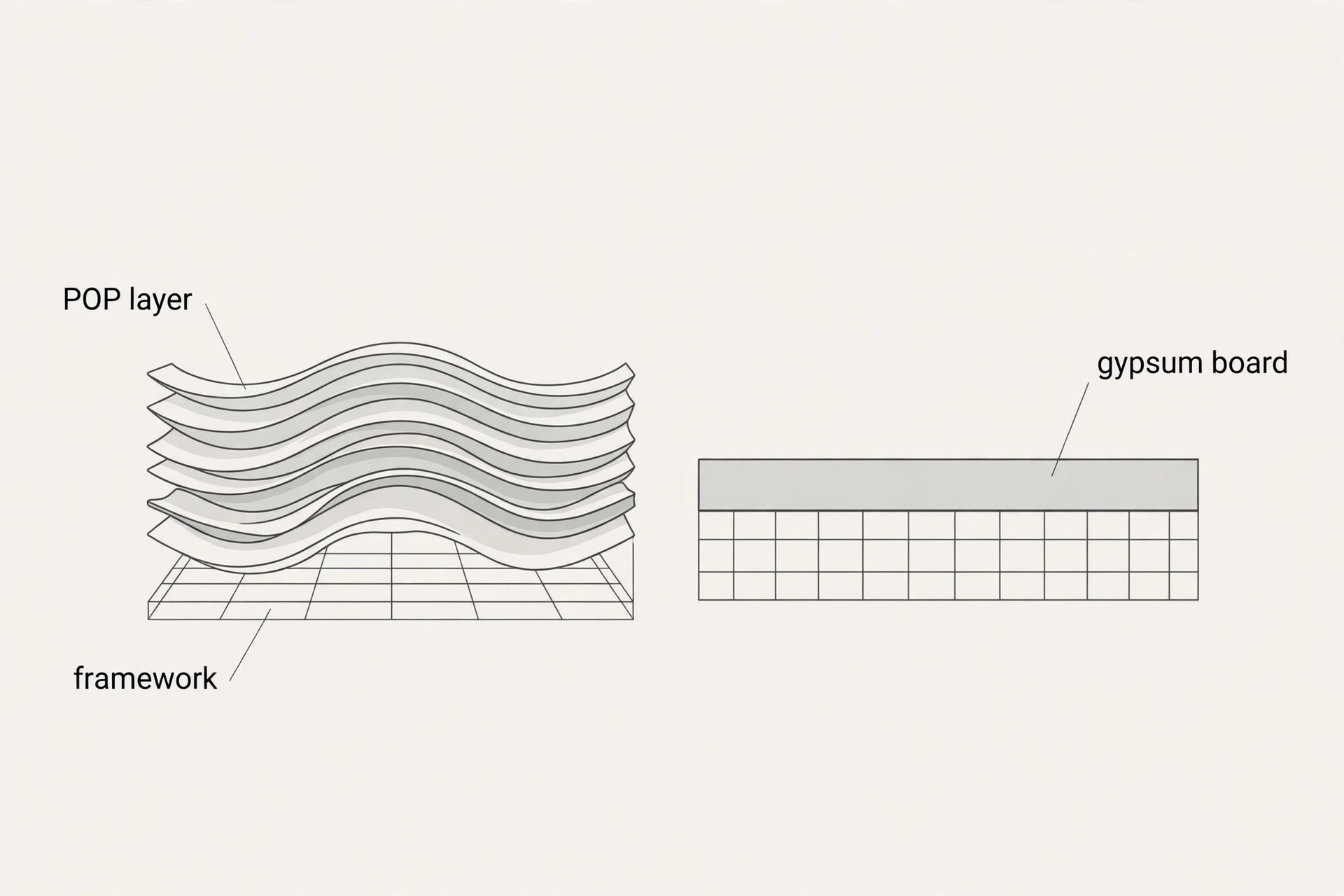
| POP | Gypsum board | |
|---|---|---|
| How it is made | Wet plaster mixed and shaped on site | Factory-made boards fixed to a frame |
| Curves and mouldings | The reason to pick it — free-form curves, cornices, medallions | Good for clean straight lines; limited curves |
| Speed and site mess | Slower, wetter, dustier | Faster and cleaner |
| Cracking | More likely to develop hairline cracks over time | Less likely; joints can still show |
| Repairs | Small cracks can be filled and repainted on the spot | Usually means cutting and patching a board section |
| Finish character | Seamless, hand-worked, slightly softer edges | Crisp, flat, uniform |
The short version: pick POP when you want curves, decorative plasterwork, or a shaped feature. Pick gypsum when you want a clean modern plane installed fast. We have a full bedroom guide for the other side of this choice — gypsum false ceilings for bedrooms — if you are comparing the two.
Where POP earns its place in a bedroom
Shapes no board can make
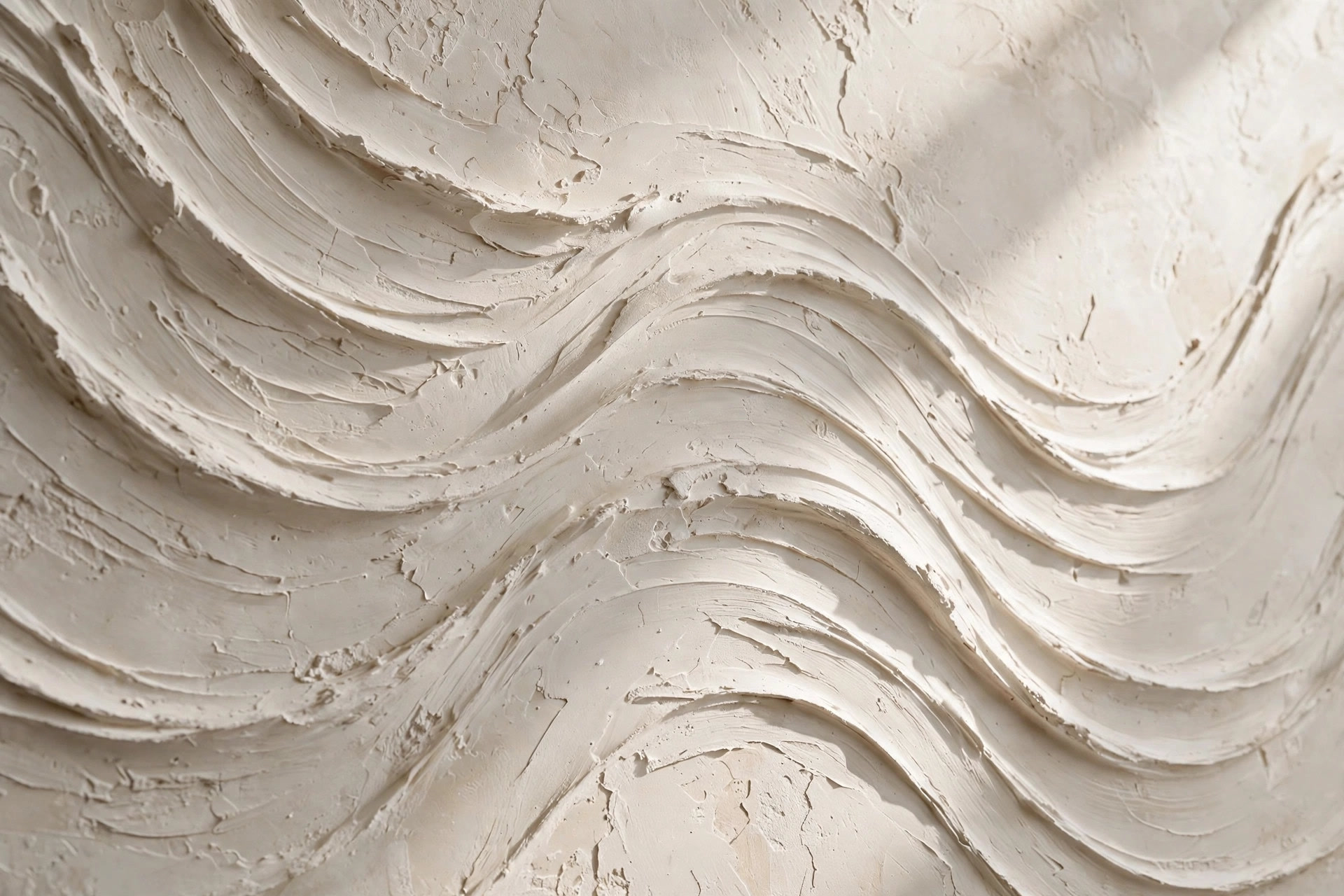
This is the honest, primary reason to use POP. A soft curved cove that washes light up the wall. A scalloped border around the room. A petal or floral motif centred over the bed. These are hand-worked shapes, and boards cannot do them at any price. If your design idea involves curves, the material question answers itself.
Cornices and medallions
Classical bedroom details — a cornice where the ceiling meets the wall, a medallion around the central light — are POP’s home ground. Pre-cast POP mouldings exist too, and a good plasterer can run a cornice in place so the whole room reads as one piece.

A seamless surface
Because the plaster is applied as one continuous skin, a POP ceiling has no board joints to tape. In a bedroom you look up at every night, that uninterrupted surface matters more than people expect.
Easy patching for small damage
Hairline cracks and small chips can be filled, sanded, and repainted locally. You do not need to cut out a panel. This is POP’s quiet advantage over its lifetime: the material that cracks more is also the material that repairs more invisibly.
Where POP works against you
The limitations are real and worth reading before you commit.
It needs time to dry
Wet plaster cannot be painted the next morning. The ceiling has to cure, and rushing this is how you get blisters, stains, and early cracking. In humid coastal cities the wait is longer. Plan the schedule around drying, not against it.
Hairline cracks are common
Building movement and seasonal change put stress on a rigid plaster skin. Fine cracks at joints and corners are normal over the years, not a sign the whole job failed. They are repairable, but if cracks will bother you, go in with your eyes open.
The worker decides the quality
With gypsum, the factory guarantees the board. With POP, the person on the scaffold guarantees the ceiling. A skilled plasterer gives you a smooth, level surface; a careless one gives you waves, hollows, and thick spots that paint cannot hide. Hiring on price alone is the riskiest part of a POP job.
It is messy while it is being done
Mixing, splattering, sanding dust. The bedroom usually needs to be emptied, and the rest of the house needs dust protection. If you are living in the home during the work, this is a genuine inconvenience to budget for.
Water is its enemy
POP handles moisture poorly. A leak from the bathroom above or a seeping terrace will stain and soften plaster fast. If the slab above the bedroom has any history of damp, fix that first — or choose a different material for that room.
It needs repainting over the years
Like any painted surface, a POP ceiling needs repainting every several years to stay fresh, more often after crack repairs. This is normal maintenance, not a flaw, but it is a cost that belongs in your planning.
Bedroom POP designs that actually work
A bedroom is the room you see lying down, in low light, every night. Designs that look good in a showroom photo can feel busy overhead. The bedroom-friendly POP designs share one trait: they keep the centre calm and put the detail where it does not press down on you.
Perimeter border with cove light
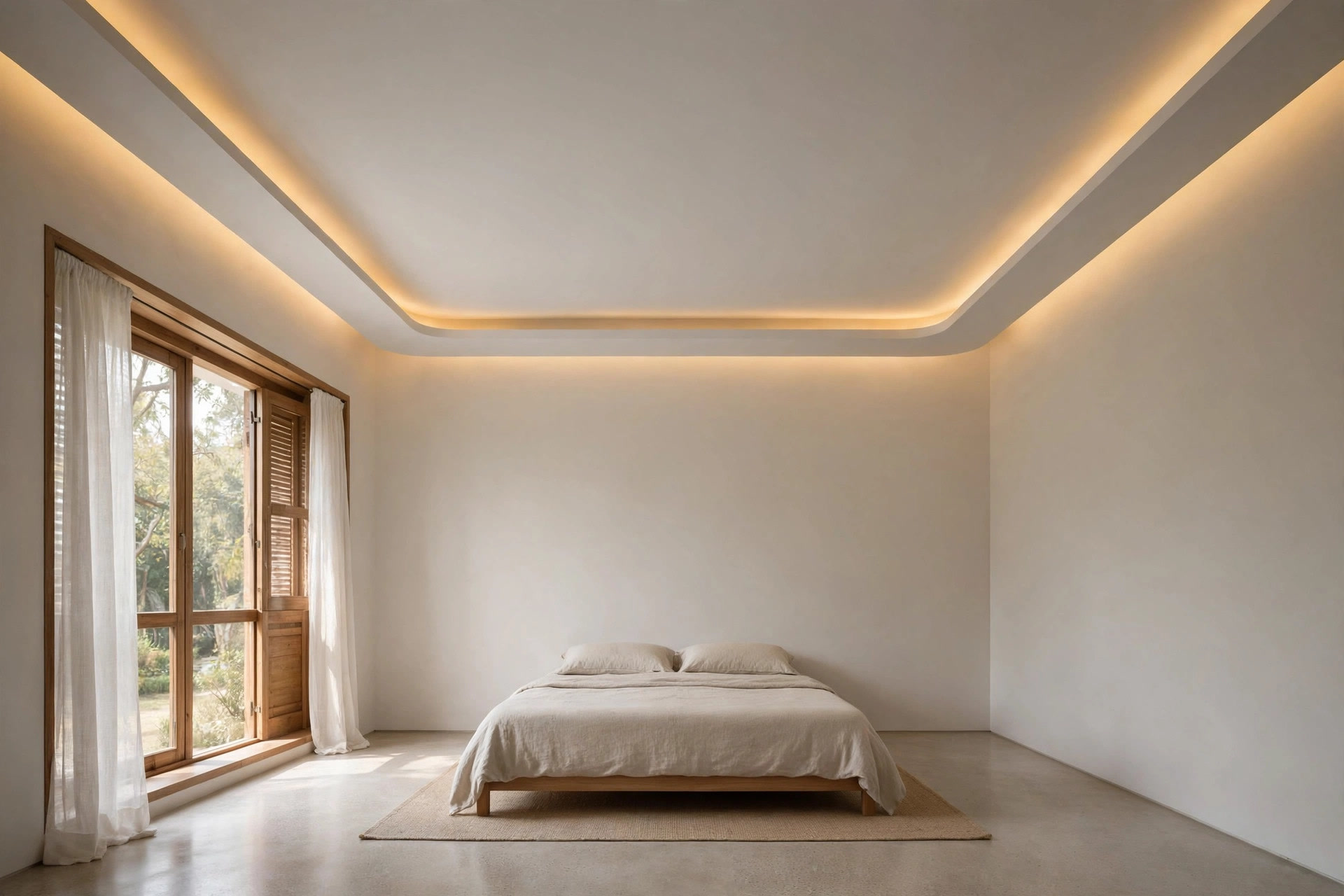
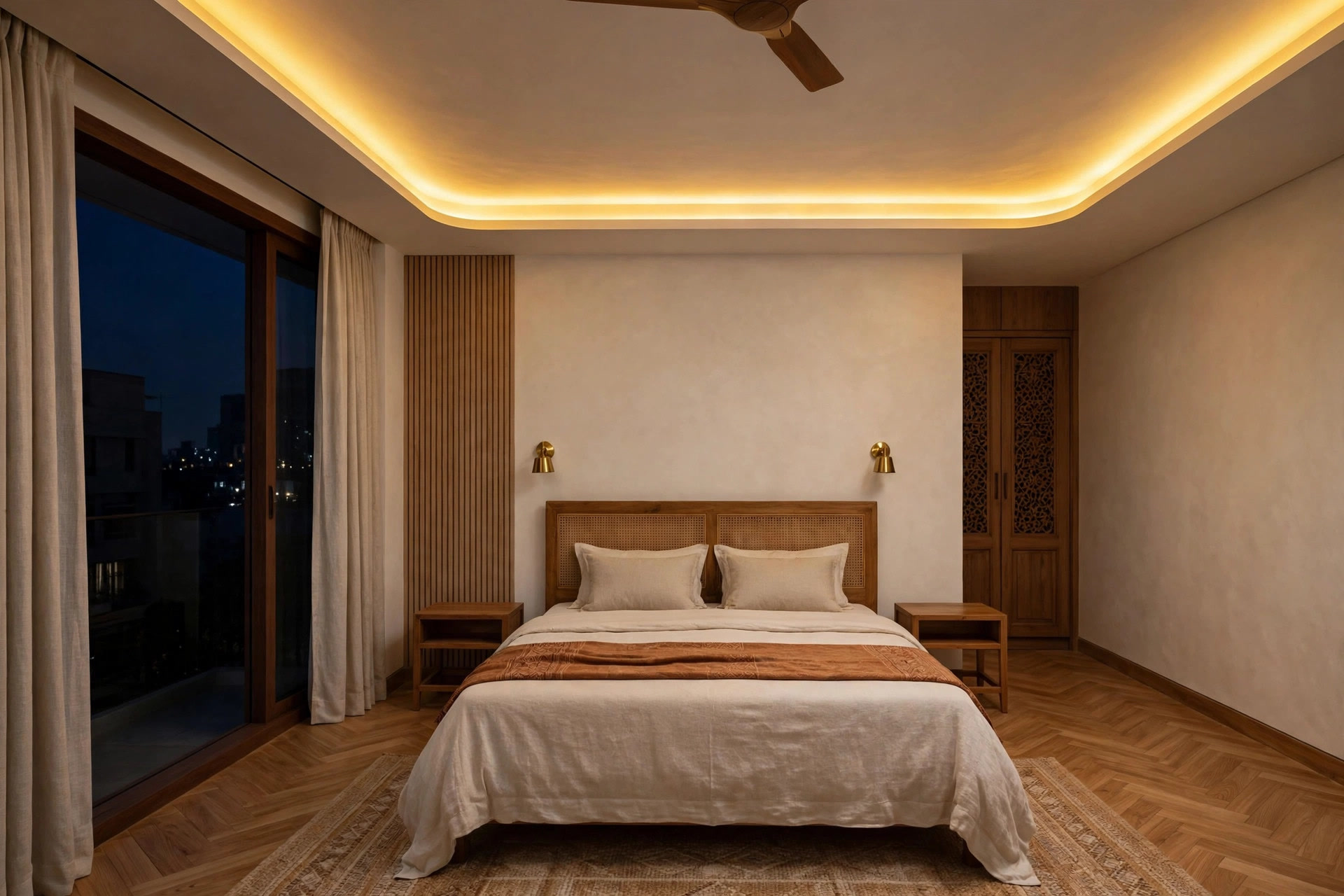
A band of POP around the room’s edge, with the centre left at full height, and a concealed LED strip washing light upward. This is the safest bedroom design in POP: it hides wiring, gives you ambient light, and costs you almost no headroom. It suits rooms from about 9 feet up.
Tray ceiling
A recessed central panel — the ceiling steps up in the middle like an inverted tray. It adds depth without the weight of multiple levels, and the inner edge takes cove lighting well. Keep the drop shallow in rooms under 10 feet.

Plus-minus panels
Raised and recessed sections worked into a single ceiling plane — a layered look without stacking full levels. It stays around four to five inches deep, which makes it a good middle ground for standard rooms. Keep the pattern restrained above the bed; a busy ceiling is the last thing you want to stare at every night.
Medallion around the central light
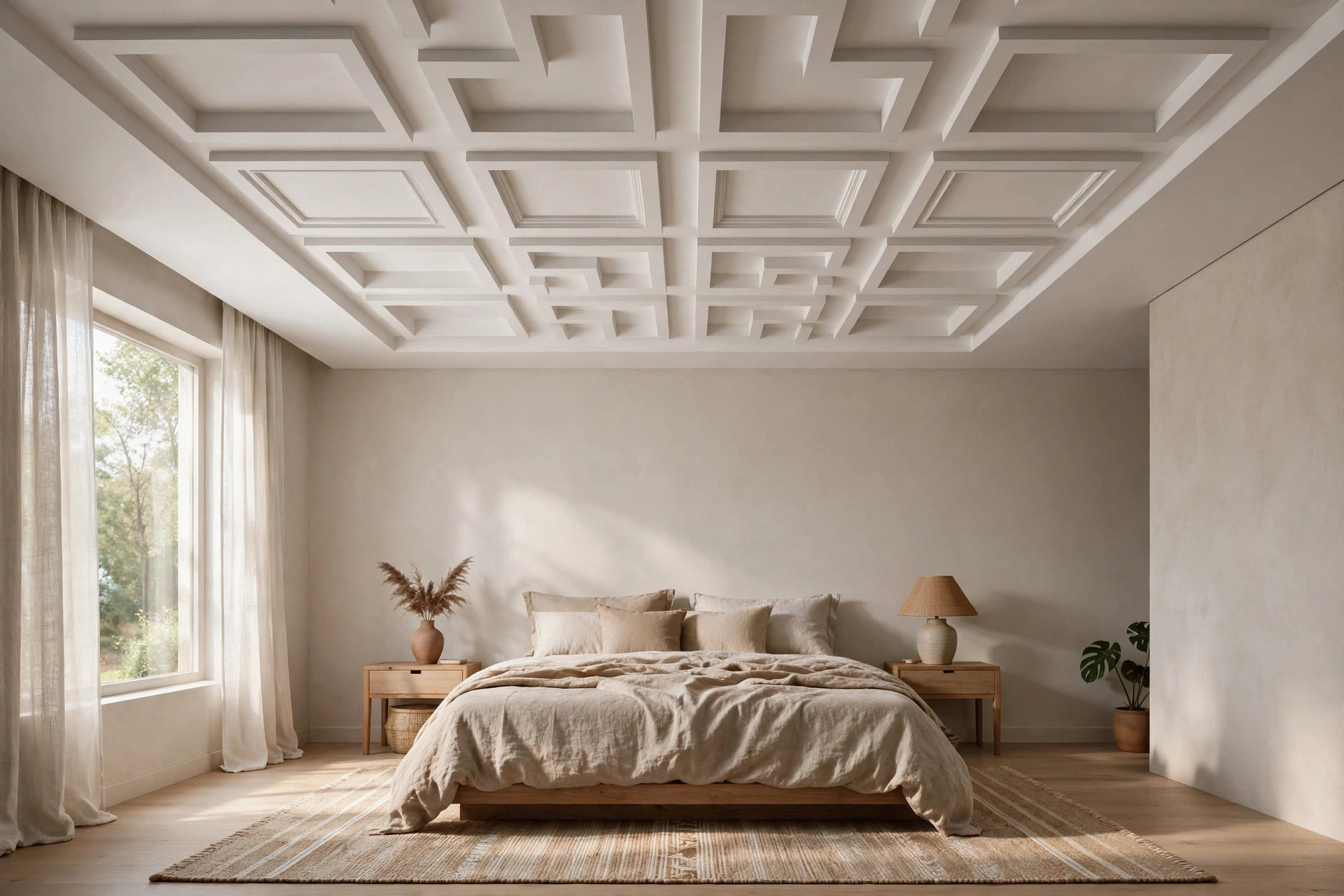
A plaster rose or medallion centred on the room’s light fitting, with the rest of the ceiling left plain. It is a small job with a large effect in traditional and transitional bedrooms — one feature, no height loss worth worrying about.

Curved or petal features
Petal shapes radiating from the centre, a soft circular recess above the bed, or a wave running along one wall — these are the designs only POP can do. Use them as a single feature zone. Covering the whole ceiling with curves is what makes small bedrooms feel crowded.


A feature over the bed in the master bedroom
In a master bedroom with decent height, zone the ceiling instead of dropping it evenly: a shaped feature above the bed — tray, curve, or panel — with a plain ceiling elsewhere. It draws the eye to the sleeping area and leaves the walking space untouched.

Playful shapes for a child’s bedroom
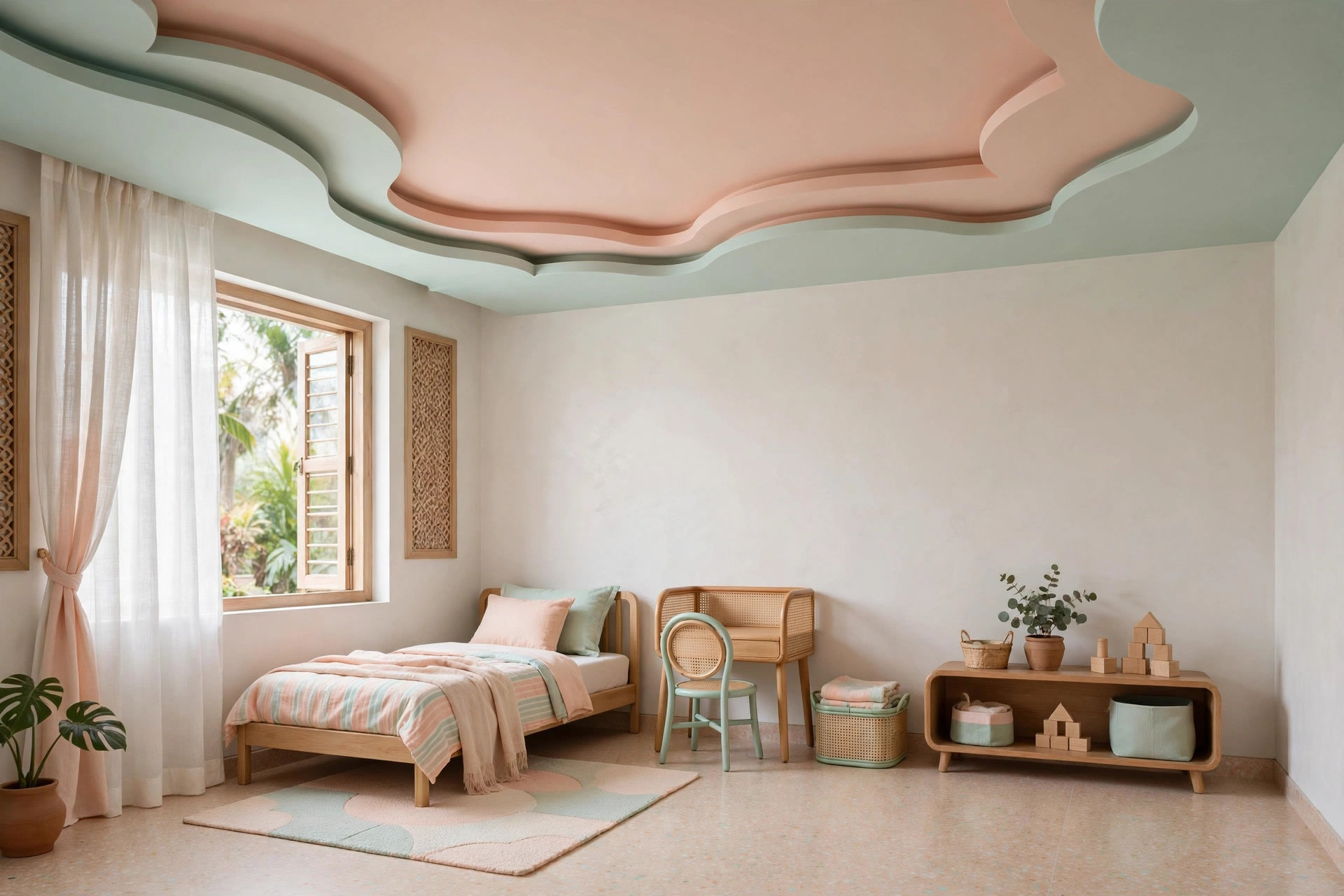
Soft pastel curves, a rainbow arch, or a simple cloud edge in the tray — POP handles these easily. Keep the theme simple enough that the room still works when the child outgrows it; repainting a tray is cheap, rebuilding a ceiling is not.
Start with the height check
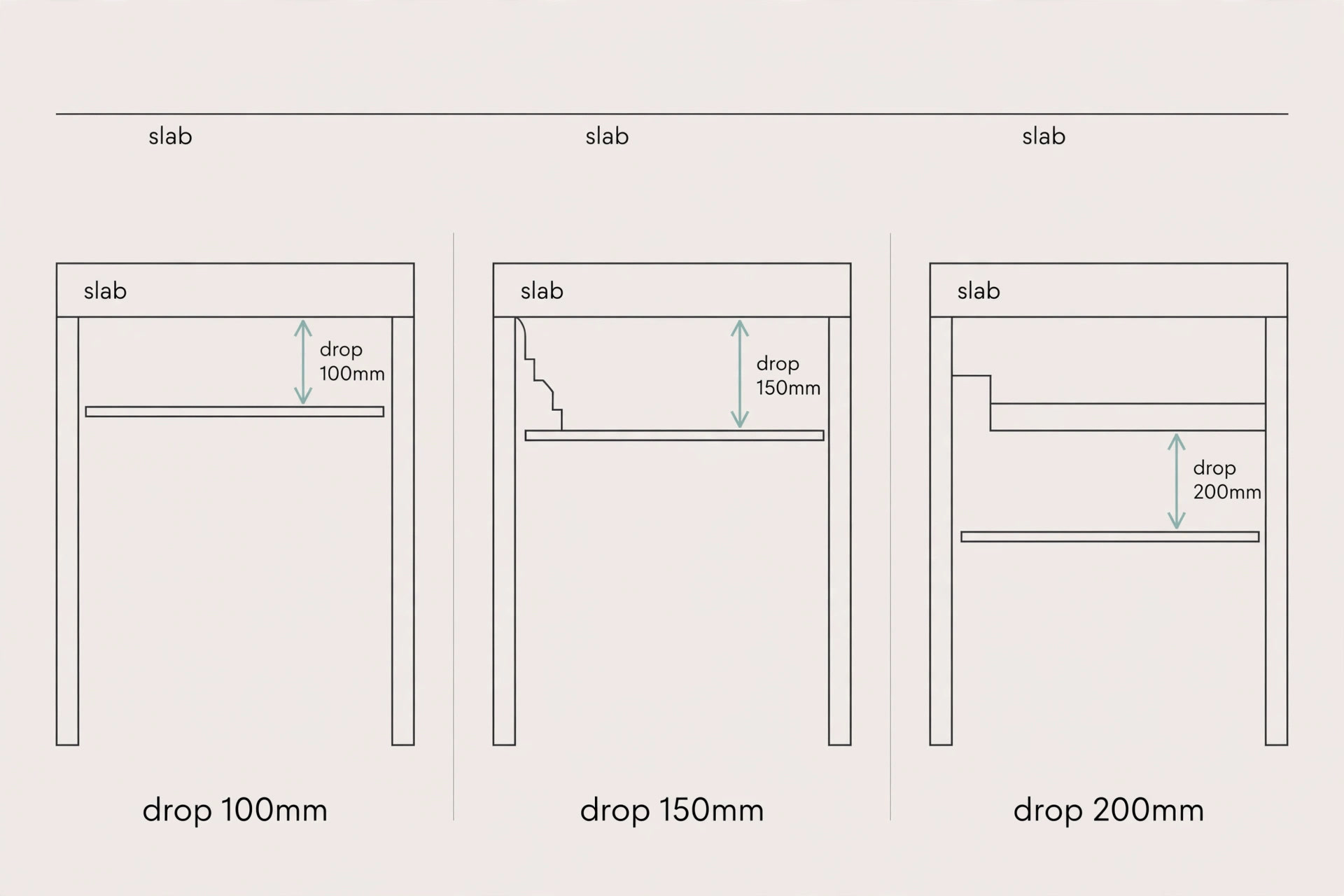
Before choosing any design, measure your slab-to-slab height. A false ceiling needs room for the frame, the plaster, and the wiring, and it lowers the room permanently.
| Your slab height | What works |
|---|---|
| Under 9 ft | Skip a full ceiling. A slim perimeter border, a single panel, or just good paint and lighting. |
| 9 – 9.5 ft | Slim perimeter or single-level design only; keep the drop to 4–6 inches. |
| 10 ft and above | Full ceilings work, including tray and restrained multi-level designs. |
Roughly: a basic POP ceiling takes about 4 inches, one with cove lighting about 6, and multi-level work 8 or more. Taking 8 inches off a 9-foot room leaves 8 feet 4 inches, and you will feel it. When in doubt, keep the design at the edges and the centre open.

Planning the job: sequence, labour, timeline
The order of work matters more with POP than with boards, because wet plaster locks everything in.
- Decide everything above the ceiling first. AC position and piping, wiring runs, fan and light points, any junction boxes. Once plaster goes up, changing any of this means cutting it open. Ask the contractor to finish and test concealed services before the frame closes.
- Fix the frame. The metal or mesh framework goes up under the slab, set to the design’s levels.
- Plaster. The wet work — spreading, shaping, moulding. This is where the room gets dusty and wet, and where skill shows.
- Let it dry. Do not let anyone rush this. Paint goes on only after the plaster has cured.
- Paint. Primer first, then finish coats. Most of the room’s final look comes from this stage.
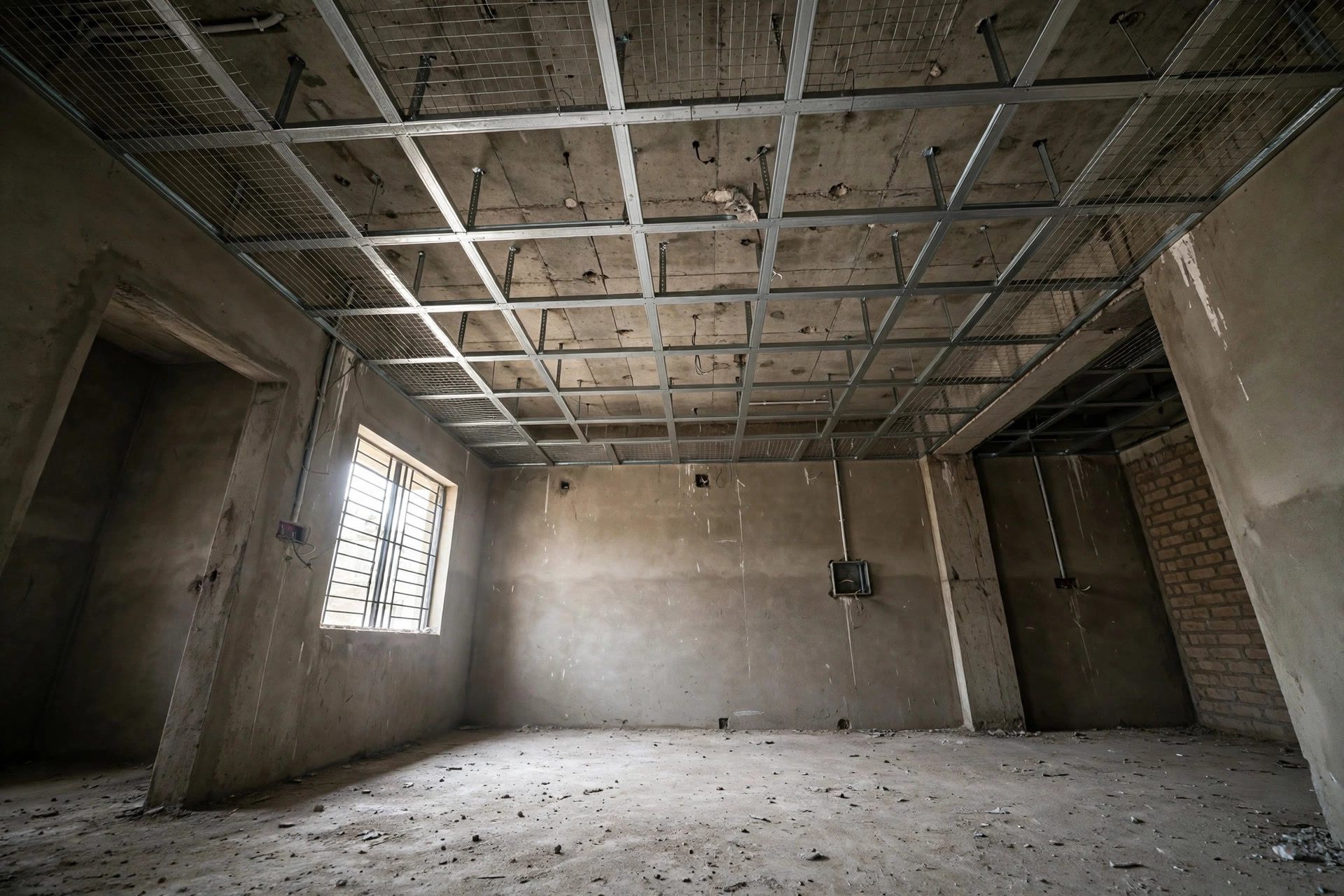
For one bedroom, expect roughly a few working days for framing and plastering, then more time for drying and painting. The room should be empty during the wet work, and furniture kept out until the dust settles.
Two things to settle in writing with your contractor before work starts:
- Fan and heavy light support. Fans and heavy fittings hang from the structural slab, not from the plaster. Have the installer and your electrician confirm how each load is carried — this is a safety question, not a design one.
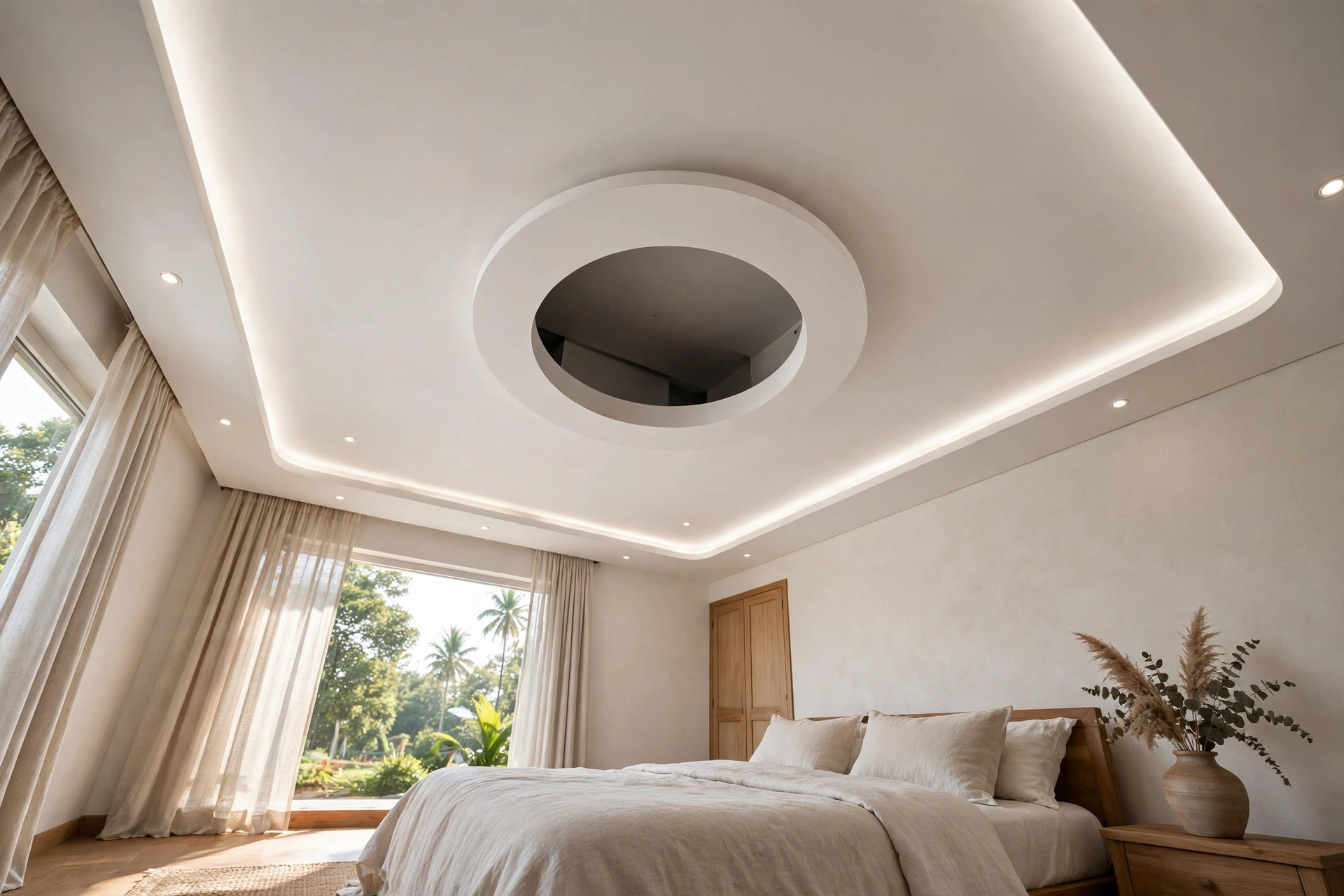
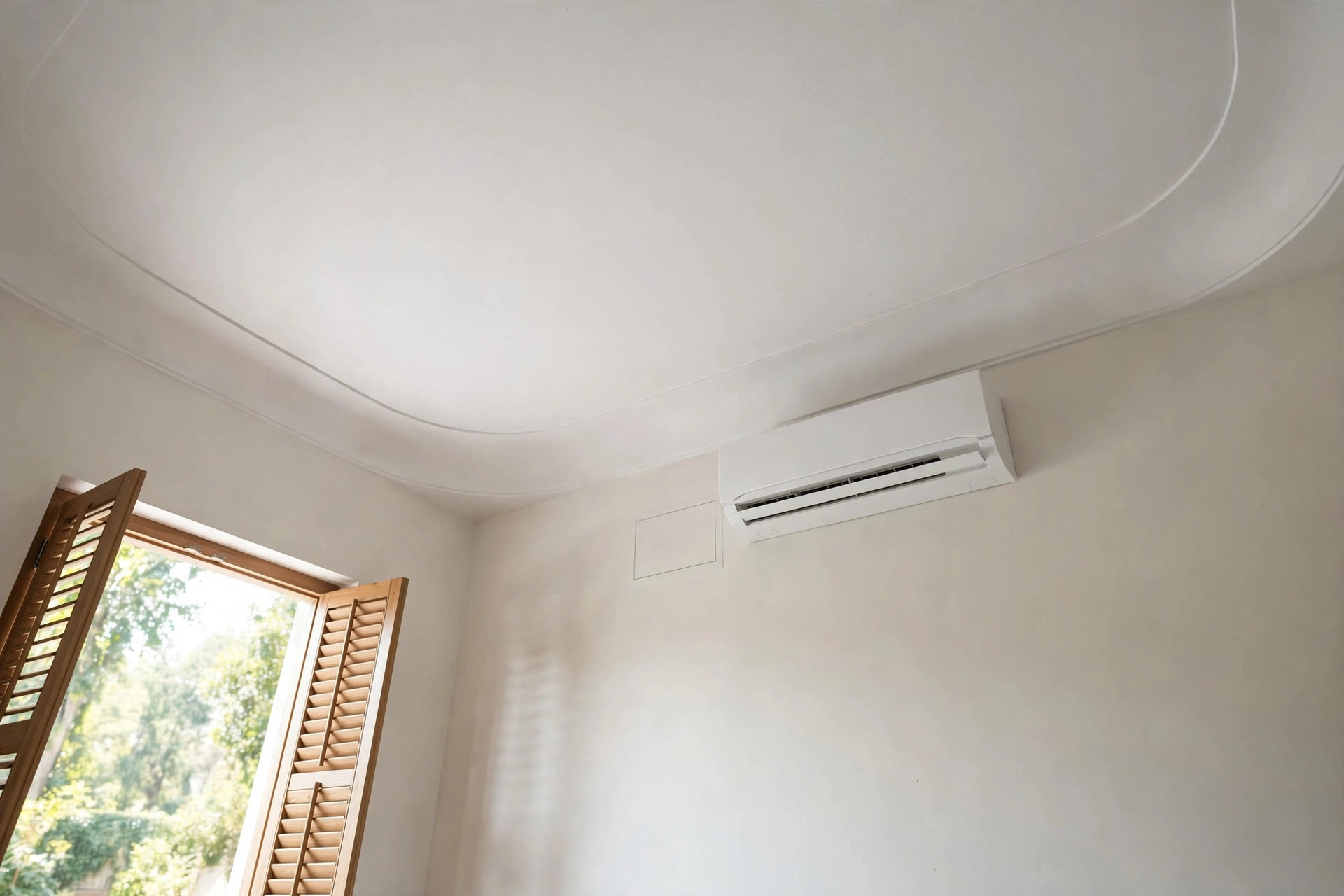
- Access panels. If AC piping or wiring runs above the ceiling, leave discreet access panels. Retrofitting one into a finished POP ceiling is expensive and messy.

What a POP bedroom ceiling costs
Here is the honest part: published rates for POP ceiling work in India in 2026 spread across roughly ₹60–150 per square foot depending on the source, the city, and the design. A basic flat POP ceiling sits at the lower end; decorative or curved work pushes toward the upper end. One widely cited guide puts basic flat work at ₹60–90 and curved or decorative work up to ₹120, while installed-rate comparisons for 2026 land around ₹85–140 for plain POP. These bands overlap, which tells you something useful: nobody’s per-foot figure is a fact until a contractor quotes your room.
What the per-foot figure usually leaves out: paint, light fittings and wiring, and GST. Cornices and edge trims are often priced separately, sometimes per running foot. A few recessed light points can add a few thousand rupees including wiring. Get the quote in writing with inclusions listed, and compare quotes on the same scope — a cheaper per-foot rate that excludes painting is not cheaper.

For the full breakdown — material-wise rates, room-size examples, and what drives the price up or down — our false ceiling cost guide for India goes deeper than this section.
Colour and light on a POP bedroom ceiling
POP takes paint beautifully, which is half its appeal. A few rules that hold up in bedrooms:
- Keep it light in low rooms. White, ivory, or warm off-white recedes visually. Dark ceilings pull the room in — fine above 10 feet, risky below it.
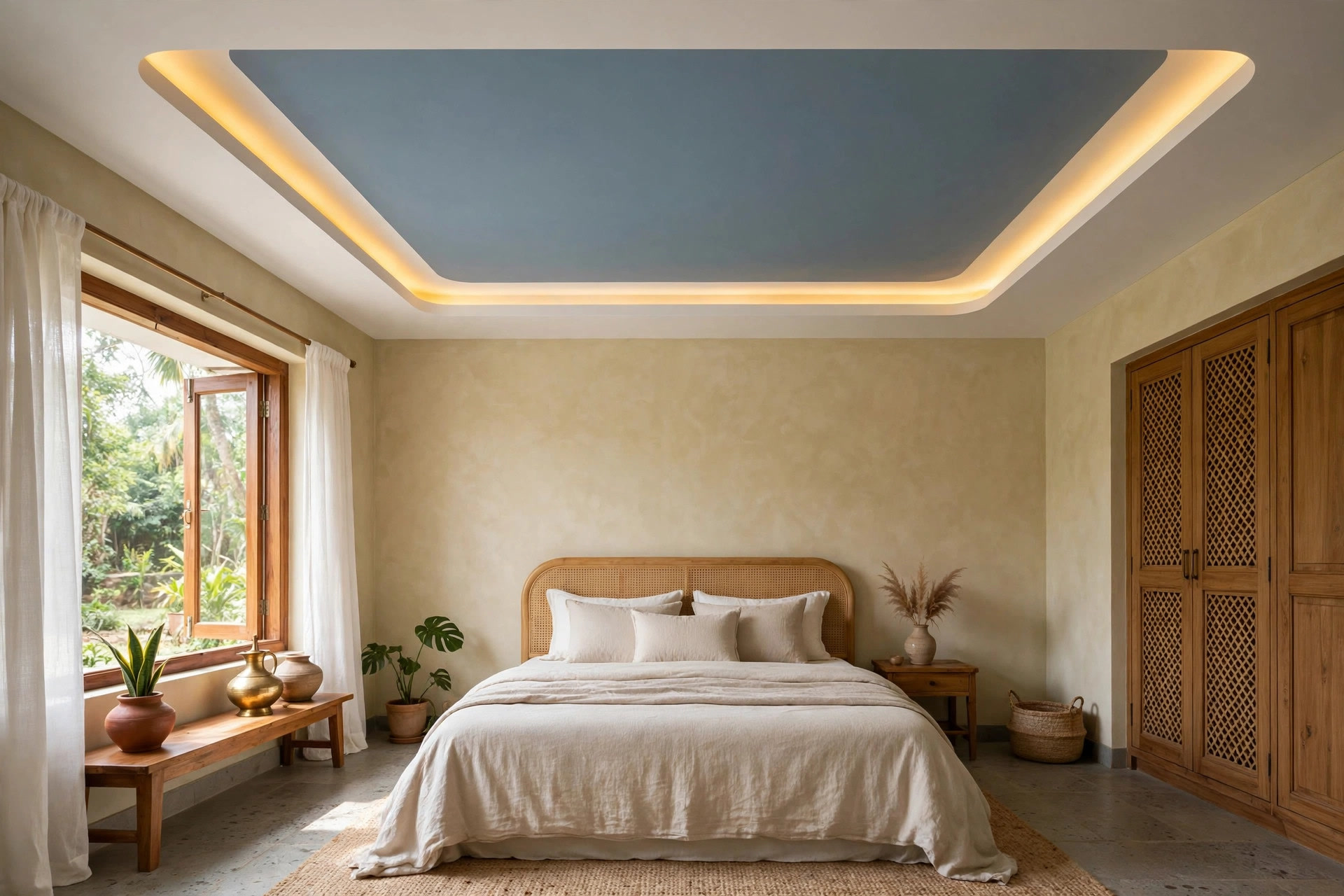
- Use one accent, not five. A soft tint in the tray or cove interior — pale beige, dusty blue, muted terracotta — adds depth without noise. In a child’s room, one playful colour in a border or panel works.
- Warm white light. Around 3000K suits bedrooms. Cove lighting does more for the room than extra colours do: indirect warm light off plaster creates the soft evening atmosphere people actually want from a bedroom ceiling.
- Plan spots sparingly. Recessed spotlights are for task areas — reading corners, wardrobes. Avoid grids of downlights and avoid placing bright spots directly above the bed.
Cracks, repairs, and upkeep
Expect fine cracks at some point, usually at joints and corners, from building movement and seasonal change. The fix is small: fill, sand, repaint the patch. A good contractor handles it in a visit. Repainting the whole ceiling every several years keeps it fresh and covers repaired spots.
Watch for stains, which are a different matter. A spreading yellow or brown mark means water is getting in from above — fix the source before touching the plaster. POP does not forgive ongoing damp.

Mistakes worth avoiding
- Choosing the design before measuring the room. Height and room size decide what works; a design picked from a photo of a 14-foot room will overwhelm a 10-foot one.
- Too many layers in a bedroom. Depth overhead reads as weight. One feature zone beats three levels in a room you sleep in.
- Leaving lighting to the end. Wiring, cove channels, and spot positions are decided before the plaster, not after.
- Hiring on the lowest quote. With POP, the worker is the product. Ask to see finished work in person before you sign.
- Ignoring what is above the slab. Bathroom and terrace leaks destroy plaster. Check the slab’s history before choosing POP for that room.
FAQs
Is POP or gypsum better for a bedroom ceiling?
It depends on the design. POP wins for curves, cornices, and decorative plasterwork — anything shaped by hand. Gypsum wins for large flat modern planes, faster installation, and less cracking. If your bedroom design is mostly straight lines, gypsum is usually the simpler choice; if it has curves, POP is the one that can make them.
How much does a POP false ceiling cost for a bedroom?
Published 2026 Indian guides put POP work roughly at ₹60–150 per square foot, with plain flat work at the lower end and curved or decorative designs higher. Paint, lights, and GST are usually extra. A per-room quote from a contractor is the only number that matters — see our cost guide for how those quotes break down.
How long does a POP bedroom ceiling take?
Roughly a few working days for the frame and plastering, then drying time, then painting. Do not compare it to gypsum on speed — POP is slower because the plaster is mixed, shaped, and dried on site. Rushing the drying is the most common cause of early problems.
Does POP crack?
Fine hairline cracks over time are normal, especially at joints and corners. They are filled, sanded, and repainted in a small repair. What is not normal: cracks that widen, or plaster that bulges or crumbles — that points to movement or water and needs a proper look.
Can the ceiling fan hang from a POP ceiling?
Plan fan support with your installer and electrician before the work starts, from the structural slab — not from the plaster skin. Also leave the fan blades enough clearance below the finished ceiling for proper airflow.
Does POP work in a humid city?
It can, but it takes longer to cure and is more likely to develop fine cracks if rushed. Ventilation and proper drying time matter more in humid places. In rooms with actual water exposure, like bathrooms, POP is the wrong material.
A note on the images: every image in this article is an original concept render made for this guide, showing what these ceilings can look like. They are not photographs of completed projects.
POP in a bedroom is a craftsperson’s material: slower, messier, and more dependent on skill than boards — but the only one that can shape curves, cornices, and medallions by hand. If that is what your bedroom design needs, and your ceiling height allows it, POP earns its place. If your design is clean straight lines, the simpler material usually wins. Either way, measure first, plan the wiring and fan before the plaster, and hire the worker, not the quote.