
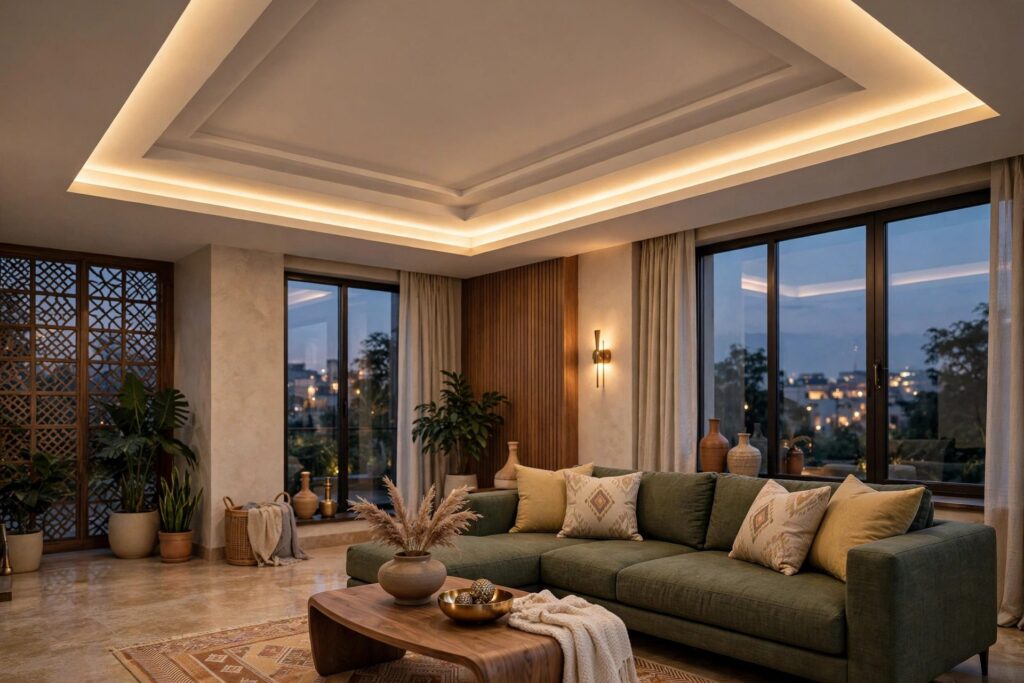

How much does a false ceiling cost in India? If you are planning one, this is the first question that matters — and the hardest to get a straight answer to, because contractor quotes vary wildly for what looks like the same job. This guide gives you the national picture in one place: indicative per-square-foot price bands for gypsum, POP, PVC, wood, metal and other materials (based on published 2026 market ranges); how a per-sq-ft quote is actually built from material, labour and extras; worked budgets for a bedroom, living room, kitchen and bathroom; what pushes the price up or down; and a practical checklist for comparing contractor quotes. Every figure here is indicative — your final quote will depend on your city, your design and your contractor — so the golden rule of this article is simple: get three itemised quotes before you sign anything.
How false ceiling pricing actually works in India
Contractors almost always quote false ceilings per square foot of ceiling area. The basic arithmetic is simple: measure your room’s length × width to get the ceiling area, multiply by the quoted rate, and you have a ballpark. Multi-level or layered designs cover more surface than the floor area beneath them, so the measured ceiling area — not the room’s floor area — is what counts. If you are unsure how to measure, start with our complete guide to false ceiling design, which walks through the basics before you talk to any contractor.
A per-square-foot quote is usually built from three components:
- Material — the boards or panels, the metal (GI) framework, fasteners and finishing compounds. Published 2026 breakdowns put the material component at roughly ₹40–₹110 per sq ft, depending on material and brand.
- Labour — installation workmanship, roughly ₹20–₹50 per sq ft, rising with design complexity and metro-city labour rates.
- Lighting and add-ons — cove channels, LED strips, spotlights, custom mouldings, often quoted separately at an extra ₹25–₹120 per sq ft depending on the design.
As a rough mix, materials typically make up about 40–50% of the project cost, labour 30–40%, and fixtures and fittings (lights, vents, grilles) 10–20%. Headline per-sq-ft bands quoted online usually include material and labour, but the expensive extras — layered designs, cove lighting, premium boards — sit on top. This is exactly why two quotes with the same headline rate can have very different totals.
Indicative false ceiling cost per sq ft in India (2026)
The table below brings the published 2026 market ranges together in one place. Every band is labelled by its basis so you can compare like with like.
| Material | Indicative band (₹/sq ft) | Basis | Typically used for |
|---|---|---|---|
| Gypsum board | ₹80–₹150 | Installed; labour usually included; design extras | Bedrooms, living rooms |
| POP (Plaster of Paris) | ₹65–₹200 | Installed; very wide spread because hand-worked design labour varies | Decorative and traditional designs |
| PVC panels | ₹70–₹150 | Installed | Kitchens, bathrooms, rentals |
| Wooden / veneer | ₹120–₹500+ | Installed; widest spread of all — wood species, finish and workmanship | Premium living spaces |
| Metal / aluminium | ₹90–₹300 | Installed | Kitchens, bathrooms, commercial spaces |
| Grid / mineral-fibre tiles | ₹70–₹250 | Installed | Offices and commercial spaces |
| Stretch / PVC membrane | ₹200–₹400 | Installed | Showrooms, lobbies, statement rooms |
| Glass | Quote-based, premium | Installed; rare in homes, priced per project | Feature ceiling sections |
| Thermocol | Budget / DIY range | No verified 2026 installed band found; cheapest option qualitatively | Temporary or basic ceilings |
A note on these bands: they are indicative market ranges published by third-party Indian sources in 2026, assembled here so you can compare materials side by side. Taxes, painting, lighting and city-level differences are extra unless a contractor states otherwise. Treat every band as a starting point for negotiation, never as a guaranteed price.
Gypsum board: the default choice
Gypsum is the most quoted material for Indian homes: factory-made boards on a metal frame, quick to install, with a clean modern finish. Installed rates cluster around ₹80–₹150 per sq ft. For the full picture on gypsum — designs, boards and planning — see our gypsum false ceiling designs, costs and planning guide.
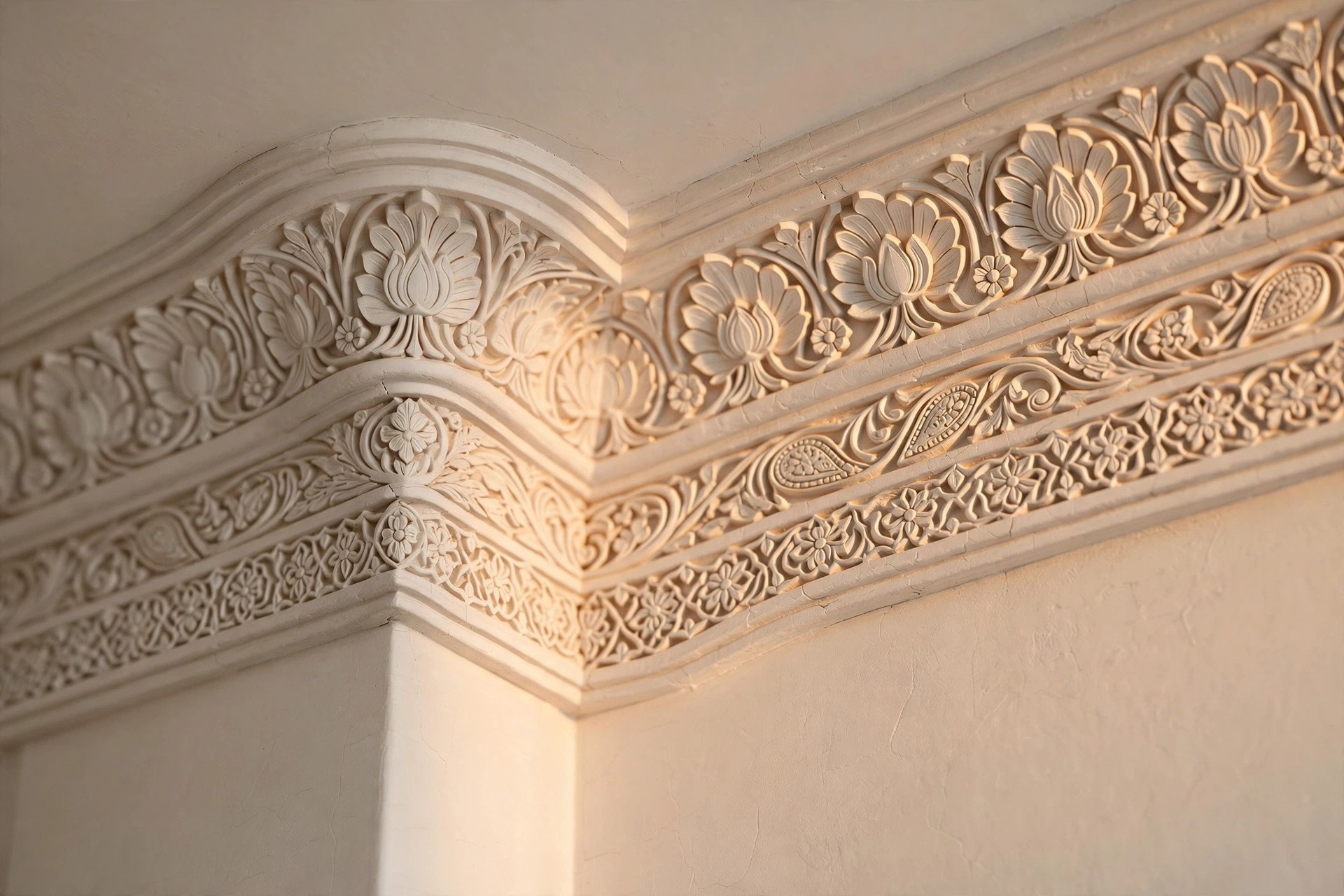
POP: cheapest for simple work, costly for decorative work
POP’s band is the trickiest to read because a flat POP ceiling and a hand-moulded decorative one are effectively different products. Simple POP work starts near ₹65 per sq ft, while elaborate decorative POP can reach ₹200 per sq ft. Rule of thumb from the market data: a simple gypsum ceiling often costs less than an elaborate POP design, even though POP starts cheaper.
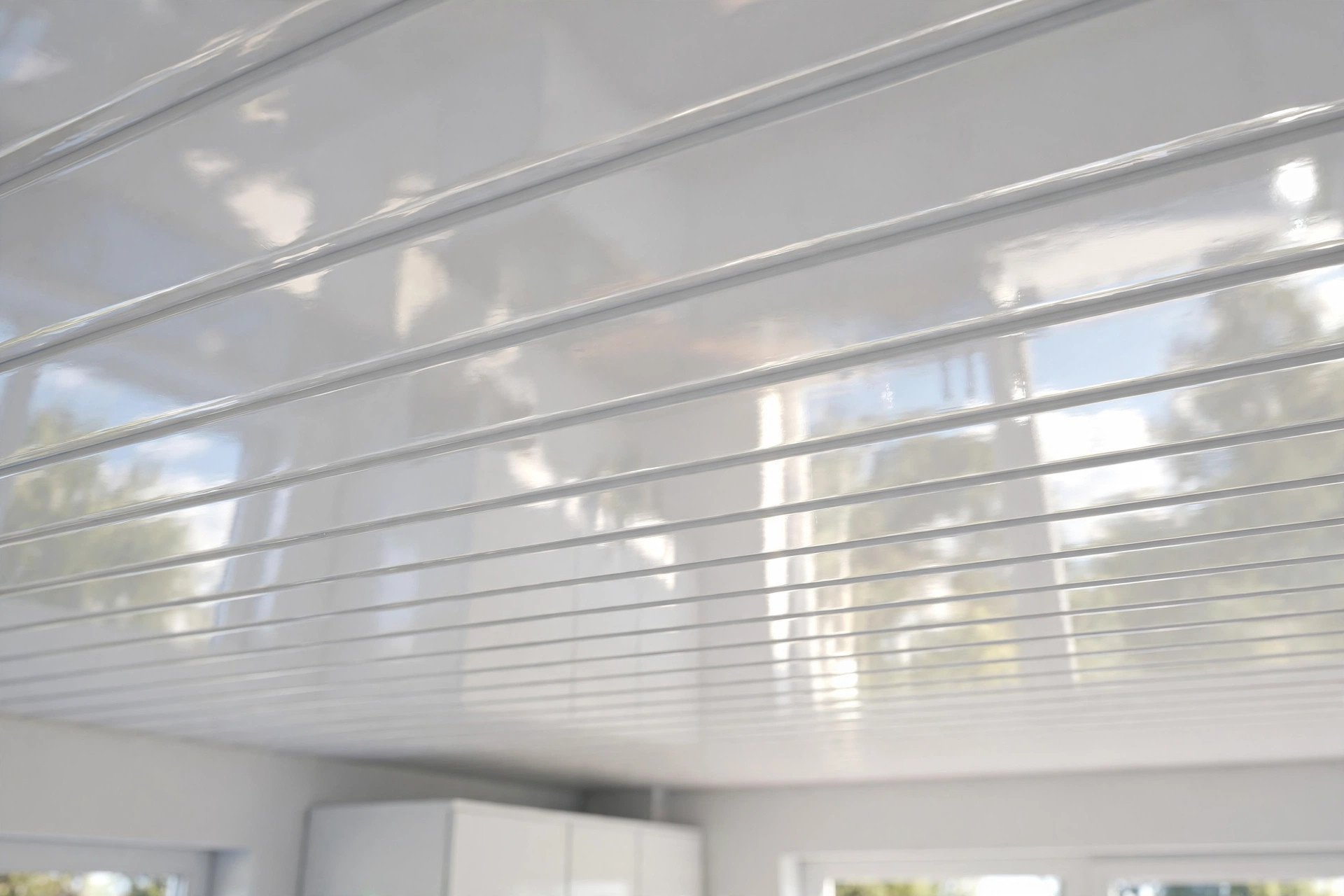
PVC: the budget-friendly moisture-safe option
PVC panels are waterproof, termite-proof and quick to install, which makes them the go-to for kitchens, bathrooms and rental flats. Installed bands sit around ₹70–₹150 per sq ft. Design flexibility is the trade-off — you get readymade patterns rather than sculpted detail.
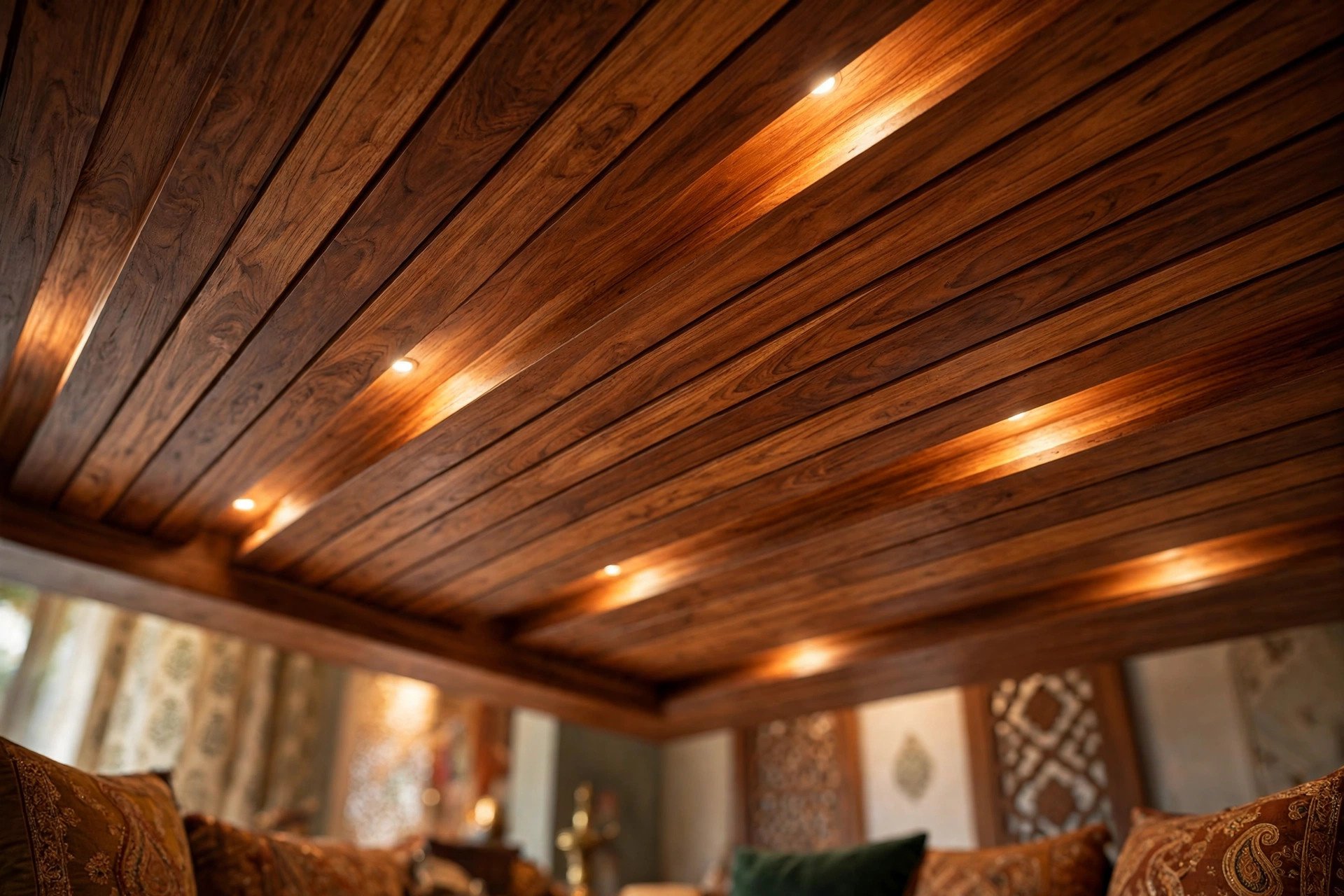
Wooden: premium look, widest price spread
Wood varies more than any other material: published ranges run from about ₹120 to ₹500+ per sq ft depending on the wood or veneer, the finish and the craftsmanship. If a contractor quotes wood, ask exactly which species or finish is included — “wooden ceiling” alone is not a specification.
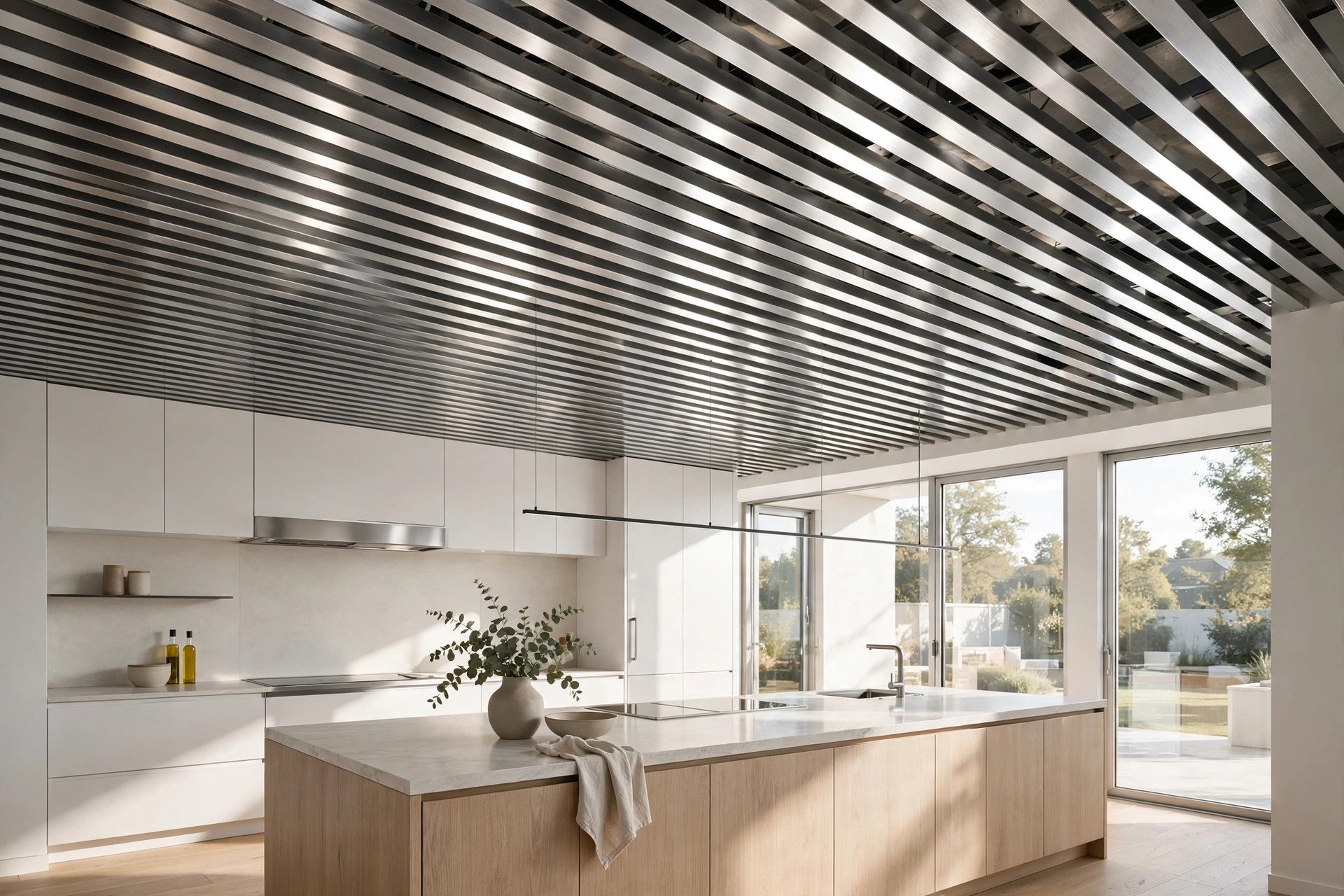
Metal and grid ceilings: durability first
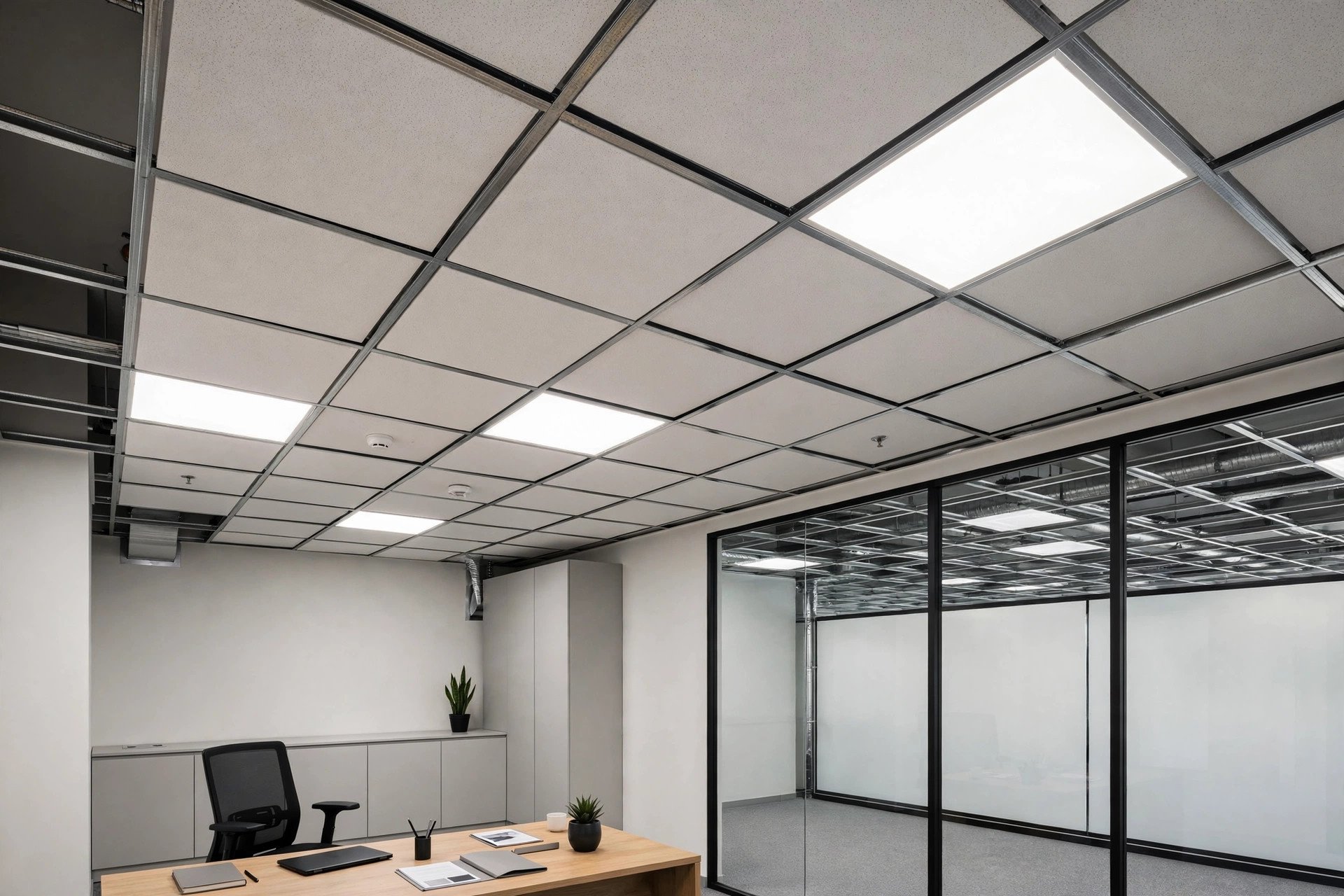
Aluminium and metal ceilings handle steam and moisture well, which is why they appear in kitchens, bathrooms and commercial spaces at ₹90–₹300 per sq ft installed. Exposed-grid mineral-fibre ceilings (₹70–₹250) are mostly a commercial choice, valued for easy access to wiring above. For kitchens and bathrooms specifically, compare metal ceilings for kitchens and bathrooms before you decide.
Stretch, glass and thermocol: the special cases
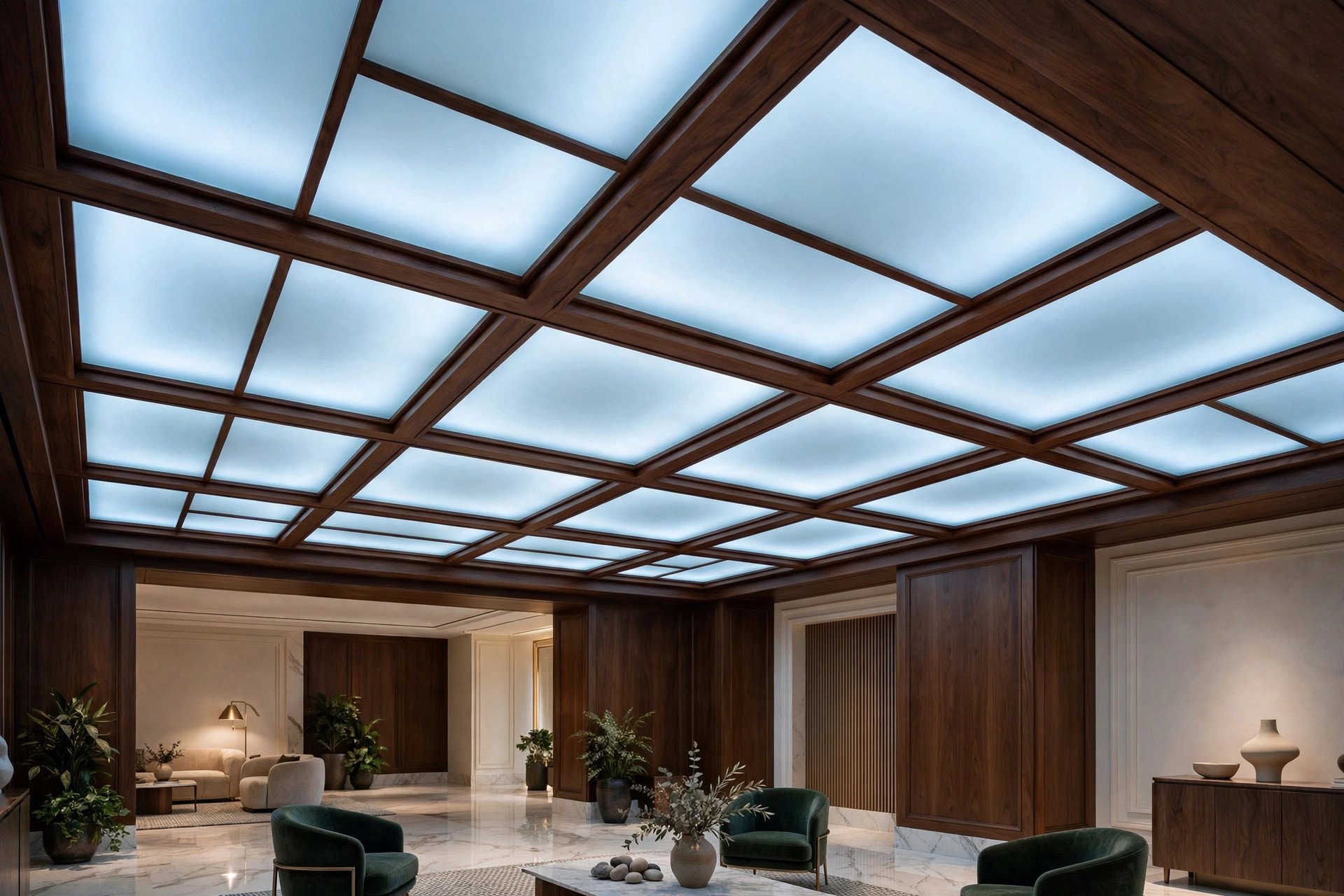
Stretch PVC membranes (₹200–₹400 per sq ft installed) suit showrooms and statement rooms. Glass ceilings are a premium, project-quoted rarity — no reliable per-sq-ft band is published for homes, so treat any such figure with suspicion. Thermocol is the cheapest and most DIY-friendly option, but no verified 2026 installed rate was found for it, so it is mentioned here qualitatively only.
Room-wise budget examples
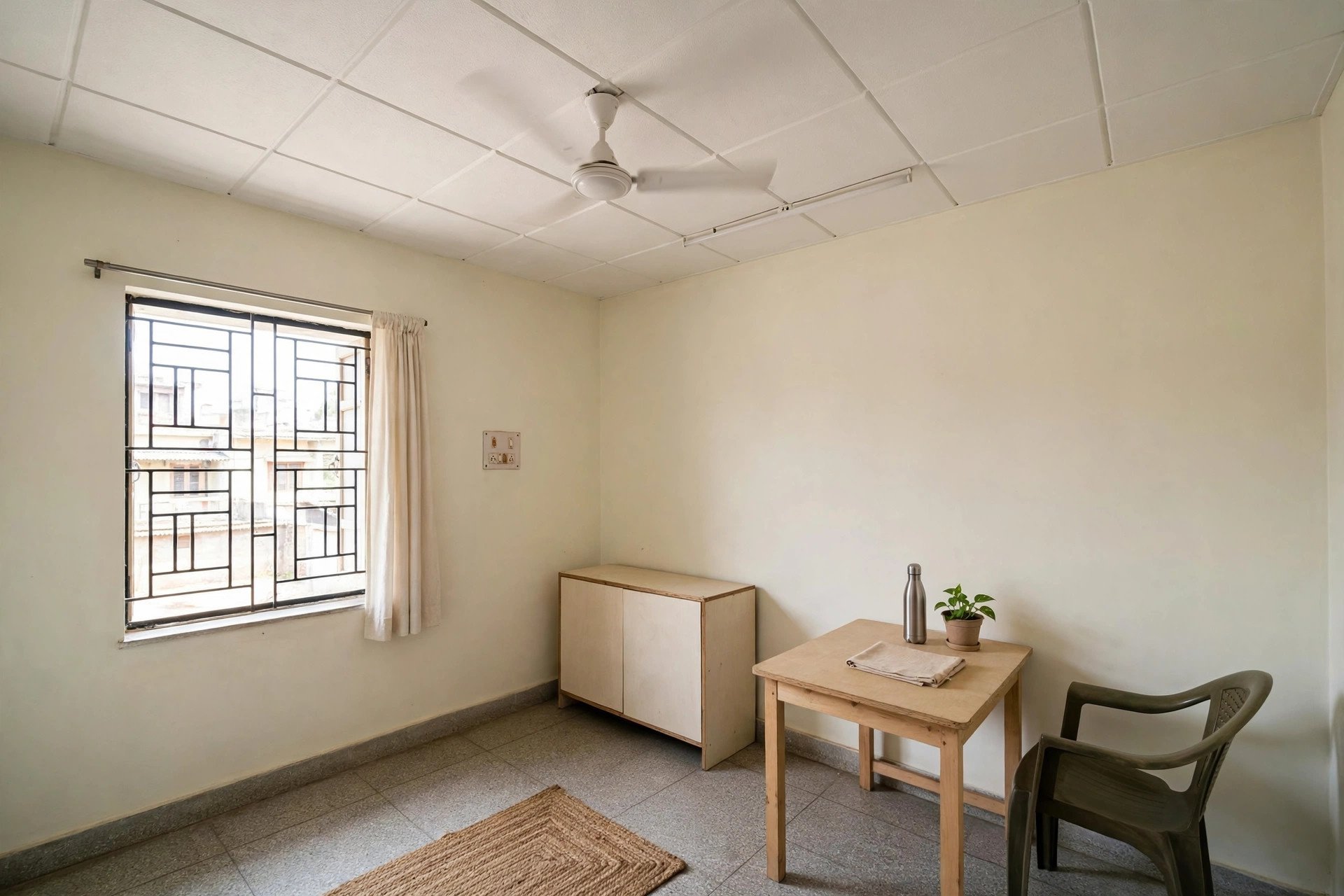
Here is how the bands translate into real rooms, using the simple formula ceiling area × rate, plus 10–20% for lighting and design complexity. All examples are gypsum unless stated, with basic lighting included in the uplift.
| Room | Ceiling area | Material & design | Indicative total |
|---|---|---|---|
| Bedroom 10×12 ft | 120 sq ft | Gypsum, flat, simple border | ₹11,000–₹14,000 |
| Bedroom 10×10 ft | 100 sq ft | POP or gypsum, basic | ₹7,000–₹12,000 |
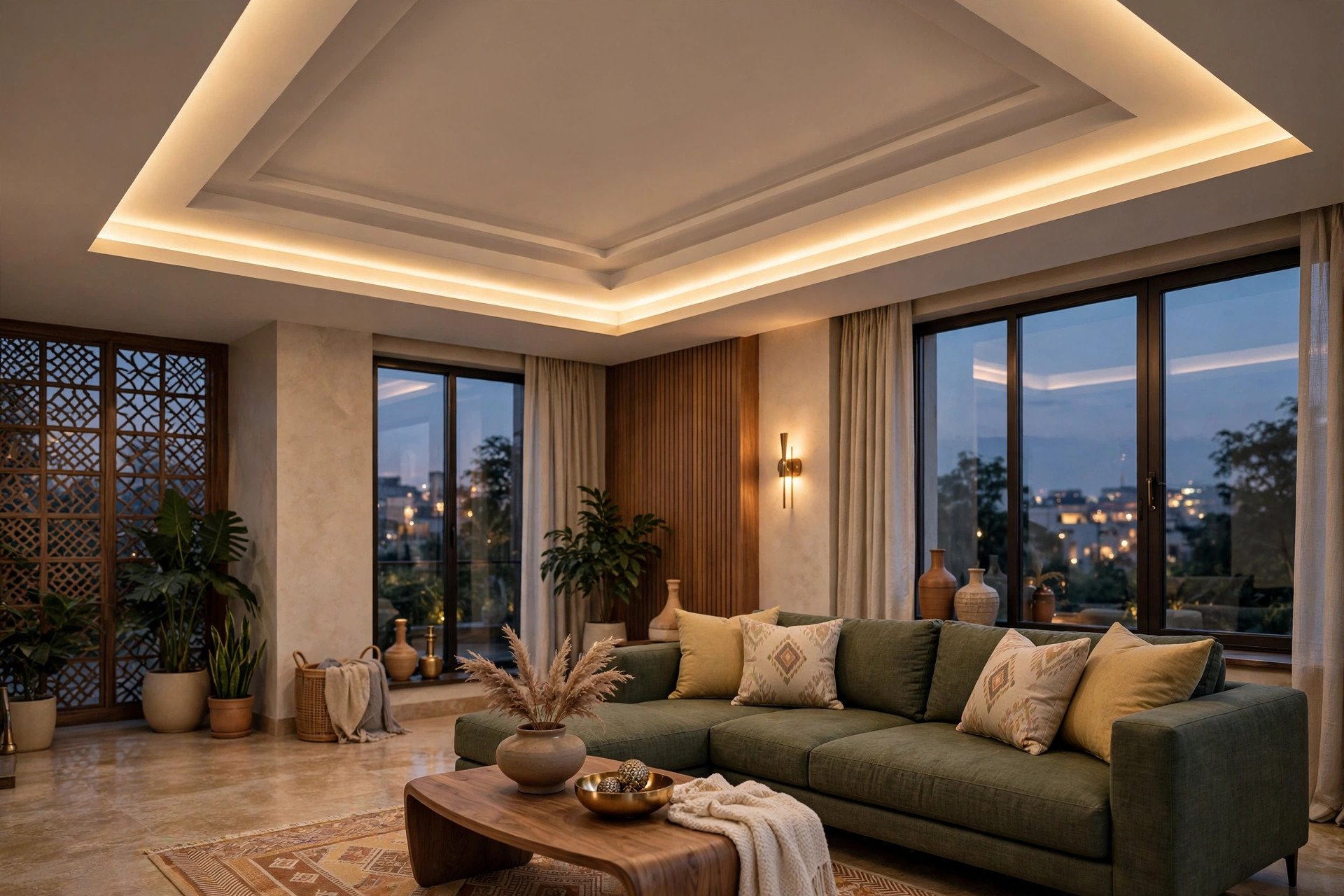
| Living room 12×14 ft | 168 sq ft | Gypsum with cove lighting | ₹22,000–₹30,000 |
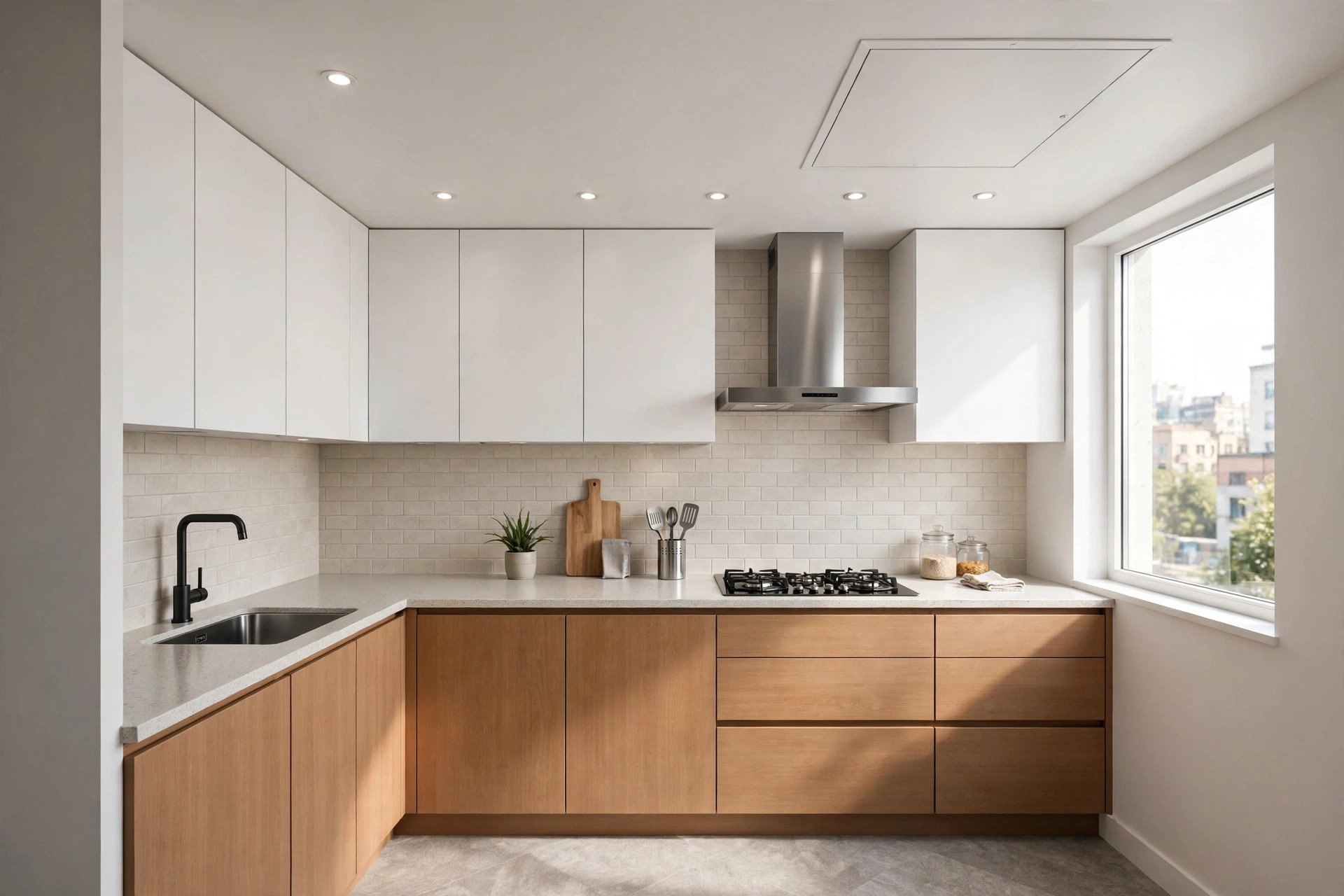
| Kitchen 10×10 ft | 100 sq ft | PVC or metal, moisture-safe | ₹7,000–₹15,000 |
| Bathroom 7×5 ft | 35 sq ft | PVC panels | ₹2,500–₹5,500 |
These are working budgets, not quotes. The bedroom row is the most useful sanity check: if a contractor quotes you ₹25,000 for a basic 10×12 bedroom ceiling, the design, lighting or city factor had better be visible in the itemisation.
What drives the price up — and what brings it down
Design complexity is the biggest lever
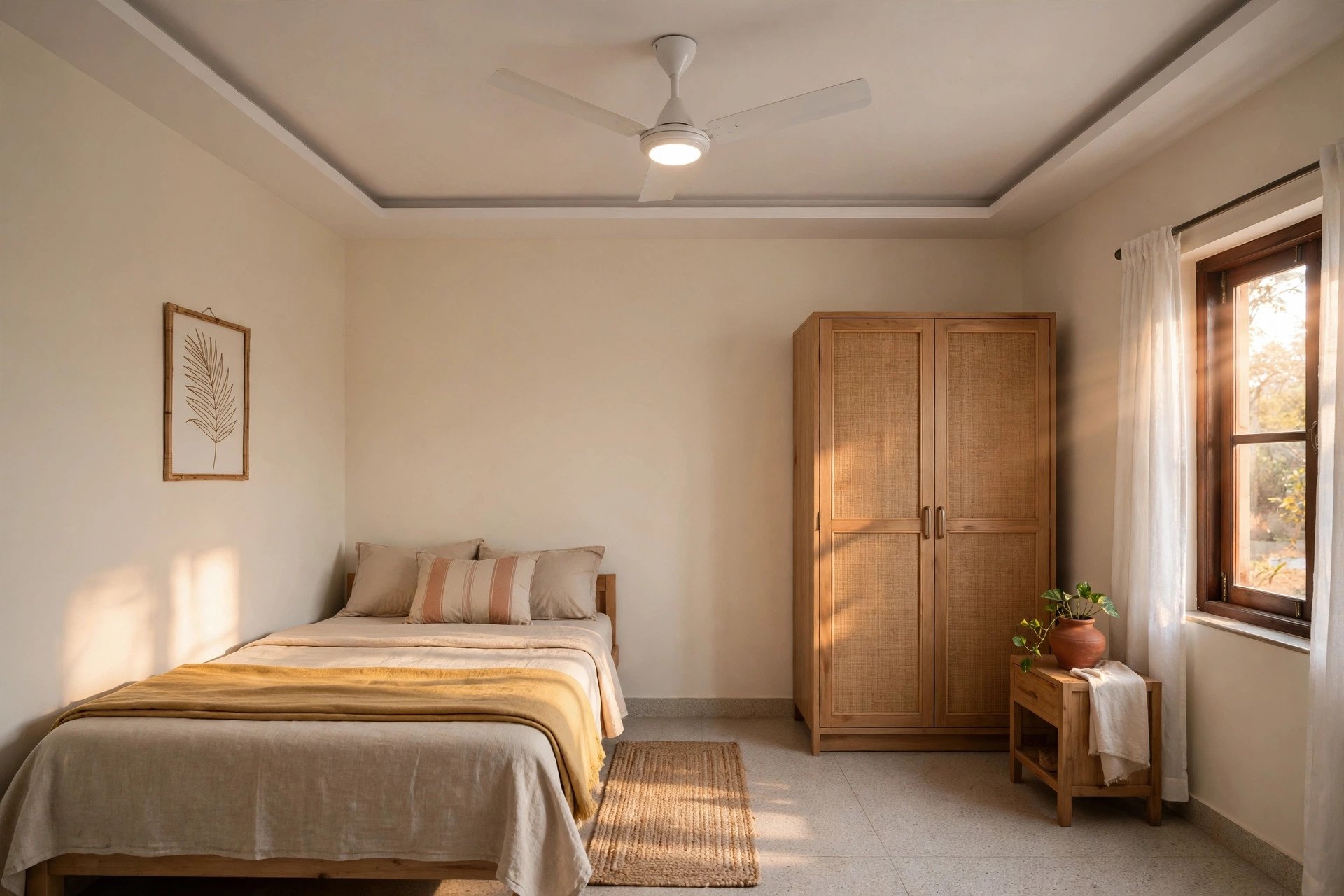
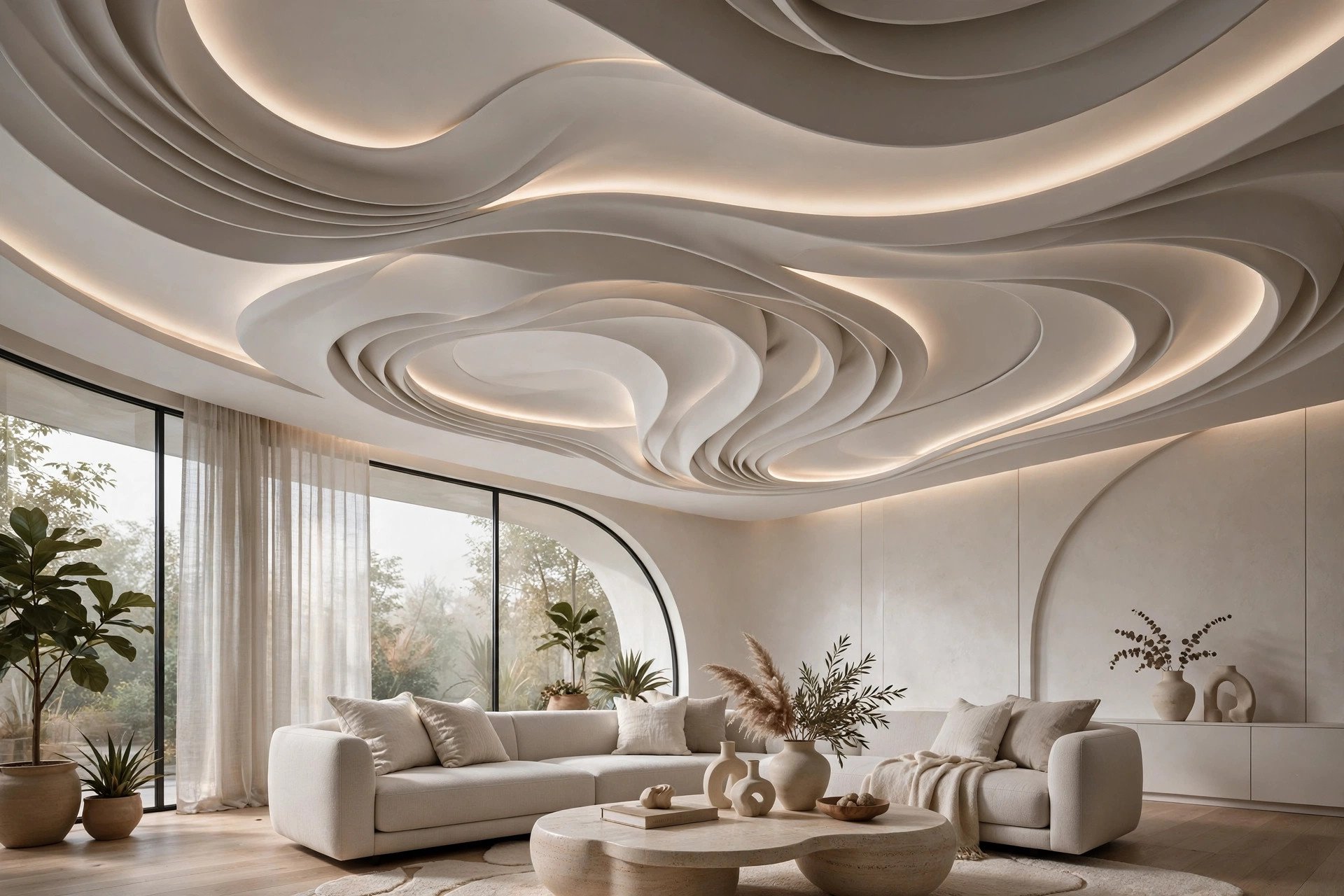
Curved and 3D ceiling designs cost roughly 20–40% more than a standard flat ceiling, and complex multi-level designs with architectural features can add 30–50%. Every extra level is more material, more framework and more skilled labour hours. If your budget is tight, a flat ceiling with one clean cove gives you most of the look for the least money.
Lighting, cut-outs and access panels
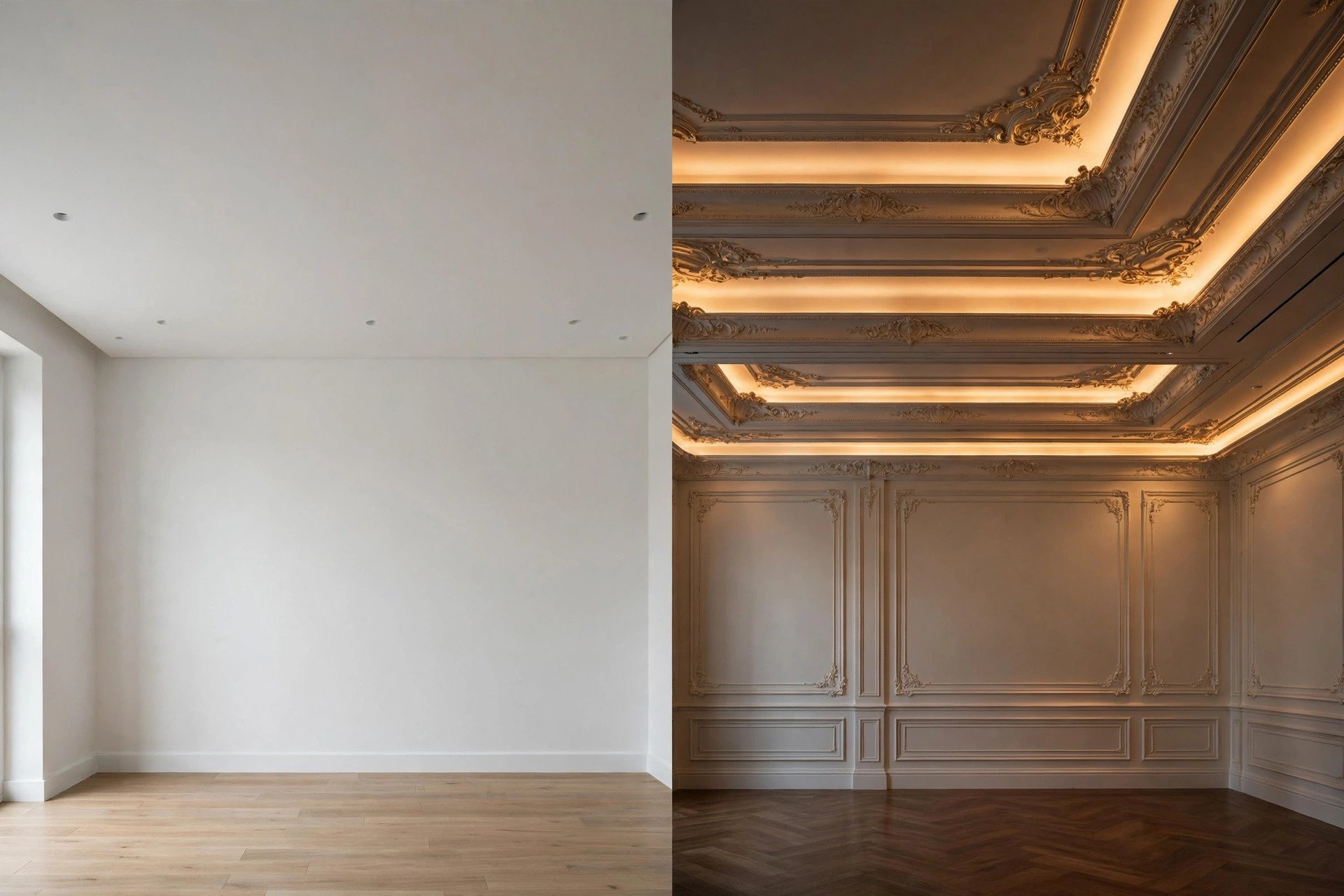
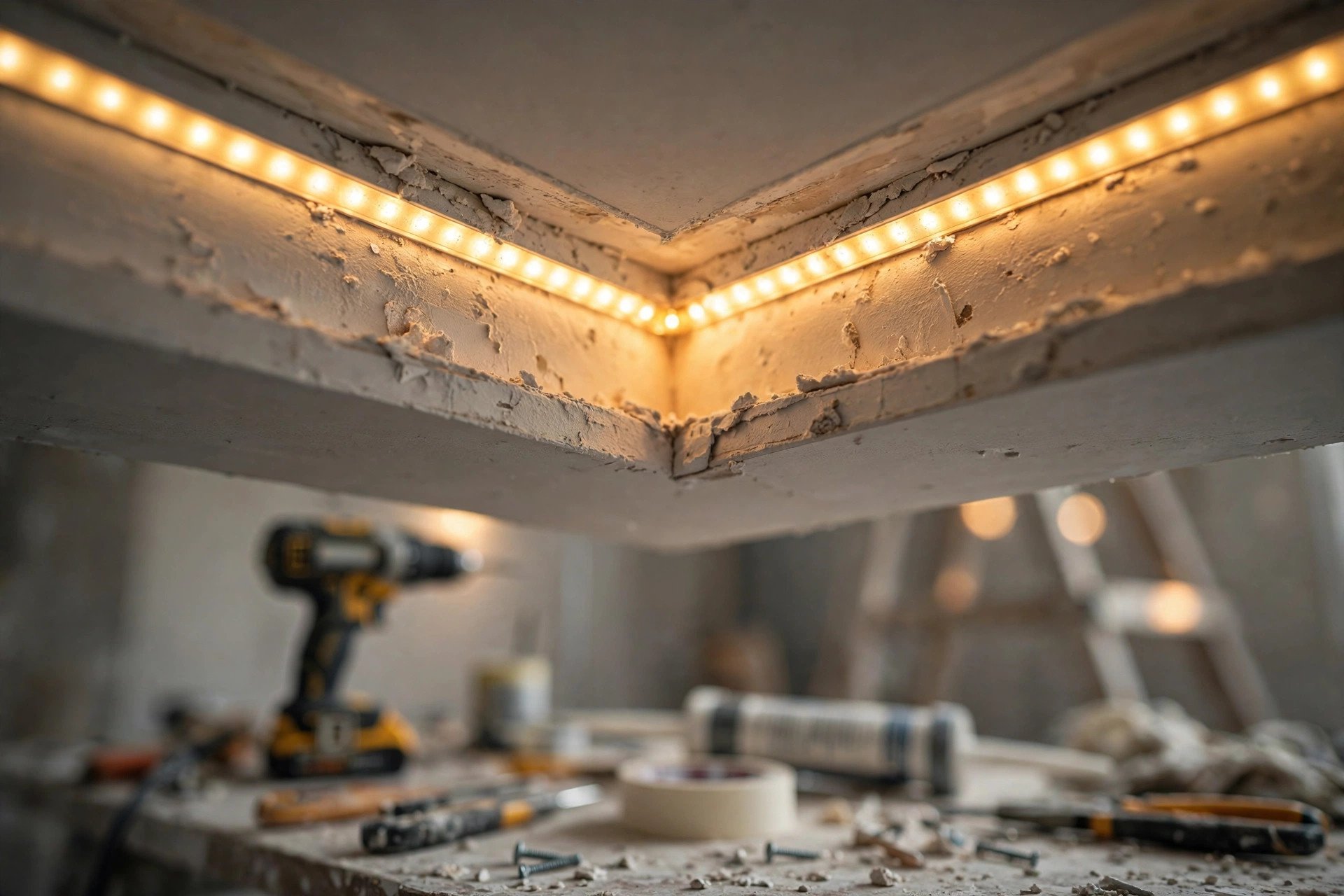
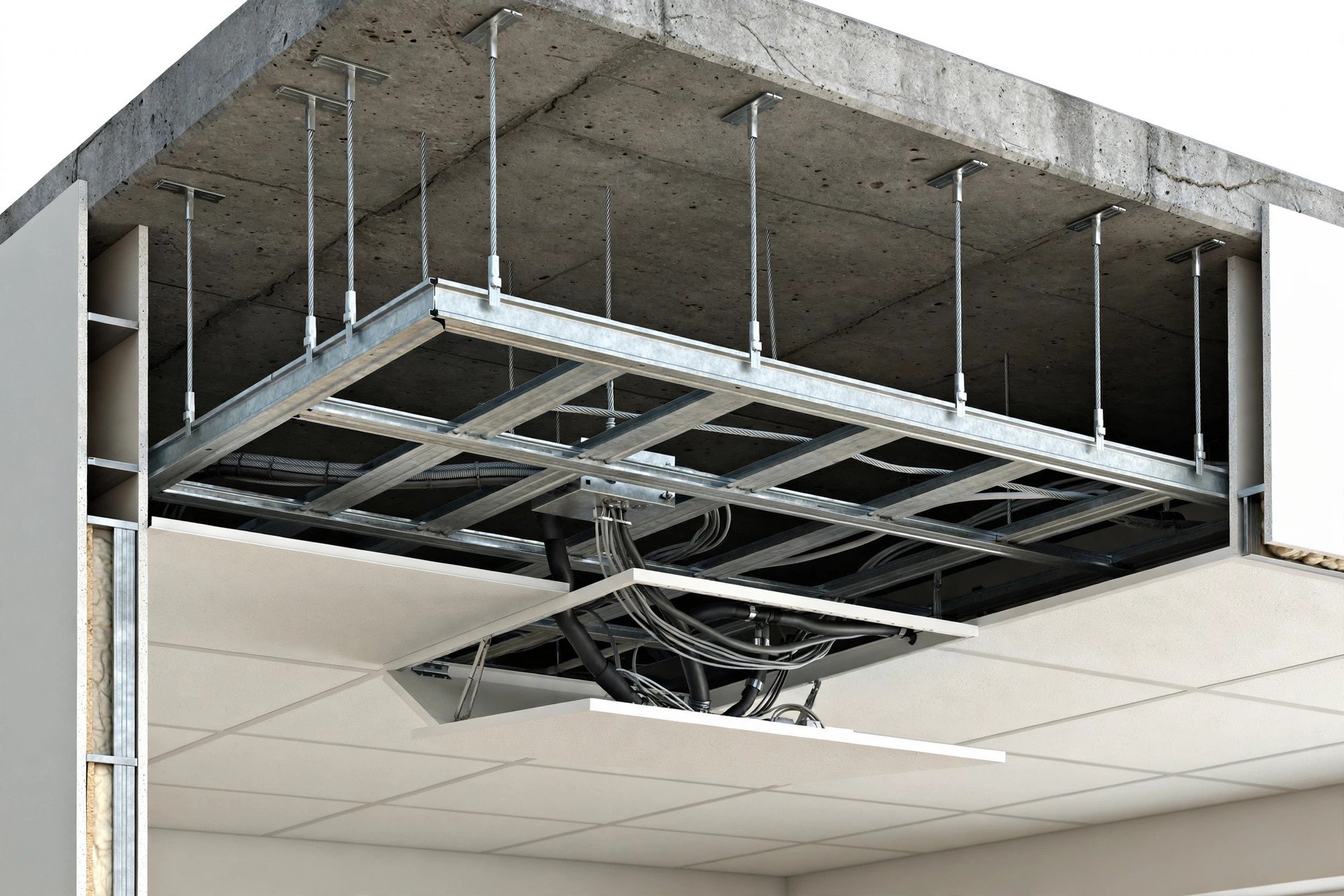
Cove-light channels, LED strips, recessed spotlights, AC cut-outs and access panels are the classic “extras” that inflate a bill after the headline rate is agreed. Smart lighting integration alone can add ₹5,000–₹15,000 per room. Plan your lighting layout before the ceiling goes up — cutting and reworking a finished ceiling is far more expensive than getting the points right the first time.
City, site conditions and finishing
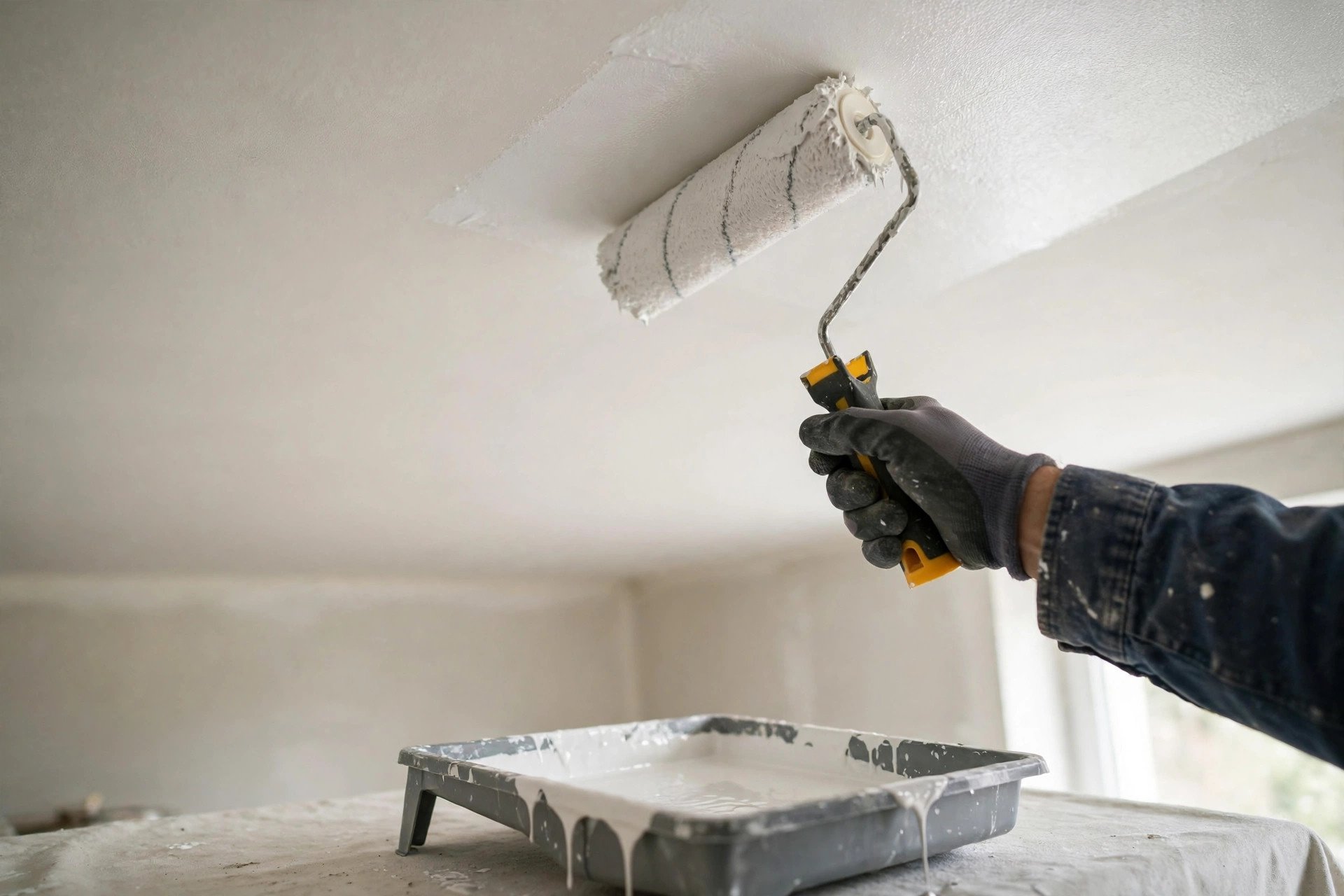
Metro cities run higher on labour than tier-2 towns, and awkward sites — high slabs, difficult material access in high-rises — cost more in labour. Two finishing questions move the needle most: is painting included? (often it is not), and are electrical changes included? (usually quoted separately). Branded boards and moisture-resistant variants also lift the material component. On the way down: flat single-level designs, standard materials, and choosing materials room by room — gypsum in living areas, PVC in wet areas — keep money where it shows.
City-wise cost notes (secondary data)
City-level figures are published less consistently than national bands, so treat these as background, not as quotes. As secondary data from 2026 Indian sources: headline installed rates run roughly ₹75–₹160 per sq ft in Delhi NCR, ₹80–₹170 in Mumbai, ₹75–₹155 in Bangalore, ₹70–₹150 in Hyderabad and Chennai, and ₹65–₹140 in Kolkata. For gypsum specifically, one 2026 source breaks it down as Mumbai ₹100–₹160, Bangalore ₹85–₹140, Delhi-NCR ₹90–₹150, Pune ₹80–₹130 and Hyderabad ₹75–₹120 per sq ft. The pattern is consistent: metros cost more, and the gap is mostly labour.
How to budget: a simple worksheet
Work through these steps room by room before you call anyone:
- Measure each room’s ceiling area (length × width in feet). Note any extra levels or beams.
- Pick a material per room — gypsum for living areas and bedrooms, PVC or metal for kitchens and bathrooms is the standard cost-smart split.
- Apply the formula: ceiling area × the band for your material, then add 10–20% for lighting and design complexity.
- Add a small contingency buffer for surprises — old wiring, slab repairs, an extra light point you decide on mid-way.
- Get three itemised quotes built on the same material and design, and compare them line by line.

How to compare contractor quotes (the 7-question checklist)
Two quotations can look identical on the headline rate and differ by 30% on the final bill. Before you sign, ask every contractor these seven questions — the answers matter more than the per-sq-ft number:
- What exactly is included in the per-square-foot rate? Ask for an itemised breakup: board, framework, fasteners, finishing.
- Is painting included? It frequently is not, and it is billed per sq ft separately.
- Are electrical changes and light fittings included? Wiring, cut-outs and fixtures are usually separate line items.
- What framework and which board brand are you supplying? Get it in writing — the framework is what holds the ceiling up.
- Are moisture-resistant boards included where needed? Kitchens and bathrooms should not get standard boards.
- Is GST included in the quote or added on top? Settle this before work starts, not at billing.
- What happens if a crack or damaged section appears later? A contractor who answers clearly is worth more than a cheaper one who dodges.
And the meta-rule: compare the inclusions, not the headline rate. Quotes built on different scopes are not comparable at any price.


Red flags in suspiciously cheap quotes
- A lump-sum quote with no breakup — if the contractor will not itemise material, labour and extras, you cannot know what you are buying.
- No framework or board brand named — “good quality board” is not a specification. Unnamed framework is where cheap quotes hide their margin.
- A rate far below the published band for the same material — someone is cutting a corner you cannot see yet: thinner boards, fewer suspension points, skipped jointing.
- Vague painting and electrical terms — “painting included” should mean coats specified; “lights included” should mean fittings specified.
- Pressure to decide today — a genuine quote survives a week of comparison. A disappearing “special rate” rarely does.
- Unusually large upfront payment demands — staged payments tied to visible progress protect both sides.

Frequently asked questions
What is the average false ceiling cost per sq ft in India?
For standard residential work in 2026, most published market ranges put gypsum, POP and PVC between roughly ₹65 and ₹150 per sq ft installed. Premium materials (wood, metal, stretch membranes) and complex designs run well above that.
Which is the cheapest false ceiling material?
Thermocol is the cheapest and most DIY-friendly option, though no verified 2026 installed rate is published for it. Among installed, contractor-executed ceilings, PVC sits at the budget end of the published bands (from around ₹70 per sq ft), and it is also waterproof — useful for kitchens and bathrooms.
Is POP cheaper than gypsum?
It depends on the design. Simple flat POP work starts cheaper than gypsum, but hand-moulded decorative POP can cost more than a clean gypsum ceiling. Market data consistently shows a simple gypsum ceiling costing less than an elaborate POP design.
What does a false ceiling cost for a 10×10 ft room?
A basic POP or gypsum ceiling for a 100 sq ft room typically falls around ₹7,000–₹12,000, before lighting extras. Add layered designs or LED cove lighting and the figure climbs toward ₹15,000–₹18,000.
Does the per-sq-ft rate include painting?
Often not. Painting is one of the most common exclusions, so confirm it explicitly — it is question 2 on the checklist above.
How much extra does cove lighting add?
Lighting and design add-ons typically run an extra ₹25–₹120 per sq ft depending on the design, and curved or layered work adds 20–40% over a flat ceiling. Smart lighting systems can add ₹5,000–₹15,000 per room on their own.
Should I get quotes from multiple contractors?
Yes — at least three, built on the same material, design and inclusions. Published sources agree that rates vary widely between contractors even for identical specifications, so comparison is where the savings are.
The bottom line
False ceiling pricing in India is not mysterious once you know the structure: pick your material band, multiply by your ceiling area, add 10–20% for lighting and design, and then interrogate every quote against the seven questions above. The cheapest headline rate is rarely the cheapest finished ceiling — the winner is the quote whose inclusions you can read, verify and hold someone to.
All visuals in this article are original concept renders and illustrations created for falseceiling.in — they are design visualisations, not photographs of completed client projects. All price bands are indicative 2026 market ranges from published third-party sources; confirm current rates with itemised quotes from contractors in your city.


Pingback: How to Choose a False Ceiling: Complete Buying Guide
Pingback: False Ceiling Installation, Repair & Maintenance Guide
Pingback: False Ceiling Designs for Hall Price: Cost Guide
Pingback: False Ceiling Design for Bedroom Price: Cost Guide
Pingback: Living Room False Ceiling Design with Fan: Layouts & Safety Tips