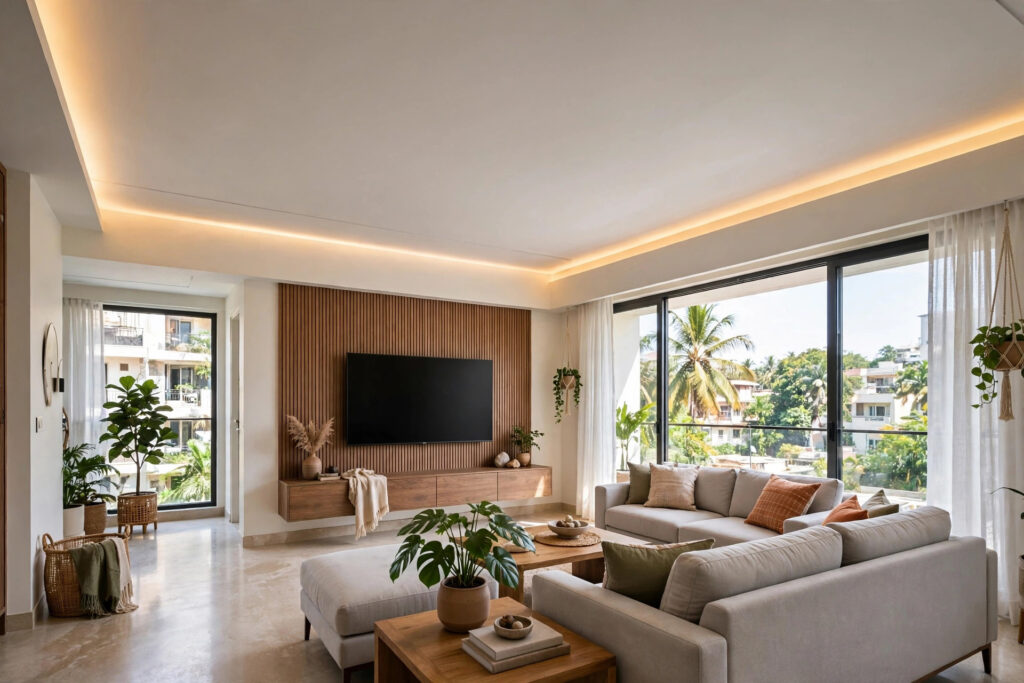

A simple hall ceiling is not a compromise — it is a decision. The halls that look most expensive in 2026 are rarely the ones with the most layers; they are the ones where a clean ceiling, good light, and honest proportions do the work. This guide covers simple, budget-friendly false ceiling designs for Indian halls: the layouts that deliver the most for the least, 2026 cost bands with sources, the lighting-first rule that makes simple ceilings look premium, and the mistakes that quietly inflate a “simple” budget.
Why simple works in a hall
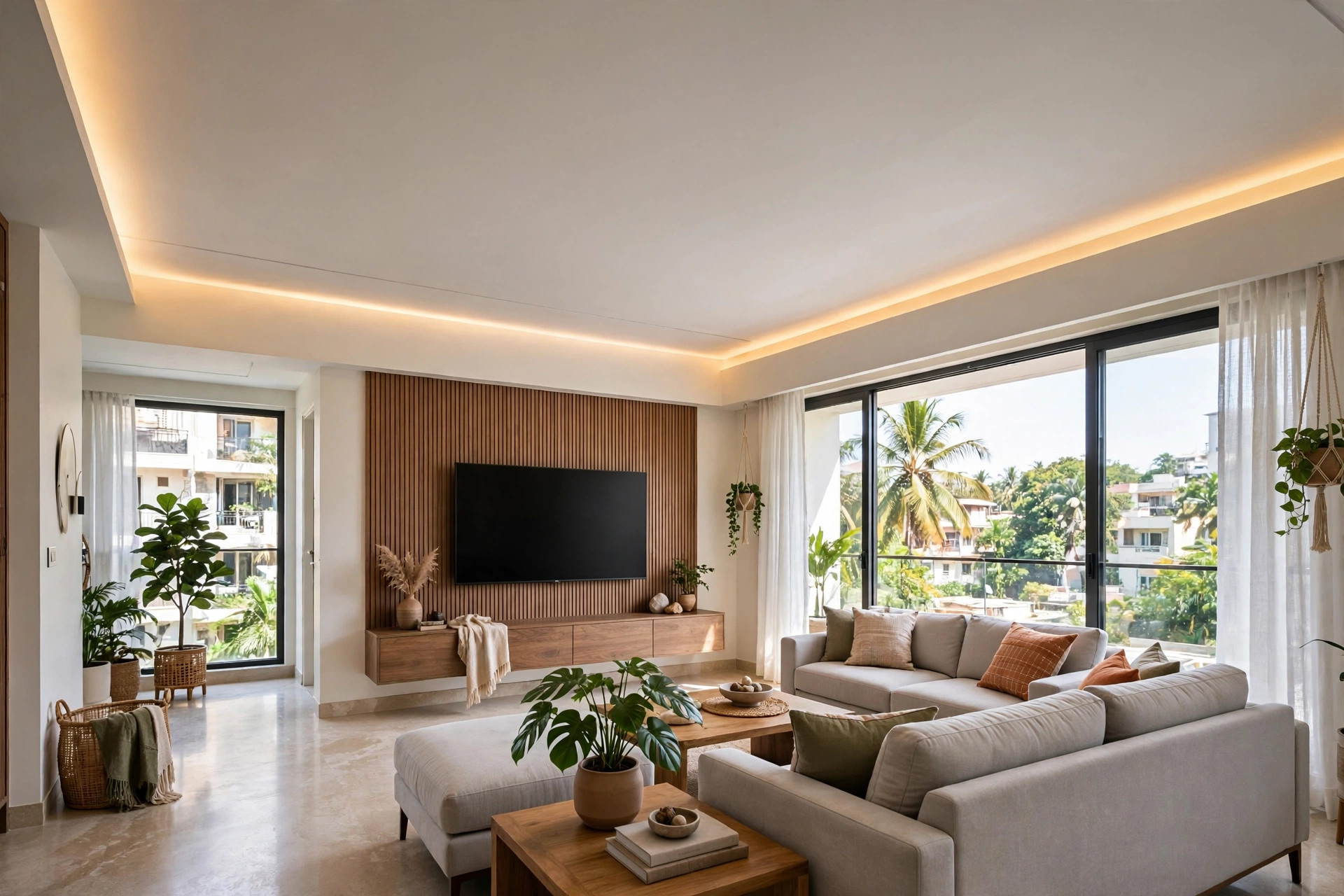
Halls are the room guests see first and the room the family lives in most. That makes them the worst place for fussy ceilings. A simple ceiling keeps sight lines clean, suits the 9-to-10-foot ceiling heights of most Indian apartments, and stays out of the way of everything else — the sofa, the TV wall, the dining corner. As the 2026 design round-ups keep noting, the market has moved from elaborate multi-level ceilings to simpler designs with better lighting: less decoration, smarter light.
Simple also ages well. A flat gypsum ceiling with a crisp edge looks as current in ten years as it does today; a busy themed ceiling dates the moment tastes shift. And when repaint time comes, a simple ceiling repaints in a day — no mouldings to cut around, no deep coves collecting dust.
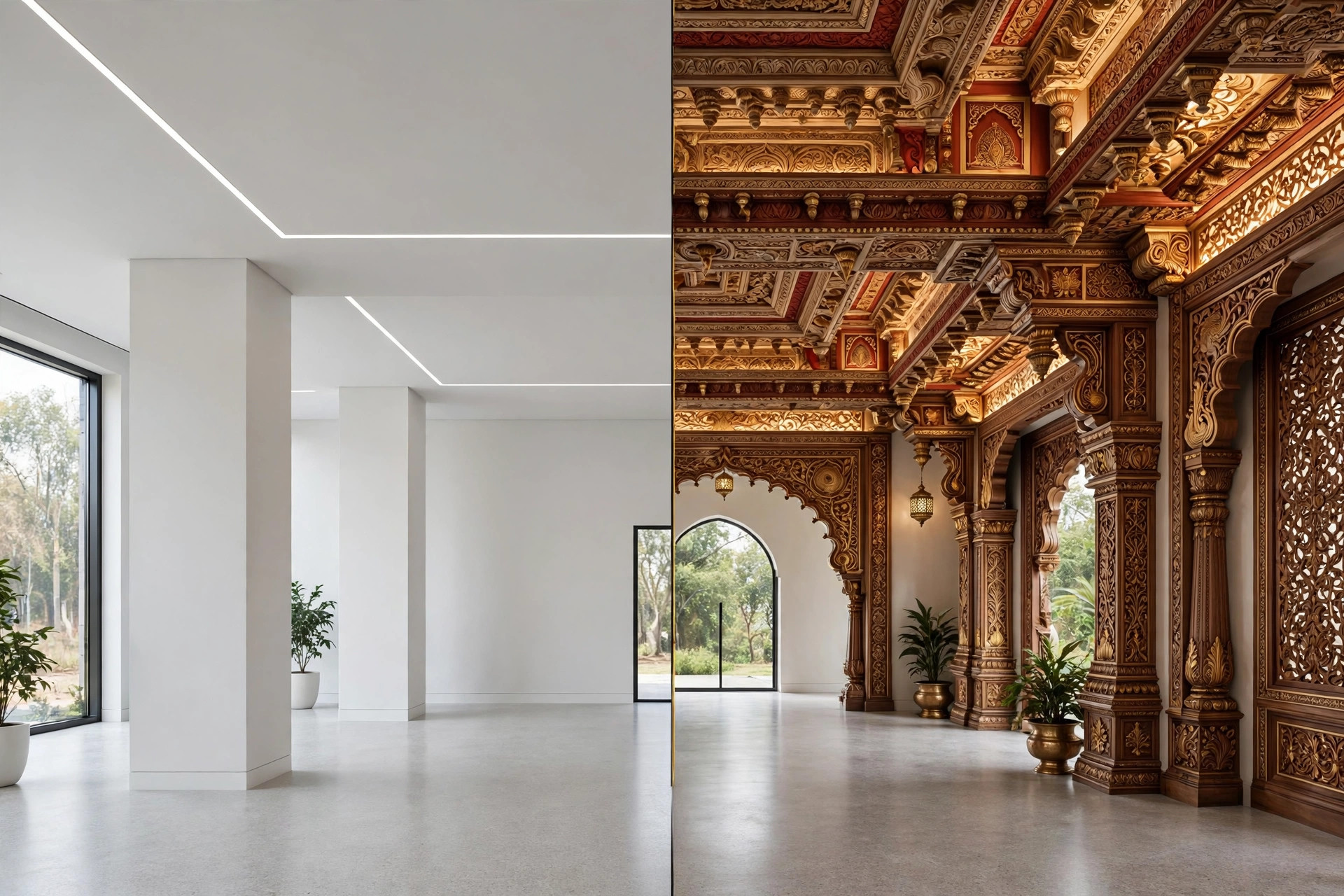
9 simple hall designs that look premium
1. Flat gypsum ceiling with a crisp edge
The simplest of all: a flat gypsum board ceiling, levelled properly, painted matte white or warm off-white, with a slim shadow gap or aluminium trim at the wall junction. It reads calm and architectural. The entire effect depends on execution — level the frame well and the ceiling disappears in the best way.
2. Border-only POP design
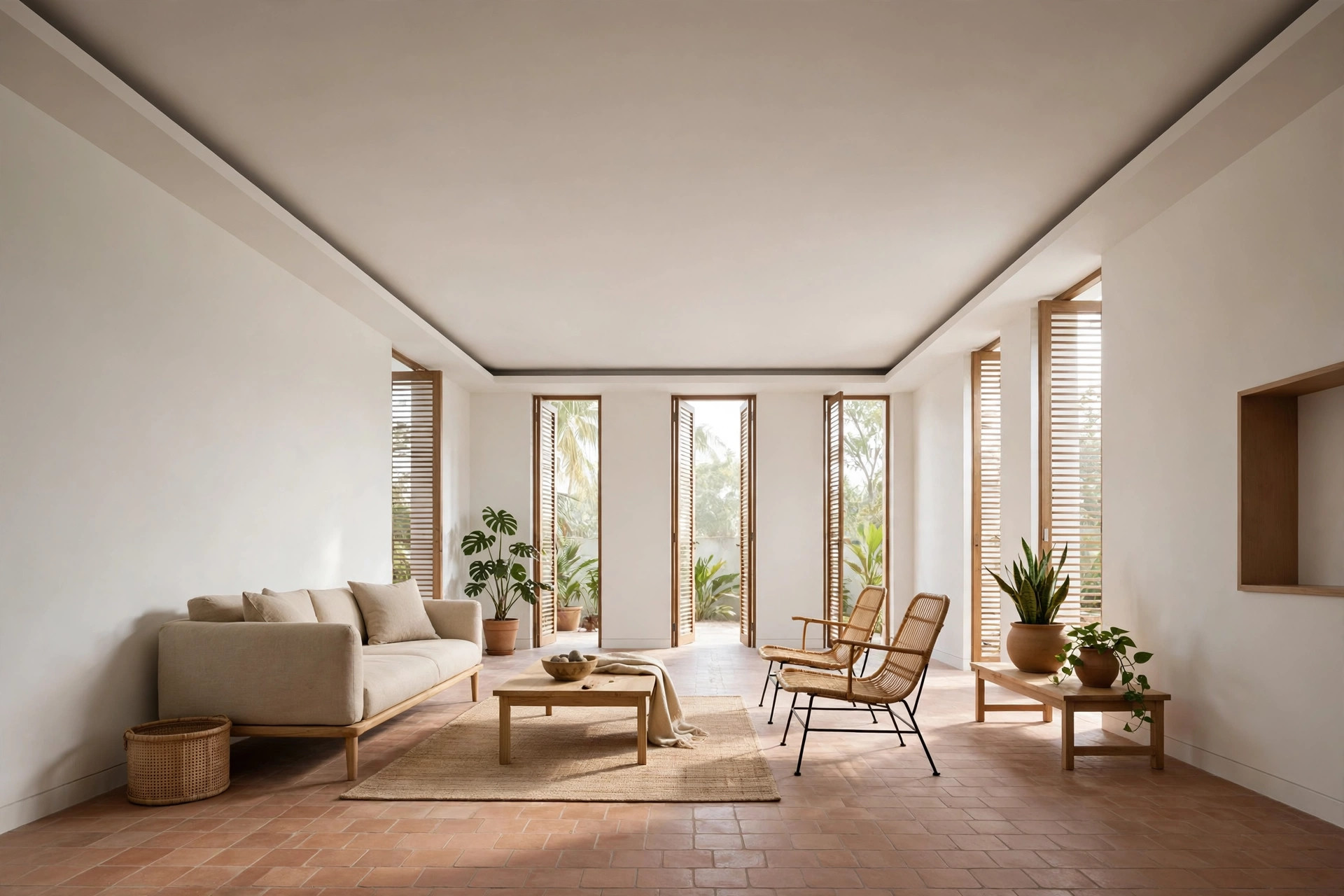
POP laid only as a border band around the ceiling edge, with the centre left as the original slab, painted. This is the budget king of hall ceilings — AcquireAcres’ 2026 cost guide puts it at roughly ₹50–80 per sq ft, the lowest band of any real false ceiling work. You get structure and a place to hide a cove light while skipping most of the material and labour.
3. Single tray with an LED strip
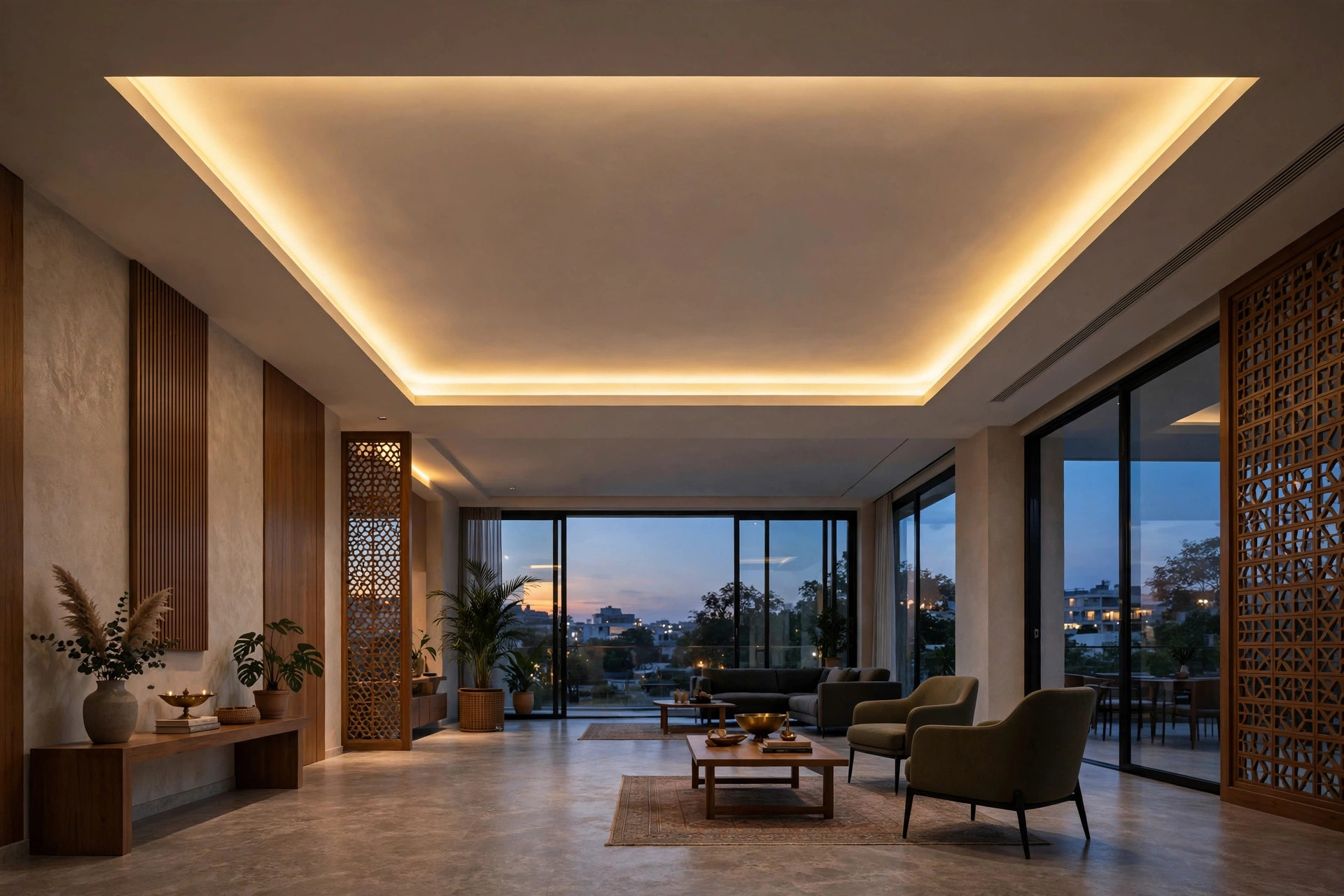
One recessed step — a shallow tray — with an LED strip tucked into the gap. The centre sits slightly lower than the border, and the hidden light washes the tray in a warm glow. This is the design that photographs like a hotel lobby at a fraction of the cost (roughly ₹90–140 per sq ft per the 2026 guides). It needs 9 feet or more of ceiling height to breathe.
4. Geometric grooves
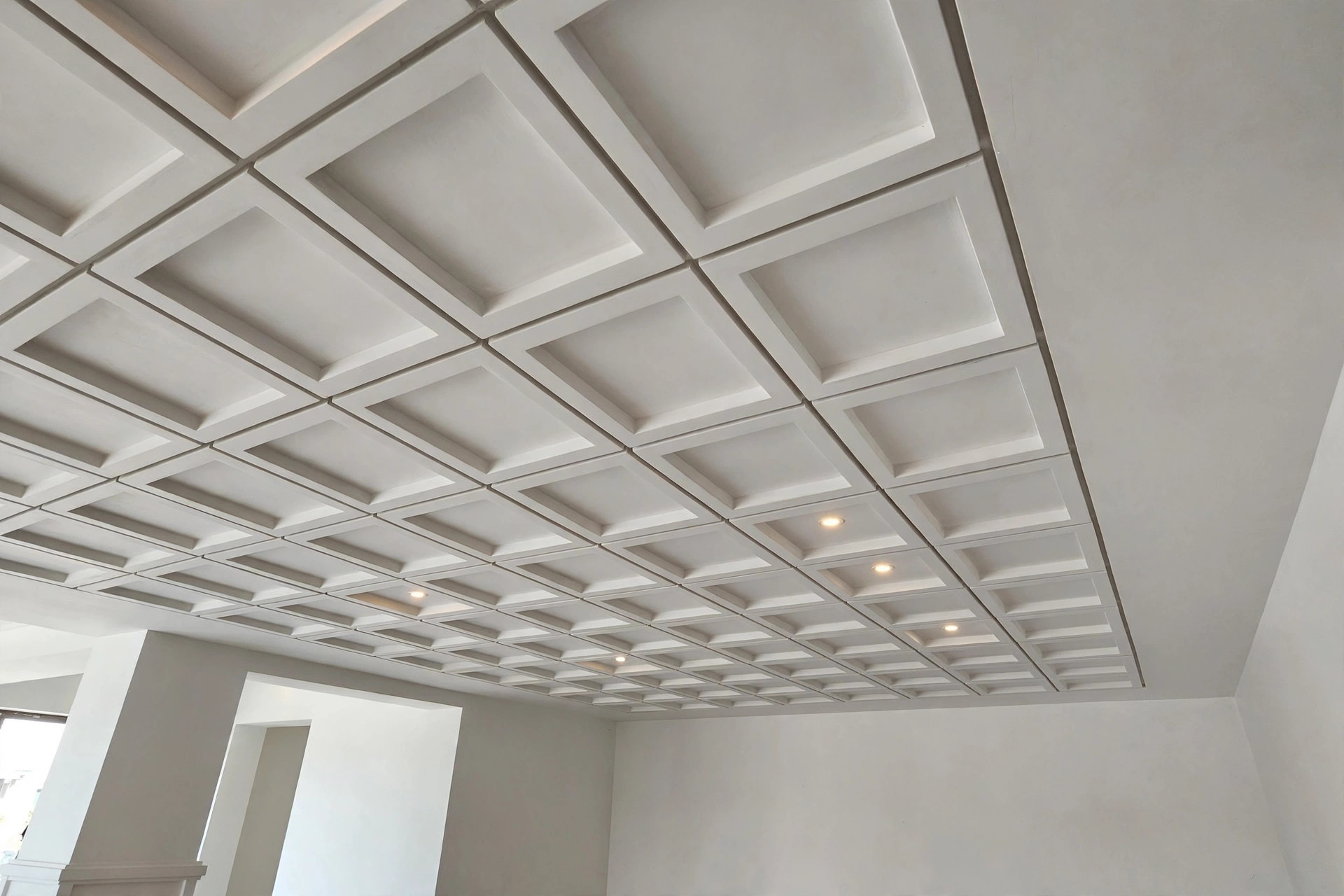
Straight grooves cut or formed into a POP or gypsum ceiling in squares or rectangles — no extra layers, just lines. A good contractor executes clean geometry with standard tools, so labour stays reasonable (around ₹100–150 per sq ft). Grooves add architecture to a flat ceiling without lowering it.
5. Cove-lit border
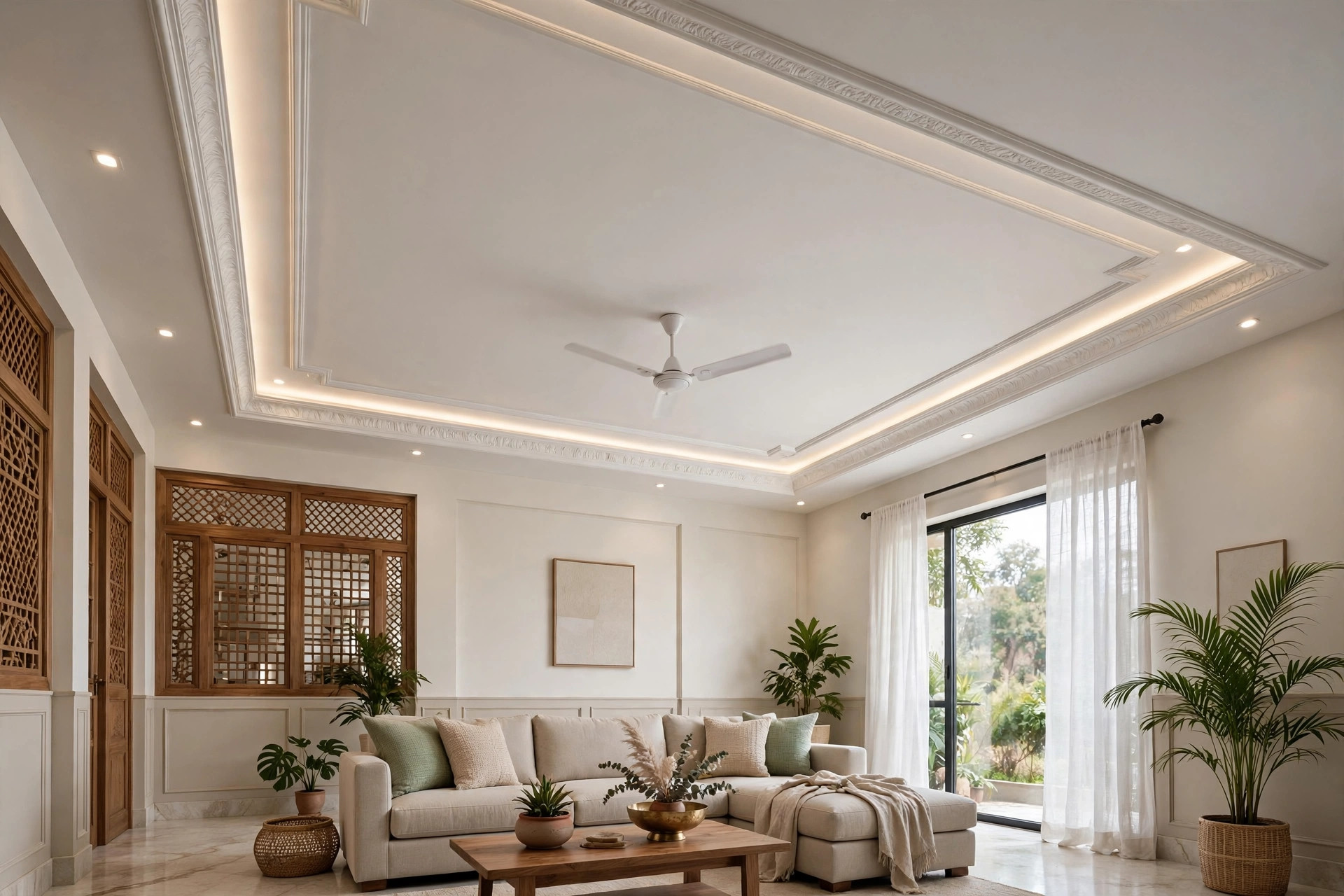
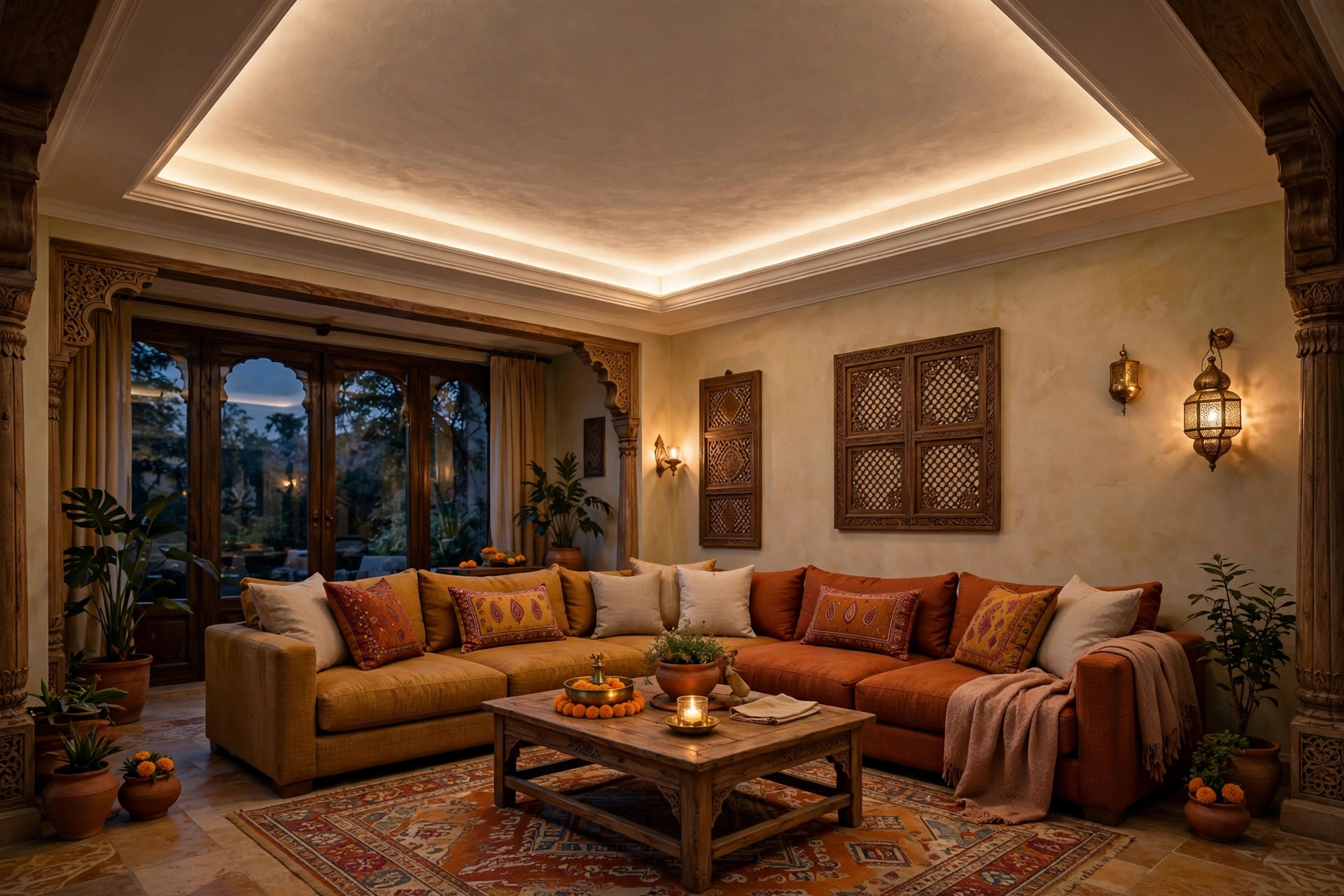
A POP border with a recessed channel for an LED strip — the light bounces off the ceiling instead of pointing at you. The soft, diffused glow makes the hall feel warm and larger in the evening. Roughly ₹110–160 per sq ft; the lighting, not the POP, is most of the cost.
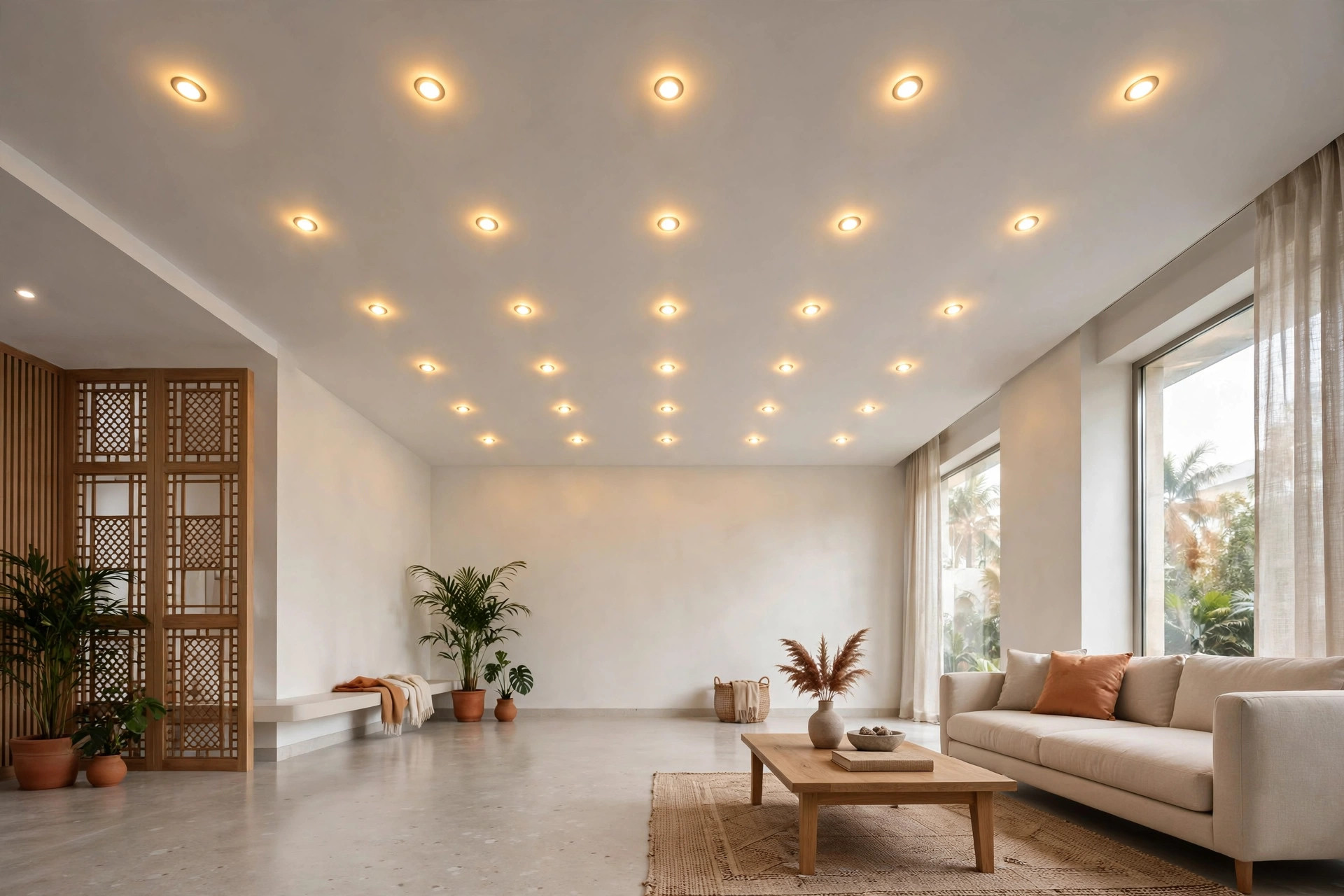
6. Recessed spotlight grid
A flat ceiling with a neat grid of recessed LED spots — no coves, no trays, just light exactly where you need it. Over the seating zone, over the dining corner, along the passage. Spots are cheap individually; the cost is in the wiring plan, which is why the lighting layout must be decided before the ceiling goes up.
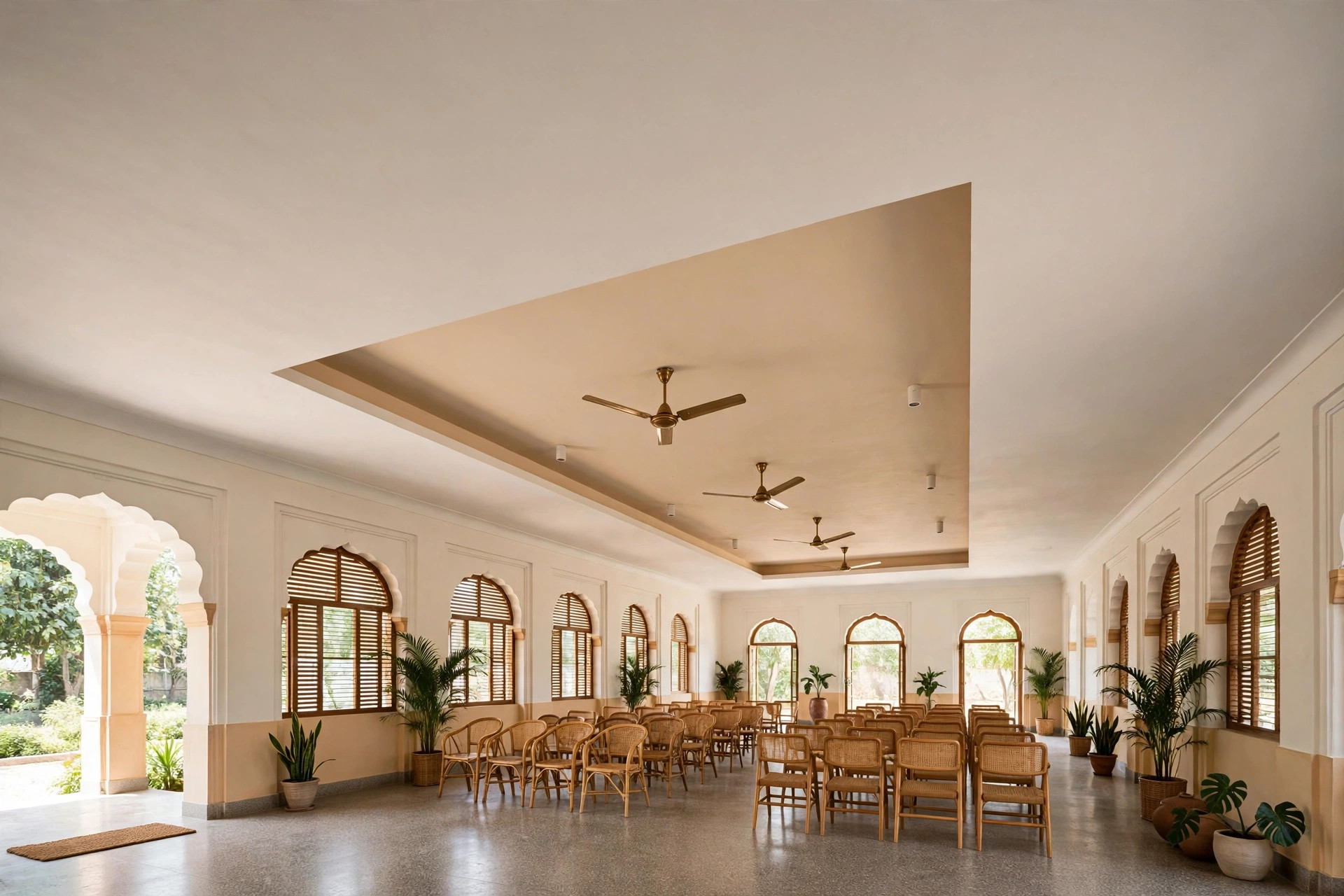
7. Two-tone paint zones
No POP at all — just paint. The ceiling painted in two tones (a warm white field with a soft beige or pastel inset over the seating zone, for instance) creates zones without any false ceiling work. It costs almost nothing beyond the paint, and it is the honest answer for anyone whose budget is truly zero.
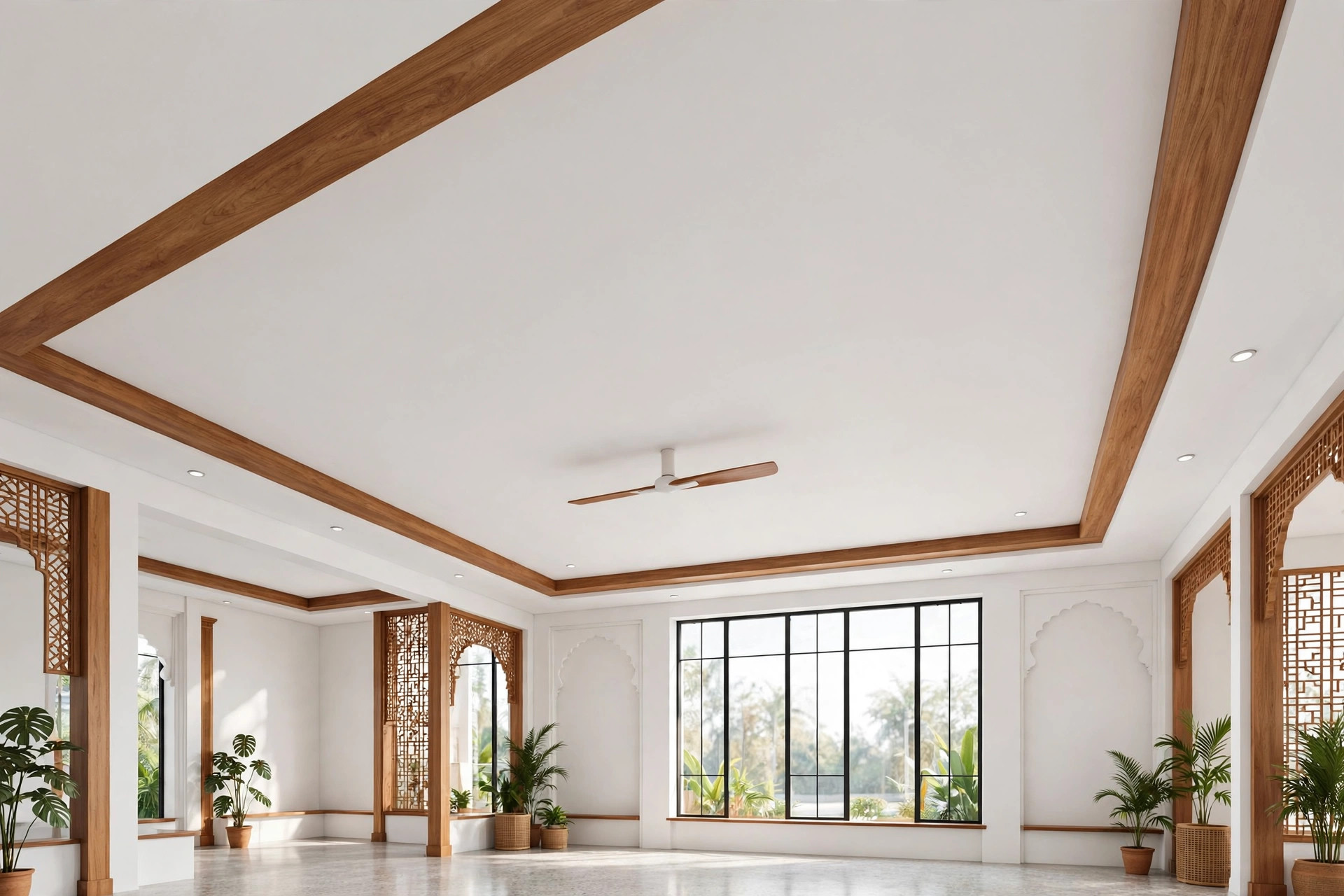
8. Wood-look border accent
POP or gypsum does the structure; a wood-finish laminate or PVC panel runs as an accent band. You get the warmth of wood exactly where the eye lands, at roughly ₹130–200 per sq ft for the combination — far less than a real wood ceiling. Keep the accent to one band; more than that stops being an accent.
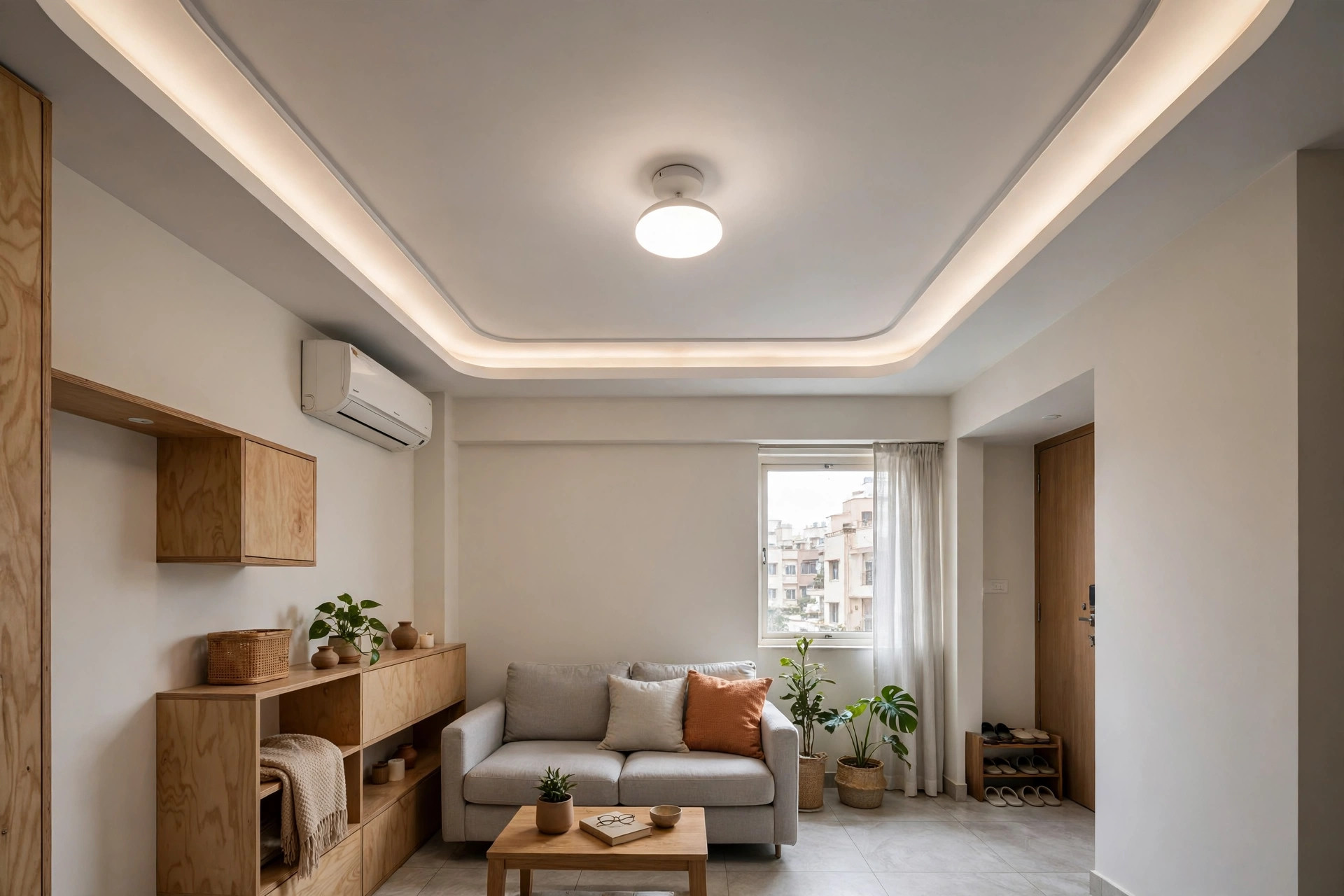
9. The compact-hall special
For 1BHK halls and low ceilings: a minimal border with subtle detailing and one central light point. Nothing dropped, nothing layered. AcquireAcres’ 2026 guide is blunt about it — low-height ceilings handled wrong look like a box, and the minimal border-plus-centre-light beats every other option for compact halls (roughly ₹60–100 per sq ft).
The lighting-first rule
Here is the open secret of simple ceilings: the light does the decorating. A flat ₹60-per-sq-ft ceiling with a well-planned warm cove and spots looks more expensive than a ₹150-per-sq-ft layered ceiling with a single tube light. Decide every light point — main light, cove strips, spots — before the ceiling work begins. Retrofitting after the ceiling is done means cutting and patching, which costs more and never finishes as cleanly.
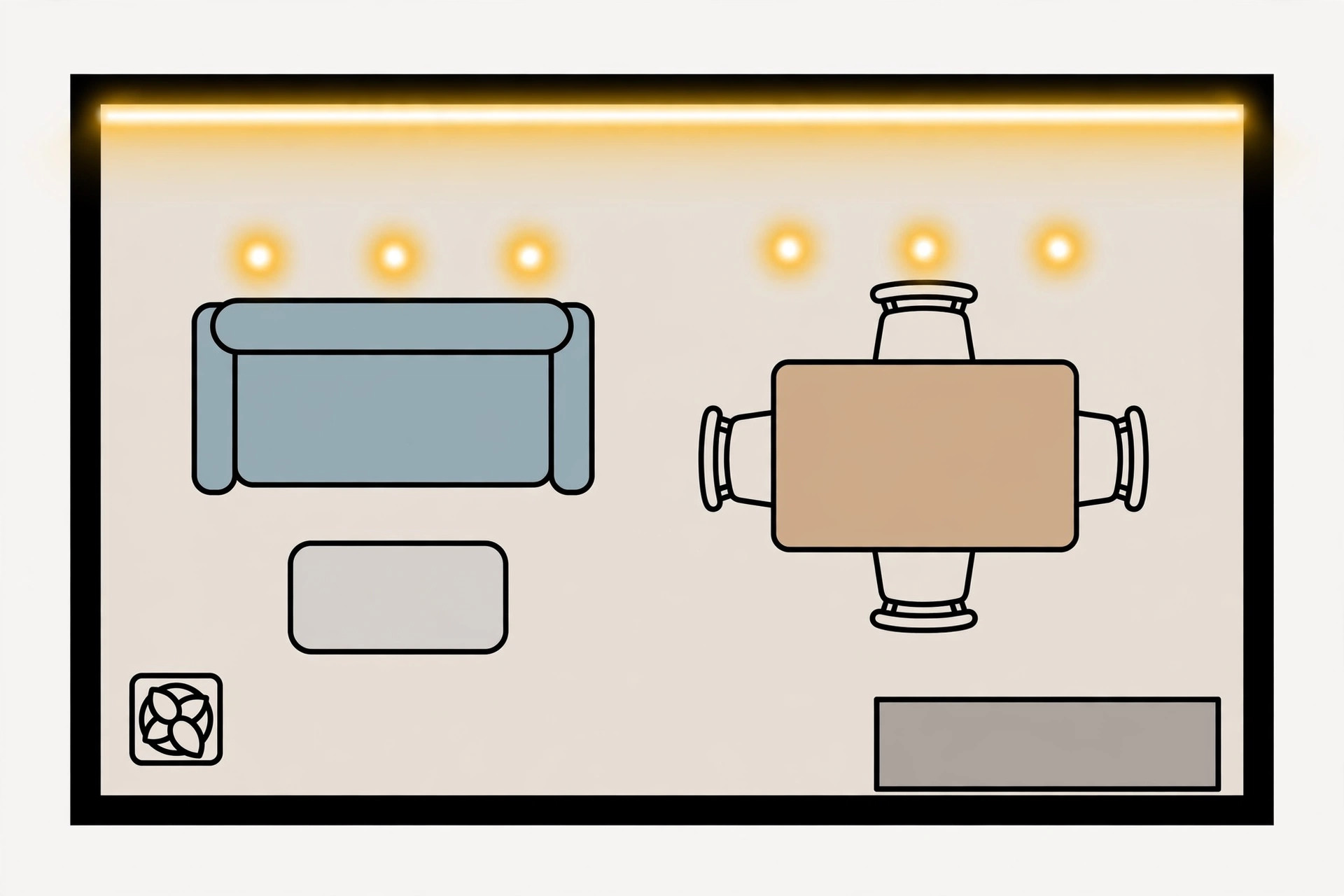
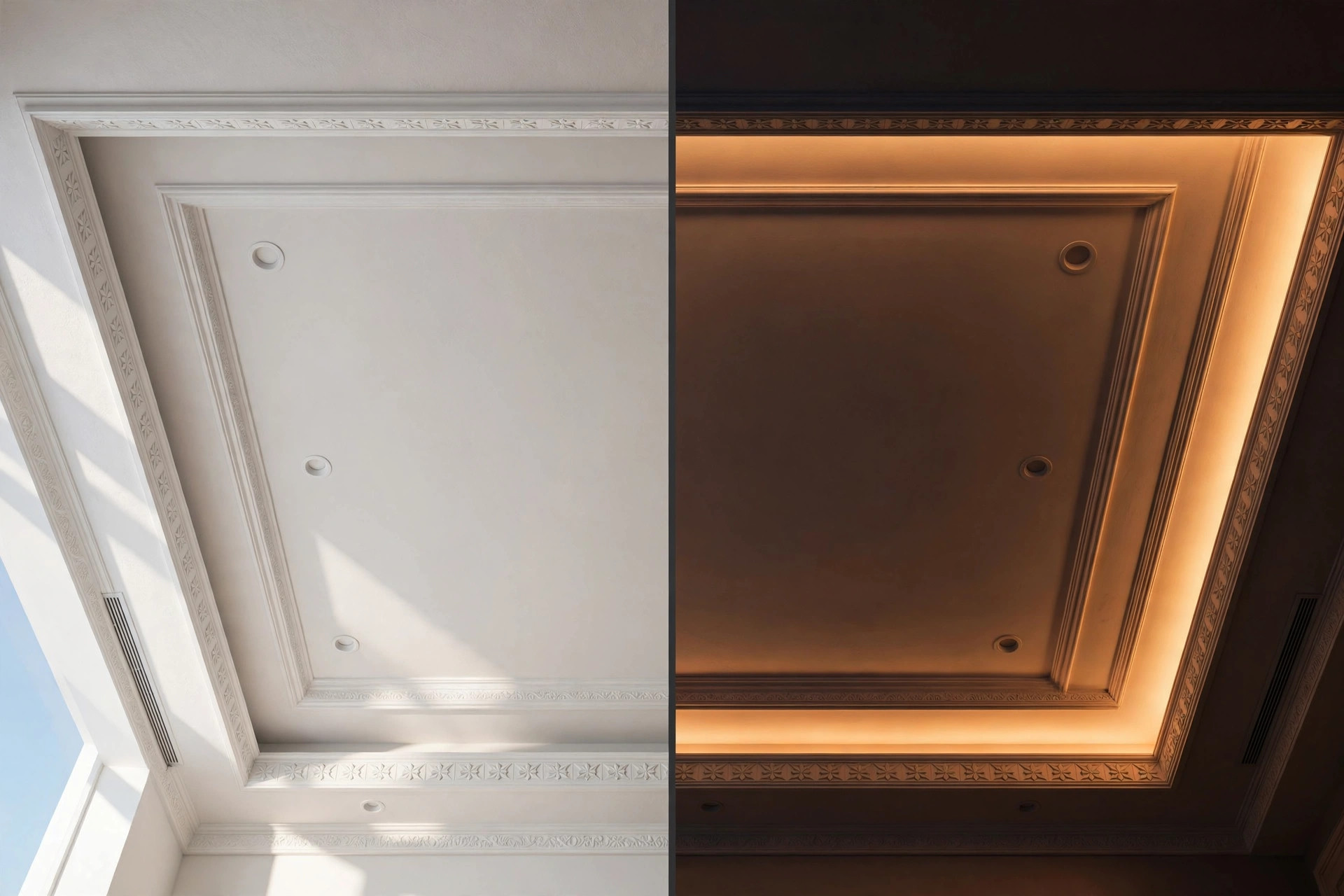
Warm white (around 3000K) suits halls used for relaxing; keep one brighter, neutral-white circuit for cleaning and detailed work. Our lighting guide covers the full planning process.
What simplicity saves you: 2026 cost bands
Simple hall ceilings in India, installed, per 2026 guides (AcquireAcres, HomeBazaar, HomeLane):
| Design | Approx. cost per sq ft (2026) | What you get |
|---|---|---|
| Border-only POP | ₹50–80 | Structured edge, painted centre, cheapest real option |
| Single-layer flat POP/gypsum | ₹60–100 | Clean flat ceiling, paint-ready |
| Tray with LED strip | ₹90–140 | Recessed glow, premium look |
| Geometric grooves | ₹100–150 | Pattern without layers |
| Cove-lit border | ₹110–160 | Ambient evening glow |
| Wood-look accent combo | ₹130–200 | Premium accent on a budget |
For perspective, HomeBazaar’s 2026 round-up notes simple POP runs roughly 20–30% cheaper than elaborate POP designs — and HomeLane’s 2026 hall guide confirms POP and gypsum remain the most budget-friendly materials, with a simple single-level design plus LED strip giving a premium feel. What moves your quote within the band: ceiling height, number of light cutouts, border linear footage, and city labour rates. For the full material-wise cost picture, see our false ceiling cost guide for India.

Mistakes that inflate a “simple” budget
Simple designs go over budget for predictable reasons — the 2026 guides agree on the list:
- Mid-project additions. “While you’re at it, add a second layer” is the most expensive sentence in ceiling work. Once the frame is up, changes cost disproportionately. Freeze the design before work starts.
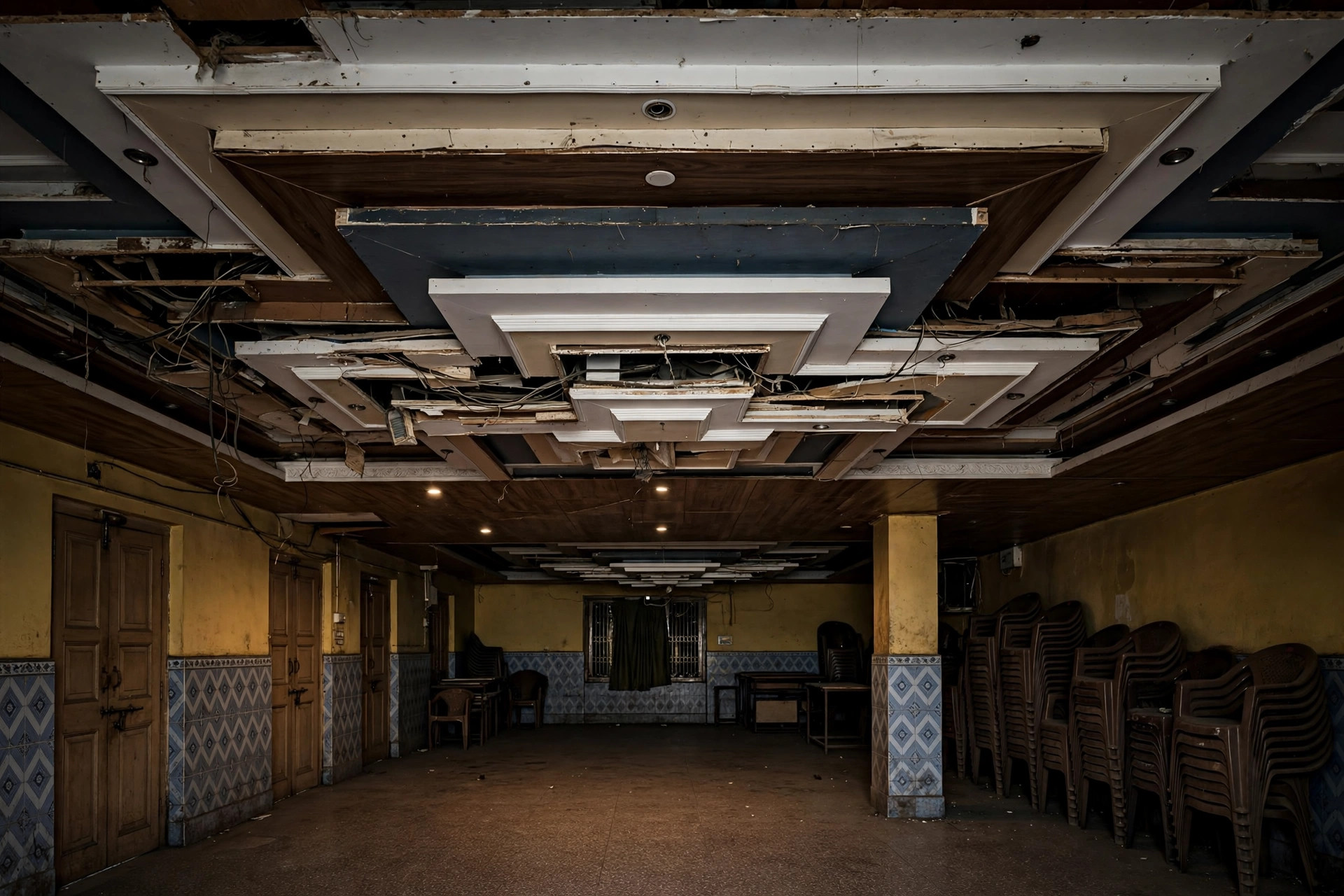
- Multi-layer designs in low halls. Below 9 feet, layers press the ceiling down visually and the room feels smaller — you pay more for a worse result.
- No lighting plan. Deciding light points after the ceiling is done means cutting, patching, and repainting. Decide first.
- The cheapest quote, unchecked. The lowest bid often means thinner POP mix, skipped primer, or an unleveled frame — all of which crack or sag within two years. Check past work, not just the number.
- No buffer. Keep 10–15% aside. Wiring surprises, slab cracks, and small design adjustments are normal, not exceptional.
- Ceiling in every room. If the budget is tight, prioritise the hall and the master bedroom; secondary rooms can wait.
Low ceilings: the height rule
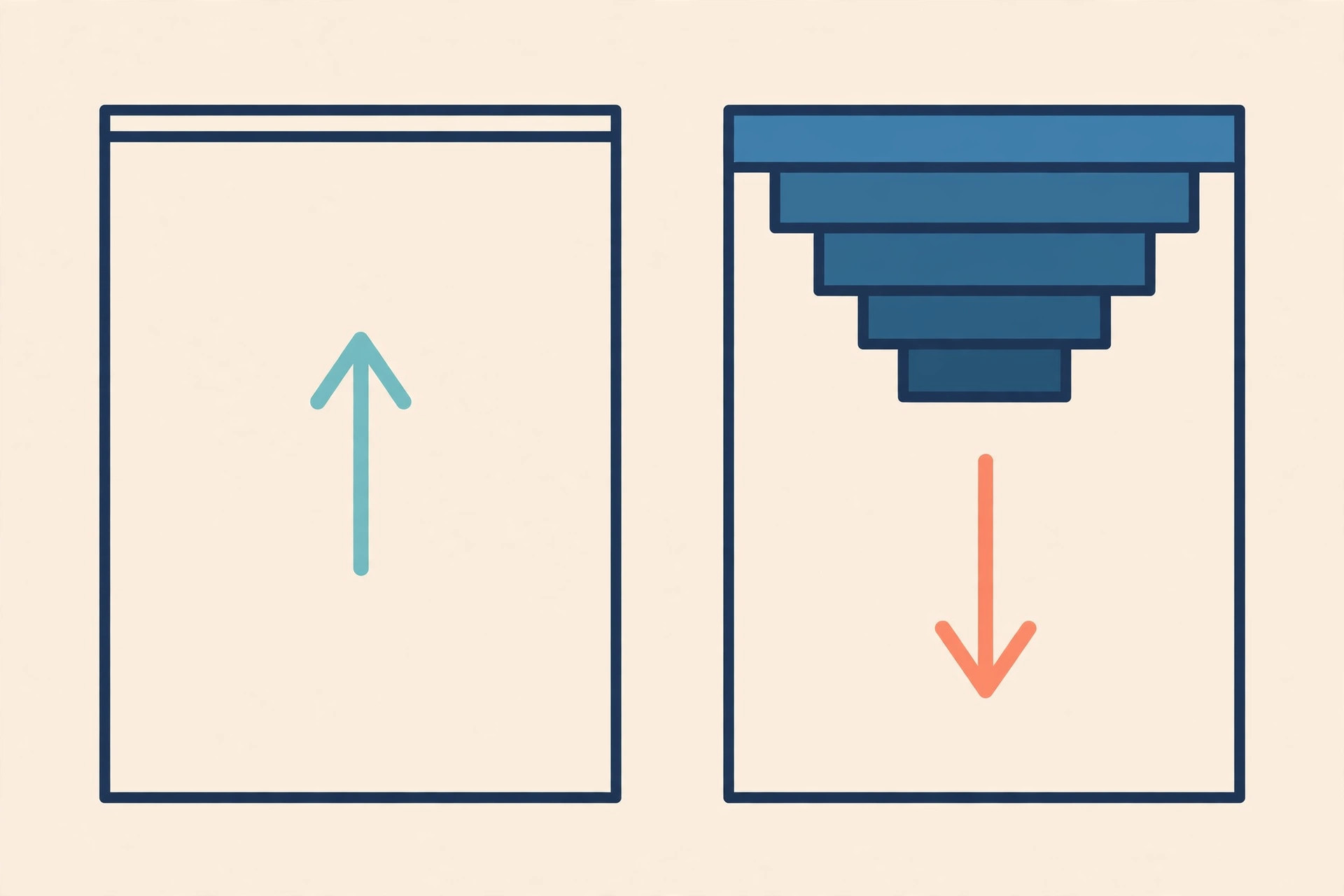
Indian apartment halls often sit at 9 feet or a little under. The rule is simple: the lower the ceiling, the simpler the design. Flat ceilings, slim borders (1–3 inches), and groove patterns preserve every inch of perceived height. Anything dropped more than a few inches in a sub-9-foot hall starts to press down — and no amount of cove lighting fully fixes that feeling.
Maintenance: simple pays twice
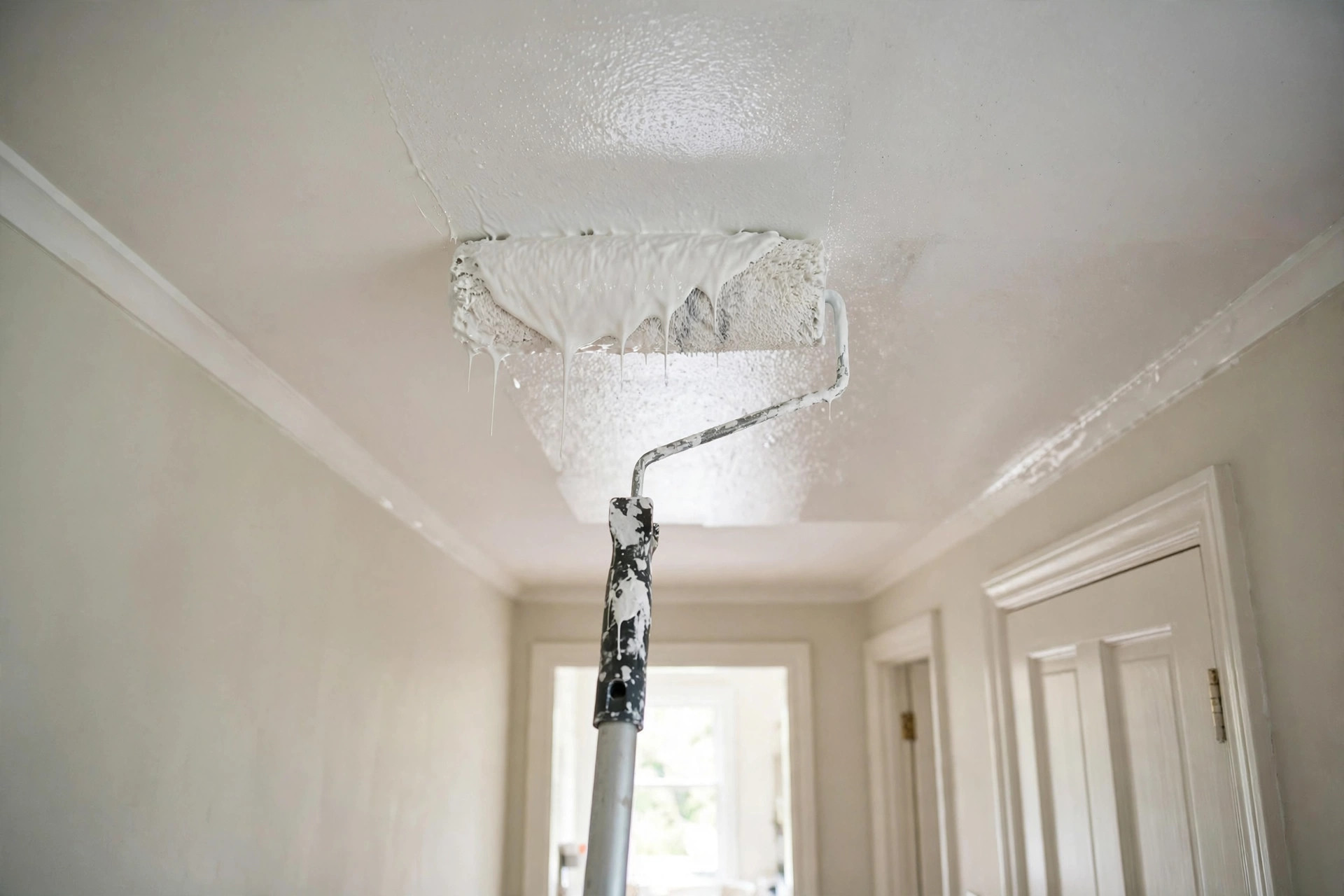
A simple ceiling repaints in a day with a roller — no mouldings to cut around, no deep coves to dust. POP and gypsum both take paint well; keep the original paint shade code and touch-ups are invisible. Dust the cove channel (if you have one) twice a year — it is the one place a simple ceiling collects dirt.
When simple isn’t enough
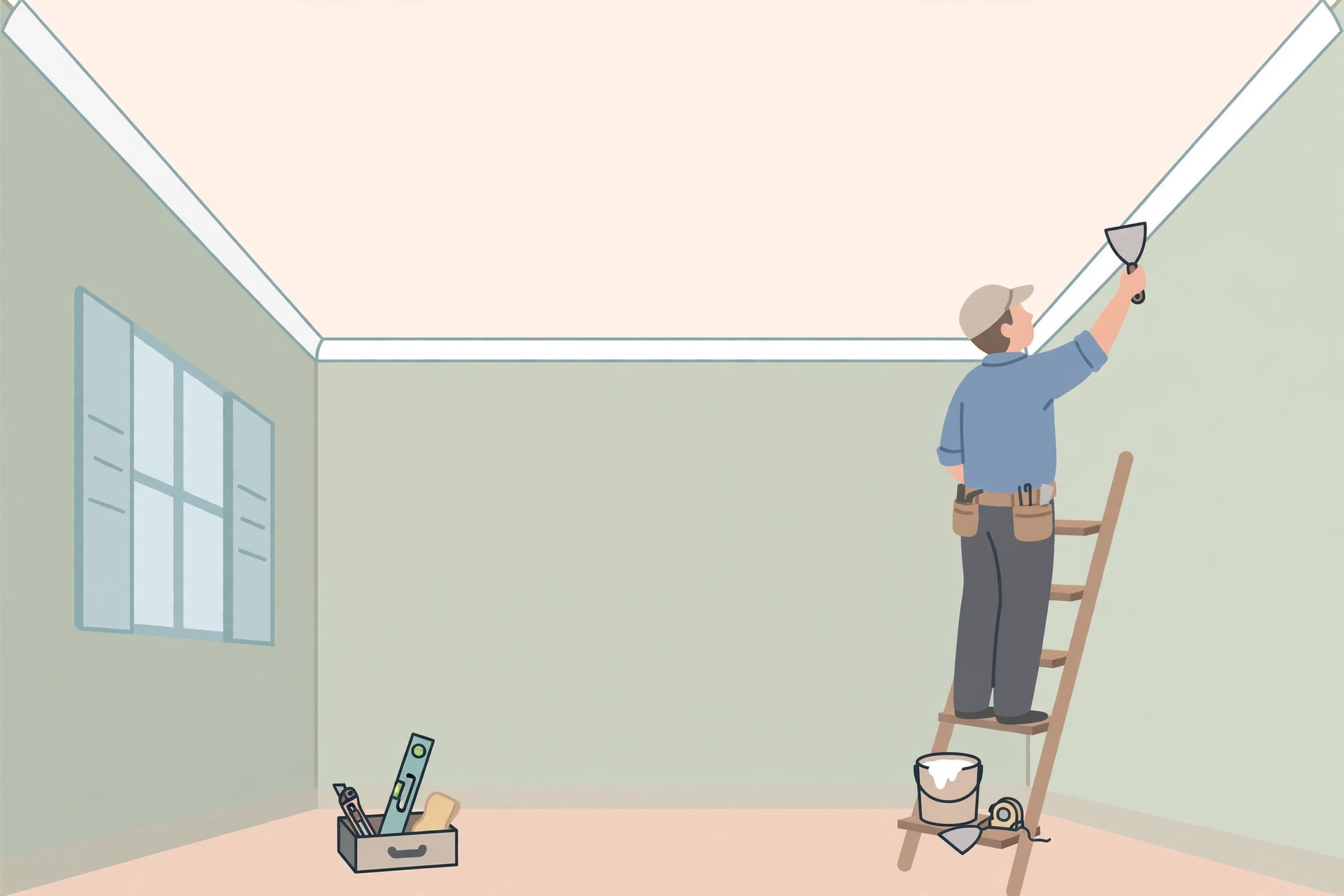
Honesty requires the other side. Simple ceilings suit most Indian halls, but not all: double-height halls and genuinely large living spaces can carry layered, statement ceilings without looking fussy — and a formal drawing room meant to impress may deserve more than the basics. If that is your hall, start with our hall design hub or the modern styles guide. For compact halls specifically, our small hall guide goes deeper; for POP as a material, the POP guide covers it end to end.
FAQs
What is the cheapest false ceiling design for a hall?
A border-only POP design — POP on the border, painted original ceiling in the centre — at roughly ₹50–80 per sq ft installed (AcquireAcres 2026). A two-tone paint treatment with no false ceiling at all costs less still, but that is decoration, not a ceiling.
Is a simple POP ceiling durable?
Yes, if the mix and frame are right. POP itself lasts 15–20 years indoors with care; what fails early is bad workmanship — thin mix, unleveled frame, skipped primer. The simplicity is not the risk; the contractor is.
Can a simple ceiling look premium?
That is exactly what lighting is for. A flat ceiling with a warm cove and well-placed spots reads premium; the 2026 trend pieces agree that light, not layers, creates the expensive look.
How much does a simple hall false ceiling cost in India?
2026 guides put simple designs at roughly ₹50–100 per sq ft installed, rising to ₹110–160 with cove lighting. A 150 sq ft hall typically lands between ₹8,000 and ₹24,000 depending on design and lighting. Keep a 10–15% buffer over the quote.
Simple POP or gypsum for a hall?
Both work and cost about the same installed. Gypsum gives a flatter, more precise finish faster; POP gives more design freedom for borders and curves. For a truly simple flat ceiling, gypsum usually wins on finish quality.
All images in this article are original concept renders created for illustration, not photographs of completed projects.