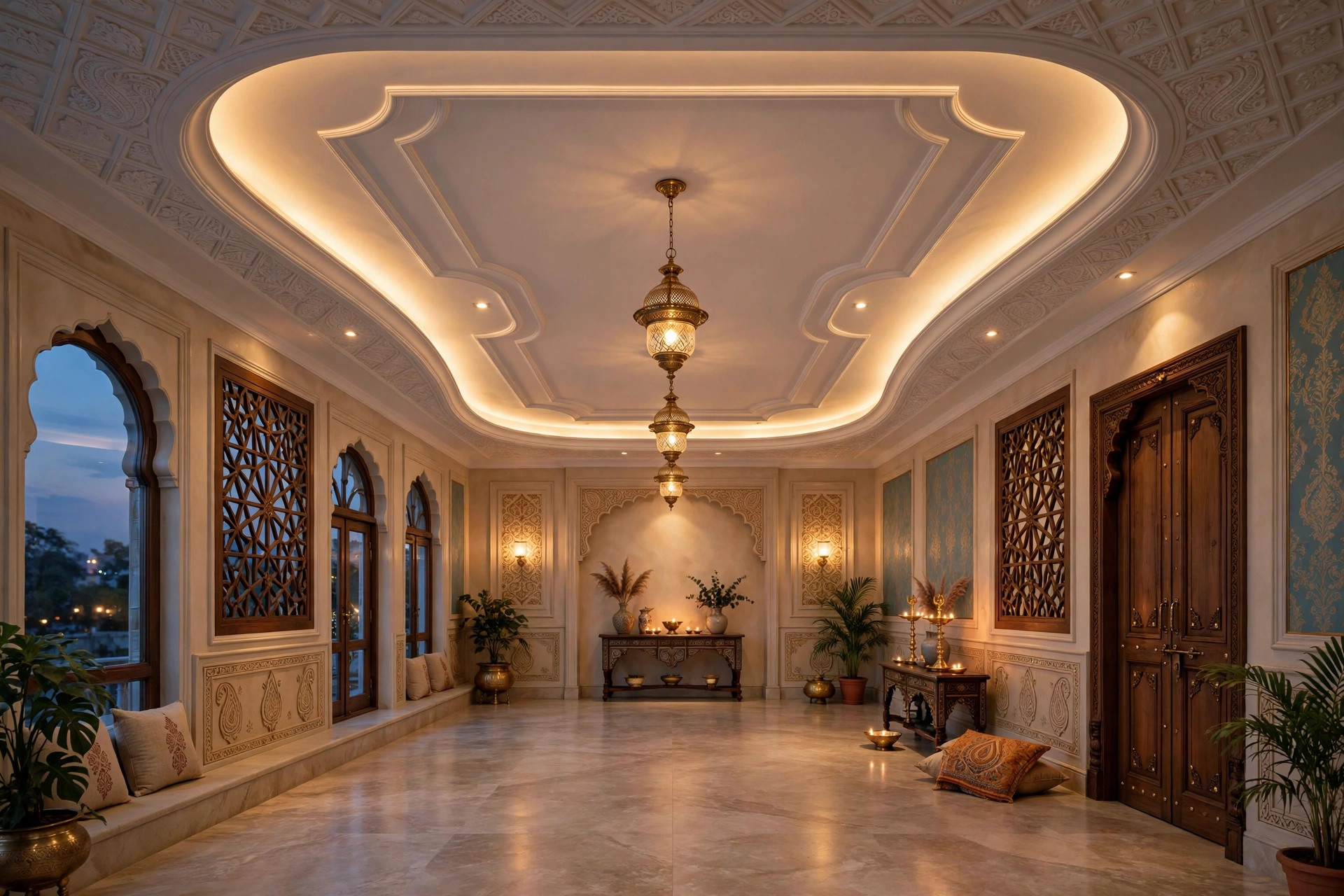
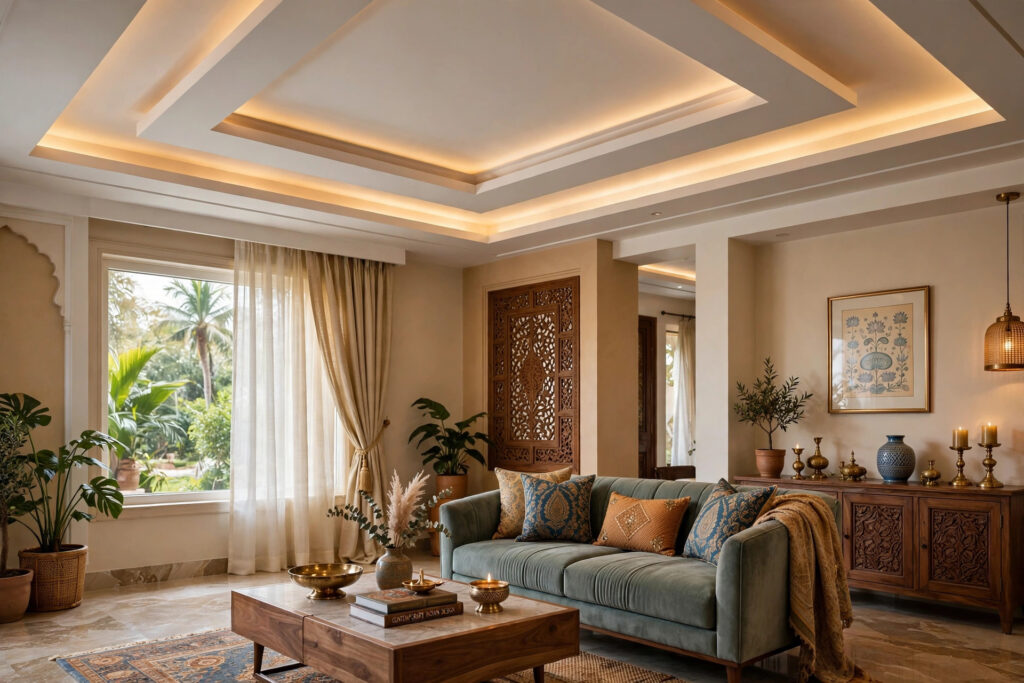

Gypsum is the default choice for hall ceilings in Indian homes for good reason: it gives a smooth, crack-resistant finish, installs faster than POP, and handles the tray, cove and layered designs that halls are known for. But “gypsum for the hall” is not one product — the board type, the design depth and the lighting plan decide both the look and the bill. In 2026, a gypsum hall ceiling in India realistically costs ₹85–₹360 per sq ft installed (NoBroker’s 2026 gypsum living-room guide, India), so a standard 200 sq ft hall runs roughly ₹17,000–₹72,000 depending on design. This guide covers gypsum hall designs with real costs, the board types worth specifying, honest pros and cons against POP, and a contractor checklist.
Why gypsum suits halls
The hall is the most visible room in an Indian home — the first thing guests see, the room that hosts everything from daily TV time to festivals. Gypsum fits this role because pre-fabricated boards arrive factory-finished: they cut to size, assemble quickly on a metal frame, and deliver a smooth, seamless finish that is hard to match with on-site plastering. For halls, which are usually the largest room (150–280 sq ft), faster installation genuinely matters: a gypsum hall ceiling typically takes 2–4 days of site work versus 7–10 days for an equivalent POP build.
Gypsum also brings two practical properties halls need. It is naturally fire-resistant — it slows flame spread, which matters in a room full of electronics, curtains and lighting. And it takes recessed lighting, cove strips and layered profiles cleanly, which is exactly the design language halls use. For the full design breadth beyond gypsum, see our hall and living room ceiling hub.
10 gypsum hall designs with 2026 costs
Cost bands are from NoBroker’s 2026 gypsum living-room guide (India, installed — metal framework, gypsum board, primer and paint included; lighting extras noted separately). Room totals are for a standard 200 sq ft hall. “Hall” here follows the Indian convention of hall = living room.
1. Flat single-level gypsum ceiling
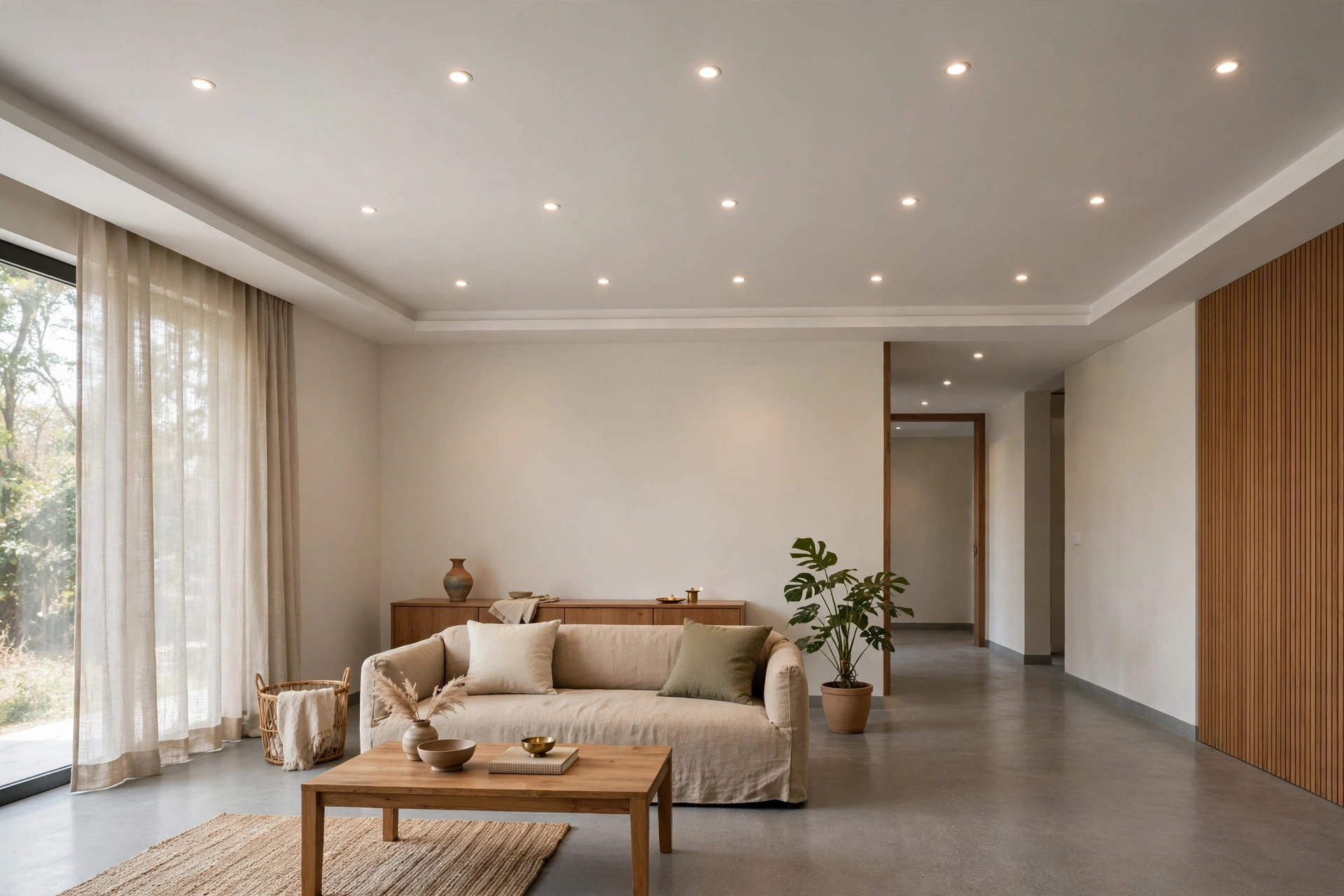
One flat gypsum panel with recessed LED downlights — clean, minimal, and the right choice for halls under 9.5 ft or for anyone who wants the room to feel as tall as possible. Cost: ₹85–₹115 per sq ft, roughly ₹17,000–₹23,000 for 200 sq ft.
2. Single cove with LED strip
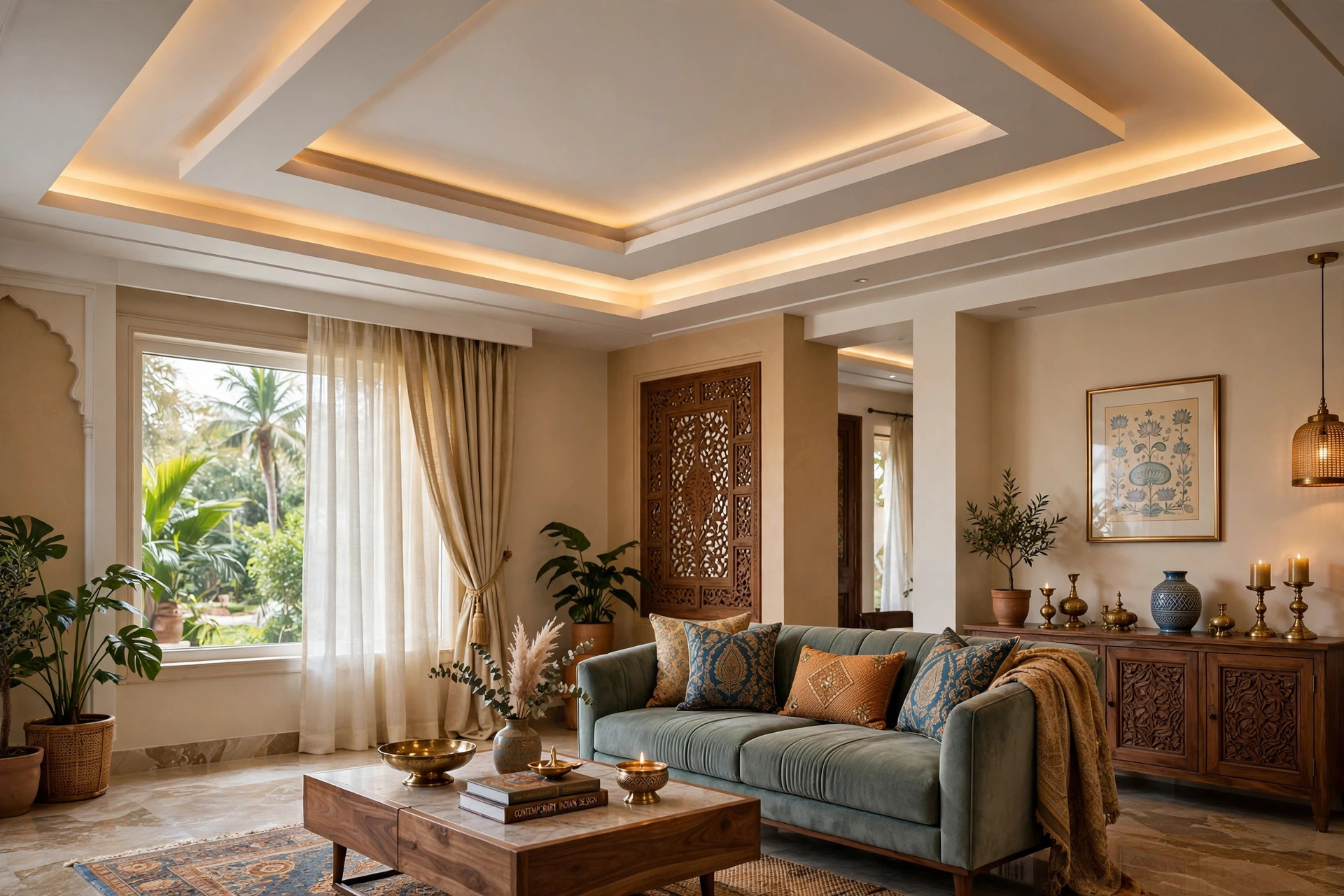
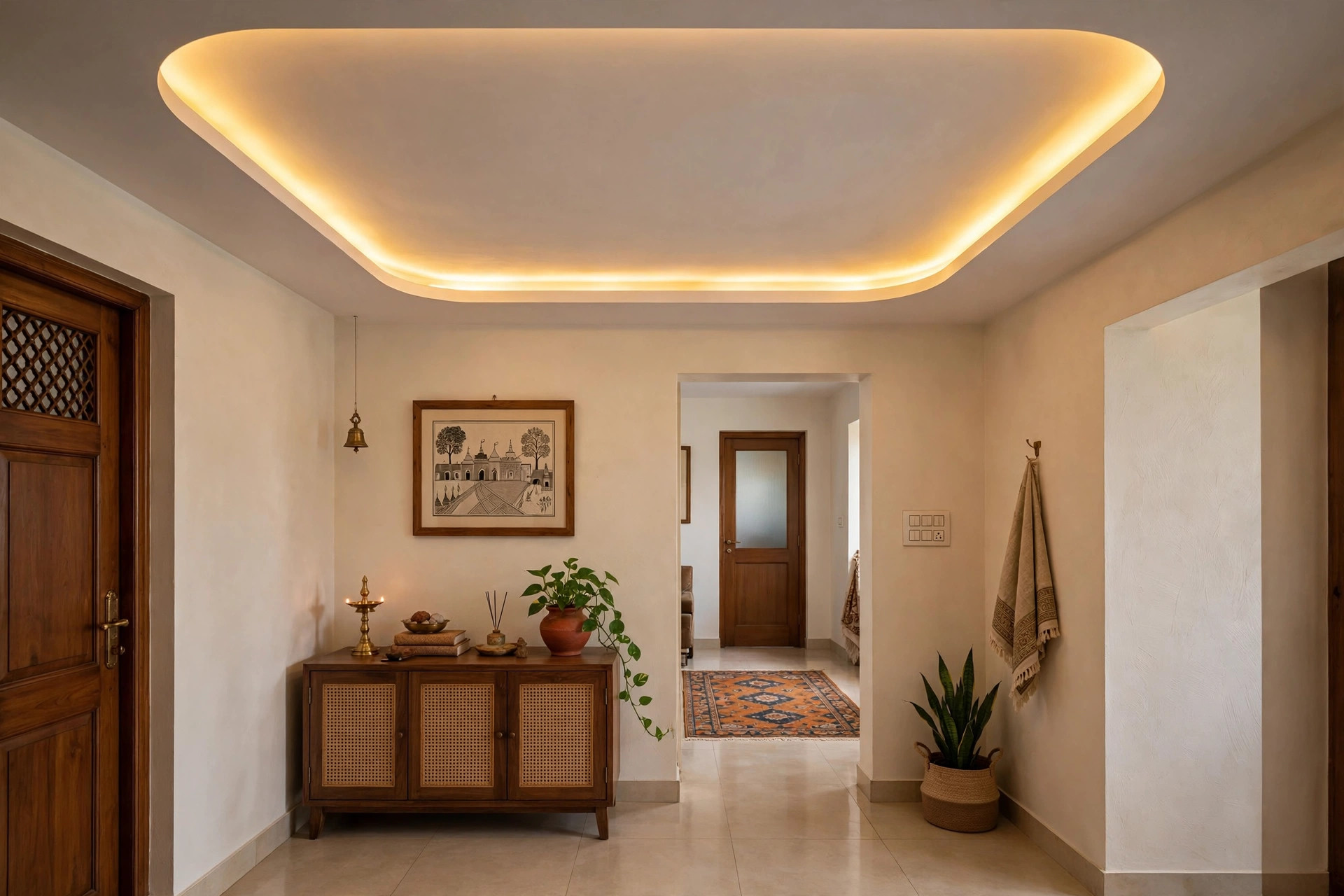
A 6–8 inch perimeter drop hides a warm LED strip; the centre panel stays flat. NoBroker calls this the most requested gypsum design across Indian metros in 2026 — indirect warm light with no visible fixture and no glare makes a hall feel significantly more premium. Cost: ₹110–₹165 per sq ft.
3. Tray (plus-minus) ceiling
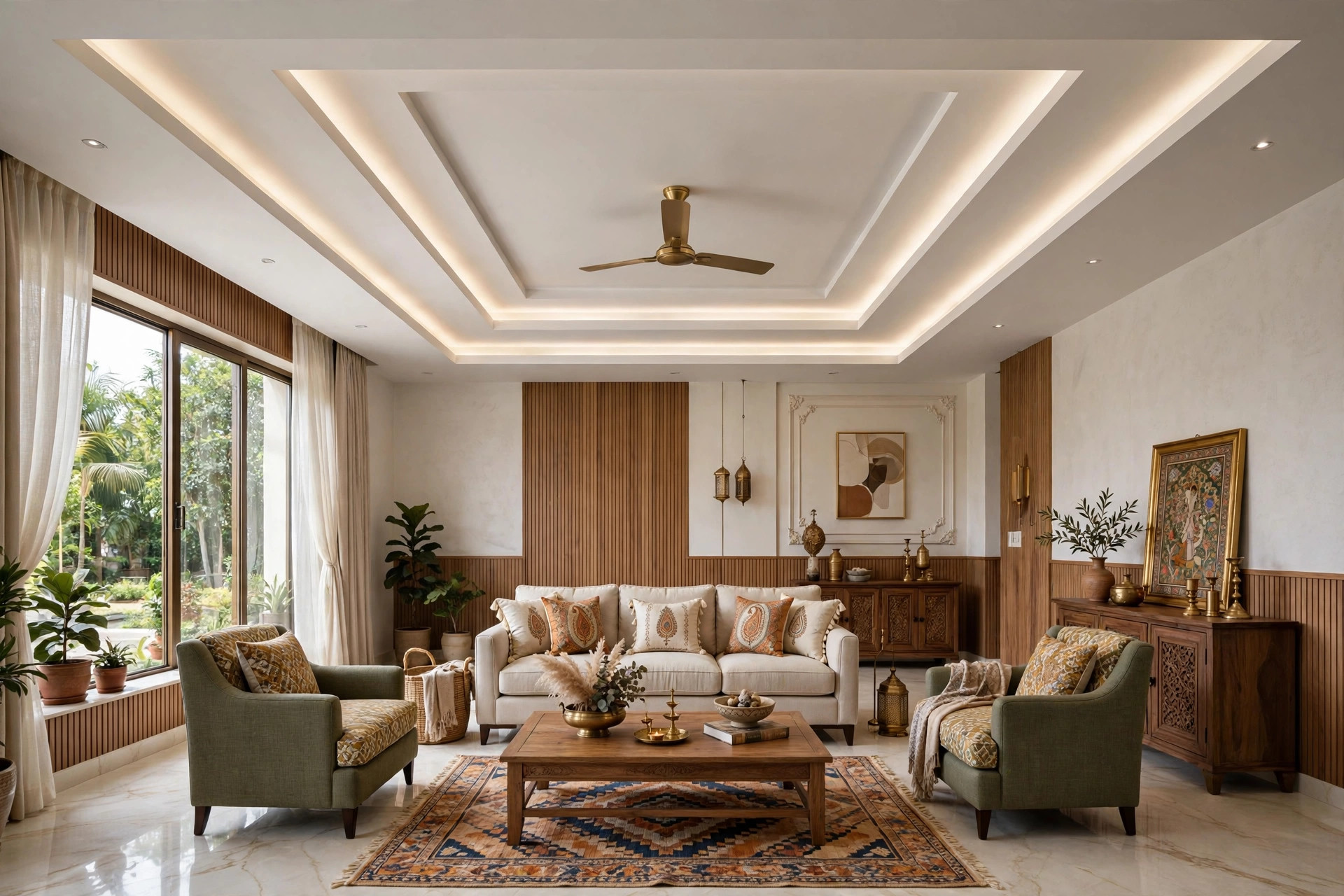
A recessed or raised centre section creates the layered tray effect, with stepped gypsum levels playing light against shadow. It adds architectural elegance and suits halls that host guests regularly. Needs about 10 ft of ceiling height to breathe. Cost: ₹130–₹195 per sq ft.
4. Floating island panel
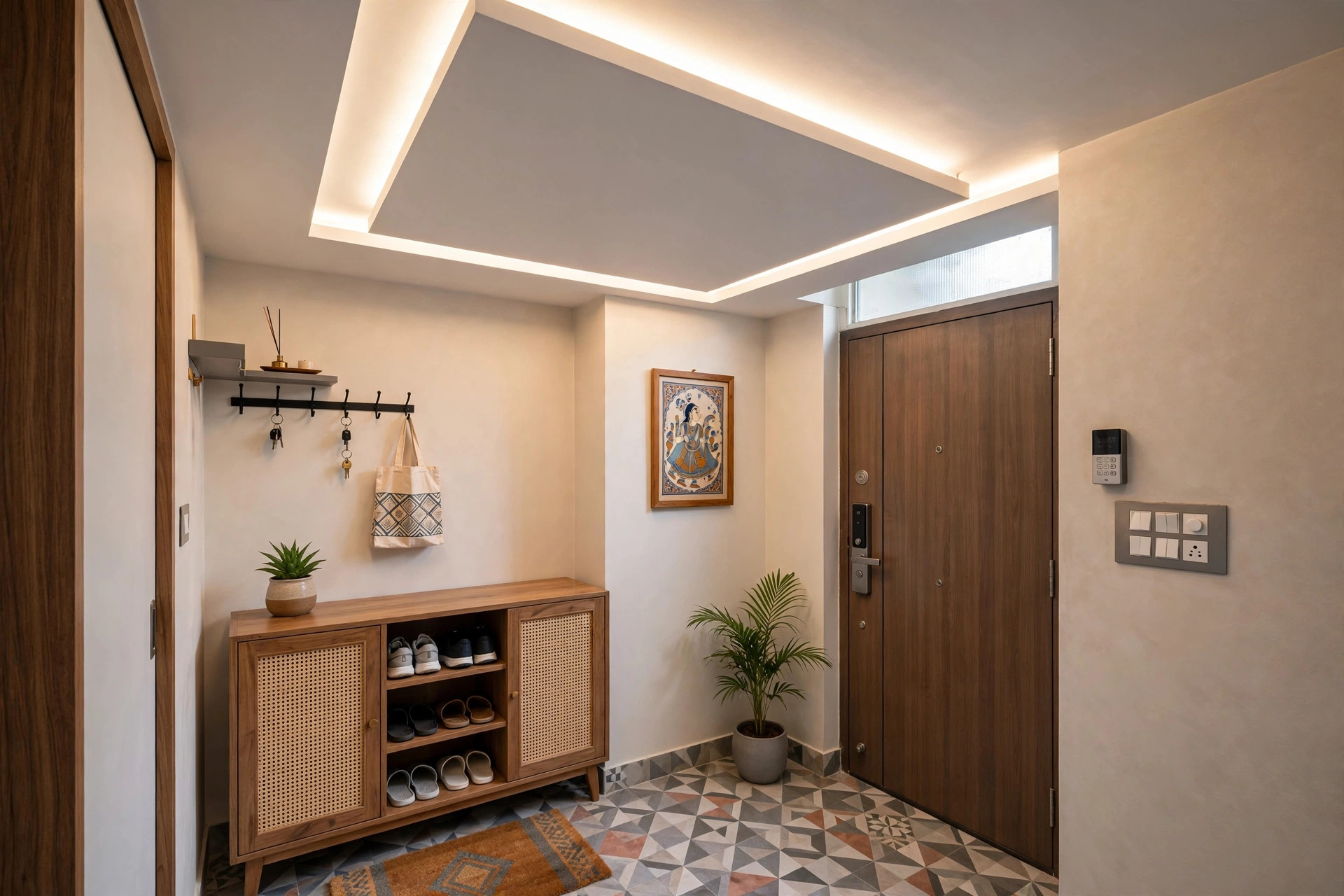
A central gypsum panel suspended with a visible gap on all four sides; LED strips in the gap create a floating glow. One of the fastest-growing gypsum ceiling trends in compact urban flats — it creates an illusion of height and a premium finish without needing a ceiling above 10 ft. Cost: ₹140–₹210 per sq ft.
5. Multi-layered stepped ceiling
Three or more gypsum levels with provision for a chandelier and perimeter cove lighting. The most dramatic option — suited to large halls and bungalows with ceilings above 11 ft. Cost: ₹170–₹270 per sq ft.
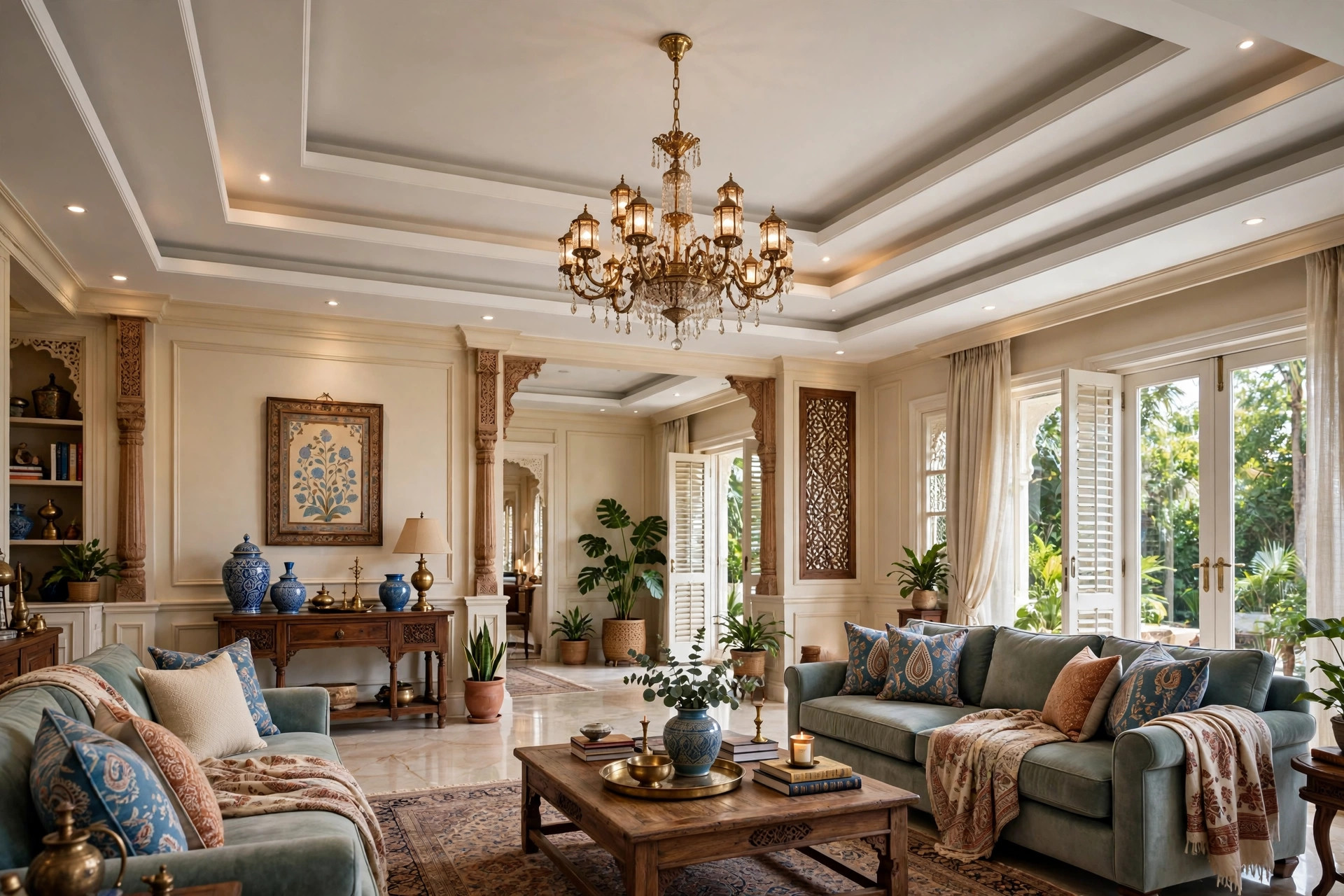
6. Geometric coffered ceiling
A grid of rectangular or square gypsum coffers, each able to hold a recessed downlight. Strong architectural depth for large, square halls with 10.5 ft or more. Cost: ₹190–₹290 per sq ft.
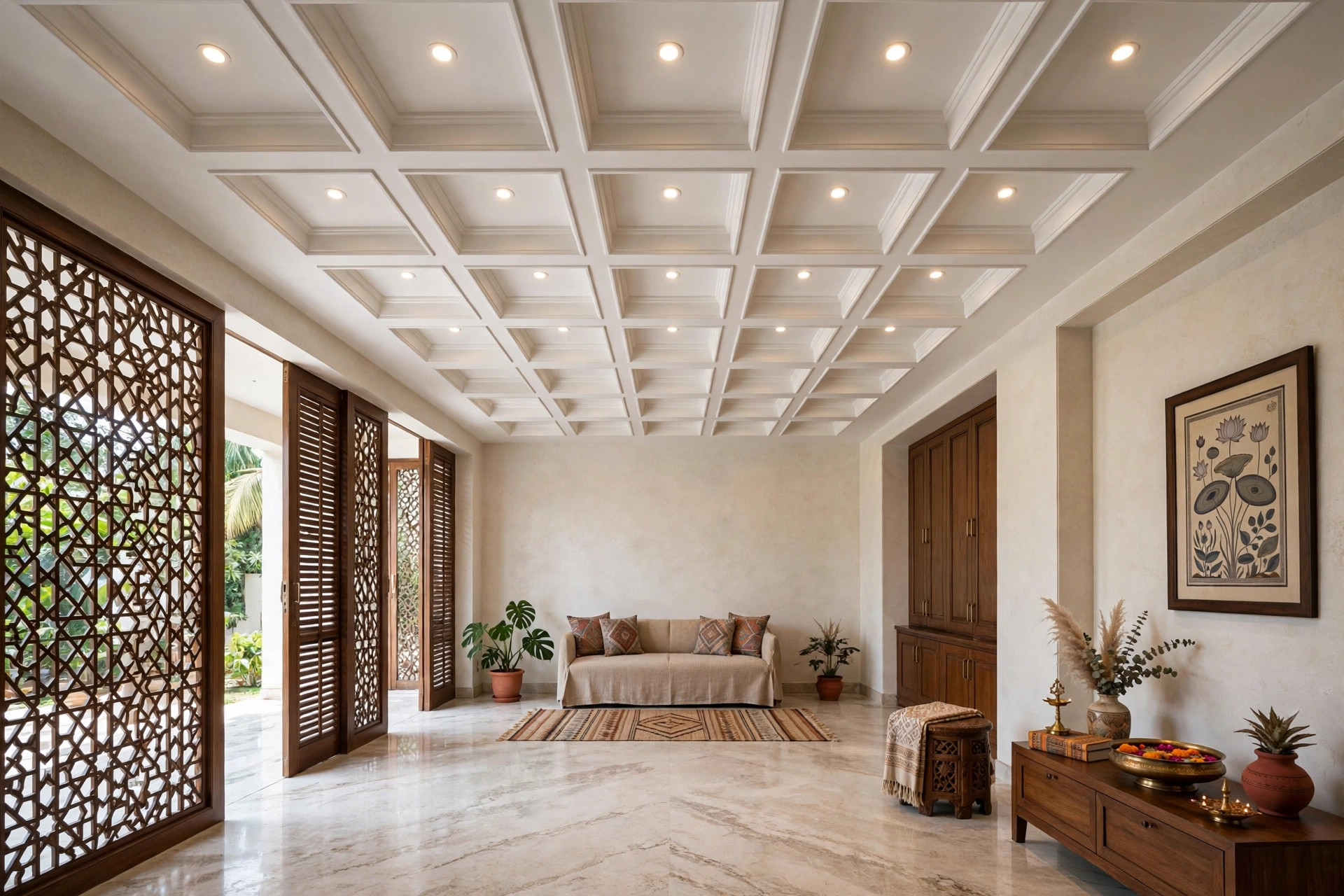
7. Gypsum with wood accent panels
Smooth white gypsum paired with warm engineered-wood slat panels — the contrast between minimalism and natural texture is a popular contemporary choice. The most expensive mainstream option here. Cost: ₹210–₹360 per sq ft.
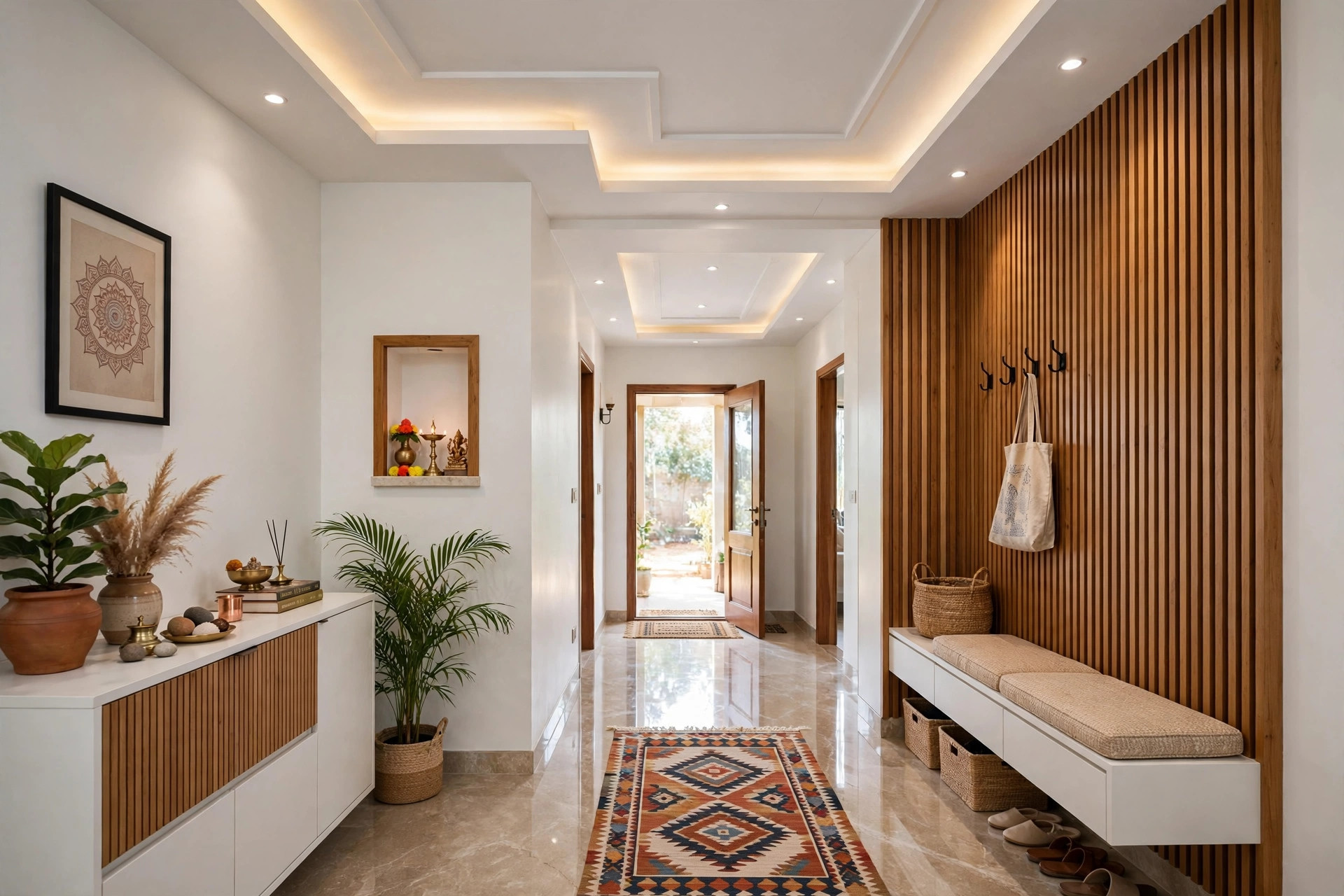
8. Curved / wave gypsum ceiling
Gentle arches and wave profiles instead of straight tray borders, reflecting the 2026 shift towards organic forms in open-plan living spaces. Flexible gypsum boards make curves possible, though POP still moulds more freely. Cost: ₹160–₹240 per sq ft.
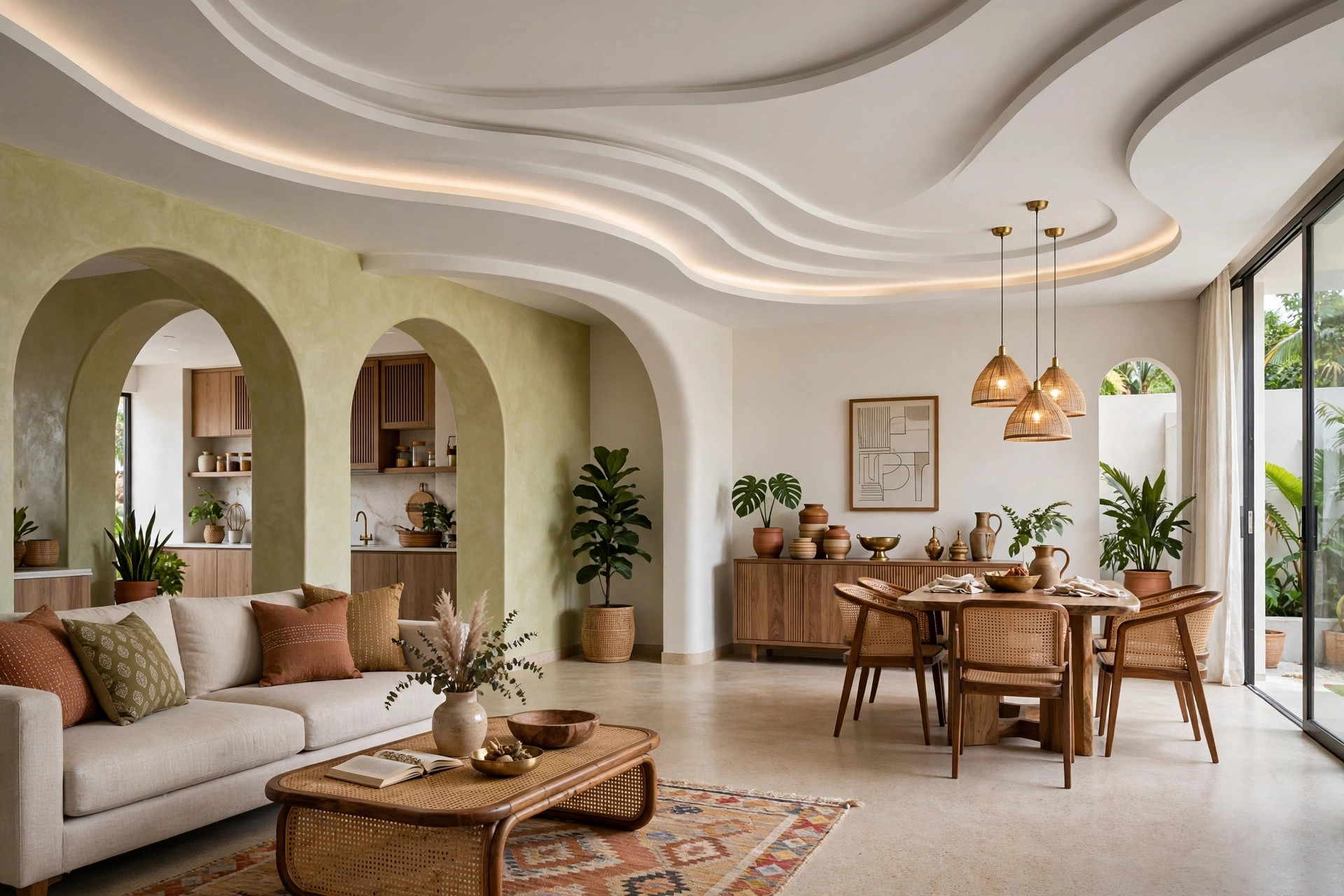
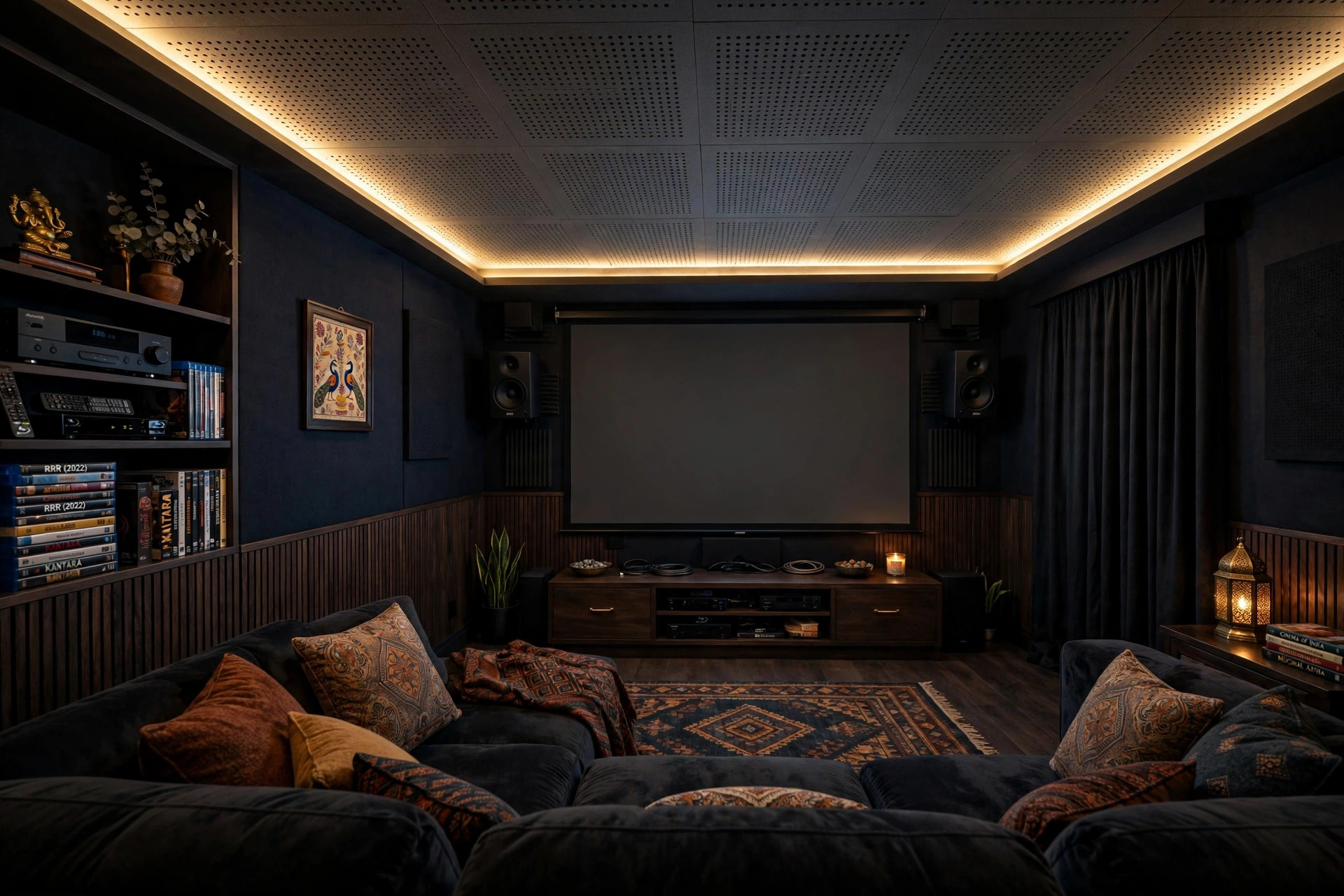
9. Acoustic gypsum ceiling
High-density acoustic gypsum boards in the same flat profile as a standard ceiling, with concealed LED strips. Worth considering for open-plan living-dining floors where TV sound, echo or neighbour noise is a daily concern. Cost: ₹145–₹220 per sq ft.
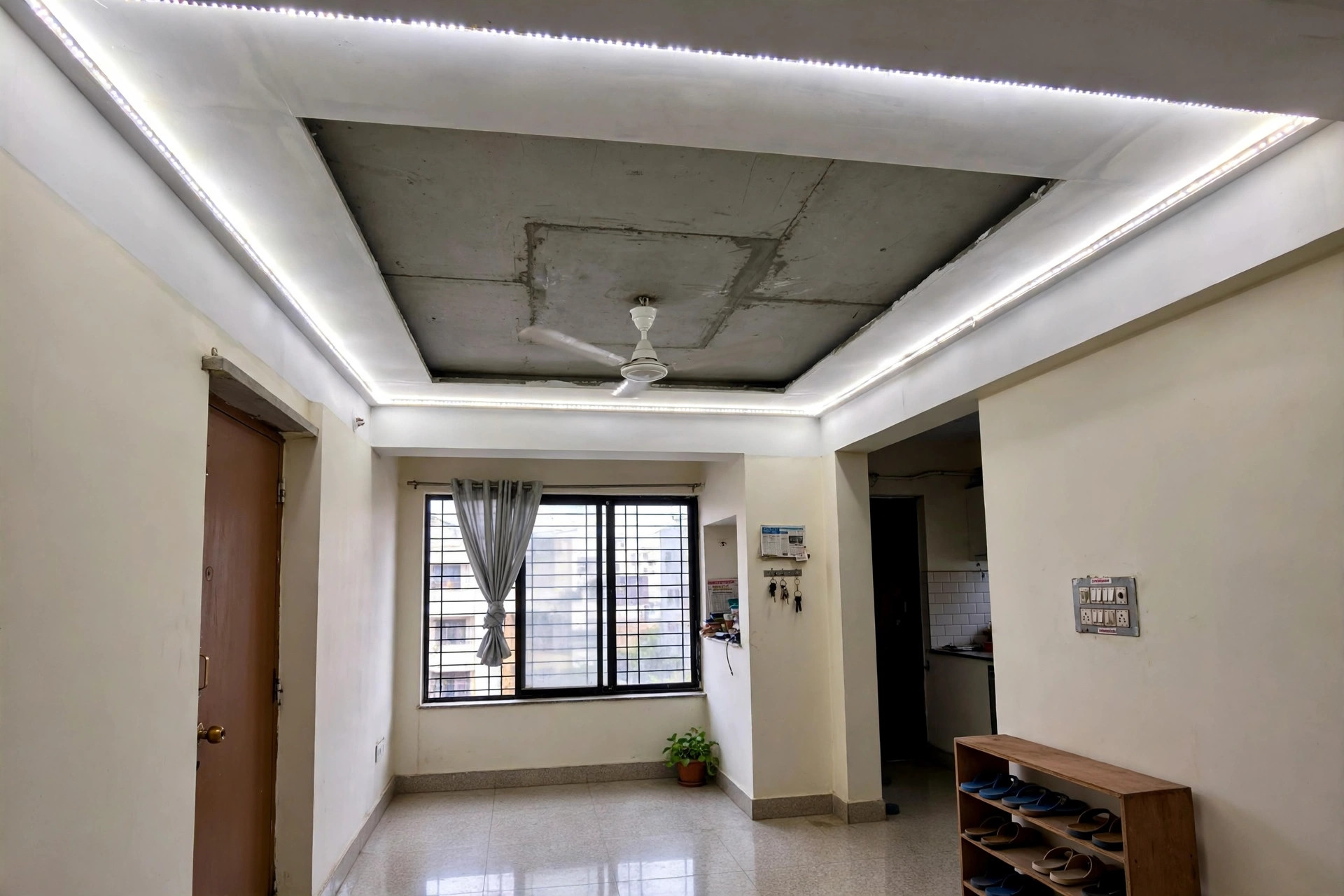
10. Perimeter border with exposed centre
A gypsum border around the perimeter with embedded LED strips, centre slab exposed and painted. The most cost-effective gypsum option and the best choice for halls below 9 ft that must preserve every inch of headroom. Cost: ₹55–₹95 per running foot — roughly ₹3,300–₹5,700 for a 200 sq ft hall’s perimeter.
Which gypsum board to specify
“Gypsum board” is a family, not a single product. What you specify changes durability and price:
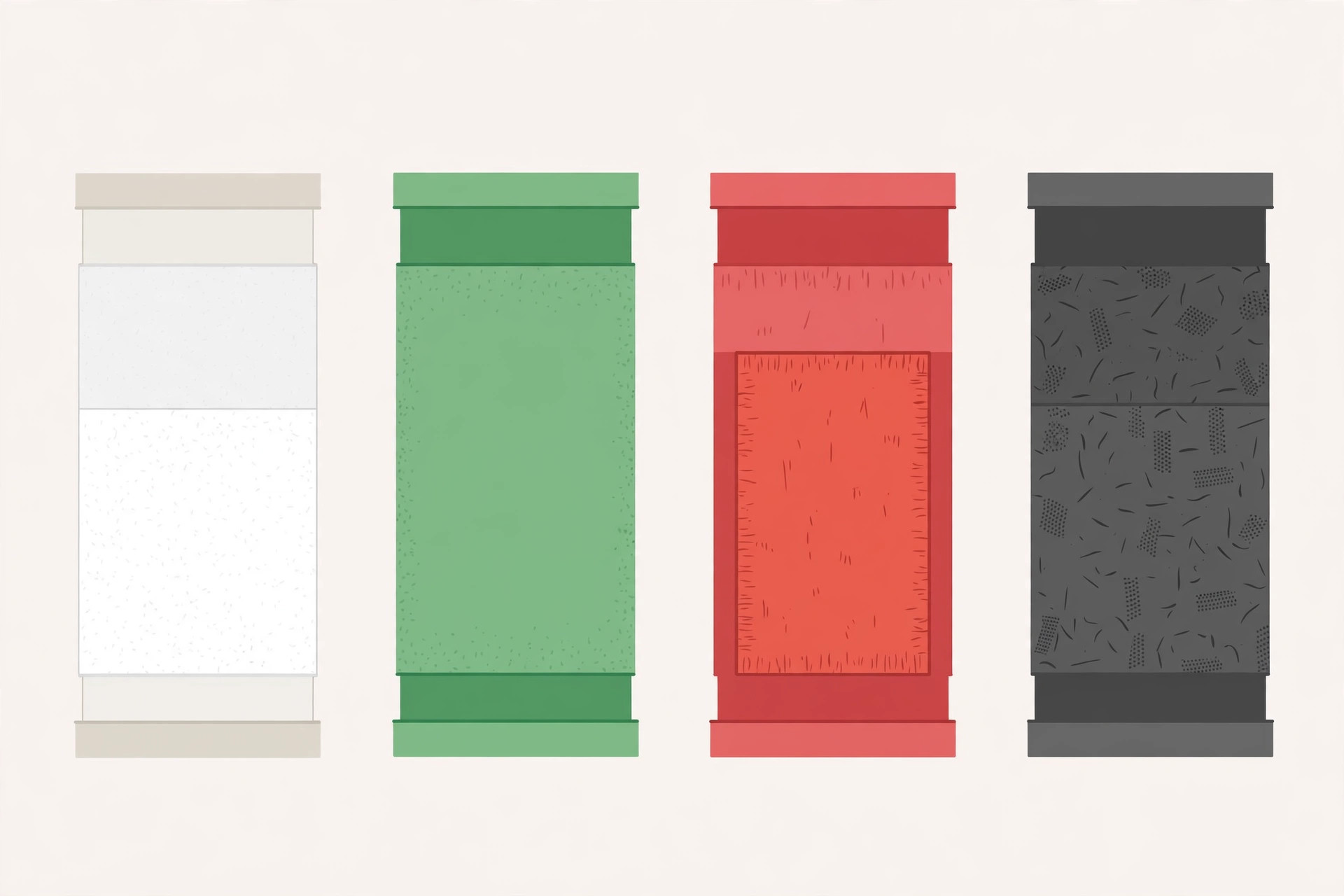
| Board type | Key property | Cost premium | Use in a hall when… |
|---|---|---|---|
| Standard | Smooth, lightweight | Base rate | The hall is dry and straightforward |
| Moisture-resistant (green board) | Resists humidity, prevents mould | +10–15% | Coastal city or top-floor seepage risk |
| Fire-resistant (Type X) | Glass-fibre core, slows flame spread | +15–20% | High-rise apartment (sensible default) |
| Acoustic | Higher density, less sound transfer | +20–30% | Open-plan or media-heavy hall |
Board data per NoBroker’s 2026 guide. A common contractor shortcut is quoting “gypsum ceiling” while installing the cheapest standard board everywhere — naming the board type in your written quote prevents that. For the material-wide view, see our gypsum ceiling hub.
Gypsum vs POP for a hall: the honest comparison
This is the decision most hall owners actually face. POP offers more design freedom — intricate curves, medallions and custom mouldings are easier on-site — and typically costs slightly more for fancy work (roughly ₹100–₹200 per sq ft per Coohom’s 2026 hall cost guide). Gypsum installs faster, gives a more uniform crack-resistant finish, and is the cleaner choice for straight lines, trays and coves. POP needs 7–10 days on site; gypsum 2–4. For ornate, sculptural halls, POP earns its premium; for modern, minimal halls, gypsum is the practical winner. Our hall ceiling price guide compares budgets across both materials.

Planning the cost: hall sizes and budgets
Translate the per-sq-ft bands into room budgets before you talk to contractors. Using the mid-range bands above (installed, 2026, India — framework, board, primer, paint; lighting extra):
- Compact hall (150–180 sq ft): flat or border ₹13,000–₹21,000; cove/tray ₹20,000–₹35,000; premium layered ₹35,000–₹55,000.
- Standard hall (180–220 sq ft): flat or border ₹15,000–₹25,000; cove/tray ₹25,000–₹43,000; premium layered ₹45,000–₹65,000.
- Large hall (220–280 sq ft): flat or border ₹20,000–₹35,000; cove/tray ₹35,000–₹55,000; premium layered ₹60,000–₹85,000.
Room-size bands adapted from NoBroker’s 2026 hall price table. Three cost truths worth knowing: material is typically 40–50% of the total, labour 30–40%, finishing and lighting the rest (Aecord’s 2026 cost breakdown); tier-1 metros cost the most and tier-2 cities can run 20–40% cheaper for the same spec; and complex curves or smart lighting add 20–50% over the base material rate. Always get the split in writing — “₹130 per sq ft all-inclusive” means nothing until you see what is included. For the national budget-planning view, see our false ceiling cost guide for India.
The contractor checklist (before the framework goes up)

- Board type named in the quote — standard, MR, or fire-resistant; not just “gypsum”.
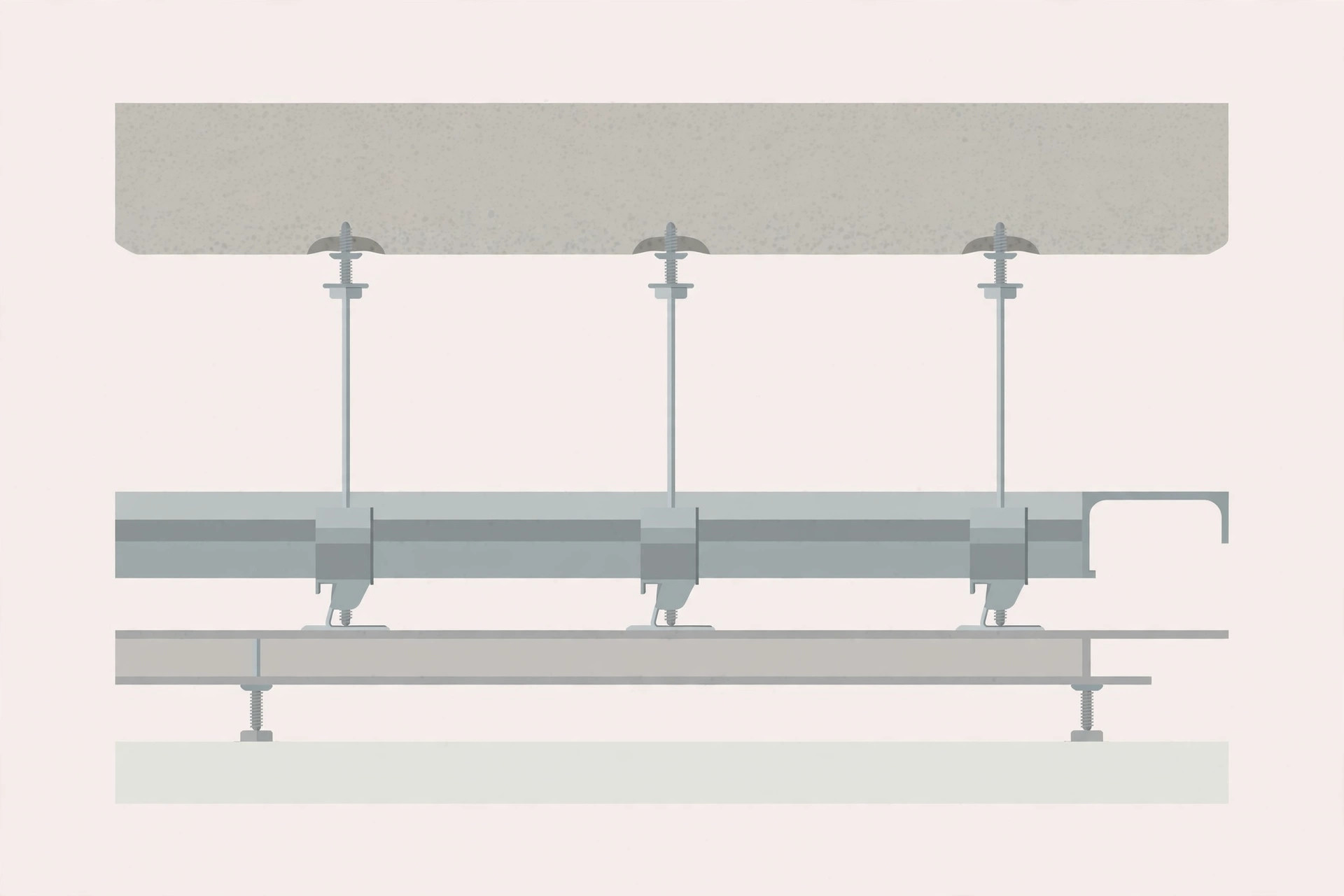
- Frame specification — galvanised metal sections, hanger spacing; the frame is the skeleton, don’t let it be vague.
- Fan and heavy-fixture plan — ceiling fans and chandeliers anchor to the structural slab, never to the gypsum frame. If your hall needs two fans, the cutouts and anchors are planned now, not later.
- Lighting list — every downlight position, cove strip length, driver locations. Wiring goes in before boards go up.
- Joint treatment and finishing — tape, jointing compound, putty, primer, paint: confirm each is included and whose material it is.
- Timeline in writing — including drying/curing days, not just “4 days”.
- 10–15% contingency — slab undulation and old wiring always add something.
Common mistakes in gypsum hall ceilings
- Too many levels in a low hall. Multi-layered drama needs 11 ft; in a 9 ft hall it just lowers the sky. Match design depth to ceiling height.
- No lighting plan. Gypsum’s whole point is clean integrated light — boards without a light layout are an expensive plain ceiling.
- Ignoring the fan. Fan cutouts retrofitted after installation look patched. Plan them with the framework.
- Cheapest quote wins. The lowest bid usually hides thinner boards, wider hanger spacing or skipped joint treatment. Compare itemised lines, not totals.
- Forgetting the AC and curtains. Hall ceilings must leave room for the AC indoor unit, curtain pelmets and the main door’s clearance — measure thrice.
When gypsum is NOT the right choice for your hall
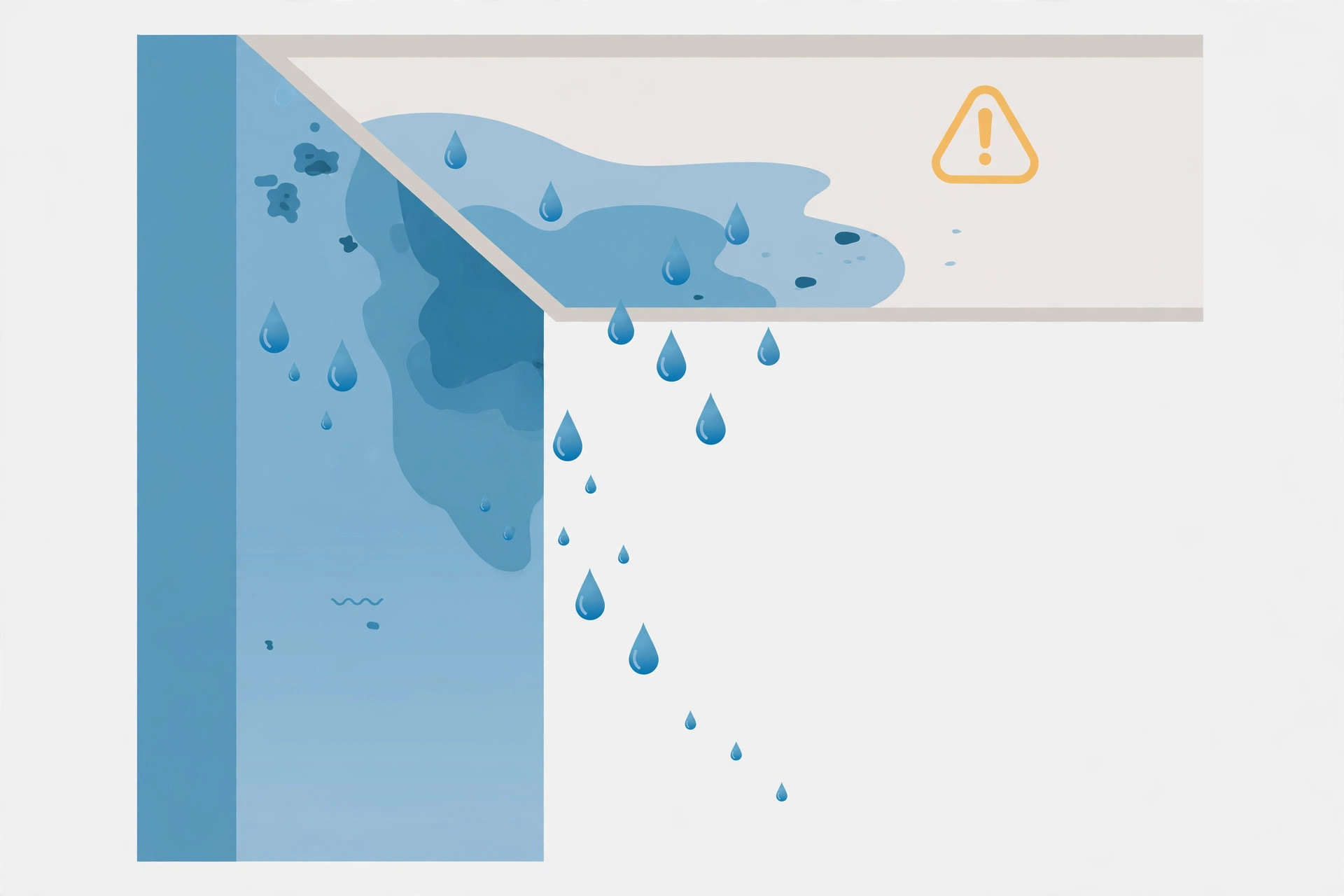
Gypsum loses honestly in three cases. Persistent dampness or active seepage — use PVC or fix the waterproofing first, because standard gypsum sags and stains. Ultra-ornate traditional designs with deep relief work — POP’s on-site moulding still wins. And halls under 8.5 ft where even a flat gypsum panel feels low — paint zoning with good surface lighting is the braver, better call. A material that admits its limits is more useful than one that pretends to do everything.
FAQs
What is the cost of a gypsum false ceiling for a hall in India in 2026?
Realistic installed bands are ₹85–₹360 per sq ft depending on design (NoBroker 2026, India). A standard 200 sq ft hall: roughly ₹17,000–₹25,000 for flat or border designs, ₹25,000–₹43,000 for cove or tray designs, and ₹45,000–₹85,000 for premium layered designs. Lighting fixtures are usually extra.
Is gypsum or POP better for a hall false ceiling?
For modern halls with clean lines, trays and coves: gypsum — faster install (2–4 days), uniform finish, fewer cracks. For ornate halls with curves, medallions and custom mouldings: POP — more design freedom, but 7–10 days on site and more crack-prone. Match the material to the design language, not to habit.
How much height does a gypsum hall ceiling take?
Typically 3–6 inches for flat or border designs and 6–12 inches for cove or multi-level designs. Halls under 9 ft should stick to flat or border-only designs; tray and layered designs want 10 ft or more.
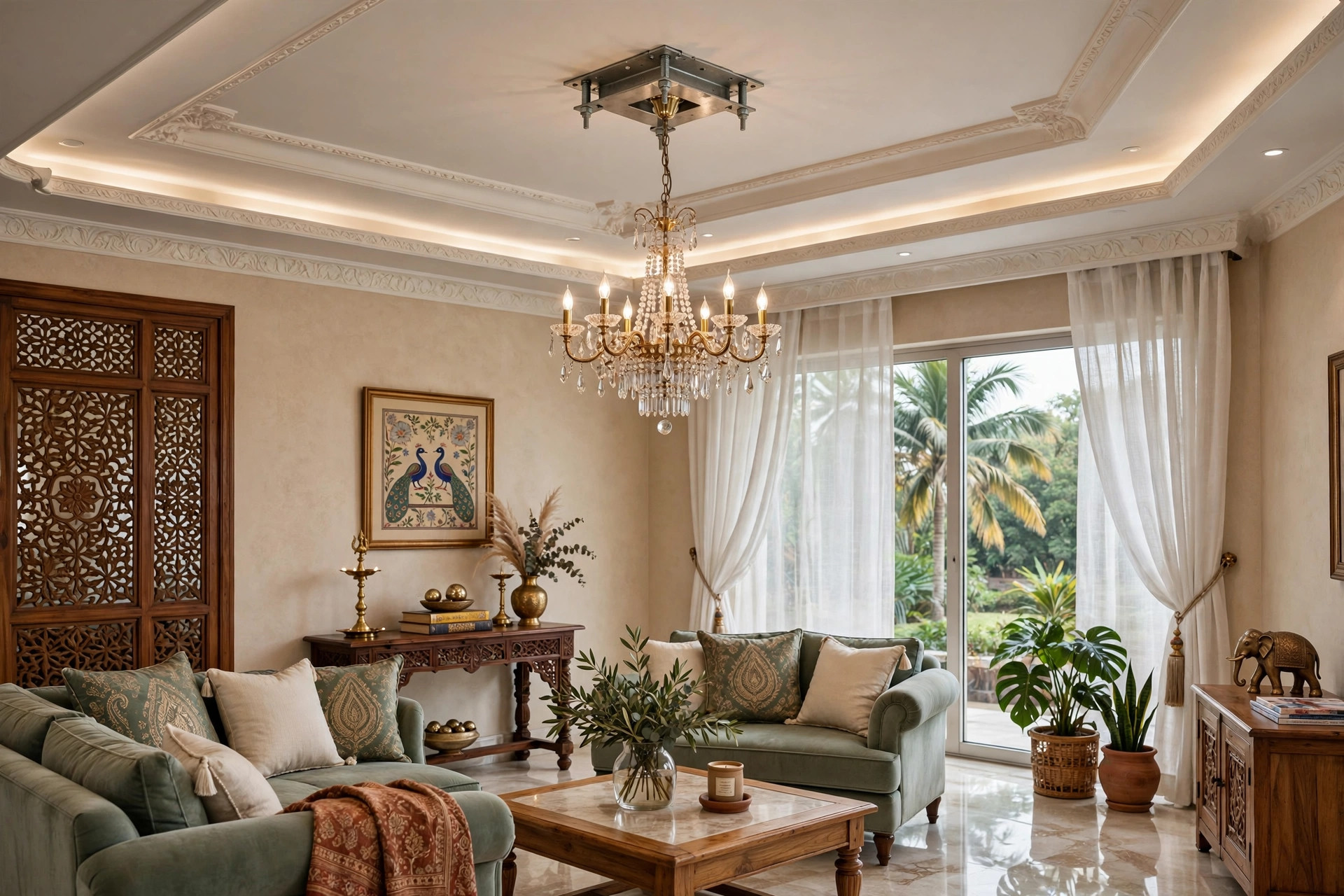
Can a gypsum hall ceiling hold a chandelier or two fans?
The fixtures must anchor to the structural slab above through the gypsum, never to the gypsum frame itself. Tell your contractor about every heavy fixture before the framework is fixed — retrofitting anchors afterwards is messy and weak.
The short version
For most Indian halls, gypsum is the right default: pick a flat, border, cove or tray design matched to your ceiling height (flat/border under 9 ft, tray at 10 ft+), specify the board type in writing (fire-resistant is the sensible hall default), budget ₹85–₹360 per sq ft installed in 2026 with lighting extra, plan fans and chandeliers on the slab before the frame goes up, and compare itemised quotes — not headline rates. All images in this article are original concept renders created for illustration, not photographs of completed projects.