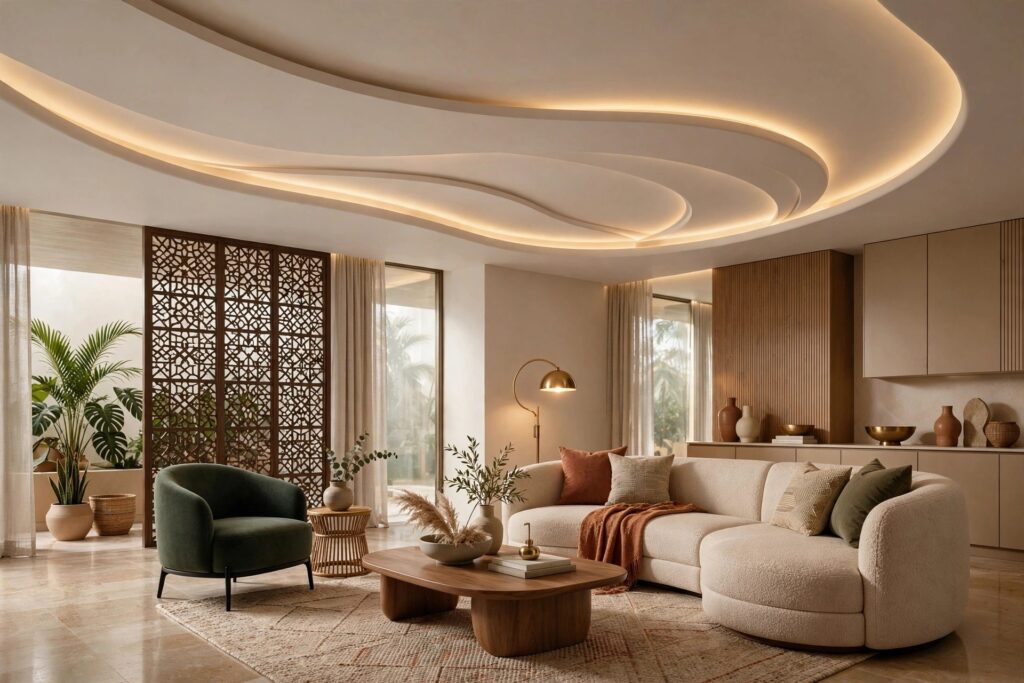

Gypsum has quietly become the default false ceiling material in Indian homes — factory-finished boards, fast installation, and a smooth surface that takes light beautifully. But “a gypsum ceiling” can mean a flat white slab or a sculptural, colour-changing centrepiece, and the difference is design, not material. This guide collects the gypsum ceiling trends actually showing up in Indian homes in 2026 — smart lighting, curves, biophilic warmth, geometric patterns, night-sky ceilings — with honest notes on which trends suit which rooms, which ones cost more, and which ones to skip.
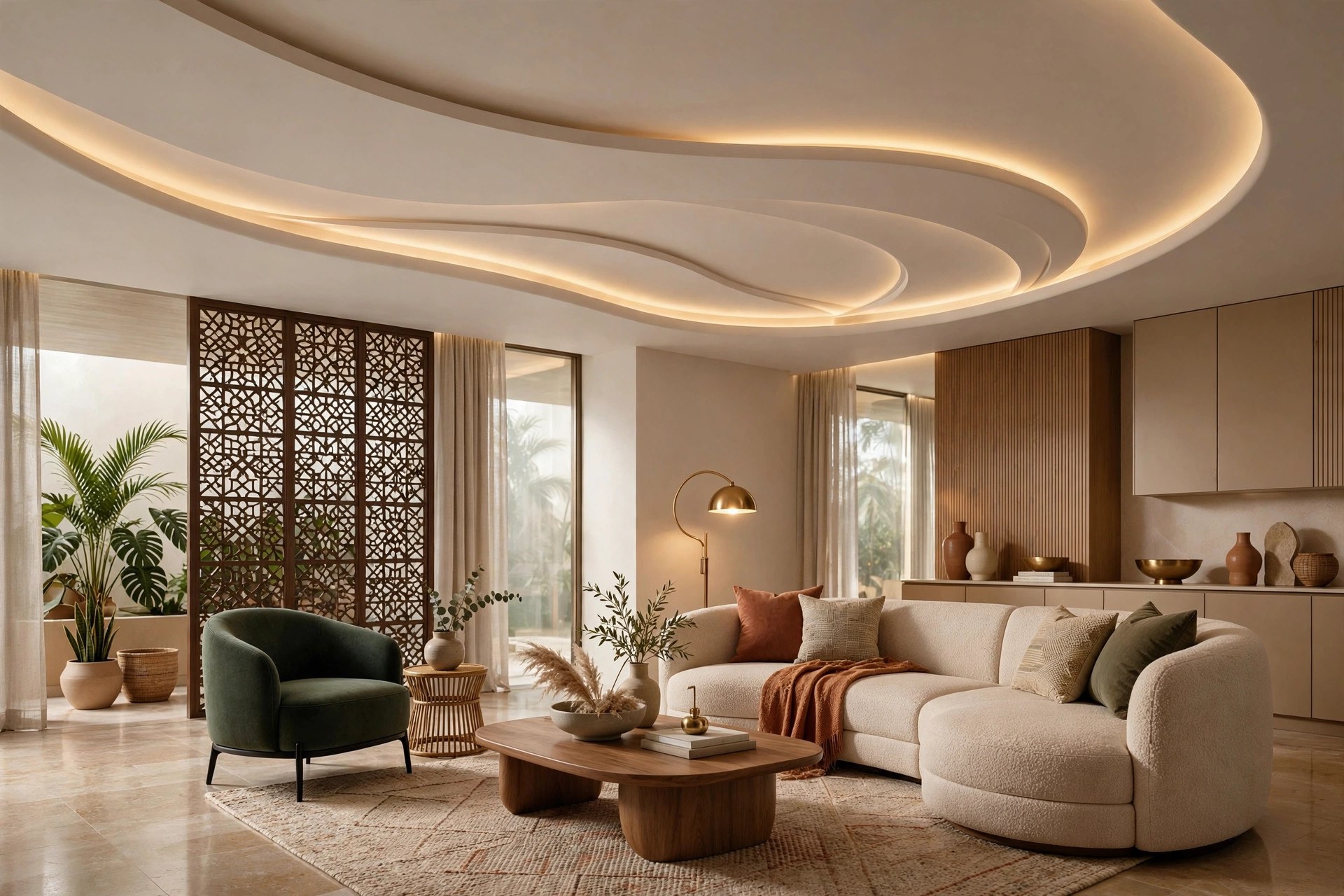
How to read trends (before you fall for one)
A trend is worth following when it suits your room, your budget, and your patience for maintenance. Three quick filters: room fit — a night-sky ceiling is lovely in a bedroom and odd in a formal living room; height cost — sculptural multi-level trends need 10-foot-plus slabs, while minimalist trends were made for 9-foot flats; and commitment — colour-changing smart lighting is a gadget you will enjoy for years, but a highly specific theme (a giant floral medallion, say) dates faster than a clean geometric pattern. Apply the filters as you read.
For the material fundamentals — board types, gypsum vs POP, installation — see our complete gypsum false ceiling guide. This article is about what is new.
1. Smart lighting built into the ceiling
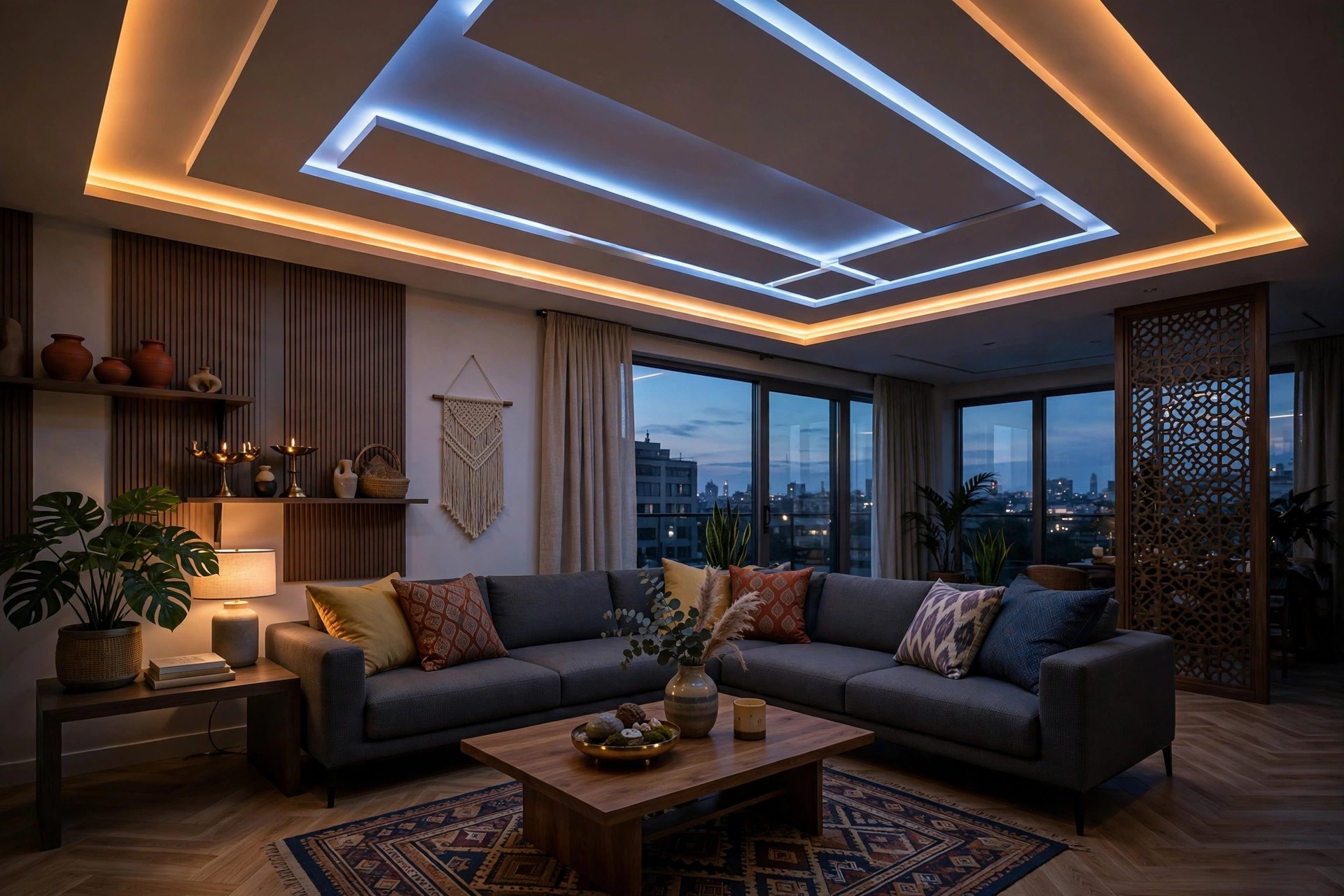
The biggest gypsum trend of 2026 is not a shape at all — it is light. Gypsum boards are easy to cut into channels, so designers are routing LED strips directly into the ceiling framework: colour-changing strips that shift from warm white to festive colour, dimmable zones for movie nights, and app-controlled scenes that adjust through the day. The ceiling becomes the light fixture.
What to know: plan the wiring and driver locations before the boards go up — LED drivers need accessible spots, not sealed cavities. Budget for the control system separately; the strips themselves are cheap, the dimmers and controllers are not. And keep one plain white “all on” scene for everyday use, because novelty lighting gets tiring as the only option.
2. Curved and wavy sculptural ceilings
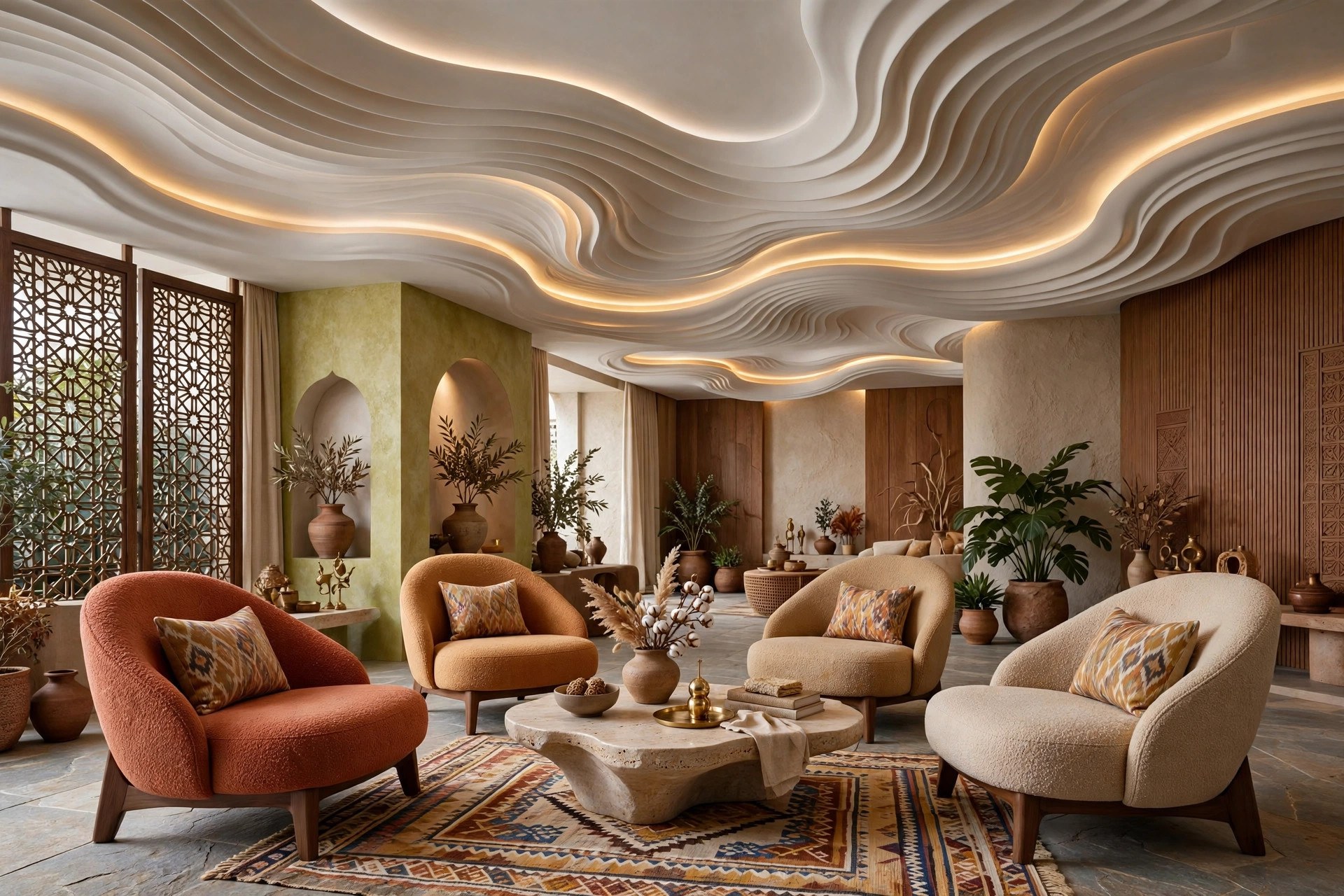
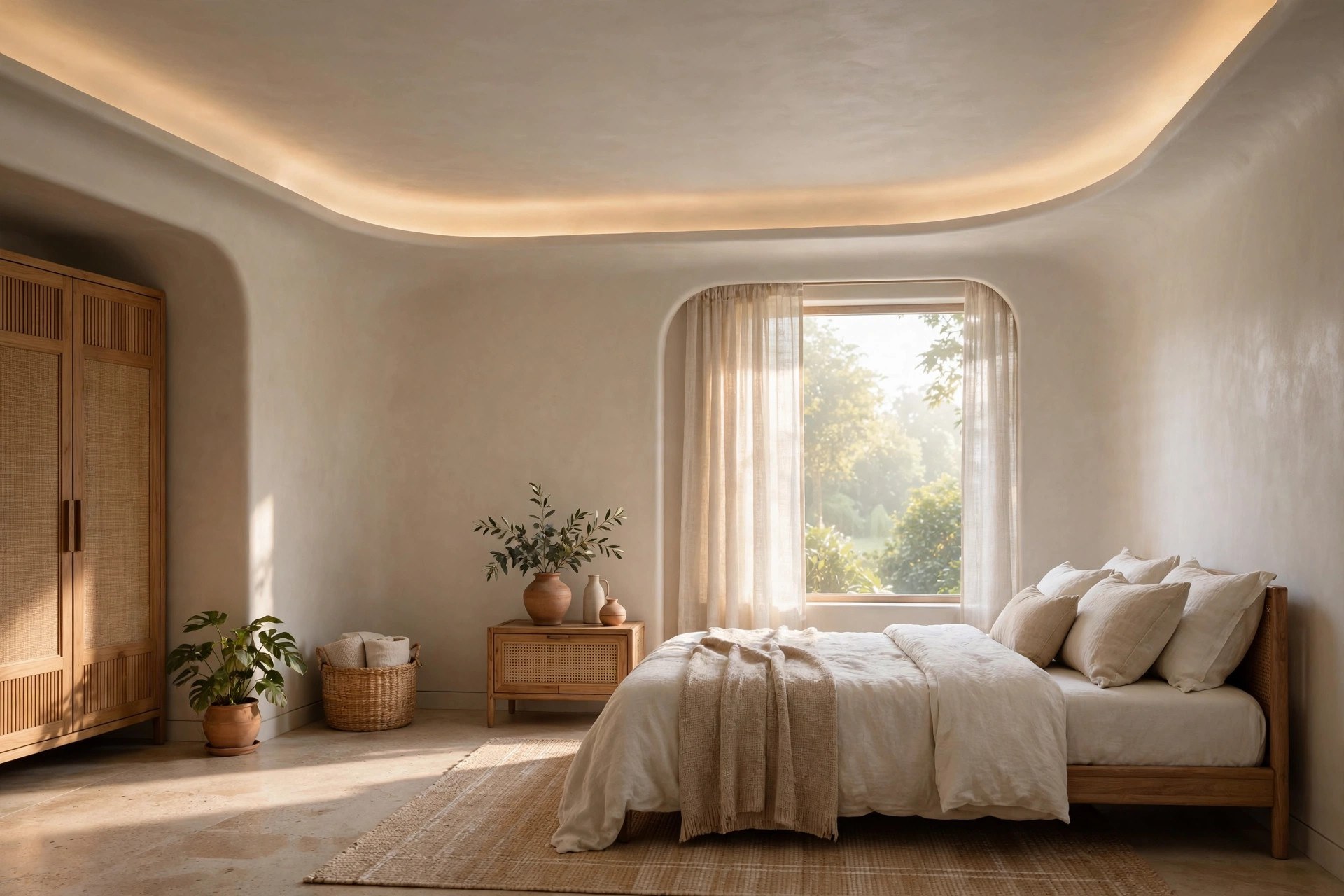
After a decade of sharp boxes and stepped trays, curves are back. Soft arcs, flowing waves, and sculpted transitions make a gypsum ceiling feel crafted rather than constructed. Curves suit entrance halls, lounges, and large living rooms where the ceiling is a visible surface from the doorway — they photograph beautifully and give a premium feel that flat ceilings cannot.
What to know: curves are labour-intensive — this is the most expensive trend on this list per square foot, because every curve is hand-shaped. They need height; a wavy ceiling under 9 feet feels like it is pressing down. And curves collect dust on their upper ledges, so budget a quarterly wipe into your maintenance routine.
3. Biophilic ceilings: gypsum meets wood and earth
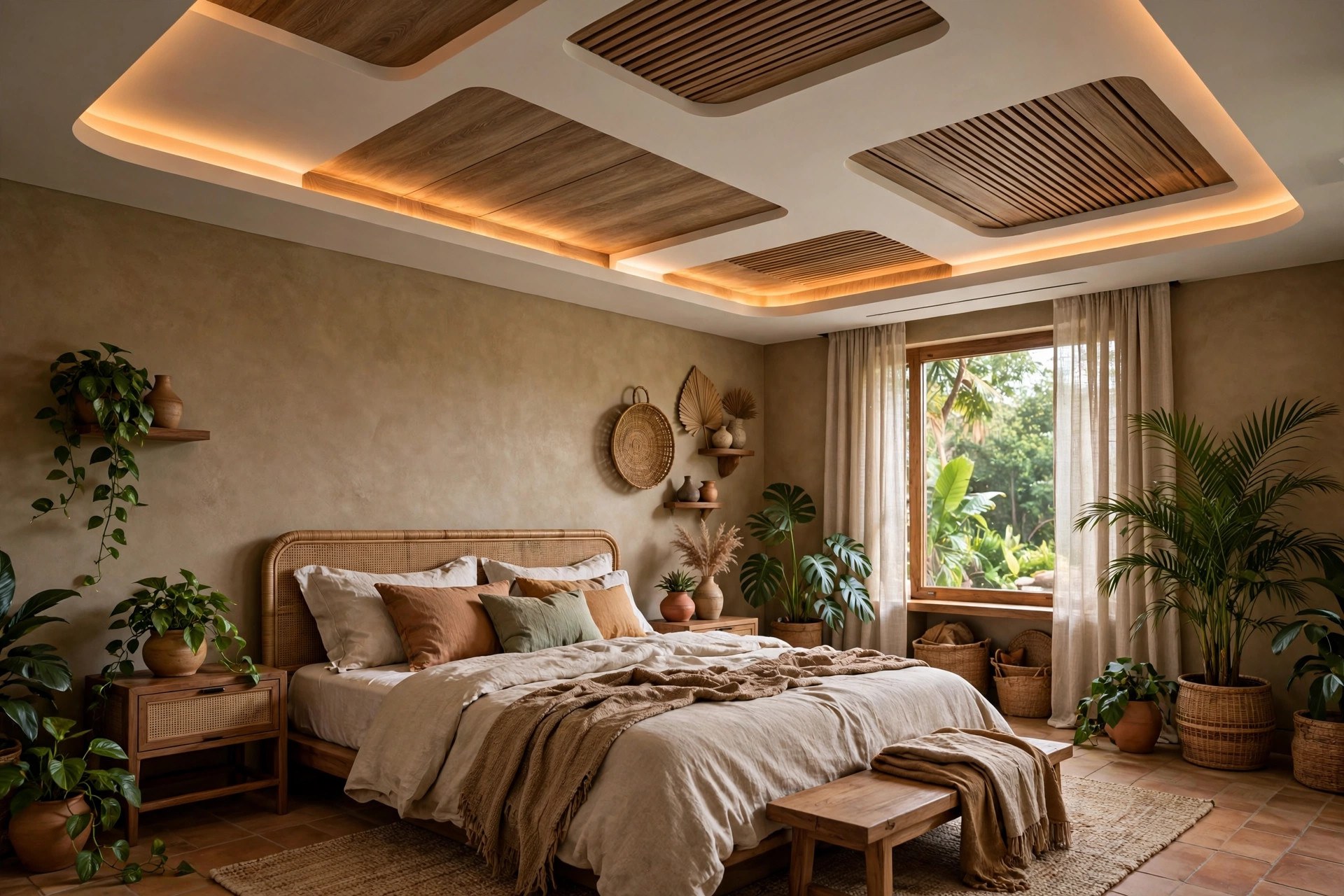
Biophilic design — interiors that borrow from nature — has reached ceilings. The 2026 version pairs gypsum with wooden textures, earthy paint shades, and organic shapes: a wood-finish panel set into a white gypsum ceiling, a cove glowing warm amber over a bamboo-toned border, gentle curves instead of corners. The result feels calm and resort-like, and it is one of the more liveable trends here because it does not depend on gadgets.
What to know: use wood-finish laminates or veneers rather than solid wood on ceilings — lighter, cheaper, and more stable. In humid cities, confirm the laminate is rated for the moisture level, or keep the wood accents away from kitchen-adjacent zones. Warm cove light (2700–3000K) sells the look; cool white kills it.
4. Minimalist one-layer ceilings
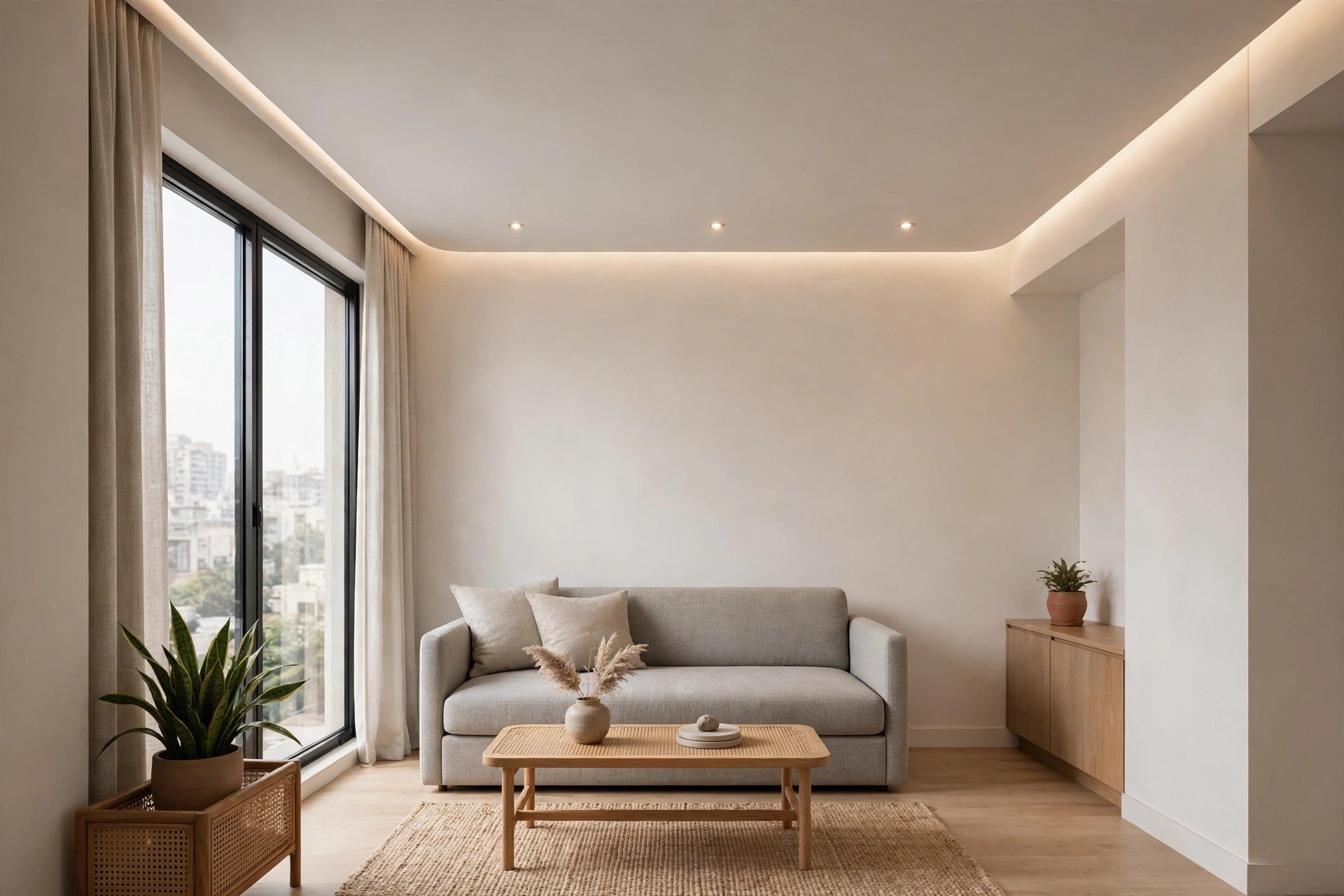
The quiet counter-trend: a single flat gypsum layer, perfectly finished, with soft light from a slim cove or a few recessed spots. No trays, no levels, no patterns. It dominates new compact apartments because it is honest about low slabs — a 9-foot ceiling with one flat layer feels taller than the same room with a fussy double tray. It is also the cheapest trend to build and the easiest to repaint.
What to know: minimalism exposes workmanship — a flat ceiling shows every undulation, so insist on good framing and a skilled putty finish. The design interest has to come from light placement and paint, so spend the design effort there. Our simple gypsum ceiling guide covers this approach in depth.
5. Geometric and abstract patterns
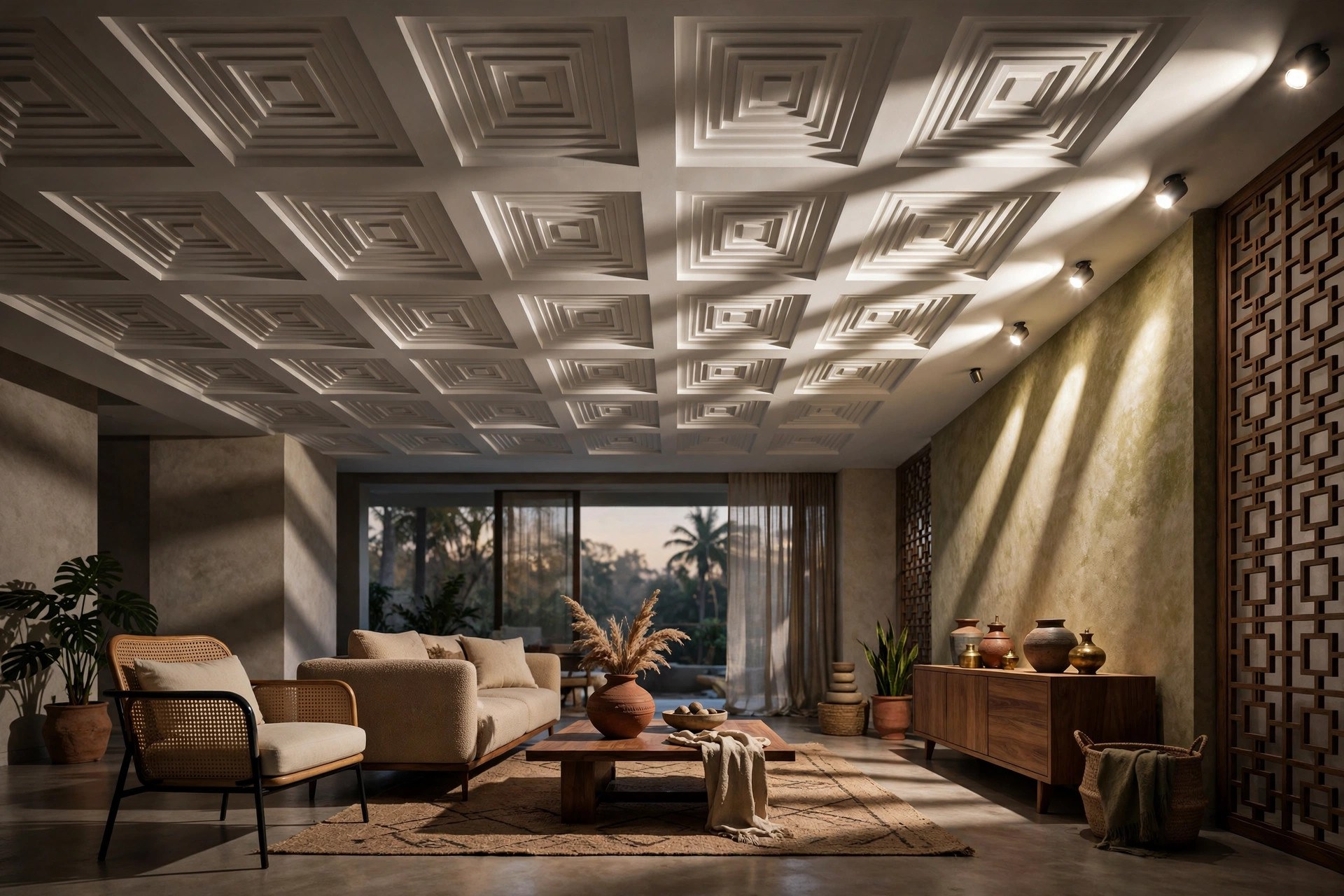
Squares within squares, concentric circles, symmetrically arranged lines — geometric gypsum patterns are back, sharper than the 2010s versions. Done in shallow relief (an inch or two, not deep trays) with spotlights raking across them, they create dramatic shadow and depth on an otherwise flat ceiling. They suit modern living and dining rooms where the ceiling is part of the architecture.
What to know: restraint is everything — one geometric motif per room. A ceiling with three competing patterns looks busy, not bold. Shallow relief keeps the drop minimal, which matters on 9-foot slabs.
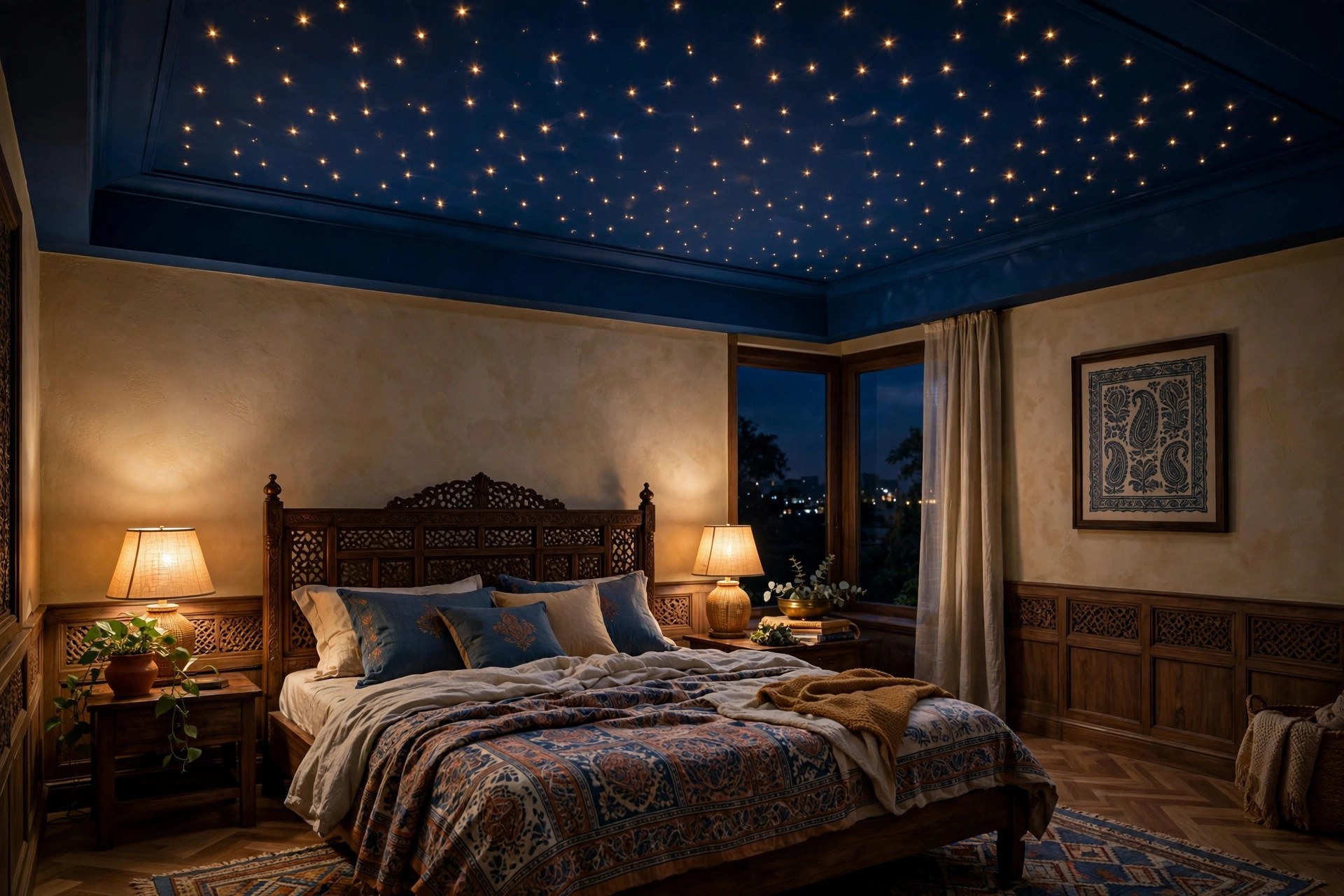
6. The night-sky ceiling
Tiny LED dots set into a dark or deep-coloured gypsum ceiling create a starry sky — a trend that went viral on home social media and has settled into kids’ rooms and bedrooms. Done well, with a dimmer, it is genuinely soothing; done badly, with harsh bright dots and no dimming, it looks like an airport runway.
What to know: fibre-optic star kits exist specifically for this and give a softer result than individual LEDs. Always wire a dimmer — the night sky at full brightness is not restful. Keep the surrounding ceiling simple; the stars are the entire design.
7. Sustainable and multi-functional ceilings
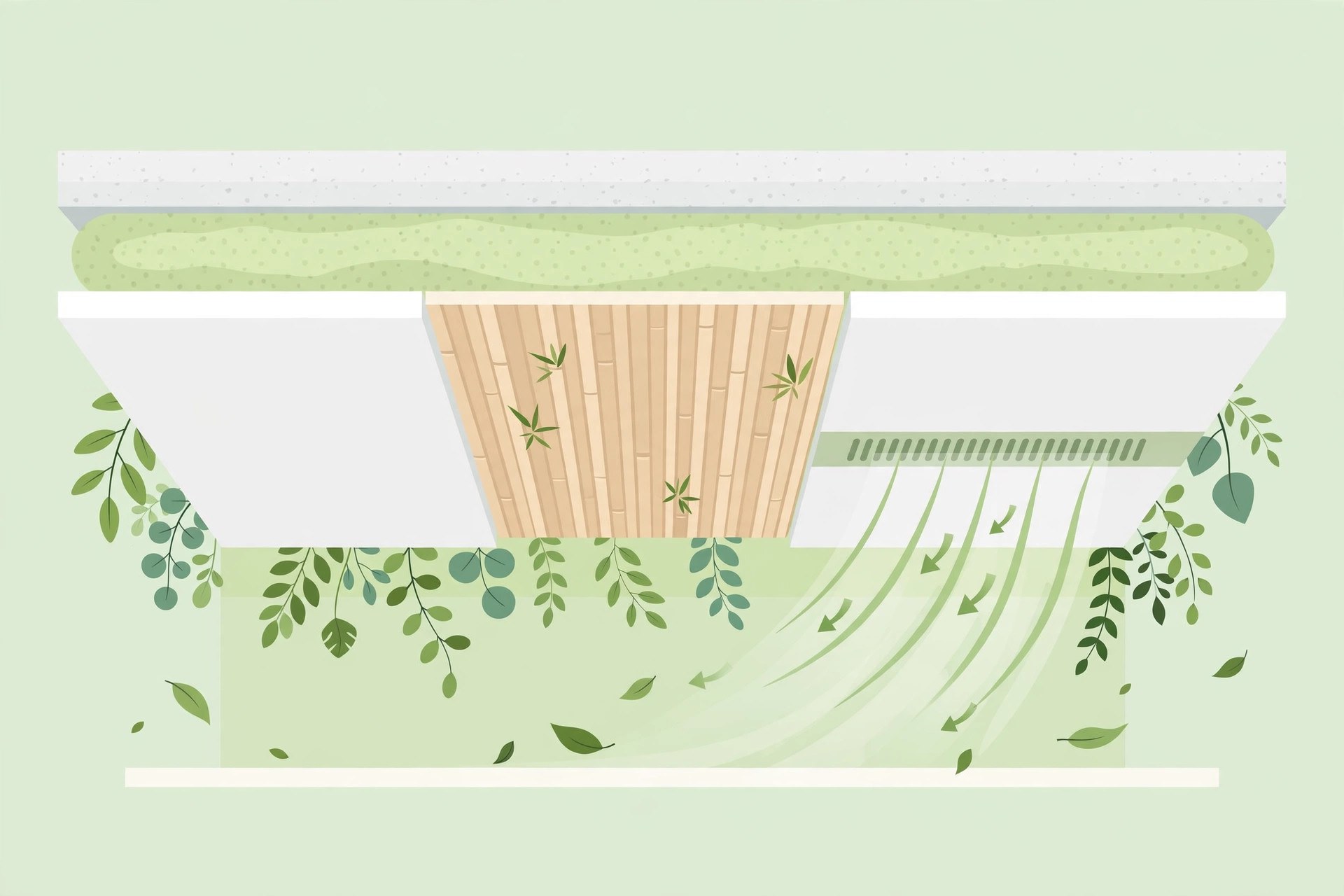
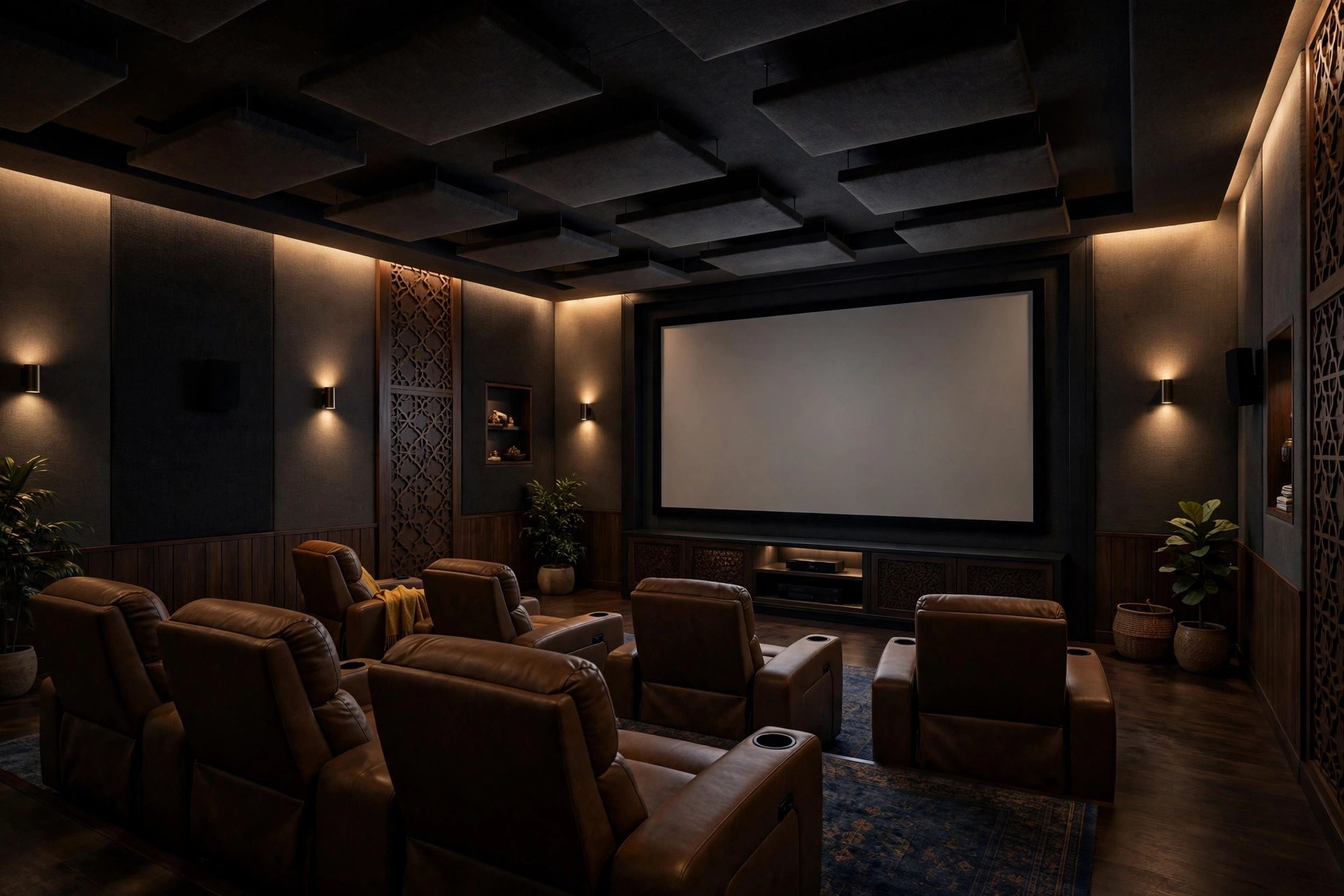
The eco edge of 2026: bamboo-fibre panels, recycled-content boards, wood-wool acoustic panels, and gypsum ceilings that quietly do more — hiding AC diffusers and vents, carrying acoustic baffles in home theatres, integrating ventilation gaps in kitchens. It is less a look than an approach: the ceiling as infrastructure, not just decoration.
What to know: verify green claims with your supplier — “eco” boards vary widely in actual recycled content. Acoustic panels genuinely help in home theatres and noisy-road-facing bedrooms; elsewhere they are overkill. Hidden vents and diffusers must be planned with the HVAC contractor before framing, with access panels left for servicing.
Also trending: the supporting cast
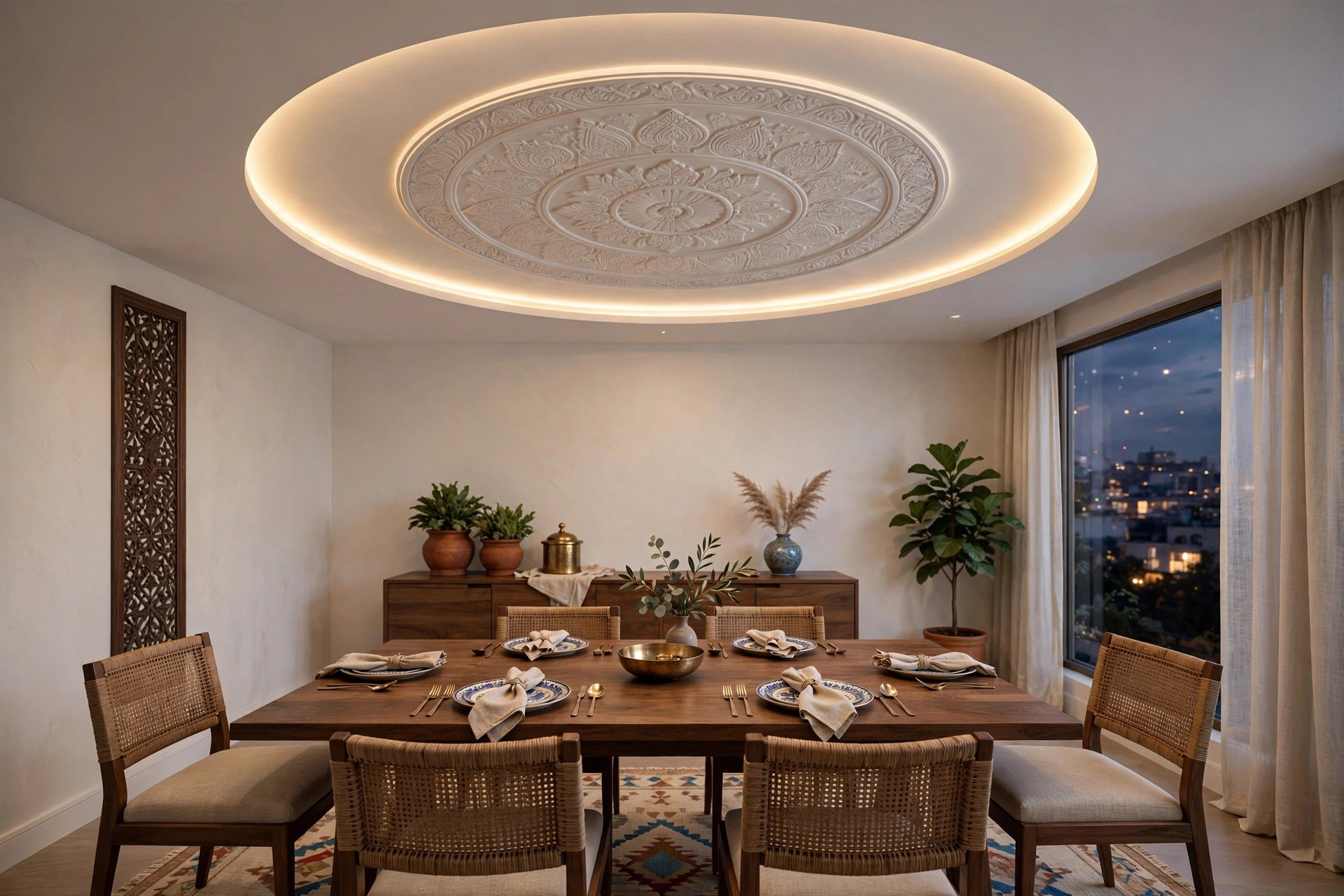
Circular medallions with halo LEDs. A single circle at the ceiling centre with a glowing edge — simpler than a full tray, more designed than a flat ceiling. Works in bedrooms and dining rooms.
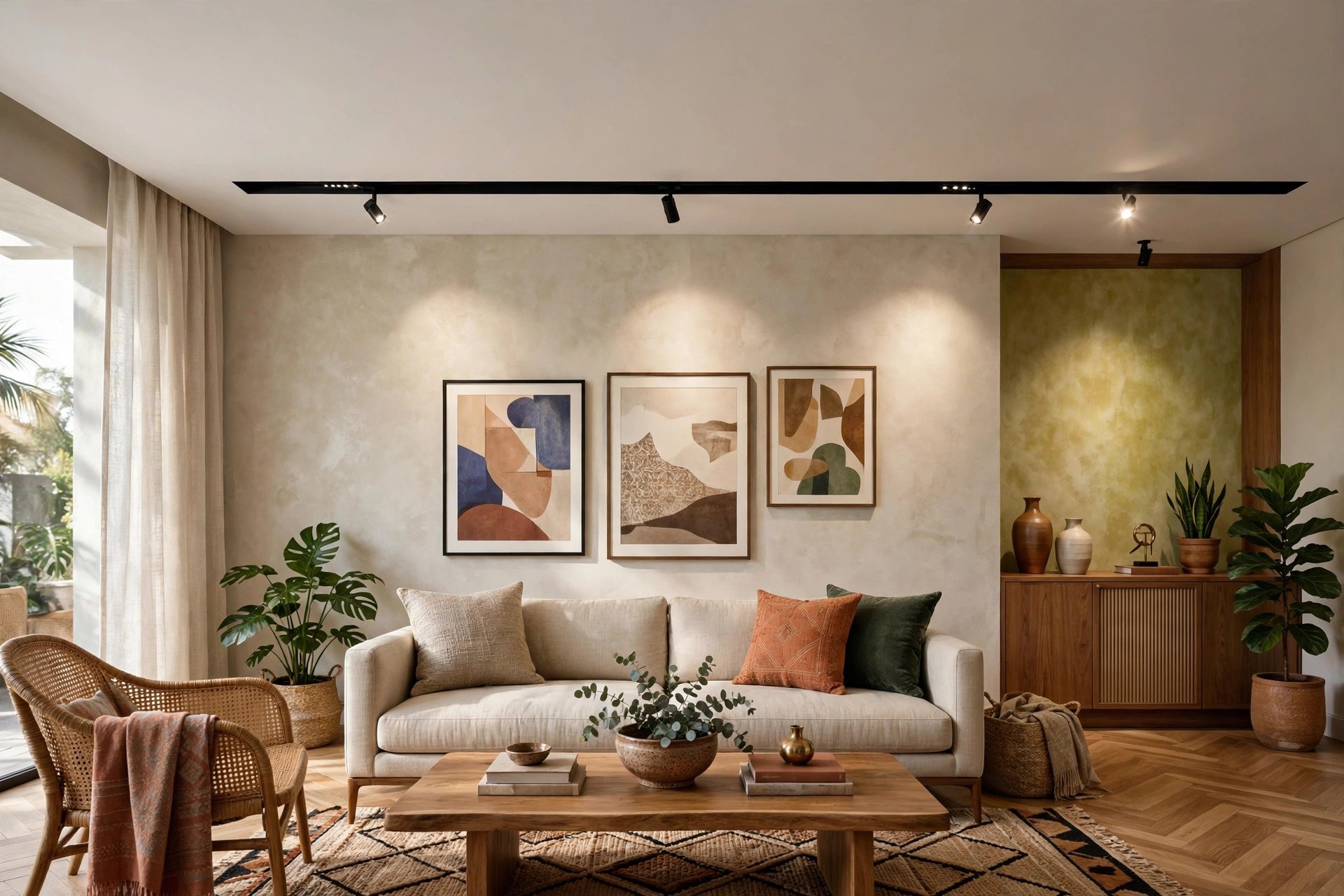
Magnetic track lights in gypsum channels. A slim black track recessed into the ceiling; light heads click in anywhere along it and can be repositioned. Excellent for living rooms where furniture moves.
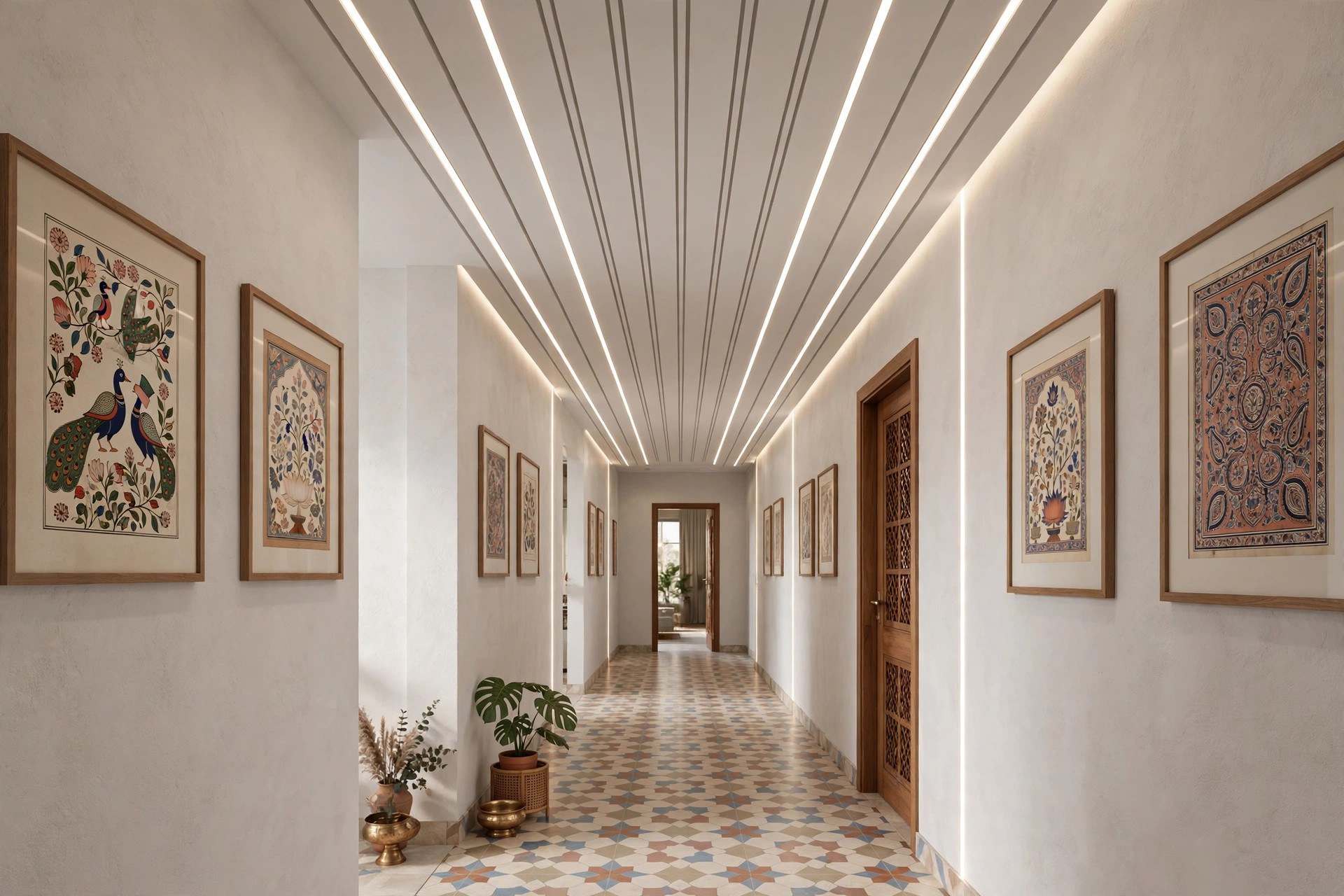
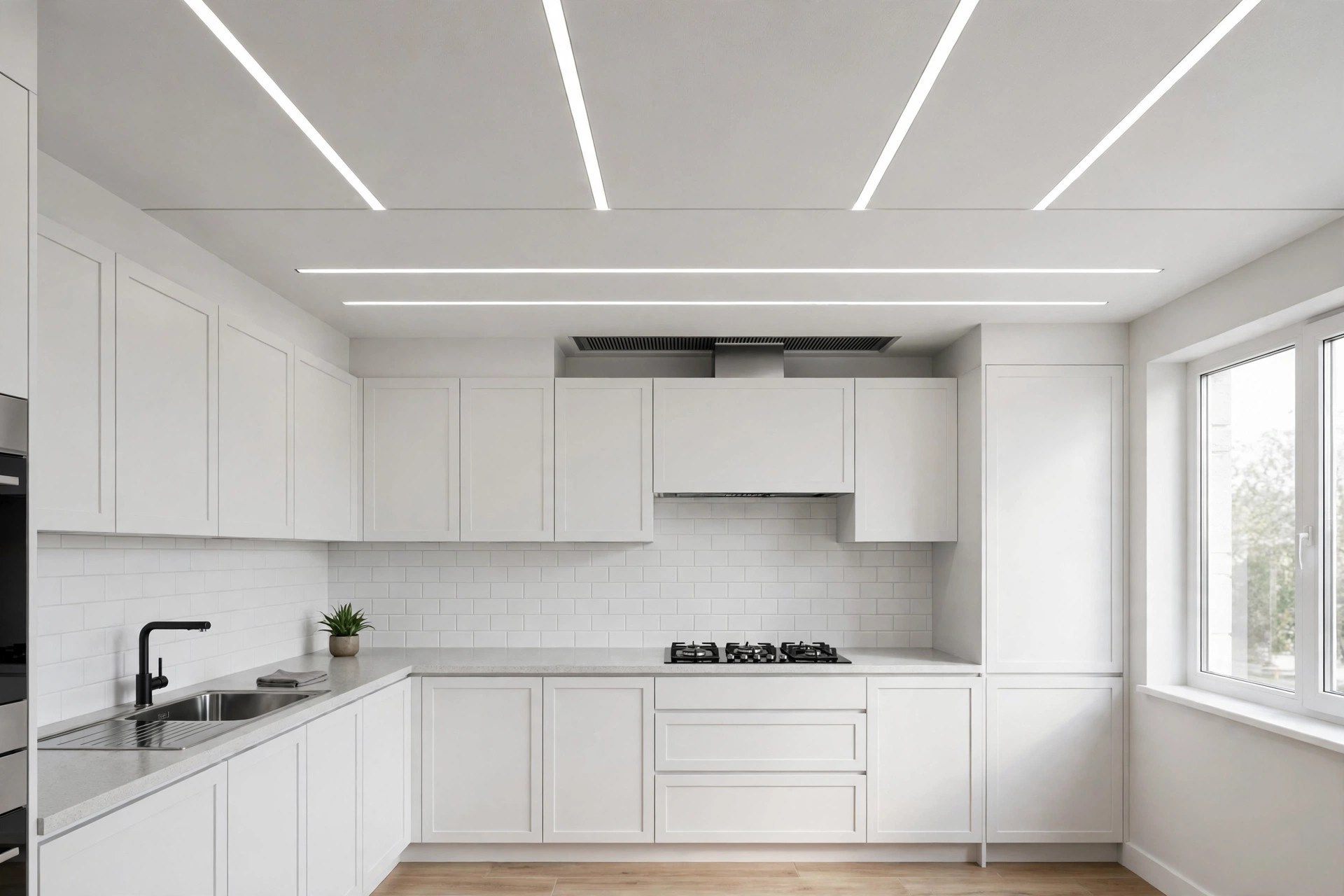
Linear grooves with integrated light. Parallel channels with LED strips inside — the corridor and passage version of the smart-lighting trend.
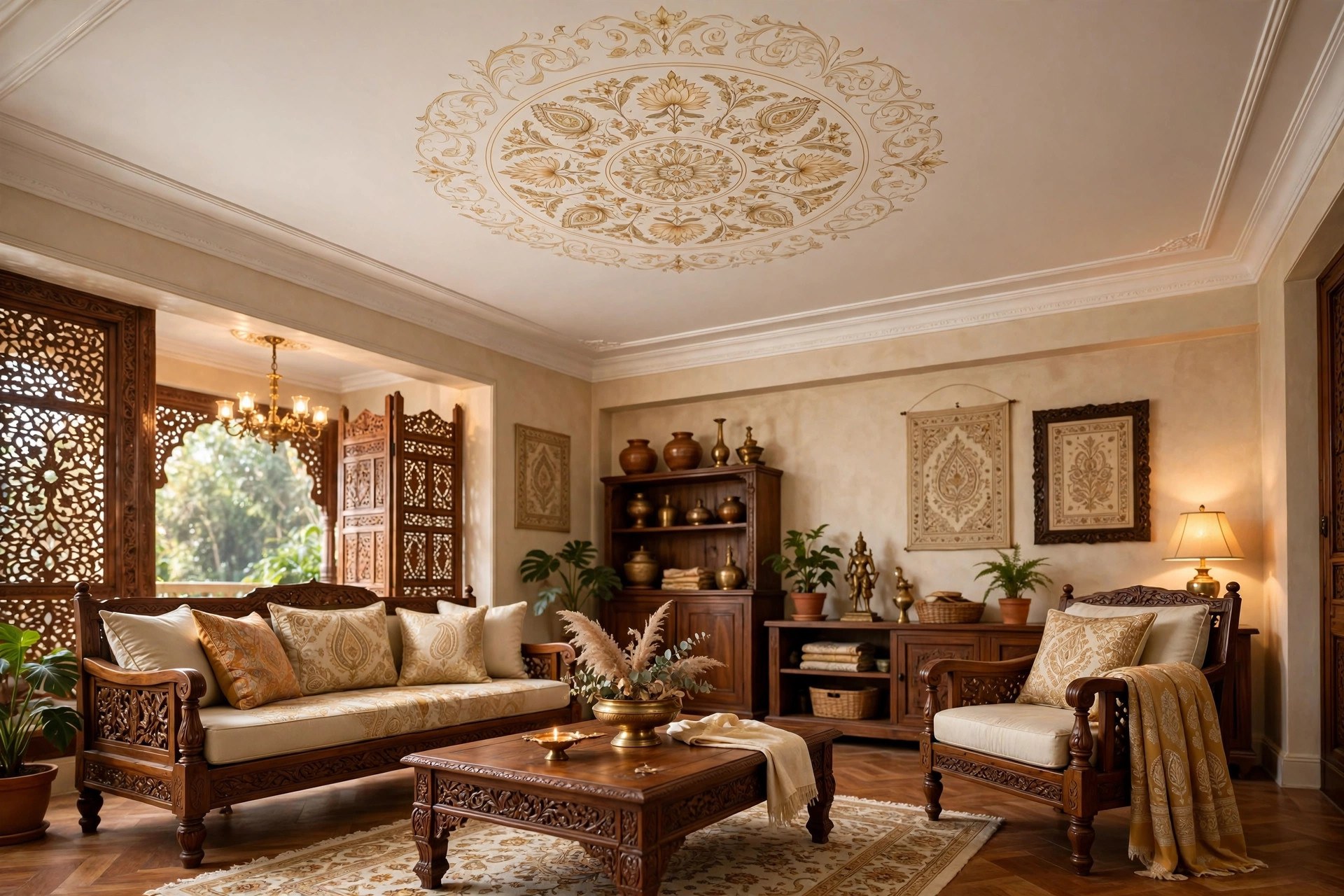
Hand-painted and floral medallions. A traditional counterpoint to all the minimalism: a painted floral roundel at the ceiling centre, usually in living rooms with classic furniture. Timeless in the right home, dated in the wrong one.
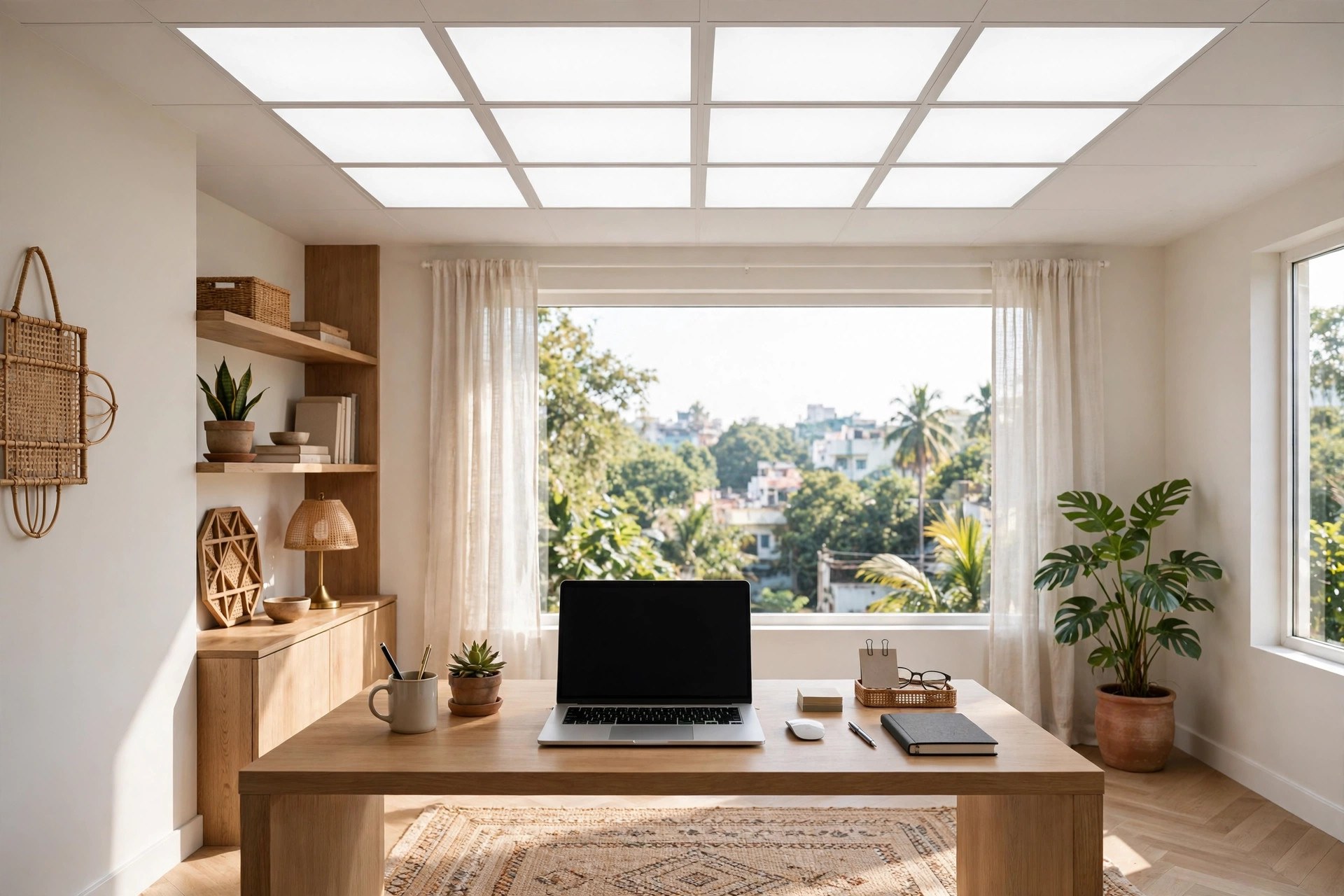
Troffer grids for work zones. Rectangular modular light panels in a grid — a clean, professional look for home offices and studies.
Five more looks worth knowing
Linear grooves with integrated light
Parallel channels with LED strips set inside them — the corridor and passage version of the smart-lighting trend. The lines guide the eye and the light, and they need almost no ceiling drop. A good way to bring a 2026 idea into the smallest spaces in the house.
Hand-painted floral medallions
A traditional counterpoint to all the minimalism: a painted floral roundel at the ceiling centre, in soft golds and creams, usually in living rooms with classic furniture. Timeless in the right home — and a reminder that not every 2026 ceiling needs an app.
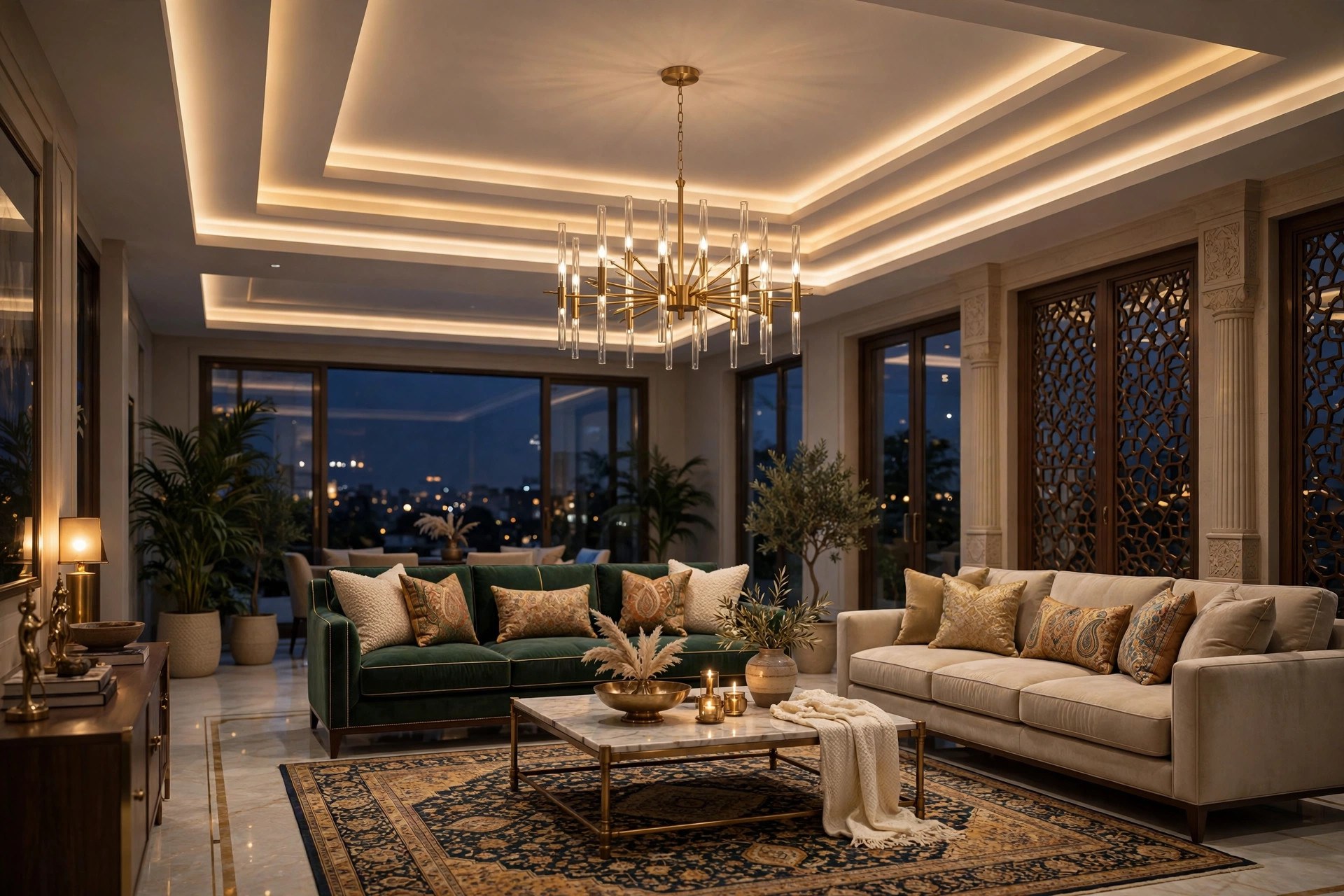
Multi-layer trays with a chandelier zone
The enduring grand-living-room formula, refreshed: layered gypsum trays with warm cove light in the recesses and a chandelier at the centre. It remains the highest-impact ceiling a large living room can have — just keep it away from low slabs, where it overwhelms.
Curved edges for calm bedrooms
Gypsum edges that flow softly into the walls instead of meeting them at a hard corner — a gentler take on the curve trend, made for bedrooms. With a warm cove, the ceiling feels like it is holding the room rather than capping it.
Acoustic ceilings for home theatres
Denser acoustic gypsum panels and fabric-textured baffles turn a media room’s ceiling into part of the sound system — less echo, cleaner dialogue. Pair with dimmable wall washers rather than bright downlights; a theatre should feel like evening.
Which trend for which room?
Living room: smart lighting, gentle curves, geometric relief, magnetic tracks. The living room is where guests look up — spend the design budget here.
Bedroom: minimalist one-layer, night sky (with dimmer), biophilic warmth, halo medallion. Bedrooms reward calm over drama.
Kitchen: moisture-resistant boards, linear channels, clean flat layouts with ventilation gaps. Trends take a back seat to wipeability here — use MR (green) boards.
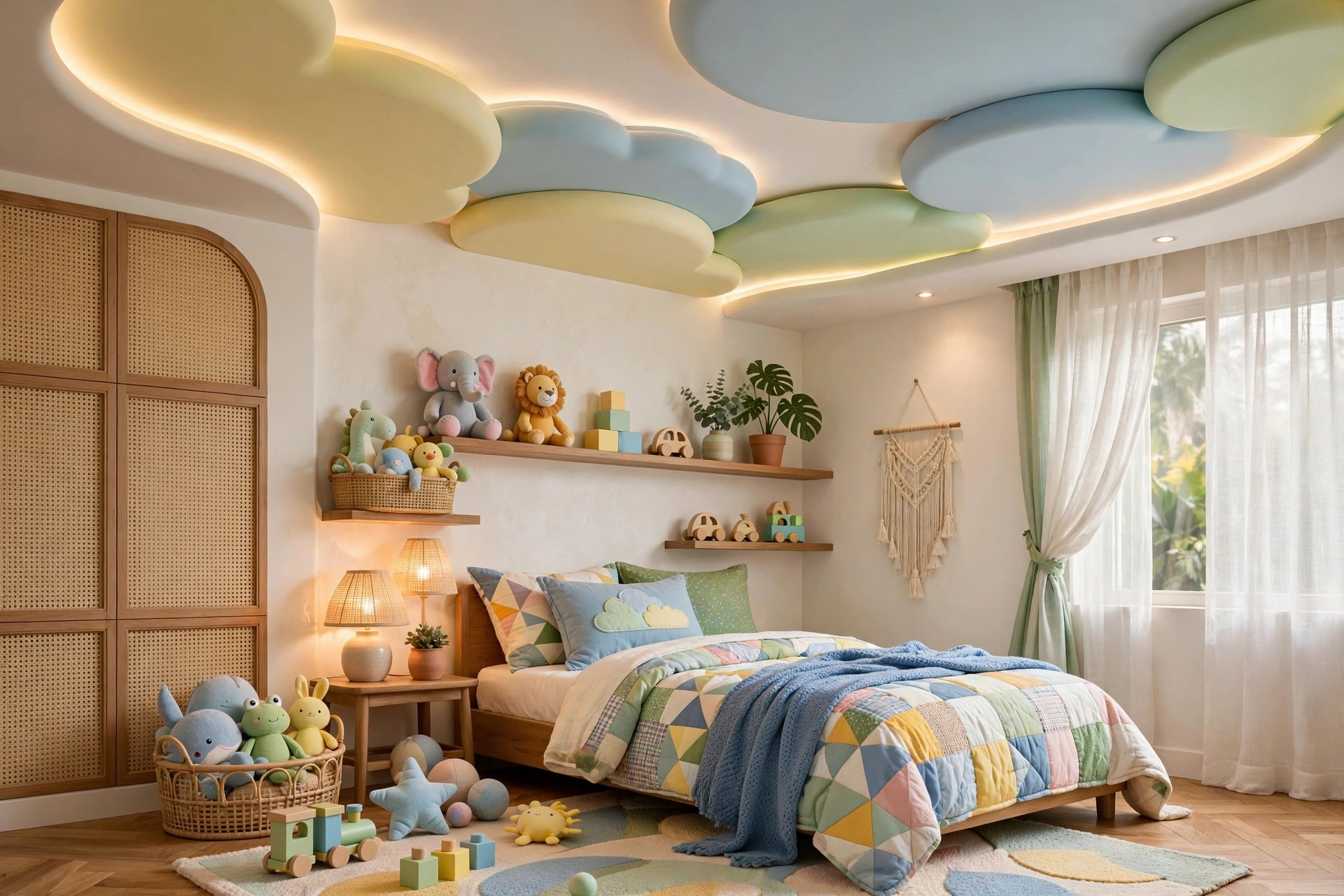
Kids’ room: night sky, soft curves, colour accents. Fun, but keep the base ceiling simple so the room can grow up with repainting.
Home office: troffer grids, linear channels, flat minimal. Task light matters more than mood light.
Passages and lobbies: linear grooves, slim coves. Narrow spaces suit linear ideas.
Board types: match the board to the room
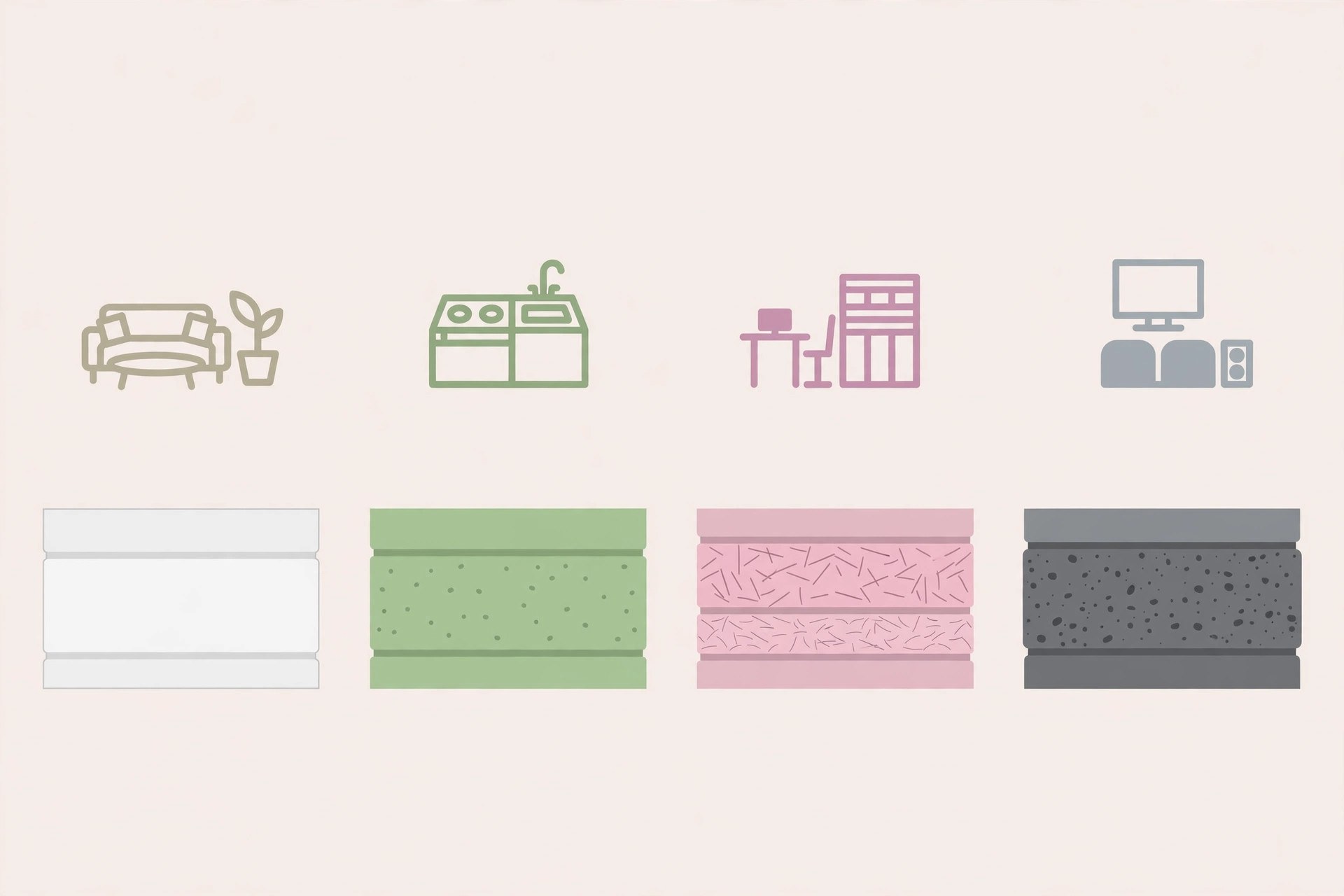
Trends sit on boards, and the wrong board ruins the right design. Standard boards suit living rooms and bedrooms. Moisture-resistant (green) boards belong in kitchens, utility areas, and bathrooms — they resist humidity and fungal growth. Fire-resistant boards, with a glass-fibre core that slows fire spread, suit commercial spaces and homes with heavy electrical loads. Denser acoustic boards help media rooms and road-facing bedrooms. Tell your contractor which rooms get which board before ordering — swapping boards after installation is not practical.
What trends cost (honestly)
Trendiness correlates with labour, not material — the boards cost roughly the same; the shaping, wiring, and finishing differ. From cheapest to priciest as a rule of thumb: minimalist flat ceilings cost least (single layer, simple lights); geometric relief and halo medallions sit in the middle (more cutting, more lights); smart-lighting ceilings add the control system cost on top of a mid-range ceiling; curved and sculptural ceilings cost most (hand-shaped labour). Night-sky and magnetic-track ceilings land mid-to-high depending on the kit. Get itemised quotes — boards, framing, labour, electricals, paint — because a single per-square-foot number hides where the money goes. Our India cost guide explains how to read those quotes.
Before you install: the planning checklist
Trends fail most often on planning, not taste. Confirm these before the frame goes up: wiring, lighting, and fan points finalised on a drawing; ceiling height checked against the design’s drop; reputable board and framing brands specified (poor framing sags over the years — this is the most common long-term gypsum complaint); moisture-resistant boards ordered for kitchens and utility areas; inspection cut-outs or access panels left for future electrical work; LED driver locations accessible, not sealed in. A day of planning saves a month of regret.

Keeping a gypsum ceiling looking new
Dust the surface every few weeks — a soft dry cloth or duster; never harsh chemicals. After monsoon, check for damp patches or leaks, especially in top-floor flats. Inspect LED fittings and drivers once or twice a year; a flickering strip is usually a driver, not the strip. A quick professional look every 6 to 8 months catches sagging or joint cracks early, when they are cheap to fix.

Gypsum vs the alternatives, briefly
Gypsum wins on finish quality and installation speed — factory-made boards mean consistent surfaces. POP is cheaper and better for curves and ornamental moulding, but slower and less uniform. Wood adds warmth but needs maintenance, especially in humid regions. PVC is durable and wipeable for bathrooms but looks out of place in main rooms. Choose the material for the room’s job; choose the trend for the room’s mood.
FAQs
What are the latest gypsum false ceiling trends in 2026?
Smart LED integration, curved and wavy sculptural designs, biophilic wood-and-earth combinations, minimalist one-layer ceilings, geometric relief patterns, night-sky LED ceilings, and sustainable multi-functional ceilings with hidden services.
Is gypsum good for a bedroom ceiling?
Yes — standard boards with a smooth finish suit bedrooms well, and gypsum pairs easily with cove lighting and dimmers. Use acoustic boards if road noise is an issue.
Can fans and chandeliers hang from a gypsum ceiling?
Only if they are anchored to the structural slab above through a planned cut-out — never to the gypsum board itself. Plan heavy fixture points before installation.
Which gypsum board is best for kitchens?
Moisture-resistant (green) boards with proper ventilation. Standard boards can soften and grow fungal spots in sustained humidity.
How long does a gypsum false ceiling last?
Many years with good framing, reputable boards, and basic care — dusting, monsoon checks, and keeping it dry matter more than the design chosen. Sagging usually traces back to poor-quality framing, not the boards.
Quick recap
The 2026 gypsum story is light doing the decorating: smart strips, halos, night skies, and tracks, with curves and nature textures for those who want shape. Pick the trend that fits your room’s height and purpose, match the board to the room’s moisture and noise, and plan wiring and access before a single board goes up. Trends come and go; a well-built ceiling stays. For the full material picture, see our gypsum false ceiling guide. All images in this article are original concept renders created to illustrate the ideas, not photographs of completed projects.