
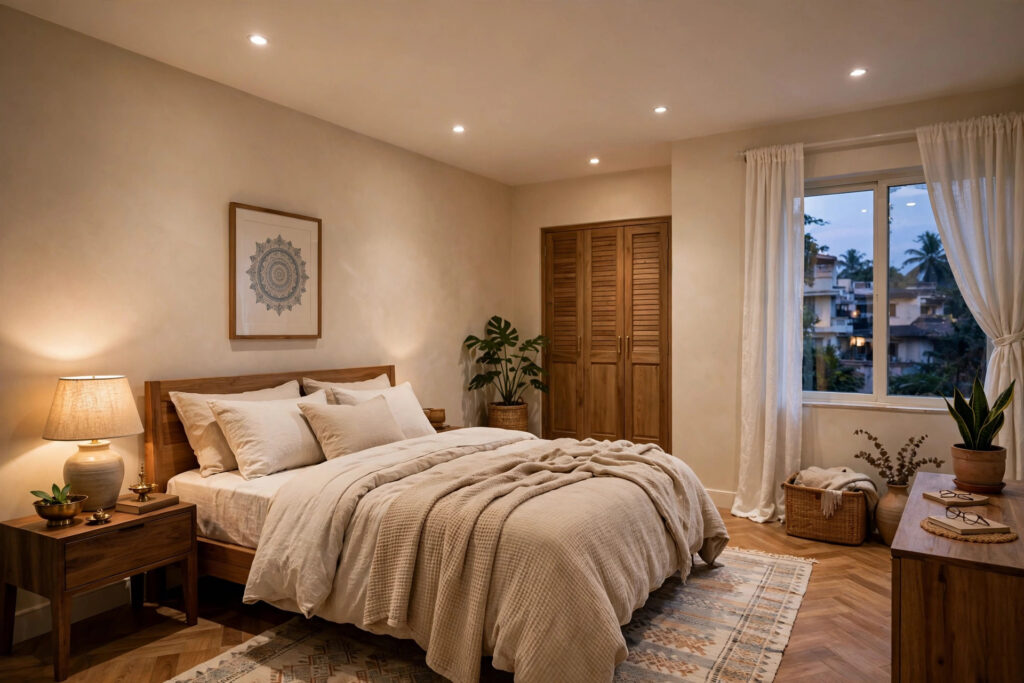

A simple bedroom false ceiling is exactly what it sounds like: a clean, uncomplicated ceiling treatment that hides wiring, holds a few well-placed lights, and stays out of the way. No multi-layered sculptures, no ornate medallions, no lighting that looks like an airport runway. For most Indian bedrooms, simple wins — it costs less, suits 8.5–10 ft ceilings, ages well, and still looks finished. In 2026, the honest starting price for a simple installed false ceiling in a bedroom is roughly ₹55–₹150 per sq ft depending on the design (NoBroker’s 2026 Simple POP guide, India), so a standard 150 sq ft bedroom can be done for about ₹9,000–₹25,000 including framework, finish, primer and paint. This guide covers 12 simple bedroom ceiling ideas with real costs, material choices, a lighting plan, and money-saving tips.
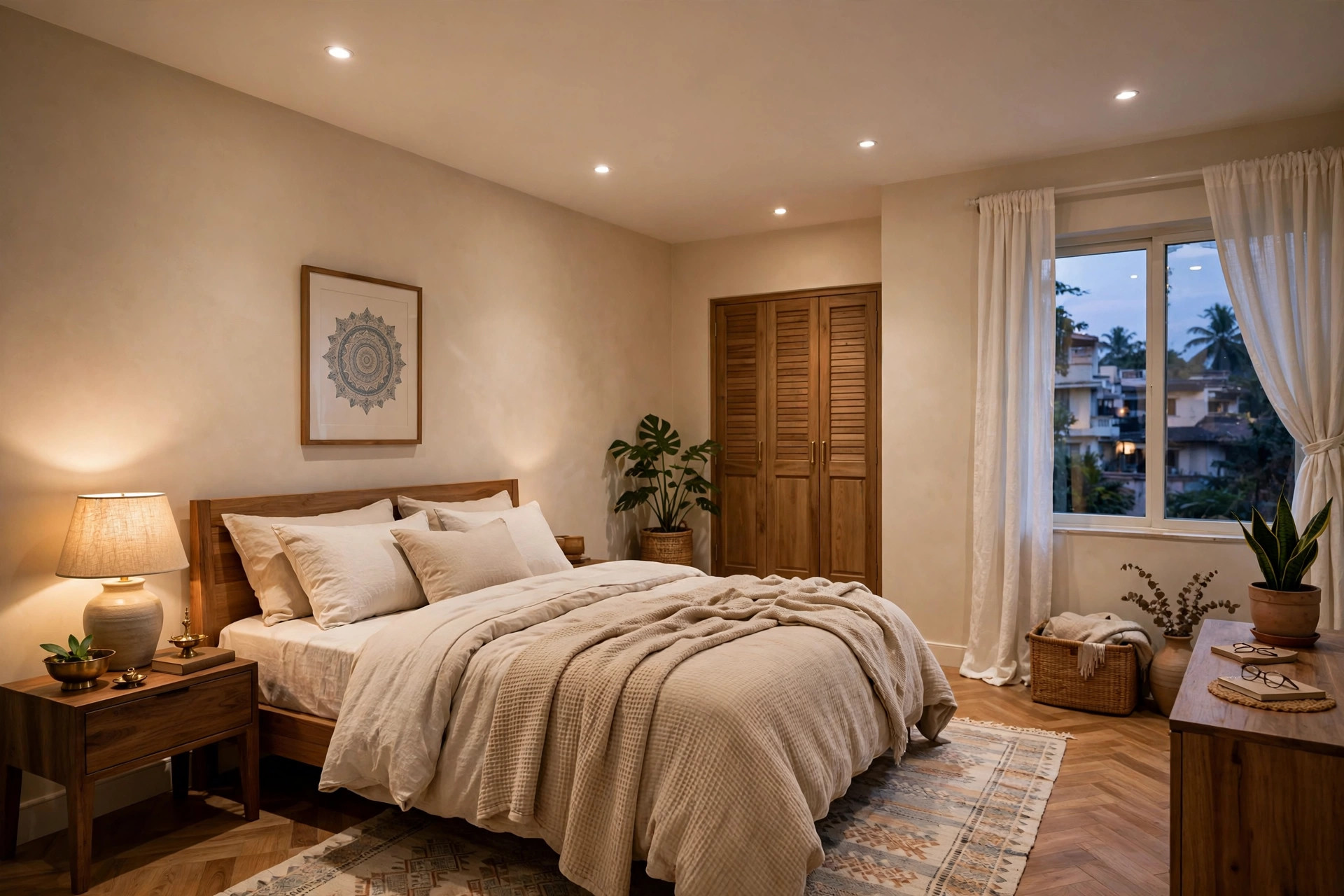
What “simple” means in a bedroom (and why it usually wins)
Simple does not mean bare. It means one clear idea per ceiling: a flat panel, a border, a single cove, one colour accent. Bedrooms are the easiest room to keep simple because the ceiling is mostly seen while lying down — soft, even light and clean lines matter more than drama. Simple ceilings also suit the low ceiling heights common in Indian apartments (8.5–10 ft), where multi-layered designs can make the room feel cramped. A single-step design drops the ceiling by only 3–6 inches in the border zones, so you keep your headroom.
There is a practical reason too. Simple designs use less material, less labour time, and fewer fixtures. A flat POP ceiling is the fastest install; a border-only design costs a fraction of a full drop because you are covering only the perimeter. NoBroker’s 2026 cost guide puts the saving approach plainly: partial ceilings over full drops, flat designs over multi-layered ones, and borders in bedrooms while the decorative work goes to the living room can cut the bill by up to 40%.
12 simple bedroom ceiling ideas with real costs
All cost bands below are from NoBroker’s 2026 Simple POP ceiling guide (India, installed — framework, POP finish, primer and paint included). Room totals are for a typical 150 sq ft bedroom. Prices are indicative; your city, contractor and finish will shift them.
1. Flat single-level ceiling
The most fundamental option: one flat POP panel across the room, hiding all wiring, with recessed LED downlights. It suits any room size and is the natural starting point if this is your first false ceiling. Cost: ₹60–₹90 per sq ft, roughly ₹9,000–₹13,500 for 150 sq ft.
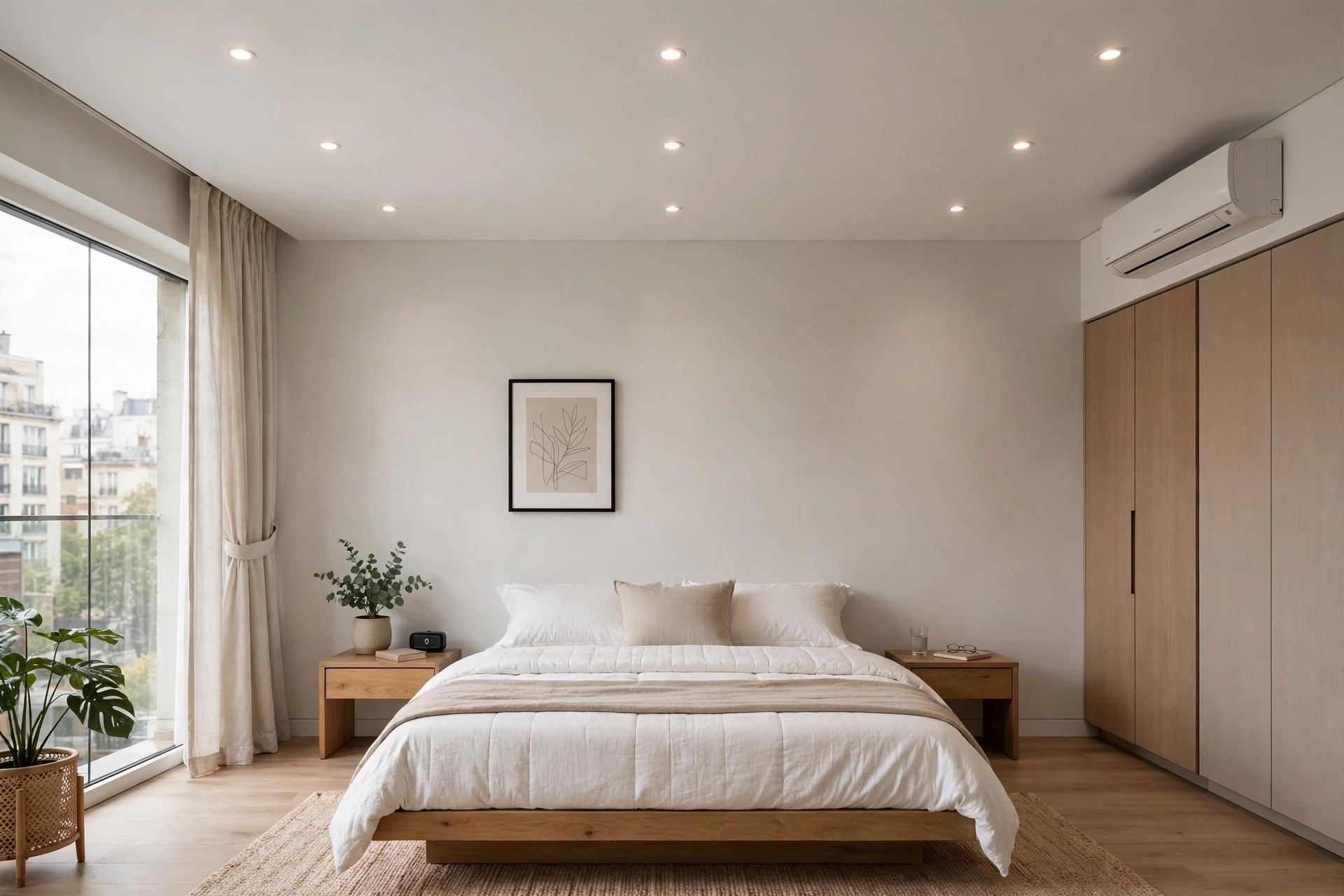
2. Cornice border ceiling (no full drop)
A decorative POP border or cornice around the ceiling perimeter, with no full ceiling at all. This is the cheapest way to get a “designed” ceiling, and it is ideal for low-height rooms where a full drop would feel cramped. Cost: ₹40–₹80 per running foot — roughly ₹1,800–₹3,500 for the perimeter of a 150 sq ft room.
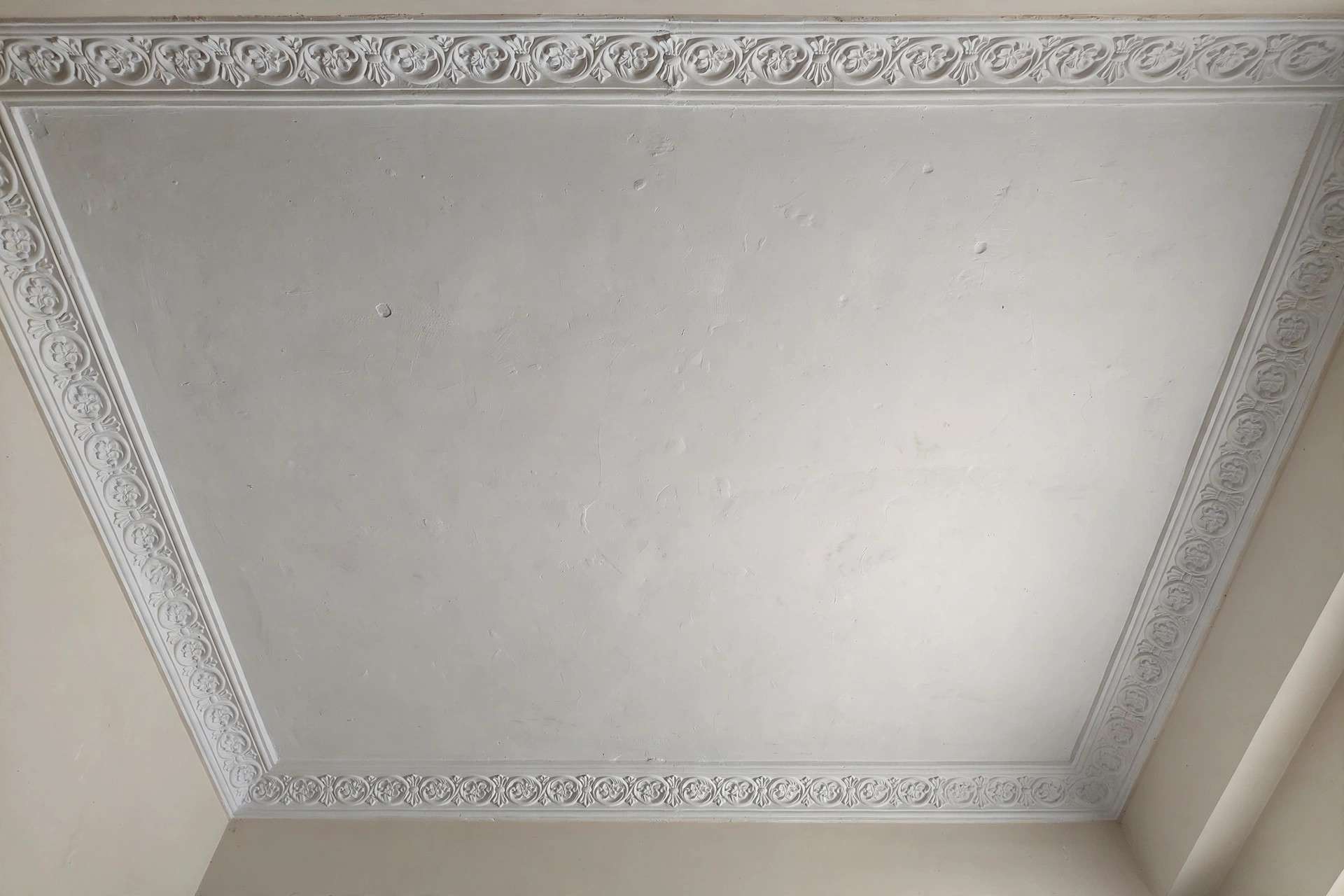
3. Single cove with warm LED strip
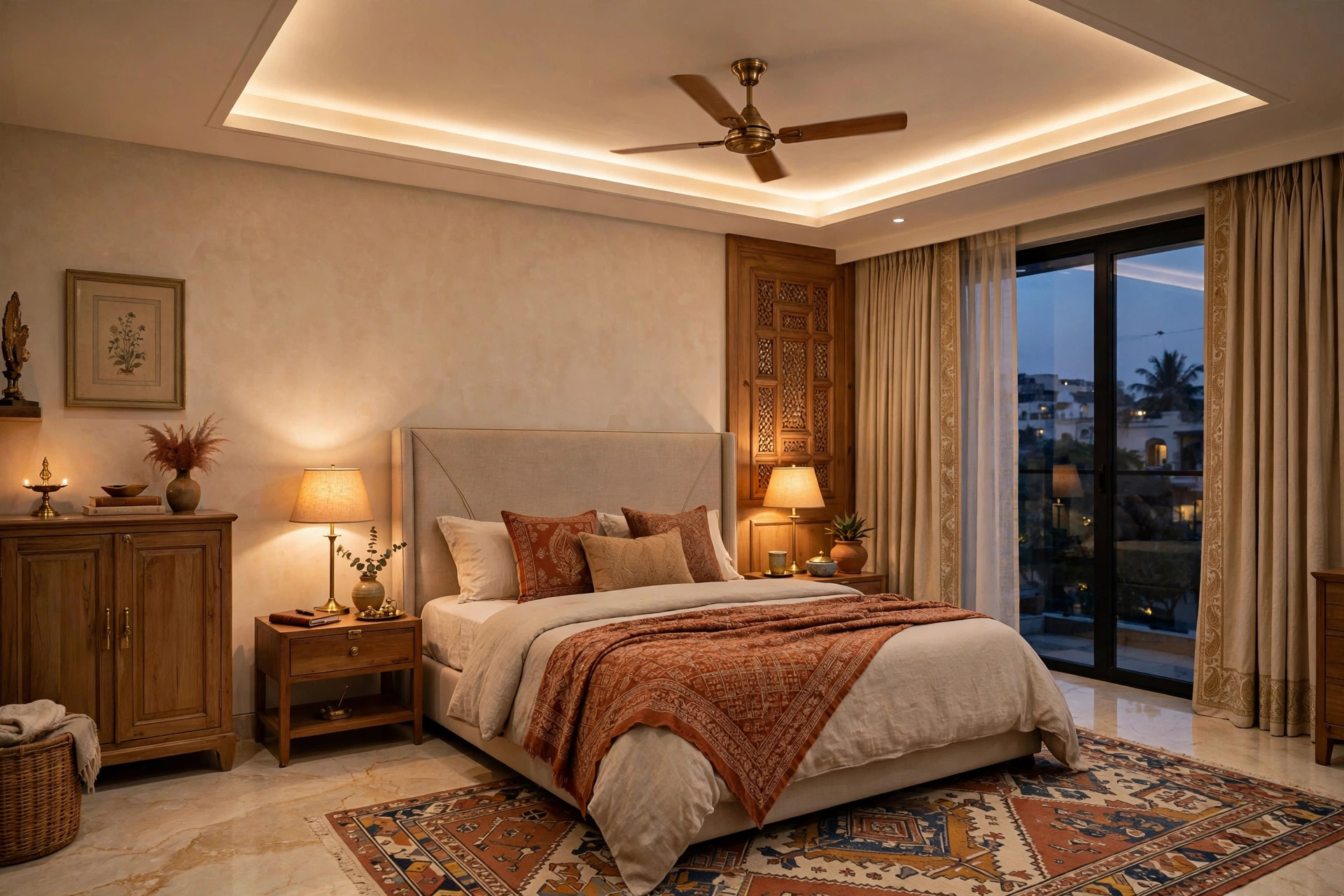
The perimeter drops 6–8 inches, a warm LED strip hides in the trough, and the centre panel stays flat. NoBroker calls this the most popular simple design across Indian metros in 2026, and it is easy to see why: warm indirect light makes a plain bedroom feel expensive at minimal cost. Cost: ₹100–₹150 per sq ft, roughly ₹15,000–₹22,500 for 150 sq ft.
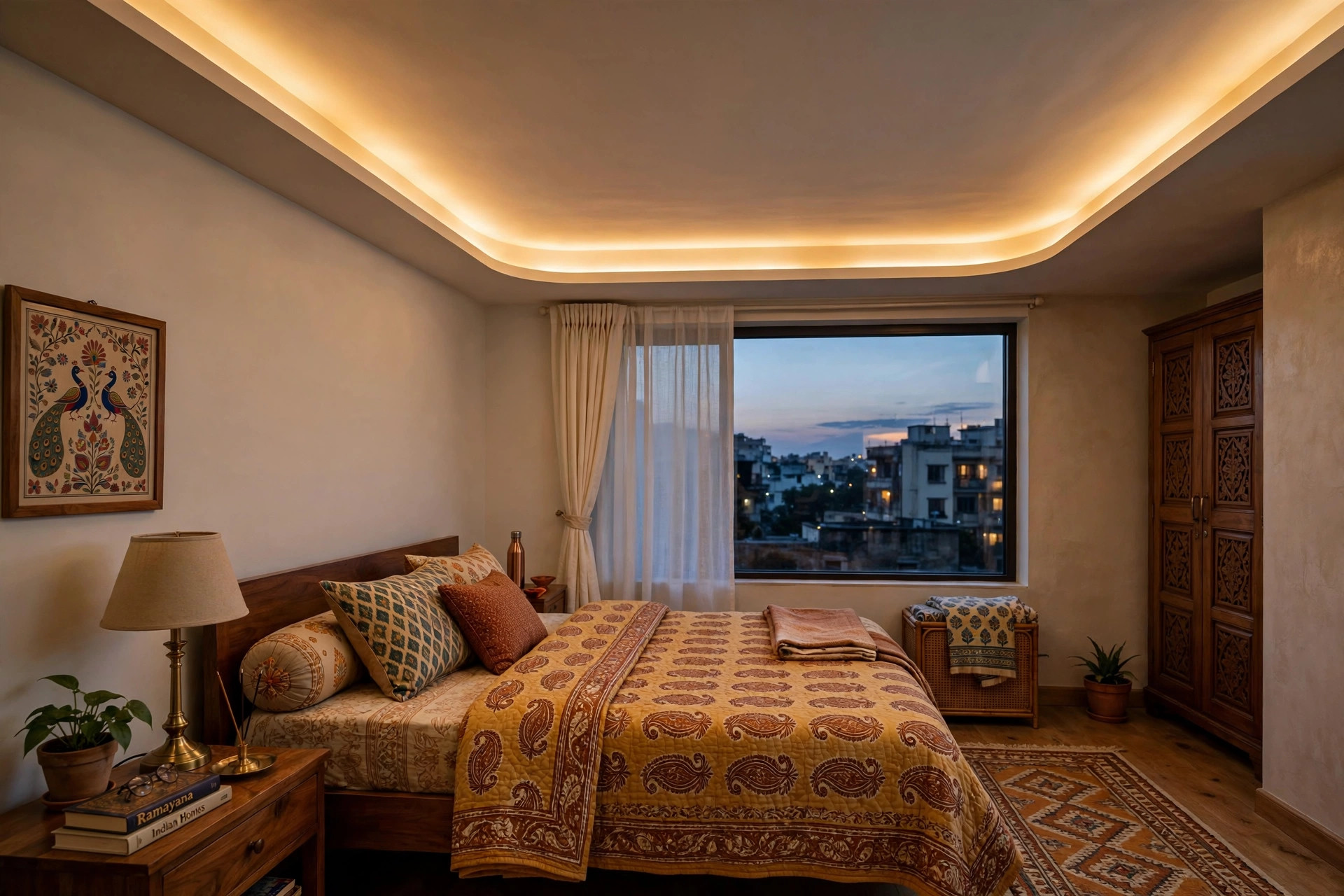
4. L-shape ceiling for rectangular bedrooms
An L-shaped POP panel covers two sides of the room — typically the bed wall and one adjacent wall. It adds visual depth to rectangular rooms without a full perimeter drop, and works well in urban apartments with limited ceiling height. Cost: ₹85–₹130 per sq ft.
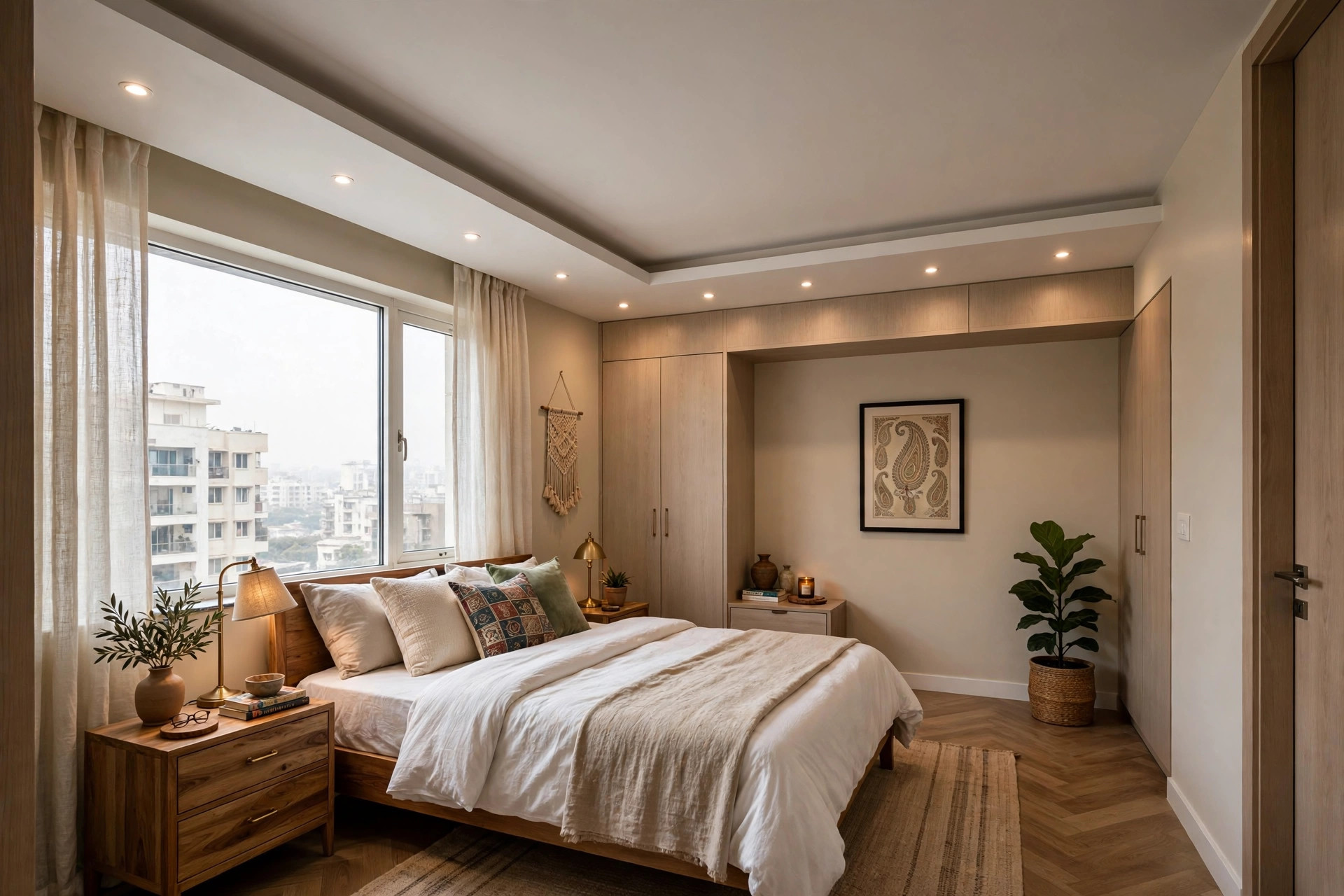
5. Rectangular tray (minus) ceiling
A rectangular panel raised in the centre while the perimeter drops — the classic “tray” or “minus” effect, with recessed downlights in the drop. It adds depth and an illusion of height, and is widely recommended for rooms with 10 ft ceilings. Cost: ₹120–₹180 per sq ft.
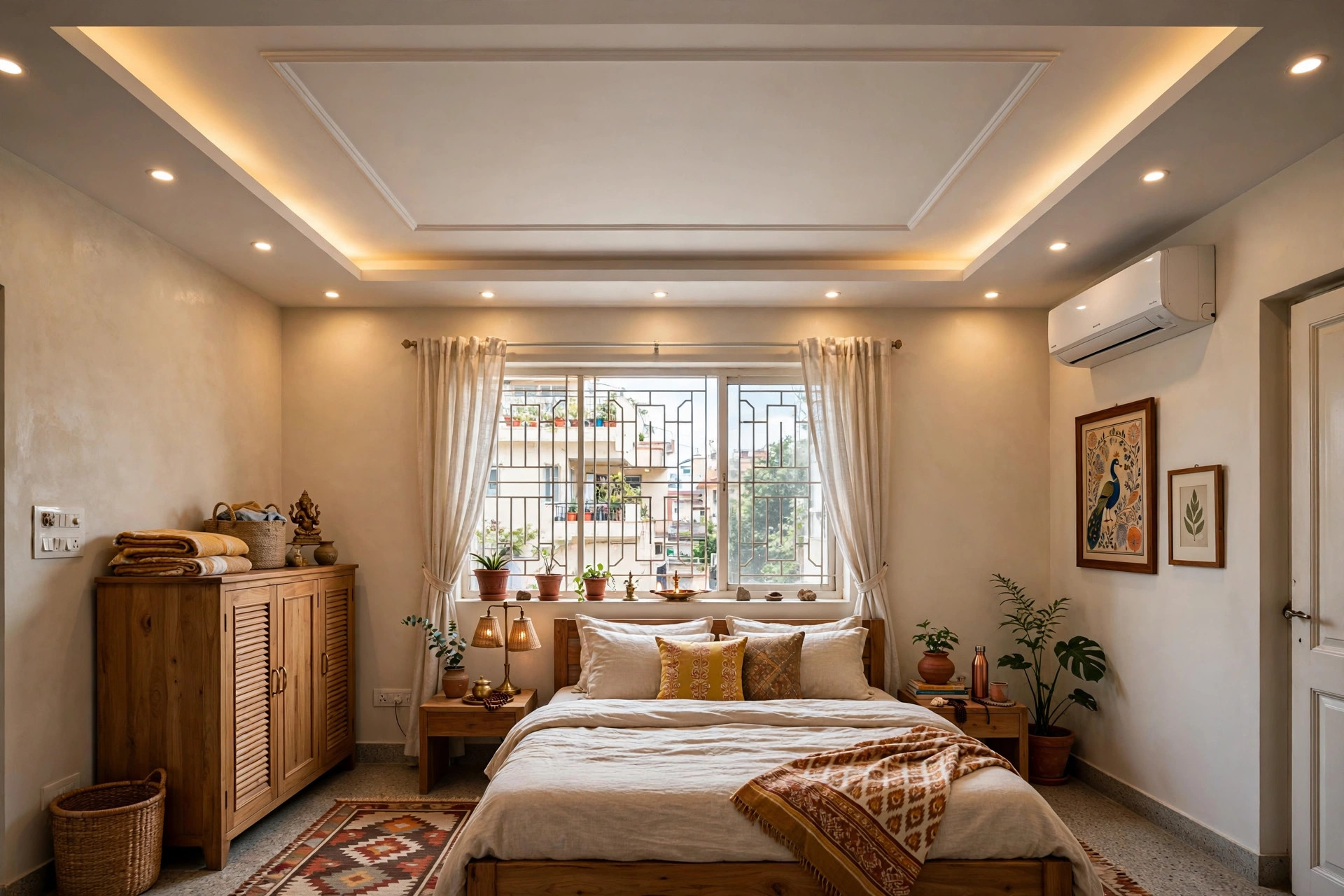
6. Circular central medallion
A circular POP panel or medallion in the centre of an otherwise flat ceiling, with a pendant light or chandelier hanging from it. A classic in Indian homes, especially in master bedrooms and dining areas, and a balanced way to get one decorative moment without redesigning the whole ceiling. Cost: ₹90–₹140 per sq ft.
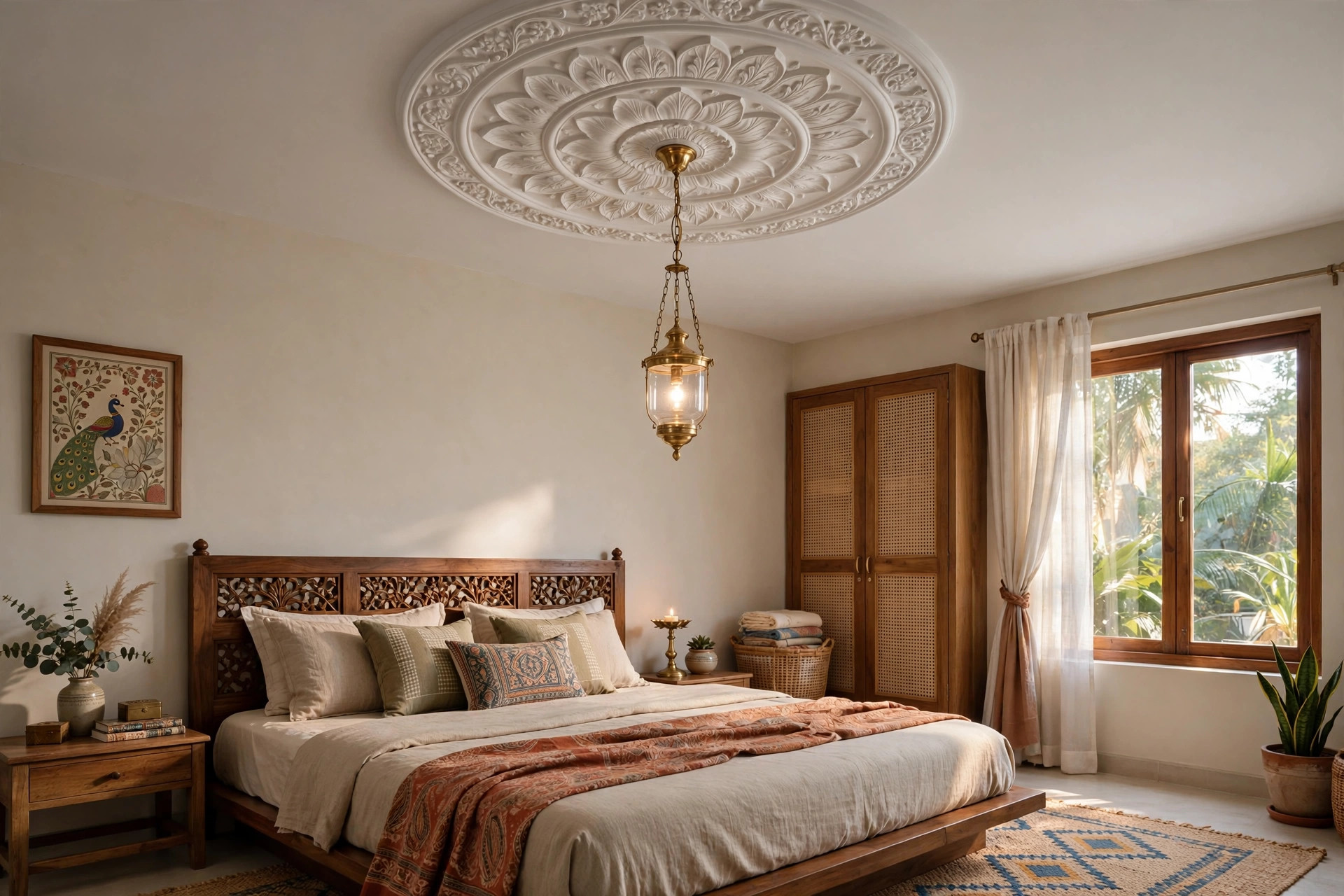
7. Plus-minus stepped ceiling
A raised central panel with a recessed perimeter (or the reverse) creates a contemporary stepped look. It suits standard 9–10 ft ceilings in urban apartments and ranks among the top simple design trends for 2026. Cost: ₹110–₹170 per sq ft.
8. Simple design with fan cutout
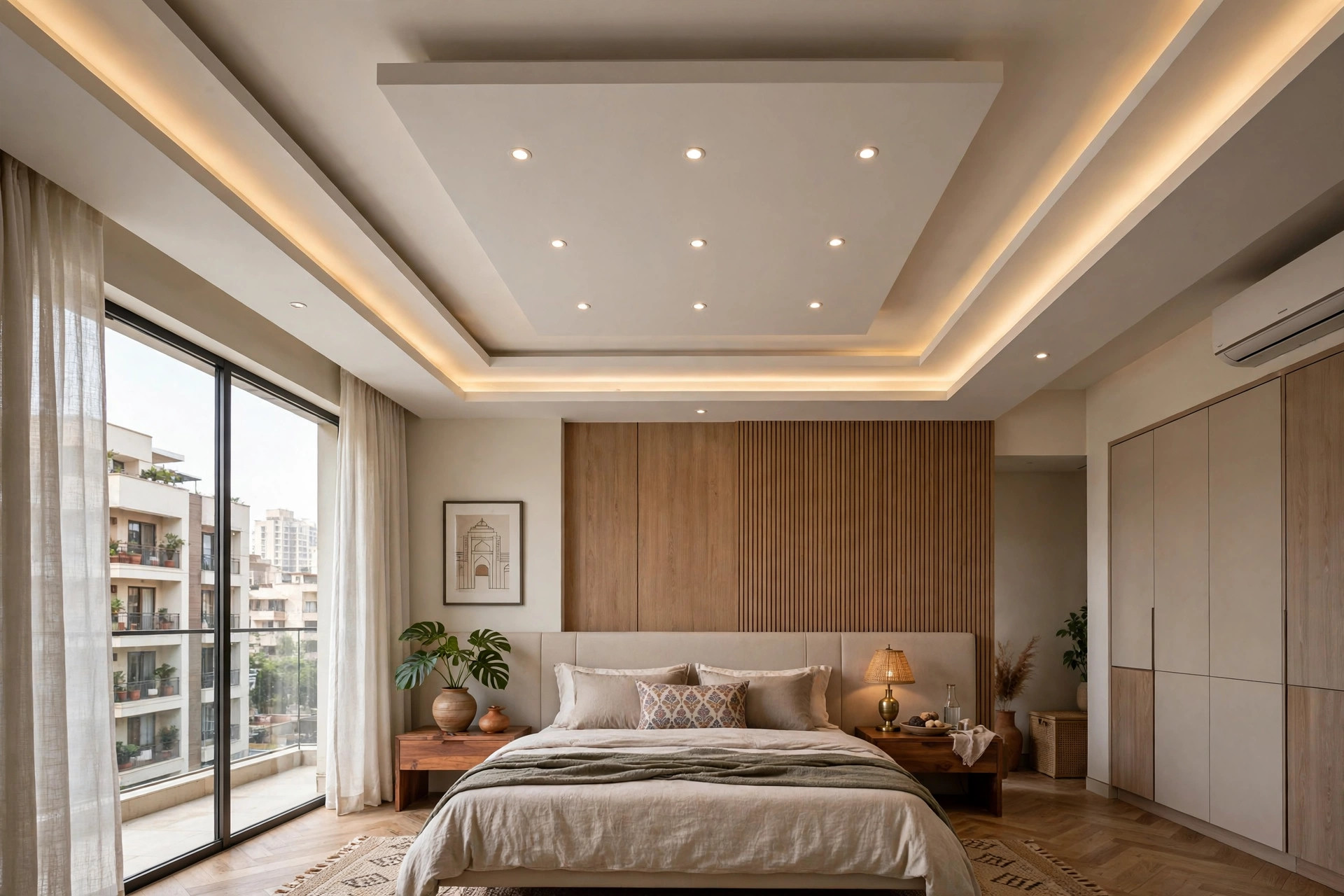
Bedrooms need ceiling fans, and a simple ceiling must plan for one. A flat or single-cove panel with a neatly finished circular cutout for the fan is one of the most practical designs used across Indian homes — the fan stays fully functional while the ceiling looks clean and structured. Plan the fan’s anchor to the structural slab, not to the false ceiling frame, and discuss it with your installer before the framework goes up. For fan-specific layouts, see our bedroom false ceiling designs hub. Cost: ₹70–₹110 per sq ft.
9. Two-tone coloured ceiling
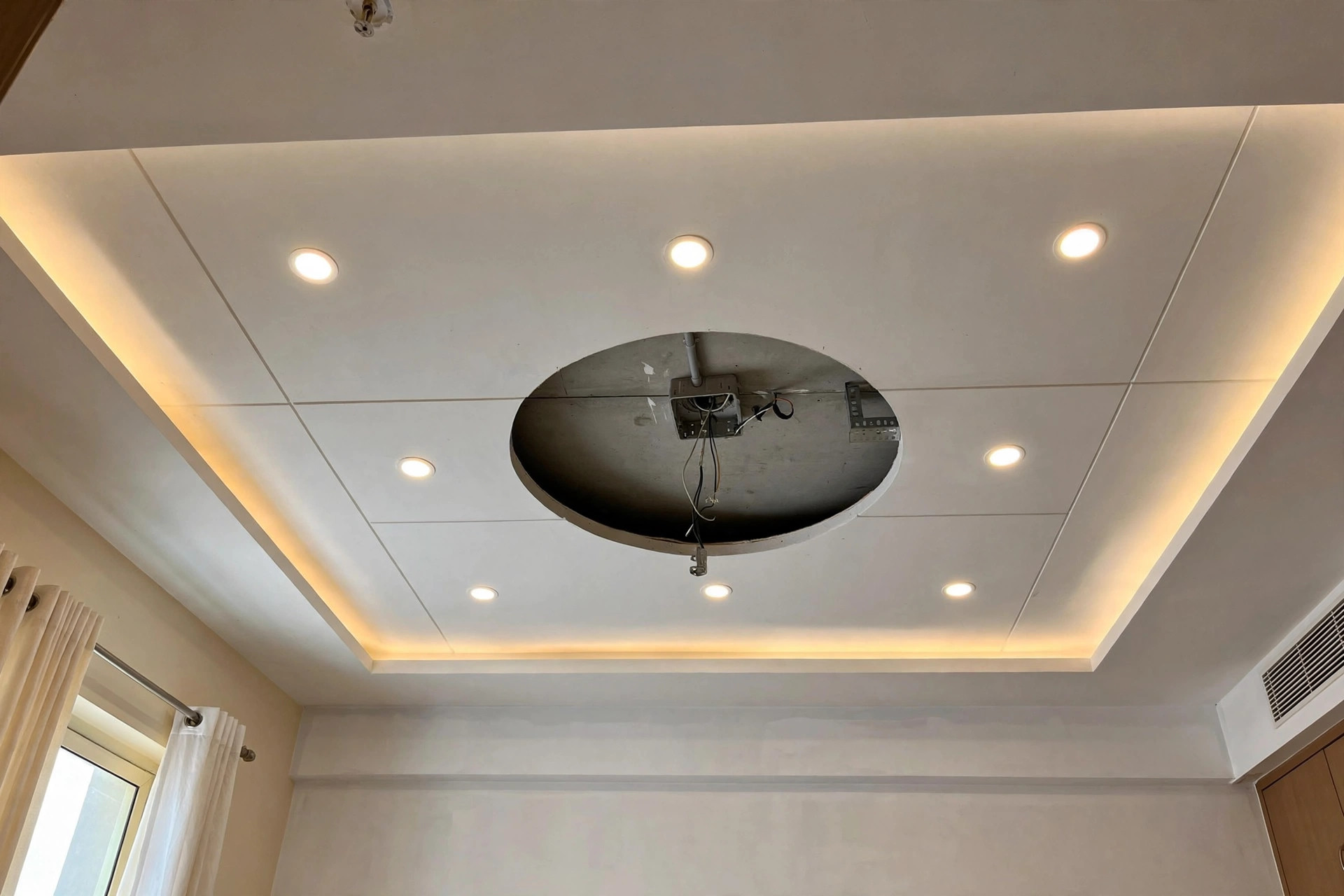
A flat or cove ceiling with a deliberate colour choice — matte grey, warm beige, dusty blue or terracotta — on the central panel or inside the cove. In 2026, simple ceiling palettes have moved away from all-white towards warm neutrals and earthy tones that sit well with wood furniture and stone flooring. Cost: ₹60–₹90 per sq ft for the POP plus ₹15–₹35 per sq ft for the decorative paint.
10. Peripheral border with exposed centre
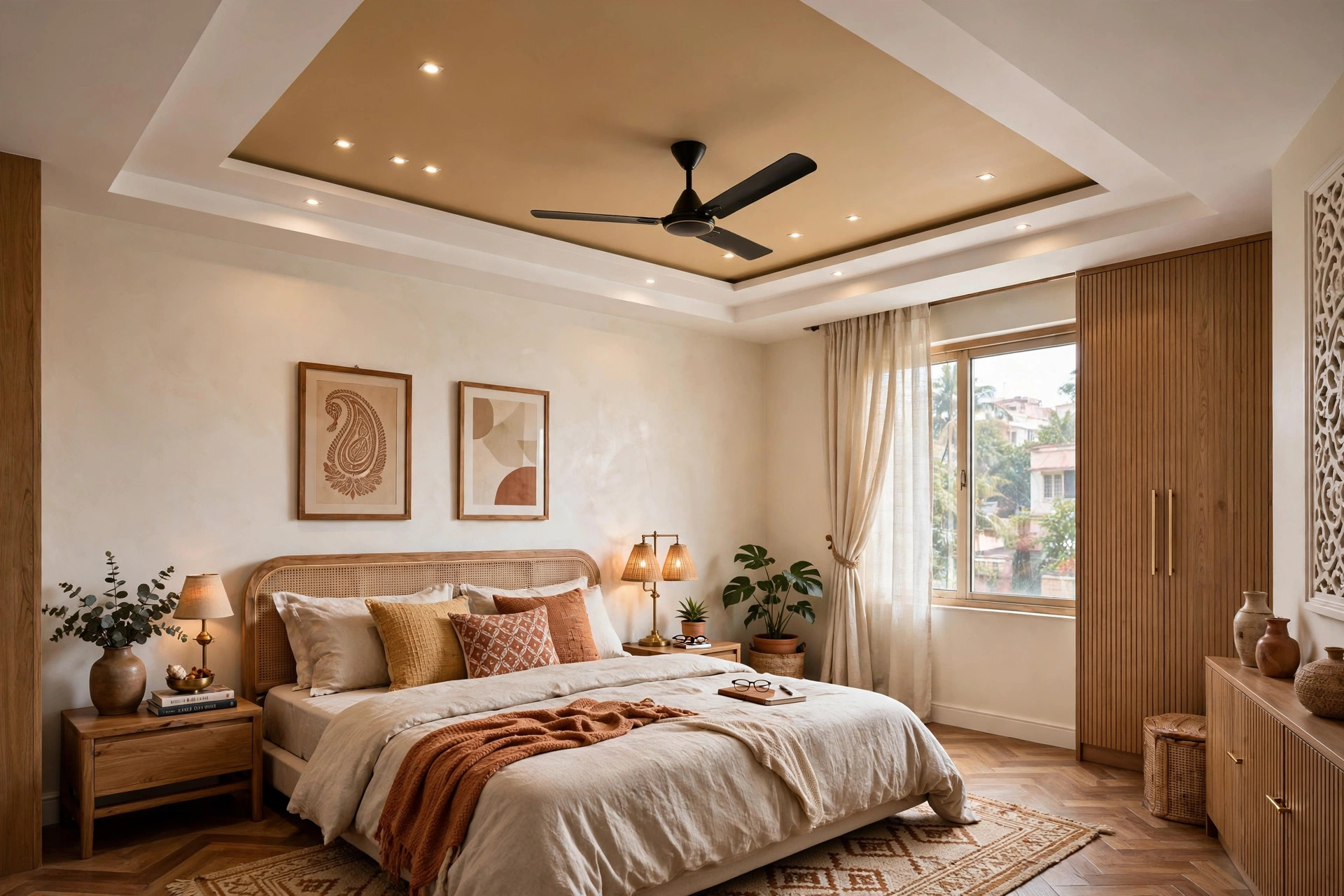
A structured POP border runs along the full perimeter with recessed lights or an LED strip embedded in it, while the central slab stays exposed and painted. It is one of the most space-efficient approaches for 8.5–9.5 ft rooms: you get the designed look with almost no ceiling drop. Cost: ₹65–₹100 per sq ft, roughly ₹9,750–₹15,000 for 150 sq ft.
11. Paint-zoned slab (the zero-drop budget option)
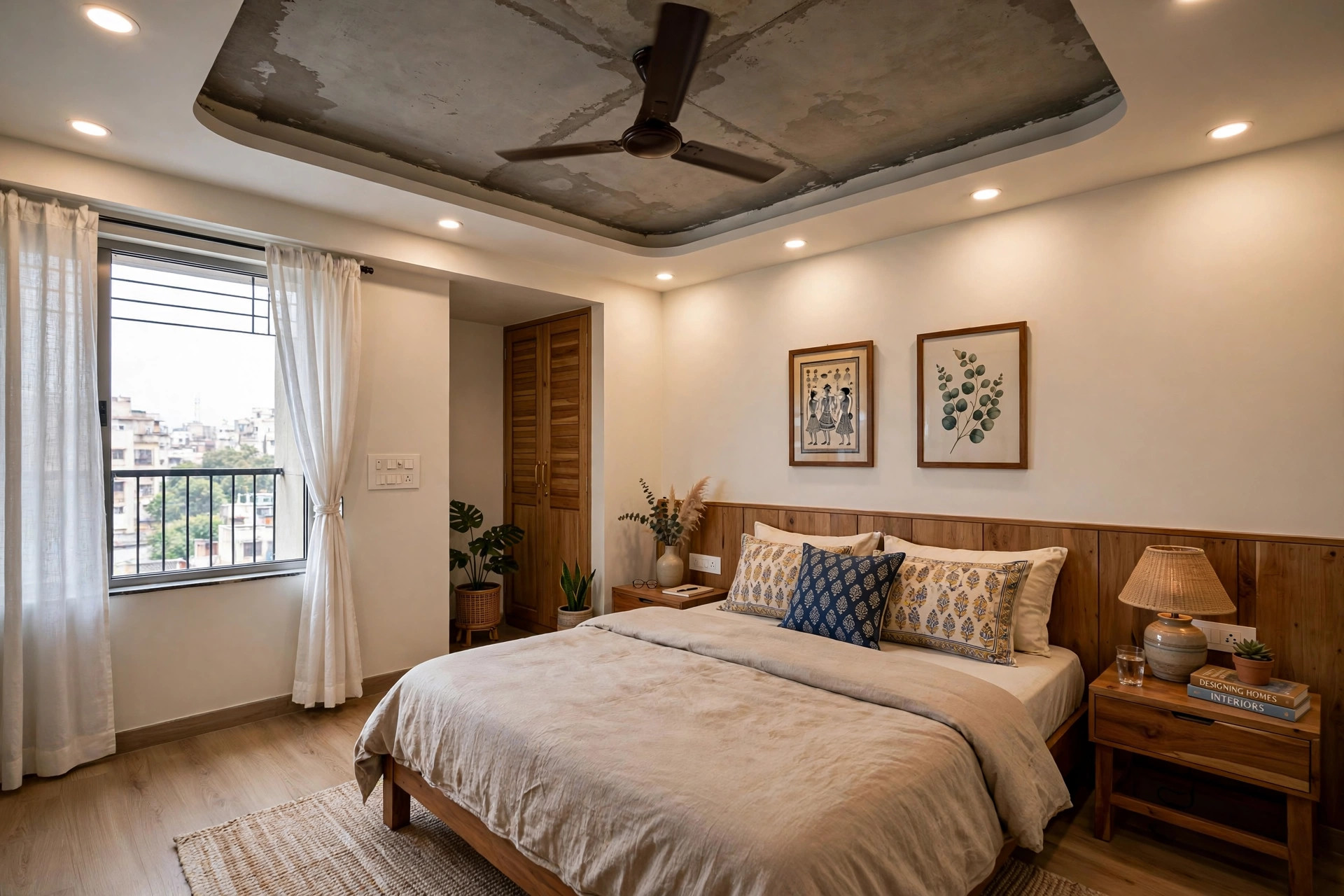
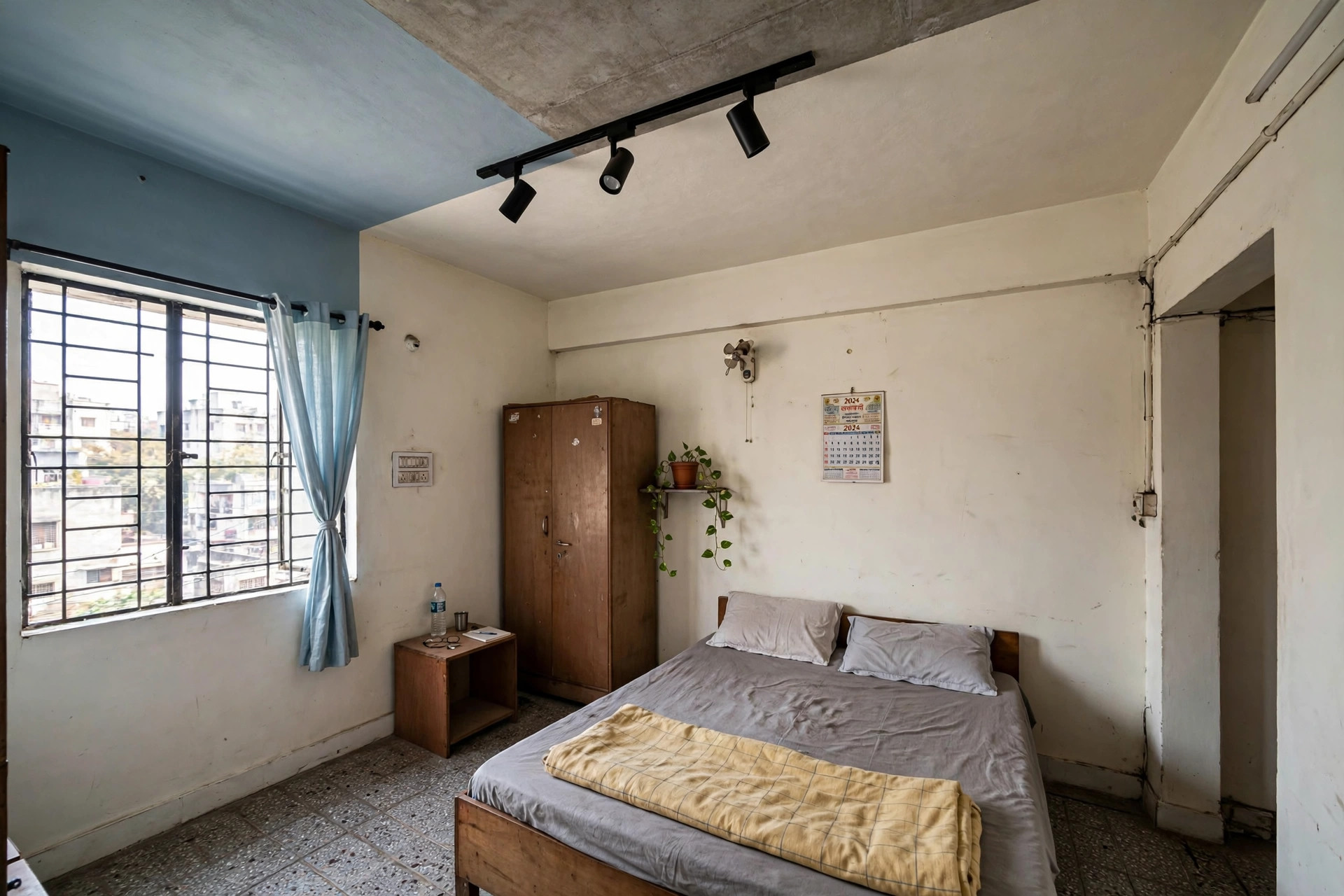
Not a false ceiling at all — and worth saying plainly. Paint the slab in two tones (a darker rectangle above the bed, for instance) and add a track light or two. A guest bedroom or a tight budget can skip the false ceiling entirely: a well-painted ceiling with a simple track light costs a fraction of any drop ceiling and still looks intentional. If you like this approach for the whole room, our small-space ceiling ideas cover more low-cost planning.
12. Wavy-edge accent
A soft wave profile along the ceiling edge, paired with concealed LED light. It gives a calming, slightly dreamy look that suits bedrooms, and it remains a one-idea ceiling — one curve, one light line, done. Expect pricing near the cove range (₹100–₹150 per sq ft) since the labour is similar.
Simple bedroom ceiling costs: the honest table
Design matters more than material for simple ceilings. Here is the 2026 breakdown from NoBroker’s Simple POP guide (India, installed, indicative — actual prices vary by city, ceiling height, design complexity, material quality, lighting and labour):

| Design | Approx. cost per sq ft | 150 sq ft bedroom |
|---|---|---|
| Basic border / cornice | ₹55–₹90 | ₹8,250–₹13,500 |
| Flat single-level | ₹60–₹90 | ₹9,000–₹13,500 |
| Simple tray | ₹90–₹140 | ₹13,500–₹21,000 |
| With cove lighting | ₹95–₹140 | ₹14,250–₹21,000 |
| Multi-level | ₹140–₹200 | ₹21,000–₹30,000 |
| Designer | ₹170–₹260 | ₹25,500–₹39,000 |
Two scope notes before you budget: first, “per sq ft” in contractor quotes usually means the ceiling area covered, and whether paint, lights and wiring are included varies — always ask for an itemised written quote. Second, lighting fixtures are often extra; an LED strip trough is cheap, but recessed downlights, drivers and dimmers add up. Our false ceiling cost guide for India breaks down material-vs-labour splits in more detail.
Picking the material: POP vs gypsum vs PVC for a simple bedroom ceiling
For simple designs, all three common materials work — the choice is about labour, moisture and finish:
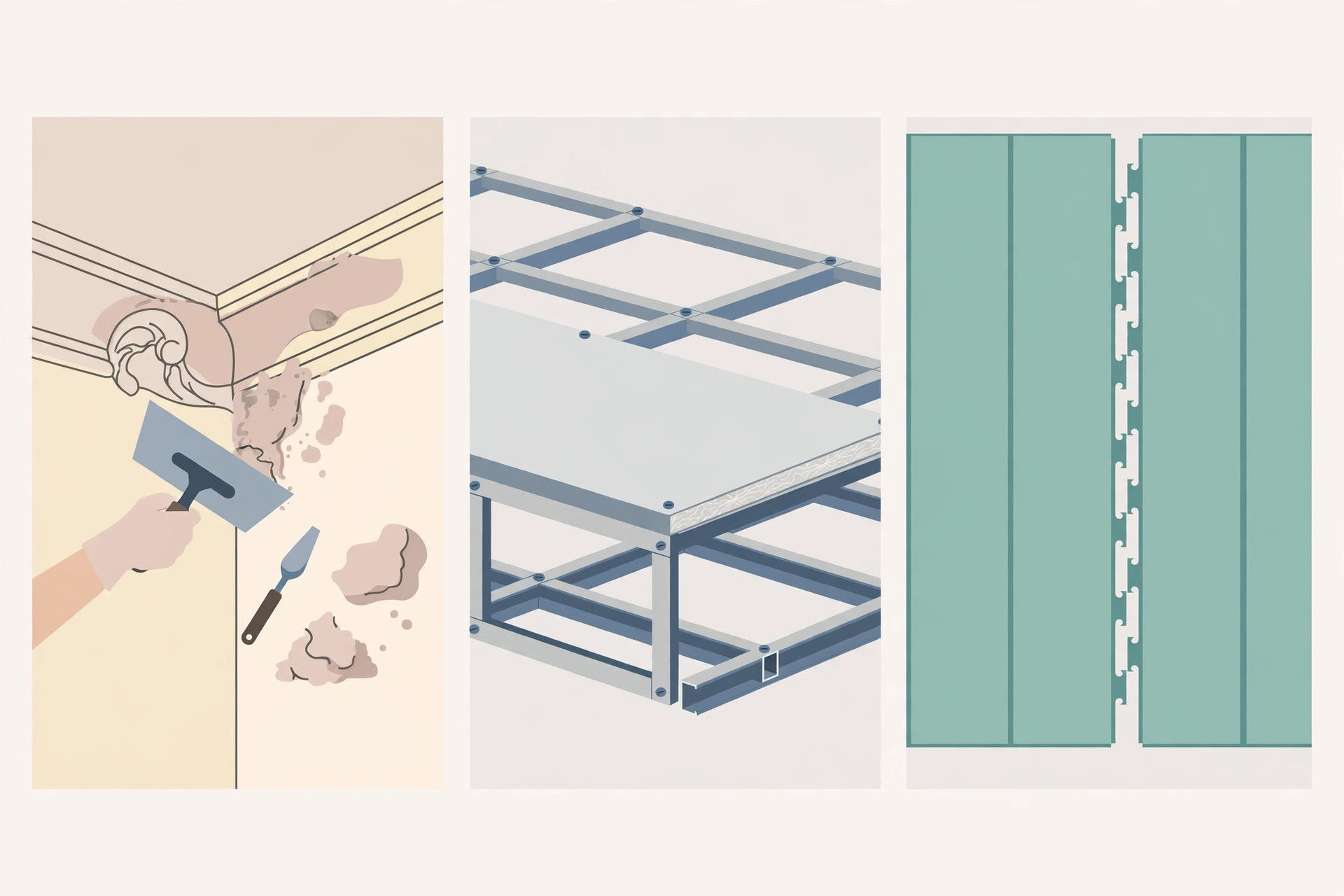
| POP | Gypsum board | PVC panels | |
|---|---|---|---|
| Design flexibility | Highest — curves, medallions, mouldings made on-site | Good — clean lines, trays, coves | Limited — panel looks, joints may show |
| Installation | Slower, needs skilled on-site labour | Faster — pre-made boards on a frame | Quickest — light panels, minimal labour |
| Finish | Smooth and seamless; may crack with moisture or temperature shifts | Uniform; fewer cracks when done well | Smooth; moisture-proof |
| Best for | Decorative simple shapes | Clean minimal flats and coves | Damp rooms, tight budgets, fast jobs |
The comparison above follows NoBroker’s 2026 material table. If your bedroom is on the top floor with seepage risk, PVC or moisture-resistant gypsum beats plain POP — and our bedroom PVC ceiling guide covers that case honestly. If you want the material deep-dive instead of the room view, see POP ceilings for bedrooms and simple gypsum ceiling designs.
The bedroom lighting plan that makes simple ceilings look expensive
A simple ceiling with a good lighting plan beats an elaborate ceiling with bad lighting. The bedroom needs three things: general light for dressing, warm dimmable light for evenings, and a reading light that does not disturb the other person.
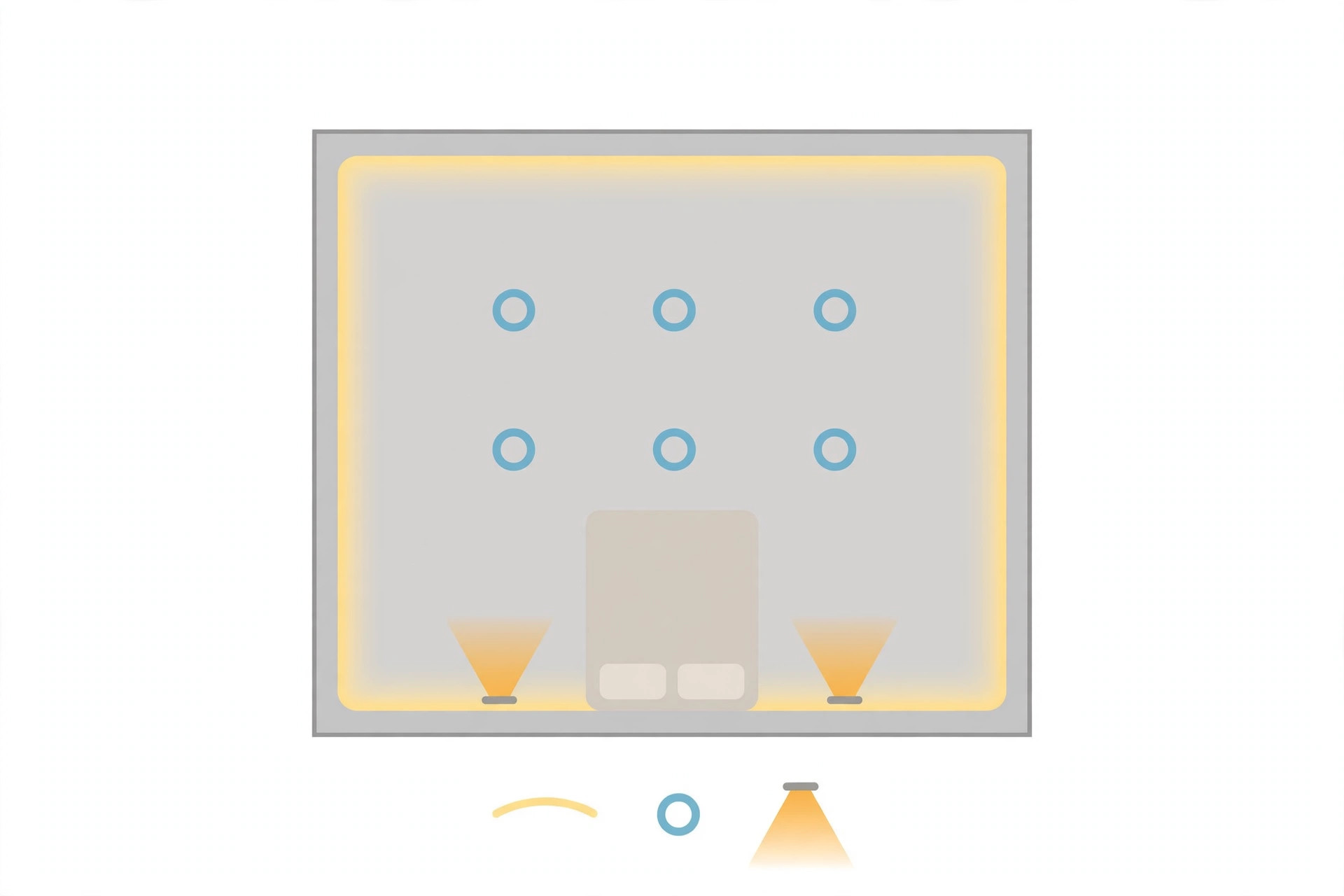
- Warm cove or perimeter light (2700–3000K) for the evening wind-down. This is the single most effective “premium” move on a budget.
- Recessed downlights on a dimmer for general use — space them evenly, avoid placing one directly above the pillow.
- Reading lights — wall-mounted or a slim pendant on each side of the bed, on separate switches.
- Fan clearance: keep downlights and coves away from the fan sweep so you don’t get a strobe effect on the walls.
7 money-saving tips for a simple bedroom ceiling
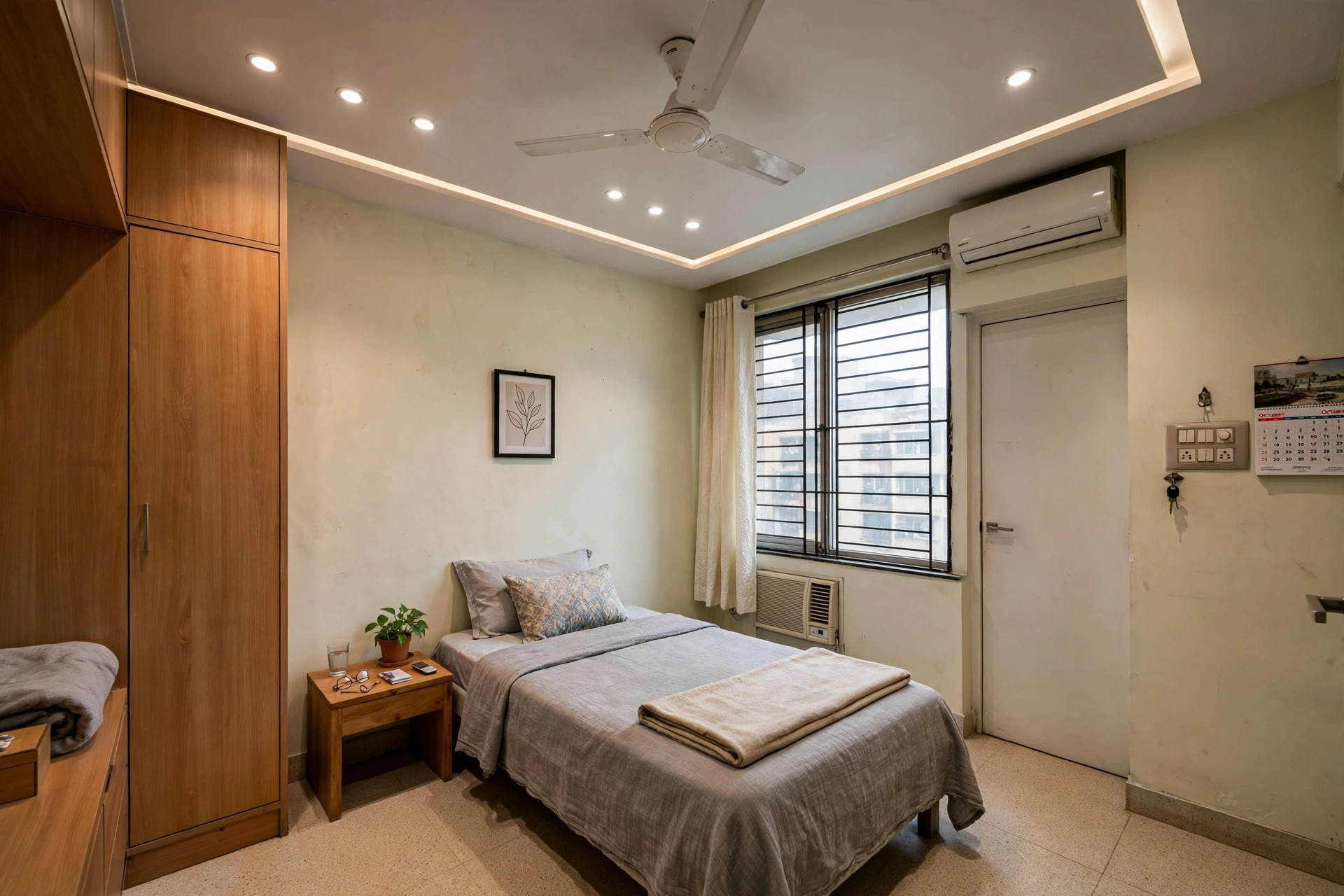
- Choose a border, not a full drop — the cheapest designed look, and it suits low ceilings.
- Freeze the design before work starts. Mid-job changes are the most common budget killer.
- Keep the lighting plan modest. One LED strip plus a few downlights beats a dozen fixtures you will never switch on together.
- Source lights yourself after the contractor specifies the sizes — retail prices are usually lower than contractor-supplied fixtures.
- Get three itemised quotes and compare material, labour and finishing lines separately.
- Keep a 10–15% buffer for the surprises every renovation hides.
- Prioritise rooms: if the budget is tight, do the master bedroom well and use borders or paint in the secondary bedrooms.
When a simple ceiling is NOT enough
Honesty requires the other side. Skip “simple” if your bedroom has serious slab undulation or exposed beams a border cannot hide (you need a full panel), if you want a home-theatre-grade acoustic treatment, or if the room doubles as a work studio needing zoned task lighting. In those cases a fuller design earns its cost — start with our bedroom ceiling hub and pick the depth your room actually needs.
FAQs
What is the minimum ceiling height for a simple false ceiling in a bedroom?
A flat or border-only design works from about 8.5 ft, since it drops the ceiling barely at all. Single-cove and tray designs are comfortable at 9–10 ft. Below 8.5 ft, paint zoning with surface lights is the safer choice.
Can I have a ceiling fan with a simple false ceiling?
Yes — plan a finished circular cutout for the fan during framework installation. The fan must anchor to the structural slab above, not to the false ceiling frame; raise this with your installer before work begins.

How long does a simple bedroom ceiling take to install?
POP simple designs typically take several days including drying and finishing; gypsum board installs are faster since the boards arrive pre-made. Your contractor’s timeline should include curing, putty, primer and paint — ask for it in writing.
Is POP or gypsum better for a simple bedroom ceiling?
For plain flat or cove designs, gypsum is usually the practical pick: faster install and a uniform finish. POP wins when the “simple” design still needs a curve, medallion or custom moulding. Neither is wrong for a bedroom; the installer’s skill matters more than the material.

The short version
For most Indian bedrooms, a flat panel, a border, or a single cove with warm light is all the ceiling you need — budget roughly ₹9,000–₹25,000 for a standard room in 2026, pick POP for moulded shapes or gypsum for speed, plan the fan cutout and lighting before the framework goes up, and spend the money you save on better lights. All images in this article are original concept renders created for illustration, not photographs of completed projects.