Your bedroom ceiling sets the mood of the room more than most people expect. A well-planned false ceiling gives you soft, layered light for evenings, hides wiring, and makes the room feel finished — without stealing headroom you cannot spare. This guide covers 12 bedroom ceiling designs that work in Indian homes, plus the practical side: ceiling height, fans, lighting, materials and cost.
For whole-home planning beyond the bedroom, see our complete false ceiling design guide.
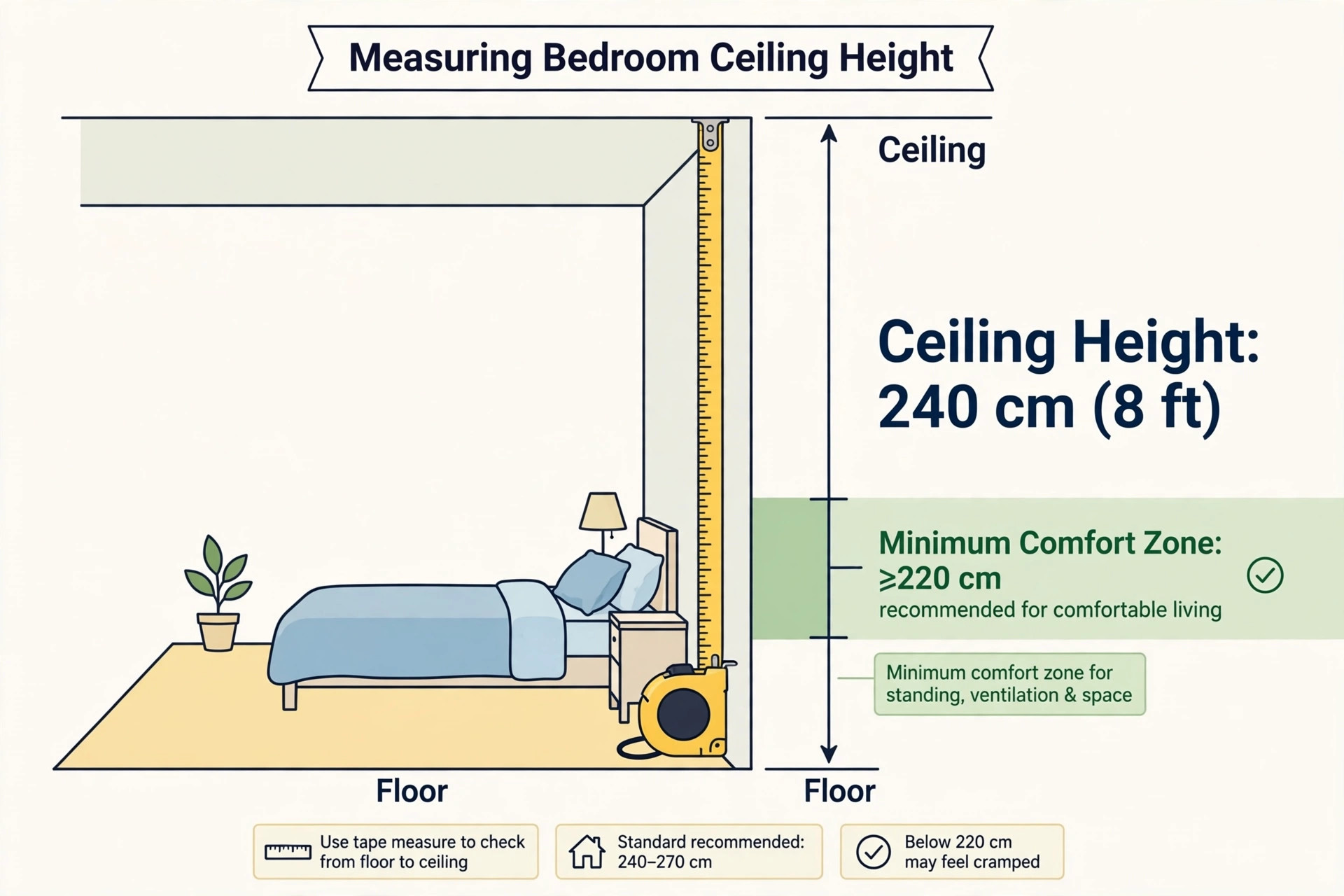
First, measure your ceiling — this decision shapes everything
Measure the floor-to-slab height before shortlisting any design. Most Indian apartment bedrooms sit at about 9 to 10 feet. A simple ceiling drops 4–6 inches; layered designs drop more. If your room is on the lower side, deep multi-layer designs will make it feel smaller — the most common bedroom ceiling regret.
- Below ~9 feet: flat single-layer, peripheral border, or plain designs in light colours.
- 9–10 feet: trays, shallow double layers and cove designs all work.
- Above 10 feet: coffered and dramatic layered designs are safe.
12 bedroom false ceiling designs that work in Indian homes
1. Tray ceiling with cove lighting — the safest all-rounder
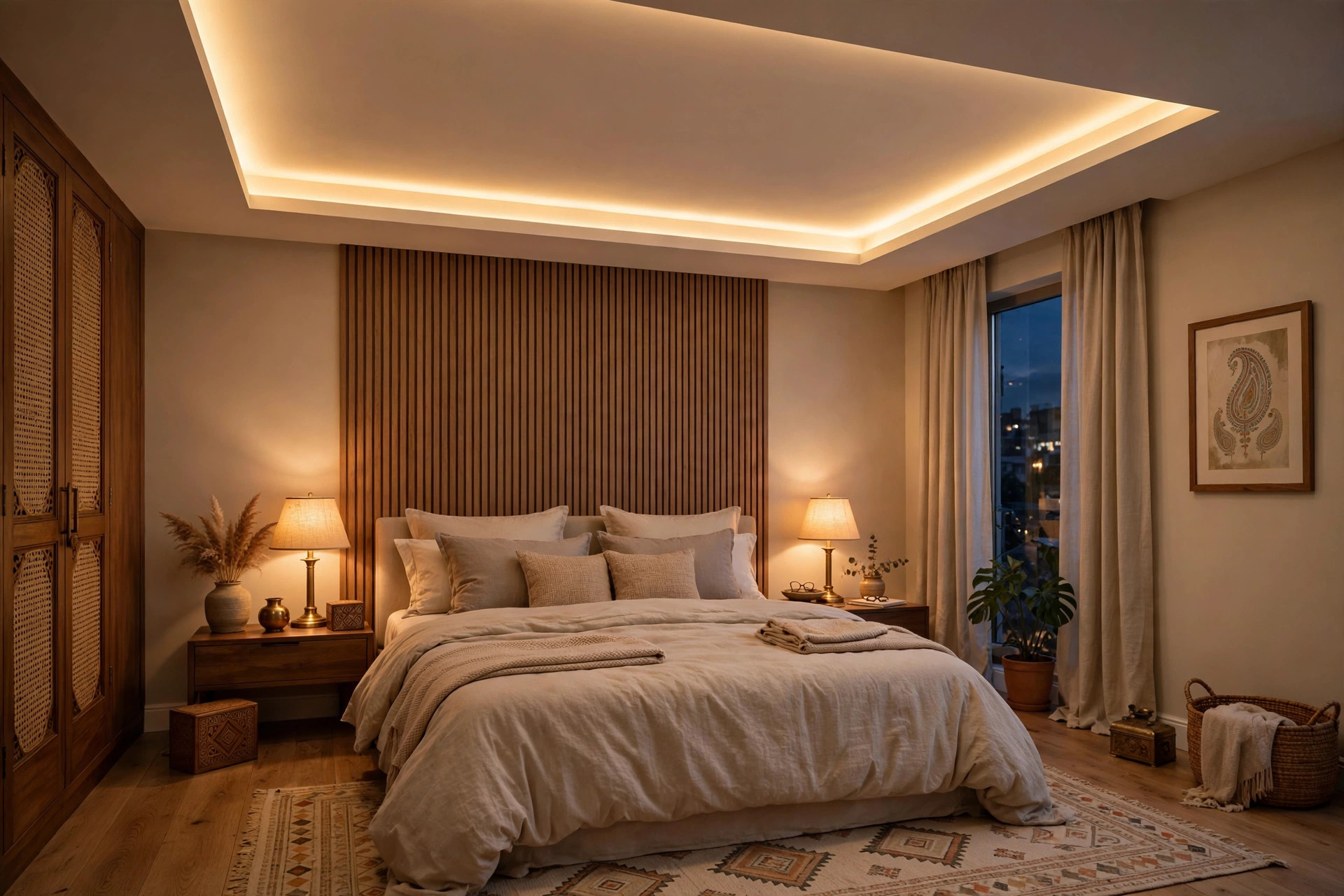
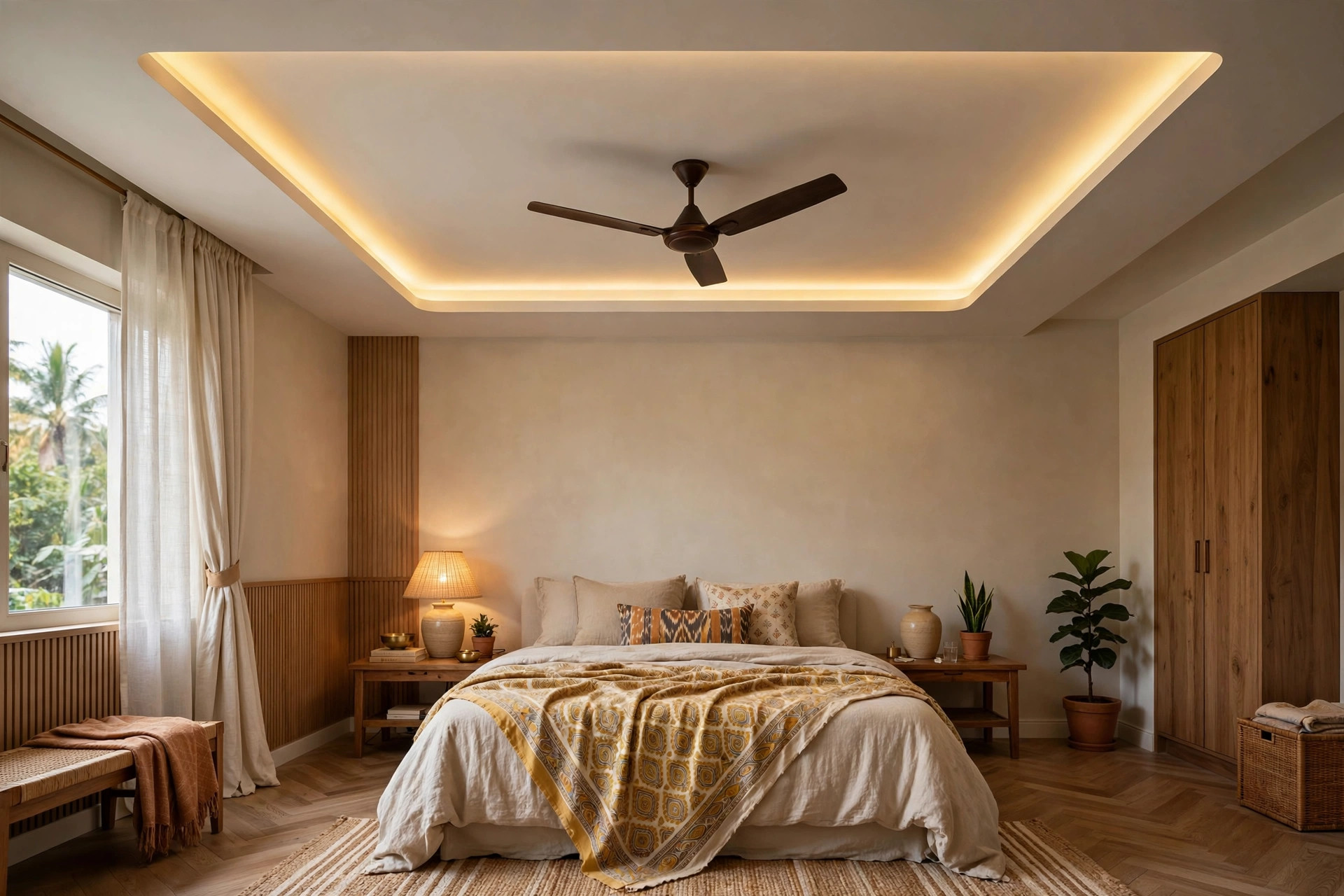
The centre stays high while the dropped border carries hidden LED strips. It suits master bedrooms, works with a ceiling fan at the centre, and rarely looks dated.
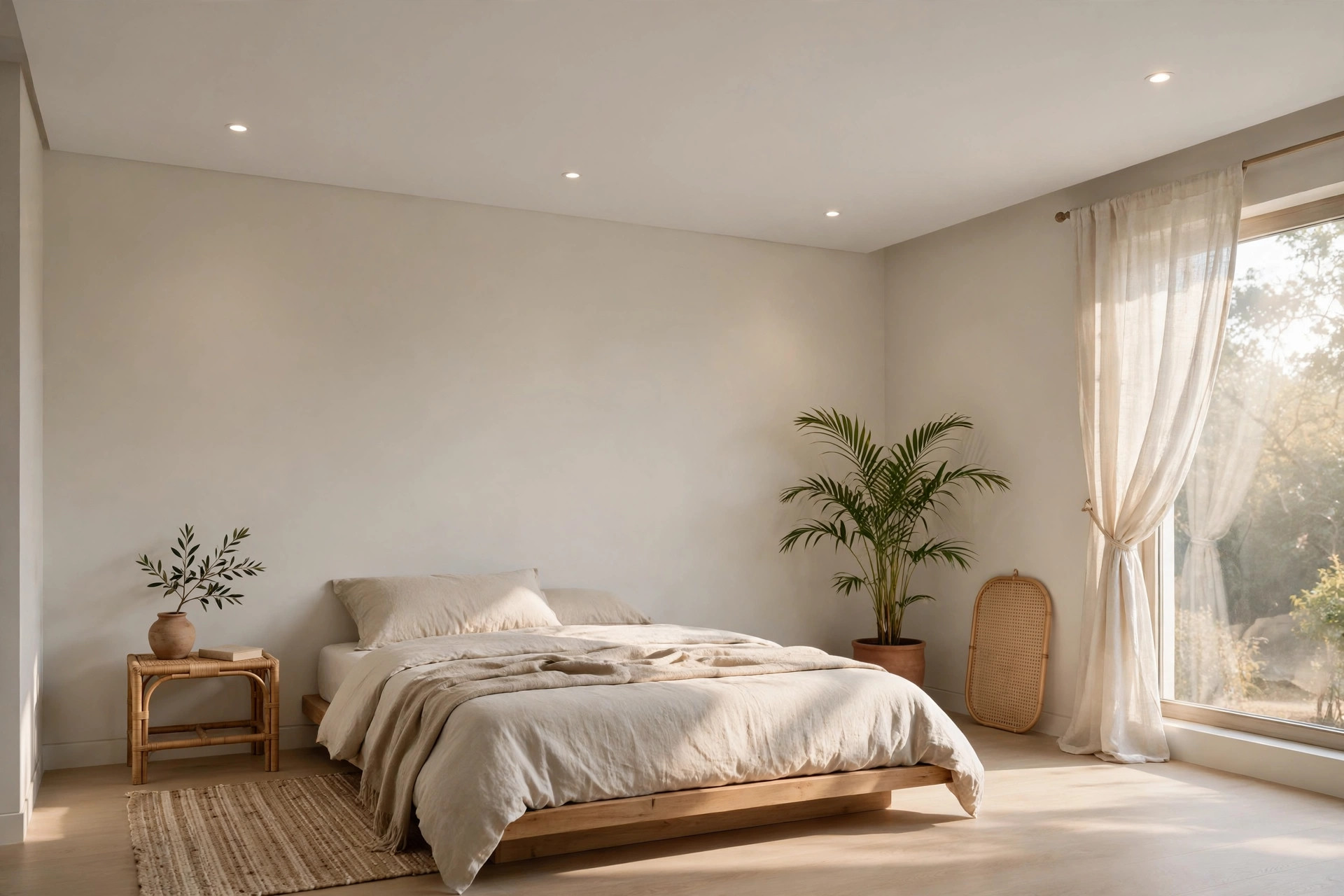
2. Single-layer flat ceiling with recessed spots — the minimalist
One flat layer, a grid of recessed downlights. Clean, cheap to build, easy to maintain — ideal for low bedrooms and rental-friendly budgets.
3. Peripheral border ceiling — maximum height, minimum fuss
Only the edges drop; the centre keeps full height. You get cove lighting with almost no height loss — the smart pick for 9-foot bedrooms.
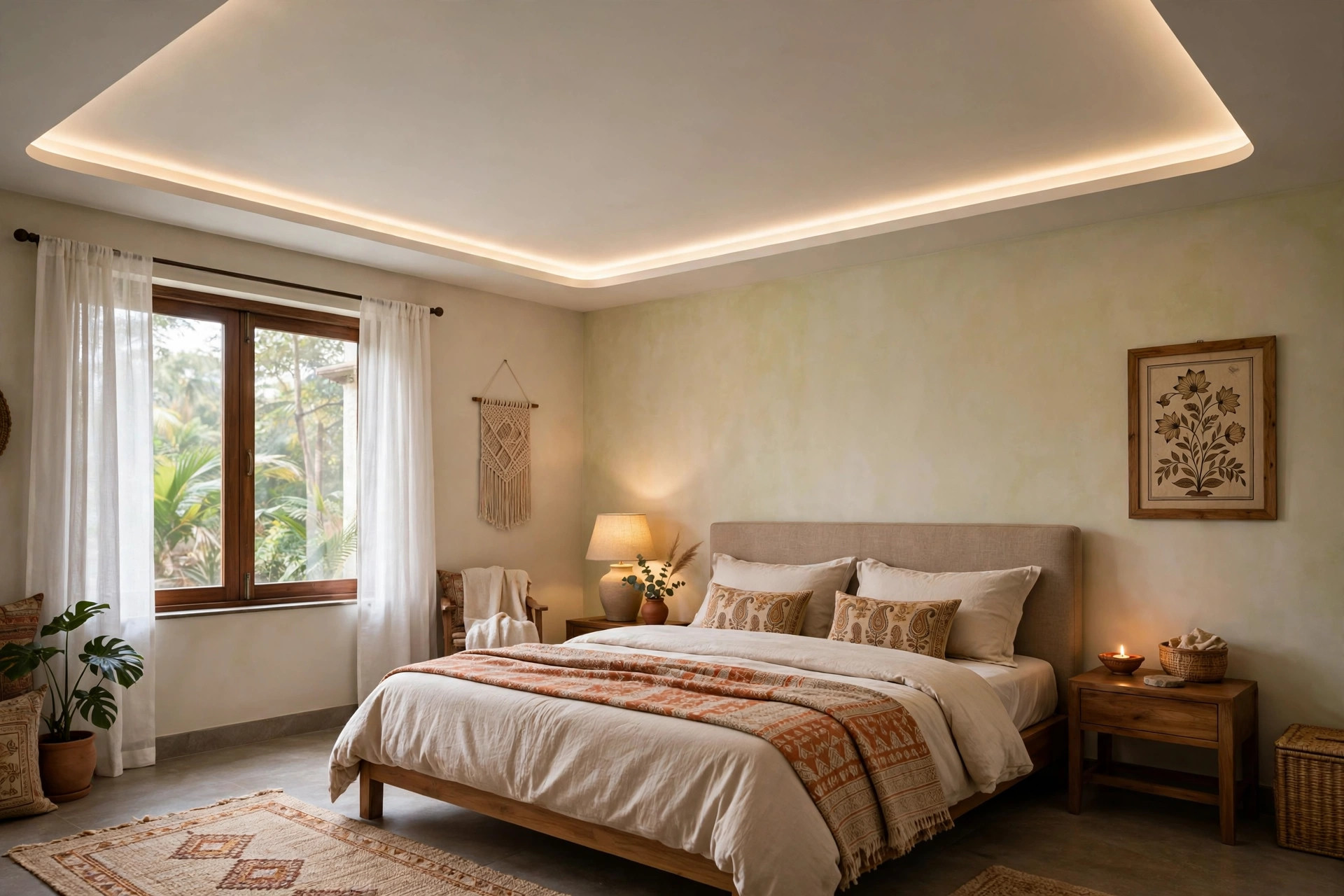
4. Plus-minus (multi-layered) ceiling — the dramatic one
Stepped layers with LED strips between them. Striking in large master bedrooms; avoid in small or low rooms where it overwhelms.

5. Coffered ceiling — classic luxury
Recessed square panels with spots inside each coffer. Elegant and timeless, but the many recesses collect dust and the woodwork costs more.

6. Cove-lit ceiling — light as the design
Here the lighting IS the design: hidden LED strips wash the ceiling in a soft glow. Dimmable strips let you shift from bright to bedtime mode.
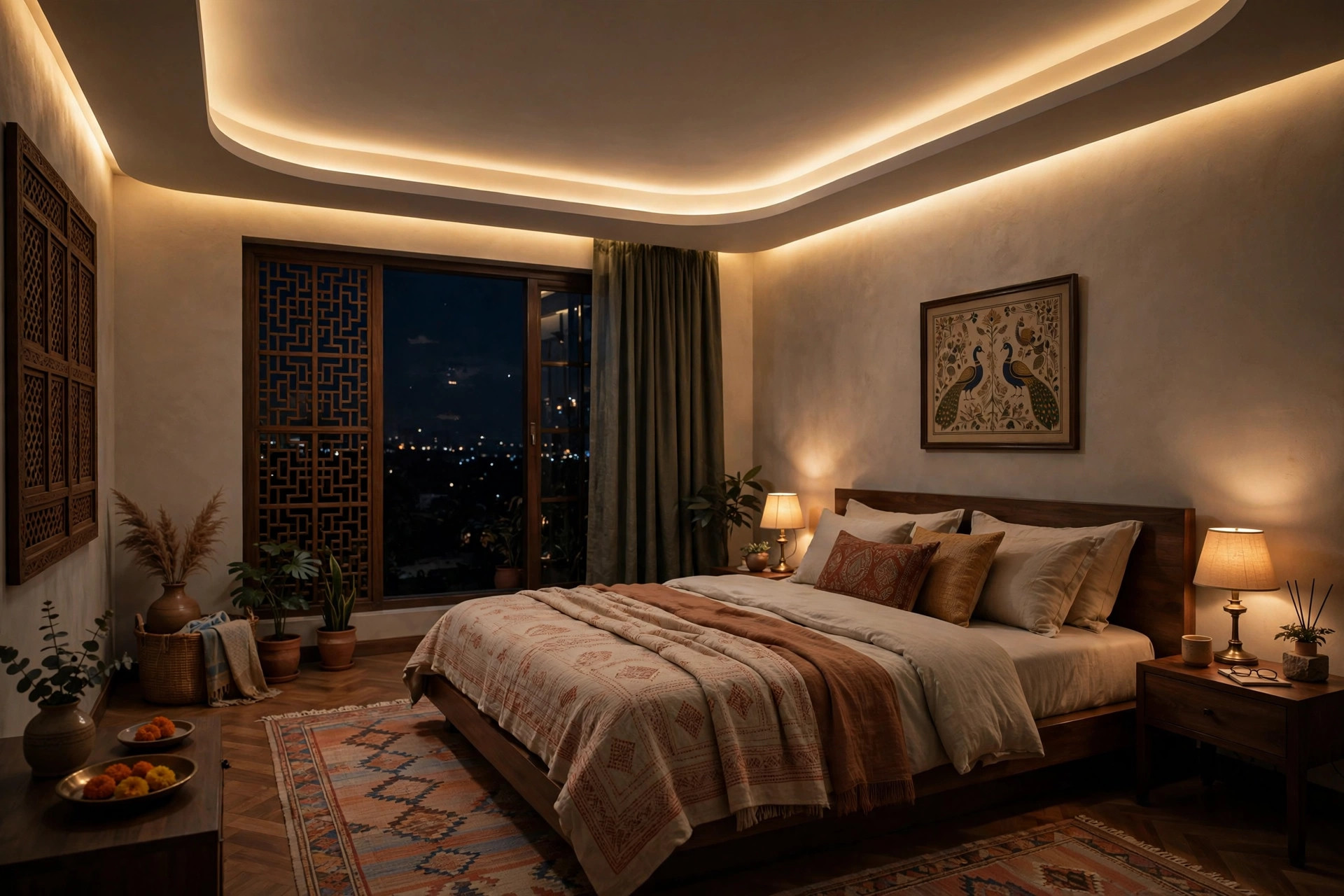
7. Wood-accent ceiling — warmth without a full timber job
A wooden or wood-look panel set into a plain ceiling adds warmth at a fraction of a full wood ceiling’s cost. Use termite-treated material and keep it as an accent.

8. Geometric and CNC-cut panels — the contemporary statement
Backlit geometric panels suit modern interiors. Keep the pattern restrained — one feature panel is enough for a bedroom.
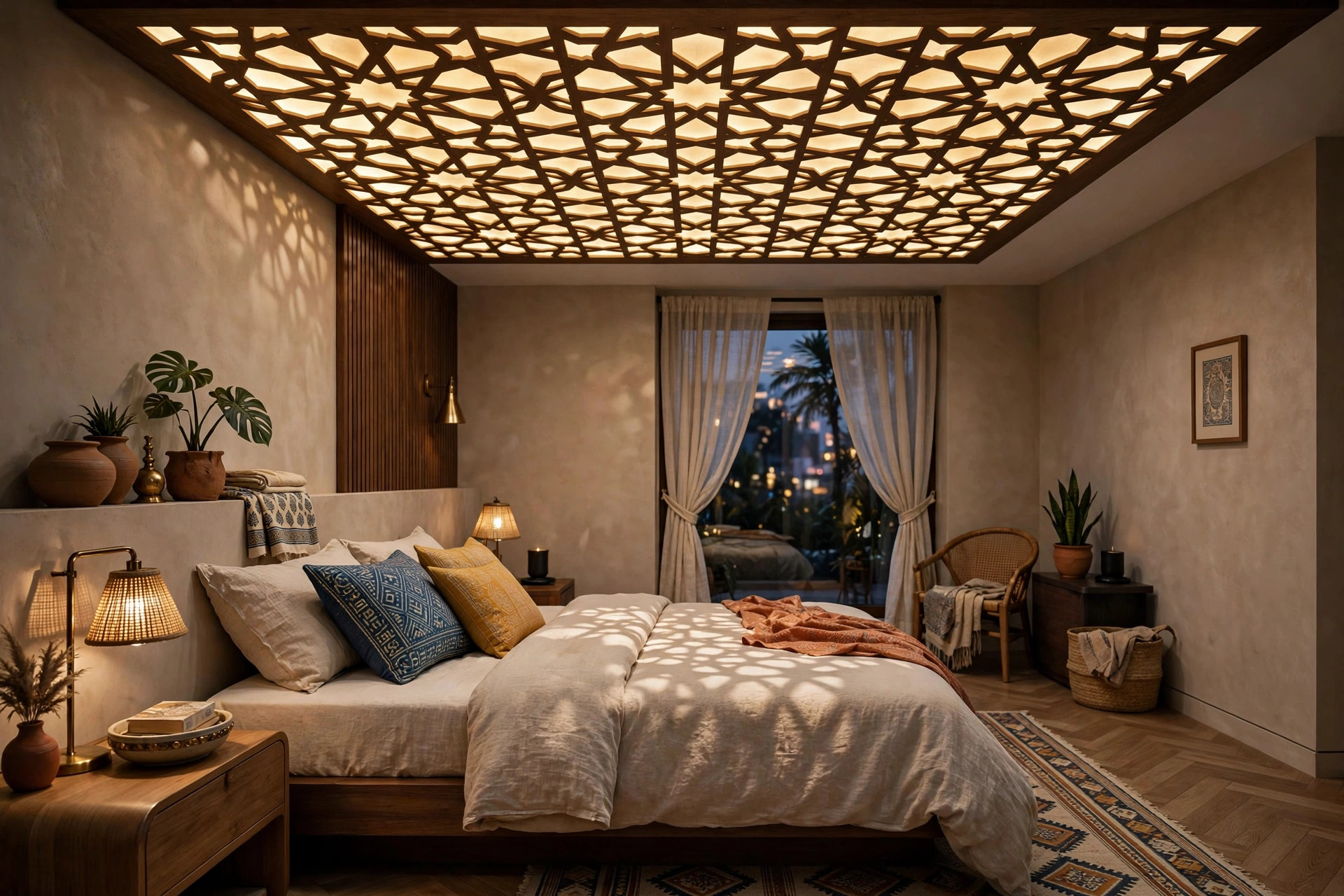
9. Floating panel ceiling — the romantic
A panel with hidden mounts and perimeter backlighting looks like it hovers. Soft and romantic — popular for couple bedrooms.
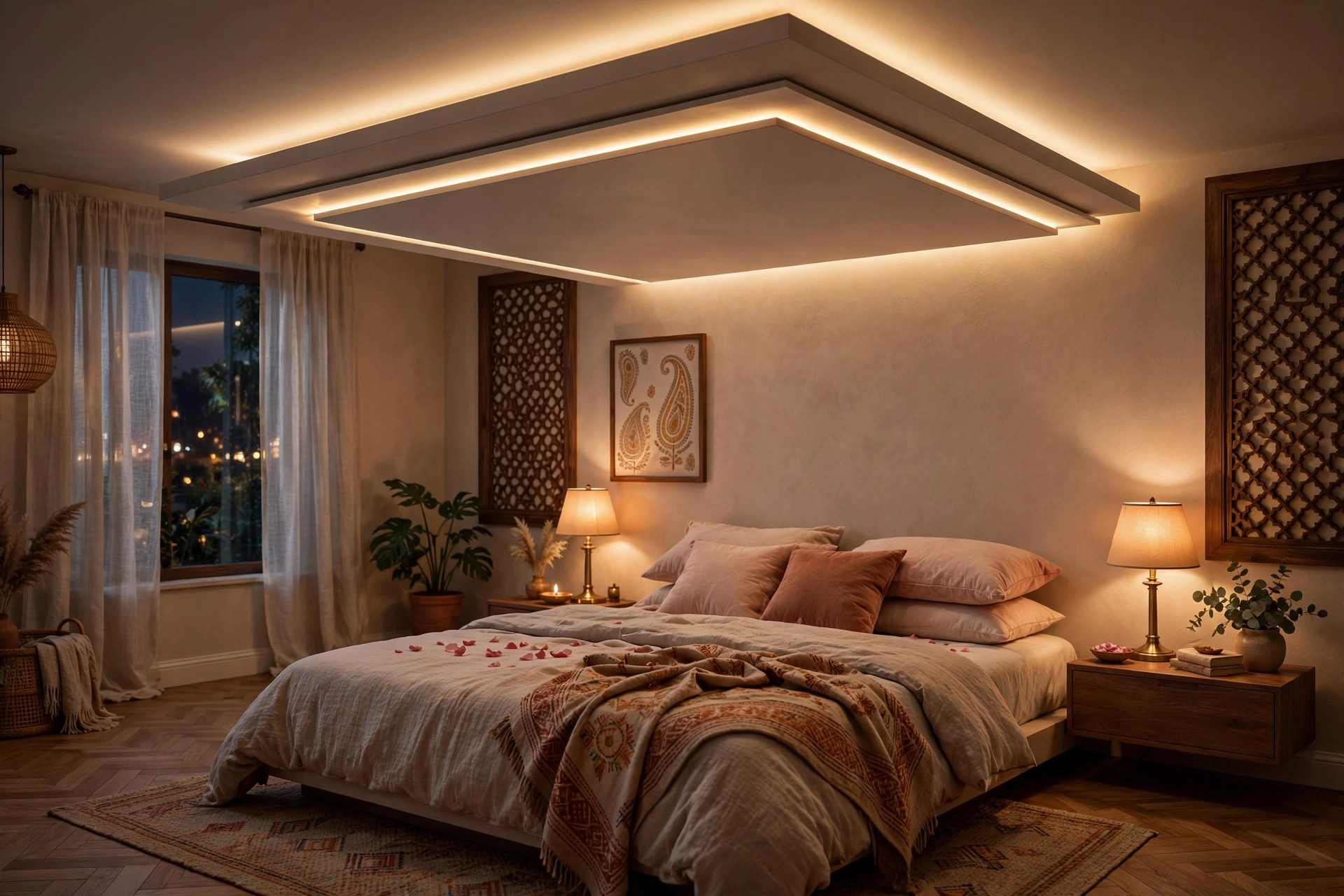
10. Starry-night ceiling — for kids’ rooms (and dreamers)
Fibre-optic or LED “stars” set into a dark-blue ceiling. Magical for kids; keep the rest of the room simple so it stays tasteful.

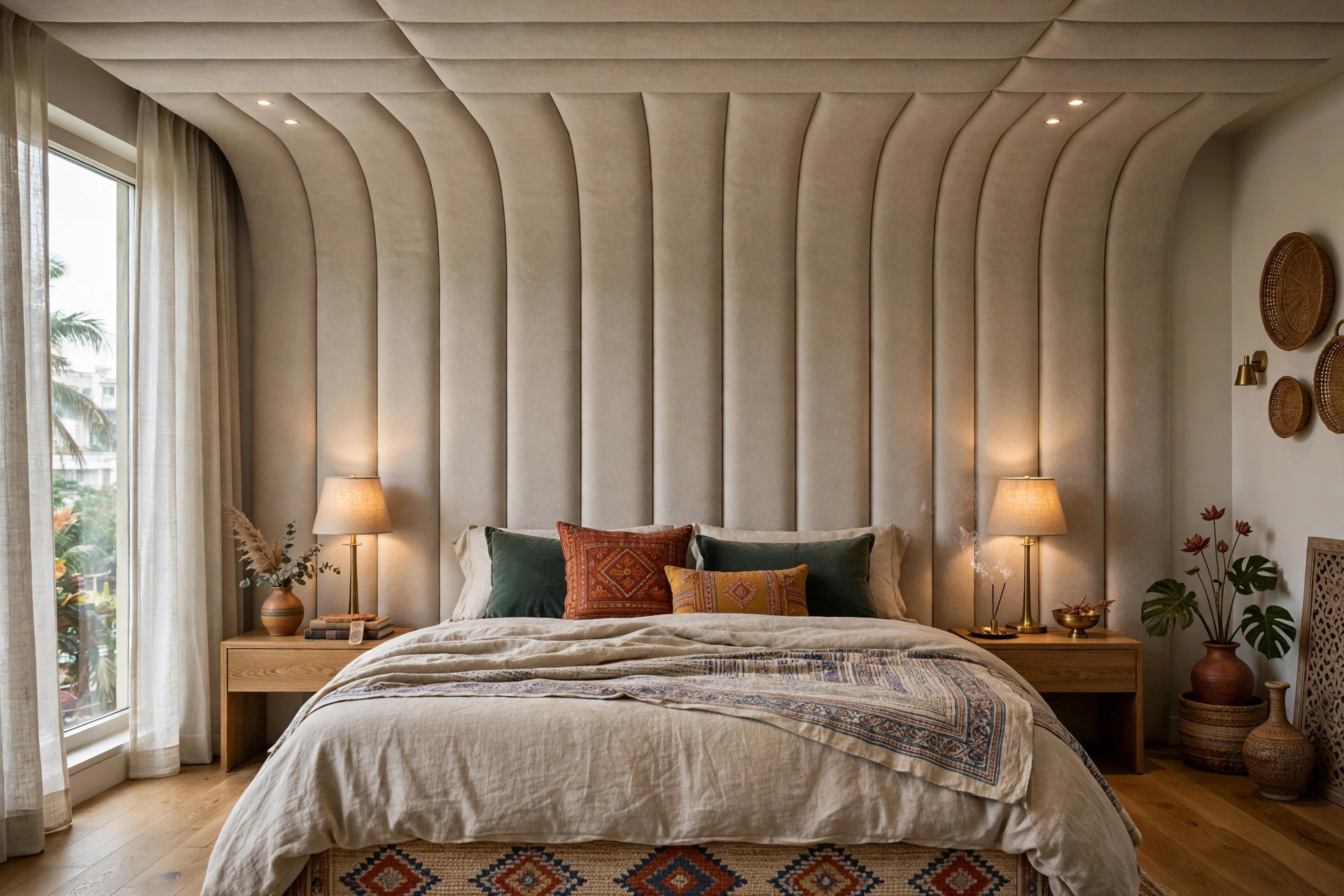
11. Headboard-wall integration — ceiling flows into wall
A padded or panelled headboard wall continues onto the ceiling as one design. Striking and cohesive; plan it with your carpenter and ceiling contractor together.
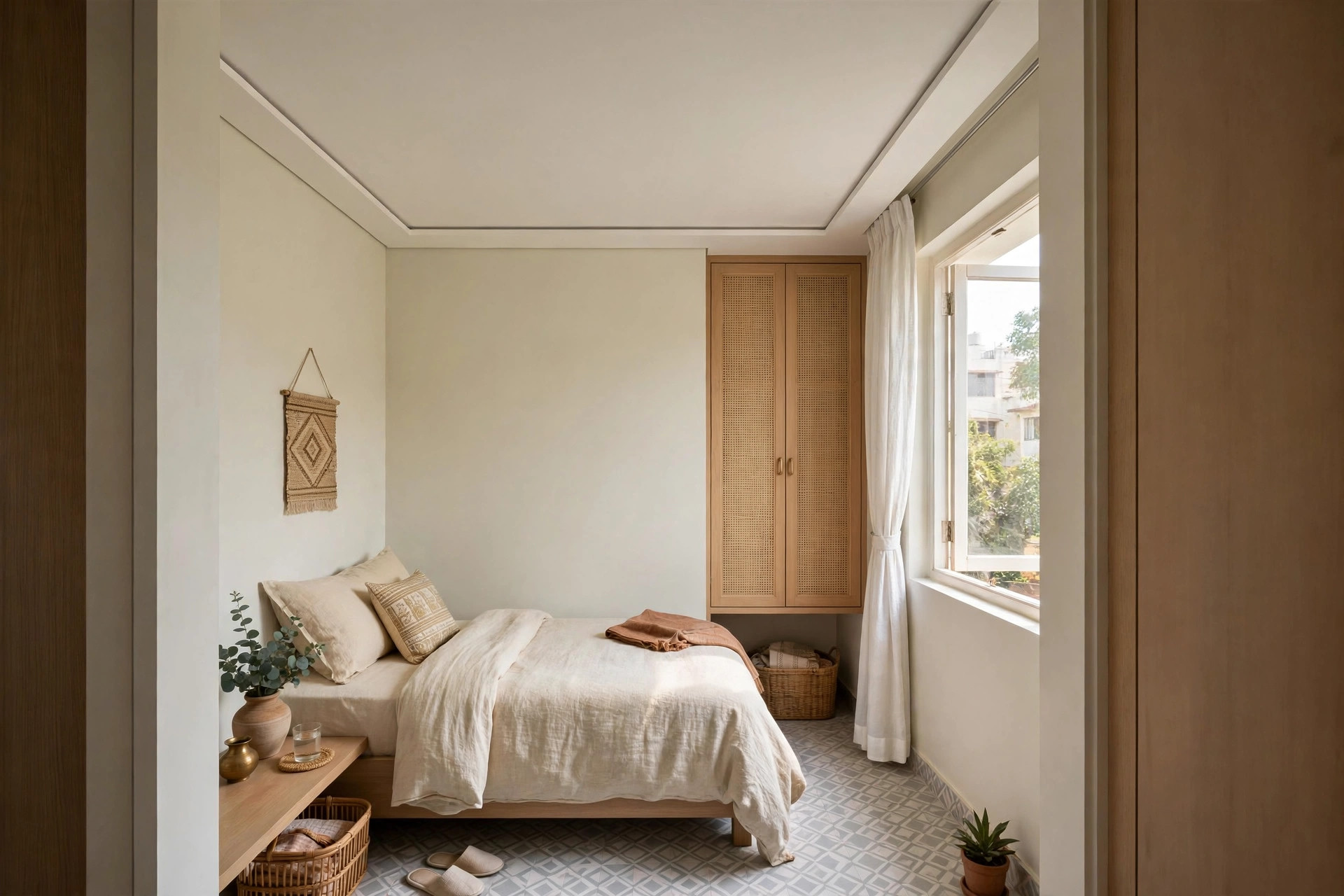
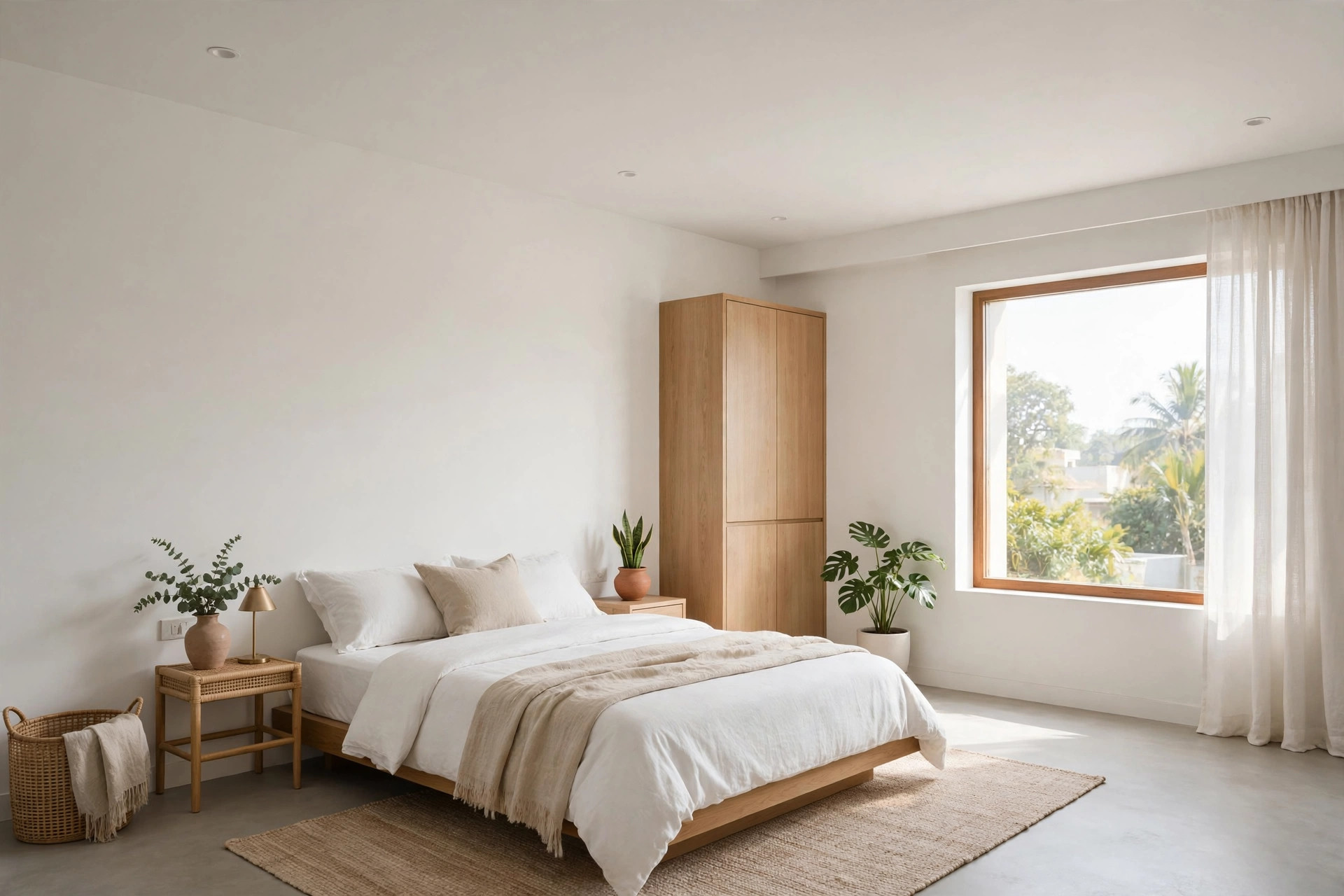
12. Plain white-on-white — the timeless
A simple white ceiling against white walls: light, peaceful, adaptable to any decor. Never goes out of style and the cheapest to maintain.
Master bedroom vs small bedroom vs kids’ bedroom
- Master bedroom: you have the most freedom — trays, plus-minus, coffered or floating panels, often with a chandelier or statement pendant.
- Small bedroom: flat, peripheral or plain designs in light colours; keep drops shallow and lighting soft.
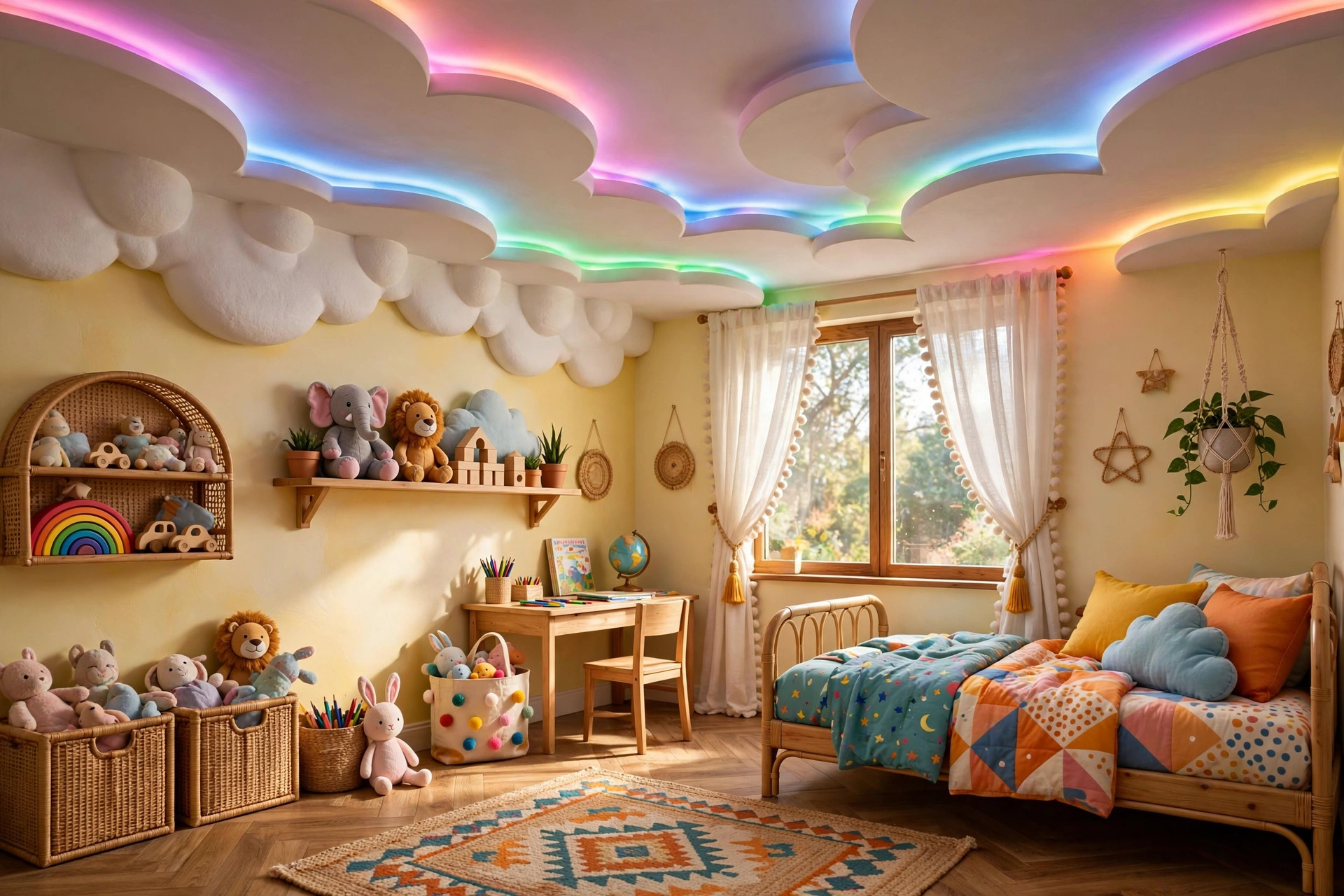
- Kids’ bedroom: simple base with a playful element (stars, clouds, gentle curves); avoid heavy designs they will outgrow visually — and keep lights dimmable.

Lighting: the part that makes or breaks a bedroom ceiling
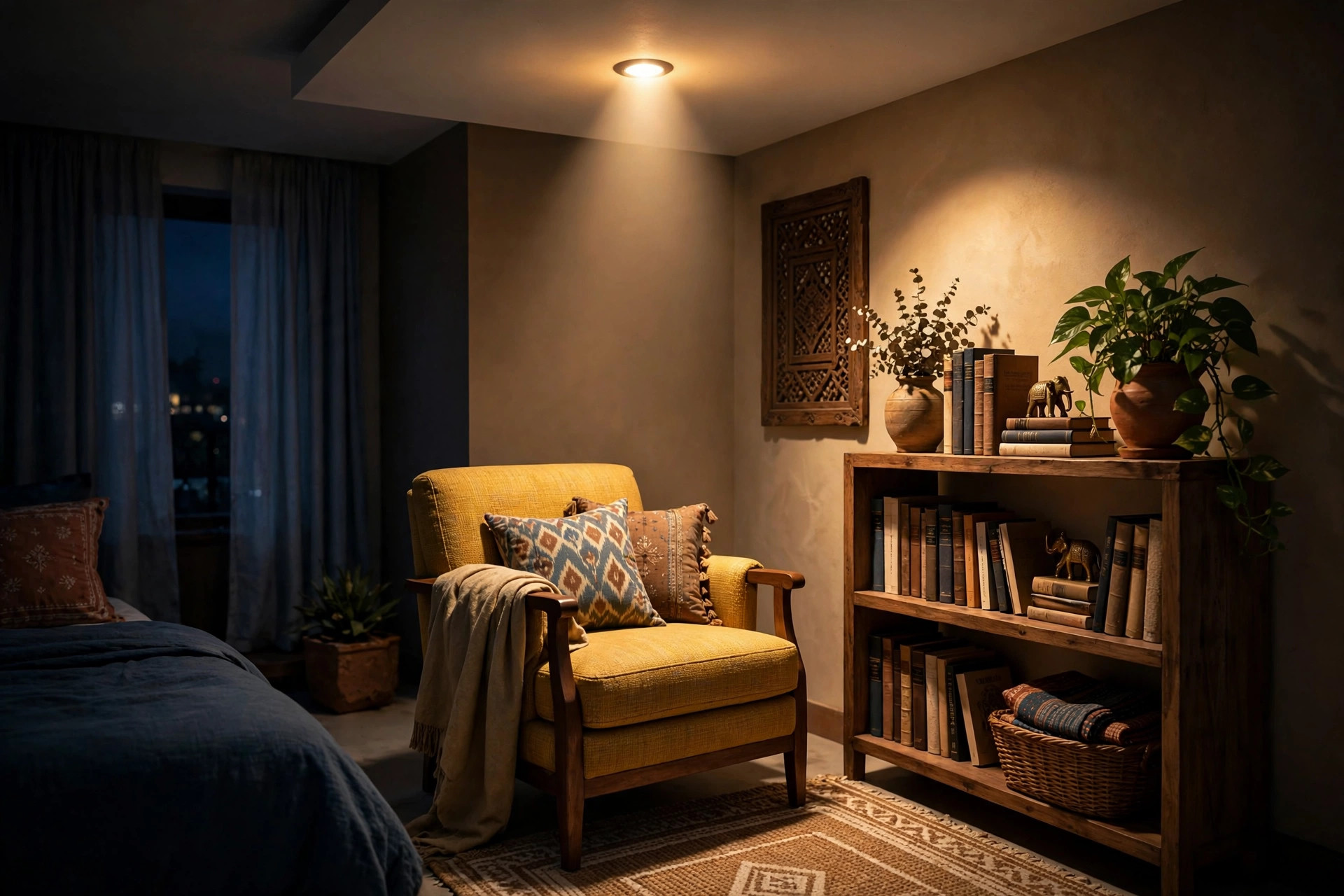
Plan three layers: cove LED strips for ambient glow, recessed spots for task light (reading, wardrobe), and a bedside or pendant accent. For bedrooms, choose warm white light (around 2700–3000K) — it feels restful; cool white feels clinical at night. Put the cove strip on a dimmer if the budget allows.

Colour choices for bedroom ceilings
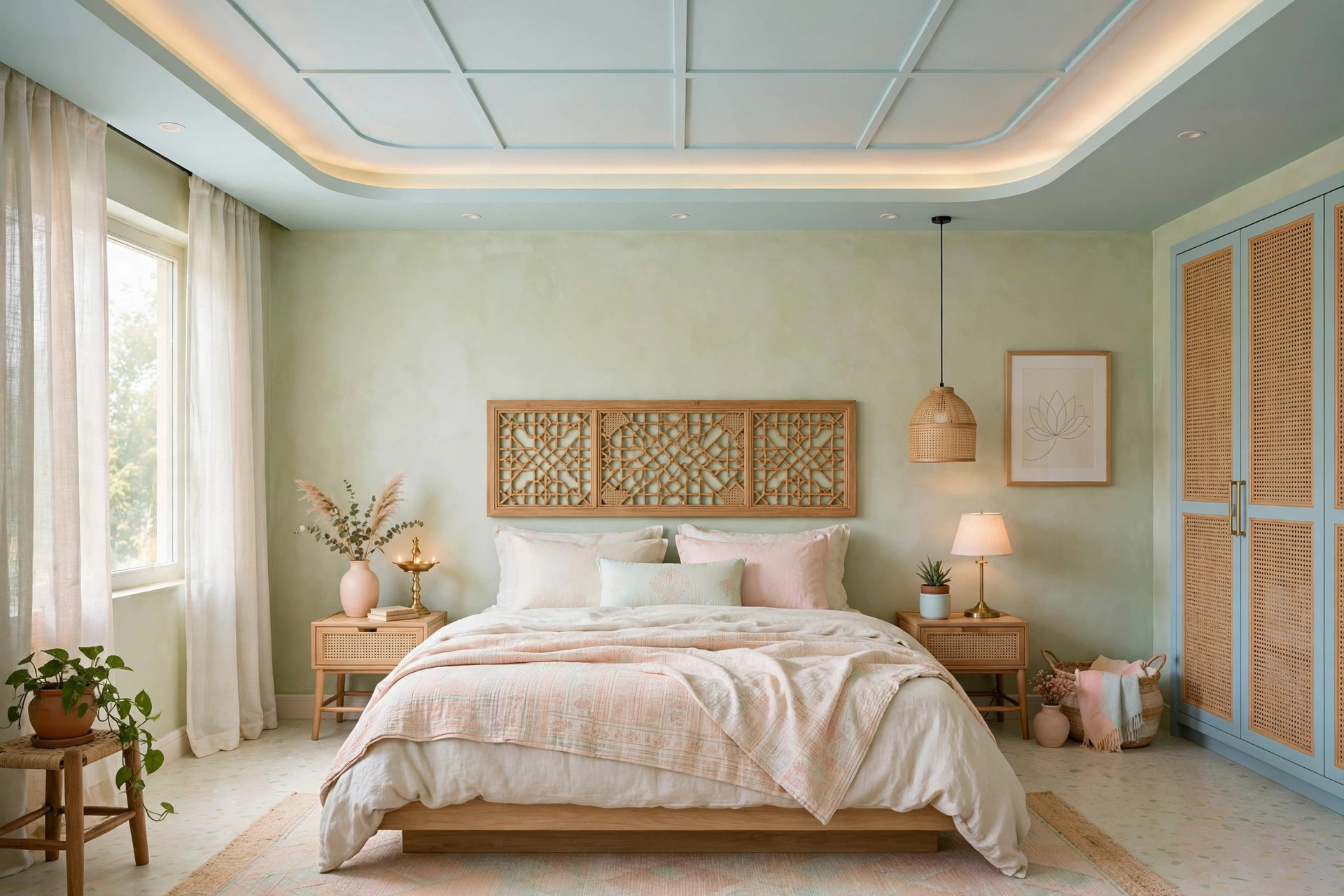
White, off-white, beige and soft pastels dominate bedroom ceilings for a reason: they reflect light and keep the room calm. If you want contrast, keep the bold colour to one accent — a tray border, a backlit panel — and the rest neutral. Dark ceilings can work in large, tall master bedrooms but shrink smaller rooms visually.
The ceiling fan question
Yes, you can have a ceiling fan with a false ceiling — a tray design with the fan at the centre is the classic Indian bedroom setup. But the fan must hang from the structural slab above through its own rod and anchor, never from the gypsum or POP board. Coordinate your electrician and ceiling contractor before the boards go up, and leave a small service gap or access point near the fan wiring.
AC placement and service access
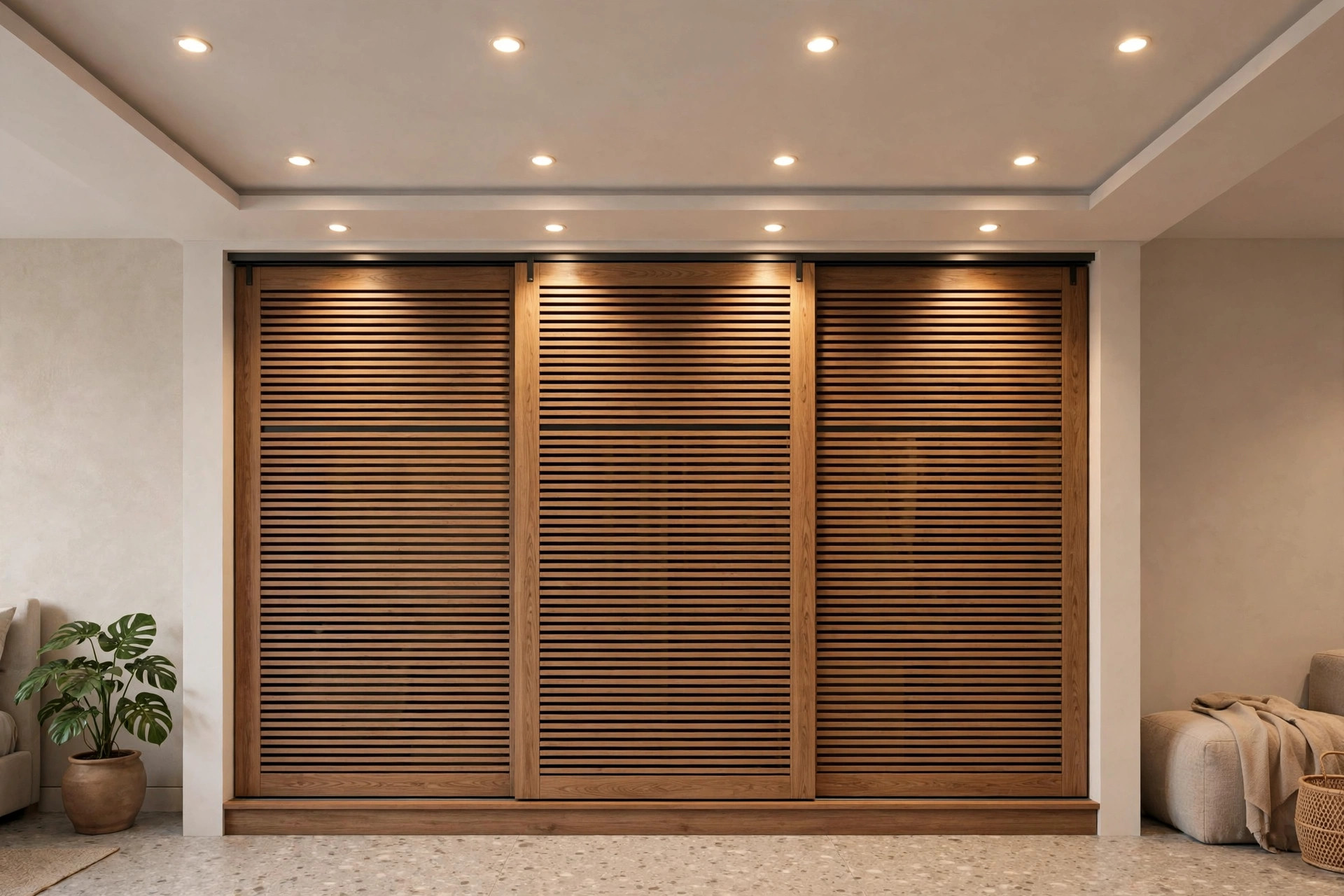
Mark split-AC indoor unit positions before framing so the ceiling design works around them, not against them. Ask for at least one discreet access panel near wiring junctions — future electricians will thank you. Wardrobe tops often hide a useful service strip.
Material pointers: gypsum, POP, PVC, wood
- Gypsum: smooth factory finish, neat joints, the default for modern bedrooms. See gypsum false ceiling design for bedroom for a detailed planning guide.
- POP: best for curves and custom shapes; can develop hairline cracks over time.
- PVC: practical but rarely premium-looking; fine for simple bedroom ceilings on a budget.
- Wood: use as an accent; ensure termite-treated material.
Budget planning: what drives the cost
Indian interior publications report roughly ₹70–₹300 per sq ft installed for bedroom ceilings depending on material and complexity (figures retrieved September 2026): plain designs at the lower end, coffered and multi-layered at the upper end. What moves the number most is design complexity, lighting integration and city — not just the material. Always get an itemised quote covering boards, frame, labour, finishing, paint, lights, wiring and taxes.

When NOT to get a false ceiling in your bedroom
- Ceiling height is very low and you cannot spare 4–6 inches.
- There is an active leakage problem — fix it first.
- You are renting without the landlord’s written approval.
- You only want recessed lights — surface profiles or a slim peripheral strip may be enough.
Quick decision summary
- Measure height first; it rules out half the designs honestly.
- Tray with cove lighting is the safest all-rounder for Indian bedrooms.
- Warm white, dimmable light beats a fancy pattern for comfort.
- Fan and heavy lights anchor to the slab — never the board.
- Plan AC positions and an access panel before framing.
- For material-specific planning, read our gypsum bedroom guide and the whole-home false ceiling planning guide.
Before you pay the final bill: a short handover checklist
- All lights and the fan work from every switch.
- Joints are smooth — run your eye along them in daylight.
- Paint finish is even, including inside coves.
- Access panels open and close properly.
- You have the contractor’s contact for touch-ups.
Frequently asked questions
Can I install a ceiling fan with a false ceiling in my bedroom?
Yes — a tray ceiling with the fan at the centre is the standard setup. The fan must be anchored to the structural slab above through its own rod, not to the ceiling board. Plan this with your electrician before the boards go up.
What is the minimum ceiling height for a false ceiling in a bedroom?
There is no universal minimum, but below about 9 feet you should stick to flat or peripheral designs with shallow drops, so the room does not feel cramped.
Which is better for a bedroom — gypsum or POP?
Gypsum gives a smoother finish with neat joints and suits modern bedrooms; POP is better for curves and custom shapes and is often cheaper, but may develop hairline cracks. Our gypsum bedroom guide compares them in detail.
How much does a bedroom false ceiling cost in India?
Published indicative ranges run roughly ₹70–₹300 per sq ft installed (retrieved September 2026), from plain designs to elaborate coffered ceilings. Get an itemised quote — material, frame, labour, finishing, lights, wiring and taxes are often priced separately.
Will a false ceiling make my small bedroom feel smaller?
A deep layered ceiling can. A slim flat or peripheral ceiling in light colours usually does the opposite — especially with cove lighting washing the walls.
Does a false ceiling help with heat and noise?
The air gap gives a modest improvement in thermal and sound insulation, but it is not a substitute for proper insulation or acoustic treatment. Treat comfort gains as a bonus, not the reason to install.
How long does a bedroom false ceiling last, and what maintenance does it need?
A well-built ceiling in a dry room lasts well over a decade. Maintenance is light: dusting, occasional repainting, and checking LED drivers once a year. Fix any water leakage promptly — moisture damages gypsum and POP.
I live in a rented flat. Can I still get a false ceiling?
Only with your landlord’s written approval — it is not easily reversible. Many tenants skip it and use surface lighting instead.
All images in this guide are original concept renders and illustrations created for falseceiling.in — they show design ideas, not completed projects.