
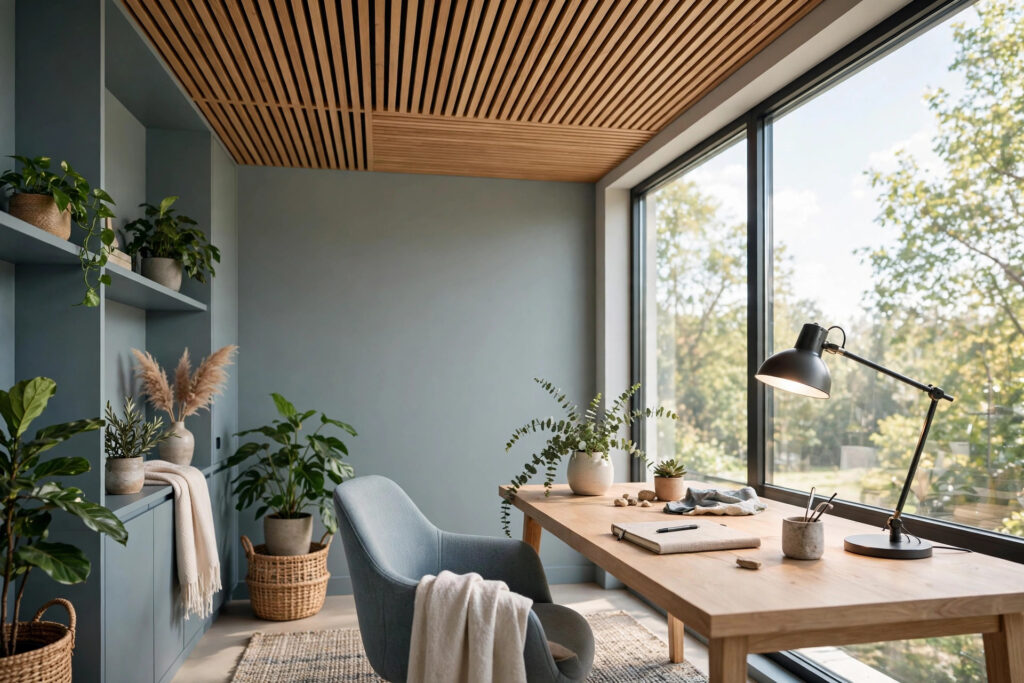

You do not need a prettier study ceiling. You need one that helps you think — light that keeps you alert without glaring on your screen, quiet enough for back-to-back calls, and not a single cable in sight. A study room false ceiling design is a performance upgrade disguised as interior design: it controls light quality, tames echo, hides the mess of modern work, and sets a visual tone that says “focus” the moment you sit down. This guide covers focus lighting, acoustics, 8 designs, cable concealment, video-call light, small nooks and real Indian pricing context.
For planning the ceilings of every room together, see our complete false ceiling design guide.
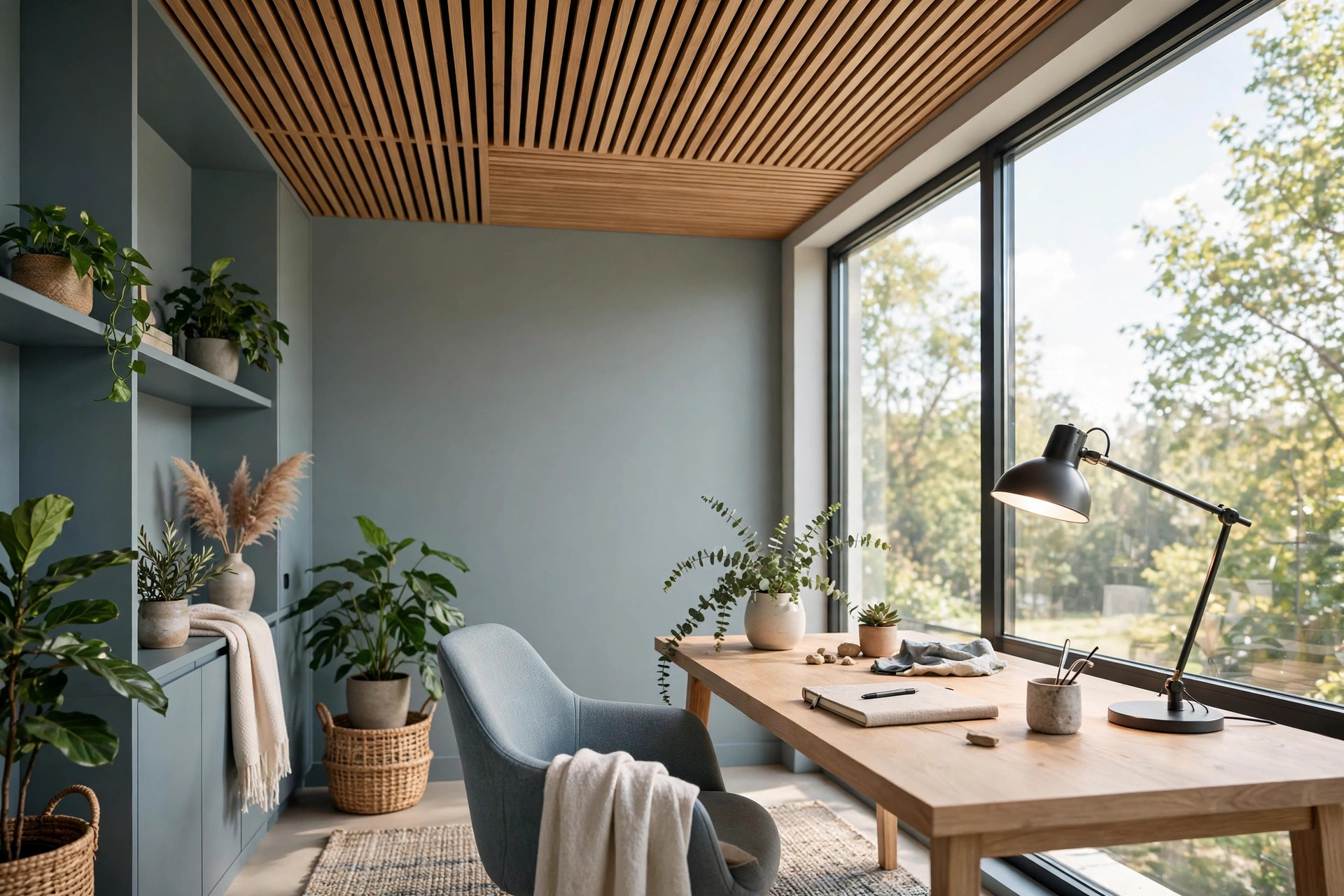
What a study ceiling has to do
Forget decoration for a moment. A home office ceiling has three jobs:
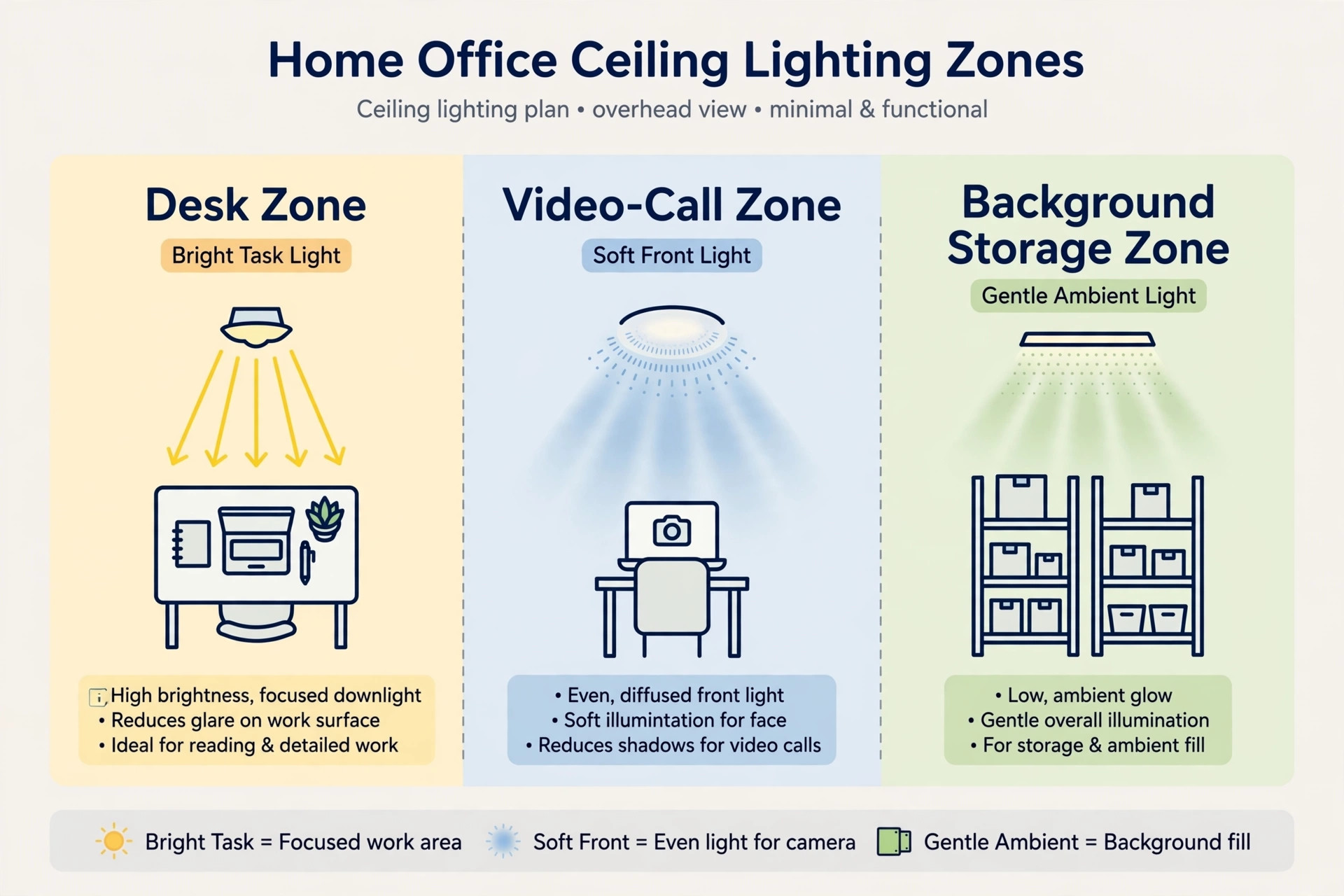
- Light for the task: bright, even, glare-free light on the desk — the right colour temperature keeps you alert through long sessions.
- Quiet for the mind: hard flat ceilings bounce sound around; the right ceiling treatment cuts echo so calls are clearer and concentration holds.
- Hide the infrastructure: chargers, monitor cables, routers, LED drivers — the ceiling void swallows them all, leaving a visually calm room.
Lighting for focus: the numbers that matter
Study lighting is the one place where published guidance gets specific — treat these as sourced reference points from lighting and workplace standards, not universal law:
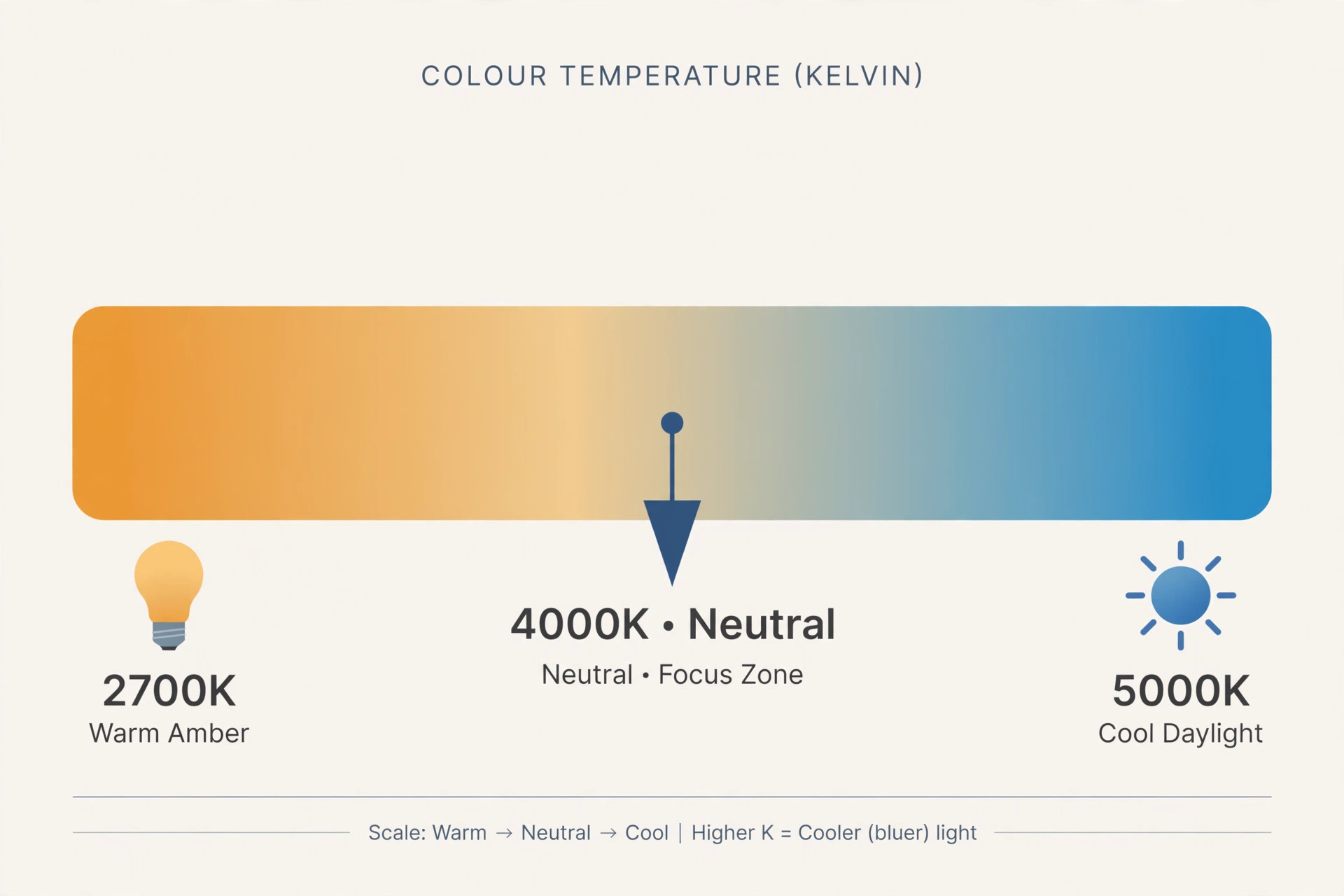
- Colour temperature: 3000–4000K supports alertness for study work, with 3500–4000K described as the neutral/alerting band; dim-to-warm or tunable fixtures can drop to 2700–3000K for evening wind-down (Coohom study-ceiling guidance, retrieved September 2026). One practical answer-box pick: dimmable LED at ~4000K neutral white — with the warning that 2700K warm yellow “feels relaxing but reduces alertness” (Coohom, retrieved September 2026).
- Colour quality: CRI 90+ is recommended so screens, paper and skin tones all read naturally (Coohom, retrieved September 2026).
- Brightness: ambient 300–500 lux on the work surface for reading and typing (cited to the IES Lighting Handbook), rising to 500–700 lux for detailed task work (cited to WELL v2) — via Coohom study guidance, retrieved September 2026. In plain terms: small studies (<80 sq ft) suit a 2000–2500 lumen panel; medium rooms (80–150 sq ft) a 3000–4000 lumen flush mount; larger rooms need multiple fixtures (Coohom, retrieved September 2026).
- Glare control: UGR ≤19 is the cited target for study tasks — achieved with matte finishes, luminaires angled away from screens, and light-neutral ceilings at 70–85% reflectance rather than dark ceilings (Coohom, retrieved September 2026).
- Flicker: insist on flicker-free drivers (high-PWM-frequency or DC) — invisible flicker causes real eye fatigue over long workdays (Coohom, retrieved September 2026).
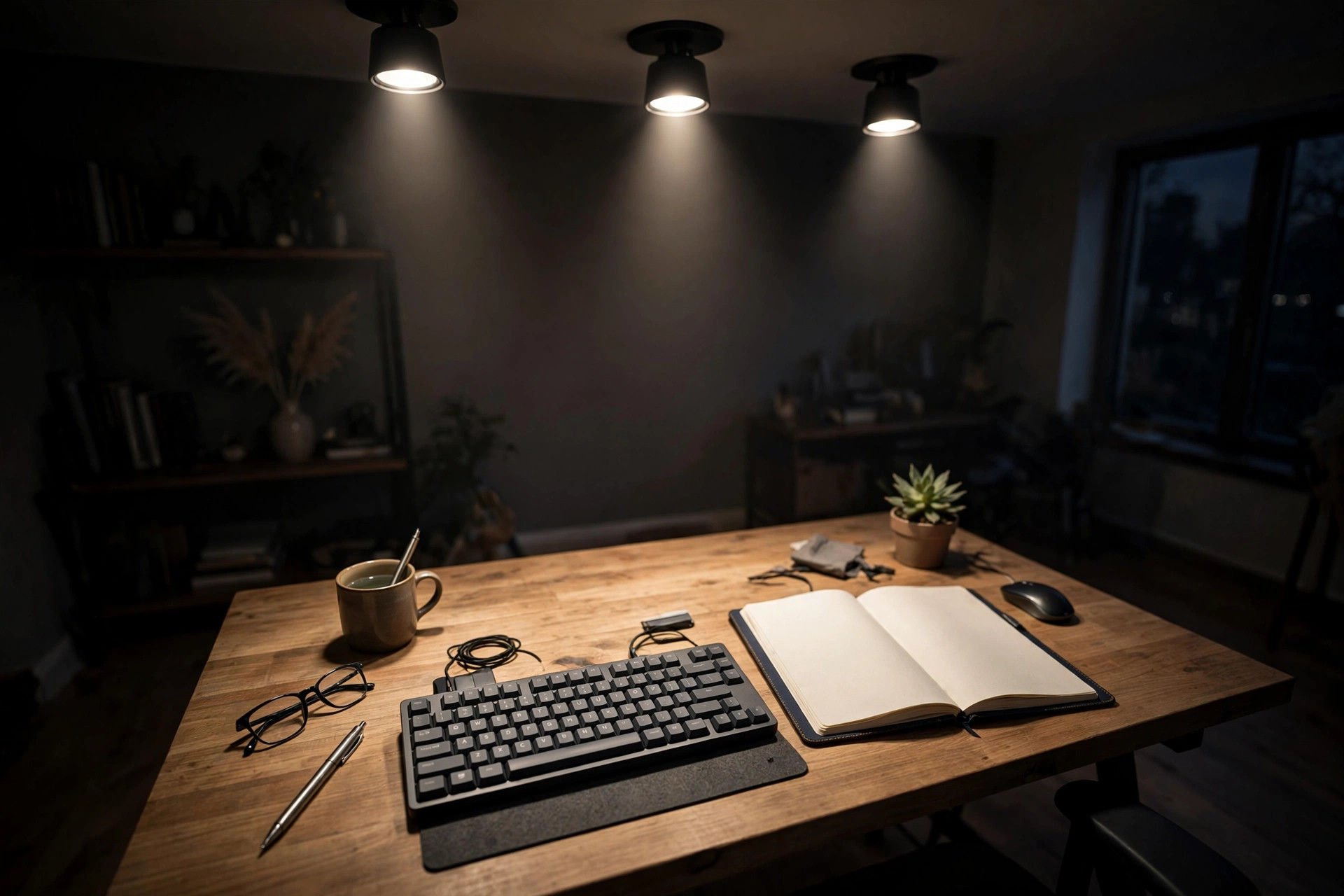
All ceiling lighting wiring must be done by a qualified electrician.
Acoustics: the quiet upgrade
Echo is the enemy of concentration and the reason calls sound hollow. Published study-ceiling guidance points to rated absorption:
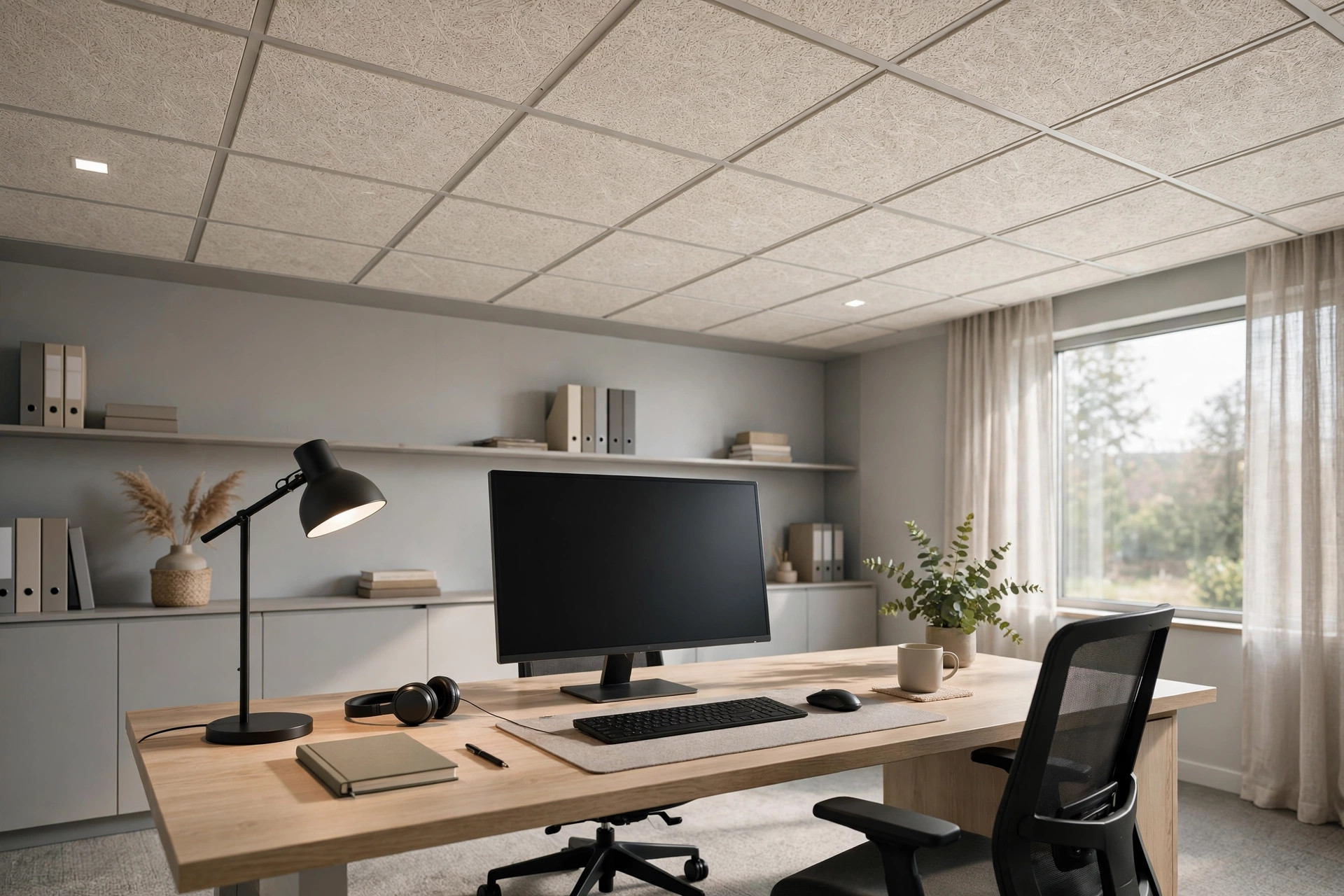
- What to ask for: mineral-fibre tiles or PET felt panels rated around NRC 0.7 and above are described as significantly reducing echo and improving call clarity (Coohom study guidance, retrieved September 2026); fabric-wrapped panels are quoted at NRC 0.75–0.90.
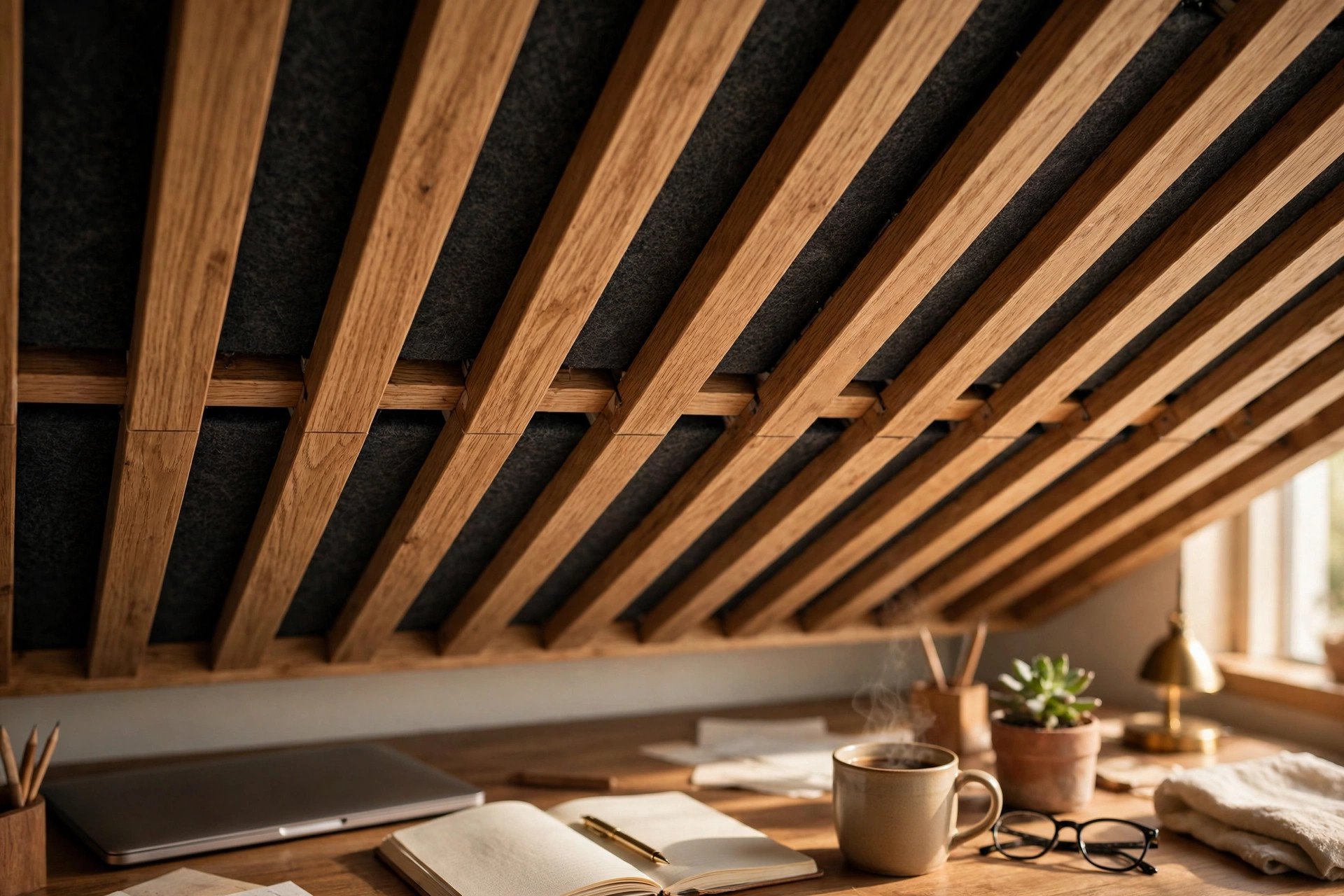
- How it looks: micro-perforated timber over acoustic fleece, floating acoustic clouds that can carry linear lights, or simple acoustic tile grids — quiet does not have to look technical.
- Where it matters most: the ceiling area above and around the desk — that is where your voice bounces first.
- Realistic expectations: ceiling treatment cuts echo and reverberation inside the room; it is not soundproofing against traffic or neighbours — that is a different (bigger) project.
Materials for a study false ceiling
- Gypsum: the most popular office-ceiling material — smooth finish, easy to install, paintable and fire-resistant (Coohom office-ceiling guide, retrieved September 2026). The default for clean, minimal studies.
- Mineral-fibre tiles: the acoustic workhorse — rated absorption plus easy tile-by-tile access to the void above.
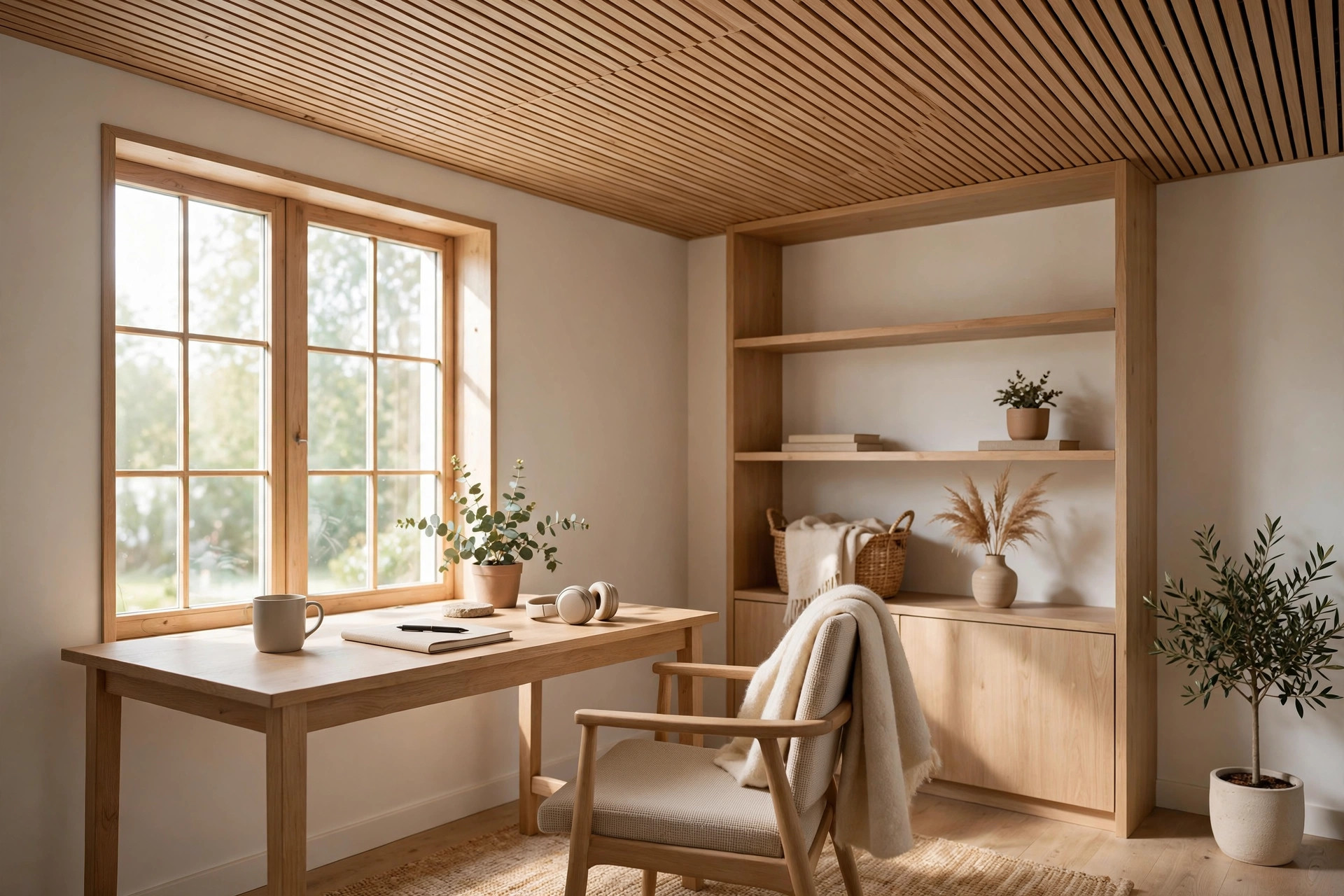
- Wood slats / battens: warmth plus acoustic softness; a real 10×9 ft Indian home office used a wooden false ceiling with walnut-bronze tones to strong effect (Livspace project, retrieved September 2026).
- PET felt / fabric panels: soft, colourful acoustic treatment for feature zones — good over the desk or behind the video-call background.
- POP: for trays, coffers and crisp geometric mouldings when the design calls for depth.
8 focus-friendly study ceiling designs
1. Peripheral border with cove strip
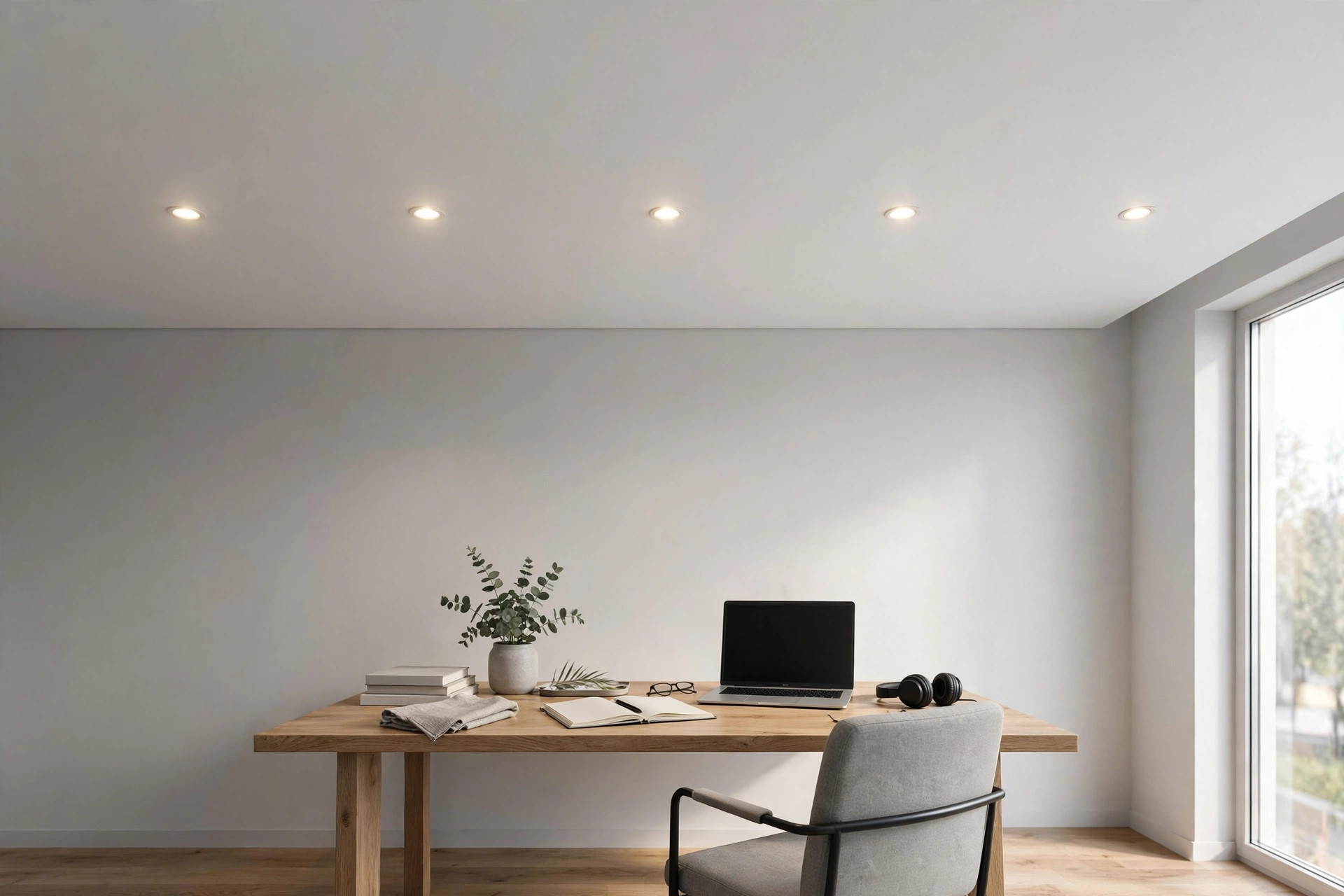
Only the edges drop; the centre keeps full height. You get a calm cove glow plus spots with almost no cramping — ideal for compact studies. Flat gypsum with recessed LEDs is specifically recommended for study rooms: “bright, even lighting with minimal visual distractions” (NoBroker, retrieved September 2026).
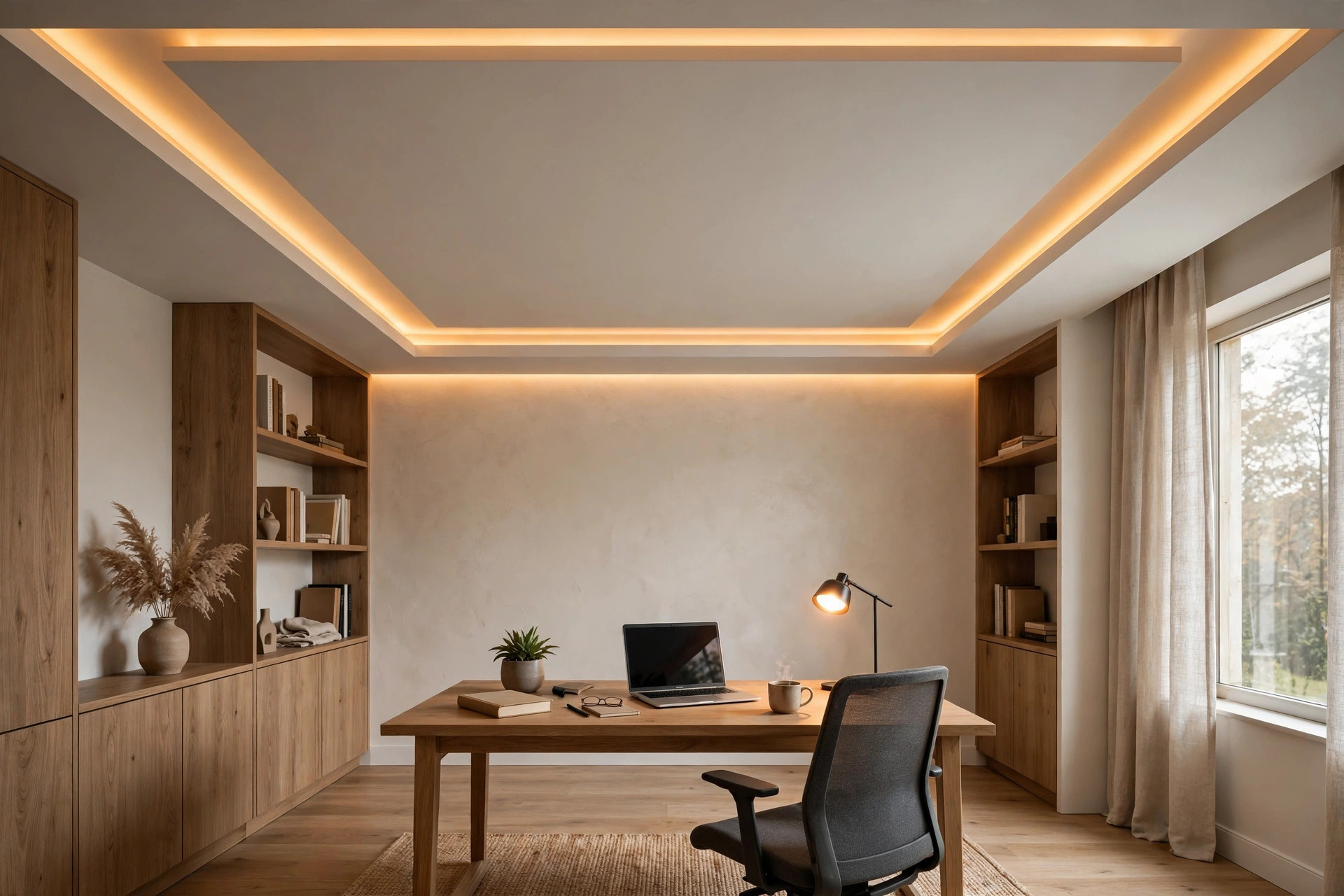
2. Tray ceiling for even, glare-free light
A shallow tray gives soft, even illumination with natural glare control — the tray form is cited for “even light, glare control” in study ceilings (Coohom, retrieved September 2026). Keep it matte white for maximum reflectance.
3. Wood slat acoustic ceiling
Full or partial timber battens over dark acoustic fleece: warm, quiet and unmistakably premium. The standout choice when the study doubles as a client-facing video background.
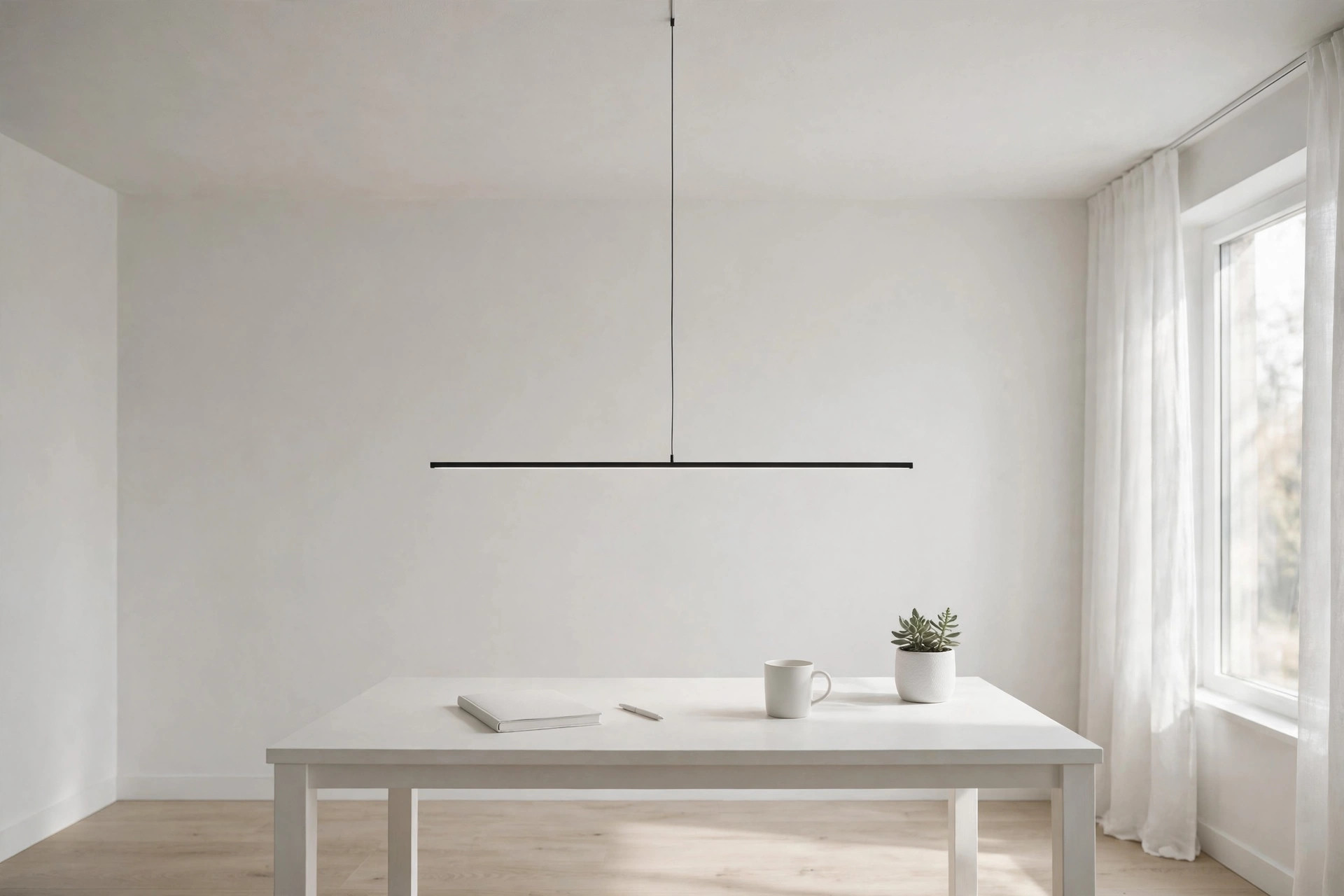
4. Minimal white with a linear pendant
One flat white plane, one slim linear light over the desk. The least visually noisy option — nothing competes with the work. Suits deep-focus writers, coders and researchers.
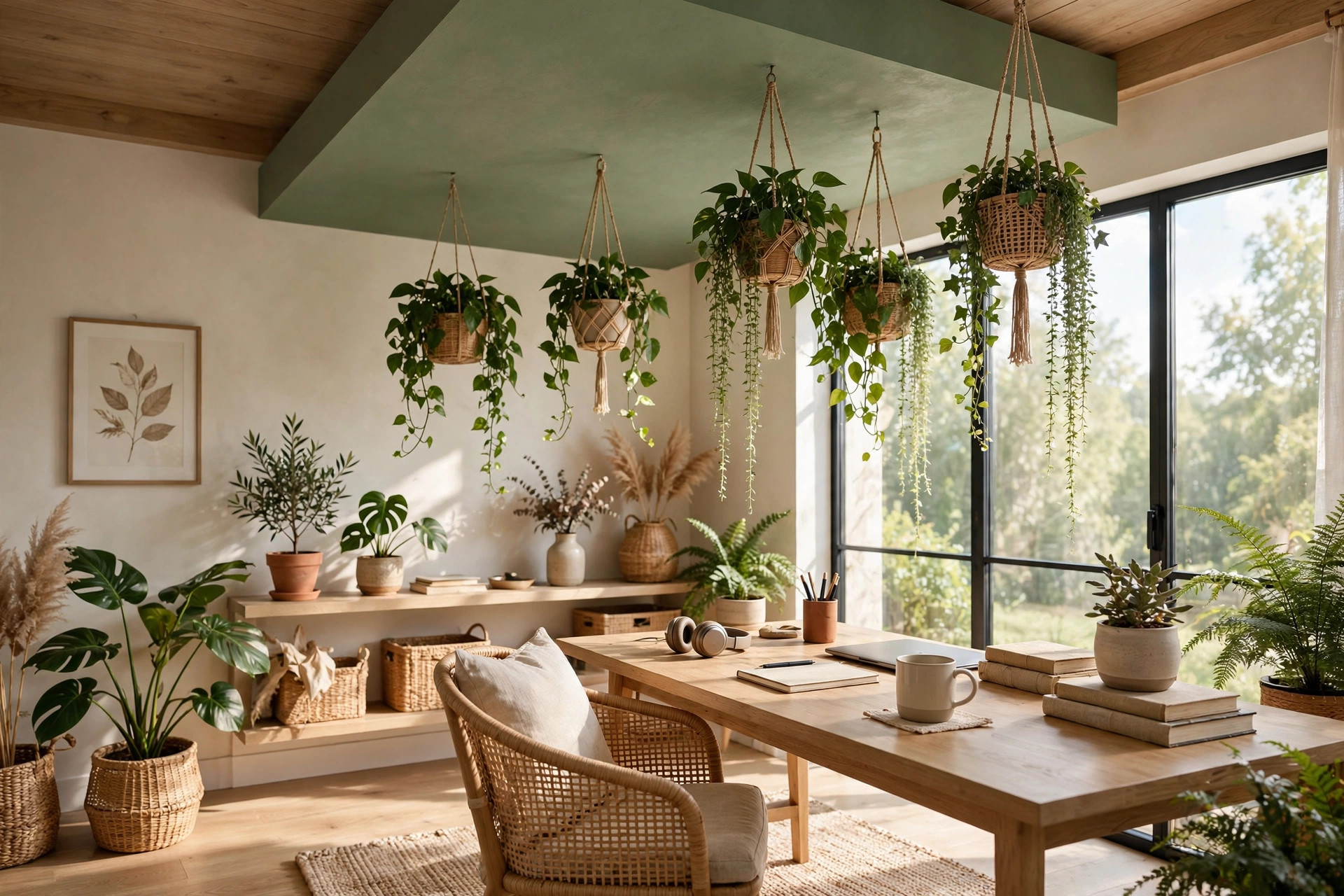
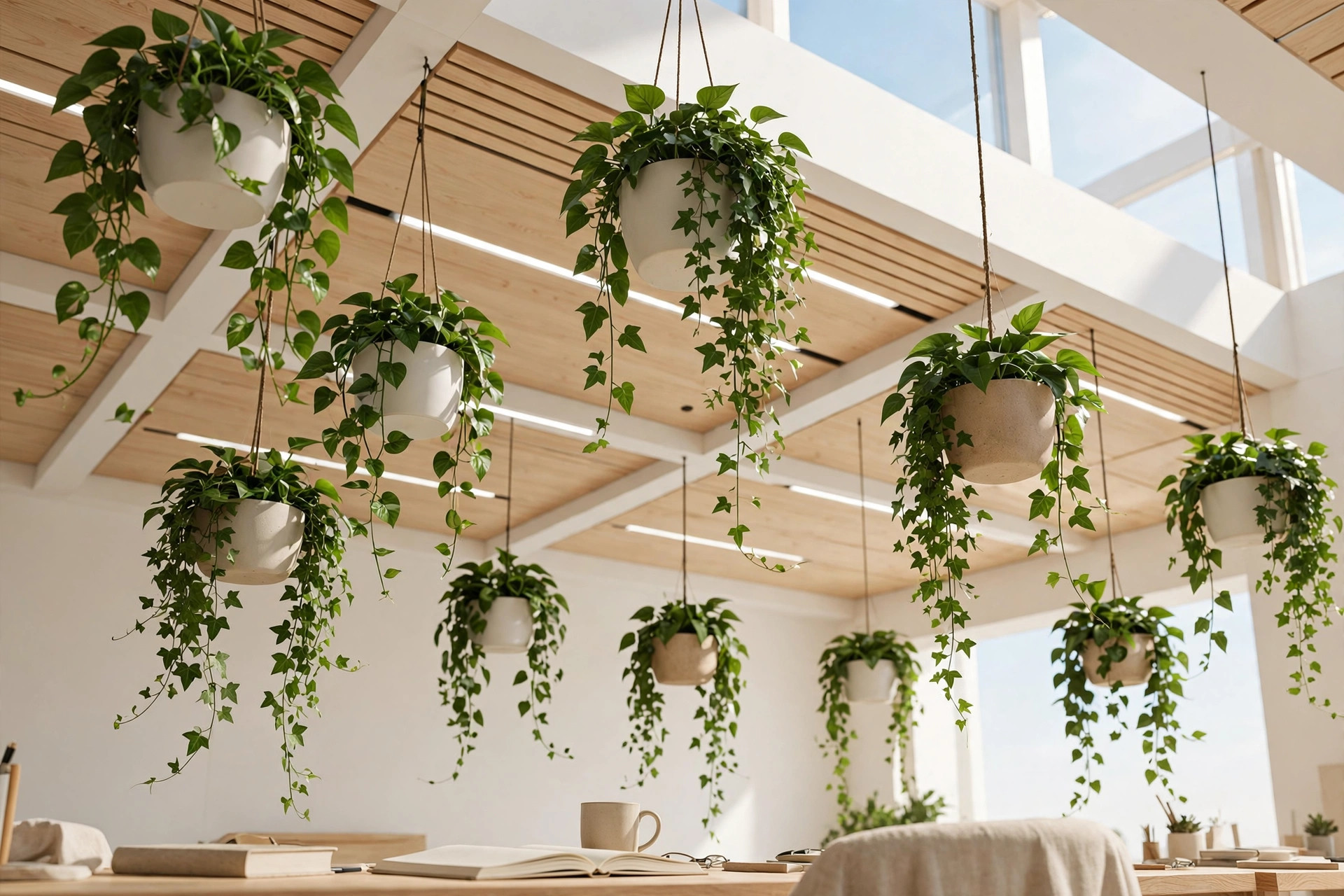
5. Biophilic green accent panel
A sage-green acoustic panel zone with hanging planters: colour psychology and air-purifying greenery in one move. Muted greens and neutrals are the focus-friendly palette (more below).
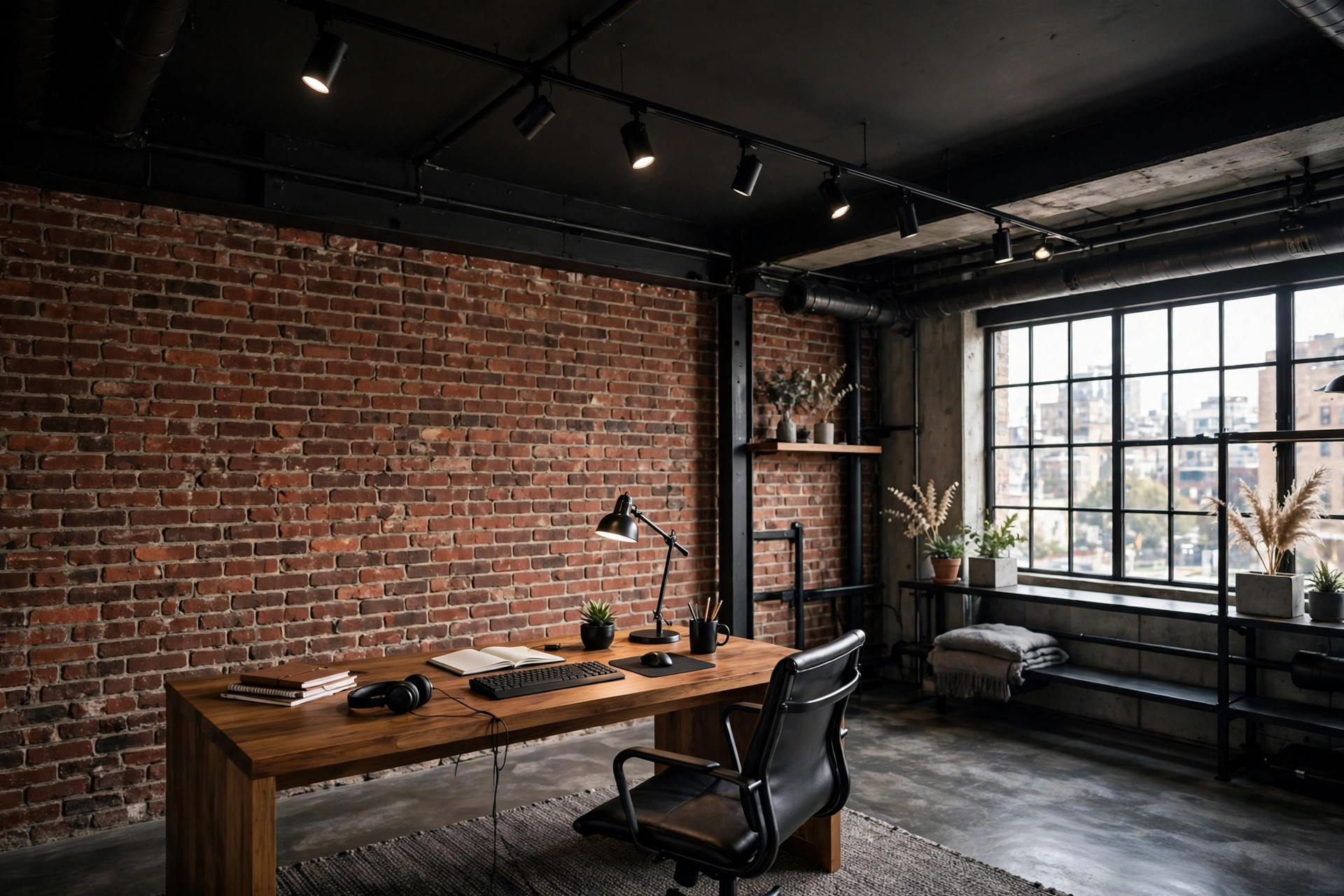
6. Loft-style track ceiling
Dark charcoal plane with adjustable track spots — aim light exactly where each task needs it. Dramatic and flexible; needs strong total light output to avoid gloom.
7. Floating acoustic islands
Detached ceiling panels (“clouds”) floating over the desk zone, optionally backlit. They concentrate acoustic treatment and light exactly over the work area while the rest of the ceiling stays high and plain.
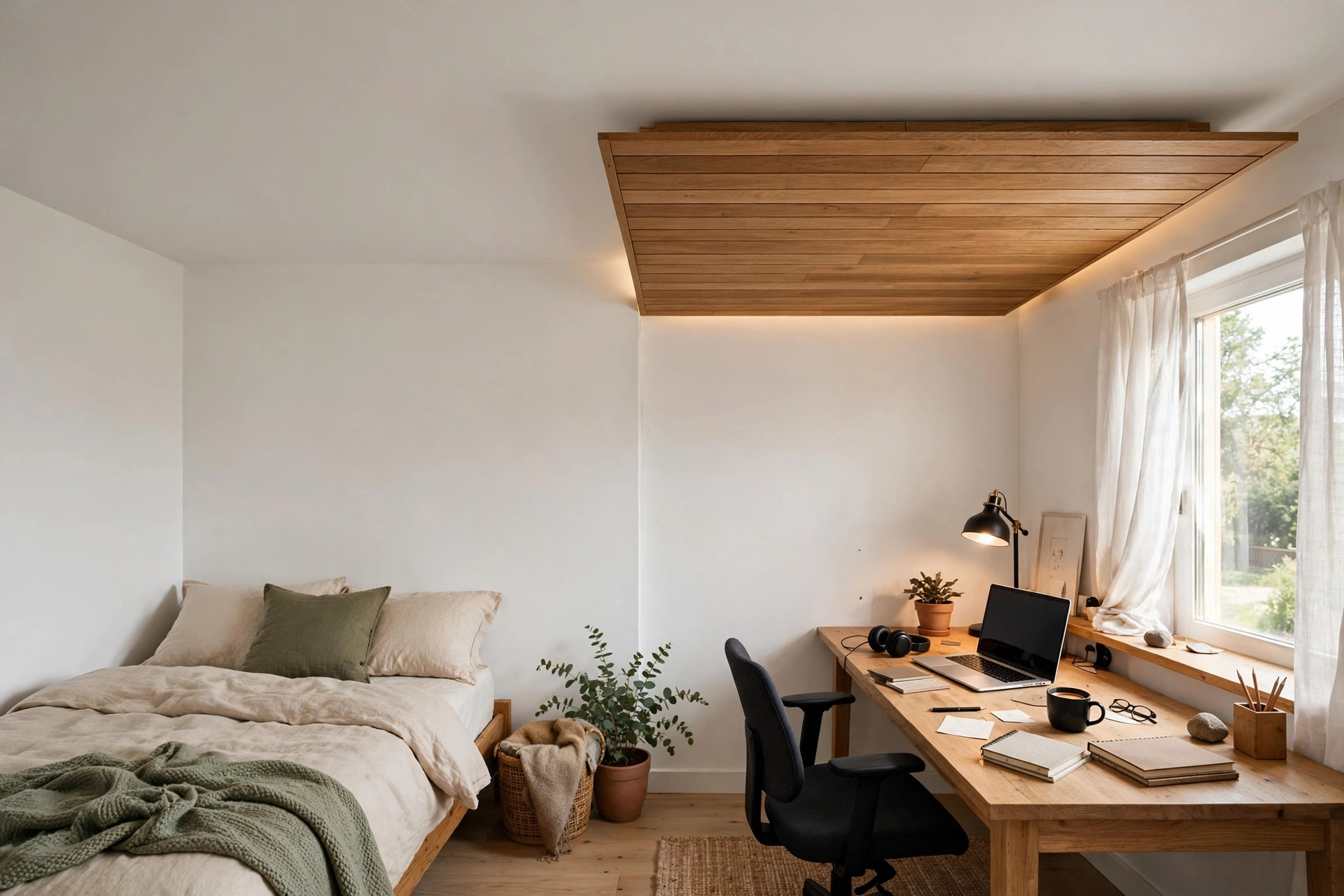
8. Dual-purpose zone panel
In a bedroom-corner office, a dropped timber or coloured panel marks the work zone within the larger room — a visual boundary that helps the brain switch into work mode. The rest of the ceiling stays flat and calm.
Hide the cables: the void is your friend
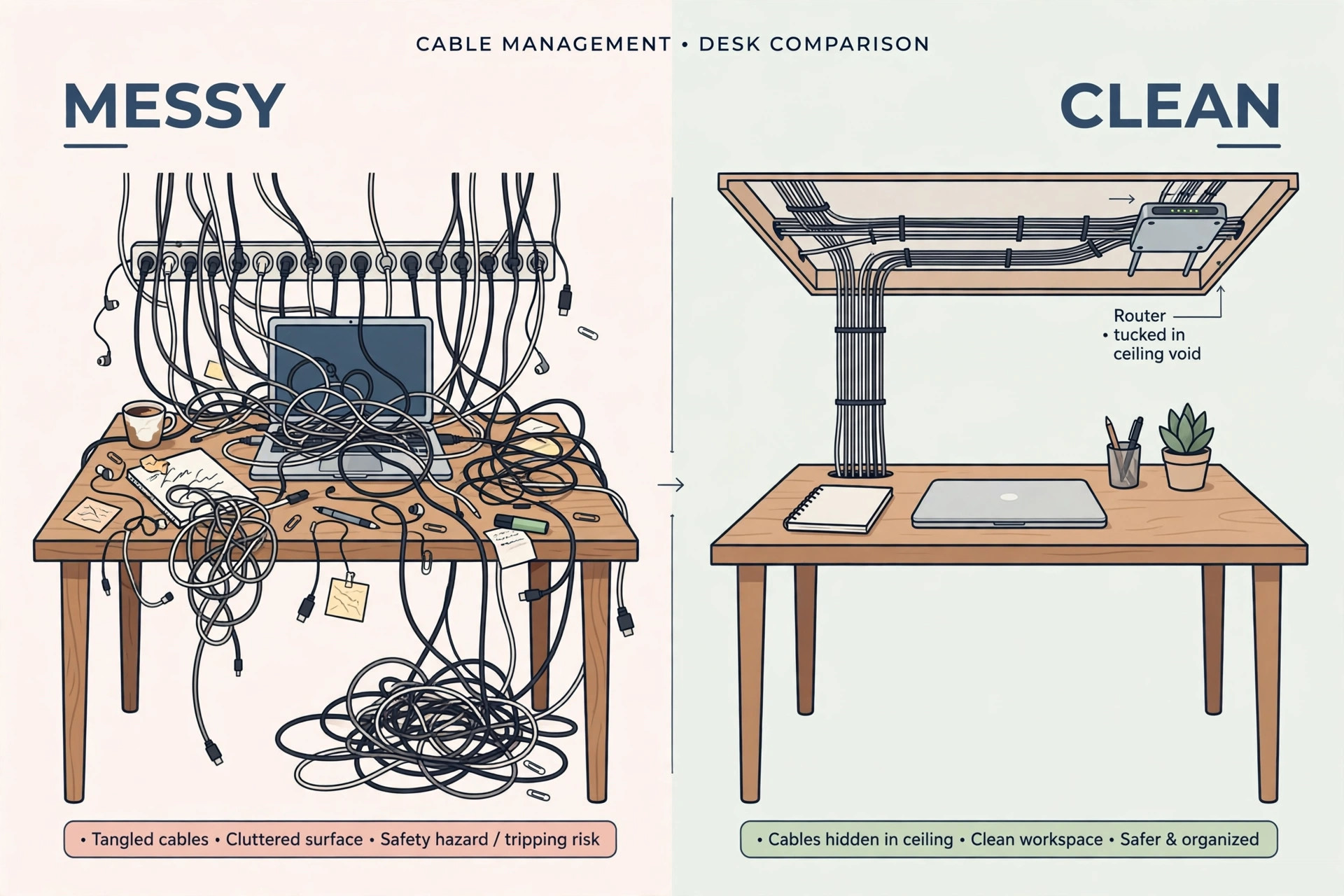
Monitor cables, charger bricks, router, LED drivers — a false ceiling void swallows them all. Plan it deliberately:
- Route before framing: decide where the desk, monitor and router live, then run cable drops aligned with the furniture — not after the boards go up (Coohom study guidance, retrieved September 2026).
- Access panels: put a discreet panel near drivers and junctions; a failed LED driver should not mean cutting the ceiling open.
- Power where it lands: extra junction boxes near the desk wall save a lifetime of extension boards.
Look good on video calls
No ranking page covers this well, so here is the practical synthesis:
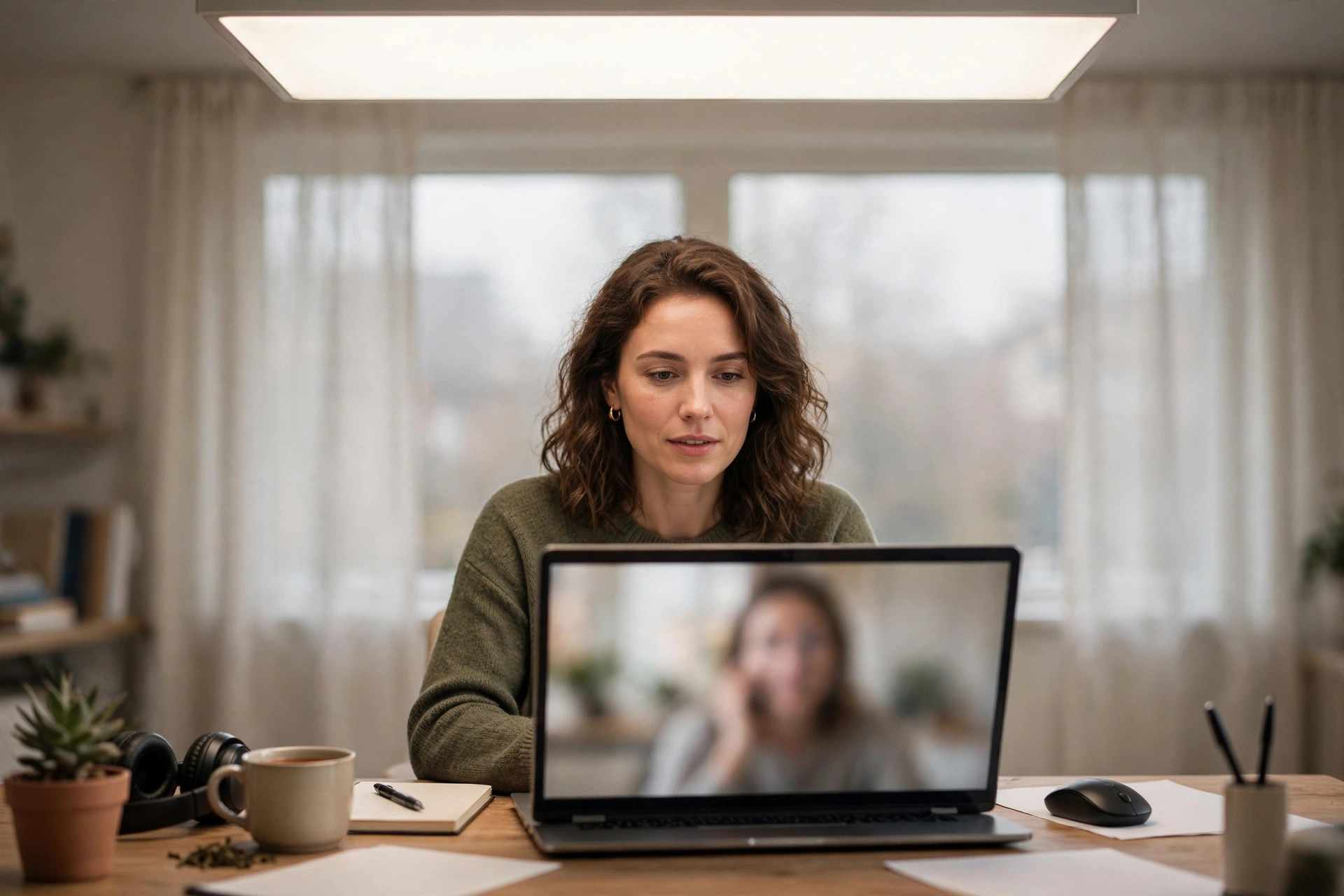
- Face light first: a soft, diffused front light (a ceiling panel or flush mount in front of you, angled toward your face) beats any background treatment. Never sit with a bright window directly behind you — the camera exposes for the window and turns you into a silhouette.
- Background illumination: a gentle cove or wall-wash behind you gives the camera something pleasant to expose — wood slats or a green panel read beautifully on video.
- Kill the glare: matte ceiling finishes and diffused fixtures avoid hot spots; position luminaires at oblique angles to screens (Coohom study guidance, retrieved September 2026).
- Colour temperature on camera: neutral 3500–4000K renders skin tones most naturally on webcams.
Small study nooks
Under-stair corners, balcony ends and bedroom nooks all work as studies with a slim ceiling:
- Minimal drop: 60–80 mm is enough for LED profiles plus wiring (Coohom study guidance, retrieved September 2026) — no need for deep trays.
- Flush over pendants: where ceilings run under 8 ft, flush-mount panels beat pendants, which eat headroom (Coohom, retrieved September 2026).
- One strong task light: a single bright panel or two focused spots over the desk matter more than any design gesture.
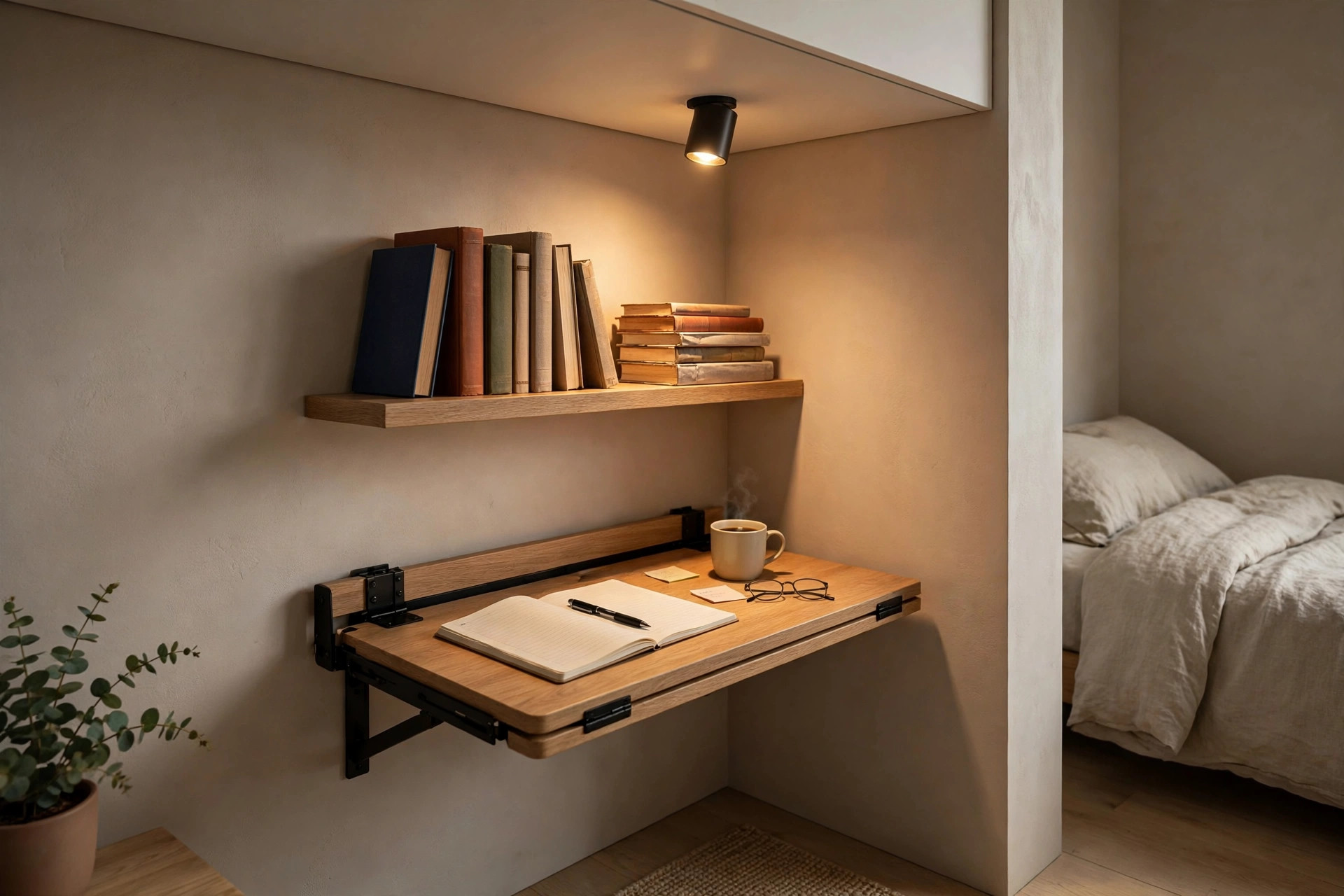
Dual-purpose rooms: bedroom by night, office by day
The most common Indian home office is a corner of the bedroom. The ceiling can enforce the boundary the room lacks: a dropped panel, a change of material (timber over the desk, white elsewhere), or a distinct light scene on its own switch. When work ends, that scene switches off — and the brain gets the message.
For the bedroom side of the equation, see our false ceiling design for bedroom guide — and if the study corner belongs to a child, our kids room false ceiling design guide covers study-zone lighting for young learners.
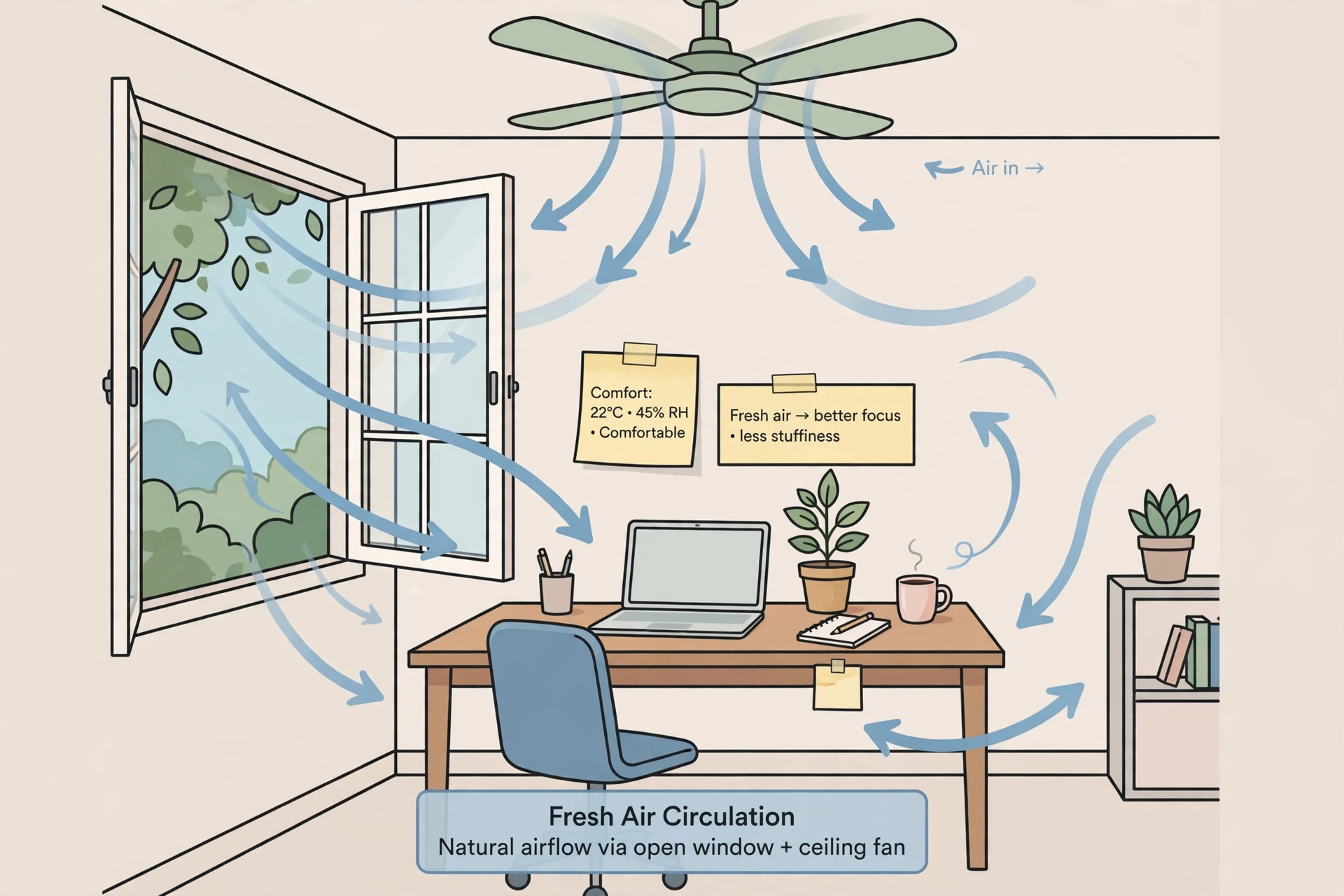
Fans, AC and ventilation
Studies need air as much as light. Coordinate early: leave space for ceiling fans and AC airflow and plan electrical points before the ceiling goes in (NoBroker, retrieved September 2026). A low-profile DC fan set to the side of the main task light avoids the classic fan-vs-light strobe conflict (Coohom study guidance, retrieved September 2026). Ducted AC grilles and purifiers can integrate into the ceiling plane — decide their positions with your contractor before framing.
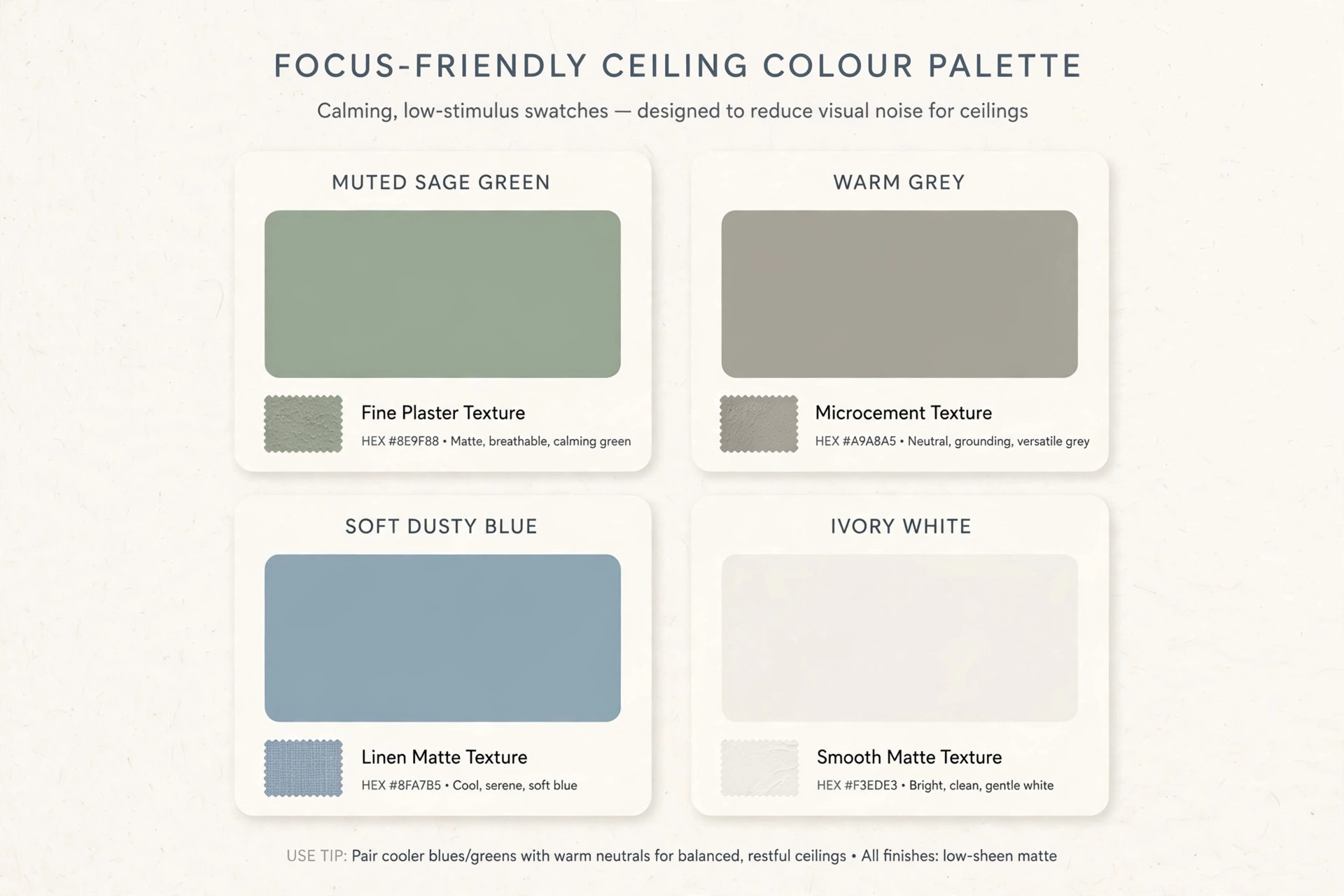
Calm colour palettes that support focus
- Ceiling: soft white and light neutrals at high reflectance (70–85%) bounce light evenly and keep the room bright (Coohom study guidance, retrieved September 2026).
- Accents: beige, sage, white and grey are described as enhancing focus, while teal, navy and mustard accents inspire creativity (Livspace home-office guidance, retrieved September 2026).
- Finish: matte, always — glossy ceilings create reflections that fight your screen.
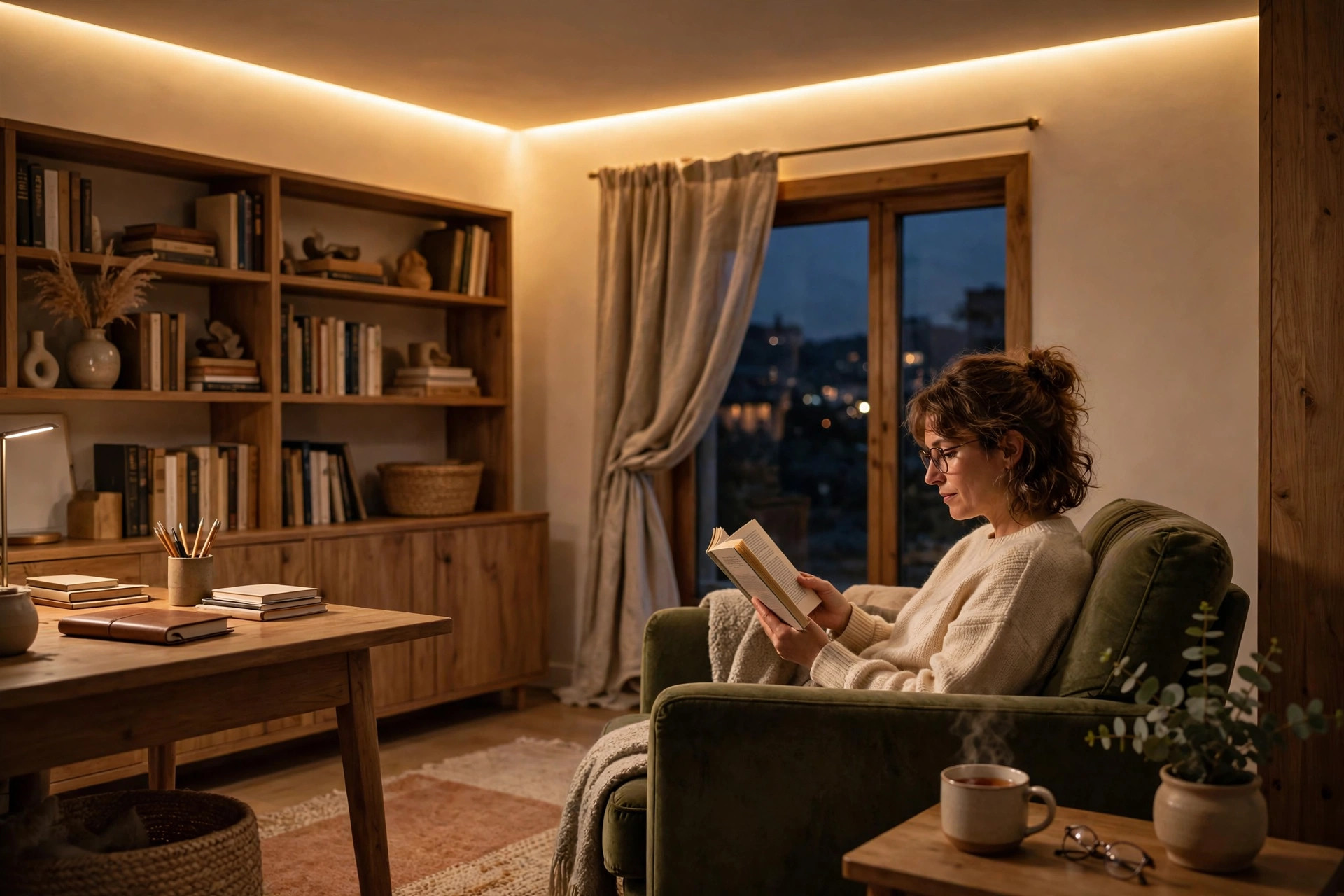
Budget planning: what drives the cost
Honest note: no per-square-foot ceiling-only Indian price for study ceilings was found on any ranking page. The one dated Indian figure is full-room scope — Livspace notes a home-office interior package “typically ranges from ₹80,000 to ₹3.5 lakh (September 2026), depending on room size, materials and customisation” (Livspace, retrieved September 2026). That covers furniture, storage and finishes — not the ceiling alone — so use it as whole-project budget context only.
What reliably moves the ceiling cost:
- Acoustic treatment: rated panels, slats over fleece and floating clouds cost more than plain gypsum.
- Lighting spec: high-CRI, flicker-free, dimmable/tunable fixtures cost more than basic spots — and are worth it for full workdays.
- Complexity: flat and peripheral are cheapest; trays, coffers, baffles and islands add labour.
- Cable/access work: extra junction boxes and access panels are small but real line items.
Always get an itemised quote covering boards, frame, acoustic treatment, lights, drivers, wiring and taxes.
Quick decision summary
- Light for alertness: neutral 3500–4000K, high CRI, glare controlled — the desk bright, the room calm.
- Quiet for calls: rated acoustic treatment over and around the desk zone.
- Hide everything: cables, drivers and routers live in the void, with access panels for servicing.
- Face the camera properly: front light on you, gentle light behind you, no window at your back.
- Matte light neutrals overhead; muted sage/grey/blue accents for focus.
- For planning all rooms together, read our whole-home ceiling planning guide.
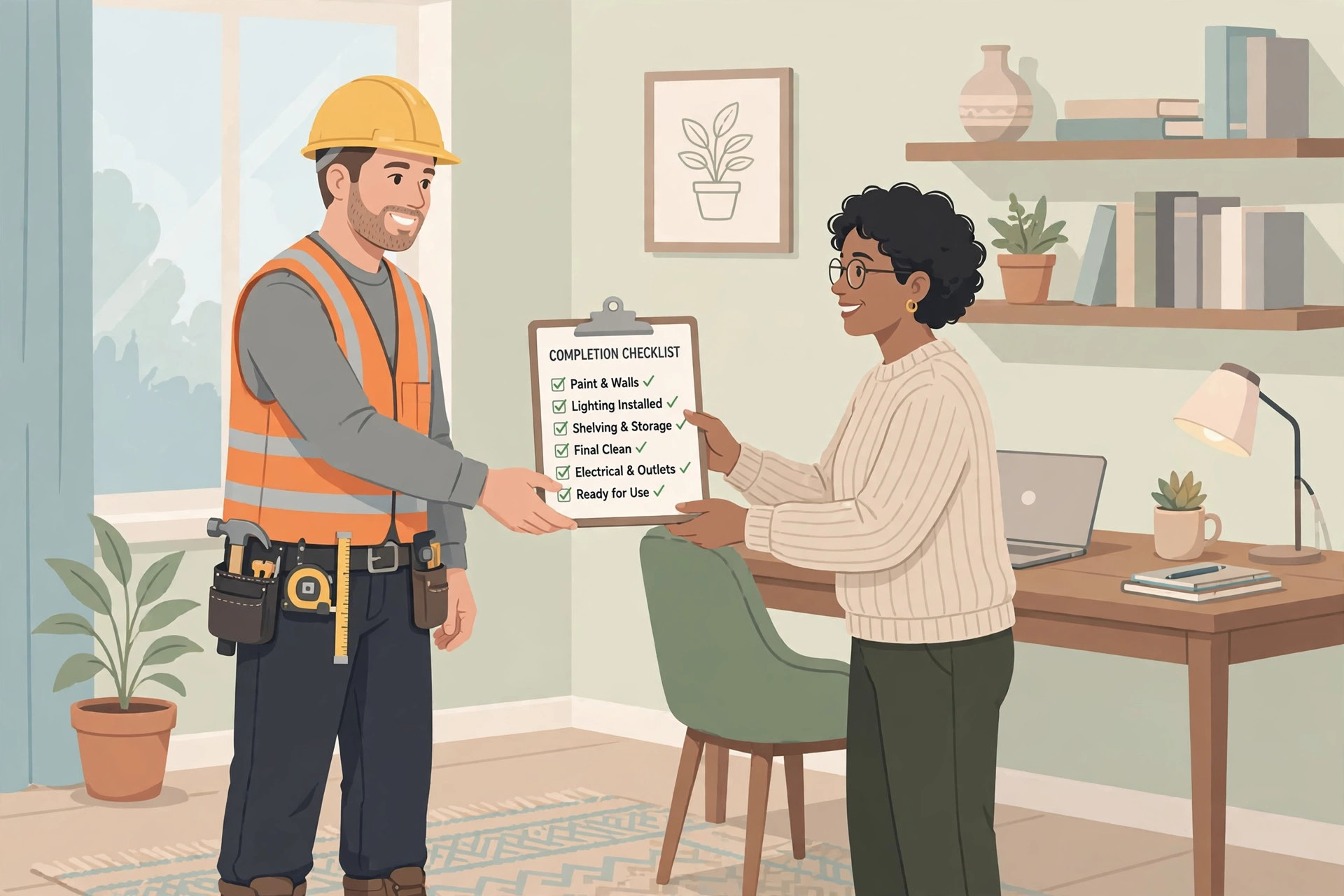
Before the final payment: a short handover checklist
- Task lighting hits the desk evenly with no dark corners and no screen glare.
- Dimmers and tunable settings work smoothly across their full range — no flicker.
- Video-call test: sit at the desk and check your face on camera in day and night light.
- Acoustic panels are firmly fixed with no rattling; the room sounds noticeably calmer.
- Access panels open cleanly over drivers and junctions.
- Every cable is concealed; every switch is labelled; you have the fixture and driver specs in writing.
Frequently asked questions
How bright should study room ceiling lights be?
Published guidance cites 300–500 lux ambient on the work surface for reading and typing (IES Lighting Handbook), rising to 500–700 lux for detailed task work (WELL v2) — via Coohom study-ceiling guidance, retrieved September 2026. In fixture terms: roughly a 2000–2500 lumen panel for small studies, 3000–4000 lumens for medium rooms.
Which colour temperature is best for a study room?
3000–4000K for alertness, with 3500–4000K the neutral/alerting band; dimmable or tunable fixtures can warm to 2700–3000K for the evening (Coohom study guidance, retrieved September 2026). Pair it with CRI 90+ for natural colour rendering.
Do acoustic panels really help in a home office?
For echo and call clarity, yes — mineral-fibre or PET felt panels around NRC 0.7+ are described as significantly reducing echo (Coohom study guidance, retrieved September 2026). They are not soundproofing against outside noise, which is a separate project.
What is the best ceiling colour for a study?
Soft white or light neutrals at 70–85% reflectance to bounce light evenly; beige, sage, white and grey enhance focus, with deeper accents used sparingly (Coohom; Livspace, retrieved September 2026). Always matte — never glossy near screens.
How low can I drop a study ceiling?
Very little is needed — 60–80 mm covers LED profiles plus wiring (Coohom study guidance, retrieved September 2026). Under 8 ft ceilings, use flush-mount panels rather than pendants.
Can I have a ceiling fan with a study lighting plan?
Yes — use a low-profile DC fan set to the side of the main task light to avoid the fan-vs-light strobe effect, and leave space for airflow when planning (Coohom; NoBroker, retrieved September 2026).
How do false ceilings help with cable management?
The void conceals cable trays and power feeds; plan neat cable drops aligned with your furniture plus access panels before framing (Coohom study guidance, retrieved September 2026). Decide desk, monitor and router positions first.
What does a study room false ceiling cost in India?
No ceiling-only per-square-foot Indian rate was published on any page checked. The only dated Indian figure is whole-project scope: a home-office interior package at ₹80,000–₹3.5 lakh (September 2026), covering furniture and finishes — not the ceiling alone (Livspace, retrieved September 2026). Get itemised quotes for your exact scope.
All images in this guide are original concept renders and illustrations created for falseceiling.in — they show design ideas, not completed projects.

Pingback: Office False Ceiling Designs: Ideas, Acoustics & Lighting