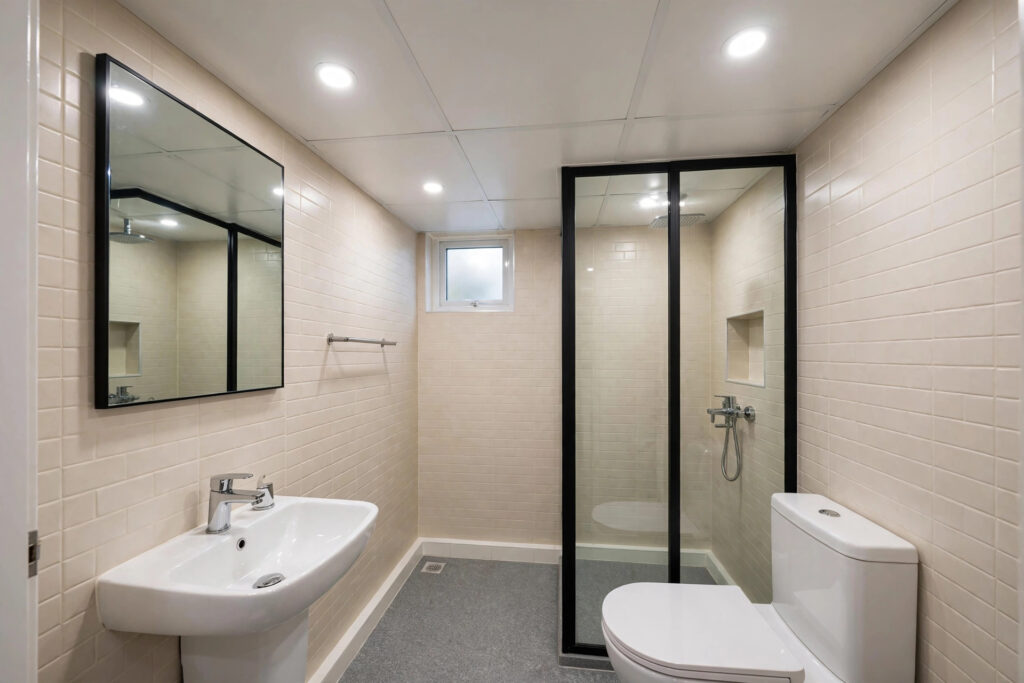

A small bathroom is the hardest room for a false ceiling. Steam, poor ventilation, and plumbing above conspire against every material, and a bulky design in a compact bathroom makes the room feel like a box. This guide covers small bathroom false ceiling ideas for Indian homes: moisture-safe materials, slim drops that protect headroom, exhaust and access planning, and lighting that makes a compact bathroom feel clean and bright.
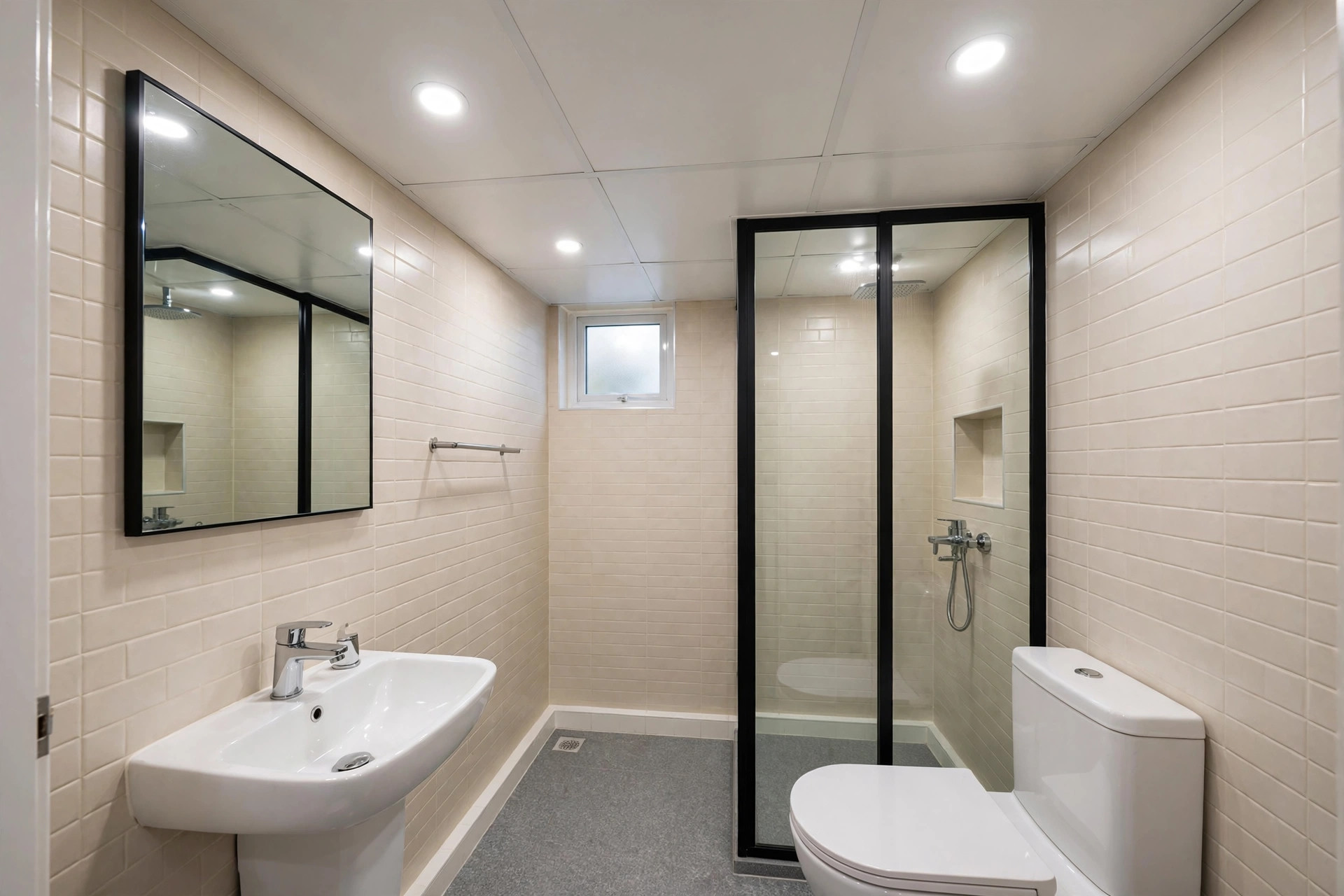
Why bathrooms are different
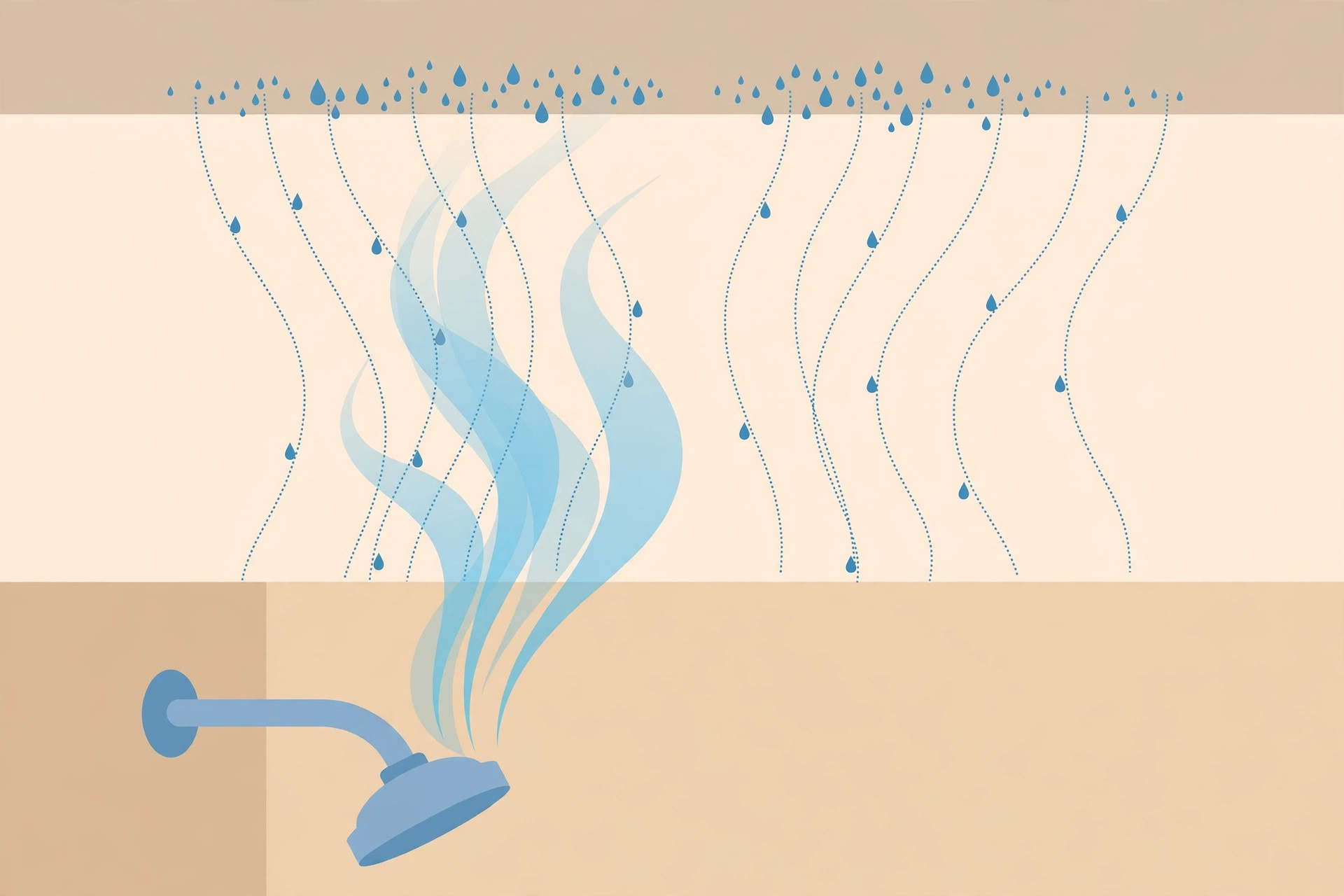
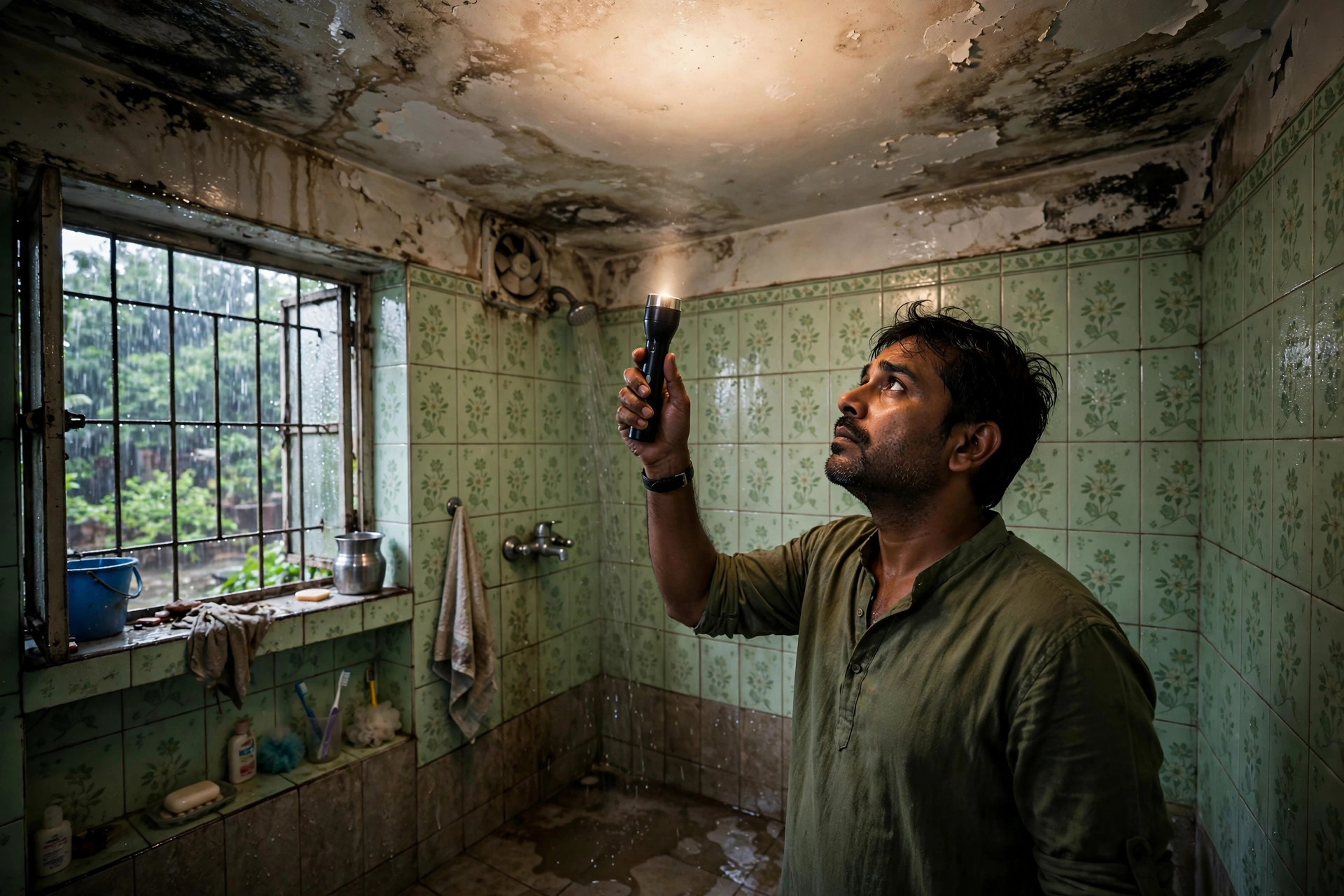
Bathrooms hold the highest humidity of any room in the house. When the shower runs, steam rises straight to the ceiling; without proper ventilation, condensation sits on the surface and works its way into the material. Indian interior guides consistently note that materials which behave perfectly in bedrooms can degrade quickly here — POP can crack and peel, standard gypsum can sag, and paint blisters. The ceiling in a small bathroom must therefore be chosen for moisture behaviour first and looks second. For the broader bathroom picture, see our bathroom false ceiling guide.
Materials for small bathrooms, ranked by moisture behaviour
Coohom’s 2026 small-bathroom material comparison (retrieved 2026-10-13) ranks the three common materials for compact Indian bathrooms: PVC panels handle humidity best and need the least maintenance; moisture-resistant gypsum works in ventilated bathrooms with a cleaner finish; POP suits decorative designs only with strong waterproofing and skilled installation. That ranking is a good starting point for a small bathroom, where moisture concentration is higher than in a large one.
PVC panels: the default for small bathrooms
PVC does not absorb water, resists mould and termites, and needs almost no maintenance. In compact bathrooms — especially rentals or heavily used family bathrooms — durability matters more than decorative detail, and PVC wins. Choose glossy or satin finishes in light colours; they reflect light and make the room feel larger. The trade-off: fewer design options than POP, and cheap panels can fade over time, so buy from a known manufacturer.
Moisture-resistant gypsum: the cleaner look
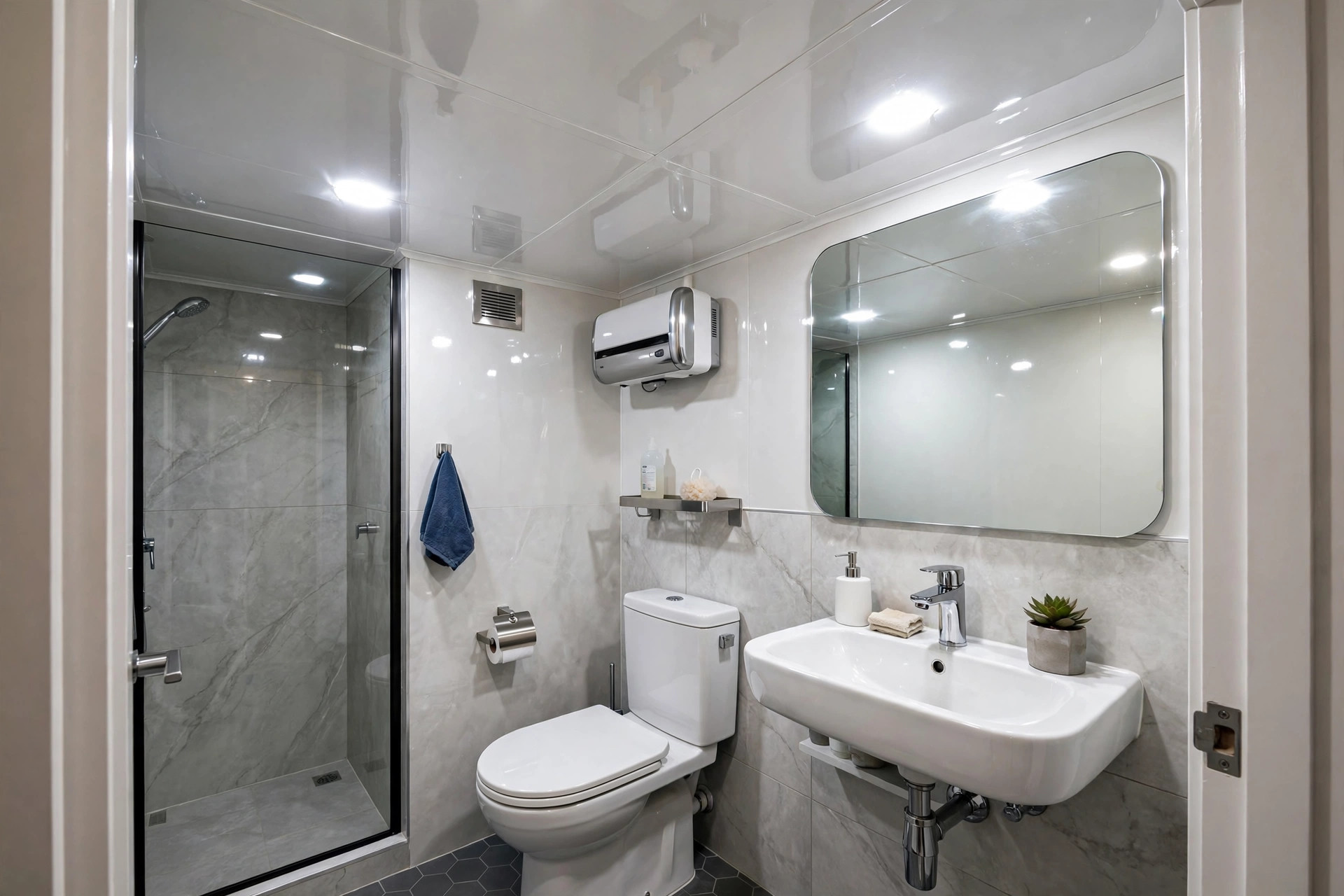
MR (moisture-resistant) gypsum boards give the seamless, modern finish that PVC cannot, and they perform reliably in medium-sized bathrooms with decent ventilation. Standard gypsum is not waterproof — insist on MR boards, specified in writing, for any bathroom. Joint finishing needs skilled labour, and board edges can swell if a leak occurs above, so this material pairs best with bathrooms that have a working exhaust fan.
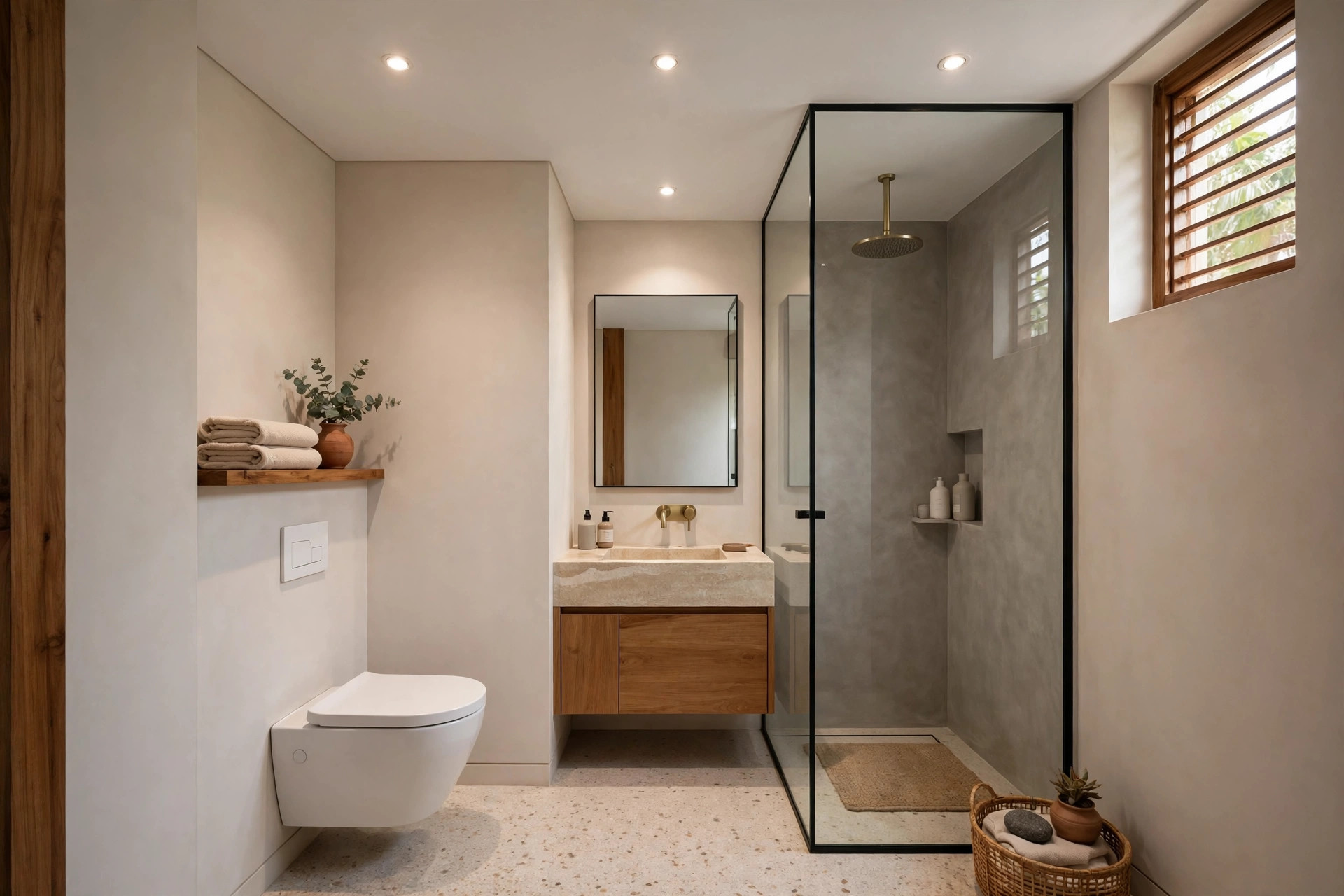
POP: decorative, with conditions
POP allows the curved edges, mouldings, and recessed details the other materials cannot. But bathrooms expose its weakness: without waterproof primer, moisture-resistant paint, and strong exhaust ventilation, POP ceilings can crack and peel within a few monsoons. Use POP in a small bathroom only when the design matters more than the maintenance — a master bathroom with a spa feel, for instance — and budget for repainting every few years.

Small bathroom ceiling ideas
1. Flat slim panel, edge to edge
The most reliable small-bathroom ceiling: one flat layer, 3 inches down, no levels, no borders. It protects headroom, is easy to wipe, and disappears visually. In bathrooms under 40 sq ft this is rarely the wrong choice.
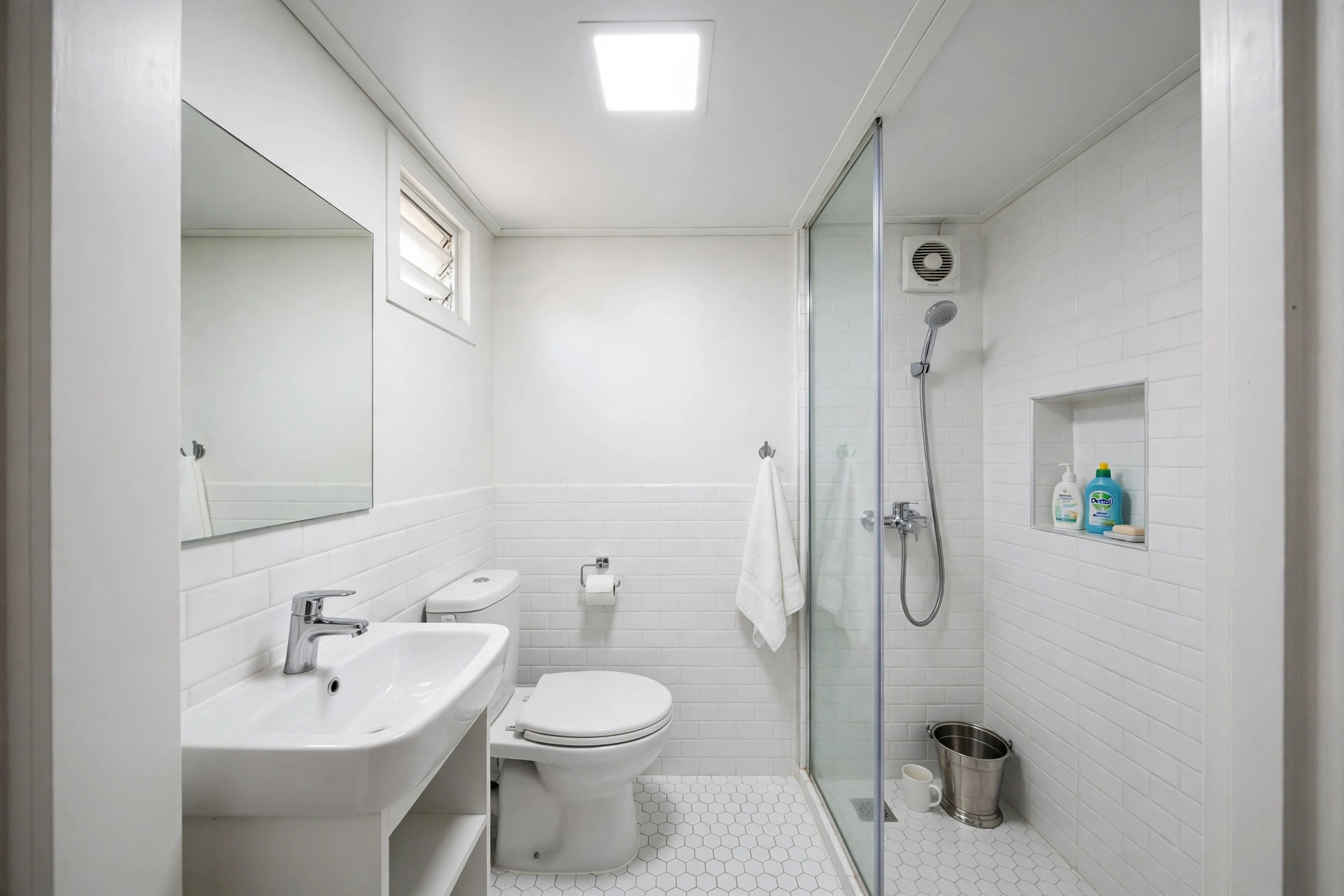
2. Slim perimeter with cove strip
A narrow border with a hidden LED strip gives the small bathroom a soft glow and makes the ceiling feel higher — light washing down the walls pushes them outward. Keep the border slim (4 to 6 inches) and the strip warm white for flattering light.
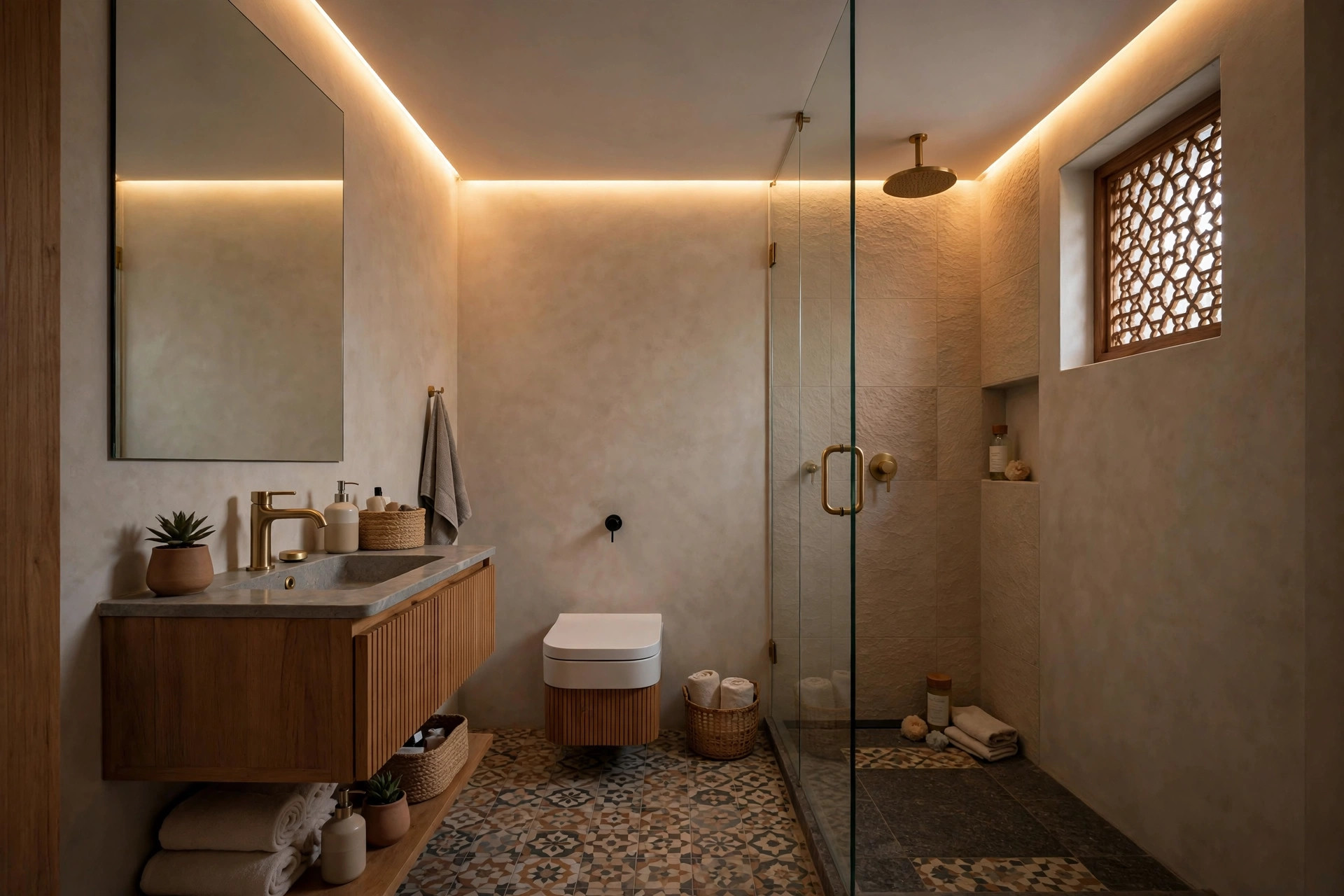
3. Exhaust-first ceiling
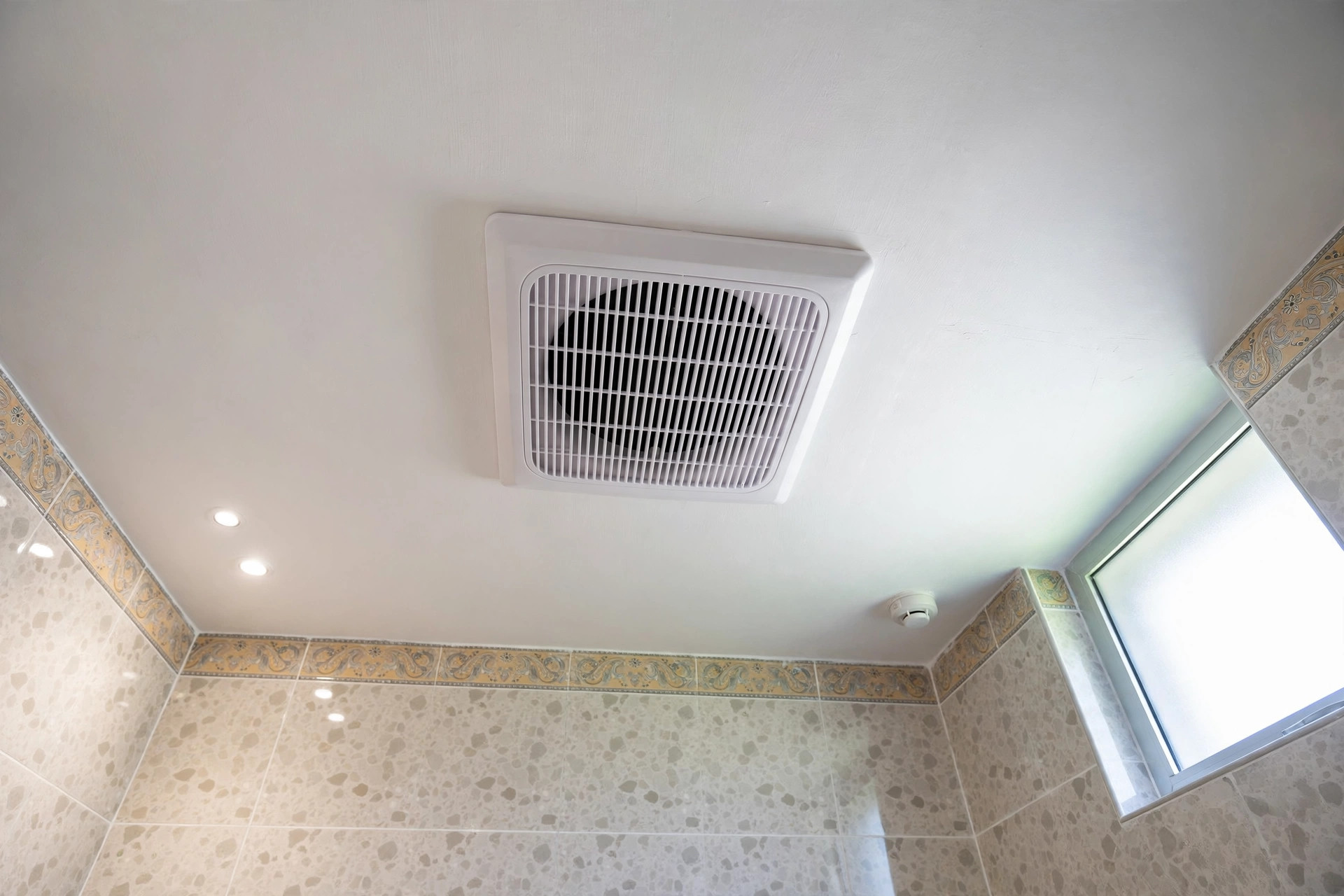
The exhaust fan is the most important fixture in a bathroom ceiling — more important than any light. Plan the fan’s position first, duct it properly to the outside (not into the ceiling void), and design the ceiling around it. A beautiful ceiling over a bathroom with no working exhaust will fail regardless of material.
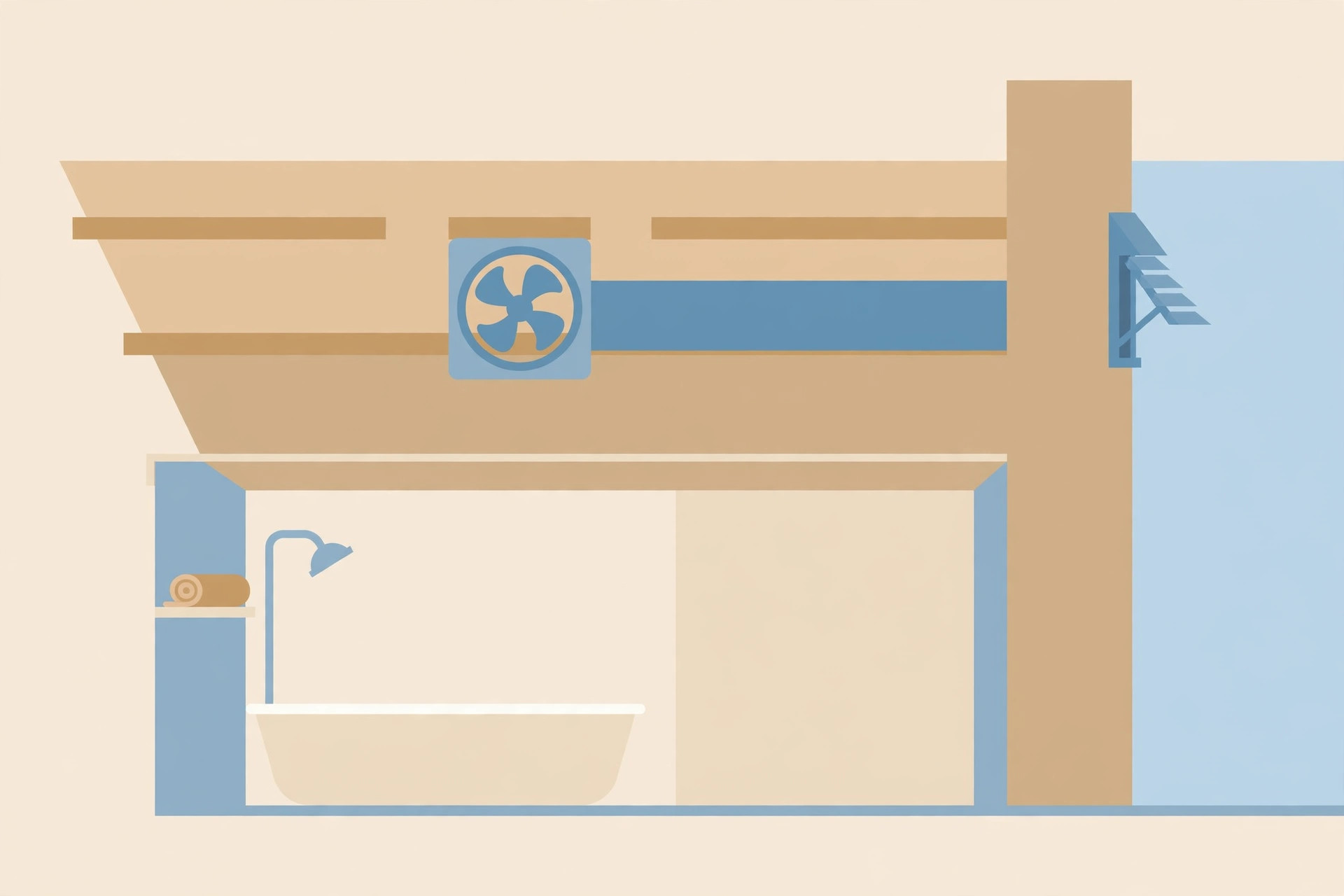
4. Vanity light zone
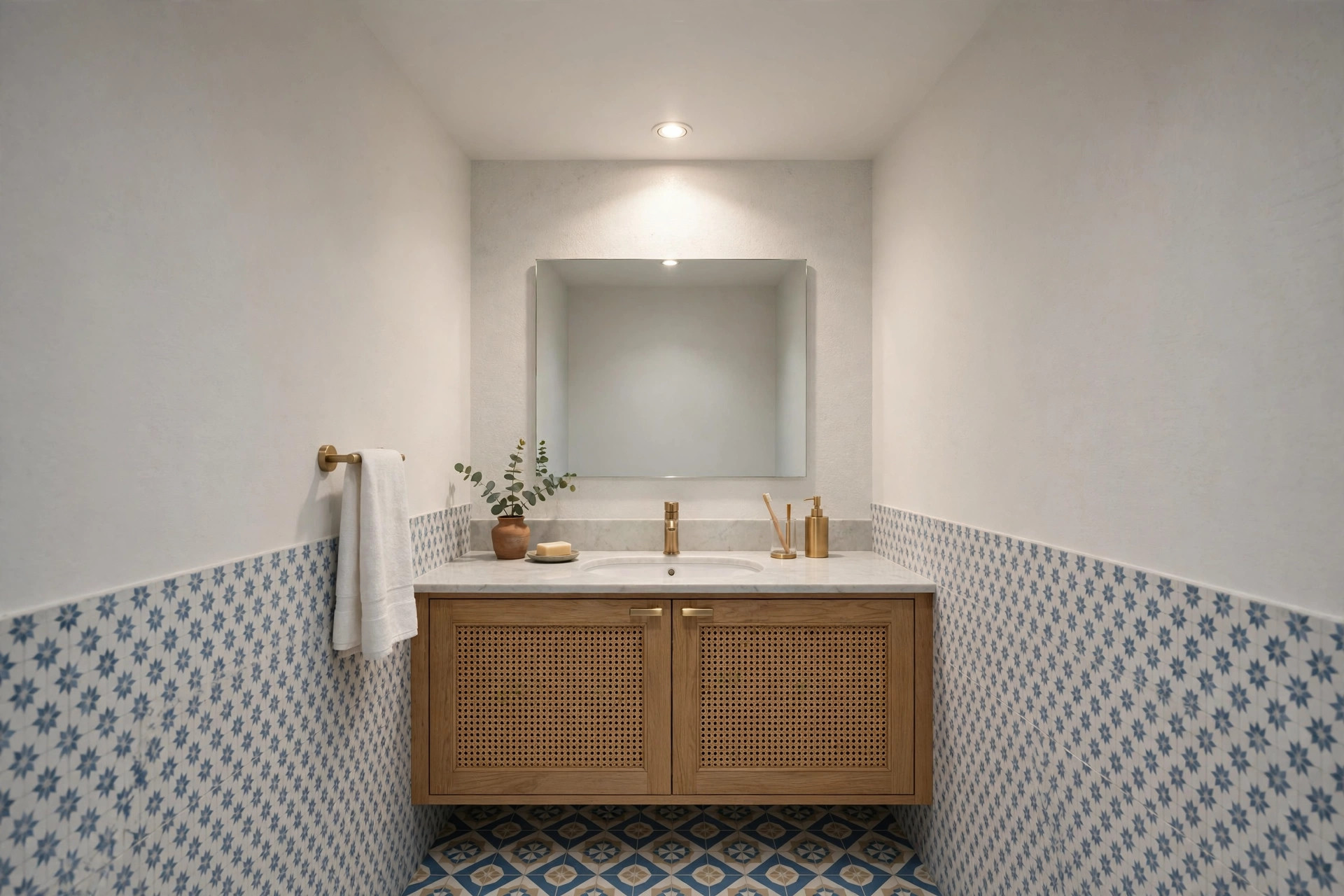
One focused light over the mirror — a recessed spot or a slim linear fitting — with the rest of the ceiling calm. Good task light at the mirror matters more in a small bathroom than decorative ceiling features. Keep the light in front of, not behind, the person at the mirror.
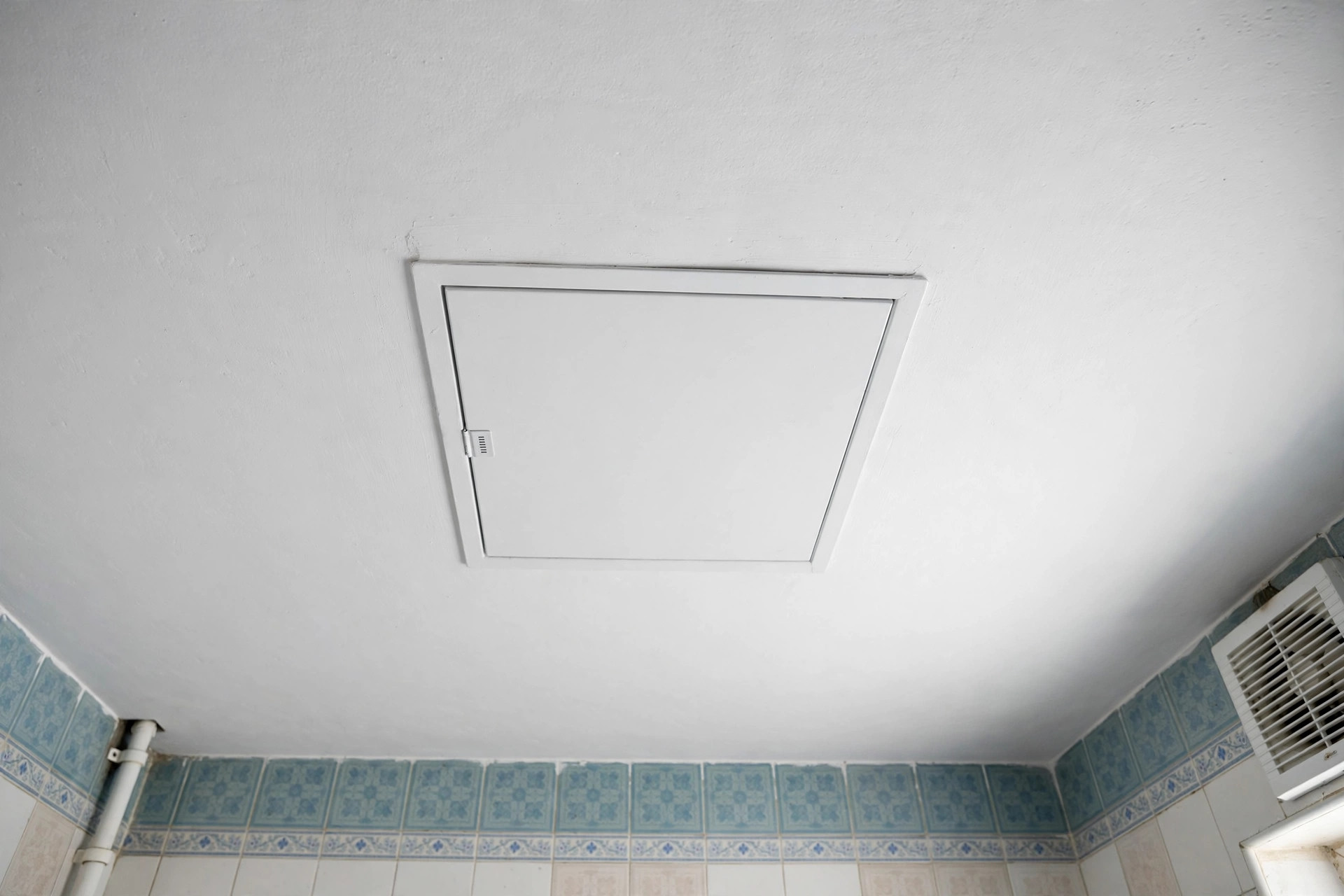
5. Access panel, planned not improvised
Plumbing runs above most bathroom ceilings, and it will need attention one day. A planned access panel — a neat, flush-fitting hatch — beats a ceiling that must be cut open later. Mark its position on the plan before the ceiling closes.
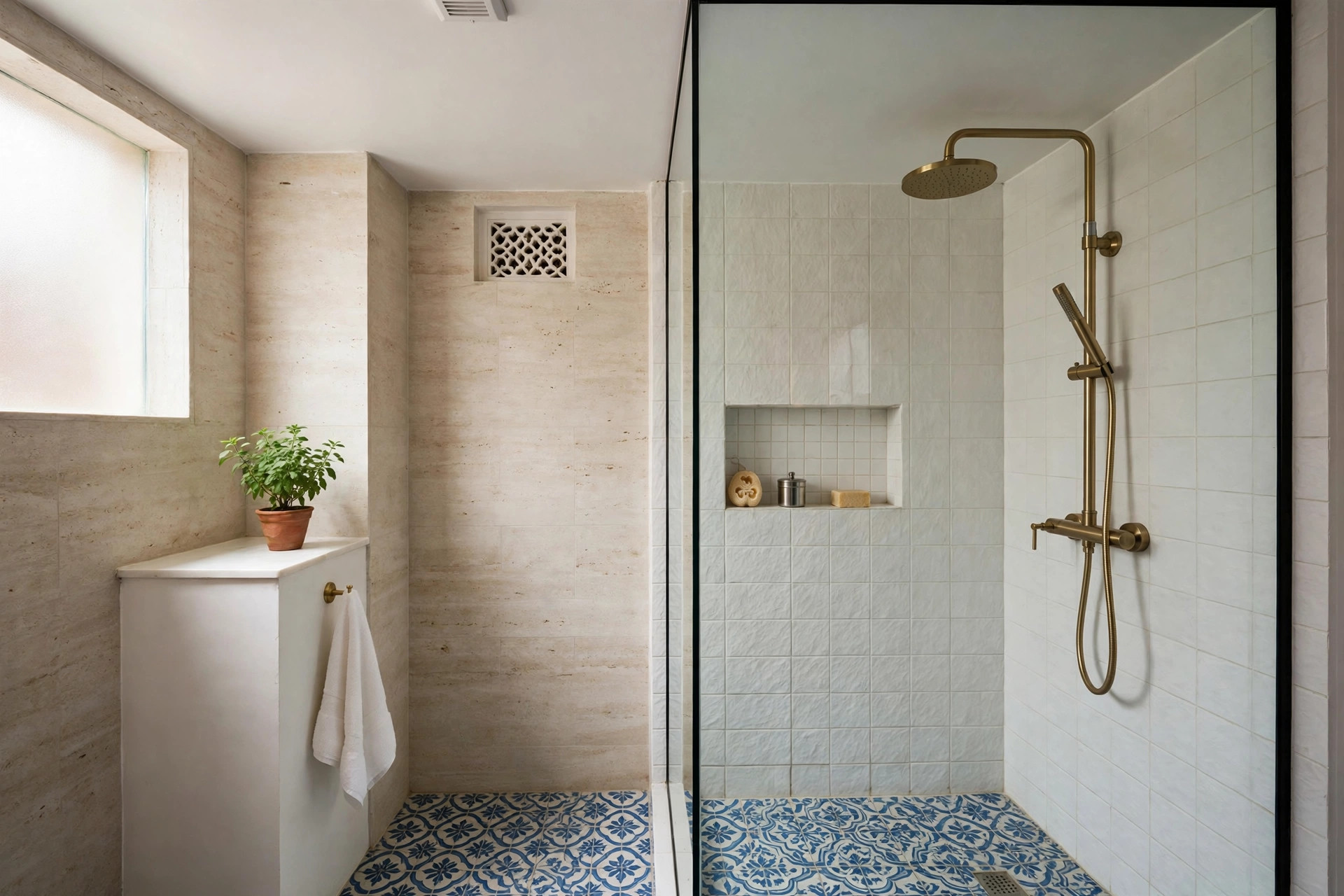
6. Shower-zone treatment
The shower corner gets the most steam. Keep the ceiling over the shower absolutely flat and simple — no coves, no grooves, no decorative edges where moisture can sit. If the bathroom has a glass partition, the ceiling design can stop at it; the wet zone and dry zone can have different, simpler treatments.
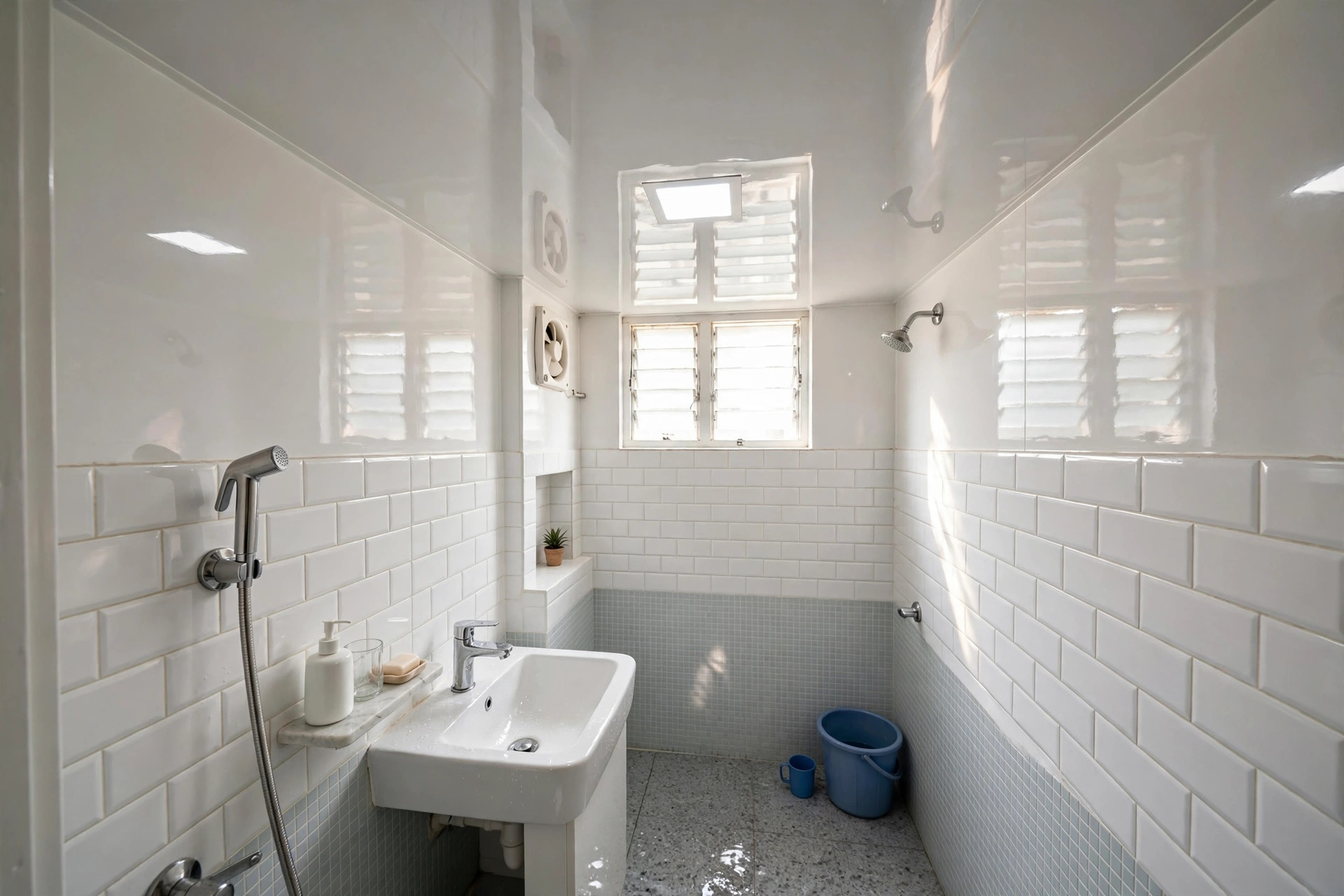
7. Glossy finish to borrow space
A glossy or high-sheen ceiling finish reflects light and visually doubles the room’s height — particularly effective in windowless bathrooms. PVC panels in gloss white are the practical route; a painted gypsum ceiling in satin finish works too. Keep walls and ceiling close in tone so the room reads as one bright volume.
8. Wood-look PVC for warmth
Wood-look PVC panels give a warm, spa-like feel without wood’s moisture problems. Use them as an accent — one section, or the border — rather than the whole ceiling, so the small bathroom stays bright. Pair with warm white lighting (around 3000K) for the spa effect.
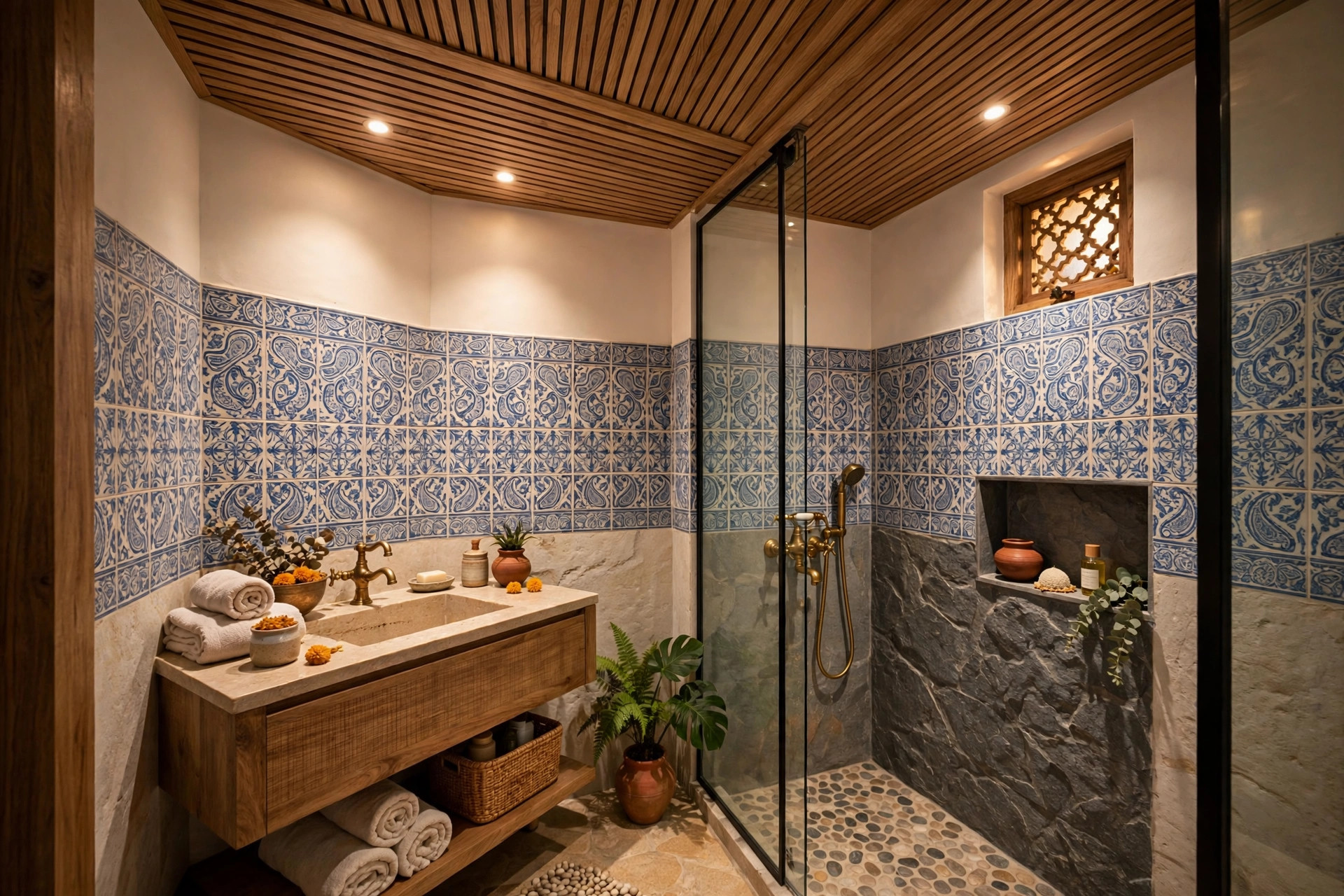
9. Backlit panel for windowless bathrooms
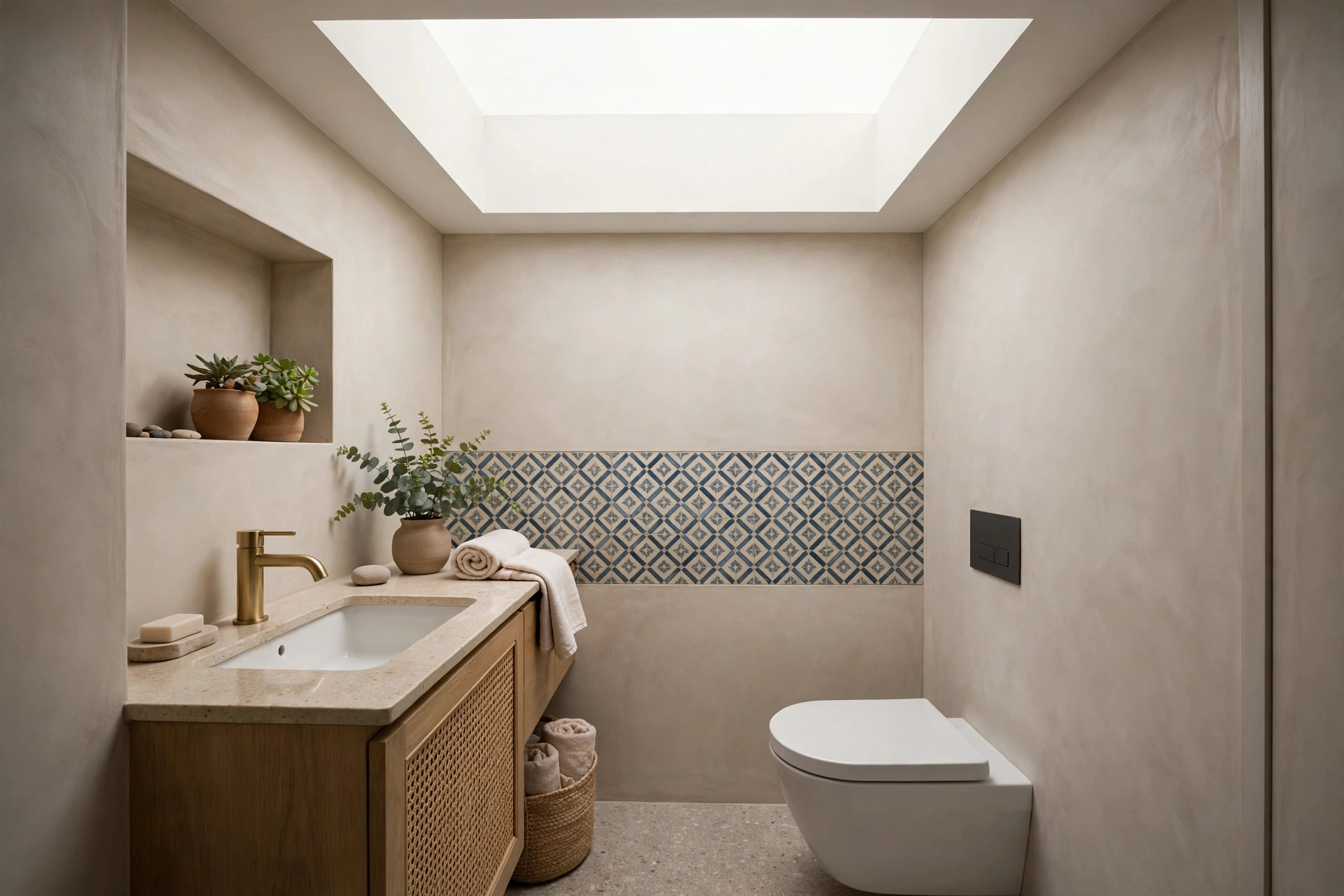
A backlit luminous panel in the ceiling acts as a faux skylight — the single most effective trick for a bathroom with no window. It floods the room with soft, even light and makes the small space feel open. Keep the rest of the ceiling plain so the panel stays the hero.
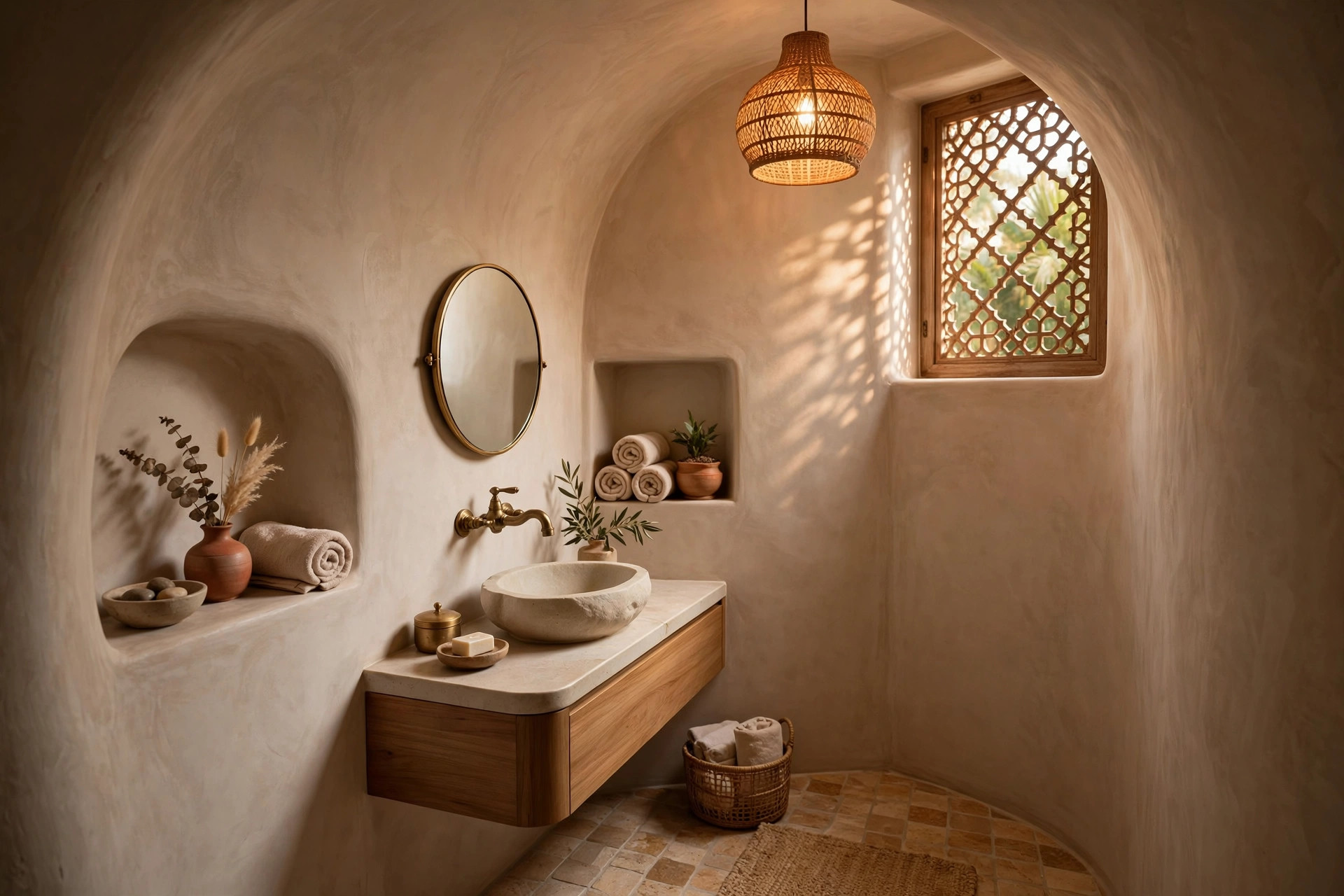
10. Curved microcement for a spa feel
For a premium small bathroom, soft curved POP forms finished in microcement create a seamless, wipeable shell from wall to ceiling — calm, luxurious, and genuinely moisture-tolerant when done right. This is skilled, expensive work: microcement demands experienced applicators and adds meaningful cost. Reserve it for master bathrooms where the spa feel is the point.
Planning rules for small bathrooms
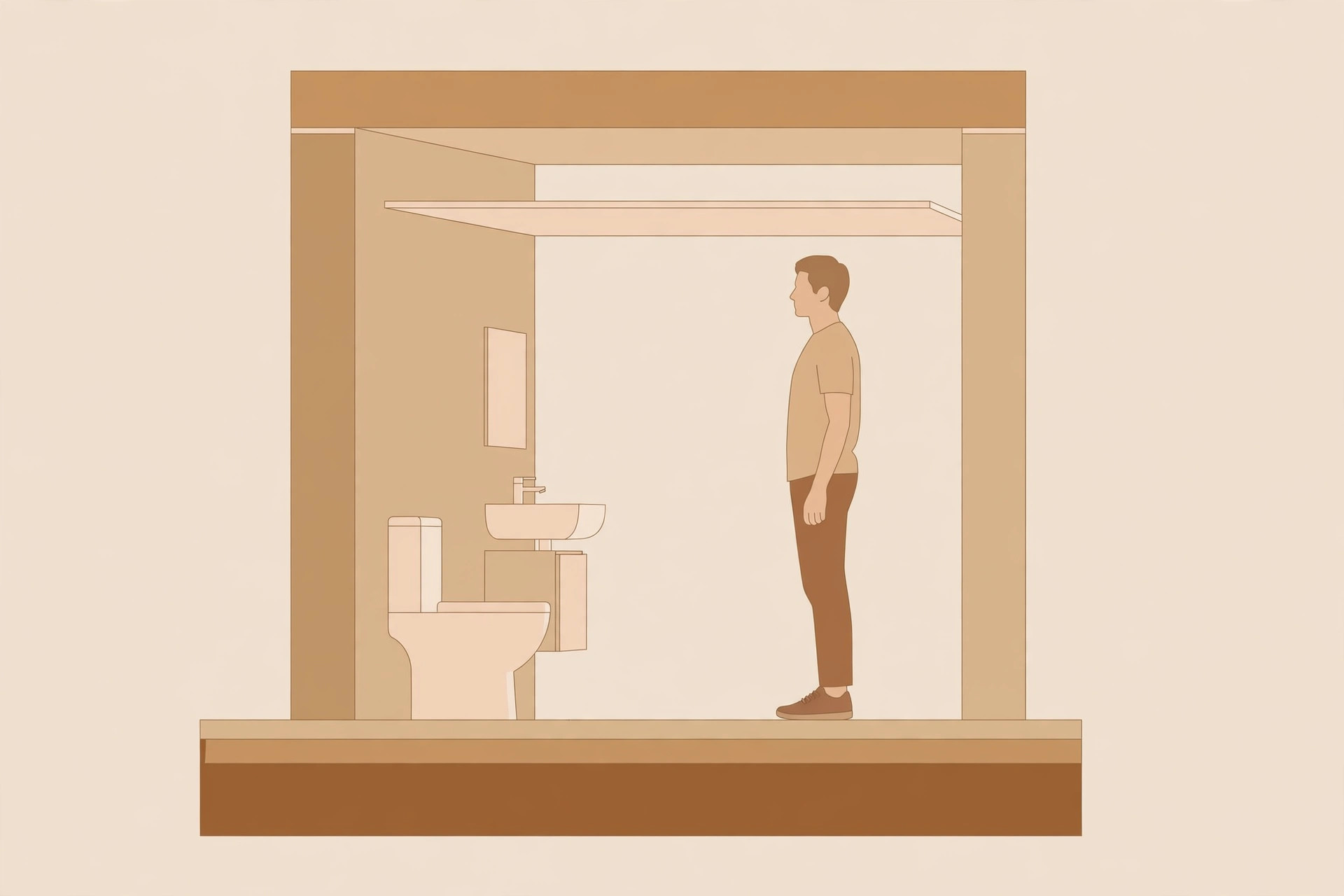
Protect the height
Small bathrooms often have 8 to 9-foot slabs. A 3 to 4-inch drop is plenty; anything deeper makes the room feel like a shaft. Measure the slab, subtract the drop, and keep at least 7.5 feet of clear height — below that, even a beautiful ceiling feels oppressive.
Ventilation is part of the ceiling
An exhaust fan that actually vents outside — ducted through the wall or shaft, not dumping into the ceiling void — does more for ceiling life than any material choice. Size the fan to the bathroom, wire it to run on after the shower (a timer switch helps), and clean its grille monthly. A ceiling designed without ventilation planning is a ceiling designed to fail.
Lighting for small bathrooms
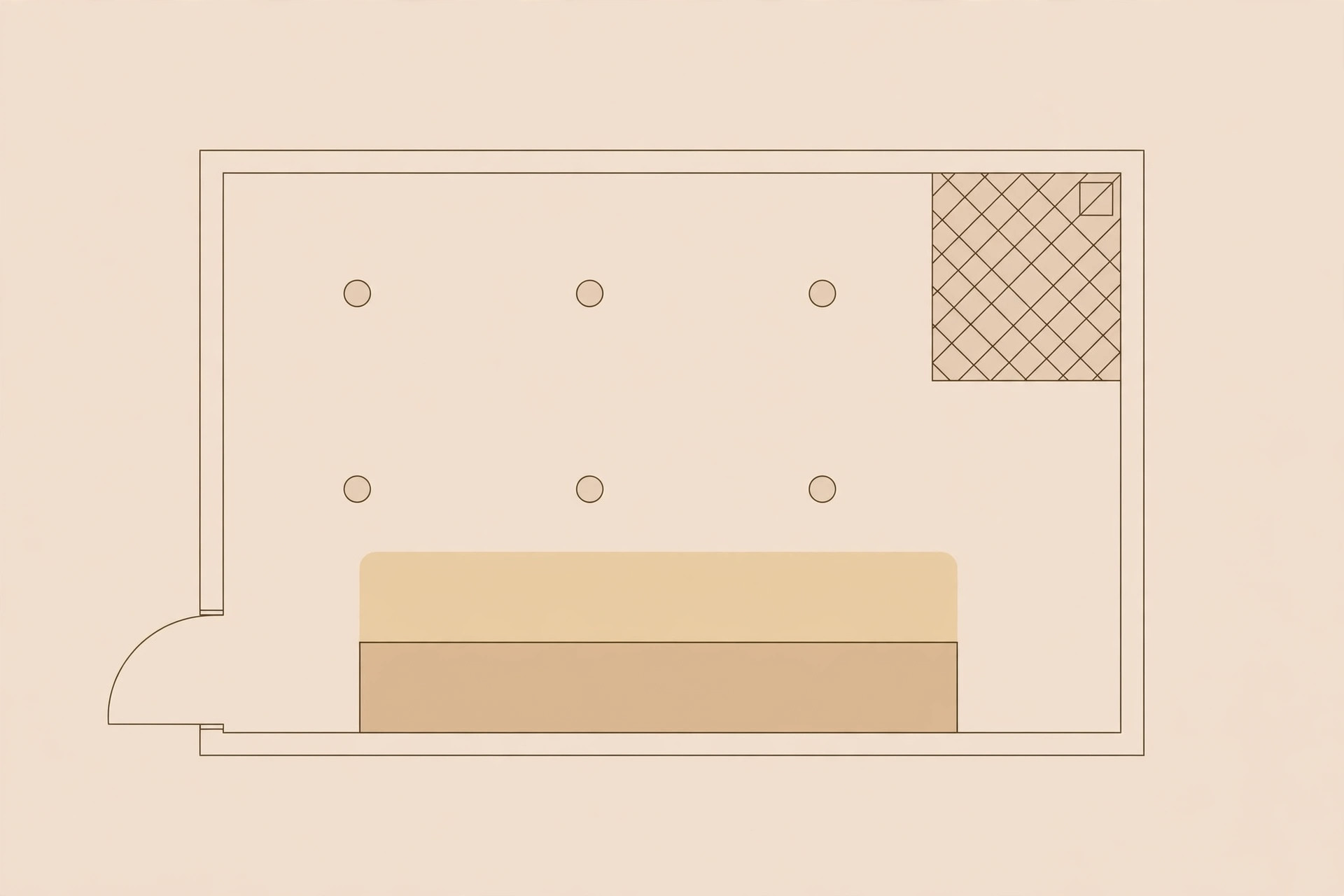
Small bathrooms need bright, even light: two or three recessed spots plus the vanity light is usually enough. Avoid a single harsh downlight in the centre — it casts hard shadows and makes the room feel smaller. Our lighting guide covers placement in detail. For moisture-proof panel options, see our PVC ceiling guide.
What a small bathroom ceiling costs
Coohom’s 2026 small-bathroom guide (retrieved 2026-10-13) gives indicative Indian ranges: PVC ceiling panels roughly ₹80–140 per sq ft, gypsum roughly ₹90–150 per sq ft, POP roughly ₹120–180 per sq ft depending on design complexity — all installed, India, 2026, varying by city and contractor. Labour and waterproof treatment often move the total more than the material itself, and maintenance costs (repainting moisture-damaged POP every few years) belong in the comparison too. Get an itemised quote: material, framework, labour, waterproofing, paint.
Mistakes that ruin small bathroom ceilings
Skipping the exhaust. The single most expensive mistake — no material survives a steam room without ventilation.
Deep levels in a small room. Multi-level trays belong in living rooms, not 40 sq ft bathrooms.
Standard gypsum without the MR specification. If the quote just says “gypsum”, ask whether it is moisture-resistant board — in writing.
No access panel. The first plumbing repair will otherwise mean cutting open your new ceiling.
Dark colours. A dark ceiling in a small, humid bathroom feels low and shows every water mark. Keep it light.
Maintenance and upkeep
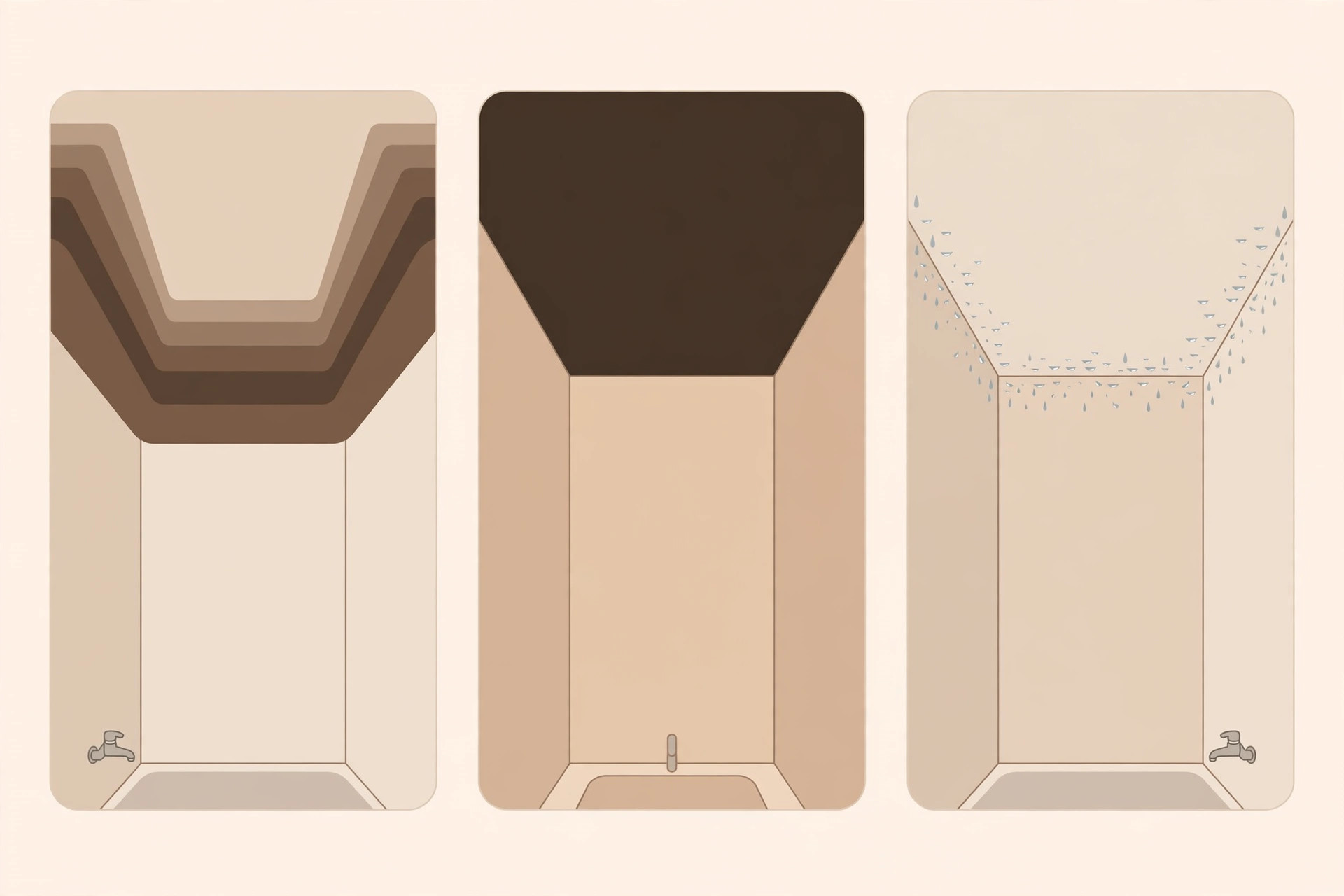
PVC needs the least: wipe with a damp cloth every few months. MR gypsum needs its paint checked after each monsoon — blisters or peeling mean moisture is getting in, and the cause (usually ventilation) should be fixed before repainting. POP needs the most attention: inspect yearly, touch up paint, and re-seal any hairline cracks early. In every case, keep the exhaust fan clean and running — it is the cheapest maintenance there is.
Monsoon check: what to look for
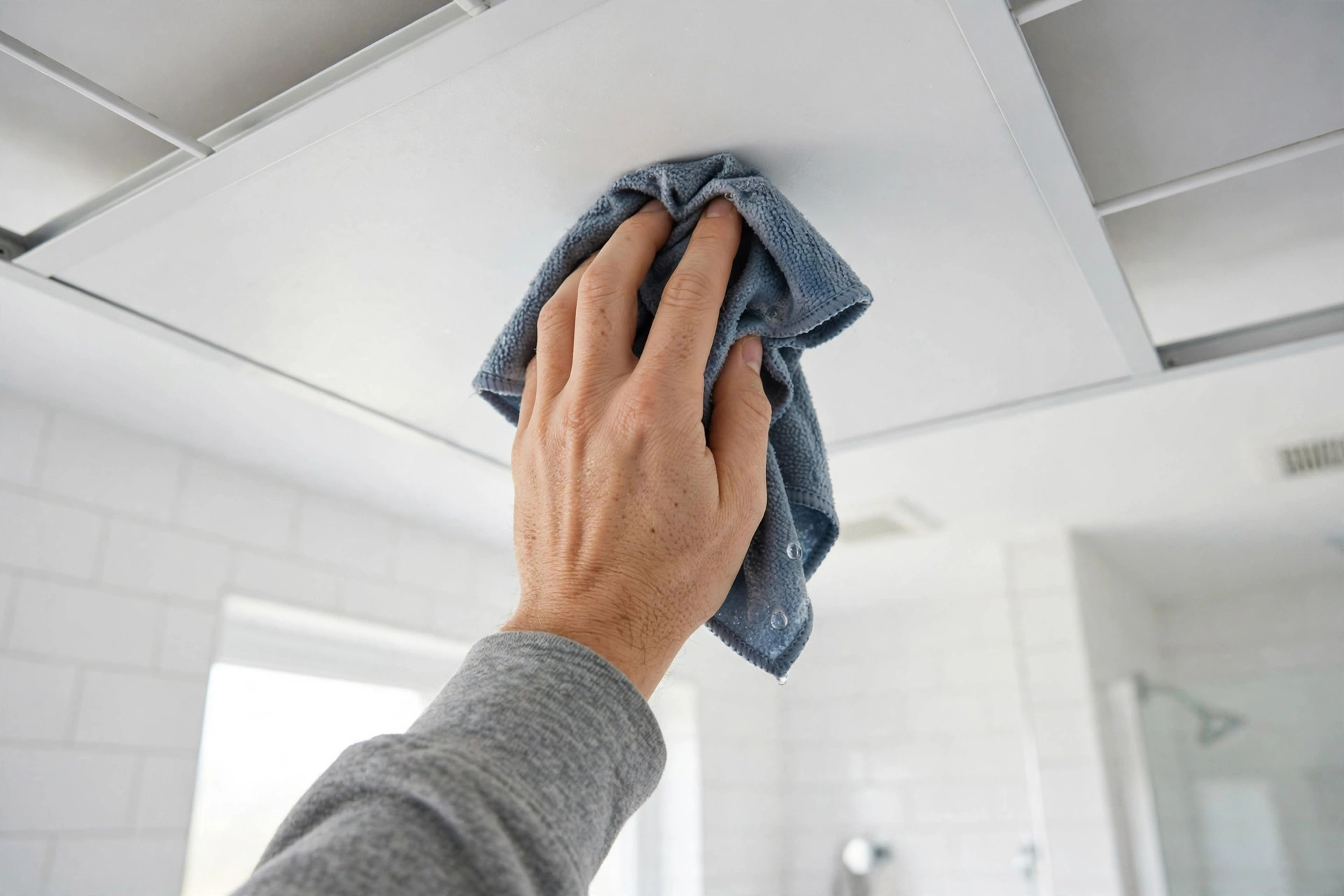
After every monsoon, look up: blisters or peeling paint mean moisture is getting in; yellow patches mean a slow leak from above; a musty smell with no visible stain means condensation is trapped in the void. Fix the cause — usually ventilation or a plumbing drip — before repainting, or the new paint will fail the same way.
The small-bathroom starter kit
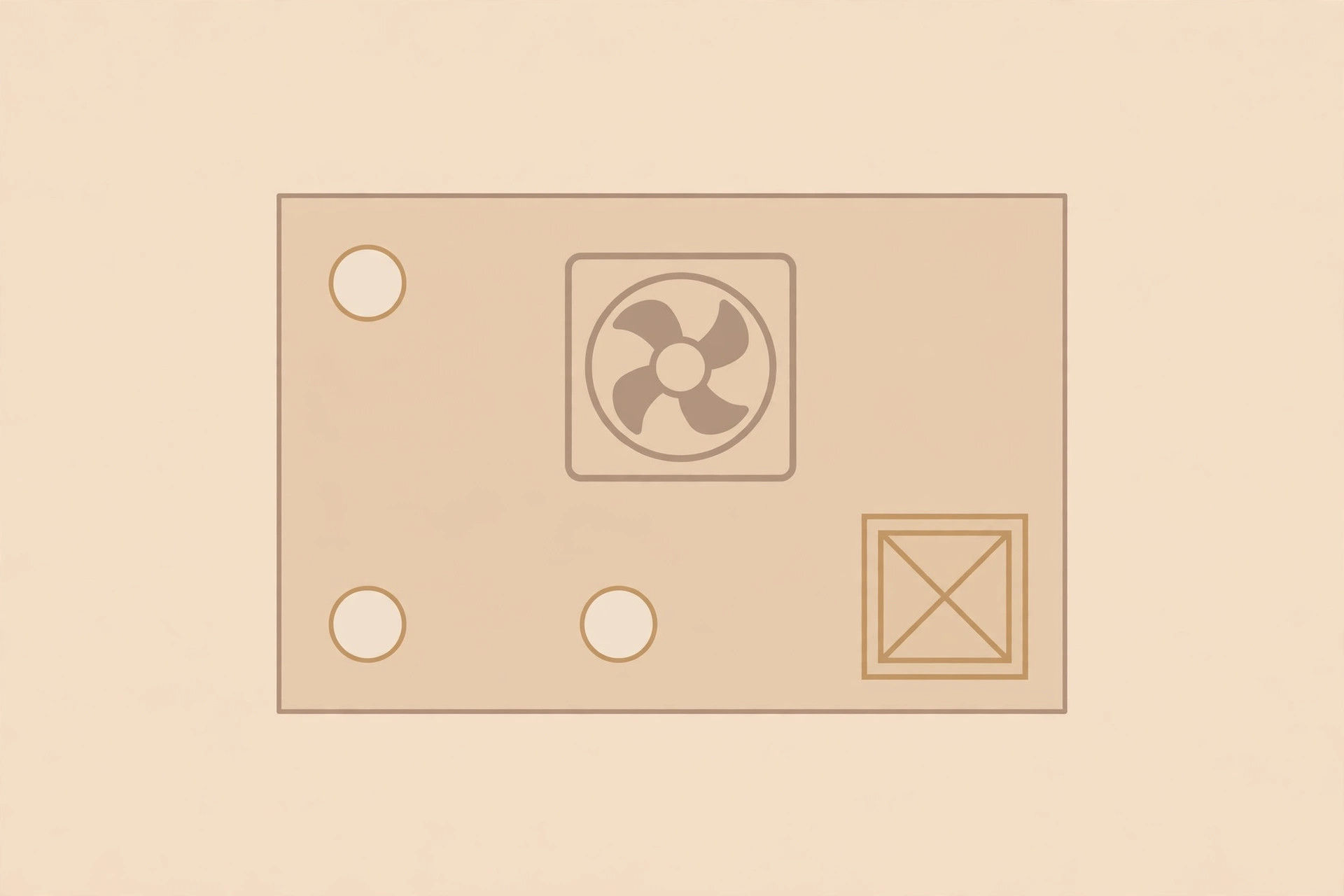
If this is your first bathroom ceiling, the whole plan fits in one paragraph: flat slim PVC or MR-gypsum ceiling, 3–4 inches down, exhaust fan ducted outside, one access panel over the plumbing, bright even lighting with a vanity light, light colours throughout. Everything else is optional.
Frequently asked questions
Which false ceiling is best for a small bathroom in India?
PVC panels are usually the best choice for small bathrooms: they resist moisture and mould, need minimal maintenance, and suit compact spaces. Moisture-resistant gypsum works in ventilated bathrooms with a cleaner finish; POP needs strong waterproofing.
How much does a false ceiling drop in a small bathroom?
Most bathroom ceilings drop 3 to 6 inches. In a small bathroom, keep it to 3–4 inches to protect headroom — the drop only needs to hide wiring, lights, and the exhaust duct.
Can I use POP in a bathroom?
Yes, with conditions: waterproof primer, moisture-resistant paint, strong exhaust ventilation, and skilled installation. Without these, POP can crack and peel within a few monsoons.
Does a false ceiling make a small bathroom look smaller?
Only if it is deep, dark, or busy. A flat, light-coloured, slim ceiling with good lighting makes a small bathroom feel cleaner and often larger than the bare slab.
Quick recap
Choose the material for moisture first — PVC for durability, MR gypsum for finish, POP only with waterproofing. Keep the drop slim, plan the exhaust before the design, leave an access panel, and light the room bright and even. For styling ideas beyond the compact plan, see our modern bathroom designs and start with our false ceiling design guide for the full picture. All images in this article are original concept renders created to illustrate the ideas, not photographs of completed projects.